













Children of astronauts may soon be able to video call their parents in space, as NASA wants to bring terrestrial 4G to the Lunar surface.
Ostensibly to prepare for a semi-permanent human presence there, an outer spatial 4G network would significantly streamline and lower costs for off-world communications.
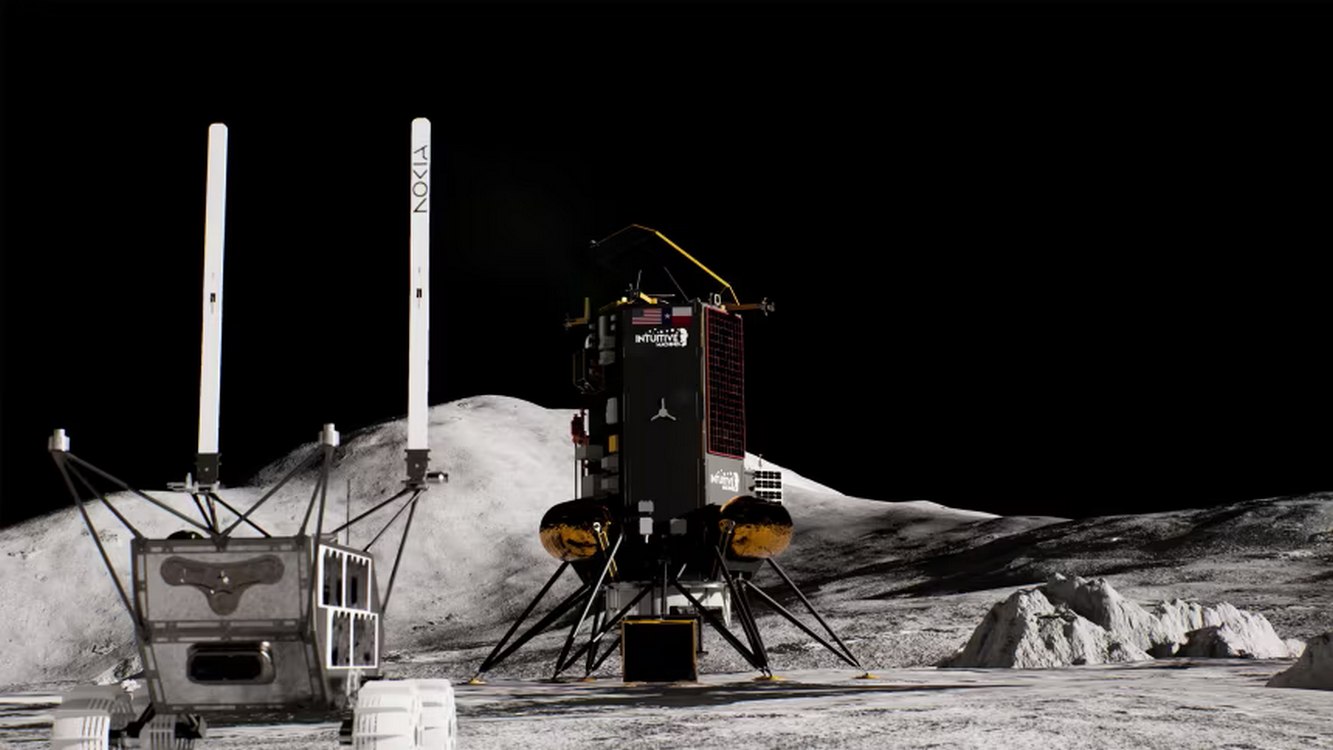
Partnering with Nokia’s Bell Labs, the simple 4G device will be constructed with a variety of off-the-shelf components, and is set to be launched into space aboard a SpaceX Falcon 9 rocket later this year at an undetermined launch window.
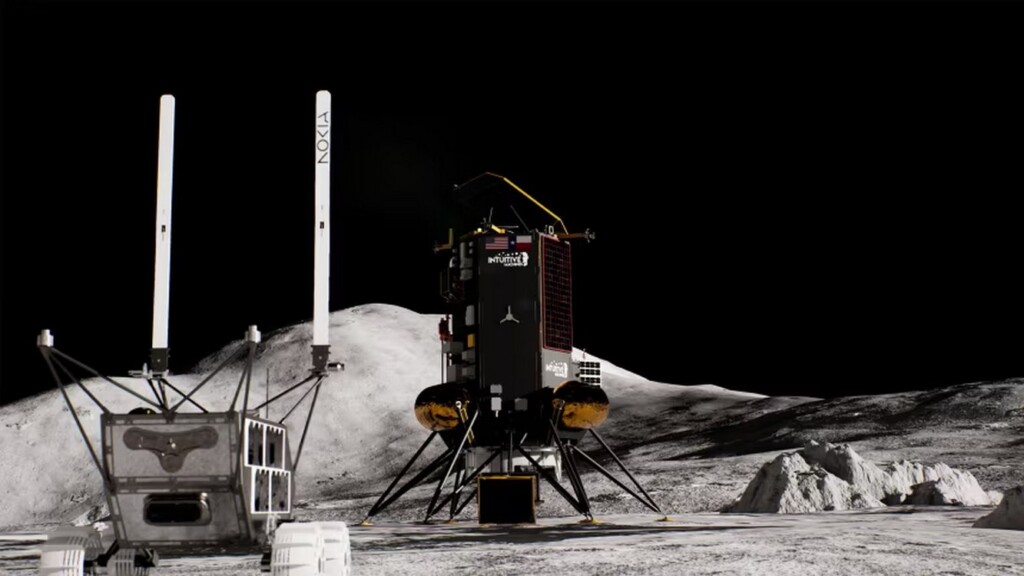
It will reach the Lunar surface via a landing craft made by the US company Intuitive Machines. Once there, and at least on paper, it will connect the lander via radio equipment to 2 small rovers that will be dispatched in search of water ice.
It’s a classic modern-NASA mission example of tying together US commercial innovation in pursuit of the agency’s science and exploration missions both present and future. Bell Labs was given a $14 million grant back in 2020 to develop the network and transmitters.
“The first challenge to getting a network up and running is having a space-qualified cellular equipment that meets the appropriate size, weight, and power requirements, as well as being deployed without a technician,” Walt Engelund, deputy associate administrator for programs at NASA’s Space Technology Mission Directorate, told CNN.
Currently, space missions like Artemis II which launched earlier this year, rely on traditional radio telecom systems, but going forward, NASA wants to have comms powerful enough to stream high-resolution video and upload big science datasets.
“Eventually, this effort will help establish a lunar communications network that could give our explorers the ability to beam scientific data back, confer with mission control, and talk to their families, as if they were walking down the street on their cellphones,” said Engelund, according to CNN.
THE SPACE ECONOMY: Scientists Successfully Mine Meteorites for Precious Metals on International Space Station
The Artemis Program isn’t just aiming to return humans to the Lunar surface, but also to investigate the potential of staying there on a semi-permanent basis. The 2 rovers, for example, that will land with the Nokia device, will be searching for water—not to confirm a scientific theory—but to ascertain the water’s potential as a resource for a Lunar base.
Water ice could, via electrolysis, provide breathable oxygen, spacecraft fuel, and drinking water at much lower prices than resupply missions launched from Earth.
4G networks enable the digital economy, and the idea would be to simply extend that network, and therefore that economy, to space, such that Lunar astronauts or non-astronaut visitors would have the same terrestrial network options—apps, messaging platforms, etc.—that they’d have on Earth.
ALSO CHECK OUT: Maiden Rocket Launch ‘a Grand Success’ for India’s First Private Spaceflight Company
And just as how space-born innovations have a way of making themselves useful back home, Bell Labs believes that networks which can survive conditions in space and on the Moon would instantly be transferable to Earth’s own harsh environments, like the Sahara Desert or Antarctica.
The best-case scenario predicted for the test landing would be for Intuitive Machines’ rovers to find water ice and transmit high-resolution video and images of it via the Bell Labs network down to Earth—a world-first, and a giant leap for telecommunications.
SHARE This Real World Vision Of An Off-World Future Today…