












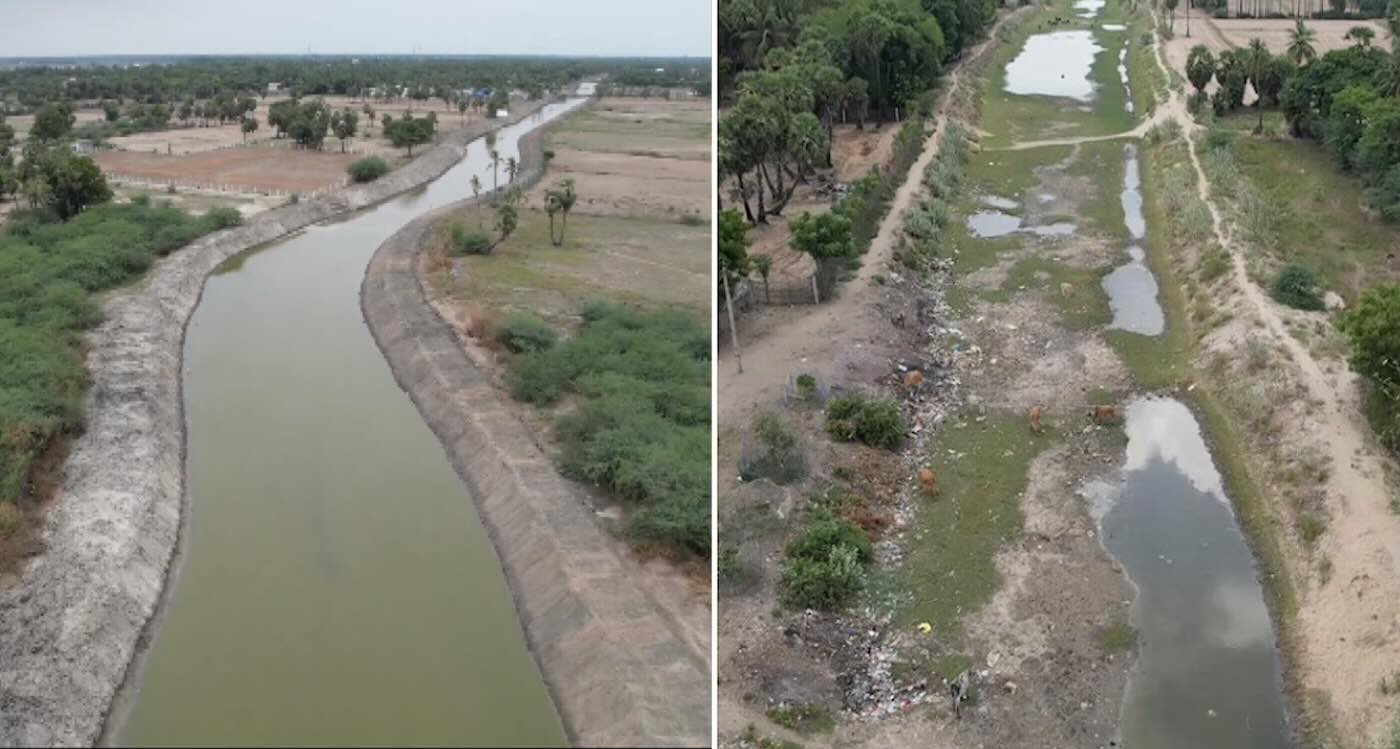
A canal in India has been transformed from a plastic-choked fetid mess into a growing mangrove forest.
The clean-up has restored the waterflow, and the 20,000 mangrove seedlings will help clean the water and reestablish fish stocks.
Along a 1.8-mile stretch of Buckingham Canal in India’s Tamil Nadu state, manual clean-up efforts began in Cuddalore district by some 600 paid volunteers.
This 494-mile-long fresh water canal was constructed during British rule, and ran from Andhra Pradesh to Tamil Nadu bringing water and navigation to millions.
Fewer countries are as thirsty as India can be during the dry season, but waterways in the country suffer heavily from pollution and buildup of plastic waste and invasive weeds, Buckingham Canal being a chief example of this trend.
Near the town of Pichavaram, Tamil Nadu’s Climate Resilient Village initiative organized the restoration of several stretches of the canal where pollution and waterflow were the worst. Local government agencies led the clean-up program.
Bravo Team Cuddalore !
— Supriya Sahu IAS (@supriyasahuias) March 14, 2026
What was once a plastic-choked and garbage-filled canal has bounced back in full force. An inspiring transformation in the village of Pichavaram under Tamil Nadu’s Climate Resilient Village initiative. We have rejuvenated 3 kms of the clogged village canal… pic.twitter.com/86l6QvXBmB
750 kilograms—almost 2,000 pounds—of trash were pulled from the canal along with heaps of invasive prosopis plants. The embankments were strengthened to prevent erosion, before 3,000 mangrove trees were planted to improve the ability of the canal to keep the water clean and biodiverse, as well as slow storm waters that might flood the town and canal.
CLEANING INDIA’S WATER:
- India’s Beautiful and Historic Stepwells Restored to Working Order for the Thirsty Nation
- Joy and Relief as Lotus Flowers Bloom Again in Kashmiri Lake After Three Decades
- Man Revives Iconic Indian Lake by Converting Lake Weed Infestation into Organic Fertilizer Business
Other stretches further down the canal have seen similar rejuvenation. Near Chennai, the state capital, the Tamil Nadu Forest Department led the planting of another 20,000 mangrove seedlings along the canal banks, as well as in an island amid its flow.
This effort was supported with a grant from ICICI Bank’s sustainability initiatives, and involved carving a herring-bone pattern into the island. This allows for maximum mangrove anchorages across the small amount of available space, and for rising water levels to irrigate all equally.
Hello Chennai here comes your third Mangrove Magic !
— Supriya Sahu IAS (@supriyasahuias) March 9, 2026
Along the Buckingham Canal, the Chennai Forest Division has planted 20,000 mangrove seedlings across 20 hectares during 2025–26. What you see here is the fishbone structure to support healthy tidal flow. 8 main fishbone… pic.twitter.com/e01fhd0X5e
Red, Indian, and tall-stilt mangroves were planted, and additional feeder canals and flow channels—over 180—were created to help keep the water circulating and the mangroves healthy.
“Step by step, TN Forest Department is building Chennai’s living coastal bioshield restoring mangroves that protect the city, nurture biodiversity and strengthen climate resilience,” said Tamil Nadu’s Chief Minister for Environment Supriya Sahu.
Water has been a chief focus of Indian environmentalism this century. One of the sub-continent’s holiest places is a river, which makes it easy, said one NGO founder, to convince locals to help clean up water sources.
SHARE This Indian Endeavor To Clean Up Its Canals With Your Friends…