













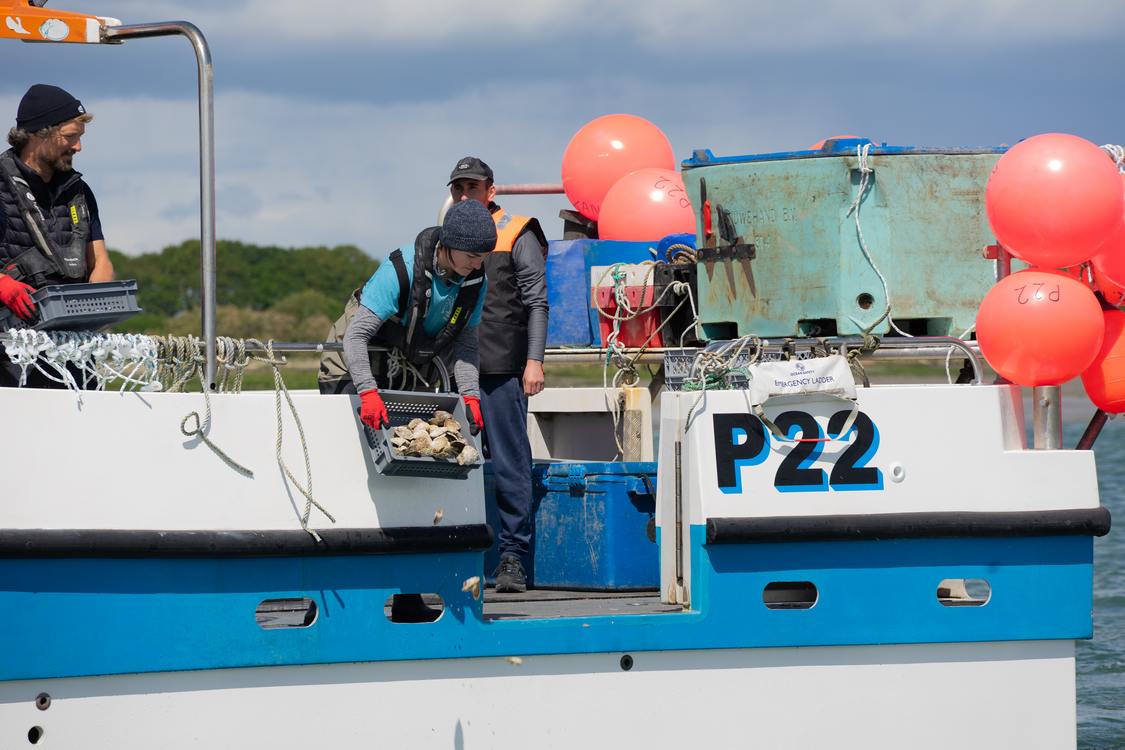
Last week, volunteers dumped 20,000 oysters into English waters to recreate historic, biodiverse oyster reefs.
260 people came down to Chichester Harbor in Portsmouth to take part in what one of the participating organizations called, “the UK’s largest subtidal oyster reef restoration project.”
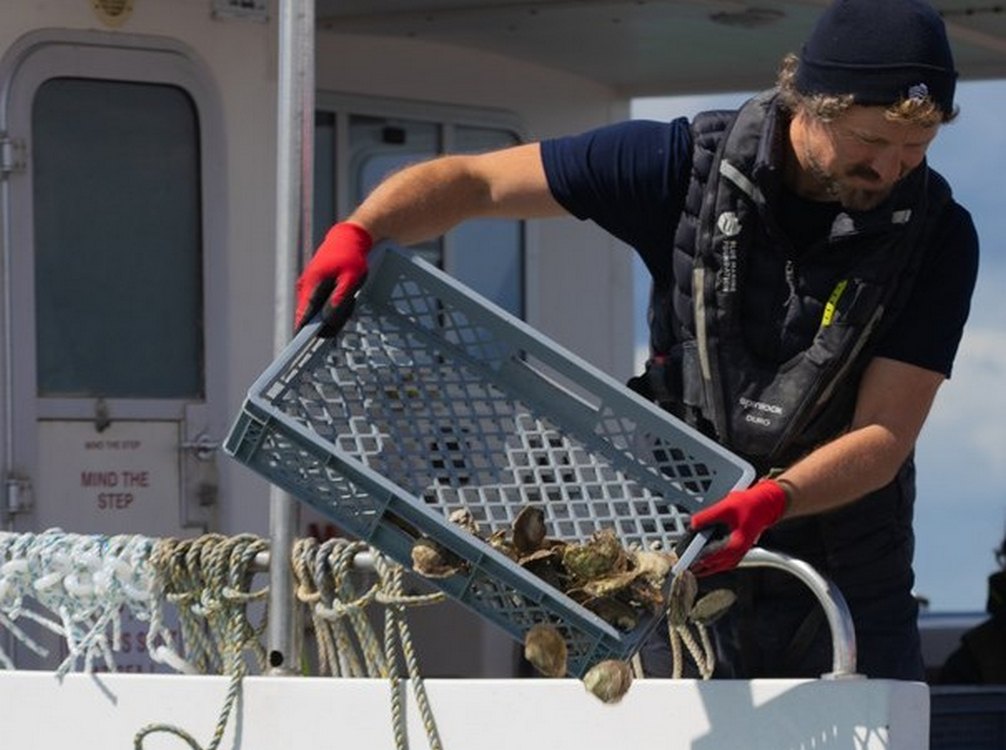
For centuries, native oysters were part of everyday life across an area of the English coast called the Solent. Coastal communities relied on oyster beds for food, trade, and employment, with evidence of oysters being harvested in the harbor dating back to Roman times.
The restoration aims not only to recover a lost species, but to help reconnect the region with an important part of its maritime heritage.
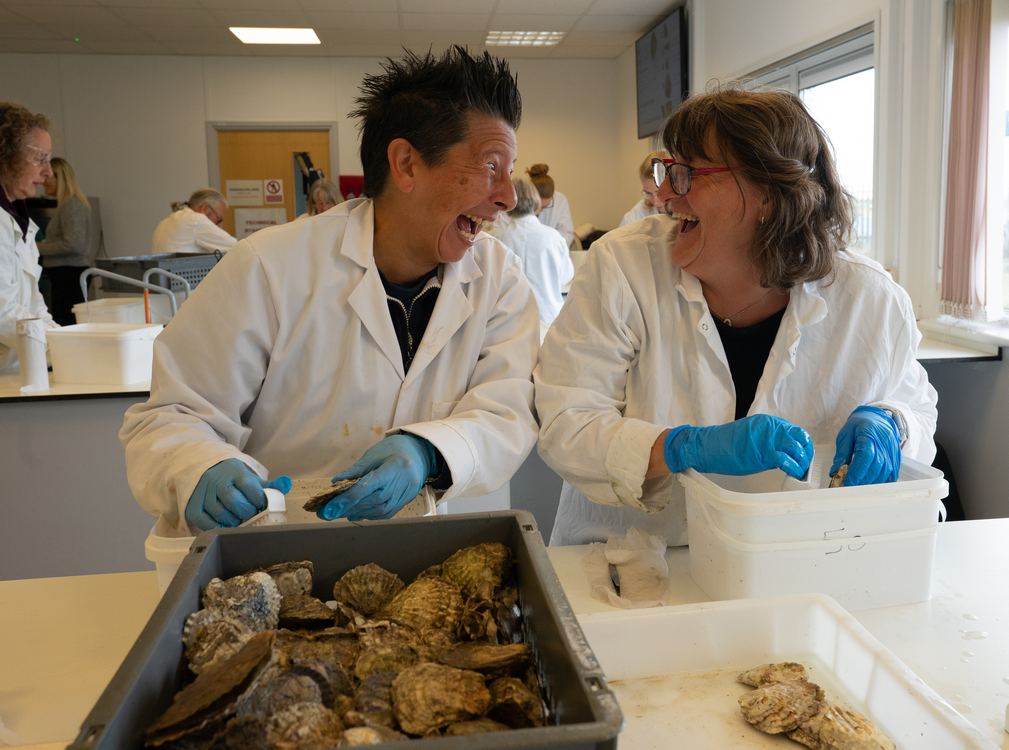
The large-scale effort forms part of the Solent Seascape Project, and is led by ocean conservation charity Blue Marine Foundation alongside Chichester Harbor Conservancy and the University of Portsmouth’s Institute of Marine Sciences—where volunteers arrived to help clean and carefully check the oysters as part of biosecurity procedures organized by the scientists there.
“This is a hugely significant moment for marine restoration in the UK,” said Dr. Luke Helmer, from the Solent Seascape Project.
“Native oysters were once abundant across the Solent, but populations have collapsed over the last century. By restoring oyster reefs at this scale, we’re helping rebuild an ecosystem that supports biodiversity, improves water quality, and benefits coastal communities.”
Despite the decline described by Dr. Helmer, oysters remain one of the marine environment’s most important ecosystem engineers. A single oyster can filter up to 200 liters, or around 44 gallons of water a day.
MAKING WATERS WILDER:
- Mauritius Restores Reefs with Heat-Resistant Coral and Sees 98% Survival Rates
- Locally Extinct for a Century, Bay Scallops Thriving Again on Virginia Shore of Chesapeake Bay
- Smashing 6 Million Sea Urchins with Hammers Saved a California Kelp Paradise Thanks to Volunteer Divers
This improves water quality while the reefs they form create habitats for hundreds of marine species and help protect coastlines from erosion.
“What’s especially exciting is the scale of public support behind this effort. Having hundreds of volunteers directly involved in preparing oysters for deployment shows how strongly people want to be part of restoring our seas.”
This is not the coalition’s first mass-volunteer effort. In 2025, the Solent Seascape Project organized the planting of 120,000 seagrass seeds in and around the mouth of the Hamble river. A few months on, the plants have created a saltmarsh area the size of a soccer field. The local community contributed more than 700 volunteer hours to seagrass seed collection alone.
SHARE This Massive Community Effort With Your Friends Who Love The Sea…