













Recently, an Indian environmentalist and editor was invited to share his incredible work restoring hundreds of natural and man-made water sources all across India with a unique style of landscape engineering.
His nonprofit has cleaned and reshaped more than 600 bodies of water either to a state of nature or to a clean and functioning source for human use.
Often incorporating letters and designs made of soil in the middle of reservoirs, ponds, and spillways, their unnatural shapes fulfil very natural processes like cycling water to prevent stagnation and offering birds firm ground to nest on.
The Environmentalist Foundation of India (EFI) works hard to help water sources big or small, natural or manmade, not only because they often bear the brunt of India’s pollution problem, but because for millennia, water has been a sacred embodiment of spiritual and physical energy for the subcontinent and her people.
It’s easy to convince a nation which worships a river that all water is sacred—necessary to sustain the country’s huge population, rich agriculture, and priceless wildlands.
“Water and nature worship has been an integral part of our cultural evolution,” EFI’s founder, Arun Krishnamurthy, tells CNN.
“We understood that without water, there’s no life. For us, water is God, and water means energy, and thanking water is what most and all celebrations are about.”
EFI has successfully cleaned and restored nearly 75 water bodies just in and around Chennai, the capital of Tamil Nadu—1 of 19 Indian states EFI has worked in.
Their work incorporates a number of landscape engineering methods, like shallow-shored embankments to allow animals to easily descend to the river to drink without causing erosion. Recharge boxes are short innocuous pits dug into the landscape surrounding the water body to catch and funnel rainwater into the underground water table.
Islands are a common feature in the restored water bodies, many of which are shaped like the letter G, or like the constellation Pisces, or as a island surrounded by a moat upon an island in a lake. These attract nesting birds and help channel water from different sectors of the lake, which not only helps to oxygenate the water but prevent it from becoming too stagnant.
INDIAN WATER CONSERVATION: Man Revives Iconic Indian Lake by Converting Lake Weed Infestation into Organic Fertilizer Business
“How was the embankment laid? Where was the palm tree planted? How was the canal cut?” Krishnamurthy said, explaining how many of the strategies were taken from their ancestors’ designs. “So taking lessons from the past, adapting it to the present-day challenges is what we are implementing.”
Many of the restoration projects involve the clearing of both waterborne and bankside weeds, which often clump up in horrendous tangles that require hydraulic excavators. Desilting—the removal of the layers of topsoil and dust runoff from nearby roads and agricultural fields comes next, before a double embankment is dug and native vegetation planted around the water body.
LOVING WATER: Abandoned Wells Turned into Whimsical Sculptures to Irrigate Villages with a Smile in India
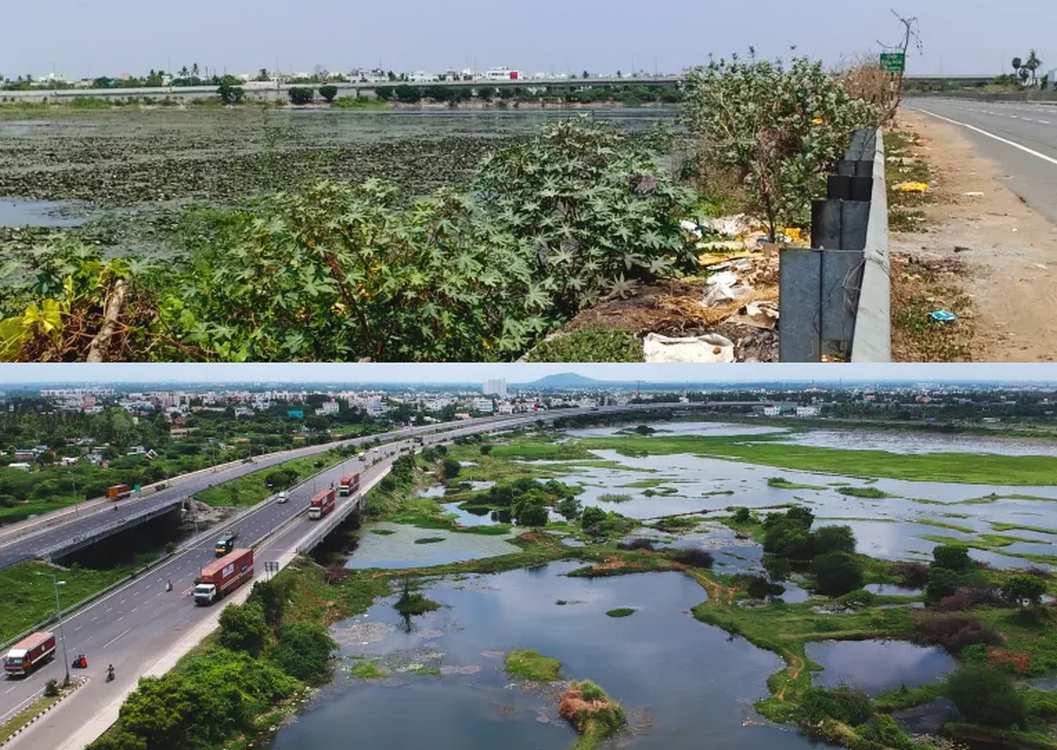
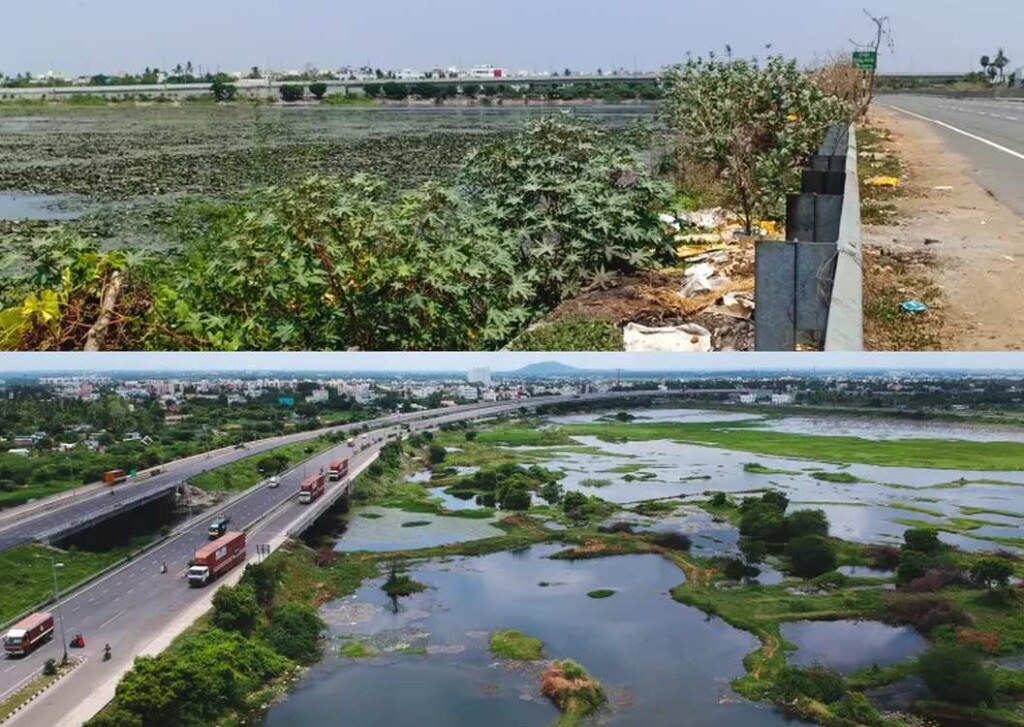
This was how the 76-acre Vandalur Lake along the southern beltway road of the Chennai metropolis was restored to a natural paradise of green and blue. The layers of silt at the bottom led to a much lower water infiltration rate into the ground. This lack of water control saw flooding in the nearby towns, and because of the pollution in the lake, the floods brought many waterborne diseases.
That’s just one of 600 mini tragedies of the commons that EFI has helped relieve.
SHARE This Amazing Nonprofit Making A Huge Difference In The Lives Of Indians…