All News - Page 1066 of 1715 - Good News Network
Home Blog Page 1066

Transforming Lion Killers into ‘Lion Guardians’ in Africa

white-lions-DotOrg

“Armed with a doctorate in environmental studies, a young woman has found one solution to help the lion population in Africa grow. Her nonprofit turns Maasai warriors — who have a tradition of killing lions — into lion protectors,” reports CNN.

Hazzah realized that Maasai warriors, the leaders and protectors in their community, would be the best ambassadors for lions. She began teaching them the benefits of protecting lions, with an emphasis on preserving their culture. In turn, the lessons began rippling through the entire tribe.

(READ the story from CNN)

Photo credit: WhiteLions.org / Story tip from Mike McGinley

Soldier’s Letter Details WWI Christmas Day Truce 100 Yrs Ago

First world war soldiers playing football

“Dearest mother, I have seen one of the most extraordinary sights…”

So begins a letter from a Scottish soldier in 1914 — a letter just published that confirms the Christmas Day football match between warring sides as seen through the eyes of a soldier for the first time, according to the Independent.

The Christmas Day Truce happened 100 years ago today, between England and Germany, when both sides laid down their weapons in a 2-day respite from World War I to wish each other Happy Christmas, exchange items — and play football.

“About 10 o’clock this morning I was peeping over the parapet when I saw a German, waving his arms, and presently two of them got out of their trench and came towards ours,” wrote Captain A D Chater in the letter.

“We were just going to fire on them when we saw they had no rifles, so one of our men went to meet them and in about two minutes the ground between the two lines of trenches was swarming with men and officers of both sides, shaking hands and wishing each other a happy Christmas.“

“I went out myself and shook hands with several of their officers and men,” Captain Chater wrote.

“From what I gathered most of them would be glad to get home again as we should – we have had our pipes playing all day and everyone has been walking about in the open unmolested.”

“We exchanged cigarettes and autographs, and some more people took photos.

WWI Christmas AD Sainsburys YoutubeGrab“I don’t know how long it will go on for – I believe it was supposed to stop yesterday, but we can hear no firing going on along the front today except a little distant shelling.

“We are, at any rate, having another truce on New Year’s Day, as the Germans want to see how the photos come out!”

(READ about the letter from The IndependentWATCH a beautiful reenactment on GNN)

Thanks to Sarah for the story tip!

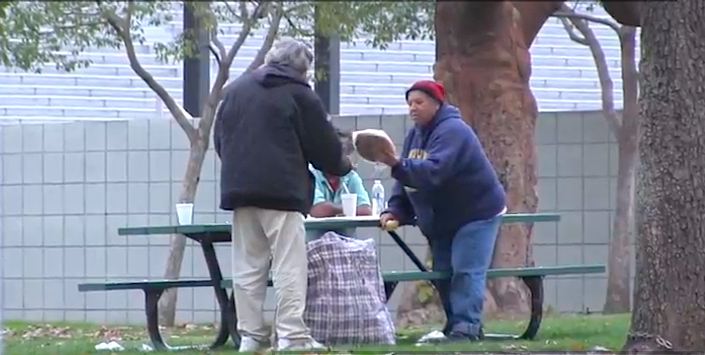
How Does A Homeless Man Spend $100? You Won’t Believe It

homeless-hands-out-treats-to-strangers-JoshPalerLin

Once again, the internet is proving to a YouTube prankster that they will get a lot more Shares and Views if the video can inspire a nation.

This video, from Josh Paler Lin, is a fine example and puts a beautiful exclamation point on the reminder, “You can’t judge a book by its cover.”

Watch what happens when Josh gives a homeless man $100. The man is so kind and humble and surprised — and articulate.

We were uncomfortable when Josh’s cameraman followed him around in secret to see what he would spend his cash on, because he went into a liquor store right away. But stick with the camera as it tracked what this fellow, Thomas, did next.

Click on the link near the end to see that Josh, after high viewer demand, set up a fundraising page for Thomas. It has raised $20,000 (which is double the $10K goal that was set) — and in just 24 hours. [UPDATE: By December 25, the fund has raised $85,000 to help him get his mother’s condominium back, if he wants to.]

And, by the way, as I’m posting this, his YouTube clip has racked up 3.1 million views in a day, and it probably will double by tomorrow.

(WATCH the video below)

Ohio Man’s Bucket List Grants Christmas Wish

gregg_dodd_gifts_courtesyphoto

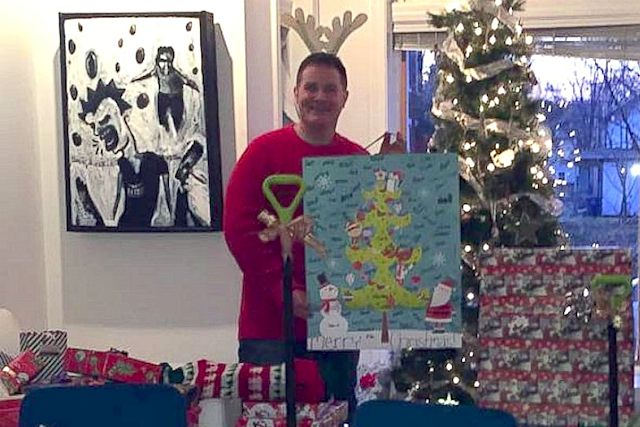
Last January 1, Gregg Dodd of Columbus, Ohio woke up and decided he was going to do 52 things for the new year. Number seventeen on the list was ‘making a wish come true’.

“Around the holidays you start hearing about all these families in need, so I started keeping an eye open on what sort of ways I could help,” he said.

Dodd heard about a local single mom with three teens and decided they would be the family whose wish he would grant this year.

With 200 people buying gift cards and sending cash donations, with totals reaching an estimated $5,000, he said, “I’m not sure if they know that magnitude of what’s going to happen.”

Let’s hope there is an update after the family gets their surprise.

(READ the story from ABC-8)

Story tip from Kelly Harrington / Photo from Gregg Dodd

There was a Cockroach in my Bed + Other Surprises

Shocked-surprised-lego-face-CC-Pascal-pasukaru76

When I moved in with my boyfriend, about 2 months ago, I decided to play a little “I love you” prank on him. I put a rubber cockroach on the corner of the box spring just underneath the bed skirt on his side of the bed.

I figured that over time the cockroach would fall out while he was adjusting the bed skirt or changing the sheets. He would jump in shock and I would giggle in pranking victory.

Problem is… I forgot it was there.

Then today, while putting fresh sheets on the bed, I had to adjust the bed skirt for the first time since I moved in. I lifted the fabric and there it was…

A two-inch long cockroach!

I screamed. My heart raced. I dropped the mattress and ran out of the room. Then I realized it was the rubber cockroach I had put there to scare my hunni…

I had pranked myself!

I went back and looked just to make sure it was the rubber one. It was, and I could wipe the sweat off my forehead. After the jolt of surprise, I couldn’t stop laughing. The adrenalin and humor made my day.

I think it’s important to acknowledge that sometimes we literally surprise ourselves. Not just with pranks meant for someone else, but also with what we are capable of.

There is more potential inside of each of us than we realize.

As we get closer to a New Year, open yourself up to new challenges. You may discover that you have completely untapped happiness, purpose and enthusiasm for life.

Try new things. Take the road less traveled. Make up new rules for your life that align with joy. Open yourself up to new people. Take the risk of being emotionally vulnerable. Climb a tree. Sing at the top of your lungs in your car. Make your neighbor cookies. Write a love letter. Hug everyone a little bit longer than usual.

All of these serve to get you out of your comfort zone and add some extra zest (post cockroach rolling laughter) to your life. There are always ways to challenge yourself to live more, give more, and love more. And here is a way to challenge yourself to give more and love more of YOU today…

Do something today that may shock future you. Sit down and write out all of the talents, gifts, skills, and attributes that you possess that make you miraculous and unique. Add a few sentences of pure motivation and love. Fold it up, perhaps put it into an envelope, and hide it somewhere. Forget about it. You’ll find it when you least expect it and maybe need it most.

michelle-ploog-authorphoto[EDITOR’S Note: Great idea, Michelle! Especially for the New Year.]

Thank you for reading!!
Much Love and BIG smiles,

Michelle Ploog
[email protected]
www.michelleploog.com
twitter.com/michelleploog
facebook.com/michelleploog

Photo (top) by Pascal pasukaru76 (CC license)

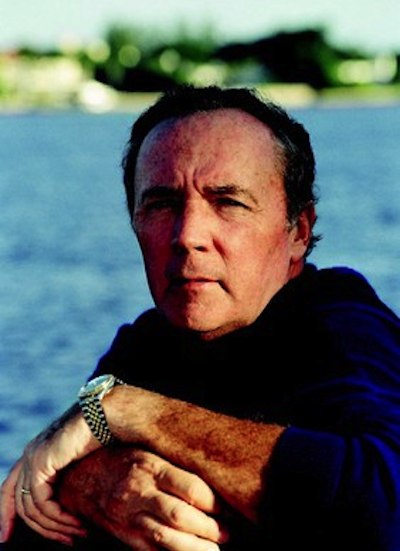
James Patterson Gives a Million Dollars to Independent Bookstores

James-Patterson-author-CC-Susan Solie-Patterson-400px

81 independent bookstores across the United States got an early holiday gift from bestselling author James Patterson.

Patterson, who earlier this year doled out grants totaling $535,000 to 98 booksellers, has given another $473,000 to dozens more stores to place a big red bow on his $1 million #SaveOurBooks campaign.

“Here’s to a joyful holiday season for booksellers everywhere,” said Patterson in a prepared statement.

“Here’s to more parents and grandparents coming to their senses and giving their kids books—yes, books—for Christmas and other holidays. Here’s to local governments waking up to the fact that bookstores and libraries are essential to our way of life.”

A number of stores–including Kramerbooks & Afterwords in Washington, D.C., and Sherman’s Books in Bar Harbor, Maine–requested the money to fix up their physical space, while Greenlight Books in Brooklyn, N.Y., will use the money to update its computer system. – Publishers Weekly

Want to help turn-on some video-crazed youth to reading? Patterson, normally known as an author of suspense thrillers, also writes entertaining books for pre-teens. Check out this one about a kid who wants to become the world’s best stand-up comedian, I Funny: A Middle School Story; and this humor-packed adventure tale, Treasure Hunters — both meant for for 8-12 year olds.

(READ more about Patterson’s donation from Publishers Weekly)

Story tip from Harley Hahn

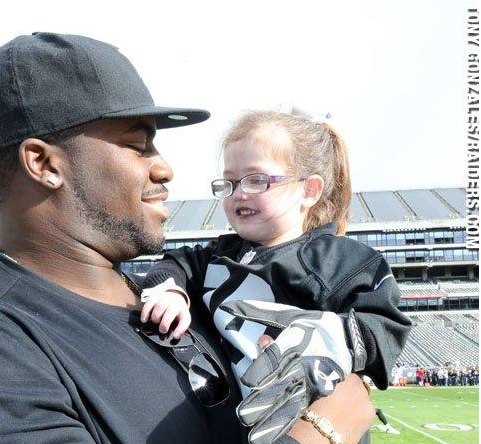
Oakland NFL Player Gives His Paycheck to 4-Year-Old with Heart Condition

OaklandRaider-with-4yo-ailing-fan-TonyGonzales:Raidersphoto

The NFL Oakland Raiders team recently hooked up Ava Urrea—a four-year-old with a heart condition—with a lot of gifts that made her very happy. But, the team’s second-year offensive lineman, Menelik Watson, decided to take things one step further to help out the girl and her family.

In the spirit of the holidays, Watson donated an entire week’s salary to Ava’s family. BleacherReport.com reported that the check was likely in the $18,000 range.

“Athletes like Watson don’t do this for the attention, but they do deserve praise for trying to make a difference.”

(WATCH the wonderful story below from Fox sports)

Photo credit: Tony Gonzales / Oakland Raiders – Story tip from Mike McGinley

Please Join GNN to Help One Family to Keep the Lights on This Christmas

peterCampillo-gofundme

The Good News Network didn’t send any holiday marketing messages asking you to buy one of our gift memberships, or to purchase one of our tee shirts or bumper stickers. But I am asking you right now to drop everything and help one family keep their lights on this Christmas.

A GNN reader wrote to me, worried about his lovely friend, Peter Campillo of Palmdale, California. I decided, after posting so many stories about other communities rallying around someone in need, GNN would, for the first time, appeal to its readers to do some crowd-funding of our own.

If we don’t chip in to help this family of four, they will be eating Ramen noodles for Christmas — just like they did at Thanksgiving — and they will probably be evicted from their home the day after, because they were late (again) on December’s rent.

Even more than financially, a boost from our community would provide this man, his disabled wife and mother, and 16 year old son, with HOPE, which is probably more valuable. Fourteen of his friends and relatives have donated to his GoFundMe page, and posted encouraging comments there, but the $771 pledged so far is not nearly enough to cover the overdue payments racked up in the few months since it began.

I checked out his back story which goes something like this: Years ago, when he fell on hard times, he went to school to learn how to do billing for medical offices. For six years he successfully worked in the profession, until his integrity got in the way of his boss’s blind ambition to collect on an unpaid bill, which Peter said he had already taken care of. His boss called him a liar and fired him. She tried to deny his legitimate unemployment claim, but failed. That was last February. His unemployment benefits, however, ran out months ago, and things have been unraveling since. He  has applied for seasonal-type work since Halloween but has not been hired anywhere.

He does have prospects for work, but not in his chosen career. With five schools nearby training people to do his job, the 46-year-old has decided his best course is to get a new license to become a trucker, or wait until February when his friend starts a new business and can hire him.

Peter’s wife Tiffany (left), whom he calls a wonderful woman, had previously managed two restaurants until she began suffering from depression and other mental illnesses. She currently is on medication and receives a disability check, like his mother, Luwana, who lives with the family and has numerous health issues.

Most importantly, he is the father of an honor roll teenager named Peter, “My pride and joy,” who took this family photo at our request, Friday.

“I have no self esteem left nor any pride as I feel like a total and complete failure,” he told GNN. “I cannot support my own family and I feel disgraceful to be honest… It has killed me to have to ask people for help but thank God some people out there care or else I am not sure what I would do.”

Ed, the GNN reader who wrote me on Peter’s behalf,  called Peter a “Godly man,” but on a telephone call I learned that many of the churches and agencies in his southern California district refused to help them with Christmas gifts because his son is not a young child. (The family does receive food stamps, but by the end of the month, nutrition is stretched very thin.)

Of course, we can all wonder and grouse about how there SHOULD be help available, especially at Christmas, for this family. But rather than dwell on that thought and waste time, let’s just donate and help them ourselves.

Please join us in (what might become an annual tradition) our GOOD HAPPENS for One Family Campaign here: www.gofundme.com

Go to his GoFundMe page and donate if you can. I have launched the effort with my own contribution and hope you will join me.

I asked him for his address so that we might send gift cards or presents or cards. He worried that they might be evicted by the time they arrive. *UPDATE: The Campillo family address (for now, at least — and, we hope,  for the future):  1835 East Ave R-12, Palmdale CA 93550

MERRY CHRISTMAS and HAPPY HOLIDAYS and THANK YOU to ALL! xxoo

US Captain Saved 9 Chinese Fishermen Adrift After Explosion

coast guard photo of tuna vessel rescue boat

Eleven Chinese fisherman drifted in a life raft with four of them badly burned or dying in the middle of nowhere on the Pacific Ocean after their boat burst into flames on May 2, 2014.

Heeding the signs of a smoke plume in the distance, a native of California, Capt. Gregory Virissimo, was able to race to the rescue, haul the men onto his vessel and coordinate with the U.S. Coast Guard and Air Force to fly in doctors and medical supplies.

Five US doctors were dropped by parachutes into the ocean from an Air Force C-130 transport plane on the second morning after the explosion, which was the only hope of saving those critically wounded because the location was so far from shore.

Capt. Virissimo was awarded a medal this week for his actions by the the US Coast Guard.

(WATCH the video from KGTV,  and READ more about the amazing rescue from San Diego Union-Tribune)

Story tip from Pablo Schneider

Heroic Monkey Saves Dying ‘Friend’ at Kanpur Train Station

Monkey-revives-monkey-Youtube

A monkey saved the life of another monkey who fell unconscious after being electrocuted by high tension wires at a train station in India.

The life-saving monkey put forth a heroic effort to revive his friend — biting, shaking, hitting his head and finally rolling him into a trough of water.

(WATCH the video from ITN News)

Story tip from Chris

SHARE with the Buttons Below

Dog With No Paws Runs for First Time With 3D-Printed Legs

Derby the dog gets Prosthetics-3Dsystems

A South Carolina tech company has successfully outfitted Derby the dog with 3D printed prosthetics, allowing him to run down the street for the first time ever. Derby couldn’t be happier and his adopted parents couldn’t be more amazed at the transformation.

“He runs with Sherri and I every day, at least two to three miles,” said Dom Portanova. “When I saw him sprinting like that on his new legs it was just amazing.”


Derby was born with a congenital deformity characterized by small forearms and no front paws. 3D Systems designed and built the prosthetics “customized to Derby’s morphology”.

Marshaling help from Derrick Campana, a certified Orthotist at Animal Ortho Care in Chantilly, VA, and 3DS designers, Kevin Atkins and Dave DiPinto, data of Derby’s forearms and 3D scan data of a cup design, created by Campana, were used to create the 3D design. The team utilized Geomagic Freeform, 3DS’ digital sculpting platform, which allowed them to create perfect organic shapes and smooth curves for Derby’s shape.

The designers added in comfortable cups of rubber and rigid spokes to the base. Ready in a few hours, the prosthetics were shipped to Derby for testing. The design team started with short prosthetics, to help him adjust, but now are building longer and longer ones until they fit his frame.

Through the power of 3D, Derby is now able to run alongside, and sometimes past, his newly adoptive owners.

(WATCH the inspiring video below)

SHARE this Dog-lover story w/ Buttons Below…

6-year-old Cancer Survivor Donates 700 Toys to Sick Kids

6yo delivers bag of toys-King5vid

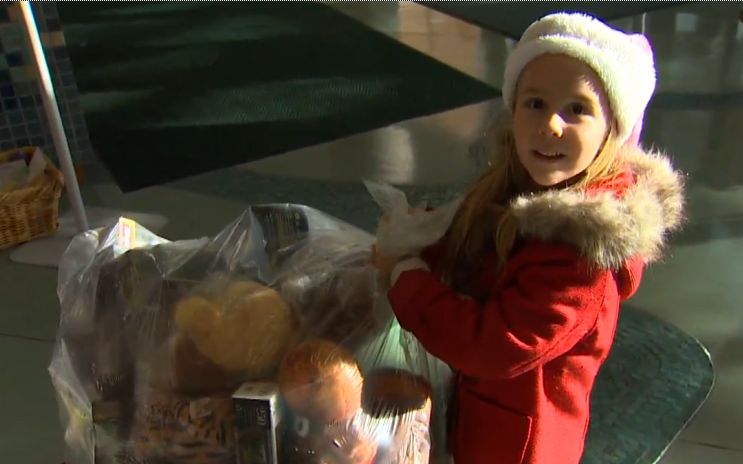
A 6 year-old girl, who knows what it’s like to be sick at Christmas, collected and donated more than 700 toys to children spending their holiday at the Mary Bridge Children’s Hospital.

“I had cancer and I got lots of toys,”  Dryden Shirks told KING-5 News. “I want to make other kids happy with toys, too.”

(WATCH the video below or READ the story from KING-5 News)

Story tip – Judy Ritchie

‘Digital Nose’ on a Chip Can Sniff out Diseases

dog nose by Mark Watson-CC

Dogs and cats, with their highly developed sense of smell, have been detecting cancer or predicting epileptic seizures for some years now..

But what if we could digitize that sense and put it into a microchip, allowing us to create a breathalyzer for diseases?

For Dr. Andrew Koehl, the inventor of the microchip spectrometer technology at the heart of this “digital nose”, the technology that will allow us to do just that is already here, reports CNN.

“We can detect down to parts per billion levels,” Koehl says. “To give you an analogy that’s equivalent to one drop in an Olympic size swimming pool.”

(WATCH the video below or READ the story from CNN)

Photo credit: Mark Watson (CC license) / Story tip from Mike McGinley

Police Chief of LOVE

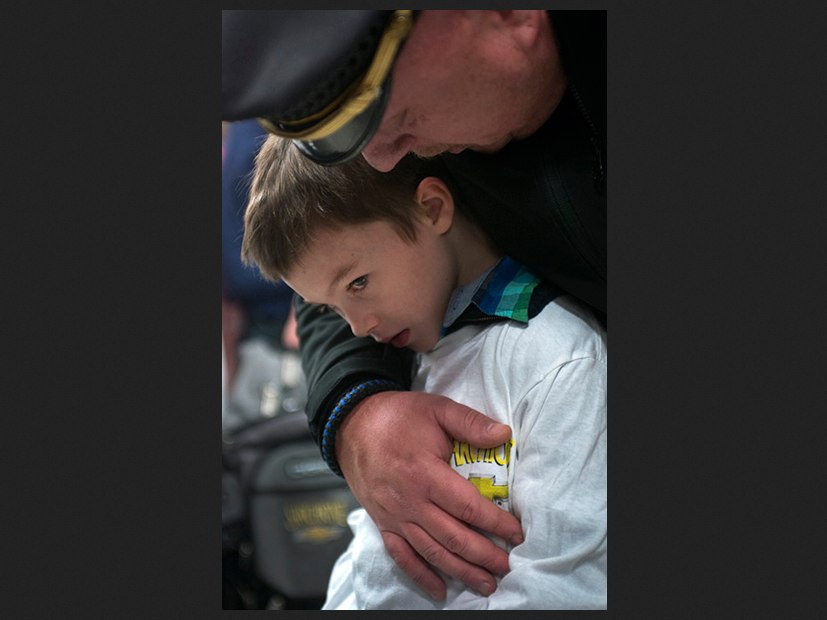
Brimfield Township Police Chief David Oliver comforts 6yo Kashe Heffelfinger

Brimfield Township Police Chief David Oliver comforted six-year-old Kashe Heffelfinger, who was overwhelmed by the notion of shopping without his mother during a holiday shopping spree at Kohl’s.

The event, sponsored by Sarchione Chevrolet, gave 33 elementary students $200 to shop with a professional athlete and volunteer adults.

To further cheer up the boy, Chief Oliver offered a ride in his patrol car and a police station visit.

Kashe’s mother did finally accompany him on the search for a robotic dinosaur.

Photo by Erin LaBelle

NASA Just Emailed A Wrench To The International Space Station

NASA-ISS Commander Barry Wilmore 3D printed wrench-640px

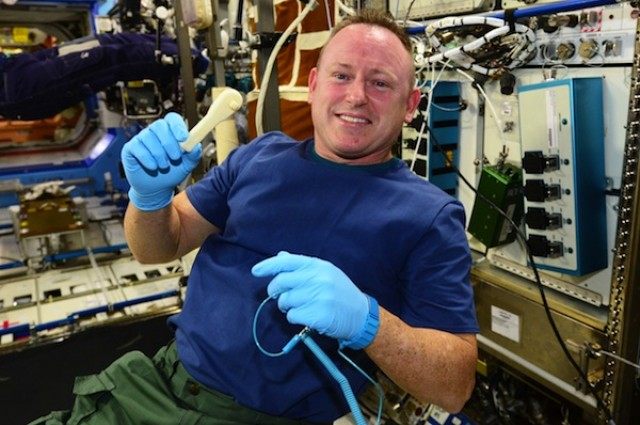
Now that the International Space Station has a 3D printer, which was installed in September, tools and parts can be emailed. It happened for the first time when ground crews overheard Commander Barry Wilmore (pictured above) saying he needed a ratcheting socket wrench.

“The socket wrench that we just manufactured is the first object that was designed on the ground and sent digitally to space, on the fly,” he said. “It’s a lot faster to send digital data than it is to send physical objects, which involves waiting months to years for a rocket.”

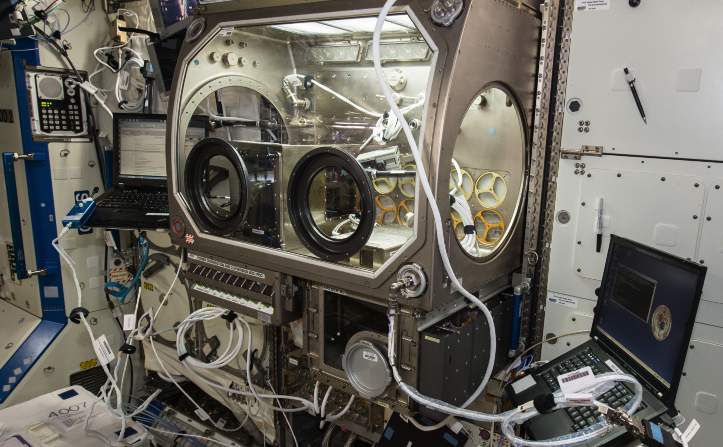
The team started by designing the tool with CAD software on the computer. Then they converted it to a 3D-printer-ready format. The plans were then sent to the space station and received by the 3D printer, pictured below. Plastic filament was heated in the printer and the tool was manufactured layer by layer.

(READ more from Medium.com)

3D printer on ISS station-NASA

Photo credit: NASA / Story tip from Mike McGinley

For 15 Years He Collected Leftover Office Toilet Paper for the Poor

toilet-paper-roll-emdot

He became known as the “Toilet Paper Guy.”

Leon Delong figured out that Seattle’s office buildings were discarding toilet paper rolls at the end of the day that were small but still had a quarter of the paper.

It bothered him, so the retired man asked the janitors to collect the stub rolls, rather than throwing them away. Then Leon delivered them to food banks.

“By the time he got pneumonia last month and called it quits at age 76, Leon was collecting partial rolls of toilet paper from nearly one-quarter of the Class A office space in downtown Seattle — hauling three heaping pickup loads every two weeks.”

“The food bank vows to keep the program going, with other drivers,” the Seattle Times reports.

(READ the story in the Seattle Times)


Photo credit – emdot / Story tip from Judy

A Decade After Asian Tsunami, New Forests Protect the Coast

mangrove forest

The tsunami that struck Indonesia in 2004 obliterated vast areas of Aceh province. But villagers there are using an innovative microcredit scheme to restore mangrove forests and other coastal ecosystems that will serve as a natural barrier against future killer waves and storms.

BY FRED PEARCE (Originally Published in Yale Environment 360)

On the day that the Indian Ocean tsunami hit his village a decade ago, fisherman Hajamuddin was at sea. It was the safest place to be. When he returned to his home port, the fishing community of Gle Jong on the west coast of Sumatra, he found it obliterated by the giant wave and under three meters of water. What was once home to 800 people was now a new bay. “My family was all gone,” Hajamuddin says.

Just seven people survived the ten-meter wave that hurtled up the beach at Gle Jong that morning. The lucky few were collecting firewood and had time to rush up the steps of the village’s only high point, its cemetery. Today, as the tenth anniversary of the disaster approaches, the village is on the mend. A combination of returnees, new residents like Hajamuddin’s new wife, and a baby boom have brought the numbers back to 130. They live in newly built homes set back from the coast.

It is a remarkable human recovery. But a closer look reveals something else just as remarkable. A few yards inland from the new post-tsunami coastline, on land left waterlogged by the killer wave, the survivors in this community have planted 70,000 mangrove trees. The trees are growing well, and villagers see them as protection against any future invasion from the ocean. “When the floods come again, the mangroves can save us,” says Hajamuddin.

The coastline of Aceh, the northernmost province of Indonesian Sumatra, took the brunt of the tsunami on December 26, 2004. Its waters ran red with blood as an estimated 167,000 Indonesians perished, nearly all of them from Aceh. Whole villages disappeared. But the color the survivors want to show you now is green. An ingenious microcredit project funded by the Dutch branch of the humanitarian charity Oxfam Novib, and carried out with local partners by the Netherlands-based NGO Wetlands International, has been helping villagers plant mangroves and other trees. They will revive nature, improve local livelihoods, and — perhaps most important of all — protect against cyclones, coastal erosion, and any future killer waves.

In a tour of the province last month, I went to villages where virtually the only survivors were those who were away from home on the day the disaster struck. In these tightly knit communities, especially on the province’s remote western coast, many people have no relatives left.

In Gle Jong, an old fisherman who is now a janitor at the life-saving cemetery quietly wiped a tear as he pointed out where the sea below us had obliterated his village. “I am the only survivor of my family,” he said. Later, as I drank coffee in a cafe just 10 meters from the new shoreline, Hajamuddin admitted, “People here are still traumatized by the tsunami. The faithful lost their faith.” Schoolteachers told me that their students still fear even a sight of the ocean or the sound of wind.
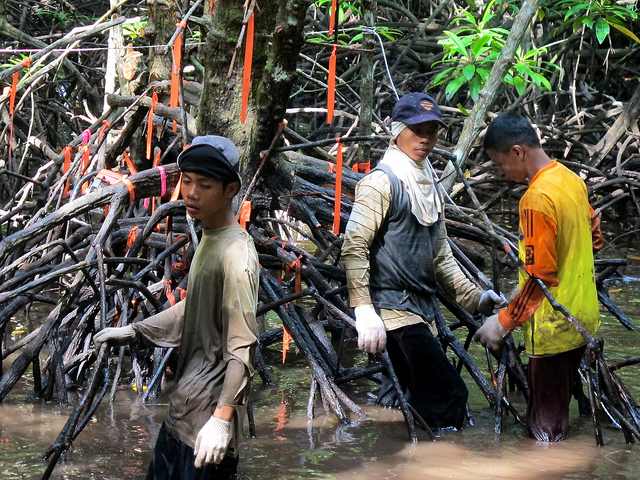
Mangrove workers Indonesia-CIFOR-CC-640pxThe 5 million euro Green Coast project has given the people of Gle Jong something to believe in for the future. The trees are bringing a return of nature. Birds flock in the cool new forests. The ponds around the mangroves have become feeding areas for shrimp and crabs. “We thought we had lost the green turtles from the beach, but a few are now returning,” said Hajamuddin.

The 2004 tsunami was caused by an earthquake in the seabed beneath the Indian Ocean, off the western shore of Sumatra, the westernmost island of Indonesia. The geological movement created a series of giant waves that battered coasts for thousands of miles. Of the 230,000 people thought to have died, almost three-quarters were in Aceh, mostly on its west coast.

As the tidal wave dissipated, some 60,000 hectares of rice fields were left flooded with salt water and piled with sand. In many places, the water never retreated. Along most of western Aceh, the earthquake caused land subsidence that left the new coastline 200 to 400 meters further inland than before. Rice paddies, coconut groves, mangroves, and entire villages became part of the seabed.

A massive international rehabilitation program followed the disaster. Wetlands International was among a handful of foreign aid agencies to target ecological rehabilitation of coastal ecosystems. The first aim was to put back the old mangrove swamps.

Mangroves grow in partially flooded sediments along thousands of kilometers of the world’s tropical coastlines. They nurture fish and protect against coastal erosion by accumulating sediment and absorbing the energy of waves and winds. They also store carbon and clean up pollution. And yet mangroves worldwide are being lost at a rate of around 1 percent a year — several times faster than the rate of deforestation on land. The coastline of Aceh has been no exception. The prime reason, as elsewhere, has been to create space in intertidal areas for lucrative aquaculture shrimp ponds.

Most of the mangrove swamps that remained around the shores of Aceh were destroyed or badly damaged by the 2004 tsunami. An estimated 30,000 hectares of mangroves succumbed, but in the process they captured and dissipated some of the tsunami’s energy and undoubtedly saved lives by providing protection for people living behind them. Those without mangrove swamps suffered worst.

So ecological rehabilitation became a priority. But first efforts often foundered, with only a fraction of plants surviving, according to a 2006 study by Wetland International’s Indonesian director Nyoman Suryadiputra, my host in Aceh last month.

One reason was that busy and distracted villagers were paid for planting seedlings rather than for nurturing them thereafter. Many swiftly succumbed to the waves or to the wild boar, which came down from the hills after the tsunami to root around in the depopulated landscape. Others never stood a chance. They were planted on the huge amounts of sand dumped by the tsunami onto previously muddy shorelines. Mangroves require mud. Planted on sand, even in places where they once thrived, mangroves swiftly died. So the Green Coast project aimed to plant more carefully in places where mangroves would thrive, and to provide incentives for communities to take ownership of the trees and to maintain and protect them.
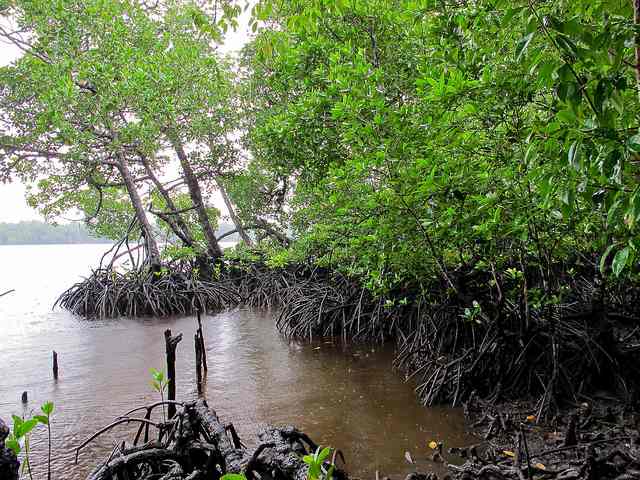
Mangrove-trees-CIFOR-CC-640pxHow did they persuade people trying to rebuild their lives in wrecked communities to spend time planting and nurturing trees? The answer was a version of microcredit called Bio-rights, developed by Suryadiputra. He offered villagers a deal. If they would set up groups to go planting, he would give them them unsecured credit to rebuild their economic lives. Villagers used the credit to buy new fishing nets, set up goat and cattle breeding programs, plant orchards, or even open village cafes. In addition, he promised that if the village groups looked after the trees, and if 75 percent or more of them survived for at least two years, then he would write off the debt.

The deal proved popular. Suryadiputra ended up running 70 village projects. In all, communities planted almost two million seedlings on some 1,000 hectares of coastline, mostly close to villages. Most survived. In only a few cases did the villagers have to pay back a cent of their credit. The result, five years after the project ended, is proud local entrepreneurs and extensive areas of forested coastline protecting new villages.

Mangroves were the trees of choice for replanting. But where sand now lines the shore, the project chose instead casuarina trees, a fast-growing type of sea pine common in the area. In Gampong Baro, a fishing community on the northern coast of Aceh, a group of 50 villagers planted 50,000 native casuarina trees on a bank of sand piled up by the tsunami wave. In places these evergreens have grown over 20 meters high in just five years. That, as locals like to point out, is higher than the tsunami wave. In the muddy places behind the new sand dunes, they have planted mangroves.

Along many parts of the Aceh coast, the idea of planting mangroves is at odds with the past practice of converting mangrove swamps to aquaculture. On large stretches of coastline, in the decades before the tsunami, mangroves were chopped down and ponds were dug to farm shrimp. The shrimp didn’t last because of the spread of white-spot syndrome, a virulent virus. Most operators soon stocked their ponds with milkfish (Chanos chanos), instead.

After the tsunami, aid agencies rushed to repair the ponds by renovating dykes and water channels and excavating sand from the ponds. But Wetlands International has encouraged their owners to adopt a hybrid landscape with mangroves planted on the dykes and in the ponds. The idea is to protect coastlines while maintaining and even increasing the economic productivity of the ponds.

It works, as people in several communities told me. At Krueng Tunong — where more than 1,000 bodies were found after the tsunami — I met Wahab, a villager who headed the mangrove planting program around 20 hectares of village ponds. “We get more fish now that there are mangroves,” he told me. “They grow faster and in greater numbers than when the ponds were bare. I can see the juveniles hiding in the roots of the mangroves. The roots help them avoid predators. We get more crabs, too.”

They told the same story in Lham Ujong, near Gampong Baro, where the “silvo-fishery” contains 350,000 mangroves planted in and around ponds covering 50 hectares.

But the bottom line is whether such planting can save lives in future tsunamis or major cyclones. The evidence that mangroves can protect against giant tsunami waves is necessarily in short supply, and often anecdotal. But it is there.

Suryadiputra worked on a study of a unique length of coast in southeast India hit by the tsunami in 2004. The straight shoreline had a largely homogeneous beach profile, making possible meaningful comparisons between the wave’s impact on stretches of beach with and without mangroves. The study, published in Science in 2005, found that areas with mangroves or casuarina shelterbelts “were significantly less damaged than other areas.” On one stretch, two villages on the coast “were completely destroyed,” whereas three others behind mangroves “suffered no destruction.”

Daniel Alongi of the Australian Institute for Marine Science in Townsville, Queensland, says modeling studies predict just such an outcome. As little as 100 meters of dense mangroves should reduce the destructive energy of a tsunami wave by as much as 90 percent, he has concluded. That could have made the difference between life and death for tens of thousands of people in Aceh in 2004.

Maybe next time, it will.

Photo credits: (top) Robert S. Donovan (middle, bottom) CIFOR.org – CC licenses

US to Restore Full Relations With Cuba, Erasing Last Trace of Cold War Hostility

us-cuba-caravan-326px

President Obama on Wednesday ordered the restoration of full diplomatic relations with Cuba and the opening of an embassy in Havana for the first time in more than a half-century as he vowed to “cut loose the shackles of the past” and sweep aside one of the last vestiges of the Cold War.

“The surprise announcement came at the end of 18 months of secret talks negotiated with the help of Pope Francis, which produced a prisoner swap and concluded by a telephone call between Mr. Obama and President Raúl Castro.”

(READ more from the New York Times)

Parents Buy Their School Crossing Guard a New Car

crossing-guard-surprise-courtesy-video

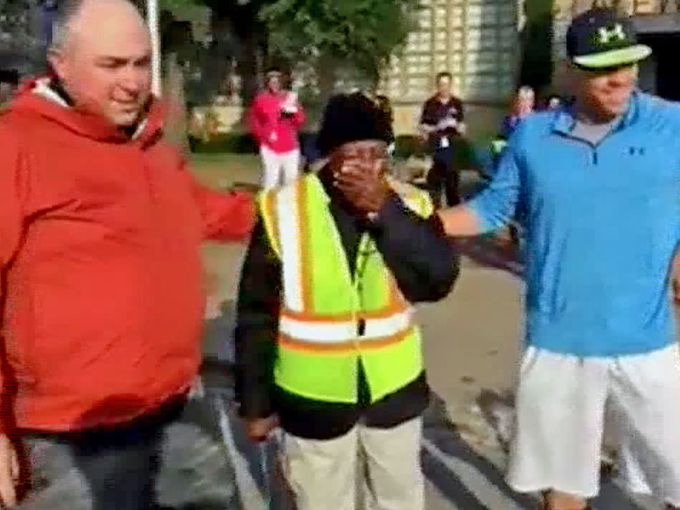
Parents stepped in to help their kids’ beloved crossing guard after his car was repossessed while he was caring for his ailing wife.

Since retiring from his job, Nathaniel Kendrick has been volunteering several hours a day at Dallas’ Lakewood Elementary school for ten years.

The parents parked the black Lincoln in the crosswalk and sauntered over to him with cameras recording. They handed him the keys and said, “Why don’t YOU move it? It’s yours.”

All he could do was cry.

(WATCH the videos below or READ the story from WFAA-8)

Below is the raw footage of the surprise…

SHARE the Story – Share the Love… (Click below)

See the Reaction When Hundreds of Shoppers Get Their Purchases Free for Christmas

16597186-mmmain

A family-owned department store chain decided to give customers at each of its 213 midwestern stores the ultimate Christmas surprise. All their items at check out time — whether toys, electronics or kitchen appliances — were given to them for free, compliments of Meijer stores.
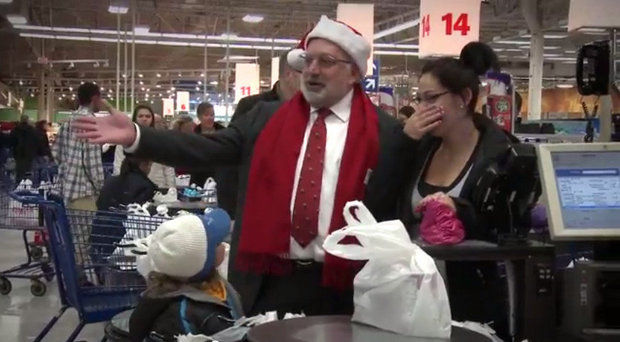
Contents in the shopping carts ranged in value from $350 to $1,200, according to Meijer, which released a video sharing the emotion-filled reactions of customers (see below).

One lucky Ohio shopper said on Facebook, “I can’t even believe I am posting this…still in so much shock! My husband and I were just shopping at Meijer buying a huge amount of Christmas gifts. When we went to get in line the store manager came over (and) introduced himself (I thought we were in trouble)… He then says to us, on behalf of Meijer they would like to wish us a Merry Christmas and pay for our Christmas shopping!”

“The holidays are a time for kindness and joy, and the ‘Very Merry Meijer’ event was a perfect opportunity for us to share the spirit of the season with those we hold dear: our customers,” said Hank Meijer, co-chairman of the 80-year-old company. “Our family has always believed that our customers don’t need us, but that we need them.”

(WATCH the video below or READ more at Michigan Live)

SHARE the Love with Buttons Below – Story tip from Kelly Harrington