All News - Page 1120 of 1715 - Good News Network
Home Blog Page 1120

Hate Crime Victim Gets Free Dental Reconstruction

Dentist_Gary_Cash-YouTube

A victim of a hate crime who got nine of his teeth knocked out is receiving thousands of dollars in free dental work, along with his faith in mankind restored.

18 months ago Andrew Oppelman was randomly attacked in Austin, Texas during Gay Pride Weekend.

Dr. Gary Cash, D.D.S. heard about the incident and wanted to help. The Austin dentist, originally from Michigan and now practicing in an office at 1500 W 38th St, has donated ongoing services to replace the teeth, and still has more to do.

Oppelman is quoted by Buzzfeed as saying, “My spirit has been broken. but because of the support I am on the mend.”

(WATCH the video below or READ the story from KXAN News)  Story tip from Sarah Owen

Inspired? Share the Kindness… (below)

Speed is Number One on 88-year-old’s Bucket List

race_car_driving_Granny-WMURvidFrom New Hampshire comes the story of an 88-year-old grandma with a bucket list laced with speed and risk.

While some people watch TV or play cards in their senior years, Flo Silva of Londonderry is grabbing all the excitement she can.

As part of her bucket list, Silva has zip-lined, jet skied, flown a helicopter, went on a hot-air balloon ride and has gone ski tubing — and has all the pictures to prove it.

On Saturday she suited up to ride in a race car going 130 miles per hour.

(READ the story or watch the video at WMUR – *NOTE: The video starts playing on its own within a few seconds)

Thanks to Lisa Bauman for sending the link

After 78 Years Twins Never Knew They Had a Sister


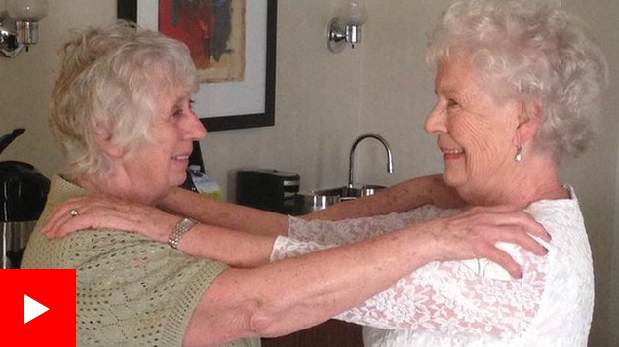
twins_reunion-BBCvid

Imagine delving into your family history and discovering you have a twin. That’s what happened to Ann Hunt, a 78-year-old, who had no idea she had a sibling at all until last year. Now she and twin Elizabeth Hamel have met for the first time since they were babies—setting a new world record.

(WATCH their reunion and READ the story in the BBC)

Giant Solar Farm Uses Molten Salt to Keep Power Flowing

Solana-Solar-power-plantRenewable energy could help underpin the grid now that the world’s biggest concentrated solar storage plant is up and running in Arizona. It’s a zero-carbon power plant that could underpin the energy grid of the future.

In the searing heat south-west of Phoenix, Arizona, 3000 mirrors carpet the desert. Part of a power plant that produces about 900 gigawatt-hours of electricity a year, enough to power 70,000 homes.

Six enormous white tanks surround the platform. Filled with molten salt, they can store enough heat to keep those turbines spinning at full capacity for 6 hours.

(READ the story in the New Scientist)

18 Months After Hurricane Took Their Dog, a Miracle in the Shelter (Updated w/ Video)

Chuck_and_Elicia_James-Monmouth_County_SPCAChuck James and his wife, Elicia, lost their dog Reckless in superstorm Sandy when their fence was destroyed. Just his collar remained, caught in the fence..

After giving up hope of ever finding their friendly terrier-pit bull mix again, they finally decided to adopt. When they arrived at the Monmouth County SPCA, a miracle was waiting.

“Literally when we opened the double doors, the first cage we walk up to I thought ‘that looks like Reckless,’ ” Chuck James said. “He was a little heavier and it’s been a little while, but then my wife saw the scar on his head and immediately we start tearing up and we found our dog.”

(READ the story in the Asbury Park Press)

Thanks to Lisa M. Bauman for submitting the link! – Photo courtesy of Monmouth County SPCA

From Dark Horse to Derby Winner: The Unlikely Story of California Chrome

The story behind this year’s Kentucky Derby Winner is similar, with its shades of a hero story, to the winning saga of Secretariat.

Flash back to 2008: She ran so poorly in her first three races that she was dropped into the lowest rung at Golden Gate Fields, a track outside of San Francisco.

Nonetheless, two owners, who were so clueless about horse racing that they called their partnership “Dumb Ass Partners,” bought the mare for $8,000. What was more unbelievable was their decision to breed the undersized and underperforming horse.

The rest is history: That mare bred a foal called California Chrome, the $2 million Kentucky Derby Winner on Saturday.

The Dumb Ass partners are celebrating their dumb luck, after hiring a horse jockey from Mexico that learned to ride on donkeys, and using a 77-year-old trainer with a hard luck story of his own, who is now the oldest ever to win the Derby.

(READ the story in the Bleacher Report)

Thanks to Lisa M. Bauman for submitting the link!


Baby Inspires Great Customer Service for Harried Mom

Baby_is_beacon_of_hope_for_shopping_momBabies are beacons of hope in small packages. They compel people, even those in the customer service industry, to be more generous, kind, and empathetic.

I’ve never particularly had great faith in the customer service industry; but at this juncture in my life, I’m starting to come around. Overall I’m convinced that people are innately compelled to be more empathetic, and nicer, when there is a baby involved. It makes sense, really. Babies are innocent, adorable, and unadulterated; they are beacons of hope.

My baby and I went out to run errands today, and our first stop was at Old Navy. We went in with a twenty-dollar voucher and a coupon for a free baby bodysuit with any purchase. When we got up to the cashier, my morale sunk as I realized that the coupon I’d been coveting had actually expired in 2012.

I went against my instincts and decided to give it the employee, despite the technicality. She, completely cognizant of this hindering detail, accepted the coupon with a kind heart. Then after she took the twenty dollars off my total bill, she instructed me to swipe my card.

An error came up on the screen, to which she informed me that in order to use the “Old Navy Bucks” I had to pay with my Old Navy Credit Card. I responded with the notorious, deer-in-headlights- “Oh-no!-I-don’t-have-the-right-card-on-me” face. And before I could even try to negotiate with her, she had already hit a few keys on her keyboard letting that infraction slide, too!

With a feel-good attitude, my baby and I hit up Kohl’s next to get a wall decal for her nursery. I had left my Kohl’s coupons at home; but when we got to the checkout counter, in a last-ditch effort to save a few pennies, I pulled up a 15% off coupon on my phone. The store clerk told me that the coupon I had pulled up was intended for online purchases only, but that I should have received my “in-store coupons” in the mail.

In accordance with my frugal agenda, I, defeatedly, told her that we would have to return later with the “right” coupons. Before taking a farewell step, though, the woman expressed to me that she had an extra coupon on file that she could apply towards our bill! I couldn’t contain my excitement as I thanked her, and my precious baby.

I believe if it weren’t for her adorable mug, our highly successful, thrift-riddled shopping excursion would have turned out to be futile at best.

26 Million Removed From Hunger Roles in a Year

According to a recent UN report, the number of hungry people in the world has now fallen to roughly 1 in 8— 26 million fewer than a year ago—an astounding achievement.

Teen Ditches Prom At Aquarium, Joins Date At The Hospital

prom_date_at_hospital_with_Kasey_RosenKasey Rosen wanted to impress on prom night and did she ever. She had her hair and makeup done and took pictures with friends. Destination: Baltimore’s National Aquarium with boyfriend Josh Popkin.

“When I told him I was going to come to the hospital in my dress he said ‘I might actually pass out.’ It was cute,” Rosen said.

But Rosen’s prom night entrance was at D.C.’s Children’s Hospital where Popkin was suffering from a collapsed lung.

(WATCH the video below, or READ the story from CBS News)


Thanks to Katherine for sending the link!


Bulldozer Returns Former Military Base to Tidal Marsh Land

Hamilton_Wetlands_Restoration-Cal_Coastal_Conservancydotgov
On April 25, California’s Coastal Conservancy and the Corps of Engineers took the final step in its restoration of Hamilton Airfield to tidal marsh habitat, by using heavy machinery to breach the levee that has separated Hamilton from the Bay for over a century.  Bay waters rushed in as the crowd cheered.

When the San Francisco-area air base was decommissioned in 1996, some in the community wanted it replaced with another airfield. But community members like Novato City Councilwoman Pat Eklund pushed to have it restored to open space.

The 648-acre wetland restoration project in Novato along the Marin shoreline will help improve the health of the bay, its wildlife and fish, but also, with rising sea levels, it can provide a buffer against storms and damage to surrounding communities.

The site was cleaned up and filled with 5.6 million cubic yards of dredged material, mostly from the Port of Oakland, to raise the elevation and speed conversion to tidal marsh habitat.  A 2.7 mile section of Bay Trail was completed as part of the project, so the public can visit the project and enjoy the wetlands and wildlife that are now flourishing.

(READ the story at NBC San Francisco)

National Parks Announce Photo Contest Winners

1st- Pictured Rocks National Lakeshore in Michigan by Courtney Kotewa

Pool Canyon by Darrell Staggs

The National Park Foundation announced the winners of this year’s photo contest. The annual Share the Experience contest encourages amateur photographers to explore America’s federal lands and submit their favorite shots.

Nearly 20,000 photos were submitted over the course of the contest, which ended December 31, 2013. Courtney Kotewa of southern Michigan won the $10,000 grand prize for her image captured during a family outing to Pictured Rocks National Lakeshore along the shore of Lake Superior.

Second place and $5,000 went to Michael DeWitt of Ashland, WI, for his photo of the sunset through an ice-covered porthole during a winter canoe trip in Apostle Islands National Lakeshore. Third place and $3,000 went to Darrell Staggs of Mooresville, IN, for his illusionary photo that appears to show a hiker walking along the edge of a cliff in Glen Canyon National Recreation Area. (Click on a photo to enlarge or continue reading below)

The winning picture may also be featured on the annual Federal Recreational Lands Pass.

View a complete list of the 2013 winning photos here.

You can enter the 2014 Share the Experience photo contest online through December 31 at www.sharetheexperience.org.

Winners also received outdoor gear provided by Celestron, hotel packages courtesy of Historic Hotels of America, and an annual Federal Recreational Lands Pass.

There are also prizes for fan favorites and the following six category winners:
Adventure and Outdoor Recreation
Historical and Cultural
Scenic, Seasons, and Landscapes
Let’s Move Outside
Wildlife
Night Skies (a new category for the 2014 contest)

Share the Experience is the official photo contest of America’s national parks and federal recreation lands. The 2014 contest is sponsored by the National Park Foundation, ACTIVE Network, and Celestron in partnership with the National Park Service, the Bureau of Land Management, the Bureau of Reclamation, the U.S. Fish and Wildlife Service, the U.S. Forest Service, and Recreation.gov.

Sharp Decline in Maternal and Child Deaths Globally, New Data Shows

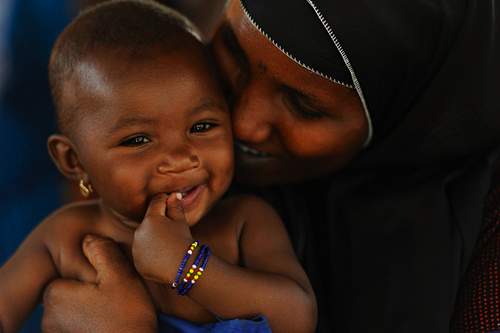
African baby and mom-Niger-UNICEF-NyaniQuarmyne

African baby and mom-Niger-UNICEF-NyaniQuarmyne
Since the start of an international effort to address maternal and child mortality, millions of lives have been saved globally, a new study shows.

In 2000, the Millennium Development Goals (MDGs) were established by the United Nations to drive maternal and child deaths down by 2015 and indeed the pace of improvement accelerated  resulting in child deaths falling 48% globally between 1990 and 2013. Maternal deaths fell significantly over the same period.

The vast majority of countries saw accelerated reductions in maternal and child deaths – with child deaths declining by 3.5% per year since 2000 and maternal deaths by 2.7% per year since 2003.

Forty-five countries, including 27 in the developing world, are on track to meet the MDG target of reducing child death rates by two-thirds of 1990 levels by 2015, while only 16 countries – most in Central and Eastern Europe – are likely to achieve the MDG 5 target of a 75% reduction in their 1990 maternal death rate by 2015.

The results appeared in two separate studies. “Global, regional, and national levels of neonatal, infant, and  under-5 mortality during 1990–2013: a systematic analysis for the Global Burden of Disease Study 2013” and “Global, regional, and national levels and causes of maternal mortality during 1990–2013: a systematic analysis for the Global Burden of Disease Study 2013” were published May 2 in The Lancet.

The study on child mortality shows that maternal education and income growth have had a significant impact in reducing child deaths. In addition, there is a strong trend in rich and poor countries that appears to be related to technological and other advances, such as vaccine and drug innovations.

A separate IHME study found that donor spending on maternal and child health grew substantially since 2000, indicating that the decline in deaths comes at a time of increased investment.

“The fact that we are seeing faster declines in child and maternal deaths in so many countries worldwide shows that international consensus around a framework like the MDGs focuses action and makes a difference,” said Dr. Christopher Murray, Director of IHME and a co-founder of GBD. “As the world looks to 2015 and sets the post-MDG agenda, our findings provide a close look at what is working and point to where greater attention is needed to continue improving in maternal and child survival.”

______________________________________________

______________________________________________

Key drivers of progress in reducing child deaths at the global level include maternal education, medical and public health innovations, and rising income. For each additional year of school mothers complete, child deaths drop by more than 8%. New drugs, vaccines, and other health innovations led to 4.2 million fewer child deaths in 2013, compared to 1990; and rising per capita income led to more than 900,000 fewer child deaths. Policies that reduce anemia and malnutrition, prevent malaria during pregnancy, provide calcium and micronutrient supplementation, and encourage skilled birth attendance likely will lead to even greater improvements in child and maternal health, the researchers note.

These positive trends show that it’s possible for millions of children’s lives to be saved in a short amount of time, if current trends persist.

Key child survival (MDG 4) regional and country findings:

  • mother with baby - USAID photoForty-five (24%) of the countries – 27 in the developing world – included in the study are on track to meet the MDG 4 target of reducing child death rates by two-thirds of 1990 levels by 2015.
  • Two-thirds of the global decline in child deaths since 2000 occurred in just nine countries – India, China, Ethiopia, Bangladesh, Indonesia, Pakistan, Brazil, Afghanistan, and Nigeria.
  • The country with the lowest child death rate was Singapore, at about 2 deaths per 1,000.
  • Turkey and China received relatively little international funding for health, yet made significant progress, reducing child deaths by the MDG goal of more than 4.4% per year since 1990.
  • The 10 countries with the lowest child survival rates in 2013 were all in sub-Saharan Africa.

“While a majority of the world’s countries will not achieve MDG 4, tremendous progress has been made,” said study author Haidong Wang, Assistant Professor at IHME. “Policy changes, increased development assistance for health, expanded HIV treatment programs, and greater access to child services are all important benefits of the push to achieve these goals. In the post-MDG era, countries will be well-served to continue these efforts.”

Key maternal survival (MDG 5) regional and country findings:

  • Sixteen countries – most in Central and Eastern Europe – are likely to achieve the MDG 5 target of a 75% reduction in their 1990 maternal death rate by 2015. They are Albania, United Arab Emirates, Bosnia and Herzegovina, Belarus, China, Estonia, Lebanon, Lithuania, Latvia, Morocco, Maldives, Mongolia, Oman, Poland, Romania, and Russia.
  • East Asian countries have made the most progress toward MDG 5, reducing maternal mortality by an average of 9% per year since 1990.
  • Maternal mortality in sub-Saharan Africa and the Caribbean either held steady or increased from 1990 to the mid-2000s – even doubling in Southern Africa – before beginning a fast decline following establishment of the MDGs.
  • Maternal death rates were highest in South Sudan and lowest in Iceland.

“In the next 15 to 20 years, it is possible to bring maternal death rates down to levels currently seen in most high-income countries, but much work remains to be done,” said study author Dr. Nicholas Kassebaum, Assistant Professor at IHME.

Download the child mortality study here.
Thanks to B.S. for sending a link


The Choice Bus – Half School Bus, Half Prison Bus Teaches Kids Consequences

Choice_Bus_Mattie_C_Stewart_Foundation
The Mattie C. Stewart Foundation was named after an Alabama man’s mother, who was shot by his father in front of his eyes when he was boy.

The Birmingham youth ended up homeless and in poverty, and might have chosen the wrong path, were it not for a school teacher who encouraged him to do his best.

Today, Dr. Shelley Stewart is a successful businessman who wants to make an impact on youth. His Choice Bus, fabricated to be half school bus and half jail cell, creates a dramatic and lasting impression on middle and high school students across Alabama.

Instead of creating programs to keep students in school, Stewart developed a fleet of three buses, a dramatic film and learning tools that help young people understand the consequences and rewards of the choices they make.

The front of the bus looks like a normal school bus, but the back is a replica of a jail cell complete with authentic prison bars, bunk beds and a standard issue stainless toilet.

“We designed our tools to let young people and their families experience first-hand the powerful benefits of education and the likely consequences that await high school dropouts,” said the Foundation’s Executive Director Sherri Stewart. “We know from student and teacher testimonies that we’re having a positive impact on their choice to stay in school.”

(READ the story from The Daily Home – Visit www.mattiecstewart.org or check out their Facebook page)

Thanks to Mike McGinley for submitting the link!


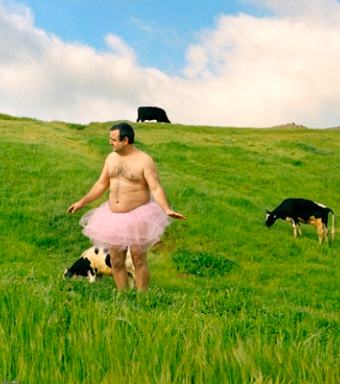
Husband In Pink Tutu Still Helping Breast Cancer Patients (New Film)

Tutu Project - photo by Bob Carey


In March 2012 we featured the story of a man wearing pink tutus and making brilliant photographs for his wife, who had been diagnosed with breast cancer. Their Tutu Project has since gained many fans. Their Carey Foundation has raised funds to provide support for breast cancer patients and their families. They also won the opportunity to be featured in a beautiful short film from Deutsche Telekom.
______________________________
Tutu Project - photo by Bob Carey

For photographer Bob Carey and his wife Linda, a big hairy man in a pink tutu has taken on special meaning in their fight against breast cancer.

When Linda was recovering from surgery, Bob discovered something he could do to ease the stress. He took photos of himself in odd locations wearing a pink tutu.

“It makes us laugh,” Linda told Yahoo News.

Oddly enough, the cancer has taught the couple that life is good.

“Dealing with it can be hard,” they wrote on their website. “But, sometimes the very best thing—no, the only thing—we can do to face another day is to laugh at ourselves, and share a laugh with others.”

Mr. Carey has now shot more than 110 images of himself in tutus — in the desert, in Times Square, in a snow storm. So far, there has been a tremendous response to the series of photos.

He plans to compile them into a book called ‘Ballerina’ which will be published this fall and raise money to assist others suffering from the disease.

In the first week after the website’s launch on March 12, it raised $8000 from pre-sales of autographed books, tee shirts and donations.

Visit the site to see more photos or contribute –  www.theTutuProject.com

Thanks to Kimberly Nielsen for submitting a link to the new video!


Positive April Jobs Report Blows Past Expectations

businesswoman w colleagues-MConnors-Morguefile

businesswoman w colleagues-MConnors-MorguefileThe U.S. economy added 288,000 jobs in April, many more than economists and Wall Street analysts had predicted. The unemployment rate also fell to 6.3%, the lowest level in more than five years.

The biggest gains were in the professional and business services sector, which includes everything from temporary help services, which added 24,000 jobs in April, to company management. New jobs in retail sales, construction and health services also helped fuel last month’s gains.

(READ more at MSNBC)

Photo by MConnors – CC via Morguefile


A Farm Grows in Brooklyn—on the Roof

chicago-rooftop-farm_ChicagoBotanicGardenPhoto

You’ve heard of rooftop gardens? Now there are rooftop farms, complete with chickens, starting to appear across the globe on sunny expanses of warehouse roofs.

Rooftop farming was born out of the green-roof movement, in which building owners cover roofs with vegetation atop special waterproof membranes.

The benefits are numerous to the building owner, as well as the community.

  • provides insulation for the building
  • keeps cooling costs down because the roof doesn’t get as hot
  • absorbs storm runoff, particularly helpful during flooding
  • adds more oxygen and absorbs carbon in the air
  • creates a habitat for local birds, butterflies and bees
  • brings color to an otherwise drab landscape

Rooftop farms take the green-roof concept a step further, with plots that provide fruits and vegetables for local residents and the chance for urban volunteers to become part-time farmers.

(READ the story from National Geographic)

(READ more about rooftop farming at NPR)

Photo: Harvesting lettuce at the Chicago Botanic Garden’s 20,000-square-foot vegetable garden atop McCormick Place West, courtesy CBG


Teenager Takes His Great-Grandmother to Prom

senior_prom_with_great_grandmother-YouTube

A  student from Rockford, Ohio who learned that his great-grandmother had not gone to the prom when she was in high school would not relent until she agreed to let him escort her to his own high school formal.

Austin Dennison first took Delores Dennison, 89, for dinner at Bob Evans (her favorite restaurant) and then the two took the dance floor — and video of their slow-dancing has gotten national attention.

The two were home by 9 p.m., which is later than Delores normally goes to bed, the Times Bulletin reported. Next up, Austin, a senior and an Eagle Scout, plans to attend Florida Gulf Coast University.

(WATCH the video below or READ the story from Yahoo News *NOTE Auto-playing audio, so adjust your speakers)

Thanks to Lisa M. Bauman for submitting the news!

Violence Against US Children Drops

A comparison of 50 types of violence against American children revealed significant declines of up to 50-63% in 27 of the categories, including assault, bullying, and sexual victimization — and no increases — between 2003 and 2011. – Study by Crimes Against Children Research Center. (CNN)

Giving Your Ideas Some Legs: Study Finds Walking Improves Creativity

walking_w_umbrella_dog_cc-flickr-h_koppdelaney
Steve Jobs, the late co-founder of Apple, was known for his walking meetings. Facebook’s Mark Zuckerberg has also been seen holding meetings on foot. And perhaps you’ve paced back and forth on occasion to drum up ideas.

A new study by Stanford researchers found support for the intuitive urge to move. Creativity levels in people rose by an average of 60 percent if they walked instead of staying seated.

The study, co-authored by Marily Oppezzo, a Stanford doctoral graduate in educational psychology, and Daniel Schwartz, a professor at Stanford Graduate School of Education, found that walking indoors or outdoors similarly boosted creative inspiration. The act of walking itself, and not the environment, was the main factor. Across the board, creativity levels were consistently and significantly higher for those walking compared to those sitting.

Walking vs. sitting

Other research has focused on how aerobic exercise generally protects long-term cognitive function, but until now, there did not appear to be a study that specifically examined the effect of non-aerobic walking on the simultaneous creative generation of new ideas and then compared it against sitting, Oppezzo said.

A person walking indoors – on a treadmill in a room facing a blank wall – or walking outdoors in the fresh air produced twice as many creative responses compared to a person sitting down, one of the experiments found.

“I thought walking outside would blow everything out of the water, but walking on a treadmill in a small, boring room still had strong results, which surprised me,” Oppezzo said.

The study, published this week in the Journal of Experimental Psychology: Learning, Memory and Cognition, also found that creative juices continued to flow even when a person sat back down shortly after a walk.

Gauging creative thinking

The research comprised four experiments involving 176 college students and other adults who completed tasks commonly used by researchers to gauge creative thinking.

Participants were placed in different conditions: walking indoors on a treadmill or sitting indoors – both facing a blank wall – and walking outdoors or sitting outdoors while being pushed in wheelchair – both along a predetermined path on the Stanford campus. Researchers put seated participants in a wheelchair outside to present the same kind of visual movement as walking.

Different combinations, such as two consecutive seated sessions, or a walking session followed by a seated one, were also compared. The walking or sitting sessions used to measure creativity lasted anywhere from 5 to 16 minutes, depending on the tasks being tested.

Two lively seniors - Photo by Sun StarThree of the experiments relied on a “divergent thinking” creativity test. Divergent thinking is a thought process or method used to generate creative ideas by exploring many possible solutions. In these experiments, participants had to think of alternate uses for a given object. They were given several sets of three objects and had four minutes to come up with as many responses as possible for each set. A response was considered novel if no other participant in the group used it. Researchers also gauged whether a response was appropriate. For example, a “tire” could not be used as a pinkie ring.

The overwhelming majority of the participants in these three experiments were more creative while walking than sitting, the study found. In one of those experiments, participants were tested indoors – first while sitting, then while walking on a treadmill. The creative output increased by an average of 60 percent when the person was walking, according to the study.

A fourth experiment evaluated creative output by measuring people’s abilities to generate complex analogies to prompt phrases. The most creative responses were those that captured the deep structure of the prompt. For example, for the prompt “a robbed safe,” a response of “a soldier suffering from PTSD” captures the sense of loss, violation and dysfunction. “An empty wallet” does not.

The result: 100 percent of those who walked outside were able to generate at least one high-quality, novel analogy compared to 50 percent of those seated inside.

No link to focused thinking

But not all thought processes are equal. While the study showed that walking benefited creative brainstorming, it did not have a positive effect on the kind of focused thinking required for single, correct answers.

walking-trail-trust-public-land.jpg“This isn’t to say that every task at work should be done while simultaneously walking, but those that require a fresh perspective or new ideas would benefit from it,” said Oppezzo, now an adjunct faculty member at Santa Clara University.

Researchers gave participants a word-association task, commonly used to measure insight and focused thinking. Given three words, participants had to generate the one word that could be used with all three to form compound words. For instance, given the words “cottage, Swiss and cake,” the correct answer is “cheese.”

In this test, those who responded while walking performed mildly worse than those who responded while sitting, according to the study.

Productive creativity involves a series of steps – from idea generation to execution – and the research, Oppezzo said, demonstrated that the benefits of walking applied to the “divergent” element of creative thinking, but not to the more “convergent” or focused thinking characteristic of insight.

______________________________________________

______________________________________________

The study’s strong findings will have legs, leading to further research on the neurological and physiological pathways, Schwartz predicts. One possible future research issue: Is it walking per se or do other forms of mild physical activity have similar elevating effects?

In the meantime, “we already know that physical activity is important and sitting too often is unhealthy. This study is another justification for integrating bouts of physical activity into the day, whether it’s recess at school or turning a meeting at work into a walking one,” Oppezzo said. “We’d be healthier, and maybe more innovative for it.”

May Wong is a writer for the Stanford News Service – Reprinted with permission
Top Photo: h.koppdelaney / (CC BY-ND 2.0) – Middle Photo: Sun Star


San Diego Airport Is First in World to Be Certified LEED Platinum

solar-array_SD_airport-Rendering

San Diego International Airport became the first in the world to be awarded LEED Platinum — the highest environmental certification possible — for its new energy-efficient green terminal.

Sustainable features of the new terminal include a 3.3-megawatt solar array, low-flow water fixtures, drought-tolerant landscaping, energy-efficient or natural lighting, reflective roofs, storm drainage management and non-toxic interior construction materials and paints.

“Not only were we able to reduce our environmental footprint during the construction process, but we’ve constructed a new terminal that will be 32 percent more energy efficient than the standard code,” said Turner Construction operations manager Dan McGuckin.


The $907 million Green Build project, which installed ten new gates with parking, was completed $45 million under budget.

The solar panels on the terminal rooftop and parking lot will be installed under a separate contract to be completed later this year. A private investor will pay for the installation and sell the energy it produces back to the airport at a lower cost than would the local utility. The 20-year contract is a win-win deal for both Borrego Solar Systems and the Airport Authority, which expects to save 10-13% on their energy costs over the period.

In 2012, San Diego also became the first commercial airport in the US to install LEDs on its runways, guard lights, and airfield signs, lowering the airport’s electricity costs by $27,000 per month, according to Clean Technica.

(Read about more of the airport’s sustainability successes at CleanTechnica.com.)