Eleven Madison's Met Life North Building - credit Beyond My Ken CC 4.0. BY-SA (left) Jan Antonin Kolar via Unsplash (right)
Eleven Madison’s Met Life North Building – credit Beyond My Ken CC 4.0. BY-SA (left) Jan Antonin Kolar via Unsplash (right)
Beneath an iconic Manhattan skyscraper, something very cool is going on with the way it’s handling electricity bills.
While the appliances and lights of the never-sleeping-city begin to turn off for the night, the building switches on a massive ice machine, which by morning light could have made as much as 500,000 pounds of ice.
Then, when New Yorkers rush to turn on their AC units, Eleven Madison stays cool and cost-effective by using that ice to chill the air circulating through the building.
It’s just one of 4,000 buildings worldwide that have installed one of the ice-based cooling systems from Trane Technologies Commercial HVAC, a product which offers significant advantages to traditional AC.
The ice machine freezes water at night when the cost of electricity and the demand for it are both low. During late-spring and summer days in the Big Apple, when as much as 70% of all electricity available on the grid is being consumed for cooling buildings, the Trane Tech ice machine pumps air over the ice to cool it down—drastically reducing the amount of electricity the building consumes.
Trane says this can lower cooling costs by 40%—a big difference when cooling costs are predicted to be the highest for Americans in a decade.
“There are six million commercial buildings in the US alone, and a very small fraction of them have installations like this,” said Holly Paeper, president of Trane Technologies Americas. “So, when everyone else is using their electricity in the middle of July to cool their building or to cool their homes, it’s a big draw on the grid.”
It is an inescapable fact of economics in the modern age that more power is used from the grid during working hours. If this somehow weren’t the case—if power demand was closer to a flat line rather than one with peaks and valleys—the world would likely be much farther along in a transition to renewable energy.
The phenomenon of peak hours means that power input has to be scalable with demand, which means the source of power has to be both storable and deployable, hence fossil fuels.
The more that technologies like the kind which cools Eleven Madison can be adopted, the more that peak demand can be evened out and the more sensible renewable energy like solar and wind will be.
A system like that in Eleven Madison isn’t available to the average consumer, but residential heat pumps work in a similar way and can also convey significant savings.
WATCH a report from CBS News below…
SHARE This Awesome And Rather Simple Way To Stay Cool And Under Budget…
Following the tragic drownings of 15 schoolchildren in his home town, an Indian man has started a swimming club that has seen more than 10,000 learn how to handle themselves in the water.
He’s narrowed down the introductory course, which focuses entirely on swimming for safety rather than for sport, to just 16 lessons that begins by removing the fear of the water and the river’s current.
It’s called the Valasseril River Swimming Club, and it now boasts thousands of members among the communities living along the Periyar river in the southwestern Indian state of Kerala.
It was created by Saji Valasseril, a humble furniture shop owner who, according to the Better India, was overwhelmed with grief following the overturning of a boat carrying a school class and its teacher in 2009. He started by teaching his children to swim, then his friend, then his friend’s children, then some from the neighborhood.
Soon the news spread that free swimming classes were available and the trickle of interest turned into a torrent.
“Most drowning cases reported here are of people boating close to the banks and not in the middle of the river,” says Saji. “You only need 16 days to learn how to remove your fear of water and save yourself from drowning.”
“All kinds of people come together, young and old, men and women, from diverse professions, backgrounds and belief systems. We don’t see any of those differences. No one is looked down or looked up, there’s only teaching.”
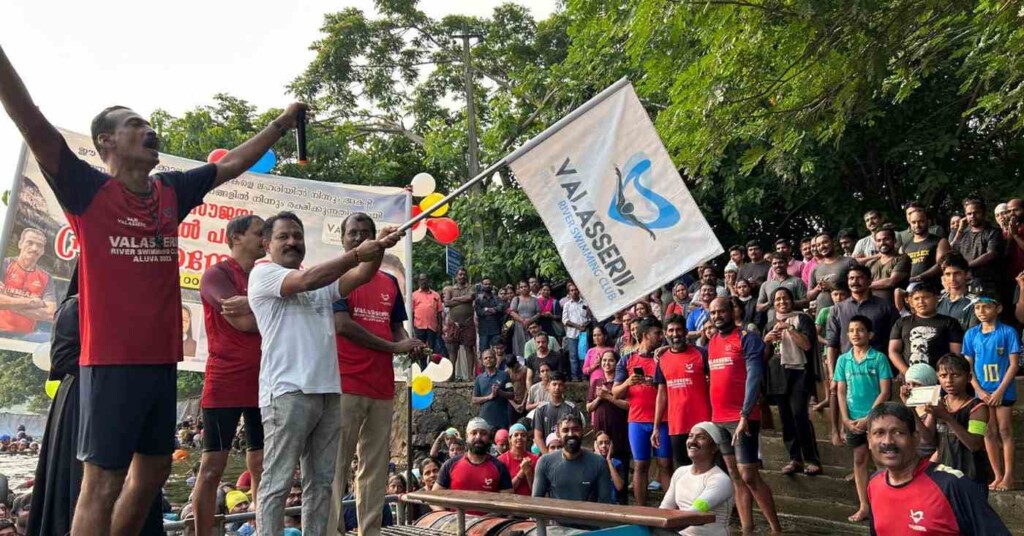
Saji Valasseril pictured center with the flag – photo courtesy of Valasseril Swimming Club
In the water of the Periyar, swimming lanes are formed by strings of floaties or tires which are separated based on difficulty level. Deeper lanes with a stronger current are playfully called the “doctorate lanes” while those under which the student can place their feet on the riverbed are called “Kindergarten.”
All children have to be accompanied by a guardian who will be able to reach them from the riverbank in case something should happen. This, the Better India reports, has led to many of the guardians becoming club members themselves. Older folks, disabled, and the neurologically disordered have all learned to swim at the Valasseril club, which even attracts athletes.
Recently, one of its teenage students set a record in the Asian Book of Records for the longest open-sea swim by a minor. Another is preparing to swim the English Channel.
Those who ‘graduate’ not uncommonly pull on a branded aquatic shirt as a volunteer teacher or lifeguard, reflecting how at 5:30 a.m. before the heat of the day sets in, and with the chorus emanating from the Thattekkad Bird Sanctuary nearby, there’s no place most would rather be.
SHARE This Man’s Incredible Aquatic Impact With Your Friends…
Quote of the Day: “Things start out as hopes and end up as habits.” – Lillian Hellman
Photo by: Shashank Sahay
With a new inspirational quote every day, atop the perfect photo—collected and archived on our Quote of the Day page—why not bookmark GNN.org for a daily uplift?
What a year it has been since we first reflected on Cannes Lions 2024. GNN’s momentum in launching new exciting products mirrors the industry around us—creator-led content is intensifying while advertising is becoming more about making a difference in the world.
We at Good News Network are incredibly energized as we gear up for Cannes Lions 2025. The insights from last year’s festival resonates with our mission, particularly the power of authentic partnerships in shaping impactful narratives. We’re thrilled to be heading back to the French Riviera again this month with even greater focus on using marketing to change the world through news and entertainment.
We’re looking forward to reconnecting and forging new collaborations with some of the most forward-thinking organizations in the industry. Our agenda includes meet-ups with our partners at Whalar Group, who continue to champion the creator economy for good.
We’re also eager to connect with the inspiring leaders at Chief, the powerful network for women executives, and explore new frontiers in distribution and audience engagement with ReachTV. Conversations with industry giants like MediaLink (UTA) and the brilliant storytellers at Inkwell are also high on our list, as we delve deeper into strategies for amplifying positive content.
The core of these upcoming discussions will be centered on what we saw take hold in 2024 and what we believe is the undeniable future: impact-driven marketing and creator-led content. We’re keen to explore how these forces can be harnessed to not only tell compelling stories but also contribute to a positive, more connected, global community.
I realized last year after my trip to Cannes (see the article from 2024 below) that the industry dialogue had shifted from if brands should focus on impact, to how they can do so most effectively and authentically—with creators and influencers leading much of that charge.
Good News Network was thrilled to be part of that evolving landscape, continually seeking out and celebrating the stories of brands and people who were not just imagining a better future, but actively building it.
Stay tuned as we bring you insights and updates from #CannesLions2025. The future of media is bright as thousands gather in France to combine creativity with a genuine desire to reach people and make a difference.
Flashbacks From Cannes Lions 2024: Reflections After an Inspiring Week
It was great running into Kenan Thompson at the NBC gathering—and watching Emmanuel Kelly perform at Songtradr was a huge highlight!
Cannes Lions 2024: Where Impact and Creators Roared, Paving the Way for a Purpose-Driven Future
(July 2024 – By Anthony Samadani) – The balmy breezes of the French Riviera carried more than just the scent of the sea during the 2024 Cannes Lions International Festival of Creativity. This year, the prestigious event was an undeniable epicenter of positive change, a vibrant hub where brands dedicated to making a tangible impact converged with the revolutionary force of the creator economy.
For Good News Network (GNN), being amidst this energy, particularly through our incredible partnership with the Whalar Group, was an inspiring glimpse into the future of media and advertising – a future where doing good is not just a tagline, but the driving force behind compelling storytelling and brand success.
Throughout the week, the Whalar Group beach served as a fantastic base for GNN, offering unparalleled access to a dynamic mix of thought leaders, innovative brands, and passionate creators, all deeply invested in harnessing the power of the creator economy for positive impact. It was clear that Cannes Lions 2024 wasn’t just about celebrating creativity for creativity’s sake; it was about showcasing how brands can be powerful conduits for good, producing advertisements and branded entertainment that not only captivate audiences but also drive meaningful change.
The buzz around impact-driven marketing was palpable. We saw countless examples of campaigns that seamlessly blended brand messaging with genuine purpose, resonating with a global audience increasingly drawn to authenticity and values-driven initiatives. This focus on “brands doing good” wasn’t a niche conversation whispered in hushed corners; it was front and center, celebrated on the main stages and recognized with prestigious awards. It underscored a significant shift: consumers are demanding more than just products; they are investing in brands that align with their own aspirations for a better world.
Hand-in-hand with this emphasis on impact was the undeniable rise of the creator economy. The festival highlighted how creators are fundamentally reshaping the landscape of commercials and branded entertainment. No longer are they just an alternative channel; they are increasingly becoming the primary architects of brand narratives. Their authentic voices, engaged communities, and understanding of digital platforms offer brands a unique opportunity to connect with audiences in possibly a more impactful way. The discussions at Cannes revolved around how this synergy between brands and creators can lead to more relatable, and ultimately, more effective communication.
Our time with Whalar Group, a global leader in unleashing the creative power of creators, solidified this understanding. Their commitment to fostering authentic collaborations that drive real-world impact mirrored the overarching themes of the festival. Witnessing firsthand their dedication to connecting brands with creators who genuinely care about making a difference was both affirming and invigorating. The conversations and connections made at the Whalar beach underscored the immense potential when purpose-driven brands and visionary creators unite.
The seeds have been planted for a coming harvest – the fusion of impact-focused branding with the dynamic potential of the creator economy. The bounty we intend to produce will emphasize measurable impact, authentic storytelling, and collaborations that leverage the unique strengths of our new partners to inspire positive action while producing more content for a larger audience.
The roar of the Lions last week was a call to action, and we’re excited to answer it for GNN with trumpets blaring! #CannesLions2024
Two national smoking surveys in the UK and the US which both concluded last October show that smoking rates are among the lowest ever observed.
The national smoking rates in the US based on a survey of 1.77 million people and 54,000 households are falling across the board, with the largest declines seen in America’s youth.
Places with historically lower rates of smoking saw more modest declines, while areas with higher rates saw the most dramatic declines. Seniors and those aged over 50 though were quitting at significantly slower rates than youth.
The findings were reported in a JAMA study with data collected from 1992 to 2022 to establish nonlinear trendlines that could be projected out into 2035 for the sake of informing health policy state-by-state.
Published this April, the study’s lead author, Dr. Matthew Stone, an assistant professor at UC San Diego, said that the national smoking prevalence is predicted via this data to fall below 5% by 2035 on a national level.
State-by-state, California, Utah, Hawaii, and Colorado are even projected to be significantly under the recommended target of 5% prevalence by that year.
“The rapid decline in smoking among young adults is clear evidence that the smoking epidemic will come to an end in our lifetime,” said Dr. Stone.
In tandem the UK has also made great progress, with smoking rates hovering around 11.5% nationally, and sitting even lower among 18-24 year-olds (9.8%). This equates to just 6 million adult smokers out of a population of 68 million.
The question—’Do you have a history of smoking’—is almost always included on medical forms and during examinations and doctor’s visits. As a variable, it must be controlled for in all studies on the impacts of any activity on human health for the work to be considered seriously rigorous science.
This is because smoking is linked to the incidence of and/or the worsening of virtually every major killer in the West, including cancer, heart disease, and metabolic disorders.
Folks who are or have been non-habitual smokers or who can start and stop whenever they want may find the characterization of smoking as an “epidemic” slightly harsh, but the impact that commercial tobacco cigarette usage has had on national health systems and individuals and their families is so significant as to be unquantifiable.
SHARE These Great Trendlines Falling Down On Social Media…
From a charming South Carolina city comes the story of how a local institution of the National Pastime became a keystone of community and history.
A hub of the local recreational economy, Fluor Field is home to the Greenville Drive, the minor league affiliate team of the Boston Red Sox.
That affiliation would leave any visiting Bostonians feeling somewhat at home—perhaps because of the giant left-field wall reminiscent of Fenway Park’s own famous Green Monster.
As well as having a monster wall, Fluor Field has had a monster impact on the local economy, one that’s estimated to have generated $300 million over its nearly 20 seasons of baseball.
Built by big out-of-state money, the only thing that’s corporate about it is the corporation it’s formed between itself and the city—part of an ambitious project which helped revitalize a struggling, seedy, and scary part of Greenville’s downtown west area.
“Fluor Field has become the front porch of the community. In the South, the front porch is where the family gathers. That’s very much how we operate the place,” Craig Brown, a former Manhattan advertising executive who owns both the park and the team, told CBS News for its ‘Eye on America’ segment.
Roughly 500,000 people pass through the park’s gates every year for High-A baseball games and other events. Reflecting Greenville’s rich history in the American automobile industry, the team name ‘Drive’ also pays homage to the BMW US Manufacturing and Michelin locations in the area.
Since Brown bought the team, fans have enjoyed the gifts of passing alumni like pitcher Clay Buckholtz, who went on to play 5 seasons for the Red Socks, Anthony Rizzo, a power hitter and 3x All Star who helped the Cubs win their coveted World Series title in 2016, and potential Hall of Famer Mookie Betts, who in 2018 became the first player in MLB history to win the MVP, Silver Slugger, Gold Glove, batting title, and World Series all in the same season.
But the team and the beautiful ballpark they play in do more than just carry the flag for a city four states away.
Following the closure of several textile mills which had played a major role in the Greenville economy during the 20th century, Fluor Field repurposed many of the old building’s features and materials—not least among which were the clay bricks used to build much of the stadium and buildings—as a means of keeping the city’s heritage intact.
“This was the transformational event. Suddenly, this area close into the stadium became a place for condos and some high rises and hotels. But beyond it, residential neighborhoods were transformed, as well,” said Greenville Mayor Knox White.
WATCH the story below from CBS…
SHARE This Story With Your Friends Who Still Have The Love Of The Game…
From Rhode Island comes the story of a woman entrepreneur looking to turn shellfish into chic designer tiling and furniture that’s totally sustainable.
The Mid-Atlantic coastline produces millions of pounds of shellfish waste every year. Beloved for mussels, clams, scallops, crab, oysters, and more, this famous American cuisine is unfortunately wasteful.
Rather than letting it all go to the landfill, and rather than continue working for big design firms in Boston and New York City that crank out huge amounts of plastic waste, Felicia Neuhof founded Shellf Life to turn these shells into a resource.
Profiled in the Boston Globe, the Vermont native developed the processing method—that sees discarded shells turned into beautiful bespoke design elements and furniture—in her kitchen.
She eventually won a major design competition—the Terra Carta Design Lab Contest, overseen by King Charles III, which helped fund her R&D that has expanded the production method from a stovetop operation to a micro-lab in Providence.
Among the more striking aspects of the Shellf Life model are the numbers. Each of the Mid-Atlantic states, despite many being quite small, boast hugely productive shellfish industries.
One single Rhode Island processor, Neuhof told the Globe, produces enough shellfish waste annually to create 30,000 square feet of tiling, or around 330,000 tiles. One in Massachusetts could produce 5,000 bathroom floors worth of tile every year and one in New Hampshire could pitch in with enough for 1,000 shower surrounds.
“New England’s annual shell waste — currently headed to landfills — could tile nearly 300 homes every year,” she said.
What’s more, the tiles are simply gorgeous. Providence mussels create a texture similar to granite, while its clams look more like unrefined sea salt. Further afield, and demonstrating the reproducibility of Neuhof’s idea, Kyoto abalone shimmers in dozens of colored flakes anchored in a sand-colored medium, and limpets from the Azores glitter in mother-of-pearl.
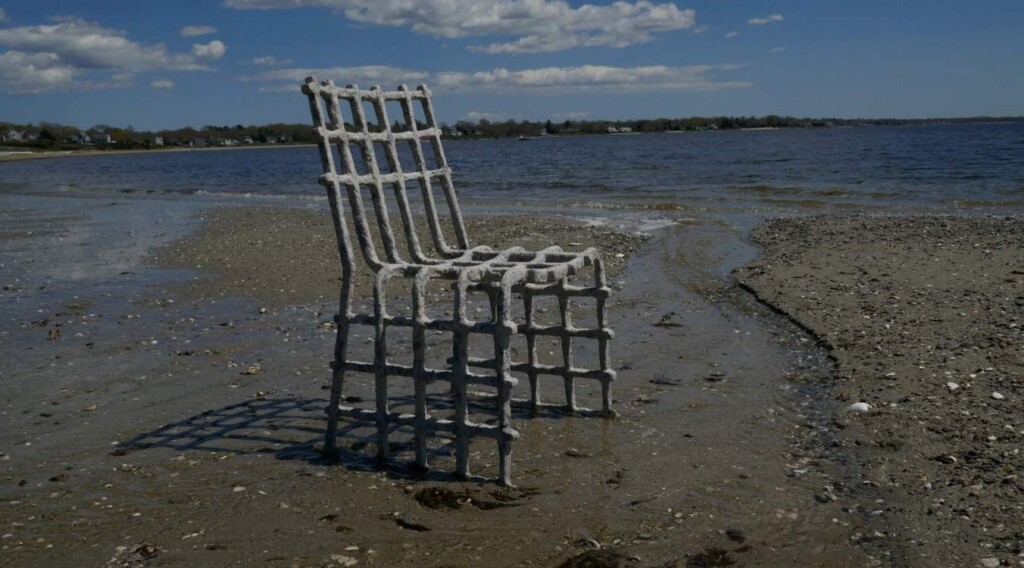
– credit, Shellf Life
Another key aspect anchoring her operations are her partnerships with local restaurants and aquaculturalists. At the City Island Oyster Reef, she’s working to help create concrete for use in the shellfish farms and sea walls from the very creatures they farm.
Among the city’s restaurants, she’s made shell collection as easy as possible. Shellf Life-branded bins are given to partnering locations, and Neuhof comes to collect them herself. She hopes to introduce these bins at city collection points so those enjoying a clam bake in their backyard can chip in.
“My goal has been to develop a system so refined that making a tile is as easy as flipping burgers, opening up manufacturing opportunities to anyone regardless of educational background,” she said.
GNN has reported on restaurant waste being used to make design elements before. In Milan, coffee grounds and orange peels—thousands of pounds of which are used every day during the city’s breakfast rush, are collected by Krill which has a patent on a 3D-printing gel which they call ReKrill, and which corporations like San Pellegrino and Four Seasons are already using their products.
In Taiwan, “sea wool” is a unique textile created with an additive derived from the pulverized shells of bivalves like mussels.
SHARE This Innovative Idea With Your Friends On Social Media…
Sarah-Jane Muirie and Ginger the tortoise - credit, Sarah-Jane Muirie, released
Sarah-Jane Muirie and Ginger the tortoise – credit, Sarah-Jane Muirie, released
Ginger was a lonely female tortoise who escaped from her home one year ago to try and find love.
Single for the first time in years, Ginger dug under the garden fence and made a slow getaway across countryside fields following the death of her longtime companion, Fred.
Her dancing days might have been behind her, but that wasn’t going to stop her from trying to find someone to share her golden years with.
Ginger’s owner, 51-year-old Sarah-Jane Muirie, is now celebrating the return of her beloved pet, who she has owned since she was a 10-year-old girl and that was found last week by a horse rider in the rural English county of Gloucestershire.
Muirie had put up signs around the area following Ginger’s disappearance last June, but said she’d given up hope after nearly a year without a single sighting.
“We had another tortoise called Fred who we lost a couple of years ago and a vet friend of mine believes she went looking for a mate,” Muirie said. “It’s that time of the year and she’s always had Fred so she’s dug herself out under the garden fence and through next doors before getting into some fields.”
“She is that well camouflaged we thought there’s no chance we would ever find her but we put up missing posters anyway.”
Ginger was discovered behind the Mount Inn pub, a good mile away from her home, with Muirie speculating she had just come out of hibernation.
“A woman in the village from Greece first spotted her but thought nothing of it as they are native to Greece. But obviously its an unusual thing to see in the UK and it was a horse rider who spotted her the following day,” she told the Southwest News Service.
“Amazingly, somebody remembered the posters we put up nearly a year ago and we then got the call. At first I thought it couldn’t be Ginger but then realized there’s probably not too many people around here with tortoises.”
Muirie said since coming home, Ginger has been enjoying the sunshine and found herself a little area where she can sunbathe and eat food. To have a pet for 40 years, she says, is so special. It wasn’t just a tortoise that came home last week, but childhood memories.
SHARE This Quaint English Story Of A Tortoise With A Broken Heart…
Quote of the Day: “Unless we remember we cannot understand.” – E. M. Forster
Photo by: Alexander Mils for Unsplash+
With a new inspirational quote every day, atop the perfect photo—collected and archived on our Quote of the Day page—why not bookmark GNN.org for a daily uplift?
The Intermountain Power Project - Photo provided to ENR by Intermountain Power Agency
Photo provided to ENR by Intermountain Power Agency
A coal power plant in Utah is set for a green transformation having reached its decommissioning year, as billions are being set aside to use modernize it with hydrogen gas.
A rare geologic feature underneath the plant will allow them to store the gas in copious amounts, making it the perfect place for that transformation to bear fruit.
For four decades, the Intermountain Power Project (IPP) has kept the lights on for hundreds of thousands of Americans in six states. But with an eye on an energy transition to reduce carbon emissions, its contracts for supplying electricity will very soon come to an end.
In 2015, the Intermountain Power Agency (IPA), a union of 23 municipalities that together own both the plant and its grid connection assets, began examining whether or not it would be feasible to replace the coal burners with Mitsubishi gas turbines which could run on a blend of natural gas and hydrogen gas.
7 years later, work began on just such a project, with the idea that 30% of the gas blend would come from hydrogen created by water through electrolysis powered by renewable energy: a true zero-emissions fuel.
Advantages exist to using hydrogen fuel rather than renewable energy. Hydrogen gas is already in a storage form, meaning more can be burned or less depending on a community’s needs, compared to something like solar which has to power something as soon as it’s generated, be stored in a battery, or be lost.
$1.7 billion has been set aside for work around the new generating units at the plant, and $2.7 billion will be spend upgrading IPA’s Southern Transmission System. Three large contracting firms have been brought onboard for the renovations, one of which is The Industrial Co. (TIC) whose project manager Petar Willhite told Engineering News Record that 2,000 employees have put more than 5 million labor hours combined into the project so far.
Part of the construction work will involve drilling access tubes down into two vast caverns which together could hold the liquid equivalent of 4.5 million barrels of oil. These will hold the hydrogen and natural gas blend on site, and offer that storage capacity to other partners and plants which may want to transition to hydrogen.
“Through a stroke of good fortune, the original Intermountain Power Project was constructed directly above a geologic salt dome that is uncommon in this part of the country,” says IPA spokesman John Ward.
“That salt dome presented a unique opportunity to develop long-term, large-scale energy storage in addition to the new generating capacity.”
The Dept. of Energy is providing a $504 million loan guarantee for the estimated $1 billion salt dome project called the Advanced Clean Energy Storage Delta. Its initial design will allow it to convert more than 220 MW of renewable energy to 100 metric tons of green hydrogen daily, according to Mitsubishi Power, which is one of the firms behind the Delta project.
All tolled, the renovations not only offer an unprecedented opportunity for energy sharing in the form of the ACES Delta project, but, on the bottom line, will reduce the operating emissions of the plant by 75% as soon as the hydrogen can enter use. If better ways of synthesizing hydrogen gas at scale can be achieved in the future, that number will only climb.
SHARE This Green Transformation In Utah With Your Friends…
Karla Flores following her surgery which removed the tumors highlighted in red - credit Karla Flores (left) - University of Maryland Medical Center (right)
Karla Flores following her surgery which removed the tumors highlighted in red – credit Karla Flores (left) – University of Maryland Medical Center (right)
Struck by one of the rarest cancer diagnoses possible, a young woman has recovered from a never-before-performed surgery and radiation therapy to come out disease free.
Diagnosed with two bone tumors, the hospital only found the second one because somebody performed an MRI scan at a spot that was lower on her spine than they were supposed to.
The story begins when Karla Flores, 19, began to experience double vision. The diagnosis was a chordoma, a bone tumor that afflicts the spinal column diagnosed only 300 times a year in a country of 330 million people.
Referred to the University of Maryland Medical Center’s department of neurosurgery, Flores was told by the doctor set to lead the effort to remove the chordoma that the malignant tumor was pressing on the cranial nerve, which was causing the double vision.
While planning for the surgery, Dr. Mohammed Labib ordered an MRI to ensure he had the best view of his quarry, only to discover that Flores had a second chordoma wrapped around her vertebrae from the front of her spinal cord. For determining the chances of such a thing occurring, one’s imagination is perhaps the only source.
For the first chordoma, Labib developed a complex surgical plan to remove the tumor with two surgeries that wouldn’t damage the delicate nerves, but as far as second one, the surgery team was left scratching their heads.
“I spoke to colleagues, and one of them said ‘You’re not gonna cure her from this,’ basically, maybe she should be more of a palliative care patient,” Dr. Labib told CBS News. “I wasn’t very enthusiastic about that.”
The following account of the surgery contains descriptions of human anatomy which some readers may find gruesome, but there’s a happy ending.
Dr. Labib’s eventual plan was nicknamed the “third nostril” approach, and it would involve accessing the tumor, which sat right at the top of the spine under the skull, through both the right nostril and the nose-side periphery of the left eye following the removal of a piece her cheekbone and eye socket membrane.
Weeks were spent studying and practicing on skull models while Dr. Labib’s surgical tools were modified for the approach.
It began when facial reconstructive surgeon Dr. Kalpesh Vakharia cut through the cheekbone, allowing Dr. Labib to reach the tumor site, which head and neck surgeon Dr. Andrea Hebert approached from behind via drilling through the vertebrae.
Including the replacement of the facial components, which utilized bone from Flores’ hip, and left no external scarring, the surgery took 20 hours to complete. When it was finished the tumor had been completely removed.
A spinal surgeon stabilized the affected vertebrae, radiation therapy confirmed Flores to be cancer free one year later, and therapists are helping her recover the movement in her eye.
“I keep reminding myself to take one day at a time and know that each step is an accomplishment. I’m also glad I stood my ground and kept looking for help until I found it,” Flores said in an emailed statement.
Dr. Labib believes the third nostril approach could become the standard procedure for reaching tumors for patients in Flores’s situation.
SHARE This Incredible Diary Of Modern Medicine In Action On Social Media…
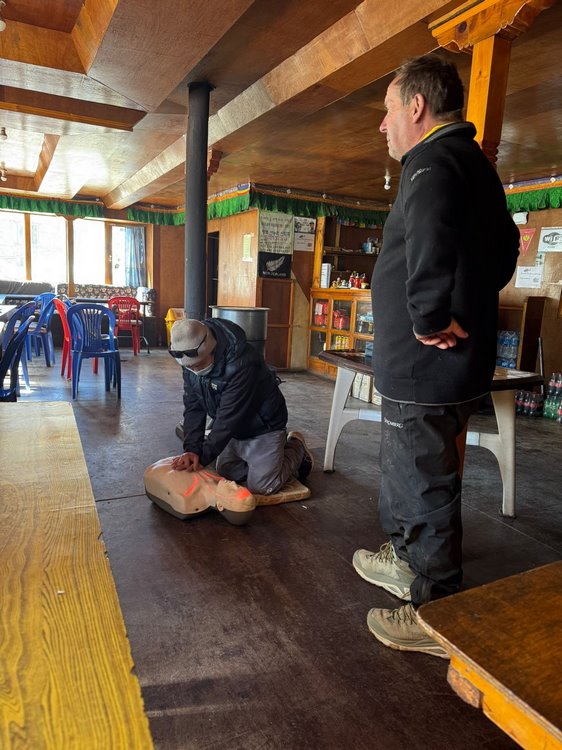
David Sullivan during the ceremonial installment of the defibrillator - credit, David Sullivan / SWNS
David Sullivan during the ceremonial installment of the defibrillator – credit, David Sullivan / SWNS
A man who visited Mount Everest Base Camp to install a defibrillator as part of his advocacy work has revealed the device saved a woman’s life just three weeks after he left Nepal.
David Sullivan is the founder of Code Blue CPR, an organization that trains defibrillator use and CPR skills at home and around the world.
Earlier this year, the 62-year-old from Surrey ventured to the Himalayas where he installed what he says is the world’s highest defibrillator. Climbers die on Everest all the time—not always of cardiac arrest—but certainly sometimes, and the use of a defibrillator within the first 3 minutes of a heart attack can improve survival rates from 8% to over 50%.
Climbing to an altitude of 22,000 feet to test the defibrillator, Sullivan then descended to one of the villages near Everest Base Camp, at just over 16,500 feet, to install the device for use.
He returned from Everest on April 30th and, just three weeks later, learned that it saved a young climber’s life after her heart stopped.
“It was the proudest moment of my life when I learned what had happened,” Sullivan told the Southwest News Service. “It was last Friday (May 23rd), at around 3:45 a.m. I have kids traveling the world so I initially thought, ‘oh my God, something’s happened.'”
“But it was a sherpa who told me the defibrillator had been activated and had saved a 30-year-old French woman’s life. I hope it will help people realize how important it is to have access to defibrillators.”
David Sullivan gave several CPR training courses to locals at a village on the slopes of Mount Everest – credit, David Sullivan / SWNS
Sullivan began his advocacy work after he lost four close friends—all under the age of 45— to cardiac arrest, and while he was in Nepal, he also gave multiple CPR and defibrillator classes to the locals who had never had access to training before.
Now that he’s back in the UK, Sullivan is preparing to present a training program to the government which would see 1.2 million children across London trained in CPR.
“We want every school to have a new defibrillator and every person in the school— students, teachers, staff—to have all the training necessary to save someone’s life,” he told SWNS. “I performed nine minutes of CPR for a young lad and used a defibrillator just three months after I had been shown how to.”
“While I was doing this, around 30 people just watched and didn’t help because they didn’t know how,” he remembered. “When the lad’s mum called me the next day to say he was alive, it changed my life forever.”
SHARE This Story Of The World’s Highest Terrestrial Defibrillator Use…
Mykale Baker working in his graduation outfit - credit Maria Mendoza
Mykale Baker working in his graduation outfit – credit Maria Mendoza
GNN readers loved the story of Mykale Baker, a teen who metaphorically leapt from atop the stage of his high school graduation right into the drive-thru window of his job at Burger King the same night.
On Thursday, a Georgia mom who had watched both Baker’s graduation and Burger King heroics, set up a surprise GoFundMe to raise some money for his eventual journey to college, and the $20,000 that was reported to have been raised this week has grown to $187,000, virtually guaranteeing him a doctorate level education at any school he cares to attend.
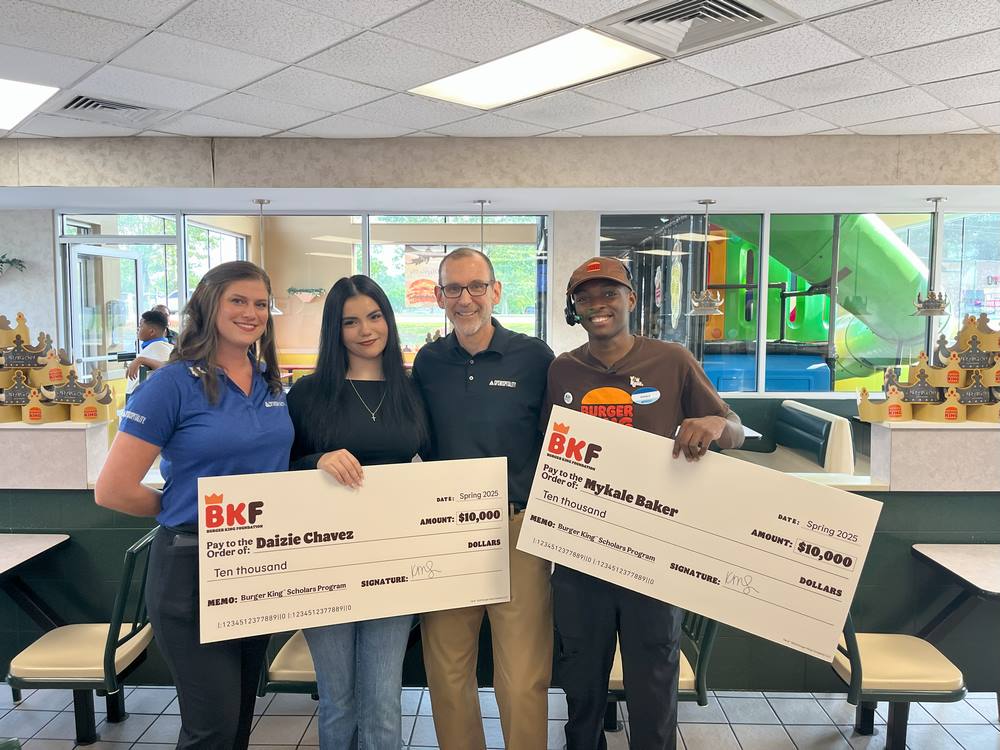
Mykale Baker receiving a $10,000 scholarship – credit, Burger King Foundation
Additionally, Burger King Foundation presented Baker with a $10,000 scholarship to aid in that pursuit.
The story began when, wearing a cap and a gown, Baker had just been handed his diploma and a medal to wear around his neck when he became aware that orders were piling up at the Burger King where he worked.
Still wearing the medal, Baker drove over and clocked in at the drive-thru window. While Baker’s friends celebrated into the night, Maria Mendoza, a mother who had just watched her daughter graduate, stopped by the same Burger King for a late dinner when she saw Baker at work.
“He was so kind, so polite,” she told 11 Alive News. “Radiating joy, even after such a big day. His dedication and quiet strength really moved me. I felt called to do something to recognize that.”
As the money piled up, days after the news reports had ran, well-wishers left dozens of messages in tandem with their donations.
“Mykale, Your work ethic and grind is contagious. We are rooting for you and investing in your future,” said one, signed “a first generation graduate from Fresno.”
“I truly applaud your integrity — it’s not always easy to do the right thing, and I’m glad the world is recognizing you for it,” said another.
Daizie Chavez, who also received a scholarship, smiles alongside Baker, whom she graduated with – credit Burger King Foundation
In addition, the BK Foundation wanted to recognize the kindness of Maria Mendoza, the GoFundMe organizer, and to celebrate her daughter, Daizie Chavez, who graduated alongside Baker.
Daizie was also awarded a $10,000 scholarship to support her studies in neuroscience at Georgia State University.
It’s a reminder of the power inherent in positivity and responsibility. Though hard work isn’t always rewarded, hard workers will always be, via one way or another.
SHARE This Story Of A Viral Journey From Burger King To Higher Education…
Quote of the Day: “It is love, not reason, that is stronger than death.” – Thomas Mann
Photo by: Colin + Meg for Unsplash+
With a new inspirational quote every day, atop the perfect photo—collected and archived on our Quote of the Day page—why not bookmark GNN.org for a daily uplift?
This year, a revolution in the unpleasant pap smear test will arrive on the American market in the form of the first at-home cervical cancer screening device ever approved by the FDA.
Offering the chance to perform a vaginal swab test in the comfort of one’s own home, the Teal Wand is covered by several major insurers such as Anthem and Cigna.
The package includes the wand and swab along with everything needed to store the sample and send it off to Teal Health’s laboratory where a test for the HPV virus is conducted. Receiving the results over a smartphone, it’s the first major change in the pap smear for 80+ years according to the company.
HPV accounts for almost all cases of cervical cancer in America, which while falling gradually year over year for decades, is on the rise among rural and low-income populations. An at-home test is ideal for both, and may help prevent some of the 4,000 deaths from the disease predicted to occur this year.
There are a variety of prevention and treatment options for addressing cervical cancer. Abnormal cells spotted in a pap smear test can be removed before they become cancerous. There’s also the HPV vaccine Gradasil-9 which protects against 9 known forms of the virus.
But between attempting to take off work and finding someone to look after children, cervical cancer screenings are not uncommonly delayed long past the point at which they would become the most useful.
“I think it’s very exciting,” Barbara Goff, a gynecologic oncologist at Fred Hutch Cancer Center and the University of Washington School of Medicine in Seattle, told Science News. “It expands cervical cancer screening to more women, which is good. And it makes [screening] more comfortable, which is also good.”
Interested parties can join the waitlist and learn more, especially regarding insurance coverage, on the Teal Health website.
SHARE The News About This FDA-Approved Product With Your Friends…
Arctic Reflections test center in Newfoundland - credit, Arctic Reflections
Arctic Reflections test center in Newfoundland – credit, Arctic Reflections
From the Netherlands comes the story of a man who realized we might delay the effects of climate change using the same method that Dutch landowners utilize every year to make ice skating rinks.
These so-called “IJsmeesters” or Ice Masters, pump water onto the surface of meadows and allow it to freeze overnight. They continue this process until the surface is thick enough to skate on.
One such IJsmeester wondered if you could do the same on the Arctic Ocean to preserve sea ice through until winter, and Arctic Reflections was born.
Fonger Ypma, the nonprofit’s chief executive, was interviewed about this crazy idea by the Guardian last year, and crazy though it may sound, Ypma actually got the project off the ground, and recently celebrated the completion of advanced field testing in the frozen Canadian sub-Arctic.
“The Arctic acts as a sort of mirror or heat shield for the Earth and a substantial part of global warming comes from the Earth’s surface becoming darker,” Ypma said last year.
“And so I thought: isn’t there some way to maintain that ice sheet for a bit longer until CO2 levels come down and the ice becomes regenerative? I had this naive idea: why not pump water on top of it?”
Looking around through published research, Ypma realized the “naive” idea had already been explored by scientists, confirming at least to his mind, that it wasn’t all that crazy.
The most substantial research was conducted in 2016, and it was a little pie-in-the-sky; with author S.J. Desch suggesting that while it was feasible to pump seawater on top of the Arctic sea ice to allow it to freeze, humanity would need “millions” of pumping stations to accomplish this.
Adapting that “seminal” work, Ypma and his team at Arctic Reflections have come up with a much better strategy: let the ocean do the work for you.
His new concept involves using the pumping method to create ice at specific locations around the Arctic Ocean and then transporting it into the Arctic waters by existing ocean currents. This, he says, will be able to save 100,000 square kilometers of sea ice every year from melting with somewhere between 100 and 1,000 pumping stations, rather than millions.
Over the winter of 2024-25, Artic Reflections conducted its second round of field tests for their pumping capabilities on the icy coast of Newfoundland, having run similar tests in Svalbard the year before.
Challenges exist with the method, however, as water that’s pumped onto a layer of snow can freeze, but only if it remains exposed to the air and wind. If, as strange as it may sound at first, another layer of snow falls on the pumped up water, it becomes insulated at liquid temperatures.
The tests conducted in Newfoundland involve much larger water pumps, and now focus will shift onto tracking reflectivity and thickness of the ice remotely, as well as interpreting temperature data, and drone camera footage.
The Guardian spoke with the leaders of other projects doing the same thing, and the general consensus is that the craziness of the whole endeavor is only matched by the urgency with which they believe something must be done to address sea ice loss.
SHARE This Naive And Crazy (And Plausible) Idea To Save The Arctic…
Dixon Trail wildfire-resistant neighborhood in CA – KB Homes
Dixon Trail wildfire-resistant neighborhood in CA – KB Homes
One of the nation’s largest homebuilders have created a community of entirely wildfire-resilient homes to help reduce homebuyers’ risks of loss if another Palisades or Dixie fire comes roaring by.
With nothing flammable on the exterior or the roofs and curated desert foliage around the gardens and lawns, the homes aren’t necessarily fireproof, but the design of the entire community was informed by identifying and eliminating the most common causes of homes catching fire.
Available now, and with some already off the market, KB Homes estimates their price at around $1 million, a price consistent with disaster-proof housing around the country.
The Eaton and Palisades fires struck with little warning and launched embers across highways and valleys setting multiple communities ablaze. The rising risk of wildfires in the rural areas of Southern California comes with rising insurance premiums, which result in rising rents, higher mortgages, etc.
In many cases, private insurers are declining to issue new policies for homes in areas at a high-risk for wildfires.
KB Home’s Dixon Trail community in Escondido, California is designed to the Insurance Institute for Business & Home Safety’s (IBHS) highest level of protection against direct flame contact, radiant heat, and embers, which helps to meaningfully reduce the likelihood of wildfire spread.
The Dixon Trail community will have 64 beautifully designed homes upon completion. It will receive a provisional neighborhood-level designation based on its design, confirming that the community has implemented preventative measures to reduce the likelihood of initial ignitions from an approaching wildfire, protect against embers that could spark spot fires, and slow fire spread if ignitions occur.
Research shows that these measures at the community level are key in preventing wildfires from becoming catastrophic. As a model of wildfire resiliency, Dixon Trail has incorporated research-backed mitigation actions into the design of its homesites, including the installation of Class A fire-rated roofs, noncombustible gutters, upgraded windows and doors, and ember and flame-resistant vents as well as the creation of a five-foot noncombustible buffer around structures.
At the neighborhood level, wildfire risk is reduced by separating almost all structures by more than 10 feet and decreasing potential fuels through the use of fire-resistant materials, like all-metal fence systems.
“With fire becoming an increasingly common threat in the West, it’s crucial to reconsider how we construct communities in fire-prone regions,” said IBHS CEO Roy Wright. “KB Home is at the forefront, implementing our research-driven wildfire mitigation strategies for both the parcel and neighborhood levels at Dixon Trail.”
Already set within a wind corridor, Dixon Trail is actually in a high-risk area for wildfires, particularly for wind-blown embers coming off the wooded slopes all around the community.
Previously, GNN has reported on storm and hurricane-proof housing on and along the Gulf Coast, including durable, three-story homes with a community-level flood control system, and Deltec’s cylindrical houses mounted on stilts, which allow winds to pass around and under the structure without smashing into it.
WATCH a video from Reuters below…
SHARE This Great Market Opportunity With Any Californians You Know…
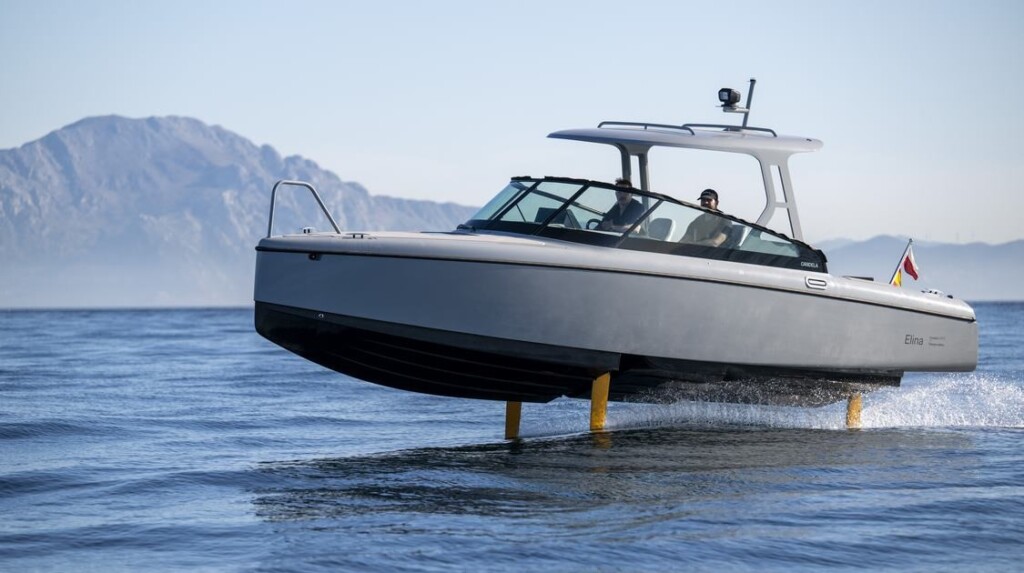
The Candela C-8 passing the Rock of Gibraltar - credit, Candela released
The Candela C-8 passing the Rock of Gibraltar – credit, Candela released
An electric ferryboat has gone from Spain to Africa and back in the same day, proving decarbonization of strait crossings is possible.
The Swedish-made vessel traveled from Sotogrande, Spain, to Ceuta, North Africa—a 24-nautical mile trip—in just over one hour, matching the speed of conventional fast ferries. After recharging, the vessel returned to the Spanish mainland the same day.
GNN previously reported on the Candela P-12 electric ferryboat entering service in Stockholm’s public transport system ahead of its mass-production roll out last year. In 2023, it had passed all of its performance tests with flying colors, achieving 30 knots per-hour with a battery life of 50 knots.
Now, another major test has been overcome with another vessel—the first-ever intercontinental sea crossing by an all-electric boat.
“There’s a clear need for additional fast, clean, and efficient travel options across the Mediterranean—and for direct lines that wouldn’t be economically viable with larger, conventional vessels,” said Gustav Hasselskog, CEO of Candela and pilot during the crossing.
“We can help meet this demand, working alongside existing operators and ferries to boost connectivity and cut emissions—not just across the Strait but also along the coast, for example connecting cities along the Costa del Sol.”
The crossing was made with the Candela C-8 Polestar edition which carries the same 67 kWh battery pack as the Polestar SUV—a European EV make under the Volvo brand. Targeted at underserved coastal communities who live far from the terminals of the massive diesel car ferries that ply the strait, the low cost of running and fuel is ideal for these smaller operations.
Beneath the surface of the Candela, two hydrofoils—or underwater wings—lift the C-8 above the water, drastically reducing drag and cutting energy consumption by 80% over conventional fast vessels. This breakthrough enables the long electric range needed to cross the Strait of Gibraltar—one of the world’s busiest shipping lanes—for the first time.
Sitting where cold Atlantic waters meet the warmer Mediterranean, the strait is known for strong currents and unpredictable seas, making conditions challenging for smaller vessels and uncomfortable for passengers prone to seasickness.
This made it an ideal test for Candela’s computer-controlled hydrofoil system, which is often described as a “magic pill” for motion sickness. Using sensors to detect waves, wind, and current, the system automatically adjusts the hydrofoils up to 100 times per second—delivering a ride that feels more like flying than boating.
During the voyage, the Candela C-8 used just 40 kWh of energy—about $10 worth. By comparison, the similarly sized gasoline-powered photo boat burned over 10 gallons of fuel, costing around $100.
WATCH the Candela make its crossing…
SHARE This Impressive Sailing Design With Your Friends On Social Media…
Quote of the Day: “My motto is: ‘Contented with little, yet wishing for more’.” – Charles Lamb
Photo by: Getty Images for Unsplash+
With a new inspirational quote every day, atop the perfect photo—collected and archived on our Quote of the Day page—why not bookmark GNN.org for a daily uplift?
Identical twins Bill Casey (right) and Jack at 100 – McCarthy Stone / SWNS
Identical twins Bill Casey (right) and Jack at 100 – McCarthy Stone / SWNS
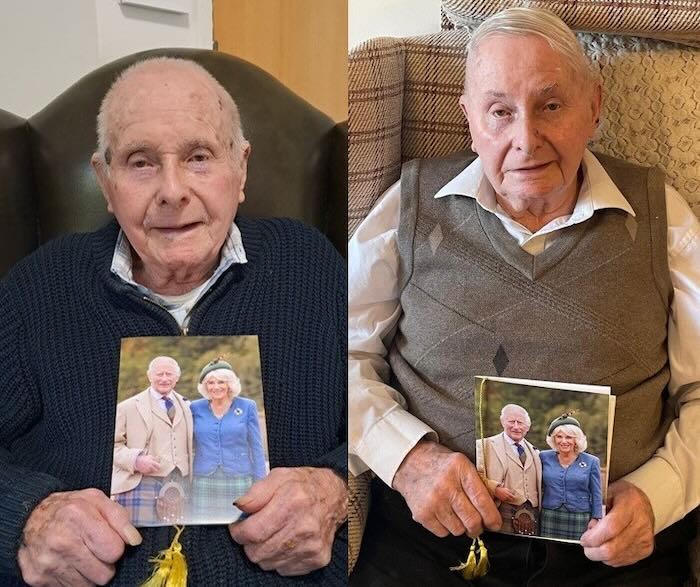
A pair of identical twins have just celebrated their 100th birthday and named their secrets for a long and happy life.
Bill Casey and his twin brother Jack celebrated their centenary together with cake, drinks, and friends at a retirement home in Oxfordshire, England.
Photos from the celebration show the pair enjoying themselves in inflatable crowns and holding their birthday cards from King Charles.
Bill is the oldest of the twins by ten minutes and enjoys an artistic life, having taken up painting in retirement. And he always makes time for his health, with 20 minutes of exercise daily.
Reflecting on his 100 years, he named the computer as the most important invention in his lifetime, with all its “amazing possibilities.”
When asked what he credits for helping him reach this impressive milestone, he credited “clean and healthy living, staying active, sheer determination, and good genes.”
“I always intended to reach 100 and now it’s here, I’m looking forward to the next 100!”
His advice to young people was to “have an interest in sports – and keep yourself active.”
Bill Casey (right) and twin brother Jack on their 100th birthday – McCarthy Stone / SWNS
Originally from south London, the twins both joined the army in 1945 as members of the Royal Electrical and Mechanical Engineers. They spent 15 months in Malaysia, with Bill confessing they “got up to lots of tricks being identical twins.”
Bill met his future wife, Joan, in Wales in 1951, and they married and had son. They settled in Surrey, England, where Bill worked as a skills and training instructor for the Government, before retiring as a manager in 1984.
Now Bill has settled down at Williams Place retirement home, where the manager Nina Woodbridge enjoys his company.
“Bill is a such a warm and friendly member of our lovely community, having lived here for five years,” she told SWNS news agency.
“He’s got a great sense of humor and loves having a laugh with the team and his neighbors.