 During the California gold rush of the 1800’s, what did people do with their treasure when banks were rare, and sometimes untrustworthy? They buried it.
Now a middle-aged couple has staked a claim to part of the state’s legendary gold treasure after walking the dog on their rural property in Northern California and noticing a buried can jutting out of the ground near a tree.
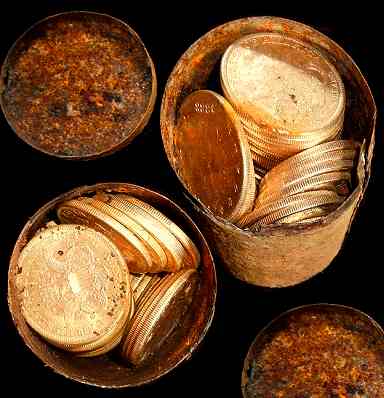
Using a stick, they were able to dislodge the can and decided to carry it back to their house. The can was unusually heavy, but nothing could have prepared them for what they would find when they pried the lid open: mixed in with dirt and stones, they found a stash of $20 gold pieces—a literal pot of gold.
They returned to the site and immediately located the remains of another can, buried a bit deeper and about a foot to the left of the first can. Rust had consumed about half of the can’s sides, exposing another cache of gold coins. Repeated trips to the site (and the help of a metal detector) eventually uncovered a total of eight cans filled with over 1,400 U.S. gold coins — some extremely rare.
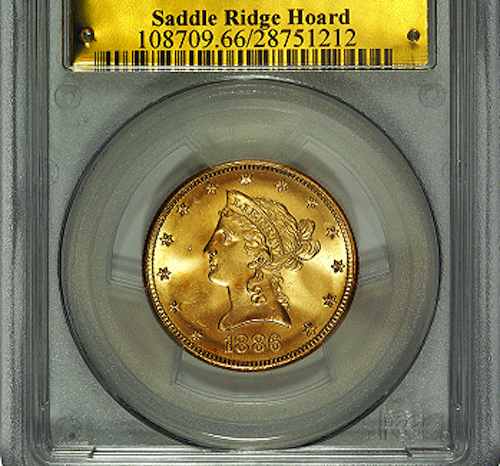
Despite being buried for over a hundred years, many of the coins were preserved in pristine condition; some being finer than anything seen to date.
Kagin’s, Inc. has expertly cleaned, filed, and numbered the coins, calling the collection the “Saddle Ridge Hoard”. Highlights of the cache include at least fourteen of the finest known specimens, including an 1866-S No Motto Double Eagle valued at close to $1 million.
The Saddle Ridge Treasure of U.S. gold coins will soon be available for sale at Kaginsinc.com and on Amazon.















 When wolves were reintroduced to Yellowstone National Park in the United States in the mid-1990s, after being absent nearly 70 years, the most remarkable “trophic cascade” occurred, effecting hundreds of other species.