Quote of the Day: “Every man has his own destiny: the only imperative is to follow it, to accept it, no matter where it leads him.” – Henry Miller
Photo by: Tim Tiedemann
With a new inspirational quote every day, atop the perfect photo—collected and archived on our Quote of the Day page—why not bookmark GNN.org for a daily uplift?
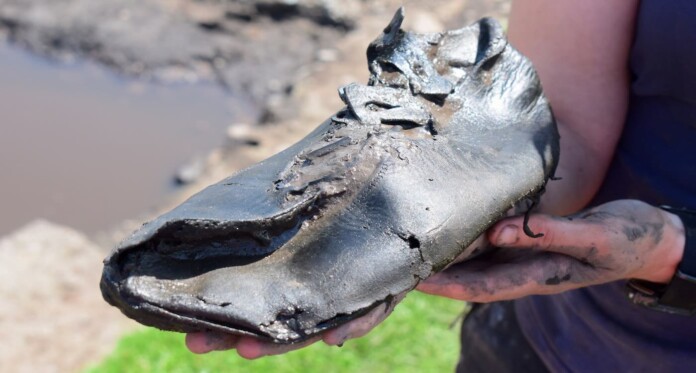
Huge leather shoes found at Magna Fort in Northumberland, England - The Vindolanda Charitable Trust / SWNS
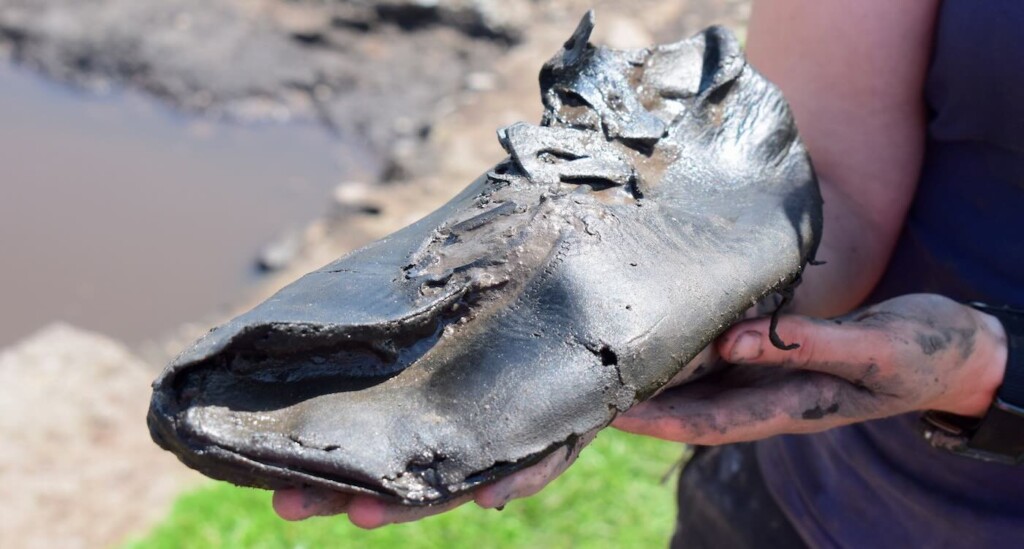
Huge leather shoes found at Magna Fort in Northumberland, England – The Vindolanda Charitable Trust / SWNS
A Roman legionary’s shoe has been discovered near Hadrian’s Wall by resident archaeologists.
The hefty leather sole measures a whopping 12.8 inches from toe to heel and is believed to have been worn by a giant Roman soldier.
Archaeologists dug up a total of 32 shoes from a so-called ‘ankle-breaker’ trench at the Magna Roman Fort in Northumberland in May this year.
Eight of the shoes were more than 11.8 inches in length—the equivalent of a US size 14 or a UK size 13, leaving the archaeologists scratching their heads.
“We have to assume it’s something to do with the people living here, having bigger feet, being potentially taller but we don’t know,” said archaeologist Rachel Frame. “Are the people living there from a specific region? Could that be why their shoes are so much larger?”
“But at the moment, it’s sort of, well, this is unusual.”
The large leather shoes were found in a shallow defensive ditch, which the Romans also used as a rubbish dump.
At the nearby Vindolanda settlement, which is seven miles from the Magna Fort, 5,000 shoes have been unearthed since the 1970s. However, only four or five of the shoes measured more than 12 inches, suggesting people were much smaller despite living nearby.
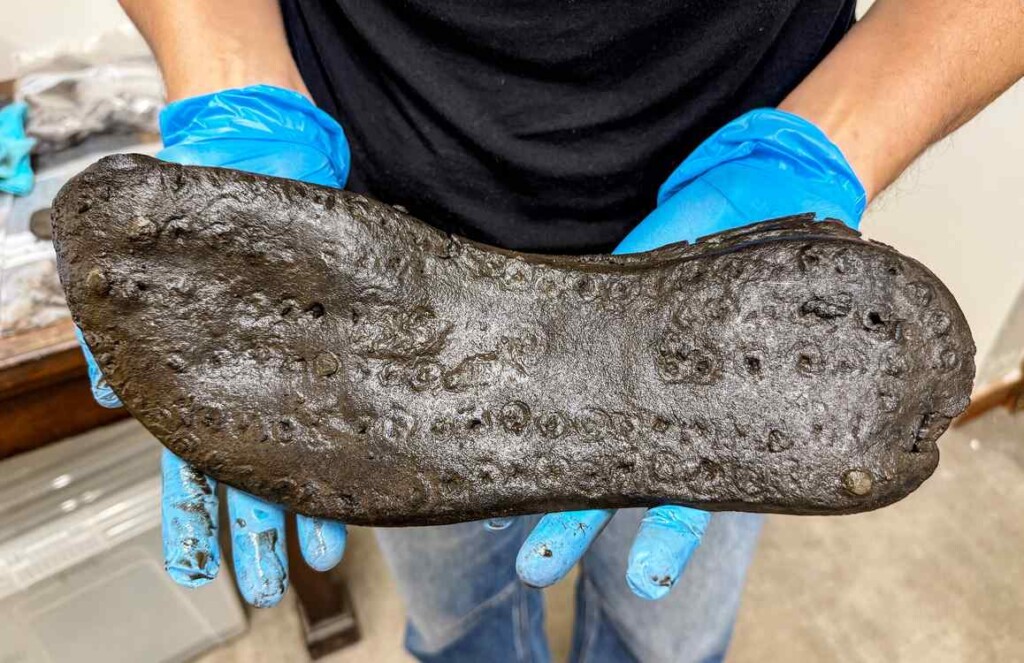
Huge leather shoes found at Magna Fort in Northumberland, England – The Vindolanda Charitable Trust / SWNS
Due to low oxygen conditions in the soil at the sites, the leather shoes were so well preserved the soles were almost completely intact, including the treads.
Several pairs of children’s shoes were also found in the same ditch in the Magna Fort, suggesting giant Roman soldiers lived there with their families. In fact, so many shoes have been found across the two sites, the Vindolanda archaeological trust maintains a “shoe specialist.”
“Even from this small sample uncovered it is clear that these shoes are much larger on average than most of the Vindolanda collection,” said Dr. Elizabeth Greene, Associate Professor at the University of Western Ontario, and aforementioned shoe specialist.
“Although we are comparing this new collection which has not yet gone through the conservation process with the Vindolanda shoes that have, even taking into account a maximum shrinkage of up to 1cm/10mm, it still means these shoes are very large indeed.”
Vindolanda has been surprising archaeologists for decades. GNN recently reported that amateur excavators unearthed a sculpture of the Roman winged goddess of victory.
Vindolanda was the site of a Roman fort near Hadrian’s wall, and has been under spade and trowel for decades. Only one quarter of the sprawling complex has been explored, and currently teams of professionals and volunteers are digging at the site’s infantry barracks.
SHARE This Roman Shaq-Sized Sneaker With Your Friends On Social Media…
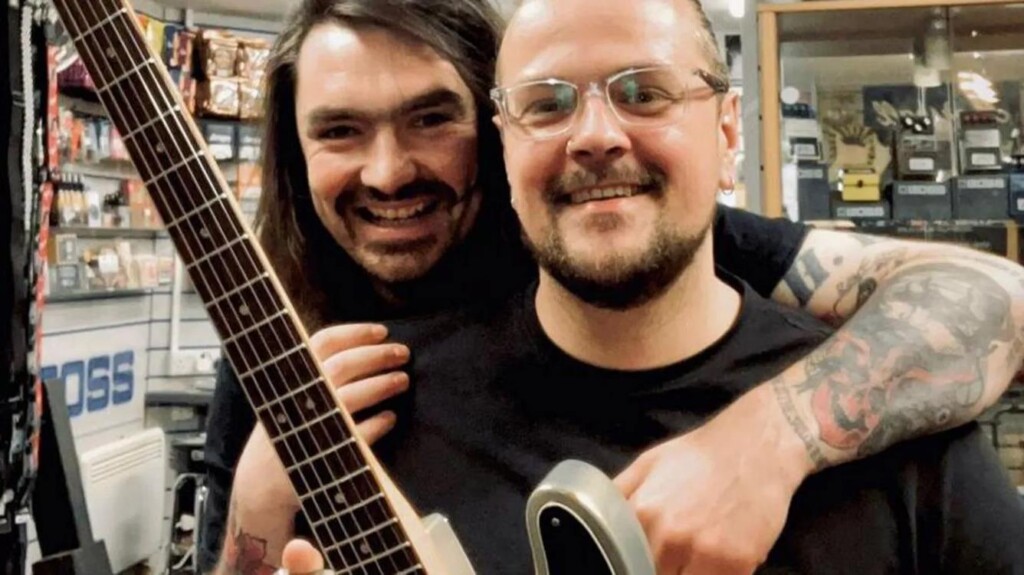
Mark Wood (in front) and Sam Orr (behind) credit - supplied by Mark Wood
Mark Wood (in front) and Sam Orr (behind) credit – supplied by Mark Wood
Over the years, GNN has reported on multiple creative ways to infuse the ashes of cremated loved one into meaningful objects, whether a tattoo, a vinyl record, or an elegant stone.
Now, English media have reported on a man who has inlaid his father’s ashes into the fretboard of his guitar, saying “he will still be with me at all the shows.”
37-year-old heavy metal guitarist Mark Wood learned to play the axe from his father, Keith, who passed away at the age of 68 from a heart attack on Christmas Day, 2022.
Keith was a retired school teacher, and used to travel hundreds of miles to attend his son’s gigs where they would often “have a beer and a catch up,” Mark said. His passing left a hole in the family of 4. Mark’s sister used some of her dad’s ashes to make jewelry, which gave him the idea of doing the same for the dotted inlays along the neck of his Fender Telecaster guitar.
Typically made with mother-of-pearl, or cheaper imitations for entry level guitars, the inlays are both decorative and functional, serving mostly to mark out the spaces of a whole step—i.e. the space between two notes, on the fretboard.
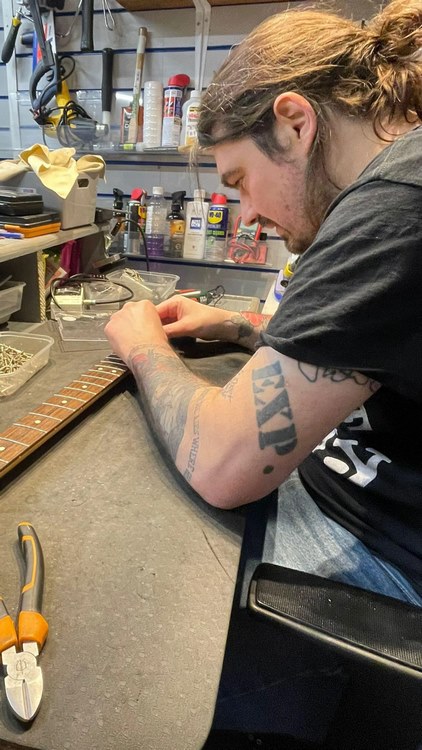
Mark had never heard of anything like that being done before, but he knew exactly who to call. His friend Sam Orr runs Sam’s Guitars in Cheshire, who mixed the ashes with a special glue to form the inlays.
“At first, I was just wondering how it would work, then the more I thought about it and did a few test runs on a spare guitar neck I had, I realized it wouldn’t be too difficult to complete it,” Mr. Orr said, according to the BBC.
Sam Orr working on the fretboard – credit Mark Wood, supplied
“We put some music on in the background and had a couple of beers and made a thing of it,” Mark said. “Sam did the work while the shop was shut and was so caring and careful and really respectful.”
It took Mark a little while before he felt emotionally ready to play the guitar, but when he did, he admitted it felt amazing. He strummed out “Stranglehold” by Ted Nugent, a song his father loved and taught him to play when he was younger.
Glowing, hot X-rays captured by NASA’s Chandra X-ray Observatory appear in pink. The blue represents the dark matter, which was precisely mapped by researchers with Webb’s detailed imaging - credit, NASA, ESA, CSA, STScI, CXC; Science: James Jee (Yonsei University/UC Davis), Sangjun Cha (Yonsei University), Kyle Finner (IPAC at Caltech)
Glowing, hot X-rays captured by NASA’s Chandra X-ray Observatory appear in pink. The blue represents the dark matter, which was precisely mapped by researchers with Webb’s detailed imaging – credit, NASA, ESA, CSA, STScI, CXC; Science: James Jee (Yonsei University/UC Davis), Sangjun Cha (Yonsei University), Kyle Finner (IPAC at Caltech)
Of course nothing and no one can actually see dark matter, but the accurate mapping of its warping influence on this new image from the James Webb Space Telescope is as good as it gets.
Containing two very large galaxy clusters, together known as the Bullet Cluster, the blue hues in the image represent where the light from galaxies in the background is passing through areas of dark matter which are altering it.
The Bullet Cluster contains two massive galaxy clusters that sit on either side of the large, light blue spiral galaxy at the center – credit, NASA, ESA, CSA, STScI, CXC; Science: James Jee (Yonsei University/UC Davis), Sangjun Cha (Yonsei University), Kyle Finner (IPAC at Caltech)
“Webb’s images dramatically improve what we can measure in this scene — including pinpointing the position of invisible particles known as dark matter,” said Kyle Finner, a co-author on a paper analyzing the data behind the images, and an assistant scientist at IPAC at Caltech in Pasadena.
All galaxies are made up of stars, gas, dust, and dark matter, which are bound together by gravity. These galaxy clusters act as gravitational lenses, magnifying and or distorting the light of background galaxies, and allowing scientists to infer the distribution of dark matter therein.
Currently an unsolved and hypothetical entity, dark matter is believed to constitute 85% of the matter in the universe. Because it doesn’t interreact with light or electromagnetism, dark matter exists to us only through its influence on visible matter. The influence takes the form of gravitational effects that cannot be explained by the theory of General Relativity.
After decades of studying the effects of dark matter, the general belief is that it builds structures as the universe expands, while at the same time another mysterious force, dark energy, is believed to be pushing those structures away from one another.
One of the best ways to study dark matter is to identify instances of gravitational lensing. James Jee, a co-author on the same paper, professor at Yonsei University, and research associate at UC Davis in California, explained to NASA that it’s like looking at stones below a pond of clear, still water.
“You cannot see the water unless there is wind, which causes ripples,” Jee explained. “Those ripples distort the shapes of the pebbles below, causing the water to act like a lens.”
In this example, the dark matter is the water and the background galaxies are the pebbles.
Jee, Finner, and their colleagues measured thousands of galaxies in Webb’s images to accurately “weigh” both the visible and invisible mass in these galaxy clusters. They also carefully mapped and measured the collective light emitted by stars that are no longer bound to individual galaxies—known as intracluster stars.
The revised map of the Bullet Cluster is shown in two layers. On top of an image from Webb’s NIRCam (Near-Infrared Camera) is data from NASA’s Chandra X-ray Observatory that shows hot gas in pink, including the bullet shape at right. Refined measurements of the dark matter, calculated by the team using Webb’s observations, are represented in blue.
“We confirmed that the intracluster light can be a reliable tracer of dark matter, even in a highly dynamic environment like the Bullet Cluster,” said the paper’s lead author, Sangjun Cha.
SHARE This Excellent Primer On Dark Matter And Its Effects From James Webb…
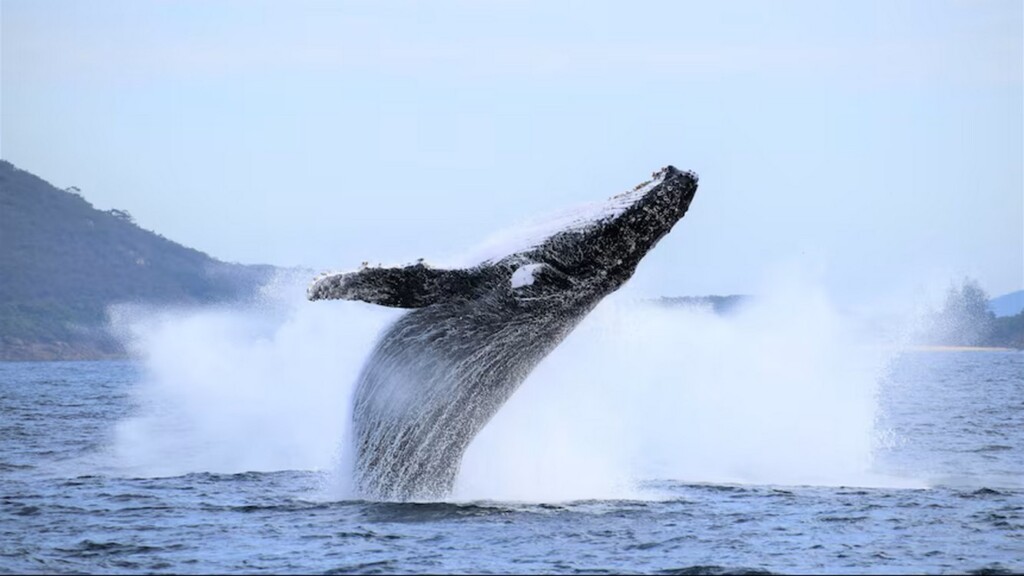
A humpback whale in Australian waters - credit, supplied by Jenn Leayr
A humpback whale in Australian waters – credit, supplied by Jenn Leayr
In Australia’s latest survey of whale populations, humpbacks have been seen migrating north along the eastern coastline in record numbers.
Over 5,000 confirmed sightings were made by mariners and others in the state of New South Wales so far, as the animals make their way out of the southern oceans with their calves.
The Organization for the Rescue and Research of Cetaceans (ORRCA) held its 26th annual whale census, an activity which over 600 citizen scientists participated in. Bringing binoculars, flasks of hot tea, folding chairs, and their kids, they lined 159 individual locations along the coast of NSW hoping to catch a glimpse of some of the largest animals on the planet.
“It’s a wild species coming right on our doorstep and they’re just magnificent creatures,” Caroline Jones, who has volunteered with ORRCA for more than three years, told ABC News AU.
In the 1960s, perhaps a few hundred humpback and minke whales would pass north along Australia’s east coast. Still more than a decade away from the international whaling moratorium of the 1980s, their populations were heavily depleted.
Preyed upon only rarely by orcas and great white sharks, humpback whales’ primary threats come from illness, ship strikes, or auditory trauma. Since the moratorium came into effect, the humpback populations around the world have grown remarkably, and it’s expected that 40,000 will make the trip north from Antarctica this year.
Quote of the Day: “You will never know how much it has cost my generation to preserve your freedom. I hope you will make a good use of it.” – John Adams (Happy Fourth of July!)
Photo by: Ronile (CC license)
With a new inspirational quote every day, atop the perfect photo—collected and archived on our Quote of the Day page—why not bookmark GNN.org for a daily uplift?
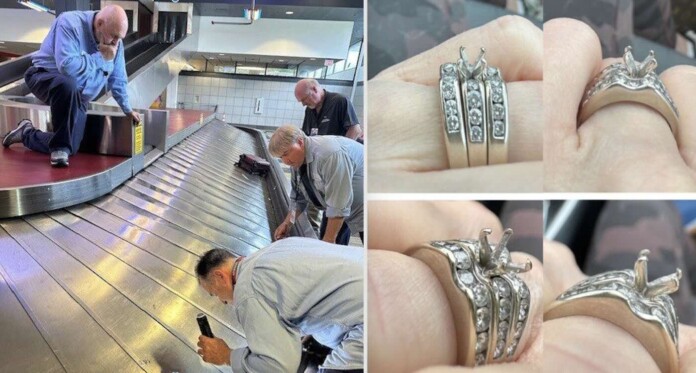
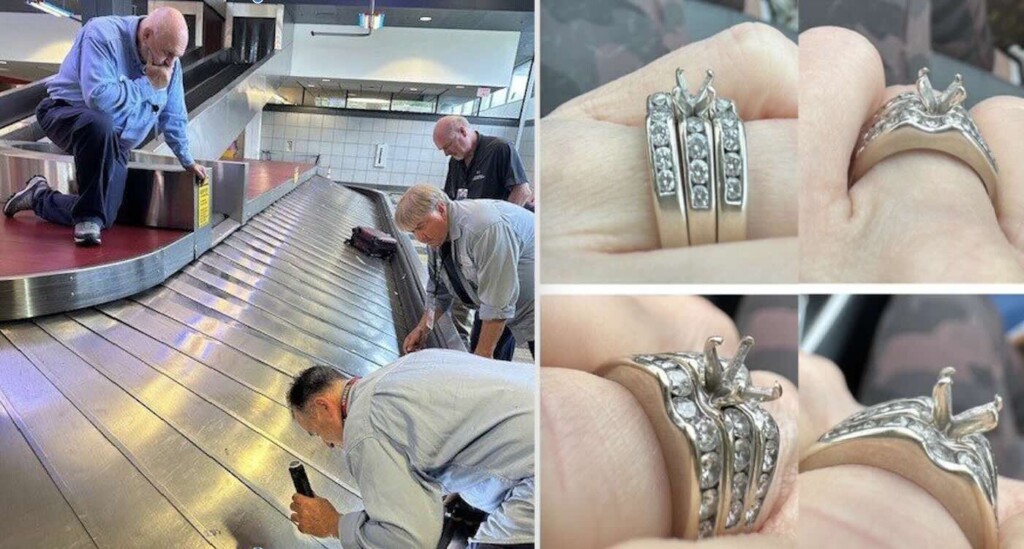
Searching for a diamond at baggage claim - Credit: Pittsburgh International Airport
Searching for a diamond at baggage claim – Credit: Pittsburgh International Airport
‘Caring’ is a word that many Americans wouldn’t choose if asked to describe commercial aviation, but a story recently touched down from Pittsburgh International Airport of humanity and kindness that left a woman’s jaw suspended in disbelief.
April Schmitt had just returned home to Pittsburgh on June 13th from a hectic business trip in Los Angeles and was picking up her luggage in the baggage claim.
She found it circulating on the carousel, and soon she was driving home to her husband of 33 years, Eric. Everything was as it should have been.
Then she noticed the diamond in her engagement ring was missing.
“I panicked and my heart sank,” Schmitt, from Sewickley, PA, said in a statement. “I truly didn’t think I was ever going to see it again.”
After the realization, she returned to airport to search for it around the baggage carousel.
She reported the issue to an airline staffer, who then alerted airport staff. A maintenance team arrived and began searching inside the carousel, crawling on their hands and knees inside and under the track.
Tom Riordan, a stationary engineer with 20 years of experience at the airport, helps maintain the carousels and baggage system. He said himself and 5 other staff were determined to help find the missing diamond, even amid “a labyrinth of steel and motors and belts” inside the carousel.
After 90 minutes of searching, Schmitt left for home, deflated. Riordan assured her that the next shift of workers would continue to search in between incoming flights.
The search continued and fellow PIT stationary engineer Sean Dempsey found the diamond inside the carousel.
“I just was crawling with a flashlight, and we had paint sticks to scrape all the dirt away,” he said. “The diamond caught a little bit of light and I found it.”
A few hours later Schmitt’s phone rang with the news that the diamond had been found. “My jaw dropped,” she said.
“There were so many ways this story could have ended, but these guys were committed to helping me. I travel a lot, and I go to a lot of airports,” Schmitt said.
“To have this experience here and to be treated like an important person—those staffers were so concerned about my happiness and doing the right thing for me. I was not just a random passenger. They went out of their way to take care of me.”
Sounding like a paramedic, ambulance driver, firefighter, or any other of our everyday heroes, Riordan said simply that “the passenger’s smile is enough.”
“That’s all we need. You can go to any employee here and they’d all do the same.”
WATCH the story below from ABC News…
SHARE This Story Of Uplifting Airport Assistance During A Personal Tragedy…
2024 graduating class of Swanville High – credit, Dollars for Scholars
For the last 30 years a tiny Minnesota town has played a huge role in the lives of its graduating students.
Despite the population of Swanville sitting at a comfortable 328, what is essentially one big family comes together every year to send off their seniors with a scholarship.
Through bake sales, chili cookoffs, bingo, raffles, and more, the town has sold everything and anything to ensure this 30-year tradition continues.
When it first got started, the average scholarship was just $166. By the turn of the millennium, it was $500, but this year, Zack Gapanski stepped off the stage with a diploma and five large.
Featured in Boyd Huppert’s “Land of 10,000 Stories,” Swanville’s long-stranding tradition is about making sure their students have the best possible start in life’s journey, and ensuring they know that no matter where that journey takes them or when it ends, there’s always a home for them in town.
“To me, it’s just this community saying, go be great,” Gapinski told Huppert and KARE 11. “Go do something cool and make a difference in the world.”
The tradition started when Chris Dunshee, a former Swanville school principal, and Royal Loven, who owned the local gas station, began to worry that they might lose students to the larger neighboring school districts. They thought they might put a billboard up that would read “We give every student who graduates a scholarship.”
The idea stuck, even if the billboard didn’t, and this year Swanville High School’s Dollars for Scholars program awarded its one-millionth dollar.
Program president Teresa Giese said that the goal is to support any path for the kids.
“If you’re taking a break year and you apply, we’ll still allocate money to you,” Teresa said. “If you go into the military, when you’re done with that, we’ll give you your money then.”
During the ceremony, none of the scholars know exactly how much they’ll receive—the total is based on a variety of participatory factors, such as grades, attendance, work history, stated goals, and school activities.
If they don’t grow in right, most people will treat their wisdom teeth as bio-baggage, useful only for preventing money from burning a hole in one’s pocket due to the surgical costs of removing them.
But an astounding new discovery has found that this third set of molars contain a unique form of human stem cell that can be harvested and used to regrow bone, heart tissue, and even neurons.
It’s an exciting field full of promise, full of potential benefits, but substantial amounts of further research and evidence is needed to truly understand what these four extra teeth could do for us in the long term beyond tearing up almonds and salad.
For starters, wisdom teeth contain a soft center of tissue called dental pulp that keeps the tooth alive. This pulp contains immature cells which a team of scientists at the University of the Basque Country in Spain have transformed into several different kinds of cells.
Dr. Gaskon Ibarretxe, an associate professor in the Cell Biology and Histology Department at the university, led a recent study that turned pulp cells into electrically excitable pseudo-neurons that demonstrated “essentially electrical activity” in concert with proper neurons.
They could help treat damaged brain circuitry from any number of conditions or trauma.
According to Earth.com, pulp-derived stem cells have some interesting and unique properties, including the capacity to build mineralized tissue faster than bone marrow-derived stem cells. Scientists have used dental‑pulp secretions to improve heart ejection fractions in mice with heart failure, and in vitro, these cells seem to lay down layers of collagen and calcium in neat, orderly sheets, making them potentially attractive for joint cartilage repair.
From the logistics and cost standpoint, they’re an ideal source of stem cells. Bone marrow cells require painful injections that sometimes can’t involve anesthesia, while embryonic or placental stem cells without ethical concerns require someone to decide to have a baby.
By contrast, almost all humans are born with wisdom teeth, and they’re often removed in the teenage years when little DNA damage has taken place inside the dental pulp; making them exceptionally malleable and safer.
Earth.com claims 10 million wisdom teeth are removed every year, but the process of sending them to a biobank could be very simple. A kit—offered by a company like Stemodontics—could be bought and shipped to a dentist’s office ahead of the procedure. The tooth is put in a vial, placed on dry ice, and rushed to a lab where the pulp would be extracted and preserved as a potentially life-changing form of cellular insurance.
No donor cells means no risks of rejection, which means no waiting list for finding a matching donor; the dental-pulp cells would be available as soon as they’re needed. If covered by a dental insurance plan, their storage could result in tens of thousands of dollars saved down the line if some of these treatments prove executable and effective.
SHARE This Wild Scientific Discovery With Your Friends Who Have Wisdom Teeth…
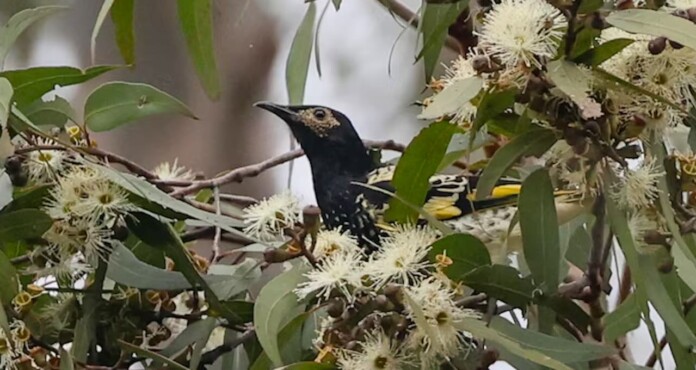
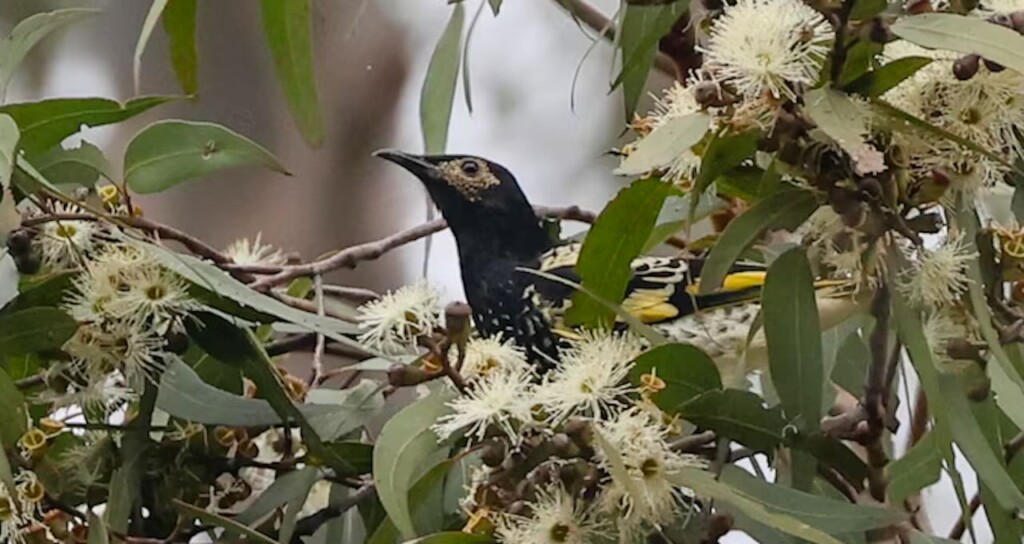
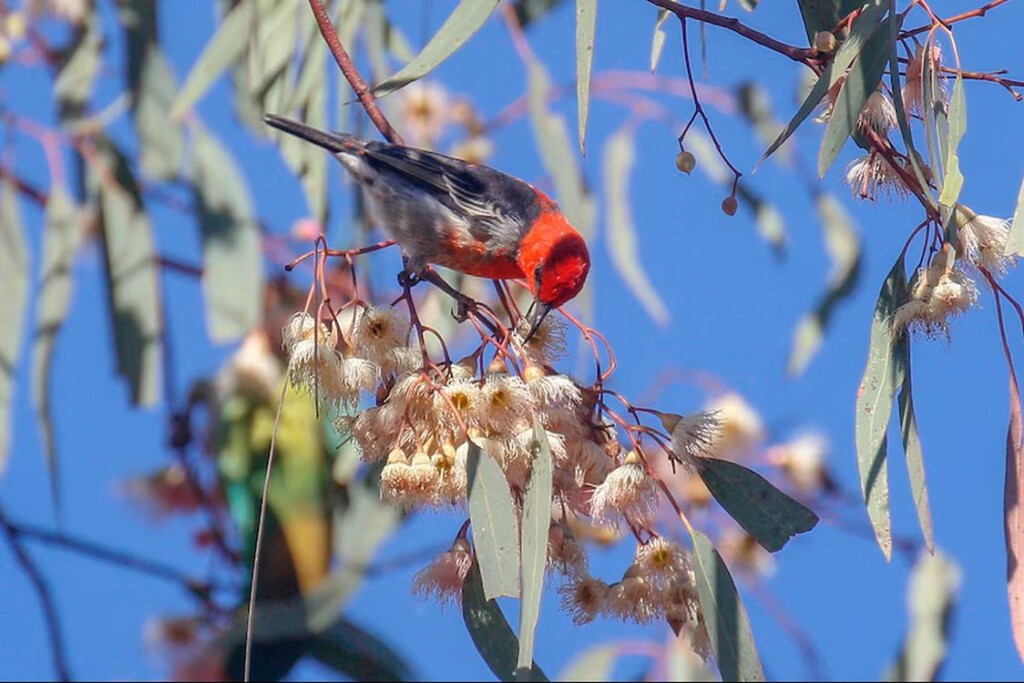
Honeyeater Bird in spotted gum blossom tree – Credit: Mick Roderick from BirdLife Australia
Honeyeater Bird in spotted gum blossom tree – Credit: Mick Roderick from BirdLife Australia
Recent wet season rainfall along the east coast of Australia has shattered hundred-year records, but as the floodwaters recede, a feast of epic proportions seems ready to explode among the hills and valleys.
Soaking up all that water, New South Wales’ various eucalypt tree species are preparing for a mass blossoming that may all but guarantee a critically-endangered bird species’ survival.
There are some 800 different eucalypt tree species in Australia, and the regent honeyeater feeds on the nectar of several which are set to blossom during the animal’s breeding season—a perfect confluence of events that should dramatically help the beautiful yellow and black bird.
Regions including the Mid-North Coast and Hunter Valley are seeing buds on their red gum, ironbark, grey gum, white box, swamp mahogany, and spotted gum trees, and BirdLife Australia told ABC News down under that hundreds of honeyeaters and other birds are already enjoying the bonanza in places where the buds have turned to blossoms.
“To know that so many trees will be flowering from a breeding season, right through summer and winter… is significant for a critically endangered species that relies almost exclusively on nectar,” Mick Roderick, BirdLife Australia’s regent honeyeater recovery adviser, told the outlet.
Scarlet honeyeaters are among nectar-feeding birds which benefit from strong blossom seasons – credit, supplied by Mick Roderick
Dean Nicolle, an expert on eucalypt species, told ABC that the trees are highly adapted to extreme levels of moisture seen in Australian weather patterns.
“Some species are very tolerant of flooding and waterlogged soils and are much more drought sensitive, while other species are much more drought tolerant,” he said. “The species described [in the Hunter], like spotted gums and ironbarks… can take up as much water as they want, grow lots of leaves and then flower heavily.”
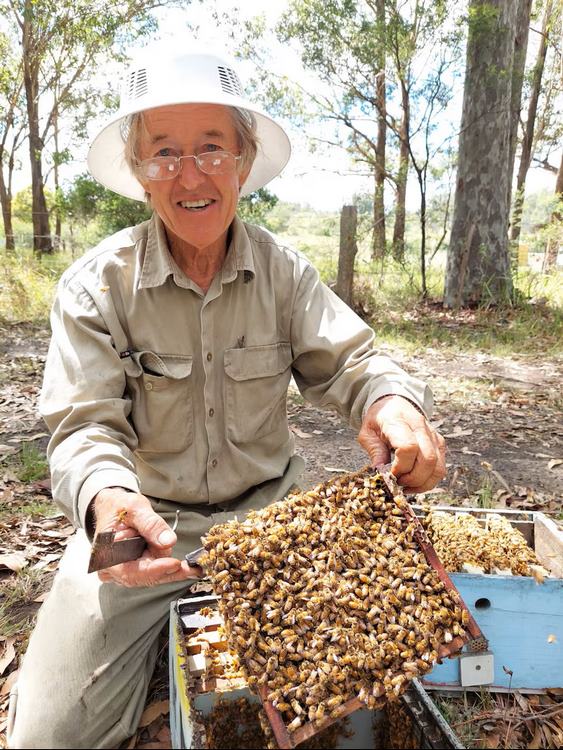
Hunter Valley beekeeper Col Wilson – credit Supplied Col Wilson
It’s not just honeyeaters that will enjoy the blossoming bounty, but honey makers as well: bees.
While the honeyeaters suffered through a drought that reduced their food supply following heavy rains between 2021 and 2022, beekeepers in the Hunter Valley had a varroa mite epidemic to add to the drought. Many reported substantially reduced honey harvests—but not this year.
Hunter Valley beekeeper of 45 years, Col Wilson, told ABC News that many beekeepers had suffered over the last few years, and that they are set for a season to remember, both for honey production and bee reproduction.
SHARE This Great Benefit Of An Otherwise Debilitating Flood In Australia…
Quote of the Day: “Summer was our best season: it was sleeping on the back screened porch in cots, or trying to sleep in the treehouse.” – Harper Lee
Photo by: Andrej Lisakov for Unsplash+
With a new inspirational quote every day, atop the perfect photo—collected and archived on our Quote of the Day page—why not bookmark GNN.org for a daily uplift?
Two meteor showers are visible in the late July skies, and they happen to peak at the same evening in a rare case of perfect timing.
Especially visible in the Southern Hemisphere, but also visible farther south in the Northern Hemisphere, the α-Capricornids and the Southern δ-Aquariids will light up the night of July 30th-31st with a combined total of 30 shooting stars per hour.
Better still, the event will take place during the waxing crescent Moon, so moonlight won’t obscure the view. The Moon will set in the evening, and the night sky will be perfectly dark.
In order to find them, look for the constellations they take their names from. Valerie from Space Tourism Guide generally recommends finding Capricorn first, as it’s easier to find in the south-southeastern sky. Once you find Capricorn, the much more active Southern δ-Aquariids, radiating from the constellation Aquarius, can be spotted slightly more eastward.
Aquarius is difficult to find, but because there are far more shooting stars appearing to originate there, it will be easier to find that way. With the two radiating points occurring nearby, you likely won’t know which meteors belong to which shower.
Starwalk describes the α-Capricornids as slower and noticeably bright, so perhaps that can be a clue.
One thing to keep in mind when trying to see this rare double shower is that the further north one lives on the Earth, the closer the meteors will be to the horizon. For those in the northern United States, a clear horizon line will be necessary, unobscured by trees, hills, or cities.
The further south one travels, the higher in the sky the meteor showers will be.
SHARE This Great Idea For A Night Out On The Plains…
Credit - Giulia Squillace and Getty for Unsplash +
credit – Giulia Squillace and Getty for Unsplash +
Getting in fights, texting too much in class, skipping school—they are the kinds of stories that the parents of most high schools will have heard of before, and know the ending of.
But at Morse High School in Maine, detention is enforced with an altogether different approach—a hike.
Misbehaving students can, of course, choose normal detention, but ever since school counselor Leslie Trundy started offering hiking detentions, the children overwhelmingly pick that.
“Playing video games in class,” said Wyatt Wells; “Yelled at a teacher,” said Nicholas Tanguay; “Probably, like, skipping class,” said Elsie Nelson-Walling.
They trundled along behind Trundy who got the idea for hiking detention from an outdoor education conference she attended last fall.
Parenting experts will likely always be split between those who favor sternness and discipline and those who favor forgiveness and freedom. Both methods have their celebrity flag carriers and innumerable examples of success and failure.
Unsurprisingly then, some parents have prevented their kids from attending Trundy’s hiking detention, believing that it misses the point of punishment. Trundy herself isn’t making any claims yet, but some of her students seem to be getting the point.
Nicholas Tanguay, who yelled at his teacher, says that the walking, heavy breathing, and sense of accomplishment were together a focusing and calming influence that day, and without admitting he felt his mental health improved, said that he believed it’s true that nature and walking can improve a person’s mentality.
Sona Kipoy wasn’t in detention, Smith reports, but just came along in order to “find herself.”
“So you can just find yourself, yeah, I guess finding yourself in a forest is easier than in the city,” Kipoy, a child of immigrants from the Democratic Reb. of the Congo, said.
Trundy said she’s eager to start the program next year, and see if any of her attendees this year prove to be role models for future freshmen.
SHARE This Detention Alternative With Your Friends On Social Media…
Paleontology may be entering another great era of discovery: characterized by serial misidentification in decades past.
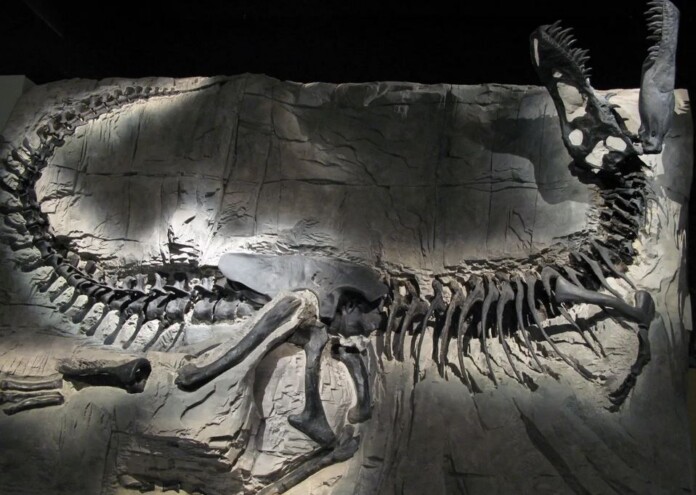
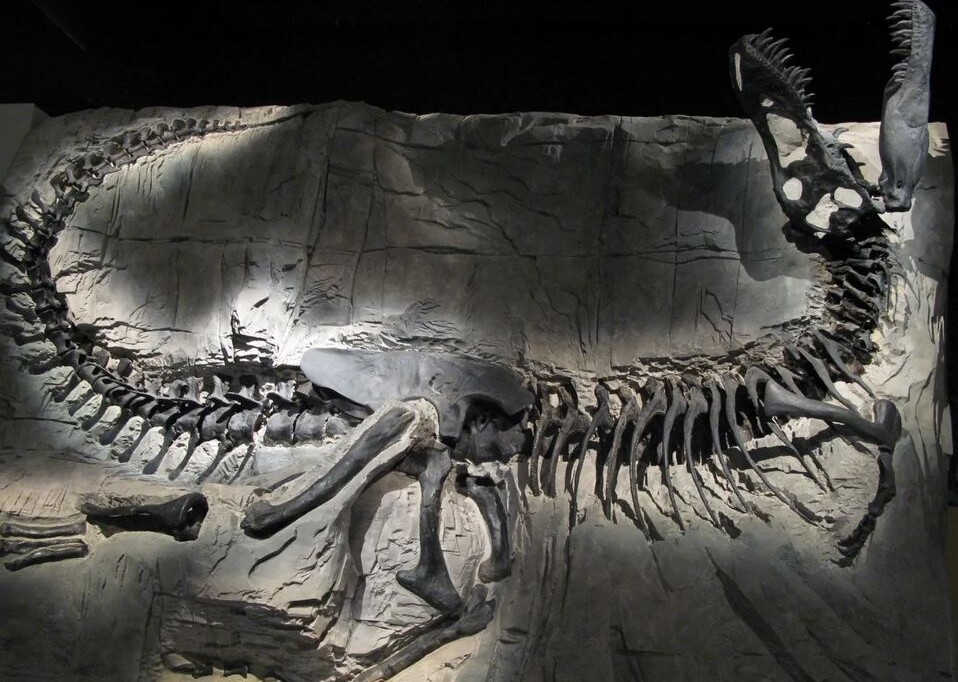
For an example one need look no further than the newly-dubbed “Dragon Prince of Mongolia,” a small tyrannosaurid from the earlier days of the lineage’s evolution.
It had been sitting in the drawers of the Mongolian Academy of Sciences since the 1970s, having been labeled an Alectrosaurus.
University of Calgary Professor Darla Zelenitsky, the lead author of the paper describing the new animal, foresees many new discoveries coming out of museum collections in the same manner.
“It is quite possible that discoveries like this are sitting in other museums that just have not been recognized,” Zelenitsky said in an interview with AFP.
It was Ph.D. student Jared Voris who first recognized something was wrong with the labeling when he found the two partially-complete fossil skeletons in the drawers.
The new species has been named Khankhuuluu mongoliensis, or Dragon Prince of Mongolia. It is a “prince” rather than a “rex” (king) because of its smaller, fleet-footed build. Weighing around the same as a show jumping horse, the animal represents not only an earlier stage of Tyrannosaurid evolution, but also a diversification in the lineage that reflects the connectivity between North America and Eurasia at the time the animal lived.
About one-eighth the size of Tyrannosaurus rex, K. mongoliensis lived 86 million years ago under the shadows of larger predatory therapods.
Described by Professor Zelenitsky as “really messy,” the understood history of T. rex was muddled by missing links between Asia and North America. In their study presentingK. mongoliensis, the authors use it as a link to explain how Tyrannosaurids evolved across the two continents.
By the time of the Cretaceous period, the Earth’s continents largely resembled those we know of today. Then as now, a land bridge connects Asia and North America via the Bering Strait, and an early group of Tyrannosaurids migrated across to North America and began to diversify.
This would have either been K. mongoliensis or another, unknown relative. Following the diversification, a population then crossed back into Asia which led to two subgroups of Tyrannosaurids, one that was very large and contained individuals like Tarbosaurus bataar, also found in Mongolia; and another one that was much smaller and contained members like “Pinocchio rex,”which was around the same size as K. mongoliensis.
One member of the large group then crossed over to North America again, and by 66 million years ago had become Tyrannosaurus rex, one of the largest predatory land animals to ever live.
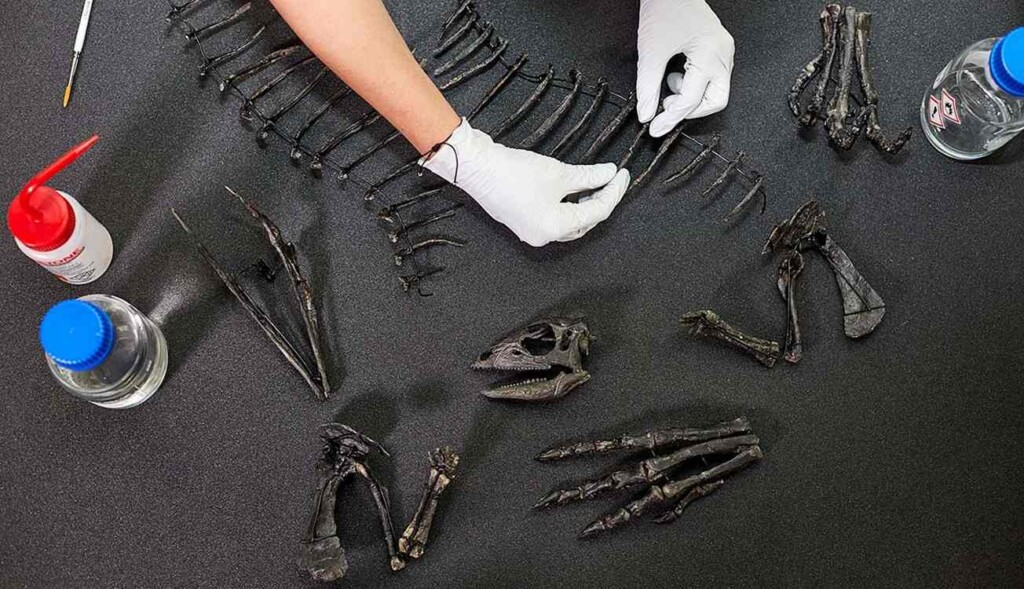
The enigmacursor skeleton being cleaned – credit, the Trustees of the London Natural History Museum, released.
More mislabeling
On June 25th, just a week after the paper announcing the K. mongoliensis discovery, the Natural History Museum of London released a statement explaining that a new species of ‘mystery’ dinosaur that used to dash along North American riverbanks, had been identified after the museum bought a fossilized specimen.
Following years of study beginning in 2021, the skeleton that had been bought as a Nanosaurus was actually found to be nothing of the sort. After careful examination, it has been renamed Enigmacursor, for “mystery runner.”
It had been found on private land and put up for auction as a Nanosaurus, basically a species that was first found in 1877, never well-documented, and which acted like a “wastebin taxon.” A wastebin taxon in biology refers to a genus or subfamily into which lazy or perplexed biologists in the past have placed species they weren’t able to properly identify.
The name “Nanosaurus” or ‘tiny lizard,’ is the sort of broad description that lends itself to that practice.
“It just goes to show how much paleontology has changed in the past 150 years,” said Professor Susannah Maidment who co-led the examination into Enigmacursor. “When Nanosaurus was named in 1877, there weren’t that many named dinosaurs so the few characteristics that its fossils preserved would have been unique.”
“Now, however, we have found hundreds of small dinosaurs from all over the world and know that the fossils of Nanosaurus just aren’t that useful, let alone enough to name a species with. As a result, it made sense to put them to one side and name Enigmacursor as a new species instead.”
Living on floodplains and sandy riverbanks during the Late Jurassic, between 152 and 145 million years ago, Enigmacursor relied on its speed to avoid larger predators and to catch food. It was given the species name mollyborthwickae in honor of the woman whose donation allowed the museum to purchase it.
SHARE This Double Dinosaur Surprise With Your Friends On Social Media…
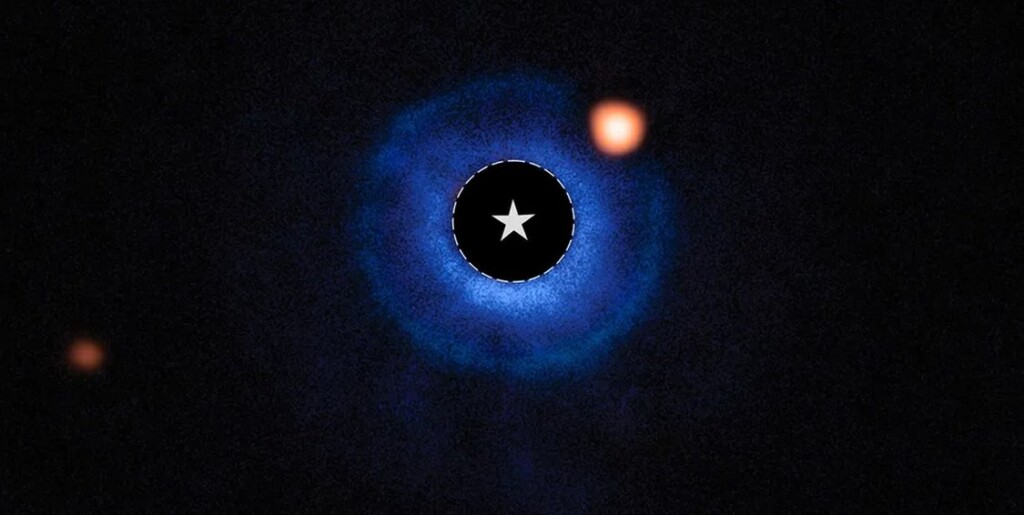
TWA 7 is blocked in this image by the black circle, while the planet glows in orange - credit, NASA, ESA, CSA, Anne-Marie Lagrange (CNRS, UGA), Mahdi Zamani (ESA / Webb)
TWA 7 is blocked in this image by the black circle, while the planet glows in orange – credit, NASA, ESA, CSA, Anne-Marie Lagrange (CNRS, UGA), Mahdi Zamani (ESA / Webb)
Since its debut in 2021, the James Webb Space Telescope has dazzled viewers with its infrared images of galaxies, nebulae, stars, and even our own solar system’s planets.
Now, the most expensive telescope ever made has unveiled a new trick—a coronagraph, which allows it to block the light of a star and see what small objects are orbiting it. In this case, it performed the first direct photographing of an exoplanet in human history; probably.
The image found a faint source of infrared light in a disk of debris orbiting TWA 7, a red dwarf star around 111 light years from Earth. With the outstanding chance of the object being a background galaxy at more than 0%, the researchers can’t say for certain it’s a planet, but they suspect very much that it is—around the size of Saturn and sitting at a comfortable 120° Fahrenheit.
Though astronomers have detected well over 5,000 exoplanets so far, each one has been done through indirect methods, such as the “transit method.” The transit method sees an astronomer train a telescope on a star, and monitor for predictable drops in the level of light from the star that would indicate a planet orbiting it. The transit method can also work through measurements of gravity since passing planets’ gravitational fields can cause their host stars to “wobble.”
By contrast, the coronagraph will be much more straight forward, and TWA 7 b will likely be the first of many that the Webb telescope will discover.
One can think of the coronagraph as an on-demand eclipse service. The instrument positions a disk inside the lens of the imaging device to perfectly eliminate the star’s light from entering the sensor within a degree of micrometers. With the pollution of the star’s light gone, small things—in this case an exoplanet—can be seen.
“Our observations reveal a strong candidate for a planet shaping the structure of the TWA 7 debris disk, and its position is exactly where we expected to find a planet of this mass,” Anne-Marie Lagrange, lead author of the study and an astrophysicist at the French National Center for Scientific Research, said in a statement released by NASA on the discovery.
The source is located in a gap in one of three dust rings that were discovered around TWA 7 by previous ground-based observations. The object’s brightness, color, distance from the star, and position within the ring are consistent with theoretical predictions for a young, cold, Saturn-mass planet that is expected to be sculpting the surrounding debris disk.
These visible rings or gaps are thought to be created by planets that have formed around the star, but such a planet has yet to be directly detected within a debris disk. If TWA 7 b is confirmed to be such, it would mark a major moment in astronomy.
SHARE This Great New Trick From Our Expensive Space Telescope…
Quote of the Day: “To find out what one is fitted to do, and to secure an opportunity to do it, is the key to happiness.” – John Dewey
Photo by: Jordan Madrid
With a new inspirational quote every day, atop the perfect photo—collected and archived on our Quote of the Day page—why not bookmark GNN.org for a daily uplift?
There is no shortage of people in the world who see a burning building that isn’t theirs and choose not to risk their lives to help: Tomasz Zareba is not one of those bystanders.
The Dublin truck driver helped save a man from a harrowing fall when the second-story window was his only escape route—and he earned the gratitude of the fire brigade for his timely intervention.
It happened on Monday that the interior of a building in the center of the Irish capital was consumed in flames by the time that Mr. Zareba, who is originally from Poland, was driving by in his semi-truck.
“I saw the flames coming up from the window and one guy was lying on the [sidewalk]. He had blood on his face, and I think he might have broken both his legs when he jumped from the building,” he told the BBC.
“Another guy was screaming from the window. He didn’t know what he was supposed to do because he had flames behind him, and the long drop below him.”
A video posted on Instagram showed that Zareba reversed his truck and got as close to the window as possible to allow the man to leap onto the rooftop of the trailer. (NOTE:You have to click on the video a couple times to see the life-saving leap captured by user @ThisIsDublin…)
“I waited another 20 minutes because the road was blocked and then the fireman came over and said, ‘Grand job buddy, thanks for that’ and I went on to finish my deliveries for the day.”
Mr. Tomasz Zareba
Zareba works as a deliveries driver for Eurospar, a continent-wide grocery chain, whose Ireland-based subsidiary told BBC they were thrilled to see one of their drivers display such a commitment to their community.
Girls at the US Space and Rocket Center’s Space Camp / Nichelle Nichols as Lt Uhura on Star Trek
Girls at the US Space and Rocket Center’s Space Camp / Nichelle Nichols as Lt Uhura on Star Trek
Alabama will be the site of a new training camp for the next generation of female astronauts—funded and named in honor of one of the profession’s great pioneers.
Okay, maybe not exactly, because the Nichelle Nichols Space Camp honors someone who pioneered an idea rather than a profession—an idea that color barriers didn’t exist in outer space.
Passing away in 2022, African American actress Nichelle Nichols was the first black woman to star in a primetime American TV show when she took the role of Lieutenant Nyota Uhura on Star Trek. As a bridge officer, it wasn’t just that she had plenty of screen time in the show, but she was one of the highest ranking characters according to the show’s plotline.
As Whoopi Goldberg later put it “I just saw a Black woman on television; and she ain’t no maid!”
Indeed there was nothing typical nor token about Nichols’ character. Uhura was a polyglot, translator, and communications expert high up in the chain of command, and her portrayal resulted in a generation of African American women watching someone who looked like them explore space.
To that end, she became something of a space influencer—with few impacts likely to be greater than this new weekend-long experience for young women aged 14 to 18 at the US Space and Rocket Center in Huntsville, Alabama.
Organized by the Nichelle Nichols Foundation, the Space Camp will be organized around two structures: the first being the internationally-recognized excellence of the Space and Rocket Center program which mirrors astronaut training done by NASA, and the second being an additional structure of activities to mirror the finest concepts contained within the Star Trek canon.
These include coursework on the concept of “Infinite Diversity in Infinite Combinations,” the bedrock of philosophy from the show’s Vulcan aliens, and a series of mission scenarios similar to those undertaken aboard the Enterprise, specifically a first contact scenario, which was the responsibility of Uhura in the show.
The camp is a fitting legacy for the recently-deceased actress, who was the direct inspiration for Sally Ride, the first female American astronaut, along with so many others who had encountered Nichols during her STEM advocacy work with NASA.
All of that might not have happened if it weren’t for a chance conversation with none other than Dr. Martin Luther King Jr.
Nichols, according to multiple sources, planned to leave Star Trek in 1967 after its first season, but changed her mind after talking to Dr. King, who explained it was his favorite show along with his three children, and that her character signified a future of greater racial harmony and cooperation.
The casting was totally open, Dr. King pointed out—if she didn’t play Uhura, they didn’t need another black woman—they could replace her with anyone, even an alien.
Nichols took up the mantle of barrier-breaker onboard the Enterprise, thanks to creator-director Gene Roddenberry. In the 1968 episode “Plato’s Stepchildren,” Lt. Uhura and Captain Kirk kiss, which became one of the first scripted interracial kiss scenes in American cinematography. But there’s more.
The original intent was to film a scene that ended in a kiss, and one which ended without, and then allow the network to decide which one to air. Nichols and William Shatner agreed, it has since been learned, to flub every non-kiss take, and thereby force the network’s hand to include the kiss.
The Space Camp costs $2,000 to attend, but financial assistance and scholarships are available for eligible participants.
WATCH a promotional video of the camp below…
SHARE This Great Opportunity With Your Friends Whose Kids Love Space…
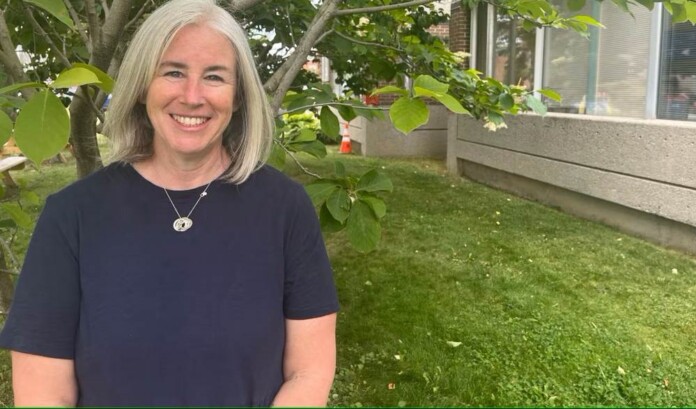
Tawnya Shimizu, a nurse who saved a man's life on the roadside - credit, supplied to the media
Tawnya Shimizu, a nurse who saved a man’s life on the roadside – credit, Shimizu supplied to the media
From Ottawa comes the story of a runner who woke up in the hospital with a burning question: who saved his life?
Tommy Chan went for a five kilometer run on May 20th, but he doesn’t remember anything several days either side of that. All he knows is what the doctors told him: he suffered post-run cardiac arrest.
A bit of detective work revealed at least where he was when he collapsed: a running app called Strava told him he finished his 5K around Bronson and Carling at 7:50 p.m. A smartwatch that is attached to the app to track his heart rate has a telling lapse just after that time.
Paramedics, meanwhile, told him that they had responded to a call about a man suffering cardiac arrest near that location around one hour later. He had been resuscitated with a defibrillator, but not before bystander CPR was administered; deep bruising and a broken rib being two souvenirs of the kindness of strangers.
Rewinding to May 20th, and Tawnya Shimizu was on a walk with her daughter when she saw a commotion just next to her car. A man, it appeared, had collapsed.
“I could hear the 9-1-1 operator giving directions on CPR and counting out the timing,” she told CBC News Ottawa. “So my daughter was immediately like, ‘Mommy, you’re a nurse. You need to help!'”
Rushing over and entering “work mode” she introduced herself to the crowd and the operator, and began to administer CPR, a lifesaving procedure that stands for cardiopulmonary resuscitation.
First responders arrived, used the defibrillator, and rushed Chan to the hospital, leaving Shimizu in a heap of adrenaline that subsided while her curiosity rose in tandem. She was wondering what would happen to him.
Chan, weeks later, posted a account of the event online with the header “Did you save my life?” and the word made it back to Shimizu, who was able to get in touch with Chan, learn that he had in fact survived, and even plan to meet together in the coming days.
“The biggest thank you,” Chan told CBC when asked what he would say. “I don’t know what else to say. Like, I can’t believe you were at the right place at the right time. So I don’t know how I can never repay you.”
SHARE This Story Of CPR And Strangers From Canada’s Capital On Social Media…
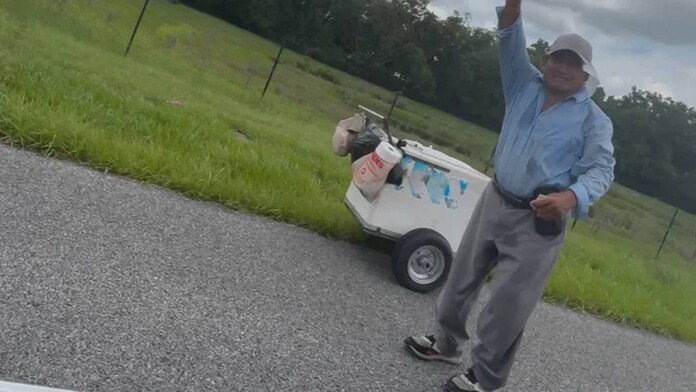
Don Tomas waving with thanks - credit, Beryenis Lopez
Don Tomas waving with thanks – credit, Beryenis Lopez
For anyone who suggests that social media has been a net-negative for society, tell them to spend 3 hours reading GoFundMe stories.
GNN has reported on literally dozens of these internet crowdfunding efforts that have changed people’s lives, and the latest one comes from the sizzling South Florida summer heat.
Don Tomas is a local ice cream seller who pushes a cart because he can’t afford a van. Recently, a resident in a community Tomas frequents saw him pushing his cart down a divided highway miles from anywhere, and decided to just hand over some money as a thank you gesture for that work ethic.
Captured on TikTok, this simple gesture of kindness went viral, garnering 20,000 shares, 6,700 comments, and close to a million likes.
“I always get ice cream from him, omgg I didn’t know he walks that far there’s no way,” said one commenter.
“He’s a beloved part of our community, and he deserves to have better conditions. I’ve created this GoFundMe in hopes we can raise enough money to give to him for transportation and maybe a new ice cream trailer.”
The fundraiser has amassed $30,000 of its $35,000 goal.
“Despite his age and everything going on around us, Mr. Don Tomas maintains a hard-working man!”
SWEETEN Social Media Up With This Story Of Kindness Towards Our Fellow Man…