












A drug used to suppress the immune system in cancer and rheumatoid arthritis has helped extend the life of a Minnesota boy struggling with a rare and deadly form of the genetic disorder Pompe disease. At 2-1/2, he’s become the oldest known survivor, living twice as long as most, with this form of the disease. (Full report at Reuters)
New Therapy Helps Boy with Rare Disease
Top Ten Innovations From 2008
Any list of the top achievements in science and energy is a list that glows with promise and hope. During the year 2008 we uncovered many stories, from the health-related, to transportation and energy-related, that struck us with awe and inspiration. Here are ten of the best:
1) CELLULAR REPROGRAMMING – In its annual list of the year’s top ten scientific breakthroughs, the journal Science has given top honors to research that produced “made-to-order” cell lines by reprogramming cells from ill patients. These cell lines, and the techniques for producing them, offer long-sought tools for understanding — and hopefully someday curing — difficult-to-study diseases such as Parkinson’s disease and type 1 diabetes.
Two years ago, in experiments with mice, researchers showed that they could wipe out a cell’s developmental “memory” by inserting just four genes. Once returned to its pristine, embryonic state, the cell could then be coaxed to become an altogether different type of cell.
This year, scientists built on this work with spectacular results. Two research teams took cells from patients suffering from a variety of diseases and reprogrammed them into stem cells. Many of these diseases are difficult or impossible to study with animal models, making the need for human cell lines to study even more acute.
The transformed cells grow and divide in the laboratory, unlike most adult cells, which don’t survive in culture conditions. The cells could then be induced to assume new identities, including those cell types most affected by the diseases afflicting the patients who had donated the initial cells.
A third research team skipped the embryonic state altogether and, working with mouse cells, turned one type of mature pancreas cells, called exocrine cells, directly into another type, called beta cells.
The new cell lines will be major tools for understanding how diseases arise and develop, and they may also prove useful in screens for potential drugs. Eventually, if scientists can master cellular reprogramming so that it’s more finely controlled, efficient and safe, patients may someday be treated with healthy versions of their own cells. (UCLA News)
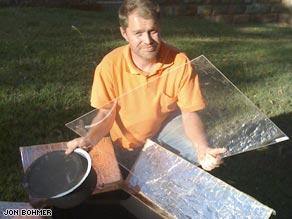
2) SOLAR COATING FOR GLASS WINDOWS – MIT researchers have developed a new technique that involves coating glass with a specific mixture of transparent dyes which redirects sunlight to photovoltaic cells in the frame. The technology, outlined in the journal Science in July, could be used to convert glass buildings into vast energy plants. (BBC News reported on the discovery)

3) KITE-FUELED CARGO SHIP COMPLETES MAIDEN VOYAGE – The world’s first commerical ship partially powered by a giant kite successfully crossed the Atlantic producing energy savings of between 15 and 20 percent during the 14-day voyage from Germany to Venezuela, while cutting down on CO2 emissions. (Video on Good News Network)
4) PARALYZED MUSCLES REVIVED IN MONKEYS – “Monkeys were able to overcome wrist paralysis with an experimental device that might lead to new treatments for patients with stroke and spinal cord injury. Remarkably, the research at the University of Washington found the monkeys regained use of paralyzed muscles by learning to control the activity of just a single brain cell.” (Associated Press report via WTOP NEWS)
5) NEW DRUG MAY REVERSE MS – Doctors working in the Oregon Health and Science University and Portland V.A. Medical Center have developed an experimental vaccine for MS called Neurovax. Neurovax increased the number of disease-fighting white blood cells in the immune system for all 40 patients who received the treatment once per month in a clinical trial. Neurovax is an improvement over current MS drugs as it does not have flu-like side effects. Next steps are to execute a large enough trial through a minimum of two years so that researchers can see the immediate and longer term differences between the vaccinated patients and the placebo group. You can get more information on this MS drug by logging on to www.ohsu.edu/ms
6) NEW CHEAPER FUEL CELLS – A much cheaper fuel cell could be on its way thanks to a breakthrough cathode built by Australian researchers that uses Gortex, the same material in outdoor clothing. Up until now, fuel cells needed a cathode which contains expensive platinum particles, worth around $3,500 to $4,000. The new cost-effective solution, featured yesterday in the journal Science, uses a thin flexible polymer that conducts electricity at a cost of only several hundred dollars, while producing the same amount of current as the platinum cathode. The plastic also exhibits increased stability. (Story at Good News Network)
7) GENETIC PROFILING AND NEW CANCER DRUGS OFFER ‘EXTRAORDINARY HOPE’ – Doctors are investigating cancer cell mutations that can be targeted by new prescription medications. The drugs have offered real hope for patients with these mutations, quickly shrinking tumors responsible for their advanced cancers. This video explains new advances in cancer therapy. (Good News Network) 
8) CAR THAT RUNS ON AIR FOR SALE IN U.S. BY 2010 – Zero Pollution Motors has obtained a license to become the first to produce cars in the U.S. that run on compressed air, pledging to deliver the first models in 2010 at a price tag of less than $18,000 for a 6-seater. The hybrids will use liquid fuel to operate at higher speeds and air stored in tanks beneath the car whenever travelling at speeds under 35 mph. (CNN.com has the story)
9) PATIENT’S STEM CELLS CREATE WINDPIPE FOR HEALTHIER TRANSPLANT – “Doctors have given a woman a new windpipe with tissue grown from her own stem cells, eliminating the need for anti-rejection drugs.” (Story and video at CBS)
10) FUEL FROM ALGAE – Backed by millions in venture capital, oil companies and scientists are successfully creating oil and bio-diesel from algae to make it a viable source of fuel for the green cars of the future. (Video and links at Good News Network)
Top Ten Innovations From 2008
Any list of the top achievements in science and energy is a list that glows with promise and hope. During the year 2008 we uncovered many stories, from the health-related, to transportation and energy-related, that struck us with awe and inspiration. Here are ten of the best:
1) CELLULAR REPROGRAMMING – In its annual list of the year’s top ten scientific breakthroughs, the journal Science has given top honors to research that produced “made-to-order” cell lines by reprogramming cells from ill patients. These cell lines, and the techniques for producing them, offer long-sought tools for understanding — and hopefully someday curing — difficult-to-study diseases such as Parkinson’s disease and type 1 diabetes.
Two years ago, in experiments with mice, researchers showed that they could wipe out a cell’s developmental “memory” by inserting just four genes. Once returned to its pristine, embryonic state, the cell could then be coaxed to become an altogether different type of cell.
This year, scientists built on this work with spectacular results. Two research teams took cells from patients suffering from a variety of diseases and reprogrammed them into stem cells. Many of these diseases are difficult or impossible to study with animal models, making the need for human cell lines to study even more acute.
The transformed cells grow and divide in the laboratory, unlike most adult cells, which don’t survive in culture conditions. The cells could then be induced to assume new identities, including those cell types most affected by the diseases afflicting the patients who had donated the initial cells.
A third research team skipped the embryonic state altogether and, working with mouse cells, turned one type of mature pancreas cells, called exocrine cells, directly into another type, called beta cells.
The new cell lines will be major tools for understanding how diseases arise and develop, and they may also prove useful in screens for potential drugs. Eventually, if scientists can master cellular reprogramming so that it’s more finely controlled, efficient and safe, patients may someday be treated with healthy versions of their own cells. (UCLA News)

2) SOLAR COATING FOR GLASS WINDOWS – MIT researchers have developed a new technique that involves coating glass with a specific mixture of transparent dyes which redirects sunlight to photovoltaic cells in the frame. The technology, outlined in the journal Science in July, could be used to convert glass buildings into vast energy plants. (BBC News reported on the discovery)

3) KITE-FUELED CARGO SHIP COMPLETES MAIDEN VOYAGE – The world’s first commerical ship partially powered by a giant kite successfully crossed the Atlantic producing energy savings of between 15 and 20 percent during the 14-day voyage from Germany to Venezuela, while cutting down on CO2 emissions. (Video on Good News Network)
4) PARALYZED MUSCLES REVIVED IN MONKEYS – “Monkeys were able to overcome wrist paralysis with an experimental device that might lead to new treatments for patients with stroke and spinal cord injury. Remarkably, the research at the University of Washington found the monkeys regained use of paralyzed muscles by learning to control the activity of just a single brain cell.” (Associated Press report via WTOP NEWS)
5) NEW DRUG MAY REVERSE MS – Doctors working in the Oregon Health and Science University and Portland V.A. Medical Center have developed an experimental vaccine for MS called Neurovax. Neurovax increased the number of disease-fighting white blood cells in the immune system for all 40 patients who received the treatment once per month in a clinical trial. Neurovax is an improvement over current MS drugs as it does not have flu-like side effects. Next steps are to execute a large enough trial through a minimum of two years so that researchers can see the immediate and longer term differences between the vaccinated patients and the placebo group. You can get more information on this MS drug by logging on to www.ohsu.edu/ms
6) NEW CHEAPER FUEL CELLS – A much cheaper fuel cell could be on its way thanks to a breakthrough cathode built by Australian researchers that uses Gortex, the same material in outdoor clothing. Up until now, fuel cells needed a cathode which contains expensive platinum particles, worth around $3,500 to $4,000. The new cost-effective solution, featured yesterday in the journal Science, uses a thin flexible polymer that conducts electricity at a cost of only several hundred dollars, while producing the same amount of current as the platinum cathode. The plastic also exhibits increased stability. (Story at Good News Network)
7) GENETIC PROFILING AND NEW CANCER DRUGS OFFER ‘EXTRAORDINARY HOPE’ – Doctors are investigating cancer cell mutations that can be targeted by new prescription medications. The drugs have offered real hope for patients with these mutations, quickly shrinking tumors responsible for their advanced cancers. This video explains new advances in cancer therapy. (Good News Network) 
8) CAR THAT RUNS ON AIR FOR SALE IN U.S. BY 2010 – Zero Pollution Motors has obtained a license to become the first to produce cars in the U.S. that run on compressed air, pledging to deliver the first models in 2010 at a price tag of less than $18,000 for a 6-seater. The hybrids will use liquid fuel to operate at higher speeds and air stored in tanks beneath the car whenever travelling at speeds under 35 mph. (CNN.com has the story)
9) PATIENT’S STEM CELLS CREATE WINDPIPE FOR HEALTHIER TRANSPLANT – “Doctors have given a woman a new windpipe with tissue grown from her own stem cells, eliminating the need for anti-rejection drugs.” (Story and video at CBS)
10) FUEL FROM ALGAE – Backed by millions in venture capital, oil companies and scientists are successfully creating oil and bio-diesel from algae to make it a viable source of fuel for the green cars of the future. (Video and links at Good News Network)
Hockey Hero Sends Back Boy’s Coveted Souvenir
Charlotte dentist Robert Pappert prized the hockey stick he bought New Year’s Day after a special NHL game in Chicago.
That is, until he learned it was stolen from a 14-year-old Detroit Red Wings fan who was given the souvenir after the game by a star Wings player.
Horrified, Pappert overnight-mailed the stick back to the young fan on Monday – an act that has made him a hero of sorts for what some in hockey circles are calling the “Miracle of Nice.” (Chicago Tribune.com)
Maggot Secretions a Possible Weapon Against Superbugs
A potentially effective new antibiotic has been discovered in the secretions of maggots. The serum, called Seraticin, is undergoing testing in Wales but has been so far effective against up to 12 different strains of the superbug Methicillin Resistant Staphylococcus Aureus (MRSA), as well as the food poisoning bacterium Escherichia coli and Clostridium difficile, which have collectively caused 22,000 deaths in England and Wales from 2002-2006. (Full story from ITN in the UK)
New ‘Smart’ Lighting Makes Parking Greener and Safer
Even after daytime users drive home, parking lots and garages light up the night. Evening users are few, but for safety reasons, the lights stay on.
Yesterday, the California Lighting Technology Center at UC Davis debuted an innovative, highly efficient, greener way to park cars that additionally provides more safety for students and motorists using parking garages.
Michael Siminovitch, director of the school’s lighting-center and a professor in the Design Program, saw all that wasted light and knew there had to be a better way.
The innovative result, unveiled in a UC Davis parking garage after two years of development and field testing, is a highly efficient greener way to park cars.
The system uses about 20 percent of the energy of conventional parking lighting systems, yet provides better safety, reduces light pollution and makes less toxic waste.
This bi-level lighting, part of UC Davis’ Smart Lighting Initiative, is already serving six UC Davis sites (three parking areas, one pathway network and two building exteriors), as well as Sacramento State University and Arcade Creek Park in Sacramento.
The safety feature uses motion detectors to alert people of nearby movement. The lights in the garage switch from low brightness to high signaling to people using the garage that there is another car or person moving nearby — and transmits that information to security personnel, as well. (Photo: LED fixture created by lighting design student)
Impressed with the economy and safety of the greener garage, other Universities are adopting the design, including UC Santa Barbara; Cal Poly San Luis Obispo; Tianjin Polytechnic University in China; University of Notre Dame; North Carolina State University; and University of Arkansas.
The new system includes LED fixtures and motion sensors:
- Light-emitting diode (LED) lights give off bright white light but use little electricity. Each lighting fixture, called a luminaire, has three light bars containing 60 LEDs. Compared to conventional metal-halide lights, LED lights take less electricity (85 watts vs. 175 watts), last longer and contain no mercury.
- Motion sensors detect the motion of a person or vehicle within about 35 feet. When no motion is detected for a designated period of time (30 seconds to 30 minutes), the sensor switches the LED light from its high level to a low level that uses half the energy. Even low level is bright enough to provide plenty of light for people entering the garage.
“Switching to LED lights and adding bi-level activity-sensing technology yields energy savings for the project of 50 percent when the lights are at full power and 80 percent when they are in low mode. As for maintenance savings, we project they will be 42 percent of what we spent on the fixtures that were replaced,” Siminovitch said. “Even at half power, the LED fixtures are delivering plenty of light to the space. We may be able to cut levels further, saving even more electricity and lengthening fixture lifetimes.”
The Smart Lighting Initiative is a collaboration with California energy regulators and providers, and a handful of key firms in the lighting industry:
– PG&E offered incentives as part of a University of California systemwide energy initiative and supplied partial funding based on demonstrated energy savings.
– Ruud Lighting/BetaLED of Sturtevant, Wisc. supplied the LED light fixtures; and
– Watt Stopper/Legrand of Santa Clara, Calif. supplied the occupancy sensors.
The California Lighting Technology Center is part of the Design Program at UC Davis. The center is a research and education facility that focuses on the application of energy-efficient lighting and daylighting technologies through research, development, demonstration, outreach, and education in partnership with utilities, manufacturers, end users, builders, designers and governmental agencies. The center was established through a collaborative effort of the California Energy Commission’s Public Interest Energy Research (PIER) Program and UC Davis, with support from the U.S. Department of Energy and the National Electrical Manufacturers Association.
Again, Doctor Helps Save Family Who Ate Poisonous Mushrooms
The call that awakened Dr. Todd Mitchell recently gave him chills. A woman and her twin 11-year-old grandsons had eaten soup made from deadly mushrooms they picked in the woods. What followed was a day-long search for a way to procure a new antidote from Germany, a non-FDA approved treatment used in Europe, called Legalon-Sil. They needed the serum fast, but the drug companies were closed for the holidays. Death cap mushrooms, one of the most poisonous of all known toadstools, will cause rapid liver and kidney failure, especially in children, if left untreated. Read the suspenseful tale of this quick-thinking Santa Cruz doctor published in the San Jose Mercury News.
(Thanks to Jeanine for sending the link!)
Clerics Join Tutu in Fasting for ‘Suffering People of Zimbabwe’
Two clerics have joined Nobel Peace Prize laureate Desmond Tutu, the former Anglican archbishop of Cape Town, fasting in solidarity with the people of Zimbabwe, who face a collapsing economy and political order amid reports of a possible military coup.
Tutu called for support of the fast on South Africa’s Radio 702 on Sunday. “If we would [only] have more people saying ‘I will fast’, maybe one day a week – just to identify with our sisters and brothers in Zimbabwe,” said Tutu in his interview. Tutu said he was now fasting once a week.
Plan to Set Aside More Wilderness Land Advances in U.S. Senate
In the new 111th Congress, the Democratic Senate with its slim majority, in its first order of business this year advanced legislation Sunday that would protect more than 2 million acres of wilderness in nine states, the largest expansion of wilderness protection in 25 years. (Details at Bloomberg.com)
Obama’s Honored Guest for Inauguration (Video)
An American pilot from the first all-black flying unit, the Tuskegee Airmen from World War II, will attend Barack Obama’s inauguration as an honored guest.
that served in Europe during World War II. He was one of only fifteen pilots to shoot down the advanced German Me-262 jet fighter.
All 330 surviving members of the the Tuskegee Airmen have been invited to the Inauguration Day swearing-in ceremony.
The Flying Car Takes Off
It’s every kid’s dream, but one such kid grew up an inventor and made his dream a reality. Gilo Cardozo created the world’s first bio-fueled flying car, a machine that can drive like a car and fly like an airplane.
On Wednesday, Cardozo and adventurer Neil Laughton will set off in the flying car from London. They will make an amazing 42-day expedition that will take them through the Sahara to Tombouctou. A convoy of support vehicles will accompany the team every step of the way. The journey will cover a total of 6,400 kilometres.
The flying car, better known as the Skycar has been developed and built with the help of sponsors for about £250,000. On the road, the Skycar takes barely three minutes to convert into an aircraft. Cardozo, who already invented a parajet engine that could carry him up to the heights of the Mount Everest in 2007, plans to sell the Skycar commercially to the public at £50,000 per vehicle. (Feature story at BBC News)
(Photo of Skycar is a mock up)
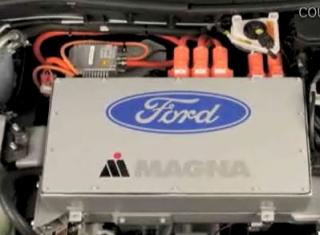
Electric Vehicles Take Center Stage at Detroit Auto Show (w/ Video)
On the opening day of the Detroit auto show, US-based automakers touted new products with a focus on fuel efficiency that they say will help return them to financial health. For instance, a plug-in hybrid version of the Jeep Patriot compact utility vehicle, pictured at right, was unveiled by Chrysler. (More cars in vdeo below)
Also, read, “Detroit Three Change Gears to Go Green”, at Toronto Globe and Mail.
Inauguration Hits Emotional Chord for Some Older Americans (Video)
As Washington DC gets ready for the inauguration of Barack Obama as the nation’s first black President, some older Americans are moved to tears by the changes in racial equality over the years. (Video below from the AP)
Ukraine Restarts Gas Supplies, Restoring Winter Heat
The agreement on the transit of Russian gas to the European Union without any conditions has finally been signed by the Ukraine. The cut in Russian gas supplies had left hundreds of thousands of people in Central and Eastern Europe without heating, struggling to keep warm during one of the harshest winters in years.
Peru Sees Solid Economic Growth Amid Global Crisis
Peru’s booming economy is expected to post its fastest annual growth rate since 1994 for 2008 — 9.1 percent, up from 8.9 percent in 2007, the central bank said on Friday. Peru has the fastest-growing economy in Latin America. (Full report from Reuters.com)
Keynote Speech at Consumer Electronics Show Pushes Charity
Intel Chairman Craig Barrett announced the launch on Friday of the Small Things Challenge, a one-year charity program that will cost his company a nickel every time someone clicks a button that says, “We’ll Donate 5 Cents for You.” The Intel donation this year, up to $400,000, and citizen action generated during the campaign will benefit two charities, Kiva.org and Save the Children.
The Small Things Challenge is a campaign based on the premise that every small action can make a big difference in the world. The website, smallthingschallenge.com, urges people to click, send an e-mail to their friends, and donate a small amount of money themselves, to become part of the solution to global poverty.
Grocery Chains Offer Free Antibiotics to Customers
If an antibiotic is just what the doctor orders for your infection this winter, you can get a free prescription at either Giant food store or Wegmans pharmacies. Both east coast grocery chains have decided to offer free generic antibiotics to customers, without a limit, during the next three months.
As competition for consumer dollars increases, Wal-Mart, with it’s $4.00 generic prescriptions, will lose some ground, here, in the race for pharmacy customers. Drug sales typically make up about 10 percent of revenue at grocery stores.
“We understand the economic pressures families are facing, including the rising cost of health care, which is something I’m especially concerned about,” says CEO Danny Wegman. “We hope this program will help families better cope with those expenses.”
This is the first time Giant has offered a totally free program. In the past they have provided generic prescriptions for $3.99. “Times are tough,” said Robin Michel, executive vice president for Giant Food, which is based in Landover, Maryland. “We wanted to provide something to help customers – something they may need more of during the colder months.”
Publix, a Florida-based grocery chain, debuted a no-cost antibiotics plan for its 684 pharmacies in 2007. It filled its one-millionth free antibiotic a year ago.
Wal-Mart’s $4 plan, launched in 2006, is still extremely valuable to consumers because it includes drugs, unlike antibiotics, that are prescribed for many years on end.
Other stores that have lowered drug prices include Schnucks and Martin’s supermarkets.
Wegmans Food Markets, Inc. is a 72-store family-owned supermarket chain with stores in New York, Pennsylvania, New Jersey, Virginia, and Maryland. Giant has 184 supermarkets –164 with pharmacies — in Virginia, Maryland, Delaware and D.C.
140 Year Old Lobster Set Free
Last week, the prospect that a 140-year-old lobster confined to a tank inside a New York seafood restaurant would ever see his ocean home again were bleak at best. Now, George, the 20-pound crustacean, will get a second shot at life after the good folks at City Crab and Seafood agreed to ship the lucky lobster to Maine, and release him back into the wild.
As long as George remains in Maine, he won’t have to worry about ending his life in a pot of boiling water. Fishermen are barred from keeping lobsters that exceed the state’s legal size limit. View related photos and Full AP story at MSNBC.com.
Chávez Restores Free Home Heating Oil Program to U.S. Poor
The Venezuelan government reversed course Wednesday, announcing that its US oil subsidiary would continue to provide free home heating oil to poor Americans two days after the government announced that the program had been suspended. Venezuela reinstated the program, which saved some 180,000 US households around $260 apiece in 2008. That covered about one month’s heating bill. (Christian Science Monitor)