All News - Page 16 of 1714 - Good News Network
Home Blog Page 16

Airline Welcomes VIP Endangered Turtle Who Needed Hospital After it was Blown Off Course By Powerful Winter Storm

Crush the sea turtle gets ticket on Loganair to reach sanctuary - SWNS
Crush the sea turtle gets ticket on Loganair to reach sanctuary – SWNS

On 9 January, large parts of Europe were brought to a standstill as Storm Goretti, a powerful winter cyclone with 110 mph winds, swept into the region from the south.

Soon after, a beachcomber found a young loggerhead turtle washed up on the Island of Jersey near the coast of France after being blown hundreds of miles off course.

The warm-water reptile was “cold stunned”—an immobile condition caused by prolonged exposure to cold water—and quickly brought to a local animal hospital.

Veterinarian Peter Haworth at New Era Hospital was able to stabilize the weak and malnourished sea turtle in a small tank—thanks to warmed seawater provided by The Jersey Oyster Company, but the juvenile turtle needed more space.

A rough voyage across the English Channel to Britain by boat could have caused undue stress for the endangered species, so Peter contacted ‘the friendly skies’ for help getting the rescued turtle a VIP airline ticket.

Named Crush, after the character in Finding Nemo, the sea turtle finally received permission from Loganair to fly as a First Class passenger on a scheduled flight to Southampton, England, where it was picked up and driven 90 miles to its long-term care facility, the SeaLife Centre in Weymouth.

Crush the loggerhead turtle – SWNS

“This was certainly one of the more unusual passengers we’ve welcomed on board,” said Ronnie Matheson, chief commercial officer at Loganair.

“Our teams worked closely with Peter and his colleagues to ensure that she could travel as calmly and comfortably as possible.”

MORE GOOD TURTLE NEWS:
Sea Turtles Rebounding Worldwide as Nests and Habitat are More Protected in 2025
• Lovelorn Tortoise Found a Year After it Escaped in Search of a Mate at 0.00012mph
Saved from a Predator’s Jaws, Amputee Turtle Released Back into the Wild with Important Mission – (WATCH)

Dan Townsend, head of airside operations at Southampton Airport, said: “We’re delighted to support this special journey and play a small part in helping this young turtle get the expert care it needs.

“Our teams work closely with airline partners like Loganair to make sure unique animal movements like this one are handled safely and smoothly, and we’re proud to help facilitate its onward recovery.”

CT scans at the Jersey hospital identified a higher than usual amount of sand inside her oesophagus, but some of it was removed to prevent any future blockage—and the SeaLife Centre hopes to release her back into loggerhead habitat range this spring.

SHARE THE INSPIRING RESCUE With Turtle-Lovers on Social Media…

Your Weekly Horoscope – ‘Free Will Astrology’ by Rob Brezsny

Our partner Rob Brezsny, who has a new book out, Astrology Is Real: Revelations from My Life as an Oracle, provides his weekly wisdom to enlighten our thinking and motivate our mood. Rob’s Free Will Astrology, is a syndicated weekly column appearing in over a hundred publications. He is also the author of Pronoia Is the Antidote for Paranoia: How All of Creation Is Conspiring To Shower You with Blessings. (A free preview of the book is available here.)

Here is your weekly horoscope…
FREE WILL ASTROLOGY – Week of February 14, 2026
Copyright by Rob Brezsny, FreeWillAstrology.com
AQUARIUS (Jan. 20-Feb. 18):
Poet Mary Oliver asked her readers, “Tell me, what is it you plan to do with your one wild and precious life?” This Valentine season, I propose a collaborative version of this prod: Ask those you care for to help you answer Oliver’s question, and offer to help them answer it for themselves. Now is an excellent time to act on the truth that vibrant intimacy involves the two of you inspiring each other to fulfill your highest callings. Do whatever it takes to make both of you braver and bolder as you learn more about who you are meant to be.

PISCES (Feb. 19-March 20):
Can you care for stressed people without making it your duty to rescue them? Can you offer support without being taken advantage of? I hope so, Pisces. Life is inviting you to be more skilled about expressing your love without compromising your own interests. How? First, offer affection without signing up for endless service. Second, don’t let your empathy blur into entanglement. Third, monitor your urge to care so it doesn’t weaken your sovereignty. Your gift for soothing others’ struggles evokes my deep respect, but it’s most effective when it’s subtle and relaxed. Give people room to carry out their own necessary work.

ARIES (March 21-April 19):
“The best way to find out if you can trust somebody is to trust them,” wrote Ernest Hemingway This Valentine season, I propose you experiment with his approach. Take a smart risk with people who have shown glimmers of reliability but whom you haven’t fully welcomed. Don’t indulge in reckless credulity, just courageous and discerning openness. Be vulnerable enough to discover what further connection might bloom if you lead with faith rather than suspicion. Your willingness to believe in someone’s better nature may help bring it forth.

TAURUS (April 20-May 20):
Taurus singer Barbra Streisand addressed her legendary perfectionism. She said that truly interesting intimacy became available for her only after she showed her dear allies her full array of selves, not just her shiny, polished side. In alignment with astrological omens, I encourage you to experiment with the daring art of unfinished revelation. Let the people you care for witness you in the midst of becoming. Share your uncertainties, your half-formed thoughts, and your works in progress. Surprise! Your flaws may prove as endearing as your achievements.

GEMINI (May 21-June 20):
Author Anaïs Nin wrote, “Each friend represents a world in us, a world possibly not born until they arrive, and it is only by this meeting that a new world is born.” I believe this understanding of camaraderie should be at the heart of most Geminis’ destinies. It’s your birthright and your potential superpower to seek connections with people who inspire you to think thoughts and feel feelings you would never summon by yourself. You have an uncanny knack for finding allies and colleagues who help you unveil and express more of your total self. Now is a good time to tap further into these blessings.

CANCER (June 21-July 22):
Poet David Whyte said that “heartbreak is unpreventable.” It’s “the natural outcome of caring for people and things over which we have no control.” But here’s the redemptive twist: Your capacity to feel heartbreak proves you have loved well. Your shaky aches are emblems of your courageous readiness to risk closeness and be deeply affected. So let’s celebrate your tender heart not despite its vulnerability but because of it. You should brandish your sensitivity as a superpower.

LEO (July 23-Aug. 22):
Choreographer Twyla Tharp said she fell in love with her husband partly because “he was the only person who didn’t seem impressed by me.” I will extrapolate from that to draw this conclusion: Our most valuable allies might show their most rigorous respect by seeing us clearly. This Valentine season, Leo, I invite you to test the hypothesis that being thoroughly known and understood is more crucial than being regularly praised and flattered. Enrich your connections with the perceptive souls who love you not for your highlight reel but for your raw, genuine self.

VIRGO (Aug. 23-Sept. 22):
The famously kind and caring author Anne Lamott confessed, “I thought such awful thoughts that I cannot even say them out loud because they would make Jesus want to drink gin straight out of the cat dish.” That’s a liberating insight. She revealed that even kind, caring people like her harbor messy internal chaos. This Valentine season, Virgo, I dare you to share a few of your less-than-noble thoughts with soulful characters whom you trust will love you no matter what. Let them see that your goodness coexists with your salty imperfections. Maybe you could even playfully highlight the rough and rugged parts of you for their entertainment value. What’s the goal? To deepen spirited togetherness.

LIBRA (Sept. 23-Oct. 22):
How do we eagerly and daringly merge our fortunes with another person while maintaining our sovereign selfhood? How do we cultivate interesting togetherness without suppressing or diluting our idiosyncratic beauty? In some respects, this is a heroic experiment that seems almost impossible. In other respects, it’s the best work on the planet for anyone who’s brave enough to attempt it. Luckily for you Libras, this is potentially one of your superpowers. And now is an excellent time to take your efforts to the next level of heartful grittiness.

SCORPIO (Oct. 23-Nov. 21):
Here’s a quote by the character Carrie Bradshaw from the TV show Sex and the City: “The most exciting, challenging, and significant relationship of all is the one you have with yourself. And if you can find someone to love the you that you love, that’s fabulous.” I invite you to make this a prime meditation, Scorpio. To begin, get extra inspired by your own mysterious beauty: captivated by your own depths, fascinated by your mysterious contradictions, and delighted by your urge for continual transformation. The next step is to identify allies and potential allies who appreciate the strange magnificence you treasure in yourself. Who devoutly wants you to fulfill your genuine, idiosyncratic soul’s code? Spend the coming weeks enriching your connections with these people.

SAGITTARIUS (Nov. 22-Dec. 21):
This Valentine season, I propose that you infuse your intimate life with a fun dose of playful curiosity. Visualize your beloved allies, both current and potential, as unfolding mysteries rather than solved puzzles. Ask them provocative questions you’ve never thought to ask before. Wonder aloud about their simmering dreams and evolving philosophies. (Brezsny’s Togetherness Rule #1: When you think you’ve figured someone out completely, the relationship withers.) In fact, let’s make this one of your assignments for the next five months: Heighten and nurture your nosiness about the beautiful people you love. Treat each conversation as an expedition into unexplored territory. (Brezsny’s Togetherness Rule #2: A great way to stoke their passion for you and your passion for them is to believe there’s always more to discover about each other.)

CAPRICORN (Dec. 22-Jan. 19):
Ecologists studying symbiosis know that successful partnerships aren’t always between similar organisms. Some bonds link the fortunes of radically different creatures, like clownfish and sea anemones or oxpeckers and buffalo. Each supplies resources or protection the other lacks, often assuring they live more successfully together than they would on their own. This is useful information for you right now. At least one of the allies you need looks nothing like you. Their genius is orthogonal to yours, or they have skills you don’t. The blend may not be comfortable, but I bet it’s the precise intelligence you need to achieve what you can’t accomplish alone.

WANT MORE? Listen to Rob’s EXPANDED AUDIO HOROSCOPES, 4-5 minute meditations on the current state of your destiny — or subscribe to his unique daily text message service at: RealAstrology.com

(Zodiac images by Numerologysign.com, CC license)

SHARE The Wisdom With Friends Who Are Stars in Your Life on Social Media…

“Love is space and time measured by the heart.” – Marcel Proust (Happy Valentine’s Day!)

Credit: Bas Glaap

Quote of the Day: “Love is space and time measured by the heart.” – Marcel Proust (Happy Valentine’s Day!)

Photo by: Bas Glaap

With a new inspirational quote every day, atop the perfect photo—collected and archived on our Quote of the Day page—why not bookmark GNN.org for a daily uplift?

Credit: Bas Glaap


Good News in History, February 14

95 years ago today, the horror film Dracula starring Bela Lugosi was released. Adapted from the 1897 novel by Bram Stoker, it’s a tale of Count Dracula, a vampire who emigrates from Transylvania to England and preys upon the blood of living victims. WATCH his reaction to being shown a crucifix… (1931)

Minnesota Tow Truck Driver Returns Abandoned Vehicles to Families After ICE Arrests

Fr0ggy - via unsplash
Fr0ggy – via unsplash

It was only a few months ago that Juan Leon became the proud owner of Minnesota’s newest tow truck service.

Not long after, he began to get calls about abandoned vehicles and realized there was a pattern. Whether it was parked on the side of the street or in the lot of a business, their owners were just gone.

In most if not all such cases, he would learn, they had been arrested by ICE during its Operation Metro Storm. Whether one supports the efforts of the agency to deport illegal immigrants, it left behind a big footprint—a four-wheeled one, and Leon realized he had the opportunity to make a difference in his community.

Working sometimes alone, and sometimes at the request of family members, Leo’s Towing has been returning suspects’ cars to their families at no cost for 4 months now.

“Seeing there was a need for someone to help out, help clear the streets and get the people back their vehicles. So we stepped up and started doing it,” Leon told CBS which manages an affiliate in Minnesota.

Working alongside “observers,” Leon has spent weeks arriving at the scene of an earlier arrest in order to bring the car back to any family or friends the person might have.

“Families reach out to us,” Leon said. “If the family isn’t reaching out, we’ll find a way to get inside the vehicle and we’ll bring it back to their house and put it in a safe spot.”

BUSINESSES HELPING OUT:

It costs hundreds of thousands to insure a working, hydraulic vehicle like a tow truck, which is why towing costs so much. But Leon says he can take the hit because of money he receives through private donations coming from all around the country for his compassionate work, which he added has rapidly crowded out his previous schedule.

He estimates he’s brought some 250 cars to their owners, their family members, or to a safe place where it will avoid damage.

Leon says the moments when a car is returned can be emotional, “more than sad” even, but it doesn’t dissuade him from carrying on.

WATCH the story below from CBS News…

SHARE This Inspiring Help For Those Affected By ICE’s Actions In Minnesota…

Whiskers on Elephant’s Trunk Are Key to its Amazing Sense of Touch

credit - A Posado via SWNS
credit – A Posado via SWNS

The whiskers on an elephant’s trunk are key to its “amazing” sense of touch, reveals new research.

The 1,000 hairs that cover the trunk have unusual properties that highlight where contact happens along each whisker allowing the largest land animal to grab something as small as a peanut, say scientists.

The whiskers of elephants and domestic cats have stiff bases that transition to soft rubber-like tips, different from the uniformly stiff whiskers of rats and mice and referred to as a functional gradient.

The German research team believe that the unusual stiffness gradient helps elephants know precisely where contact occurs along each of their 1,000 trunk whiskers so they can perform feats such as picking up a tortilla chip without breaking it or precisely grabbing a peanut.

Now the researchers are looking to invent new robotic sensing technologies inspired by the functional gradients they discovered in elephant and cat whiskers.

“The stiffness gradient provides a map to allow elephants to detect where contact occurs along each whisker,” said Dr. Andrew Schulz, the study team leader. “This property helps them know how close or how far their trunk is from an object… all baked into the geometry, porosity, and stiffness of the whisker.”

“Engineers call this natural phenomenon embodied intelligence. It’s pretty amazing.”

Dr. Schulz and his colleagues examined elephant trunk whiskers to understand how they are shaped, how porous they are, and how soft they are.

Micro-CT scanning allowed the researchers to measure the 3D shape of several whiskers and showed that elephant whiskers are thick and blade-like, with a flattened cross-section, a hollow base, and several long internal channels that resemble the structure of sheep horns and horse hooves, but not rat whiskers, which was their hypothesis.

The researchers explained that the porous architecture reduces the whisker’s mass and provides impact resistance, allowing elephants to eat hundreds of kilos of food every day without worrying about damage to their whiskers, which never grow back.

The discovery that elephant trunk whiskers bear a stiffness gradient initially stumped the team as they were not sure how it would affect touch sensing.

To try to figure out why, Dr. Schulz worked with colleagues at the Max Planck Institute for Intelligent Systems (MPI-IS) in Stuttgart to 3D print a scaled-up whisker with a stiff, dark base and a soft, transparent tip.

SECRETS BEYOND ANIMAL ABILITIES: Hi-Tech Whiskers Give Working Robots More Ability to Move Safely and Read Environment

Having this physical “whisker wand” prototype helped the research team develop their intuition for what an elephant trunk feels through its whiskers.

Dr. Schulz left the wand with his mentor Professor Katherine Kuchenbecker after a meeting, and she carried the wand in her hand as she walked through the halls of the Institute, gently hitting the columns and railings.

“I noticed that tapping the railing with different parts of the whisker wand felt distinct – soft and gentle at the tip, and sharp and strong at the base,” said Professor Kuchenbecker. “I didn’t need to look to know where the contact was happening; I could just feel it.”

ALSO CHECK OUT: Hummingbird Chicks Observed for the First Time Pretending to be Caterpillars to Avoid Being Eaten

To test their hypothesis from the 3D-printed whisker wand, the research team developed a computational modelling toolkit to assess how the whisker responds to contact.

The simulations showed that the transition from a stiff base to a soft tip does indeed make it easier to feel where something is touching along the whisker, allowing the elephant to react appropriately and carefully manipulate even delicate objects, such as tortilla chips.

ELEPHANT STORIES: Houston Elephants Do Yoga 7-days a Week to Stay Flexible and Healthy

The discovery has excited the research team who are working to apply the insights from nature to applications in robotics and intelligent systems.

“Bio-inspired sensors that have an artificial elephant-like stiffness gradient could give precise information with little computational cost purely by intelligent material design,” said Dr. Schulz.

SHARE This Unique Insight Into Elephant Trunks. 

Monks Arrival After 15 Weeks of Walking Fills DC Streets With Peace and Compassion

The monks arrive in Washington - credit, Walk for Peace via Facebook
The monks arrive in Washington – credit, Walk for Peace via Facebook

It was a day that some locals said was unlike any other they had ever seen when the party of Buddhist monks arrived barefoot on the steps of the National Cathedral, as snow still covered the ground.

“This is the moment I will remember for the rest of my life,” said the leader of the band of monks, Venerable Bhikkhu Pannakara. “And I hope you do the same.”

For months, the nation has been captivated as some 19 senior monks, known as Bhikkhus, left the Hương Đạo Vipassana Bhavana Center in Fort Worth, Texas, and walked 2,300 miles to the nation’s capital for the sake of peace.

These 19 men came from monasteries around the Theravada Buddhist world to partake in a long-practiced tradition to spread peace by walking long distances. The word “Vipassana” refers to a practice of meditational beathing taught by the Buddha, one which Ven. Pannakara taught at Dharma talks given along their 15-week journey.

For a country that is often espoused to be a Christian nation, the saffron-sight of the monks walking silently in bare feet along the roads captivated the city and country, and drawn millions of followers to the Walk for Peace social media pages. 

As they snaked their way down Wisconsin Avenue, thousands cheered, but thousands more understood enough to explain that it was more correct to remain quiet, or to say “Sadhu!” which means “wisely done,” in Pali, the language that the Buddha spoke.

The first public stop in DC was American University’s Bender Arena, where 3,500 people watched in silence as the monks entered to speak. Later, their journey culminated in front of the National Cathedral where Washington Episcopal Bishop Mariann Budde hosted an interfaith gathering to welcome their arrival.

Wednesday’s gathering on the Lincoln Memorial – credit, Walk for Peace via Facebook

There, Ven. Pannakara, himself rather soft-spoken, invited the thousands of onlookers to share the moment in withdrawn silence and breathing, while the cold air passed through bare tree branches, and the bells rang out overhead. To each, the Bhikkhu said, recite this mantra: “Today will be my peaceful day.”

After resting at a fire department, which had been their lot since the start of their journey, Wednesday saw them pass in front of Capitol Hill, before their final public act—an enormous gathering on the steps of the Lincoln Memorial.

THE LAST TWO STORIES: 

“In the 40 years I have lived in Washington I have NEVER experienced such beautiful, respectful and loving series of public events,” commented on resident, Nicole Krakora, in a Facebook post following the event. “Beautiful silence.”

Many noted the similarities to Martin Luther King’s speech on the same steps.

SHARE This Incredible Journey Brought To An End With Your Friends… 

CA Nonprofit Buys 6,100-acres of Sacred Land, Ending 10-year Battle Over Proposed Sand Mine

Sargent Ranch oak woods - credit, Ted Miller supplied by POST
Sargent Ranch oak woods – credit, Ted Miller supplied by POST

One of the largest private land purchases for conservation in California’s Bay Area was just carried out to save a historic ranch from being turned into a sand quarry.

Before it was called Sargent Ranch, it was the sacred home of the Amah Mutsun Indian Band, and now it’s going to be protected for what one would assume to be a long, long time to come.

Located in south​ Santa Clara County, the ranch is about 27 miles from Monterey Bay. Here, the Palo Alto-based nonprofit Peninsula Open Space Trust, (POST) just completed the third purchase agreement that will see all but 7% of the original 6,500-acre Sargent Ranch leave the hands of developers who have sought environmental permitting for a sand and gravel quarry for a decade.

Challenged in court by environmental groups over the ranch’s historic and connective value for native species like badger, deer, mountain lions, bald eagles, and steelhead trout, the developers eventually relented and sold.

“[T]his property represents one of our region’s most ecologically and culturally significant landscapes,” said POST President Gordon Clark in a statement. “To date, we have acquired three properties in the area, protecting a total of 6,114 acres of the 6,500-acre ranch. The remaining 480 acres are under contract and we expect to conserve them in late 2026.”

“Our number one reason to conserve this land is that it’s a major win for biodiversity, safeguarding habitats and essential landscape connectivity for species that journey between the Santa Cruz Mountains, Gabilan, and Diablo Ranges.”

The Amah Mutsun band had lived in the area for presumably hundreds of years before it was the site of colonization through a Spanish mission. In the mid-1800s, the ranch’s namesake, James P. Sargent, purchased the property with his fortune from California’s Gold Rush​​. Under his ownership, the grounds included a railroad depot, saloon, and other infrastructure.

Sargent Ranch wildlife – credit, Ted Miller, supplied by POST

Since then, the property has had several owners and has been subject to various unrealized plans for development. Most recently, a group of investors called Sargent Ranch Partners LLC proposed a sand and gravel mine on the site.

The Partners first sought approval for a 403-acre, open-put gravel mine in 2015, and encountered vigorous resistance by environmental groups. The current owner made no comment on his team’s sale to POST, which has exceeded $63 million raised primarily from Silicon Valley benefactors and private donations, according to the Santa Cruz Sentinel.

CHECK THIS OUT: Tribe Releases Native Elk Back onto 17,000 Sacred Sierra Nevada Acres

Now that the ranch is out of the development line, it’s not clear what will happen to it. The Sentinel reports that Clark will organize some studies on the land focusing on the movements of the native animal species, while the Amah Mutsun will be brought onboard through a kind of stewardship, co-ownership agreement.

It could eventually be transferred into county hands, to join the system of some 28 parks managed by the Santa Clara parks department.

“We want to be supportive,” said Todd Lofgren, director of the department. “We are going to work with the partners and community to help create a plan everyone is excited about.”

MORE CALIFORNIA CONSERVATION: 900 Acres Bordering Yosemite Returned to Tribe That Was Expelled 175 Years Ago

In his statement, Clark said the results of the field studies will determine how his group will move forward.

“POST is working closely with a variety of partners, including the Amah Mutsun Tribal Band, Amah Mutsun Land Trust, Santa Clara County Parks, the Santa Clara Valley Habitat Agency, Valley Water, the Santa Clara Valley Open Space Authority, and the Land Trust of Santa Cruz County, among others,” he said.

SHARE This Sacred Land For Man And Beast, Saved From Development…

“Prediction is very difficult, especially if it’s about the future.” – Niels Bohr

Credit: Rajesh Kavasseri

Quote of the Day: “Prediction is very difficult, especially if it’s about the future.” – Niels Bohr

Photo by: Rajesh Kavasseri

With a new inspirational quote every day, atop the perfect photo—collected and archived on our Quote of the Day page—why not bookmark GNN.org for a daily uplift?

Credit: Rajesh Kavasseri


Good News in History, February 13

Photo by Bryan Ledgard, CC license, 2007

Happy 76th Birthday to Peter Gabriel, the English singer-songwriter who is one of the most influential progressive rock innovators of all time. At 17, he founded the band Genesis—and later launched a successful solo career, winning six Grammy Awards. WATCH the ground-breaking Sledgehammer video… (1950)

Woman Whose Prosthetic Leg Swept Out to Sea Is Thrilled its Been Found 10 Months Later

- credit, images supplied by Ogden to SWNS
– credit, images supplied by Ogden to SWNS

A woman whose new prosthetic leg was swept out to sea is “over the moon” after she found it 10 months later, it having been swept right back to the beach where she lost it.

Last April, 69-year-old Brenda Ogden lost her custom-made titanium blade-style prosthesis moments before a swim in the North Sea.

She was posing for a picture with a swimming group she was a part of when a huge wave knocked them all down and took her titanium blade back out to sea with it.

Ogden had her leg amputated below the knee five years earlier following a horrific car crash. The now-retired nurse revealed she waited for over a year to get the false leg, and had only had the blade for a week before the disaster on the beach.

“The leg was specially made to allow me to access water easily,” Ogden told England’s Southwest News Service. “I had never swum in the sea before that day and it was on my bucket list to do so.”

The prosthesis had cost her over $2,000, and her swimming group rallied around their member to look for it. Yet a search on the sand that lasted the whole day yielded nothing, and Ogden returned home distraught.

She had been an avid runner, and began to warm to the idea of swimming as a way of restarting physical activity following the crash. “I depended on the leg to be able to do water sports,” she said, adding that she “packed in” the idea after the loss.

Brenda Ogden’s lost prosthetic leg – credit, supplied to SWNS

10 months later, 38-year-old Elizabeth Forbes was walking along a beach in Hornsea, East Yorkshire, looking for fossils. Something caught her eye; not a fossil, but maybe a gas cylinder, she thought.

“I saw an unusual looking strange shape from the corner of my eye when I was walking,” Forbes said. “I was curious about what it was so I walked over and there it was trapped on top of some fallen rocks.”

THE SEA GIVITH: This Shipwreck Is ‘Treasure Fleet’ from 1715 with $1 Million in Gold and Silver Coins Recovered

She then posted a picture of her strange find on a Facebook group called Holderness Coast Fossils, where it was identified as Brenda’s. Forbes originally left the leg where she found it, but returned around noon the next day hoping to deliver it back to Brenda at some point in the near future.

“I have a feeling Brenda thought she might never see the leg again, so I was chuffed to have found it for her and to deliver it back,” she said.

Ogden described herself as being “over the moon” after hearing it was found.

THE SEA TAKETH AWAY: ‘Miracle in the Persian Gulf’– Good Samaritans Help Find Lost Wedding Ring That Man Hasn’t Taken off in 51 Years

“I have spent the last couple of months mourning the loss as I had literally lost a part of me,” she described. “I had come to terms that I might never see it again, but the fact that it has been found is just brilliant. Thank god for Lizzie.”

“I’m glad I will be able to give swimming another go now.”

SHARE This Front Fortune Stroke With Your Friends On Social Media… 
Special Devices Let Crowds at the Deaflympics Feel Power of Judo Slams Like Never Before

Getty Images for Unsplash+

While all eyes and ears are on the Winter Olympic games in Milano-Cortina, last summer’s games drew only eyes.

At the 2025 Summer Deaflympics, Tokyo event organizers splashed on some cutting-edge technology to help the crowds get closer than ever to the action.

Special eyeglasses project holograms featuring athlete bios, previous times and scores, and cues when certain moments have occurred.

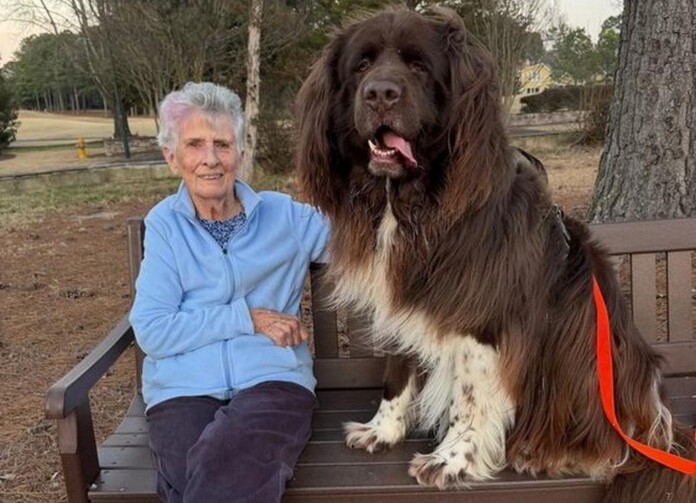
Over at the Judo event, spectators were given special haptic feedback devices worn around the neck which relay vibrations from strike, foot movement, and impact data captured in real-time by sensors and special microphones.

“Originally built for concerts, the tech uses sensors and human tuning to capture the nuance of live sport, giving spectators clear cues and a visceral sense of impact,” writes Paul Carter, a BBC technology journalist, in a brief video report for the British flagship outlet.

“The result is an immersive, shared experience that’s bringing deaf and hearing fans closer together.”

Judo means the “gentle way” in Japanese, but a well-executed throw or trip can see one of the competitors slam onto a firm tatami mat, resulting in an impact that is anything but gentle.

MORE IMMERSION TECH:

Throws are the main objective of this grappling-centered martial art, and often the most exciting moment. Rather than hearing the “thwack” of someone’s back slamming on the tatami, the spectators feel the action with a precise dose of vibrations followed by lighter stimulation from the crowd noise.

The result is so immersive, even non-deaf spectators appreciate it.

“Even though I can hear sound, the device really conveys the atmosphere of the venue,” said Nana Watanabe, a judo fan and spectator. “It feels like we can share the the intensity together. I think it’s wonderful.”

SHARE This Brilliant Use Of Technology To Power Up Silent Sport… 

A Passing ‘Angel’ Rescues Woman 8-Months Pregnant from Her Sinking Car

Courtesy of Shedly Appolon and the Martin County Fire Rescue

A woman some 8-months pregnant has a total stranger to thank for her life, and that of her baby.

When she was driving down I-95 in Martin County, Shedly Appolon remembered feeling dizzy. It was her 29th birthday; she was probably in a good mood, but biology and fate had a wicked gift in store for her.

The dizziness grew until she lost control of her car, which trundled off the highway and into a pond. Confused, she called her fiancé, and told her she was “in the water” confusing him in turn.

WPBF reports that the phone went dead at that moment, just when water began seeping in through the holes under the pedals, and the car began to tilt forward into the brown water.

“I tried to open my driver’s side door and my passenger door, but they were both submerged in water, so I couldn’t get out,” she said. “I started feeling water on my feet. So, I started to panic a little.”

That’s when Good Samaritan on-scene Logan Hayes stripped off his excess layers, took a running jump, and swam to the car to open the back door before it too became submerged.

“When he swung that door open, I was, like, you are an angel,” Appolon said told WPBF.

Released by Martin County Fire Rescue

It’s almost impossible to open a car door whilst the car is sinking; the force needed to disperse the water is beyond what most humans can create with their arms or even their legs. The best chance to save your life if you know for certain your car is going into the water is open the door on the way in or roll down all the windows, which like the door, can’t be opened once they’re taking on water.

credit – Martin County Fire Rescue

If not, the only other chance is to smash the windows, or hold your breath until the pressure in the cabin equalizes with that of the water; at which point the door will open easily. That was proven on Discovery Channel’s Mythbusters to be beyond the limit of most people’s lung capacity.

SINKING CAR RESCUES: Missing Texan Trapped for 3 Hours in Her Submerged Car Saved by Passing Fisherman–Learn How to Save Yourself Too

Fortunately for Appolon, Hayes reached the doors before the water did, and helped her to safety.

Paramedics arrived and rushed her to the hospital, where it was determined the stress of the near-death experience called for an emergency C-section.

MORE STORIES LIKE THIS: Parasail Operator Turns Into Rescuer After Storm Hits the Jersey Shore

Appolon’s fiancé arrived at the hospital after the birth of their daughter, Ivory, at 7 weeks early, weighing 3 pounds 14 ounces. She described Ivory as her “miracle baby,” and it’s easy to see why.

Hayes said he was just happy to be at the right place at the right time.

WATCH the story below from CBS Chicago… 

SHARE This Good Samaritan’s Two-For-One Rescue…

Highly Fatal Virus May Finally Be Treatable with First Vaccine–Clinical Trials Starting

The Nipah virus pictured in red - credit, US NIH
The Nipah virus pictured in red – credit, US NIH

In January, India recorded a mini-outbreak of the Nipah virus, an often lethal disease spread by contact between humans and animals.

There was little that could be done for the victims, as no specialized treatment for Nipah virus exists other than normal supportive care procedures such as the treatment of the resulting symptoms, rest, and hydration.

Some well-studied antiviral medications like ribavirin, remdesivir, acyclovir, favipiravir, have seen use on a speculative basis during certain outbreaks, but real efficacy is unclear.

Now though, the University of Tokyo’s Research Center for Advanced Science and Technology has developed a potential Nipah virus vaccine by inserting some of the virus’ genetic material into the modified measles vaccine. Early trials in hamsters have shown it to be safe and effective.

Nipah virus fatality rates are 40% to 75%. It’s typically spread by contact between humans and bats, often through people consuming tree fruit contaminated with bat saliva. Once thusly contracted, it can spread quickly through humans via any form of fluid exchange.

The virus is present in the tropics and often in rural areas where access to medical care may be limited.

TREATMENT ADVANCING: CRISPR Identifies Commonly Available Drug That Works as Cobra Venom Antidote

Tokyo University’s vaccine candidate is now on its way to Belgium for a Phase 1 testing in humans, where with the help of a nonprofit called the European Vaccine Initiative, it will be examined for safety across 60 test candidates.

The trials are set to begin in April.

SHARE This Potential Preventative Care For A Mostly-Lethal Tropical Disease…

“One marked feature of the people, both high and low, is a love for flowers.” – Robert Fortune

Credit: Olivie Strauss For Unsplash+

Quote of the Day: “One marked feature of the people, both high and low, is a love for flowers.” – Robert Fortune

Photo by: Getty Images For Unsplash+

With a new inspirational quote every day, atop the perfect photo—collected and archived on our Quote of the Day page—why not bookmark GNN.org for a daily uplift?

Credit: Olivie Strauss For Unsplash+


Good News in History, February 12

The NEAR - Shoemaker spacecraft - credit: NASA.

25 years ago today, the Near Earth Asteroid Rendezvous (NEAR) – Shoemaker spacecraft successfully orbited and landed on the asteroid Eros 433, a first for humanity. The second-largest known near-Earth object, Eros was the perfect target for landing as NEAR Shoemaker could orbit its 13 by 33-kilometer bulk—which it did, for a whole year from February 2000 to February 2001 when it landed on the surface. READ what we learned… (2001)

Bird Droppings Powered the Rise of this Little-Known Coastal Kingdom, Archaeologists Find

The Islas Ballestas off the coast of the Chincha and Pisco valleys remain an important location for many seabird species, as well as seals and other marine animals. Birds today are less abundant than they were in the past, leading to decreased guano accumulation compared to earlier eras – credit, Jo Osborn

New archaeological evidence reveals that seabird guano—nutrient-rich bird droppings—may have the driver of behind the prosperity of the most influential pre‑Incan societies.

In ancient Andean cultures, fertilizer was power, said archaeologist Dr. Jacob Bongers, whose findings highlight the unexpectedly powerful role bird droppings played in shaping ancient societies in the Andes.

Farming on Peru’s coast is challenging, as it is one of the driest areas on Earth, where even irrigated soils quickly lose nutrients.

Guano shipped from offshore islands provided a potent, renewable fertilizer that allowed coastal farmers in the Chincha Valley to grow maize, one of the most important staple crops in the Americas, in abundance.

“Guano dramatically boosted the production of maize (corn), and this agricultural surplus crucially helped fuel the Chincha Kingdom’s economy, driving their trade, wealth, population growth and regional influence, and shaped their strategic alliance with the Inca Empire, Dr. Bongers from the University of Sydney said.

Published in PLOS One, Dr. Bongers and his study team analyzed biochemical signatures in 35 maize samples recovered from burial tombs in the Chincha Valley, home to a powerful coastal polity of perhaps 100,000 people.

Chemical analyses revealed exceptionally high nitrogen levels in the maize, far beyond the natural soil conditions typical for the area. This strongly indicates the crops were fertilized with seabird guano, which is enriched in nitrogen due to the birds’ marine diets.

“The guano was most likely harvested from the nearby Chincha Islands,” Dr. Bongers said. “Colonial‑era writings we studied report that communities across coastal Peru and northern Chile sailed to several nearby islands on rafts to collect seabird droppings for fertilization.”

The researchers also examined regional archaeological imagery featuring seabirds, fish, and sprouting maize depicted together on textiles, ceramics, pottery, wall carvings and paintings, offering a further line of evidence that seabirds and maize held cultural importance in these ancient societies.

MORE INCANEWS: Decorative Throne Room Unearthed May Have Belonged to an Ancient Peruvian Queen

“Together, the chemical and material evidence we studied confirms earlier scholarship showing that guano was deliberately collected and used as a fertilizer,” Dr. Bongers said. “But it also points to a deeper cultural significance, suggesting people recognized the exceptional power of this fertilizer and actively celebrated, protected and even ritualized the vital relationship between seabirds and agriculture.”

This agricultural surplus supported specialist merchants, farmers and fisherfolk, and helped the Chincha people to become major coastal traders.

The Inca, based in the highlands of the Andes, produced the largest native empire in the Americas before Europeans arrived and were famously obsessed with maize, using it to make ceremonial fermented beer, or ‘chicha’. But they couldn’t grow much of it in their highland environments, nor could they sail.

MORE HISTORICAL LEGACIES: ‘Green-Thumb’ Miracles Gave These Monks an Eco-Authority in Medieval Italy New Research Shows

“Guano was a highly sought-after resource the Incas would have wanted access to, playing an important role in the diplomatic arrangements between the Inca and the Chincha communities,” Dr. Bongers said.

“It expanded Chincha’s agricultural productivity and mercantile influence, leading to exchanges of resources and power.”

SHARE This Fascinating Center Of Power And Economy With Your Friends… 

Heroic Neighbor Uses Sledgehammer to Rescue 85-year-old Woman in Wheelchair from House Fire

Ian Talmacs - credit, Unsplash
Ian Talmacs – credit, Unsplash

A good neighbor in Illinois has been hailed as a hero for using a sledgehammer to batter down the door of a burning building to rescue a wheelchair-bound woman inside.

Reported by various local media affiliates, the rescue occurred on Tuesday, February 3rd, after a house in Arlington Heights caught fire with two elderly residents trapped inside. A 90-year-old man managed to escape, only to try to go back for his 85-year-old wife.

Confined to a wheelchair, she was stuck inside. Neighbors said the man had to be restrained, as the situation was too dangerous and the fire department had already been called.

That’s when a neighbor as yet-unidentified arrived with a sledgehammer and used it to gain entry into the home in time to rescue the woman. The neighbor later emerged with the woman in their arms, and all three were taken to the hospital before being discharged later.

“We want to recognize and commend the quick thinking and decisive action taken by one of our Arlington Heights residents that helped save a life,” Arlington Heights Fire Department officials said.

“This situation serves as an important reminder that every second matters. The willingness of a community member to step in and help before first responders arrive can make all the difference.”

“We are proud to serve a community that looks out for one another and we thank this resident for their actions and composure when it mattered most.”

WATCH the story from CBS News Chicago… 

CELEBRATE This Heroic Neighbor’s Timely Intervention On Behalf Of His Community… 

Lost Painting by the ‘Illustrious Woman’ Painter of the Renaissance Surfaces in N. Carolina After 100 Years

Portrait of a Canon Regular by Sofonisba Anguissola - credit, Robert Simon Fine Art
Portrait of a Canon Regular by Sofonisba Anguissola – credit, Robert Simon Fine Art

A lost work by the most famous female artist of the Renaissance has surfaced at a North Carolina estate.

The story of how Portrait of a Canon Regular was found begins in 1920 when it was photographed in black and white—before vanishing from all knowledge.

104 years later, art historian Michael Cole recorded a lecture on the illustrious portrait painter Sofonisba Anguissola of Cremona, and posted it on YouTube. In Durham, North Carolina, a pair of art collectors just happened to watch the lecture, and it gave them the notion that they might own an Anguissola.

Calling Cole and informing him of the prospective piece, they invited to fly him to Durham for a closer look, and it was there that he confirmed it to be Portrait of a Canon Regular, a painting Anguissola composed when she was 20 years old, depicting a priest giving a sermon from the Gospel according to St. John. A ghostly eagle bearing a halo—St. John’s avatar, is seen over the figure’s right shoulder.

If the reader has never heard of Sofonisba Anguissola, allow for a quick interjection by sig. Giorgio Vasari, a 16th-century Renaissance artist and biographer.

“[Anguissola] worked with deeper study and greater grace than any woman of our times at problems of design. For not only has she learned to draw, paint and copy from nature, and reproduce most skillfully works by other artists, but she has on her own painted some most rare and beautiful paintings.”

A noble-born lady of Cremona, in northern Italy, Anguissola would be encouraged to take painting and drawing lessons as a child by her father. After a short debut painting particularly life-like portraits in Italy, she received a commission to become a lady-in-waiting for the Queen of Spain, Elisabeth.

At the Spanish court she would produce dozens of portraits of the royal family while teaching the royal children the arts. An iconic depiction of Philip II, hung in the Prado Museum, was made under her brush.

MORE LOST WORKS OF ART: 17th-Century Dutch Painting Rescued from a Dusty Attic in Connecticut Sells for $7 Million

She eventually married the brother of the Viceroy of Sicily, Orazio Lomellino, who loved her dearly all their lives. Moving to that very island, she lived to an incredible age of 93, passing away and leaving Orazio a widower. He ordered this inscription carved on her tomb.

To Sofonisba, my wife, who is recorded among the illustrious women of the world, outstanding in portraying the images of man. Orazio Lomellino, in sorrow for the loss of his great love, in 1632, dedicated this little tribute to such a great woman.

Portrait of a Canon Regular, painted by the maestra in 1552, was exhibited at the Winter Show, an art fair held at the Park Avenue Armory on the Upper East Side of Manhattan, where it was for sale for half a million dollars.

WOMEN FROM HISTORY: Metal Detectorist Stumbles Upon 1,200-Year-old Graves of Impressive Viking Women

Anguissola was particularly limited in her creativity after taking the role in the Spanish court. Each portrait had to be the same style, and in this way the works she completed before moving to Madrid are especially valued.

Not only is Portrait of a Canon Regular within that criteria, but it’s one of only 20 Anguissola canvases that bears her signature.

SHARE This Delightful Art Trivia, With An Amazing Woman At The Center Of It…

Pet Sanctuary Takes in Overflow from Homeless Shelter Amid Unprecedented Cold Snap

Courtesy of Safe Haven pet sanctuary in Green Bay, Wisconsin

A cat shelter in Green Bay has opened its doors to anyone seeking shelter from the Siberian temperatures pummeling the Midwest this week.

Safe Haven Pet Sanctuary typically takes in felines in need of special assistance and care for blindness or other disabilities, but with warming shelters so crowded they’re turning people away, management has decided to open its doors to humans as well.

“We are a safe haven for everyone who needs a place. It’s getting cold out there. A cat will warm your heart and your lap, too. Come on in and warm up. All are welcome,” said President of the Board of Directors of Safe Haven, Joe Becker.

A cold snap has brought extreme lows of -19°F overnight (-28C). At that temperature, all it takes is a gust of wind to put unsheltered individuals at risk of hypothermia and death,.

Mr. Becker told Green Bay’s Press Times that the founder of Safe Haven received word from a friend who worked in the city’s social services department that the warming shelters for homeless residents were overcrowded, and that employees were turning people away.

The founder, Elizabeth Feldhausen, responded with a directive to tell anyone who couldn’t get a spot in the shelters that they could come to Safe Haven to get out of the cold.

A 501(c)3, Safe Haven relies on community support in more than one way, but a local pastor and her husband have redoubled their generosity by offering to stay overnight at the sanctuary in order to supervise the arrivals.

MORE STORIES LIKE THIS: When Dog Shelter Makes Appeal for Homes as Temps Plummet Below Zero People Arrive in Droves

“She brings in people that she trusts and we let them sleep on the couch last night overnight, rather than out on the streets, where the chances of freezing to death in these temperatures is not small. This is legitimately dangerous weather,” said Becker.

The shelter is used to welcoming walk-ins, and is typically open to anyone looking to relax or study. It offers couches and free Wi-Fi, available with just two conditions: you have to be nice to others, and you have to be nice to the cats.

SHARE This Compassion In The Midst Of A Community In Winter’s Grip…