










 With casualties in Iraq reaching record numbers, the war in Lebanon punctuating the continuing crises in the Middle East and the ongoing slaughter in Darfur, 2006 looked to be (in the headlines) a year without hope. Add up all the good news, however, and the world reemerges looking a whole lot brighter. Steady progress to reverse global warming, species decline, oil dependence and disease in 2006 alongside hopeful trends toward peace and sustainability make it worthy of congratulations. Presenting the 8th Annual Top Ten Good News Stories of the Year…
1) Bold Steps in 2006 Reduce Global Warming
• A Giant step was taken to win the hearts and minds of world citizens in the cause of reducing global warming when Al Gore premiered the film, An Inconvenient Truth. With it’s theatrical  release came an expansion of our understanding of climate change.
• Stars like Brad Pitt cast a spotlight on Green building practices that help reduce warming. He helped create a Sustainable Design Competition for New Orleans this year and when the winner was announced, a ‘green’ housing plan was unveiled for the city’s Lower Ninth Ward incorporating the newest sustainable technologies to cut pollution, as well as energy costs by 50 to 60 percent.
• British billionaire, Richard Branson, founder of the Virgin Conglomerate (and Virgin records and airline) announced in September he will personally invest $3 billion in alternative energy initiatives. He committed all personal profits from his airlines and rail company for the next ten years toward developing energy sources that do not contribute to global warming.
• As of October, 2006, 320 mayors of US cities had boldly gone where the U.S. president would not — into the forefront with 164 nations to embrace the Kyoto Accord setting targets that will lead to reduced greenhouse gas emissions by 2012. Big cities like New York, Los Angeles, Chicago and Dallas have signed on to Seattle mayor Greg Nickels’ Climate Protection Initiative pooling their best ideas to share with smaller cities .
• Big bad Wal-Mart is sending engineers to its supply-chain factories to find ways to reduce greenhouse gas emissions. Green means green in their pocket: “What we found absolutely staggered us,” said one engineer. They cut electricity bills by 60 percent at one factory by installing readily available low emissions lighting.
 • In one of the biggest environmental victories this year, the Bush Administration issued new rules in June requiring oil refineries to begin making ultra-low-sulfur diesel (ULSD), “a fuel with 97 percent less sulfur than ordinary diesel,” which will cut smog-forming emissions by 10 percent. A spokesman for the Natural Resources Defense Council called the new EPA rule “the biggest step toward cutting vehicle pollution since lead was taken out of gasoline two decades ago.” By October, all filling stations selling diesel were required to sell ULSD instead of or in addition to diesel.
2) Billionaire Warren Buffett Leading New Wave of Generosity with Largest Donation Ever
• Warren Buffett, the world’s second richest man – worth $44 billion – said in June he will begin to give away 85% of his wealth to foundations focused on world health — eradicating diseases like malaria, HIV/AIDS, and tuberculosis — and on improving U.S. libraries and high schools. The value of his donation today is $37 billion, the largest philanthropic gift in history.
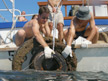 • The percentage of Americans volunteering has reached a 30-year high says a new study. It is fueled in part by the boom in teens pitching in for their communities. “We may be on the cusp of a new civic generation,” said the director of the Corporation for National and Community Service, which has tracked volunteer rates since 1974.
• In the same year it stopped receiving global food aid, China emerged as the world’s third largest food donor, according to a report by the World Food Programme released in August. Another success story is India‘s transformation as a recipient of food aid in 2000 to becoming the 15th largest donor to WFP last year.
• The number of family foundations and nonprofits doubled in the past five years. For the wealthy, giving money or creating charities to make a difference in the world is becoming ‘the cool thing to do’.
3) Environmentalists Heartened by Stunning Finds of Species, Coral, and Recovery of Many Endangered
• Numerous hopeful stories in 2006 showed that endangered species are coming back from the brink. From loggerhead turtles along the US coast to burrowing owls in Manitoba, from goldfinches in the UK to whooping crane chicks hatching in the wild for the first time in over 100 years in Wisconsin.
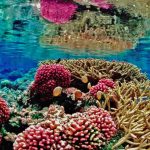 • Called the Earth’s richest seascape, scientists have discovered hugely diverse fish and coral populations thriving off Indonesia’s Papua coastlines including more than 50 species of fish, coral and mantis shrimp previously unknown to science, like the “walking” shark that travels on its fins. It included 600 species of reef-building coral alone.
• Researchers studying coral reefs in the Arabian Gulf have found encouraging signs that corals are regenerating and the entire range may be re-established within a decade. At least 18 out of an original 36 species of coral found in the region have recovered from damage suffered due to past climatic events.
• A new study says the world’s forests appear to be making a comeback, with countries like China and the US more thickly wooded than they were over 100 years ago. Larger trees have grown in number within 22 of the 50 most forested countries.
• Four Javan rhinos born in August in Indonesia constituted a surprising baby boom for a species that may be reduced to fewer than 60 individuals worldwide. These are the first known births for the Javan rhinos in three years.
• Thanks to years of restoration efforts led by the Texas Bighorn Society there are close to 1,000 of the agile desert sheep occupying their ancient home in the dry West Texas mountains, after almost being wiped out last century.
• Black rhino numbers are up 20 percent in Kenya, after years of decline from poaching and habitat loss, a healthy increase that surpassed even conservationists targets.

• After nearly four decades on the endangered species list, bald eagles are soaring once again, their population climbing from a dismal count of just 417 nesting pairs in the continental United States in 1963 to more than 7,000 today. It was decided in February the eagles of the US no longer needed protection under the Endangered Species Act.
• To protect species in the future, the Bush Administration, in a historic move, encircled Hawaii with the world’s largest marine preserve, home to 7000 marine species, at least a quarter of which are found nowhere else. The huge sanctuary is larger than all US National Parks combined, stretching the distance from Chicago to Florida.
4) Nepal Celebrates Renewed Peace as More Countries, Women Vote Worldwide
• Nepal was transformed in 2006 by a series of dramatic events that propelled the country to the brink of peace after ten years of insurgent fighting and 13,000 dead. In April, thousands took to the streets to protest the shutting down of parliament, defying the shoot-on-sight curfews. The Maoist insurgents eager to establish a republic, seized the moment, declared a unilateral ceasefire and joined a seven-party alliance that forced the king to relinquish power. Nepal’s new cabinet dropped terrorist charges against the Maoists and called for redrawing, together, a new constitution. A peace agreement was later signed disarming the rebels in return for their joining the Democratic process.
• In other democratic developments, Kuwaitis voted in historic parliamentary elections which, for the first time, allowed women to cast ballots and stand as candidates. “It feels like a wedding day,” said one Kuwaiti women on her way to the poll. Women made up 28 of the 252 candidates in the June election.
• The Democratic Republic of Congo voted in its first multi-party election in 40 years this October. “Many people walked miles to get to the polling stations, and some queued overnight, waiting for them to open.”
• The United Arab Emirates, a Persian Gulf state that was created in 1971, took one baby step on the path to general election polling for all, holding its first election this month.
5) Bono Joins Kenya and India Providing Money for Free AIDS Drugs, Saving Thousands
 • Hollywood and corporate stars added their heft to efforts funneling money into AIDS programs. Academy Award-winning actor Denzel Washington donated $1 million to a Los Angeles charity helping to find homes for the 17 million children made orphans by the HIV/AIDS pandemic.
• Bono created the Product Red campaign to raise funds for the Global Fund to fight AIDS. He was joined by Oprah, Armani, Apple, The Gap and Motorola in rolling out the RED campaign that allows Americans to help fight AIDS in Africa by doing what they do best: shopping! Special edition products, like RED iPods will donate a portion of sales to the cause (Apple contributing $10 from each RED nano sold).
• Kenya‘s president announced in June that anti-retroviral drugs will now be free to all people with AIDS within all of the nation’s clinics and hospitals. Kenya is one of the few countries that have reduced their citizens’ HIV rate — from 14% in 1997 to 4% today.
• India also announced this year they will provide free anti-retroviral drugs for 100,000 Indians by early 2007 as part of a program which has already treated 35,000 people.
• The Bill & Melinda Gates Foundation announced this year it will be investing $23 million over the next three years in its India AIDS prevention Initiative, adding $58 million to earlier committments. Add to that $287 million in grants dedicated by Gates in July to create an international cooperative of 16 labs working together to find a vaccine for AIDS.
• In a similar effort to ease suffering from disease in Africa, Jimmy Carter announced in May that after 25 years the Carter Center had nearly eradicated the little known, yet devastating, disease called Guinea worm. For his action he received this year’s $1 million prize for global health from the Bill and Melinda Gates Foundation.
6) Natural Cures and Healthy Living Effective Against Cancer, Parkinson’s and Behavioral Disorders
 • Omega-3 Fish Oil has proven to be a better ADHD Treatment than stimulant drugs like Ritalin commonly prescribed for children with attention deficit hyperactivity disorder (ADHD), according to new research.
• A striking correlation was revealed this year between violence and nutrients in the diet. A clinical trial at the US government’s National Institutes for Health and earlier studies involving people with violent records found that those given supplements have been able for the first time to control their anger and aggression.
• While suffering from a loss of speech and inability to walk, an Australian man was severely dissatisfied with western medical treatment and prognosis for Parkinson’s Disease. He decided to pursue other methods and with the aid of homeopathy, alternative therapies, counseling, meditation and spiritual development, he was completely symptom-free within three and a half years. His book called, Stop Parkin’ and Start Livin,’ is a do-it-yourself menu for reversing the symptoms of Parkinson’s disease.
• A 16 year-old winner at the International Science and Engineering Fair for high school students found the first natural method to kill the pathogen that causes secondary infections often leading to death in patients with compromised immune systems, like cancer patients, AIDS and burn victims. She studied herbal compounds with antiseptic qualities and developed an effective product useful as an inhaler or antiseptic spray.
• A new treatment for skin cancer made from the sap of a common garden weed has proven effective on 71 percent of basal cell carcinomas in Australia. In phase II test results released in May, the PEP005 Topical gel cleared up the most common type of skin cancer in just two applications on two consecutive days. The plant, petty spurge has been used for years in Australia to treat cancerous spots on the skin.
• Topping off this year in health was the release of new analysis of breast cancer rates in American women that revealed a startling decline in the disease. Researchers believe that millions of older women refraining from taking hormone pills led to 14,000 fewer cases of tumors in 2003.
7) Boom in Internet Video Spreads Love, Inspiration
and Hugs to Millions
• Utilizing YouTube and MySpace, citizens are uploading inspiring videos bringing tears to the eyes of millions whom they’ve never met — and hugs.
 • A video documenting the real life story of Juan Mann whose sole mission was giving free hugs to strangers on a crowded pedestrian street in Sydney became so popular on You Tube, that it has been viewed almost 8 million times since September. It sparked others to go out with hand-painted signs offering Free Hugs, and also landed him on Oprah.
• Another example of a video that spread virally though e-mail and blogs was an autistic kid shooting a miracle round of basketball for his high school team, the first time he was ever on the court.
• The You in YouTube was honored this year as Time’s Person of the Year, not just for videos, but for all the citizen journalists who blogged and uploaded their point of view for all to see.
8) Wars On the Wane Worldwide as Reconciliation Unites Divisions
• The world has become dramatically more peaceful since 1992, according to the Human Security Report. The number of wars, coup d’etats, and acts of genocide has declined by 40 percent. Weapons sales between countries have dropped 33 percent during the same time, and the number of refugees has diminished by 45 percent.
• The best story of reconciliation and forgiveness in 2006 arose not between two rival countries or militias, but in a small Amish town where a gunman shot 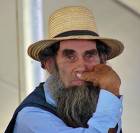 five girls to death in a schoolhouse. The community of Amish Christians, whose girls were lost, had forgiven the man by that evening. In fact, they were discussing ways they could help the family of the killer, a non-Amish man who lived nearby. “They were planning to send a contingent over, perhaps bringing some food…” Marie Roberts, the shooter’s wife, sent a letter saying she was “overwhelmed by the forgiveness, grace and mercy” shown to her family, but to the Amish it was simply their nature as Christians, “Because Jesus forgives us, we forgive others.”
• Two of the most dangerous street gangs in Boston embraced a quiet negotiated truce which has dramatically reduced bloodshed. The Boston Globe reported that “violence stopped abruptly in July, when a temporary cease-fire took effect and in the nearly four months since, there has not been a single shooting, while overall violent crime where the gang members live has plummeted by as much as 80 percent.”
• A new woman Prime Minister of Jamaica, has created common ground for rival gangs where gunfire used to be commonplace. She offers them hope and common purpose. Both sides like her and on this they agree: “She came from a poor background like ours. She gives us promises — schools, development, help for the children.”
• The Basque separatist group in Spain, announced a permanent ceasefire after four decades of armed military resistance with the aim of “promoting a democratic process.” Religious leaders in the country urged forgiveness. “The news prompted jubilation across the country, where ordinary citizens said they can hardly believe the end has come for a group blamed for more than 850 deaths,” reported The Scotsman in March.
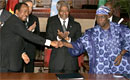 • In Africa and Asia peace was breaking out far and wide. Cease fire agreements were signed between rebel groups and governments in Sudan, Burundi, Mali, and between feuding countries Nigeria and Cameroon with the help of the United Nations. In India and Uganda, unilateral cease fires were announced and peaceful talks sought by resistance groups responsible for tens of thousands of deaths.
• India was again warming toward rival Pakistan this year and calling for progress on Kashmir. Both countries were exchanging ideas and proposals for some settlement to the dispute. By December, Pakistan President Musharraf floated a courageous policy idea calling for demilitarization, self-governance and joint management of the area that has seen thousands of killings from the conflict.
• Five former Soviet republics committed themselves to never acquiring, manufacturing, possessing, or testing nuclear weapons by signing a treaty in September to create a Central Asian nuclear-weapon-free zone.
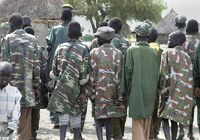 • Disarmament took place in the Democratic Republic of Congo in June as 1,100 former militia members arrived at transit sites and were given some supplies, money and a certificate for rejoining a community of their choice, under a UN led program. “I have surrendered my weapons at last, to help rebuild my country,” Ngajole Lipri, one of the disarmed militia leaders, said. 18 children, including one girl, were among the soldiers.
• And if that weren’t enough peace for you, an ancient Silk Road reopened high in the Himalayas this summer marking the beginning of a new era in trade and diplomatic relations between massive neighbors China and India after more than 40 years of war, mistrust and suspicion.
9) Corporations Lead Green Movement in Autos, Recycling and Sustainability
• “Electric vehicles, gasoline-electric hybrids, diesels, flex-fuel and hydrogen-powered cars are inching up the consumer on-ramp at a faster pace, judging from world debuts of 21 alternative-fuel vehicles,” reported the Christian Science Monitor from December’s international Los Angeles Auto Show.
• Richard Branson and his Virgin Group went green in September, launching an investment fund for developing environmentally friendly fuels investing up to $400m (€315.6m) in renewable energy initiatives with the new Virgin Fuels over three years.
• Leaders of the big three US automakers pledged in a letter to the US Congress in June to double production of flexible-fuel vehicles by 2010 adding incentive to fuel providers to produce ethanol and other biofuels and install pumps. They’ve produced 5 million flexible-fuel vehicles so far, which can run on gasoline or fuel blends of up to 85 percent ethanol and project an additional 1 million vehicles this year and 2 million annually by 2010.
• GM unveiled a new green auto plantin Michigan touted as the “most environmentally friendly auto plant in the world” using innovative energy and water saving techniques.• Toyota North America president, Jim Press, announced his company’s plans to develop a hybrid vehicle that will run on batteries charged by a common electrical outlet. For long drives it will be able to use gasoline, or even alternative fuels like ethanol or bio-diesel (made from  vegetable scraps or discarded cooking oils). He holds a vision for the future in which we drive cars that actually “clean the air” going coast to coast on a single tank of fuel.
• Tesla Motors‘ goal is to design a sports car that would go as fast as a Ferrari or Porsche — but run on electricity. Their first model is “a sleek two-seater called the Roadster” looking something like “a Lotus Elise.” … Their main competition might be the Tango, another sporty two-seater. At 195 miles per gallon, zero to 60 in four seconds… the electric supercar is here. Made by Commuter Cars, Inc. George Clooney himself was one of the first buyers.
• Dell computers, hailed as one of the most environmentally conscious computer makers, launched a free recycling program in the U.S. They are the first to offer free computer recycling — to anyone owning a Dell, whether or not you are purchasing a new one. Owners can even schedule a home pick-up of their Dell device at no charge.
• More environmentally friendly computer equipment is available thanks to manufacturers like Dell, HP, and others that now have products containing reduced levels of cadmium, lead, and mercury to better protect human health. They are easier to recycle and meet the government’s Energy Star guidelines for efficiency.
• The Australian Food and Grocery Council revealed that about 90% of waste and by-products from the food and grocery manufacturers surveyed in 2006 was being reused or recycled, with less than 10% going to landfill. Industry participants in the survey have also reduced energy use by 14%, water use by 21% and greenhouse emissions by 29% since 2003.
• Companies who once fought against environmentalists in court are finding today that recycling makes good economic sense. Customers appreciate that Starbucks uses recycled cardboard and wish it would use more, but the new twist is that sustainable paper saves the corporation money.
 • Enterprise Rent-A-Car will commemorate its 50th anniversary by pledging the unprecedented gift of 50 million trees to The National Arbor Day Foundation. Enterprise has formed a partnership with the Foundation to plant 50 million trees over the next 50 years – a gift of more than $50 million.
• Big companies like DuPont are putting serious money into developing “bio fuel” — motor fuel that is processed from the waste of corn stalks. DuPont wants to replace many of their current factories that use oil, with biorefineries like the one they opened this year, in Loudon, Tenn., that uses corn to manufacter many products like its Sorona carpet fiber, cosmetics, soaps and detergents. The factory consumes 40 percent less energy and reduces greenhouse gas emissions by 20 percent versus its petroleum-based ancestors.
 • With the new reality of $70 crude oil in the US, the plastics industries are turning to corn and fast-growing switchgrass to manufacture everything from carpet to car parts. Bio-degradable and reusable shopping bags made of corn, called BioBags, will break down in a landfill — or home composter — within four to 12 weeks.
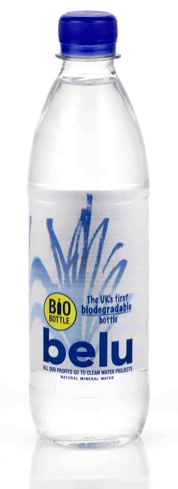
• Belu Natural Mineral Water introduced the UK’s first biodegradable and compostable plastic bottle. The revolutionary bottle is made from corn instead of oil and can be commercially composted back into soil in 80 days. “This can dramatically reduce the amount of rubbish going into landfills and gives everyone an easy way to help protect the environment,” said the company’s founder.
• To top off this year’s active pursuit of the “green” dollar by corporations, further green investment is on the horizon from venture capital firms. They are poised to invest hundreds of millions into the emerging “green technologies” believing them to be as lucrative as anything that preceded them in Silicon Valley. That means we’ll soon see more solutions to environmental problems that could shrink landfills, clean up the air and water, and help ween us from our addiction to oil.
10) Pelosi Seeks to Heal Rifts as First Female US House Speaker
Nancy Pelosi, 66, will become the first female House leader and the highest-ranking woman in U.S. political history — second in line behind the president. Voters weary of corruption cheered her election night victory speech when Ms. Pelosi stated intentions to lead the most honest and open House in history. She stressed her plans to proceed in a bipartisan fashion to find solutions to the Iraq crisis. Civility is something this grandmother wants to return to the halls of Congress.
In November elections nationwide, Americans seemed not to be as hypnotized by fear — and the suggestion that a vote for Democrats would be a “win for the terrorists”. It seemed like some of the poison had been drawn out of the body politic. The system of checks and balances — the genius of the US Constitution — won big, with civility and competence the winning platform. By voting against the arrogance of power, common sense Americans affirmed solution-oriented good governance. The vital center of American politics has realigned and it is a recipe for moderation.
Here’s wishing for a better year in 2007!
(c) 2006, Good News Network