Josh Kerr at the 2023 World Athletics Championship - credit, Erik van Leeuwen
Josh Kerr at the 2023 World Athletics Championship – credit, Erik van Leeuwen
Scottish runner Josh Kerr just put in the fastest mile time in human history, breaking a record that had stood for 27 years after clocking 3:42.66.
Set at the recent London Diamond League athletics meet, Kerr finished a half-second faster than the legendary Moroccan runner Hicham El Guerrouj, who ran a mile in 3:43.13 back in 1999, in Rome, when Kerr was just a toddler.
Unapologetically bold, Kerr widely publicized his intention to break the Men’s fastest mile record at the start of the year, and spent much of it in intense training.
Kerr already had the pedigree to challenge El Guerrouj. He is an Olympic silver medalist, and held the world record for fastest 1,500 meters.
On race day, he was helped to the 500 and 1,000 meter marks by pacemakers, who eventually departed and allowed the Scot to complete the final stretch alone, during which time he left American runner Yared Nuguse, himself holder of the 4th (now 5th) fastest mile time, behind with about 250 meters to go.
He flew past 1,500 meters and set a new personal best over that distance. According to World Athletics’ report from that night, Kerr crossed every checkpoint with a better time than El Guerrouj.
After crossing the line, the 28-year-old became the seventh British athlete to claim the mile record, and first since Steve Cram in 1985. His training, documented on a YouTube account, saw him among the hills and elevation of Albuquerque, New Mexico. He dubbed the camp “Project 222,” referring to two-hundred and twenty-two seconds, equating to 3 minutes and 42 seconds—the aimed-for time of his heat at the Diamond League.
While he didn’t branch out into such uncharted territory, he was overjoyed in victory, having broken one of the longest-standing records in track and field.
“It’s very overwhelming with the amount of hype [I created]. It’s silly to call [the attempt] that early because there’s a lot of things which can go wrong, but I am surrounded by amazing people and was able to stay consistent and put the work in,” Kerr told BBC Sport with the sweat still on his brow.
“If I am to leave my mark on this sport as a British legend, following in the footsteps of the legends behind me, I have to put in those performances.”
“Those performances take every single part of you, every single part of your team. The amount of work behind the scenes is incredible. Today it was a performance I was able to bring out—I just hoped it would be a little bit faster!”
Kerr is an inspiration, and that’s not editorializing—the blistering pace he set seemed very much to pull everyone along with him, and Marathon Handbook reported that 6 other runners set personal bests, and one runner, Germany’s Robert Farken, ran a national record of 3:46.82, finishing 4th.
SHARE This Long-Held Record Beaten By This Electric Scot…
A coral reef long presumed dead has been rediscovered “teeming with life” off the coast of West Africa.
Surveys conducted in the 1960s that were focused on identifying promising fishing areas, flagged a possible deep-water coral reef, but scientists at the time it assumed must be dead.
Now, using a modern sonar survey, scientists have found an apparently healthy reef—an amazing discovery that was described in the journal Frontiers in Marine Science.
After days of “difficult” field work, the sonar revealed structures which the team interpreted as a coral reef, and hopes were raised.
“It was a mix of long days at sea, technical problems, and a lot of uncertainty,” lead author Gérard Zinzindohoué said of the effort. “I still remember seeing those first images.”
“It was a mix of excitement and disbelief, because after all this time thinking about this reef, suddenly there was something real in front of us.”
Mr. Zinzindohoué and his colleagues at the Institute of Halieutic and Oceanographic Research in Cotonou, Benin, reasoned that it could have been a mesophotic coral ecosystem.
A mesophotic coral ecosystem lives deeper than the usual shallow coral reefs, in zones where light is much more limited, he explains.
“Unlike typical shallow reefs, it does not always form a single continuous reef structure. Instead, it can appear as patchy or scattered coral communities spread across the seafloor.”
Using the historical surveys as a guide, the research team surveyed 7 miles of seabed with sonar. To investigate the most promising areas, the team used an underwater drone, and the Deep Sea Camera System, provided by the National Geographic Exploration Technology Lab.
The footage showed a seemingly healthy reef, with 8 different types of coral and 8 species of fish sheltering and feeding around the corals.
The fish included golden African snappers, blackbar soldierfish, Guinean angelfish, West African goatfish, the Monrovia doctorfish, three-banded butterflyfish, and two species of damselfish.
The reef doesn’t seem to be a continuous coral barrier, but patches of coral occupying rocky areas suitable for their growth, although researchers say it’s possible that further surveys will identify more reefs.
“To our knowledge, this is the first confirmed record of a living mesophotic coral ecosystem on the Gulf of Guinea continental shelf. However, I think what we found is probably not an exception.”
“It is more likely a reflection of how little we still know about coastal regions in West Africa and elsewhere. If we were able to find this reef again after 60 years, how many others are still undocumented or simply forgotten?”
The research team hasn’t been able to sample the corals directly yet, which means that the species identifications still need to be confirmed.
It’s also impossible to know, without more data, if the corals were really dead in the 1960s and have since recovered. That would make them intriguing research targets as the study of coral resilience in a changing climate advances.
Mr. Zinzindohoué interprets the historical reports as potentially recording a continuous coral reef barrier extending roughly 40 kilometers, or 24 miles, parallel to the coast.
“If I had all the grant money in the world, the first thing I would do is return to the site with a proper scientific diving and sampling program. These are ecosystems that are still poorly known in this part of the world, and every additional piece of information matters,” he said.
“For me, the most exciting part is about understanding the reef’s history, and what it can tell us about how the ocean in this region has changed over time.”
“It feels like we have only just started to read an archive that has been there for a very long time.”
SHARE This Great Re-Discovery Of A Resilient Deep Sea Reef…
Quote of the Day: “Change is the law of life. And those who look only to the past or present are certain to miss the future.” – John F. Kennedy
Photo by: Noah Buscher
With a new inspirational quote every day, atop the perfect photo—collected and archived on our Quotes page—why not bookmark GNN.org for a daily uplift?
36 years ago today, Roger Waters performed The Wall in Berlin for 350,000 fans to commemorate the fall of the Berlin Wall eight months earlier. Staged on a vacant lot between Potsdamer Platz and the Brandenburg Gate, the event was broadcast live throughout the world, and featured performances by Van Morrison, Rick Danko, Levon Helm, Bryan Adams, Joni Mitchell, The Scorpions, Cyndi Lauper, and Sinead O’Connor. Right before the performance started, the gates were opened which enabled another 100,000 people to watch. WATCH an exciting 4-min clip… (1990)
Lucy (left) and Emma (right) - credit Amanda Meline, supplied
Lucy (left) and Emma (right) – credit Amanda Meline, supplied
From Salt Lake City comes the touching story of a 5-year-old girl saved thanks to a bone marrow transplant from none other than her 2-year-old sister.
Emma Meline was diagnosed with an extremely rare bone disease after her mother Amanda brought her to the pediatrician with a rash and swelling on her leg.
Little Lucy, Emma’s younger sister, said she was going to be “brave” for her older sibling, during a mercifully short stay in the hospital for a bone marrow transplant that almost certainly saved Emma’s life.
Months on from the procedure, Emma dotes on Lucy as never before, a source of immense pride and bittersweetness for their mother Amanda.
“She’s realizing that Lucy saved her life and they have that bond,” she exclusively told People. “That’s so incredible.”
It was just 4 days before Christmas 2025 that Meline and her then-husband Jacob noticed the symptoms on Emma’s leg. The pediatrician didn’t like the look of it at all and ordered lab tests. The good news, he said, was that it wasn’t leukemia.
The bad news is that Emma had aplastic anemia, a rare disease whereby the bone marrow tissue ceases to make blood cells. The disease can range from mild to fatal, can develop at any age, and result from outside aggravations or manifest as an autoimmune disorder.
Sometimes it can be treated with medication, but in Emma’s case, she needed a bone marrow transplant. One of her twin younger sisters Lucy was determined to be a perfect genetic match whose bone marrow could be transplanted without worrying about rejection.
It took 2 months for the operation to be scheduled, during which time Meline and Emma practically lived together at the hospital, as the girl was scared to be left alone. Lucy had to have rounds of blood work as well.
– credit Amanda Meline
“[Lucy’s] favorite thing to say was, ‘I’m being brave for Emma,’ if she had to get blood work done,” Meline said. “And it was so tender.”
Shortly before the February 17th procedure, Emma had to undergo targeted chemotherapy to destroy her bone marrow tissue and make room for the transplant, which was a complete success, allowing mother and daughter to return home on March 11th for a gradual recovery.
The child requires special sanitary precautions, as she is immunocompromised, but with no recurrence of the aplastic anemia 100 days after the operation, it has been considered a complete success.
“Honestly, it’s really crazy to see Emma’s mental fortitude,” says Meline, who added the ordeal has forced her daughter to grow up fast.
SHARE This Sweet Bond Between Sisters Grow All The Stronger…
Darling cultivation in Syracuse - credit, John Carnessali
Darling cultivation in Syracuse – credit, John Carnessali
At the intersection of big data, forestry, and genomics, a biotech startup has birthed a generation of “elite” blight-resistant American chestnut trees through a single gene insertion, rather than deep genetic tinkering.
The company is inspired by saving American hardwoods that have been ravaged by an introduced fungal disease, and says their proprietary approach could be replicated to help save American elm, ash, and white oak trees as well.
North American timber is a $350 billion industry. Hardwood forests support habitats and biodiversity, and anchor some 15% of all American carbon. Yet between chestnut blight, the emerald ash borer, and Dutch elm disease, many native species have experienced catastrophic declines.
“I grew up in northern Ohio on a street called Chestnut Ridge, named by early settlers after the dominant trees on the landscape, so there was always a kind of mystique around the chestnut in the back of my memory, even before I understood why,” Andrew Serazin, co-founder of SilvaBio, told GNN in an email correspondence.
Several concepts for protecting or immunizing American chestnuts from the blight which landed on American shores in the early 1900s from East Asia have failed or are being tested. Along with his partner and aptly-named entrepreneur Michael Bloom, Serazin and SilvaBio have approached the challenge by combining sophisticated predictive methods and knowledge of the chestnut’s genomics with their “Lightspeed” breeding process that offers an enhanced form of propagation
The Darling 54 breakthrough was originally developed by scientists at the SUNY College of Environmental Science and Forestry (ESF). There, scientists inserted a single copy of a plant gene called OxO, which confers resilience to fungal diseases in a variety of plants from banana trees to mosses.
SilvaBio holds the exclusive license to this technology and continues to advance restoration by moving the Darling line from the lab to real-world deployment. Using genomic prediction, accelerated breeding, and advanced micropropagation, the company is developing a broad portfolio of American chestnut genetics designed to maximize diversity, adaptability, and long-term resilience.
“By analyzing DNA, we can identify which young seedlings are most likely to survive disease long before they would typically be tested in the field,” the co-founders told GNN. “In practice, this is similar to precision medicine, but applied to forests.”
“Through our proprietary speed-breeding process, carefully controlling high-intensity light, we can encourage trees to flower and reproduce much faster than they would in nature,” they continued. “This allows us to complete a breeding cycle in about a year, compared to 10 or more years using traditional approaches, overcoming one of the biggest bottlenecks in tree improvement.”
The result was “Darling54.” A double-blinded trial of this special American chestnut cultivar compared with common cultivars found that the “cankers” resulting from chestnut blight were orders of magnitude smaller on Darling54 both as a seedling and at 4 years.
More recently, 4 independent experiments from Purdue University, the University of New England, and SUNY, demonstrated that Darling American chestnut trees consistently show smaller blight cankers than their wild-type counterparts.
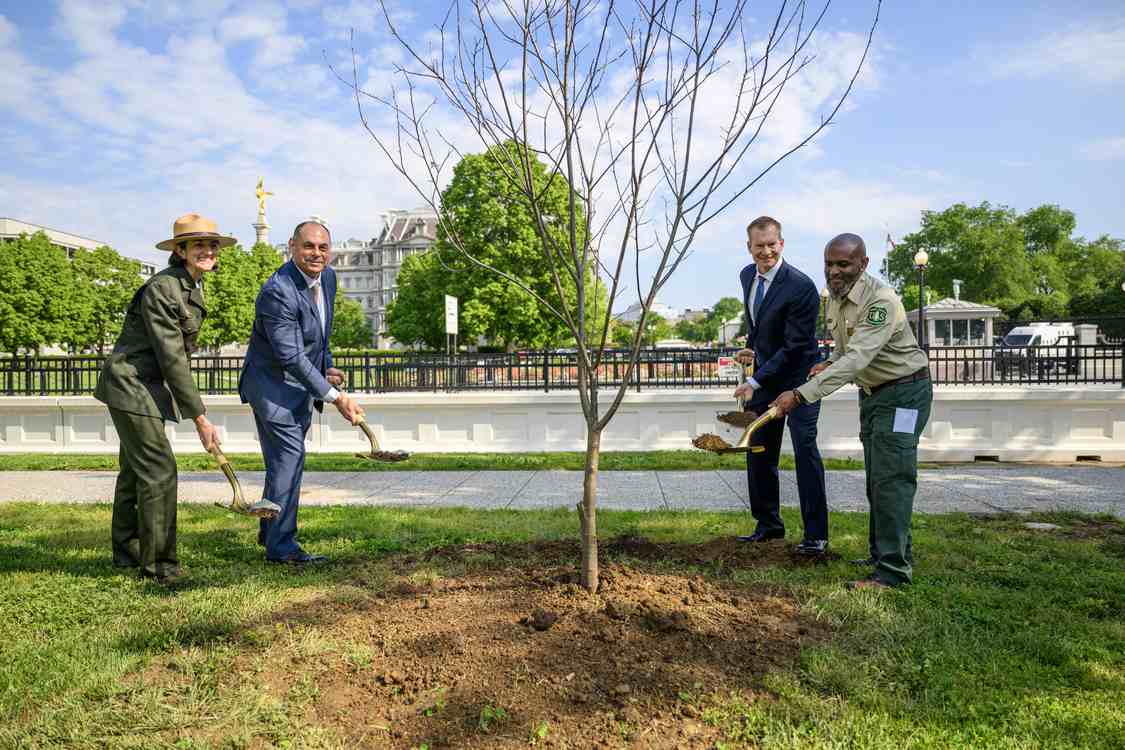
On Arbor Day 2026, a Darling54 chestnut was planted at the White House.
“A foreign pathogen took the American chestnut from our forests. As we approach our 250th, American innovation, science collaboration and stewardship are bringing it back. That is a story worthy of this anniversary,” said Jessica Bowron, National Park Service Acting Director, in a speech to mark the occasion.
Before Darling cultivars can be cultivated on mass, however, detailed regulatory science has to be conducted to ensure that focusing Natural Selection so pointedly to a single purpose does not compromise other aspects of the American chestnut’s biology.
For example, in December 2023, the American Chestnut Foundation withdrew its support for a genetically engineered chestnut that was decades in development, after multiple documented research errors revealed the tree to be genetically defective. Discouraging field performance rendered them, in the Foundation’s opinion, unsuitable as the basis for species restoration.
Since development in 2016, a science update on SilvaBio’s cultivars reads, numerous observations and environmental studies have been done on trees we now know are Darling 54 offspring, with no indication of compromised safety or risks that would affect pending regulatory approval. “More in-depth genome sequencing and additional analyses on Darling 54 are underway and will be submitted to regulators soon.”
NPS staff, Andrew Serazin and Michael Bloom plant a Darling 54 tree at the White House – credit Brien Aho
In their email, Serazin and Bloom addressed some misconceptions about their process, namely that their vision has “never” been to restore the American chestnut with “a single clone.”
“Healthy forests depend on genetic diversity. Our goal is to develop dozens, and eventually many more, blight-tolerant, regionally adapted lines,” they wrote.
“In the United States alone, an estimated 41% of our live forest biomass is threatened by just 15 non-native insects and diseases. The American chestnut is functionally extinct. We’ve lost roughly 75% of our mature elm trees. Ash is being devastated by the emerald ash borer, while beech, white oak, and walnut face their own emerging threats.”
“The American chestnut is our first application, but the same approach can be extended to other species facing similar challenges. Each new species builds on the scientific knowledge, propagation capabilities, and restoration partnerships we’ve already established.”
SHARE This Huge Step Towards Bringing Back This Legendary Tree…
Tom McKievick says his job is challenging yet entertaining, a good combination for a perspective career.
Yet when he saw the newspaper ad for the job at Fredericka Manor senior living community in Chula Vista, California, all the way back in 1976, he wasn’t intending to embark on a career.
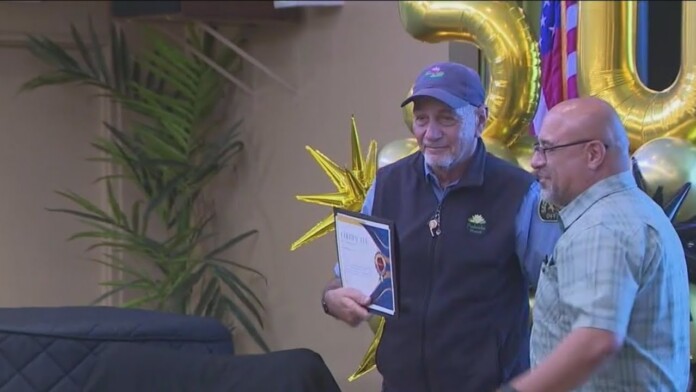
Now, 50 years later, the man has finished what the Bureau of Labor Statistics defines as a “lifetime career,” one which saw him never take a single sick day. If he took one week of vacation a year, he’d have clocked in 12,650 times.
“When I started I wouldn’t think in a million years I’d still be here but I enjoy the residents and the work, and it’s entertaining and it’s challenging, and never boring,” he told Fox 5 San Diego.
McKievick works as head of security, and on the occasion of his 50th work anniversary, was presented with an award at a party held in his honor.
WATCH the story below…
SHARE This Dedicated Man And His Lifetime Of Perfect Attendance…
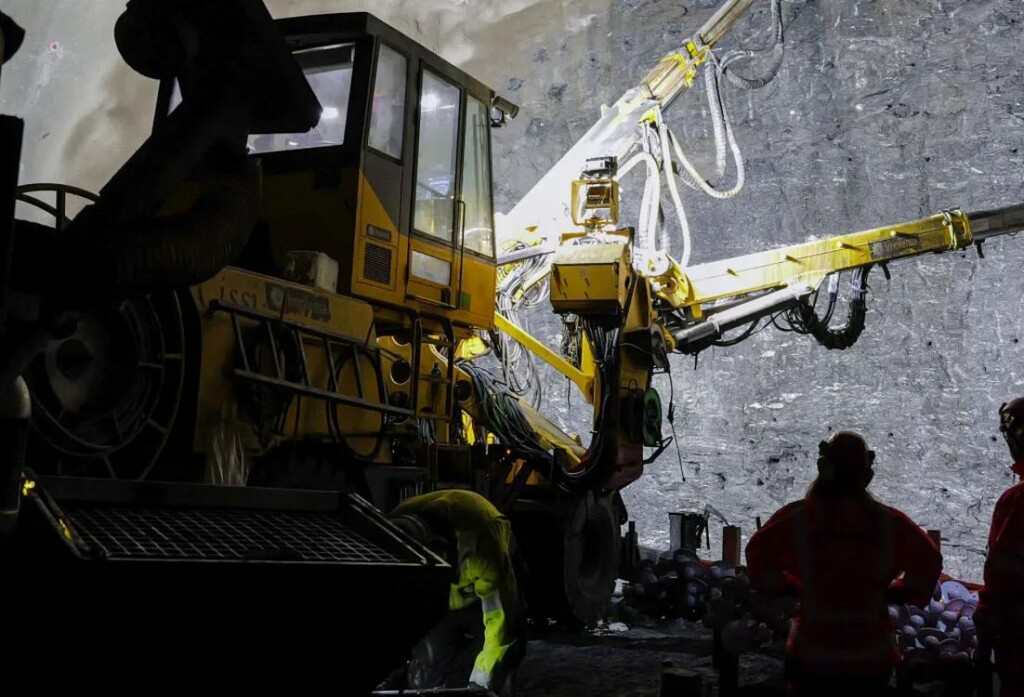
1,000 feet below the North Sea, blast after blast brings Norwegian engineers closer and closer to completion of the longest undersea road tunnel on Earth.
No one better to do it than Norway either, given that their citizens already built the world’s longest undersea road tunnel: the 9-mile-long Ryfylke.
The Rogfast—short for Rogaland Fixed Link—will be 7.6 miles longer than that. It should have a transformative effect on Norway’s west-coast transit map. One of the longest coastlines of any country in the world gives Norway a unique beauty, but what is a 40-minute flight flight for the crow between Stavanger and Bergen turns into a 5-hour journey in a car, requiring two ferry rides.
Funneling 4 lanes of traffic 300 meters below the sea will dodge all the fjord roads, and let motorists make the trip in substantially under an hour.
Norwegian construction firm Skanska is currently tunneling north from the island of Vestre Bokn, while the Swiss engineering firm Implenia is tunneling from Randaberg in the south, with the two ends scheduled to meet in 2029.
The cost of the project is currently estimated to come in at just short of 1 billion euros.
Niall Firth, writing at MIT Technology Review, brought to light (literally) some of the details of what it’s like blasting out the world’s longest undersea tunnel by physically descending into the bowels of the incredible engineering project.
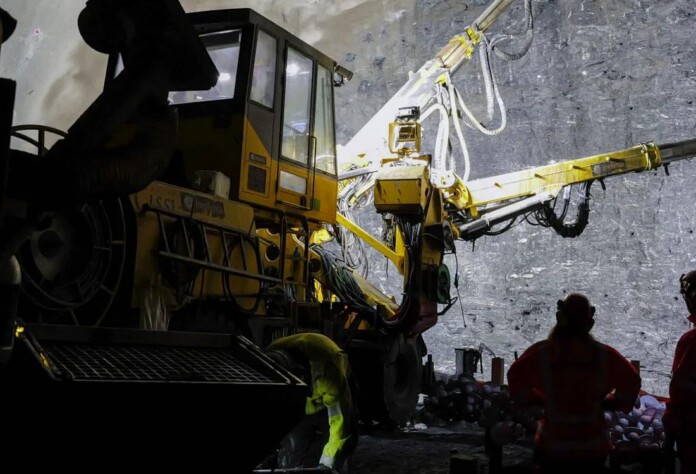
Therebelow, contractors work 12-hour shifts for 12 days straight before receiving a 16-day break to reacquaint themselves with the surface, fresh air, and sunlight. Compared with most other nations engaged in these projects, Norwegians opt for explosive blasting and drilling methods compared to tunnel boring machines.
The approach apparently offers more flexibility, and gives ample opportunities to plug leaks from the sea above by injecting “grout,” a concrete-like sludge that seals the rock in advance of further blasting. Each blast adds about 5-6 yards of tunnel.
The biggest challenges according to Firth are the inevitability of the water trying to worm its way into the tunnel and the variation in the hardness of the rock to be blasted. It can unexpectedly change from being as hard as gneiss to loose as soil, and engineers have to continuously test the next 15-20 yards for hardness and water presence. Resisting tens of thousands of pounds of pressure, gneiss or granite may need only steel beams for support after a blast, while the looser stuff may need an entire reinforced concrete ceiling.
Nevertheless, the contractors are building the tunnel with the expectation it will be in top condition for the next century.
It’s not all danger and leaks and terrors down in the tunnel, though. Being set in one of the most advanced economies in the world, the project included some truly incredible features. One of these is a 4-lane underground roundabout.
Another is an exceptionally large hall that countryman Edvard Grieg could be proud of. The hall is lit in fantastically vibrant colors which cause the veining in the rocks to shimmer, and in the future it’s planned that artists will bring installations into the hall.
Much like the dry humor of the Norwegians that Firth encounters repeatedly on his trip, the great hall of lights has a drier purpose: to stop people from falling asleep in the dark monotony. Anyone who’s driven through the Saint Goddard tunnel in Switzerland, for example, will know how boring it can be, no pun intended.
Additional challenges, such as boring down two massive, 27-feet-wide ventilation shafts, and constantly removing the masses of blasted rock, needed to be budgeted for in the project. This rock will offer Norway and the local community an interesting rebate of sorts for the taxpayer cost of the tunnel—a brand new artificial island.
With 85 million cubic meters of stone and debris, it’s about the only use suitable for such a large quantity of waste rock without trucking it all across Norway for gravel and mine backfill.
The Rogfast tunnel, with its record-breaking length, incredible engineering, and great hall of lights, seems liable to become a tourist attraction. It doesn’t hurt that either side of its nearly 17 mile length is some of the most beautiful fjords and landscapes anywhere in Europe.
The opening of the tunnel is slated for 2033.
SHARE This Incredible Feat Of Engineering Under The Cold North Sea…
Quote of the Day: “Our stories heal us, connect us, and enrich our lives.” – Erin Springer
Photo by: Johannes Plenio
With a new inspirational quote every day, atop the perfect photo—collected and archived on our Quotes page—why not bookmark GNN.org for a daily uplift?
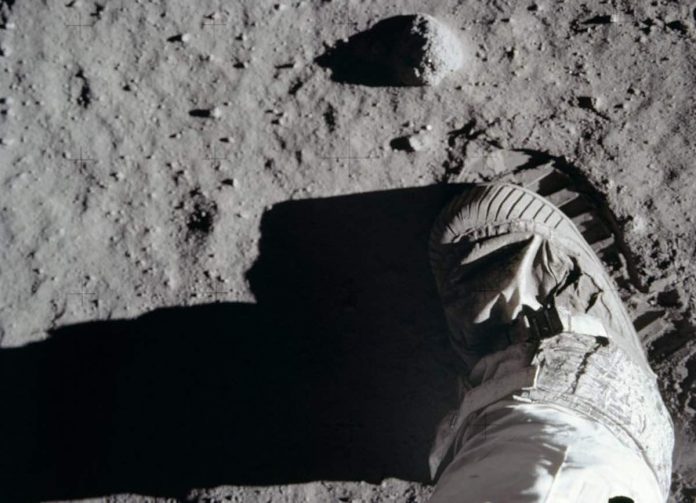
57 years ago today, men first stepped on the moon during NASA’s Apollo 11 mission; Neil Armstrong first, at 10:56pm EST, because he was closest to the door and Buzz Aldrin second. WATCH a look back from the 50th anniversary… (1969)
Officer JP Young found Olivia’s three-wheeled E-bike – KCPD on Facebook
Officer JP Young found Olivia’s three-wheeled E-bike – KCPD on Facebook
On May 10, when someone stole the e-bike that this cancer survivor needed to get to her oncology appointments, Officer JP Young of the Kansas City Police Department told her he would do everything he could to find it.
Ever since it went missing on Mother’s Day, Officer Young had never stopped looking for Olivia’s 3-wheeled electric bike.
One month later, he delivered.
Young and his partner saw a man riding an e-bike that looked spray-painted. With a glimpse of the old paint showing through, Young texted a picture to Olivia, who confirmed it was her bike.
JP even surprised himself when he found it.
And, when they met again, Olivia said he wore the biggest smile on his face when he returned it.
“Officer Young went way beyond the call of duty to help me get my trike back. Not only did he keep a steadfast eye out for it, he patiently tolerated all of my texts (sending clues to where it might be),” wrote Olivia on the KCPD Facebook post.
“The best part for me was seeing how big of a smile he had on his face when he was able to return it. Just like he had found the ‘Golden Goose!’ I loved it.”
Friends had purchased a new bike for Olivia, who has Stage 4 breast cancer, but it wasn’t assembled correctly, so she hadn’t used it. Now, her plan was to sell the old bike that was stolen so that she can afford to have the new one repaired and be mobile again.
However, a local volunteer with the Urban Trail Co. saw the post about the bike being returned, and announced that they were “happy to fix her bike at no cost”.
“Bikes are part of our lives, and myself and some other volunteers would be happy to help her get rolling again!”
“Thank you so much!” Olivia replied. “I would absolutely love that! (It) would be a huge help.” ❤️
One commenter exclaimed, “Your generosity has brought tears to my eyes!”
For decades, experts have disputed whether weapons found in ancient burial chambers of Egyptian princesses were actually their tools or placed there in a purely symbolic way.
Now, a reassessment of five royal women who lived 4,000 years ago showed they were skilled at archery.
Strong muscle attachments and healed fractures were observed in multiple scans of the mummies, showing that the pharaoh’s daughters could use the weapons they were buried with.
“Members of the royal family, especially the women, were active participants in skilled, physically demanding activities such as archery and hunting,” said Professor Zeinab Hashesh, lead author of the study published in the journal Frontiers in Environmental Archaeology.
“This conclusion is supported by the way their bones developed to sustain heavy muscle use, which corresponds directly to the weapons discovered in their tombs.”
The research team studied six royal mummies found in the 1890s at Dahshur, a funerary complex of pyramids and tombs about 40 kilometers south of Cairo.
Giza in Egypt – Credit Mauricio Artieda via Pexels
Four of the six were sisters, daughters of the pharaoh Amenemhat II, buried in matching underground chambers: Princess Ita next to Princess Khenmet, and Princess Itaweret alongside an anonymous woman provisionally identified as Princess Sathathormeryt.
They were buried with items including bows and arrows which are traditionally associated with men—and Princess Ita’s coffin contained a beautiful dagger.
“Similar regalia was buried with the other two royals evaluated—Princess Noub-Hotep and King Hor.”
The bones were overall in good condition, which allowed archeologists to estimate individuals’ age at death, height, and sex, as well as to uncover evidence of illnesses or injuries.
“Princess Ita was a young woman (28-34) with strong upper-body muscle attachments, suggesting she habitually used weapons like maces or daggers,” said Prof. Hashesh.
“Princess Itaweret was a young woman aged between 20 and 34 who survived broken ribs and foot fractures; her skeleton shows she was a skilled archer.”
She says the “robust” muscle attachments on the sisters’ bones indicate that they were “highly physically active” in ways that align with the use of the weapons in their burials.
“These were not just symbolic gifts but tools they actively used.”
“What is remarkable is that the injuries healed well, which suggests they had access to advanced medical care for their time.”
The research team said they haven’t yet been able to conduct all the analyses they intended to, including stable isotope analysis which could shed more light on possible nutritional deficiencies.
Beyond the science, they hope to preserve the remains, create 3D prints for teaching and virtual exhibitions, and display them alongside their jewelry, weapons, and funerary objects.
Quote of the Day: “A person often meets his destiny on the road he took to avoid it.” – Jean de La Fontaine
Photo by: Johannes Plenio
With a new inspirational quote every day, atop the perfect photo—collected and archived on our Quotes page—why not bookmark GNN.org for a daily uplift?
50 years ago today, Sagarmatha National Park was established in Nepal as the country’s first National Park. Enshrining the summit and breadth of the mountain known in the west as Everest, its total area encompasses 443 square miles, or 1,148 square km. In the north, it shares the international border with Qomolangma National Nature Preserve of Tibet. In the east, it is adjacent to Makalu Barun National Park, and is part of a mosaic of protected areas called the Sacred Himalayan Landscape. Sagarmatha was inscribed as a UNESCO Natural Heritage Site in 2002. READ more about this special, special place…
Jordan Wilmore – Credit: Kemah, Texas police department
Jordan Wilmore – Credit: Kemah, Texas police department
Although everyone urged the giant man to pursue a basketball career as a 7-foot-3-inch athlete, but that was never his dream.
Jordan Wilmore would rather help others, so he trained to become a Texas policeman.
He was one of the tallest players in college basketball, but now, he’s going to be one of the tallest police officers, thanks to some encouragement from Shaq. (Watch the two of them in the video below…)
He was sworn in recently, joining the force in Kemah, a waterfront community 35 miles southeast of Houston.
Steve Hartman visited, and shared the heartwarming story with viewers on CBS News: WATCH the video below…
A daughter helped save her father’s vintage Italian shoe shop by posting about a pair of Y2K kitten heels on TikTok—and now it has lines outside the door.
For over 30 years Rachid Lazraq has owned Rich Collection Italia, but the emergence of online shopping practices, and an aging clientele, left the store in East London struggling.
Then his 25-year-old daughter noticed that a French influencer had posted about her dad’s shop as a “hidden gem”—and it gave her the idea to do the same.
She posted about the Y2K sandals in her first video on July 7, which got 300,000 views overnight on TikTok—and within days there were two-hour-long lines outside the door.
“My dad has been running this shop since before I was born, so we were all sad to see it suffering,” said Ms. Lazraq, a London journalist.
“He usually had older, regular clients, but they’d been petering out over the years.
“Now he has a whole new set of clientele, with streams of young people coming to the shop every day.”
She remembers her dad sending a message to the family group chat saying some ‘young French girls’ had come into the shop, which was unusual.
Zineb Lazraq takes down Closing sign on his shoe stop, Rich Collection Italia – SWNS
“That’s when we realized a French influencer had posted a video showcasing the Y2K kitten heels—which I didn’t even know he sold!”
“By highlighting the shoes that would appeal to people my age, we had lines out of the shop in no time.”
The climax of the shop’s turnaround was Mr. Lazraq’s ripping down his ‘Closing Sale’ sign while surrounded by applauding customers.
“It’s so small inside, we have to limit the amount of customers in the shop at any given time, but that doesn’t seem to deter people!”
Being close to retirement age, Rachid is keen to ‘go out with a bang’ at some point—and move back to his hometown.
In the meantime, the shop at 7 Hackney Road in Shoreditch may start moving into online sales to take advantage of future sales from the new, younger customer base.
SHARE THE INSPIRATION With Small Businesses on Social Media….
A drug, that has previously been shown to be safe and tolerated by humans, reduces multiple disease-linked features of Alzheimer’s in a lab model of the disease, say neuroscientists in London.
The team from King’s College has developed an approach that targets a key protein to tackle several features of Alzheimer’s disease at the same time.
They found that KCL-286, a drug that has previously passed Phase 1 safety trials—after originally being developed for spinal cord injury—was able to lessen many disease-linked features of Alzheimer’s.
Some of the causes of Alzheimer’s disease have been characterized by toxic build-up of proteins called amyloid-beta and tau, and these have been the main targets for drug development—but these have had limited clinical success.
Other features of the disease, such as DNA strand breaks and inflammation, have only recently been investigated as potential disease-modifying targets. DNA damage and inflammation occur in the earliest stages of the disease, suggesting they may be important targets for treatment.
The new drug, KCL-286—which is a “first-in-class, orally bioavailable small molecule”—was found to repair DNA breaks and reduce inflammation in a mouse model of Alzheimer’s disease, providing a broader therapeutic strategy than approaches focused on disease hallmarks such as amyloid and tau.
“Our findings demonstrate that KCL-286 not only targets DNA damage but also reduces inflammation, two processes that occur very early in Alzheimer’s disease progression,” said Dr Maria Goncalves, a project manager of the drug development.
“This highlights its potential as a disease-modifying therapy, rather than simply addressing symptoms.”
The drug activates a specific protein in the retinoic acid pathway, a series of chemical reactions in the body used to process vitamin A. Previous studies have linked the deficits in this molecular pathway to amyloid-beta deposits forming in rat brains, similar to those seen in Alzheimer’s disease.
KCL-286 has previously been shown to help repair DNA double-strand breaks in neuropathic pain, leading researchers to hypothesize that it might be a suitable candidate for targeting the same type of DNA damage in Alzheimer’s.
“DNA double-strand breaks are like a rope snapping completely in two, rather than just fraying at the edges,”explained Professor Jonathan Corcoran, Professor of Neuroscience at King’s College London. “We found that KCL-286 promotes repair of these breaks, allowing us to target a key feature of Alzheimer’s disease.”
Natasha Hill, one of the first authors on the recently-published paper, said: “To develop an effective treatment for Alzheimer’s disease, we need to tackle multiple aspects of the disease. KCL-286 was able to target multiple disease-relevant cellular pathways, some of which are initiated very early in the disease course.”
And, because it has already cleared Phase 1 human safety and tolerability trials, this will dramatically cut down the normal multi-year timeline required for new drug development.
FREE WILL ASTROLOGY – Week of July 18, 2026
Copyright by Rob Brezsny, FreeWillAstrology.com
CANCER (June 21-July 22):
Make a list of your five greatest pleasures. These are experiences that stir your senses, steady your pulse, and remind you why you love being alive. Write them down as if they were sacred prayers. Sing a spontaneous song of praise of them. Then set out on a quest to discover pleasure number six. This is a delight you have never tasted, touched, or imagined before. Maybe it will come from saying yes to a possibility you usually decline. Treat this experiment as a form of worship and a way to boost your devotion to your healing life force.
LEO (July 23-Aug. 22):
According to neuroscientists, the “default mode network” is the area of your brain that lights up when you’re daydreaming, drifting through thoughts and feelings, and letting your imagination roam around. This is when your deep self does crucial work: weaving memories into stories, making creative connections, rehearsing possible futures, and forging your sense of identity. I mention this, Leo, because the coming days will be prime time for you to indulge lavishly in this healing and restorative activity. Don’t let a task-obsessed world shame you out of your reveries. Your genius will bloom from their slowly swirling flow.
VIRGO (Aug. 23-Sept. 22):
Here are three gentle nudges: 1. One of your trusty tools or assets still seems to be working fine, but I suggest you look into the possibility that it will soon need repair. 2. Unless you act proactively to ease the strain on your system, a mini-breakdown could be on the horizon. 3. The monster hiding in your closet is hibernating, which makes this the perfect time to summon an exorcist before it rouses. Here’s the very good news, dear Virgo: Because you are reading this oracle, you are now armed with all you need to stave off turmoil and head in the direction of an exciting renaissance.
LIBRA (Sept. 23-Oct. 22):
Researchers who study improvisational jazz have found that master musicians often anticipate each other’s ideas milliseconds before anyone actually plays the notes. Their brains become exquisitely synchronized through deep listening rather than rigid planning. Maybe more than any other sign, you Libras possess a similar aptitude in managing your intimate alliances and social connections. In the coming weeks, this superpower will be even more necessary and available than usual. I’ll provide a reminder: Pay less attention to what people claim to mean and more attention to the rhythms beneath their words. Let your intuition guide you. The subtly shared timing will generate elegant cooperation.
SCORPIO (Oct. 23-Nov. 21):
“It’s bad luck to be superstitious!” is a delightful paradox that I enjoy playing with. It makes fun of our tendency to believe that invisible forces are constantly keeping score on our behavior. On one level, the phrase pokes at the way superstition multiplies anxiety instead of easing it. If you really believed it’s bad luck to be superstitious, then your belief about bad luck would itself be a superstition. So you’d have to avoid the very thinking pattern you’re using to feel safer. It exposes how easily the mind can tie itself in knots trying to control the uncontrollable. On another level, “it’s bad luck to be superstitious” is an invitation to examine which of your little rituals are entertaining and nourishing and which are cages. Keeping a lucky stone in your pocket is fine if it amuses you, but believing you’re doomed if you don’t carry the stone isn’t so fine. My advice: Notice when your charm or taboo is no longer a quirky companion, but starts being a tyrant that shrinks your freedom.
SAGITTARIUS (Nov. 22-Dec. 21):
Are you the type of Sagittarius who pushes open doors with “pull” signs on them? Do you get a secret kick out of opening boxes from the end that says “open other side”? Maybe you even yack on your phone in designated quiet zones. If so, I’d like to suggest channeling your rebellious spark into grander acts. In the weeks ahead, you will be carrying some potent renegade energy. Used wisely, your radiant defiance could topple a stagnant situation that’s overdue for change.
CAPRICORN (Dec. 22-Jan. 19):
Many healers favor the slow-and-steady path. They often meet with people once a week, trusting that even stubborn issues must be unwoven with patience and gentleness. But there are also bold experimenters who work differently. I know an acupuncturist who invites clients to live at her clinic for six days straight, offering a new treatment every two hours during the waking hours. She creates a healing immersion chamber. That’s the spirit I recommend for you in the coming weeks, Capricorn. You’re at the threshold of resolving a long-standing imbalance. What will serve you best isn’t dabbling at it but offering it focused, sustained, wholehearted attention until the shift activates.
AQUARIUS (Jan. 20-Feb. 18):
You can refresh and boost your ambition if you give it a firm, precise adjustment sometime soon. Your raw vitality will surge back if you refrain from indulging in a careless habit that has been draining it. Your willpower and determination have been weakened by the fallout from an old misstep, but you now have the clarity needed to repair that error. Your libidinous energy is not as clear and potent as it could be, but it will become so once you get more honest about what truly excites you.
PISCES (Feb. 19-March 20):
You’re like an arrow that has been shot from a bow and is three-quarters of the way to the target. You’re a delicious meal still simmering on the stove, or a pregnancy at seven months, or the last two weeks before a major election. When I tuned my inner vision to you, I glimpsed a honeybee wriggling a dance to show its coworkers where a stand of blooming lilac awaits. Have you ever been on the verge of speaking a new language with ease? That’s where you are now, Pisces: just before true fluency clicks.
ARIES (March 21-April 19):
In honor of the intensive homecoming phase of your astrological cycle, I have homework for you. 1. Make a prediction about how old you will be when you know precisely who you are. 2. Forecast the day when you will look in the mirror and recognize your face as an intricate portrait of every experience you have ever loved. 3. Imagine the dawn when the boundary between your own longing and life’s longing will dissolve, revealing they’ve always been the same current. 4. Predict when your heart will be as wild and free and brave as you have always wanted it to be.
TAURUS (April 20-May 20):
Ornithologists studying migration know that some birds don’t fly directly to their destination. They follow “leading lines.” These are geographical features like coastlines and mountain ranges that provide orientation. Even when this means taking a longer route, the certainty of having a guiding landmark outweighs the efficiency of a straight line across nondescript terrain. I recommend the birds’ approach to you in the coming weeks, Taurus. Follow your own leading lines: practices and intuitions that provide lucid orientation even when they don’t offer shortcuts. The indirect path offers the surety you need.
GEMINI (May 21-June 20):
What’s an important truth you keep forgetting about? Maybe it’s a promise you once made to yourself, or an understanding that your younger self knew, or a wisdom your body keeps trying to communicate while your mind ignores it. What truth returns again and again in different guises: through synchronicities, seemingly random comments from friends, recurring dreams, or the same lesson repeating in new situations? What crucial insights about life do you remember during crisis or ecstasy, only to abandon them once normalcy returns? Now is a favorable time to fully recover this lesson and install it firmly at the heart of your life.
WANT MORE? Listen to Rob’s EXPANDED AUDIO HOROSCOPES, 4-5 minute meditations on the current state of your destiny — or subscribe to his unique daily text message service at: RealAstrology.com
Quote of the Day: “Cultivating a close, warmhearted feeling for others automatically puts the mind at ease.” – Dalai Lama
Photo by: Joseph Pearson
With a new inspirational quote every day, atop the perfect photo—collected and archived on our Quotes page—why not bookmark GNN.org for a daily uplift?