Joe Rotunda and Alva (tawny) screengrap from KVUE ABC - fair use
Joe Rotunda and Alva (tawny) screengrap from KVUE ABC – fair use
A man in Austin has fallen head over heels for a dog that’s heels over heads. Alva the dog has wobbler syndrome, but that didn’t stop Joe Rotunda from knowing they were meant to be together.
Arriving at Austin Pets Alive! in November 2020 at just 5 months old, Alva was flea-ridden, malnourished, and in need of a helping paw. She had a hard time standing and walking on account of the syndrome.
After almost 24 months of shelter stays and foster care, the rigors of her life with wobblers and multiple owners had made her self-protective, territorial, and shy.
Mr. Rotunda had originally seen Alva on APA’s Instagram, and felt he had to do something to help her.
“I just looked at her and said, ‘I bet everyone has given up on you,'” Rotunda allegedly told APA! “‘I’m not going to do that to you.'”
Nor did he, but instead visited her at APA every single day for two months to earn her trust in the hopes he could welcome her into his home for foster care. Seeing that there was a potential end to Alva’s difficulties, APA staff worked in the shelter to provide more accommodations for her Parkinson’s-like motor instability, in addition to a kind of physical therapy.
Eventually Rotunda got what he wished for, and Alva was able to move in with him and his other dog whom she also made friends with.
He outfitted his house with various ramps and padded corners to ensure she had a safe, maneuverable environment.
“Alva gave me a gift every time I saw her, and that was: inspiration. It is her spirit that is so infectious, she shines, and nothing gets in her way,” Rotunda told APA! “She does not know she is different.”
WATCH the video below from KYUE…
SHARE This Persistant Pet Owner, Sweet Dog, And Happy Ending On Social Media…
An Australian pharma company has been granted fast-track status by the United States FDA for cancer treatment trials of bile duct cancer.
This rare form of cancer has been found to be resistant to both conventional and immunotherapy treatments, but the firm’s new version of an existing treatment, developed as part of a collaboration with the US-based City of Hope, has shown exceptional promise.
In May of last year, City of Hope, a world-renowned cancer research and treatment organization in Los Angeles, dosed their first patient with a low amount of their oncolytic virus (i.e. a virus that infects oncolytic cells) in a phase 1 safety trial.
“Our previous research demonstrated that oncolytic viruses can stimulate the immune system to respond to and kill cancer, as well as stimulate the immune system to be more responsive to other immunotherapies, including checkpoint inhibitors,” said Daneng Li, M.D., principal investigator and assistant professor of City of Hope’s Department of Medical Oncology & Therapeutics Research.
The virus was engineered by Professor Yuman Fong, and it’s now been licensed by City of Hope to the Australian company Imugene for use in its Vaxinia treatment, known technically as “CF33-hNIS” for bile duct cancer, with CF33 being the virus, and hNIS being an additional chemical that allows researchers to image and track the virus in order to apply radiochemo treatment with extreme precision.
Bile duct cancer occurs inside and outside the liver and is rare in the US, with just 8,000 people on average receiving a diagnosis per year.
Fong’s original oncolytic virus has been extensively studied and played a role in wiping out smallpox around the world. It has a short and well-understood lifecycle that doesn’t involve the use of the human genome. It can both deliver tumor-destroying agents and reduce their size itself.
In City of Hope preliminary trials in animals and cultured cells, it was shown to shrink colon, lung, breast, ovarian, and pancreatic cancer tumors.
Imugene’s trial under FDA guidance, called the MAST (metastatic advanced solid tumors) trial, began with low doses of Vaxinia to patients who have had at least two prior lines of standard-of-care treatment, according to the West Australian.
Thanks to a generous soul, there are dozens of people across the nation getting socks for Christmas—but they couldn’t be happier about it.
Elle Gianelli of Stockton California has been making colored socks with silly designs on them for years, sending them to seniors in nursing and care homes to brighten up their day.
It all started from the closer-than-close friendship she has with her grandmother, which instilled the value of spending time with the elders.
The high school junior started the project Socks 4 Seniors all the way back in the 7th grade, and has so far spruced up 92 care homes in 48 states, making a few pen-pals along the way.
But as Christmas approaches, she’s doubling down on her hobby to send boxes of silly socks to seniors in all 50 states in time for the big day.
“I know they have Toys for Tots and things for kids you know and you always seem to forget about seniors,” Gianelli told CBS. “Maybe they don’t have family or maybe they live super far away and they’re only getting like a postcard.”
To ensure that these seniors’ toes and hearts remain warm this holiday season, Gianelli is hoping to raise $10,000 through a GoFuneMe for a big sock drive. She’s so far received 95% of her total in donations with 19 days to go.
WATCH the story below from CBS, readers outside the US watch it HERE…
SHARE The Story Of This Kind And Considerate Teen On Social Media…
Quote of the Day: “Attention is the rarest and purest form of generosity.” – Simone Weil
Photo by: Etienne Boulanger
With a new inspirational quote every day, atop the perfect photo—collected and archived on our Quotes page—why not bookmark GNN.org for a daily uplift?
Milan may be the new center of eco-chic design on the Italian Peninsula after a company “took a risk” and invested in a way to turn food waste into 3D printing materials which they then use to print tabletop furniture.
They’ve made table lamps, incense holders, magazine racks, key bowls, clocks, and bookends, all with lemons and oranges from the islands of Naples and coffee grounds from the bars of Milano.
They may be expensive, but the company says they are popular within their price point, and every kilogram of printing material they produce is one kilogram of carbon emissions saved from being created in a landfill.
The little Milan-based firm called Krill has a patent on their printing goo which they call ReKrill, and corporations like San Pellegrino and Four Seasons are already using their products.
“If all that furniture was made using our materials, we would be able to recover them, crush them, and print other furniture with the same material,” Marco Di Maio, director of operations at Krill, told CNN. “If, by mistake, any of our material ends up in the ocean, it is biodegradable and doesn’t produce any microplastics.”
You could also create compost with the furniture if you wanted to, and if you have a problem hound who loves to gnaw on the chair legs, they wouldn’t be poisoned from doing so.
As part of Krill’s mission to reduce landfill waste, they have partnered with non-profits looking to channel city food waste like coffee grounds into sustainable recycling projects.
SHARE This Great Idea With Your Friends Who Need A New Table Lamp…
A George Mason University bioengineer has developed a wearable ultrasound system that can detect immediately if that twinge or tweak in your back or shoulder that you got in physical rehab is a muscular or skeletal injury or not.
It does so by using ultrasonic monitoring through a skin patch, and could provide real-time information on muscle tissues during a workout.
Millions of people suffer from musculoskeletal injuries every year, and the recovery process can often be long and difficult.
During the following slow rehabilitation, medical professionals routinely evaluate a patient’s progress via a series of tasks and exercises. However, because of the dynamic nature of these exercises, obtaining a clear picture of real-time muscle function is extremely challenging.
Then there’s the period after rehab—which is sometimes even more difficult—where the recovered doesn’t feel any discomfort or pain but is still hesitant to trust the same movements that triggered their injury in the first place.
Parag Chitnis of George Mason University led a team that developed this new wearable ultrasound system that can produce clinically relevant information about muscle function during dynamic physical activity.
Many medical technologies can give doctors a window into the inner workings of a patient’s body, but few can be used while that patient is moving. Parag’s monitor can move with the patient and provide an unprecedented level of insight into body dynamics.
“For instance, when an individual is performing a specific exercise for rehabilitation, our devices can be used to ensure that the target muscle is actually being activated and used correctly,” said Chitnis.
“Other applications include providing athletes with insights into their physical fitness and performance, assessing and guiding recovery of motor function in stroke patients, and assessing balance and stability in elderly populations during routine everyday tasks.”
Designing a wearable ultrasound device took much more than simply strapping an existing ultrasound monitor to a patient. Chitnis and his team reinvented ultrasound technology nearly from scratch to produce the results they needed.
“Traditionally, ultrasound systems transmit short-duration pulses, and the echo signals are used to make clinically useful images,” said Chitnis. “Our systems use a patented approach that relies on transmission of long-duration chirps, which allows us to perform ultrasound sensing using the same components one might find in their car radio.”
This modified approach allowed the team to design a simpler, cheaper system that could be miniaturized and powered by batteries. This let them design an ultrasound monitor with a small, portable form factor that could be attached to a patient.
Soon, Chitnis hopes to further improve his device and develop software tools to more quickly interpret and analyze ultrasound signals.
He will present his work at the Acoustics 2023 event running this week at the International Convention Centre Sydney.
SHARE This Really Brilliant Idea For Muscle Injury Rehab On Social Media…
If you’re a student at a Louisville elementary school, Wednesday might just be your favorite day of the week.
Perhaps because of its reputation as the “hump day,” it’s also become the day of action for the “Flash Dads” a volunteer group of fathers from the school district of all different races, creeds, and professions who surprise the children with fist bumps and high fives to start the school day.
The Flash Dads struck on February 8th of this year at Rutherford Elementary School, and struck again in the new school year on October 26th at Wyk Elementary. First responders, elected officials, fraternity members; dads of all kinds were there cheering the youth on to their classrooms.
Their official title is the Jefferson County Public Schools (JCPS) Flash Dads, and they were put together by a JCPS program aimed at boosting morale among students.
“Every time we have a flash dads event, students, principals, and teachers always say ‘man the day was so much better,'” said Greg Vann, an associate from the JCPS program. “Students are positive and uplifted, they can’t believe people are there for them.”
Dr. Kenya Natsis, principal at Rutherford, told WHAS11 News that this is the positive energy they need to start their day.
“I think it’s important to have ‘Flash Dads’ in all the schools come out and visit the schools but more importantly it gives the kid just a wonderful start to their day,” Dr. Natsis said.
WATCH the story below from NBC Nightly News…
SHARE The Uplifting Energy From These Dope Dads On Social Media…
A devastating fire sparked fears that California’s redwoods would never recover, but these old timers had a trick up their trunks, and utilized deep stores of energy in their roots to sprout new growth weeks after they were charred.
The story begins after lightning sparked a fire in California’s Big Basin Redwoods State Park during the early years of the recent drought. Scientists were worried about the ancient trees, but also knew that they evolved to deal with fire over millions of years.
Nevermind their thick shaggy bark which acts like a fireman’s coat—the fire blazed right up to their crowns, torching every needle along the way, and frightening scientists into thinking they would never recover.
“It was shocking,” Drew Peltier, a tree ecophysiologist at Northern Arizona University, told Science Magazine. “It really seemed like most of the trees were going to die.”
Though thin, the pine needles of a redwood contain all the necessary equipment for photosynthesis, and when the fire burned them all, it was unclear how the tree would create energy for itself, but a new paper published by Peltier and his colleagues shows that new buds had been lying dormant for a long time under the bark of these trees, and sugars produced from photosynthesis decades ago were used to power these buds out into the sunlight.
Along with offering a cheerful news headline that these ancient trees in Big Basin, some of which are over 2,000 years old, will recover in time, the study presented a fascinating finding that changes how we short-lived fleshlings perceive our slow woody neighbors.
Melissa Enright of the US Forest Service used black plastic bags to block the sunlight on some of the charred trees from reaching the shoots as they emerged. Nevertheless, the shoots carried on shooting, and soon they were little pine boughs. Then Enright and her colleagues like Peltier were able to radiocarbon date the sugars in the boughs to assess their age.
The average age of the sugar molecules was 21 years—meaning the tree was using energy it generated over two decades ago to power new growth. Then, by looking at the individual carbon molecules inside the sugars, they saw that some of the carbon was three times as old as that.
Peltier says it challenges the whole image of tree metabolism, and gives real hope that our planet’s older trees can survive fires and other hazards that may be occurring because of a changing climate.
SHARE This Delightful Surprise And Amazing Dendrology With Your Friends…
Quote of the Day: “If you need to visualize the soul, think of it as a packet of information.” – Tom Robbins
Photo by: Markus Spiske
With a new inspirational quote every day, atop the perfect photo—collected and archived on our Quotes page—why not bookmark GNN.org for a daily uplift?
The catalyst that can deconstruct Nylon-6 – credit Tobin Marks, Northwestern University
A team of chemists has developed a low-cost, non-toxic catalyst that can easily deconstruct the complex plastic polymers of fishing nets, promising that a method to decisively remove these sources of ocean pollution may only be a few years away.
The team from Northwestern University explained that the main issue with Nylon-6, the plastic inside fishing nets, industrial carpets, and clothing, is that it’s too strong and durable to break down on its own.
The chemists’ new catalyst quickly, cleanly, and almost completely breaks down Nylon-6 in a matter of minutes without generating harmful byproducts. It requires no toxic solvents, expensive materials, or extreme conditions, making it practical for everyday applications.
“Plastic is a part of our society; we use so much of it,” said study senior author Professor Tobin Marks. “But the problem is: what do we do when we’re finished with it? Ideally, we wouldn’t burn it or put it into landfills. We would recycle it.”
Up to one million pounds (453,000 kilos) of fishing gear is abandoned in the ocean each year, with fishing nets composed of Nylon-6 making up at least 44% of the notorious Great Pacific Garbage Patch, according to the World Wildlife Federation.
Although other labs have explored catalysts to degrade Nylon-6, those catalysts require extreme conditions such as temperatures above 500°F, high-pressure steam, or toxic solvents that only contribute to more pollution.
“You can dissolve plastics in acid, but then you are left with dirty water. What do you do with that?” Professor Marks told the university press.
Marks suggested the use of a novel catalyst he already had in his laboratory, which harnesses yttrium, an inexpensive Earth-abundant metal, and lanthanide ions.
When the researchers heated Nylon-6 samples to melting temperatures and applied the catalyst without a solvent, the plastic fell apart, reverting 99% to its original building blocks without leaving byproducts behind.
“You can think of a polymer like a necklace or a string of pearls. In this analogy, each pearl is a monomer. These monomers are the building blocks,” he explains. “We devised a way to break down the necklace but recover those pearls.”
There are real advantages with this method, said Marks, who points out that the catalyst selectively reacts to Nylon-6 even if surrounded by other polymers. This cuts the need to hire human labor or buy expensive robotic sorting machines to separate Nylon-6 in municipal waste streams.
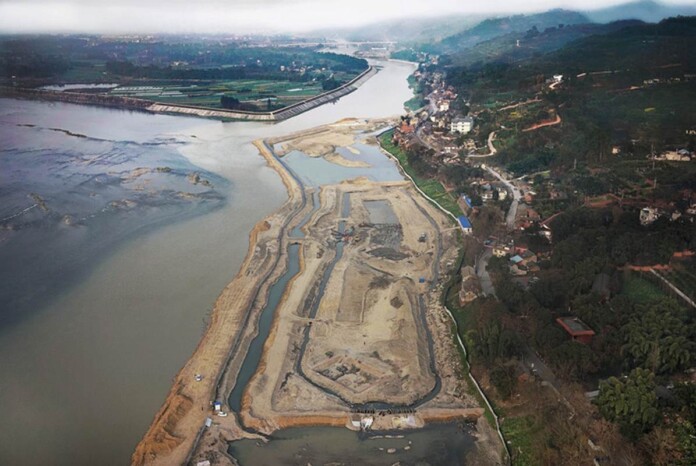
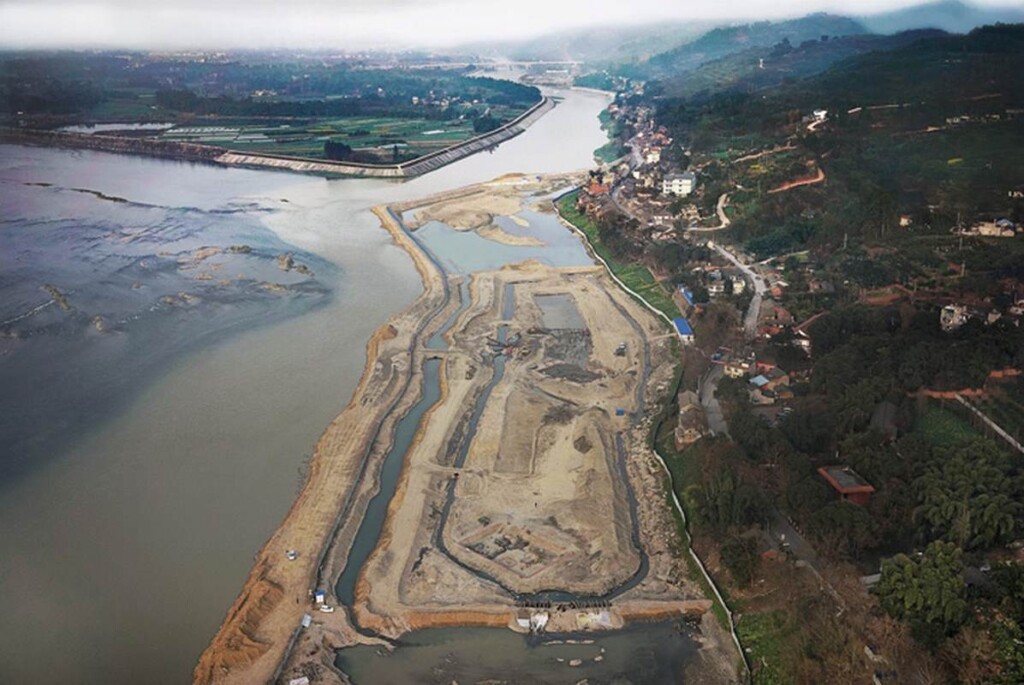
The Min River near Jiangkou - provided to Archaeology Magazine by team leader Jiu Zhiyan
The Min River near Jiangkou where excavations are an effort of landscape engineering – provided to Archaeology Magazine by team leader Jiu Zhiyan
There is a textbook for English readers in Hong Kong universities on 6,000 years of Chinese history. After reading the first part, which documents the political history of the country, a trend is immediately identifiable—that ruling dynasties rose from peasant rebellions and fell to peasant rebellions.
Now, in southern China’s Sichuan Province, a series of archaeological discoveries consisting of over 70,000 artifacts of gold, silver, bronze, military equipment, symbols of high office, and more tell the tale of one such rebellion—a doomed effort to carve out a new dynasty during the conflagration of the old regime.
At the confluence of the Min and Jin rivers, an expedition of ships belonging to the 17th-century peasant warlord Zhang Xianzhong was ambushed while supposedly carrying his entire treasury—the plundered wealth of many small Ming Dynasty fiefdoms—which he needed to safeguard his legitimacy and pay his soldiers.
The treasure is rumored to be worth one hundred million of the standard liang silver coins, which weighed 40 grams—or 8.8 million pounds of silver in simpler terms. Set upon by the supreme commander of the Ming armies, Yang Zhan, the fleet was sent to the murky bottom near the modern town of Jiangkou along with the treasure, thousands of soldiers, and any chance Zhang had of successfully ruling his proclaimed kingdom of Daxi.
Now, a featured story in Archaeology Magazine, a publication of the Archaeological Institute of America, speaks with the Chinese excavators who, like generations of fishermen and royal officials before them, are scouring the depths of the Jin and Min rivers for Zhang’s treasure.
So far, the team from the Sichuan Provincial Institute of Archaeology and Cultural Relics has dammed parts of the Min River where it flows by Jiangkou and surveyed 250 acres of riverbed since 2016.
Underneath the water, bedrock chutes hid many of the artifacts of Zhang’s treasure fleet from divers and treasure hunters, where they have now been recovered by the excavation team by the tens of thousands.
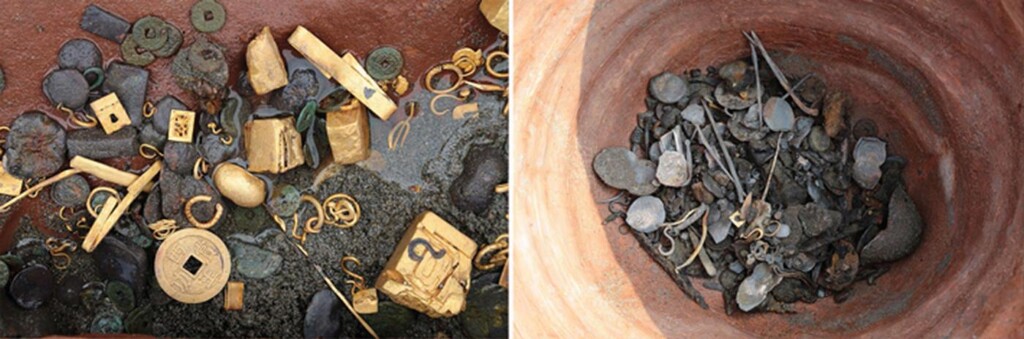
Ming Dynasty cold and silver found in the excavations – provided to Archaeology Magazine by team leader Jiu Zhiyan
“These finds not only verified historical records about the Jiangkou battle and the sunken treasure, but also shed light on the extensive social turmoil at a time of dynasty change, as well as on Zhang Xianzhong himself as a controversial historical figure,” said Liu Zhiyan of the Sichuan Provincial Institute and team leader of the excavations.
Conquest and plunder
Zhang was an archetypal oriental despot, and though he came from humble origins, he ruled over his mostly agricultural population with a mailed fist, using terror and raiding as his main instruments of statecraft. The artifacts found at the site of his fleet’s demise chart his bloody path of conquest across the flagging years of the Ming Dynasty.
Like all the Chinese dynasties, the Ming rose out of a peasant rebellion to topple to Mongol-led Yuan Dynasty, and they established their rule in Beijing around a series of at-first-effective administrative and economic reforms. But like all the other dynasties to precede them, the Ming administration had flaws that grew into cancerous tumors.
For the Ming, it was a bureaucratic process known as the enfeoffment system, which granted county-sized landholding monopolies or “fiefs” to nobles. These fief lords were given “conferring tablets” to denote their authority to collect taxes. This delegation created a network of little emperors that taxed the peasantry into squalor and famine—the conditions out of which Zhang rose to power like a wild spark from a fire.
He used his aptitude as a soldier and general to rally bandits and farmhands to his cause and went to war on the Ming Dynasty, cutting a swath through the fiefdoms.
Many of the artifacts found in the river near Jiangkou tell the tale of these victories, as they’re almost all plunder from cities and palaces taken during this campaign. The treasures include gold conferring tablets and other symbols of office such as a silver tablet commissioned by the King of Chu to the Ming Emperor for annual taxation, and a 200-year-old gold seal that weighed more than 17 pounds and had been used by 13 generations of rulers from the Shu vassal state.
In 1643, Zhang’s army also occupied the city of Changde, and captured another pair of gold conferring tablets owned by the King of Rong, another vassal to the emperor.
It’s one of those special occasions when historical accounts match with the archaeological evidence.
“The items unearthed from the Jiangkou battleground site match well with Zhang’s route of conquest as recorded in the literature,” Liu told Archaeology Magazine’s Ling Xin.
They also found coins minted in Daxi, the brief kingdom set up by Zhang in Sichuan Province, of which only a single example has been found previously in China.
Arguably the most important piece of treasure was a royal seal used by Zhang himself, embellished in gold with a tiger to suit his warlord name of “huang lao hu” or “Yellow Tiger.”
After he lost his treasury, Zhang’s path to kingship descended into what some historians call madness, but which was at least heavy-handed tyranny. He sacked several of his own cities in internal disputes and taxation enforcement, and witnessed mass defection in the ranks to the Ming Dynasty as a result.
SHARE This Remarkable Confluence Of Rivers, History, And Archaeology…
In the Bay Area of California, home of San Francisco, San Jose, Santa Clara County, and Silicon Valley a famous Pacific resident is heading home for the holidays—up newly-cleaned creeks to spawn.
Who could have thought that the cradle of 21st-century civilization, with its problems and advancements, would have space for wild river ecosystems capable of supporting salmon runs?
But here they are, reports KTVU, as large as 30 pounds, as long as 35 inches, running up the Guadalupe River Watershed by the hundreds.
Creeks in San Jose like Los Gatos and Guadalupe nearly lost their native salmon populations as trash piled up on the gravel beds.
The South Bay Clean Creeks Coalition, a non-profit responsible for the salmon’s return, removed 1.3 million pounds of trash from the creeks, from bottles and tires to cars and mattresses.
Researchers are now studying the animals and tracking their origin; hoping to answer whether they are native returners or hatchery strays.
“This year all the fish are just engorged. They’re humongous,” said Steve Holmes, executive director of the South Bay Clean Creeks Coalition. “It’s a nice trend and I hope it will continue as we move forward.”
Salmon will return from the ocean to the rivers, creeks, and eventually even the same tributary they were born in to lay and fertilize eggs on beds of gravel. Their bodies flush bright red and pink from the activity of their reproductive organs, making them easily spotted by bears and fishing birds like eagles and ospreys.
They store large amounts of muscle and fat from their time at sea to use for the grueling trip upriver, and the fish tend to be battered and exhausted by journey’s end. Most die after mating, but a few, typically the females, will live on to return to the ocean in January.
WATCH the story below from KTVU…
SHARE This Unlikely Habitat For These Superb Swimmers.
Jason and Raven – released courtesy of Marybeth Smith
A middle school principal in Kentucky adopted a girl who was acting out after she had spent her whole life in and out of foster homes. Sent to his office after being suspended, he realized that she just needed, perhaps one time, for “something to go in her favor.”
Kentucky school principal Jason Smith walked out of his office one day and saw a girl from the 6th grade sitting on a chair by the door—suspended for throwing a cup of yogurt during lunch.
One can only imagine how much delinquency and mischief Smith had seen throughout his 14 years in charge of the school, but something about the girl struck him that day. Asking whether she thought such behavior was acceptable at a restaurant, Raven Whitaker replied she had never been to one.
Where she had been was in and out of foster homes for most of her life, where foster moms and dads had made plenty of promises they were unable to keep.
“At that point, I had felt like she just needed a hand, needed help,” Smith told Good Morning America. “I recognized that she needed something to go in her favor, maybe for once, that it hadn’t gone in her favor in the past, but she just needed somebody to help her.”
After discussing it with his wife Marybeth, she believed there was something special about Raven.
The couple had struggled with infertility for years, and had previously failed to turn foster children they’d hosted into candidates for adoption. After discussing the matter with Raven’s case worker in 2015, they heard that they too could foster her. They also talked with her personally about the matter.
With their doors opened, Raven wasn’t sure it was going to turn out any differently, although she admitted to GMA that the welcome was immediately and detectably warmer than past homes.
“It was really weird at first because, in my mind, I thought of [Jason Smith] as the bad guy because I was always getting in trouble,” Raven Whitaker-Smith told GMA. “I gave them a bunch of trouble to see what would happen, I kind of tested whether or not this was real or not to see if they would keep me no matter what, because they would tell me that but, you know, I’d heard that a lot before.”
Adoption day – released courtesy of Marybeth Smith
However, it wasn’t long before the love and sincerity of the couple won her over, and the three became an official family in October 2017.
With a principal in the house, Raven improved her performance in school, graduating and moving forward to attend the Univ. of Kentucky where she is studying to be a social worker.
SHARE This Heartwarming Act Of Love And Openness On Social Media…
Quote of the Day: “To grow, we must travel in the direction of our fears.” – John Berryman
Photo by: Ivan Lapyrin
With a new inspirational quote every day, atop the perfect photo—collected and archived on our Quotes page—why not bookmark GNN.org for a daily uplift?
The Spanish galleon Maravillas was one of the richest treasure ships ever lost at sea when it sank in the northern Bahamas over three centuries ago. Since then it has been salvaged into oblivion—at least that’s what experts thought.
Now, after four years of underwater archaeology, Allen Exploration has mapped a sprawling trail of scattered treasure running for over 5 kilometers.
Late at night on January 4, 1656, the Nuestra Señora de las Maravillas (Our Lady of Wonders) sank off the western Little Bahama Bank loaded with treasure. The Spanish ship was heading home, groaning under the weight of silver bars and coins. Also onboard was the treasure salvaged from an earlier galleon lost near Ecuador two years earlier.
Soon after, the galleon was ‘fished’ for relics on at least 21 occasions, heavily stripped by Spanish salvors and then English and American crews. Then, between 1972 and 1991, modern salvage teams re-discovered the wreck and lifted an alleged 30 tons of gold bars and coins, silver nuggets, jewelry, emeralds, iron anchors, and cannons.
“Many experts believe the story of the Maravillas is over, that past salvage picked the old ship dry,” says Carl Allen, the founder of AllenX. “Now we’ve proven the wreck is not all vanished.”
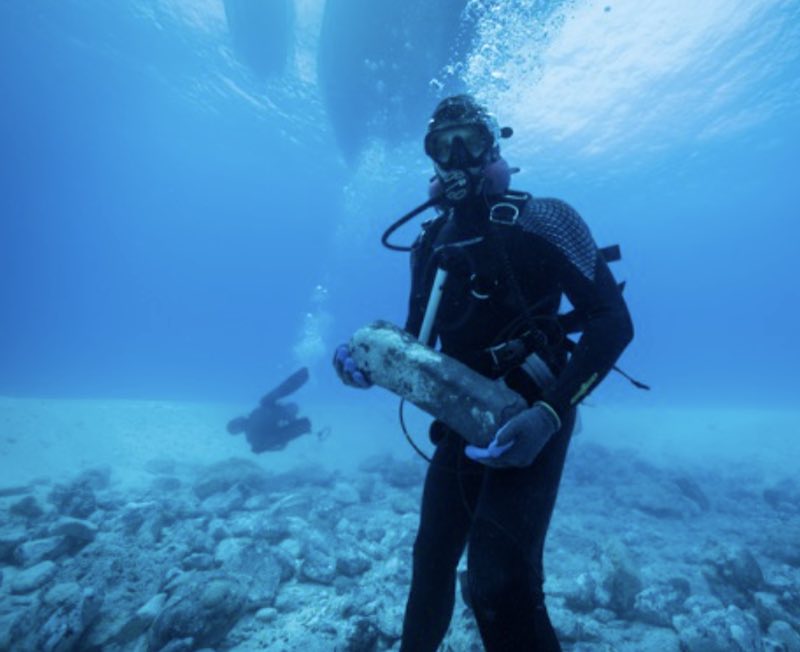
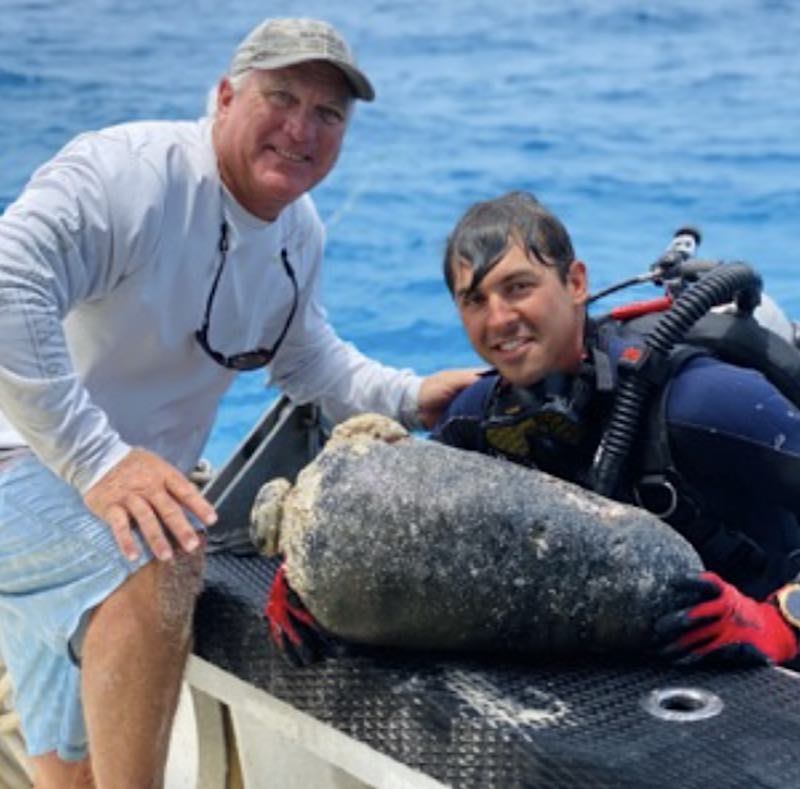
Since 2019, licensed by the Bahamian government, AllenX has discovered the survival of a sprawling scatter of artifacts running southeast for a distance of over three miles from where the Maravillas originally hit a reef and sank.
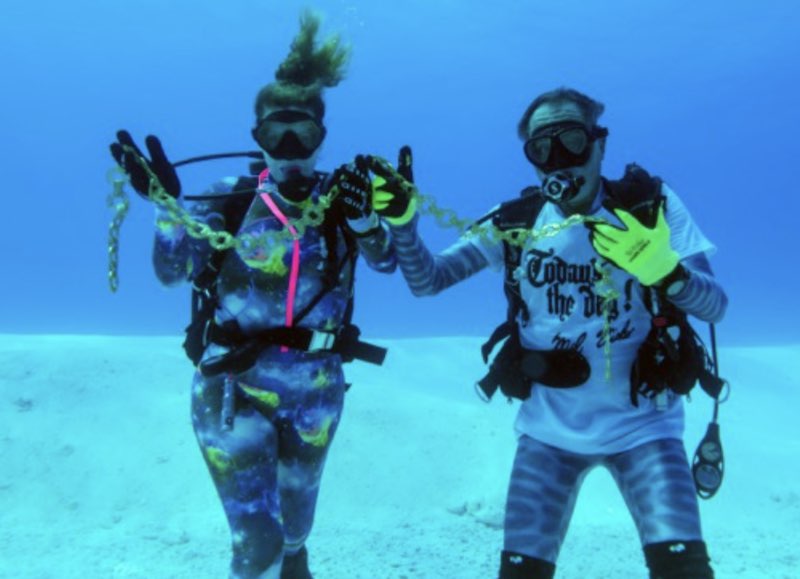
Hidden beneath waves and sand are olive jars, silver pieces of eight, silver bars, emeralds, amethysts and gold jewelry. Every single find uncovered, from 828 lead musket balls and 10,988 olive jars fragments to almost 3,000 silver coins and 125 emeralds and amethysts, has been painstakingly mapped.
“You might think that it was centuries of hurricanes and storms that broke up the Maravillas. But the archaeology has forced us to re-think that theory,” says Dan Porter, the project’s offshore manager who oversaw the mapping.
At least 142 hurricanes and storms have struck The Bahamas since 1500. “If the galleon was broken up by hurricane after hurricane, the remains would be scattered around all four points of the compass. That’s not the reality. They’re mostly focused in one artifact scatter trail running southeast,” says Porter.
Jim Sinclair, the project’s chief archaeologist, was surprised that the finds blown down the scatter trail included unique gold chains and jewels inlaid with precious gems, the personal property of wealthy passengers and officers.
“You can be sure that if these valuable items were still sitting on the main wreck when the Maravillas was salvaged in 1656, they’d have been brought up too,” says Sinclair. “This can only mean that the treasures found by AllenX were scattered during the five months before the Spanish salvage operations began in June 1656.”
The western Little Bahama Bank lies within the Trade-wind Belt. In the winter, winds with an average velocity of 30-40 miles per hour (‘northers’) blow in from the northwest and northeast. AllenX believes that two to three storm fronts like these created the main part of the Maravillas’ scatter trail between January and June 1656.
The most common class of finds lost down the Maravillas scatter trail come from the sterncastle, where the passengers and crew’s belongings were kept—from the fancy Chinese and Mexican bowls and dishes for dining to swords, navigational dividers, and gold jewelry.
Carl Allen explained that historical accounts showed that the three stern cabins collapsed into the ocean. “The quarterdeck and sterncastle floated away, never to be seen again.”
“Throw into the mix rampant smuggling: the Maravillas was carrying at least 100% contraband above the value of the cargo – and so much of the archaeology of the Maravillas is still to be explored and its history written.”
The team published their research into the Maravillas scatter trail in Ocean Dispatches 4, for the Bahamas Maritime Museum in Freeport, which Allen founded in 2022 to display the treasure.
In 1992, the Government of The Bahamas enacted a moratorium on the issuance of licenses for shipwreck salvage, and the seas stayed closed until 2019, when Carl Allen was awarded a new license to conduct scientific and archaeological exploration. AllenX now submits monthly written reports to the country, presenting maps of finds, lists of discoveries, and research.
FedEx is rolling down the highway to deliver Christmas joy to military families throughout America in the annual Trees for Troops program.
The freight company is delivering nearly 16,000 Christmas trees this month to families at over 90 military bases across the U.S.
Partnering with the Christmas SPIRIT Foundation, FedEx has also reached a special milestone with the program, delivering tree number 300,000 during a special celebration at Fort Liberty in North Carolina.
“Every year, the FedEx Freight team puts in tireless effort to support Trees for Troops,” said Lance Moll, President and CEO, FedEx Freight. “We are honored to give back to local communities and military families whose values have always been closely tied to the core mission of our company.”
Since 2005, FedEx Freight has supported the Trees for Troops program, an initiative that delivers farm-grown Christmas trees to domestic and international U.S. military bases. This long-standing collaboration has become a cherished tradition for FedEx Freight.
And drivers have logged over 600,000 miles to deliver the holly-jolly trees during the 18 year partnership.
“This program started on a crazy idea and started small. We delivered 4,300 trees to only five bases that first year,” said Wendy Richardson, Chair of the Christmas Spirit Foundation Board of Trustees. “It’s hard to believe we’re now going to exceed 300,000 total trees since we began working with FedEx 19 years ago.”
“The commitment and dedication of all involved is truly inspiring. We love providing Christmas spirit to the men and women and their families in our military, one tree at a time.”
The public can donate a tree for delivery to a base, but today, December 3, is the last day for tree deliveries. Some locations offer online tree purchase options for shopper convenience. (Bookmark this for next year, if you miss the deadline!)
The reason why drinking red wine can leave some people with a banging head has been discovered by scientists.
Researchers have found that a natural flavonol compound in red wines can interfere with the metabolism of alcohol which leads to a headache.
The University of California team in Davis say it’s all about quercetin, which is naturally present in many fruits and vegetables, including grapes. It’s a healthy antioxidant that is even available in supplement form—but when mixed with alcohol, it can be problematic.
“When it gets in your bloodstream, your body converts it to a different form called quercetin glucuronide,” said Professor Andrew Waterhouse. “In that form, it blocks the metabolism of alcohol.”
They also report, in the study published in the journal Scientific Reports that different wines had different amounts of the pain-inducing flavanol depending on how much sunlight the grapes absorbed.
“Quercetin is produced by the grapes in response to sunlight. If you grow grapes with the clusters exposed, such as they do in the Napa Valley for their cabernets, you get much higher levels of quercetin,” Prof. Waterhouse explained.
“In some cases, it can be four to five times higher.”
As a result of consuming this flavanol-filled wine people can accumulate a toxin called acetaldehyde which causes the painful symptom.
“Acetaldehyde is a well-known toxin, irritant, and inflammatory substance,” said Dr. Apramita Devi. “Researchers know that high levels of acetaldehyde can cause facial flushing, headache and nausea.”
Typically, a red wine headache can occur within 30 minutes to three hours after drinking as little as one glass.
“We postulate that when susceptible people consume wine with even modest amounts of quercetin, they develop headaches, particularly if they have a preexisting migraine or another primary headache condition,” said Professor Morris Levin, explaining the millennia-old mystery.
The team plans to conduct human clinical trials to get further answers as it’s still unclear why some people seem more susceptible to them than others.
“The next step is to test it scientifically on people who develop these headaches, so stay tuned.”
Researchers don’t know if the enzymes of people who suffer from red wine headaches are more easily inhibited by quercetin or if they are just more easily affected by the buildup of the toxin acetaldehyde.
MAKE a TOAST By Sharing The Discovery on Social Media…
Want to make your annual resolutions stick? Two in five Americans believe the best strategy is to “start small,” according to a new poll.
The results showed they prefer to make long-term goals rather than short-term ones, with 42% choosing to kick off their goals gradually, rather than jumping in headfirst (18%).
Those who prefer long-term goals do so because they believe they can take their time reaching them (62%), the results are usually bigger and better (57%)—and because they think other people won’t know if they fall off track (56%).
Among the 27% who prefer short-term goals, their reasons include having had more success in reaching them (61%) and seeing results faster (59%).
The easiest goals for respondents to achieve are practicing better hygiene (62%), drinking more water (55%), taking daily vitamins and supplements (49%) and working on flexibility, such as simply being able to touch your toes (41%).
Conducted by OnePoll on behalf of The Vitamin Shoppe and Ancient Nutrition, the random double-opt-in survey of 2,000 adults revealed that New Years Day is not necessarily the best moment to kick off your wellness goals.
Although 34% of respondents believe that January is the best month to start a new goal or habit, it is noteworthy that 14% selected February and 12% claim that any month will do.
“Resolutions and goals, whether long-term or short-term, can be powerful motivators for each of us to work towards improving our health and sense of well-being,” says Dr. Josh Axe, co-founder of dietary supplement brand Ancient Nutrition and a member of The Vitamin Shoppe’s Wellness Council.
“I always recommend that resolutions be specific, measurable, and achievable, such as aiming to get eight hours of sleep per night or taking collagen each day to improve skin, joint, and gut health.”
Three-quarters (75%) of respondents set at least one resolution each new year, and view the start of a new year in different ways—63% see resolutions as a motivator, 50% as a tradition, and 44% as a way to improve their health.
Of those respondents, an astounding 83% claim to have success with their resolutions over the years—including goals pertaining to relationships and friendships (51%), physical health (49%), socializing (44%) and mental health (39%).
The top health goals for 2024 include weight management (53%), hair and nail health (46%), fitness and strength (45%), and immune health (45%). To achieve these goals, respondents say they will be exercising more regularly (55%), taking vitamins and supplements (55%) and enlisting the help of family and friends (52%).
Quote of the Day: “Defects, disorders, and diseases can play a paradoxical role, by bringing out latent powers, developments, and evolutions that might never be seen in their absence.” – Oliver Sacks
Photo by: Jr Korpa
With a new inspirational quote every day, atop the perfect photo—collected and archived on our Quotes page—why not bookmark GNN.org for a daily uplift?
The city of Prior Lake described the heroic incident on Instagram.
“It was struggling to get off of the thin ice. Firefighters put on their protective gear and carefully crawled across the ice. They were successfully able to push the deer to shore.”