













All News - Page 247 of 1716 - Good News Network
Home Blog Page 247

Must See: 16th Century Turkish Baths Reopening in Istanbul as Part-Antique Spa, Part-Museum

Cinili Hammam Turkish bath men's hot room by Ibrahim Ozbunar
Cinili Hammam Turkish bath men’s hot room by Ibrahim Ozbunar

Reprinted with permission from World at Largean independent news outlet covering conflict, travel, science, conservation, and health and fitness.

Following an extraordinary 13-year restoration project, a historic bath in Istanbul reopened after centuries of neglect. From a “nothing” state of moldy plastered walls and general abandonment, one of the most princely health and wellness centers in the Ottoman Empire has been restored to glories past.

The Zeyrek Çinili Hamam will feature antique and contemporary bathing and spa facilities, a private garden, and a museum to showcase the fascinating history of the baths and others like it.

Located in the UNESCO-listed Zeyrek District of Istanbul, the first step on the baths’ long road to restoration was a new series of archaeological digs starting in 2011 that unearthed the oldest foundations of the building, including Roman artifacts and the original cisterns built by the Byzantines which fed hot water into the baths and surrounding neighborhoods. These cisterns are the site of a new contemporary art exhibit called Healing Ruins which has opened in advance of the spa facilities.

The name of the baths, “Çinili” means tiled, and estimates based on the excavations at the site and surveys of private collections suggest that 10,000 iznik tiles, mostly in blue and white and in 37 different designs, lined the walls of the baths which once (and will again) included separate facilities for men and women and hot and cold rooms.

It was one of the earliest examples of a public space with such an elaborate tiled design, usually the preserve of royal palaces.

16th-century builder Mimar Sinan was commissioned by a royal admiral to build the baths, although they’re not often spoken of in the same glowing tone as the Selimiye Mosque or the Stari Most Bridge. He is considered the greatest architect of the Ottoman Empire and built bridges, mosques, koranic schools, and mausoleums across the whole Near East, stretching as far away as Bosnia. Many proclaim him the equal of Michelangelo.

Interior Turkish bath women’s cold room in Cinili Hammam – by Ibrahim Ozbunar

He also built 48 public and private bathhouses, or hammams, in his time, several of which also exist in Istanbul, including the Haseki Baths near the Hagia Sophia Mosque, which also were neglected after the fall of the Ottoman Empire, and also restored in the 21st century by a hospitality group.

LOOK: Dutch 27-Year-Old Finds 1000-Year-Old Medieval Treasure Using Metal Detector

The Marmara Group, a Turkish hospitality corporation, oversaw the whole project for the Zeyrek Çinili Hamam, and enlisted architecture and design teams to reimagine the tiled interior with 3,000 original tiles and fragments that were discovered during the excavations.

A dip into the past

Press materials released of the domed ceilings in the hot and cold rooms display a truly stunning backdrop to communal bathing. In places where it could be done, the walls’ original and beautiful 18th and 19th-century paintings which once covered the hammam’s walls, but were hidden under layers of plaster for over two centuries, have been left exposed. In places where they were too ruined they have been covered over by new material.

The result is a moving reminder of the antiquity of the place.

Near at hand to the baths will be a museum dedicated to hammam culture and tradition across Turkiye and the wider world of the Ottoman Empire. Collections of intricately carved and quite obtuse wooden sandals worn by wealthy bathers, along with towels and robes, bowls, and fantastical shoes (see below). The grooming implements are on display together with an exhibit dedicated to the tiles that would have covered the walls and floors in the baths’ heyday.

WOW: Dad is Pleasantly Surprised That His Toothbrush Holder is Actually 4,000-Year-old Relic

Two pair of the ceremonial shoes on display, along with bowls, in museum.

In addition, the museum provides an insight into the baths’ ingenious water and heating system. Visitors can explore the underground Byzantine cisterns where mysterious naval carvings have been discovered on the walls. In the future, the cisterns will host a rotating program of site-specific art installations.

CHECK OUT: Amateur Treasure Hunter Unearths Missing Centerpiece of Henry VIII’s Crown — And It’s Worth Millions

Before resuming its original function as public baths, Zeyrek Çinili Hamam in Istanbul presents the contemporary art exhibition Healing Ruins. This one-off exhibition to mark the hammam’s opening takes place throughout the historic 16th-century baths and newly uncovered Byzantine cisterns.

Healing Ruins explores the possibilities for transformation at both an individual and societal level. The title purposefully carries multiple meanings, suggesting not only that ruins are inherently healing, but that the act of repairing ruins might have a transformative effect on us.

“The show is all about the discovered layers of this place,” Koza Gureli Yazgan of the Marmara Group tells the Art Newspaper. “No one knew it was there, and now it will be a contemporary space.”

SEND THIS BEAUTY (And the SHOES) to Wash Over Friends on Social Media…

Your New Horoscope From Rob Brezsny: A ‘Free Will Astrology’

Our partner Rob Brezsny, who has a new book out, Astrology Is Real: Revelations from My Life as an Oracle, provides his weekly wisdom to enlighten our thinking and motivate our mood. Rob’s Free Will Astrology, is a syndicated weekly column appearing in over a hundred publications. He is also the author of Pronoia Is the Antidote for Paranoia: How All of Creation Is Conspiring To Shower You with Blessings. (A free preview of the book is available here.)

Here is your weekly horoscope…

FREE WILL ASTROLOGY – Week of October 7, 2023
Copyright by Rob Brezsny, FreeWillAstrology.com

LIBRA (Sept. 23-Oct. 22):
Take a few deep, slow breaths. Let your mind be a blue sky where a few high clouds float. Hum your favorite melody. Relax as if you have all the time in the world to be whoever you want to be. Fantasize that you have slipped into a phase of your cycle when you are free to act as calm and unhurried as you like. Imagine you have access to resources in your secret core that will make you stable and solid and secure. Now read this Mary Oliver poem aloud: “You do not have to be good. You do not have to walk on your knees for a hundred miles through the desert, repenting. You only have to let the soft animal of your body love what it loves.”

SCORPIO (Oct. 23-Nov. 21):
An Oklahoma woman named Mary Clamswer used a wheelchair from age 19 to 42 because multiple sclerosis made it hard to use her legs. Then a miracle happened. During a thunderstorm, she was hit by lightning. The blast not only didn’t kill her; it cured the multiple sclerosis. Over the subsequent months, she recovered her ability to walk. Now I’m not saying I hope you will be hit by a literal bolt of healing lightning, Scorpio, nor do I predict any such thing. But I suspect a comparable event or situation that may initially seem unsettling could ultimately bring you blessings.

SAGITTARIUS (Nov. 22-Dec. 21):
What are your favorite mind-altering substances? Coffee, tea, chocolate, sugar, or tobacco? Alcohol, pot, or opioids? Psilocybin, ayahuasca, or MDMA? Others? All the above? Whatever they are, the coming weeks will be a favorable time to re-evaluate your relationship with them. Consider whether they are sometimes more hurtful than helpful, or vice versa; and whether the original reasons that led you to them are still true; and how your connection with them affects your close relationships. Ask other questions, too! PS: I don’t know what the answers are. My goal is simply to inspire you to take an inventory.

CAPRICORN (Dec. 22-Jan. 19):
In his book Meditations for Miserable People Who Want to Stay That Way, Dan Goodman says, “It’s not that I have nothing to give, but rather that no one wants what I have.” If you have ever been tempted to entertain dour fantasies like that, I predict you will be purged of them in the coming weeks and months. Maybe more than ever before, your influence will be sought by others. Your viewpoints will be asked for. Your gifts will be desired, and your input will be invited. I trust you won’t feel overwhelmed!

AQUARIUS (Jan. 20-Feb. 18):
William James (1842–1910) was a paragon of reason and logic. So influential were his books about philosophy and psychology that he is regarded as a leading thinker of the 19th and 20th centuries. On the other hand, he was eager to explore the possibilities of supernatural phenomena like telepathy. He even consulted a trance medium named Leonora Piper. James said, “If you wish to upset the law that all crows are black, it is enough if you prove that one crow is white. My white crow is Mrs. Piper.” I bring this to your attention, Aquarius, because I suspect you will soon discover a white crow of your own. As a result, long-standing beliefs may come into question; a certainty could become ambiguous; an incontrovertible truth may be shaken. This is a good thing!

PISCES (Feb. 19-March 20):
If we hope to cure our wounds, we must cultivate a focused desire to be healed. A second essential is to be ingenious in gathering the resources we need to get healed. Here’s the third requirement: We must be bold and brave enough to scramble up out of our sense of defeat as we claim our right to be vigorous and whole again. I wish all these powers for you in the coming weeks.

ARIES (March 21-April 19):
I’ve been doing interviews in support of my new book Astrology Is Real: Revelations from My Life as an Oracle. Now and then, I’m asked this question: “Do you actually believe all that mystical woo-woo you write about?” I respond diplomatically, though inwardly I’m screaming, “How profoundly hypocritical I would be if I did not believe in the ‘mystical woo-woo’ I have spent my adult studying and teaching!” But here’s my polite answer: I love and revere the venerable spiritual philosophies that some demean as “mystical woo-woo.” I see it as my job to translate those subtle ideas into well-grounded, practical suggestions that my readers can use to enhance their lives. Everything I just said is the prelude for your assignment, Aries: Work with extra focus to actuate your high ideals and deep values in the ordinary events of your daily life. As the American idioms advise: Walk your talk and practice what you preach.

TAURUS (April 20-May 20):
I’m happy to see the expanding use of service animals. Initially, there were guide dogs to assist humans with imperfect vision. Later, there came mobility animals for those who need aid in moving around and hearing animals for those who can’t detect ringing doorbells. In recent years, emotional support animals have provided comfort for people who benefit from mental health assistance. I foresee a future in which all of us feel free and eager to call on the nurturing of companion animals. You may already have such friends, Taurus. If so, I urge you to express extra appreciation for them in the coming weeks. Ripen your relationship. And if not, now is an excellent time to explore the boost you can get from loving animals.

GEMINI (May 21-June 20):
Gemini author Chuck Klosterman jokes, “I eat sugared cereal almost exclusively. This is because I’m the opposite of a ‘no-nonsense’ guy. I’m an ‘all-nonsense’ guy.” The coming weeks will be a constructive and liberating time for you to experiment with being an all-nonsense person, dear Gemini. How? Start by temporarily suspending any deep attachment you have to being a serious, hyper-rational adult doing staid, weighty adult things. Be mischievously committed to playing a lot and having maximum fun. Ice cream uproars! Renegade fantasies! Laughter fits! Joke romps! Giddy brainstorms and euphoric heartstorms!

CANCER (June 21-July 22):
Cancerian comedian Gilda Radner said, “I base most of my fashion taste on what doesn’t itch.” Let’s use that as a prime metaphor for you in the coming weeks. According to my reading of the astrological omens, you will be wise to opt for what feels good over what merely looks good. You will make the right choices if you are committed to loving yourself more than trying to figure out how to get others to love you. Celebrate highly functional beauty, dear Cancerian. Exult in the clear intuitions that arise as you circumvent self-consciousness and revel in festive self-love.

LEO (July 23-Aug. 22):
The amazingly creative Leo singer-songwriter Tori Amos gives this testimony: “All creators go through a period where they’re dry and don’t know how to get back to the creative source. Where is that waterfall? At a certain point, you say, ‘I’ll take a rivulet.’” Her testimony is true for all of us in our quest to find what we want and need. Of course, we would prefer to have permanent, unwavering access to the waterfall. But that’s not realistic. Besides, sometimes the rivulet is sufficient. And if we follow the rivulet, it may eventually lead to the waterfall.

VIRGO (Aug. 23-Sept. 22):
Do you perform experiments on yourself? I do on myself. I formulate hypotheses about what might be healthy for me, then carry out tests to gather evidence about whether they are. A recent one was: Do I feel my best if I eat five small meals per day or three bigger ones? Another: Is my sleep most rejuvenating if I go to bed at 10 pm and wake up at 7 am or if I sleep from midnight to 9 am? I recommend you engage in such experiments in the coming weeks. Your body has many clues and revelations it wants to offer you.

WANT MORE? Listen to Rob’s EXPANDED AUDIO HOROSCOPES, 4-5 minute meditations on the current state of your destiny — or subscribe to his unique daily text message service at: RealAstrology.com

(Zodiac images by Numerologysign.com, CC license)

SHARE The Wisdom With Friends Who Are Stars in Your Life on Social Media…

“Love in the real world means saying you’re sorry 10 times a day.” – Kathie Lee Gifford

Quote of the Day: “Love in the real world means saying you’re sorry 10 times a day.” – Kathie Lee Gifford

Photo by: Allef Vinicius

With a new inspirational quote every day, atop the perfect photo—collected and archived on our Quotes page—why not bookmark GNN.org for a daily uplift?

The 30 Best Things to Come Out of Canada Include Insulin, Peanut Butter–and Ryan Reynolds

A poll of 2,000 adults found many are unaware of the innovations and famous faces that have emanated from America’s northern neighbor.

The pacemaker, alkaline batteries, and the more obvious maple syrup are among the top inventions from Canada, along with the walkie-talkie and again unsurprisingly, the snowmobile and the snowblower.

Favorite celebrity exports include Keanu Reeves, Bryan Adams, and Celine Dion.

48% of those 2,000 Americans wrongly believe Canadian-born Jim Carrey is from America, and a similar percentage think the same about Pamela Anderson.

And the confusion doesn’t stop at famous faces, as more than a fifth thought Toronto was the capital of Canada—when it’s in fact Ottawa.

The study was commissioned by Canadian airline, Air Transat, which in response to the findings, created an American or Canadian quiz testing people’s knowledge when it comes to famous faces.

“[W]e’ve loved seeing what the nation considers ‘the best of’ and it’s been especially interesting to see the celebs and inventions we assume are American,” said Sonia Kurek, the brand’s UK commercial director.

It also emerged its natural beauty was voted the best thing Canada had to offer by 62%, and 76% agree its scenery is ‘world leading’.

Wildlife (42%), the friendly people (23%), and the variety of outdoor activities on offer (26%) also featured high on the voted list. However, just 26% said they would plan an outdoorsy escape during a Canadian vacation.

While more than three-quarters knew that Niagara Falls was an iconic Canadian spot, just 29% could name Alberta’s Banff National Park and only 12% knew of the Cabot Trail.

The poll included the top things as the best exports of Canada, in no particular order.

TOP 30 CANADIAN THINGS:

1. Insulin
2. The pacemaker
3. Maple syrup
4. Peanut butter
5. Alkaline batteries
6. Keanu Reeves
7. Ryan Reynolds
8. Bryan Adams
9. Celine Dion
10. The walkie-talkie
11. The snowmobile
12. Jim Carrey
13. Shania Twain
14. Michael J Fox
15. Hawaiian pizza
16. William Shatner
17. Ryan Gosling
18. Hockey
19. Tim Hortons
20. Justin Bieber
21. The snowblower
22. The Java programming language
23. Leonard Cohen
24. Drake
25. Alanis Morrissette
26. Avril Lavigne
27. Basketball
28. Kiefer Sutherland
29. Poutine
30. Justin Trudeau

SURPRISE Your Friends Who Think Canada Is America’s Hat… 


Hero Surfer Rescues Stranded Deer in Ocean – Photographer Captures Moment

Credit Adrienne Tully via News 12 NJ - fair use
Credit Adrienne Tully via News 12 NJ – fair use

Rough seas are no place for the uninitiated, and it couldn’t get more uninitiated than a pair of hooves.

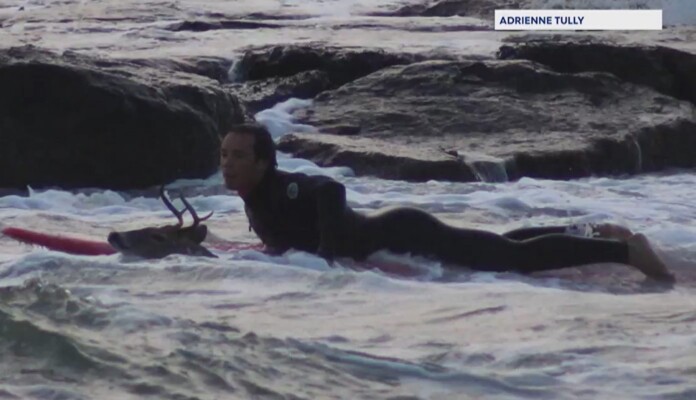
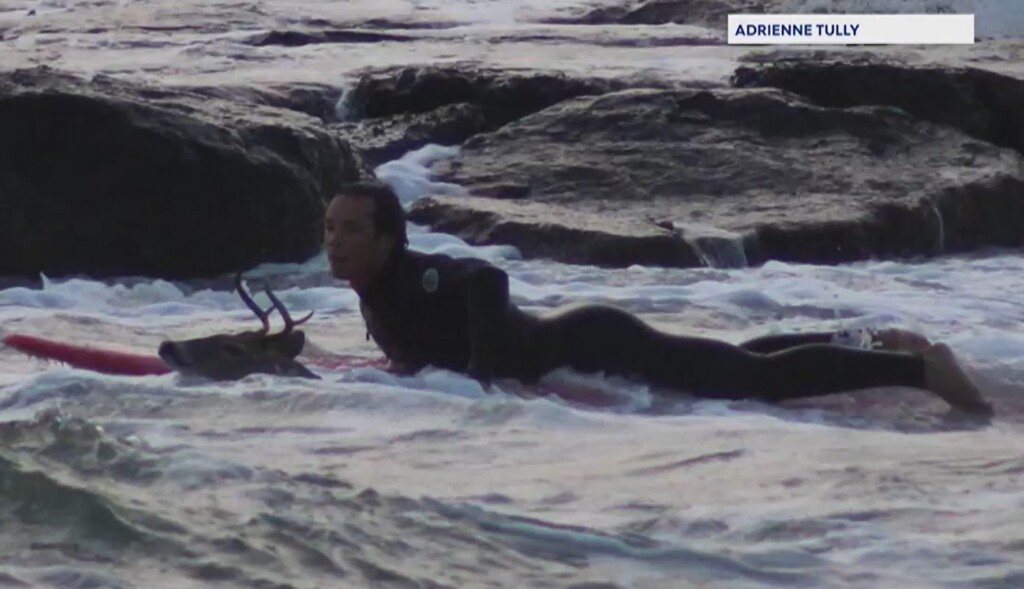
From New Jersey comes the story of a Good Samaritan rescuing a deer that had somehow found itself battling the surf off the coast of Belmar.

Adrienne Tully was on the scene taking pictures with a nice camera which she had just picked up again. An amateur photographer, Tully had gone there to snap some shots of the sunset, but spotted the deer attempting to make its way onto a jetty.

At first, she told News 12, she thought it was a bird—and left it at that, but later she spotted a crowd of onlookers coalescing around the sea at 15th Avenue, pointing at the same jetty she had seen the bird on.

That’s when she realized it was a buck, not a bird.

“He was swimming through the ocean and then he decided a couple of times to climb on the jetty and then he went back in the water, and we were a little worried,” said Tully.

After taking a few pictures, the crowd cheered when it saw a friendly surfer pass by and coax the animal out of the confusing, eddying water and toward the shore.

JUST LIKE THIS BUT AUSTRALIA: Rookie Lifeguard Faced With Saving a Kangaroo From Rough Surf in Her First Ever Rescue

“There was a nice surfer, I don’t know his name, but he eventually tried to guide the deer out. The deer came out and then just ran north on the beach, you know, far away from any people and I’m sure he’s fine,” said Tully.

Other surfers said the water was pretty turbulent, and they doubted whether the buck could have made it alone, but unanimously admitted they didn’t know the surfer that rescued it.

News 12 New Jersey is still seeking the identity of the Good Samaritan.

WATCH the story below from News 12… 

BUCK UP Your Down Friends With A Nice Story Of Kindness To Animals…

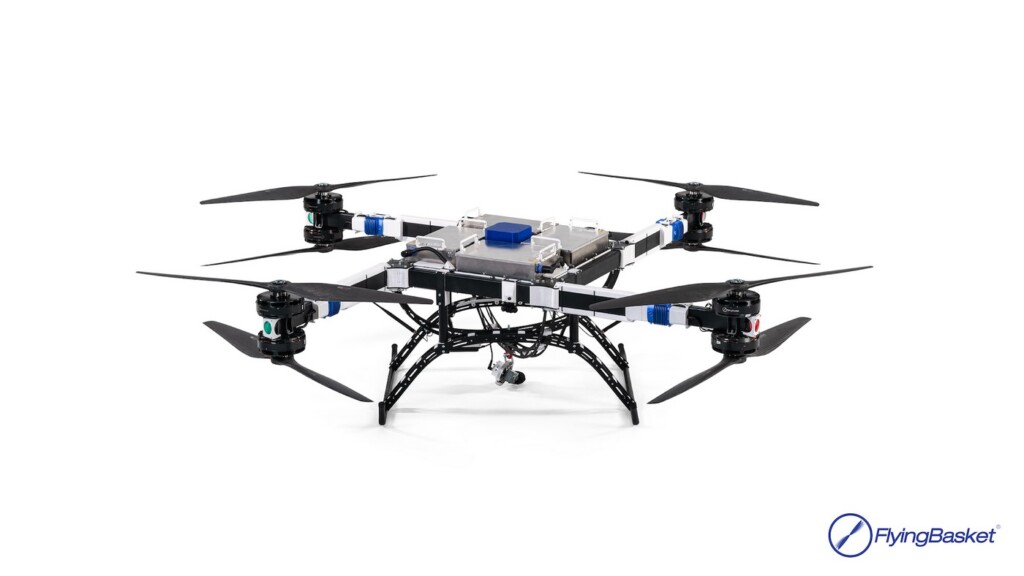
Heavy-Lift Drone Can Haul 220-Pounds of Cargo for Delivery, Aid, or Construction Companies

credit - FlyingBasket
credit – FlyingBasket

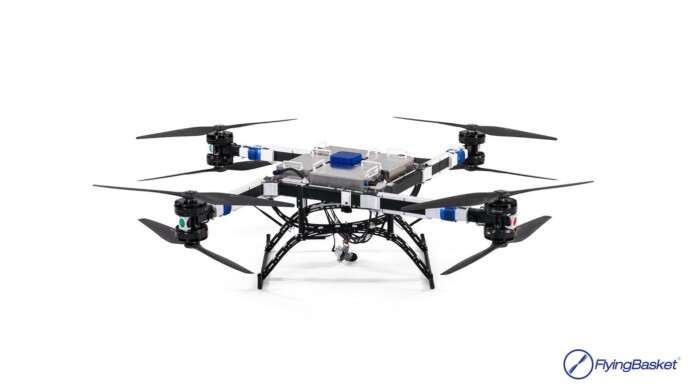
A heavy-lifting drone is now on sale in Europe that can haul loads in excess of 200 pounds.

Called the FB3, it’s the first heavy-lifting drone with this level of versatility the market has seen, and the company envisions it as an irreplaceable asset for delivery and logistics companies, forestry and logging, and disaster relief.

Imagine 220 pounds, or 100 kilograms of food, aid, medicine, or disaster shelter, being able to be carried into remote locations quickly, without the need for a large landing area, and without any risk to the pilot or an expensive helicopter.

The FB3 is made by FlyingBasket, which wrote that “the journey with the FB3 drone has been marked by extensive testing and collaboration with customers across various industries, enabling them to tailor its capabilities to meet specific and relevant needs.”

The FB3’s outstanding heavy cargo transport and lifting capability has been rigorously demonstrated in a wide range of environments, including forests, wind parks, and urban settings. It can carry 70 kg, or around 147 pounds in its cargo hold, or 100 kg, around 220 pounds, in a basket or sling suspended from a hook on the drone’s undercarriage.

“The FB3 commercial availability is another milestone in the roadmap of FlyingBasket, who continuously commit to innovation, safety, and excellence within the drone industry. It represents a significant leap forward in cargo transportation possibilities,” states Moritz Moroder, the CEO of FlyingBasket.

“We are excited about the potential it holds for various industries.”

Among those possibilities, FlyingBasket sees their drone as a great option for telecom companies who need to do repairs or installations on towers in cities or remote locations, and renewable energy companies needing to complete repairs on wind turbines. The same applies to construction firms needing to carry materials up to the top of buildings.

Before you get any idea of dropping 200 pounds of flour onto your friend’s lawn as a prank, the drone will run you about $76,500 which includes a sophisticated control console as well as a remote controller, replacement batteries, and cargo attachments.

WATCH the drone in action below…

SHARE This Awesome Advance In Aid And Industry With Your Friends… 

Little Known Ancient Site in Ohio Crowned by UNESCO–for Incredible Alignment with Moon and Sun

'Mound City' is one of 8 earthwork sites in the Hopewell Culture NHP - © NPS
‘Mound City’ is one of 8 earthwork sites in the Hopewell Culture NHP – © NPS

In the rustbelt state of Ohio, famous for being the epicenter of so much great American music, a little-known collection of earthen mounds has made national headlines for their historic testament to their maker’s deep wisdom.

The Hopewell Ceremonial Earthworks recently became the 25th property from the United States to have the honor of a place on the UNESCO World Heritage List, a selection of buildings, locations, cities, and landscapes that tell a significant part of the story of humanity.

Built between 2,000 and 1,600 years ago, they are described as “complex masterpieces of landscape architecture and are exceptional among ancient monuments worldwide in their enormous scale, geometric precision, and astronomical alignments.”

“The huge squares, circles, and octagons, which are geometrically precise and align perfectly with the cycles of the sun and moon, were built by dispersed communities of American Indians who periodically gathered at these special places to worship and stay connected to one another,” reads an explainer on Hopewell Ceremonial Earthworks’ official website.

It took a decade of advocacy from groups like Ohio History Connection and the Department of the Interior to get a nomination to the UNESCO pending list in 2022.

Of the site’s truly interesting features is its collection of Native American artifacts that have origins from all over the North American continent, including seashells from the Gulf of Mexico, shark teeth from the mid-Atlantic, obsidian from the Pacific Northwest, and silver and copper from modern-day Canada.

MORE NORTH AMERICAN HISTORY: 300 Epic Ancient Murals ‘Unique in the World’ Depict Creation Myths on Texas Rock: ‘Oldest Books in North America’

The mounds would have been the site of ritual and gathering, but the people who lived there were very different from the North American mound builders of Cahokia, who had a stratified hierarchical society that included a ruler and caste of nobles.

At Hopewell, even those interred with obvious honorific funeral rights seemed to wear the same clothes, eat the same food, and do just as much labor as everyone else. Their ceremonies at the mounds, perfectly aligned to movements of the sun, and even more complex movements of the moon, carried on for hundreds of years until about 400 CE when the mounds remained, but the ceremonies stopped.

YOU MAY ALSO LIKE: 60% of Ecuadorians Vote Against Continued Oil Drilling in Critical Amazon Biosphere

Over the next 200 years, trees began to grow overtop the mounds, and a greater focus on subsistence meant that by 650 CE, people began building in or over top of them, and their significance and perhaps secrets were lost.

Now on the UNESCO World Heritage List, it joins ancient properties like Stonehenge, the Lascaux cave paintings, and Olmec sites that have revealed the most about our most ancient organized societies.

WATCH an explainer and celebration video below…

SHARE This Incredible Heritage Site on Social Media to Surprise Your Friends…

“With the new day comes new strength and new thoughts.” – Eleanor Roosevelt

Quote of the Day: “With the new day comes new strength and new thoughts.” – Eleanor Roosevelt

Photo by: Bruno Aguirre

With a new inspirational quote every day, atop the perfect photo—collected and archived on our Quotes page—why not bookmark GNN.org for a daily uplift?

24 Prison Inmates Get College Degrees, Graduate Together Thanks to UC Program: ‘I literally feel free’

credit - ABC 7, Fair Use
credit – ABC 7, Fair Use

In California, prison inmates are preparing to make their second chance count by studying towards a college degree while incarcerated.

Yesterday, 24 inmates in caps and gowns at the Richard J. Donovan Correctional Facility in San Diego graduated with associates degrees in sociology and liberal arts before a ceremony honoring their commitments.

The degrees were provided and issued by Southwestern College via the Restorative Justice Program of California state, which allows prisoners to study face-to-face with teachers while incarcerated.

So far the program has helped over 1,500 people better their chances for a successful societal re-entry by increasing their employability, skill sets, and knowledge.

“I never had the dreams or aspirations to even think about higher education so it’s truly an honor to be able to pursue education and find purpose and meaning for my life despite my environment,” program graduate Derek Adams told NBC 7. Adams is serving a life sentence with the possibility of parole.

“I literally feel free through the pursuit of my education already, so that’s why the concept of a life sentence doesn’t really apply anymore,” he added.

ANOTHER PROGRAM LIKE THIS: First-of-its-Kind Commencement Inside Prison Celebrates 25 Inmates That Earned Bachelor’s Degrees Behind Bars

“Being system-impacted myself, I understand first-hand the importance of the Restorative Justice Program and its power to truly shape the lives of incarcerated individuals seeking to better themselves,” said Raquel Funches, interim director of restorative justice, who added that almost all 24 graduates are transferring to four-year degree programs for the University of California Irvine.

OTHER GOOD SECOND CHANCE STORIES: Georgia State University Hails First Class of Inmate Graduates: ‘A degree to utilize when they come home’

“While incarcerated at RJ Donovan, these students now have the amazing opportunity to transfer to UC Irvine’s Leveraging Inspiring Futures Through Educational Degrees program, the first in-prison BA-degree completion program in the University of California system.”

NBC 7 reports that prisoners re-entering society are 48% less likely to return to prison over a three-year period.

WATCH the story below from NBC 7… 

Scientists Are Using 3D-Printing Stem Cells that Can Be Implanted as Brain Tissue

3D-printed two-layer cerebral cortical tissue visualised within a mouse brain - credit Univ of Oxford. Released.
3D-printed two-layer cerebral cortical tissue visualized within a mouse brain – credit Univ of Oxford. Released.

An exciting advance from Oxford Univ. has raised the prospect of tailoring stem cells quickly to treat brain injuries in humans in the future, by essentially 3D printing brain cells.

In experiments, the implanted cells integrated into the animals’ brains both structurally and functionally.

The innovative study, published in the journal Nature Communications, marks the first time neural cells have been 3D printed to mimic the architecture of the cerebral cortex.

The success of the study, part of a 10-year span of published research on 3D printing cultured cells and synthetic tissues, has increased hopes that similar technology could one day be used to treat brain injuries.

Each year, around 70 million people across the globe suffer from traumatic brain injuries (TBI), with five million of those being severe or fatal. There is no effective or reliable treatment.

However, cutting-edge tissue regenerative therapies are seen as a promising route to treatment; especially those which incorporate implants derived from patients’ own stem cells.

In this latest study, researchers used 3D printing techniques to create a two-layered brain tissue using human neural stem cells. When implanted into the brains of mice, these cells encouragingly showed convincing structural and functional integration with the host tissue, despite the species difference.

The cells were then dipped in a solution to generate two ‘bioinks’, which were then printed to produce a two-layered structure that was maintained for weeks.

The researchers used modern human pluripotent stem cells, which are created by activating genes that cause a reset into the tissue of a skin sample to a base state that can then be reprogrammed into most tissue types.

“The work will provide a unique opportunity to explore the workings of the human cortex and, in the long term, it will offer hope to individuals who sustain brain injuries,” said Dr. Yongcheng Jin, a lead author of the study from the University of Oxford’s Department of Chemistry

The implanted cells also showed signalling activity which correlated to that of the host cells—indicating that the human and mouse cells were communicating with each other and demonstrating functional as well as structural integration in the brain.

MORE STORIES LIKE THIS: 3D-Printed Ear is Made and Transplanted From Patient’s Living Cells

“Our droplet printing technique provides a means to engineer living 3D tissues with desired architectures, which brings us closer to the creation of personalized implantation treatments for brain injury,” senior author Dr. Linna Zhou, told Oxford press.

Professor Zoltán Molnár, another senior author, said though the technology was not fully advanced yet, the study shows significant promise in treating brain injuries in the future.

MORE 3D-PRINTED BIOLOGY: New Tool Can 3D Bio-Print Inside Human Body to Construct Natural Tissue-Like Structures

“Human brain development is a delicate and elaborate process with a complex choreography,” said Professor Zoltán Molnár, another senior author. “It would be naïve to think that we can recreate the entire cellular progression in the laboratory.”

“Nonetheless, our 3D printing project demonstrates substantial progress in controlling the fates and arrangements of human [stem cells] to form the basic functional units of the cerebral cortex.”

PRINT This Story Onto Your Friends’ News Feeds…

Trapped on Tiny Ledge, Fallen Hiker with Mangled Legs Rescued by Off-Duty Air Force Hero

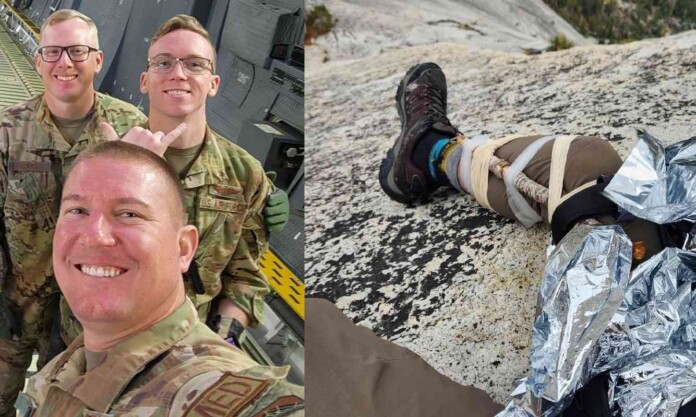
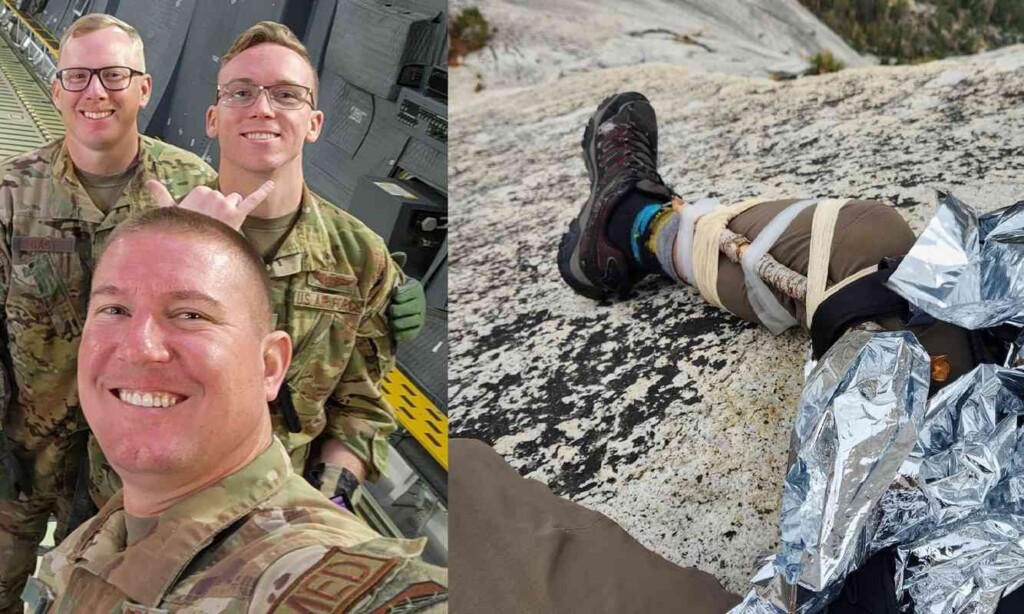
U.S Air Force Capt. Joshua Haveman (left) and the splint he made for the injured climber (right) - courtesy of Travis AFB.
U.S. Air Force Capt. Joshua Haveman (left) and the splint he made for the injured climber (right) – courtesy of Travis AFB.

An off-duty Air Force Captain proved himself worthy of rank and regalia after conducting a daring rescue of a fallen hiker on the shoulder of Yosemite’s Half Dome.

Capt. Joshua Haveman, 60th Air Evacuation Squadron, was hiking the famous peak in September when he saw a climber slip in wet conditions and fall perhaps as many as 80 feet down onto a precarious ledge.

Haveman and the other hiker were at a section of the hike where in order to pass up solid granite, a series of cables embedded into the rock are necessary for safety and leverage. If they don’t have a harness, rope, and carabiners to secure themselves to the cables, hikers are left simply holding on to them or using them as handholds.

Without hesitation, Haveman took action. Faced with harsh winds, slippery rock, and hail, he made a decision to venture outside the permanent cable barriers to reach the fallen climber, Travis Air Force Base wrote in a statement.

His climbing experience and extensive medical training proved invaluable in this life-or-death situation.

MORE STORIES LIKE THIS: Dramatic Moment Skier Rescued a Snowboarder Who Was Buried Head First in Snow and Running Out of Air (Watch)

“You could see that his legs were not naturally oriented at all, so I started collecting sticks from Sub Dome and started climbing,” Haveman recalled. “Other climbers were concerned for my safety, but the guy was just up there screaming in pain, so I left the cable area and climbed on the ledge.”

Half Dome, Yosemite -credit Travis AFB

Using makeshift splints fashioned from sticks, Haveman provided crucial first aid to the injured climber by securing above and below the tibia/fibula fracture and wrapping his injured ankle with an ace bandage he had in a medical kit he had brought.

To shield the climber from the harsh elements and apparent shock, Haveman covered the climber with his jacket while organizing a call to search and rescue.

“After about 45 minutes, the Park Ranger emergency medical technician came up with a full medical bag, so we were able to use a structural aluminum malleable splint to better stabilize him,” Haveman explained.

“The weather was improving, so more climbers were able to come up and offer their assistance. They took up a collection for supplies that we were able to use to make an improvised pulley system to lower him the 30 feet down to sub dome.”

MOUNTAIN RESCUE STORIES: Pakistani Man is True Hero in Dramatic Cable Car Rescue After Youths Were Stranded 15 Hours–WATCH

Ultimately, the climber was medically evacuated via helicopter, receiving the critical medical attention they urgently required. Without Haveman’s swift and selfless actions, the outcome could have been far more tragic.

“I wasn’t sure a helicopter would be able to land with the winds being as strong as they were, so we were preparing to carry him 10 or 12 hours down with a six-man litter,” Haveman said with a pause.

“Apparently, it was this pilot’s first day on the job, and he was amazing! It took him about 15 minutes, but he was able to sit the chopper down and we were able to get the patient loaded and breathe a sigh of relief.”

It’s safe to say on behalf of the injured climber and everyone else in the country, things can only go so wrong when we have people like Capt. Haveman working and walking among us; his bravery and ingenuity are a credit to the Force and the country at large.

SHARE This Heroic Rescue From A Daring Captain On Social Media… 

Cops Jump a Fence to Catch Suicidal Woman’s Arms Just in Time on Indiana Overpass

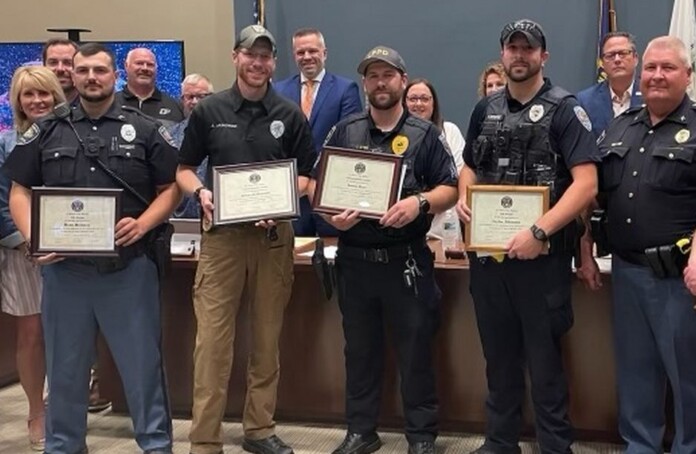
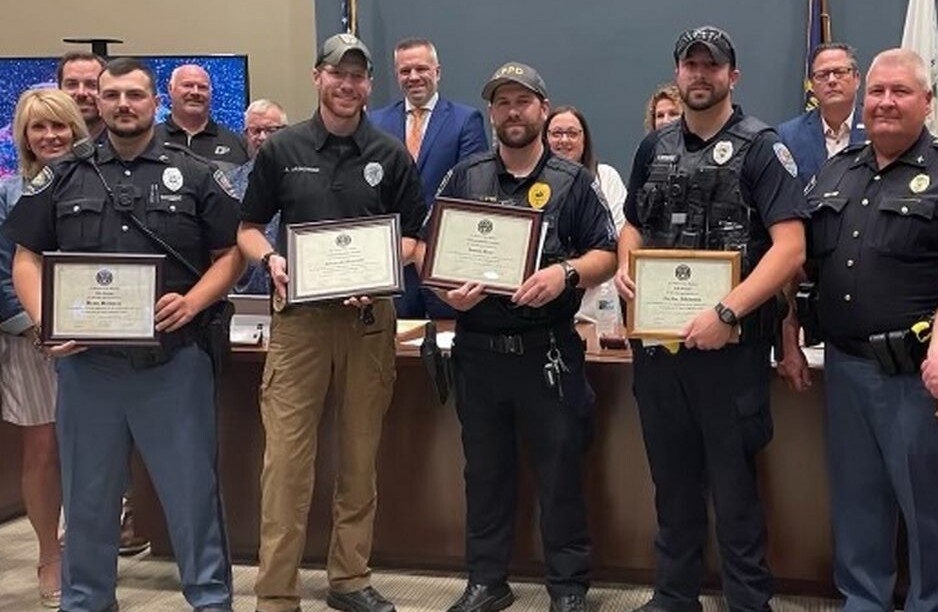
LaPorte police officers Ryan Helmecy (far left) and Taylor Atkinson (far right) - released to the press.
LaPorte police officers Ryan Helmecy (far left) and Taylor Atkinson (far right) – released to the press.

In LaPorte Indiana, a pair of police officers are being recognized as life-saving heroes after they rescued a suicidal woman who was just a hand’s breadth from perishing.

Ryan Helmecy and Taylor Atkinson arrived at the I-35 overpass in northwest Indiana where a woman was threatening to jump. The bridge over a series of railroad tracks was flanked by sidewalks and a chain link fence.

As Atkinson and Helmecy arrived, the woman was already making her way down the other side of the fence, at which point the two men began begging her not to jump.

When it was clear she wasn’t stopping, Helmecy sprinted over to the fence, mounted it, and grabbed the woman’s hand.

Then she let go.

With nothing but air separating her feet from a 30-foot drop onto loose rock and steel tracks, Atkinson arrived seconds later and grabbed her other arm.

CHECK OUT THIS SPIDERMAN: Hero Passerby Scales Building in China to Save Boy Who Fell Out Window Onto a Ledge

They held on like this for several minutes until a firetruck that had arrived under the overpass was able to provide a bucket to lower the woman into.

“They completely put their well-being aside to go over that fence and hang on,” said LaPorte Police Chief Paul Brettin. “She was begging them to let go. They would not do that.”

MORE RESCUE STORIES LIKE THIS: Utah Man Jumps Into Icy River to Save Woman Attempting Suicide at the Same Spot Where he First Dated His Wife

The chain link fence was installed there to protect potentially suicidal people, and since its placement years ago, there haven’t been any calls. Atkinson said he was surprised when he heard one.

The two men were honored by the police department with special commendations, and the occasionally-used moniker of “Spiderman” for their comic-book rescue.

SHARE These “Spidermen” Officers And Their Live-Saving Rescue… 

“Unless a tree has borne blossoms in spring, you will vainly look for fruit on it in autumn.” – Walter Scott

Quote of the Day: “Unless a tree has borne blossoms in spring, you will vainly look for fruit on it in autumn.” – Walter Scott touting preparation

Photo by: Paolo Bendandi

With a new inspirational quote every day, atop the perfect photo—collected and archived on our Quotes page—why not bookmark GNN.org for a daily uplift?

My Dad Sent Me A Card on My Wedding Day–20 Years After His Death

The letter, dad Philip, and bride Freya with her Husband Michael - SWNS
The letter, dad Philip, and bride Freya with her Husband Michael – SWNS

A bride received a letter and card from her dad from beyond the grave on her wedding day.

32-year-old Freya Rosati was just 11 when her dad, Philip Hargreaves, died from oesophageal cancer at the age of 53.

They used to do everything together. He’d take her to dance classes, they would watch films, and play games together; if Freya’s mom ever said ‘no’ her dad would always say ‘yes’.

But understanding his fate Philip wrote nine cards for Freya, eight for birthdays, and a final one for her wedding day in the weeks before he died.

Her mom Theresa read the card to wedding guests in lieu of Philip’s father-of-the-bride speech—leaving everyone in tears.

“Even looking at his handwriting on that card, it really just felt like he was there, and it was so nice,” said the Buckinghamshire bride. “It was such a sad moment but so important to me that the card was read out.”

I wish I could be standing next to you, the proudest dad in the world, to walk you down the aisle to the man you love, and to the next chapter in your life. Today is your day, enjoy everything about it. Laugh and cry. Be happy and confident.

Face everything full-on. You will then succeed in your life together. You gave me some of the proudest moments in my life with your sense of humour, intelligence, understanding, and caring nature. Don’t ever change. Love you forever, dad.

Freya, a self-professed “daddy’s girl” was determined to involve her father as much as possible on her big day, and little bits and pieces of their 11 years together were everywhere from the music to the decor. Having enjoyed a holiday to Antigua, Freya had steel pans play her aisle-walk music. Photographs of Philip and Freya bedecked a ‘memory tree’ which sat at the front of the wedding venue.

SIMILAR TOUCHING MOMENTS: 

While she couldn’t wear something ‘new’ she did involve Philip for something ‘old’—a diamond necklace he had given her as a gift.

She remembers him as a “proper warrior” who never wasted any time or complained about being ill in the “downhill” slope that led to his passing.

SHARE This Beyond Touching Story Of A Girl And Her Dad On Social Media… 

Researchers Invent Way to Turn Harmful Mine Waste into Healthy Soil

By Canadian Light Source, CC license

An Australian-Canadian science and engineering team has discovered a way of turning mine waste into arable soil that is already being used to grow maize and sorghum.

‘Tailings’ is the official industry term for mineral waste leftover after separating away all the useful metals from mined material. Typically toxic from heavy metals and unusable for anything else because of this, tailings are kept in storage facilities to prevent them from polluting groundwater or farmland.

Hoping to save billions of dollars in such storage fees and remove the threat of disasters that occur when such facilities break down or are abandoned, a team from the universities of Queensland and Saskatchewan sought to see whether it was possible to convert this lifeless rock into healthy soil by returning microbial life to it.

“Tailings have no biologically friendly properties for growing plants. Roots and water cannot penetrate them, and soluble salts and metals in tailings can kill plants and soil microbes,” said Longbin Huang a professor at the Univ. of Queensland. “If you wait for nature to slowly weather the tailings and turn them into soil, it could take a couple thousand years.”

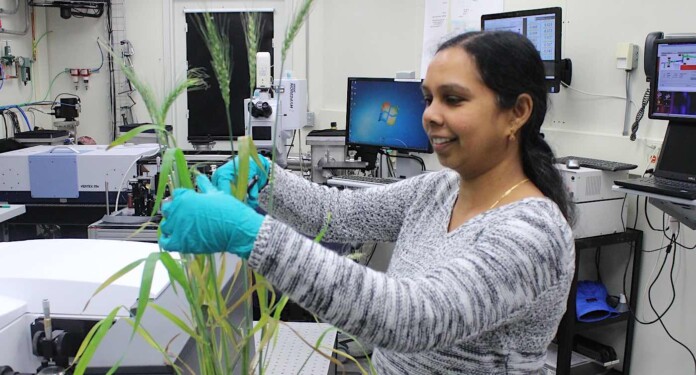
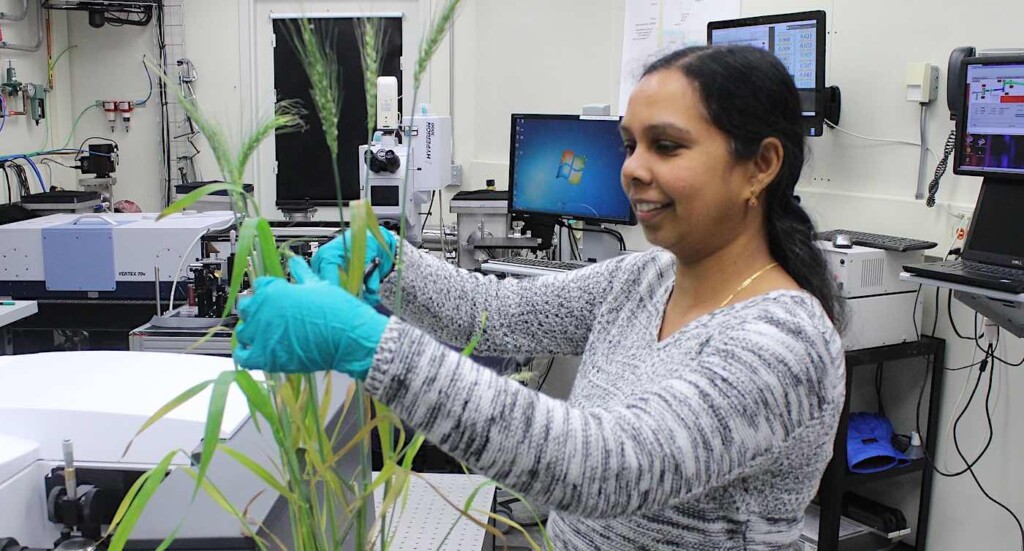
Using the Canadian Light Source (CLS), Huang and his team found a way to accelerate this process of repopulating the tailings with soil microbes.

The CLS is a giant synchrotron, a type of circular particle accelerator. It works by accelerating charged particles (electrons) through sequences of magnets until they reach almost the speed of light.

Using the CLS’s synchrotron light the scientists could visualize the detailed mechanism of how they were able to develop the organic-mineral interfaces and revitalize the tailings.

“We needed to use the SM beamline to unravel at the nanometer scale the immediate interfaces and how the minerals change, and how they interact with organics,” said Huang. “The facility access and the expert inputs of the beamline staff were critical to enable us to collect quality data and therefore to have reliable scientific evidence.”

MORE GREAT NEWS FOR INDUSTRY: Mining Zinc, Nickel, and Cobalt from Plants: “Phytomining” is the Sustainable Future

Their data allowed the scientists to successfully recolonize mine tailings with soil microbes after the tailings had been amended with plant mulch. These soil microbes consume certain residual organics and minerals, aggregating them into what are referred to as soil particles.

“You have microbially active surfaces in soil crumbs that develop a porosity in compacted tailings that allows the gas, water, roots, and microbes to survive, just like in arable soil,” said Huang. “Therefore, the dead mineral matrix of tailings becomes a soil-like media that will enable plants to grow.”

Huang noted that this process—which can occur in as little as 12 months—can also be used to restore soils damaged by over-farming, overuse of fertilizers, and climate change.

Mining is extremely necessary for our developed world. Many of the world’s largest copper and iron mines are decades, even centuries old, and with global copper needs alone estimated to double by 2050, all that mine waste will need a more sustainable home.

MORE MINING NEWS: Lithium Discovery in Crater in Nevada Could Be Biggest Deposit Ever Found

We’ve also been hearing now for many years about the world’s top soil having only a certain number of harvests left before it becomes irrevivably lifeless dust. Although this is heavily disputed.

Nevertheless, Huang and his team seem to have provided means to clear two hurdles in a single bound with little more than soil, mulch, tailings, and microbes.

SHARE This Revolutionary Use For A Once-Useless Product… 

Man Miraculously Survives Falling Under Moving Train by Lying Flat Between the Tracks (Video)

Prateek Kumar after the train passes over him - SWNS
Prateek Kumar after the train passes over him – SWNS

It was a normal commuter day for Prateek Kumar who jumped off the train to New Delhi to buy biscuits and a cold drink when it was stopped at Bagaha railway station, West Champaran, India.

But when the train began to pull away without him, he ran to jump onboard and slipped under the moving carriages.

Clever Prateek survived by lying down between the anterior track and the brick wall of the platform, onlookers said, and a video shows officials watching in horror as they wait for the train to pass.

“He was careful with his movements and stayed still, waiting for the train to pass,” a local said. “After the train had gone, RPF cop Harishchandra Yadav came to the aid of the victim, getting down on the track and picking him up.”

“Prateek Kumar suffered minor injuries and also had parts of his clothes torn in this incident.”

It’s a vital little survival trick to remember, and will likely be a human’s only chance of making it out of such a situation alive.

WATCH the live footage below… 

SHARE The Secret To Surviving A Train Strike With Your Friends…

Painting Assumed to Be a Copy is Real–After Note is Found Hidden in Frame Making it Worth Thousands

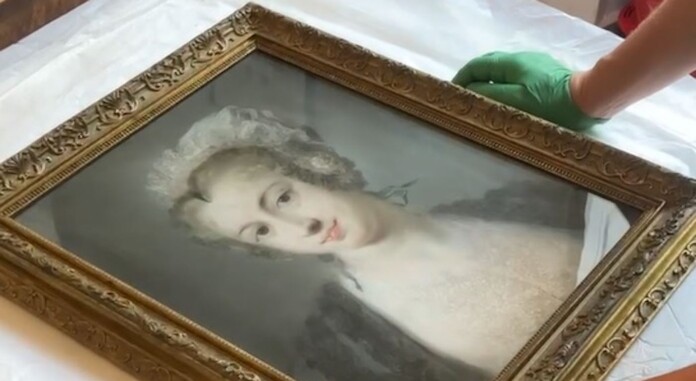
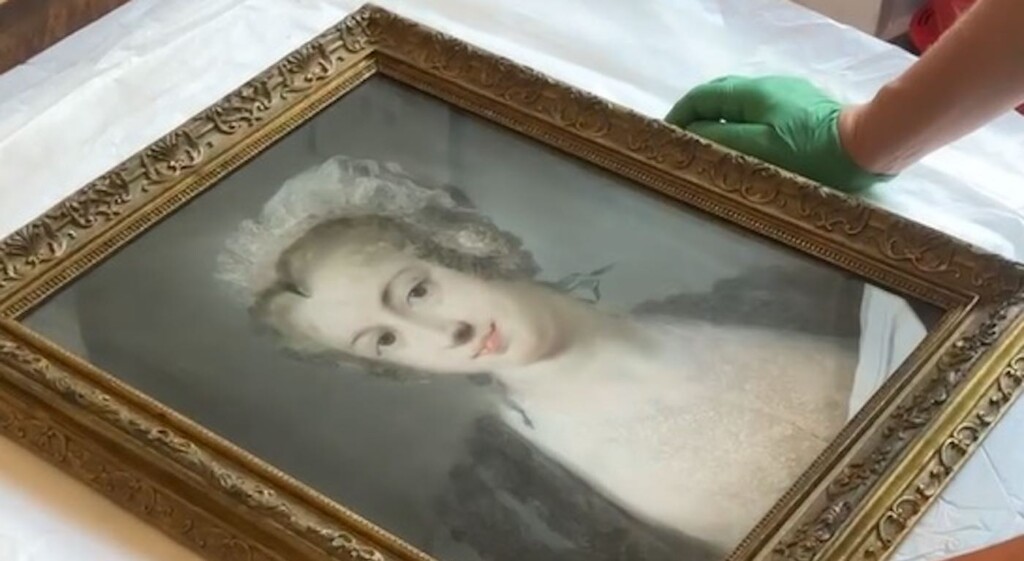
'Portrait of a Tyrolese Lady' by 18th century artist Rosalba Carriera left in storage for 30 years – SWNS
‘Portrait of a Tyrolese Lady’ by 18th-century artist Rosalba Carriera left in storage for 30 years – SWNS

A 200-year-old painting thought to be a copy has been identified as the original Portrait of a Tyrolese Lady by renowned 18th-century artist Rosalba Carriera.

Carriera was known as the “Queen of Pastel Painting” for painting a series of women from across Italy during the early 1700s and was greatly admired by King George III.

The painting was left by Maurice Egerton, the fourth and last Lord Egerton of Tatton, to the National Trust when he died heirless in 1958.

After being placed in storage in the 1980s at Tatton Park in Cheshire it has now been identified as an original piece upon the discovery of a unique slip of paper tucked behind the frame.

Xavier Salomon, deputy director and chief curator of the Frick Collection in New York, says that the slip of paper was a “Santini.”

It features prayers and blessings for a safe passage that the artist hid in works she exported.

“Xavier Solomon is researching Carriera’s works and working on a new catalog,” said Carolyn Latham, the Mansion and Collections Manager for the National Trust. “He approached us about visiting to study the work as he believed it could be an actual Carriera.”

“The picture has been in our picture store since the mid-1980s and was thought to be a copy of a Carriera work rather than by her. Xavier had hoped to find the Santini still tucked into the back and we were all really pleased to find it there,” she said.

OTHER FOUND WORKS: Long-Lost Sketch by Landscape Master John Constable Found in an Old Suitcase

It’s quite extraordinary the rate at which paintings produced by great Renaissance and Enlightenment artists are rediscovered after being mislabeled, lost, or damaged. Those days are long gone, and one would think that pretty soon they would all have been found considering no more are being made. But they keep turning up, like this Van Dyck painting that was covered in bird droppings in a shed.

Santini hidden in the back of the painting – SWNS / National Trust

After extensive restoration, the artwork is now on display at Tatton Park for visitors in the Mansion’s Yellow Room until it is closed for winter conservation at the end of October.

“Over time these fragile bits of paper often became lost or separated from her works,” said a spokesperson for the Tatton Park estate.

MORE STORIES LIKE THIS: Renovation Unearths Paintings Behind Kitchen Walls Nearly 400-Years-old

“Rosalba became one of the most popular and sought-after artists. From her beginnings as a painter of scenes for snuff box lids, she moved on to portrait miniatures and then became integral in popularising the use of pastels.”

“She was an initiator of the Rococo style and is remembered as one of the most successful women artists of any era, but sometimes her work was considered risqué due to the delicate lace coverings, depicted on the subject’s clothing only just saving their modesty.”

SHARE This Great Discovery With Your Art Friends… 

“Care and diligence bring luck.” – Thomas Fuller

Quote of the Day: “Care and diligence bring luck.” – Thomas Fuller 

Photo by: Joshua Earle

With a new inspirational quote every day, atop the perfect photo—collected and archived on our Quotes page—why not bookmark GNN.org for a daily uplift?

They Accidentally Bought a Run-Down House in Scotland But Restored it With Love After Whoopsie Auction (LOOK)

credit whathavewedunoon

Some people enjoy the thrill of a blind auction, but you probably wouldn’t be comfortable buying anything other than a record collection or some home furnishings.

For a young cross-Atlantic couple in their 20s, they found themselves the proud owners of a dilapidated, crumbling, rural Scottish home after their best-laid plans “gang agley.”

Believing he was bidding on a fixer-upper apartment in Glasgow, Cal Hunter doubled down, increasing a £10,000 bid to a £20,000 one after another fourth of the four flats was offered to him after the auction.

It turns out it wasn’t a flat in Glasgow, but a four-unit stone building called Jameswood Villa made on the shores of Holy Loch, in a small town called Dunoon in 1902.

However Hunter, who was in on the project with his Canadian girlfriend Claire Segeren, was undeterred despite his mistake.

“I was drawn to the idea of being mortgage-free in my 30s and having a beautiful place with a nice garden,” Hunter told the New York Times. “I knew it would be hard work, but we’d really been wanting an opportunity.”

Even though the pair were young enough to still be in university, they threw themselves into something that grew into a 5-year home renovation.

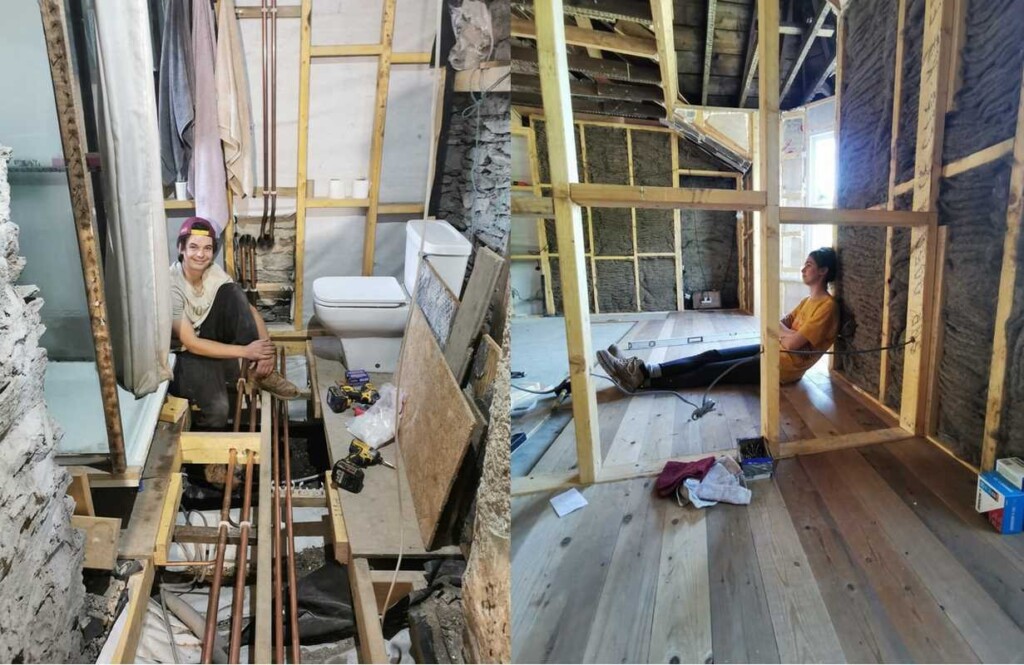
Cal (left) and Claire (right) in the thick of things – credit Whathavewedunoon

Documenting it all on their blog and Instagram, What Have We Dunoon, they did everything. At 26, Hunter was already an experienced carpenter and set to work cutting floorboards and laying new pipes for the plumbing as well.

He and Claire had help from experienced professionals with gas and electricity, but an almost unbelievable amount of the finished building was done by their hands, working five and a half days a week.

MORE STORIES LIKE THIS:

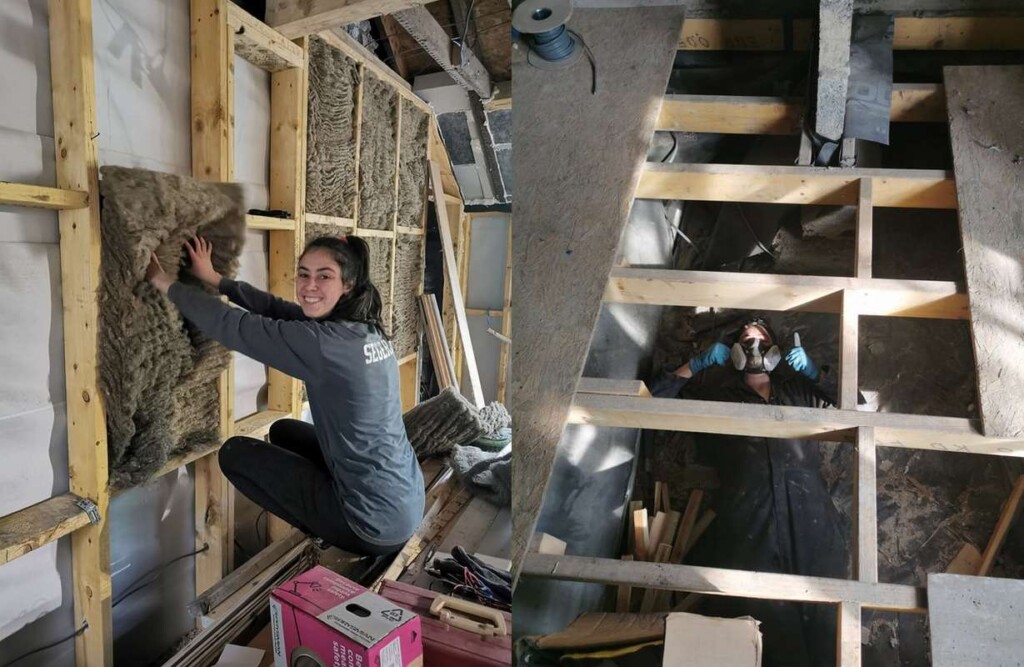
Consulting books, YouTube, tradesmen, and of course other renovators and homesteaders who commented on their Instagram, they learned how to frame doors, put in glazing, flush radiators, insulate, work with stone, wood, and metal, roofing, and obviously so much more.

Claire installing sheep’s wool insulation and Cal working on the flooring – Whathavewedunoon

When they could, they relied on mostly free labor coming in from young people their age on Workaway, trading five hours of work per day in exchange for food and housing—an on-site tent camp and mobile home which the two lived in for over 5 years—Claire splitting time as waitress and Cal as a contractor to earn money for the necessary materials.

At times they bought materials new, such as their marble countertops, but much of the base structural fittings were cannibalized from the house and other abandoned houses like it in the area.

People became very interested in the effort. A 2019 article in the Dunoon Observer went viral, and masses of second-hand materials began coming their way. Their GoFundMe raised £30,000, or about $38,000, while their Instagram account amassed 300k subscribers.

In early July, the two no-longer-young people got a visit from the inspectors who officially cleared the house for habitation, and their five-year story finally came to a warm and cozy end.

SHARE This Helluva Fixer Upper Story With Your Handy Friends… 

Natural Defenses in Plants May Be Successful in Humans Against Neurodegenerative Diseases: New Study

Lee Nicate - Unsplash
Lee Nicate – Unsplash

GNN has reported on dozens of studies that purport to find the culprit compounds or hidden keys to various diseases, but rarely do they ever sound like something out of a Marvel comic book.

Now, a study published in the journal Nature Aging is seeking a treatment for neurodegenerative diseases like Huntington’s in the trunks of trees.

In it, the researchers demonstrate that transporting a protein called SPP found in the plant cells responsible for photosynthesis into cultured human and animal cells brought about a reduction in protein clumping and symptoms of Huntington’s—the primary objective of the study.

Huntington’s is a proteinopathy and one of 9 neurodegenerative disorders that are brought about by toxic aggregations of proteins called polyglutamine that don’t stick together in healthy humans.

In humans and animals, it causes the death or dysfunction of brain cells, but in plants, where such proteinopathies like Huntington’s are also present, it causes no damage at all.

In order to explore how plants deal with toxic protein aggregation, Dr. Ernesto Llamas, the first author of the study from the University of Cologne’s CECAD Cluster of Excellence for Aging Research, introduced the toxic mutant protein ‘huntingtin’ into plants, which causes cell death in human neurons.

In contrast to animal and human models, Dr. Llamas found that thale cress plants actively removed huntingtin protein clumps and avoided harmful effects.

Hoping to see if such an effect could be replicated with animals, the study team investigated what was happening and found that the plants avoided the toxic aggregation of mutant huntingtin due to their chloroplasts—plant-specific organelles that perform photosynthesis.

“Unlike humans,” Dr. Llamas said, “plants have chloroplasts: an extracellular type of organelle that could provide an expanded molecular machinery to get rid of toxic protein aggregates.”

The multidisciplinary team identified the chloroplast plant protein SPP as the reason why plants are unaffected by the problematic human protein.

YOU MAY ALSO LIKE: Vaccine that Could Cure and Even Prevent Brain Cancer Developed by Scientists

They found that producing the plant SPP in models of Huntington’s disease such as human cultured cells and worms like the nematode C. elegans reduced protein clumps and symptoms of the disease.

“We were pleased to observe that expression of the plant SPP protein improved motility of C. elegans worms affected by huntingtin even at later aging stages where the symptoms are even worse,” said Dr. Hyun Ju Lee, a postdoc also involved in the study.

The results of Dr. Llamas’ team’s study could open the door for testing SPP as a potential therapy for Huntington’s disease, and hopes plants could grow to play a bigger role in contributing to the treatment of human diseases.

MORE RESEARCH LIKE THIS: Cures and Prevention For Some of the Worst Diseases Come From a Surprising Ally – Our Sewers

“Many people don’t notice that plants can persist amongst variable and extreme environmental conditions that cause protein aggregation,” Dr. Llamas said. “We usually forget that some plants can live thousands of years and should be studied as models of aging research.”

They aren’t just hoping though. Llamas and his team members believe there is real value in their discovery, and study co-author Dr. Seda Koyuncu says they’re going to found a start-up to produce plant-derived therapeutic proteins and test them as potential therapeutics to treat neurodegenerative diseases in humans.

SHARE This Unorthodox Way Of Finding A Cure With Your Friends…