All News - Page 253 of 1715 - Good News Network
Home Blog Page 253

Rescuers Move 5,000 Pounds of Concrete to Rescue Mewing Kitten From Storm Drain

- credit Strong Island Animal Rescue, Facebook
– credit Strong Island Animal Rescue, Facebook

This little nugget went through quite the ordeal after falling down a storm drain near Port Jefferson Station on Long Island, NY.

After someone heard mewing coming from the opening of the storm drain, rescuers were called to the scene. Strong Island Animal Rescue then worked with local police to move a 5,000-pound concrete slap atop the drain that would allow them to reach the kitten.

Using large jacks, and then a hydraulic rescue tool called “the Jaws of Life,” they were able to reach the young one 30 feet down.

“The feeling we had while getting him out was similar to Raiders of the Lost Ark when they removed the slab from the well of the souls to get the ark. Well getting this kitten felt the same way when were moving the slab to get a treasure as well this little kitten!” the rescue foundation wrote in a Facebook post.

They added that the kitty, whom they have named Lawrence, is coming along very quickly after being taken to Jefferson Animal Hospital, and that they will have him ready for adoption in no time.

WATCH the rescue below… 

SHARE This Cute-As-Can-Be Kitten With Your Friends… 

Bank Decides it Should have Prevented Dementia Depositor from Getting Scammed–So Restores Entire Life Savings

Victor and Alex Shaw - supplied by the family
Victor and Alex Shaw – supplied by the family

From Australia comes a story of corporate responsibility in the face of personal tragedy as an elderly national bank depositor had nearly AUD$500,000 returned to him out of the bank’s own pockets.

He had been tricked by scammers into revealing his banking information, which an inquest at ANZ bank found was something they should have been able to detect and stop before the scammers pilfered every last cent of the depositor’s life savings.

78-year-old Alex Shaw was recently diagnosed with dementia, something that wasn’t a big surprise to his son Victor. The news came just a few days after he had gone in with Alex to their local branch of the Australia and New Zealand Banking Group (ANZ) and were told that Alex had been the victim of a scam, and that the roughly AUD$460,000 amassed throughout his working life had been taken.

Victor understood it was generally known that scam victims are rarely reimbursed by banks who have a responsibility to protect depositors against fraudulent withdrawals. If the Shaws were to have any hope of recovering the money, they would have to understand whether or not the withdrawals were something that the bank should have prevented.

“Day to day, he’s kind of fine,” Victor told ABC News AU about his father’s dementia. “But that higher-level paperwork kind-of-stuff [like] managing finances… was just really beyond him. Getting the straight narrative as to what had happened… I couldn’t really work it out.”

In a stroke of fortune, Alex had been taking meticulous notes while in conversation with the scammers. He recorded the process almost to a tee, noting that the scammers asked him to buy some Apple store gift cards and send the serial numbers to a phone number in Thailand, or click on some links that were supposed to offer thousands in grant money.

Throughout Alex’ notes, there were references to something called “AnyDesk,” which Victor later learned was a program that allowed scammers to remotely access devices. From that moment on Alex was compromised, and several lump sums of between $10k and $25k were lifted from his account.

ANZ’s fraud detection system blocked the account following these transfers which went to an unknown offshore bank account. However the scammers managed to coach Alex into getting his account reactivated, at which point the rest of his money was taken.

Submitting a complaint, Victor didn’t have much hope, and the representatives from ANZ explained that it’s usually impossible to get much money back in these circumstances.

Then, three months after his father had lost everything, Victor got a response in the mail.

OTHER UPLIFTING STORIES LIKE THIS: Bank That Lost 66 Workers on 9/11 has Paid for All Their Kids to Go to College

“Following our review of this matter… ANZ recognizes that it could have done more to support Mr. Shaw given his history with scams,” the bank stated. “Considering Mr. Shaw’s vulnerability and the impact the scam has had on him, we will reimburse the scam transactions totaling $460,174.04.”

Victor told ABC that not a single person he knows, and as an Anglican church rector he has quite the Rolodex, has ever heard of such a thing happening.

MORE CORPORATE RESPONSIBILITY: New Bank in The Spirit of Walden Will Lend and Invest Only in Local New England Agriculture

Bank representatives speaking with ABC used the opportunity to encourage the children or relatives of those with dementia or cognitive decline to take steps to ensure greater security around financial management. Victor set up power of attorney over the account, for example, but other measures can be taken.

SHARE This Important Example Of Responsible Conduct By A Big Bank…

Scotland Claims it’s Found 5,000 Year Old Monument on ‘par with Stonehenge’ on the Isle of Arran

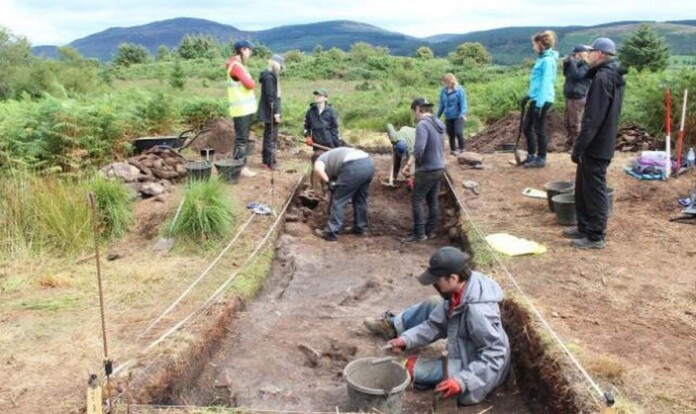
Excavation of the eastern bank of the Drumadoon cursus in summer 2021 - Univ. of Glasgow
Excavation of the eastern bank of the Drumadoon cursus in summer 2021 – Univ. of Glasgow

On Scotland’s Isle of Arran, national archaeologists are abuzz that a new ‘cursus’ has been found that is proving to be the most complete and best-preserved monument of this kind ever found in Britain—greater even than Stonehenge.

A cursus is not a stone circle, but rather a massive earthwork, and this one found at a place called Drumadoon was built by Neolithic farmers around 3,500 BCE, and it stretches 0.6 miles.

These kinds of landscape monuments were given the name ‘cursus’ after the Latin word for ‘course,’ and in fact the cursus at Stonehenge was at one point believed to be an ancient chariot racing track.

Their purpose is difficult to divine, and their shape and size differ from place to place, but essentially they take the form of a processional course that leads past other monuments like barrow mounds, stone circles, burial cairns, and standing stones. Indeed if stone circles are the Neolithic equivalent of the Roman Colosseum, then the cursus is the equivalent of the Roman Forum.

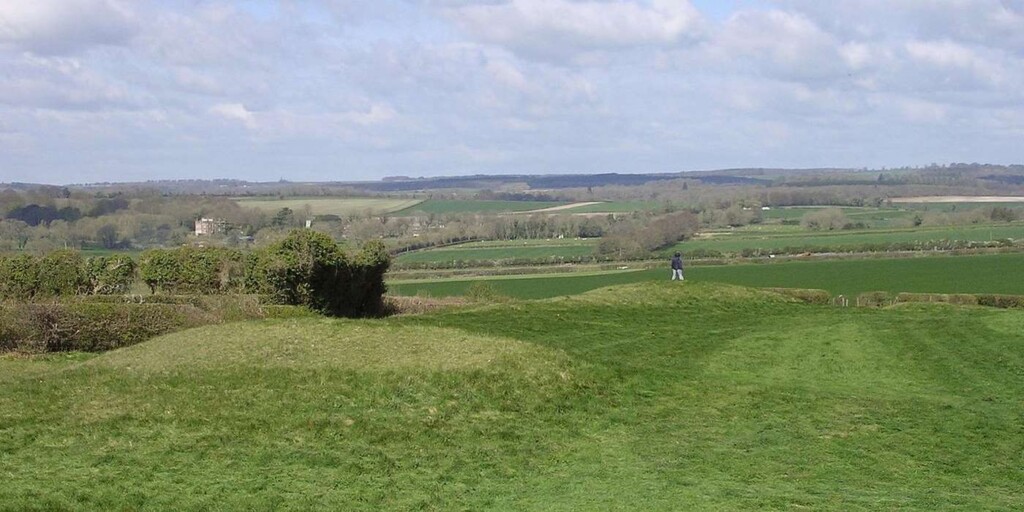
Sometimes the boundary structure of the cursus is a trench, like at Stonehenge, and other times it’s a raised mound, like at Drumadoon, or at Dorset in England. These mounds would have been exceptionally difficult to build when accounting for a lack of surveying equipment and digging implements like a shovel.

“The Isle of Arran is well known for Machrie Moor with its Prehistoric stone and timber circles; standing stones and burial cairns but the discovery that these may be part of a much larger complex which included this enormous cursus elevates this into a region of global significance on a par with other ceremonial landscapes like Stonehenge,” said Dr. Emma Jenkins, Associate Professor at Bournemouth University who co-led the landscape geoarchaeology and environmental science work in a statement. 

Machrie Moor stone circle – credit N. Whitehouse, Univ. of Glasgow.

As glorious as standing stone circles are—and there is a very glorious one near the Drumadoon excavation site called the Machrie Moor stone circle, they can’t reveal details about societal organization like a cursus can.

MORE PREHISTORIC NEWS: Prehistoric ‘Axe Factory’ Found in Britain Triggers Search for More Artifacts

Constructing the monument would have involved staggering amounts of labor, transforming the entire local landscape in the process.

The end of the Dorset Cursus – CC SA 3.0. Jim Champion

“I have been fortunate to be involved in the excavations of several cursus monuments over the last 30 years, but this is by far the most significant,” said Dr. Kenny Brophy, Senior Lecturer in Archaeology at the University of Glasgow who co-directed excavations at the cursus.

“The survival of the monument means that the potential it has for shedding light on early Neolithic farming and social organization is incredibly exciting. These sites are almost all ploughed flat so to be able to stand on near intact cursus bank is very rare.”

MORE NEOLITHIC MONUMENTS: Much Like Stonehenge, Solstice Sunlight Would Have Danced on the Walls of This Neolithic Spanish Tomb

Prehistoric field boundaries, clearance cairns, and circular houses, at least some of which may be contemporary with the monument, have also been found in the same landscape, all preserved within peatland, sealing the archaeological layers.

Ancient soils representing the original Neolithic land surface, together with cultivated soils from the Bronze Age period, provide an unparalleled opportunity to understand how contemporary farming practice and settlement interacted with the cursus monument and how early farmers transformed Drumadoon.

Drumadoon is currently ensconced in a protected area called the Arran Geopark, but the site is privately owned by a Mr. David Bennett, who is currently in the process of rewilding much of the land; the discovery of the cursus will “inform” the rewilding strategy.

SHARE This Monumental Discovery With Your Friends…

“You are the bows from which your children as living arrows are sent forth.” – Khalil Gibran

Quote of the Day: “You are the bows from which your children as living arrows are sent forth.” – Khalil Gibran

Photo by: Marcel Ardivan

With a new inspirational quote every day, atop the perfect photo—collected and archived on our Quotes page—why not bookmark GNN.org for a daily uplift?

Inspired Youth Pulls 2.6 Million Pounds of Trash from Indonesian Rivers

Courtesy of CEO Sam Benchegjib / Sungai Watch
Sungai Watch staff clearing plastic trash gathered from river barriers. Image courtesy of Sam Benchegjib.

In Indonesia, the worsening plastic pollution crisis has led young Sam Benchegjib to start Sungai Watch – an environmental organization dedicated to keeping Indonesia’s waterways clean by installing river barriers to prevent plastic and other trash from entering the ocean.

An average of 2,000 kilograms (4,400 pounds) of plastic waste per week can leak into the ocean from just a single village. Proper management of plastic waste is lacking in coastal communities in the country, the No. 2 contributor to the ocean plastic crisis, pushing the government to vow $1 billion to cut 70% of its marine plastic waste by 2025.

With his two siblings, Benchegjib started Sungai Watch, in October 2020. They experienced many setbacks throughout the almost three years of building Sungai Watch, from the technology and equipment used in their barriers to staff shortages to learning how to scale the project. He says they’re still learning new things every day and continually improving our processes.

Sungai Watch has successfully cleaned several of Indonesia’s most polluted rivers and revived mangrove ecosystems that have been damaged because of plastic pollution, using a system similar to litter booms. So far, over 1.2 million kilograms (over 2.6 million pounds) of plastic waste has been collected from river systems and bodies of water.

“I grew up in Indonesia and saw that plastic pollution was getting worse and worse throughout the years,” Benchegjib said.

“I think that’s the beauty of being an entrepreneur and fighting an issue like plastic pollution, where new challenges and variables are always presented to you,” he said. “This has been a true-life school for us.”

Courtesy of CEO Sam Benchegjib / Sungai Watch

MORE INSPIRED CLEAN-UPS: Australia Cut Plastic Waste on Her Beaches by Nearly One-Third Over Just 6 Years

Despite these challenges, they have removed over 1.2 million kg (over 2.6 million pounds) of plastic from Indonesia’s rivers, installed 180 trash barriers throughout Indonesia’s most polluted rivers, and have grown from a team of 3 siblings to 100 people full-time staff helping the mission to clean rivers.

“Some of our success stories include seeing fish populations return to what were once extremely polluted waterways, reviving mangrove forests after removing layers and layers of plastic, which were suffocating mangrove trees,” Benchegjib says.

MORE PLASTIC POLLUTION HEROES: The Guys Who Sell Ocean Plastic Bracelets Just Reached 30 Million Pounds of Waste Pulled From Seas

In certain rivers, they had to remove their barriers as they were no longer useful due to the lack of plastic pollution after working upstream with communities on education and raising awareness about properly managing waste at the household level.

Written by Latoya Abulu and Laurel Sutherland. Reprinted with permission from Mongabay – CC license

Researchers Discover a New Type of Fast and Furious Cosmic Explosion–Name it After Liverpool Soccer Team

Artists impression of a black hole destroying a nearby star. The researchers believe such a collision may be responsible for this new type of explosion. (Credit ESA C. Carreau)
Artist’s impression of a black hole destroying a nearby star. The researchers believe such a collision may be responsible for this new type of explosion. (Credit ESA C. Carreau)

A dazzling and rare cosmic explosion, which outshines most supernovae in the universe, has been spotted by researchers at Queen’s University Belfast.

The unusual new blast that has been analyzed by the researchers is as bright as hundreds of billions of stars the size of our sun. But it also has another peculiar trait, it lasts less than half as long as a typical supernova.

Their research on the phenomenon following its observation led them to conclude it wasn’t a one-off, but something more concrete, meaning they got to name it—which they did after their favorite sports team–Liverpool Football Club, in part because their jerseys are red.

In a newly published study describing their findings, the researchers first identified the event using the ATLAS network of robotic telescopes. The ATLAS telescopes in Hawaii, Chile, and South Africa scan the entire visible sky every night to search for any object that moves or changes in brightness.

Within days of detecting the explosion—named AT2022aedm—the researchers obtained more data with the New Technology Telescope in Chile and found that it looked unlike any known supernova.

Follow-up data from observatories around the world showed that the explosion faded and cooled down much faster than expected.

“We’ve been hunting for the most powerful cosmic explosions for over a decade, and this is one of the brightest we’ve ever seen,” said Dr. Matt Nicholl from the School of Mathematics and Physics at Queen’s University.

“Usually, with a very luminous supernova, it will have faded to maybe half of its peak brightness within a month. In the same amount of time, AT2022aedm faded to less than one percent of its peak—it basically disappeared!”

OTHER COSMIC EXPLOSIONS: Largest Explosion Ever Seen is Captured by Astronomers: Nothing on this Scale Witnessed Before

The location of the explosion was also a big surprise, as it occurred in a type of galaxy that up until now was believed to be void of any star large enough to cause a supernova.

“Our data showed that this event happened in a massive, red galaxy two billion light years away. These galaxies contain billions of stars like our Sun, but they shouldn’t have any stars big enough to end up as a supernova,” added Dr. Shubham Srivastav, also from Queen’s.

The team searched through historical data and found just two other cosmic events with a similar set of properties. These were discovered by the ROTSE and ZTF surveys in 2009 and 2020. The extensive data set obtained for AT2022aedm shows that these are a new type of cosmic event.

MORE NEWS FROM DEEP SPACE: Cosmic Question Mark Spotted in Deep Space By the Webb Space Telescope

“We have named this new class of sources ‘Luminous Fast Coolers’ or LFCs,” said Dr. Nicholl. “This is partly to do with how bright they are and how fast they fade and cool. But it’s also partly because myself and some of the other researchers are huge fans of Liverpool Football Club. It’s a nice coincidence that our LFCs seem to prefer red galaxies!”

The researchers hypothesize that a star normally too small to go supernova, was pushed to this bright breaking point by the influence of a nearby blackhole.

SHARE This LFC Explosion With Your Friends… 

30 Wineries Sign Up to Refillable Wine Bottle Service in Oregon

Unsplash - Dan Christian Pudure
Unsplash – Dan Christian Pudure

Bringing a bit of European small-time organization across the pond, a US/Dutch resident of Oregon is launching a startup to allow wine drinkers to bring bottles back to wineries for a refill.

Such infrastructure exists in Europe, but in the US, where 765 million glass bottles are used every year in the wine industry, only one-third are even recycled, much less reused.

The company is called Revino, and they collect, wash, and sanitize the bottles before removing labels and returning them to wineries to be refilled. The design is imprinted with a leaf to help customers identify them, and they are also tailor-made to fit into existing automatic filling machines.

Customers can either take them directly to wineries for a refill or deposit the bottles at collection points at liquor stores and recycling facilities.

“What we really identified is simplicity: We can’t make it complicated for people to return things,” said Keenan O’Hern, cofounder of the startup. “We can’t make it out of the way, because they’re just not going to do it.”

OTHER GOOD WINE TRENDS: Making Wine the Way the Romans Did: These Wineries are Cutting The Additives

The manufacturing process produces bottles that are rated for 50 reuses, which can reduce the bottle’s overall carbon footprint by 85%, even if it meets just one-third of that total.

There are many major companies already using recycled materials in the beverage industry, but Revino wants to prove what’s possible with small producers, and after their 2024 spring launch in Oregon wineries, O’Hern wants to move into Northern California where there are many small wineries with a lot of local consumption.

SHARE This Story With Any Northwest Winos You Know… 

A Kind of Cretaceous Crane Enters Fossil Record as Long-Legged Wading Dinosaur Found in China

Reconstruction of Fujianvenator prodigiosus – Credit- Zhao Chuang / SWNS

China introduced many things to the world—paper, fireworks, gunpowder, zippers, but it’s also in China’s soils that the greatest scientific advancement in paleontology was discovered—that dinosaurs became birds.

China has produced more feathered or gliding dinosaurs, or those that share intimate similarities with flightless birds like emu, than any other country, including this one: a new 150-million-year-old avialan theropod found in Zhenghe County in Fujian Province.

Chinese scientists say the previously unknown species was a “high-speed runner” who lived in a “swamp-like” environment during the Jurassic Period.

They said the new species, named Fujianvenator prodigiosus, or (Fujian hunter) exhibits a strange mixture of features shared with other predecessors of today’s birds.

“Our comparative analyses show that marked changes in body plan occurred along the early avialan line, which is largely driven by the forelimb, eventually giving rise to the typical bird limb proportion,” said study corresponding author Dr. Wang Min, of the Chinese Academy of Sciences in Beijing.

“However, Fujianvenator is an odd species that diverged from this main trajectory and evolved bizarre hindlimb architecture.”

Dr. Wang said the surprisingly elongated lower leg and other features suggest that Fujianvenator lived in a “swamp-like” environment and was a quick runner or a long-legged wader, representing a previously unknown version of early birds.

MORE FOSSILIZED NEWS:Scientists Unearth Africa’s Oldest Known Dinosaur, Filling a Critical Gap in the Fossil Record

A Jurassic-era wading bird—fascinating. Other aquatic bird/dinos have been found in China, like the Natoventator, which was described by one paleontologist as a kind of Cretaceous cormorant.

The researchers say that between the Late Jurassic and Early Cretaceous period, southeastern China underwent intensive tectonic activities, resulting in the unusual landscape where Fujianvenator was found.

MORE COOL DINOS: Dinosaur With Biggest Claws Ever Discovered Was ‘Edward Scissorhands on Speed’ Scientists Say

“The extraordinary diversity, unique vertebrate composition, and paleoenvironment strongly indicate that this locality documents a terrestrial fauna, which we named the Zhenghe Fauna,” said study author Dr. Zhou Zhonghe.

The team says their findings, published in the journal Science, opens a “new window” into the Late Jurassic terrestrial ecosystem of the planet, and they plan to continue their exploration of Zhenghe and nearby areas.

SHARE This Jurassic Wading Bird Ancestor With Your Friends… 

“Where there is great love, there are always miracles.” – Willa Cather

Quote of the Day: “Where there is great love, there are always miracles.” – Willa Cather

Photo by: Datingjungle

With a new inspirational quote every day, atop the perfect photo—collected and archived on our Quotes page—why not bookmark GNN.org for a daily uplift?

Royal Navy Warship Outsmarts Traffickers to Seize Ton of Cocaine Using Missile-Tracking for First Time in Caribbean

HMS Dauntless and a Wildcat from 815 Naval Air Squadron seized $175m worth of cocaine from drug traffickers in Caribbean waters - SWNS / Royal Navy
HMS Dauntless and a Wildcat from 815 Naval Air Squadron seized $175m worth of cocaine from drug traffickers in Caribbean waters – SWNS / Royal Navy

A Royal Navy warship seized more than a ton of cocaine worth $175 million on the streets in a drug trafficking snare set up with the U.S. Coast Guard in the Caribbean.

HMS Dauntless, a Portsmouth-based warship hunted down a ‘go-fast’ smuggling boat with 1,230kg of cocaine, deploying a Wildcat helicopter, Royal Marines, and the US team to stop and search the vessel.

In another operation in the Caribbean Sea, the ship supported additional US law enforcement agencies in tracking a suspicious aircraft flying from Venezuela. The team alerted ground forces and seized a further 550kg of cocaine.

It was the first time the Type 45 destroyer used state-of-the-art sensors normally used to scan the skies for hostile incoming jets and missiles to track a suspect drug flight.

“It shows that not only are we able to disrupt the flow of drugs at sea but have the ability to sense and track air traffic, suspected of transporting drugs,” the HMS Dauntless officers told the Royal Navy.

“This also highlights the importance of taking an interagency approach to counter narcotics, as our US counterparts were able to seize the aircraft upon arrival at its destination.”

MORE GOOD NEWS: After 29 Years in Prison for Rape He Didn’t Commit, the Survivor Helped Free him

The ship’s commanding officer, Commander Benjamin Dorrington, agreed. “The successful counter illicit trafficking operation demonstrates the value of working with partners such as the US Coast Guard and the professionalism of the ship’s company of HMS Dauntless.”

The first operation began when Dauntless’ advanced radar system alerted sailors to the presence of a suspect vessel. Acting quickly, Dauntless closed on its position, launching its embarked helicopter.

POWERFUL TIGER JUSTICE: Police Captures Elusive Tiger Poacher After 20 Years of Pursuing the Bengal Cat Killer

The US Coast Guard team deployed when Dauntless moved in, with the helicopter providing cover overhead.

SALUTE The International Cooperation By Sharing on Social Media…

Spacecraft ‘Hack’ Results in Never-Before-Seen Views of Our Sun – LOOK

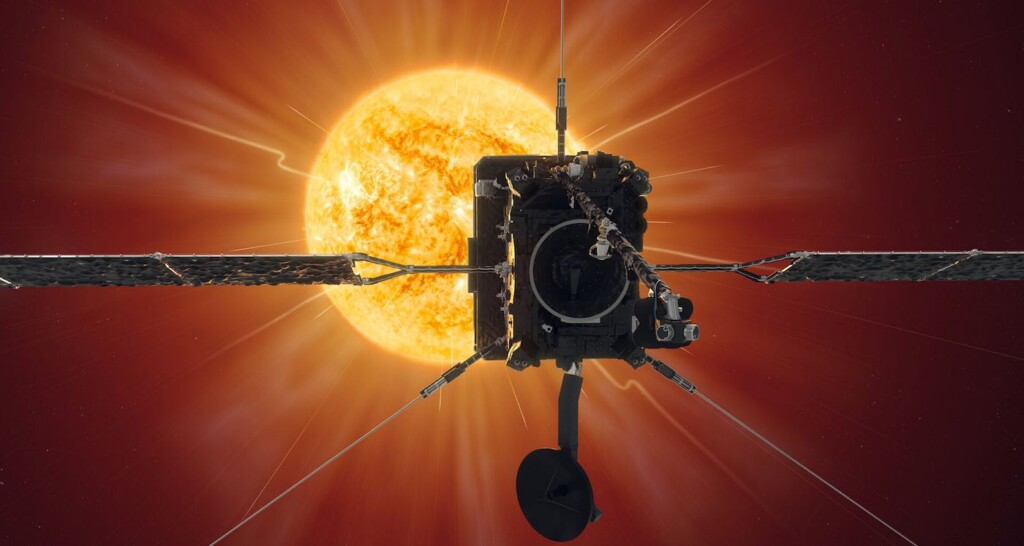
An ultraviolet image of the Sun’s corona taken using the EUI occulter on on the ESA Solar Orbiter – European Space Agency via SWNS
An ultraviolet image of the Sun’s corona (the swirls around the edge) captured using the EUI occulter on on the ESA Solar Orbiter – European Space Agency via SWNS

Scientists used a camera aboard a solar orbiter in a new mode which has revealed never-before-seen views of our sun.

The Extreme Ultraviolet Imager (EUI) on the European Space Agency probe has allowed them to record part of the Sun’s atmosphere at extreme ultraviolet wavelengths that has been almost impossible to image until now.

The mode of operation was made possible with a last-minute ‘hack’ to the camera and is likely to influence new solar instruments for future missions.

ESA explained that the EUI captures high-resolution images of the structures within the Sun’s atmosphere—a region known as the corona.

“During EUI’s construction, a last-minute modification to the safety door on the front of the instrument has allowed it to see deeper into its target region than originally specified.”

“It was really a hack,” says Frédéric Auchère, Institut d’Astrophysique Spatiale, Université Paris-Sud, a member of the EUI team. “I had the idea to just do it and see if it would work.”

ESA says it involved adding a small, protruding ‘thumb’, weighing a few grams, to the door of the instrument.

ANOTHER HOT LOOK: ‘Unprecedented’ New Photos of the Sun’s Surface Are Being Hailed as Landmark Achievement for Science

“As the door slides out of the way to let the light into the camera, if it is stopped halfway, the thumb covers the Sun’s bright disc, and EUI can detect the million-times fainter ultraviolet light coming from the surrounding corona.”

Artist impression of Solar Orbiter – European Space Agency / SWNS

The team refers to this as the occulter mode of operation. Tests with the EUI occulter have been on-going since 2021. Now the team are confident in its successful operation and their results were published in Astronomy & Astrophysics.

Their video (shown below) shows an ultraviolet image of the Sun’s corona taken using the EUI occulter. An ultraviolet image of the Sun’s disc has been superimposed in the middle, in the area left blank by the occulter.

SUPER POPULAR: After 17 Years, A Spacecraft Makes its First Visit Home Having Made History

The image of the Sun’s disc has been taken by NASA’s STEREO mission, which happened to be looking at the Sun from almost the same direction as Solar Orbiter at the same time, so the features on the surface have a good correlation to the features in the corona. NASA collaborates on the Solar Orbiter mission with ESA, which operates the probe.

In the past, images of the Sun’s corona have been taken with dedicated instruments called coronagraphs. For example, Solar Orbiter’s coronagraph is called Metis. The value of this new approach is that the coronagraph and the camera can be included in the same instrument.

“We’ve shown that this works so well that you can now consider a new type of instrument that can do both imaging of the Sun and the corona around it,” says Daniel Müller, the ESA Project Scientist for Solar Orbiter.

LOOK: New Solar System Found Where Planets Orbit Two Suns—Just like Luke Skywalker’s Home in Star Wars

Even before those new instruments, there is a lot of new science to come from EUI. The occulter mode makes it possible for scientists to see deeper into the Sun’s atmosphere. This is the region that lies beyond the field of view of classical EUV imagers but it is usually obscured by traditional coronagraphs. Now, however, EUI’s occulter can image this little-explored region easily.

“Physics is changing there, the magnetic structures are changing there, and we never really had a good look at it before. There must be some secrets in there that we can now find,” says David Berghmans, Royal Observatory of Belgium, and the EUI Principal Investigator.

Described as the most complex scientific laboratory ever to have been sent to the Sun, the Orbiter is designed to take images closer than any spacecraft and for the first time look at its uncharted polar regions.

ANOTHER GREAT PIC: Astronomers Observe 2 Neutron Stars Colliding and the Extreme Reaction ‘Defies All Expectations’

By combining observations from Solar Orbiter’s six remote-sensing instruments and four sets of in situ instruments, scientists hope to unravel the mysteries of our solar system’s star.

SHINE the Coolest View of Our Sun on Social Media for Astronomy Fans Worldwide…

Healthy Gut Bacteria Can Reduce Risk of Asthma and Food Allergies in Children, Experts Discover

By Providence Doucet

Babies and young children with diverse bacteria in their gut are less likely to develop allergy-related wheezing and asthma, according to a new Australian study.

Communities of bacteria, known as microbiota, develop in the human body during the early
years of life and are involved in processes that are helpful to the body, such as synthesizing vitamins and boosting the immune system. They can also be occasionally unhelpful, due to the role they play in inflammatory bowel disease and stomach ulcers.

Babies already have some microbiota in their guts from their mothers when they are born. The diversity of bacteria then increases and matures as they are exposed to other children, animals, and different foods.

The researchers analyzed data from the Barwon Infant Study (BIS), which has been running in Australia since 2010, watching 1,074 babies as they grow.

The new results showed that a more mature infant gut microbiota at one year of age was associated with a lower chance of developing food allergies and asthma in childhood.

“This appeared to be driven by the overall composition of the gut microbiota rather than specific bacteria,” said Dr. Yuan Gao, a research fellow at Deakin University, in Geelong, Australia, who presented the study this week at the European Respiratory Society International Congress in Milan, Italy.

They tested whether maturation of the infant gut microbiota in early life is associated with decreased risk of allergy-related wheeze in later childhood—and found they were essentially correct.

For this current study, Dr. Gao and her colleagues looked at the bacteria present in fecal samples collected from the BIS babies one month after birth, six months and one year. At the one-year and four-year postnatal reviews, the BIS investigators asked the parents to report on whether their children had developed allergy-related wheeze or asthma in the previous 12 months. They also did skin-prick tests to see if the children had allergic reactions to any of ten foods and any airborne substances that can trigger an allergic response, such as rye grass or dust.

TEEN HEALTH: Just a Handful of Walnuts 3x Weekly Boosts Attention and Brain Growth in Adolescents, Especially Those With ADHD

In a randomly selected sub-group of 323 children, the BIS team used a DNA sequencing technique to identify and characterize the gut microbiota. They calculated ‘microbiota-by-age z-score’ (MAZs), which is a mathematical estimate of the maturity of the children’s gut microbiota.

“We found that if babies had more mature gut microbiota when they were one year old, they were less likely to have an allergy-related wheeze at one and four years old,” said Dr. Gao. “If MAZ increased within a certain range, known as standard deviation, it halved the risk of allergy-related wheeze at both these ages.”

The mechanisms by which mature gut microbiota contribute to preventing allergy-related disease is not completely understood. “Given the complex origins and development of both gut microbiota and the infant immune system, it is likely that the protective effect of a healthy gut microbiota occurs as a result of communities of bacteria acting in multiple different ways, rather than via one particular mechanism,” said Dr. Gao.

CHECK OUT THIS EVIDENCE: More Physical Activity is Related to Less Respiratory Infections in Children

“We hope that by understanding how the gut microbiota improves the immune system, new ways of preventing allergy-related disease such as asthma can be developed.

The researchers are planning to recruit 2000 children from Australia and New Zealand to a new clinical trial, called ARROW, to see whether giving young children a mixture of dead bacteria, taken orally, can protect them from wheezing illnesses or asthma by boosting a healthy immune response to viral infections. Viruses are the commonest causes of childhood illnesses and can lead to chest infections and wheezing.

SEE ALL OUR GOOD NEWS ARTICLES ON ALLERGIES HERE.

“ARROW has the potential to dramatically improve the health of children with recurrent wheeze and asthma,” said Dr. Gao.

Strengths of the study include its design, which allowed researchers to analyze the development of gut microbiota as the children grew older, and also the fact that the BIS children were drawn from the general population. Limitations include the fact that the DNA methods used to characterize the gut microbiota cannot provide insights into the function of the bacteria.

Dr. Erol Gaillard, a pediatric respiratory expert in the UK who was not involved with the research guessed that the rising incidence of allergy-related illnesses like asthma and eczema may be due to less diverse foods eaten at an early age and less exposure to farm animals.

DID YOU MISS THIS? 16% Drop in Peanut Allergies Among Children As Parents Follow Guidelines And Introduce Peanuts Earlier

“Exposure to a variety of bacteria from an early age is very likely if babies and children are
regularly mixing with other children and animals and are exposed to a larger variety of foods. If we can find ways to boost the maturity of gut microbiota, this could have a significant effect on the incidence of allergies, and so it will be interesting to see the results of the ARROW study.”

SHARE The Discovery With Families on Social Media to Deal With Allergies or Asthma…

Name of Unknown Iron Age Ruler Discovered on 2000-Year-old Coin Found in English Field

C. 50 BC gold coin found in a Hampshire field – Spink Auctions / SWNS

The name of a new Iron Age ruler or king has been discovered emblazoned on a 2,000 year-old coin that was uncovered in a field in Hampshire.

Dating from around 50 BC and made of gold, the coin is stamped with the name Esunertos, a previously unrecorded Iron Age ruler, according to Southwest News Service.

The find has been described by experts as “one of the outstanding discoveries of recent decades”.

About the size of a fingernail, the coin was dug up in a farmer’s field after someone with a metal detector found it this year. Their name and location of the exact site has not been disclosed.

The coin dates back to the very beginning of written language in the British Isles and was struck sometime between 50 and 30 BC, shortly after Julius Caesar’s first Roman raid of Britain.

He landed on the Kent coast from a fleet of ships carrying 20,000 Roman soldiers. Waiting for them on the beach were thousands of Celtic warriors. The Romans were forced to return home after struggling to land, with rough seas wrecking their boats. Caesar then returned the following year with 50,000 soldiers defeating many tribes and marched all the way to the River Thames.

MORE HISTORY FINDS: Garden Ornament Bought for $20 at Flea Market is Actually a Medieval Hand Cannon and Sells for Thousands

After three months of fighting, they turned back in order to stop a rebellion in France—so the long-term settlement in Britain by Rome didn’t occur until 43 AD when Claudius was emperor.

Since its discovery in March, leading Iron Age experts have studied the coin and deduced it to be struck by a pre-eminent male figure dubbed ‘IISVNIRTOS’ whose name translates as ‘Mighty as the God Esos’.

One theory is that he possibly ruled as King from nearby Danebury Hill fort.

Dr. John Sills of the Celtic Coin Index at the Ashmolean Museum said: “It is one of the outstanding discoveries of recent decades in Celtic numismatics.”

Iron Age Coin Specialist Gregory Edmund at Spink auctioneers led the team of experts recording this new find and touted the relic, which is up for auction September 28.

“This fabulous piece of prehistoric artwork completes the mental image we have when we think of Iron Age Britain – the war horse and chariot. But it also surprises us with the appearance of classical languages like Latin.

CHECK OUT: Gold Disk Unearthed Contains Oldest Reference to Norse God Odin: ‘A Huge Discovery’ of ‘Pure Ecstasy’

“This is the reason I come to work; to document the discoveries of national importance and share that knowledge directly with museums, academics, collectors, and the public at large.

“I focused my university degree on the Roman invasion of Britain through the lens of Britain’s first coinage. To now add a critically important contemporary witness to those seismic events in the birth of our island’s story is electrifying.

LOOK AT ALL the Fascinating History Finds Here on GNN!

“Despite the coin’s diminutive size, the name of its conceiver—Esunertos—now truly echoes down the ages.”

SHARE the Phenomenal Find With History Buffs on Social Media…

“Leap, and the net will appear.” – John Burroughs

Quote of the Day: “Leap, and the net will appear.” – John Burroughs

Photo by: Lauren Manning, CC license on Flickr (cropped)

With a new inspirational quote every day, atop the perfect photo—collected and archived on our Quotes page—why not bookmark GNN.org for a daily uplift?

Scientists Manage to Generate Electricity From the Deadly E-coli Bacteria in New Breakthrough

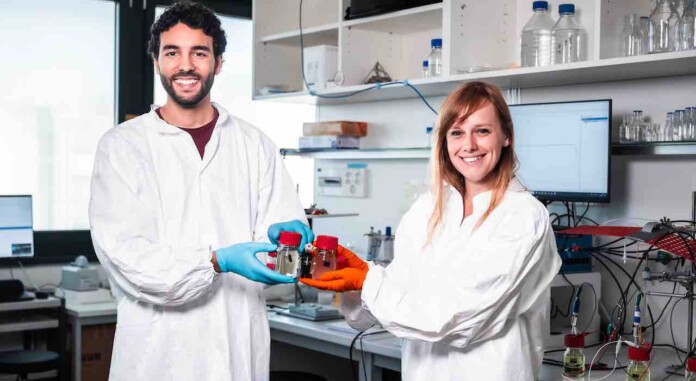
Mohammed Mouhib and Melania Reggente, the study's lead scientists, posing at their lab at EPFL
Mohammed Mouhib and Melania Reggente, the study’s lead scientists, posing at their lab at EPFL

Scientists have managed to generate electricity from the deadly E-coli bacteria—a finding that could lead to a valuable by-product from waste water.

Bioelectronic experts from the Ecole Polytechnique Federale de Lausanne (EPFL) engineered the bacteria to produce electricity in a variety of settings.

The team used a process known as extracellular electron transfer to engineer the bacteria to make them highly efficient electric microbes, leading to a three-fold increase in electrical current generation compared to conventional strategies.

“Instead of putting energy into the system to process organic waste, we are producing electricity while processing organic waste at the same time, hitting two birds with one stone,” said Ardemis Boghossian, a professor at the Swiss university.

According to the study published in the journal Joule, the researchers were able to create a complete EET pathway within E. coli, a feat never achieved before.

“We engineered E. coli bacteria, the most widely studied microbe, to generate electricity,” Prof. Boghossian said. “Though there are exotic microbes that naturally produce electricity, they can only do so in the presence of specific chemicals.

“E. coli can grow on a wide range of sources, which allowed us to produce electricity in a wide range of environments, including from waste water.”

HERO WIFE: When Antibiotics Failed, She Found a Natural Enemy of Superbug Bacteria to Save Husband’s Life

Unlike previous methods the bioengineered E. coli can produce electricity while metabolizing a variety of organic substrates.

By integrating components from Shewanella oneidensis MR-1, a bacterium famous for generating electricity, the researchers successfully constructed a pathway that spans the inner and outer membranes of the cell.

The engineered E. coli was then tested in brewery wastewater where unlike similar electric microbes, it thrived. They believe this shows its potential for large-scale waste treatment and energy production.

CHECK OUT: The Mechanism Behind Memory Loss in Aging Discovered By Scientists at Johns Hopkins

“We tested our technology directly on wastewater that we collected from Les Brasseurs, a local brewery in Lausanne,” said Boghossian.

“The exotic electric microbes weren’t even able to survive, whereas our bioengineered electric bacteria were able to flourish exponentially by feeding off this waste.”

The implications of the study extend beyond waste treatment.

They believe that the engineered E-coli can be used in microbial fuel cells, electrosynthesis, and bio-sensing.

RELATED: Chemists Discover New Way to Harness Clean Energy From Ammonia

The bacterium’s genetic flexibility means that it can be tailored to adapt to specific environments and feedstocks, making it a versatile tool for sustainable technology development.

Lead author and doctoral assistant Mohammed Mouhib, added: “Our work is quite timely, as engineered bioelectric microbes are pushing the boundaries in more and more real-world applications.

“We have set a new record compared to the previous state-of-the-art, which relied only on a partial pathway, and compared to the microbe that was used in one of the biggest papers recently published in the field.

“With all the current research efforts in the field, we are excited about the future of bioelectric bacteria, and can’t wait for us and others to push this technology into new scales.”

SEE ALL the Science Breakthroughs here on GNN…

Tide-Savvy Metal Detectorist Reunites Woman With Late Mother’s Wedding Rings 2 Weeks After They Fell into Sea

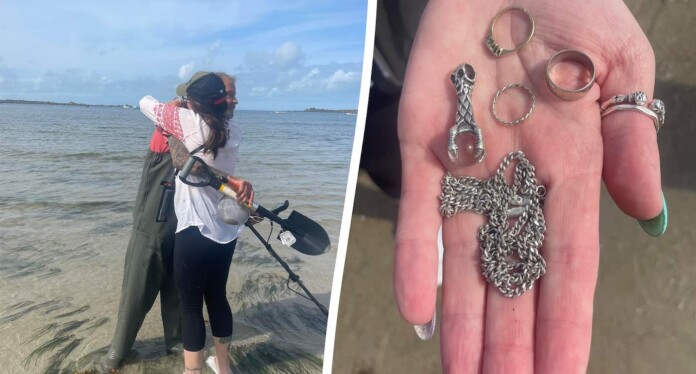
Matthew Kneebone finds 3 rings for Tessa Le Gallez – SWNS

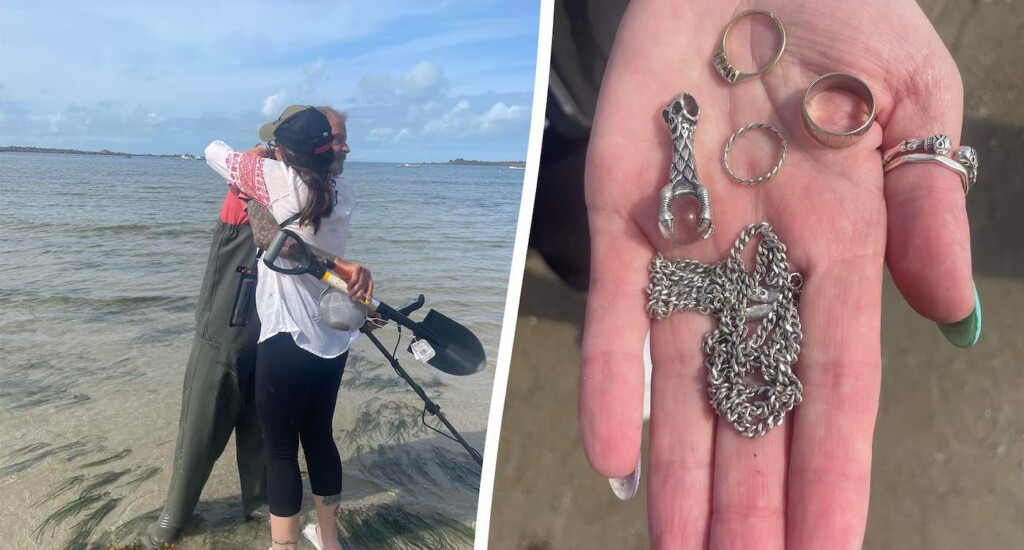
A U.K. metal detectorist has worked a near-miracle, reuniting a woman with a beloved chain that held her late mother’s promise, engagement and wedding rings.

The 24-year-old was “devastated” when her necklace chain broke while she was swimming at Les Amarreurs beach in Guernsey last month.

On the chain hung three of her mom’s rings which always made her “feel close” to her late parent.

Not giving up hope, Tessa Le Gallez telephoned a local metal detectorist Matthew Kneebone and asked if he could possibly help her get the heirlooms back.

“My mum passed away in April and it was her wish that I had her rings,” recalls the office manager.

“I put it on a strong chain around my neck because sometimes in the cold your fingers shrink and you can lose your rings.

“I went swimming and by complete freak accident, my dog jumped on me and his claw got caught in the chain. It took all of his weight and snapped.

She searched for hours but couldn’t find them.

“I was panicking and worried I would never see them again. They’re so precious to me. That’s when I called Matthew and asked for help.”

Mr. Kneebone, a stonemason on the rocky island in the English Channel, told her he would be able to find the lost rings when there was a spring tide again.

Sure enough, two weeks later, on September 1, Matthew and Tessa headed back down to the beach—and within ten minutes, Matthew had found the chain. Then, amazingly, within a half hour, all of three of heirlooms were uncovered.

MORE FEEL GOODGuy Finds $40,000 Diamond Ring Buried on Florida Beach and Tracks Down the Owner Who Broke into Tears

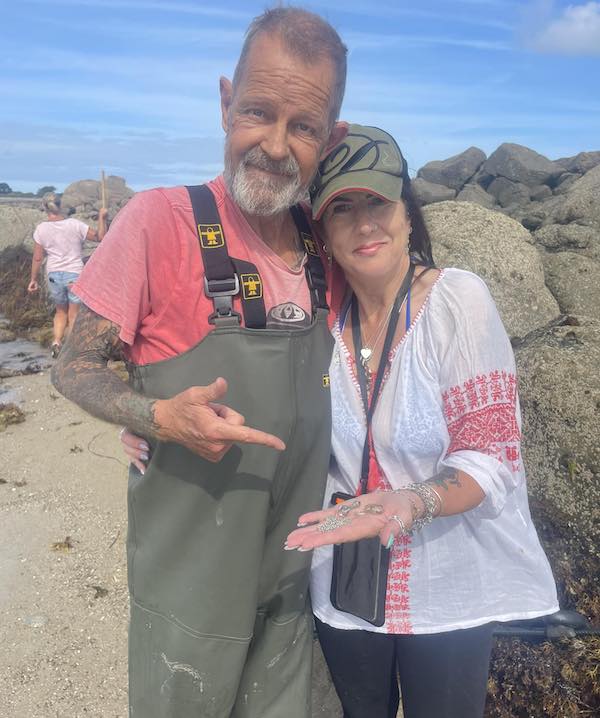
Tessa Le Gallez with metal detectorist Matthew Kneebone – SWNS

Tessa was elated. “It was such a relief. Those rings mean the world to me and they’re incredibly sentimental.”

The 50-year-old who has been metal detecting since he was 14, said: “Tessa was very grateful and so emotional. She ran up to me and gave me a big hug.

“I’ll never be able to thank him enough and I’ll always be grateful. He’s the most selfless man I’ve ever met in my life and people like him make the world a better place.”

MORE FUN: Family Left Stunned When Their Dog Escaped–Only to Return Later With a Ribbon From a Dog Show

The benefits go both ways, says Matthew. “It’s a really good feeling when you manage to find something for someone.”

SHARE the Good Feelings With Metal Detector Enthusiasts on Social Media…

Experts Find Out Why Exercise Prevents Alzheimer’s Disease–Which Could Lead to Cure

By Shoeib Abolhassani

The reason exercise can prevent Alzheimer’s disease has been discovered and it could lead to new treatments for the currently incurable condition.

Experts have found that a hormone called irisin released during a work-out is associated with the plaques and tangles in the brain thought to cause Alzheimer’s.

Physical exercise has been shown to reduce amyloid beta deposits in various mouse models but the mechanisms involved have remained a mystery.

Now the team from Massachusetts General Hospital have published the results in the journal Neuron, which appear to solve the puzzle.

Previously the researchers had developed the first 3D human cell culture models of Alzheimer’s. Their studies documented two major hallmarks of the condition, the generation of amyloid beta deposits followed by tau tangles in the brain.

GOOD NEWS: An Espresso a Day Could Keep Alzheimer’s at Bay by Preventing Tau Clumping

It was known that exercise increases circulating levels of the muscle-derived hormone irisin, which regulates glucose and lipid metabolism in fat tissue and increases energy expenditure by accelerating the browning of white fat tissue.

Previous studies have revealed that irisin occurs in human and mouse brains but is reduced in those suffering from Alzheimer’s, so the team applied the hormone to their 3D cell culture model of the disease.

“First, we found that irisin treatment led to a remarkable reduction of amyloid beta pathology,” said Dr. Se Hoon Choi.

“Second, we showed this effect of irisin was attributable to increased neprilysin activity owing to increased levels of neprilysin secreted from cells in the brain called astrocytes.”

Neprilysin is an amyloid beta–degrading enzyme found in the brains of mice exposed to exercise.

Previous studies have shown that in mice, irisin injected into the blood stream can make its way into the brain, making it potentially useful as a therapeutic.

THE SCENT OF GOOD NEWS: Smell of Simple Fragrance While Sleeping Produces Major Memory Boost in Older Adults

“Our findings indicate that irisin is a major mediator of exercise-induced increases in neprilysin levels leading to reduced amyloid beta burden, suggesting a new target pathway for therapies aimed at the prevention and treatment of Alzheimer’s disease,” said Dr. Rudolph Tanzi, a senior author of the study and director of the hospital’s Genetics and Aging Research Unit.

SHARE This Valuable Advice With Friends and Family on Social Media…

Your Weekly Horoscope From Rob Brezsny: A ‘Free Will Astrology’

Our partner Rob Brezsny provides his weekly wisdom to enlighten our thinking and motivate our mood. Rob’s Free Will Astrology, is a syndicated weekly column appearing in over a hundred publications. He is also the author of Pronoia Is the Antidote for Paranoia: How All of Creation Is Conspiring To Shower You with Blessings. (A free preview of the book is available here.)

Here is your weekly horoscope…

FREE WILL ASTROLOGY – Week of September 9, 2023
Copyright by Rob Brezsny, FreeWillAstrology.com

VIRGO (Aug. 23-Sept. 22):
In honor of the Virgo birthday season, I invite you to be exceptionally distinctive and singular in the coming weeks, even idiosyncratic and downright incomparable. That’s not always a comfortable state for you Virgos to inhabit, but right now it’s healthy to experiment with. Here’s counsel from writer Christopher Morley: “Read, every day, something no one else is reading. Think, every day, something no one else is thinking. Do, every day, something no one else would be silly enough to do. It is bad for the mind to continually be part of unanimity.” Here’s a bonus quote from Virgo poet Edith Sitwell: “I am not eccentric! It’s just that I am more alive than most people.”

LIBRA (Sept. 23-Oct. 22):
Do you sometimes wish your life was different from what it actually is? Do you criticize yourself for not being a perfect manifestation of your ideal self? Most of us indulge in these fruitless energy drains. One of the chief causes of unhappiness is the fantasy that we are not who we are supposed to be. In accordance with cosmic rhythms, I authorize you to be totally free of these feelings for the next four weeks. As an experiment, I invite you to treasure yourself exactly as you are right now. Congratulate yourself for all the heroic work you have done to be pretty damn good. Use your ingenuity to figure out how to give yourself big doses of sweet and festive love.

SCORPIO (Oct. 23-Nov. 21):
Scorpio novelist Kurt Vonnegut testified, “I want to stay as close on the edge as I can without going over. Out on the edge, you see all kinds of things you can’t see from the center. Big, undreamed-of-things—the people on the edge see them first.” I’m not definitively telling you that you should live like Vonnegut, dear Scorpio. To do so, you would have to summon extra courage and alertness. But if you are inclined to explore such a state, the coming weeks will offer you a chance to live on the edge with as much safety, reward, and enjoyment as possible.

SAGITTARIUS (Nov. 22-Dec. 21):
“Where there is great love, there are always miracles,” wrote Sagittarian novelist Willa Cather (1873–1947). In accordance with upcoming astrological aspects, I encourage you to prepare the way for such miracles. If you don’t have as much love as you would like, be imaginative as you offer more of the best love you have to give. If there is good but not great love in your life, figure out how you can make it even better. If you are blessed with great love, see if you can transform it into being even more extraordinary. For you Sagittarians, it is the season of generating miracles through the intimate power of marvelous love.

CAPRICORN (Dec. 22-Jan. 19):
Capricorn author Alexander Woollcott (1187–1943) could be rude and vulgar. He sometimes greeted cohorts by saying, ‘Hello, Repulsive’. After he read the refined novelist Marcel Proust, he described the experience as “like lying in someone else’s dirty bath water.” But according to Woollcott’s many close and enduring friends, he was often warm, generous, and humble. I bring this to your attention in the hope that you will address any discrepancies between your public persona and your authentic soul. Now is a good time to get your outer and inner selves into greater harmony.
AQUARIUS (Jan. 20-Feb. 18):
In 1963, Aquarian author Betty Friedan published The Feminine Mystique, a groundbreaking book that became a bestseller crucial in launching the feminist movement. She brought to wide cultural awareness “the problem that has no name”: millions of women’s sense of invisibility, powerlessness, and depression. In a later book, Friedan reported on those early days of the awakening: “We couldn’t possibly know where it would lead, but we knew it had to be done.” I encourage you to identify an equivalent quest in your personal life, Aquarius: a project that feels necessary to your future, even if you don’t yet know what that future will turn out to be.

PISCES (Feb. 19-March 20):
“Among those whom I like or admire, I can find no common denominator, but among those whom I love, I can: All of them make me laugh.” Piscean poet W. H. Auden said that. After analyzing the astrological omens, I conclude that laughing with those you love is an experience you should especially seek right now. It will be the medicine for anything that’s bothering you. It will loosen obstructions that might be interfering with the arrival of your next valuable teachings. Use your imagination to dream up ways you can place yourself in situations where this magic will unfold.

ARIES (March 21-April 19):
Aries chess grandmaster Garry Kasparov says war is “more like a game of poker than chess. On a chess board, the pieces are face up, but poker is essentially a game of incomplete information, a game where you have to guess and act on those guesses.” I suspect that’s helpful information for you these days, Aries. You may not be ensconced in an out-an-out conflict, but the complex situation you’re managing has resemblances to a game of poker. For best results, practice maintaining a poker face. Try to reduce your tells  to near zero. Here’s the definition of “tell” as I am using the term: Reflexive or unconscious behavior that reveals information you would rather withhold.
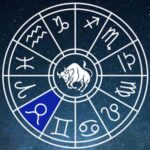
TAURUS (April 20-May 20):
Raised in poverty, Taurus-born Eva Peron became a charismatic politician and actor who served as First Lady of Argentina for six years. The Argentine Congress ultimately gave her the title of “Spiritual Leader of the Nation.” How did she accomplish such a meteoric ascent? “Without fanaticism,” she testified, “one cannot accomplish anything.” But I don’t think her strategy has to be yours in the coming months, Taurus. It will make sense for you to be highly devoted, intensely focused, and strongly motivated—even a bit obsessed in a healthy way. But you won’t need to be fanatical.

GEMINI (May 21-June 20):
Gemini author Ben H. Winters has useful counsel. “Every choice forecloses on other choices,” he says. “Each step forward leaves a thousand dead possible universes behind you.” I don’t think there are a thousand dead universes after each choice; the number’s more like two or three. But the point is, you must be fully committed to leaving the past behind. Making decisions requires resolve. Second-guessing your brave actions rarely yields constructive results. So are you ready to have fun being firm and determined, Gemini? The cosmic rhythms will be on your side if you do.
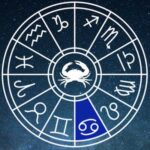
CANCER (June 21-July 22):
Journalist Alexandra Robbins was addressing young people when she gave the following advice, but you will benefit from it regardless of your age: “There is nothing wrong with you just because you haven’t yet met people who share your interests or outlook on life. Know that you will eventually meet people who will appreciate you for being you.” I offer this to you now, Cancerian, because the coming months will bring you into connection with an abundance of like-minded people who are working to create the same kind of world you are. Are you ready to enjoy the richest social life ever?

LEO (July 23-Aug. 22):
Author Kevin Kelly is a maverick visionary who has thought a lot about how to create the best possible future. He advocates that we give up hoping for the unrealistic concept of utopia. Instead, he suggests we empower our practical efforts with the term “protopia.” In this model, we “crawl toward betterment,” trying to improve the world by one percent each year. You would be wise to apply a variation on this approach to your personal life in the coming months, Leo. A mere one-percent enhancement is too modest a goal, though. By your birthday in 2024, a six-percent upgrade is realistic, and you could reach as high as 10 percent.

WANT MORE? Listen to Rob’s EXPANDED AUDIO HOROSCOPES, 4-5 minute meditations on the current state of your destiny — or subscribe to his unique daily text message service at: RealAstrology.com

(Zodiac images by Numerologysign.com, CC license)

SHARE The Wisdom With Friends Who Are Stars in Your Life on Social Media…

“Words may be false and full of art; Sighs are the natural language of the heart.” – Thomas Shadwell

Quote of the Day: “Words may be false and full of art; Sighs are the natural language of the heart.” – Thomas Shadwell

Photo by: Nik Shuliahin

With a new inspirational quote every day, atop the perfect photo—collected and archived on our Quotes page—why not bookmark GNN.org for a daily uplift?

World’s First Electric Aircraft Flight Powered by New Liquid Hydrogen–Flew for 3 Hours

Credit H2FLY-via-SWNS
Credit H2FLY via-SWNS

The world’s first piloted flight of an electric aircraft powered by liquid hydrogen has taken place.

H2FLY, the Stuttgart Germany-based developer of hydrogen-electric powertrain systems for aircraft announced it has successfully carried out four flights from Maribor, Slovenia, powered by liquid hydrogen as part of its flight test campaign, including one flight that lasted for over three hours.

They believe the flights lay the foundation for long-range, emissions-free flight, with liquid hydrogen doubling the range of the HY4 aircraft to 932 miles (1,500km), compared to using gaseous hydrogen which is much heavier.

“Results of the test flights indicate that using liquid hydrogen in place of gaseous hydrogen will double the maximum range of the HY4 aircraft from 750 km to 1,500 km, marking a critical step towards the delivery of emissions-free, medium- and long-haul commercial flights,” the company said in a statement.

Over the last 12 months, GNN has kept abreast of all hydrogen electric flight milestones, as the liquid fuel is the only current option for decarbonizing aviation. In December, Rolls Royce and EasyJet successfully tested a hydrogen engine for a jumbo jet.

This year, Connect Airlines and Avia have both successfully flown aircraft using green hydrogen fuel, the latter onboard a 40-seater ATR 72-600 regional aircraft during a 15-minute FAA Airworthiness Certificate flight, and the former during a 10-minute flight with a 19-seat aircraft called the Dornier 228.

In May, GNN reported on a Concord-like supersonic jet under development that would use green hydrogen as its fuel source. The company Destinus is working with hydrogen because it’s much lighter than fossil jet fuel, and weight considerations are a key requisite for supersonic travel.

Now however, H2FLY’s piloted HY4 demonstrator aircraft fitted with a hydrogen-electric fuel cell propulsion system was able to conduct tests upwards of 3 hours of flight time, making the German company’s progress the outlier in the field of hydrogen aviation.

HYDROGEN IN OTHER FIELDS: World’s First 100% Hydrogen-Powered Trains Now Running Regional Service in Germany to Replace Diesel

Compared with pressurized gaseous hydrogen storage, H2FLY’s use of liquified, cryogenic hydrogen enables significantly lower tank weights and volume, therefore leading to increased aircraft range and useful payload.

“This achievement marks a watershed moment in the use of hydrogen to power aircraft,” said Professor Josef Kallo, co-founder of H2FLY. “We are now looking ahead to scaling up our technology for regional aircraft and other applications, beginning the critical mission of decarbonizing commercial aviation.”

WATCH the flight test conducted below…

SHARE These Milestones Coming Thick And Fast With Your Friends…