The Slade Brook restoration - Nene River Trust, released
The Slade Brook restoration – Nene River Trust, released
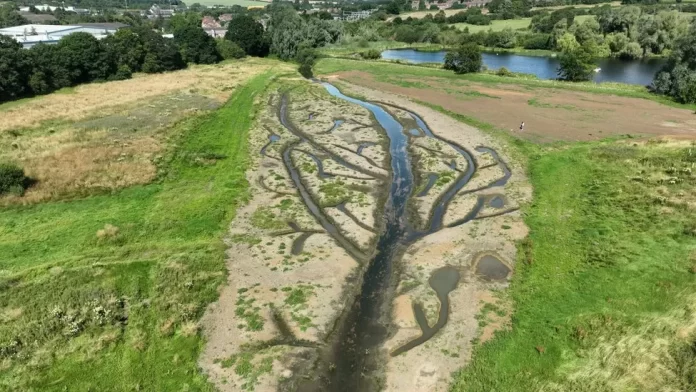
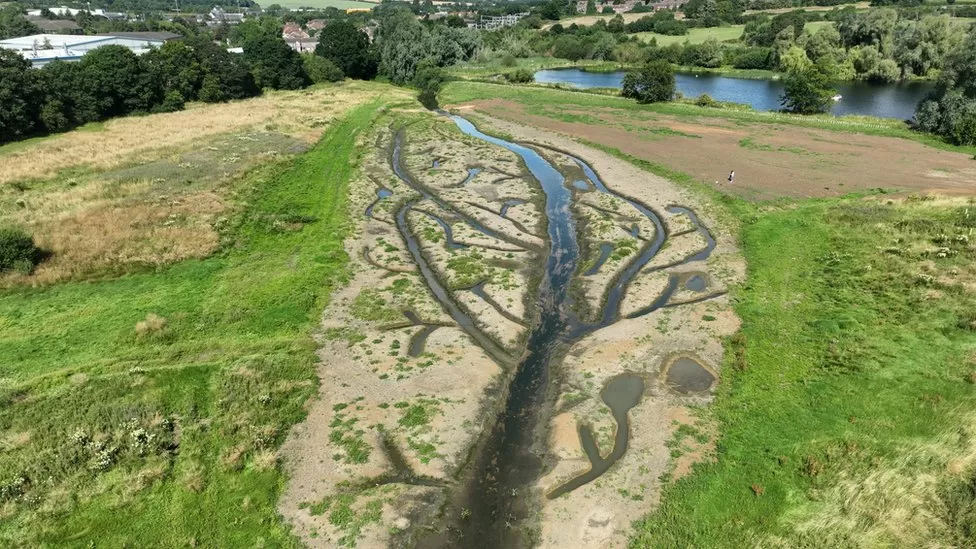
In England’s county of Northamptonshire lay a marginal field that was recognized to have no value, as it could not be built on. It’s now been restored to a wetland meadow that will become a haven for biodiversity and an engine for clean water and green recreation.
Slade Brook, a small waterway that was diverted in the 19th century to build a railway, has been realigned to run through the meadow as part of its once-forever role as a feeder for the larger River Ise.
Once upon a time, the brook babbled its way through the meadow which served as critical flood control. During times of heavy rain the brook would spill over the several-acre meadow which would absorb the excess water and prevent catastrophic flooding downstream.
To that end, the Nene River Trust has shelled out £250,00, or around $310,000 to re-channel the brook through the meadow, restoring it to a more natural state that will hopefully allow England’s aquatic animals to flourish alongside it.
“It was unmanaged land with no value,” Viktor Tzikas from the Trust, told the BBC. “It was taken on by Wicksteed Park, who didn’t know what they could do with it, so they approached us and the Environment Agency, asked for advice and it then snowballed.”
Using heavy earthmoving equipment, the banks of the brook were widened, and several stem channels were dug out leading to small pools replicating what a natural brook would look like.
Slade Brook realignment project half finished – Nene River Trust, released
Slade Brook is just one tributary of the River Ise, which is the largest tributary of the River Nene from which the Trust takes its name. Slade Brook is just one stream in the Trust’s overall aim of restoring streams of the Ise River Valley to the most natural state possible.
“Rivers are an expression of their catchments, their path, physical condition, and water quality are a reflection of the landscape they drain and through which they flow,” the Nene Trust writes in their plan overview, rather poetically. “The River Ise is no exception, and its status is an echo of the Valley it transects.”
The Ise Valley sits within a growth area that is seeing the expansion of nearby towns including Kettering, Wellingborough, and Corby. It’s expected the river will see increased pressure through demand for recreation opportunities and ecosystem services such as clean air and water.
“As a result of this growth, there will be the requirement for new accessible, high-quality green spaces as well as the rejuvenation of existing green spaces for local communities,” the plan continues.
Many small rivers in the world have been indelibly altered from their natural state—straightened and narrowed to increase speed and depth and therefore more boat traffic, or to allow for roads to be built alongside them. Gradually it was discovered that this significantly increases the flooding risk for towns downriver, as heavy rains have nowhere to go but down. It’s also intolerable for many fresh water species who can’t handle deep, fast-flowing water.
WATCH what it looks like to restore a stream to its natural state…
SHARE This Important Link In A Beautiful Important Chain With Your UK Friends…
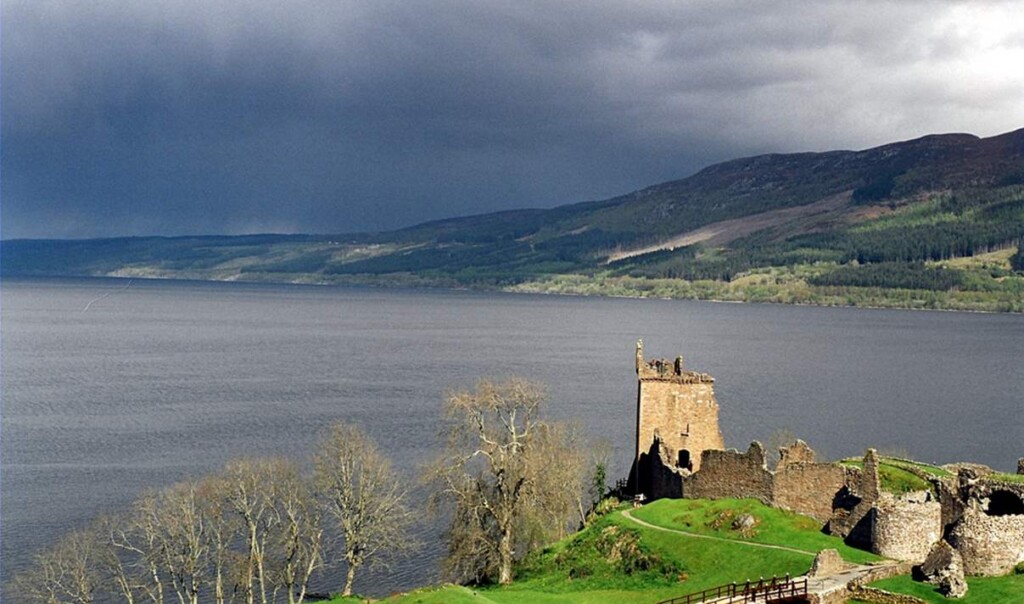
This weekend, the Loch Ness Center is holding the largest-ever search for the mythical monster, and will feature a horde of volunteers wielding hi-tech equipment never-before-used on the lake.
It will be the biggest organized search since 1972, and so many “Nessie” enthusiasts signed up for the search they had to close the web portal.
At 22 square miles and with a maximum depth of 788 feet, Loch Ness is Britain’s largest lake, and its unique ecology will be recorded with hydrophones and surveyed with infrared drones.
Most claims of the Loch Ness Monster over the years have been admitted hoaxes, but it’s possible that once upon a time there could have been a giant wels catfish that would have looked perhaps like a serpent from the surface—imagine living in the 19th century and seeing the back of this great beast, caught this year in Italy’s Po River.
Another possible candidate would be a European eel. Eels are known to live in the river, according to a massive study that examined DNA of every animal in the Loch. European eels move snake-like through the water. Furthermore, they can live about 80 years—which would cover the vast majority of the 1,100 or so recording ‘sightings’ of the monster during the 20th and 21st centuries.
However, they’re not anywhere near as big as a wels, which can grow as long as a surfboard.
Paul Nixon, general manager of the Loch Ness Center, said he’s excited to see the waters searched like never before over the weekend.
“We are guardians of this unique story,” Nixon said. “And as well as investing in creating an unforgettable experience for visitors, we are committed to helping continue the search and unveil the mysteries that lie underneath the waters of the famous Loch.”
SHARE This Fun Story With The Scotland-Lovers On Your Social Media…
Maharashtra Chief Minister innaugurates the first of 340 electric buses by Tata to service the Mumbai Eletric Supply and Transport
Maharashtra Chief Minister inaugurates the first of 340 electric buses by Tata to service the Mumbai Electric Supply and Transport
Last Wednesday, India’s federal government approved nearly $7 billion for a nationwide plan to equip the biggest cities in the country with electric buses.
The plan aims to help cut down on air pollution from vehicle exhaust, a major factor in Indian cities’ poor air quality. It’s also believed that the buses will help lower the total national carbon emissions.
Information Minister Anurag Thakur said at a briefing last week that the scheme will follow private-public collaboration that will also see the requisite charging infrastructure be installed along with the buses.
Demand for electric buses had been growing, and Prime Minister Modi is aggregating this into a centralized plan while inviting companies that make electric buses to bid for government contracts.
The fund contains 2 million lakh rupees, or $7 billion US, The cabinet also approved seven railway tracking projects worth 3.25 million lakh rupees to boost connectivity and mobility across nine states.
Meanwhile stateside, $1.7 billion in funding from the infrastructure spending spree signed by President Joe Biden in 2021 will furnish the manufacturing and purchasing of 1,700 electric or low-emissions buses for cities in 46 states.
Part of a slew of measures hoping to electrify more and more of America’s urban roadways, the DoT has received approximately $8 billion in total grant proposals, and expects to award cities a total of $5 billion in electric transit infrastructure grants over the next three years.
Quote of the Day: “It’s the friends you can call up at 4 a.m. that matter.” – Marlene Dietrich
Photo by: Clarisse Meyer
With a new inspirational quote every day, atop the perfect photo—collected and archived on our Quotes page—why not bookmark GNN.org for a daily uplift?
10 years ago, east London resident Hilary Oxley was preparing to turn 80 years old, and her family got the outrageous idea of buying the octagenarian a ticket to go skydiving.
Grandmother Oxley had a blast, but this July it was once again time to think of something to get her as she neared the ninth decade of life.
Figuring it went alright before, her two granddaughters decided to run it back—and challenge their evergreen granny to take the plunge a second time.
“You only live once,” she said after the skydive. “The experience is lovely—sometimes when I go shopping I’m more nervous doing that.”
Granddaughters Stephanie and Daisy admitted they were terrified before jumping and the staff at Skydive Headcorn in Ashford, Kent, couldn’t believe how chilled out she was about the situation.
“Never in a million years when I did it when I was 80 did I think I would be here 10 years later,” said Hilary, who admitted the birthday was really emotional, because one family member got her a scratch-off lottery ticket from which she won a paid holiday to Marbella, Spain.
90-year-old skydiver Hilary Oxley with her granddaughters Stephanie (L) and Daisy (R) – SWNS
Stephanie admitted it was a prized family moment that would live long in their collective memory.
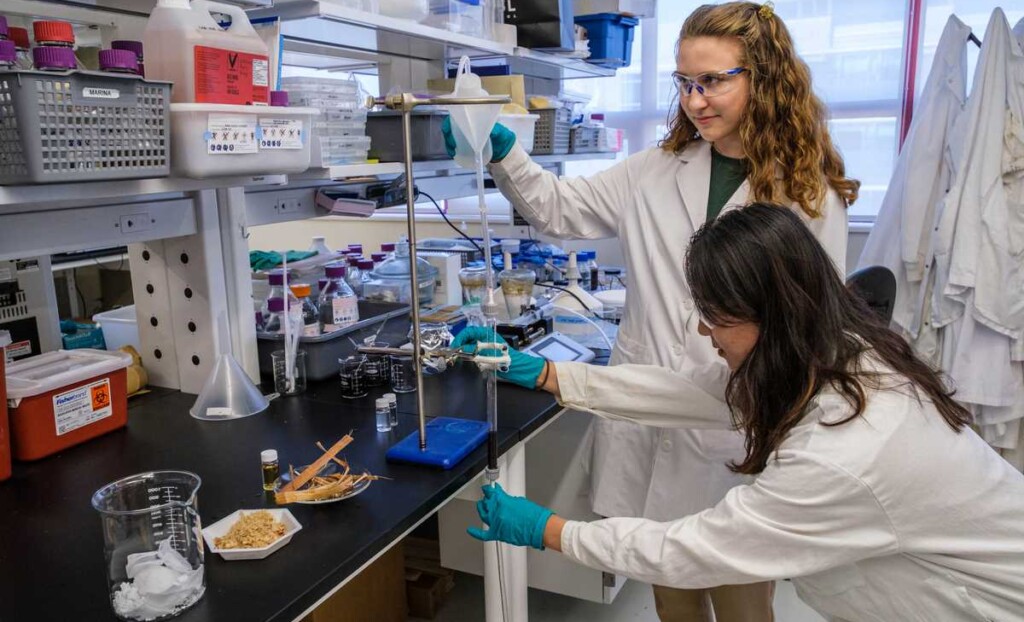
What do you get when you cross sawdust and polyphenols? A water filter that can remove 99.9% of microplastics; and that’s no joke.
The health of effects of ingesting microplastics are, predictably, not good, though the science is in its early stages. We already know that microplastics rain down over the world from potentially as high up as the jet stream, that they are present in the deepest ocean trenches, and some of the most remote mountain tops.
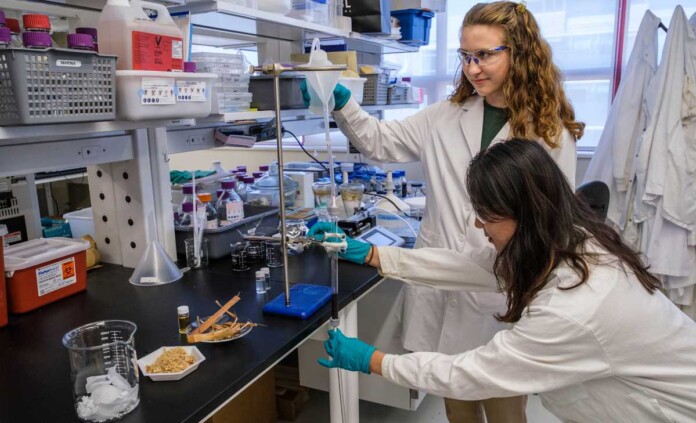
Researchers looking for better ways to filter microscopic particles of plastic from water sources investigated the properties of wood and other plant material and found they work extremely well, with very little cost and potentially unlimited scaling potential.
The water filter design, which the inventors called “bioCap” is made of sawdust, composed of cellulose, hemicellulose, and lignan but which itself isn’t a very good filter; removing just 10% of micro and nanoparticles of plastic. However, with the addition of polyphenols like tannic acid, a defense chemical found in almost all plants that lack underground root systems, that effectiveness became almost perfect.
The polyphenols create strong molecular interactions with polymer particles, including many microplastics, and which didn’t wear out even after repeated filtering trials.
All the commonly-found varieties of plastic polymer in packaging, artificial textiles, and building materials were run through the filter in micro or nano-sized particles.
“By taking advantage of the different molecular interactions around tannic acids, our bioCap solution was able to remove virtually all of these different microplastic types,” said Orlando Rojas, one of the study’s corresponding authors.
He told his university press that in a test to remove particles just 110 nanometers in diameter, which are known to cross the blood-brain barrier, fewer were found accumulating in the internal organs of mice watered with microplastic-contaminated liquid.
“Most solutions proposed so far are costly or difficult to scale up,” Rojas said. “We’re proposing a solution that could potentially be scaled down for home use or scaled up for municipal treatment systems.”
He points out that bark, sawdust, and leaves are extremely easy to obtain essentially anywhere on Earth an entrepreneur would think to open a production line of these water filters.
SHARE This Great Yet Ridiculously Simple Idea With Your Friends…
ABC News Australia recently embedded with a team of ornithologists studying the jaw-dropping vocal ability of lyrebirds in their natural habitat.
Deep in the primordial forests of Victoria State’s Dandenong Ranges National Park where there are still ferns as tall as trees, the superb lyrebird Menura (novaehollandiae) can be seen performing elaborate courtship displays with its trademark tail plume flanked by two S-shaped feathers resembling the instrument that lends the bird its name.
It can also be found in Kinglake National Park, and other areas in Victoria, New South Wales, Tasmania, and Queensland that aren’t protected.
These animals are more than just splendid singers, but talented teachers, and their courtship displays are like professional repertoire reviews from which the next generation of juvenile suitors learn how to sing.
The extraordinary bird also varies its calls from forest to forest, which lyrebird experts refer to as a form of dialectics similar to the branches of a language.
“They do all these bizarre sounds and often we think they’re human-origin sounds,” Dr. Alex Maisey a lyrebird expert tells ABC. “But a lot of the time they’re not—they’re just the lyrebirds’ own really weird songs.”
It’s not a bad guess, because along with being incredible composers, they are also expert mimics and can repeat a dozen different bird calls and other noises from their environment in just a 10-second span.
Finding the brown birds can be difficult, but experts like Dr. Maisey say that the key is learning the other songs of the forest birds and listening to see if any are coming from the forest floor—a clear sign of the lyrebird’s mimicry.
Scientists like Maisey are concerned that habitat loss could lead to fewer maestro lyrebirds and a subsequent loss in this vocal diversity. Up until essentially recent times, soundscapes were not often considered when planning conservation objectives.
However, more research into sonically-dependent animals has advanced the notion that it isn’t just the visual or material state of nature that has to be preserved if we want to pass on what wilds remain to the next generation, but also the sonic state of nature.
To that end, the lyrebird is the best kind of ambassador—a real Pavarotti—that the conservation community can rally around.
WATCH the lyrebird courtship display and calling below from Dr. Maisey…
SHARE This Incredible Feathered Frontman With Your Friends…
Quote of the Day: “Ideologies separate us. Dreams and anguish bring us together.” – Eugene Ionesco
Photo by: Ricardas Brogys
With a new inspirational quote every day, atop the perfect photo—collected and archived on our Quotes page—why not bookmark GNN.org for a daily uplift?
Carol-Ann (left) and Patsy (right) in South Carolina – SWNS
Carol-Ann (left) and Patsy (right) in South Carolina – SWNS
80-year-olds Patsy Gregory and Carol-Ann Krause have been swapping letters since 1955 when they became girl scouts on opposite sides of the Atlantic Ocean.
The pair went on to send and receive more than 800 correspondences, always remembering each other’s birthdays, wedding anniversaries, and Christmas.
But they never met in person until Patsy told her daughter Steph that she’d always wanted to visit Carol-Ann, now living in Conway, South Carolina.
So her family surprised her with a ticket to the USA on her birthday in June this year which allowed her to fly 4,000 miles for the overdue get-together.
Patsy, who shared a heartwarming embrace with Carol-Ann on July 14th, said she had recognized her as soon as she opened her door.
“It was quite emotional, it was lovely,” Patsy from Lancashire County, England said in an interview. “I didn’t feel any nerves, I was excited. It was great to be able to meet her at last.”
“It was just as though I’d seen her last week because we’d known of each other for so long.”
America’s Carol-Ann, who was approached by Steph about the visit before Patsy’s birthday, said she was a little more anxious about their first meeting in person.
Patsy was just 12 when she began writing to Carol-Ann, with the pair discussing their day-to-day experiences. Carol-Ann was living in Buffalo, New York at the time, and Patsy admitted she had been particularly intrigued about the teen’s life in the USA.
“In the girl guides, I happened to get Carol-Ann’s name,” Patsy recounted, using the British term for the girl scouts. “We started writing and we never stopped. It’s as simple as that.”
“It was extremely interesting to learn about her life. The weather, of course, was a big feature. She was living next to the Great Lakes.”
Just a few of Patsy and Carol-Ann’s letters – credit SWNS
“We would write about what had happened in the day, school, anything that was going on, where we were going, who we went out with, or whatever. We were just sharing news, as you would with a friend next door,” said Patsy.
As their lives changed, so did the contents of their letters. Patsy was married in 1964, and Carol-Ann followed just a year later. They both had three kids each, and though they carried on through the decades, sending a total of 400 letters at least per person, they never met face to face.
Patsy said she had mentioned to her daughter Steph that she’d always wanted to meet Carol-Ann before her 80th birthday on June 6th, after which her daughter used social media to track down her pen pal’s family in America to ask if they would be interested in organizing a meet-up stateside.
“Her daughter said she wanted to surprise her mother with a gift of coming to the USA to see me as it’s something that she has always wanted to do,” said Carol-Ann. “I was more than happy to take her up on the offer. Our birthdays are only separated by a month.”
During the stay, she said the pair had chatted for hours about their friendship while also taking in the local sights and going out for meals at places Carol-Ann and her husband frequented—all as if they had only been separated by a few years, such was the strength of their friendship.
SHARE This Reminder Of The Power Of The Pen Pal With Your Pals…
Assisted first migration of Northern Bald Ibises - photo by Helena Wehner
Assisted first migration of Northern Bald Ibises – photo by Helena Wehner
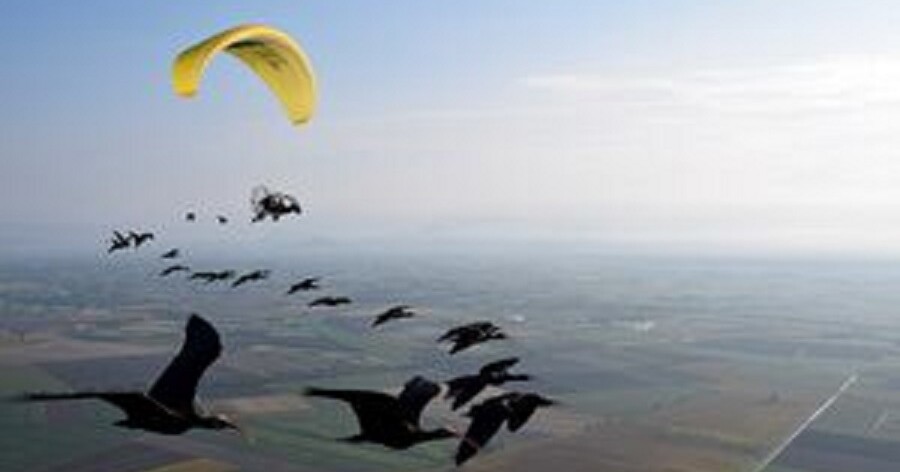
An Austrian ornithologist has pioneered an incredible way of wildlife rehabilitation by fostering chicks of an endangered species before re-instituting their migratory practice by leading them along their natural migration route with an ultralight aircraft.
The method was developed to help reconnect the northern bald ibis, a bird that was extirpated in Europe 400 years ago, with its summer-winter migration pattern from northern Europe to its sunny southern climes.
The history of these ibises is long, and by the time the Pilgrims sighted land on Plymouth Rock, Europeans had eaten probably all of them. Fortunately, other colonies survived in West and East Africa, and some in the Fertile Crescent.
In 2002, a small team of scientists and conservationists investigated the feasibility of reintroducing the northern bald ibis in Europe. This successful research project then led to a reintroduction project funded by the European LIFE-program in 2014.
It was the first project to reintroduce a migratory species back into the wild and soon became popular for the rather spectacular images of their main method of translocation: the human-led migration.
“Northern bald ibis chicks from the breeding program of zoological gardens form the basis for reintroduction. They are raised by human foster parents and trained to follow a microlight airplane with human foster parents as co-pilots. In this way, the juvenile birds are guided to a wintering area in autumn, where they are released.” explains Johannes Fritz, head and founder of Waldrappteam Conservation and Research.
Fritz was that one man for his time that decided there was no limit to the amount of effort he was willing to dedicate to reconnect these birds with their natural movements. The 56-year-old biologist and pilot was part of the reintroduction effort and found that while long periods of zoological captivity had not erased the birds’ instincts to migrate, their journey “south” took them to Russia.
That was when he started ferrying them over the Alps in his ultralight aircraft at the end of September.
In 2011, the first northern bald ibis migrated independently from the Tuscan winter area to its breeding area in Bavaria, marking the emergence of a new migration tradition, but it was a long time coming, and a long way yet to fly before these birds were able to migrate safely in large numbers.
Then, a changing climate saw their migration routes become unstable. Their instincts would see them depart their breeding areas north of the Alps in late October, and by November the mountains were impassible due to wind and snow. Three migrations failed this way.
Fritz came to the rescue again, hand-rearing chicks on ground mice and beef heart 8 times a day, while letting the inquisitive, gregarious chicks investigate his ears and nose for curiosity’s sake.
This was all a part of getting them to the age of flight when he would lead them again in his ultralight aircraft along a 2,500-mile circumnavigation of the Alps to a new wintering site on the sunny Spanish south near Cadiz.
The New York Times charted the inaugural voyage, describing a man rolling what looks like a car seat, an airboat fan, and a bunch of scaffolding on three wheels out into a field while 35 ibises sat around poking their beaks into the muck in an early Austrian morning.
SHARE This Truly One-Of-A-Kind Conservation Success Story…
Lampshade coated with a catalyst uses heat from the bulb to destroy indoor air pollution – SWNS
Lampshade coated with a catalyst uses heat from the bulb to destroy indoor air pollution – SWNS
People often recommend putting plants in an office to reduce indoor air pollution, but not everyone has the green thumb for the job. Instead, what if we could simply use existing office furnishings?
Lampshades developed by scientists in South Korea and which work with both halogen and incandescent light bulbs, actually clean the air of pollutants, and the research team is extending the technology so it will also be compatible with LEDs.
Project principal investigator Doctor Hyoung-il Kim says the lampshades target volatile organic compounds (VOCs), which account for most indoor airborne pollutants.
The compounds include acetaldehyde and formaldehyde and are released by paints, cleaners, air fresheners, plastics, furniture, cooking, and other sources. These compounds can continuously radiate from their source for weeks, even months after their initial application.
“Although the concentration of VOCs in a home or office is low, people spend more than 90 percent of their time indoors, so the exposure adds up over time,” Dr. Kim from Yonsei University, South Korea said.
Conventional methods to remove VOCs from indoor air rely on activated carbon or other types of filters, which have to be replaced periodically. Other devices have been developed that break down VOCs with the help of thermocatalysts activated by high temperatures or with photocatalysts, which respond to light.
But Dr. Kim noted that most of those units need a separate heater or an ultraviolet (UV) light source, which can produce unwanted byproducts.
His team wanted to take a simpler approach that would only require a visible light source that also produces heat—such as a halogen or incandescent bulb—and a lampshade coated with a thermocatalyst.
Dr. Kim says halogen bulbs convert only 10% of the power they use into light, with the other 90% being transformed into heat while incandescent bulbs emit just 5% light and 95% heat.
“That heat is typically wasted, but we decided to use it to activate a thermocatalyst to decompose VOCs,” said Dr. Kim.
The team synthesized thermocatalysts made of titanium dioxide and a small amount of platinum. They coated the inside of an aluminum lampshade with the catalyst and placed the shade over a 100-watt halogen bulb in a test chamber containing air and acetaldehyde gas.
Turning the lamp on heated the shade to temperatures up to about 250 degrees Fahrenheit (121 Celcius)—warm enough to activate the catalysts and decompose acetaldehyde.
Dr. Kim said that during the oxidation process, the VOC was initially converted into acetic acid, then into formic acid, and finally into carbon dioxide and water.
He says both of the acids are mild, and the amount of carbon dioxide released is harmless.
The researchers also discovered that formaldehyde can be decomposed under the same conditions and that the technique works with incandescent bulbs.
Dr. Kim’s group is now turning to less expensive substitutes for platinum. They have already shown that a new copper-based catalyst can break down VOCs and is also a disinfectant that can kill airborne microorganisms.
LEDs release too little heat to activate thermocatalysts, so Dr. Kim’s team is developing photocatalysts that are stimulated by the near-UV light emitted by LEDs, as well as other catalysts that transform part of the LEDs’ visible light output into heat.
It was at the very dawning of civic life among humans that a group of communal Chinese on the northeastern plains invented a sophisticated drainage system to combat flooding in their extremely wet environment.
Utilizing their master pottery skills, buried segments of ceramic pipes drained water from the elevated town of Pingliangtai into drainage ditches, and eventually a moat. Described for the first time in the journal Nature Water, its discovery is a major milestone in early human history for many reasons.
First, it’s possibly the oldest ceramic pipe system ever found in the world, and certainly the oldest in China. Second, it provides an alternative explanation for the possible trajectories of human civilization, away from a scenario where control of hydrological resources was dominated by centralized authorities and despots, to one of communal organization and mutual governance.
“There is no strong social stratification within and between settlements in the Eastern Central Plains,” says Zhuang Yijie, a co-author on the paper. “Thus, there might be no pyramidal power structure in this region”.
There really was a belief, put forward by a German-American Sinologist named Karl August Wittfogel, that control of water resources was indeed the very birth of coercive state power. This was supported, it was believed, by the mythical tale of Great Yu’s heroic taming of floods of the Yellow River and the subsequent founding of the semi-legendary Xia Dynasty.
This scholarship has been widely disproven however, and the excavations at Pingliangtai encapsulate just how communal water management was in late Neolithic China.
A wetter world
The Pingliangtai site was excavated by the Henan Provincial Institute of Cultural Heritage and Archaeology and Peking University from 2014 to 2019.
“All members of our [study] team took part in the excavation,” Zhuang told WaL. “The site was first excavated in the last century and a set of ceramic drainpipes near the southern gate was revealed at that time. However, it was in 2016 when we realized there might exist a well-planned drainage system since several ditches running parallel to houses were found”.
This realization led to this profound discovery, and the authors believe that Pingliangtai demonstrates how environmental vagaries, technological innovations, and social institutions converged to form a ‘cooperative social governance’ on water management, which provides a different model for the origins of hydro-sociality in ancient East Asia
“Because of our focus on water as intangible evidence of cooperative human actions, it also offers a unique perspective on the evolution of human cooperation,” they add.
Of the environmental vagaries, the main one was the monsoon climate. 4,200 years ago in the Hauiyang District, located on the vast, 387,000 square-kilometer Huanghuaihai Plain of Central China, the rainy season routinely brought 500 millimeters, or nearly 20 inches of rainfall per month. Alluvial flooding was common on the plain, which was scattered with raised ground that proved the only suitable place for permanent settlement.
All this water made it excellent farmland, and cultivation of millet and rice was widely adopted by communities in Huaiyang, stimulating profound socioeconomic changes in diet, land use, and population—leading to the growth of large towns on the hilltops, which also gradually became walled like Pingliangtai.
“In this wet environment, the Pingliangtai people developed innovative hydraulic technologies to tackle acute and chronic problems on water management,” the authors continue. “One of the chronic problems facing Pingliangtai society was the severe weathering of earthen architecture”.
Soil analysis shows that some of the buildings, made of mudbrick, had to be rebuilt five times due to water erosion and damage. The mudbrick was often reinforced with straw or grass, as well as calcium carbonate to make it last longer under the humid conditions.
One of those technologies, which may have made habitation there possible in the first place, was the first drainage system potentially in history to be made of ceramic pipes.
PICTURED: An in situ section of ceramic pipes at Pingliangtai. PC: Yanpeng Cao.
Another Chinese innovation
“Pottery is an essential element of Neolithic China, the earliest of which could date back to 20,000 years ago,” says Zhuang. “Late Neolithic China witnessed significant breakthroughs in pottery technologies, the most important of which is the wheel technology”.
“People at Pingliangtai were proficient in wheel throwing, thus, they could make a vast bulk of daily pottery as well as ceramic drainpipes. Polished stone tools are also found at the site… [and] ruts in the road indicated the wheel [sic], unfortunately, we haven’t found a wheel by now,” he added.
In the southeastern quadrant of the walled settlement, rows of mudbrick houses perpendicular to the road had drainage ditches in front and behind, connected in places with segments of ceramic drain pipes in much the same way one would see a culvert under a road today. Another series of ditches were made along the north-south axis of the site, likely alongside the road. The ditches were routinely dredged, as evidenced by the buildup of fine silt at the bottoms.
Measuring 30-40 centimeters in length and 20-30 in diameter (12×15 and 8×12 inches respectively) the segments of pipe fit one over the other wide-end to thin-end like cups. Most of the pipes followed the road down to the southern gate of the settlement, where the largest and most active ditches were discovered by the archaeologists.
Altogether, this drainage system fed a moat around the city like a medieval French castle. Zhuang couldn’t say for certain that the moat was the ultimate endpoint of the whole system, nor could he say for certain that the moat was only used for drainage and not also as a means of defense.
“Pingliangtai was a medium-sized community; our estimation of the population based on the number and capacity of the rowed houses suggests 460–600 people at the time,” the authors write, pointing out that this would have necessitated diligent communal engagement with all of these public works, including the wall.
They estimate that because the drainage system was operated collectively starting at the level of the individual household, there would have been a very low level of social stratification—a hypothesis supported by the fact that grave goods from a town cemetery near the southern gate revealed very little difference in wealth between those interred.
Chinese imperial history has featured many episodes of top-down, despotic organization of labor related to irrigation and water management. Qin Shi Huang, the first emperor of the Qin Dynasty, ordered the construction of the Grand Canal, which would become the longest canal or artificial river in the world by 600 CE during the Sui Dynasty.
Nearby Pingliangtai, and around the same period, the Liangzhu Culture and its city-state in the pre-imperial Chinese world completed China’s oldest water-control enterprise in the form of an impressive series of dams, levees, and ditches. However, in total contrast to Pingliangtai, the site was extremely stratified, with evidence of palace complexes, an elite society, and luxury goods.
“In contrast to the… viewpoint that often posits a linear relationship between social power and the organization of hydraulic enterprises, water management at Pingliangtai on the Eastern Central Plains was not simply a top-down or bottom-up operation,” the authors conclude. “Rather, the collective human actions or ‘collective struggles’ on water management at both household and communal levels in a precarious monsoonal setting gave rise to the cooperative social governance without a centralized hierarchy”. WaL
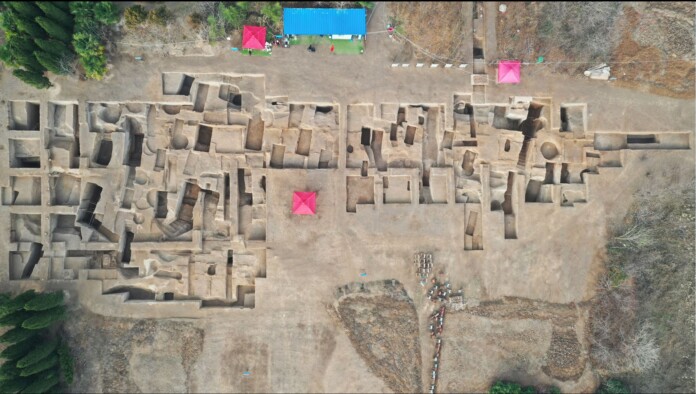
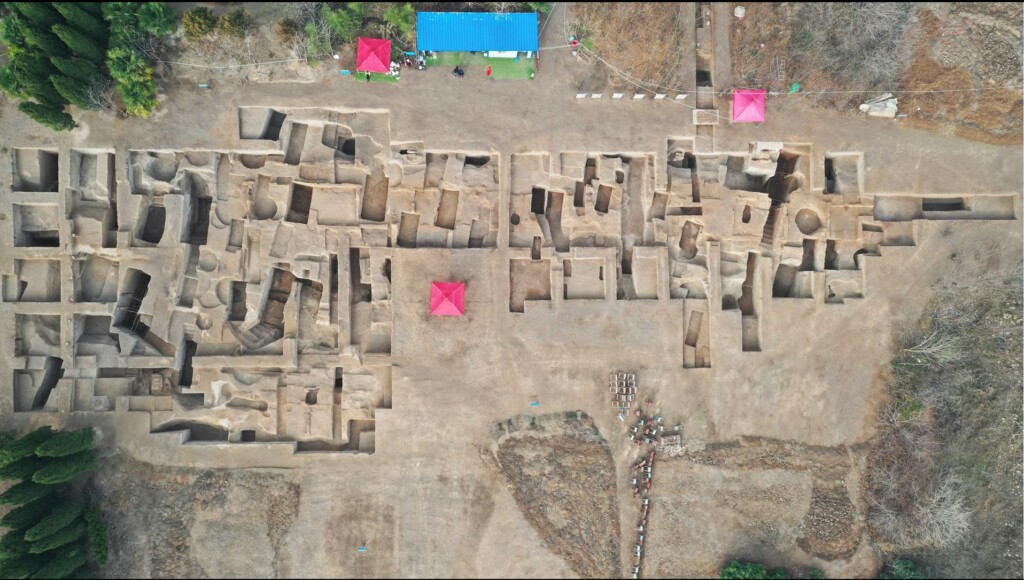
PICTURED ABOVE: Excavations on the housing blocks at Pinliangtai. PC: Yanpeng Cao.
Quote of the Day: “Happiness is a direction, not a place.” – Sydney J. Harris
Photo by: Surface
With a new inspirational quote every day, atop the perfect photo—collected and archived on our Quotes page—why not bookmark GNN.org for a daily uplift?
A new survey of pet parents looked into some of the most popular myths about pet care—and some may surprise you.
A whopping 92 percent of respondents still believe myths about their furry friends, according to the poll of 2,000 dog and cat owners.
Contrary to popular belief, 68% of dog parents didn’t know that a wagging tail doesn’t always signal happiness. Wags can also signify interest or alertness.
Another 38% falsely believe that a cold, wet nose means a dog is healthy. In reality, a wet nose can simply be a result of a dog licking it, which can improve their sense of smell.
Similarly, 42% of cat parents incorrectly believe that their feline friends can see in complete darkness. While cats can see in very low light, they cannot see in total darkness.
Another common myth is that cats always land on their feet, which 41% believe to be true—but a cat’s ability to land on four paws can depend on its overall health and wellness.
Commissioned by Stella & Chewy’s, the random double-opt-in survey conducted by OnePoll found that pet owners still follow certain guidelines they believe about their pet’s diet.
One common myth is that all human food is bad for pets, which is false. Seven in 10 pet parents admit to feeding their pet human food sometimes—with dog parents being most likely to do so (77% vs. 54% of cat owners).
Many cat parents were under the impression that cats shouldn’t eat any human food (30%). However, there are some human foods that cats can safely eat, like tuna, salmon, lean meat, cheese, spinach, bananas, berries, carrots, melon, scrambled eggs, and rice.
Everyone has heard the popular belief that cats enjoy milk, but people should also be aware that some cats are actually lactose intolerant.
“Half of pet parents admitted that they don’t know much about raw diets,” said Nelson. “Frozen raw and freeze-dried raw pet food are two great alternative diet options for pets, and have a wide array of benefits including increased energy and strong joint health,” said Rob Nelson, Vice President at Stella & Chewy’s. “A raw diet is also the closest thing to a pet’s ancestral diet and is easy to serve.”
New nanofilms could significantly reduce the energy needed for cooling buildings or vehicles.
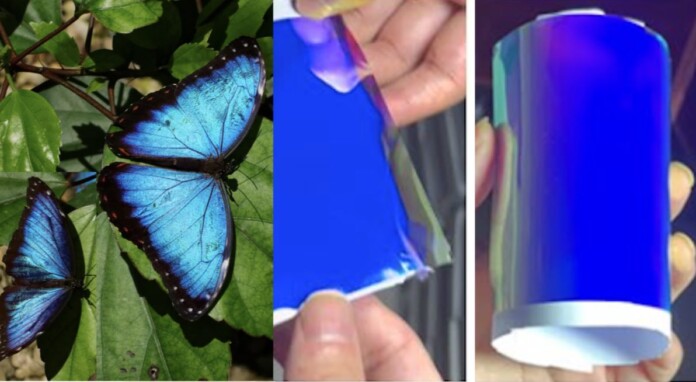
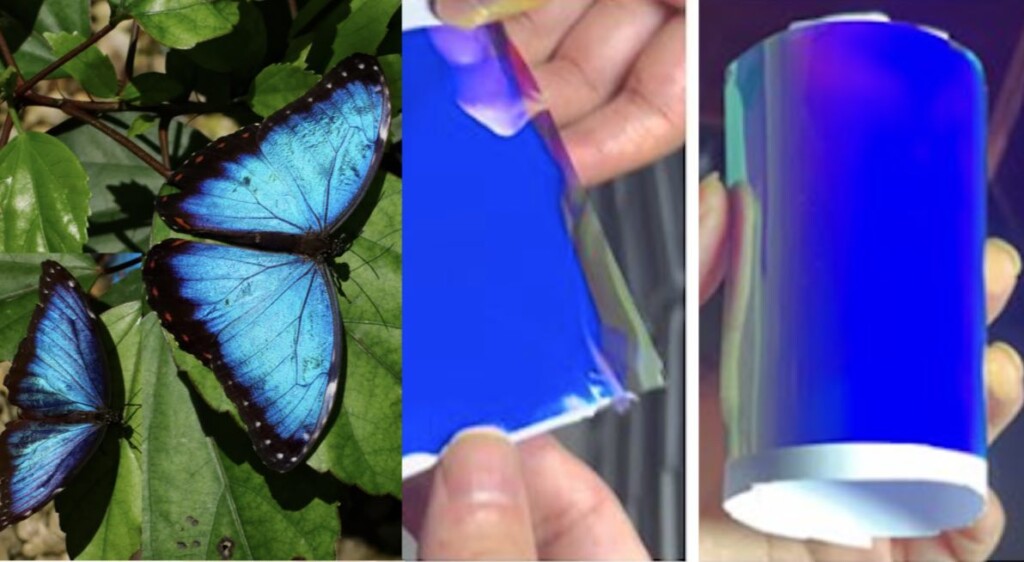
Just like white clothing feels cooler than other colors due to reflecting the sun instead of absorbing it, other colors, like blue or black, heat up when they absorb light. But new colored cooling films inspired from the nanostructures in butterfly wings can eliminate much of the heating effect, while still adding vibrant color.
The new films, which don’t absorb any light, could be used on the outside of buildings, vehicles, and equipment to reduce the energy needed for cooling.
“In buildings, large amounts of energy are used for cooling and ventilation, and running the air conditioner in electric cars can reduce the driving range by more than half,” said research team leader Guo Ping Wang from Shenzhen University in China. “Our cooling films could help advance energy sustainability and carbon neutrality.”
An article published in the journal Optica details that the films are lowering temperatures to about 2 °C below the ambient air. Furthermore, researchers also found that when left outside all day, the blue version of the films was approximately 50°F cooler (26℃ ) than traditional blue car paint.
If the films are used on buildings, this would represent a huge energy savings by lowering air conditioning use.
“With our new films, excellent cooling performance can be achieved, no matter the desired color, saturation or brightness,” said Wang. “They could even be used on textiles to create clothes of any color that are comfortable in hot temperatures.”
Enter the Morpho butterfly
A car with blue paint appears blue because it absorbs light that heats up the car. Morpho butterflies, however, produce their highly saturated blue color based on the nanostructure of their wings. The design of the cooling nanofilm mimics these structures to produce vibrant colors that don’t absorb light like traditional paint.
To create their Morpho-inspired nanofilms, the researchers placed a disordered material (rough frosted glass) under a multilayer material made of titanium dioxide and aluminum dioxide. They then placed this structure on a silver layer that reflects all light, thus preventing the absorption of solar radiation and the heating associated with that absorption.
The film’s color is determined by how components within its multilayered structure reflect light. To create blue, for example, the multilayer material is designed to reflect yellow light in a very narrow range of angles while the disordered structure diffuses the blue light across a broad area.
Although this type of passive photonic thermal management has been accomplished before, it has only been used with white or clear objects because it is difficult to maintain a wide viewing angle and high color saturation.
“Thanks to the layered structure we developed, high saturation and brightness can be achieved by optimizing the structure,” said Wang.
To test the new technology, the researchers created blue, yellow and colorless films, which they placed outdoors at Shenzhen University on roofs, cars, cloth, and cell phones. Using thermocouple sensors and infrared cameras to measure temperature, they found that the cooling films were more than about 27°F cooler (15℃) than the surfaces they were placed on in the winter and about 63°F (35 ℃) cooler in the summer.
The researchers point out that replacing the silver film with an aluminum film would make the films less expensive and manufacturable by a scalable fabrication method. Now that they have demonstrated the cooling and color performance of the films, the researchers plan to study and optimize other properties such as mechanical and chemical robustness.
FLY Some Energy Inspiration to Start-ups on Social Media…
After 268 days in his kayak, a 65-year-old has completed his epic ‘Reverse the Bad’ expedition, becoming the first person to solo kayak the Greater Loop across Canada and the United States.
The journey of almost 6,800 miles (11,000km) required Mark Fuhrmann to paddle for 1,643 hours—which is the equivalent of paddling 68 days straight without stopping.
A smiling, but exhausted Fuhrmann, stepped out of his kayak on August 2nd for the last time, greeting well-wishers with the memorable line: “Can I get a beer please?” (He got more than one.)
Paddling for positivity
The Canadian native who lives in Oslo, Norway set out from Halifax last year on June 2nd with an aim of raising much needed funds for Doctors Without Borders and Captains Without Borders, while pushing a message of “positivity for our troubled times.”
“It’s been a hell of a trip,” he exclaims, “but worth every minute of exertion, discomfort and pain. Not only to raise money and awareness, but also to connect with nature, people, and something deep within myself.”
“I’m truly grateful for the immense and touching generosity of an army of supporters en route—but that doesn’t mean I’m planning another trip anytime soon!” he joked.
He said what struck him the most about his challenging 14-month journey was the kindness from all the people he met along the route. “99.9% were genuine, good people.”
Extreme endurance
Fuhrmann, who also completed a charity kayak run from Oslo to Greece in 2017, says the last leg of the journey was the toughest of all. He had to navigate through 23 days of continuous fog, while tackling extreme tides and currents in the Bay of Fundy—and he struggled to find anywhere to pitch his tent on the rocky, treacherous coastline.
“Some evenings I had to drag my kayak up three or four meters of rock inclines, while others I was lucky enough to sleep on moored lobster vessels.
“There were some challenging waves too, as well as a lot of ferries and fishing boats to avoid. It’s been incredibly draining… and I’m looking forward to a good night’s sleep, in an actual bed,” he said, after crossing the finish line.
“I think we have to celebrate the fact I survived,” he says with a big grin.
Mark chose the two charities for his Reverse the Bad expedition because his late wife was a doctor.
He’s raised almost $7,000 on his GoFundMe page, as well as channeling many donations directly to the two charities. You can help ‘Reverse the Bad’ and learn more on his website.
In the last decade since recovering from colon cancer, an elderly woman in Mexico City has opened her doors to sick, injured, or orphaned hummingbirds.
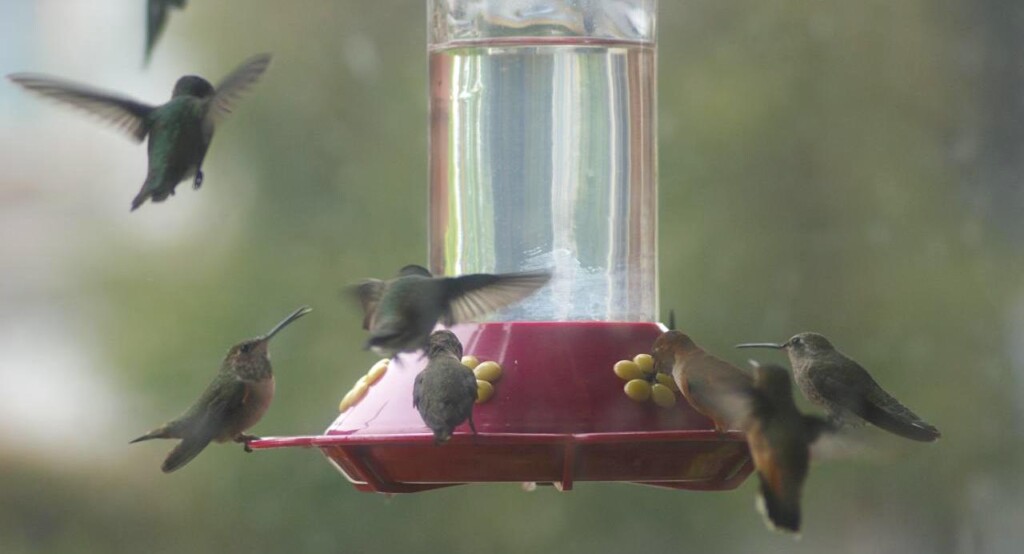
Today, you can find dozens of the them flying around her apartment while she nurses them back to health.
The video by Gerardo Carrillo shows Catia Lattouf feeding mostly baby birds through tiny tubes. Many have survived attacks by grackles, a bird she says is non-native to Mexico.
She has about 60 hummingbirds on any day, and has become the go-to nanny in the neighborhood since videos have circulated on TikTok.
FLY THIS SWEET News Nectar to Hummer-loving Friends on Social Media…
Quote of the Day: “The greatest remedy for anger is delay.” – Lucius Seneca
Photo by: Free Walking Tour Salzburg
With a new inspirational quote every day, atop the perfect photo—collected and archived on our Quotes page—why not bookmark GNN.org for a daily uplift?
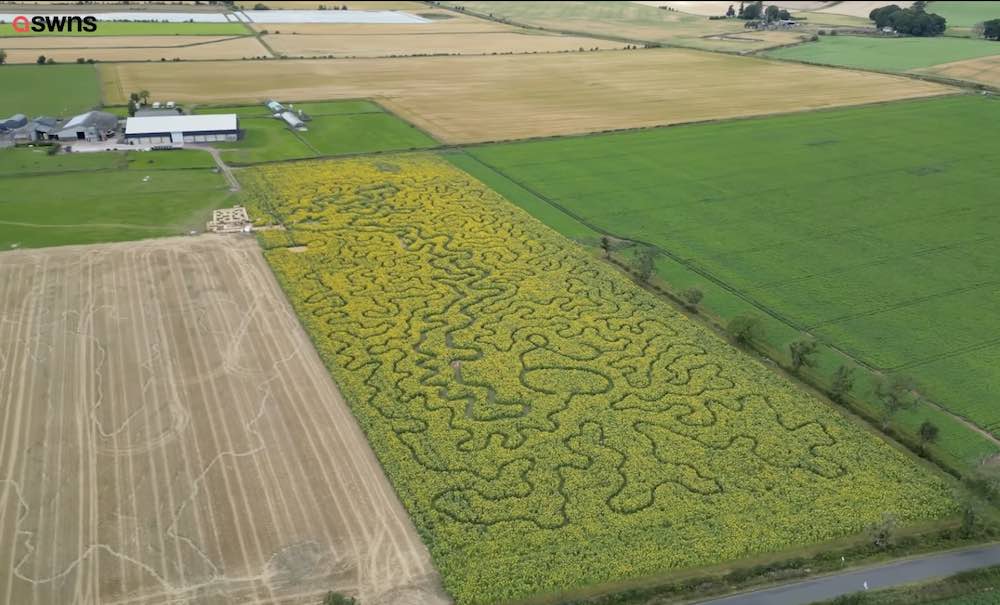
Victoria Geatons explores Gloagburn Farm sunflower trail in Perthshire – SWNS
Victoria Geatons explores Gloagburn Farm sunflower trail in Perthshire – SWNS
A Scottish farmer grew a quarter million sunflowers after discovering they would survive in his northern climate—and he created a massive trail in his field that has brought in visitors from as far away as Australia.
Crawford Niven first came up with the idea for a flower lined pathway three years ago—and began planning for its eventual fulfillment on his farm in Gloagburn Farm, near Perth, Scotland.
The 26-year-old admitted he was skeptical at first that sunflowers would flourish so far north. “I didn’t think they could grow in Scotland.
But the crop has gone on to thrive—and he now has 13 acres of them.
Thousands of visitors have wandered the trails on his estate, walking among the 7-foot stalks.
“It offers a photo opportunity,” said Niven. “People love it.”
Last year, he created a trail in the shape of Scotland, but this time he decided to go with a more natural ‘random’ pattern.
SWNS
Crawford, who posts farming videos on a YouTube channel, said the bloom will last about four weeks, predicting that the trail would close next week.
It takes about 30-60 minutes to walk the full trail—and there’s a kid-friendly 20-minute version with games, and free admission for children 12 and under.
Scientists in Australia have identified a molecule that could hold the key to developing peptide-based drugs targeting obesity, osteoporosis, and inflammatory diseases.
Researchers at the Victor Chang Cardiac Institute are shedding light on how the small molecule regulates the sensors that are central to many processes in the body—including how nerve cells in the skin can sense when we are being touched.
They believe it will now be possible to design new therapeutics that could either ramp down or dial down the activity of the sensors, also known as PIEZO ion channels.
The first targets would be obesity and bone diseases such as osteoporosis.
“These are really key molecules that constantly provide information to the brain such as where our bodies are in space, sensing touch and even pain,” said lead author Dr. Charles Cox.
“This interacting molecule we have identified represents a switch enabling us to regulate these channels, widely expressed throughout the body, which is why it could be useful for a whole range of diseases in the future.”
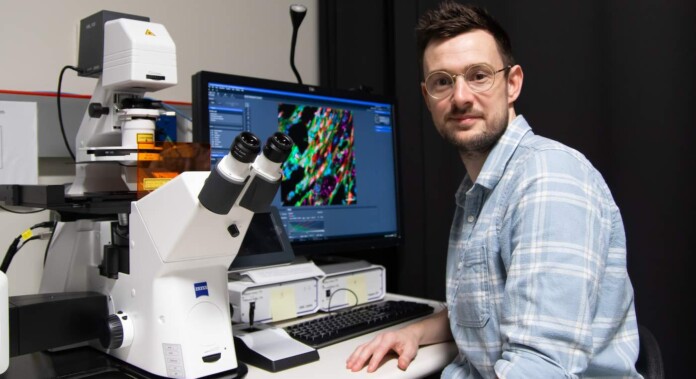
Dr. Cox and his collaborators used cutting-edge cryo-electron microscopy to find out how this protein binds to PIEZO ion channels.
Now that it’s been identified, it’s believed the protein can now be modified and developed into peptide-based therapeutics.
“We believe we will be able to boost the activity in the channels that are involved in the strength of our bones – which could not only help prevent osteoporosis it could help those already suffering,” said Dr. Cox.
“This novel mechanism could also help combat obesity an important risk factor for all cardiovascular diseases. As we eat food, our stomachs get stretched and molecules are triggered, telling the brain when the stomach is full. By boosting the activity of these molecules, we may be able to trigger the brain into thinking it was full far earlier mimicking satiety.”
Cox and his team believe the molecule could also be adapted to target inflammatory diseases as well as cardiovascular disease in the future.