Quote of the Day: “Happiness is not something ready made. It comes from your own actions.” – Dalai Lama
Photo by: Sébastien Goldberg
With a new inspirational quote every day, atop the perfect photo—collected and archived on our Quotes page—why not bookmark GNN.org for a daily uplift?
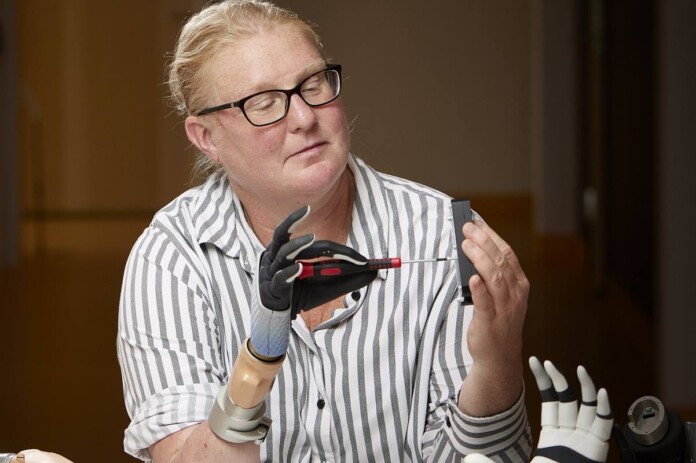
Karin using a screwdriver - The Bionics Institute of Melbourne, via SWNS
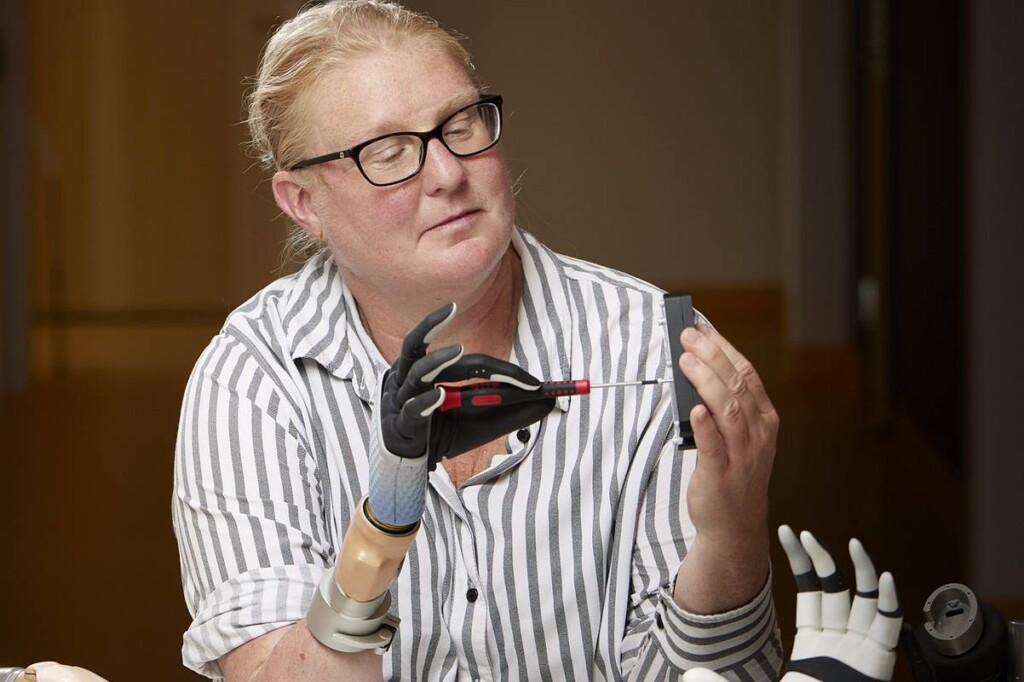
Karin using a screwdriver – The Bionics Institute of Melbourne, via SWNS
A Swedish woman named Karin has become the first person to ever receive a below-the-elbow prosthetic that fuses bone with metal and electrodes.
An incredible feat of robotics and biology, it’s seen to represent an eventual gold standard of prosthetics and has encouraged the interdisciplinary science team to believe it will be available to other amputees in other circumstances in the future.
Mechanical attachment and reliable control of prosthetic limbs are two of the biggest obstacles in artificial limb replacement, with many amputees opting to reject even the most sophisticated, commercially available artificial limbs due to fears of painful and uncomfortable attachment and limited, unreliable control.
Karin lost her right arm in a farming machinery accident 20 years ago and was one of those who decided against existing prostheses
A multidisciplinary group of engineers and surgeons from Sweden, Australia, and Italy aimed to solve these problems by developing a remarkable interface that fuses human and machine to allow the limb to be comfortably attached whilst enabling electrical connection with the nervous system.
Called ‘osseointegration,’ it’s a process where bone tissue embraces titanium creating a strong mechanical bond and enabling connection with the nervous system via electrodes implanted in the nerves and muscles.
Karin, an engineer, says her groundbreaking bionic arm has reduced the terrible phantom pain she used to feel, and has been ‘life-changing’ in returning her capabilities in everyday life and regaining her independence.
In the years following her accident, she endured excruciating phantom limb pain and found that existing, conventional prosthetic limbs were of little help in daily life, as well as being uncomfortable.
“It felt like I constantly had my hand in a meat grinder, which created a high level of stress and I had to take high doses of various painkillers,” she said. “I now have better control over my prosthesis, but above all, my pain has decreased.”
The surgery was done in December 2018, and she started using the arm in mid-2019.
Lead researcher Dr. Max Ortiz Catalan, head of neural prosthetics research at the Bionics Institute in Australia, as well as the Center for Bionics and Pain Research in Sweden, explained that the fact Karin has been able to use her bionic limb for a number of years was very encouraging.
“Karin was the first person with below-elbow amputation who received this new concept of a highly integrated bionic hand that can be used independently and reliably in daily life,” said Dr. Ortiz Catalán. “Karin is now using somewhat the same neural resources to control the prosthesis as she did for her missing biological hand.”
“The fact that she has been able to use her prosthesis comfortably and effectively in daily activities for years is a promising testament to the potential life-changing capabilities of this novel technology for individuals facing limb loss,” he added.
The main challenges facing the researchers at this level of amputation were the two bones—the radius and ulna—that should be aligned and loaded equally, and the fact that not much space is available for implanted and prosthetic components.
However, the team managed to develop a suitable neuro-musculoskeletal implant that allows connections between the user’s nervous system and the electronic control system of the bionic limb, which Dr. Ortiz Catalán says is responsible for the reduction in pain.
“The below elbow amputation level has particular challenges, and the level of functionality achieved marks an important milestone for the field of advanced extremity reconstructions as a whole,” said Professor Rickard Brånemark, associate professor at Gothenburg University in Sweden, and associate researcher at MIT.
“By combining osseointegration with reconstructive surgery, implanted electrodes, and AI, we can restore human function in an unprecedented way.”
The nerves and muscles in the residual limb were re-arranged to provide more sources of motor control information to the prosthesis, a complicated surgery done at the Sahlgrenska University Hospital in Sweden by Dr. Paolo Sassu, who previously became the first surgeon to conduct a successful hand transplant in Scandinavia.
As joyous as the researchers are for what this does to advance the science of their various fields, Karin says the robotic limb has improved her functionality, increased her independence, and, due to the highly advanced integration between her residual limb and her bionic one, has also massively relieved her pain.
“Today, I need much less medication. For me, this research has meant a lot, as it has given me a better life.”
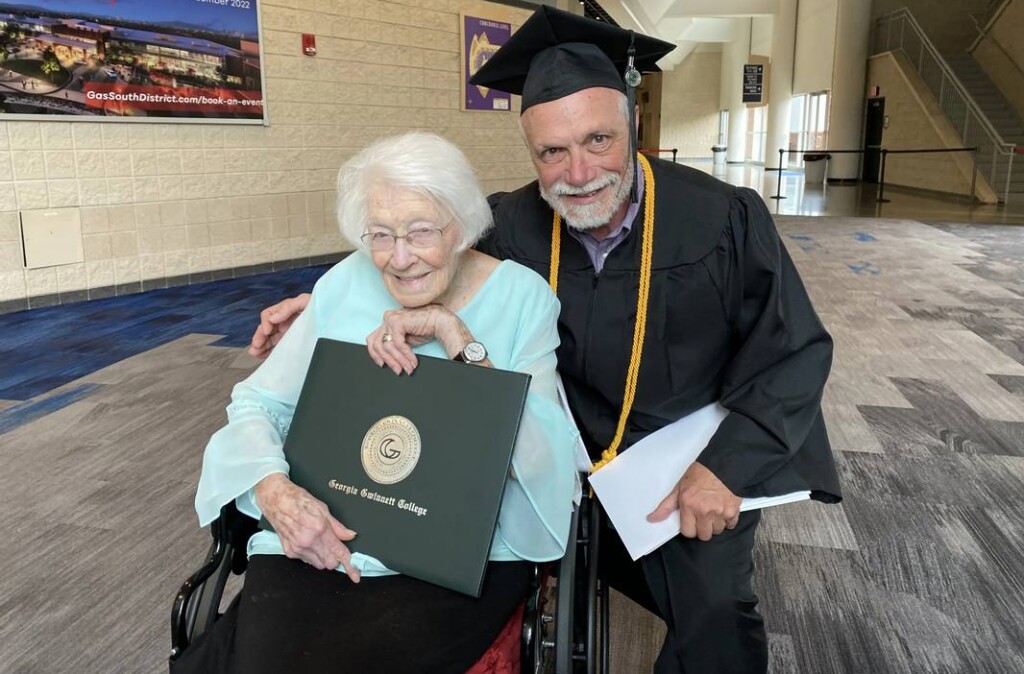
Sam Kaplan of Lawrenceville, Georgia has added many items to his resume over the years. But on May 11th, in his 72nd year of life, he added a particularly late line item—a college degree.
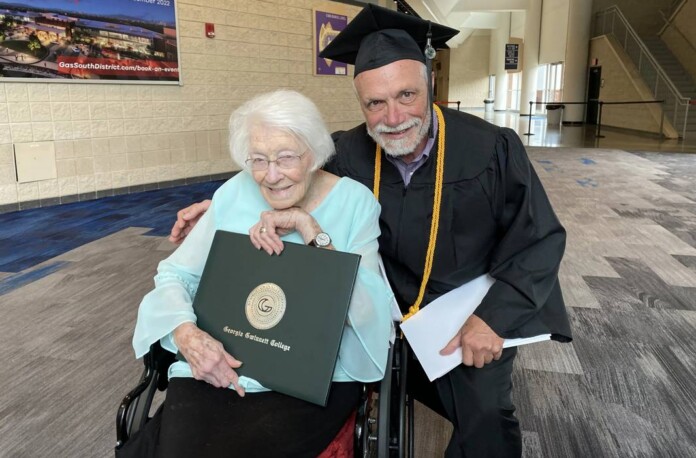
Alongside classmates 50 years his junior, Kaplan crossed the stage in cap and gown to receive an undergraduate degree in Cinema and Media Arts from George Gwinnett College. His 99-year-old mother was there to see it all and cheered as well as she could.
Kaplan, who graduated from high school in 1969, had not considered college. He went right into the workforce in various roles.
According to the GGC news release, he ran a cleaning service and then a telemarketing company. He worked in customer service for a wholesale distributor of electronics and even drove a taxi part-time.
“I’m the first of my seven siblings to earn a degree,” said Kaplan. “I was riding down 316 and heard on the radio that Georgia Gwinnett College was offering a degree that involved script writing.”
credit George Gwinnett College – released
“My car seemed to have developed automatic steering and I pulled off on Collins Hill Road. Five minutes later, I was registering for the fall semester.”
It wasn’t as easy as one might think, and he at first found it difficult to remember how to study, how to make friends, and all the other skills being a student required. So he committed himself to talking to one student a day; asking about their methods, hopes, and approaches to the class.
He no doubt had help and advice from his five children, but he also said that his classmates really opened up during those chats, and that helped him excel.
“He’d always participate and would offer advice and assistance to his classmates,” said Kate Balsley, associate professor of film, who taught Kaplan in a number of classes. “Sam was always willing to share photos and stories about his interesting life and his family. We’re so proud to see him graduate, but we will miss him.”
With his degree, we’ll expect to no doubt see his name in the credit rolls of an independent film in the not-too-distant future.
It’s NEVER Too Late To Learn: Share This Story And Prove It…
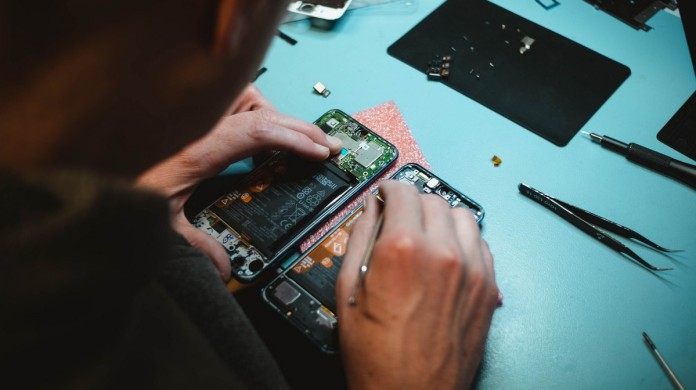
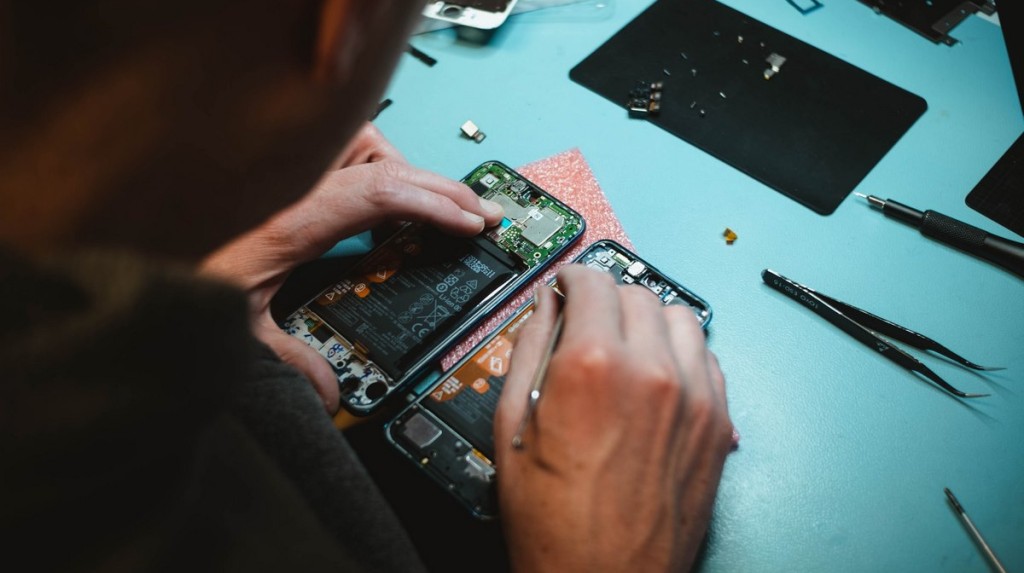
GNN has reported often on improvements in consumer’s right to repair products, from phones to cars, where for decades it’s become harder and harder to do so.
Now, the California state government has passed a landmark law that obligates technology companies to provide parts and manuals for repairing smartphones for seven years after their market release.
Senate Bill 244 passed 65-0 in the Assembly, and 38-0 in the Senate, and made California, the seat of so much of American technological hardware and software, the third state in the union to pass this so-called “right to repair” legislation.
On a more granular level, the bill guarantees consumers’ rights to replacement parts for three years’ time in the case of devices costing between $50 and $99, and seven years in the case of devices costing more than $100, with the bill retroactively affecting devices made and sold in 2021.
Similar laws have been passed in Minnesota and New York, but none with such a long-term period as California.
“Accessible, affordable, widely available repair benefits everyone,” said Kyle Wiens, the CEO of advocacy group iFixit, in a statement. “We’re especially thrilled to see this bill pass in the state where iFixit is headquartered, which also happens to be Big Tech’s backyard. Since Right to Repair can pass here, expect it to be on its way to a backyard near you.”
One of the reasons Wiens is cheering this on is because large manufacturers, from John Deere to Apple, have previously lobbied heavily against right-to-repair legislation for two reasons. One, it allows them to corner the repair and maintenance markets, and two, it protects their intellectual property and trade secrets from knock-offs or competition.
However, a byproduct of the difficulty of repairing modern electronics is that most people just throw them away.
The ultimate end that consumers of many of these irreparable items are forced to make for them; they end up in landfills. So-called “E-waste” is a potentially catastrophic oncoming environmental problem since it doesn’t really biodegrade in any meaningful sense, and recycling it requires technical dismantling.
The right to repair is also equally about keeping easily fixable devices out of landfills.
The California bill isn’t perfect, as Wiens notes it doesn’t cut back on parts pairing, whereby hardware, such as a battery, is linked to a software ID from the device it came from, rendering certain features unavailable if repaired with a replacement outside the original manufacturer’s purview.
However, Wien added in the statement that he believes the California bill is a watershed that will cause a landslide of this legislation to come in the near future.
SHARE This Great Legislation With Your Friends In California…
10-yo Ezra Martinez in Albuquerque by REUTERS/Adria Malcolm-Eclipse by REUTERS/Vannessa Jimenez
10-yo Ezra Martinez in Albuquerque by REUTERS/Adria Malcolm-Eclipse by REUTERS/Vannessa Jimenez
(Reuters) – Thousands of people across the Americas gazed at the heavens on Saturday to witness a rare phenomenon known as an annular solar eclipse, when the moon passes in front of the sun, momentarily producing the appearance of a ‘ring of fire’ in the sky.
“It’s one of those things you can’t miss,” said Oscar Lopez, 26, who travelled from Mexico City to the southern Mexican city of Campeche to see the eclipse. “It’s amazing.”
“We’re really lucky as human beings to be able to experience these things.”
U.S. space agency NASA said the eclipse was following a path from the U.S. Pacific Northwest over California, Nevada, Utah, Arizona, New Mexico and Texas, crossing over parts of Mexico, Guatemala, Belize, Honduras, Nicaragua, Panama, Colombia and Brazil before ending at sunset in the Atlantic Ocean.
Lopez and his family were among hundreds of spectators wearing sunglasses who gathered to watch the moon slowly glide across the face of the morning sun in Campeche, a picturesque colonial-era city on the western edge of the Yucatan peninsula.
People gather to watch the annular solar eclipse – REUTERS/Adria MalcolmThe annular solar eclipse seen in Brasilia, Brazil October 14 – REUTERS/Adriano Machado
An annular solar eclipse occurs when the moon passes between Earth and the sun at a time when the moon is at or close to its farthest point from our planet. It does not completely obscure the face of the sun, unlike in a total solar eclipse.
Instead it creates the image of a brilliant ring on the outlines of the sun surrounding the dark disc of the moon.
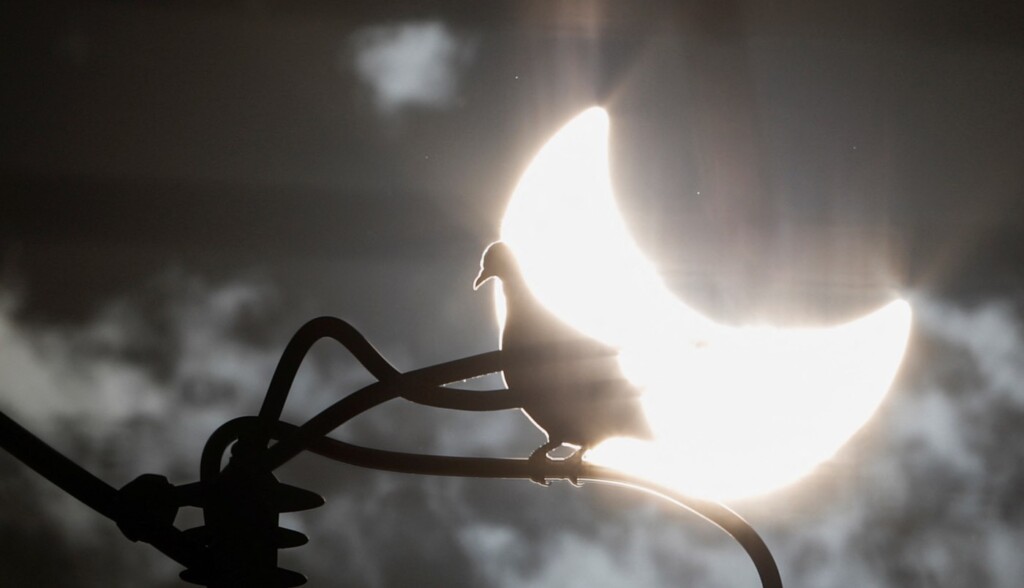
A dove stands in an electric power pole during the annular solar eclipse in Brasilia, Brazil October 14, 2023. REUTERS/Adriano Machado
One of the celestial fans in the crowd chose the eclipse to propose to his girlfriend as they looked up at the sun in Campeche.
“I wasn’t expecting it at all,” she said. “I feel really happy—and really sure I want to spend my life with him.”
Neiva, Colombia – REUTERS/Vannessa Jimenez
SEE How Many Friends Saw the Phenomenon By Sharing This on Social Media…
Quote of the Day: “The greatest use of a life is to spend it on something that will outlast it.” – William James
Photo by: Zach Stern (CC License)
With a new inspirational quote every day, atop the perfect photo—collected and archived on our Quotes page—why not bookmark GNN.org for a daily uplift?
The Pokémon Fourth Print Base Set Booster Box – SWNS
The Pokémon Fourth Print Base Set Booster Box – SWNS
A grandfather had to clear some space for a hospital bed when his wife became ill with cancer—and what he found abandoned in his closet has earned the family more than $50,000.
The pile of Pokémon cards were almost thrown in the trash, until the Englishman’s 50-year-old daughter suggested they might be worth some cash.
Now, one of the unopened packages—a Pokémon Fourth Print Base Set Booster Box–is set to fetch at least 20,000 at auction.
He bought the box of 102 Japanese trading cards as a spare set in 1999 after he started collecting cards with his four-year-old granddaughter.
The box, which is still in its original cellophane wrapper, was kept in his cupboard for over two decades before it was almost thrown out.
“There were thousands of them,” said his 50-year-old daughter. “Dad planned to throw them away, but I said, ‘Blimey, dad, some of these might be worth a bit’.”
The 81-year-old grandfather is now putting up the unopened box for auction next week, and it’s expected to fetch twenty thousand bucks.
The seller’s daughter recalled her own daughter and dad going on weekend trips together to get the cards from a hobby shop in Chester, England. The person at the shop suggested they purchase boxes, instead of individual packs—and it worked out in both their favors.
David Wilson-Turner, Head of the Toy Department at Hansons auctions, explained what makes the boxes rare.
Pokémon Fourth Print Base Set Booster Box, bottom – SWNS
“What distinguishes the Pokémon Fourth Print Base Set Booster Box from others, and makes it scarce, is that it was only released in the UK. The 102 cards inside, contained in 36 sealed booster packs, bear a definitive date stamp stating 1999-2000. Other base set cards are stamped 1999.
“Being an avid collector my dad kept the cards pristine.
“It seems crazy a box of cards could be worth so much now. Paying around £100-120 per box in 1999 was a lot of money for a working man. But like all grandads he liked to spoil his grandchildren.”
Move over carrots: In a small new study, just a couple of handfuls of grapes per day for four months was enough to improve key markers of eye health in older adults
This could be due to the fact that a lot of degeneration of the eyes is from oxidative stress—and grapes are high in anti-oxidants.
The research team from the National University of Singapore studied 34 adults who consumed either one-and-a-half cups of grapes a day or a placebo for 16 weeks.
The grape eaters showed a significant increase in macular pigment optical density (MPOD), plasma antioxidant capacity, and total phenolic content compared to those on placebo.
Furthermore, those who did not consume grapes saw a significant increase in harmful ocular advanced glycation end products (AGE)—high levels of which a key risk factor for eye disease, along with oxidative stress.
Based on a double-blind, randomized trial, the peer-reviewed study was published in the journal Food & Function.
Previous research shows that AGEs may contribute to many eye diseases by damaging the vascular components of the retina, impairing cellular function, and causing oxidative stress. Preliminary studies in mice showed consuming grapes was found to protect retinal structure and function.
Grapes, which are a natural source of antioxidants and other polyphenols can decrease oxidative stress and inhibit the formation of AGEs, with possible beneficial effects on the retina, such as an improvement in MPOD.
“Our study is the first to show that grape consumption beneficially impacts eye health in humans which is very exciting, especially with a growing aging population,” said study co-author Dr. Jung Eun Kim.
“Grapes are an easy, accessible fruit that studies have shown can have a beneficial impact in normal amounts of just 1 ½ cups per day.
“Regular intake of grapes may improve eye health in older adults, specifically in augmenting MPOD, which can be explained by an increase in plasma total antioxidant capacity and phenolic content, and the downregulation of AGEs.”
HELP Seniors See This Research for Themselves–Share on Social Media…
The way to your pet’s heart may be through toys or treats, but, if you’re like half of pet parents, physical touch is their furry friend’s preferred love language.
A survey of 2,000 cat and dog owners found that whether petting them (83%), or giving them hugs and kisses (62%), respondents believe they are speaking their pet’s love language.
The next most popular pet love language is quality time (27%), which included letting their four-legged friend sleep in their bed, playtime, and bringing their pet along when they can.
And almost two-thirds (62%) of those surveyed believe that they share the same love language with their pet.
Conducted by OnePoll on behalf of Nulo pet food, the survey confirmed that food still speaks volumes to pets, and that 53% of owners aim to serve high-quality meals.
Pet parents take ‘showing affection’ seriously, with 95% of pet owners believing their pet knows how much they love them.
At the same time, 65% of respondents say they are on the receiving end of affection in the form of their pet following them around all day, sleeping next to them in bed (58%), giving kisses (48%) and playing with either them or their toys (47%).
Almost half (47%) of pet owners believe that their pet views them as a best friend and 42% agree that they see their pet in the same way.
“Not only are they speaking their pet’s love language,” says Heather Acuff, Nulo’s Director of Research & Development. “They’re going above and beyond to provide optimum care and nutrition to ensure the healthiest and happiest lives for their pets.”
ASK Your Friends About Their Pet’s Love Language By Sharing on Social Media…
Quote of the Day: “I may not have gone where I intended to go, but I think I have ended up where I intended to be.” – Douglas Adams
Photo by: Abbas Tehrani
With a new inspirational quote every day, atop the perfect photo—collected and archived on our Quotes page—why not bookmark GNN.org for a daily uplift?
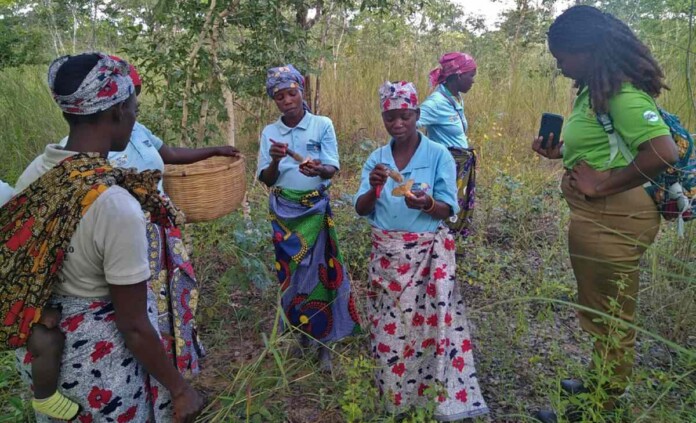
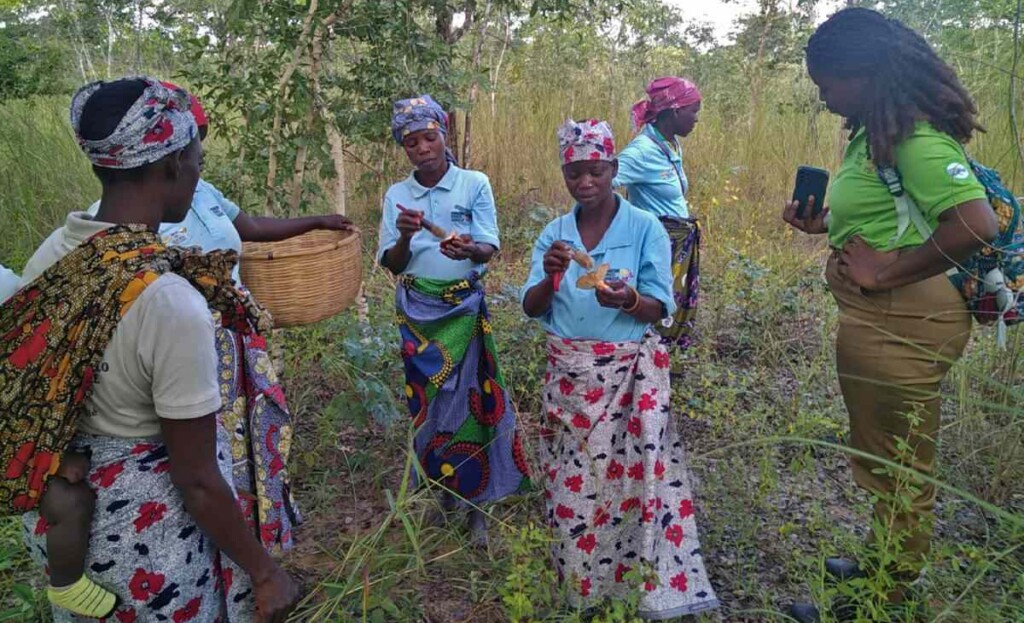
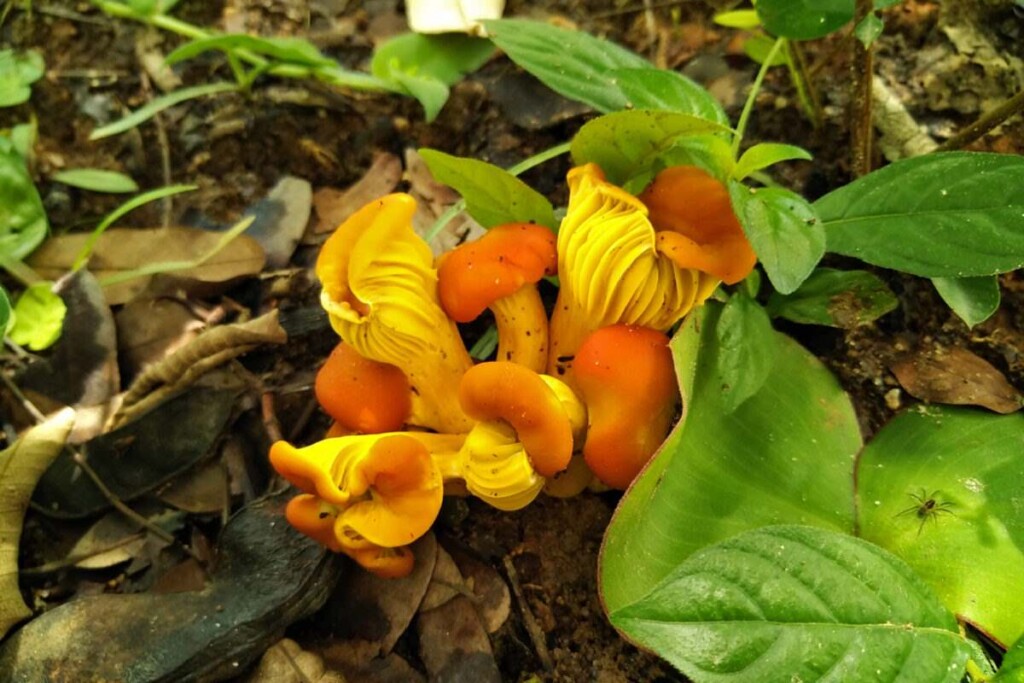
Lomwé and Macua communities in Mozambique’s Zambezia province traditionally harvest wild mushrooms to eat alongside staples like cassava. Conservationists are working with hundreds of indigenous women there to commercialize the sale of mushrooms like the vivid orange Eyukuli (Cantharellus platyphyllus) as part of a wider strategy to protect forests surrounding Gilé National Park.
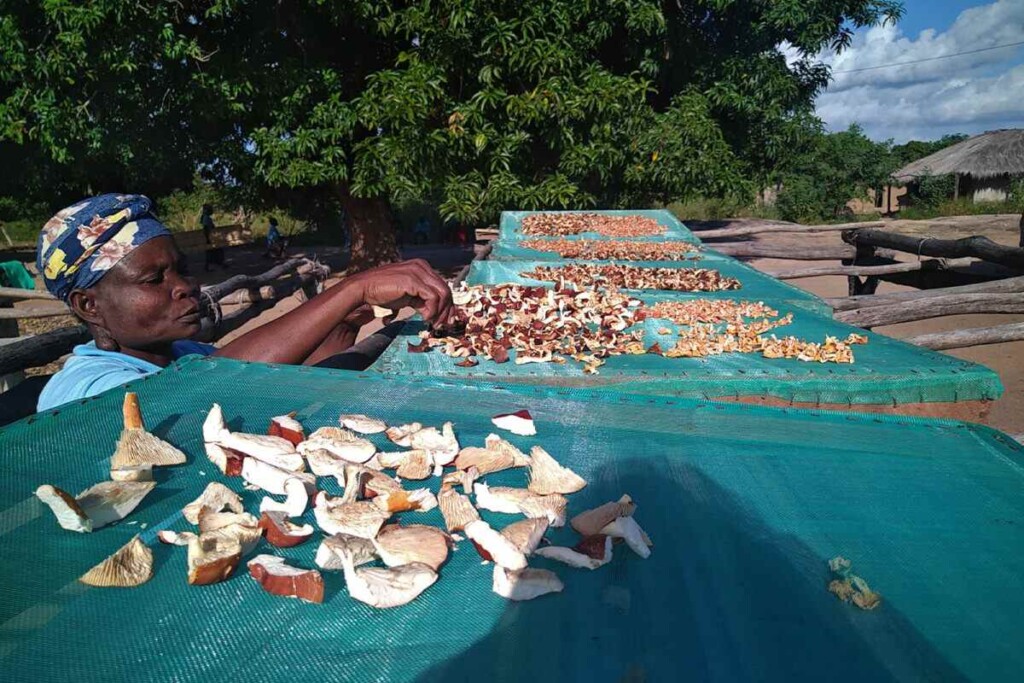
The mushrooms are harvested in a 55,600-hectare (137,400-acre) buffer zone surrounding the national park during the height of the Southern African country’s wet season, from November to April. After harvesting, the fungi are cleaned, dried, and transported by road to Maputo, the capital, more than 2,000 kilometers (1,200 miles) away. There, they’re packaged and sold under the trade name Supa Mama.
This is the first time that native Mozambican mushrooms have been commercialized in the country.
Gilé covers an area of 286,100 hectares (707,000 acres), much of this covered in miombo woodlands that include tree species, like those from the Brachystegia genus, whose roots host mycorrhizal fungi. These underground networks help the trees absorb nutrients and moisture, and announce their presence in the form of diverse fruiting bodies above the ground: mushrooms.
Providing an economic incentive to protect the trees could be key to leaving them standing while promoting the wild mushroom harvest, says Alessandro Fusari, the Mozambique project manager for the François Sommer Foundation–International Foundation for Wildlife Management (FFS-IGF), an organization that co-manages Gilé with Mozambique’s National Administration of Conservation Areas (ANAC).
Communities living around Gilé harvest at least 46 species of mushroom for local consumption. These include eyukuli, the trumpet-shaped khaduve (Lactifluus edulis), and the broad-capped namapele (Lactarius densifolius). So far, a total of five species are being harvested and packed for commercial sale under the project.
“Slowly, the community, especially the women, are learning that keeping the trees standing means having a bigger production of mushrooms,” Fusari tells Mongabay. “Since they’re starting to see commercial results, more and more avoid cutting trees.”
Cantharellus platyphyllus (called Eyukuli in Lomwé) is one of 46 wild mushroom species Indigenous women harvest. Image by Frédérique Montfort/Nitidae.
The project, which is supported by the French Development Agency, is in its third year, meaning the team doesn’t yet have the hard data to determine its success. But, Fusari says, the reduction in tree cutting “is a clear trend that is happening.”
Mushroom harvesting around Gilé is typically done by women while out doing other tasks, such as gathering firewood. The mushroom project works with 900 or so members of 30 women’s groups drawn from communities living in the national park’s buffer zone.
Gilé National Park is home to animals that include buffalo, wildebeest, sable, waterbuck, and around 50 elephants. Many of these animals were reintroduced from other areas to rebuild the wildlife wiped out during Mozambique’s 1977-1992 civil war.
The work is ongoing. The park will soon receive another 200 buffalo from Marromeu National Reserve, 350 km (217 mi) to the southwest, to bolster its current population of 150.
Mushrooms are dried before they can be packed for sale in the capital, Maputo. Image courtesy of FFS-IGF.
While the park’s intact miombo woodlands provide suitable habitat for these animals, shifting agriculture—with farmers working plots until the soil is exhausted, then abandoning them to clear new fields—in the buffer zone along its northern, eastern, and southern boundaries is devastating the trees.
Mushroom harvesting, even for commercial gain, won’t solve that problem alone, Roelens says. Mushrooms are seasonal, and yields can vary dramatically from one year to the next.
“Food security is based on agricultural production, and not on nontimber forest products,” he says.
But giving commercial value to something normally only collected for subsistence is part of a wider program to promote sustainable agriculture.
“That’s part of the strategy: to make the forest more valuable and preserved; it’s a key step in that direction,” Roelens says. Honey is also produced in the buffer zone, and FFS-IGF is piloting a project to raise an indigenous species of snail—the koropa (Achatina fulica)—for sale to local buyers.
The switch in status from partial game reserve to full national park does, however, affect the collection of non-timber forest products like these from across the landscape. When it was still a reserve, community members were allowed inside to harvest mushrooms and honey. Its designation as a national park means that, by law, the area is now out of bounds for anything but tourism and research.
Fusari says there may be a workaround.
His organization plans to have a new management plan for the park ready by year-end, which he hopes will reopen access.
“In this management plan, we will try to insert the possibility to use some nontimber forest products in a sustainable way in certain zones of the park,” he says.
The teams collecting mushrooms have already been trained in sustainable harvesting methods. For instance, they cut rather than pull the mushrooms from the ground, to avoid damaging the mycelium, or root-like structure, beneath the surface; they brush the dirt off the mushrooms wherever they pick them, to leave as many spores there as possible; and the women carry their harvest home in open baskets, to allow spore dispersal along the way.
Meanwhile, research is ongoing to determine the diversity of Gilé’s fungi, and to match local names with species recognized by science.
Nitidae is currently working to include Gilé’s edible mushrooms on an inventory of African tropical species curated by experts at Belgium’s Meise Botanic Garden. So far, 16 have been entered into the database—the first such records from Mozambique.
SHARE This Great News For Forests And Wallets With Your Friends…
Article reprinted under the CC 4.0. License from Mongabay.
Come down and chip in on the farm: the Furball Farm that is.
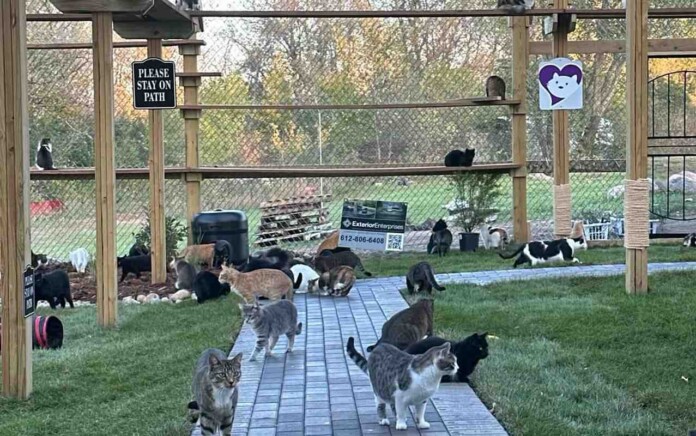
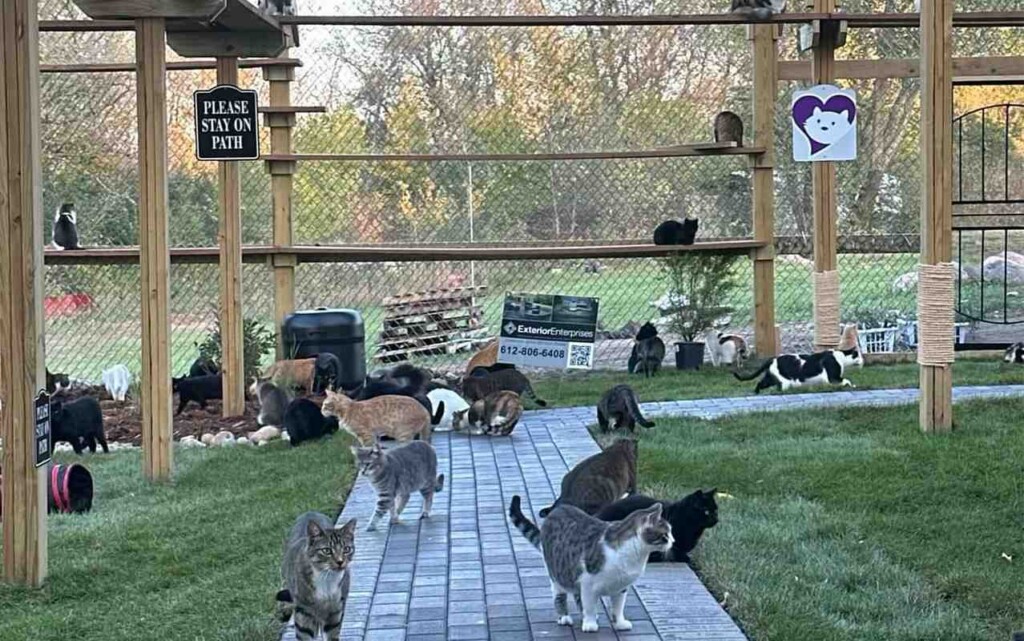
This is the outdoor cat shelter at Furball Farm, in Faribault, Minnesota. The staff and volunteers built this impressive outdoor structure to allow their dozens of feral rescues a place to play and learn to be around humans.
Most of the cats at Furball Farms were once unapproachable and definitely untouchable, CBS reports, but now the majority love human visitors.
Founder Julie Maverts, who started the farm in her separate garage 6 years ago, says the outdoors is where most feral cats will have grown up, but allowing them to enjoy nature, wind, sun, and birdsong with love, gentleness, and affection has been a great sort of rehabilitation.
“We will only accept cats from clinics/rescues/impound/humane societies that are deemed unadoptable due to behavior,” the site states.
Julie has taken in hundreds of strays and gotten hundreds adopted. Thanks to donations, she’s able to provide low-cost spaying and neutering as well as flea and de-worming treatments.
Visiting hours are between 1 p.m. and 5 p.m., and the area is kept clean and tidy by a force of volunteers that includes people who work just 2 hours and others who work 20.
“People care about them. They’re not just nuisance cats trying to struggle outside,” Maverts said. “These guys can enjoy the weather and then go in when they’re cold. When they’re hungry, they can go in and get food. I think they’re gonna be a lot happier because they’re in their natural environment. Yes, they can’t actually leave this area but it’s home.”
For cats who get the “zoomies” there is plenty of space and grass to tear up, while more vertically-oriented felines will enjoy the climbing lattices and overhanging catwalks.
A university student was out on a fishing trip with her dad when they saw three deer emerge from the woods. Not the most uncommon occurrence, but there was something unique about this encounter.
19-year-old Esha Patel said two were brown and one was “dazzling white,” and described the experience as “breathtaking.”
“The white one came so close—less than ten feet away! It was beautiful and so cute,” said the University of Cardiff student.
According to wildlife sources, the chances of seeing this white morph in the UK are extremely rare.
“After I saw the deer I read that the chances of spotting them are around one in 30,000. Apparently it’s really good luck to see them so I was going to buy a lottery ticket,” she added.
“We have never seen one before and my dad was like, ‘Are you sure it was a deer and not a goat?'”
A leucistic deer in Britain – SWNS
Looking at the images you can understand her dad’s sentiments. The deer had what is known as “leucism,” which is a recessive genetic trait that differs from albino animals, but that is also present in theoretically all animal species. Leucism is the lack of pigment cells across most of the body, in contrast to albinos which are totally white and have pink eyes.
White animals tend not to survive long in the wild since the coloration ruins their camouflage, but because white-tail, roe, fallow, and mule deer are hunted in many parts of the UK and US almost exclusively by humans, there are likely more leucistic deer around than ever before, since not many humans hunt, and those that do commonly will let a white white-tail go on its way, according to the Nature Conservancy.
The exact location of the deer will not be identified in order to ensure the safety of the rare creature.
SEE If Any Of Your Friends Have Seen A White Deer By Showing Them This Story…
FREE WILL ASTROLOGY – Week of October 14, 2023
Copyright by Rob Brezsny, FreeWillAstrology.com
LIBRA (Sept. 23-Oct. 22):
Libran philosopher and writer Michel Foucault aspired to open up his readers’ minds with novel ideas. He said his task was to make windows where there had been walls. I’d like to borrow his approach for your use in the coming weeks. It might be the most fun to demolish the walls that are subdividing your world and preventing free and easy interchange. But I suspect that’s unrealistic. What’s more likely is partial success: creating windows in the walls.
SCORPIO (Oct. 23-Nov. 21):
I invite you to re-evaluate your personal meanings of gender. Please note I’m not implying you should change your designation. Astrological omens simply suggest that you will benefit from expanding your ideas. The Scorpio singer and mother, Sophie B. Hawkins, says, “My sexuality stems from an emotional connection to someone’s soul. You don’t have to make a gender choice and stick with it.”
SAGITTARIUS (Nov. 22-Dec. 21):
Sagittarian author Mark Twain said that in urgent or trying circumstances, uttering profanities “furnishes a relief denied even to prayer.” I will add that these magic words can be downright catalytic and healing—especially for you right now. Here are situations in which swearing could be therapeutic in the coming weeks: 1. when people take themselves too seriously; 2. when you need to escape feelings of powerlessness; 3. when know-it-alls are trying to limit the range of what can be said; 4. when people seem frozen or stunned and don’t know what to do next. In all these cases, well-placed expletives could provide necessary jolts to shift the stuck energy. (PS: Have fun using other surprises, ploys, and twists to shake things up for a good cause.)
CAPRICORN (Dec. 22-Jan. 19):
In Roman mythology, Venus was goddess of love, desire, and beauty. Yet modern science tells us the planet Venus is blanketed with sulfuric acid clouds, has a surface temperature of 867 degrees Fahrenheit, and is covered with 85,000 volcanoes. Why are the two Venuses out of sync? Here’s a clue, courtesy of occultist Dion Fortune. She said the goddess Venus is often a disturbing influence in the world, diverting us from life’s serious business. I can personally attest to the ways that my affinity for love, desire, and beauty have distracted me from becoming a hard-driving billionaire tech entrepreneur. But I wouldn’t have it any other way. How about you, Capricorn? I predict that the goddess version of Venus will be extra active in your life during the coming months.
AQUARIUS (Jan. 20-Feb. 18):
Thousands of heirloom food species are privately owned and hoarded. They once belonged to Indigenous people but haven’t been grown for decades. Descendants of their original owners are trying to get them back and grow them again—a process they call rematriation. There has been some progress, too. The Ho-Chunk Nation of Wisconsin has recovered some of its ancestral corn, beans, and squash. Now would be a good time for you Aquarians to launch your own version of rematriation: reclaiming what was originally yours and that truly belongs to you.
PISCES (Feb. 19-March 20):
I like Piscean poet Jane Hirshfield’s understanding of what “lies at the core of ritual.” She says it’s “the entrance into a mystery that can be touched but not possessed.” My wish for you right now, Pisces, is that you will experience mysteries that can be touched but not possessed. To do so will give you direct access to prime riddles at the heart of your destiny. You will commune with sublime conundrums that rouse deep feelings and rich insights, none of which are fully explicable by your logical mind. Please consider performing a homemade sacred ritual or two.
ARIES (March 21-April 19):
The Indigenous Semai people of Malaysia have an unusual taboo. They try hard not to cause unhappiness in others. This makes them reluctant to impose their wishes on anyone. Even parents hesitate to force their children to do things. I recommend you experiment with this practice. Now is an excellent time to refine your effect on people to be as benevolent and welcoming as possible. Don’t worry—you won’t have to be this kind and sweet forever. But doing so temporarily could generate timely enhancements in your relationship life.
TAURUS (April 20-May 20):
Taurus author Shakespeare reshaped the English language. He coined hundreds of words and revised the meanings of hundreds more. Idioms like “green-eyed monster” and “milk of human kindness” originated with him. But the Bard also created some innovations that didn’t last. “Recover the wind” appeared in *Hamlet* but never came into wide use. Other failures include, “Would you take eggs for money?” and “from smoke to smother.” Still, Shakespeare’s final tally of enduring neologisms is impressive. With this vignette, I’m inviting you to celebrate how many more successes than flops you have had. The time is right for realistic self-praise.
GEMINI (May 21-June 20):
I hope beauty will be your priority in the coming weeks. I hope you will seek out beauty, celebrate it, and commune with it adoringly. To assist your efforts, I offer five gems: 1. Whatever you love is beautiful; love comes first, beauty follows. The greater your capacity for love, the more beauty you find in the world. —Jane Smiley 2. The world is incomprehensibly beautiful—an endless prospect of magic and wonder. —Ansel Adams 3. A beautiful thing is never perfect. (Egyptian proverb) 4. You can make the world beautiful just by refusing to lie about it. —Iain S. Thomas 5. Beauty isn’t a special inserted sort of thing. It is just life, pure life, life nascent, running clear and strong. –H. G. Wells
CANCER (June 21-July 22):
I read a review that described a certain movie as having “a soft, tenuous incandescence—like fog lit by the glow of fireflies.” That sounds like who you are these days, Cancerian. You’re mysterious yet luminous; hard to decipher but overflowing with life energy; fuzzy around the edges but radiating warmth and well-being. I encourage you to remain faithful to this assignment for now. It’s not a state you will inhabit forever, but it’s what’s needed and true for the foreseeable future.
LEO (July 23-Aug. 22):
The published work of Leo author Thomas de Quincey fills 14 volumes. He inspired superstar writers like Edgar Allan Poe, Charles Baudelaire, Nikolai Gogol, and Jorge Luis Borges. Yet he also ingested opium for 54 years and was often addicted. Cultural historian Mike Jay says de Quincey was not self-medicating or escaping reality, but rather keen on “exploring the hidden recesses of his mind.” He used it to dwell in states of awareness that were otherwise unattainable. I don’t encourage you to take drugs or follow de Quincey’s path, Leo. But I believe the time is right to explore the hidden recesses of your mind via other means. Like what? Working with your nightly dreams? Meditating your ass off? Any others?
VIRGO (Aug. 23-Sept. 22):
Virgo journalist H. L. Mencken said, “The average person doesn’t want to be free. He wants to be safe.” There’s some truth in that, but I believe it will be irrelevant for you in the coming months. According to my analysis, you can be both safer *and* freer than you’ve been in a long time. I hope you take full advantage! Brainstorm about unexpected feats you might be able to accomplish during this state of grace.
WANT MORE? Listen to Rob’s EXPANDED AUDIO HOROSCOPES, 4-5 minute meditations on the current state of your destiny — or subscribe to his unique daily text message service at: RealAstrology.com
Quote of the Day: “The world is incomprehensibly beautiful—an endless prospect of magic and wonder.” – Ansel Adams
Photo by: Saad Chaudhry
With a new inspirational quote every day, atop the perfect photo—collected and archived on our Quotes page—why not bookmark GNN.org for a daily uplift?
Any readers in business school should take note of this perfect example of a company understanding their customer base: Domino’s has a new free pizza program for personal emergencies.
What kind of emergencies? Domino’s isn’t referring to unintended hospital visits. Instead, try to imagine the last thing that made you decide to order pizza when you hadn’t planned on doing so an hour before!
Let’s listen to what Kate Trumbull, senior vice president and chief brand officer has to say.
“Perhaps you burned dinner, the power went out, or maybe your in-laws just dropped in without notice—whatever your emergency situation, Domino’s believes a free pizza can make anything better,” she Trumbull in a press release.
“Why did we launch Domino’s Emergency Pizza? With so much uncertainty in everyday life, we believe everyone needs a pizza pick-me-up at some point.”
The way it works is that customers enroll in the Domino’s loyalty program and then spend $7.99 on a pizza. At this point, you will earn an emergency pizza credit.
At the moment the Emergency Pizza Program is slated to run until February 11th.
After a twenty-teens reputation for skeezy food, Domino’s launched a brand revolution that has since catapulted it to the top of the food chain in American pizza brands.
They recently launched a new delivery program that allows people to get deliveries essentially anywhere within range of a store.
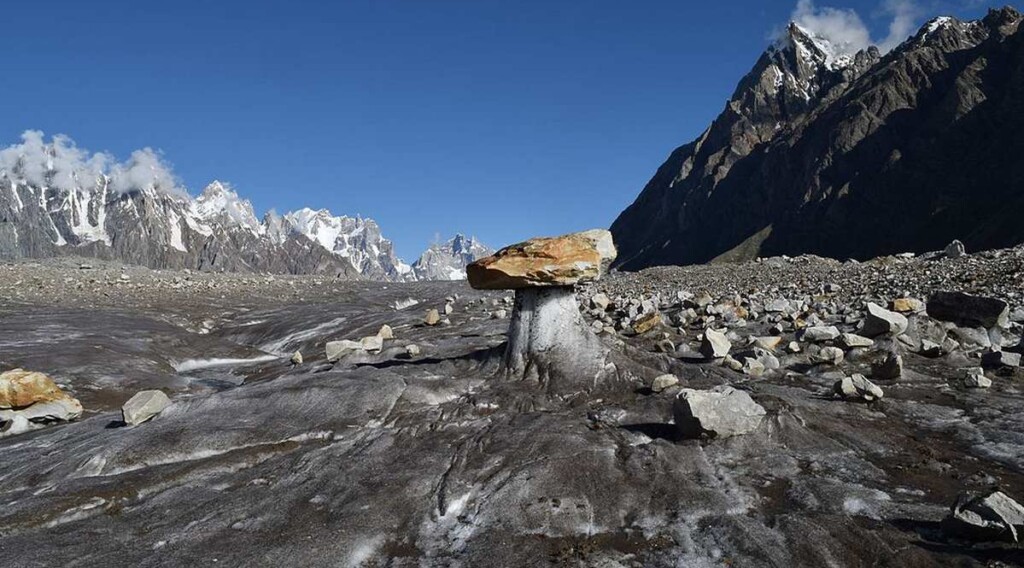
Recently, National Public Radio investigated a peculiar practice high in the Himalayas where locals are making “glacier babies” by introducing “male” glaciers to “female” glaciers.
They do this in a secluded place far from voyeuristic eyes where a little magic might happen and create the next generation of glaciers to replace the ones that the locals say have shrunk considerably over the years.
The United Nations has backed the program with several multi-hundred dollar grants which go into the hands of locals in Baltistan Province who must undertake an arduous journey to retrieve chunks of ice from pure white glaciers which local custom holds are female, and brown glaciers which are held to be male (they’re brown because of accumulated soil and rock matter.)
Local history records that a religious figure Ameer Kabir Syed Ali Hamdani visited Gilgit-Baltistan in the early 14th century and conducted the first glacier “grafting” which he accompanied with a prayer to god that the glacier would grow and block the pass from enemy attacks.
“They put it into caves, where [the ice is] shaded from solar radiation,” mountain hydrologist Jakob Steiner told NPR. “It’s much colder. It’s going to rain on top as well. So it’s going to freeze — so that ice actually grows. You can do this over seasons, because at that elevation it doesn’t melt.”
For the piece in NPR’s Goats and Soda column, that’s exactly what the team of men from the village of Chunda, led by village leader Saeed Baltistani, did.
2 years ago, they struck out on a four-day voyage to recover the female ice, which the villagers bashed with hammers until some came off. For the male ice, Saeed’s partner Malik took other men up K2, the second-highest mountain on Earth.
A village cleric conducted the ceremony high up in a secluded nook on the closest mountain to Chunda, read some verses of the koran while coal and straw swaddled the two young glacier chunks, and sacrificed a goat. The straw and coal is to create a slurry out of any water that melts during the mating process, preventing it from running away.
When Diaa Hadid for NPR visited the glacier 2 years later, the villages were dismayed at first because the glacier baby had not grown at all, but they realized that the ground around the glacier baby had frozen, and that the ice had begun to overtake some large rocks nearby. Saeed, however, said that they probably needed to pump some water up into the glacier baby manger, so to speak.
A banner for the project by a joint venture of the Ministry of Climate Change in Pakistan and the United Nations Development Project (UNDP).
Indigenous methods of glacier preservation are being investigated by the UN as a kind of sticking plaster in the face of broader climate change. This method of breeding glaciers can be done with little effort beyond the few days needed to gather the ice. It can also be done in several places.
Hadid was told that it takes 24 years for the ice to become an actual glacier, and another 24 before it begins to move, making them a bit of an insurance policy in case other measures to prevent glacier recession fail.
The method has a high success rate—with the Aga Khan Rural Support Program including a glacier grafting project with an 80% longevity out of 19 glacier babies.
SHARE This Climate Change Mitigation Strategy I’ll Bet You’ve Never Heard Of…
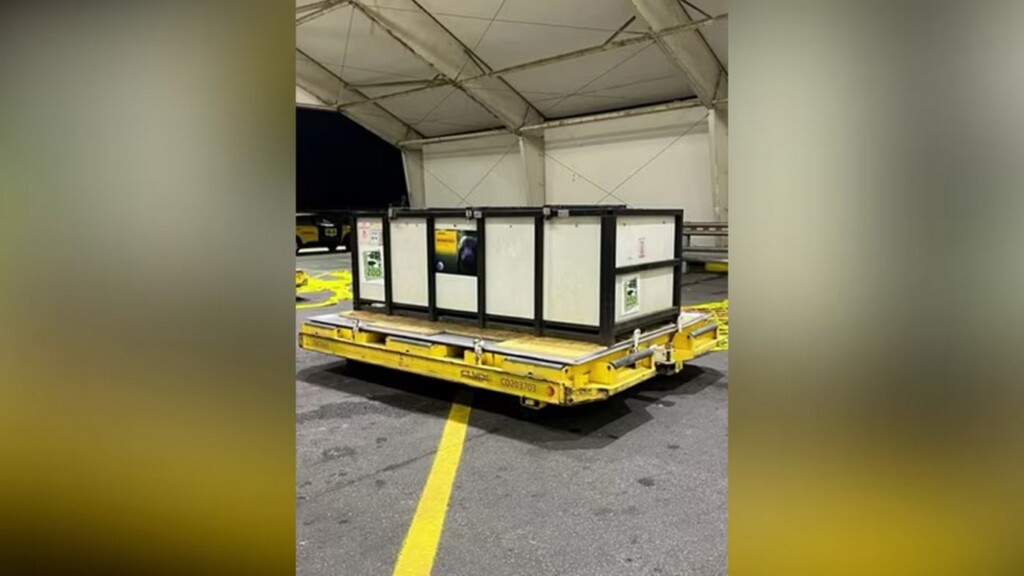
DHL prepare to load a specialized crate containing a manatee. credit SeaWorld
DHL prepares to load a specialized crate containing a manatee. credit SeaWorld
Eight manatees are por-poised to be released back into the waters of Florida where they were rescued years ago.
The graceful sea cows, weighing as much as two Honda civics, were driven to the airport in specialized crates that monitored their conditions.
The crates were then loaded into a cargo plane at Cincinnati airport, and a pair of marine veterinarians accompanied them to ZooTampa and SeaWorld in Orlando.
Once there, they will complete the final stages of their rehabilitation before a release into the wild, the ultimate destiny of some 50 manatees that have left both the Columbus Zoo and Cincinnati Zoos’ rehab stage program.
“Moving manatees is an extremely complex process that involves significant planning and logistics to ensure that each specific need is met throughout the journey,” said Cain Moodie, SVP Network Operations, DHL Express Americas.
The Manatee crates. credit: SeaWorld
“Manatees are a critical part of our aquatic ecosystems, and we’ve been honored to be involved in their rescue, rehabilitation, and return for 47 years, working alongside our partners… to help preserve these beloved Florida icons,” said Dr. Joseph Gaspard, vice president of zoological operations at SeaWorld Orlando.
MORE NEWS LIKE THIS:
Five young manatees started their own rehabilitation journey by catching the return flight back to Ohio, where they will hopefully attract plenty of visitors who will be able to see these gorgeous creatures, and learn what they can do to protect them.
To date, SeaWorld Orlando and ZooTampa have rehabilitated more than 1,400 manatees for release back into the wild.
SHARE This Laudable Effort For These Gentle Giants On Social Media…
Quote of the Day: “The fact that an opinion has been widely held is no evidence whatever that it is not utterly absurd.” – Bertrand Russell
Photo by: Joao Cruz
With a new inspirational quote every day, atop the perfect photo—collected and archived on our Quotes page—why not bookmark GNN.org for a daily uplift?
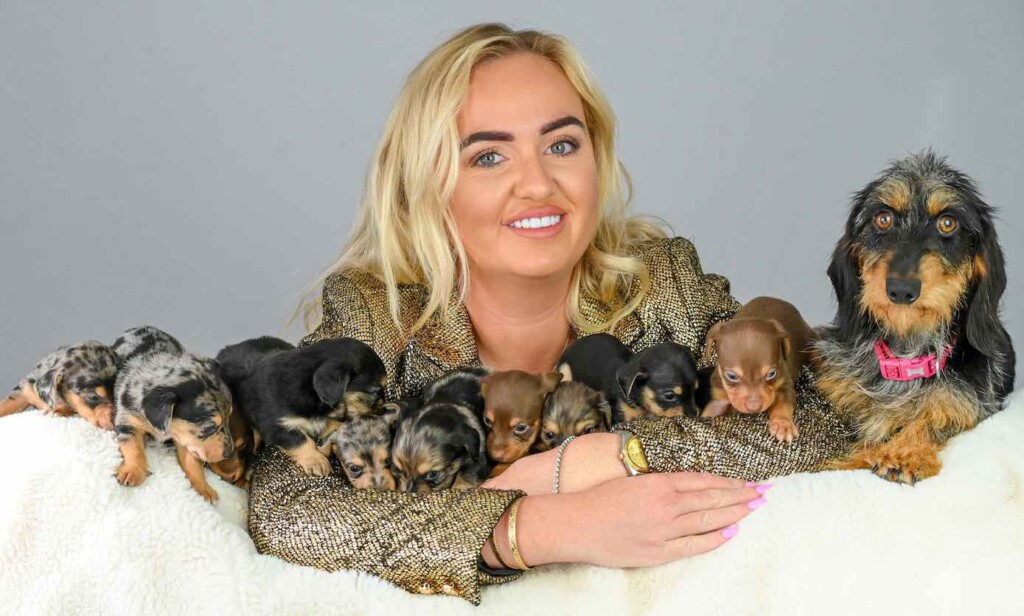
Winnie the dachshund and her 11 puppies – By Emma Trimble / SWNS
Winnie’s pups at 4 weeks old – Rayma Jones / SWNS
A dachshund has given birth to what could be a world record litter for her species—11 puppies at one time.
Three-year-old Winnie bore the huge brood at home near Leicester, England in September.
Also known as a wiener dog or sausage dog, the short-legged but long-bodied hound normally gives birth to a litter of between one and six babies, due to its small size.
Another dachshund, Cheesecake, gave birth to 10 puppies in September 2021, which made headline news. But Winnie has beaten that number and her owner thinks it may be a world record, although Guinness World Records does not keep records for individual dog breeds.
“I was amazed by the litter,” said stay-at-home dog mom Rayma Jones. “I just kept counting them over and over.”
“I was so surprised that I kept expecting her to pop out another one when I wasn’t looking.
“She’s such a great mum. I’m overwhelmed that she could have had a world record number of puppies. I looked online and I couldn’t believe it.”
A scan at 35 days of the nine-week pregnancy showed six puppies in Winnie’s belly.
The super dog birthed her first pup at 11:30pm, so Rayma sat up with her. The second came at 1:30am followed by four more, 20 minutes apart. Numbers seven, eight and nine then came around seven minutes apart, followed by a 40-minute gap until number 10.
Rayma went to bed at 6:30am believing Winnie had all her pups. But when she checked in on her four hours later, she couldn’t believe her eyes.
She said: “I thought 10 was amazing. She’d stopped panting and lay down feeding them. I really thought she’d finished, but when I came back I counted them and there were 11.
Rayma Jones with 3-year-old Winnie and her her 11 pups – SWNS