All News - Page 291 of 1715 - Good News Network
Home Blog Page 291

Mathematicians Discover Elusive ‘Einstein’ Shape: ‘The Miracle that Disrupts Order’

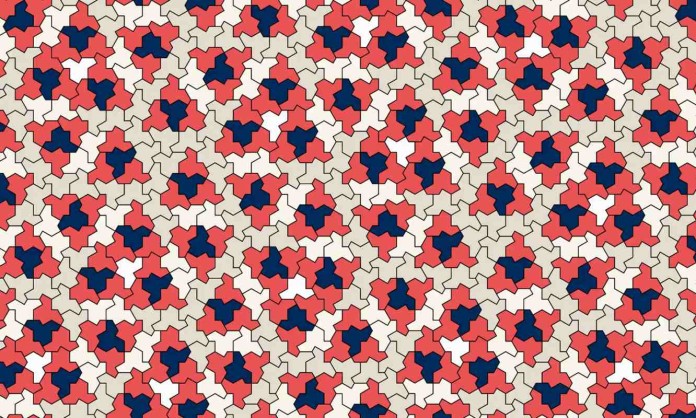
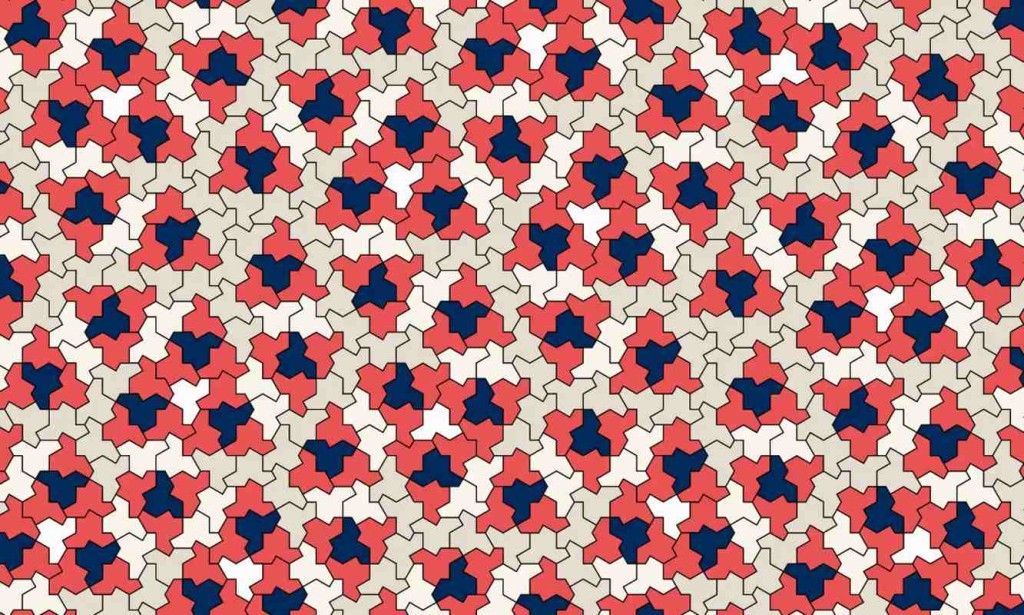
An aperiodic monotile never repeats a formation, no matter how long the pattern. Photograph David Smith, Joseph Samuel Myers, Craig S. Kaplan, and Chaim Goodman-Strauss, 2023
An aperiodic monotile never repeats a formation, no matter how long the pattern. Credit: David Smith, Joseph Samuel Myers, Craig S. Kaplan, and Chaim Goodman-Strauss, 2023

Mathematics is full of difficult problems, and one that had been outstanding for several decades has finally been solved.

Is there a shape that could interlock with itself ad infinitum without ever replicating a pattern? Turns out, there is.

A 13-sided shape called “the hat” and another one called “the turtle” have both been found to create irreplicable designs regardless of how many shapes are interlocked, whether 100, 400 quadrillion, or something equally ridiculous.

Such a shape is known as an ‘aperiodic monotile’ or an “Einstein shape”, using both the German wording for ‘one shape’ and the name of a certain famous physicist.

The discovery was largely the work of an Englishman named David Smith who lives in the East Riding, Yorkshire. Once he made his discovery using an online geometry program, he shared it with a professor of computer science and mathematics at the University of Waterloo in Canada, Dr. Craig Kaplan.

Kaplan then engaged a team of colleagues to work on Smith’s shape—Dr. Chaim Goodman-Strauss, a University of Arkansas mathematician, and Dr. Joseph Myers, a software developer in Cambridge, England.

It was these three that begin tinkering with “the hat” to see if it could be, in fact, an aperiodic monotile that had no limit. The New York Times reported the team found that not only was there “the hat,” and “the turtle” but that these two shapes were linked to a whole family of Einstein shapes.

MORE MATHEMATICAL NEWS: The Mind-Blowing Mathematics of Snowflakes

“The miracle is that this little tile disrupts order at all scales,” Goodman-Strauss told the Guardian. “These tiles are just sitting next to each other and somehow have these effects at any length scale: miles, 10 miles, 100bn light years, these little guys are somehow causing effects at these arbitrary long distances.”

The discovery won’t likely yield any breakthroughs in theoretical physics or anything of that nature, but the implications of the shape for art, interior design, and architecture are exciting: materials made in the hat or turtle shapes guarantee irreplication when tiled onto a floor, a building facade, or a painting.

MORE BIG BREAKTHROUGHS: Teens Say They Have New Proof for 2,000-Year-Old Mathematical Theorem, a Method Scholars Thought Impossible

“I’ve just been blown away by the outpouring of interest and people making their own tiles, their own drawings—somebody made cookies in the form of this thing—and quilts,” Goodman-Strauss said.

“To me, the human aspect of this is really incredibly gratifying, that there’s all these people coming together and enjoying this thing, and it really means that this thing is gonna live for quite a long time.”

WATCH the tiles in action, but don’t concentrate too hard… 

SHARE This Wild Discovery With Your Friends On Social Media… 

Kenyan Physics Teacher Powers E-Motorbikes With Old Laptop Batteries

Paul Waweru - African News, screenshot
Paul Waweru – African News, screenshot

A Kenyan high school teacher is using your old laptop batteries to turn petrol-powered bikes into electric ones.

There’s no shortage of MacGyver-like innovations in Africa, and Paul Waweru is a perfect example of that ingenuity, turning second-hand electronics destined to become waste products into something useful.

The batteries can cost as little as 0.50 Kenyan shillings, which Waweru then cannibalizes for the cells that still can hold a decent charge. Once he has enough, he configures them into battery packs to replace the internal combustion engines of existing scooters and bikes.

“Nobody was selling electric bikes in Kenya, so I had to import one,” he told African News.

The imported bike didn’t last long, so he used his own innovation to create the product his society needed. African News reports he founded a company called Ecomobilus which is already selling well, especially to couriers who love that they can avoid the high costs of gasoline.

“Ecomobilus bikes are more advantageous compared to other gasoline-powered bikes. Number one, because of the cost of maintenance,” Waweru explains. “Ecomobilus bikes require zero maintenance because there are no mechanical parts that need to be repaired every often [sic], we give it at least two years for services because the engines are no longer there, we are dealing with motors.”

MORE SUSTAINABLE SOLUTIONS: Honda to Introduce 10 New Electric Motorcycles and Scooters to Ease Air Pollution in Asia’s Megacities

A full charge on the laptop battery pack is around 60 miles, (100 kilometers), and it can fully charge in 45 minutes for less than half the cost of a full tank of fuel.

Many African cities are choked with air pollution, especially during the dry seasons, and some are seeing electric bikes as the perfect solution to quickly and effectively improve on this vital issue.

WATCH the story below… 

SHARE This African Innovation With Your Friends One Facebook… 

“The best revenge is not to be like your enemy.” – Marcus Aurelius 

Quote of the Day: “The best revenge is not to be like your enemy.” – Marcus Aurelius 

Photo by: Gavin Allanwood (cropped)

With a new inspirational quote every day, atop the perfect photo—collected and archived on our Quotes page—why not bookmark GNN.org for a daily uplift?


Church’s Lost Crucifix Rescued From WWI Battlefield Finally Returned After 107 Years

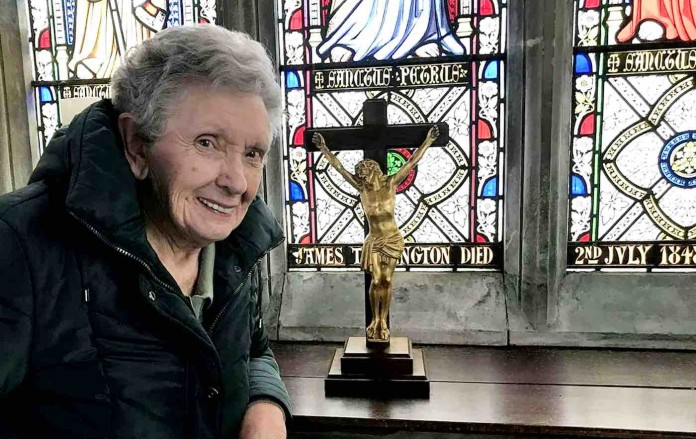
French crucifix – SWNS

A church destroyed in France during The Somme has regained its holy crucifix lost in the battle.

Plucked from the mud in 1916 by a British reverend, it was brought back to Britain and has proudly sat on the altar of All Saints Church in Tinwell since 1936.

The crucifix will is due for a return to its rightful home this June after some All Saint’s parishioners discovered the church in Doingt-Flamicourt had been rebuilt only a few years after the war’s end.

A group of ten churchgoers will set out on a pilgrimage to reunite the crucifix with the church on a 297-mile trip to the village in northern France in what will be the 107th year since the battle.

Doingt and its church were almost completely destroyed during the Battle of the Somme. The village and its church were rebuilt following the armistice and the crucifix is seen as a precious link between its devastation and restoration.

“A village once destroyed is rebuilt; where there was trauma and death in 1917, today there is life and community,” said Reverend Olwen Woolcock from Tinwell. “The crucifix is like the last piece of the jigsaw in that restoration.”

The crucifix, which is in the French style with a shortened top with a gilded metal figure of Christ, was later used as a replacement for a small altar cross at All Saints.

SWNS

Tinwell resident Katharine McDevitt formed the plan to reunite the lost relic back with its French village after she learned in 2018 that Doingt Church was rebuilt in 1925.

MORE NEWS LIKE THIS: Wife of WWII Soldier Spends Decades to Reunite Japanese Family With Photo Album He Found on Okinawa –LOOK

“I wrote a letter to the mayor of Doingt-Flamincourt and asked Katharine to translate it into French,” said Rev. Woolcock. “After several months we sent another letter and this time got a response from the deputy mayor who put me in touch with a member of their historical society.”

“They said they would very much like their crucifix back so we started to organize the trip.”

The trip has taken four years to arrange and required special dispensation from the Chancellor of the Peterborough Diocese to remove the figure of Christ on the cross from the church.

MORE POST-WAR HISTORY:  Two Sisters Put Up for Adoption at End of WWII Finally Reunite After 75 Years Apart

“When we received the email, I was very surprised and moved,” said Hubert Boizard, a member of the local history group, Mémoire de Doingt-Flamicourt. “I look forward to meeting our English friends to remember the past when their country defended France and freedom.”

“The region is sensitive to the fate of all the young British soldiers who died on our soil. The return of the crucifix symbolizes the friendship between our two nations…”

SHARE This Story With Your Faithful Friends On Social Media… 

FDA Clears First Study of CRISPR Gene-Editing in Human Patients

Sangharsh Lohakare
Sangharsh Lohakare

In a national first, the Food and Drug Administration has given Intellia Therapeutics the go-ahead to begin testing a drug that uses CRISPR gene editing in vivo.

In biology, in vivo means within an organism, rather than in something like a petri dish, and Intellia’s offering is the first time ever that the FDA has approved such testing.

Their drug would prevent swelling attacks in people with a genetic condition called hereditary angioedema.

Typically, treatments and drugs that utilize CRISPR take place outside the body. Cells or tissues are removed and altered ex vivo before being re-introduced inside the patient. In the case of Intellia’s drug, the edited media finds its own way to the liver rather than being injected there.

The advantages are huge if such a drug could be proven to work well—a lack of hospital and laboratory procedures would save a patient thousands, and potentially open up the class of drugs to the lower and middle classes, or to those who are uninsured.

“This is an important milestone for Intellia as it is the first-ever (investigational new drug application) cleared by the FDA for in-vivo gene editing,” RBC Capital Markets analyst Luca Issi said in a report on Inetllia’s stock, which rose following the announcement.

MORE SCI-FI MEDICINE:Life-saving Treatment for Heart Attacks Discovered Inside Protein of Deadly Spider Venom

The company plans to file the papers for another such drug later in the year, which would help tamp down on an abnormal protein that builds up in the heart.

Other Western countries have already approved several and even many in vivo CRISPR treatments for testing, among which are New Zealand, The Netherlands, Sweden, the UK, and France.

SHARE This Good Pharma News With Your Friends… 

The Retirement Cat Village Where Elderly Strays Live Out Their Days in Mini Cottages

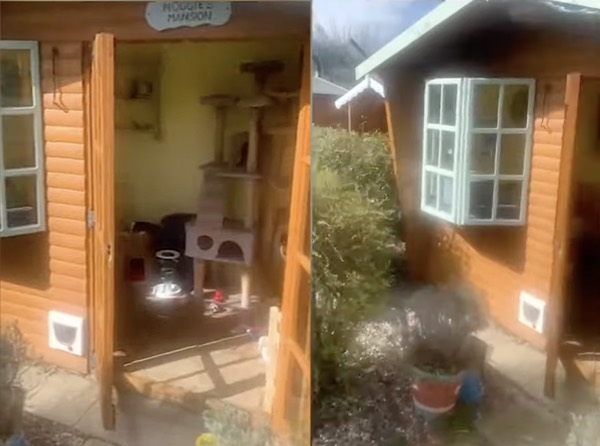
Moggies Retirement Village – SWNS

Some West Midlands cat lovers are planting roots of good merit through a beautiful and unique rescue operation.

Shropshire Cat Rescue in Shrewsbury takes in homeless, stray, abandoned, and unwanted cats and kittens and organizes veterinary care for feral felines in the area.

But particular to this charity is that it has 17 cats, all of which have been given up or found stray in what should be their golden years, who are now safe and comfortable in Moggies Retirement Village.

The cats enjoy the cushy life with volunteers taking time to look after them and even getting local kids to read to them once a month.

A video of the gated community shows a series of mini cottages surrounded by well-kept gardens where the cats are housed. Each cottage contains a bed, a litter tray, food and drink bowls, and various toys for up to two cats.

The clip also shows Moggie’s Mansion, a larger house with bigger toys and beds where the cats can hang out together.

“The shelter was intended to create an area for cats who were too elderly or had ongoing health conditions that needed regular treatment and monitoring to live out their days in comfort,” explains volunteer vet Susie.

The charity has been rescuing and rehoming cats in the Shropshire area since 1989. Cats in the sanctuary are usually in their later years, but there are others as young as three.

“It also opened the door for people who had elderly cats and were going into a nursing home and couldn’t take them with them. It gives a different option and eases a stressful upsetting time by finding somewhere the cats could live out their final days.”

MORE NEWS LIKE THIS: This Hero Dog-Lover Keeps Seniors and Their Pets Together With ‘Peace of Mind’

Being that old cats, much like old humans, tend to be set in their ways, their arrival at the retirement community is often a little stressful, and so they’re locked in a cottage for about two weeks to become accustomed to the new environment.

Moggies Retirement Village

“The retirement village cats are weighed weekly and monitored for weight changes or indications something isn’t right and they are highlighted for a vet check,” Susie said. “If there are any cats who are a concern beforehand, they get taken straight down or booked in asap.”

The volunteers work around the clock, 365 days a year to make sure that these cats are able to live their best life.

MORE STRAY PET STORIES: Istanbul Improves the Lives of Thousands of Stray Cats with Elaborate Outdoor Cat Houses

“Our volunteers are amazing coming up regardless of whether snow and torrential rain won’t stop them.”

The retirement village sometimes is able to rehome the elderly cats but otherwise, they live out the rest of their lives there.

Volunteers have even created memorial stones for all of the cats that have passed away.

TAKE a tour of the cottages… 

SHARE This Heartwarming Kindness Toward Animals On Social Media… 

Entrepreneur Designs Shoes That Expand As Children Grow, Building Great Business (Watch)

Satyajit Mittal - The Better India
Satyajit Mittal – The Better India

FYI to the non-parents out there, it takes at least 15 pairs of shoes for a child to grow from a toddler to a teenager—that’s a lot of trips to the Footlocker.

Fortunately, an Indian entrepreneur from Pune has designed a line of shoes that slowly uncurl as the child ages, intuitively solving the problem and reducing unnecessary manufacturing waste.

Called Aretto, the shoes were designed by Satyajit Mittal and his childhood friend Krutika Lal. Their innovative knitted uppers are designed with all the qualities a parent would want their kids’ shoes to have—durability, flexibility, and washability.

“Children do not wear the right shoes for the first ten years of their lives,” Mittal, who designed the Aretto shoes with consultations with concerned childhood podiatrists, told The Better India.

“Between zero and three years of age, children’s feet size changes every three months, and you need roughly 15 sizes between zero and nine, before attaining final foot size at 13 years. We figured out the problem that while feet grow, their shoes do not.”

What the podiatrists explained to him was that children have a broader footprint than adults, due to their not having worn shoes for most of their lives like adults. Tens of thousands of nerve endings provide the feedback needed for children to understand how to use the miraculous musculature in their feet to walk and run.

Most infantile and childhood shoes don’t consider this, and based on the frequency at which parents need to buy new shoe sizes, proper foot function is probably never even taken into account, and the occasional stuffing of toddler feet into shoes too small or too large, can disrupt this critical muscle development.

“We wanted to give children the right fit for all cycles. We chose one shoe to cover three sizes that allow 18 mm growth. We took inspiration from how a flower blooms from the bud stage to the fully-flowered stage. The transition happens organically every day. We applied this concept to the shoe,” said Mittal.

MORE FOOTWEAR INNOVATION: These Baby Shoes Dissolve In Water After Your Infant Outgrows Them, Saving Space in Landfills

“We started working on a shoe that flexes as per the feet. Simply put, as and when the feet grow either from the front or back or sideways, and when a child wears this shoe, it expands accordingly and takes the shape and contour of their feet. That’s why children feel comfortable wearing such shoes,” he adds.

The shoes are priced between Rs 1,800 and Rs 2,600, ($22 – $31) and are available internationally as well, provided that international buyers have either an Indian bank, or Google Pay, Amazon Pay, or WhatsApp Pay.

The shoes are fairly new on the marketplace but have already generated 21 lakh, or Rs 2.1 million ($25,000) in revenue.

SHARE This Story With Any New Parents Out There… 

“Enlightenment is gaffe upon error upon blooper.” – Ikkyu

Quote of the Day: “Enlightenment is gaffe upon error upon blooper.” – The Zen poet Ikkyu (1394-1481)

Photo by: Ryoma Onita

With a new inspirational quote every day, atop the perfect photo—collected and archived on our Quotes page—why not bookmark GNN.org for a daily uplift?


Couple Saves $27,000 a Year By Moving Onto a Houseboat–It Saved Their Mental Health, Too (LOOK)

@KeepingAfloatWiththeJoneses / SWN

A couple gave up life on land to live on a houseboat—and doing so saved them $27,500 every year.

Sarah Spiro and her boyfriend, Brandon Jones, spent $23,000 to buy a one-bedroom houseboat and moved in two years ago on Fontana Lake, North Carolina.

Sarah said it was a “no-brainer” to move, and the duo pays $2,500 a year to be able to live there compared to their $2,500 each month for rent on separate two-bedroom properties.

After living atop the water for two years, the couple has started renovating a bigger houseboat, with plans to rent the smaller residence to vacationers.

“We were always spending all our free time on the lake,” said Sarah, a 27-year-old mountain guide. “We were always boating; it was our favorite thing to do.

“It’s been a long-standing dream of ours—and it is so cheap, too. Here we only have one yearly fee. It is a huge step for us.”

The self-described ‘water rats’ bought the boat in March 2021 and spent two months renovating it, spending $23,000.

Sarah Spiro and Brandon Jones – SWNS / @KeepingAfloatWiththeJoneses

“It is so peaceful here. You still have your day-to-day trends like doing the dishes and laundry but you get to do it all in this phenomenal view at all times. Whatever the time, whatever you are doing you are surrounded by peace and serenity—it is paradise.”

POPULAR: They’ve Designed a Livable Pontoon Boat Inspired by a Volkswagen Bus

Their biggest challenge is the cold winter, with temperatures on ‘most nights’ dipping below freezing. They did add a small fireplace in the corner of the room.

“You do have to make sacrifices convenience-wise. You can’t get food delivered, the grocery store is 40 minutes away. You have to be more intentional about planning the things you need but I wouldn’t change it for the world,” added Sarah, who parks their car at the marina, a five-minute boat ride away.”

Most importantly, Sarah said that living on the houseboat has improved their mental and physical health.

@KeepingAfloatWiththeJoneses / SWN

“It is the sensation of being out in a nice open space. It has benefitted our nervous system. I wear a Fitbit watch and it is crazy to see how my heart rate has decreased living here.

WATCH: Penguin Leaps Into a Tour Boat to Avoid Being Eaten By Killer Whales

“My state of anxiousness is a lot lower too.

“I love the freedom it has given us: It has freed up our wallets, and given us all the things we love right on our doorstep.

“It is also an affordable and more sustainable way to live.”

Currently, the pair are renovating a new cabin to move into and hope to start renting their current cabin out to holiday makers.

Have a look inside the residence with the video below, and get updates on renting the houseboat on their YouTube channel or on social media (@KeepingAfloatWiththeJoneses)…

FLOAT This Fantastic Housing Option to Friends and Family on Social Media…

Microbot That Targets and Captures Damaged Cells is Real-Life Pac-Man

Hybrid micro-robot simulation courtesy of Tel Aviv University / SWNS

A tiny controllable robot acts as a real-life ‘Pac-Man’—identifying and gobbling up damaged cells in living things.

Scientists say the minuscule robot, which is seven times smaller than the width of a human hair, can identify, capture, and transport cells.

Another benefit is that it can be navigated and controlled both magnetically and electrically. It can also distinguish between different types of cells, identifying whether they are healthy or dying.

Scientists from Tel Aviv University in Israel say their new micro-robot could be used to administer drugs—and even identify and treat cancer.

The innovative technology was developed by Professor Gilad Yossifon and his team of researchers in the School of Mechanical Engineering and Department of Biomedical Engineering.

The microbots, also known as ‘micro-motors’ or ‘active particles’, are tiny synthetic particles the size of a biological cell that can move around and perform actions either automatically, or by being controlled by an operator.

RELATED: One Stem Cell Injection to Target Inflammation Slashed Risk of Heart Attack and Stroke By 58%

Prof. Yossifon says the idea to make tiny robots able to move autonomously was inspired by ‘biological micro-swimmers’, such as sperm.

To demonstrate the ability of their robot, the team used it to capture single blood and cancer cells, and a single bacterium.

The results, published in the journal Advanced Science, proved the microbot had the ability to distinguish both between cells that are healthy and those damaged by drugs, and between those dying unnaturally and those dying in a natural process.

After successfully identifying the desired cell, the micro-robot then captures and escorts it to where it can be further analyzed.

CHECK OUT: New Brain Implant Device Could Restore Function in Paralyzed Limbs

Another important feature is the robot’s ability to identify target cells which aren’t labelled or pointed out as being noteworthy. It can self-identifying cells and their health conditions using an internal sensing mechanism based on the cell’s electrical properties.

“In addition, the micro-robot has an improved ability to identify and capture a single cell, without the need for tagging, for local testing, or retrieval, and transport to an external instrument,” said Yossifon.

“This research was carried out on biological samples in the laboratory for in-vitro assays but, the intention is to develop in the future micro-robots that will also work inside the body—for example, as effective drug carriers that can be precisely guided to the target.”

The researchers add that the hybrid nature of the microbot will be beneficial in physiological environments such as tests carried out in a liquid, where electrical guidance techniques are less effective.

MORE: Third Case of HIV Cured 10 Years After Treatment of the ‘Düsseldorf Patient’

“This is where the complementary magnetic mechanism come into play, which is very effective regardless of the electrical conductivity of the environment.”

Lauding the success of his team’s groundbreaking study, Prof. Yossifon hailed the microbot’s future usage in diagnosing and treating diseases:


“Among other things, the technology will support the following areas: medical diagnosis at the single cell level, introducing drugs or genes into cells, genetic editing, carrying drugs to their destination inside the body, cleaning the environment from polluting particles, drug development, and creating a ‘laboratory on a particle’—a microscopic laboratory designed to carry out diagnostics in places accessible only to micro-particles.”

This innovative area of technology is developing rapidly, a promising tool for a wide variety of fields, including the environment and research.

SEND the Breakthrough Bot Into Your Social Media Newsfeed by Sharing…

Artistic Doctor Transforms Kids’ Broken Arms Into Animated Artwork Especially For Them–LOOK

Shriners Children’s Hospital

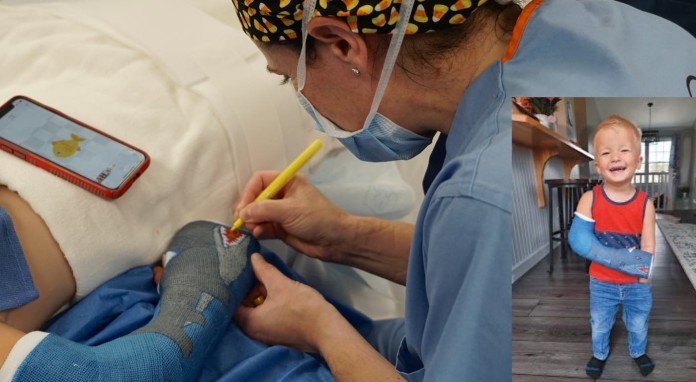
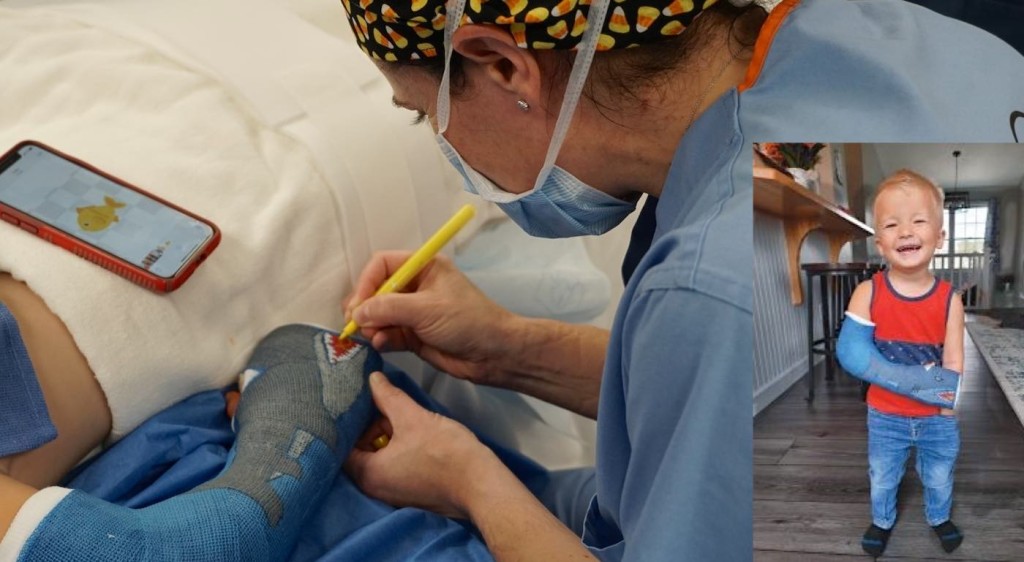
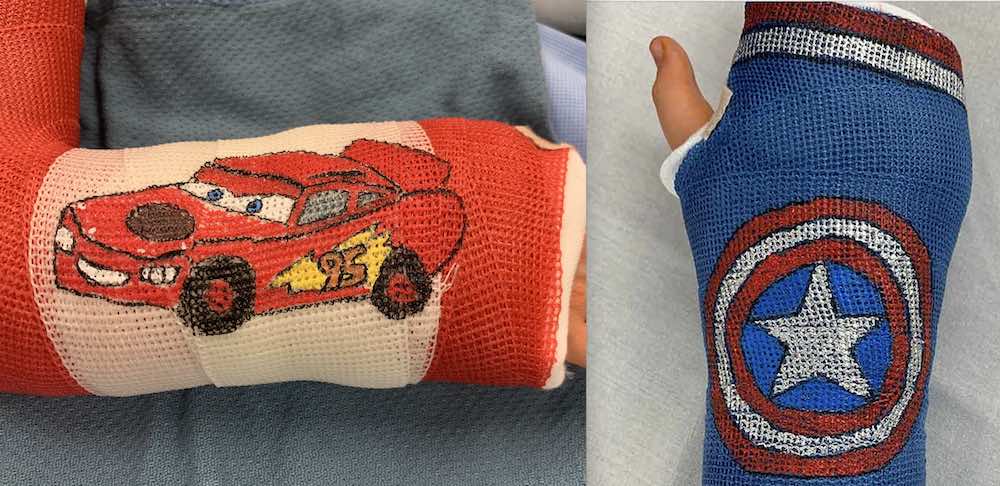
Kids who arrive at this Chicago hospital to get treated for hand injuries don’t expect to leave with a piece of art that’s designed just for them—but thanks to one artistic doctor, that’s exactly what happens.

Orthopedic surgeon Dr. Felicity Fishman at Shriners Children’s Chicago is the go-to doctor for children who want a grin on their face when they leave for home.

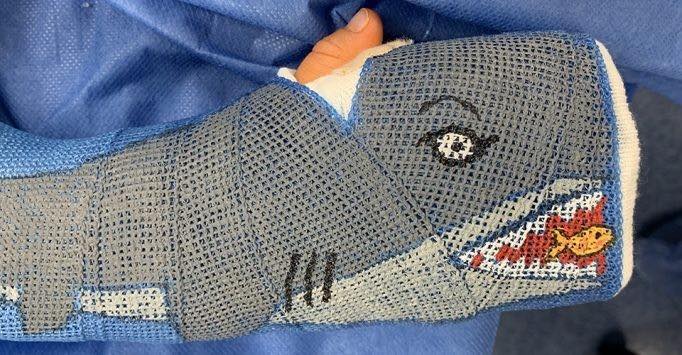
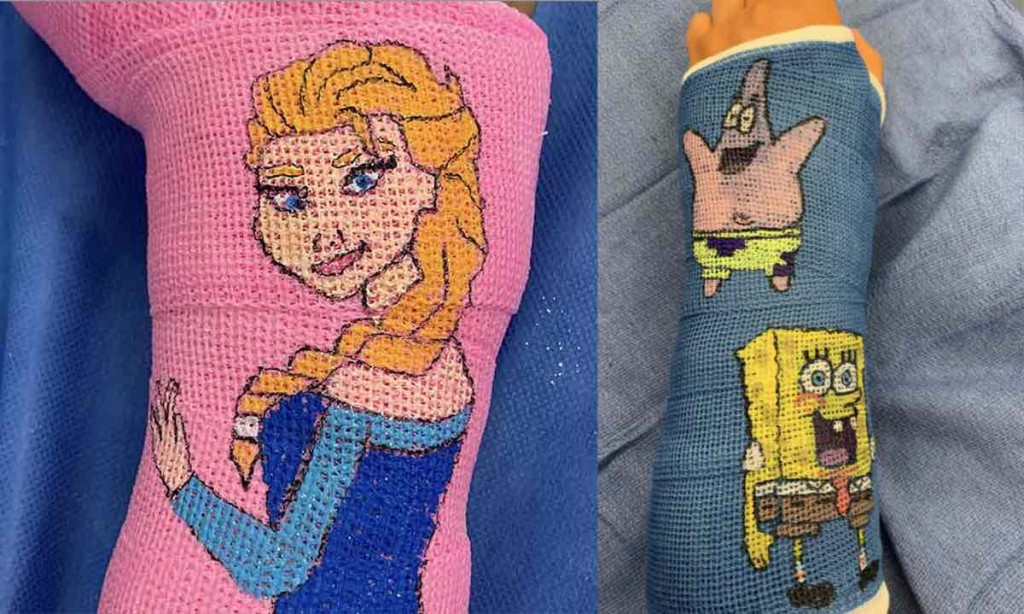
She’s drawn everything from dinosaurs and sharks to SpongeBob and Elsa for “Frozen” fans—all personalized with sterilized markers.

“The whole team at Shriners Children’s has embraced the simple happiness that the cast art allows the recovering child to enjoy,” Fishman told GNN.

“It is truly a team effort; my PA and my nurse in clinic begin the conversation about the potential cast art so the families have time to choose, and the child has something to look forward to—instead of being scared.”

RELATED: Build a Snowman to Match Kids’ Drawings at Children’s Hospital – And Bring Joy to Patients and Staff

Shriners Children’s Hospital

“The ability to pick something special and personalized for their cast allows the child to regain a sense of autonomy in an otherwise anxiety provoking situation.”

The pre-op nurses encourage the kids to pick something really unique. The OR staff (nurses, anesthesia, scrub techs) selects the marker colors and help plan the outline. Finally, Fishman brings the art to life.

Shriners Children’s

“There have been a few children that have loved their drawings so much that they were actually sad to have their cast removed,” says Fishman.

LOOK: Baker Creates Stunning Cakes That are Straight Out of a Cartoon

“One family told me that they saw their daughter (around 2 years-old) having a conversation with the Mickey Mouse on her cast.”

Shriners Children’s

The kids usually return about 3-4 weeks after their surgery to have the cast removed and the orthopedic techs try to preserve the art when the family requests to keep it.

“I consider this a huge compliment!”

Dr. Fishman’s expertise is what helps her patients heal, but it’s her artistic skill that puts a smile on their faces.

CHECK OUT: Perpetual Treasure Hunt Has Kids Finding Hidden Books, Reading, Then Re-Hiding Them for Others

Even though the art is applied following the real work of surgery, everyone on the team agrees those 10 minutes of creativity are still important to their overall success.

SHARE The Idea With Hospitals and Friends in Chicago…

Couple Makes Award-Winning Gin and Vodka After Starting Distillery in a Shed During Lockdown

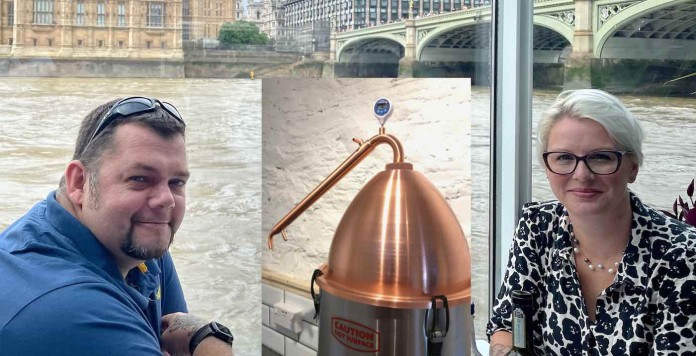
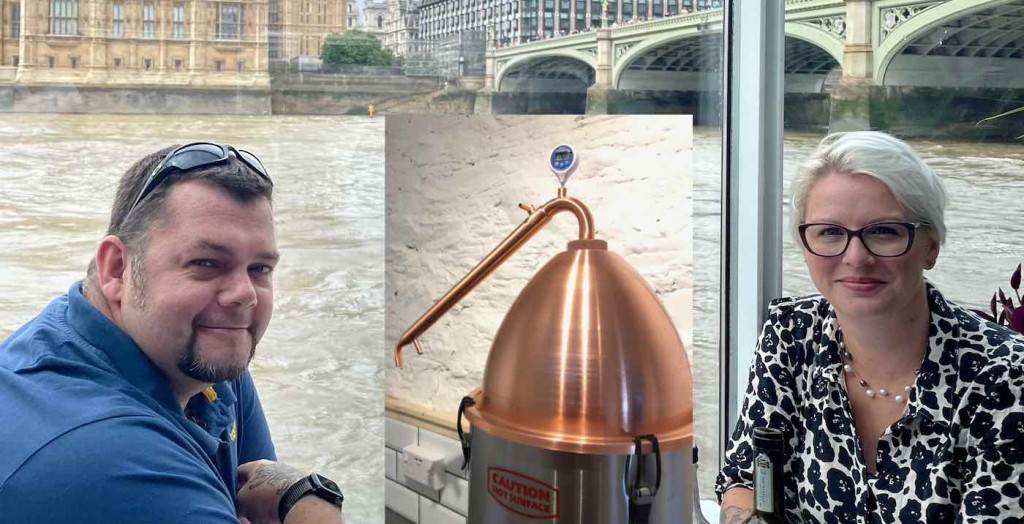
Terri and Richard Hudson with original still - SWNS
Terri and Richard Hudson with original still – SWNS

A couple is making award-winning gin and vodka after starting a distillery in a garden shed during the pandemic lockdown.

Terri Hudson and husband Richard began experimenting with alcohol flavorings over 12 years ago in their first copper still.

The couple has since converted an old poultry shed—also on their land in Taunton, Somerset, England.

They’ve already scooped up 15 awards since launching officially last year.

“It started as a hobby and we had a real passion for it,” said Richard, 38. “We’ve both worked in the merchant navy so knew a bit about different cultures and flavors and have  always enjoyed experimenting.

“Then during the first Covid lockdown, we bought an old farm to move to, and we also decided to start experimenting with distilling alcohol in the shed with a small copper still.

Once they tasted their treasure, the couple wanted to start selling small batches commercially so they applied for all the necessary licenses. They had a derelict poultry shed at the bottom of the land, so they applied to convert it into a distillery.

CHECK OUT: The Queen has Launched Her Own Gin Featuring Botanicals Grown on Her Country Estate

”We’ve still got the chickens next door, but the warehouse now has all our copper stills and we operate out of that.”

They officially launched Mainline Spirits last June, using a name inspired by the unique history of their plot of land. The couple found links to local railroad history soon after moving in, which showed that the location was on the Mainline railway between London and Penzance.

“The farm hadn’t been touched since the 1970s, but we found documentation about the farm that said it was built in 1717,” explained Richard. Records showed it was right in the path of the original steam locomotives.

”Back in the day it was a big farm with orchards, so we’re trying to replant them and pick ingredients from the land.”

Mainline Spirits

Describing their spirits as “using only the finest hand picked botanicals from the rolling landscapes,” the couple chose train-related names such as Signalman Vodka and Western Star Gin—named for the Great Western Railway.

POPULAR: She Reunites Families with Lost Heirlooms for Free–Returning Over 500 Items to Thrilled Relatives

Since officially launching less than a year ago, the couple have won 15 awards, including a gold medal in the Taste of the West after just 16 days.

They have also been recognized with accolades at The Gin Masters and Gin of the Year awards.

“Considering we only launched the brand last year, we have hit the ground running,” said the excited entrepreneur.

“To win so many awards in such a short space of time is humbling.

LOOK: Professional Puzzler in Jigsaw Championships Can Complete a 500-piece Puzzle in 50 Minutes

“When we are sat next to high end brands that are normally on shop shelves or TV with the same medal, you have to pinch yourself.”

RAISE a Glass to Entrepreneurs on Social Media By Sharing This Tasty Tale…

“Easter is meant to be a symbol of hope, renewal, and new life.” – Janine di Giovanni

Quote of the Day: “Easter is meant to be a symbol of hope, renewal, and new life.” – Janine di Giovanni

Photo by: Annie Spratt

With a new inspirational quote every day, atop the perfect photo—collected and archived on our Quotes page—why not bookmark GNN.org for a daily uplift?


Twin Babies Hilariously Imitate Their Older Brother – Proving Twins Are 2x the Fun (WATCH)

Rumble / agatabernard

Rumble.com user agatabernard posted a video that made our hearts melt from its cuteness.

The mother in Argentina captured the moment when her twins responded to their big brother’s effort to make the babies laugh.

Evidently he’s their role model, because the two babies immediately mirrored his silly antics.

The back-and-forth fun is guaranteed to delight everyone watching the clip.

You can follow Agata Bernard and her family’s cuteness overload on Instagram.

Watch the video below…

ALSO FUNNY: Pooch Determined to Be in Family Portrait Leaps into Shot for Best Photobomb Ever

(Note: GNN has no affiliation with any ads displayed)

FILL Your Friends With Laughter By Sharing This Cuteness on Social Media…

Some Coastal Salt Marshes Are Keeping Up With Sea Level Rise: ‘We Were Definitely Excited’

Credit: James Loesch / CC license

Salt marshes on the East Coast have accumulated soil more quickly over the past century—and some appear to be keeping pace with rising waters.

The world’s salty, tidal marshes are hotspots of carbon storage and productivity, building up sediments and plant material so they can stay above sea level. Scientists wondering whether it’s possible for wetlands to keep up with rising sea levels have revealed research that shows how salt marshes along the U.S. coast have responded—by building up elevation more quickly over the last century.

Two main factors affect how quickly a salt marsh accumulates soil: how much sediment is deposited in the wetland during tidal floods, and how much organic matter from the marsh’s plants escapes decomposition. Humans can either choke sediment supply to marshes by building dams or increase the supply by causing erosion upstream, often through clearing land for agriculture. Cooler temperatures let more organic matter build up.

If sea level is rising slowly, sediment is plentiful, and vegetation is booming, a coastal wetland can keep pace with rising waters. But if sea level rises too quickly, that balance is lost.

“These feedback cycles allow a marsh to keep up and increase its rate of soil accretion up until a point where it just can’t,” said Nathaniel Weston, an ecosystems ecologist at Villanova University who led the study published in Earth’s Future. “After that, it falls off the other end and can no longer exist as a marsh.”

The new study is the first to assess the race on a large scale, comparing soil accretion rates using soil core from nine salt marshes from Maine to Georgia.

CHECK OUT: College Seniors Fix Erosion in New Orleans By Resuming Citywide Bottle Recycling to Crush Them For Sand

The dark, peaty columns record over 100 years of the marshes’ histories, and researchers dated the soil to calculate how quickly the wetlands grew over time and how that rate changed.

Soil accretion sped up in all nine marshes—and six of them built soil at roughly the same rate as sea level rise over the past century. Three marshes in North Carolina, South Carolina and Virginia could not keep up with local sea level rise due to low sediment supplies from damming and warmer temperatures.

“This is the first study to document what’s happening on this scale, across pretty much the entire East Coast,” said Weston. “We were definitely excited to see fairly consistent results across our sites, where the marshes were increasing their rate of soil accretion.”

Many coastal salt marshes around the world may be accelerating their growth, too, Weston said.

To slow the process of seawater inundation, communities could install “living shorelines” of vegetation to retain sediment, said Molly Keogh, a coastal geologist at the University of Oregon who was not involved in the study.

LOOK: New Shoreline Protection Looks Like Massive Lego Bricks and Doubles as Home for Marine Life

An expensive but temporary solution is to spray a slurry of mud and water over the marsh, which adds a few millimeters of sediment and can offset sea level rise a few years.

ELEVATE Your Friends and Families By Sharing on Social Media…

Life-Saving Overdose Drug Narcan Approved by FDA for Over-the-Counter and Online Sale

Narcan, a naloxone-based anti-overdose nasal spray, is one factor in the reduction - released by Adapt Pharma.

The U.S. Food and Drug Administration has approved the lifesaving drug Narcan for over-the-counter use without a prescription for the first time.

The nasal spray containing 4 milligrams of naloxone hydrochloride can rapidly reverse the effects of opioid overdose and is the standard treatment in such emergencies.

The FDA action paves the way for the life-saving doses to be sold directly to consumers in places like drug stores, convenience stores, grocery stores and gas stations, as well as online.

The timeline for availability and price will be determined by the American manufacturer, Emergent BioSolutions, but the FDA says the transition from prescription to OTC status, “may take months”.

Other formulations and dosages of naloxone will remain available by prescription only.

Drug overdose persists as a major public health issue in the United States, with more than 101,750 reported fatal overdoses occurring in the 12-month period ending in October 2022, primarily driven by synthetic opioids like illicit fentanyl.

OVERDOSE HERO: Instead of Buying New Car, Retired Paramedic Spends $40K on Overdose Prevention Kits and Already Saved 94 Lives

“The FDA has used its regulatory authority to facilitate greater access to naloxone…to address the dire public health need,” said FDA Commissioner Robert M. Califf, M.D. “Today’s approval of OTC naloxone nasal spray will increase the number of locations where it’s available and help reduce opioid overdose deaths throughout the country. We encourage the manufacturer to make accessibility to the product a priority by making it available as soon as possible and at an affordable price.”

Narcan nasal spray was first approved by the FDA in 2015 as a prescription drug—and more than 44 million doses have been distributed since its public launch in 2016. In accordance with a process to change the status of a drug from prescription to nonprescription, the manufacturer provided data demonstrating that the drug is safe and effective for use as directed.

The manufacturer also showed that consumers can understand how to use the drug safely and effectively without the supervision of a healthcare professional.

In February 2023, FDA committee members voted unanimously to recommend it be approved for marketing without a prescription.

RELATED: Every US Public Library, High School, and YMCA is Getting Opioid Overdose Reversal Kits for Free

The approval of OTC Narcan nasal spray will require a change in the labeling for the currently approved 4 mg generic naloxone nasal spray products that rely on Narcan as their reference listed drug product, according to the FDA press release. Manufacturers of these generic products (which can cost around $45 for two doses—compared to Narcan at $140) will be required to submit a supplement to their applications to effectively switch their products to OTC status. The approval may also affect the status of other brand-name naloxone nasal spray products of 4 mg or less, but determinations will be made on a case-by-case basis and the FDA may contact other firms as needed.

“Naloxone is a critical tool in addressing opioid overdoses and today’s approval underscores the extensive efforts the agency has undertaken to combat the overdose crisis,” said Patrizia Cavazzoni, M.D., director of the FDA’s Center for Drug Evaluation and Research. “The FDA is working with our federal partners to help ensure continued access to all forms of naloxone during the transition of this product from prescription status to nonprescription/OTC status.

“Further, we will work with any sponsor seeking to market a nonprescription naloxone product, including through an Rx to OTC switch, and encourage manufacturers to contact the agency as early as possible to initiate discussions.”

ANNOUNCE The Remedy With Friends and Family on Social Media…

Your Inspiring Weekly Horoscope From Rob Brezsny: A ‘Free Will Astrology’

Our partner Rob Brezsny provides his weekly wisdom to enlighten our thinking and motivate our mood. Rob’s Free Will Astrology, is a syndicated weekly column appearing in over a hundred publications. He is also the author of Pronoia Is the Antidote for Paranoia: How All of Creation Is Conspiring To Shower You with Blessings. (A free preview of the book is available here.)

Here is your weekly horoscope…

FREE WILL ASTROLOGY – Week of April 8, 2023
Copyright by Rob Brezsny, FreeWillAstrology.com

ARIES (March 21-April 19):
Aries-born René Descartes (1596–1650) was instrumental in developing of modern science and philosophy. His famous motto, “I think, therefore I am” is an assertion that the analytical component of intelligence is primary and foremost. And yet, few history books mention the supernatural intervention that was pivotal in his evolution as a supreme rationalist. On the night of November 10, 1619, he had three mystical dreams that changed his life, revealing the contours of the quest to discern the “miraculous science” that would occupy him for the next 30 years. I suspect you are in store for a comparable experience or two, Aries. Brilliant ideas and marvelous solutions to your dilemmas will visit you as you bask in unusual and magical states of awareness.

TAURUS (April 20-May 20):
The dirty work is becoming milder and easier. It’s still a bit dirty, but is growing progressively less grungy and more rewarding. The command to “adjust, adjust, and adjust some more, you beast of burden” is giving way to “refine, refine, and refine some more, you beautiful animal.” At this pivotal moment, it’s crucial to remain consummately conscientious. If you stay in close touch with your shadowy side, it will never commandeer more than ten percent of your total personality. In other words, a bit of healthy distrust for your own motives will keep you trustworthy. (PS: Groaning and grousing, if done in righteous and constructive causes, will continue to be good therapy for now.)

GEMINI (May 21-June 20):
“‘Tis the good reader that makes the good book,” wrote Gemini philosopher Ralph Waldo Emerson. “In every book, he finds passages which seem confidences or asides hidden from all else and unmistakably meant for his ear.” In the coming weeks, a similar principle will apply to everything you encounter, Gemini—not just books. You will find rich meaning and entertainment wherever you go. From seemingly ordinary experiences, you’ll notice and pluck clues that will be wildly useful for you personally.  For inspiration, read this quote from author Sam Keen: “Enter each day with the expectation that the happenings of the day may contain a clandestine message addressed to you personally. Expect omens, epiphanies, casual blessings, and teachers who unknowingly speak to your condition.”

CANCER (June 21-July 22):
Traditional astrologers don’t regard the planet Mars as being a natural ally of you Crabs. But I suspect you will enjoy an invigorating relationship with the red planet during the next six weeks. For best results, tap into its rigorous vigor in the following ways: 1. Gather new wisdom about how to fight tenderly and fiercely for what’s yours. 2. Refine and energize your ambitions so they become more ingenious and beautiful. 3. Find out more about how to provide your physical body with exactly what it needs to be strong and lively on an ongoing basis. 4. Mediate on how to activate a boost in your willpower.

LEO (July 23-Aug. 22):
I won’t ask you to start heading back toward your comfort zone yet, Leo. I’d love to see you keep wandering out in the frontiers for a while longer. It’s healthy and wise to be extra fanciful, improvisatory, and imaginative. The more rigorous and daring your experiments, the better. Possible bonus: If you are willing to question at least some of your fixed opinions and dogmatic beliefs, you could very well outgrow the part of the Old You that has finished its mission.

VIRGO (Aug. 23-Sept. 22):
The Supreme Deity with the most power may not be Jehovah or Allah or Brahman or Jesus’s Dad. There’s a good chance it’s actually Mammon, the God of Money. The devoted worship that humans offer to Mammon far surpasses the loyalty offered to all the other gods combined. His values and commandments rule civilization. I bring this to your attention, Virgo, because now is an excellent time for you to deliver extra intense prayers to Mammon. From what I can determine, this formidable Lord of Lords is far more likely to favor you than usual. (PS: I’m only half-kidding. I really do believe your financial luck will be at a peak in the coming weeks.)

LIBRA (Sept. 23-Oct. 22):
It’s an excellent time to give up depleted, used-up obsessions so you have plenty of room and energy to embrace fresh, succulent passions. I hope you will take advantage of the cosmic help that’s available as you try this fun experiment. You will get in touch with previously untapped resources as you wind down your attachments to old pleasures that have dissipated. You will activate dormant reserves of energy as you phase out connections that take more than they give.

SCORPIO (Oct. 23-Nov. 21):
“The best revenge is not to be like your enemy,” said ancient Roman philosopher Marcus Aurelius. I’m tempted to advise every Scorpio to get a tattoo of that motto. That way, you will forever keep in mind this excellent advice; As fun as it may initially feel to retaliate against those who have crossed you, it rarely generates redemptive grace or glorious rebirth, which are key Scorpio birthrights. I believe these thoughts should be prime meditations for you in the coming weeks.

SAGITTARIUS (Nov. 22-Dec. 21):
Sometimes love can be boring. We may become overly accustomed to feeling affection and tenderness for a special person or animal. What blazed like a fiery fountain in the early stages of our attraction might have subsided into a routine sensation of mild fondness. But here’s the good news, Sagittarius: Even if you have been ensconced in bland sweetness, I suspect you will soon transition into a phase of enhanced zeal. Are you ready to be immersed in a luscious lusty bloom of heartful yearning and adventure?

CAPRICORN (Dec. 22-Jan. 19):
What shall we call this latest chapter of your life story? How about “Stealthy Triumph over Lonely Fear” or maybe “Creating Rapport with the Holy Darkness.” Other choices might be “As Far Down into the Wild Rich Depths That I Dare to Go” or “My Roots Are Stronger and Deeper Than I Ever Imagined.” Congratulations on this quiet but amazing work you’ve been attending to. Some other possible descriptors: “I Didn’t Have to Slay the Dragon Because I Figured Out How to Harness It” or “The Unexpected Wealth I Discovered Amidst the Confusing Chaos.”

AQUARIUS (Jan. 20-Feb. 18):
It’s sway-swirl-swivel time for you, Aquarius—a phase when you will be wise to gyrate and rollick and zigzag. This is a bouncy, shimmering interlude that will hopefully clean and clear your mind as it provides you with an abundance of reasons to utter “whee!” and “yahoo!” and “hooray!” My advice: Don’t expect the straight-and-narrow version of anything. Be sure you get more than minimal doses of twirling and swooping and cavorting. Your brain needs to be teased and tickled, and your heart requires regular encounters with improvised fun.

PISCES (Feb. 19-March 20):
When I was growing up in suburban America, way back in the 20th century, many adults told me that I was wrong and bad to grow my hair really long. Really! It’s hard to believe now, but I endured ongoing assaults of criticism, ridicule, and threats because of how I shaped my physical appearance. Teachers, relatives, baseball coaches, neighbors, strangers in the grocery store—literally hundreds of people—warned me that sporting a big head of hair would cause the whole world to be prejudiced against me and sabotage my success. Decades later, I can safely say that all those critics were resoundingly wrong. My hair is still long, has always been so, and my ability to live the life I love has not been obstructed by it in the least. Telling you this story is my way of encouraging you to keep being who you really are, even in the face of people telling you that’s not who you really are. The astrological omens say it’s time for you to take a stand.

WANT MORE? Listen to Rob’s EXPANDED AUDIO HOROSCOPES, 4-5 minute meditations on the current state of your destiny — or subscribe to his unique daily text message service at: RealAstrology.com

(Zodiac images by Numerologysign.com, CC license)

SHARE The Wisdom With Friends Who Are Stars in Your Life on Social Media…

“For something to be beautiful, it doesn’t have to be pretty.” – Rei Kawakubo

Quote of the Day: “For something to be beautiful, it doesn’t have to be pretty.” – Rei Kawakubo

Photo by: Aaron Burden

With a new inspirational quote every day, atop the perfect photo—collected and archived on our Quotes page—why not bookmark GNN.org for a daily uplift?

Rooms Filled with Plants Could Protect Us from Colds and Flu by Disinfecting Air, Study Finds

Credit - Lydia Mailloux
Credit – Lydia Mailloux

Plants are well-established partners that when brought indoors can help alleviate stress, and purify the air, and are well worth the constant watering.

However, a new study from Australia found their beneficial properties may not yet be fully established, since it could be that our leafy brethren have the power to remove viruses that cause cold and flu from the air.

At the moment the authors are calling it a proof of concept, and shouldn’t be taken as a confirmation of causation, but their findings are pretty compelling.

When absorbing sunlight, plants produce a biochemical that is a common sight among home first aid kits—hydrogen peroxide. This caustic chemical is used for disinfecting wounds and bleaching hair, but it was found to be spontaneously present in microscopic water droplets floating through the air in rooms with house plants.

Hydrogen peroxide was found concentrated in water vapor emerging out of the leaves of the house plants, which if bound with floating water vapor containing a flu virus, could very well sanitize it.

“This is a very good proof-of-concept study on whether plants can help disinfect air,” said Kristian Dubrawski, of the University of Victoria. “Our results have potentially major implications for the role of plant-mediated atmospheric cleansing, climate change, and urban and indoor air quality.”

African violet and Devil’s ivy – CC 3.0. SA Wildfeuer

African violets (Saintpaulia Ionantha) produced the most hydrogen peroxide of the samples they tested, followed by Devil’s ivy (Epipremnum aureum).

MORE ON HOUSEPLANTS: Remove the Sickly Houseplants From Your Home or Office – They’re Making You Sad

The authors detail in their introduction that the mechanism for hydrogen peroxide leaving the plants through transpiration is not well understood. Most of the water which plants get is used in the photosynthesis process during which it exits through the leaves as water vapor.

They further detail that this doesn’t just carry relevance for those who like a bit of nature in their apartment, but for the discussion of climate as a whole, since almost all plants transpire, most plants on Earth contribute to hydrogen peroxide concentrations in the atmosphere.

MORE PLANT POWERS: A Hero Ingredient To Help Manage Obesity: The Hardy Roselle Plant

“In this study, we report the first findings of hydrogen peroxide production via transpired [exhaled] water vapor, and show that, surprisingly, all transpiring plants are likely contributing to local, and thus global, atmospheric hydrogen peroxide concentrations,” they write.

“Hydrogen production by plants may have implications in indoor air quality (such as hospitals); high-density regions (such as megacities) and rural regions impacted by forest fires. Our work further implicates plants as a viable nature-based solution for air quality improvement and to defend against pathogenic outbreaks of infectious diseases.”

SHARE This Plant Power With Fellow Homemakers… 

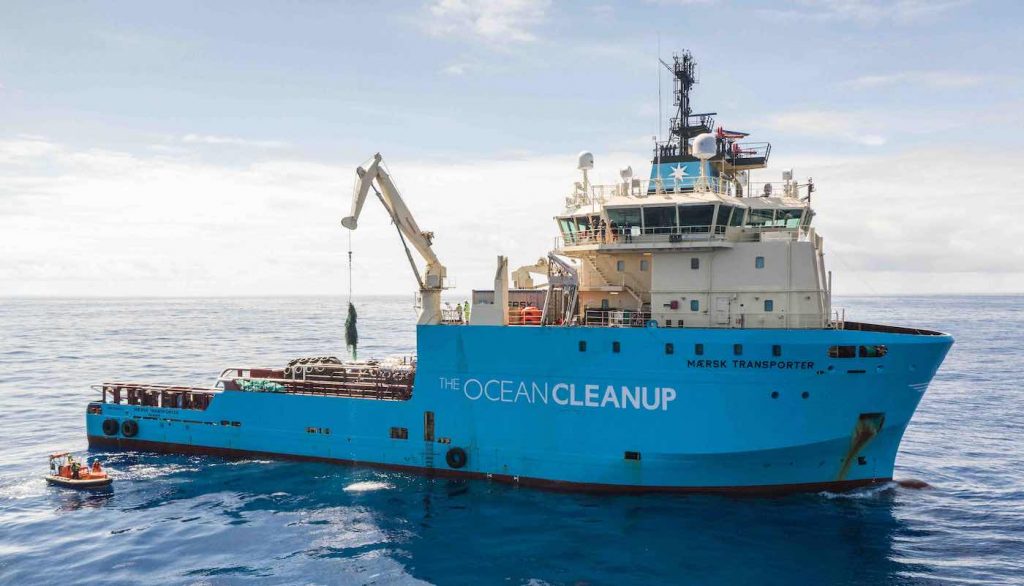
Ocean Cleanup Hits Milestone of 220 Tons Removed From Pacific Garbage Patch (Watch)

Photo by The Ocean Cleanup

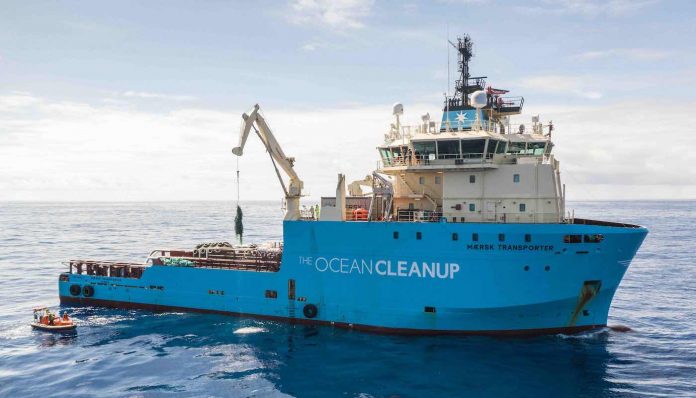
The Ocean Cleanup, the Dutch organization currently tackling the Great Pacific Garbage Patch (GPGP), has just reached a milestone of 220 tons of plastic removed from the ocean (200k kilograms).

In recent years, the nonprofit completed the test run of their new system 002/B which can capture multiple tons of garbage in one sequence with its large booms measuring a mile and a half in length.

The GPGP is not so much an island as it is an area where major currents and winds have brought together trillions of pieces of plastic.

By using the data of the currents and the winds to estimate volumes of plastic and to guide the capture vessels, Boyan Slat, the CEO and Founder of Ocean Cleanup, believes he can clean the whole patch in just a decade.

Slat’s work in the GPGP will go down as one of the greatest accomplishments in the 21st century. In front of him was a true leviathan of a problem—a patch of plastic trash twice the size of Texas swirling in International Waters where even the loudest climate-hollering nation-state had no desire to even crack an idea about how to clean it.

MORE ABOUT THE OCEAN CLEANUP: Ocean Cleanup Nonprofit Gets $25Mil From Airbnb Co-Founder to Launch Massive Plastic Pollution Cleanup

Relying only on his team, and his vision of basic scientific deduction and elegant engineering solutions, Slat proved that even the biggest problem was nevertheless solvable.

His next challenge is to somehow find uses or locations for all those billions of pieces of plastic. At the moment, the recycling is done by hand, with each piece of plastic separated by polymer type.

He had commissioned a line of sunglasses to be made with ocean plastic, and they sold out rapidly. Now, Slat is trying to partner with companies interested in using some of the GPGP waste streams for material supplies after recycling.

SHARE This Mega-Milestone With Your Friends…