All News - Page 293 of 1715 - Good News Network
Home Blog Page 293

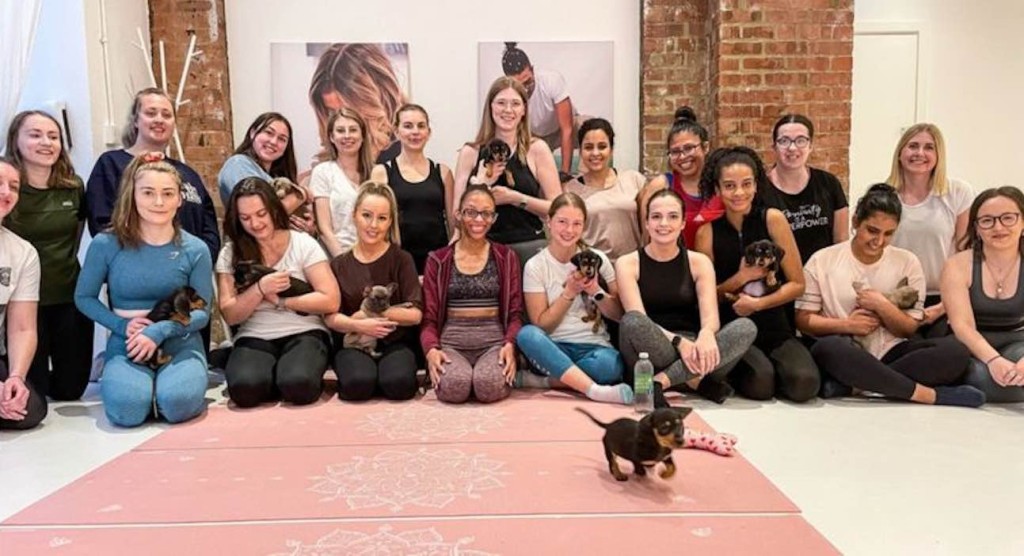
London Lonely Girls Club Gains Thousands of New Members for Picnics, Drinks, and Game Nights

The London Lonely Girls Club - Courtesy of Holly Cooke
The London Lonely Girls Club – Courtesy of Holly Cooke

A newcomer to big city life started a Facebook group to make new friends and it grew to 20,000 people in just a few years.

The London Lonely Girls Club was founded by 26-year-old Holly Cooke, who arrived from Stoke-on-Trent, a big city in itself, but provincial compared to London.

From 2018 to 2022, it attracted 10,000 young women who, like Cooke, found it hard to make new friends. Just in 2022, it grew to 31,000, and now there are 5 or 6 members organizing fun events like brunches, game nights, cocktail parties, and picnics.

“London is so big, it leaves a lot of space for loneliness, I Googled how to make friends in London,” Cooke told the BBC. “People feel it in so many different ways. London is so transient. Some just moved here; others have been here their whole life.”

She had originally tried platonic meet-up apps like Bumble BFF but found the process a bit dodgy. She wished she could get three or four of the people she would meet on it together at once, which gave her the idea of starting a group.

The London Lonely Girls Club – Courtesy of Holly Cooke

She now says the group events are getting fully booked in minutes.

Groups like these are becoming semi-common in English news media. In 2022 GNN reported on the “Proper Blokes Club,” a mental health walking club where men of all ages can go on a walk through the city and share their struggles.

MORE LONDONERS: Towering Statue Unveiled in London to Honor a National Hero You’ve Probably Never Heard of

Founder Scott Oughton-Johnson wasn’t lonely, rather he had gone through a long custody battle and painful separation and started the group after a video invitation to go for a walk-and-talk produced a really great evening with a friend of his.

Through the club, walk leaders organize walks to share in each other’s difficulties through talking and walking from Monday to Thursday all around England, not just in London.

The Men’s Shed movement isn’t found only in Britain, though a chapter was recently founded in Barnsley, but in the whole of the English-speaking world. The Barnsley chapter was launched by 67-year-old Phillip Jackson when moved back to England from Australia and immediately felt like a stranger.

MORE MENTAL HEALTH NEWS: Gary Sinise Launches Mental Health Network For Veterans and First Responders

The original concept was to get together and make things out of wood, but in reality, it’s about plugging into the social fabric of a community, whether that’s through meeting up for a coffee, building a park bench, or listening to the problems someone is going through in their marriage.

“It’s like the shed at the bottom of your garden,” Jackson told The Guardian. “but all your friends are there. It’s a break from people’s weekly routines. It gets them out and talking to similar people.”

The Australian Men’s Shed movement has 1,200 chapters across that country, and they’re springing up in the US (17), Britain, and Canada.

SHARE These Groups To Anyone You Know In Need Of Friendship… 

College Kids Prepare to Send the First Private Lunar Rover to the Moon

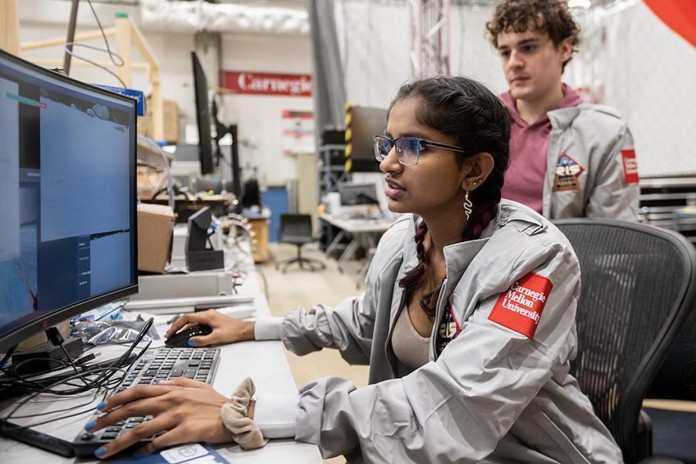
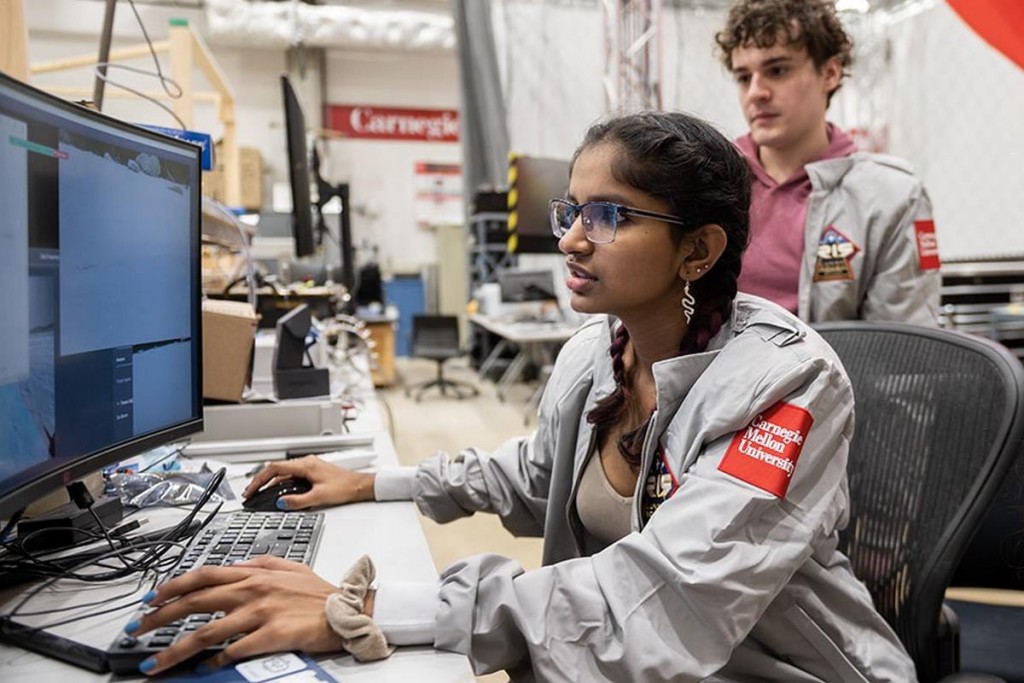
Madhav Gajula, left, a first-year student in the Mellon College of Science, and Nikolai Stefanov, the mission operations lead for Iris and a senior in physics, work during a mission simulation - Released, Carnegie Mellon University
Madhav Gajula, left, a first-year student in the Mellon College of Science, and Nikolai Stefanov, the mission operations lead for Iris, work during a mission simulation – Released, Carnegie Mellon University

A crack team of university students is just a month away from launching the first privately-made lunar rover onto the Moon’s surface.

Slated for May the Fourth, the unofficial holiday of the Star Wars franchise, the rover weighs just 2 kilograms, and the mission objectives include demonstrating its technology and snapping scientifically-relevant images.

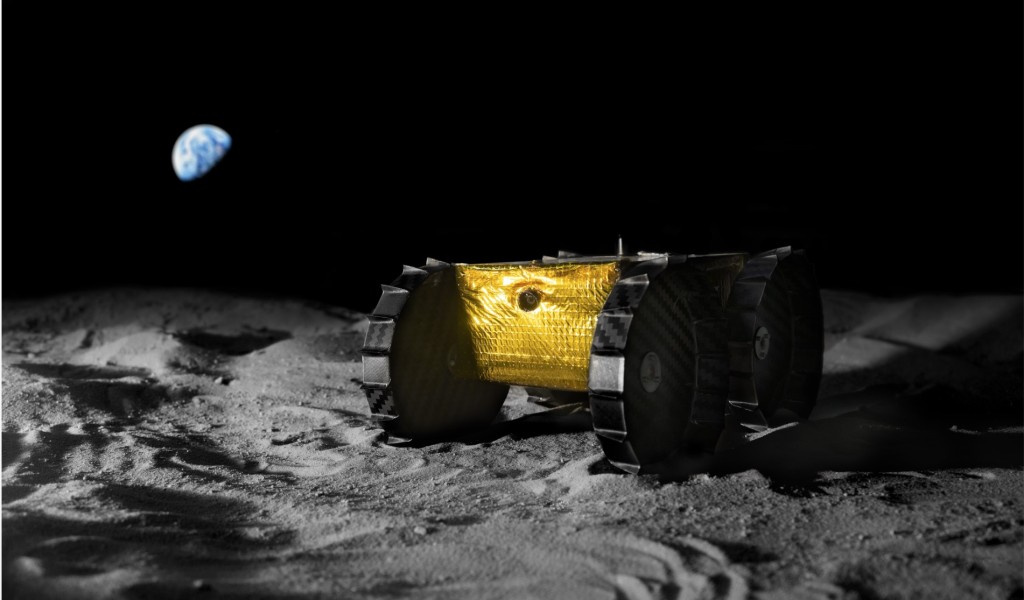
Called Iris, the rover designed at Carnegie Mellon University’s Pittsburgh campus will be carried to the moon aboard a United Launch Alliance “Vulcan Centaur” rocket, alongside a multi-purpose payload.

Back at control center, students on the project will work in teams and in shifts to send action commands, and monitor the rover’s health and progress as it carries out a 60-hour mission.

“Hundreds of students have poured thousands of hours into Iris. We’ve worked for years toward this mission, and to have a launch date on the calendar is an exciting step,” said Raewyn Duvall commander of the Iris mission.

Iris Lunar rover – CMU

“Iris will open up lunar and space exploration by proving that a tiny, lightweight rover built by students can succeed on the moon.”

It will set a number of firsts. Only the US, Japan, and Russia have put rovers on the Moon, so Duvall’s team will be the first civilian team to do so. Secondly, it will be the smallest and the lightest rover ever deployed.

MORE PRIVATE SPACE TRAVEL: Japanese Startup to Launch Public Space-Viewing Balloon Flights to Rival SpaceX

Onboard the rocket, another privately-made space machine, The Peregrine lander, will bring Iris down onto the Lunar surface. Peregrine was made by private space company Astrobiotic, and will serve as a delivery platform for astronauts working on the Lunar surface in the next 20 years.

In preparation for the May 4th launch, the team at CMU has conducted dozens of training simulations to ensure they can handle potential issues that may arise across its primary mission and accompanied extended mission phase.

SHARE These Awesome Enterprising Students With Your Friends… 

“There is no ‘wrong’ way of doing a meditation, except not doing it.” – Christopher Bamford

Quote of the Day: “There is no ‘wrong’ way of doing a meditation, except not doing it.” – Christopher Bamford

Photo by: Daniel Jiménez

With a new inspirational quote every day, atop the perfect photo—collected and archived on our Quotes page—why not bookmark GNN.org for a daily uplift?

Mom Alters Her Old Prom Dress for 5-Year-old to Wear to Daddy-Daughter Dance (Look)

Lexi Donelson prom dress conversion – SWNS

An Oklahoma mom took a scissors to her old prom dress so that her little girl could wear it to her ‘daddy-daughter’ dance—and the results were fantastic.

Lexi Donelson was struggling to find the perfect, yet affordable, dress for 5-year-old daughter Sterling when she suddenly remembered she still had her own prom dress.

The 26-year-old mother-of-three had donned the dress eleven years ago when she joined her high school sweetheart, Dewey, for their prom. The couple had begun dating a couple of months before, after being schoolmates since they were 10—and four years later they were married.

Lexi “adored” the turquoise dress and often put it on for fun and was praised by little Sterling who called it ‘mommy’s Elsa dress’.

Lexi called her own mom to help with the alterations, and the pair set about to shorten and slim down the dress.

The two seamstresses played around with the dress trying to rearrange it before cutting the tulle at the bottom and tightening the chest to make it smaller—and they only needed around two hours on the sewing machine.

“When I first told Sterling, before it was altered, ‘This is going to be your dress now,’ she was really confused.

“But she was so excited once we started cutting and sewing.

POPULAR: Lovebirds Tie the Knot in Their 80s After Meeting on a Dating Website–Bride ‘Highly Recommends’ it

“When she tried it on, she didn’t want to take it off. It looked adorable on her.”

Dewey with daughter Sterling – SWNS

Now she tells others, ‘It’s my Elsa dress’.

“I get very emotional thinking about that moment.”

Lexi had to tell her that she couldn’t wear the gown before the special dance—but afterward she can “wear it every day.”

Dewey woke up early and went to buy his daughter flowers and Lexi got emotional snapping pictures of them wearing their outfits before the dance.

“Remembering our prom, I couldn’t have imagined he would be such an amazing dad.

Lexi is so happy that her mom, Karena Logan, is sentimental and held on to some of the old clothes.

LOOK: Old Friends in Their 80s Go On the Adventure of a Lifetime: Around the World in 80 Days (PICS)

Now, Sterling wears the dress so much the straps have ripped off–but Lexi has another going dress, worn to another prom, that Sterling might wear to her own formal dance in the future.

INSPIRE Young Parents By Sharing the Idea on Social Media…

They Fell in Love on ‘Nextdoor’ After Living in Same Neighborhood for 40 Years But Never Meeting

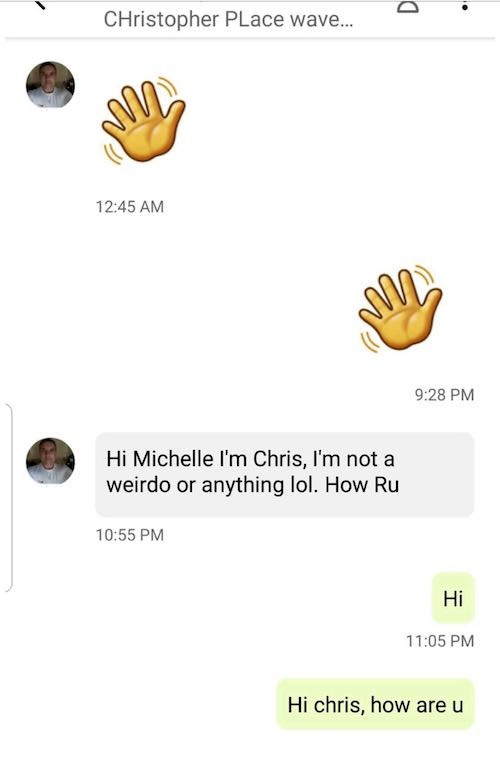
Nextdoor lovers Chris Place and Michelle Tooby – SWNS

This couple fell in love messaging on ‘Nextdoor’—after 40 years of living in the same neighborhood but never meeting.

Chris Place logged onto the hyperlocal online bulletin board to look for bargains when he spotted Michelle Tooby.

The 44-year old loved her pic so sent a ‘wave’ notification, and was delighted when she popped one back.

After two weeks of chatting online they went on a date and realized that, while they had never met, they had so much in common.

They hung out in the same park as kids, had children at the same schools, visited the same pubs, and had never lived more than a few minutes walk from each other in Mansfield, Nottinghamshire, England.

Seven months after their first message, the pair are quite the item—spending half of their time together. They found they shared loads of hobbies like going out, driving, and gardening.

Michelle even recognized Chris’s car.

“We’ve crossed paths no end of times since we were very young,” said Chris. “It’s like it just wasn’t meant to happen until now.

Nextdoor conversation – Michelle Tooby / SWNS

“It was the last thing I expected.”

“It’s great because if we get married our surname will be Place-Tooby, like ‘place-to-be’.

Michelle recalled, “Neither of us were looking for love. We’d completely given up. I’m so glad we’ve found each other.”

LOOK: Cemetery Posts Personal Ad for Lonely Goose Whose Mate Died–and they Find a Match

“It’s just meant to be, and it’s the right time now. It’s like our relationship waited for the right moment.”

Chris’s 22-year-old daughter and Michelle’s son, 20, had shared schools over the years.

Chris said, “I was looking for something out of the ordinary and that’s exactly what I found.

“She’s a very kind person and you can see that in her face. I mean don’t get me wrong, she can be very sassy too.

“As soon as we started chatting we got on like a house on fire: there was something extraordinarily special about it.

CHECK OUT: I Waited 24 Years to Kiss My Childhood Best Friend–Now We’re Engaged After I Revealed My Secret

“We feel so comfortable together, and it keeps getting better and better, even now.”

Nextdoor is an app where neighbors can messages other members from the community, plan meet-ups, and share local information.

Smitten Chris reveals he’s planning for the future but hasn’t popped the question yet.

INTRODUCE Your Single Friends to Nextdoor – By Sharing on Social Media…

Microphones Reveal Plants Make Many Sounds Especially When Stressed–And Each Species Sounded Different (Listen)

Tel Aviv University
Tel Aviv University

Researchers have recorded sounds emitted by plants that no human can hear—and their click-like sounds are unique to each species, and varied depending on what exactly is stressing their growth.

Similar to the popping of popcorn, they are emitted at a volume similar to human speech, but at high frequencies, beyond the hearing range of the human ear, according to the team from Tel Aviv University.

“We found that plants usually emit sounds when they are under stress, and that each plant and each type of stress is associated with a specific identifiable sound,” said Professor Lilach Hadany from the School of Plant Sciences and Food Security who lead the research team. “While imperceptible to the human ear, the sounds emitted by plants can probably be heard by various animals, such as bats, mice, and insects.”

“From previous studies we know that vibrometers attached to plants record vibrations. But do these vibrations also become airborne soundwaves—namely sounds that can be recorded from a distance?” asked Prof. Hadany. “Our study addressed this question, which researchers have been debating for many years.”

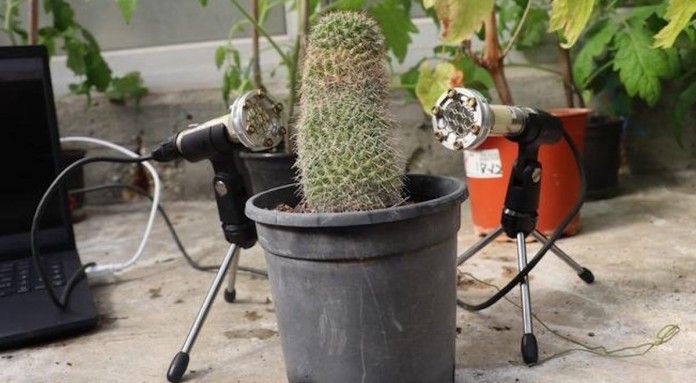
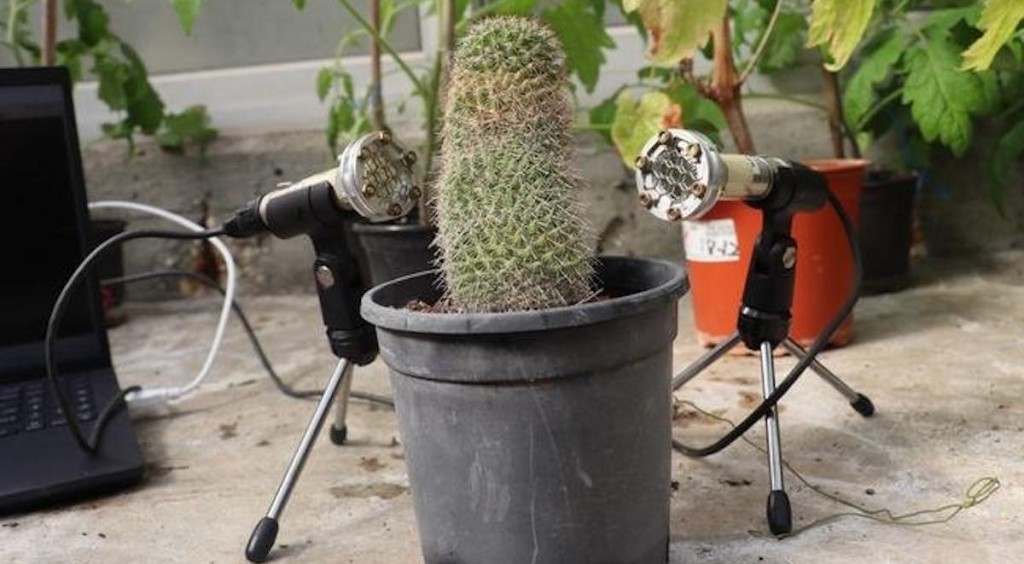
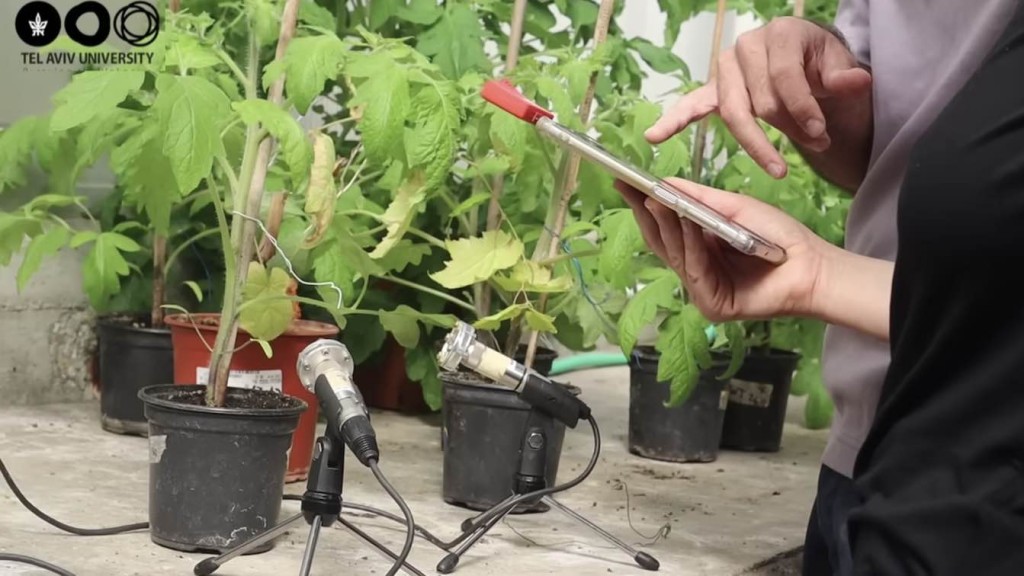
For the first stage of the study, published in the journal Cell, the researchers placed plants in an acoustic box in a quiet, isolated basement with no background noise. Ultrasonic microphones record sounds at higher frequencies than the maximum detectable by a human adult, which is about 16 kilohertz. Mics were set up at a distance of about 4 inches (10cm) from each plant, including tomatoes, grape vines, tobacco, wheat, corn, cactus, and henbit.

POPULAR: Stroke Recovery Improved for 70% of Patients Taking Celery Seed Drug

Before recording the plants, the team subjected them to various treatments: some plants had not been watered for five days, some had their stems cut, and some were untouched.

Tel Aviv University

“Our intention was to test whether the plants emit sounds, and whether these sounds are affected in any way by the plant’s condition. Our recordings indicated that the plants in our experiment emitted sounds at frequencies of 40-80 kilohertz.”

“Unstressed plants emitted less than one sound per hour, on average, while the stressed plants—both dehydrated and injured—emitted dozens of sounds every hour.”

The recordings collected in this way were analyzed by specially developed machine learning (AI) algorithms. The algorithms learned how to distinguish between different plants and different types of sounds, and were ultimately able to identify the plant and determine the type and level of stress from the recordings.

Moreover, the algorithms identified and classified plant sounds even when the plants were placed in a greenhouse with a great deal of background noise. In the greenhouse, the researchers monitored plants subjected to a process of dehydration over time and found that the quantity of sounds they emitted increased up to a certain peak, and then diminished.

LOOK: Otherworldly Scenes Show Plants Breathing in Close-Up Detail: A Long Sought Discovery

“In this study we resolved a very old scientific controversy: we proved that plants do emit sounds!” said Hadany. “Apparently, an idyllic field of flowers can be a rather noisy place. It’s just that we can’t hear the sounds!”

“Our findings suggest that the world around us is full of plant sounds, and that these sounds contain information about water scarcity or injury.

“We assume that in nature the sounds are detected by creatures nearby, such as bats, rodents, various insects, and possibly also other plants, that can hear the high frequencies and derive relevant information. We believe that humans can also utilize this information, given the right tools—such as sensors that tell growers when plants need watering.”

RELATED: Getting Plants ‘Drunk’ Insulates them Against Drought, According to New Research

Future studies will explore a range of intriguing questions: What is the mechanism behind plant sounds? How do moths detect and react to sounds emitted by plants? Do other plants also hear these sounds? And more…

Listen to tomatoes talking—and grape vines gabbing—in the video below…

MAKE SOME NOISE and Share This Cool News With Plant-Lovers on Social Media…

Check Out This ‘Cat Heaven’ – Built on the Ceiling to Save Space (LOOK)

@MerlinandNerina / Rumble

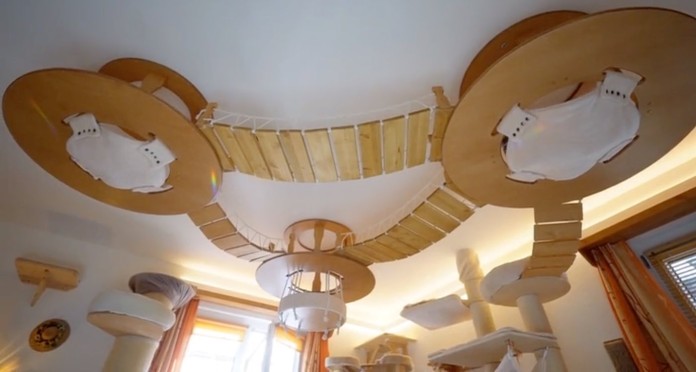
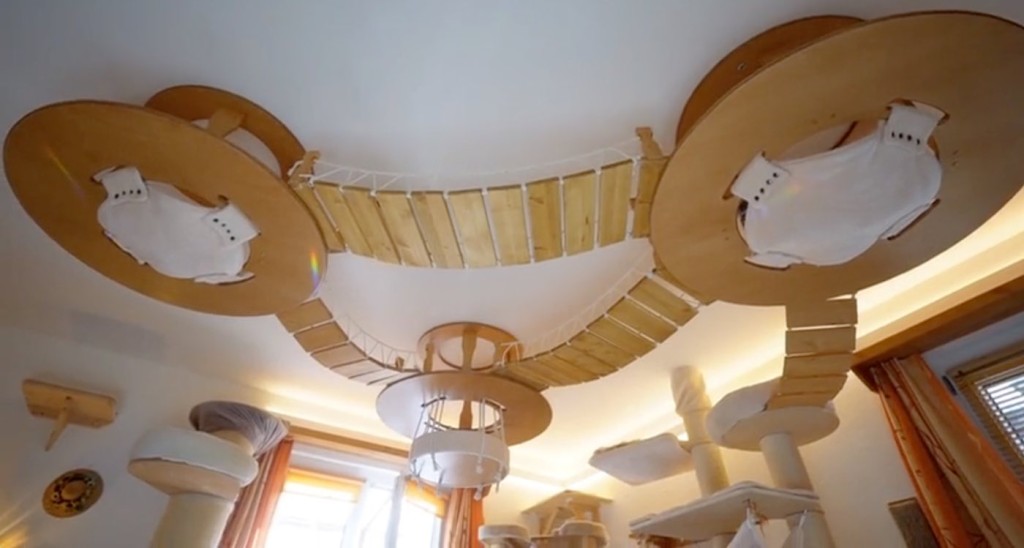
In a great use of vertical space, a woman’s mom built hanging cat beds and walkways for their five beloved felines.

“We had 5 Cats but only 2 sleeping places,” explained their owner. “This seriously had to change.”

“The only normal thing anyone would do in this kind of situation is building a Cat Ceiling Heaven!” wrote the French speaking Rumble user, MerlinandNerina who posted the video.

They love building stuff for their cats—four Ragdolls named Merlin, Nerina, Pistache, Piccolo—and Lady, an American Curl. They each have their own wooden cubbies hand-crafted in the garden.

The first two cats were way too leery to use the beautifully constructed rope bridges, until Merlin, the pack leader, led the way without an issue.

The Ragdoll is a breed of large cat with a distinct colorpoint coat and blue eyes with a silky soft coat known for their docile temperament and affectionate nature.

LOOK: ‘Gentle Giant’ Cat Has Gotten So Big He Now Measures Over 4-Feet and Gets Mistaken for Dog

(Note: GNN has no affiliation with any ads displayed below)

SHARE This Purr-fect Idea With Kitty-Lovers on Social Media…

“Turning to face my fear, I meet the warrior who lives within.” – Jennifer Welwood

Quote of the Day: “Turning to face my fear, I meet the warrior who lives within.” – Jennifer Welwood

Photo by: Aaron Thomas

With a new inspirational quote every day, atop the perfect photo—collected and archived on our Quotes page—why not bookmark GNN.org for a daily uplift?

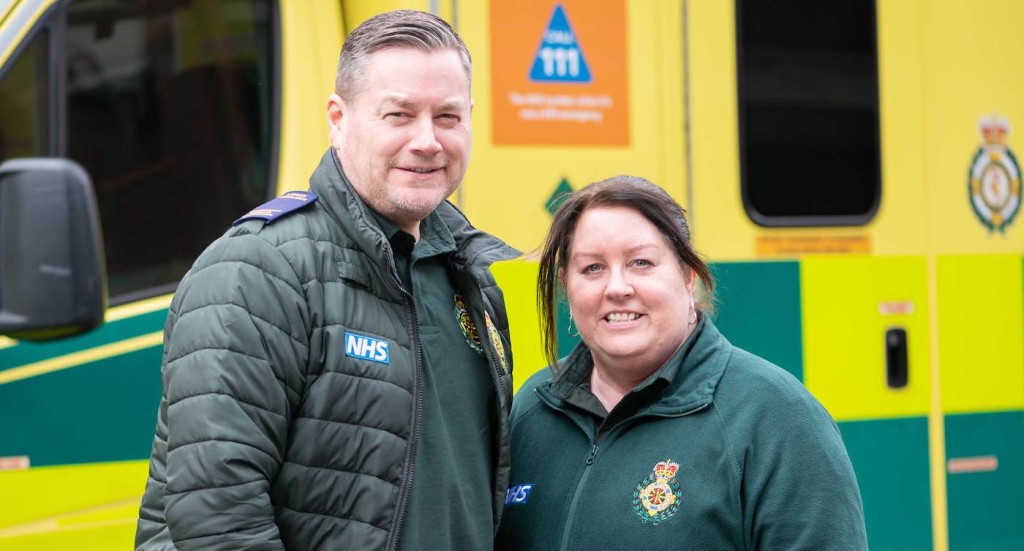
Twin Paramedics Whose Dad Died of Cardiac Arrest Saved Stricken Man With Same Condition the First Time Working Together

Steve and Angie Mills Paramedic twins - SWNS
Steve and Angie Mills Paramedic twins – SWNS

Paramedic twins whose dad died of a cardiac arrest 21 years ago saved a man suffering the same condition—in a tag-team effort, only a day after the anniversary of his death.

Angie Mills and her brother Steve Mills were only working together by chance during a rare joint shift as part of the same ambulance crew when they resuscitated the patient, whose heart had stopped beating for five minutes.

Steve works for the London Ambulance Service as an Emergency Medical Technician, but Angie is a 999 call handler, so the pair are not part of the same team.

But they were out in the same ambulance earlier this month when Angie decided to shadow a frontline crew for the day.

The twins, from south east London, were initially called to a man who had fallen, but soon after arriving both had to jump into action to save his life.

Angie—who had previously only instructed callers to do chest compressions over the phone—started CPR, while Steve and his crewmate, Paul, focused on giving the patient oxygen.

Thanks to their quick-thinking, the man was revived and began talking again, despite having no heart beat for five minutes.

“I had never needed to resuscitate someone myself,” said Angie. “It wasn’t until we were driving to hospital that I reflected on what I’d just done.

“I started thinking about how things can change so quickly, and in a matter of minutes you can switch between life, death—and again, life.”

WATCH: Teen Lifts a Truck to Free His Trapped Father: ‘My Son is My Hero’ 

Angie and Steve Mills in 1975 – SWNS

The incident felt particularly close to home for the twins, who lost their dad Hugh Mills to a cardiac arrest when he was just 61, a similar age to the man they brought back to life together.

“Because he was of similar age to our dad when he passed away, it brought back some powerful memories,” Angie added. “I thought about the fact that my dad didn’t get to enjoy retirement.”

Hugh Mills passed away in 2002, before Angie and Steve had both joined the Ambulance Service. At the time, Angie was working in a bank and Steve was a builder.

The 51-year-old brother recalls, “When the paramedics were with my dad, I was there the whole time and I couldn’t help him.

RELATED: Cardiologist Reveals Top 10 Heart Symptoms You Should Never Ignore, But Many People Do

“He received by-stander CPR from a police officer who lived nearby, but unfortunately, he still didn’t make it.

“When I first started my job I always dreaded getting sent to a cardiac arrest. I didn’t know how I would cope with that type of job because of the way my dad had died.

Angie and Steve both said that saving a life together was an extraordinary achievement which would make their dad proud.

“It feels even more special because I was doing it with Steve. My CPR was effective also because I felt so comfortable doing it next to my brother, and we are so close.

“Steve kept saying to me ‘you’re doing a great job, the timing is perfect, the depth of the compressions is great’.”

POPULAR: Mother and Daughter Become Co-pilots on Southwest Flight: ‘It’s been a dream come true’

All call handlers like Angie get training in how to do CPR and use a defibrillator and regularly instruct members of the public in these life-saving skills.

Mark Faulkner, who works with them as a consultant paramedic, said of the team’s achievement: “Less than ten percent of people who go into cardiac arrest outside of hospital survive.

“The fact that this patient woke up and started talking after five minutes is all down to the quick intervention of the team.

“As chest compression were provided immediately, the patient could keep his brain supplied with blood and that proved vital in him recovering so quickly once his heart had started to beat again.”

HEARTWARMING: She Finally Met Her Long Lost Dad, Who Didn’t Know She Existed, Thanks to Stranger on Facebook

Angie pondered her own future after the meaningful event. “It made me think about how precious life is and how I should enjoy it more. Take every opportunity that you’ve got, don’t put things off.”

WARM Beating Hearts With This Family Triumph By Sharing on Social Media… 

New Sensor Can Tell Whether You Have Covid-19 or The Flu – And Do it Within 10 Seconds

Dmitry Keeriv / SWNS

Have a cough, sore throat and congestion? Any number of respiratory viruses could be responsible. Conventional tests can identify the culprits by relying on chemical reactions—but researchers now want to swap chemistry tests for electrical changes sensed by nanomaterials.

They reported using a single-atom-thick nanomaterial to build a device that can simultaneously detect the presence of COVID-19 and the flu—at much lower levels and much more quickly than conventional tests for either.

The symptoms of both flu and COVID-19 overlap considerably, making it difficult to distinguish between them, notes Deji Akinwande, Ph.D., who presented the work at a recent meeting of the American Chemical Society.

“When both of these viruses are circulating together as they did earlier this winter, it would be immensely useful to have a sensor that can simultaneously detect whether you have COVID, flu, none of the above, or both,” said Akinwande, of the University of Texas at Austin.

The device could also be modified to test for other infections, and for other applications, as well.

POPULAR: Compounds That Can Stop COVID From Infecting Human Cells Discovered in a Sea Sponge

The group, including Dmitry Kireev, Ph.D., constructed the sensor using graphene, a single layer of carbon atoms arranged in a hexagonal lattice pattern. Its extreme thinness renders graphene highly sensitive to any electrical changes in its environment.

“These ultra-thin nanomaterials generally hold the record for best sensitivity, even down to the detection of single atoms, and they can improve the ability to detect very small quantities of basically anything that needs to be sensed, whether it’s bacteria or viruses, in gas or in blood,” Akinwande said in a press release.

To build the infection sensor, the researchers had to make graphene respond to the presence of viral protein. To do so, they looked to the immune system, which produces antibodies that are fine-tuned to recognize and latch onto particular pathogens. The researchers linked antibodies—from SARS-CoV-2, the virus that causes COVID-19, and the flu virus—to graphene. When a sample from an infected person is placed on the sensor, these antibodies bind to their target proteins, prompting a change in the electrical current.

RELATED: New Nasal Spray That Could Protect People From All COVID Variants to Start Human Trials

The researchers did not have the safety facilities needed to use whole, active flu or SARS-CoV-2 viruses to test the roughly square-inch sensor. To substitute, they used proteins from these viruses delivered in fluid that resembles saliva.

Their results indicated that not only could the sensor detect the presence of the proteins, it could do so when they were present at extremely low quantities. This sensitivity suggested to Akinwande that the sensor could be used for detecting the much more sparse viral particles found in breath.

The sensor also worked quickly, returning results within about 10 seconds of dropping in a sample. By comparison, conventional COVID-19 tests can take hours, depending on the type, and a dual COVID and flu test recently authorized by the U.S. Food and Drug Administration takes 30 minutes to produce results.

Akinwande and his group are working to improve its performance further, including by expanding the slate of viruses it can detect.

MORE: School Closures During Lockdowns Slashed Rates of Mysterious Fever That Causes Heart Disease in Kids

No word on when it will be available to airports and healthcare providers, but with funding from the National Science Foundation, they’re developing a sensor designed to test for SARS-CoV-2 variants, such as omicron and delta—and even future virus strains.

SHARE The Science With Nano Geeks on Social Media…

Scientist Finds Saturn Doing Something Never Seen Before in Our Solar System: ‘Hiding in Plain View for 40 Years’

Credit: NASA / ESA / Lotfi Ben-Jaffel (IAP LPL) via SWNS
Saturn image by NASA / ESA / Lotfi Ben-Jaffel (IAP LPL) via SWNS

Using data from several space missions and the Hubble telescope, an astronomer discovered that Saturn’s rings are heating its own atmosphere—something that has never been seen before in our solar system.

“The secret has been hiding in plain view for 40 years,” a NASA spokesperson announced on Thursday. “But it took the insight of a veteran astronomer to pull it all together within a year.”

“Saturn’s vast ring system is heating the giant planet’s upper atmosphere. The phenomenon has never before been seen in the solar system. It’s an unexpected interaction between Saturn and its rings that potentially could provide a tool for predicting if planets around other stars have glorious Saturn-like ring systems, too.”

The study used images of Saturn from NASA’s Hubble Space Telescope and retired Cassini probe, in addition to the Voyager 1 and 2 spacecraft and the retired International Ultraviolet Explorer mission.

The telltale evidence was an excess of ultraviolet radiation, seen as a spectral line of hot hydrogen in Saturn’s atmosphere.

“The bump in radiation means that something is contaminating and heating the upper atmosphere from the outside,” explained NASA.

“The most feasible explanation is that icy ring particles raining down onto Saturn’s atmosphere cause this heating. This could be due to the impact of micrometeorites, solar wind particle bombardment, solar ultraviolet radiation, or electromagnetic forces picking up electrically charged dust.

LOOKING UP: Watch Mars Kiss Our Cresent Moon – the Highlight of April Stargazing

“All this happens under the influence of Saturn’s gravitational field pulling particles into the planet.”

NASA

When NASA’s Cassini probe plunged into Saturn’s atmosphere at the end of its mission in 2017, it measured the atmospheric constituents and confirmed that many particles are falling in from the rings.

“Though the slow disintegration of the rings is well known, its influence on the atomic hydrogen of the planet is a surprise,” said the author of a paper published this week in the Planetary Science Journal, Lotfi Ben-Jaffel of the Institute of Astrophysics in Paris and the University of Arizona. “From the Cassini probe, we already knew about the rings’ influence. However, we knew nothing about the atomic hydrogen content.”

“Everything is driven by ring particles cascading into the atmosphere at specific latitudes. They modify the upper atmosphere, changing the composition. And then you also have collisional processes with atmospheric gasses that are probably heating the atmosphere at a specific altitude.”

LOOK: NASA Astronaut Thrilled by His ‘Absolutely Unreal’ Photo of Aurora From Space

Ben-Jaffel’s conclusion required pulling together archival ultraviolet-light (UV) observations from four space missions that studied Saturn—including Voyager probes that flew by Saturn in the 1980s and measured the UV excess. At the time, astronomers dismissed the measurements as noise in the detectors.

The Cassini mission, which arrived at Saturn in 2004, also collected UV data on the atmosphere over several years. Additional data came from Hubble and the International Ultraviolet Explorer, which was launched by ESA, NASA, and the UK in 1978.

But the lingering question was whether all the data could be illusory, or instead reflected a true phenomenon on Saturn.

“The key to assembling the jigsaw puzzle came in Ben-Jaffel’s decision to use measurements from Hubble’s Space Telescope Imaging Spectrograph (STIS),” said NASA in a press release. “Its precision observations of Saturn were used to calibrate the archival UV data from all four other space missions that have observed Saturn. He compared the STIS UV observations of Saturn to the distribution of light from multiple space missions and instruments.”

POPULAR: Ringed Planet That Defies Known Physics Discovered in Outer Reaches of Our Solar System

Lotfi Ben-Jaffel explained, “When everything was calibrated, we saw clearly that the spectra are consistent across all the missions. This was possible because we have the same reference point, from Hubble, on the rate of transfer of energy from the atmosphere as measured over decades.

“It was really a surprise for me. I just plotted the different light distribution data together, and then I realized, wow – it’s the same.”

“At any time, at any position on the planet, we can follow the UV level of radiation. This points to the steady “ice rain” from Saturn’s rings as the best explanation.”

RELATED: Huge Meteorite Found in Antarctica–One of the Biggest Ever Recovered

Ben-Jaffel concluded, “We eventually want to have a global approach that would yield a real signature about the atmospheres on distant worlds. One of the goals of this study is to see how we can apply it to planets orbiting other stars. Call it the search for ‘exo-rings.'”

LAUNCH This Breakthrough On Your Social Media Feed For Stargazing Friends…

Your Inspiring Weekly Horoscope From Rob Brezsny: A ‘Free Will Astrology’

Our partner Rob Brezsny provides his weekly wisdom to enlighten our thinking and motivate our mood. Rob’s Free Will Astrology, is a syndicated weekly column appearing in over a hundred publications. He is also the author of Pronoia Is the Antidote for Paranoia: How All of Creation Is Conspiring To Shower You with Blessings. (A free preview of the book is available here.)

Here is your weekly horoscope…
FREE WILL ASTROLOGY – Week of April 1, 2023
Copyright by Rob Brezsny, FreeWillAstrology.com

ARIES (March 21-April 19):
Sometimes, I give you suggestions that may, if you carry them out, jostle your routines and fluster your allies. But after trying out the new approaches for a short time, you may chicken out and revert to old habits. That’s understandable! It can be difficult to change your life. Here’s an example. What if I encourage you to cancel your appointments and wander out into the wilderness to discuss your dreams with the birds? And what if, during your adventure, you are flooded with exhilarating yearnings for freedom? And then you decide to divest yourself of desires that other people want you to have and instead revive and give boosts to desires that you want yourself to have? Will you actually follow through with brave practical actions that transform your relationship with your deepest longings?

TAURUS (April 20-May 20):
You have done all you can for now to resolve and expunge stale, messy karma—some of which was left over from the old days and old ways. There may come a time in the future when you will have more cleansing to do, but you have now earned the right to be as free from your past and as free from your conditioning as you have ever been. APRIL FOOL! I lied. In fact, you still need to spend a bit more time resolving and expunging stale, messy karma. But you’re almost done!

GEMINI (May 21-June 20):
Businessman Robert Bigelow hopes to eventually begin renting luxurious rooms in space. For $1.7 million per night, travelers will enjoy accommodations he provides on his orbiting hotel, 200 miles above the Earth’s surface. Are you interested? I bet more Geminis will be signing up for this exotic trip than any other sign. You’re likely to be the journeyers most excited by the prospect of sailing along at 17,000 miles per hour and witnessing 16 sunsets and sunrises every 24 hours. APRIL FOOL! In fact, you Geminis are quite capable of getting the extreme variety you crave and need right here on the planet’s surface. And during the coming weeks, you will be even more skilled than usual at doing just that.

CANCER (June 21-July 22):
The coming weeks will be a favorable time for you to become the overlord of your own fiefdom, or seize control of a new territory and declare yourself chieftain, or overthrow the local hierarchy and install yourself as the sovereign ruler of all you survey. APRIL FOOL! I was metaphorically exaggerating a bit—but just a bit. I do in fact believe now is an excellent phase to increase your clout, boost your influence, and express your leadership. Be as kind you can be, of course, but also be rousingly mighty and fervent.

LEO (July 23-Aug. 22):
In his poem “The Something,” Charles Simic writes, “Here come my night thoughts on crutches, returning from studying the heavens. What they thought about stayed the same. Stayed immense and incomprehensible.” According to my analysis of the astrological omens, you Leos will have much the same experience in the coming weeks. So there’s no use in even hoping or trying to expand your vision. APRIL FOOL! I lied. The truth is, you will not have Simic’s experience. Just the opposite. When your night thoughts return from studying the heavens, they will be full of exuberant, inspiring energy. (And what exactly are “night thoughts”? They are bright insights you discover in the darkness.)

VIRGO (Aug. 23-Sept. 22):
If there will ever come a time when you will find a gold bullion bar on the ground while strolling around town, it will be soon. Similarly, if you are destined to buy a winning $10 million lottery ticket or inherit a diamond mine in Botswana, that blessing will arrive soon. APRIL FOOL! I was exaggerating a bit. The truth is, I suspect you are now extra likely to attract new resources and benefits, though not on the scale of gold bullion, lottery winnings, and diamond mines.

LIBRA (Sept. 23-Oct. 22):
Do you have a muse, Libra? In my opinion, all of us need and deserve at least one muse, even if we’re not creative artists. A muse can be a spirit or hero or ally who inspires us, no matter what work and play we do. A muse may call our attention to important truths we are ignoring or point us in the direction of exciting future possibilities. According to my astrological analysis, you are now due for a muse upgrade. If you don’t have one, get one—or even more. If you already have a relationship with a muse, ask more from it. Nurture it. Take it to the next level.

SCORPIO (Oct. 23-Nov. 21):
Dear Valued Employee: Our records show you haven’t used any vacation time over the past 100 years. As you may know, workers get three weeks of paid leave per year or else receive pay in lieu of time off. One added week is granted for every five years of service. So please, sometime soon, either take 9,400 days off work or notify our office, and your next paycheck will reflect payment of $8,277,432, including pay and interest for the past 1,200 months. APRIL FOOL! Everything I just said was an exaggeration. But there is a grain of truth in it. The coming weeks should bring you a nice surprise or two concerning your job.

SAGITTARIUS (Nov. 22-Dec. 21):
Sagittarian poet and artist William Blake (1757–1827) was a hard-working visionary prophet with an extravagant imagination. His contemporaries considered him a freaky eccentric, though today we regard him as a genius. I invite you to enjoy your own personal version of a Blake-like phase in the coming weeks. It’s a perfect time to dynamically explore your idiosyncratic inclinations and creative potentials. Be bold, even brazen, as you celebrate what makes you unique. BUT WAIT! Although everything I just said is true, I must add a caveat: You don’t necessarily need to be a freaky eccentric to honor your deepest, most authentic truths and longings.

CAPRICORN (Dec. 22-Jan. 19):
Some of my friends disapprove of cosmetic surgery. I remind them that many cultures throughout history have engaged in body modification. In parts of Africa and Borneo, for example, people stretch their ears. Some Balinese people get their teeth filed. Women of the Indigenous Kyan people in Thailand elongate their necks using brass coils. Anyway, Capricorn, this is my way of letting you know that the coming weeks would be a favorable time to change your body. APRIL FOOL! It’s not my place to advise you about whether and how to reshape your body. Instead, my job is to encourage you to deepen and refine how your mind understands and treats your body. And now is an excellent time to do that.
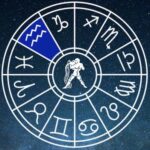
AQUARIUS (Jan. 20-Feb. 18):
I invite you to make a big change. I believe it’s crucial if you hope to place yourself in maximum alignment with current cosmic rhythms. Here’s my idea: Start calling yourself by the name “Genius.” You could even use it instead of the first name you have used all these years. Tell everyone that from now on, they should address you as “Genius.” APRIL FOOL! I don’t really think you should make the switch to Genius. But I do believe you will be extra smart and ultra-wise in the coming weeks, so it wouldn’t be totally outrageous to refer to yourself as “Genius.”

PISCES (Feb. 19-March 20):
Your body comprises 30 trillion human cells and 39 trillion microbial cells, including the bacteria that live within you. And in my astrological estimation, those 69 trillion life forms are vibrating in sweet harmony with all the money in the world. Amazing! Because of this remarkable alignment, you now have the potential to get richer quicker. Good economic luck is swirling in your vicinity. Brilliant financial intuitions are likely to well up in you. The Money God is far more amenable than usual to your prayers. APRIL FOOL! I was exaggerating a bit. But I do believe you now have extra ability to prime your cash flow.

WANT MORE? Listen to Rob’s EXPANDED AUDIO HOROSCOPES, 4-5 minute meditations on the current state of your destiny — or subscribe to his unique daily text message service at: RealAstrology.com

(Zodiac images by Numerologysign.com, CC license)

SHARE The Wisdom With Friends Who Are Stars in Your Life on Social Media…

“They are trying to make me into a fixed star. I am an irregular planet.” – Martin Luther

Quote of the Day: “They are trying to make me into a fixed star. I am an irregular planet.” – Lutheran reformer, Martin Luther

Photo by: AQVIEWS (colorized)

With a new inspirational quote every day, atop the perfect photo—collected and archived on our Quotes page—why not bookmark GNN.org for a daily uplift?

Not a Single Collision for Seabird Populations in Offshore Wind Farm Says $3M Radar Study

Middelgrundel wind farm - CC 3.0. European Wind Energy Association
Middelgrunden wind farm – CC 3.0. European Wind Energy Association

There’s something deeply comical about suggesting that seagulls are smart enough to wait for you to look away before stealing your french fries, but dumb enough to fly into wind turbine blades.

A two-year study on the interactions of several seabird species at an offshore wind farm found that not a single case of birdstrike was recorded over the study period or in the 10,000 videos taken.

Looking at herring gulls, gannets, kittiwakes, and great black-backed gulls, Swedish state wind company Vattenfall found that most of the birds maintained a 50 to 230-yard distance between themselves and the radius of the spinning turbines.

“This is the first time that any kind of bird species has been studied this closely and in detail at an offshore wind farm,” said study author Henrik Skov. “And these birds are really good at avoiding the turbines. Now we need studies on more varieties.”

The study was conducted on a wind farm consisting of 11 offshore turbines near Aberdeen, Scotland. It used radar surveys and mounted video cameras to gather data.

MORE GOOD BIRD NEWS: Floating ‘WALL-E’ Scarecrow Stops Seabirds from Diving into Fishing Nets

Why these seabirds avoided the turbines could be down to the individual species observed since other studies have shown seabirds tend to rank high in offshore wind turbine mortality, and of medium risk for land-based wind turbine mortality.

Skov also offered that it could be the turbines are, for one reason or another, outside of prominent flight corridors, and therefore aren’t where birds have historically flown either for migration and nesting purposes, or feeding.

MORE WILDLIFE SAVING STORIES: One Simple Change Cut Accidental Albatross and Seabird Deaths by 98%: ‘Absolutely amazing’

The study is a big milestone in scientists’ attempts to learn how and where to build wind turbines so that they don’t interfere with birds’ flight patterns. If there is something in the data of this study or future observations that could reveal the secret as to why there was no mortality at the Aberdeen wind farm, it could mean that hundreds of thousands of birds could be saved in the future.

SHARE This Good Bird News With Your Friends…
Hero Pilot Guides Novice Aviator in Emergency Landing After He Sees Her Tire Fall Off

Pilot Taylor Hash - YouTube
Pilot Taylor Hash – YouTube

A young pilot is thanking her lucky stars there was someone on hand to guide her down into an emergency landing after she lost part of her landing gear during takeoff.

Chris Yates, a veteran pilot at the airport, radioed the control tower to alert them of the potential disaster, but the control tower operators had never seen it happen before and didn’t know what to do.

The tower patched Yates through to the young pilot, whose name was Taylor Hash. Hash was only on her third-ever solo flight, and the anxiety was thick in her voice.

“Taylor this is Chris, my daughter’s name is Taylor and I taught her to fly! We’re gonna be just fine kiddo,” were among the first things he said.

A student pilot, Hash was up in a Diamond Star single-engine aircraft from Oakland County International Airport, Michigan. At the time of the incident, she had 57 total flight hours.

Yates, the former director of aviation at SpaceX, managed to calm Hash down with the comment about his daughter, before beginning to instruct her on how to make an emergency landing.

Hash would have to land without a front tire, so Yates told her to keep circling the field until she felt ready to try and land the plane.

“When you touch down, I just want that stick all the way back. You’re gonna hold that stick back like you don’t want that nose to touch,” he can be heard saying over the recorded radio conversation.

YOU MAY ALSO LIKE: Customers Jump Up to Help Run Restaurant When Chef is Left Alone After Staff Emergency: ‘Beautiful to witness’

“The nose is gonna come down, you’re okay, you’re okay. Talk to me. Thatta girl, proud of you.”

WXYZ News Detroit shared another video of the landing taken by two onlookers who remarked “beautiful, beautiful,” as she managed to touch down without the nose immediately smashing into the ground.

“I was thinking of my daughter and just how afraid and alone (Hash) probably felt,” Yates told NBC News correspondent Gadi Schwartz.

MORE STORIES LIKE THIS: After Instructor Became Unconscious Mid-Flight, Student Pilot Achieves ‘Perfect’ Emergency Landing During His First Lesson

NBC News TODAY interviewed Hash who told them that “as soon as he said [thatta girl] he goes, ‘I’m proud of you,’ the waterworks came,” Hash said, with Yates revealing he too was crying.

The FAA has stated they are investigating what the cause of the malfunction was, while Hash has said that despite the frightening incident, she has no plans to give up flying.

WATCH the coverage of the story from TODAY below…

Colorful Mumbai Overpass Goes Viral After Being Converted into Sporting Complex for Community

Navi Mumbai Bridge –@Dhananyaj_Tech / Twitter

In the urban sprawl of Mumbai, kids have an awesome and surprising new place to play cricket and badminton—under a highway overpass.

Built beneath the Sector 15 Sanpada overpass in Navi Mumbai, a video of the kids playing went viral and drew the attention of other city administrators who celebrated the clever transformation of an unhappy space into one of real joy.

The overpass is enormous and over 20,000 square feet of space is available underneath. Under the tallest section, 3 courts for badminton and 1 for basketball have been built. A cricket zone with a pitch of 22 yards enclosed by a net has been created, as well as a sizable skating rink facility, running track, and yoga area.

The whole complex is painted in bright colors to beautify the space. Construction of the sports complexes began back in 2021.

MORE MUNICIPAL SPORTS: How Tony Hawk Joined an Apache Pro Skater to Bring New Skate Park to Reservation

Hyderabad’s Municipal Administration and IT Minister K. T. Rama Rao expressed interest in replicating similar projects in his city—the fourth-largest in India—and tagged the Special Chief Secretary Arvind Kumar in a tweet, saying, “Let’s get this done in a few places in Hyderabad. Looks like a nice idea.”

“The space under most of the [overpasses] in Navi Mumbai is lying unused and taking advantage of the situation some people have encroached on them for parking vehicles and running small shops among others,” Sanjay Desai, Navi Mumbai Municipal Council’s city engineer told The Hindustan Times.

“Some homeless people are also staying under a few flyovers and neither we, nor the police department has any idea about their backgrounds. So to beautify the place, we have decided to develop sports infrastructure and open gyms under the flyovers.”

SHARE This Clever Use Of Municipal Space With Your Friends… 

“The golden hour has secrets to reveal. Be alert for merriment. Be greedy for glee. Go in quest of jubilation’s mysterious blessings.” – Rumi

Quote of the Day: “The golden hour has secrets to reveal. Be alert for merriment. Be greedy for glee. Go in quest of jubilation’s mysterious blessings.” – Sufi poet Rumi

Photo by: Paul Rysz

With a new inspirational quote every day, atop the perfect photo—collected and archived on our Quotes page—why not bookmark GNN.org for a daily uplift?

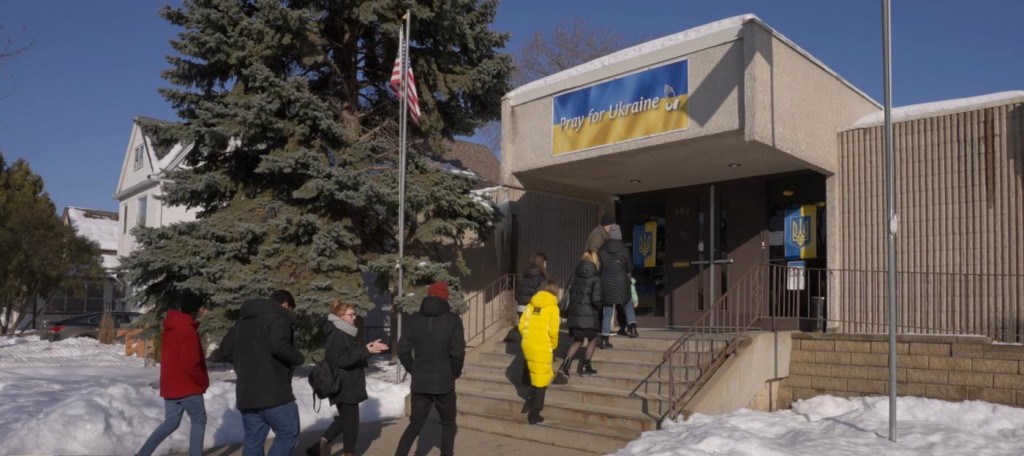
Recently Arrived Ukrainians in Minneapolis Head to Mississippi to Help Tornado Victims

Ukrainian refugees attending Orthodox Church in Minneapolis - credit American Service
Ukrainian refugees attending Orthodox Church in Minneapolis – credit American Service

The mainstream media is filled with headlines of how the United States is helping Ukraine, but under the radar is how some Ukrainians are actually returning the favor.

Having arrived in Minneapolis, Minnesota, as recently as a few months ago, a group of 7 Ukrainian refugees has signed up for a 2,000-mile road trip to Mississippi to help with tornado relief.

Tornadoes tore a path of destruction across rural Mississippi and Alabama on the night of Friday the 24th. The nonprofit American Service is just one of several aid organizations heading to help the victims.

They quickly organized a team of volunteers and headed down to North Fork, MI, expecting to arrive on Tuesday.

American Service’s Director of Operations, Sofiia Rudenko, is a Ukrainian who has only been in the country since Christmas, but after receiving help settling in from American Service, she quickly dedicated her time to help other new arrivals.

MORE GREAT REFUGEE NEWS: British Woman Who Fled War in ‘74 Closes Her Hotel to Tourists–Giving Ukrainian Refugees a Home Instead

“Here in America a lot of people helped me to establish here and we have this kind of culture that we want not only to take but also to give back and to help the others,” Rudenko told MPR News. 

“I found a group of people, Ukrainian, that are not working today and willing to go immediately and now we’re packing and going. It’s so exciting, I hope we can do something great for this world.”

MORE GREAT REFUGEE NEWS: State Department Launches ‘Welcome Corps’ Program to Allow Citizens to Easily Sponsor Legal Refugees

American Service has so far helped 80 Ukrainians like Rudenko find temporary housing, jobs, and a bit of community in Minneapolis.

Their first trip down to Mississippi was going to bring exclusively water, and a second trip will follow based on whatever it was they discovered is in short supply after the first trip.

SHARE This Story Of Ukraine Sending Their Best With Your Friends… 

One Stem Cell Injection to Target Inflammation Slashed Risk of Heart Attack and Stroke By 58%

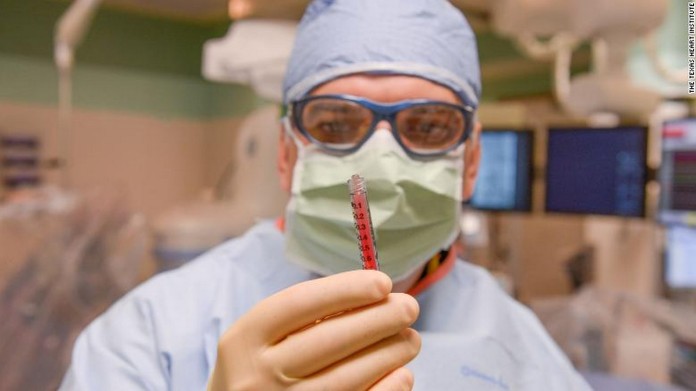
Dr. Perin holds up the stem cell treatment - Texas Heart Institute
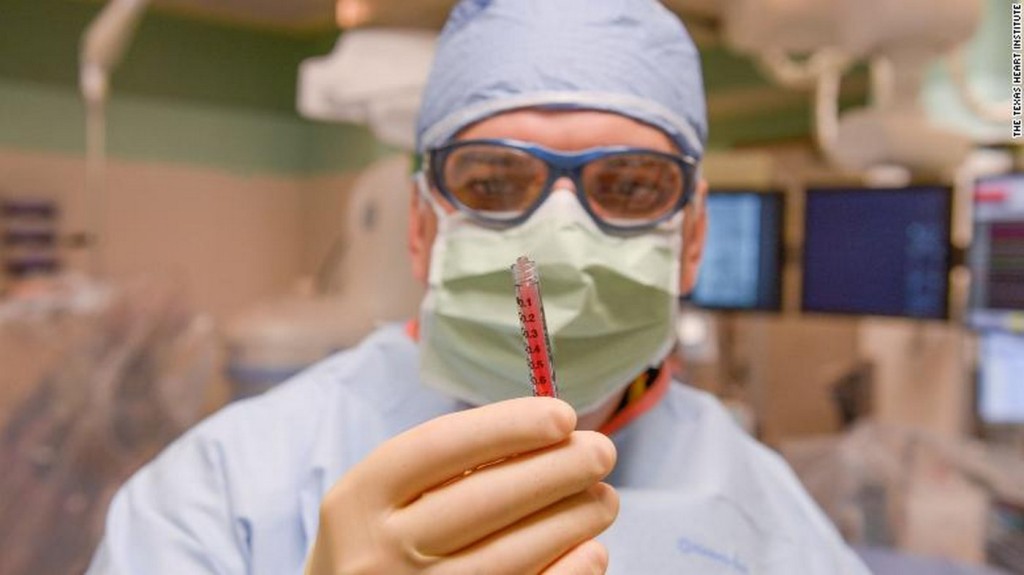
Dr. Perin holds up the stem cell treatment – Texas Heart Institute

A large trial showed that a single injection of a patient’s own stem cells into their heart was able to reduce inflammation and risk of heart attack and stroke by 58% if they had heart failure.

6 million Americans have clinical diagnoses of heart failure, a condition designated by a lack of ability for the heart to pump blood sufficiently.

“For the first time, we’ve discovered that stem cells can successfully treat the inflammation that causes heart failure,” study lead author Dr. Emerson Perin, told the European Pharmaceutical Review.

It’s the largest clinical trial of cell therapy for heart disease to date and demonstrated several positive results. Before understanding the cure, it’s worth taking a moment to understand the problem.

When less than 40% of the blood inside the heart is pumped out into the body, an individual has heart failure, and could in theory at any moment suffer a cardiovascular event like a heart attack. This is called left ventricular ejection fraction (LVEF), with a healthy person’s fraction being 55%-70%.

Because inflammation is closely associated with heart disease—both arise from the same poor lifestyle patterns which cause the majority of cases of heart disease—cardiologists at the Texas Heart Institute designed a treatment that could address the inflammation.

What they selected were stem cells taken from a patient’s bone marrow called mesenchymal precursor cells, which are replicated in a lab via proprietary methods developed by a pharmaceutical company called Mesoblast, and injected straight into the heart.

MORE NEWS ON STEM CELLS: Sound Waves Convert Stem Cells Into Bone in Regenerative Breakthrough

First and foremost, the treatment, called rexlemestrocel-L, was well-tolerated and didn’t cause additional inflammation in any patients who received it. Secondly, the treated patients showed increased performance of LVEF; their hearts were pumping out more blood volume.

“We are very encouraged by these study data that indicate the potential of our allogeneic cellular therapy to address the major areas of unmet need in heart failure patients where conventional treatments are not effective,” said Mesoblast CEO Dr. Silviu Itescu in a statement.

MORE NEWS ON STEM CELLS: Yale Scientists Successfully Repair Injured Spinal Cords Using Patients’ Own Stem Cells

“Improvement in LVEF at 12 months may be a functional surrogate endpoint for rexlemestrocel-L’s subsequent benefits on long-term MACE outcomes and survival in this high-risk patient population with chronic heart failure.”

The trial was a phase 3, double-blinded, placebo-controlled trial, i.e. the gold standard for medicine, and it should open up the door to future trials of the same kind and turn the research into real treatments for thousands of people.

SHARE This Encouraging Study Result With Your Friends… 

When Life Gives You Carbon… Make a Factory for Producing Carbon-Negative Concrete

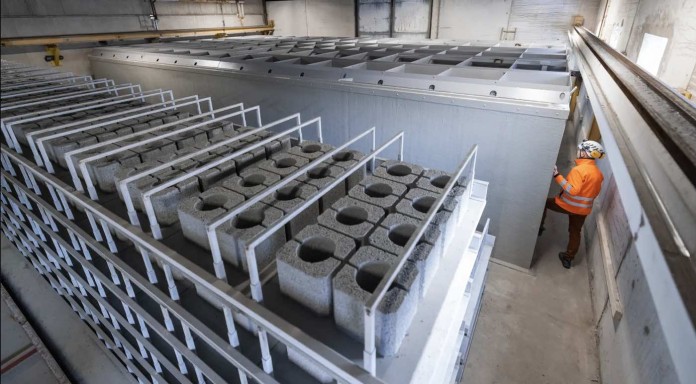
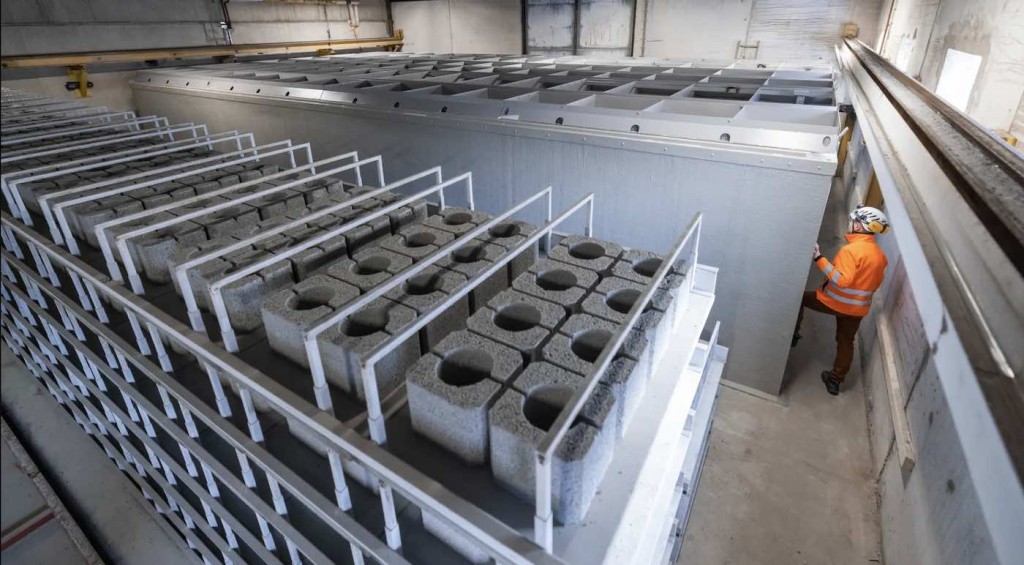
Photo from VTT / by Vesa Kippola

Concrete is being made in Finland with a carbon-negative replacement for cement, something the company hopes will trap more CO2 than it takes to produce throughout its lifecycle.

One of the most ubiquitous of human building materials, concrete is nevertheless one of the most carbon-intensive manufacturing methods in society.

Finnish materials researchers at VTT Technical Research Center said that they were aiming to create carbon-negative concrete “before they know how to do so.”

One of the interesting things about concrete is that it reabsorbs carbon over the years, which can lead to the corrosion of steel reinforcements like rebar inside it.

Experimenting with different substitutes, they discovered that slag from blast furnace smelting could be combined with bio-ash to replace cement in concrete.

During smelting, when the ore containing iron or copper is exposed to high temperatures, impurities within it such as oxides of calcium, magnesium, silicon, iron, and aluminum, are separated from the molten metal and can be removed. Slag is the term for the collection of compounds that are removed.

MORE CARBON-NEGATIVE TECH: America’s First Carbon-Negative Hotel in the Middle of Denver is Inspired by Aspen Trees

Powdered slag can absorb higher amounts of carbon than cement, and VTT senior scientist Tapio Vehmas explained how his team figured out how to suck CO2 from the air and deposit it into the powered slag, before putting it in cast concrete to fulfill his team’s vision.

“We have demonstrated in the pilot unit that our technology is capable of reducing the CO2 emissions of conventional concrete by 45%,” said Vehmas, now CEO of VTT spin-out company Carbonaide.

“Last autumn, we demonstrated lowering our products’ carbon footprint to -60 kg/m3 by replacing Portland cement with slag.”

Yard stones and tiles – VTT

But this isn’t a story about scientific experimentation. Carbonaide has secured nearly $2 million in funding to build a production center for its cast concrete blocks that will be capable of mineralizing “up to five tons of CO2 per day.”

MORE GOOD MANUFACTURING: Batteries 3D-Printed Using Layers of Powder Use 40% Less Material, Charge in Minutes and Recycle Easier

With concrete being one of man’s most-used building materials, the startup is going ahead to scale up its production capacity by 100 times thanks to an already-secured value chain.

Five tons of CO2 per day would cover the average emissions for the business commute of around 415 people in their cars, if people commute 15 miles to work, and 15 miles home.

WATCH the blocks being cast… 

SHARE This Great Example Of A Circular Economy With Your Friends Worried About The Climate…