












It was a surreal sight for Pedro Rivera, a whole house was on the back of a trailer driving down a Detroit suburban road; a house that he and his friends had built with their own hands.
“All my friends, we all looked at each other like, ‘Wow, this is what we did,'” Rivera, a student at Oakland Schools Technical Campus-Northeast, told 7 Action News.
At the technical campus, students study to become specialists in carpentry, additions, or electrical work, but school instructor Aaron Swett who led the project to build a 1,368-square-foot home from the ground up, explained that it would help introduce the students to the whole gamut of construction trades.
The program, which includes working alongside professional tradesmen, prepares the students for their own careers in construction and carpentry, many of which are sorely needed in the US.
But it does something else as well, it provides a slow but steady supply of low and middle-income housing units for Michigan, a state that lacks them.
The home cost $100,000 in materials, and will go on the market for around $170,000, about half the nationwide median listing price.
“Just seeing it getting lifted and everything, it was kind of like ‘Wow, this is our accomplishment,'” Rivera said of the home build. “It’s going to a good family. Good home, good neighborhood — it’s nice.”
WATCH the story below from WXYZ Detroit Action 7…
SHARE The Endeavor Of These Great Kids With Your Friends…
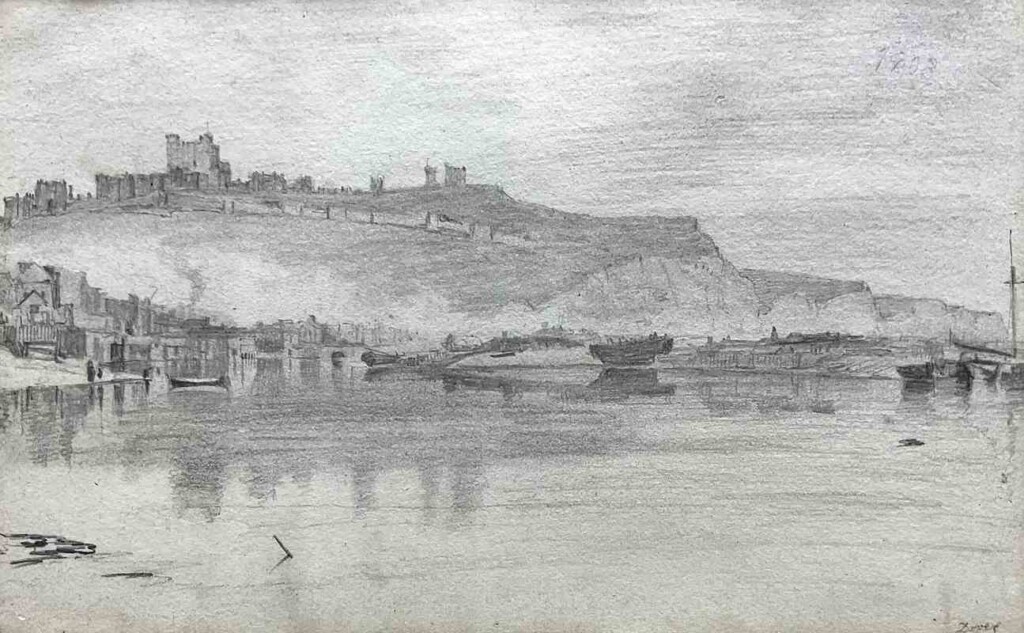
Quote of the Day: “Rough diamonds may sometimes be mistaken for worthless pebbles.” – Thomas Browne
Photo by: Jarren Simmons
With a new inspirational quote every day, atop the perfect photo—collected and archived on our Quotes page—why not bookmark GNN.org for a daily uplift?
Tonight, Europe will experience a little resurrection—the first privately-run overnight sleeper train service will take passengers and their dreams aboard a Brussels to Berlin line.
Born from a former-train guard’s longing for a historic form of rail travel and a growing demand for low-carbon transport, European Sleeper used crowdfunding and friendly competition to revive this 19th-century form of locomotion.
The idea, according to European Sleeper’s founder Elmer van Buuren, is that people are realizing a combo of budget airline plus hotel stay involves a lot of extra planning, early mornings, and carbon emissions.
Alternatively, high-speed rail is expensive and booked weeks in advance.
By comparison, European Sleeper allows one to avoid the necessary booking of accommodations, while delivering passengers right into a historic city center in time for morning business meetings or a day of exploring, rather than 50 kilometers outside in an airport.
“Until a couple of years ago, everyone thought sleeper trains were a thing of the past and something for hopeless romantics with their heads in the 19th century. That is just not the case,” van Buuren told the Financial Times.
Van Buuren has faced a significant number of challenges in launching European Sleeper. Private rail companies are few and far between, and the stock of specialty sleeping carriages is either refurbished from the mid-20th century with a lack of modern amenities, or are being ordered too small in number for manufacturers to put any effort into them.
Furthermore, the coordination required between the EU member states to connect railway timetables is extremely difficult in the best of times, and has proven even harder still because the night trains would need a place to park during the day, and placements in arrival cities during the busiest hours.
Fortunately, the demand for sleeper trains won’t go away, and national railway companies are beginning to address the consumer demand to place orders of sleeper carriages.
Van Buuren turned to crowdfunding, raising €500,000 from 140 small investors in the first serious attempt. One of the large issues with finding the funding is that train operators need to apply every year for track capacity.
“And that means that you cannot really prove that you can produce your product for the next 10 years,” explains Elmer, this time to Euro News. “If we had a framework agreement across the borders that would guarantee… we will get the capacity for the next 10 years, that would highly de-risk the investment and get financiers on board.”
This, says van Buuren, will require the EU member state regulators and infrastructure managers to work out better plans than those they have now.
But despite these and other challenges, European Sleeper is launching its inaugural service tonight (Thursday, May 25th,) from Brussels to Berlin, on a three-way line that will connect these two cities plus Amsterdam. The company managed to amass another €2,000,000 in seed capital, which garnered them recognition from the European Commission as one of 10 pilot projects that aim to improve train travel and slash emissions.
What can travelers expect?
Aboard a European Sleeper train, three classes exist. The sleeping cars for a single business traveler are comfortable and run at €128 which includes breakfast. Small groups and families can book couchettes (from €89 per person, including breakfast) that seat either 4 or 6 people.
In the near future, the company wants to add dining cars so that the third class (recline seating) has refreshment options as well.
The expensive tickets take into account that the passenger is avoiding the need to book a hotel or a long taxi ride from the airport.
Starting next year, the three-way line which runs Monday, Wednesday, and Friday nights with returns on Tuesday, Thursday, and Sunday, will extend through Dresden down to Prague in the Czech Republic.
In 2025, they will hopefully have lines that take passengers from Amsterdam, Brussels, and the UK, down through Lille, Provence, and Barcelona.
Several low-emissions travel options are debuting across Europe in the next few years. Along with European Sleeper, rigid airships will return to the continent’s skies for the first time in a century when Hybrid Air Vehicles (HAV) launch their services from Oslo to Stockholm or Liverpool to Belfast, with emissions even lower than those of rail travel.
Passengers will enjoy silent air travel with floor-to-ceiling windows and substantially more space and freedom of movement than aircraft.
SHARE This Exciting Return To The Train’s Past With Your Friends…

Britain’s butterflies are bouncing back thanks in largest part to Britons’ gardens providing a safe haven, a new report reveals.
The study was the first to look at butterfly trends in UK gardens separately from those in the wider countryside and found that half of the 22 species of butterflies surveyed experienced a faster population increase in gardens than in other habitats between 2007 and 2020.
The study was conducted by the British Trust for Ornithology (BTO) and was carried out by nearly 8,000 volunteers in the BTO Garden BirdWatch scheme, which records other garden wildlife in addition to birds on a weekly basis.
They found numbers of marbled white and large skipper butterflies both grew by more than 200%, while those of the holly blue, small skipper, ringlet, brimstone, and orange-tip grew by 100%.
Although usually found in grasslands, marbled whites, large skippers, and small skippers have recently expanded their range in the UK.
Their increases are markedly greater in gardens but isn’t clear why these and other species are doing so well there. One theory is that gardens are providing refuge and feeding opportunities.
A report last year from Butterfly Conservation said that since the 1970s 80% of UK species had experienced declines, so the new study is more than welcome.
“It is extremely encouraging to see that gardens are contributing to the population growth of some of the UK’s widespread butterfly species,” said Dr. Kate Plummer, BTO Senior Research Ecologist and lead author on the paper.
“We are increasingly finding that gardens are crucial for biodiversity conservation, and these new findings certainly support that.”
Though not as efficient as bees, butterflies are important pollinators in both gardens and the countryside, and any plant that butterflies regularly visit has probably co-evolved its own reproductive strategies in sync with the insect; meaning if the butterfly declines, so will the plants they feed on.
“Ongoing monitoring, with the help of citizen scientists, will help us to better understand how to maximize the positive environmental impacts of our gardening activities,” said Dr. Plummer.
There was also an increase in butterfly populations across the wider countryside but on average the increases seen in gardens were bigger.
Although it reflects an already-established trend reported by the UK Butterfly Monitoring Scheme, the BTO says their results show the importance of gardens to the species’ recovery.
As private gardens are difficult to access, they say their citizen-science approach opens a window for a clearer picture and understanding of the human impact on butterflies.
Importantly, the study’s findings highlight that individual garden owners have a role to play in protecting and enhancing UK butterfly populations through their gardening choices.
Thanks to the recording efforts of our dedicated Garden BirdWatch participants, we are understanding more and more about the importance of garden habitats for all sorts of wildlife,” said Dr. Michelle Reeve, BTO Garden BirdWatch Manager.
“The fates of bird populations are inextricably linked to that of other species, including butterflies, so learning how they are faring is crucial.”
Modeling of the depths of the Mayotte seabed CC 3.0. Mayotte Volcanological and Seismological Monitoring Network
A new study concludes that an extinct volcano off the shore of Portugal could store as much as 1.2-8.6 gigatons of carbon dioxide, the equivalent of 24-125 years of the country’s industrial emissions.
Doing so would rely on a method known as “in situ mineral carbonization,” which works when the CO2 taken from the air is pumped deep underground.
Once in the bowels of this extinct volcano, calcium, magnesium, and iron react to the incoming carbon dioxide to form calcite, dolomite, and magnesite, trapping the CO2 forever in a rocky prison.
Doing it in the Fontanelas volcano, 60 miles off the coast of Portugal presents several advantages. First, the mountainous structure of the volcano would make drilling into it easy relative to other in situ mineral carbonization drilling projects. Second, volcanic basalt tends to contain high percentages of iron, magnesium, and calcium. Thirdly, it’s near at hand to the shore and doesn’t take up any land space in the country.
“We know that most countries, including Portugal, are making efforts to decarbonize the economy and our human activities, this is a message that this may be one of the instruments to solve the problem,” says Ricardo Pereira, a geologist at the NOVA School of Science and Technology, and co-author of the study.
Utilizing existing data on dredging and drilling done by seismologists and scientists working in oil exploration, the joint American-Portuguese team of scientists publishing for the Geological Society of America found that the rocks of the Fontanelas volcano contained high levels of carbonates—indicating that the processes of in situ carbonization were already occurring naturally.
Quote of the Day: “Without craftsmanship, inspiration is a mere reed shaken in the wind.” – Johannes Brahms
Photo by: Weiqi Xiong
With a new inspirational quote every day, atop the perfect photo—collected and archived on our Quotes page—why not bookmark GNN.org for a daily uplift?
There’s a unique kind of crescent moon in the sky tonight (May 24th,) and possibly the next two days as well.
It’s a crescent moon lit by Earthshine, also known as the “Da Vinci Glow” after the main man himself, who finally discovered what this common, yet difficult-to-explain phenomenon was.
Though the moon is just a crescent, it’s glowing via light reflecting off the face of the Earth, sometimes called “the old moon in the new moon’s arms” which is about 50-times brighter than a full moon.
This allows stargazers and star-crossed lovers alike to look up and see the whole moon like in the picture above.
In a rather textbook example of Da Vinci’s brilliance, his theory describing Earthshine was published before Copernicus revealed to the world that the Earth in fact revolved around the Sun, rather than the other way around.
Da Vinci instead used his artistic insights into the nature of light, and his engineering-level knowledge of geometry to ascertain where the ethereal glow around the moon came from.
“It’s easiest to see during either a waxing or waning crescent. You’ll need clear skies to see the Moon, but parts of the Earth need to be cloudy enough to reflect a fair amount of light onto the Moon,” Christine Shupla, science engagement manager at the Lunar and Planetary Institute in Houston, told CNN in an email.
There’s quite a lot of reporting on the possibility of Earthshine tonight and tomorrow in the news media, suggesting perhaps the chances are high. Try to keep it in mind when you’re taking out the trash after dinner!
SHARE This Fast-Approaching Phenomenon With Your Friends…
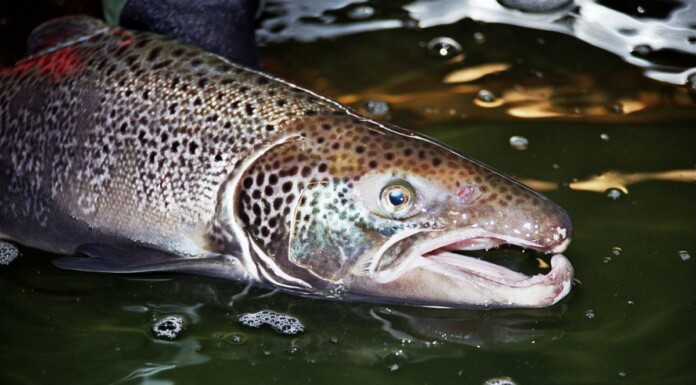
Editor’s note: This story has been changed regarding the cause of crescent moons.
Adorable photos show a newborn litter of 5 Critically-Endangered Scottish wildcat kittens.
First-time mom Talla gave birth to the litter at Wildcat Wood in Highland Wildlife Park, on April 2nd, and the kittens are due to receive their first veterinary check soon to determine their sexes.
The Scottish wildcat (Felis silvestris silvestris) is one of the country’s most iconic animals, but also one of the most endangered. This is mostly because of inbreeding with feral or domestic house cats, and habitat loss.
Taxonomically speaking, it’s a subspecies of the European wildcat (Felis silvestris) but appears so much like just a rugged tabby cat that two hikers, in one instance GNN reported on, believed they had found a lost tabby kitten in the snow on a hike in Cairngorms National Park.
One of the hikers noted that the animal’s claws were like “miniature razors,” and he and his friend joked that the little creature must be a Scottish wildcat.
A total of nine wildcats live at the Highland Wildlife Park. The new kittens will be on show for the public to visit, unlike other wildcats which are part of a breeding project. At 5 weeks old, they are already exploring their enclosures and playing atop the plastic and wood crates that form their den.
Highland Wildlife Center, via SWNS
Keepers at the wildlife conservation charity will name the youngsters in the coming weeks
“We are thrilled to welcome five Scottish wildcat kittens born to mum Talla and dad Blair on April 2nd,” said Keith Gilchrist, animal collection manager at Highland Wildlife Park.
“This is Talla’s first litter, and she is taking to motherhood brilliantly and being very attentive. The kittens are doing extremely well and are getting more confident every day.”
“It has been fantastic to see them growing curious about their surroundings and start exploring their home in Wildcat Wood with Talla by their side.”
Highland Wildlife Park, via SWNS
The Royal Zoological Society of Scotland leads the partnership project Saving Wildcats, working with global experts to restore Scotland’s Critically-Endangered wildcat population by breeding and releasing them into the Cairngorms National Park, Scotland’s largest.
All those cats born last year are soon to be released.
“It’s an incredibly exciting time for wildcats in Scotland and we are delighted the kittens will help engage visitors with this iconic species and inspire more people to protect, value, and love nature,” said Gilchrist.
SHARE These Adorable Yet Critically-Important Kittens With The World…
An environmentally clean fuel made from the power of the sun has been devised by scientists which could revolutionize motoring.
The solar-powered technology converts carbon dioxide and water into liquid fuels that can be directly dropped into a vehicle’s engine.
The researchers from the University of Cambridge harnessed the power of photosynthesis to convert CO2, water, and sunlight into multi-carbon fuels—ethanol and propanol—in a single step.
These fuels have a high energy density and can be easily stored or transported, according to scientists whose work was published in Nature Energy.
“Shining sunlight on the artificial leaves and getting liquid fuel from carbon dioxide and water is an amazing bit of chemistry,” said Dr. Motiar Rahaman, the new study’s first author.
“Normally, when you try to convert CO2 into another chemical product, you almost always get carbon monoxide or syngas, but here, we’ve been able to produce a practical liquid fuel just using the power of the Sun.”
They managed this by developing a copper and palladium-based catalyst, optimized to allow the artificial leaf to produce more complex chemicals.
Unlike fossil fuels, these solar fuels produce net zero carbon emissions and are completely renewable—and unlike most bioethanol, they do not divert any agricultural land away from food production, experts said.
While the technology is still at laboratory scale, the researchers said their ‘artificial leaves’ are an important step in the transition away from a fossil fuel-based economy.
Bioethanol is often touted as a cleaner alternative to gasoline since it’s made from plants instead of fossil fuels.
The United States is the world’s largest bioethanol producer. According to the USDA, almost 45% of all corn grown in the USA is used for ethanol production.
Currently, the artificial leaf and copper catalyst are proof of concept devices, and show only modest efficiency, the study authors added. They are now working to optimize the light absorbers so that they can better absorb sunlight and optimize the catalyst so it can convert more sunlight into fuel.
Further work will also be needed so the device can be mass-produced and make large volumes of fuel.
SHARE This Development In Bioethanol Fuels With Your Friends…
Just off the coast of Warrnambool city, Australia’s Middle Island is home to some very small residents, at the center of a big achievement.
There one can find the little penguin, also known as the fairy penguin, which as the same suggests is the world’s smallest—standing just 35 centimeters tall.
Starting in 1991, sedimentation and tidal patterns created a short window during the year when a tidal causeway allowed access to Middle Island from the mainland, which foxes quickly discovered and used to devastate this ground-nesting bird population.
Enter a rather unlikely hero. A local chicken farmer named Swampy Marsh had no professional background in conservation, but what he did understand over many years of keeping chickens was how to defeat or outfox foxes.
Running up to 5,000 chickens free-range, Marsh used Maremma dogs as guardians. These great big white pooches, officially known as PastoriMaremma-Abruzzesi owing to their Italian origins from the coastal region of Maremma, were excellent protectors of Marsh’s flock, and he figured that since little penguins are equally as defenseless against foxes, the same protection scheme would work.
And it did; though officially no dogs were allowed on Middle Island, the severity of the little penguins’ plight convinced Warrnambool city council to give it a go. Marsh then arrived with his dog Oddball and got to work.
Their success was immediate and sustained. It totally changed the fox pattern for entry onto the island and soon Oddball’s role was professionalized, creating the Middle Island Project for breeding these Maremma dogs for use in protecting Middle Island.
During 2006 and 2017, the first two Mamemma dogs, Eudy and Tula, ensured that not a single fox attack took place, and the island’s penguins grew to 180 birds.
The dogs don’t actually attack the foxes, they just hang out on the island in pairs. If they smell a fox in the distance, their deep, basso barks are enough to scare the predators away. Conservationists ensure the dogs can take a few days off, and have everything they need to do their job, including food, water, shade, and company.
WATCH the story below from Terra Mater…
SHARE These Big White Knights With Your Friends On Social Media…
Editor’s note: This story has been altered to better reflect the distribution of little penguins in Australia.
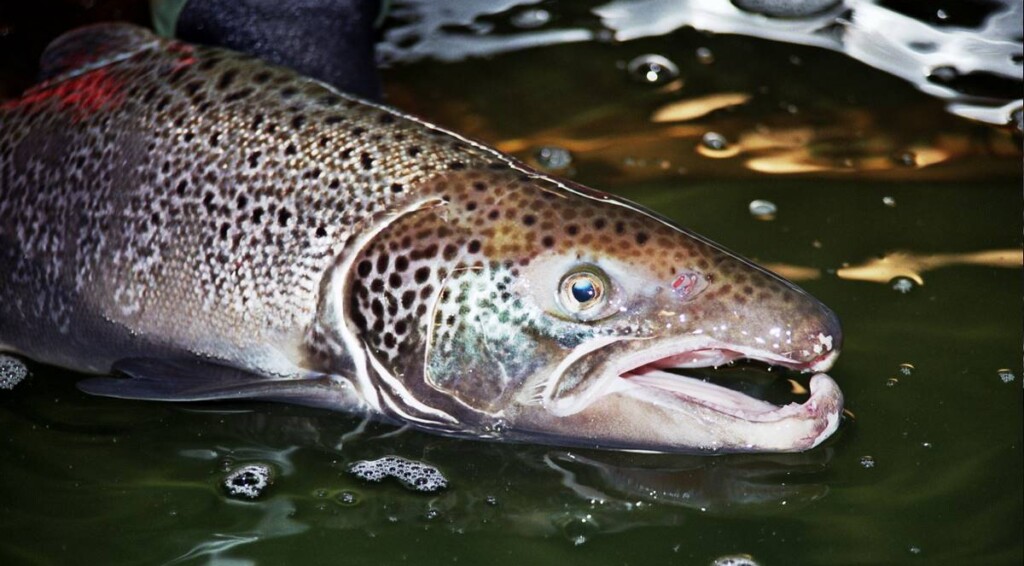
Quote of the Day: “Develop enough courage so that you can stand up for yourself, and then stand up for somebody else.” – Maya Angelou
Photo by: Dalton Touchberry
With a new inspirational quote every day, atop the perfect photo—collected and archived on our Quotes page—why not bookmark GNN.org for a daily uplift?
A Nepali veteran of the British operations in Afghanistan has become the first double above-the-knee amputee to summit the world’s tallest mountain.
Hari Budha Magar, who lives in Canterbury reached the top at 3 PM last Friday, having started the climb on April 17th—13 years to the day since he lost his legs in an IED explosion.
Anyone with knowledge of the history of warfare knows about the almost mythical bravery and exceptionalism of the Ghurkas. Hari is one of these people—Ghurka being a historical term for a Nepali warrior, and a modern legal term for a Nepali foreign fighter that isn’t considered a mercenary under the Geneva Convention.
In the face of that legacy, Hari’s accomplishment is perhaps to be expected, though he certainly didn’t feel like that 13 years ago, battling alcoholism and depression.
“I grew up in Nepal, up to age of 19, and I saw how the disabled people were treated in those remote villages,” he said. “Many people still think that disability is a sin of previous life and you are the burden of the earth. I believed this myself because that is what I saw. That is how I grew up.”
He tried to kill himself a pair of times, but eventually decided to climb Everest instead. However, there was a legal summit to conquer in his native Nepal before he could tackle the Mountain So High No Bird Can Fly Over It.
Disabled people had been banned by the Nepali government from attempting the mountain. Enough people die on the journey every year, and the authorities saw no reason to risk that. But, Hari was able to overcome that roadblock and prepare for the real quest.
PA News was at Everest Base Camp after Budha Magar, supported by his all-Nepalese team, completed their descent from the peak.
Hari Budha Magar (center) reaches Mt. Everest summit – courtesy of Shanta Nepali Productions
“All of my jackets were completely freezing,” he said. “It was all frozen. Even our warm water, we put hot water in the Thermos, and that was also frozen and we were not able to drink.”
He used a variety of interchangeable prosthetics for the climb, which included some equipped with ice spikes, and others with mountaineering boots attached.
Completing the mission, Budha Magar says he wants to return to the spot in Afghanistan where he lost his legs in order to say ‘thank you’ because if he still had his legs, he would never have climbed Everest.
SHARE This Inspiring Man’s Journey From Rock Bottom To The Top Rock…
For no other reason than that she was a working mom with a great personality and an important job making sure people drive safely through the city of Detroit, a traffic control officer was recently on the receiving end of all the goodness social media can wield.
It started when TikTok account MDMotivators interviewed Lanita Edge on duty in the middle of the road, gabbing as she does with passers-by, and wishing people a happy Mother’s Day.
She revealed in the video which went viral that she felt it was an important service to the city—to help people get where they need to go and get home safely. She explained she was born and raised in the Motor City, and was a Tigers fan.
In that first video, Edge was surprised when the TikToker Zackery invited her to the Tigers game for Mother’s Day. The working mom recently lost her husband and asked if the invitation was reliant on the fruits of her paycheck, at which point Zackery surprised her with $500.
Meanwhile, Zackery had secretly set up a crowdfunding campaign that amassed $50,000, a gift simply for being her fine self, that was delivered on the grass in the Tiger’s ballpark.
“The people of Detroit have watched the video and donated an additional $50,000,” he said.
Her son and Detroit Tigers catcher Jake Rogers handed her the check.
“It was like a movie. It was beautiful. I feel very blessed to be able to just witness this,” Zackery told ABC 7 Detroit. “All I am doing is showcasing who she is as an individual and the people online came together and created this.”
“God uses wonderful people every day,” Edge said, explaining she was at a loss for words. “I didn’t know this man and God used him to be a blessing to me. I couldn’t thank him enough. I couldn’t give God thanks enough.”
Now, 9 million social media views later, and dozens of people stop along the crosswalk to say hello, congratulate, or wish her well.
WATCH the news story below…
SHARE Detroit’s Celebrations For This Beautiful Human Being With Your Friends…

In a potentially huge development for fashion in tropical countries, an entomologist has come up with a Spandex-polyester weave that’s impermeable to the proboscis of the mosquito.
Mosquitos hospitalize hundreds of thousands every year in the tropics by spreading malaria, dengue fever, yellow fever, and West Nile virus, and every major proposed solution has failed to alleviate these burdens to any degree that can’t be obtained with a simple mosquito net over someone’s bed.
There have been news reports recently of genetically engineered mosquitos that can sterilize populations in areas to prevent the spread of the diseases they carry, but to John Beckmann who designed the new cloth weave, the simplest solutions are probably the best ones given past experience.
Using a hi-tech knitting machine Beckmann and his team experimented with different weave patterns. They needed to find one that didn’t provide any space for the proboscis to exploit, while at the same time offering comfort and breathability for tropical weather conditions; a tough ask.
To the naked eye, the mosquito’s proboscis, which it uses to feed, appears needle-like, but Beckmann points out that this appendage is so advanced it can go right through most fabrics thanks to a pair of saw-like bladed segments along its sides, microneedles that vibrate like a drill, and the ability to bend at 90 degrees.
“Knitting is essentially like tying little knots—you’re making loops, and you’re wrapping loops through loops,” Beckmann told Fast Company. “If you do it in the right geometric ways, you can create a chainmail effect at the microscopic level.”
It took a lot of tweaking and refinement, but the finished fabric was described by one of his graduate students at Auburn University, Alabama, as something similar to “Lululemon leggings.”
The team submitted a paper describing their findings and the tests of the various weaves they used by way of putting a sleeved arm into a glass box full of mozzies and counting the bites.
Now they plan to continue refining the technology with the aim of releasing a clothing line, and licensing the weave to various outdoor companies.
SHARE This Great And Much-Needed Invention With Your Friends…

A pair of dirty windows bought on Facebook during a church demolition is set to sell for $225,000.
Antiques hunter Paul Brown from Pennsylvania paid around five grand for a bundle of various items from St. Paul’s Presbyterian Church in West Philadelphia.
They included these stained glass windows which were discovered to be made by the noted company Tiffany Glass Studios, (1878 – 1933) founded by Louis Comfort Tiffany.
Philadelphia-based auctioneers Freeman’s say the sale marks the first time a Tiffany Studios rose window has ever been offered at auction.
“This is such a rare and exciting market appearance,” said Tim Andreadis, Head of Freeman’s 20th Century and Contemporary Design department. “The intricacy of these works is stunning, and it’s meaningful to bring to market pieces that have such a deep, meaningful history in Philadelphia.”
Freeman’s explains that the twin roses of St. Paul were likely commissioned around 1904, completed in 1906, and supported in part by master merchant John Wanamaker, owner of the eponymous Philadelphia department store.
“The resulting windows feature leaded, mottled, streaky, acid-etched, and ripple glass in vibrant hues,” they add. These were all various forms of glass sold at Tiffany which made them one of the most coveted stained glass designers in North America.
From left to right, Dawn and Autumn panels by Tiffany Studios in the Brooklyn Museum, and The Angel of the Resurrection in the First Presbyterian Church, Indianapolis. credit CC 3.0. Sailko – CC 2.5 Opal Art Seekers
Brown saw the windows on Facebook Marketplace, and bought them along with wooden pews and doors. He then hired workers to sensitively extract the windows and, after confirming they were made by Tiffany Studios, reportedly paid $44,000 for restoration.
Created by what Freeman’s describes as “America’s skillful and most famous art glass designer”, the roses of St. Paul not only respond to the effects of the sun throughout the day, they also feature powerful symbolic imagery: one rose is centered by a crown representing Christ, and the other a dove representing the Holy Spirit.
SHARE This Stunning Art Saved From Destruction On Social Media…
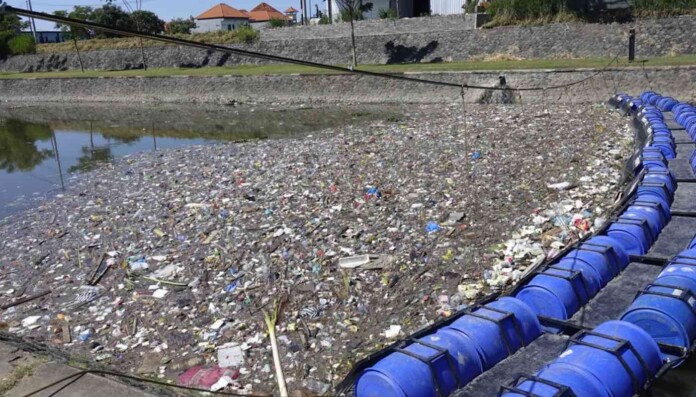
Quote of the Day: “You always have to stand up to your fears. You never want to get caught soggy.” – Katharine Hepburn
Photo by: Shashank Sahay
With a new inspirational quote every day, atop the perfect photo—collected and archived on our Quotes page—why not bookmark GNN.org for a daily uplift?
Seeking to find sustainable solutions to low-cost housing in Indonesia, scientists in the world’s third-most-populous nation hypothesized that used diapers could, if one can believe it, replace some of the sand in concrete mixtures.
Disposable diapers are usually manufactured from wood pulp, cotton, viscose rayon, and plastics such as polyester, polyethylene, and polypropylene.
Because of this mix of materials, not to mention their disgusting purpose, the majority are disposed of in landfills or by incineration.
“Currently, the essential step in the recycling process for used diapers is to separate the plastic components from the organic fibers,” write the authors of the paper on diaper construction, published in Nature.
“It necessitates the execution of many complicated procedures, including collecting, crushing, sanitizing, and sorting the components. Due to the difficulty involved in the process, only a few businesses are currently interested in recycling used diapers.”
Siswanti Zuraida from the School of Environmental Engineering at the University of Kitakyuku in Japan, worked with colleagues to prepare concrete and mortar samples by combining washed, dried, and shredded disposable diaper waste with cement, sand, gravel, and water.
These samples were then cured for 28 days. The authors tested six samples containing different proportions of diaper waste to measure how much pressure they could withstand without breaking. They then calculated the maximum proportion of sand that could be replaced with disposable diapers in a range of building materials that would be needed to construct a house with a floorplan of 387 square feet (37 sq. meters) that complies with Indonesian building standards.
credit Zuraida et al.
The authors found that disposable diaper waste could replace up to 10% of the sand needed for concrete used to form columns and beams in a three-story house.
This proportion increased to 27% of the sand needed to make concrete columns and beams in a single-story house, 40% of the sand needed for mortar in partition walls, compared to 9% of the sand in mortar for floors.
The authors point out a few limitations, namely that no cooperation or supply chain exists for the collecting, washing, and shredding of diapers for material purposes. Furthermore, the amount of shredded diaper waste needs to be carefully calculated, since tests showed that differences as high as 2% compromised structural integrity.
However, for reducing landfill burden, using diapers is very low-cost compared to other recyclable materials.
A mother in Arizona woke to find she was trapped in the second story of her apartment home as it quickly engulfed in flames.
Claudia Jimenez opened the window and called out to anyone who could hear, needing somehow to find a way to escape while the front door was blocked by the fire.
The first person on the scene wasn’t a firefighter, it was Joe Hollins, who lived in a homeless encampment with his wife near Jimenez’s house.
“All I see is a lady pull open the window and she’s screaming ‘Please help me, please help me,'” Hollins told CBS News.
The mother of two then had to make a difficult choice. It’s not unusual or prejudicial to be wary of people living on the streets, but for her one-year-old daughter Valerie and eight-year-old Natalie, Hollins may have been their only hope of survival.
Under the window, Hollins called to Jimenez saying that he would catch the children in his arms. She trusted the man, and not only dropped Valerie and Natalie, but the two dogs as well. It took Jimenez herself a while to summon the courage to jump, but she managed it, and Hollins still had the strength to catch her.
As things calmed down, the family thanked Hollins profusely, though the man said that he did what anyone would do in that situation.
“Yes, anyone would. Those were children,” he said.
“I will forever be thankful to him, you know?” said Jimenez. “Like I said, to me he was an angel,” Jiminez said. “Because of him we’re here, we’re alive and my daughters are safe.”
While the family lost everything, community members are helping support them to get back on their feet, while viewers at CBS want to know how they can support Hollins and honor what he did.
Fishermen in Mississippi are getting paid to collect derelict crab traps, saving wildlife from getting caught in them.
A bounty of $5 is offered for every abandoned trap collected, and in just three years the program, launched by Mississippi Commercial Fisheries United, a nonprofit fishermen’s organization, has collected over 3,000 such traps.
Crab traps work pretty simply—the crustaceans crawl in, and then they can’t crawl out.
This is perfect for fishermen looking to supply the Gulf Coast with delicious seafood, but what happens when the traps are abandoned or become lost? Their lethal trapping power remains and carries on indiscriminately, a phenomenon known as ghost fishing.
Participating shrimpers and crabbers register for the program, then they catalog and tag every trap they collect on their way toward turning them in at a redemption site.
Alyssa Rodolfich, a graduate student at Mississippi State University, told Hakkai Magazine that it was really gratifying to see the number of derelict traps being turned in, having at first never realized the problem.
“I didn’t realize how big of a problem it was until I was on the cleaning-up end of it, after a few months of removing, like, 200 crab traps at a time,” she says. “It was heavy and gross, and the amount of by-catch in the traps was a lot.”
MSU was also involved with the program alongside Mississippi Commercial Fisheries United, the Mississippi-Alabama Sea Grant Consortium, and the National Oceanic and Atmospheric Administration.
The program has so far cost around $34,000 per year, which is nothing compared to the annual loss of gross revenue attributable to ghost fishing, which is estimated at $15 million from over 5,000 lost crab traps every year.
With such rapid, demonstrable success, the project just received a grant from NOAA to pay for the collection of other debris from the Gulf, which Hakkai explains is already taking off, with fishermen bringing in old tires, shopping carts, washing machines, and toilets.
SHARE These Awesome Fishermen Helping To Clean The Gulf…
Elizabeth with her Miracle Friend Joan / Miracle Messages
Elizabeth Softky is aptly named: when you hear her speak, there is a soft, lyrical quality to her voice, supported by deep notes of strength. It’s a voice that she used while working as a journalist, as a mother of three, and as a teacher, to calm down an unruly classroom of squirming students.
Never would she have dreamed that she’d become homeless—or feel voiceless.
Not only did she teach in a classroom for more than 10 years, she had founded a nonprofit ‘Jump Into Writing’, to organize creative writing workshops for elementary school students. And she put her bilingual voice to good use, leading English workshops for immigrant Spanish-speaking families in Los Angeles.
Then came her diagnosis of advanced-stage cancer, immediate surgery, and a “super aggressive” chemo regimen.
“My immune system was so compromised that I was not allowed to return to work—and that meant digging into my savings to pay rent,” she says. “When I ran out of money, I was evicted from my home of 14 years. I was looking at the reality of nowhere to go, except for sleeping at a bus stop.”
Weakened by chemo, she walked through the practicals of survival, and navigated a difficult system to find temporary housing through a program repurposing hotel rooms for the unhoused during the pandemic.
COVID added a new layer of uncertainty to everything Elizabeth was going through. While grateful to have a room and a bed, there was an intense feeling of loneliness as the world shut down.
That’s when Elizabeth met Joan, a volunteer phone buddy for Miracle Messages—and the two hit it off right away
Early in the pandemic, Miracle Messages, the nonprofit that reunites families with relatives who’ve become homeless, saw the isolation happening when unhoused individuals had to stay in their rooms alone, and wanted to help. So they created a program called Miracle Friends, in which volunteers from around the world are paired with unhoused participants staying in hotel rooms for a weekly friendship phone check-in.
Joan and Elizabeth used their weekly phone calls to practice their Spanish together, and swap stories about their days. Joan was there to talk as Elizabeth finished her chemo treatments and worked to regain what she had lost.
During this time, Miracle Messages expanded into a basic income pilot program known as Miracle Money. Elizabeth was chosen as a participant, and was given $500 a month for 6 months to help her on her journey. The money combined with the friendship made all the difference: in a matter of weeks, Elizabeth secured a new apartment.
Joan visited Elizabeth in her new place.”This is so cool…your front yard! It’s awesome!”
“Being back here is a major part of being restored back to the world,” says Elizabeth, looking around her new place. “The Miracle Messages family has been a miracle for me.”
Now Elizabeth uses her voice as a speaker and advocate on the topic she never thought she’d need to have a voice in—homelessness.
See her story on the PBS News Hour below – and visit the MM website to learn how quickly you can become a volunteer for Miracle Friends.
(Co-written by GNN editors and Jenni Taylor)
SHARE This Happy Ending AND Volunteer Idea With Friends on Social Media…