Quote of the Day: “Be a part-time crusader. Save the other half of yourselves for pleasure and adventure.” – Aldous Huxley
Photo by: Victor Rodriguez
With a new inspirational quote every day, atop the perfect photo—collected and archived on our Quotes page—why not bookmark GNN.org for a daily uplift?
In Lebanon’s windy northwest governate of Akkar, a literature student taught himself engineering to build a wind turbine on his grandmother’s roof.
With government-supplied electricity more of a nice theory than a daily reality, solar panels have become ubiquitous in the region.
However 25-year-old Mohamad Sabsabi used old water drums, steel beams, and a cart wheel to build a wind turbine to take advantage of the wind when the sun is behind the clouds.
A French literature student, Sabsabi dropped out of university when hyperinflation made it impossible for him to continue paying the fees. He used YouTube videos, books, and scientific articles to build the turbine that is working and producing electricity.
He’s hoping for a north-Lebanon wind industry to crop up in the wake of his invention, which he says he wants to share with his neighbors.
Anyone without solar panels is left without power for all but 1 or 2 hours during the day, and the wind turbines, which can be made from scrap apart from the electrical components, could be an easy solution.
“I don’t know how long it’ll take but I’m optimistic,” Sabsabi told L’Orient Today.
WATCH the Reuters video below… (Note: GNN has no affiliation with any ads displayed)
SHARE This Young Man’s Good Idea with Your Friends…
After a few bees figured out how to get a sweet treat from a locked container, the whole hive eventually learned how by watching and learning.
The research, led by Queen Mary University of London and published in PLOS Biology, provides strong evidence that social learning drives the spread of bumblebee behavior—in this case, precisely how they forage for food.
A variety of experiments were set up to establish this. The researchers designed a two-option puzzle box that could be opened either by pushing a red tab clockwise or a blue tab counter-clockwise to reveal a 50% sucrose solution reward.
‘Demonstrator’ bees were trained to use either the red or blue tabs, with ‘observer’ bees watching. When it was the observers’ turn to tackle the puzzle, they overwhelmingly and repeatedly chose to use the same method that they had seen, even after discovering the alternative option.
This preference for the taught option was maintained by whole colonies of bees, with a mean of 98.6% of box openings made using the taught method.
“Bumblebees and indeed invertebrates in general, aren’t known to show culture-like phenomena in the wild,” said lead author Dr. Alice Bridges. “However, in our experiments, we saw the spread and maintenance of a behavioral ‘trend’ in groups of bumblebees—similar to what has been seen in primates and birds.”
The importance of social learning to the acquisition of puzzle box solutions was also illustrated through the control group, which lacked a demonstrator. In this group, some bees managed to open the puzzle boxes, but did so far fewer times than those who benefitted from seeing another bee do it first.
The median number of boxes opened in a day by the observer bees with a demonstrator was 28 boxes a day, whereas it was only 1 for the control colony.
In an additional experiment, the researchers put both ‘blue’ and ‘red’ demonstrators into the same populations of bees. In the first population, 97.3% of the 263 incidences of box-opening by observers by day 12 used the red method. In the second population, observers preferred the blue method over the red on all days except one.
In both cases, this demonstrated how a behavioral trend might emerge in a population in the first place—for the most part, due to experienced bees retiring from foraging and new learners arising, rather than any bees changing their preferred behavior.
“The behavioral repertoires of social insects like these bumblebees are some of the most intricate on the planet, yet most of this is still thought to be instinctive,” Dr. Bridges added. “Our research suggests that social learning may have had a greater influence on the evolution of this behavior than previously imagined.”
SHARE This Remarkable Insight With Your Hive On Social Beedia…
One of the critical abnormalities found by the AI - SWNS
One of the critical abnormalities found by the AI – SWNS
Artificial intelligence can help spot early signs of cancer in chest x-rays, according to a new study.
Scientists found that a state-of-the-art AI tool can classify normal and abnormal chest X-rays in a clinical setting at least as well as professional radiologists, but as an editorial on the paper pointed out, radiology departments are often understaffed.
An abnormal chest X-ray can be an indication of a range of conditions, including cancer and chronic lung diseases.
Scientists say that an AI tool that can accurately classify normal and abnormal chest X-rays would greatly reduce the heavy workload of radiologists.
“Artificial intelligence has shown great promise, but should always be thoroughly tested before any implementation,” said study co-author Dr. Louis Lind Plesner, a radiologist from the Herlev and Gentofte Hospital in Copenhagen.
They used a commercially available AI tool to analyze the chest X-rays of 1,529 patients from four hospitals in Denmark.
Chest X-rays were included from emergency department patients, in-hospital patients, and outpatients. Two board-certified radiologists were used as the reference standard. A third radiologist was used in cases of disagreements.
The AI tool identified abnormal chest X-rays with a 99.1% sensitivity rate, which included those with critical, remarkable, and unremarkable abnormalities. In 10 cases there were false negatives, 9 of which were clinically insignificant. The significant one, a subtle lesion, was also missed by one of the attending radiologists.
“The most surprising finding was just how sensitive this AI tool was for all kinds of chest disease,” said Dr. Plesner. “In fact, we could not find a single chest X-ray in our database where the algorithm made a major mistake.”
“Furthermore, the AI tool had a sensitivity overall better than the clinical board-certified radiologists.”
He also said the AI tool performed particularly well at identifying normal X-rays of the outpatient group at a rate of 11.6%.
Dr. Plesener said the findings, published in the journal Radiology, suggest that the AI model would perform especially well in outpatient settings with a high prevalence of normal chest X-rays.
The editorial on the topic praised the potential to take care of 7.8% of all the normal readings for the radiologists, one of the key findings of the study, but suggests that as a labor-saving device, more research is needed to ensure radiologists aren’t putting patients at risk for a mere 7.8% reduction in workload.
SHARE This Exciting Potential Use Of AI With Your Friends…
A 36-year Boeing employee noticed at a local grocery store in her home of Auburn Washington that the Powerball jackpot had reached $747 million.
In a nod to her place of work, she decided to buy a ticket after the number of Boeing’s premier jumbo passenger jet, the 747.
In another coincidence, the jackpot had reached $747 million the week in which Boeing sold its last 747 ever.
A believer in fate might say it was meant to be, since winner Becky Ball had already spent the weekly allocation she gives herself for buying lottery tickets. But noticing the connection with her job she “had to buy one more ticket” when she saw the number at her local Fred Meyer grocery store.
Becky Ball has released no statements, interviews, or information about herself, but has told reporters privately that she intends to share the money throughout her extended family.
She had planned to retire at the end of June, but will instead advance that date to March following her choice to claim the lottery as a lump sum rather than in increments, which after taxes is around $309 million.
Despite the drastic reduction, she could still afford a Boeing 747 and have money left over to live comfortably until the end of her days.
The Fred Meyer store received a $50,000 gift from the state lottery for being the one who sold the winning ticket, which they plan to donate to feed the homeless and needy, as well as a $10,000 party thrown for the associates of the store.
WATCH the story below…
SHARE This Absolutely Ridiculous Stroke Of Luck With Your Friends…
Quote of the Day: “It is not enough to fight for the land; it is even more important to enjoy it.” – Aldous Huxley
Photo by: Anders Nielsen
With a new inspirational quote every day, atop the perfect photo—collected and archived on our Quotes page—why not bookmark GNN.org for a daily uplift?
Mae Dean Erb completes 1000th consecutive 5K (Credit: Cindy Impson)
Mae Dean Erb completes 1000th consecutive 5K (Credit: Cindy Impson)
A Cherokee woman determined not to let the pandemic get her down began running or walking a 5K every day for 100 days.
Through lockdowns, Alpha, Delta, Omicron, and beyond, Mae Dean Erb kept on running until she completed her 1,000th 5K last Friday, two months short of her 80th birthday.
“I don’t know how she managed to do a 5K walk or run every single day for the last 1,000 days but she did,” Erb’s daughter, Julie Erb-Alvarez, told GNN. “Her milestone was celebrated by a gathering of friends and family – even some virtually. She is our hero.”
A member of the Cherokee Nation, Erb lives with her husband of 56 years, Jim Erb, in a rural town called Blackgum, near her hometown of Vain, Oklahoma.
She has by no means stopped doing these continuous 5Ks, and in fact at the time of publishing she would be on her 1,006th, noting that good habits are as hard to break as bad habits.
“I don’t hurt anywhere. I have knee issues every once in a while, with, I guess age, but it’s really wonderful thing (walk/run) to do,” she told the Cherokee Phoenix.
Mae Dean Erb completes 1000th consecutive 5K (Credit: Cindy Impson)
“It’s just something you should do for yourself and your family, and when you have a 4-year-old grandson, you want to stay young enough to pick him up and run with him and catch him if he’s going in the wrong direction.”
She often runs and walks with her friends who note that going out for a walk doesn’t even feel like a walk anymore unless it’s 5K.
Julie notes that Mae has become an inspiration to the whole community, not least to herself, who wants to be just like her mom when she reaches her golden years.
SHARE This Special Woman’s Special Accomplishment With Your Friends…
When the full extent of the recent earthquakes in Turkey and Syria became apparent, rescuers came from around the world and across political boundaries to aid in the lifesaving efforts; and they brought their dogs too.
Trained rescue dogs and their handlers came from the US, Israel, El Salvador, Mexico, Qatar, South Korea, China, India, Thailand, Kyrgyzstan, and 17 EU countries to lend their leashes and noses to help pull survivors out from under the rubble of buildings.
More than 140 dogs have so far arrived from outside Turkey and Syria to help, from a wide variety of breeds, though all require “boundless energy… to go until they drop,” one rescuer told Al Jazeera.
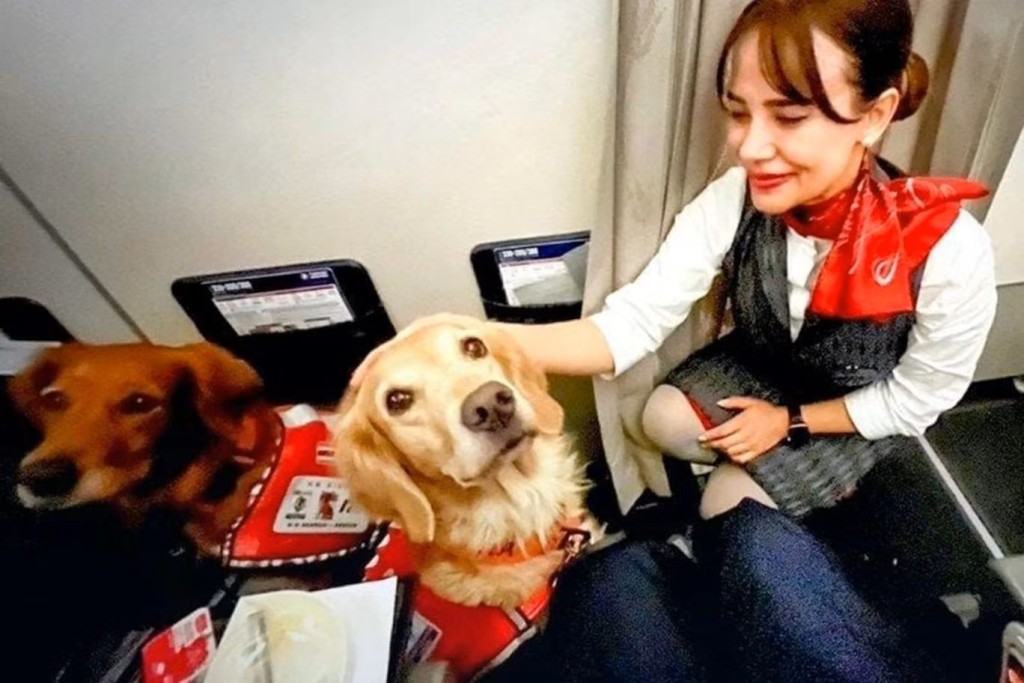
Now on their journey back to their homes, the national carrier Turkish Airlines has given each and every pooch a first-class seat to honor their heroism.
A spokesperson for the airline told The Independent that it was “the least we could do to show our appreciation for these heroic dogs’ sincere and heroic efforts.”
“When people can’t cry for help anymore, dogs are one of the last chances for people to be found,” explained Linda Hornisberger in an interview with BBC. Hornisberger is a Senior Search Expert at the Swiss Disaster Dog Association (REDOG). “Dogs can cover a large area quickly and with their nose, they can detect the scent of the people under the rubble.”
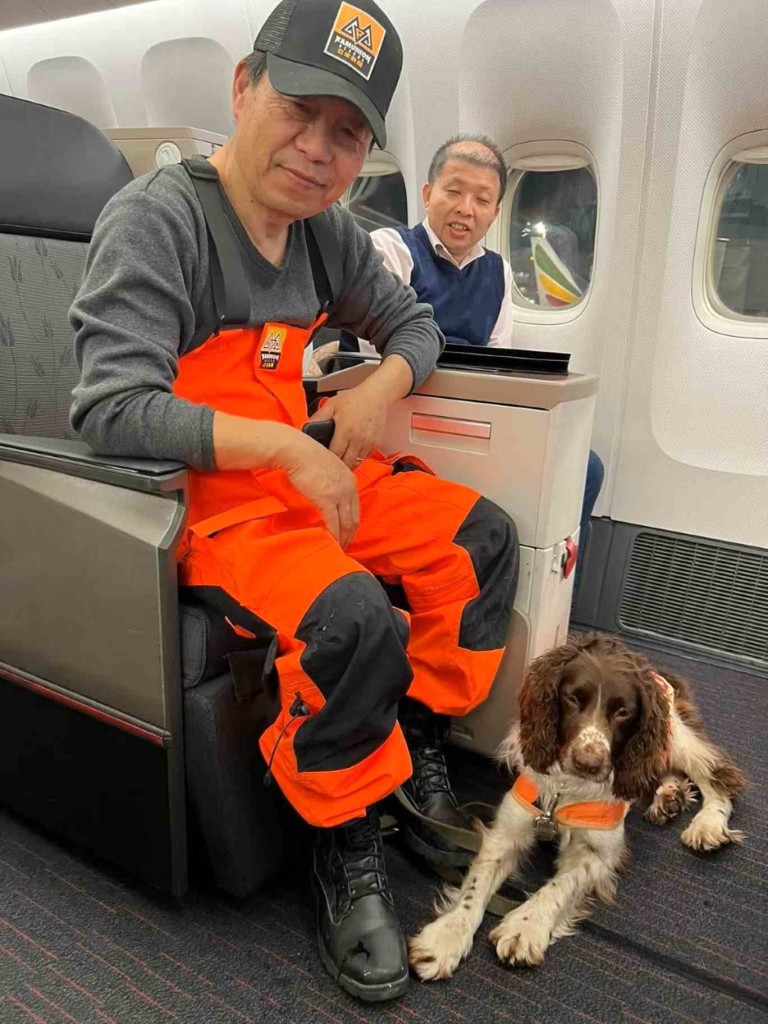
Rescue Dog from China and its handlers – Turkish Airlines
The author of this story at GNN has flown Turkish Airlines only a few times, but considers it a superior flying experience to all other carriers by an immeasurable margin, and as such is not surprised in the least to see reports of their contributions to relief and rescue efforts.
These efforts have included reserving cargo holds on its flights for urgently needed supplies and medicine, tents, and other hygiene equipment, and providing free flights for evacuees.
In total over 238,000 rescue personnel have been transported over 1,300 aid flights, and the company has donated 2 billion Turkish Lira ($105 million) to rescue efforts.
Turkish Airlines chairman of the board and executive committee, Dr. Ahmet Bolat, also donated his March salary for “immediate aid efforts”.
A United Nations appeal has been put out for relief efforts that’s currently only 10% completed. All readers can use this link to join in and donate as Dr. Bolat did.
SHARE This Awesome Corporate Aid Effort With Your Friends…
Chelsey Brown likes to trawl flea markets and thrift shops for interesting items, but not for decorations or collections.
As an amateur genealogist, she enjoys tracking down the owners or the descendants of the owners and reuniting them with their lost heirlooms.
The Manhattan interior designer claims to have returned more than 500 objects to their owners, and she does it all for free.
“I love the thrill of the chase; I love to close out the mysteries,” says Brown. “It’s insane the things I have found. All of the Holocaust items I have been able to return have been special.”
After finding a telling clue on an object, she seeks out demographic information in city census records and other sources. This usually brings up a marriage certificate or another distinguishing legal document.
She is then usually able to track down the owner and contact them about whatever it is she’s trying to return, though she admits most people think it’s a scam.
Brown says that many of the same emotional dramas that can cause disruptions in relationships and households today were just as prevalent 100, sometimes 200 years ago.
Chelsey has found hundreds of interesting items—including love letters from decades ago, which show all the hallmarks of love struggles today, such as clinginess and ghosting.
“Heartbreak, affairs, and family drama were all still happening then,” says Brown. “I think it comforts people to know if they don’t get any contact with someone after going on a date that the exact same happened to some in 1850—but with letters.”
Her specialization is typically letters, such as a romantic series during World War II, or a diary of two teenage lovers who drifted apart.
“I found this amazing one written by a woman who was in a long-distance relationship. It was full of love letters and poems,” she said. “They decided to end the relationship but then I found out they got back together years later and are married with six kids. It’s really exciting returning them to the families.”
All this digging through the past has given her the idea to write a time capsule book.
SHARE This Obtuse Occupation With Your Friends On Social Media…
Artists impression of the Terran 1 launch - courtesy of Relativity Space
Artists impression of the Terran 1 launch – courtesy of Relativity Space
A private space tech firm will become the first entity to launch a 3D-printed rocket, which is technically the largest 3D-printed object as well.
Totally reusable, the Terran 1 will launch today from the spaceport at Cape Canaveral at 1:00 PM US Eastern Time, and will be streamed live on this YouTube channel.
Built by Relativity Space, the company has huge ambitions for lowering the cost and emissions of spacefaring. This real-world test of Terran 1 features a rocket made with only 85% printed material, but future rockets will reach 95% and will include additive-manufactured boosters as well.
It’s a small payload rocket meant to economize small deliveries into space with all the wonderful cost reductions that come from reusability and 3D-printing.
A liquid oxygen propellant will act as the fuel, which would make it the first rocket ever to leave the atmosphere on natural gas fuels, and prove a key part of the company’s future missions to Mars which it hopes to power with methane.
Currently the rocket stands 110 feet tall and can carry 2,756 pounds (1,250 kilograms) into space, while the Terran R, a future project, will be much larger.
Relativity Space was started by former SpaceX and Blue Origin employees.
WATCH the live launch feed which kicks off noon EST…
Quote of the Day: “We should feel excited about the problems we confront. Solving them is one of the highest of all our brain functions.” – Robert Anton Wilson
Photo by: Priscilla Du Preez
With a new inspirational quote every day, atop the perfect photo—collected and archived on our Quotes page—why not bookmark GNN.org for a daily uplift?
From Beijing, to Bognor Regis, to Buenos Aires, Sandy Hazelip and Ellie Hamby are sending a message to elderly around the world that goes, “if you don’t use it, you lose it.”
The 80-year-olds are going around the world in 80 days, like Phillias Fogg and Passepartout, to have advanced fun at their advanced age.
Hazelip and Hamby met in Zambia two decades ago during work in on the continent. Hazelip is a physician and Hamby a documentary photographer.
A friendship was bound to blossom, and they had already had several trips together before they got the idea to see all seven continents and all seven wonders of the world on a mission to celebrate their 80th birthdays by going around the world in 80 days.
“We don’t travel first class. And so when we have other ladies, especially who say, ‘Oh, I would love to travel with you two,’ the first thing I always do is look at their hands. If they are well-manicured, they do not want to travel with us,” Hazelip told CBS news.
Highlights from their trip so far include seeing the world from a plane above Mount Everest, and putting their foot down on Antarctica.
Their total itinerary is 18 countries, and they’ve already enjoyed a sled ride pulled by a dog team, seeing the Eternal City, the northern lights above Lapland, and a trek to see emperor penguins, despite the fact that they’ve both had total knee replacements.
“My daughter is not too concerned,” Hamby said. “She just says ‘Well, if Mom falls out of a hot air balloon in Egypt or off of the mountain… That’s fine. She’s living the life she wanted to live, and I’m happy for her.'”
Their motto is to always smile; never get upset, and they hope their trip will inspire other silver hairs to have a swan song trip like them rather than waste away in a char.
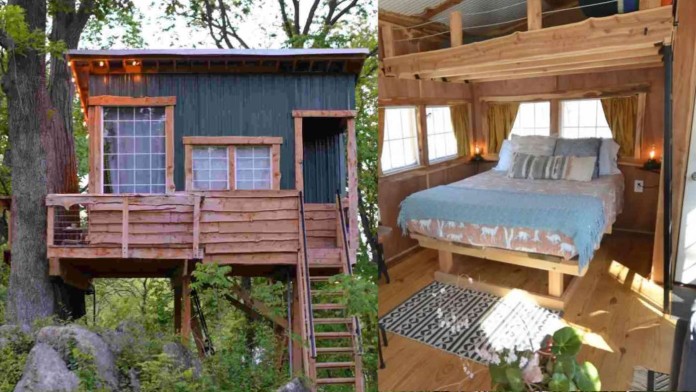
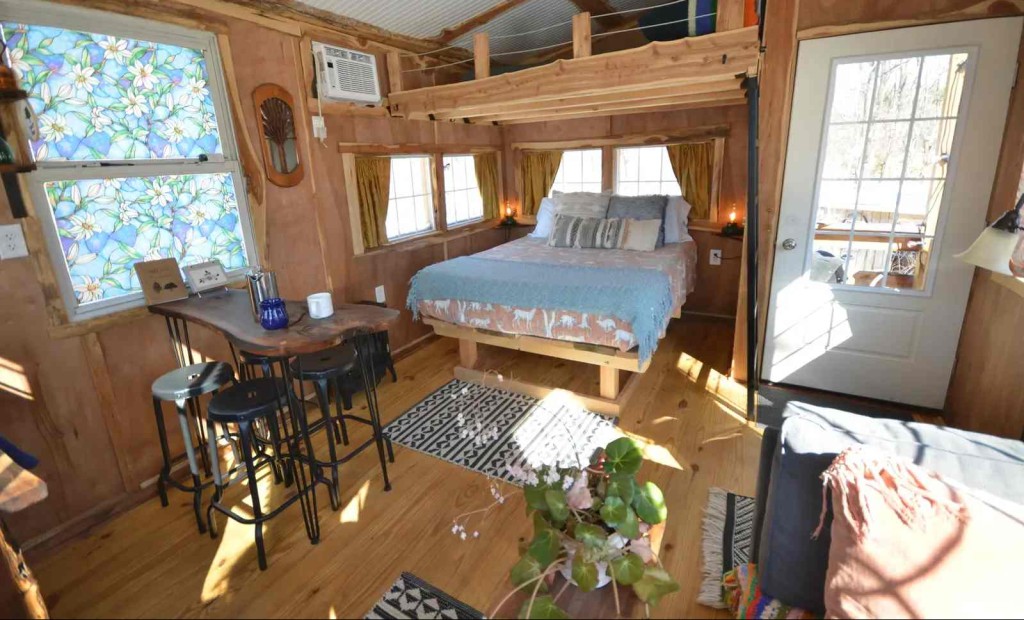
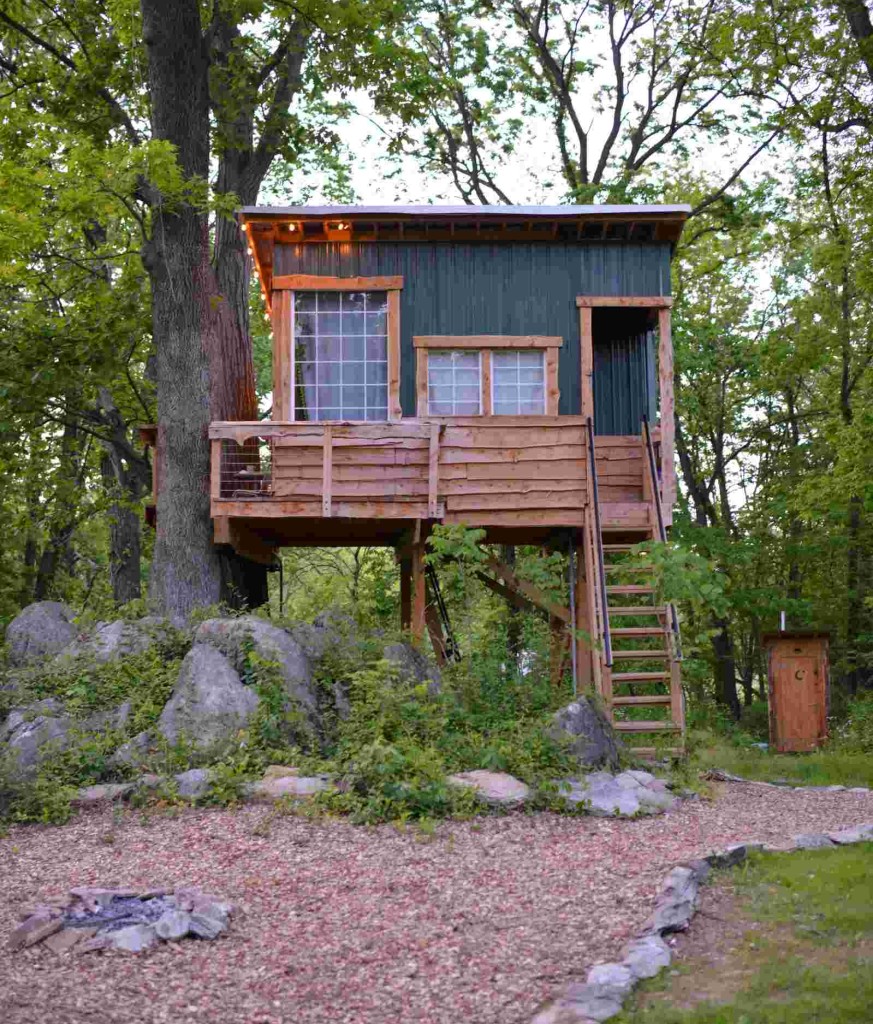
Keen to quit his day job, a West Virginian has built a quaint, beautifully furnished treehouse for Airbnb.
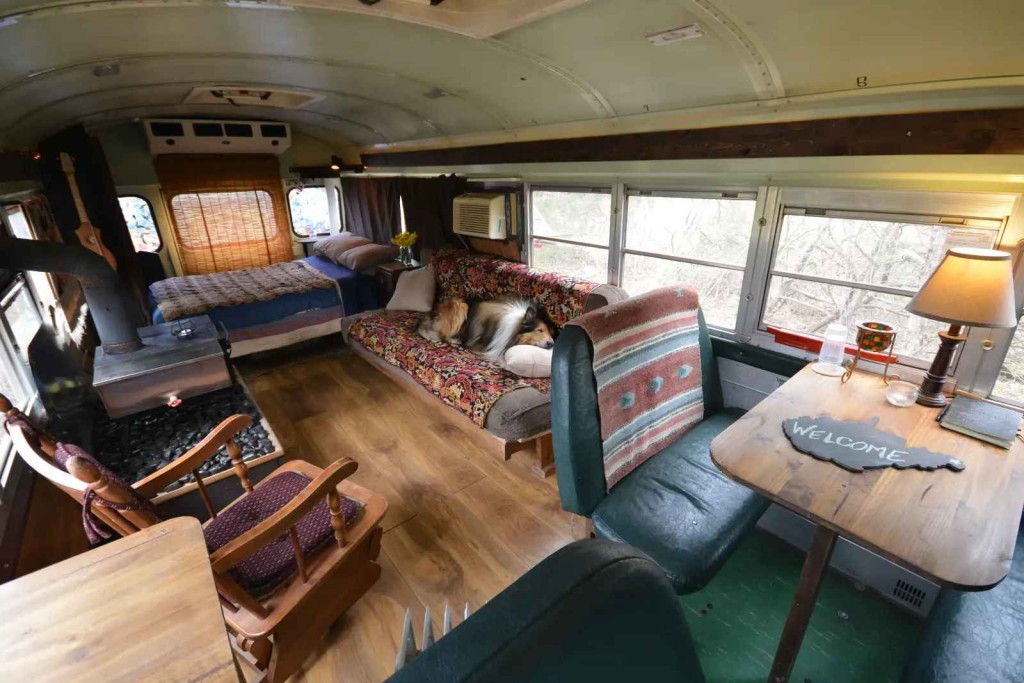
It will pair with his other, rather unorthodox listing, a cabin made out of a converted school bus.
A treehouse is without question one of the most fairy tale places to sleep, as an adult or certainly as a child. Will Sutherland always wanted to build one on his four-acre property in between two beautiful trees he found growing near the ledge of a large boulder subsumed by the landscape.
It took him six months, but with the promise of a hospitality-fueled mini-retirement, he managed it all by himself.
“I carried up every piece of wood, every piece of floor, the roof trusses, the floor trusses, and the big quad beam. I also sourced a bunch of cedar logs from a friend who was having a house built. I have a sawmill at my house so that I could mill all the cedar for the siding,” Sutherland told Business Insider.
When at first he pitched the idea of a treehouse Airbnb, his wife Sabrina said that as long as Will built a second bathroom, she was all in on the idea.
With his previous Airbnb, the “skoolie,” visitors had to enter the house to use their bathroom since there was none on the bus.
“Sabrina helped me with some of the details, like the floor finishing and trimming some boards. She was by my side every day when she got home from working as an arboretum specialist at the Virginia State Arboretum,” Will said.
The popularity of the school bus rental rose so fast that he increased the price to reflect the demand four separate times, going from just $39.00 a night to as much as $120.00. The treehouse is much the same, and Sutherland hauls in around $50,000 a year between the two.
Will and Sabrina basically live in a small community back in the woods, since the two places are booked almost year-round. Whenever Will has a spare moment he quickly mows the lawn and runs the sawmill that he relied on to build the treehouse to cut wood for himself and the guests.
The luxury outhouse which the guests of both rentals use has been rated a 5-star crapper, and the lack of flushing toilets and running showers right next to their bedroom has been a welcome change for the happily married couple who now have much more time to spend together now that Will has quit his day job.
SHARE This Awesome Elbow Grease Effort To Craft Fairy Tale Airbnb Homes…
A new corridor measuring about 30 feet was discovered recently in the biggest of the three Giza Pyramids, the Pyramid of Khufu.
Images and videos were released to the public after the Egyptian Ministry of Antiquities investigated the tunnel using an endoscopic camera.
Despite the nearly unlimited intrigue and mystery surrounding Ancient Egypt’s most remarkable engineering accomplishments, the tunnel has been quickly labeled as a method to disperse the weight of the sandstone blocks above.
One of the most iconic tourist attractions in the world, it seems mad to think there are still 30 feet or 9 meters of hidden passageway that were to be found inside, but it’s actually the second recently-discovered hidden passageway in Khufu’s pyramid, with an even longer 98-feet-long corridor being discovered in 2017.
Part of the reason why we’re enjoying these new insights is the work of an international team of researchers at the ScanPyramids project, which uses non-damaging, non-invasive thermography and cosmic-ray muon radiography to scan the pyramids for hidden secrets.
Near to the main entrance used by tourists today, the corridor’s whole purpose is not entirely known, in part because it seems to be unfinished.
“We’re going to continue our scanning so we will see what we can do… to figure out what we can find out beneath it, or just by the end of this corridor,” Mostafa Waziri, head of Egypt’s Supreme Council of Antiquities told reporters after a press conference in front of the pyramid.
Built in the year 2,560 BCE, the pyramids were long thought to be tombs. Additional research mostly by archaeologists and archaeo-astronomers that tend to be unfavored by Egyptian authorities, suggests there would have been a much broader array of purposes, including as a measuring stick for Earth’s mass and a calculatory instrument for the movement of the stars and planets.
The latter theory is dismissed as sensational, but the pyramids are nothing if not sensational, and a lot of the geometry of Khufu’s pyramid corresponds to astronomical phenomena important to the Ancient Egyptians, who in any case made tombs in several other styles far more often than pyramidal.
Scan Pyramids has announced they are going to continue their work on the new passage as well as trying to find other ones.
WATCH the ScanPyramid presentation below…
SHARE This Story With Your Friends Who Love Ancient History…
Blossom the lovesick goose – credit CBS News, retrieved from YouTube.
A cemetery manager played Valentine’s Day matchmaker to a lonely widowed goose whose mate passed away.
Blossom and Bud lived together for years in the pond at Riverside Cemetery in Marshalltown Iowa, but after Bud died last August, it seemed Blossom would spend the best years of her life alone.
General manager Dorie Tammen noticed that Blossom would spend hours staring at herself in the shiny reflections of model tombstones by the cemetery office, and she realized her goose needed company.
Tammen posted a personal ad on Facebook for a “lovely widowed goose” that was “youthful, adventurous, and lively,” looking for “a life partner for companionship and occasional shenanigans.”
The ad, mostly a joke, worked like a charm, and Tammen received a surprising email from Deb and Randy Hoyt who had a widower goose named Frankie who was in the same sort of heartbroken rut.
The Hoyts told CBS news that when they saw the ad for Blossom they thought “well that’d be great.”
The three humans set up a Valentine’s Day date for the two geese, and soon enough they were swimming around the pond at Riverside, seemingly content to be together forever.
Quote of the Day: “Genius is more often found in a cracked pot than in a whole one.” – E. B. White
Photo by: Devon Christopher Adams, CC license
With a new inspirational quote every day, atop the perfect photo—collected and archived on our Quotes page—why not bookmark GNN.org for a daily uplift?
The last 100 million years of continental movement have recently been calculated by scientists and illustrated in a 23-second video, down to an astonishing 10-kilometer resolution.
The short .gif explains so much of how our world came to be in such a short time span, most notably how Africa has changed over time.
There are certain concepts at the bedrock of our geographical understanding of why the globe looks the way it does, for example, that the Indian subcontinent is on a slow-motion collision course with the Eurasian continent, and that this created the Himalayas.
However, it’s difficult to imagine these massive, literally world-changing events simply by looking at a static 2D image of the Earth.
“If you look for a continuous model of the interplay between river basins, global-scale erosion, and sediment deposition at high resolution for the past 100 million years, it just doesn’t exist,” said lead author of a paper presenting the video, Dr. Tristan Salles of the University of Sydney.
Salles’ model and illustration not only take into account continental drift and plate tectonics, but sediment deposition, erosion, and other geologic and hydrologic forces as well.
In the second part of the video illustration, the blue shades on the continents show the rates of sediment deposition contrasted with erosion, and total discharge of river flows as a way to help scientists and students comprehend how water changes the shape of the globe.
“So, this is a big advance. It’s not only a tool to help us investigate the past but will help scientists understand and predict the future.”
The first part measures how the movement of the continents changes the elevation of global topography. Take a look here at the changing shape of Africa, notably how West Africa is an early addition.
Also key to the evolution of that part of the world is the tugging of what would become the Horn of Africa and the Arabian Peninsula away from the central African basin, a phenomenon that formed the Great Rift Valley with its glorious volcanic features we see today.
The land paths this event created allowed one to travel overland from the farthest tip of Asia to the bottom of Africa—a change which if it did not take place, would have left North and South America unpopulated by Homo sapiens.
When a woman struck up a conversation with an Ontario homeless man, she didn’t imagine it would change his life forever.
After it became clear that Brian Bannister was a kind soul who had simply fallen on hard times, Danielle MacDuff offered him a job on her farm.
Bannister was living in a shed after a terribly challenging life that involved childhood trauma, overcoming addiction, and the death of his first wife, followed by the death of his second.
He said he had “given up,” but MacDuff’s offer revivified the man and brought the farm a pair of hands that are diligent at work and gentle with MacDuff’s children and her animals.
“It floored me. It just came from the heart with her and [I’ve] got to thank her every day,” Bannister told CTV News Toronto with tears in his eyes, who added he used to do farm work about 40 years ago.
Every day he gets a ride to the farm where he helps MacDuff’s family care for 200 animals including goats, cows, and horses.
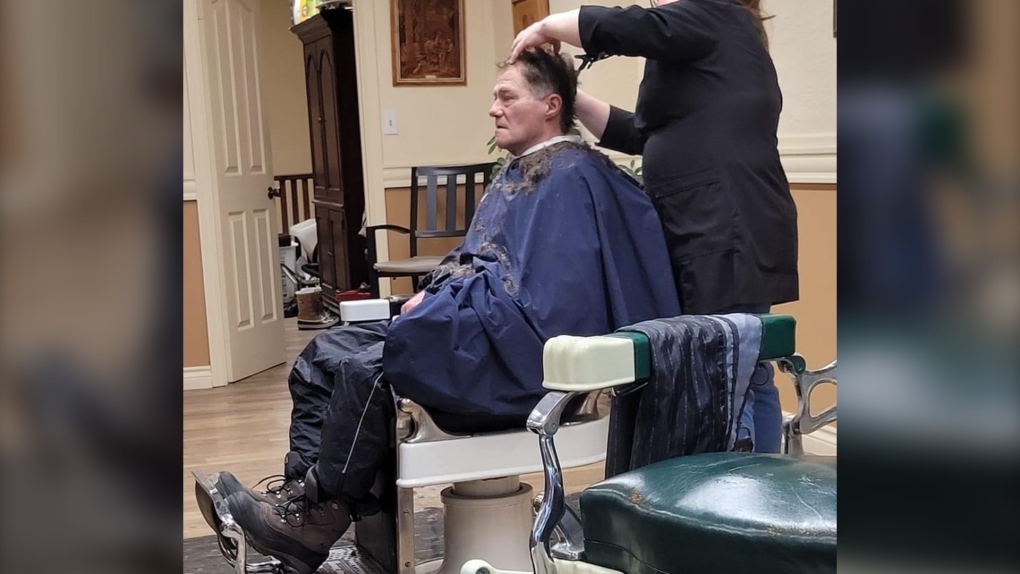
The friendship that grew over time between the two Ontarians led MacDuff to set up a GoFundMe to help Brian get back on his feet, which raised nearly CAD$10,000 and was able to help him get his first shave and a haircut in two years as well as a new phone.
Brian Bannister gets a haircut (Facebook)
MacDuff also helped organize some provincial financial support for Bannister.
“He has no idea what this has done for me,“ MacDuff said. “If we could get everyone off the street ideally that would be my one wish, but it takes a lot of people to come together and that is what has happened for Brian. I think that’s why we’ve come so far in such a short time.”
Navin Chandra and his apartment building –The Better India / YouTube
Navin Chandra and his apartment building –The Better India / YouTube
A 92-year-old Mumbai man took action to transform his housing society with renewable energy and rainwater catches, saving the residents thousands.
In the year 2000, Navin Chandra moved into the Sealine Housing Society but was “appalled” to see how much money residents paid for the delivery of water from large tanker trucks.
Expensive and “not even clean” the truck water orders made no sense to Chandra considering that Mumbai lies right in the path of the mighty monsoon rains.
He convinced every member of the housing society to invest in a rainwater harvesting facility, solar panels, a windmill, and a composting pit, all in order to transform the unassuming apartment block into a hub of green civic-mindedness.
Part of Chandra’s pitch was that the residents would recover their investment in a few years thanks to water and electricity savings, and by 2012 the community was in the green, financially speaking, thanks to nearly 200,000 liters of water (2 lakh) gathered up by their rainwater system every monsoon season.
“We have stopped purchasing tank water, and can even fulfill the water needs of our neighboring buildings,” Chandra told The Better India.
Chandra didn’t stop at water bills but tackled the high electricity costs that also come along in the rainy season by installing solar panels and a wind turbine, providing the building with 50% of its electricity needs from nature.
Food scraps are composted on site which they use as fertilizer for the landscaping, including a rooftop garden.
In today’s frenzy of climate activism, too many people focus on trying to change the world rather than first changing their own environments.
If there were a Navin Chandra for every homeowner’s association, the world would look an awful lot more renewable than it does at the annual COP climate summits for example.
WATCH the story below from Better India…
SHARE This Green Transformation In Mumbai With Your Friends…
A Connect Airlines 75 ATR 72-600 Regional Aircraft with a Universal Hydrogen engine - Released
A Connect Airlines ATR 72-600 Regional Aircraft with a Universal Hydrogen engine – Released
A fledgling energy company looking to develop true zero-emissions aircraft just took a massive leap forward with the first-ever regional passenger flight powered principally on hydrogen.
A 40-seat aircraft took off at 8:41 am from Grant County International Airport and flew for 15 minutes, reaching an altitude of 3,500 MSL.
The flight, conducted under an FAA Special Airworthiness Certificate, was the first in a two-year flight test campaign expected to culminate in 2025 with entry into passenger service of ATR 72 regional aircraft converted to run on hydrogen.
Representatives from an equally-fledgling airline looking to develop a smarter travel experience were there to oversee their own aircraft.
“Today will go down in the history books as the true start to the decarbonization of the global airline industry and we at Connect Airlines are extremely proud of the role that we, as the first US operator, will play in leading the way with Universal Hydrogen,” said John Thomas, CEO of Connect Airlines.
For safety, only one of the ATR 72-600’s engines was replaced with Universal Hydrogen’s megawatt-class hydrogen fuel cell powertrains for safety purposes. The technology is not adapted, but rather purpose-built for aviation.
The energy generated by the burning of hydrogen feeds directly into the electric motor. This means there are no batteries onboard which drastically cuts down on costs and weight.
“Our business model resolves the chicken-and-egg problem between hydrogen airplanes and hydrogen infrastructure by developing both in parallel and with a uniquely low-cost approach,” said Paul Eremenko, co-founder and CEO of Universal Hydrogen.
“The airplanes are converted to hydrogen using an aftermarket retrofit conversion kit, tackling the existing fleet rather than developing a brand new airplane. And hydrogen fueling uses modular capsules compatible with existing freight networks and airport cargo handling equipment, making every airport in the world hydrogen-ready.”
Worldwide air travel accounts for about 2.8% of global greenhouse gas emissions. Hydrogen fuel is theorized as one of two possible ways to decarbonize it, with the other being biofuels.
CURIOUS how it works? Watch the video below…
SHARE This Proper Innovation In Carbon-Free Flying With Your Friends…