











Quote of the Day: “They can conquer who believe they can.” – Virgil
Photo by: redcharlie1
With a new inspirational quote every day, atop the perfect photo—collected and archived on our Quotes page—why not bookmark GNN.org for a daily uplift?




Quote of the Day: “They can conquer who believe they can.” – Virgil
Photo by: redcharlie1
With a new inspirational quote every day, atop the perfect photo—collected and archived on our Quotes page—why not bookmark GNN.org for a daily uplift?
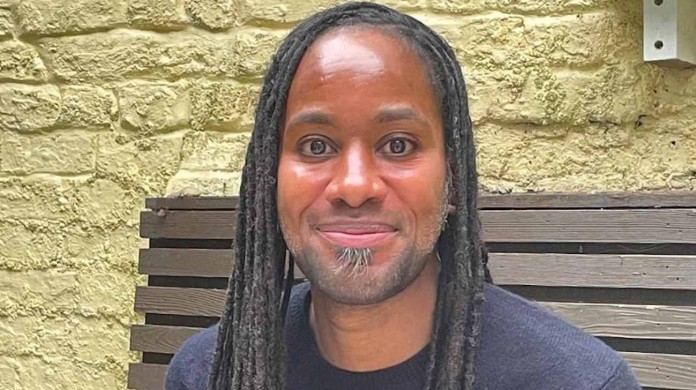
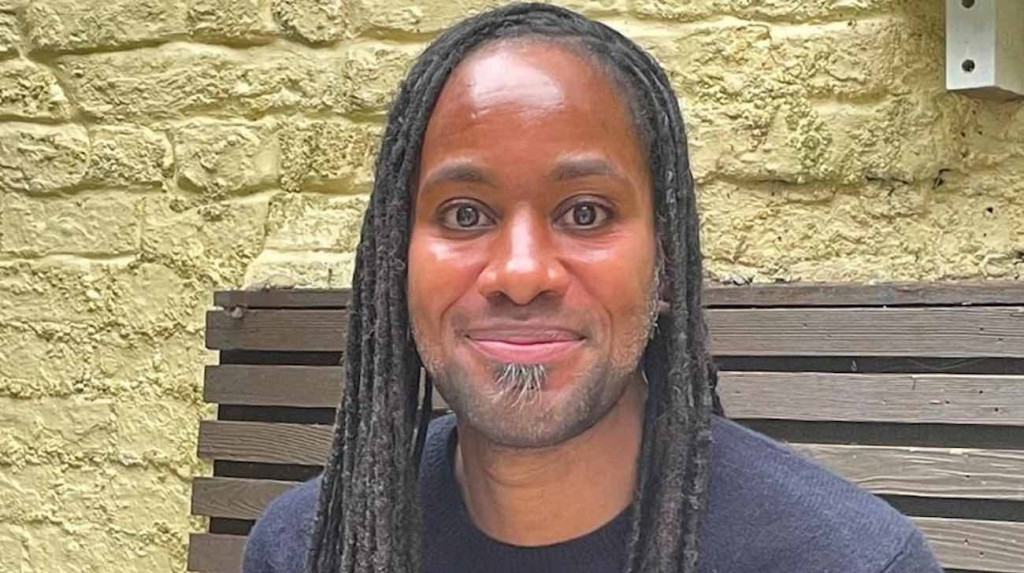
A boy with autism who could not read or write until his late teens is now the youngest-ever Black professor at Cambridge University 20 years later.
As a child, Jason Arday was diagnosed with global developmental delay, which affecting his ability to learn how to talk and read.
Speechless until age 11, therapists even predicted he would spend his adult life in assisted living, requiring lifelong support.
The 37-year-old has now taken up one of the most prestigious professorships in one of the world’s top universities—and is the youngest Black person to do it.
Despite growing up with a learning disability in a disadvantaged area of Clapham, London, he had huge questions to ask the world.
Arday, who now teaches sociology, remembers thinking: “Why are some people homeless? Why is there war?”
“I remember thinking if I don’t make it as a football player, then I want to save the world.”
He finally learned to read and write in his teens and became a PE teacher after studying at the University of Surrey.
He knew he wanted to study and learn more, but had little training or guidance to do so.
RELATED: First African American to Win National Spelling Bee Takes Trophy After Just 2 Years’ Practice
“When I started writing academic papers, I had no idea what I was doing. I did not have a mentor and no one ever showed me how to write.”
“The peer review process was so cruel, it was almost funny, but I treated it as a learning experience.”
At age 27 he wrote on his bedroom wall at his parents’ house: “One day I will work at Oxford or Cambridge.”
He remembers his college friend Sandro Sandi telling him, ‘I think you can do this – I think we can take on the world and win.’
“Looking back, that was when I first really believed in myself.
“A lot of academics say they stumbled into this line of work, but from that moment I was determined and focused – I knew that this would be my goal.”
He wrote papers and studied by night, while working as a PE teacher by day—eventually becoming an acclaimed professor with two master’s degrees and a PhD in educational studies from Liverpool John Moores University.
While studying for his PhD in 2015 he co-edited a groundbreaking report for the Runnymede Trust, ‘Aiming Higher’, about racial and ethnic inequalities in British Universities.
He eventually published his first solo paper in 2018.
The same year, he successfully secured a Senior Lectureship at Roehampton University before moving on to Durham University, where he was an Associate Professor of Sociology.
He went on to another prestigious professorship at the University of Glasgow’s School of Education, making him, at the time, one of the youngest professors in the UK.
LOOK: Carpet Cleaner With Autism Has Learned 40 Languages – Watch His Talent in Action
He has since written books, and will now start at Cambridge on Mar 6th as Professor of Sociology of Education, hoping to inspire people from under-represented backgrounds to pursue higher education. Arday now joins five other Black professors at the institution.
“My work focuses primarily on how we can open doors to more people from disadvantaged backgrounds and truly democratize higher education.
“Hopefully being in a place like Cambridge will provide me with the leverage to lead that agenda nationally and globally.”
And he might just save the world—or his own little corner of it.
SHARE the Inspiring Story About Overcoming Learning Challenges on Social Media…


This week, The Home Depot announced that it is investing an additional $1 billion in wage increases for its hourly associates.
The raises have already started arriving for all tenured frontline hourly associates. They will also benefit anyone just hired for a new job at the chain hardware store, boosting starting wages in every U.S. market at or above $15 per hour.
The new wages went into effect on February 6, so some already saw the new rates reflected on their February 17 paychecks. All remaining associates will see the increase in this week’s paychecks.
“We’ve been continuously focused on cultivating the best associate experience in retail, with ongoing investment in associate wages, benefits, bonuses, job tools, and career development opportunities,” wrote Ted Decker, President and CEO, in an email to employees.
CHECK OUT: Heinz Looks for Man Who Survived a Month at Sea Eating Only Ketchup So They Can Buy Him a Boat
“We’ve also enhanced training and career development opportunities for our associates.”
“Excellent customer service is one of our core values—and we view our investment in the knowledgeable and experienced associates who provide that excellent customer service as critical to our success.”
The raises followed a similar company move near the end of 2020—the first year of the pandemic—that saw the U.S. hardware giant invest another $1 billion in its employees.
Better wages are aimed at helping The Home Depot attract and retain “the best talent” available.
The 94-year-old company co-founder Bernie Marcus had previously announced in 2019 a pledge to give most of his wealth to charity before dies.


Students at Penn State University have raised a whopping $15 million during their annual 46-hour ‘no sleeping or sitting’ dance marathon.
It was an all-time record high—and will benefit Four Diamonds, a national nonprofit fund that covers 100% of all medical expenses for families with childhood cancer at Penn State Health Children’s Hospital.
Dubbed THON, the dance party is the world’s largest student-run philanthropy program, which delivers year-round financial and emotional aid to families dealing with childhood cancer.
THON 2023 marked the 51st year of fundraising for Four Diamonds—a partnership that has paid off since 1977. The nonprofit was founded by Charles and Irma Millard following the passing of their son Christopher to pediatric cancer.
This year, over 707 dancers participated in the organization’s iconic dance marathon that began the evening of Friday Feb. 17 and ran nonstop untill 4:00 p.m. on Sunday—operating with over 16,000 student volunteers.

Lily Pevoto, Executive Director of THON 2023 said, “To us, ‘For the Kids’ is so much more than just a mantra. It’s the mission that drives us in our relentless pursuit to hope, support, and care for children and families.”
“I would like to thank all those who donated, volunteered, and ultimately joined us in our effort to dance for a cure and continue to make breaking records part of our tradition.”
Over the half century, the partnership has covered all medical expenses, including comprehensive specialty care, for over 4,800 families.
The fundraising efforts have also contributed to the school’s extensive cancer research programs.
GOOD KARMA: Man Who Spent his Life Helping Disabled People Find a Home Has Won a £2.5million Country House

“Together we remain steadfast in our unwavering pursuit to find a cure for all forms of pediatric cancer,” said Suzanne Graney, executive director of Four Diamonds.
“We are always amazed (and) will never stop fundraising, dancing, and fighting for a cure, no matter how long it takes.”
WATCH the inspiring video from THON…
BUST Your Own Move By Sharing This Incredible News on Social Media…

Our partner Rob Brezsny provides his weekly wisdom to enlighten our thinking and motivate our mood. Rob’s Free Will Astrology, is a syndicated weekly column appearing in over a hundred publications. He is also the author of Pronoia Is the Antidote for Paranoia: How All of Creation Is Conspiring To Shower You with Blessings. (A free preview of the book is available here.)
Here is your weekly horoscope…

FREE WILL ASTROLOGY – Week of February 25, 2023
Copyright by Rob Brezsny, FreeWillAstrology.com
AQUARIUS (Jan. 20-Feb. 18):
Most of us are constantly skirmishing with time, doing our best to coax it or compel it to give us more slack. But lately, you Aquarians have slipped into a more intense conflict. And from what I’ve been able to determine, time is kicking your ass. What can you do to relieve the pressure? Maybe you could edit your priority list—eliminate two mildly interesting pursuits to make more room for a fascinating one. You might also consider reading a book to help you with time management and organizational strategies, like these: 1. Getting Things Done by David Allen. 2. The 7 Habits of Highly Effective People by Stephen R. Covey. 3. 15 Secrets Successful People Know About Time Management by Kevin Kruse. 4. Eat That Frog!: 21 Great Ways to Stop Procrastinating and Get More Done in Less Time by Brian Tracy.

PISCES (Feb. 19-March 20):
“What is originality?” asked philosopher Friedrich Nietzsche. Here’s how he answered: “to see something that has no name as yet, and hence cannot be mentioned though it stares us all in the face.” Got that, Pisces? I hope so, because your fun assignments in the coming days include the following: 1. to make a shimmering dream coalesce into a concrete reality; 2. to cause a figment of the imagination to materialize into a useful accessory; 3. to coax an unborn truth to sprout into a galvanizing insight.
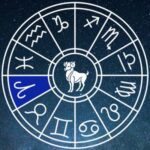
ARIES (March 21-April 19):
Philosopher John O’Donohue wrote a prayer not so much to God as to Life. It’s perfect for your needs right now. He said, “May my mind come alive today to the invisible geography that invites me to new frontiers, to break the dead shell of yesterdays, to risk being disturbed and changed.” I think you will generate an interesting onrush of healing, Aries, if you break the dead shell of yesterdays and risk being disturbed and changed. The new frontier is calling to you. To respond with alacrity, you must shed some baggage.

TAURUS (April 20-May 20):
In recent months, over 1,600 books were banned in school districts in 38 states. The forbidden books include titles about the heroes Nelson Mandela, Cesar Chavez, and Rosa Parks. With this trend as a motivational force, I encourage you Tauruses to take inventory of any tendencies you might have to censor the information you expose yourself to. According to my reading of the astrological omens, now is an excellent time to pry open your mind to consider ideas and facts you have shut out. Be eager to get educated and inspired by stimuli outside your usual scope.

GEMINI (May 21-June 20):
I think we can all agree that it’s really fun to fall in love. Those times when we feel a thrilling infatuation welling up within us are among the most pleasurable of all human experiences. Wouldn’t it be great if we could do it over and over again as the years go by? Just keep getting bowled over by fresh immersions in swooning adoration? But alas, giving in to such a temptation might make it hard to build intimacy and trust with a committed, long-term partner. Here’s a possible alternative: Instead of getting smitten with an endless series of new paramours, we could get swept away by novel teachings, revelatory meditations, lovable animals, sublime art or music, amazing landscapes or sanctuaries, and exhilarating adventures. I hope you will be doing that in the coming weeks, Gemini.

CANCER (June 21-July 22):
The scientific method is an excellent approach for understanding reality. It’s not the only one, and should not be used to the exclusion of other ways of knowing. But even if you’re allergic to physics or never step into a chemistry lab, you are wise to use the scientific method in your daily life. The coming weeks will be an especially good time to enjoy its benefits. What would that mean, practically speaking? Set aside your subjective opinions and habitual responses. Instead, simply gather evidence. Treasure actual facts. Try to be as objective as you can in evaluating everything that happens. Be highly attuned to your feelings, but also be aware that they may not provide all facets of the truth.
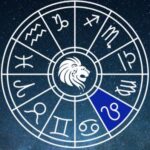
LEO (July 23-Aug. 22):
Is there anything in your psychological makeup that would help you do some detective work? How are your skills as a researcher? Are you willing to be cagey and strategic as you investigate what’s going on behind the scenes? If so, I invite you to carry out any or all of these four tasks in the coming weeks: 1. Try to become aware of shrouded half-truths. 2. Be alert for shadowy stuff lurking in bright, shiny environments. 3. Uncover secret agendas and unacknowledged evidence. 4. Explore stories and situations that no one else seems curious about.

VIRGO (Aug. 23-Sept. 22):
The country of Nepal, which has strong Virgo qualities, is divided into seven provinces. One is simply called “Province No.1,” while the others are Sudurpashchim, Karnali, Gandaki, Lumbini, Bagmati, and Janakpur. I advise Nepal to give Province No. 1 a decent name very soon. I also recommend that you Virgos extend a similar outreach to some of the unnamed beauty in your sphere. Have fun with it. Give names to your phone, your computer, your bed, your hairdryer, and your lamps, as well as your favorite trees, houseplants, and clouds. You may find that the gift of naming helps make the world a more welcoming place with which you have a more intimate relationship. And that would be an artful response to current cosmic rhythms.

LIBRA (Sept. 23-Oct. 22):
Are you aimless, impassive, and stuck, floundering as you try to preserve and maintain? Or are you fiercely and joyfully in quest of vigorous and dynamic success? What you do in the coming weeks will determine which of these two forks in your destiny will be your path for the rest of 2023. I’ll be rooting for the second option. Here is a tip to help you be strong and bold. Learn the distinctions between your own soulful definition of success and the superficial, irrelevant, meaningless definitions of success that our culture celebrates. Then swear an oath to love, honor, and serve your soulful definition.

SCORPIO (Oct. 23-Nov. 21):
The next four weeks will be a time of germination, metaphorically analogous to the beginning of a pregnancy. The attitudes and feelings that predominate during this time will put a strong imprint on the seeds that will mature into full ripeness by late 2023. What do you want to give birth to in 40 weeks or so, Scorpio? Choose wisely! And make sure that in this early, impressionable part of the process, you provide your growing creations with positive, nurturing influences.
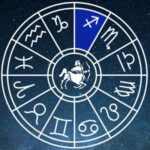
SAGITTARIUS (Nov. 22-Dec. 21):
I recommend you set up Designated Arguing Summits (DAT). These will be short periods when you and your allies get disputes out in the open. Disagreements must be confined to these intervals. You are not allowed to squabble at any other time. Why do I make this recommendation? I believe that many positive accomplishments are possible for you in the coming weeks, and it would be counterproductive to expend more than the minimal necessary amount on sparring. Your glorious assignment: Be emotionally available and eager to embrace the budding opportunities.
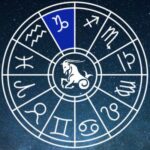
CAPRICORN (Dec. 22-Jan. 19):
Actor Judi Dench won an Oscar for her role as Queen Elizabeth in the film Shakespeare in Love—even though she was onscreen for just eight minutes. Beatrice Straight got an Oscar for her role in the movie Network, though she appeared for less than six minutes. I expect a similar phenomenon in your world, Capricorn. A seemingly small pivot will lead to a vivid turning point. A modest seed will sprout into a prismatic bloom. A cameo performance will generate long-term ripples. Be alert for the signs.
WANT MORE? Listen to Rob’s EXPANDED AUDIO HOROSCOPES, 4-5 minute meditations on the current state of your destiny — or subscribe to his unique daily text message service at: RealAstrology.com
(Zodiac images by Numerologysign.com, CC license)
SHARE The Wisdom With Friends Who Are Stars in Your Life on Social Media…

Quote of the Day: “May my mind come alive today to the invisible geography that invites me to new frontiers.” – John O’Donohue
Photo by: John Dame
With a new inspirational quote every day, atop the perfect photo—collected and archived on our Quotes page—why not bookmark GNN.org for a daily uplift?

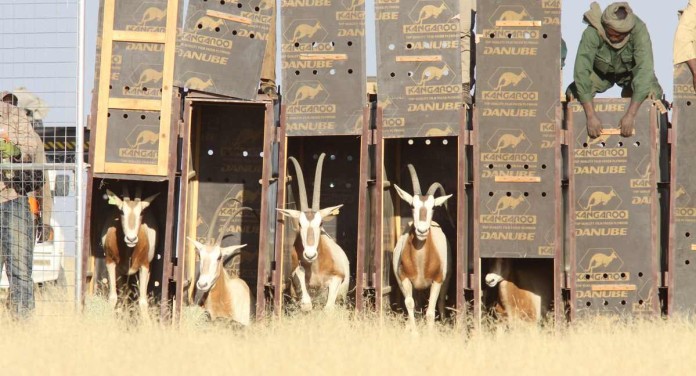
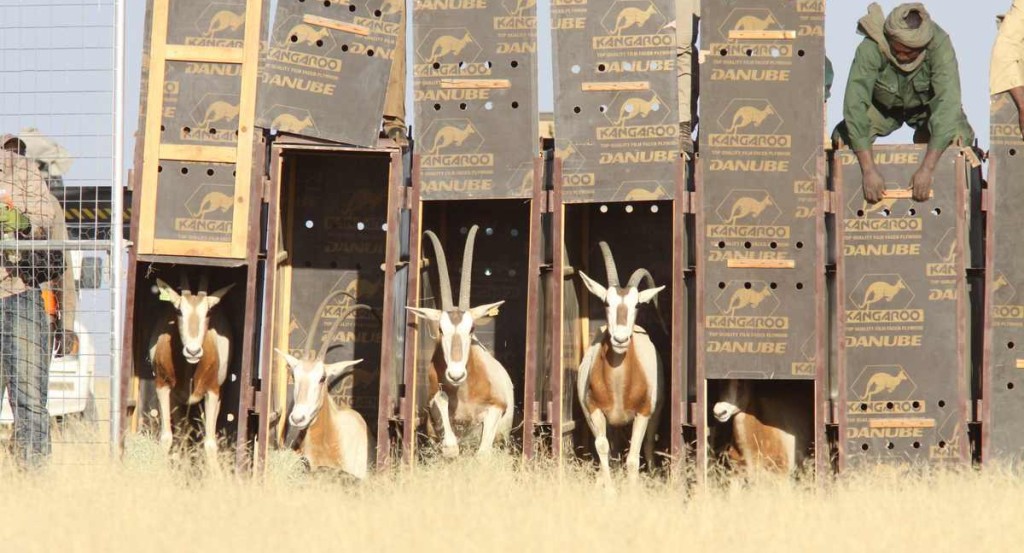
Zoos have “powerful potential” to reverse extinctions, according to a new study that found zoos, aquariums, botanical gardens, and seedbanks have a 50/50 record at bringing extinct species back into the wild.
In other words, thanks to dedicated conservationists, after a species’ chance of survival drops to zero in the wild, they still have a coin toss’ chance at living long enough to return.
The team at the Zoological Society of London (ZSL) studied 95 animals and plants that have been extinct in the wild since 1950, after which they only survived in institutions.
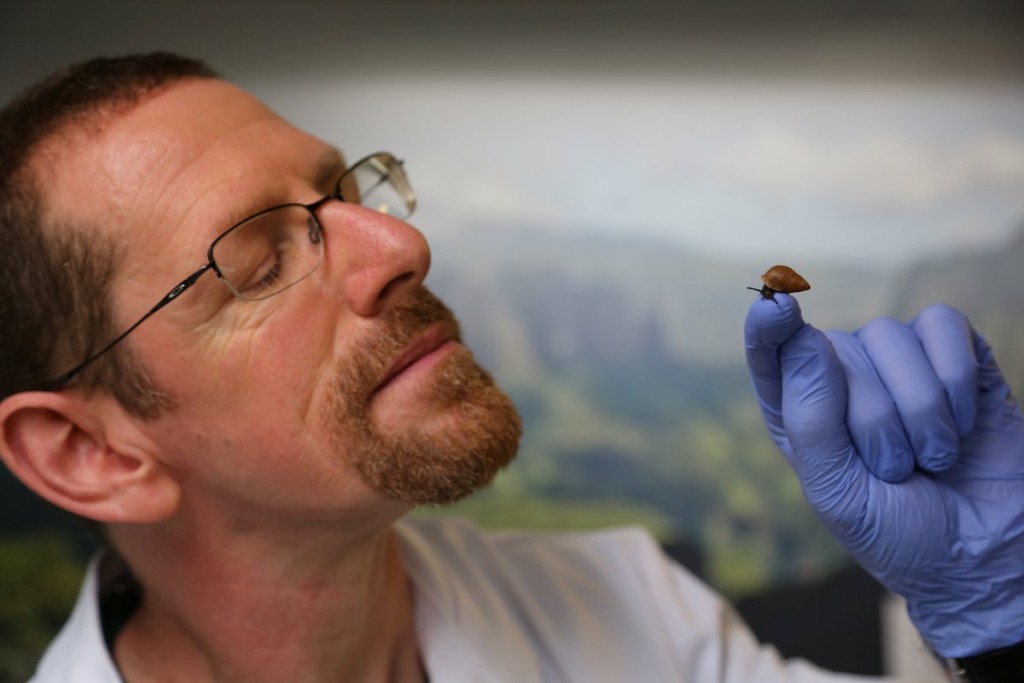
Among these animals are the scimitar-horned oryx, several Polynesian tree snails, and the yellow flowering toromiro.
“Thanks to decades of tireless work saving species, we have the opportunity to re-establish more populations in the wild; it’s imperative that conservation zoos, aquariums, botanical gardens, and seedbanks are given the financial—and inter-governmental—support to do so,” said Donal Smith, from ZSL’s Institute of Zoology.
Through collaborative breeding programs, fieldwork, and research, ZSL has already helped return a number of extinct species to the wild.
They successfully returned Partula tree snails to the islands of French Polynesia and the scimitar-horned oryx to Chad. They now plan to return the colorful sihek, or Guam kingfisher, to the wild later this year.

“European bison, once restricted to a small population under human care, is now thriving in the wild, offering an inspirational example of what pioneering conservation work can achieve,” said Smith, highlighting another example.
Experts at ZSL’s conservation Zoos in London and Whipsnade, have more specialty programs for animals extinct in the wild than any others in the UK. Every species’ situation is different, with some consisting of thousands of individuals, and others just a handful.
“Each extinct in the wild species is unique in how secure it is from extinction, so saving them requires specific actions tailored to each species,” said senior author John Ewen, a researcher at ZSL’s Institute of Zoology.
“Contrast for example the high risk of extinction for the Socorro dove in zoos for nearly 100 years with a current population of just 162 birds, to the more secure situation for species like the scimitar-horned oryx where the zoo population size is in the thousands and successful reintroductions are progressing well only 16 years after extinction in the wild.”


Another of these animals that are currently returning to their ancestral lands is Przewalski’s horse, which was extinct in the wild for 40 years, and lived only in zoos as conservationists slowly increased its population with breeding programs that started from 12 individuals.
A new foal was born at the San Diego Zoo this year, and reintroduction efforts are ongoing in China and Mongolia.
MORE NEWS FROM ZOOS: How ‘Frozen Zoos’ Are Helping Save Vanishing Species
The study also shows the divide between animal and plant species. Despite there being an equal number of plants and animals which are extinct in the wild, there is more attention on getting animals back to their natural habitats.
Of the 12 species that have been returned, only two are plants.
MORE CONSERVATION NEWS: 12 Critically Endangered Red Wolf Pups Are Born in North Carolina – A Conservation Baby Boom
“There are several reasons why extinct in the wild plant species might be less frequently the focus of translocations, including a lack of suitable individuals for planting and changes to their original habitat,” said co-author Sarah Dalrymple, from Liverpool John Moores University.
“However, attitudes are shifting, with more emphasis on botanic gardens working together and finding suitable wild homes away from the site of origin, offering great hope for future plant recovery.”
SHARE The Examples Here Of The Heroic Conservation Work From These Zoos…


Six enormous galaxies that formed just half a billion years after the Big Bang have been detected by astronomers.
They contain some of the first stars that lit up the cosmos, but the really cool part is that they’re much bigger than anyone thought was possible.
The precise-ish date is about 13 billion years ago. One of the six is believed to have as many stars as the present-day Milky Way but in a space 30 times more compact.
“We expected only to find tiny, young, baby galaxies at this point in time,” said co-author Dr. Joel Leja, of Penn State University, who wielded the James Webb Space Telescope’s unparalleled reach and clarity to make the discovery.
“But we have discovered galaxies as mature as our own in what was previously understood to be the dawn of the universe.”
The first dataset from NASA’s JWST reveals objects just as mature as ours formed 500 to 700 million years after the Big Bang when the universe was only three percent of its current age.
The telescope is equipped with infrared-sensing instruments capable of detecting light emitted by the most ancient stars and galaxies.
“This is our first glimpse back this far so it’s important we keep an open mind about what we are seeing,” adds Dr. Leja. “While the data indicates they are likely galaxies I think there is a real possibility a few of these objects turn out to be obscured supermassive black holes.”
“Regardless, the amount of mass we discovered means the known mass in stars at this period of our universe is up to 100 times greater than we had previously thought. Even if we cut the sample in half, this is still an astounding change.”
“We’ve been informally calling these objects ‘universe breakers’ and they have been living up to their name so far,” he said.
MORE ASTRONOMY NEWS: Astronomers Observe 2 Neutron Stars Colliding and the Extreme Reaction ‘Defies All Expectations’
The study in Nature has implications for current computer simulations used in cosmology and represents one of the key findings Webb was designed to make—finding the earliest matter in the universe.
Such a high amount of mass would require altering models or revising the idea galaxies started as small clouds of stars and dust that gradually grew larger.
MORE FROM JAMES WEBB: Most Distant Stars in Milky Way Detected by Astronomers
Either scenario needs a fundamental shift in our understanding of how the universe came to be.
“When we got the data, everyone just started diving in and these massive things popped out really fast,” said Dr. Leja. “We started doing the modeling and tried to figure out what they were because they were so big and bright. My first thought was we had made a mistake and we would just find it and move on with our lives. But we have yet to find that mistake, despite a lot of trying.”
MORE FROM JAMES WEBB: Galaxy Twinkling with Universe’s Oldest Stars Discovered by Astronomers
It’s hoped that another of JWST’s instruments, a spectrographic camera, will provide accurate distances and identify gases and other elements to create a clearer picture, which a spectrograph can do by analyzing the color spectrum of observed light. Scientists can then look at the color differences and identify the various elements that compose it.
“We’ve found something we never thought to ask the universe and it happened way faster than I thought—but here we are,” said Dr. Leja.
SHARE This Long-Dreamed Of Discovery With Your Friends…
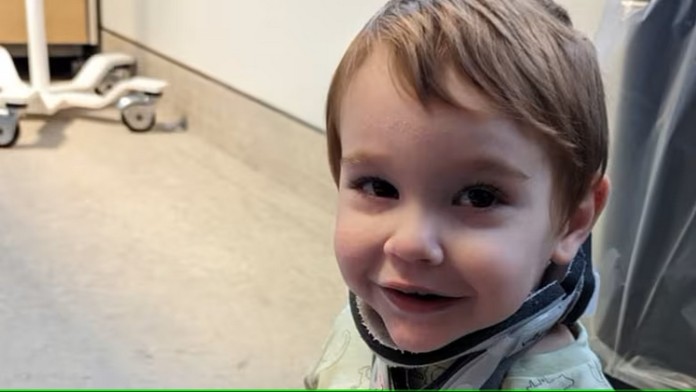

When 3-year-old Waylon Saunders arrived at the hospital, he was already legally dead and had been for a while.
Found face-down in an icy backyard swimming pool, the Ontario toddler’s body temperature was so low that paramedics’ thermometers couldn’t get a reading, and he had no pulse.
Nevertheless, a team at Charlotte Eleanor Englehart Hospital in Petrolia, Ontario performed CPR for 3 hours without stopping, while simultaneously using other methods to warm his frozen body.
There’s a classic scene you can watch in many different films and TV, from Gray’s Anatomy to Casino Royale, where CPR is attempted and after a minute, the person, whether Gray or James Bond, stops or is pulled away from pounding on a patient’s chest, unwilling to accept they are no longer revivable.
Fortunately for Waylon they didn’t stop, and after 3 hours of compressing his chest to artificially pump blood to his brain and other organs, Waylon’s heart was restarted and kept on keeping on.
“They had a cycle of people providing CPR in Petrolia. They had people warming him with many different techniques,” said Dr. Janice Tijssen, director of the pediatric critical care unit at Children’s Hospital, London Health Sciences Centre in Ontario where Waylon was rushed after his heart restarted.
“There was a big team helping him then, keeping him comfortable as his organs started to heal. Then allowing him to wake up. He’s exceeded all expectations,” Tijssen told CBC news.
In the 2020 European Championships, Danish footballer Christan Erikson collapsed from cardiac arrest on the pitch, shocking the crowd to a hush. Denmark’s captain Simon Kjaer recognized what was happening, secured his teammate’s neck, make sure he wasn’t swallowing his tongue and began performing CPR while the paramedics arrived who then carried on for 15 minutes before Erikson could be removed from the pitch. Erikson’s heart was stopped for 78 minutes in total.
MORE RESCUE STORIES: Home Mortgages Are Paid Off for 5 First Responders to Honor Their Life-Saving Work
If one didn’t know anything about CPR, someone watching the game or watching little Waylon be rushed into the hospital might have been certain they were never going to wake up. Movies and TV either show CPR working after less than a minute, or never working, but in reality CPR can revive people who have had their heart stopped for tens of minutes.
Waylon’s mother Gillian Burnett said the team holds a piece of her heart for all time for their determination.
MORE FIRST AID STORIES: 12-Year-old Saves Friend’s Leg Using First-Aid From ‘Hunger Games’ Book
CPR is not a complicated procedure and can be learned and practiced in simple courses, often offered by local schools and firehouses. It’s possible that Kjaer saved Erikson’s life by starting CPR so early, and it’s possible you could save someone’s life too if you’re the only one who knows how to perform it.
LISTEN to Tijssen explain how they saved Waylon’s life.
SHARE This Heroic Resuscitation And Important Medical Info On Social Media…
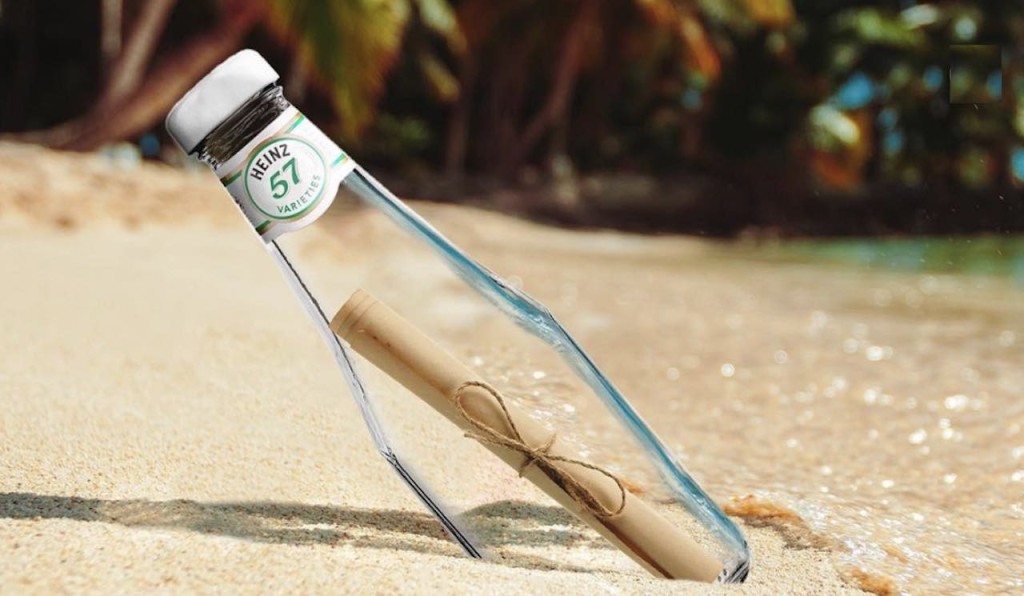
Spotting an opportunity to change someone’s life and nab some pretty stunning publicity in the process, Heinz is looking to get in contact with a Dominican sailor who survived four weeks adrift at sea with little more sustenance than a bottle of ketchup.
The company wants to give the man a new boat with state-of-the-art navigation systems so as to avoid any future ordeals of this type.
Elvis Francois was out on his boat off the coast of St Maarten when the weather turned and started carrying him out into the open ocean.
“I tried to [go] back to port, but I lost track because it took me a while to mount the sail and fix the sail,” he said. “…I call my friends, my coworkers. They tried to contact me, but they lost service. There was nothing else I could do than sit down and wait.”
So Francois wrote ‘Help’ on the back of his boat and waited to see what happened with nothing more to eat other than a packet of garlic seasoning, a bottle of ketchup, and his lunch that day of Maggi soup.
Desde el aire se estableció la ubicación del velero en emergencia que tenía la palabra “HELP” (Ayuda) grabada sobre su casco.
— Armada de Colombia (@ArmadaColombia) January 18, 2023
Se dio aviso a las unidades en tierra y mar, donde el buque mercante CMA CGM VOLTARIO se unió a la labor de rescate.#ProtegemosLaVida ⚓ pic.twitter.com/DSGZU6fdeK
He was rescued by the Colombian navy, who brought him back to Cartagena for a medical examination that found he was “in good health.”
Heinz has put out a digital message in a bottle to try and contact Francois, to whom they would like to gift a new boat “equipped with full navigational technology to avoid another disaster in the future,” the company told CBS news.
“We’re hoping to spread the word far and wide so Heinz can finally gift the new boat to Elvis,” the company said.
So far they’ve contacted the government of Dominica where he lives, and the Colombian Navy, but currently have had no luck.
“We’re setting this message adrift into the sea of the internet, because if anyone can help us find him, it’s you,” the company said. “If you or anyone you know can help us get in contact with Elvis Francois, please drop us a DM.”
KNOW Anyone From Dominica? Pass Along This Story And Help Francois Get His New Boat!…

Quote of the Day: “Nothing can make our life, or the lives of other people, more beautiful than perpetual kindness.” – Leo Tolstoy
Photo by: Andrea Tummons (colorized)
With a new inspirational quote every day, atop the perfect photo—collected and archived on our Quotes page—why not bookmark GNN.org for a daily uplift?

We’ve all found family heirlooms and keepsakes tucked away in our attics and lofts before, but an English couple recently found a lot more than merely their parents’ third-grade arithmetic homework.
A couple from Stratford-upon-Avod were left ‘gobsmacked’ after they found a childhood letter that newly-crowned King Charles wrote to his “Granny” Queen Mother Elizabeth when she was ill.
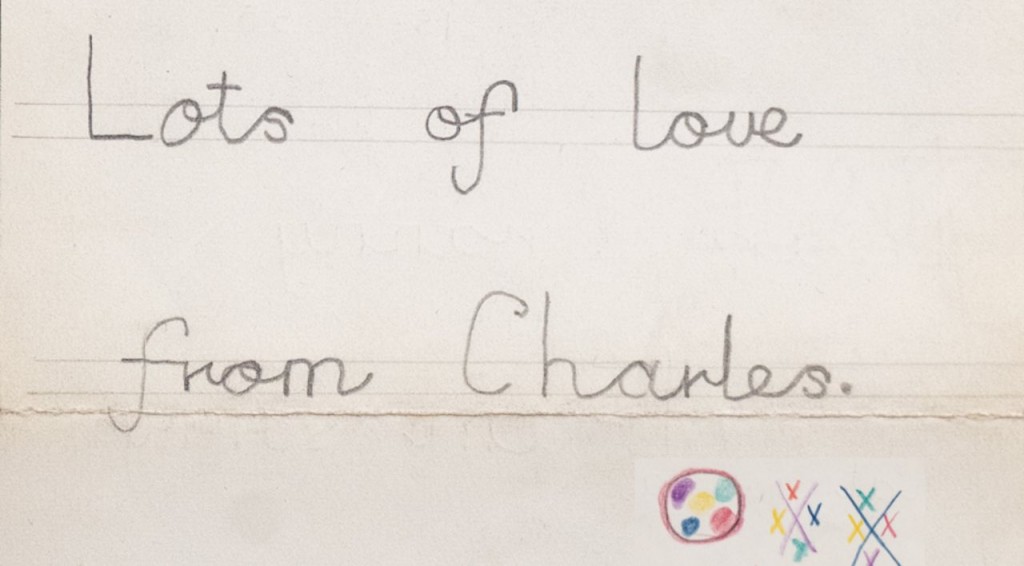
“Granny, I am sorry that you are ill. I hope you will be better soon,” read the letter written on Buckingham Palace letterhead and dated March 15th, 1955.
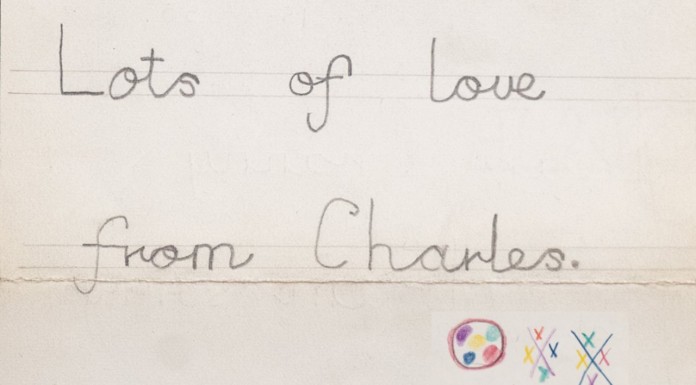
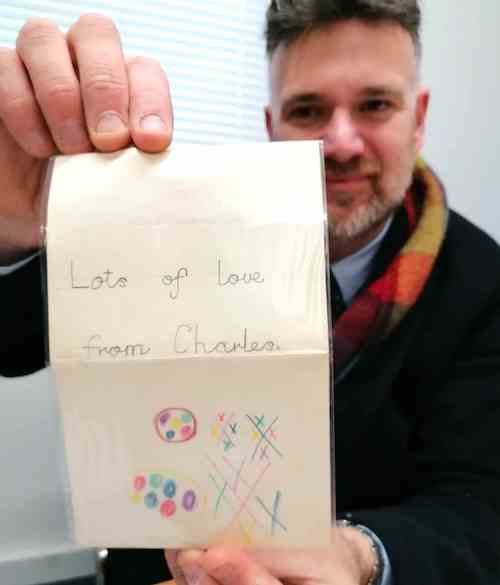
On the back of the letter, a six-year-old Prince Charles signed it with “lots of love from Charles,” alongside colorful doodles and 14 kisses.
Other royal memorabilia was found, including postcards from the royal estate at Sandringham, royal dinner menus, an invitation to a ball at Balmoral Estate, a note signed by the Queen Mother for the memorial service of King James VI, and a copy of the Queen’s Christmas speech from 1956.
“We finally had the time to look through a big box file that my mother had given to us,” the 49-year-old husband and finder said, remaining anonymous because of the couple’s intent to put the items up for auction. “For the last 30 to 40 years it’s been gathering dust inside various lofts.”
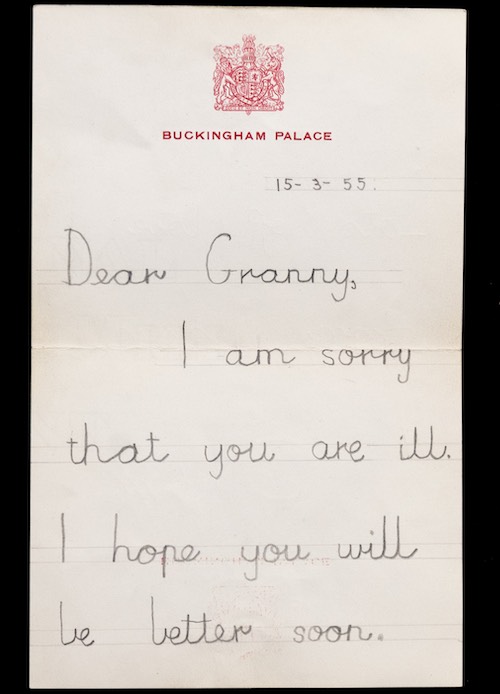
“It originally belonged to my late grandad Roland Stockdale,” he added, “My wife said ‘wow, look at that!’ We were pretty gobsmacked…”
the man said there was a simple explanation, namely that his grandfather Roland became a Police Sergeant in the Queen’s personal protection force during the 1950s, and the box of letters contained a photo of him in the Information Room in Scotland Yard in 1952.
MORE BRITISH NEWS: Britain’s Royal Mint is Salvaging Gold from E-Waste – Recycling Precious Metals for Green Investors
“I was told he was originally involved in helping to protect the Queen Mother but he probably worked with several royals over time,” he said.
Sergeant Stockdale worked alongside William Tallon, the Queen Mother’s devoted servant whose letters were also found in the loft, one of which was addressed to Stockdale and read “Dear Sarg, Queen Elizabeth told me this morning that you are not well…”
A few weeks later on February 7th, 1983, Tallon wrote again, offering his condolences to Mrs. Audrey Stockdale following Roland’s death.
MORE FAMILY HISTORY: Wife of WWII Soldier Spends Decades to Reunite Japanese Family With Photo Album He Found on Okinawa –LOOK
A letter to her on Clarence House headed paper reads…
“I am so dreadfully sorry to hear of your very sad loss and the family have all my deepest sympathy at this awful moment in time. I always thought most highly of Ron (the best and kindest Sgt we ever had) I only hope that all was peaceful at the end and that he didn’t have to suffer.”
“I have absolutely no idea how he came to have the letter written by King Charles when he was a boy,” said the seller. “It’s one of many things he kept.”
For the inheritors of Roland’s keepsakes, their biggest takeaway was how much it seemed everyone around the royal family valued Roland’s service and character.
MORE ROYAL STORIES: Prince Charles Opens 10-Room Bed And Breakfast On The Grounds Of His Scottish Castle
“It is clear from the tone of the correspondence that the royal family held Roland in high regard for his kindness,” said Auctioneer Charles Hanson who will handle the sale.
“It has long been normal practice for members of the royal family to give away small keepsakes and personal mementos to valued servants. Such was the warmth felt for Roland, it appears the Queen Mother allowed him to keep one or two special items.”
SHARE This Special Story Of Family History With Your Friends…


February 4th, World Cancer Day at Signal Iduna Park in Dortmund, Germany: it’s a day French-Ivorian striker Sébastien Haller will always remember.
Last summer, Haller was diagnosed with testicular cancer just weeks after signing a long-term contract to play for the second-biggest team in Germany, Borussia Dortmund.
It was a difficult, scary period for the big center forward when for the first time in his life, football was clearly not a priority.
But after two surgeries and four rounds of chemotherapy, the tumor was gone, and on World Cancer Day, he started his first game for the club.
“The thing you’ve been through, even if [you] don’t really realize right now, you need to enjoy even more of your moments because this is something that you’ve missed for a couple of months,” Haller told CNN.
Before the match and at half-time, Dortmund mascots came on the field to highlight International World Cancer Day by placing a model tumor in the center to raise awareness for testicular cancer.
MORE GOOD SOCCER NEWS:
Dortmund were leading the visitors Freiburg 2-1, when in the 51st minute Haller scored a point-blank header off Raphaël Guerreiro’s cross, capping off more than 4 months of hospital visits and physical therapy.
“You remember why you play football is [sic] truly that kind of moment, because scoring a goal, it’s like I said, you feel like you are in the clouds,” Haller told CNN Sport’s Amanda Davies. “You feel like the atmosphere is changing.”
WATCH the goal and the celebrations…
SHARE This Inspiring Sports Comeback Story With Your Friends…


Archaeologists in Egypt have just succeeded in completely excavating a small Roman city in the classical capital of Luxor, which contained workshops, homes, and “pigeon towers.”
Dr. Mostafa Waziri from the Egyptian Ministry of Antiquities stressed the importance of the discovery, as it revealed the oldest Roman residential city on the eastern side of the modern-day Luxor Governorate, which is an extension of the ancient capital of Thebes.
The workshops for the manufacture and smelting of metals contained a number of pots, water bottles, flasks, grinding tools, Roman coins of copper and bronze, and bells.
Then there were the pigeon towers, which housed the birds as livestock. The ancestors of modern pigeons were rock doves, which preferred to nest in rocky cliffsides. Up in the tower, Roman pigeon keepers would place pots that the birds could use to build their nests.
الكشف عن أول مدينة سكنية كاملة بشرق الأقصر .
— Dr Mostafa waziry (@mostafa_waziri) January 24, 2023
The discovery of the first complete residential city in eastern Luxor.#Egypte #Tweets #Luxor #tourism #Archaeology #heritage #StayTuned #explore #مصر pic.twitter.com/gzldbWtcPM
In this video of Dr. Waziri explaining the site, the word “hammam” can be clearly heard, which is Arabic for baths.
MORE FROM EGYPT: Archaeologists May Have Discovered the Oldest And Most Complete Egyptian Mummy
Roman baths were found at this city back in the 1980s during excavations by a German-Egyptian team which included Jacek Kościuk, professor emeritus at the Wroclaw University of Science and Technology in Poland.
Dr. Kościuk sent Live Science the scientific work published on the excavations in 2011, which included the findings of the baths.
MORE FROM ARCHAEOLOGY: Archaeologists Discover ‘Dazzling’ 3,000-Year-old Egyptian City, Left ‘As if it were yesterday’
Dr. Waziri’s team has dated the settlement to the 2nd and 3rd centuries CE, potentially during the reign of the influential Roman Emperor Diocletian (284 to 305 CE). At this date, Egypt was a Roman imperial province, and the days of the pharaohs were long gone.
SHARE This Exciting Find From The Ever-Busy Excavations At Luxor…


When a rescue dog found herself lost in her new neighborhood, she somehow knew just where to go to find help.
Back in January, a husky-mix named Bailey adopted by a family in Upper El Paso went missing, and her owners went to social media to try and find help locating her.
They contacted the shelter where they rescued Bailey, El Paso Animal Rescue League, who posted pictures of her on Facebook with the news. “URGENT- This beautiful girl- Bailey- has gotten loose in the area of Mesa and Sunland Park,” the post read.
But Bailey had a trick up her fur that would make the rescue efforts much easier. She walked herself ten miles right back to the Rescue League’s doors in Canutillo and rang the bell with her nose.
At 1:40 AM, the surveillance camera on the doorbell caught an image of the clever dog.
“These dogs are smarter than people give them credit for,” Loretta Hyde, the Rescue League’s founder, told a local Fox News affiliate. “How did she know what direction to go? She was 10 miles away! What did she eat and drink during those days?”
The shelter team immediately got Bailey inside and shortly thereafter reunited her with her family.
SHARE This Wicked Smart Doggo With Your Friends On Social Media…

Quote of the Day: “An optimist is a fellow who believes a housefly is looking for a way to get out.” – George Jean Nathan
Photo by: dy n, dynv
With a new inspirational quote every day, atop the perfect photo—collected and archived on our Quotes page—why not bookmark GNN.org for a daily uplift?



Did you know your body actually contains three different kinds of fat? That’s right, humans have brown, beige, and white fat adipose tissues, and a newfound ability to turn one into the other could create a revolution in metabolic disease prevention.
By turning a select number of genes in white fat cells off, they reverted to pluripotent cells, which can then become the cells for many different tissues and organs. In the case of a new study from the universities of California Davis and Copenhagen, they turned white fat into brown fat.
Brown fat is very useful for human beings to have, though many of us have very little owing to the comfortable nature of modern life. Brown fat burns a lot of calories to create heat through a process called thermogenesis.
The idea of having ‘more’ fat—of any kind—might seem a strange benefit for anyone other than a marine mammal, but the more brown fat an individual has, the less risk they are for obesity, diabetes, heart disease, and all the other modern hallmarks of the standard American diet.
The researchers returned white fat cells to a state of embryonic pluripotency through the Yamanaka Factors, a set of four genes discovered by Dr. Shinya Yamanaka for which he won the Nobel Prize.
Then they changed other epigenetic switches, epigenetics being adaptations to genetic expression developed through environmental stressors, and successfully converted the white fat to brown fat.
Cultivating those brown fat cells in a lab, they then injected them into overweight sheep, who were able to use the brown fat to burn away white fat.
It actually cured the sheep’s diabetes and metabolic disorders—a huge moment in the research field.
At Copenhagen, they had already been experimenting with a potential drug that could stimulate the calorie-burning activity of brown fat by activating genetic switches in the same way that exposure to cold stimulates it which unfortunately also creates stress and high blood pressure as the body believes it’s fighting to keep warm that could be dangerous for some folks.
MORE ON HEALTH SCIENCES: Specific Gut Bacteria Extract More Energy Which Seems to be Associated with Obesity
They identified a cell surface receptor called GPR3 that doesn’t need to receive messaging molecules to activate, and which are particularly numerous on the surface of brown fat cells. They found it increased their self-signaling and increased the rate at which the brown fat chewed through calories.
Human infants are born with a lot of brown fat, but it decreases as we age. White fat on the other hand increases as we age, and creates inflammation associated with many of the hallmarks of aging.
Its primary function is to store excess sugar and carbs as glycogen. People don’t pack on the white pounds by eating fat in the form of triglycerides, but through a variety of lifestyle choices, a lack of exercise, and most importantly a high intake of refined vegetable oils.
MORE GOOD OBESITY NEWS: Breakthrough Obesity Treatment in Early Research Can Target Bad Fat Anywhere in the Body
Cold exposure is the best way to increase brown fat adipose tissue. It not only creates brown fat which was found to generate heat at a rate of 252 calories per day compared to 78 calories from those who had no detectable brown fat, but it actually absorbed more glucose from the bloodstream than insulin-stimulated glucose uptake into regular muscle tissue.
Researchers believe that finding cheap and safe ways to increase the general population’s amount of brown fat could reverse the obesity crisis in a fairly natural way.
SHARE This Fat Fact Filled Report With Your Friends…


A trove of precious jewelry from Cambodia’s past has been repatriated after surfacing in London.
Totaling 77 artifacts from the medieval kingdom of Angkor, they are believed to have been trafficked from the country during the tyranny of the Khmer Rouge and the civil wars that plagued the country during the 20th century.
Angkor was one of the greatest powers in the East between the 9th and 14th centuries. Their theocratic capital of Angkor Wat is considered one of the 7 Wonders of the Medieval World, and today is still the largest religious complex on Earth.
The treasures date squarely to this period of flourishing and some of the crowns are believed to have sat on royal brows. They include items “such as gold and other precious metal pieces from the Pre-Angkorian and Angkorian period including crowns, necklaces, bracelets, belts, earrings, and amulets,” the Cambodian Ministry of Culture and Fine Arts said in a statement.
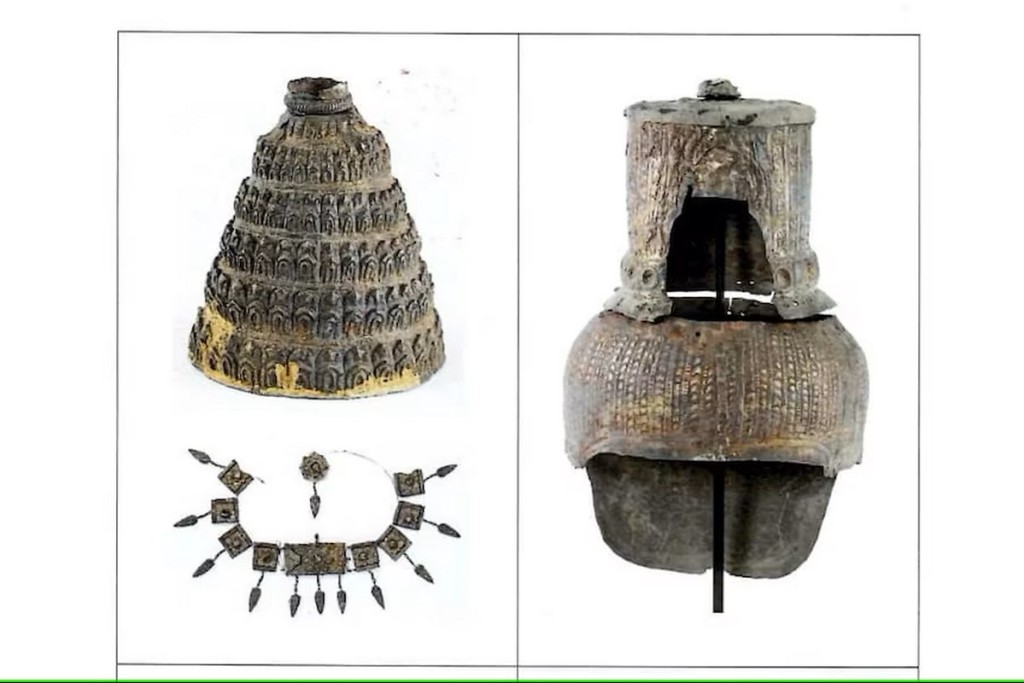
The items came from the estate of recently-late serial art trafficker Douglas Latchford, who for many years was considered an expert antiquities appraiser, but was later discovered to have worked alongside the Communist Khmer Rouge to traffic hundreds of artifacts from the country.
Now, many of the nation’s historical treasures are returning, and this trove is just the most recent tranche.
Last year, US citizens or institutions returned either voluntarily or by court order, 30 items sold by Latchford, including a 10th-century sculpture of the Hindu god Skanda atop a peacock considered a “masterpiece.”
The year before that, the estate of Latchford, who died in 2020 before he could be convicted of antiquities trafficking, sent back five bronze and sandstone sculptures to Cambodia.
“We consider such returns as a noble act, which not only demonstrates important contributions to a nation’s culture but also contributes to the reconciliation and healing of Cambodians who went through decades of civil war and suffered tremendously from the tragedy of the Khmer Rouge genocide,” said Cambodia’s culture minister, Phoeurng Sackona.
SHARE This Inspiring Act Of Justice In Antiquities On Social Media…
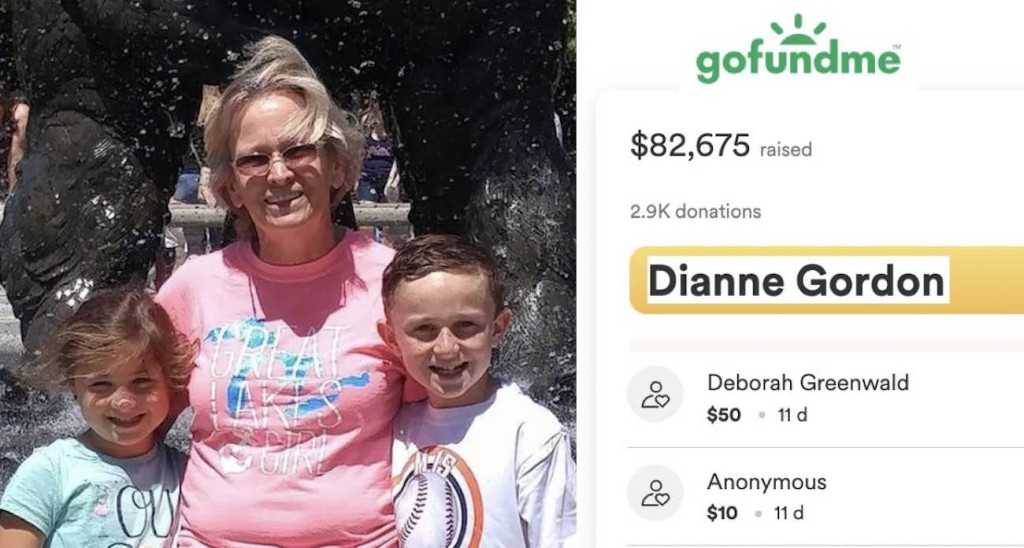
Strangers around the country are rewarding a Michigan woman for her honesty after turning in nearly $15,000 cash to the police that she found at a gas station.
It turned out to be the contributions of guests to a pair of newlyweds, who were more than overwhelmed by her integrity.
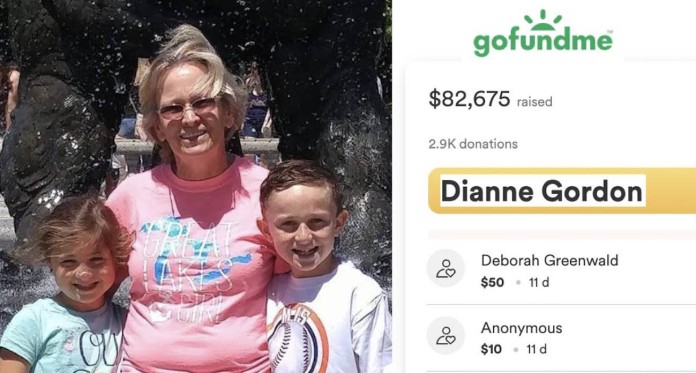
65-year-old Dianne Gordon has been walking 2.7 miles to and from her job behidn a deli counter every day since her Jeep broke down and she didn’t have enough money to fix it. One day she decided to stop at a gas station for a snack and noticed a plastic bag. Inside there was a lot of money; turning it around there were some greeting cards, and a lot more money.
Just doing what she “was taught to do” the grandmother of two called the police, who sent an officer to take custody of the sum.
Gordon could have walked into any dealership in the state and driven something off the lot that day, but new because the money wasn’t hers, it wasn’t correct to take it.
“If it doesn’t belong to you, you don’t keep it,” she told the Washington Post. “I didn’t do anything special. All I did was return something that didn’t belong to me.”
Police Chief Dan Keller of the White Lake Township Police Department telephoned Gordon later that day to tell her they had used the information on the cards inside the bag to track down the owners. The happy couple was “overwhelmed” by Gordon’s honesty, as was Keller’s wife Stacy Connell.
“As a police officer’s wife, I typically hear the bad things, so this was obviously heartwarming,” said Connell. “I was hoping we could help her get a car, since she could have walked into any dealership and used that money.”
Connell set up a GoFundMe, and in just 6 days it raised four times as much money from people wanting to reward Gordon’s act of selflessness as she had found in the sealed bag that morning.
OTHER GOFUNDME PICK-ME-UPS: Delta Flight Attendant Consoles Fearful Passenger and Photo Goes Viral
Grateful for the money and the words of encouragement from all the contributors, who celebrated with comments like “there are still good people in the world,” Gordon said she was stunned by the outpouring of generosity, which at the time of publishing, raised $82,000 and then closed.
On February 8th, Friends of Dianne wrote: “Dianne officially signed for her new Jeep Compass yesterday at Szott M-59 in White Lake Township. Along with the new car, she also got an extended warranty, maintenance, insurance, and plates/tabs.”
MORE STORIES OF HONESTY: Family Praised for Their Honesty After Finding and Returning Bags Containing $1Million in Cash
There was also an inspection done at her home to evaluate some much-needed repairs that will be done very soon.
It’s a beautiful story that shows more often than not, honesty pays.
SHARE This Touching Story And Exceptional Woman With Your Friends…


A 41-year-old world record in women’s track and field stands no longer after a young Dutch speed demon smashed it in front of her home crowd.
Femke Bol took off at the starting pistol at the Dutch Indoor Championships in Apeldoorn, and completed a 400-meter sprint in 49.26 seconds, beating Jarmila Kratochvílová’s world record of 49.59 seconds set in 1982.
“It was because of all the fans here that I ran this record,” said the 22-year-old Olympic bronze medalist.
“Never have I ever seen that many people here. When I crossed the line, I knew that the record was mine because of the noise that the crowd made.”
WORLD RECORD!😱😍
— Atletiekunie (@Atletiekunie) February 19, 2023
Femke Bol vliegt naar een nieuw wereldrecord op de 400 meter. 49.26 seconden. Buitenaards. 👑#NKindoor pic.twitter.com/RfRZn0IrgD
Kratochvílová’s record was the longest-standing record in track and the second oldest in track and field.
Bol also set a world record for the best indoor 500-meter of 1:05.63 in Boston in her first race of this season. During the last Summer Olympics, she collected a bronze medal in the 400-meter hurdles.
SHARE Femke’s Remarkable Achievement With Your Friends…