All News - Page 303 of 1715 - Good News Network
Home Blog Page 303

“A gentleman is one who puts more into the world than he takes out.” – George Bernard Shaw

Quote of the Day: “A gentleman is one who puts more into the world than he takes out.” – George Bernard Shaw

Photo by: Dollar Gill

With a new inspirational quote every day, atop the perfect photo—collected and archived on our Quotes page—why not bookmark GNN.org for a daily uplift?

MDMA and Psilocybin-Assised Psychotherapy Approved in Australia for Treatment-Resistant Depression and PTSD

A picture of MDMA-assisted psychotherapy in progress at MAPS’ a Charleston Treatment Center. credit MAPS.org.
MDMA-assisted psychotherapy in progress at a Charleston treatment center – credit MAPS.org

Australia’s version of the FDA surprised the nation in early February when they announced that psilocybin and MDMA would be considered medicines, and prescribable by psychiatrists for various mental health disorders by July.

Psilocybin, the psychoactive component in psychedelic mushrooms, and MDMA, commonly known as ecstasy, are two of the most effective treatments for dangerous and persistent mental health disorders like treatment-resistant depression and PTSD.

The current illegality of these substances in most countries makes them difficult to study in large trials, but small ones have been universally successful.

For psilocybin, Johns Hopkins University found it reduced symptoms of depression by 71% when combined with assisted psychotherapy, and prevented any return in symptoms in 54% of trial participants.

In 2021, the Department of Neurology at UC San Francisco also concluded a phase III trial of MDMA-assisted psychotherapy for victims of PTSD and found it improved symptoms by 88%, and smashed the FDA criteria for safe and effective.

The Australian Therapeutic Goods Administration (TGA) said it considered several thousands of written public submissions before making its decision.

MORE PSYCHEDELICS NEWS: Psychedelics Company Gets Green Light for PTSD Therapy Study Using MDMA in Canada

“The number of such submissions is a reasonable indicator of the scope and gravity of the issues for individual and public health,” it said in a statement. “The submissions confirm the need for greater access to alternative treatments for patients with persistent mental health conditions where currently available treatments have not been effective.”

“Prescribing will be limited to psychiatrists, given their specialized qualifications and expertise to diagnose and treat patients with serious mental health conditions.”

SHARE This Encouraging Development In Freedom And Health In Australia…

First of Its Kind Discovery in Mali: Vast Reservoirs of Clean Hydrogen Gas

The Bourakébougou pilot hydrogen unit - credit Petroma, released
The Bourakébougou pilot hydrogen unit – credit Petroma, released

In the beautiful West African country of Mali, a huge discovery has a town drawing a flammable gas from the earth that produces loads of electricity without CO2 emissions.

The town called Bourakébougou was prospected by Malian energy entrepreneur Aliou Diallo, who believed the mysterious gas which in the daytime shone with a blue color like sparkling ocean water, and at night like golden dust, could represent a fortune.

In 2012, he recruited Chapman Petroleum to determine what the gas was. It was 98% hydrogen. Months later, Diallo’s firm Petroma had installed a pilot unit to turn the gas into electricity that produced water as an exhaust product, and transformed the village into one with reliable, plentiful electricity.

In the decade since, belief that a potential inexhaustible natural energy source that’s zero emissions saw scientists and energy companies fly into action, scouring academia and the world for more information on underground hydrogen reservoirs

In 2018, a science team published a paper on the Bourakébougou hydrogen well, which concluded from evidence obtained from a dozen exploratory wells in the vicinity that it was “possible to confirm the presence of an extensive hydrogen field featuring at least five stacked reservoir intervals containing significant hydrogen that cover an estimated area well superior to 8 km in diameter.”

Furthermore, the study found that the current estimate of its exploitation price is much cheaper than manufactured hydrogen, either from fossil fuels or from electrolysis.

Cratons and cash

It was long believed, a feature in Science Magazine details, that hydrogen gas reservoirs were extremely rare. It’s rare to find them in places where energy companies drill for oil and natural gas, true, but if one knows where to look, they’re more common.

One such place are Earth’s “cratons,” the oldest and stablest parts of the tectonic plates. Some continents have more than one craton, others like the North American craton, are much larger and so cover most of the continent.

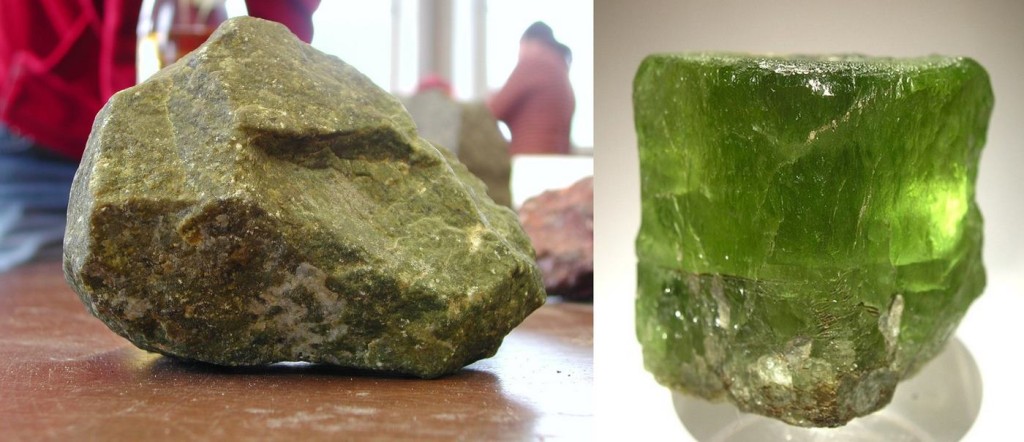
Olivine, a mineral believed to create hydrogen gas underground CC 2.0. דקי

Unlike oil and gas which need thousands of years to form from decomposing organic matter, hydrogen gas is constantly being made underground as water interacts with iron minerals at high pressures and temperatures.

Among these iron minerals is olivine, which through a chemical reaction called serpentinization, steals an oxygen molecule from water percolating down from Earth’s surface to transform olivine into serpentinite, and the water into hydrogen gas.

MORE HYDROGEN NEWS: Researchers Can Now Make Clean Hydrogen Fuel By Pulling it Directly From Seawater—No Filtering Required

Deposits of olivine are richest in an underground, cratonic feature called a “greenbelt.” It’s thought that these greenbelts, because of their high concentration of olivine, act as Earth’s hydrogen gas engine.

Hydrogen fuel has huge potential to transition off fossil fuels as it’s the best currently perceived alternative for diesel or kerosene-based transport such as semi-trucks, jet aircraft, and cargo ships.

MORE ON ENERGY: World’s First 100% Hydrogen-Powered Trains Now Running Regional Service in Germany to Replace Diesel

Currently, the Malian wells could produce hydrogen gas at 50 cents per kilo, one-tenth of the cost of hydrogen created through electrolysis with solar, wind, geothermal, or other green energies.

Ian Munro, CEO of Helios Aragon, a startup pursuing hydrogen in the foothills of the Spanish Pyrenees, told Science his break-even costs might end up between 50 and 70 cents, adding that would revolutionize energy production.

As for Diallo, he started a new company called Hydroma, which now produces electricity for the area via the hydrogen reservoir, and is looking into using it as a means to create green hydrogen via electrolysis.

SHARE This ‘Groundbreaking’ Development In Earth’s Clean Energy… 

Amazing Footage Shows Birth of ‘Precious’ Rare Twin Tiger Cubs at UK Zoo

- SWNS, Steve Chatterly.
– SWNS, Steve Chatterley.

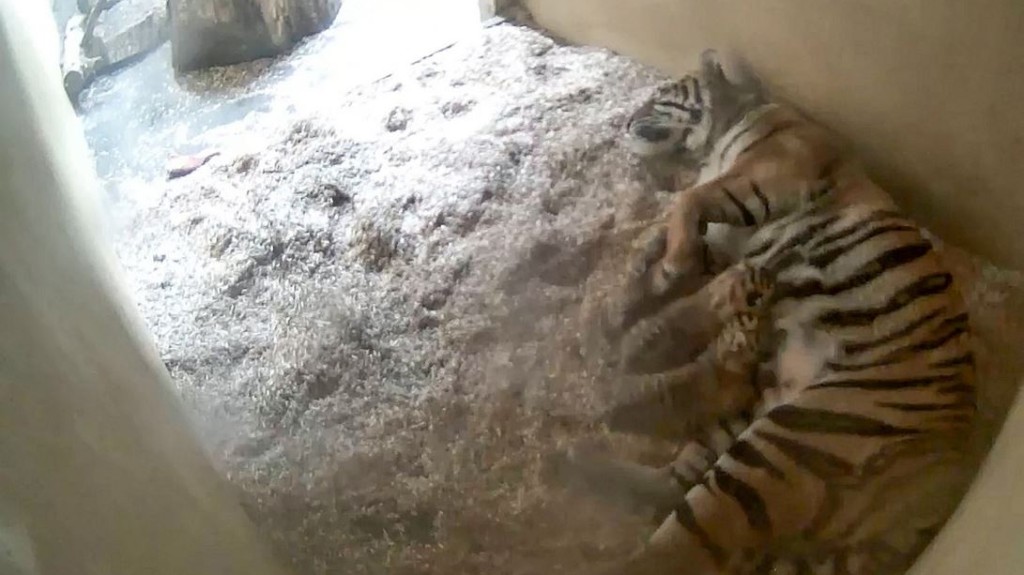
Secret cameras have captured the amazing moment two incredibly rare tiger cubs were born at a UK zoo. The tiny twins arrived at Chester Zoo on January 7th to proud first-time parents, tiger mom Kasarna and her partner Dash.

The births have been heralded as a “major boost for the conservation of these incredible animals”, as the Sumatran tiger sub-species is currently Critically-Endangered.

Zookeepers installed covert cameras in the tiger enclosure to capture the births which also filmed Kasarna mothering the cubs. It’s not clear what sex the newborns are—zookeepers don’t feel like checking under Kasarna’s watchful gaze.

“We’ve been closely monitoring Kasarna on our CCTV cameras as she gets to grips with motherhood and her first litter of cubs,” said Dave Hall, Carnivore Team Manager at Chester Zoo. “It’s a real privilege and incredibly special to watch.”

“She’s a great mom and is being very attentive to her new infants, keeping them snuggled up in the den and feeding them every few hours.”

MORE BIG CATS: Two Zoos, Two Sets of Big Cat Twins: Welcoming the Newborn Cubs in Nashville and Oklahoma

There are only 350 Sumatran tigers in the wild and the only surviving population lives in the Indonesian islands of Sunda.

“One day, the pair will hopefully go on to themselves make a vital contribution to the endangered species breeding program, which is now playing a critical role in preventing these majestic animals from becoming extinct,” said Hall.

MORE ZOO NEWS: Critically Endangered Dancing Lemur Born in UK is ‘Landmark Moment for Species’ After Parents Sent From US Zoo

“The arrival of the cubs is a real testament to the expertise and scientific work of our teams who, only last year, paired up a female tigress, Kasarna, with a male Sumatran tiger, named Dash,” said Mike Jordan, Director of Animals and Plants at the zoo.

“They were coupled together based on their genetic make-up, age, and character and this news is cause for real celebration among the global conservation community.”

WATCH momma tiger with her new cubs… 

SHARE This Great News For The Survival Of This Majestic Animal… 

“There’s poetry, wonder, and meaning, even in death.” – Steam Punk protagonist, Castle

Quote of the Day: “There’s poetry, wonder, and meaning, even in death.” – Steam Punk Protagonist, Castle (TV Series)

With a new inspirational quote every day, atop the perfect photo—collected and archived on our Quotes page—why not bookmark GNN.org for a daily uplift?

Astronomers Observe 2 Neutron Stars Colliding and the Extreme Reaction ‘Defies All Expectations’

Artists rendition of two neutron stars colliding - CC University of Warwick/ Mark Garlick
Artists rendition of two neutron stars colliding – CC University of Warwick/ Mark Garlick

Astronomers just finished putting into words the first observation of a “kilonova,” or the merger of two neutron stars.

The scientists described it as the “perfect explosion” as it was utterly spherical, and brighter than a billion suns. After the two heavy stars merged, for a few moments they formed a massive neutron star, after which they collapsed into a black hole.

A kilonova is a very unique event in the galaxy since few things are as materially dense as a neutron star. There are plenty of objects more massive—the two neutron stars were only a combined 2.7 times the mass of the sun, but no other heavenly bodies can pack so much matter into so small a space.

In the middle of the merger, there could be fundamental physics that astronomers don’t understand yet. For example, the magnetic field formed around it is the strongest recorded in the universe, and so strong it can distort the structure of atoms.

“It is a perfect explosion in several ways. It is beautiful, both aesthetically, in the simplicity of the shape, and in its physical significance,” said astrophysicist Albert Sneppen of the Cosmic Dawn Center in Copenhagen, lead author of the research published in the journal Nature.

“This is fundamentally astonishing, and an exciting challenge for any theoreticians and numerical simulations,” Sneppen told the Guardian. “The game is on.”

MORE FROM SPACE: Incredible 3D Rendering from Jupiter Spacecraft Reveals “Frosted Cupcake” Clouds

Located in a galaxy called NGC 4993 found in the constellation Hydra, about 150,000 light-years from Earth, the two neutron stars began their life as normal stars orbiting each other billions of years ago. Neutron stars are essentially a star “heart” leftover from a supernova explosion. White, dense, small, and spinning incredibly fast, they are fascinating phenomena.

“Given the extreme nature of the physical conditions, with densities greater than an atomic nucleus, temperatures of Billions of degrees, and magnetic fields strong enough to distort the shapes of atoms, there may well be fundamental physics here that we don’t understand yet,” Cosmic Dawn Center astrophysicist and study co-author Darach Watson told the Guardian.

MORE FROM ASTRONOMY: Ringed Planet That Defies Known Physics Discovered in Outer Reaches of Our Solar System

Their merger was witnessed by the European Southern Observatory’s Very Big Telescope in the Atacama Desert, Chile, in 2017. The outer parts of the new stars were torn and stretched into long thin streamers which probably launched gold, uranium, arsenic, platinum, and other rare elements into the universe.

SHARE This Legitimately Brand New Discovery With Your Friends… 

North America’s Only Native Stork Poised to Fly off the Endangered Species List

Wood stork - Credit Mary Ellen Urbanski CC 2.0.
Wood stork – Credit Mary Ellen Urbanski CC 2.0.

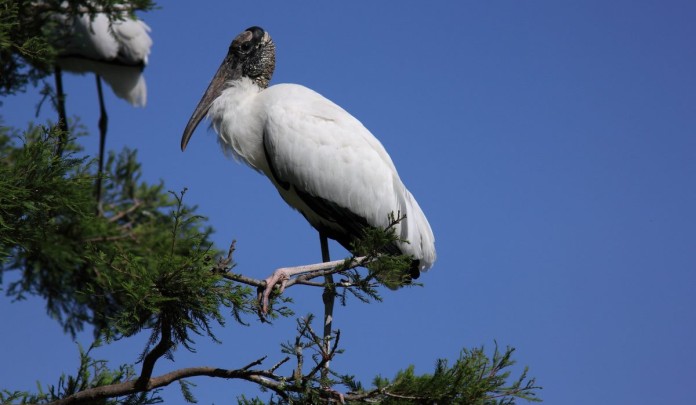
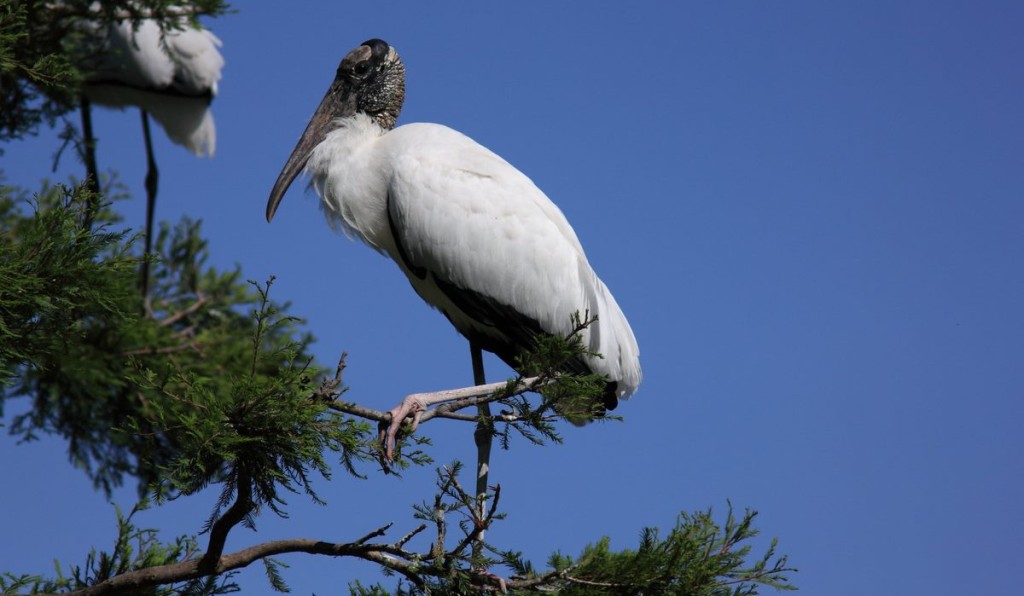
After teetering on the edge of extinction almost 50 years ago, the wood stork is now widespread across the southeastern US, and is preparing a flight off the Endangered Species List (ESL).

It’s all in a day’s work for the ESL, the world’s most successful conservation program in history, and the only stork native to North America is just the most recent beneficiary.

The wood stork faced extinction when listed in 1984 under the Endangered Species Act. The population had decreased from 20,000 nesting pairs to less than 5,000 pairs, primarily nesting in south Florida’s Everglades and Big Cypress ecosystems.

The recovery program worked to restore and protect the ecosystems which the four-and-a-half-foot-tall bird calls home.

Today, the wood stork breeding population has doubled to 10,000 or more nesting pairs and increased its range, including the coastal plains of Mississippi, Alabama, Florida, Georgia, and the Carolinas. These long-legged wading birds more than tripled their number of nesting colonies from 29 to 99 in their expanded range.

US Fish and Wildlife explained they’ve adapted to new nesting areas, moving north into coastal salt marshes, old, flooded rice fields, floodplain forest wetlands, and human-created wetlands.

The Fish and Wildlife Service will take comments on the proposal through April 17th, and even if it is delisted, it would remain a protected species under other legislation such as the Migratory Bird treaty.

MORE ENDANGERED SPECIES NEWS: After Facing Extinction, This Midwestern Bird is Now Soaring Off Endangered Species List

The scale-headed wader, not-so-affectionately-termed a “flinthead,” hunts fish, frogs, and crustaceans in marshes, swamps, and rivers, and is actually listed globally by the IUCN as a species of Least Concern, due to its range extending across almost the entire South American continent east of the Andes.

“The wood stork is recovering as a result of protecting its habitat at a large scale,” said Assistant Secretary for Fish and Wildlife and Parks Shannon Estenoz. “This iconic species has rebounded because dedicated partners in the Southeast have worked tirelessly to restore ecosystems, such as the Everglades, that support it.”

HONK For Joy At This Unique Bird’s Recovery On Social Media… 

Third Case of HIV Being Cured Confirmed 10 Years After Treatment of the ‘Düsseldorf Patient’

Dusseldorf University Hospital - credit duesseldorf-health.de
Dusseldorf University Hospital – credit duesseldorf-health.de

The “Düsseldorf Patient”, a man now aged 53, is just the third person worldwide to have been completely cured of HIV via stem cell transplantation.

As in the case of the other two patients, the so-called “Berlin Patient” and “London Patient,” the transplantation was undertaken to treat an acute blood disease, which had developed in addition to the HIV infection.

The Düsseldorf Patient received a stem cell transplant used to treat leukemia in 2013 and has shown persistent suppression of HIV-1 ever since, including during the last 4 years after the patient stopped taking anti-retroviral medication.

“I still remember very well the sentence from my family doctor: ‘don’t take it so hard,'” the Düsseldorf Patient, who had leukemia as well as HIV-1, said in a statement. “‘We will experience together that HIV can be cured!’ At the time, I dismissed the statement.”

Allogeneic hematopoietic stem cell transplantation (HSCT) is a procedure used to treat certain cancers, such as leukemia, by transferring immature blood cells from a donor to repopulate the bone marrow of the recipient.

Scientists now understand that individuals with two copies of the Δ32 mutation in the gene for the HIV-1 co-receptor CCR5; are resistant to HIV-1 infection. The two previous cases of both the London patient and the Berlin patient involved receiving a stem cell transplant from a donor with these unique mutations.

Björn-Erik Jensen, a specialist in infectious diseases at Düsseldorf University Hospital, lead the treatment and subsequent research, revealed today in a peer-reviewed study in Nature.

MORE CURES: ‘Miracle’ Drug Has Young Girl Running Dancing and Swimming Again Despite Cystic Fibrosis

The patient was diagnosed as having acute myeloid leukemia and proceeded to undergo transplantation of stem cells from a female donor in 2013, followed by chemotherapy and infusions of donor lymphocytes.

After the transplantation, anti-retroviral therapy was continued, but HIV was undetectable in the patient’s blood cells. Anti-retroviral therapy was suspended in November 2018 with the patient’s informed consent, almost 6 years after the stem cell transplantation, to determine whether the virus persisted in the patient.

MORE HIV NEWS: Woman Becomes ‘Natural Suppressor’ of HIV as Her Body Completely Clears the Disease – Doctors Find Only Antibodies

MORE HIV NEWS: Fourth Patient Seemingly Cured of HIV Through Wild Coincidence

“I very much hope that these doctors will now get even more attention for their work,” said the patient. “I have now decided to give up some of my private life to support research fundraising. And of course, it will also stay very important for me to fight the stigmatization of HIV with my story.”

The authors conclude that although HSCT remains a high-risk procedure that is at present an option only for some people living with both HIV-1 and hematological cancers, these results may inform future strategies for achieving long-term remission of HIV-1.

SHARE The “Düsseldorf Patient’s” Story On Social Media… 

U.S. Agency Wants Offshore Oil Companies to Look for Shipwrecks Before They Drill

Remains of the whaling ship Industry, found by an offshore oil producer Credit NOAA

As part of existing requirements for offshore energy production, 600 shipwrecks have been found in the Gulf of Mexico alone by oil and gas producers, however scientists and historians reckon this number is just a fraction of how many are actually out there.

A new proposal to the Federal Register by the Bureau of Ocean Energy Management would obligate offshore energy companies to conduct maritime archaeological surveys before undertaking any operations that would disturb the seafloor off the continental shelf.

In 2011, an unnamed energy company spotted a shipwreck near its operations which was excavated last year by the National Oceanic and Atmospheric Admin. (NOAA). It turned out to be the 207-year-old whaling ship Industry 

The Boston-built Brig was associated with freed-slave and maritime entrepreneur Paul Cuffe, and hunted whales across the Atlantic Ocean, the Caribbean, and the Gulf of Mexico for 20 years. It was lost when a strong storm snapped its masts and opened its hull to the sea on May 26, 1836.

Current methods used to preserve undiscovered shipwrecks involve predicting where they could be found based on historic reports in newspapers and state records, as well as weather patterns and historic shipping lanes, but scientists now believe it’s a method that notably undercounts how many ships are actually down there.

MORE GULF NEWS: Watch 2,200 Cold-Stunned Turtles Being Released by Volunteers Back Into the Gulf

Furthermore, oil and gas companies are currently only required to conduct a survey when they have “reason to believe” that a shipwreck may be present in their area of operations.

“By improving our reporting requirements, we can increase the likelihood of identifying these important resources before they are inadvertently damaged by an [oil or gas] operator and help ensure compliance with the National Historic Preservation Act,” James Kendall, BOEM Gulf of Mexico regional director, told Science.

MORE FROM REGULATION: 4 Tuna Species Recovered After Decade of Fishing Quotas–With Albacore in Stores Being Truly Sustainable

The new proposal, currently open for public comment, puts oil, gas, and offshore wind all on the same page for survey requirements. Typically working beyond 5.5 kilometers from the shore, these installations must be preceded by an archaeological survey of the area before they begin construction.

Public comment will carry on until mid-April.

SHARE This Good Regulation With Your Friends On Social Media… 

5,000 Year-Old Tavern Found in Iraq

A drone photo of Trench 6 at Lagash - Lagash Archaeology Project
A drone photo of Trench 6 at Lagash – Lagash Archaeology Project

It doesn’t get much older than Sumeria, but even the modern concept of going out to eat was already established 1,000 years before the Great Pyramids were built.

In the ancient Near Eastern city-state of Lagash, the foundations of a tavern were recently found by archaeologists that included an open-air sitting area, and a kitchen complete with a clay oven, clay chiller, and ancient crockery.

One of the oldest areas in Ancient Mesopotamia, Lagash was already inhabited in the fifth millennium BCE. Today it’s located on a mound 4,000 yards in length and 2,000 yards in width.

A joint project of the Univ. of Pennsylvania Museum, Cambridge University and the State Board of Antiquities and Heritage in Baghdad has renewed work at this critically important settlement as recently as 2019.

Using new magnetometry techniques and sedimentary analysis, the renewed work is taking a different approach to archaeology compared to past excavations of the city.

“It’s not like old-time archaeology in Iraq,” says Zaid Alrawi, project manager for the Lagash project at the Penn Museum, in the statement. “We’re not going after big mounds expecting to find an old temple. We use our techniques and then, based on scientific priority, go after what we think will yield important information to close knowledge gaps in the field.”

The Lagash Mound – Lagash Archaeology Project

According to established records of the procession of Mesopotamian city-states, Lagash might be the fourth such large important settlement in the area, following Eridu the first city, Uruk, and Ur.

MORE FROM THE NEAR EAST: Stunning Ancient Artwork Found at Site Sacked by ISIS: Assyrian Depictions Not Seen For 2,600 Years–LOOK

Among the tavern’s contents were conical eating dishes which contained the remains of fish, a staple among ancient Mesopotamian settlements, and other storage jars that contained food.

It goes to show, according to the archaeologists, that the city wasn’t simply divided into the priestly and royal strata, and the lower classes, but rather contained a middle class as well who could afford to eat out as it were.

MORE FROM ANCIENT HISTORY: Ancient Cave Markings Finally Decoded By Amateur Scientist–A Calendar of When Animals Mated 20,000 Years Ago

“The fact that you have a public gathering place where people can sit down and have a pint and have their fish stew, they’re not laboring under the tyranny of kings,” says Reed Goodman, an archaeologist at the University of Pennsylvania, to CNN. “Right there, there is already something that is giving us a much more colorful history of the city.”

SHARE This Piece Of Ancient Ancient, History With Your Friends… 

“The consequence of pessimism in the life of a nation is the same as in the life of the individual.” – Helen Keller (It’s Presidents’ Day)

Quote of the Day: “The consequence of pessimism in the life of a nation is the same as in the life of the individual.” – Helen Keller (It’s Presidents’ Day)

Photo by: Harini Rath, Mount Rushmore, CC BY-SA 4.0

With a new inspirational quote every day, atop the perfect photo—collected and archived on our Quotes page—why not bookmark GNN.org for a daily uplift?

Discovery: Cockatoos Know to Bring Multiple Tools When Fishing For Nuts–An Ability Only Seen in Chimpanzees

University of Veterinary Medicine Vienna

Goffin’s cockatoos have been added to the short list of non-human animals that use and transport sets of tools. In a study publishing in the journal Current Biology on February 10, researchers show that the cockatoos carry multiple tools to their worksite when the job calls for it.

This type of behavior has only been previously reported in chimpanzees—our closest relatives.

The clever white parrots that hail from the Tanimbar Islands archipelago in Indonesia can use up to three different tools to extract seeds from a particular fruit, according to recent research. Up until now, though, it wasn’t clear whether the Goffin’s cockatoos considered these tools as a “set”; it’s possible that what may look like a toolset is instead nothing more than a chain of single tool uses, with the need for each new tool appearing to the animal as the task evolves.

Now, a team of researchers have used controlled experiments to clarify that the cockatoos do indeed recognize when a job requires more than one tool—and will come prepared.

“With this experiment we can say that, like chimpanzees, Goffin’s cockatoos not only appear to be to using toolsets, but they know that they are using toolsets,” says first author Antonio Osuna-Mascaró, an evolutionary biologist at the University of Veterinary Medicine Vienna.

“Their flexibility of behavior is stunning.”

Osuna-Mascaró was inspired by the termite-fishing Goualougo Triangle chimpanzees of northern Congo, the only other known non-human animal to use toolsets. These chimpanzees fish for termites via a two-step process: first, they use a blunt stick to break holes in the termite mound, and then they insert a long, flexible probe to “fish” the termites out of the holes. In this study, the cockatoos were tasked with fishing for cashews instead of termites.

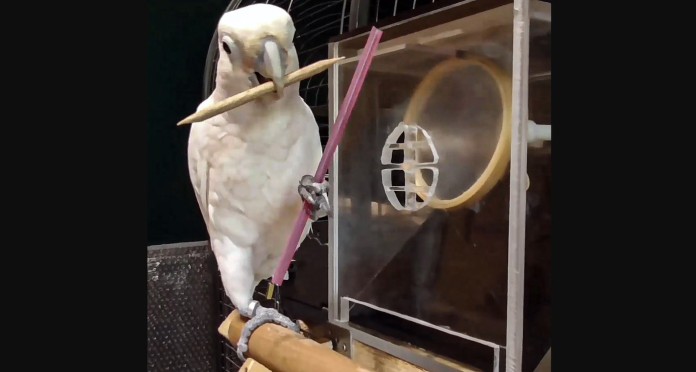
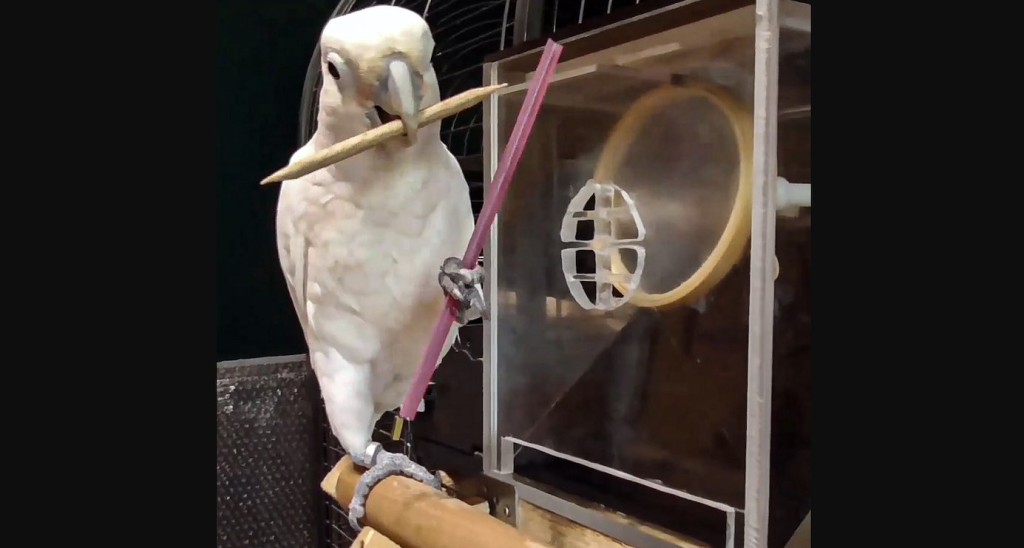
To mimic the termite-fishing set-up, the researchers presented the cockatoos with a box containing a cashew behind a transparent paper membrane. To reach the cashew, the cockatoos had to punch through the membrane and then “fish” the cashew out. They were provided with a short, pointy stick for punching holes and a vertically halved plastic straw for fishing. (See the video below for footage…)

LOOK: Brilliant Bruce the Disabled Parrot Uses Pebbles to Clean Himself With Broken Beak—Something Never Before Observed

Seven of the ten cockatoos tested taught themselves to extract cashews successfully by punching through the membrane, and two of the cockatoos (Figaro and Fini) completed the task within 35 seconds on their first attempt. The cockatoos don’t have an equivalent foraging behavior in the wild, so there was no chance that their tool use was based on innate behaviors, and each cockatoo used a slightly different technique.

Next, the team tested the cockatoos’ ability to change their tool use in a flexible manner depending on the situation. To do this, they presented each cockatoo with two different types of box: one with a membrane and one without. The cockatoos were given the same two tools, but they only needed the pointy stick when a membrane was in the way.

“The cockatoos had to act according to the problem; sometimes the toolset was needed, and sometimes only one tool was enough,” says Osuna-Mascaró.

All of the cockatoos mastered the test in a very short period of time and were able to recognize when a single tool was sufficient. However, the birds engaged in an interesting behavior during this choosing phase. “When making the choice between which tool to use first, they were picking one up, releasing it, then picking up the other one, releasing it, returning to the first one, and so on,” says Osuna-Mascaró. The researchers found that when cockatoos did this switching, they performed better on the tests.

RELATED: Figaro the Toolmaking Cockatoo Taught His Mates How to Craft Tools – And Stunned Scientists

Next, the team tested the cockatoos’ ability to transport the tools as a set on an as-needed basis. They put the cockatoos through a series of increasingly challenging trials to reach the boxes: first they had to climb a short ladder while carrying their tools; then they had to fly horizontally with them; and in the final test, they had to carry the tools while flying vertically. As before, the birds were only sometimes presented with a box with a membrane barrier, so they had to decide whether the problem required one or both tools.

Some cockatoos learned to carry the two tools together — by inserting the short punching stick into the groove of the halved straw — when they were presented with a box that required both. This meant they only had to make one trip, albeit while carrying a heavier toolset. Most of the cockatoos transported the toolset on an as-needed basis, further indicating that they knew ahead of time when two tools were required, though some made two trips when necessary. One cockatoo, Figaro, decided not to waste time thinking and instead carried both tools in almost every trial.

“We really did not know whether the cockatoos would transport two objects together,” says Alice Auersperg, senior author on the study and a cognitive biologist at the University of Veterinary Medicine Vienna. “It was a little bit of a gamble because I have seen birds combining objects playfully, but they very rarely transport more than one object together in their normal behavior.”

POPULAR: Scientists Studying Crows Get Big Surprise –They’re So Smart They Understand the Concept of Zero

There’s a lot more to be learned about cockatoo tool use, the researchers say. “We feel that, in terms of technical cognition and tool use, parrots have been underestimated and understudied,” says Auersperg.

“We’ve learned how dexterous the cockatoos are when using a toolset, and we have a lot of things to follow-up on,” says Osuna-Mascaró. “The switching behavior is very interesting to us, and we are definitely going to use it to explore their decision making and their metacognition — their ability to recognize their own knowledge.”

COME Prepared By Sharing This Wonderment and Awe on Social Media…

Critically Endangered Dancing Lemur Born in UK is ‘Landmark Moment for Species’ After Parents Sent From US Zoo

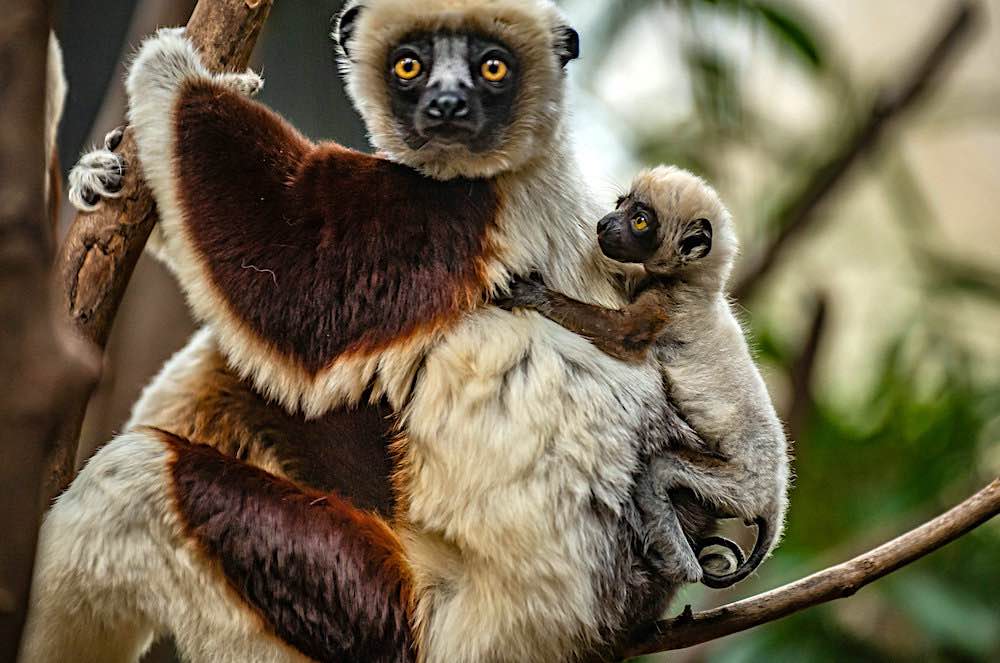
Conservationists at Chester Zoo became the first in Europe to successfully breed a rare Coquerel’s sifaka lemur – SWNS

The first ever ‘dancing lemur’ to be bred in Europe was born at a UK zoo in a “landmark moment for the species”.

The precious baby Coquerel’s sifaka arrived at Chester Zoo on December 19, weighing just 4oz (119g) following a 130-day pregnancy.

Proud parents Beatrice and Elliot, both aged ten, successfully bred after being transferred from a US zoo as part of a program to protect this critically endangered species.

It is the first time a Coquerel’s sifaka—otherwise known as ‘dancing lemurs’ because of their swinging movements—has been born in Europe.

Adorable pictures and video show the cute baby clinging to its mom Beatrice while she shows it around their enclosure.

The sex of the baby is not yet known but staff say they will find this out when the tiny primate starts to explore on its own.

“It’s really exciting to be the first team of conservationists in Europe to successfully breed this unusual and extremely rare primate,” said Mark Brayshaw, Curator of Mammals at Chester Zoo. “While it’s still early days, both mum and baby are doing great.

Newborn Coquerel’s sifaka lemur born at Chester Zoo, in vital new conservation breeding program with U.S. partners – SWNS

“Beatrice is feeding her new arrival regularly and is keeping it nestled in her fur as she leaps from tree to tree. In a few weeks’ time, the baby will graduate to riding on her back, before branching out and learning to climb trees independently at around six months old.”

LOOK: Listen to This ‘Singing’ Lemur Species That Has ‘Common Musical Traits’ Like Humans Do

“It won’t be long until this bright-eyed baby will be bouncing 20-feet from tree to tree just like its parents.”

A Coquerel’s ‘dancing’ distinguishes it from other lemurs. They maintain an upright posture whilst springing side to side along the floor on their back legs and leap more than 20-ft through the treetops in a single bound.

Listed by the IUCN as critically endangered, the wild population has declined by 30 percent in Madagascar in the last 30 years due to deforestation.

RELATED: Couple Protects Endangered Lemurs in Madagascar By Launching Mobile Library to Teach Indigenous People to Read

“The birth of a Coquerel’s sifaka in Europe is a real landmark moment for conservation and, importantly, has kickstarted the endangered species breeding program in European zoos for the species,” says Mike Jordan, Director of Animals and Plants at Chester Zoo.

“This could be a real lifeboat.”

BOUNCE This Beautiful Baby to Pals on Social Media – Share the Smile…

Monarch Butterflies Rebound Again–Beating Last Year’s Total, Proving Success is Not a Fluke

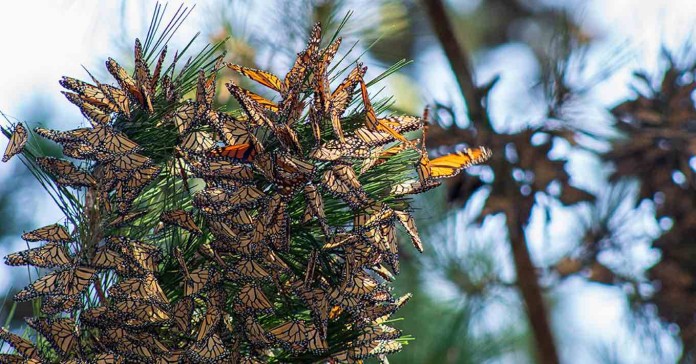
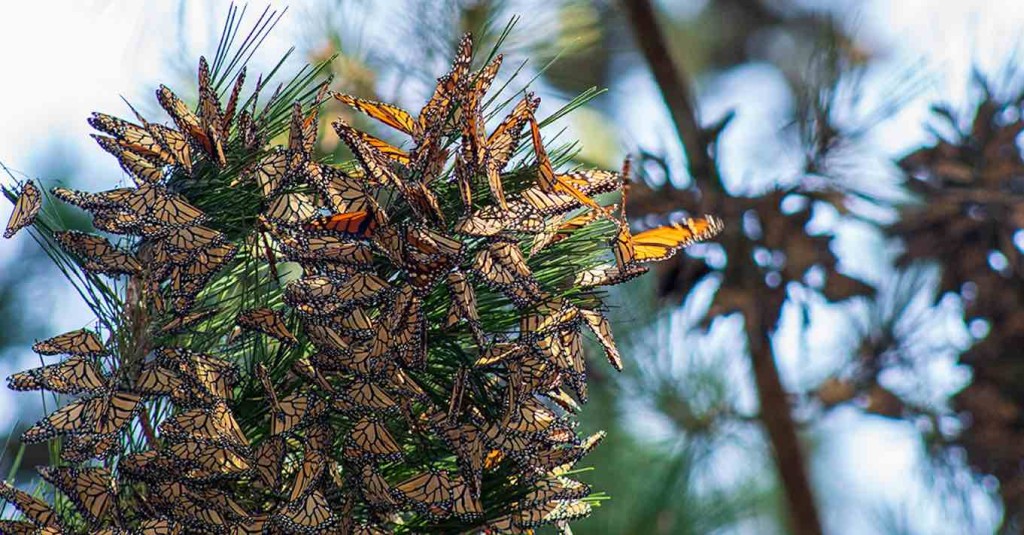
Photo by Isis Howard – Xerces Society

The annual Western monarch count to measure the population of overwintering butterflies shared fantastic news for the second year in a row.

Motivated by the surprising rebound in 2021, volunteers’ excitement continued to grow when early reports hinted at a consecutive year of improved numbers.

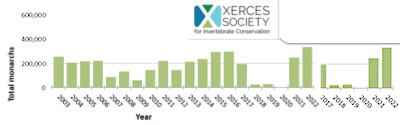
Surveying a total of 272 overwintering sites across coastal California in November and December—along with a few sites inside California and Arizona—volunteers tallied 335,479 individual monarchs.

Over 130,000 butterflies were reported in Santa Barbara and San Luis Obispo Counties alone. The San Francisco Bay Area also witnessed a comeback from last year with more than 8,000 butterflies reported in surrounding counties.

This season’s results are a welcome reprieve from the dismal total of less than 2,000 individuals counted in 2020—and larger than the 250,000 counted last year.

335,479 is squarely back into what was considered “normal” in 2000-2017.

POPULAR: Listen to Millions of Monarch Butterflies Make One of the Rarest Sounds on Earth: ‘Just like a waterfall’

“We can all celebrate this tally,” says Emma Pelton, a conservation biologist at the Xerces Society which leads the western monarch count. “A second year in a row of relatively good numbers gives us hope.”

That said, the storms that hit California after the count will certainly effect the total. At some sites, butterflies were blown out of their clusters, making them more vulnerable to cold, but other sites, like Pacific Grove, fared relatively well with the majority of monarchs still holding on.

RELATED IN OREGON: Efforts to Save Endangered Blue Butterfly Quadruples its Population–but Also Saves a Lupine from Extinction

Managing groves to be more resilient to climate change and severe weather may help improve monarch survival and ensure there is habitat long into the future. This can include replacing dead and dying trees, mitigating future flooding, and planting more native nectar sources.

All the small but collectively powerful efforts to re-wild and protect our landscapes for monarchs are producing results. Consider joining the monarch-boosting mission of the Xerces Society.

Here are five actions you can take to support monarch butterflies:

  • Plant native milkweed.
  • Plant a diversity of nectar plants, ideally native to your area.
  • Stop using pesticides, or minimize risk associated with pesticide use.
  • Call on legislators to support greatly needed policies such as Recovering America’s Wildlife Act and the Monarch Action, Recovery, and Conservation of Habitat Act.
  • Contribute to community science projects that track monarchs, such as the Western Monarch Milkweed Mapper, Western Monarch Mystery Challenge, and nationwide Integrated Monarch Monitoring Program.
    (Scroll down here to see links for these items.)

FLY This Great News to Butterfly Lovers on Social Media…

Eight Mysterious Radio Signals Uncovered by Astronomers Using AI Could Be Extraterrestrial Intelligence

Extraterrestrial signatures studied by Peter Ma – SWNS

Astronomers have picked up eight mysterious radio signals that could be coming from aliens sending messages with technology more advanced than our own.

The electromagnetic waves were detected using state of the art AI (artificial intelligence), or deep learning.

The signals were sourced to areas surrounding five ‘nearby’ stars 30 to 90 light years away.

The pulses were ‘hiding in plain sight’ among a huge number of recordings from more than six years ago.

An international team developed a computer algorithm to analyze the unimaginably large amount of information in more detail.

Lead author Peter Ma, an undergraduate at the University of Toronto, said his team searched through 150 TB of data from 820 nearby stars. (One terabyte could hold 1,000 copies of the Encyclopedia Brittanica).

“The dataset had previously been searched through in 2017 by classical techniques but labeled as devoid of interesting signals.”

It was collected by the Green Bank Telescope in West Virginia, which is bigger than the Statue of Liberty and part of the Breakthrough Listen project aimed at identifying extra terrestrial activity.

No ‘targets of interest’ were originally indicated. But the new neural network found this to be far from the case.

LOOK: Huge Black Diamond Sold for $4.3 Million–and No One Knows Where it Came From or How it Was Formed

Manual re-examination also confirmed the findings shared several key characteristics. The signals were narrow band, meaning they had a small spectral width of just a few Hz (Hertz). Natural phenomena tend to be broadband.

“The key issue with any techno-signature search is looking through this huge haystack of signals to find the needle that might be a transmission from an alien world,” explained Dr. Steve Croft, a California astrophysicist with the Breakthrough Listen team (and one of Ma’s research advisors). “Peter’s algorithm gives us a more effective way to filter the haystack and find signals that have the characteristics we expect from techno-signatures.”

Furthermore, the readings, reported in the journal Nature Astronomy, were ‘sloped’, indicating acceleration.

They also appeared only when the instrument focused on a specific celestial source, disappearing when it pointed away.

Radio is a great way to send interstellar information. It passes through dust and gas at the speed of light—20,000 times faster than our best rockets.

RELATED: Amateur Astronomer Tracks Possible Source of the Famous ‘Wow!’ Signal – a Mystery Since 1977

Many SETI (search for extraterrestrial intelligence) efforts use antennas to eavesdrop on any signals aliens might be transmitting.

“These results dramatically illustrate the power of applying modern machine learning and computer vision methods to data challenges in astronomy, resulting in both new detections and higher performance,” said co-author Dr. Cherry Ng, of the French National Centre for Scientific Research in Paris.

“Application of these techniques at scale will be transformational for radio techno-signature science.”

The researchers are now planning to deploy the algorithm on the SETI Institute’s COSMIC tool in New Mexico, where Jodie Foster heard an alien signal in the 1997 movie Contact. It’s been surveying 40 million stars for ‘techno-signatures’

Since SETI experiments began in 1960 with Frank Drake’s Project Ozma at the same Green Bank Observatory used in this latest work, technological advances have enabled researchers to collect more data than ever.

DISCOVERY: Everything Needed to Make RNA and DNA Has Been Found in Asteroids and Meteorites

The massive volume requires supercomputers that are breaking new ground in the quest to answer the question, ‘Are we alone?’.

“Yesterday is not ours to recover, but tomorrow is ours to win or lose.” – Lyndon B. Johnson

By Tim Foster

Quote of the Day: “Yesterday is not ours to recover, but tomorrow is ours to win or lose.” – Lyndon B. Johnson

Photo by: Tim Foster

With a new inspirational quote every day, atop the perfect photo—collected and archived on our Quotes page—why not bookmark GNN.org for a daily uplift?

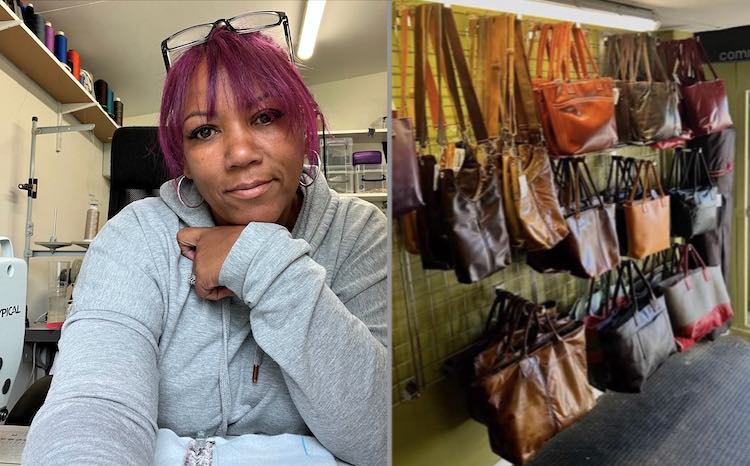
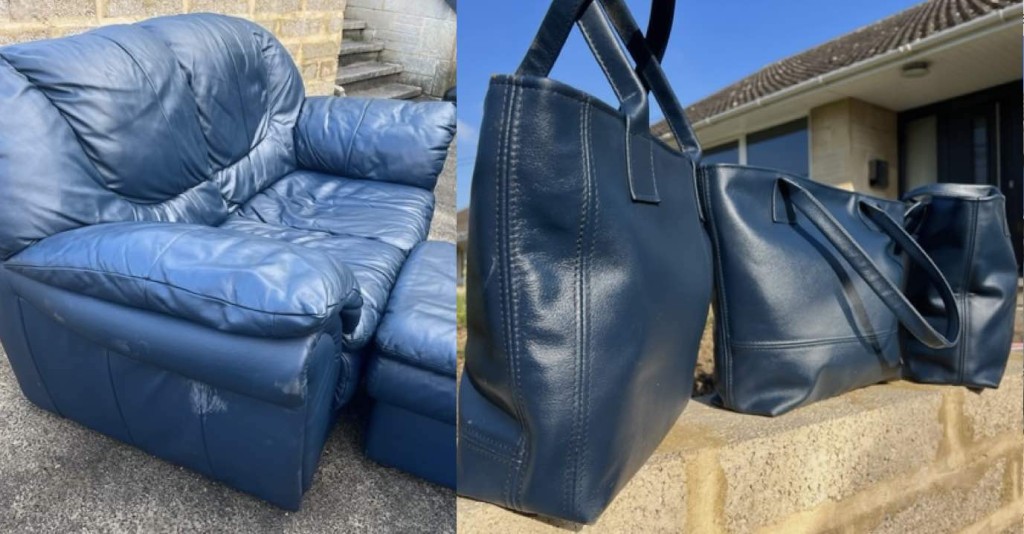
She Turns Old Leather Sofas into Chic $200 Handbags to Cut Down on Waste–And They’re Flying Out the Door

Lisa Crick handbag – SWNS

An Englishwoman is turning old leather sofas into beautiful handbags as a way to save them from the landfill.

Lisa Crick gets the pre-loved couches donated to her for free, and she upcycles the good parts into totes, messenger bags, and luggage in the space of a week.

She tries to use every part of the furniture that she can, even giving away the cushion stuffing for free to people for use as dog beds or to stop window drafts.

“I am passionate about waste and conscious of how much we do waste,” said the 53-year-old who calls her business ‘New Baginnings’. “When I see people with my bags I get such a sense of pride.”

She sells her totes on a website and in a pop-up store in Dilton Marsh, Wiltshire, England, for anywhere between £25 to £200—and says “the sofa bags are flying off the shelves”.

Lisa tried her hand at sewing in 2018 when her husband, Dave, asked what she was going to do with the waste material from old curtains they had replaced.

“I just said ‘I’ll make luggage’,” she recalled. “Never in a million years did I think I’d be here.”

Lisa Crick’s homemade leather handbags – SWNS

LOOK: 90-Year-old Woodcutter Built his Own Hobbit House Where He Lives in Charming Comfort

She turned to Pinterest, tried making denim bags, and continued to play around with different fabrics. The ex-fitness instructor had more time to explore her sewing skills when the pandemic hit in 2020—and by the time lockdown ended she had decided to pursue making bags as a business.

She first sewed with leather after a friend asked if I fancied a leather chair.

“I love the challenge of different fabrics. Every fabric that comes in teaches me something else.

She then started looking on Facebook Marketplace to collect sofas people were giving away. Lisa can make up to nine bags from a sofa and chair—and has also created products, including a line of aprons, from hot air balloon fabric, carpets, and old jeans.

POPULAR: Jedi Landscaper Sets Up Rows of Precisely Spaced Brick Dominoes – And the Ending is Spectacular (WATCH)

One woman loved the bags so much that she ordered one made from her own sofa.

Lisa Crick / SWNS

She estimates she has saved 20 sofas from the landfills over the last 16 months, and sews 6-10 leather bags weekly to sell from her website—and each bag comes with a label to tell you what it was in its previous life.

“I’m so proud of the bags I produce. It’s not about the money for me. I really enjoy what I do.”

INSPIRE Your Friends With This Upcycling Handbag Hero…

Adults 70 and Older Swear by These Activities to Keep Them Younger Than Their Age – ‘Stereotypes No Longer Apply’

older couple seniors marriage aging
SWNS
older couple seniors marriage aging
SWNS

Three-quarters of people who reached 70 years or older agreed in a new poll that the ‘old age stereotypes’ no longer apply to today’s seniors.

In fact, 72 percent of this group feel “years younger” than their actual age and are far more active than they imagined they would be.

The survey of 1,000 people over 70 found a varied diet, laughing daily, socializing with friends, and even an active sex life are what keeps them staying young.

Going out dancing, having a strong skincare routine, and keeping up to date with new tech, are also among the things that help them feel young.

Others swear by hanging out with people younger than themselves (16 percent) and keeping up with new music (9%).

And, one in 20 said they still jump up on supermarket carts to glide around, whenever the spirit moves them.

A spokesperson for Vitabiotics Wellman 70+ vitamins, which commissioned the poll, said: “Getting older no longer means you have to slow down and miss out on the things you love.

“For a long time, a popular phrase was ’40 is the new 30’ – but now, as people are living longer, it’s probably fair to say in many cases 70 can be the new 50.

STUDY: 6 Lifestyle Choices to Slow Memory Decline Identified in 10-Year Study of Aging

76 percent of those polled believe people are reaching ‘old age’ much later now than in previous generations—and most of the silver seniors don’t think of themselves as old until they turn 78.

43 percent think they are doing a good job of changing people’s perceptions of what old people are like. In fact, 14 percent of those surveyed by OnePoll feel as many as 20 years younger than the figure on their birth certificate.

puzzle sudoku
sudoku puzzle – SWNS

More than four in 10 tend to feel they age more physically than mentally, with just one in ten feeling the strain in their brain. And 23% believe their grandchildren don’t see them as ‘old’, with 29 percent claiming they are even seen as in-the-know on current trends by young people.

RELATED: Cure for Baldness Could Be on the Horizon as Hair Cells Are Generated in a Lab

“By making the effort to stay active, both physically and mentally, as well as taking good care of your general health, it really is possible to stave off those feelings of being old for years, or even decades.”

TOP 30 WAYS OVER 70s STAY YOUNG:

Eating well
Keeping your mind active with things like sudoku, crosswords and Wordle
Laughing at least once a day
Socializing with friends
Dressing how you please
Keeping an interest in what your grandchildren, nieces or nephews are doing
Getting lots of sleep
Abiding by the rule of having ‘a little of what you fancy’
Keeping up to date with how to use latest technology
Playing with younger grandkids/nieces/nephews
Taking vitamin supplements
Exercising regularly
Having a good skincare routine
Watching new TV shows
Doing 10k steps a day
Walking the dog
Keeping up to date with popular culture such as museums and exhibitions
Having an active or regular sex life
Hanging out with people younger than you
Stretching/ yoga
Playing in the snow
Regular trips to the pub
Dying your hair
Continuing education or learning something new
Sending a Valentine’s card
Keeping up with new music
Going out dancing
Playing video games
Using social media
Doing pranks on family members
Gliding round on supermarket carts

ALSO SEE: These are the Top Benefits of Aging

SHARE The Optimism About Old Age With Friends on Social Media…

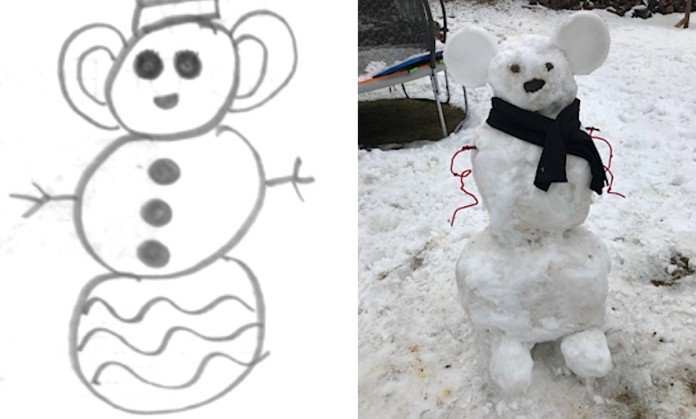
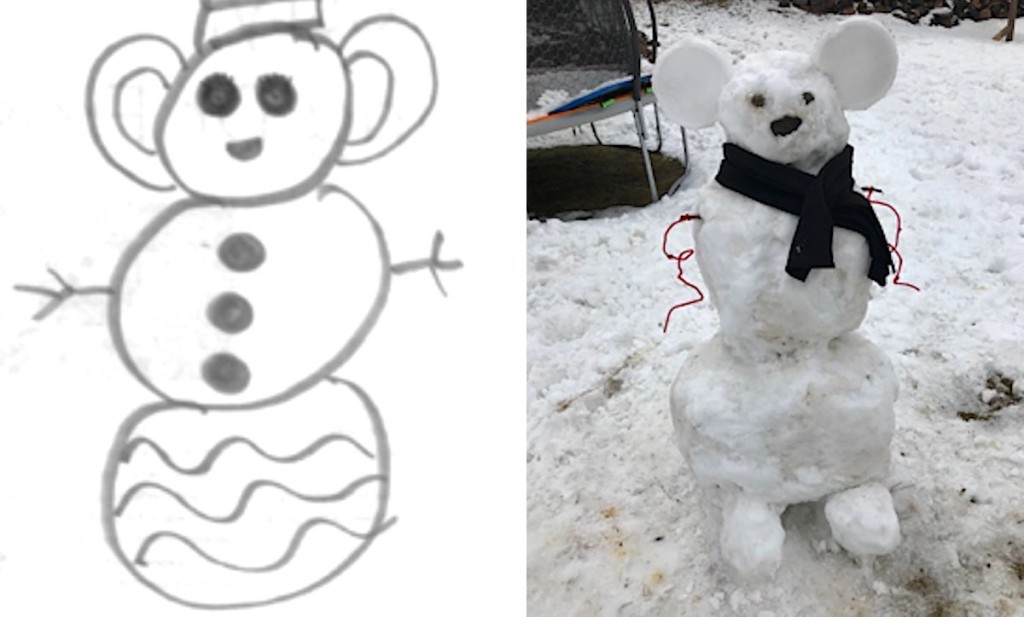
Build a Snowman to Match Kids’ Drawings at Children’s Hospital – And Bring Joy to Patients and Staff

A Mouse Snowman – Generation Wild

A unique project that brings joy to a Colorado children’s hospital is back this winter—and the best thing about it are the strangers who pull on their boots so they can “Say Hi with a Snowman”.

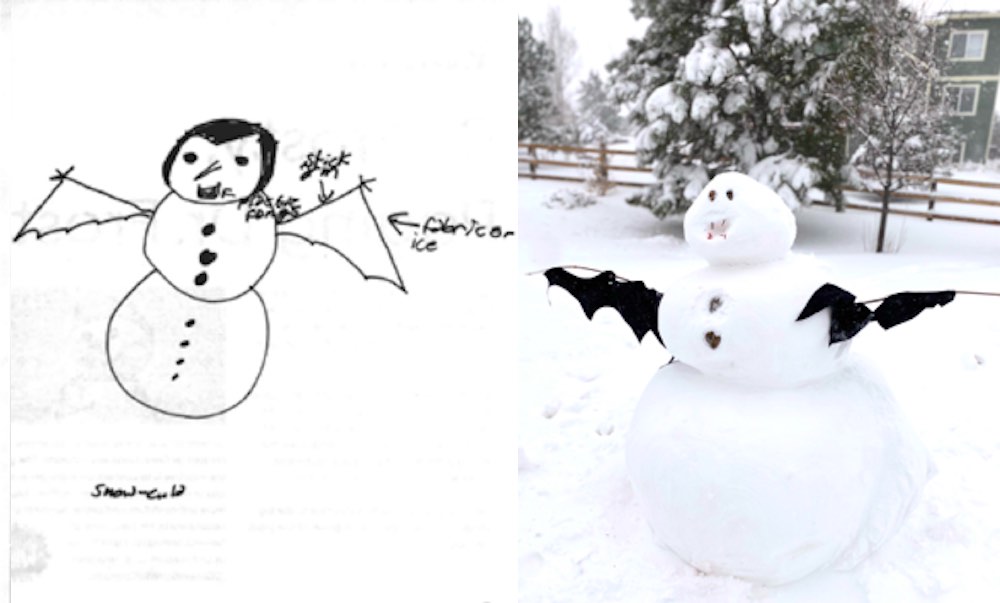
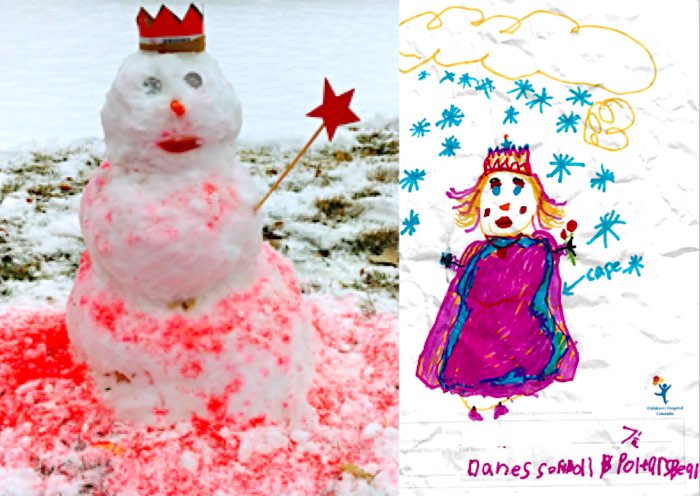
For the third year in a row, kids who are stuck in Children’s Hospital Colorado can draw their version of ‘a perfect snowman’ and their artwork is matched with volunteers who bring the snowmen drawings to life.

The 2023 campaign opens today for families who want to participate and runs to the end of March, traditionally Colorado’s snowiest month.

Families interested in building snowmen can sign up online. They will be paired with a patient and—after bringing the frosty design to life—they’ll submit photos or video for the Children’s Colorado team to share with the artists.

The initiative was launched in 2021 by the Denver hospital trying to cheer up young patients during the pandemic. Since then, around 200 families have created real-life snowmen and sent pictures, along with anecdotes and letters of encouragement.

The campaign’s publicity team told GNN that they’ve never had submissions originate from outside of Colorado—but with our global audience, that is likely to change.

A Vampire Bat Snowman sketched by Buck – Generation Wild

Supporting the campaign this year is Generation Wild, an effort created with state lottery funding to reconnect kids with nature by increasing the amount of time they spend outside in unsupervised playtime.

RELATED: 600 More Hospitals Get Free LEGO MRI Scanners – to Reduce Anxiety in Young Patients 

“Our goal at Generation Wild is to get Colorado kids and families outside more often,” said Jackie Miller. “This fun campaign not only encourages outdoor play for the whole family but sets the example that an act of kindness can go a long way.”

It’s also a positivity boost for hospital staff.

“We are thrilled to once again partner with Generation Wild to help make our patients smile and feel connected to support systems outside the hospital.”

WATCH: Honda Designed Tiny Electric Car to Bring Joy to Hospitalized Kids as They Drive Themselves to Treatments

“This simple act brightens a patient’s day and lowers the stress of being in the hospital, all while creating positive memories for families in the outdoors,” adds Miller.

And, anyone can follow the fun by searching social media feeds, using the hashtag #SayHiWithaSnowman.

Princess Snowman –Generation Wild

Generation Wild was formed by Great Outdoors Colorado, which invests a portion of Colorado Lottery proceeds to help preserve and enhance the state’s parks, trails, wildlife, rivers, and open spaces—and since voters approved its formation 1992, ‘GOCO’ has funded more than 5,600 projects in urban and rural areas in all 64 counties without any tax dollar support.

SHARE This Snowy Opportunity for Kindness With Friends on Social Media…

Your Inspired Weekly Horoscope From Rob Brezsny: A ‘Free Will Astrology’

Our partner Rob Brezsny provides his weekly wisdom to enlighten our thinking and motivate our mood. Rob’s Free Will Astrology, is a syndicated weekly column appearing in over a hundred publications. He is also the author of Pronoia Is the Antidote for Paranoia: How All of Creation Is Conspiring To Shower You with Blessings. (A free preview of the book is available here.)

Here is your weekly horoscope…

FREE WILL ASTROLOGY – Week of February 18, 2023
Copyright by Rob Brezsny, FreeWillAstrology.com

AQUARIUS (Jan. 20-Feb. 18):
Some people whom I respect regard the Bible as a great work of literature. I don’t share that view. I bring this to your attention, Aquarius, because I believe now is a good time to rebel against conventional wisdom, escape from experts’ opinions, and formulate your own unique perspectives about pretty much everything.

PISCES (Feb. 19-March 20):
I suspect that arrivederci and au revoir and sayōnara will overlap with birth cries and welcomes and initiations in the coming days. Are you beginning or ending? Leaving or arriving? Letting go or hanging on? Here’s what I think: You will be beginning and ending; leaving and arriving; letting go and hanging on. That could be confusing, but it could also be fun. The mix of emotions will be rich and soulful.

ARIES (March 21-April 19):
Aries director Francis Ford Coppola was asked to name the year’s worst movie. The question didn’t interest him, he said. He listed his favorite films, then declared, “Movies are hard to make, so I’d say, all the other ones were fine!” Coppola’s comments remind me of author Dave Eggers’: “Do not dismiss a book until you have written one, and do not dismiss a movie until you have made one, and do not dismiss a person until you have met them.” In accordance with astrological omens, Aries, your assignment is to explore and embody these perspectives. Refrain from judging efforts about which you have no personal knowledge. Be as open-minded and generous as you can. Doing so will give you fuller access to half-dormant aspects of your own potentials.

TAURUS (April 20-May 20):
Artist Andy Warhol said, only half in jest, “Being good in business is the most fascinating kind of art. Making money is art, and working is art, and good business is the best art.” More than any other sign, Tauruses embody this attitude with flare. When you are at your best, you’re not a greedy materialist who places a higher value on money than everything else. Instead, you approach the gathering of necessary resources, including money, as a fun art project that you perform with love and creativity. I invite you to ascend to an even higher octave of this talent.

GEMINI (May 21-June 20):
You are gliding into the Season of Maximum Volition, with autonomy, and liberty. Now is a favorable time to explore and expand the pleasures of personal sovereignty. You will be at the peak of your power to declare your independence from influences that hinder and limit you. To prepare, try two experiments. 1. Act as if free will is an illusion. It doesn’t exist. There’s no such thing. Then visualize what your destiny would be like. 2. Act as if free will is real. Imagine that in the coming months you can have more of it at your disposal than ever before. What will your destiny be like?

CANCER (June 21-July 22):
The ethereal, dreamy side of your nature must continually find ways to express itself beautifully and playfully. And I do mean “continually.” If you’re not always allowing your imagination to roam and romp around in Wonderland, your imagination may lapse into spinning out crabby delusions. Luckily, I don’t think you will have any problems attending to this necessary luxury in the coming weeks. From what I can tell, you will be highly motivated to generate fluidic fun by rambling through fantasy realms. Bonus! I suspect this will generate practical benefits.

LEO (July 23-Aug. 22):
Don’t treat your allies or yourself with neglect and insensitivity. For the sake of you mental and physical health, you need to do the exact opposite. I’m not exaggerating! To enhance your well-being, be almost ridiculously positive. Be vigorously nice and rigorously kind. Bestow blessings and dole out compliments, both to others and yourself. See the best and expect the best in both others and yourself.

VIRGO (Aug. 23-Sept. 22):
Is there a bug in the sanctuary of love? A parasite or saboteur? If so, banish it. Is there a cranky monster grumbling in the basement or attic or closet? Feed that creature chunks of raw cookie dough imbued with a crushed-up valium pill. Do you have a stuffed animal or holy statue to whom you can spill your deep, dark, delicious secrets? If not, get one. Have you been spending quality time rumbling around in your fantasy world in quest of spectacular healings? If not, get busy. Those healings are ready for you to pluck them.

LIBRA (Sept. 23-Oct. 22):
There’s a weird magic operating in your vicinity these days—a curious, uncanny kind of luck. So while my counsel here might sound counter-intuitive, I think it’s true. Here are four affirmations to chant regularly: 1. “I will attract and acquire what I want by acting as if I don’t care if I get what I want.” 2. “I will become grounded and relaxed with the help of beautiful messes and rowdy fun.” 3. “My worries and fears will subside as I make fun of them and joke about them.” 4. “I will activate my deeper ambition by giving myself permission to be lazy.”

SCORPIO (Oct. 23-Nov. 21):
My advice here is threefold: 1. The coming months will be a good time to cultivate your love for your country’s land, people, and culture (instead of your country’s government). 2. Minimize your aggressiveness unless you invoke it to improve your personal life—in which case, pump it up and harness them. 3. Don’t get riled up about vague abstractions and fear-based fantasies. But do wield your constructive militancy in behalf of intimate, practical improvements.

SAGITTARIUS (Nov. 22-Dec. 21):
By the time she was 33, Sagittarian actor Jane Fonda was famous and popular. She had already won many awards, including an Oscar. Then she became an outspoken opponent of America’s war in Vietnam. Some of her less-liberal fans were outraged. For a few years, her success in films waned. Offers didn’t come easily to her. She later explained that while the industry had not completely “blacklisted” her, she had been “greylisted.” Despite the setback, she kept working—and never diluted her political activism. By the time she was in her forties, her career and reputation had fully recovered. Today, at age 84, she is busy with creative projects. In accordance with astrological rhythms, I propose we make her your role model in the coming months. May she inspire you to be true to your principles even if some people disapprove. Be loyal to what you know is right.

CAPRICORN (Dec. 22-Jan. 19):
During his reign of 58 years, Charles V had more than 20 titles, including Holy Roman Emperor, King of Spain, Archduke of Austria, and Lord of the Netherlands. He was also a patron of the arts and architecture. Once, while visiting the renowned Italian painter Titian to have his portrait done, he did something no monarch had ever done. When Titian dropped his paintbrush on the floor, Charles humbly picked it up and gave it to him. I foresee a different but equally interesting switcheroo in your vicinity during the coming weeks. Maybe you will be aided by a big shot or get a blessing from someone you consider out of your league. Perhaps you will earn a status boost or will benefit from a shift in a hierarchy.

WANT MORE? Listen to Rob’s EXPANDED AUDIO HOROSCOPES, 4-5 minute meditations on the current state of your destiny — or subscribe to his unique daily text message service at: RealAstrology.com

(Zodiac images by Numerologysign.com, CC license)

SHARE The Wisdom With Friends Who Are Stars in Your Life on Social Media…