











All News - Page 309 of 1714 - Good News Network
Home Blog Page 309

Your Inspired Weekly Horoscope From Rob Brezsny: A ‘Free Will Astrology’

Our partner Rob Brezsny provides his weekly wisdom to enlighten our thinking and motivate our mood. Rob’s Free Will Astrology, is a syndicated weekly column appearing in over a hundred publications. He is also the author of Pronoia Is the Antidote for Paranoia: How All of Creation Is Conspiring To Shower You with Blessings. (A free preview of the book is available here.)

Here is your weekly horoscope…

FREE WILL ASTROLOGY – Week of January 28, 2023
Copyright by Rob Brezsny, FreeWillAstrology.com

AQUARIUS (Jan. 20-Feb. 18):
Greek writer Nikos Kazantzakis (1883–1957) was nominated nine times for the prestigious Nobel Prize in Literature, but never won. He almost broke through in the last year of his life, but French author Albert Camus beat him by one vote. Camus said Kazantzakis was “a hundred times more” deserving of the award than himself. I will make a wild prediction about you in the coming months, Aquarius. If there has been anything about your destiny that resembles Kazantzakis’s, chances are good that it will finally shift. Are you ready to embrace the gratification and responsibility of prime appreciation?

PISCES (Feb. 19-March 20):
Piscean educator Parker Palmer has a crucial message for you to meditate on in the coming weeks. Read it tenderly, please. Make it your homing signal. He said, “Solitude does not necessarily mean living apart from others; rather, it means never living apart from one’s self. It is not about the absence of other people—it is about being fully present to ourselves, whether or not we are with others. Community does not necessarily mean living face-to-face with others; rather, it means never losing the awareness that we are connected to each other.”

ARIES (March 21-April 19):
Noah Webster (1758–1843) worked for years to create the first definitive American dictionary. It became a cornucopia of revelation for poet Emily Dickinson (1830-1886). She said that for many years it was her “only companion.” One biographer wrote, “The dictionary was no mere reference book to her; she read it as a priest his breviary—over and over, page by page, with utter absorption.” Now would be a favorable time for you to get intimate with a comparable mother lode, Aries. I would love to see you find or identify a resource that will continually inspire you for the rest of 2023.

TAURUS (April 20-May 20):
“The aspects of things that are most important for us are hidden because of their simplicity and familiarity.” So declared Taurus philosopher Ludwig Wittgenstein in his book Philosophical Investigations. Luckily for you Tauruses, you have a natural knack for making sure that important things don’t get buried or neglected, no matter how simple and familiar they are. And you’ll be exceptionally skilled at this superpower during the next four weeks. I hope you will be gracious as you wield it to enhance the lives of everyone you care about. All of us non-Bulls will benefit from the nudges you offer as we make our course corrections.

GEMINI (May 21-June 20):
Poet Carolyn Kizer said the main subject of her work was this: “You cannot meet someone for a moment, or even cast eyes on someone in the street, without changing.” I agree with her. The people we encounter and the influences they exert make it hard to stay fixed in our attitudes and behavior. And the people we know well have even more profound transformative effects. I encourage you to celebrate this truth in the coming weeks. Thrive on it. Be extra hungry for and appreciative of all the prods you get to transcend who you used to be and become who you need to be.

CANCER (June 21-July 22):
If you have any interest in temporarily impersonating a Scorpio, the coming weeks will be a favorable time to play around. Encounters with good, spooky magic will be available. More easily than usual, you could enjoy altered states that tickle your soul with provocative insights. Are you curious about the mysteries of intense, almost obsessive passion? Have you wondered if there might be ways to deal creatively and constructively with your personal darkness? All these perks could be yours—and more. Here’s another exotic pleasure you may want to explore: that half-forbidden zone where dazzling heights overlap with the churning depths. You are hereby invited to tap into the erotic pleasures of spiritual experiments and the spiritual pleasures of erotic experiments.

LEO (July 23-Aug. 22):
The circle can and will be complete—if you’re willing to let it find its own way of completing itself. But I’m a bit worried that an outdated part of you may cling to the hope of a perfection that’s neither desirable nor possible. To that outdated part of you, I say this: Trust that the Future You will thrive on the seeming imperfections that arise. Trust that the imperfections will be like the lead that the Future You will alchemically transmute into gold. The completed circle can’t be and shouldn’t be immaculate and flawless.

VIRGO (Aug. 23-Sept. 22):
Shakespeare’s work has been translated from his native English into many languages. But the books of Virgo detective novelist Agatha Christie have been translated far more than the Bard’s. Let’s make Christie your inspirational role model for the next four weeks. In my astrological estimation, you will have an extraordinary capacity to communicate with a wide variety of people. Your ability to serve as a mediator and go-between and translator will be at a peak. Use your superpower wisely and with glee!

LIBRA (Sept. 23-Oct. 22):
Libran musician Franz Liszt (1811–1886) was a prolific and influential genius who created and played music with deep feeling. He was also physically attractive and charismatic. When he performed, some people in the audience swooned and sighed loudly as they threw their clothes and jewelry on stage. But there was another side of Liszt. He was a generous and attentive teacher for hundreds of piano students, and always offered his lessons free of charge. He also served as a mentor and benefactor for many renowned composers, including Wagner, Chopin, and Berlioz. I propose we make Liszt your inspirational role model for the next 11 months. May he rouse you to express yourself with flair and excellence, even as you shower your blessings on worthy recipients.

SCORPIO (Oct. 23-Nov. 21):
This may risk being controversial, but in the coming weeks, I’m giving you cosmic authorization to engage in what might appear to be cultural appropriation. Blame it on the planets! They are telling me that to expand your mind and heart in just the right ways, you should seek inspiration and teaching from an array of cultures and traditions. So I encourage you to listen to West African music and read Chinese poetry in translation and gaze at the art of Indigenous Australians. These are just suggestions. I will leave it to your imagination as you absorb a host of fascinating influences that amaze and delight and educate you.

SAGITTARIUS (Nov. 22-Dec. 21):
“All the world’s a stage,” Shakespeare wrote, “and all the men and women merely players.” That’s always true, but it will be even more intensely accurate for you in the coming weeks. High-level pretending and performing will be happening. The plot twists may revolve around clandestine machinations and secret agendas. It will be vital for you to listen for what people are NOT saying as well as the hidden and symbolic meanings behind what they are saying. But beyond all those cautionary reminders, I predict the stories you witness and are part of will often be interesting and fun.

CAPRICORN (Dec. 22-Jan. 19):
In this horoscope, I offer you wisdom from Capricorn storyteller Michael Meade. It’s a rousing meditation for you in the coming months. Here’s Meade: “The genius inside a person wants activity. It’s connected to the stars; it wants to burn and it wants to create and it has gifts to give. That is the nature of inner genius.” For your homework, Capricorn, write a page of ideas about what your genius consists of. Throughout 2023, I believe you will express your unique talents and blessings and gifts more than you ever have before.

WANT MORE? Listen to Rob’s EXPANDED AUDIO HOROSCOPES, 4-5 minute meditations on the current state of your destiny — or subscribe to his unique daily text message service at: RealAstrology.com

(Zodiac images by Numerologysign.com, CC license)

SHARE The Wisdom With Friends Who Are Stars in Your Life on Social Media…

“Community does not necessarily mean living face-to-face with others; it means never losing the awareness that we are connected to each other.” – Parker Palmer

By Nick Page

Quote of the Day: “Community does not necessarily mean living face-to-face with others; it means never losing the awareness that we are connected to each other.” – Parker Palmer 

Photo by: Nick Page

With a new inspirational quote every day, atop the perfect photo—collected and archived on our Quotes page—why not bookmark GNN.org for a daily uplift?


6 ‘Memory Bears’ Sewn With Love and Grandpa’s Flannels For Widow’s Grandchildren

AccentCare hospice
AccentCare hospice

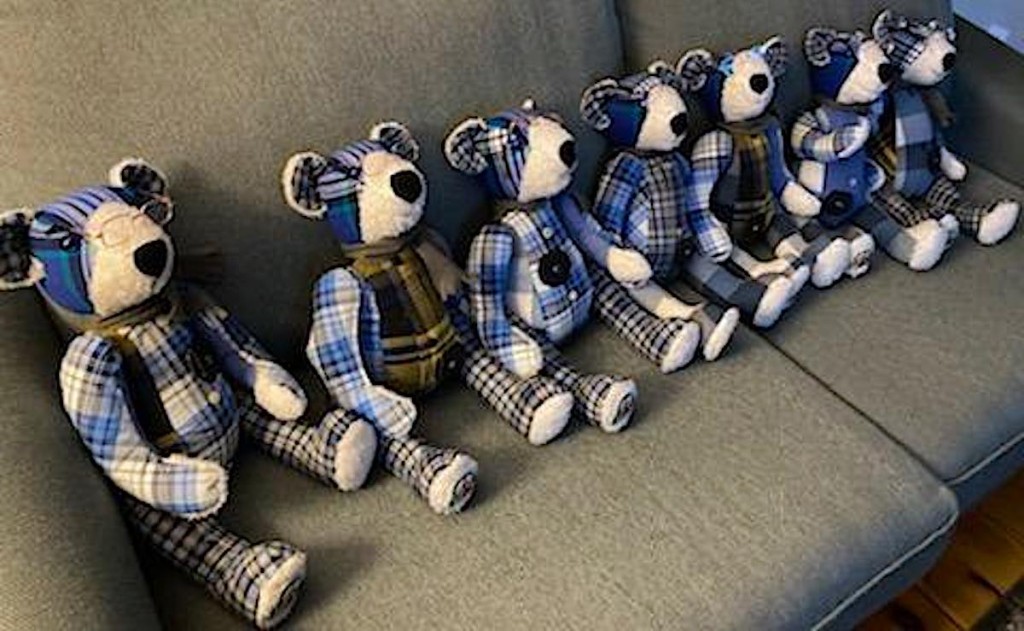
A hospice care volunteer who sews together teddy bears for patients who’ve lost loved ones recently completed a monumental task of teddy bear sextuplets bearing a loving grandfather’s flannels.

Patrice Travis works as a volunteer seamstress at AccentCare Hospice care in Boston, sewing a “memory bear” anytime one of their wards passes away. Thomas Lennon was a patient there before he died in August 2022 due to complications with Parkinson’s disease.

Thomas’ widow, Mary was asked by AccentCare’s community outreach manager Christina if she wanted a memory bear in Thomas’ honor, but she requested six—one for each of his grandchildren, to be made out of his flannel shirts and in time for Christmas.

Travis started right away and researched Thomas for details about him. She decided to make the bears look like “Pom-Pom,” grandpa’s nickname. She found eyes that matched his eye color, glasses similar to his, and put them on the bears.

She learned he always said, “Peace” when leaving a place. So, she found a patch with “Peace” on it and added it to the paw. Thomas played guitar, so she found guitar pick holders and sewed them onto the bear, and placed Pom Pom’s used guitar picks in each special pocket. Diligently, she worked. Left with extra shirt material, Patrice decided Mary needed a bear, too.

The impossible task of finishing seven bears was completed in three months.

Teddy Bear with bandana and grandpa’s flannel -AccentCare hospice

“They took on a life of their own here at our home,” Travis said. “Each ended up with a different personality in the face. I earnestly loved working on the project!”

Two days before Christmas, Mary visited the hospice care center for the big bear transfer and was simply astonished at what one volunteer had managed to accomplish.

MORE HEARTWARMING STORIES: Volunteers Are Soothing Senior Loneliness, Giving Free Rides on ‘Couch Bikes’ Worldwide – Find One Near You

Outreach manager Christina said “I’m astounded by how much the Bears captured the essence of [Mary’s] husband” adding simply that “Patrice is just remarkable.”

The grandkids received their bears, each having been added to with one of Pom Pom’s hats, on Christmas morning.

AccentCare hospice

The grandkids call the bears “Grandpy.” They take “him” everywhere. Mary glows as she talks of how the bears do activities with the grandkids daily. At night, they take off his glasses and set him nearby while they sleep. In the morning, the glasses go back on him.

In a way, Grandpy continues to watch over them as their “Bear Angel.”

Mary said the idea “has morphed into something I could never have imagined and has made everything so much more beautiful.”

SHARE This Tear-Jerking Story With Your Friends On Social Media… 

Editor’s note: This story has been altered to reflect the fact that Thomas was a patient, not a worker, at the hospice care center. 

New Study of Triassic Fossils Reveal the Origins of Living Amphibians Through a Tiny “Funky Worm”

An illustration of Funcusvermis gilmorei credit Ben Kligman
Artistic reconstruction of Funcusvermis gilmorei (foreground) in the tropical forest of Petrified Forest National Park about 220 million years ago. Artwork by Andrey Atuchin. Image courtesy of the National Park Service, and the Petrified Forest Museum Association

For 3 years, paleontologists working in Petrified Forest National Park have been unearthing the remains of perhaps the oldest known amphibian.

It’s not a frog, nor a salamander, but the early-Triassic version of what today are called Caecilians: a family of legless, salamander-adjacent, burrowing critters.

The fossils extend the record of this small, burrowing amphibian by roughly 35 million years. The find also fills a gap of at least 87 million years in the known historical fossil record of the creature.

The fossil was first co-discovered by Ben Kligman, a doctoral student in the Department of Geosciences, part of the Virginia Tech College of Science, at Arizona’s Petrified Forest during a dig in 2019.

Prior to this new study, published recently in the journal Nature, only 10 fossil caecilians were known, dating back to the Early Jurassic Period, about 183 million years ago. However, previous DNA studies estimated evolutionary origins of caecilians back to the Carboniferous or Permian eras, some 370 million to 270 million years ago, according to Kligman, marking that 87-million-year gap. However, no such fossils had been found.

“Fossil caecilians are extraordinarily rare, and they are found accidentally when paleontologists are searching for the fossils of other more common animals,” said Kligman. “Our discovery of one was totally unexpected, and it transformed the trajectory of my scientific interests.”

Whatever his scientific interests were, music was certainly among the others. The name of the amphibian ancestor, Funcusvermis, is a Latinized way of saying “Funky Worm” after an Ohio Players’ 1972 song of the same name from their album Pleasure.

Modern caecilians are limbless amphibians with cylindrical bodies and a compact, bullet-shaped skull that helps them burrow underground. Now exclusively home to South and Central America, Africa, and southern Asia, caecilians spend their lives burrowing in leaf litter or soil searching for prey such as worms and insects. This underground existence has made studying caecilians difficult for scientists.

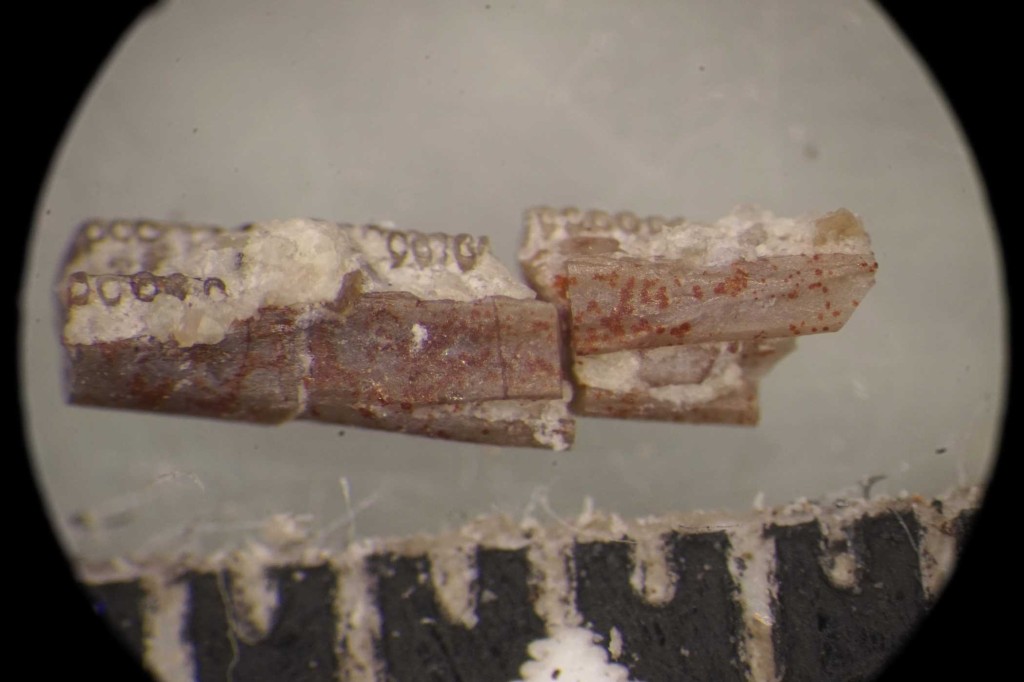
Microscopic photograph of a lower jaw from Funcusvermis gilmorei soon after it was recovered during microscopic sorting of sediment from the Thunderstorm Ridge fossil site in the Petrified Forest National Park Paleontology Lab. Photo by Ben Kligman.

Some believe they’re related to Dissorophoidea, a family of medium-sized amphibians in the order Temnospondylione of the largest orders of amphibians. However, it’s also argued that Temnospondyli all died out, leaving no living relatives.

MORE FROM PALEONTOLOGY: A Fossil Found in Museum’s Storeroom Cupboard Has Shifted the Origin of Modern Lizards Back 35 Million Years

Funcusvermis actually shares skeletal features related more with early frog and salamander fossils, strengthening the evidence for a shared origin and close evolutionary relationship between caecilians and these two groups.

“Unlike living caecilians, Funcusvermis lacks many adaptations associated with burrowing underground, indicating a slower acquisition of features associated with an underground lifestyle in the early stages of caecilian evolution.”

At the Petrified Forest National Park, where the initial discovery was found in 2019, the lower jaws of at least 70 individuals of Funcusvermis have been recovered as of summer 2022, making the area “the most abundant fossil caecilian-producing bonebed ever discovered,” Kligman said.

MORE FROM PALEONTOLOGY: At Long Last, Paleontologists Find Remains of a Swimming Dinosaur—’a Cretaceous Cormorant’

Only a handful of bones of Funcusvermis have been found, including upper and lower jaws, a vertebra, and part of a hind limb, Kligman said, all coloring in the picture of what was tiny animal.

“This find clearly demonstrates that some fossils that you can barely see can greatly change our understanding of entire groups that you can see today,” said co-author Sterling Nesbitt, an associate professor in the Virginia Tech Department of Geosciences, who added it could “reset the board on paleontology.”

SHARE This Latest Back-Dating With Your Friends On Social Media… 

Delta Flight Attendant Consoles Fearful Passenger and Photo Goes Viral

Credit Molly Simonson Lee - Facebook
Credit Molly Simonson Lee – Facebook

Everyone has their phobias—spiders, elevators, loneliness, but unfortunately for one Delta Airlines passenger, hers was flying.

Molly Simonson Lee was flying from Charlotte near her home in Raleigh, North Carolina, to New York when it became clear that a passenger in front of her was not comfortable flying.

The frightened woman began to cry, and that’s when Lee witnessed a touching act of humanity when a flight attendant posted up on the floor next to her and explained he would be there for her every step of the way.

“He just was so reassuring, so calming, and said, ‘you know what? I got you,'” Lee explained to ABC 7. “‘I’m gonna be there for you, just anything you need to let me know.’ And he was so wonderful and reassuring. With every little noise, she’d be like, ‘what’s that?’ He’s like, ‘that’s okay. That’s just the jet bridge pulling away’ or whatever the case may be. And that really helped her.”

The flight attendant was Floyd Dean-Shannon, and a photo of him holding the woman’s hand, snapped by Lee, went viral on her Facebook wall, racking up nearly 12,000 shares.

MORE FROM AIRLINES: Southwest Airlines Workers Looked After a Passenger’s Pet Fish for 4 Months After it was Banned From Flight

“He didn’t have to do that, you know, and to just see someone extend their heart in that way to a stranger was just beautiful to me, and I wanted to capture it,” she said. “I just really hope that Floyd gets what he deserves, which is everyone’s love, everyone’s praise, everyone’s admiration. I’m so happy that he’s getting that recognition. And I really hope it leads to good things for him.”

Good things indeed, as her GoFundMe set up to “show Floyd some love” has raised $2,250 so far—a nice little end-of-year bonus.

WATCH the story below… 

PASS On This Man’s Gentleness To The World… 

Watch This Cargo Ship Fly a Giant Kite to Save Fuel and Cut Emissions

Trial with the cargo vessel Ville de Bordeaux – Airseas

Using an ancient solution for a modern problem, a firm successfully tested how a giant kite can be used to tug shipping vessels across the ocean and significantly reduce the amount of diesel fuel they use.

It’s tempting to call the product a sail, and the activity sailing. However even the word kite belies the technological sophistication of the “Seawing,” built by AirSeas.

Retrofitted onto the front of any container ship, this massive “parafoil” can generate 20% of the vessel’s total propulsion. This was recently confirmed as part of a test with a French container ship—the Ville de Bordeaux—as it moved aircraft parts from the US to France.

AirSeas makes the Seawing in 2,700-square-foot and 5,400-square-foot models. The startup is also developing a 10,800-square-foot version, all of which are housed in consoles at the front of the ship.

YOU MAY ALSO LIKE: Mini Wind Turbines For Rooftops: ‘Up to 50% More Power’ and No Spinning Blades

The company is thrilled to have reported that the Ville de Bordeaux reduced its consumption of a dirty diesel composite called “bunker fuel” by 20% over the course of its journey.

“The last few months have seen major players like COSCO, BHP, and MOL join the ranks of wind propulsion backers alongside K-Line, Louis Dreyfus Armateurs, Oldendorff, Scandlines, and Cargill,” Stephanie Lesage, Corporate Secretary of AirSeas, wrote in a recent op-ed.

“Cargo owners, charterers, shipowners, and shipyards alike are all coming to realize the benefits of wind-assisted propulsion in shipping’s journey towards a lower carbon future.”

MORE FROM SHIPPING: Major Turning Point in 2021 Saw Global Shipping Take Massive Steps to Reduce Emissions

The industry generates about 2% of the world’s greenhouse gas emissions, but 15% of sulfur dioxide and nitrous oxide emissions, which can be toxic to breathe for both man and fish.

Meant to be fully automatic, it’s one of the most hi-tech sails you’re likely to see. At the push of a button, the parafoil is evenly deployed from its command console into a sharp breeze by a series of tethers. Once deployed, the tethers are programmed to gather information about yaw, pitch, and wind directions to constantly shift the position of the parafoil to catch the greatest amount of wind energy.

Once the kite is no longer needed, or the wind goes flat, it evenly retracts back into its command console.

“We are launching a flying object from a sailing object, compensating for movement on all sides, such as waves in high seas and turbulence at low altitude,” Vincent Bernatets, CEO of Airseas told Canary Media, explaining the difficulties.

​“After the flight, we have to ensure that the Seawing lands smoothly and precisely on a moving target: the ship bow, which is oscillating on waves and generating heavy turbulence and movement.”

Depending on what you classify as merchant shipping, the world uses between 50,000 and 100,000 merchant vessels to transport goods and materials around the globe, so the scaling-up potential is large.

AirSeas already has several buyers lined up. Japanese shipper K Line could outfit as many as 50 ships in the next few years with Seawings.

WATCH the test onboard the Ville de Bordeaux… 

SHARE This Cool Piece Of Green Tech With Your Friends… 

“Ocean is more ancient than the mountains, and freighted with the memories and the dreams of Time.” – H. P. Lovecraft

Quote of the Day: “Ocean is more ancient than the mountains, and freighted with the memories and the dreams of Time.” – H. P. Lovecraft

Photo by: gail

With a new inspirational quote every day, atop the perfect photo—collected and archived on our Quotes page—why not bookmark GNN.org for a daily uplift?

For the First Time Since 1977, Zero Rhinos Were Poached In India’s Parks

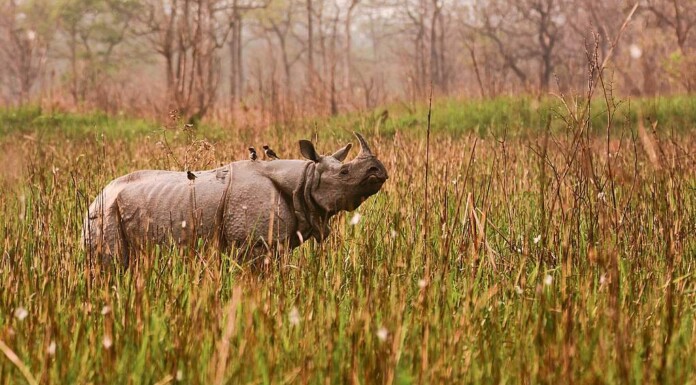
Greater one horned rhino - CC 4.0. Nejib Ahmed
Greater one horned rhino – CC 4.0. Nejib Ahmed

In May 2021, a new Chief Minister of the Indian state of Assam set out to thoroughly put an end to poaching in the state’s protected areas.

Now 20 months later, the forestry and police departments of the state have reported that 2022 saw no rhinos lost to poaching, the first time that’s happened since 1977.

Located on the borders of Tibetan China to the north and Myanmar to the east, Assam is one of the richest biodiversity zones in the world and contains Kaziranga, Manas, and Orang national parks as well as Pobitora Wildlife Sanctuary.

Together these four protected areas make up most of the one-horned rhinoceros’ range in the country, and of the 2,895 rhinos in the state, nearly all of that number can be found inside them.

Chief Minister Sarma put together a special anti-poaching task force led by Special Director General of Police G. P. Singh. The task force created a database of past incidents of rhino poaching with details of when, how, and where they took place. Convicted poachers had their phones monitored, and local fishermen and villagers were brought on as informants.

MORE FROM INDIA: Religious Practices Have Preserved 125,000 Sacred Groves in India, Growing a Conservation Success

When the work came to inside the park, the rhinos were treated like presidents. Sophisticated police commando teams patrolled the parks with night vision equipment and drones, and the number of teams increased on full moon nights.

When flooding in Kaziranga drove the rhinos to higher ground during the 2022 monsoon season, the teams stayed in the field 24-7 until the animals could disperse again after the waters receded.

“If we continue with this pressure, rhino poaching will stop completely,” Singh told the Hindustan Times. “For this, the cost to poachers has to be higher than the profit they earn.”

MORE ON POACHING: India Deploys Super-Sniffer Dogs to Protect Newly-Introduced Cheetahs from Poachers

A colleague notes that the coordination has become so thorought that poacher arrest rates are now being measured weekly, rather than monthly as before.

It’s this kind of devotion that has seen the numbers of one-horned rhinos climb from just around 100 individuals in 1910, to almost 3,000 today.

SHARE This Dedicated Police Work And The Success It Brought To Rhinos…

These ‘Invisible’ Solar Panels Appear Just Like Historic Italian Terracotta Roofs and Can Help Green Historic Buildings

Invisible Solar, released by Dyaqua

In the historic Italian city of Vicenza, Veneto, a typically-Italian family business of artisans is handmaking not-so-typical solar panels.

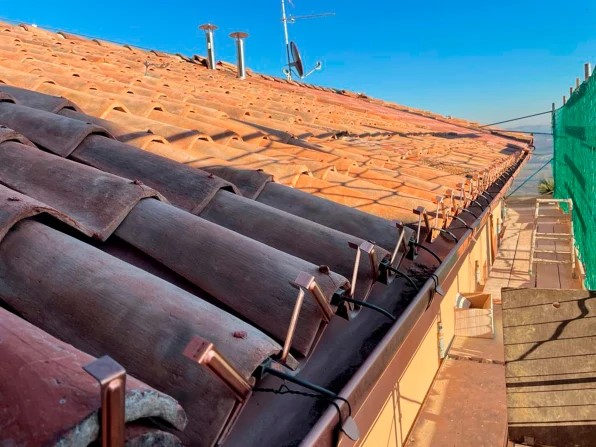
Designed to be indistinguishable by the naked eye from regular terracotta roof tiles, “Invisible Solar” tiles are made to improve the energy efficiency of heritage buildings without compromising their historic appearance.

They make each tile out of a non-toxic and recyclable polymeric compound they themselves developed, and the tiles allow for sunlight to pass into a hidden bank of photovoltaic cells without the human eye being able to tell they are translusent.

This gives them the appearance of regular handmade clay tiles that cover most of the roofs in Italy and almost all of the roofs in their native, UNESCO-listed Vicenza.

The company is called Dyaqua, and their founder, Giovanni Battista Qualiato says that just like regular roofing tiles, Invisible Solar can be installed by roofers without any special training or equipment.

Vicenza panorama CC 3.0. Alessandro Vecchi

In 2015 Invisible Solar was mentioned by the Italian Ministry of Cultural Heritage and Activities and Tourism (MiBACT) as a solution to improve energy efficiency in cultural heritage across the country, and they are already installed in Pompeii.

READ MORE: Inflatable Floodgates in Venice Named After Moses Save the City for a Second Time

“They look exactly like the terracotta tiles used by the Romans, but they produce the electricity that we need to light the frescoes,” said Gabriel Zuchtriegel, director of the Pompeii Archaeological Park.

“Since we needed an extensive lightning system, we could either keep consuming energy, leaving poles and cables around and disfiguring the landscape, or choose to respect it and save millions of euros.”

A pilot program will see Invisible Solar terracotta tiles installed in the Portuguese city of Evora, and the Qualiato hope that soon there will be an interest in Dyaqua’s other products, because the same technology and materials that allow them to make solar panel terracotta tiles allows them to mimic natural stone, concrete, and wood exteriors, in not only the roof of a building, but also their walls and courtyards.

MORE FROM ITALY: Italy Bans Cruise Ships from Entering Historic Venice City Center

About 90 square feet (9 square meters) of tiling will generate about 1 kilowatt hours of electricity, which isn’t much, but it does offer the choice between some solar power on historic buildings, and no solar whatsoever.

SHARE This Great Idea To Green Historic Places On Social Media…

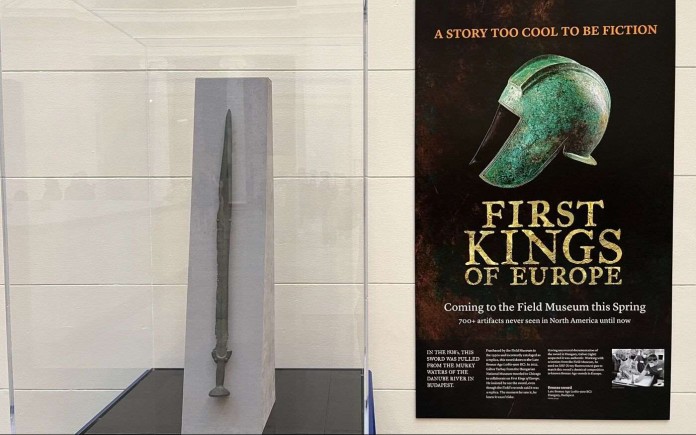
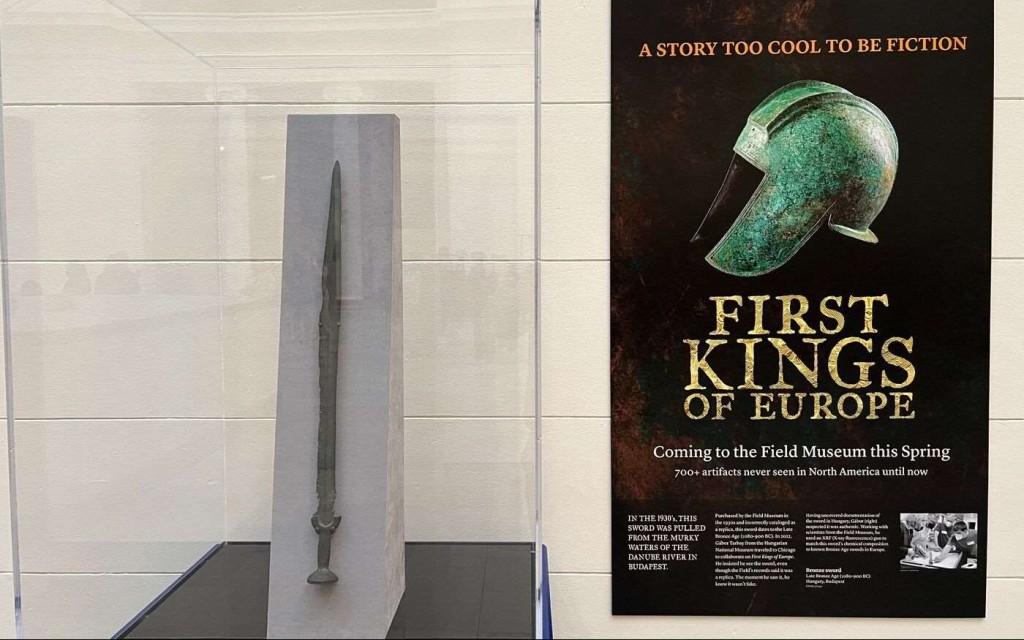
Labeled a Replica by Chicago Museum, It Turns Out to Be 3,000-Year-Old Warrior’s Sword

The 3,000 y.o. Bronze Age sword at the entrance to the exhibit - Credit: Field Museum Chicago
The 3,000 y.o. Bronze Age sword at the entrance to the exhibit – Credit: Field Museum Chicago

Nearly 100 years ago, the Chicago Field Museum acquired a bronze sword from Europe, but it was thought to be a well-made replica.

Now a new analysis has revealed that the sword is the real deal, dating back 3,000 years to the Bronze Age, and likely belonging to a warrior in the upper strata of society.

While preparing for First Kings of Europe, a special exhibition opening at the Field Museum in March 2023, Hungarian archaeologists working alongside Field Museum scientists asked to see the “replica” sword that had been retrieved from the Danube River in Budapest, Hungary in the 1930s.

János Gábor Tarbay, a Hungarian expert in Bronze Age metal artifacts thought it could be real as soon as he saw it. A team at the Field Museum on Tarbay’s recommendation then used an X-ray fluorescence detector, an instrument that looks like a ray gun, to compare the sword’s chemical makeup to other known Bronze Age swords in Europe.

Their contents of bronze, copper, and tin were nearly identical, and the newly-authenticated sword will be installed in the Field Museum’s main hall as a preview for the new exhibition.

MORE ARCHAEOLOGY NEWS: Rare Bronze Age Coffin Has Been Accidentally Discovered in a Golf Course Pond Along With Perfectly Preserved Ax

Found at the bottom of the Danube, it may have been thrown in as part of an ancient ritual 3,000 years ago to commemorate lost loved ones or a battle.

“It’s a very specific ritual tradition from this time period that speaks to the evolution of a ruling warrior class that was starting to emerge at that point in time,” Bill Parkinson, a curator of anthropology at the Field who helped create the upcoming First Kings of Europe exhibition, told Hyper Allergic.

MORE FROM THE BRONZE AGE: Historians Stunned: Uzbekistan Nomads Supplied a Third of the Bronze Used Across Ancient Mediterranean

“Usually this story goes the other way round,” he adds in a press release. “What we think is an original turns out to be a fake.”

Had this sword been known to be authentic earlier in the planning of the exhibition, it would have been included in the Bronze Age era section of the show, which will showcase items from southeastern Europe, spanning thousands of years.

SHARE This Clever Discovery With Someone Who Might Like This New Exhibit!

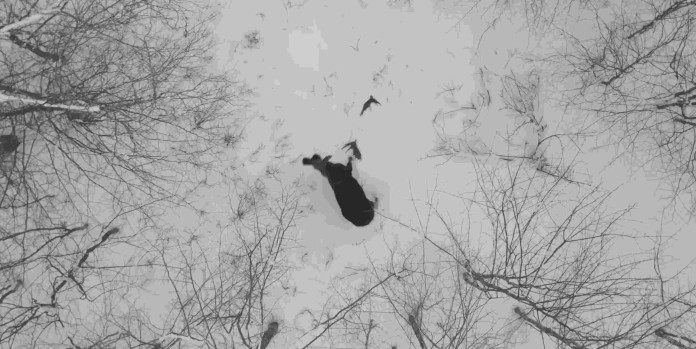
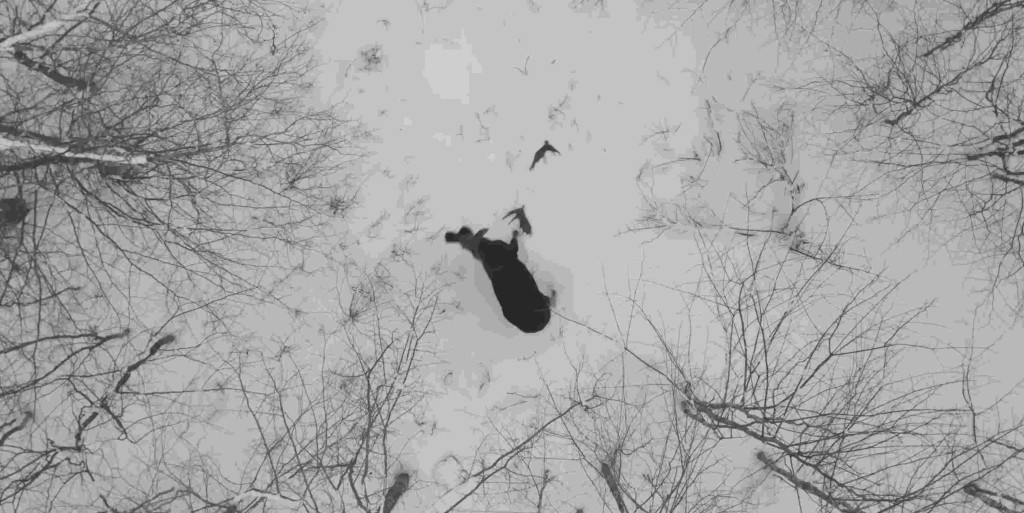
Incredible Drone Video of a Moose Shedding Its Antlers – WATCH

credit: Derek Burgoyne

Derek Burgoyne puts the phenomenon at 1 in a million.

He accidentally found a bull moose with his drone and clicked record 16 seconds before the great beast, shaking the loose snow from its body, shed its antlers on the spot.

“Never in my wildest dreams would ever imagine catching this on film,” Burgoyne told CBC news. “This is winning the lottery when it comes to wildlife photography for sure.”

Working as a woods operation supervisor in Canada’s New Brunswick province, Burgoyne has captured a lot of footage of moose engaged in various activities. He’s recorded moose cows with their calves, groups of moose bedded down together, and even a pair of bull moose jousting during the rut.

It’s an endearing coincidence for him to have caught such a split-second moment in a moose’s life, because ever since he was a child he’s gone out into the forest looking for shed moose antlers.

“What they’ll often do after being bedded in the snow is they’ll shake their body to rid themselves of the snow and water,” Burgoyne explains. “As he shook himself, I was recording, and you seen what happened.”

MORE FROM THE ANIMAL KINGDOM: Adult Elephants React to Birth in the Herd Just Moments After Adorable Baby is Born (WATCH)

Derek posted it to his YouTube channel Adventure in the Wild, where he sometimes shares these experiences he records during the course of his work.

Because the area was one he was working at, the lucky man got to retrieve the shed antlers, which were 17 points at a 45-inch ‘spread.’ No doubt they will maintain a place of honor among his extensive shed collection.

WATCH the video here, from CBC, or without the story from Derek’s YouTube.

SHARE This Unbelievable Lucky Footage With Your Friends… 

“You have to create your life. You have to carve it, like a sculpture.” – William Shatner

Quote of the Day: “You have to create your life. You have to carve it, like a sculpture.” – William Shatner

Photo by: Miriam Espacio

With a new inspirational quote every day, atop the perfect photo—collected and archived on our Quotes page—why not bookmark GNN.org for a daily uplift?

Critical Discovery Highlights Weaknesses of Asteroids, Should Earth Ever Need to Destroy One

Artistic rendering of the asteroid Itokawa

Recent surveys of the composition of an asteroid as old as our solar system has revealed a key strength that humanity must work around if it should ever need to defend our planet from a possible impact.

“Rubble pile” asteroids are immune to impact weaponry, the study revealed, and shows that instead planetary defense programs must focus on shockwaves that move them off course.

We’ve entered into the age of planetary defense. Recent NASA budgets have allowed it to create a Planetary Defense directorate, and the administration has proven it can divert the course of potentially-destructive asteroids with the success of its recent DART mission.

Courtesy of the Japanese space agency JAXA, and their Hayabusa 1 mission that sampled an ancient asteroid called Itokawa, an international team at John Curtin University, Australia was able to determine that asteroids can live for billions of years despite being formed very loosely.

Itokawa is about 1.2 million miles from Earth, and about the size of the Sydney Harbor Bridge. But it isn’t its size that gives it durability, but rather its composition.

“Unlike monolithic asteroids, Itokawa is not a single lump of rock, but belongs to the rubble pile family which means it’s entirely made of loose boulders and rocks, with almost half of it being empty space,” lead author Professor Fred Jourdan, Director of the Western Australian Argon Isotope Facility, Curtin Univ.

“The survival time of monolithic asteroids the size of Itokawa is predicted to be only several hundreds of thousands of years in the asteroid belt.”

MORE ON ASTEROIDS: NASA Celebrates World First: Smashing a Spacecraft into an Asteroid to Practice Saving Humanity

“The huge impact that destroyed Itokawa’s monolithic parent asteroid and formed Itokawa happened at least 4.2 billion years ago. Such an astonishingly long survival time for an asteroid the size of Itokawa is attributed to the shock-absorbent nature of rubble pile material.”

Like Rocky Marciano, Itokawa has endured countless impacts but is still standing. To wit, Professor Jourdan called it a “space cushion.”

The team’s self-stated goal was to figure out if rubble pile asteroids could be blown to dust at the slightest knock because of their loose composition. On the contrary, their cushioned surfaces allows them to absorb impact forces, and so the team estimates that the number of rubble pile asteroids in the asteroid belt must be much higher than previously thought, and that any future Earth-endangering asteroids will probably be rubble piles.

RELATED: Work Set to Begin on Asteroid Hunting Observatory—NASA’s New Mission to Protect Earth from Disaster

The good news is that this informs how we might save ourselves in the future from being crushed by one—a close-by nuclear explosion, detonated near, but not on, the asteroid, to send it flying away from a collision course with Earth.

Their paper was published in the Proceedings of the National Academy of Sciences, entitled “Rubble Pile Asteroids are Forever.”

There are no currently-known asteroids that threaten Earth, but geology teaches us we’ve been hit countless times, and occasionally with curtain-closing consequences.

SHARE This Cool Random Space Fact With Your Friends On Social Media… 

More Physical Activity is Related to Less Respiratory Infections in Children

Robert Collins - Unsplash

Scientists have found that higher levels of physical activity measured by steps taken per day and hours spent playing sports reduced young children’s susceptibility to upper respiratory tract infections (URTIs.)

A secondary finding of note was that the study also took into account whether the house had smokers, pet hair, which vaccines the children had received, whether they had siblings, and what their sleep patterns were like, none of which had any association with susceptibility to URTIs in either direction.

We’ve all heard from our parents or grandparents about how much they played outside compared to the young ones today. Indeed they often make it seem like the doors to their house were locked between the end of school and dinner time.

Scientists from Poland wanted to see what kinds of exposure and activities reduce children’s susceptibility to URTIs, and their results make our grandparents sound all the wiser.

104 Polish children aged 4-7 from Warsaw had their physical activity monitored with pedometers between the fall-winter school year of 2018 and 2019. Their parents filled out scientific questionnaires regarding various details mentioned above, as well as the perception of URTI symptoms such as coughing or a runny nose.

The authors found that as the average daily number of steps taken by children throughout the study period increased by 1,000, the number of days that they experienced symptoms of URTIs decreased by an average of 4.1 days.

MORE ON HEALTH: Teacher’s Powerful Exercise of ‘Leaving Emotional Baggage at the Door’ Has Totally Changed Her Classroom

Additionally, children participating in three or more hours of sport per week tended to experience fewer days with respiratory tract infection symptoms than those not regularly participating in sports.

“Children who achieved a higher number of steps in the first days of observation had fewer days with symptoms of infection in the following days, than the less-active children,” the authors wrote.

The authors did not identify associations between URTI symptoms and sleep duration, siblings, vaccinations, or exposure to pet hair or smoking, despite many of these being hypothesized as reducing or increasing the incidence of URTIs.

MORE ON KIDS: Relief For Kids With Peanut Allergy: Immunotherapy Puts 74% Into Remission in Breakthrough Study

While the study seems an obvious one, especially if you ask your grandparents, the increased prevalence of screens in households decreases the time spent in physical activity and increases the likelihood that children aged 4-7, who are already at a high risk for URTIs, will suffer from infections of increased duration and severity, and at greater frequency.

The authors recommend instilling the values of physical activity or sport from an early age, and by participating in physical activity, if possible, as a family.

SHARE This Story With Any New Parents You Might Know… 

Minnesota Snow Sculpting Team Takes First Over Artists From Germany, Finland in World Championships–LOOK

World Snow Sculpting Championship's Facebook Page
World Snow Sculpting Championship’s Facebook Page

In Stillwater, Minnesota, the hometown team of snow sculptors just walked away with 1st place in the World Snow Sculpting Championships, beating several nations and winning $4,000.

Siblings Dusty and Kelly Thune and friends made up the team, monikered the “House of Thune,” who carved a raw expression of adversity and challenge called “Journey.”

The team used custom homemade tools to sculpt their work of art from 10 tons of snow.

“It felt pretty surreal being up there on the stage,” snow sculptor Kelly Thune told FOX 9 on Sunday. “There were so many pieces this year that I thought deserved to win it, that I didn’t expect it.”

“When you hear the People’s Choice get an award, and then you hear third place, second place, and you think ‘aw man, ours didn’t make it,’ but then they said our name and we just about lost it,” said Kelly’s brother Dusty.

Teams from Finland, Turkey, Germany, Ecuador, Canada, and Argentina represented their nations at Stillwater with some captivating pieces of seasonal art, but it was the home team that took the grand prize.

“Journey” captures the adversity faced by everyone in moments of their life, but particularly one of their team members, who suffered a loss of $80,000 in property as well as a significant amount of his life’s work, after a fire consumed his art gallery in preparation for the contest. The team set up a GoFundMe to try and help him recover.

MORE FROM THE ARTS: Check Out the Winners of the Stone-Stacking Championship in Europe – LOOK

For another two weeks or so, all the sculptures will still be at the tournament grounds in Stillwater, weather permitting, and offer a great reason to get out of the house during such a cold winter up north that has had so many people sheltering and snuggling in their homes.

WATCH local news cover the subject… 

CELEBRATE Team USA’s Big Snowy Win On Social Media… 

Paleontologists in India Have Hit on an Epic Find: Hundreds of Bowling Ball-Sized Titanosaur Eggs

Harsha Dhiman et al, 2023, PLOS ONE, CC-BY 4.0

Indian paleontologists recently uncovered a find of titanic proportions—a series of sauropod nests or “clutches” that contained 256 dinosaur eggs in total.

The eggs yielded a trove of insights about sauropod reproductive strategies, and turned up 6 new species of dinosaur in the same dig.

Located in the sedimentary bed of the Lameta Formation in the Dhar district of Madhya Pradesh, central India, paleontologist Harsha Dhiman uncovered 92 dinosaur clutches filled with eggs that averaged around 6.3 inches in diameter. They were made by Titanosauria, a clade containing many long-necked dinosaurs.

Titanosaurs were the largest land animals to ever live—they could reach 100 feet in length, and it appears they were cognizant of their massive bulks because their clutches were all placed in close proximity.

This was among the many deductions made of the legendary find—these massive animals nested like birds, laying their eggs and positioning their clutches together as a colony, and more or less leaving them to fend for themselves.

MORE ON DINOSAURS: ‘Impossible Fossil’ Preserves the Exact Moment the Dinosaurs Died: ‘It’s Absolutely Bonkers’

“Closely spaced nests would not have allowed them to visit the nests to maneuver and incubate the eggs or feed the hatchlings,” paleontologist and the study’s co-writer Guntupalli Prasad told CNN, “as the parents would step on the eggs and trample them.”

Dhiman et al., 2023, PLOS ONE, CC-BY 4.0.

Much like birds, the eggs were determined to be laid sequentially. Some of the eggs had defects, such as eggs that were embedded within other eggs, and the authors note that this is the first ever recorded discovery of egg-in-egg pathology in reptiles or dinosaurs.

Around the clutches were also a wealth of fossilized bones, such that 6 new Titanosaurids have been tentatively discovered, adding to the 3 found in past excavations of the Lameta Formation.

READ ALSO: At Long Last, Paleontologists Find Remains of a Swimming Dinosaur—’a Cretaceous Cormorant’

The authors propose that some of the clutches were preserved because they had been overcome with water. Based on the characteristics of the sediments and minerals around them, it seems they were perhaps made near to a water source that flooded the nesting site.

Their research on the subject was published in PLOS One.

SHARE This Unbelievable Discovery With Your Friends… 

“Into each life some rain must fall.” – Henry Wadsworth Longfellow

Quote of the Day: “Into each life some rain must fall.” – Henry Wadsworth Longfellow

Photo by: Aline de Nadai

With a new inspirational quote every day, atop the perfect photo—collected and archived on our Quotes page—why not bookmark GNN.org for a daily uplift?

Inspired By Daughter’s Life-Saving Kidney Donor, Father Returns the Favor and Becomes a Donor

Courtesy of Jones Family

A Welshman decided to donate his kidney to an unknown patient after his daughter received a donated one in a potentially life-saving procedure.

When Arfon Jones’ daughter Seren became seriously ill and had to have both her kidneys removed, he did what any father would do and signed up to be a donor.

However the surgeons determined that his kidney would not match, and for months Seren sat on a dialysis machine 10 hours a night.

In April of 2022, Arfon received a call that a suitable donor had been found.

“Without the kidney I wouldn’t be alive today, possibly,” said 19-year-old Seren.

It was while Seren was awaiting a transplant that Arfon learned more about how to be a living organ donor, and that a normal person can lead a healthy life with just one kidney.

“After Seren got her new kidney, she was told that I could get off the living donor list and that’s when I had a very strange experience,” Arfon told the BBC.

“It was as if I heard a voice telling me ‘there is someone else who needs your kidney’ and I just felt that I had to stay on the list.”

SIMILAR: This Crew of Street Veterinarians Treat the Pets of L.A.’s Homeless Residents of Skid Row

Arfon became a kidney donor at 70-years-old just before Christmas, remarking he had given someone a very nice present. He doesn’t know their identity as it wasn’t a friend or family member, but he knows they’re doing well.

One-third of all kidney donations in the UK come from living donors, who provided they follow basic healthy habits of eating well, exercising regularly, and getting proper amounts of sleep, can lead long and healthy lives.

SHARE This Man’s Good Health Karma With Your Friends… 

Artwork Found in Shed Covered in Bird Droppings Turns Out to be Early Van Dyck Now at Auction for $3 Million

A Study for Saint Jerome by Anthony van Dyck –Courtesy of Sotheby's
A Study for Saint Jerome by Anthony van Dyck –Courtesy of Sotheby’s

An oil sketch done by Dutch Master Anthony van Dyck is going up for auction soon, after being found discarded in a farm shed covered with bird droppings.

Bought on a hunch for $600 in 2002 from an estate auction, it’s predicted to sell for $3 million when it goes up at Sotheby’s.

While it was found far from the Flemish painter’s home of Antwerp, the farmhouse lay in the town of “Kinderhook” New York, a town settled almost certainly by his countryman. Albert B. Roberts believed it to be a work by a Dutch master of some repute, and bought it for “the excitement of the chase.”

A Study of Saint Jerome is one of only two known live model works completed by the painter Anthony van Dyck. Artnet reports it was “likely created between 1615 and 1618, when the young painter was working as an assistant in Peter Paul Rubens’s Antwerp studio.”

It depicts an elderly man with a long beard slouching on a chair, an interesting dichotomy of sinewy muscle and flabby skin characterizing him as a farmer or laborer. It gives art historians a chance to see a little more of van Dyck’s work as a young man, and thankfully, the bird droppings had landed only on the back paper.

Then-87-year-old Roberts exhibited the painting in 2019 at the Albany Institute of History & Art, the same year he had it authenticated by art historian Susan Barnes.

SIMILAR: The Painting Paid for Grilled Cheese Sandwiches 50 Years Ago – Now Earns the Restaurant Thousands

“I’ve devoted the last 30 years of my life to the search for art that I like to call ‘orphaned’ art, that for one reason or another has been neglected, overlooked, perhaps lost in the shuffle of the art world in different countries,” he said at the time.

Now deceased, some of Roberts’ pieces of ‘orphaned’ art are making up a Sotheby’s “Old Masters” collection.

MORE LIKE THIS: 101-Year-old Woman Is Amazed After Being Reunited with Her Lost Painting Looted by Nazis

Anthony van Dyck became a court painter for Charles I of Britain, whose house revered him for his skill at portraiture. The king knighted van Dyck, and upon his death had him interred at St. Paul’s Cathedral in London.

SHARE This Remarkable Find With Your Friends From The Art World…

Aviation Startup ZeroAvia Flies Largest-Ever Hydrogen Electric Aircraft

The plane that made the hydrogen powered flight. credit: ZeroAvia

An aviation start-up just set a new world-first for the largest hydrogen-powered aircraft flight in history—a 19-seat aircraft called the Dornier 228.

Designed by ZeroAvia, the start-up is developing hydrogen-powered engines for regional flights, and over the last 12 months has really taken off.

This most recent flight was a 10 minute affair from the Cotswolds Airport in Gloucestershire, England, but was only the most recent manifestation of their success.

ZeroAvia counts American and United airlines as their investors, and by 2025, the firm has 1,500 pre-orders of their hydrogen electric powertrains to fulfill. The prototype powertrains have received approval from both the UK and US civil aviation authorities.

“This is a major moment, not just for ZeroAvia, but for the aviation industry as a whole, as it shows that true zero-emission commercial flight is only a few years away,” ZeroAvia founder and CEO Val Miftakhov said in a statement Thursday.

The flight comes after news in August that the company signed a memorandum of understanding with American Airlines for 100 of the powertrains, which are being developed for 90-seat aircraft.

“Having support from [one of the] world’s largest airline is a strong indication of the progress we’re making on the development of hydrogen-electric, zero-emission flight,” added ZeroAvia Founder and CEO Val Miftakhov. “We are focused on delivering sustainable travel, and are delighted that American, a visionary leader in the industry, sees ZeroAvia as a part of the future of aviation.”

Hydrogen as a fuel source is currently one of two more sustainable alternatives to powering aviation. Accounting for 2.8% of all global emissions, passenger aircraft need high octane, energy dense fuel sources because of the weight limitations which batteries can’t account for.

YOU MAY ALSO LIKE: 100% Hydrogen-Powered Jet Engine Successfully Tested by EasyJet and Rolls-Royce

The ZA2000-RJ powertrain from ZeroAvia is predicted as having a 500-mile range on a full tank, which United Airlines said would restore the economic viability of smaller regional flights.

“A lot of small cities have lost service because of the cost, and we think that these technologies will allow United to bring back more frequent service and service to airports that don’t have any service today,” Michael Leskinen, president of United Airlines Ventures, told CBS.

MORE AVIATION NEWS: Jet Fuel Derived From Used Cooking Oil Certified Airworthy for Large-Scale Production in China

For reference, 500 mile jumps could service distances such as Pittsburgh to Chicago, Amarillo to Austin, or Fort Myers to Savannah. In Europe the benefits compound because of the size of the continent. ZeroAvia could easily service Milan to Naples, Munich to Hamburg, or Newcastle to Exeter.

SHARE This Good Aviation News With Your Friends…