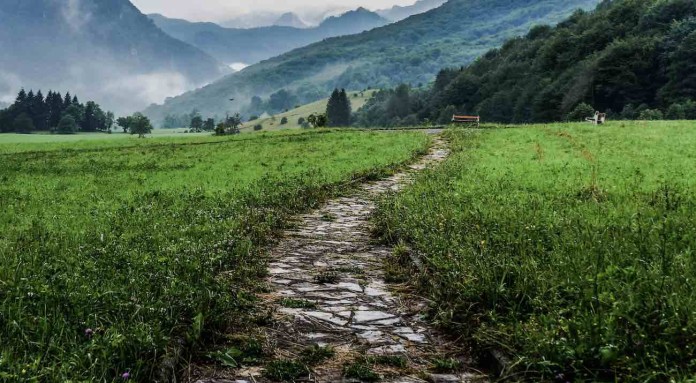
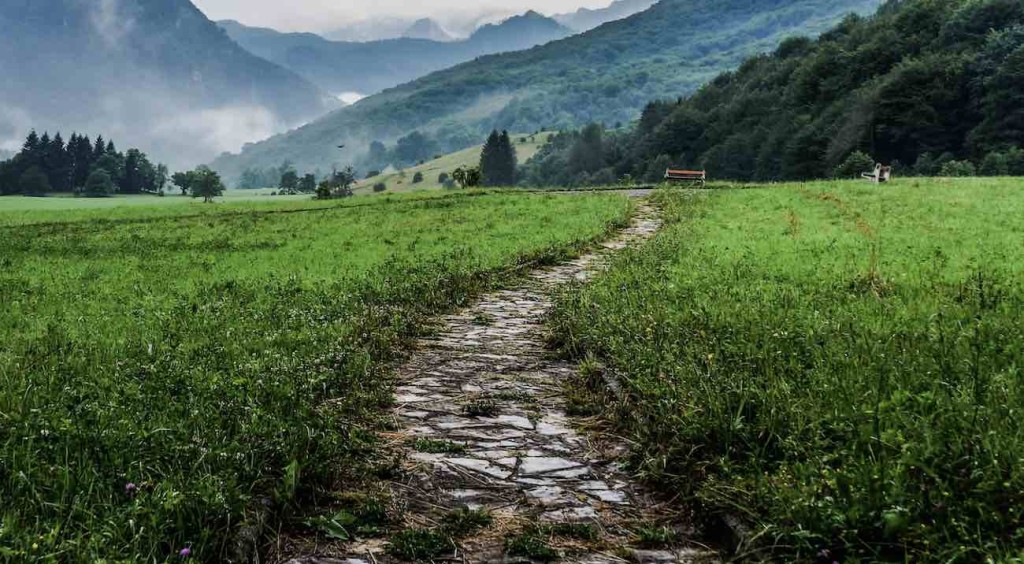
Quote of the Day: “There is one path in the world that none can walk but you. Don’t ask where it leads…walk!” – Friedrich Nietzsche
Photo by: Lili Popper
With a new inspirational quote every day, atop the perfect photo—collected and archived on our Quotes page—why not bookmark GNN.org for a daily uplift?
In an effort to combat flooding, a Yorkshire woman realized that thousands of wasted Christmas trees every year could be used as natural flood protection, and started a unique business to do just that.
The Rooted Christmas tree rental delivers a potted Christmas fir, pine, or spruce to a family for the festive season. When the lights are taken down, the company then collects their rentals and replants them to enjoy another growing season.
When the trees get too tall, they are placed on the slopes of the nearby Calder Valley as natural floodwater breaks.
The Sunday Times reports that the towns of Mytholmroyd and Hebden Bridge in Yorkshire have been inundated by serious floods 4 times in the last 15 years, with the most-recent one causing $180 million (£150 million) in damages.
Rooted founder Sara Tomkins established a Christmas tree plantation in the spring of 2020 with 400 trees. Dozens of those original 400 have now become too large for the average living room, and have been hauled off for planting in the upper parts of the Calder Valley to stop floodwaters running down into the two towns below.
What started as a sustainability project turned into a flourishing commercial enterprise. When residents learned how their Christmas tree purchases could be used to protect their towns from floods and reduce waste from rotting trees, all of Tomkins’ original trees were rented out.
According to Tomkins, people pretend the trees are members of the family, and like to rent the same one over and over again to “watch them grow up with their kids.”
“It’s like people adopt them,” she says. “They become part of the family. I’ve got a couple of people already asking if they can have the same tree again in 2023 and I’m trying to gently break it to them that it’s going to be nine foot by then so it won’t fit in their house.”
Tomkins feels that demand might be 3x her current supply, but as a music venue director, she does the job only in her off hours.
“I do this in my spare time so I don’t have the capacity or the physical space to make it any bigger,” she told The Times. “But the demand being there is such a positive thing because, if we can reduce how many Christmas trees we cut down, that is a massive environmental win.”
KNOW Anyone Who Might Want To Rent A Tree? Share The Story With Them…
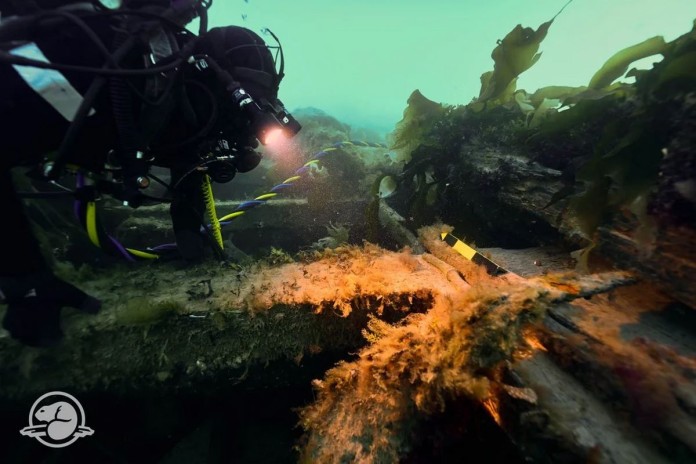
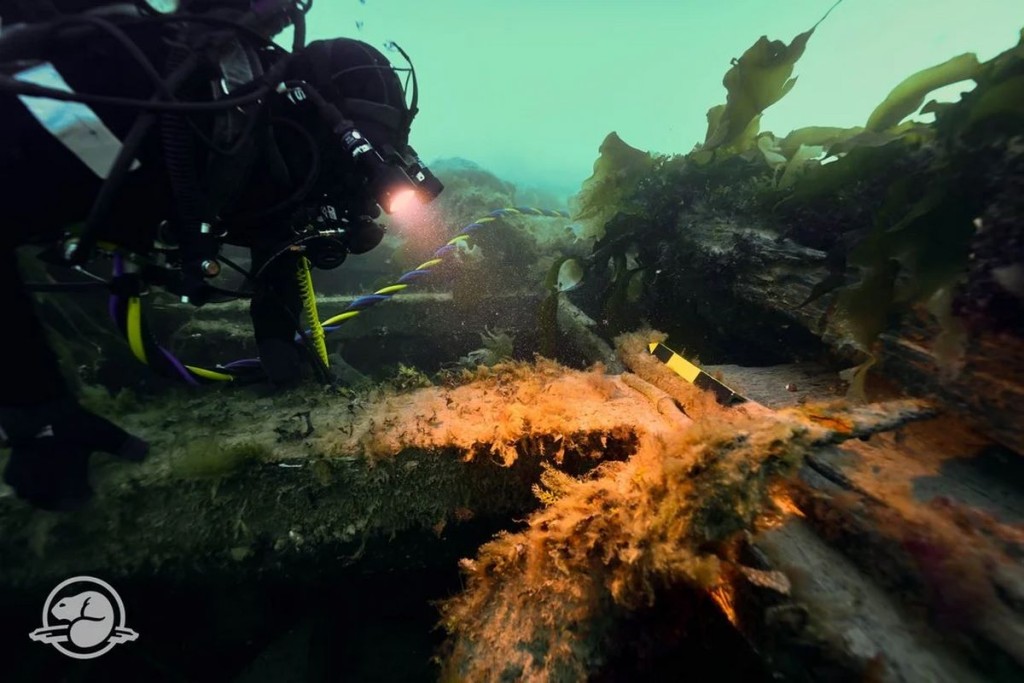
Parks Canada divers explor HMS Erebus Credit: Marc-André Bernier, Parks Canada
Parks Canada divers explore HMS Erebus Credit: Marc-André Bernier, Parks Canada
8 years after Arctic researchers discovered the lost wreck of HMS Erebus, the team has finally been able to see it with their own eyes and recover hundreds of artifacts from its ill-fated search for the Northwest Passage.
Setting sail from Great Britain in 1845 and captained by the famed polar explorer Sir John Franklin, HMS Erebus is in pristine condition under the ice off King Williams Island in Nunavut, Canada’s northernmost territory.
Franklin’s voyage was accompanied by the HMS Terror, found nearby two years after Erebus. They were abandoned in heavy sea ice with all 129 souls lost in what was the worst disaster in the history of the British Navy’s polar exploration.
In September 2022, archaeological research operations and excavation resumed at HMS Erebus based from the RV David Thompson and support barge Qiniqtirjuaq, just one aspect of a large assistance operation from the local Inuit people. The team completed 56 individual dives over the course of 11 days, reports Parks Canada.
Among the artifacts pulled from what Canadian Environment Minister Steven Guilbeault said were “some of the best-preserved wooden wrecks in the world,” were a drafting table tool set, serving dishes, an embossed leather billfold, a toothbrush, lieutenant’s epaulets, and an eyeglass lens, among dozens of other items.
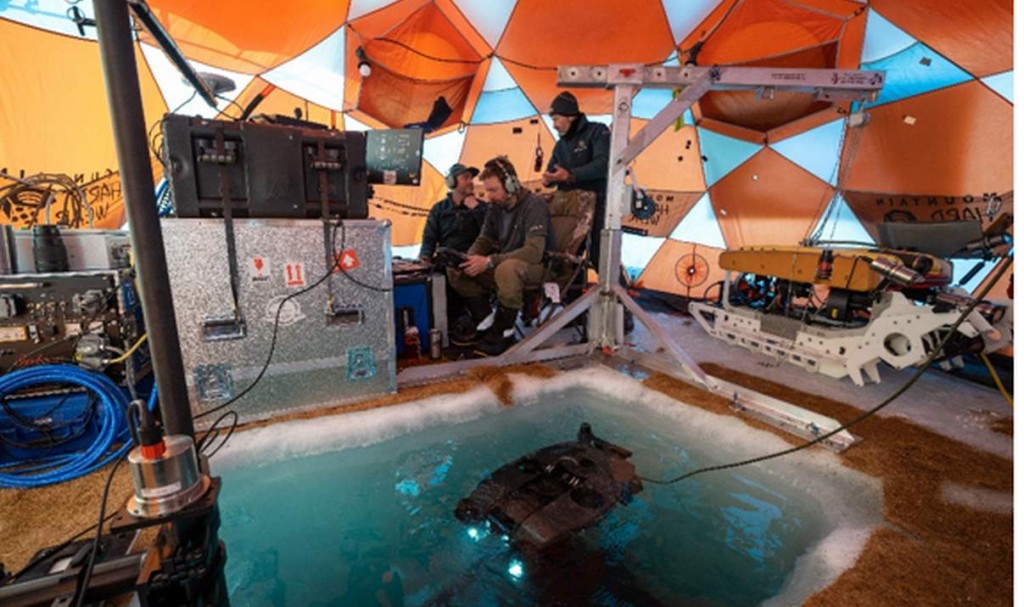
Archaeologists used a remotely operated vehicle called Deep Trekker to explore the HMS Erebus site. Aimie Néron / Parks Canada
The two wrecks are considered National Historic Sites, and they are jointly-protected and managed by Parks Canada and the Inuit Heritage Trust.
HMS Erebus is in shallower water, and easier to study. It’s been designated the more important of the two wrecks considering it was the flagship, but expeditions via unmanned submersible in 2016 on HMS Terror turned up important information on what might have happened.
The Guardian, reporting at the time, quoted Adrian Schimnowski, the Arctic Research Foundation’s operations director as saying that the Terror was sitting pretty level on the seafloor, suggesting her fate was gentle and not sudden or jarring. A long rope was discovered running through a hole in the gunwales, suggesting an anchor may have been weighed at the time the ship went down.
“This vessel looks like it was buttoned down tight for winter and it sank,” said Schimnowski at the time. “Everything was shut. Even the windows are still intact. If you could lift this boat out of the water, and pump the water out, it would probably float,” he said, adding that three of the four tall window panes of the captain’s cabin were still intact.
The Erebus was found to be a little worse for wear than it was in 2014. It’s thought that storms and reduced icepack coverage has led to more erosion. The team explored the second lieutenant’s quarters and the steward’s galley, and is currently exploring what it believes to be the third lieutenant’s quarters.
WATCH the 5-minute presentation of the excavation (skip to 1:50 to see the ship)
DROP This Story’s Anchor On Your Friends’ Social Media Pages…
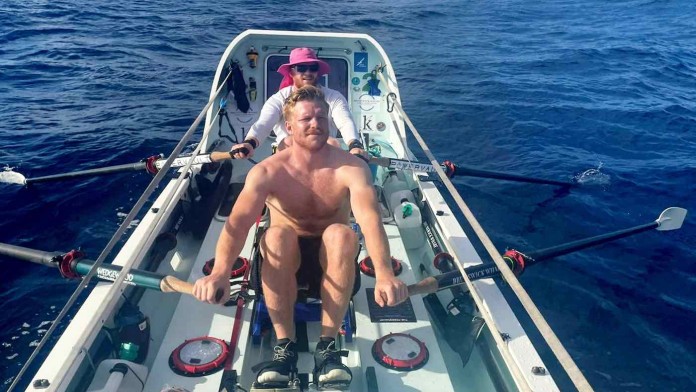
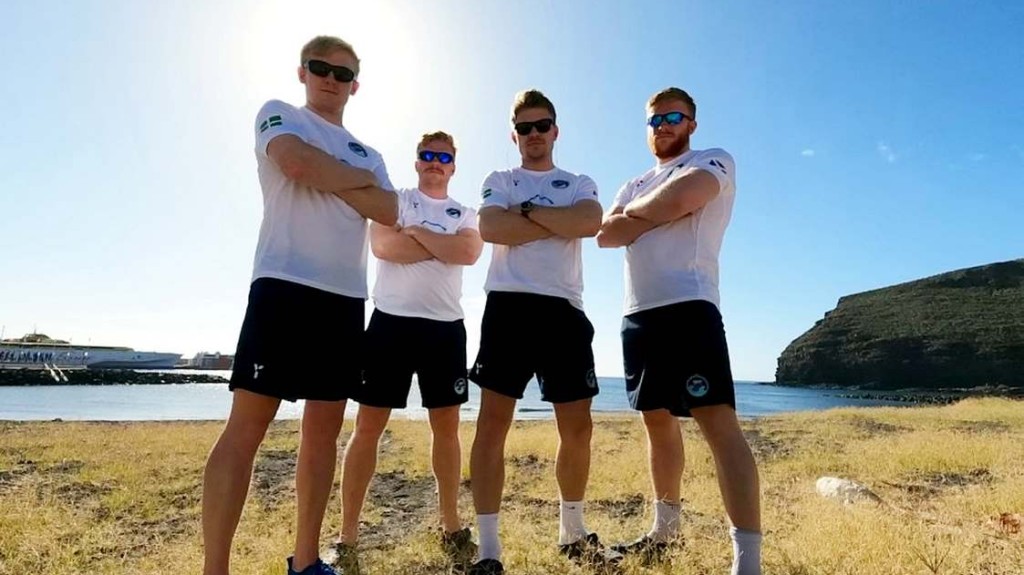
Four brothers consisting of two sets of twins are close to setting a world first by completing an epic 3000 miles row across the Atlantic Ocean. See SWNS story SWSMrowing. Adventurous siblings Jack and Hamish Friend, 26, and younger brothers Euan and Arthur Friend, 24, have already raised more than 80k for charities since setting off on their epic endurance challenge nearly a month ago. The foursome, from Tiverton, Devon, trained for the gruelling feat for 18 months ahead of their departure on December 12 from La Gomera, in the Canary Islands. And they are expected to finally complete the Talisker Atlantic Challenge race and arrive at their destination, Antigua, in the next week. Upon their arrival they will set a world first by becoming the first four brothers to row any of the world's great oceans.
– SWNS
In a few days time, four brothers will set a world record as the first rowing team made entirely of brothers to cross the whole of the Atlantic.
While many siblings find being stuck under one roof challenging, it’s a testament to their endurance that the four of them have shared two rowing benches and one tent-sized cabin for nearly 4 weeks.
The adventurous brothers are two sets of twins—26-year-olds Jack and Hamish Friend, and 24-year-olds Euan and Arthur Friend.
The foursome from Devon, England have already raised more than 80k for charities since setting off on their epic endurance challenge nearly a month ago.
Naming their team ‘The FriendShip,’ they trained for the grueling feat for a total of 18 months ahead of their departure on December 12th from La Gomera, in the Canary Islands.
And they are expected to finally complete the Talisker Atlantic Challenge race and arrive at their destination, Antigua, in the next week. The Talisker Challenge usually consists of 20-40 rowing teams, and the boys’ latest diary entry claims they were in 4th, but gaining fast on 3rd place-holders.
“There have been some massive highs and some pretty low moments over the past 26 days,” said Hamish in a video, reflecting on their progress on Friday. “High moments from just surfing down some massive waves (…) and these amazing starry skies and amazing sunrises and sunsets.
“Low moments such as being slapped in the face by a flying fish at two in the morning, to getting absolutely soaked by these Atlantic storms that come along. Sitting in your cabin all damp and wet trying to get to sleep.”
“Sleep deprivation, hallucinations, hunger and the ultimate test of body and mind will be balanced by sighting incredible marine life, witnessing the breaking of a new day and sun sets that cannot be viewed by land.”
The twins each complete 2-hour rowing sessions before rotating into the cabin for rest and recovery.
They consume around 6,000 calories a day of freeze-dried food and make their own drinking water from a solar-powered desalination unit.
The brothers are completing the challenge in aid of three local charities, and have so far raised a whopping £82,000 for the cause.
The charities are CHAT, a vital service for those struggling with housing issues in Mid Devon; the Drive Forward Foundation, which enables children and young people with experience of foster or residential care to achieve their full potential; and Friends of Kiwoko Hospital, a charity set up to support the work of the Kiwoko Hospital in Uganda.
Katie Humphreys, 22, is Euan’s girlfriend and has been keeping in regular contact to share their progress on social media.
“They are loving it,” she said. “I’m quite shocked—they don’t even want it to end.”
“They have loved being able to push themselves to their mental and physical limits. They have also raised over £80k for three fantastic charities and that’s what’s driving them to do the challenge.”
TAKE a tour of the FriendShip below…
CHEER On This Incredible Feat OF Athleticism And Brotherly Love…
A team of New Jersey police officers went “above and beyond” to rescue a stranded man who nearly died from the cold.
Tom McHugh was reported missing by his daughter on December 17th, 24-hours after she had last seen him—when he left for a ride in the mountains of rural Sussex County in his side-by-side.
A search was organized as temperatures were low and snow was on the ground. After finding McHugh’s tire tracks, his side-by-side was found crashed by the side of the trail in Stokes State Forest.
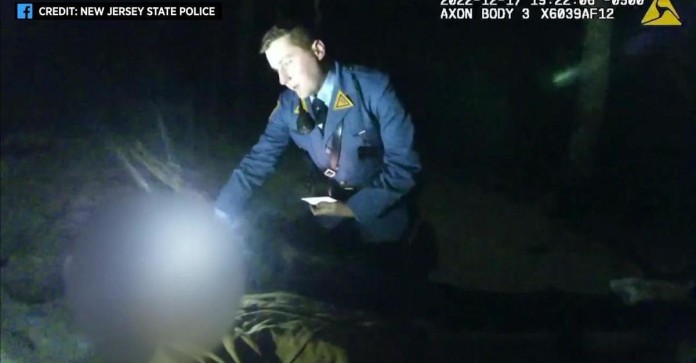
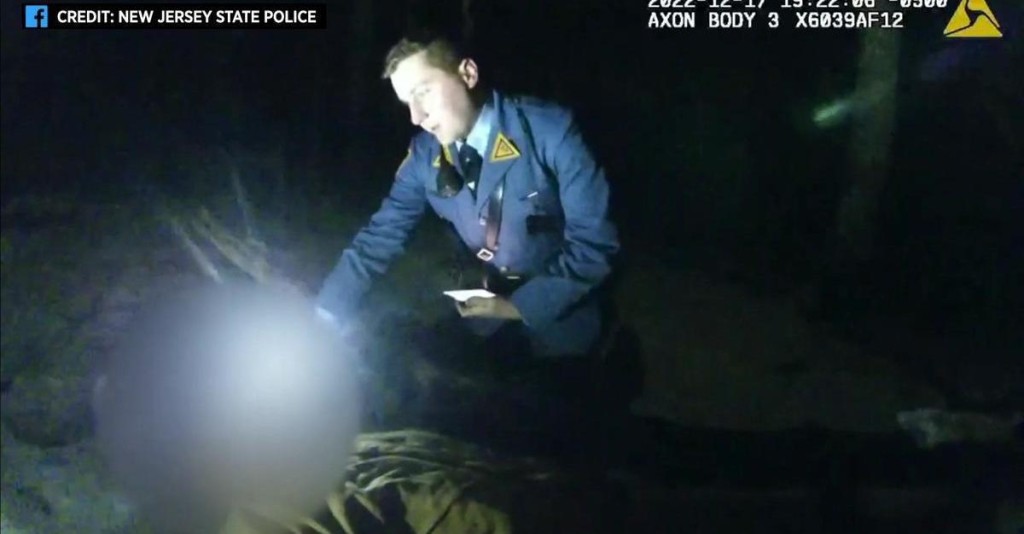
Troopers were able to follow his boot prints through the snow a mile-and-a-half to reach the man, who was alive but unconscious and suffering from hypothermia, a frightful condition that renders the limbs difficult to control, and seriously impairs thinking ability.
One trooper was an ex-marine, and used his training to raise the McHugh’s body temperature without fire or blankets.
“That’s what they teach us to do: life-saving skills in cold conditions,” said New Jersey State Trooper James Thonus. “Strip down, get on top of him, give him sternum rubs, body heat to body heat, whatever you can do to get [him warm].”
Body camera footage released records one trooper calling on another who had just finished running and had “excess body heat” to take turns laying on top of McHugh in the same way.
McHugh’s breathing improved, but the team were then forced to carry the 6-foot-2, 200-plus pound man all the way back to the vehicles through snow and mud.
McHugh made a full recovery.
“Because they found him so fast. They did what they had to. But they went above and beyond,” said McHugh’s daughter, who called them heroes.
WATCH the footage live…
SHARE This Exceptional Protecting And Serving With Your Friends…
Quote of the Day: “To hope is to give yourself to the future—and that commitment to the future is what makes the present inhabitable.” – Rebecca Solnit
Photo by: Jorge Salvador
With a new inspirational quote every day, atop the perfect photo—collected and archived on our Quotes page—why not bookmark GNN.org for a daily uplift?
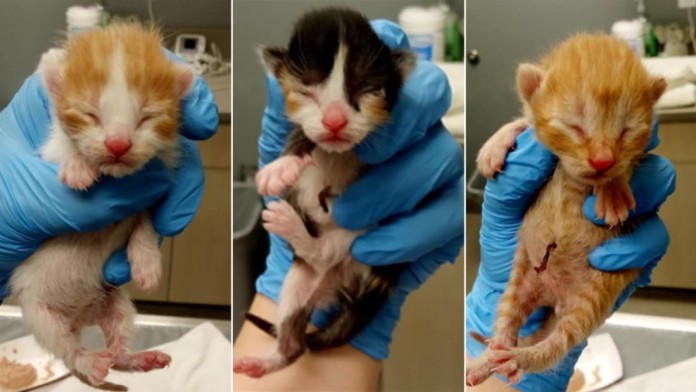
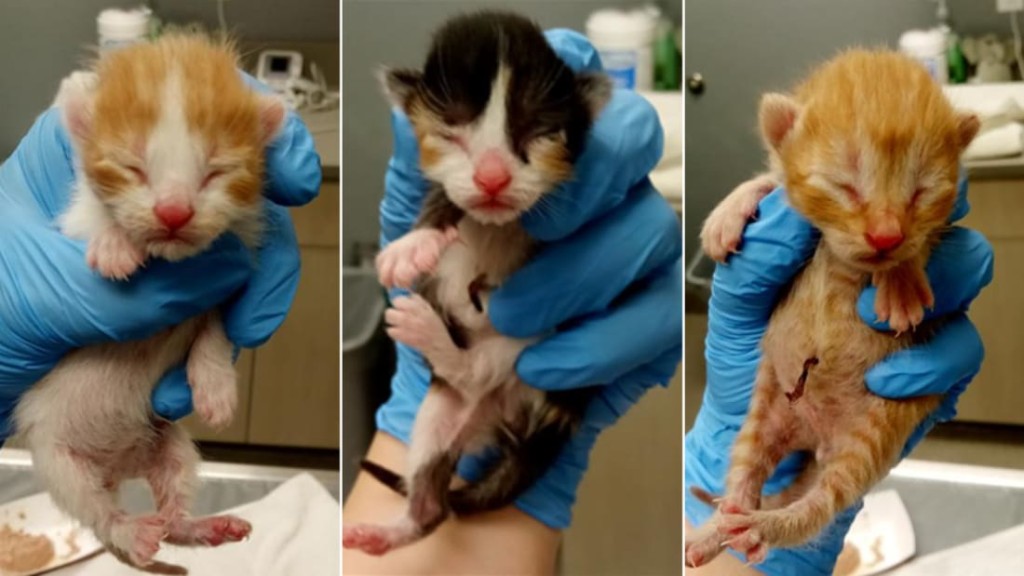
Las Vegas Animal Foundation was delighted to learn that Frontier Airlines is offering free travel vouchers to anyone who adopts one of three newborn kittens the hospital just received.
The three kittens are just two weeks old, and their eyes aren’t fully open yet. They were found in the north of Las Vegas and were given the names Spirit, Delta, and Frontier, for unknown reasons.
Per pet parent, Frontier Airlines, who got word their name was being given to a tiny kitten, is offering two $250 vouchers totaling $500, which are redeemable until the end of the year. For those looking to adopt Frontier, Frontier Airlines is doubling that.
“We were delighted the rescue organization decided to name these three adorable kitties after airlines, including ours,” said Frontier in a statement emailed to CNN. “Underscoring the plight of animals is near and dear to us.”
“We were more than happy to provide a little extra incentive to encourage the adoption of these three precious kittens.”
The foundation said it’s rare to get a litter of kitties in December. At the moment they are living in a foster home until they are 6-weeks old or 1.5 pounds in weight, at which time they will be available for adoption.
It’s been one of the worst years for passenger aviation in history, but not always for four-legged, finned, or fluffy passengers.
GNN reported back in September that when a passenger’s beta fish was denied boarding in Orlando, two Southwest Airlines employees offered to take care of it for 4 months until the guest came back to Florida.
“Sometimes we deal with the craziest of situations,” United Director of Customer Service Vincent Passafiume said at the time. “This was probably one of the oddest we’ve ever dealt with and also one of the most challenging.”
“To be able to get the outcome that we did as a team and see that Polaris will go home to a family that will give him a good life is really a special moment for me.”
SHARE This Adorable Opportunity With Your Friends…
A recently-completed scientific survey found that plastic on Australian beaches has fallen by 29% since the last survey in 2013.
The authors state it is a result of well-executed and locally focused waste control strategies, as well as an example of what Australians can do when they band together.
Organized by the Australian national science agency, this year’s survey included 562 new survey plots across 32 local government entities, with an emphasis on gathering data on which methods implemented by the local officials were the most successful.
“Our research set out to identify the local government approaches that have been most effective in reducing coastal plastics and identify the underlying behaviors that can lead to the greatest reduction in plastic pollution,” said lead researcher Dr. Kathryn Willis.
“We were really surprised and excited to also find that there was on average 29 per cent less plastic on our beaches than in 2013 when similar surveys were conducted.
The strategies were divided into planned behavior such as educational programs and recycling guides, economic strategies, crime prevention such as closer monitoring of illegal dumping and other such activities.
Economic strategies were found to have the biggest impact. More economic waste management strategies led to comparatively cleaner coastlines.
“For example, household collection services, where there are multiple waste and recycling streams, makes it easier for community members to separate and discard their waste appropriately,” said CSIRO researcher and paper co-author, Dr. Denise Hardesty.
“Our research showed that increases in waste levies had the second largest effect on decreases in coastal plastic pollution. Local governments are moving away from a collect and dump mindset to a sort and improve approach.”
The research also found that municipalities that didn’t update their waste control measures over long periods tended to have dirtier coasts.
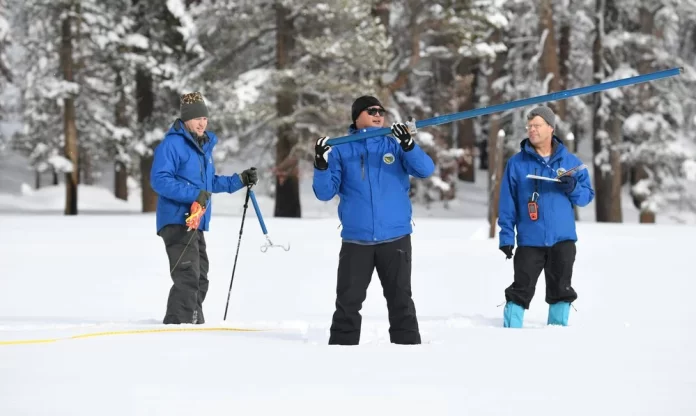
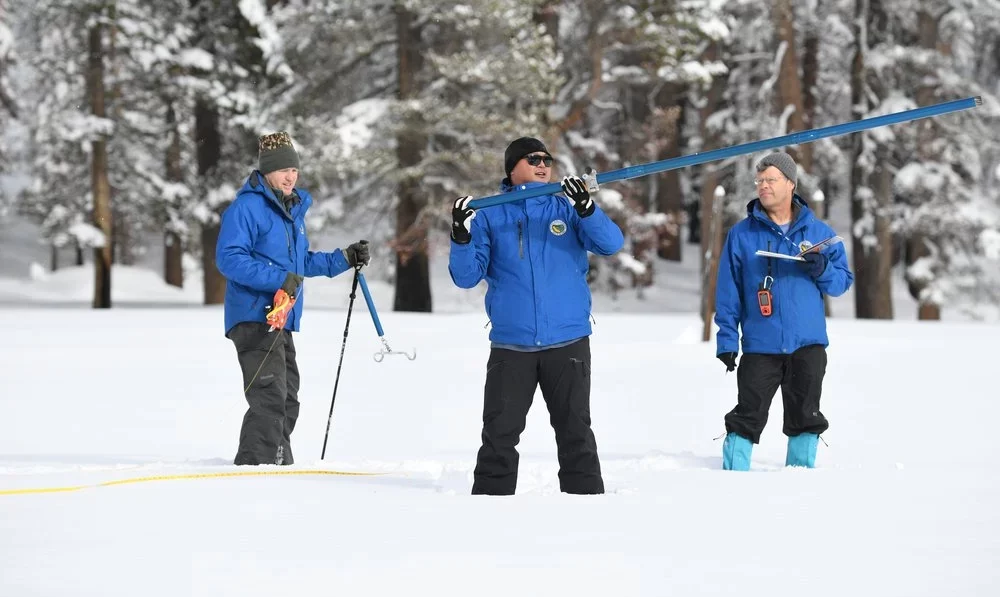
Kenneth James / California Department of Water Resources
Kenneth James / California Department of Water Resources
Europe isn’t the only place that’s experiencing unusual winter weather. California’s snowfall in the mountains this year is nearly double the seasonal average, giving the drought-stricken state hope for a moist 2023.
Last Tuesday, the state performed its first formal snow survey up in the Sierra Nevadas. Currently it’s 174% of the historical average for this time of year. That’s the third-largest snowpack in the past 40 years, trailing only 1983 and 2011.
California has had 3 years of drought, and many reservoirs and lakes are showing it.
Heavy storms which dumped all the snow on the mountains also deposited floodwaters around the north of the state, which the LA Times reports is actually normal. Officials say that while the storm damage is of course unfortunate, several more storms will be needed to refill reservoirs.
“It could be a drought-buster of a year if things continue on a wet track,” Dan McEvoy, regional climatologist at Western Regional Climate Center in Reno, told the Times.
The Times continued with the good news. Southern CA is dependent on water flows from the north, but also from the Colorado River which flows partly into a seriously-depleted Lake Mead.
Colorado snows are also hitting high records, with the Upper Colorado River Basin snowpack now standing at 142% of the the last three decade median.
Experts say that if the wet season continues as is, there’s a chance it could reverse the last three years of drought. The next ‘major’ storm is due to arrive either tomorrow or Thursday.
ENCOURAGE Your Californian Friends On Social Media With This Hopeful News…
High in the Atacama Desert where the skies are clear, a 67-million-pixel camera imaged a far away star nursery in infrared light, revealing a level of detail that the James Webb Space Telescope would be proud of.
Astronomers working at the VISTA telescope in Chile zoomed in on the Sh2-54 Nebula, around 6,000 light years from Earth, and a region where clouds of dust and gas obscure normal camera imaging.
However like the aforementioned Webb telescope, VISTA sees into the infrared, meaning that it can effectively image the nebula as if that gas and dust weren’t even there.
Quote of the Day: “My greatest beauty secret is being happy with myself.” – Tina Turner
Photo by: Surface
With a new inspirational quote every day, atop the perfect photo—collected and archived on our Quotes page—why not bookmark GNN.org for a daily uplift?
A never-ending treasure hunt in a small New South Wales town has given new lives to thousands of books, and new smiles to as many children.
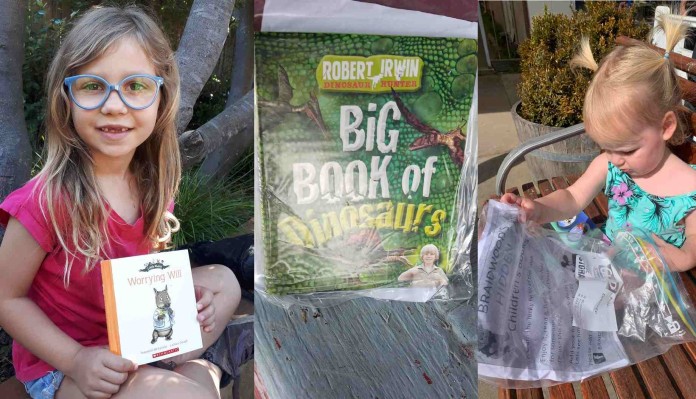
In the town of Braidwood, a tradition of hiding children’s books in plastic bags in unlikely places has grown out a pandemic tradition of hiding painted rocks.
Hidden in shop windows, among shrubs, in parks, or around town, a child who finds the book can choose either to take it home, or add their name to the list of past owners and re-hide the book for another kid to find.
Mom of 5 Samantha Dixon believed that it might be “more useful thing [than rocks] for children,” after seeing some similar community movements in other countries.
“It’s lovely to watch the little kids’ faces when they find the books, and it’s just a little bit more magical,” Dixon told ABC News Australia. “I enjoy the fact these books are being read and are not just being left on the shelves and that kids are outside finding them not on screens.”
Inside a plastic bag is the book and a sheet that says: “You are the lucky finder of this book. Read it, enjoy it, and then rehide it for someone else to enjoy. Please reuse this bag.
“Add your name inside the cover and let’s see how many can find it!”
“We are passing through from Campbelltown and found this while we were waiting for our lunch,” wrote a member off the Braidwood Hidden Books Facebook Group. “Matilda had a flick through and rehid it on our way back to the car. Thanks for providing such a great and fun idea!”
SHARE This Awesome Community Idea With Your Friends…
Rome's Pantheon, still the world's largest unreinforced concrete dome - CC 3.0. Jean-Christophe Benoist
Rome’s Pantheon, still the world’s largest unreinforced concrete dome – CC 3.0. Jean-Christophe Benoist
When it comes to explaining Roman engineering, people looking to demonstrate their genius have a variety of use cases, but the secret to why their concrete has remained when even modern buildings crumble after just a few years of disuse has eluded scientists.
However at MIT, scientists have cracked their concrete code to show that Roman concrete was self-repairing—it could naturally close cracks in as little as 2 weeks.
If one were to go to the small city of Pozzuoli today, what the classical Romans called Peotoli, one would find two remarkable structures—an amphitheater, and a covered marketplace called Rione Terra. However another mark which Pozzuoli left on the Roman world is called “pozzolanic material” referring to a hotspot underneath a nearby hill that created a mineral mosaic over thousands of years.
It created a kind of volcanic ash rich in lime and calcium, which form chunks of white material called lime clasts. Ancient recipes dictate this ash was an important ingredient, but modern analysis looking at the presence of the lime clasts in the ash has essentially written it off as “low-quality control.”
“The idea that the presence of these lime clasts was simply attributed to low quality control always bothered me,” said MIT professor of civil and environmental engineering, Admir Masic.
“If the Romans put so much effort into making an outstanding construction material, following all of the detailed recipes that had been optimized over the course of many centuries, why would they put so little effort into ensuring the production of a well-mixed final product? There has to be more to this story.”
Indeed, the Romans did things with concrete that modern societies haven’t—just look at the Pantheon in Rome which still has the world’s largest unreinforced concrete dome. Aqueducts built to water the city literally still do, 2,000 years and sometimes more after they were built.
As if anyone who’s witnessed the timeless glory of Roman architecture today would be surprised, it turns out that the lime clasts were there on purpose, because they provide a self-healing capacity to Roman concrete, allowing their structures to last for thousands of years.
Roman aquaduct at Pont du Gard, France – CC license
It was once assumed that lime was added to concrete with water to create a paste in a process called slaking, but by using spectroscopic imaging, Masic and his colleagues at MIT, and elsewhere in Switzerland and Italy, have determined that the Romans heated the lime ash to high temperatures to create what is known today as “quicklime.”
“The benefits of hot mixing are twofold,” Masic says. “First, when the overall concrete is heated to high temperatures, it allows chemistries that are not possible if you only used slaked lime, producing high-temperature-associated compounds that would not otherwise form. Second, this increased temperature significantly reduces curing and setting times since all the reactions are accelerated, allowing for much faster construction.”
In such concrete as this, cracks that form allow the easy travel of the lime clasts into open space which, when coming in contact with water, seal and close the cracks. The team mixed their own Roman concrete and it took only 2 weeks for a deliberately inflicted crack to close.
By contrast a contemporary concrete block was made without quicklime and it never repaired itself.
As a result, the team are working to commercialize this as self-healing Roman concrete in order to reduce the 8% of global emissions attributed to the manufacture and laying of concrete in cities.
SHARE This Brain Blast From The Past With Your Friends…
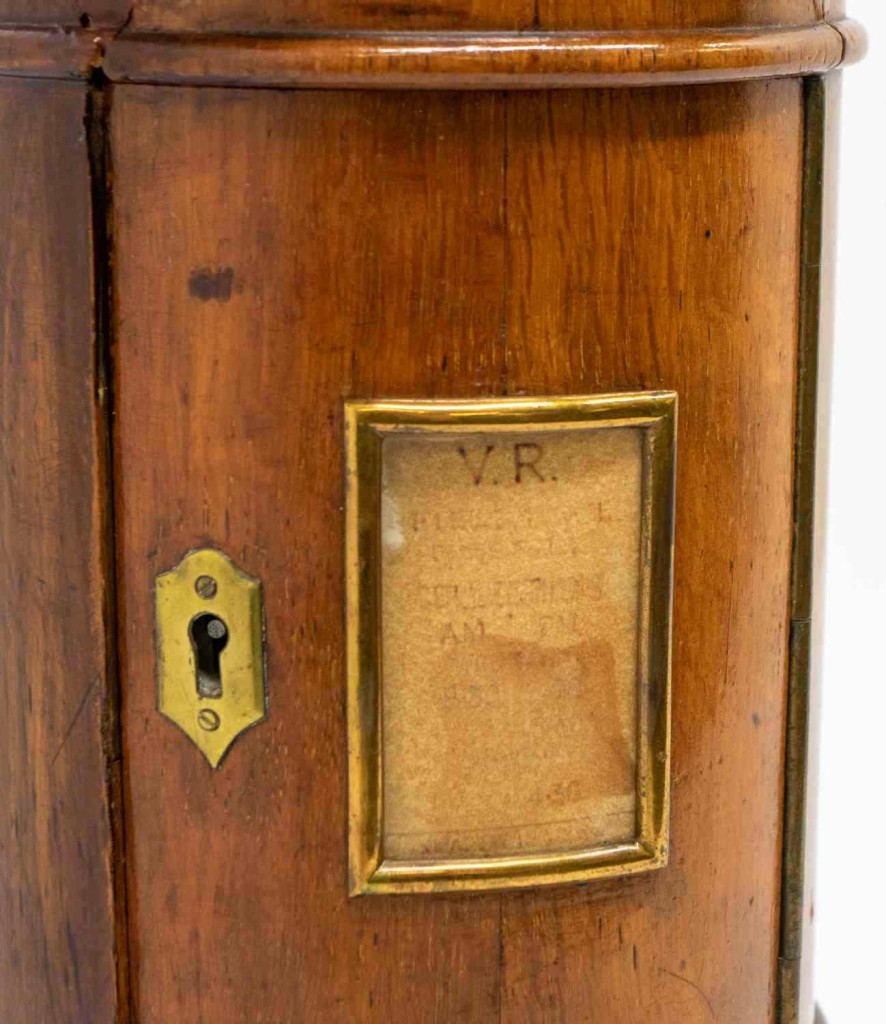
Queen Victoria’s miniature mailbox which she used to send letters and cards during her reign 140 years ago has been unearthed.
The 30 inch tall box, which was carved into the style of a Royal Mail’s ‘pillar box,’ was recently discovered in a cottage in Surrey, intriguingly with an undelivered Christmas card inside.
The beautiful wooden table letterbox, engraved with the royal cypher ‘VR’ (Victoria Regina), dates back to the 1880s.
“We can only imagine the tone and content of the notes the queen must have placed inside but one thing we can be certain of is that she enjoyed sending letters and cards,” said Charles Hanson of Hansons Auctioneers, who is handling the sale.
“Her profile featured on the Penny Black, the world’s first adhesive postage stamp issued in 1840.
Queen Victoria ruled Great Britain and Ireland from 1837 until her death in 1901.
She used the box to mail her letters and cards while she stayed at Osborne House, her favourite holiday destination on the north coast of the Isle of Wight built for her and her husband Prince Albert as a rural retreat.
The card inside was not sent or received by the former monarch and is believed to have been given to the seller’s family in the 1970s.
“I discovered it during a routine home visit at a cottage in Surrey,” said Chris Kirkham, associate director of Hansons London. “I was called in to assess items gathered by a keen antiques collector over a lifetime. It was purchased decades ago by the seller’s grandfather.”
“We understand he acquired it at a Carisbrooke [Castle Museum] sale which offered items relating to Osborne House in 1944 or 1945.
They’ve sold a hundred million records, performed over 2,500 shows in 67 countries, but Iron Maiden’s recent commemorative stamp collection issued by the Royal Mail had the truly legendary heavy metal band “astounded.”
Eight of the stamps are images of the band members playing different shows, while a variety of album covers and thematic images of the band’s mascot “Eddie” expand the collection.
Iron Maiden are the fifth music group to be honored with a stamp collection, behind The Beatles, Pink Floyd, Queen, and The Rolling Stones.
“We were all absolutely astounded—in a good way—when we first heard about the commemorative project, and equally pretty much speechless when we saw the stamps for the first time,” stated bassist Steve Harris. “They look superb and really capture the essence and energy of Maiden.”
– Royal Mail
Harris founded the band in 1975 in London, but it wasn’t until their 1982 album Number of the Beast, with a single of the same name and Bruce Dickenson’s skyscraping tenor voice that the band achieved global notoriety.
“As a band who have never played by anyone else’s rules for over 40 years, it’s very gratifying to see them honored in their home country in this way,” said Iron Maiden’s manager, Rod Smallwood.
“It’s also fantastic that Eddie has been honored too. It’s incredible to think that Her Majesty, may she rest in peace, saw these and lent her iconic silhouette to them too.”
– Royal Mail
Maybe Elizabeth had a heavier side in contrast to the relatively gentle outer appearance, or perhaps she appreciated how several of the band’s most iconic songs like Aces High and The Trooper memorialize famous battles in Britain’s history.
The stamps go on sale January 12th.
PUT The Horns Up For Iron Maiden’s Honoring On Social Media…
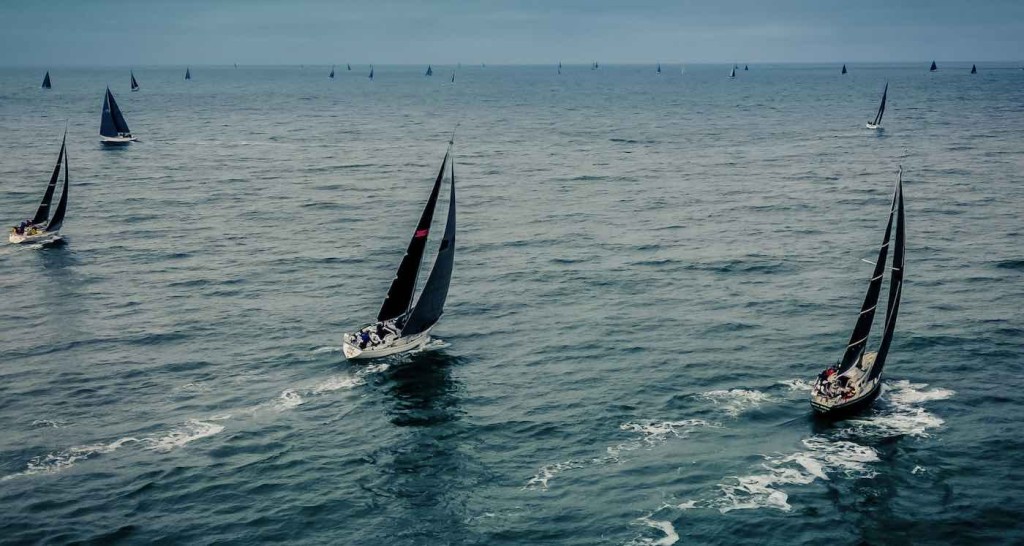
Quote of the Day: “The ship is always off-course. Sailing is being off course and correcting.” (It’s life.) – Michael Meade
Photo by: John Bell (johnbellphoto)
With a new inspirational quote every day, atop the perfect photo—collected and archived on our Quotes page—why not bookmark GNN.org for a daily uplift?
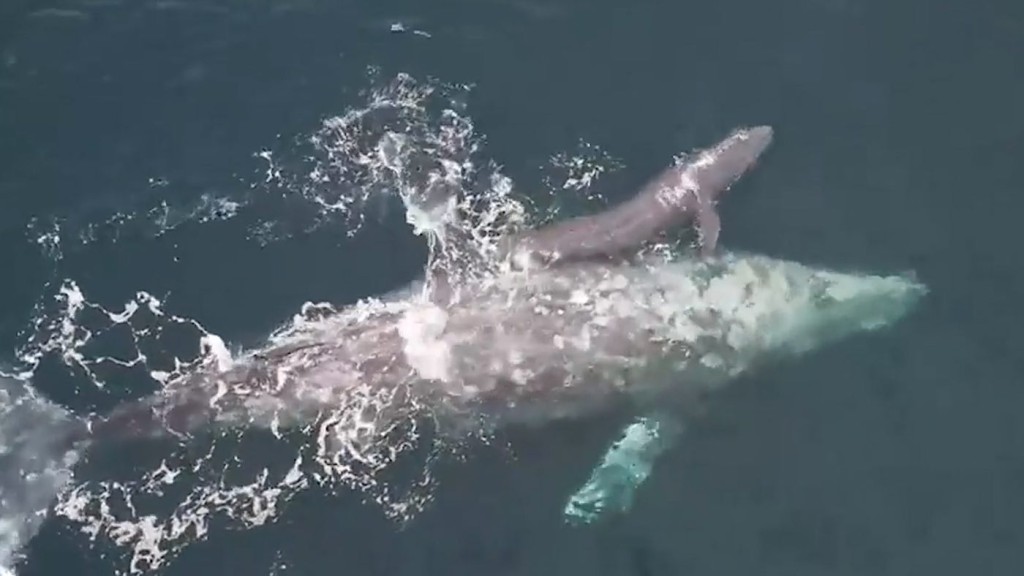
A group of whale watchers off the coast of Southern California had the rare privilege of witnessing the moment a grey whale gave birth.
Passengers aboard Capt. Dave’s Dolphin & Whale Watching Safari enjoyed the extraordinary event off the coast of Dana Point, between Los Angeles and San Diego.
A company spokesperson said the crew had noticed the whale behaving sporadically, as they steered the boat slowly toward the animal.
“Passengers and crew saw something orange- and red-colored in the water they thought might have been kelp.”
Instead, a newborn calf rose to the surface.
The mother brought her baby right up to a small boat—as if to show it off.
“For a minute, many of us thought it may be a shark or predatory event. But, instead of the end of life, it was the beginning of a new one!”
The calf can be seen learning how to swim with the help of its mother. Several small boats were floating in the area, while a woman can be heard gasping with awe and delight at the rare sight.
According to the National Oceanic and Atmospheric Administration’s National Marine Fisheries Service, grey whales are often curious toward boats, making them ideal subjects for whale-watching tours.
Eastern North Pacific grey whales migrate 10,000 to 14,000 miles along the western US Coast, and often give birth in the warm waters nearby in Baja California, Mexico—with newborns measuring 15 feet long and weighing about 2,000 pounds.
WATCH the touching video below…
SHARE the AMAZING Moment With Whale-Watchers on Social Media…
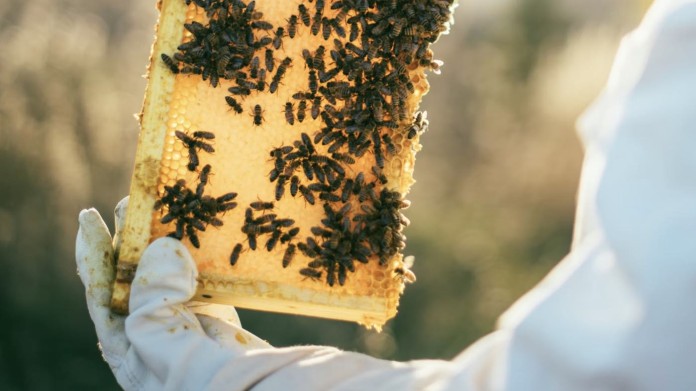
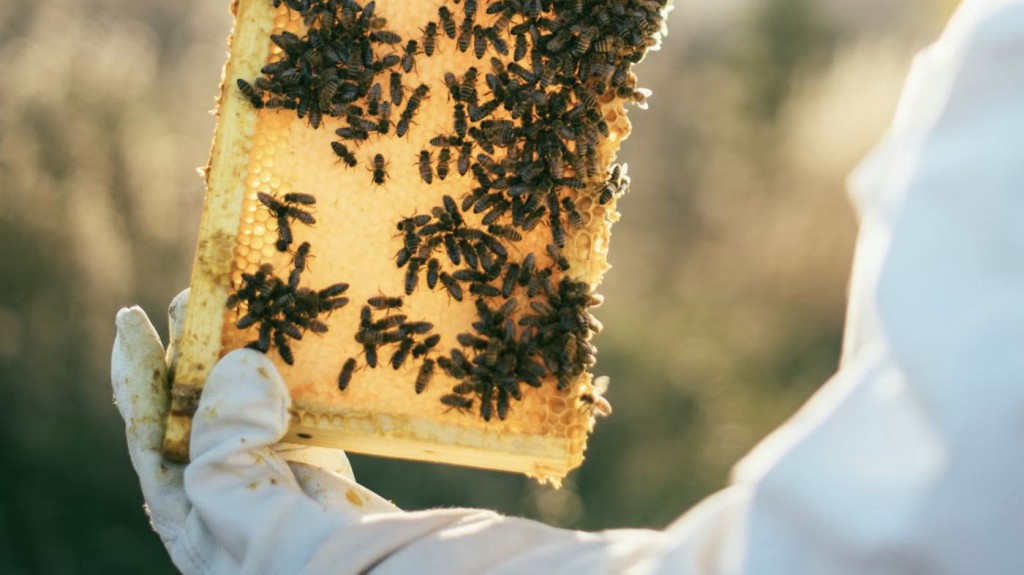
A biotech company announced this week that the USDA (Department of Agriculture) granted them a conditional license for their honeybee vaccine.
The vaccine boosts the bee’s immune system to fight against American Foulbrood disease, a bacteria-based condition known to attack colonies that is caused by Paenibacillus larvae.
Critical to our food supplies, honeybees have been plagued by American Foulbrood, which until now had no safe or sustainable antidote. Previously, the only treatment method for the highly contagious disease was incinerating the bees, infected hives, and all the equipment.
Developed by Dalan Animal Health, the solution contains an inactive version of Paenibacillus larvae bacteria that is non-GMO and usable in organic agriculture.
After it is consumed by worker bees, the vaccine is then incorporated into the royal jelly, which is fed to the queen. When she ingests it, fragments of the vaccine are deposited in her ovaries.
Having been exposed to the vaccine, the developing larvae have immunity as they hatch.
“Our vaccine is a breakthrough in protecting honeybees, impacting food production on a global scale,” said Dr. Annette Kleiser, CEO of Dalan Animal Health, in a statement.
“This is an exciting step forward for beekeepers, as we rely on antibiotic treatment that has limited effectiveness and requires lots of time and energy to apply to our hives,” explained Trevor Tauzer, owner of Tauzer Apiaries and board member of the California Beekeepers Association.
“If we can prevent an infection in our hives, we can avoid costly treatments and focus our energy on other important elements of keeping our bees healthy.”
Following research that showed the efficacy of the drug, the USDA issued its conditional license for two years. Dalan, which is headquartered in Athens, Georgia—at the University of Georgia’s Innovation Hub—will distribute the vaccine on a limited basis to commercial beekeepers.
Brain images – Howard Hughes Medical Institute via SWNS
Brain images – Howard Hughes Medical Institute via SWNS
Lost fish find their way home thanks to how their brains are wired, according to new research.
The neuronal circuit evolved up to half a billion years ago—and could have been passed onto humans.
It enables our slippery ancestors to get back on course, even after being swept away by fast flowing currents.
The discovery sheds fresh light on the workings of the ancient brain and may apply to other vertebrate, including us.
Co-author Dr. Misha Ahrens, of Howard Hughes Medical Institute in Maryland, said this navigational circuit is quite unknown.
“We think it might underlie higher order hippocampal circuits for exploration and landmark-based navigation.”
The study published in Cell is based on the humble zebrafish—long used in medical research as a model for humans—and found the key chemical pathways crossing different regions at the back of the brain that help the animals regain their bearings.
In experiments the tiny translucent fish traversed a 2D virtual reality environment in the presence of a simulated flow. As they swam toward a target, strong water unexpectedly pushed them off course. They still swam back to where they started, determined to finish the journey.
First author Dr. En Yang and colleagues used a ‘whole imaging’ technique developed at their lab to measure what is happening. It allowed scientists to search the fish’s entire brain to see which circuits are activated during course-correcting—and disentangle the individual components involved.
Scans showed the hindbrain—a conserved area at the rear—computes their spot. They use the information to figure out where to go next.
Researchers expected to see cells triggered in the forebrain where the hippocampus is, which contains a ‘cognitive map’ of an animal’s environment.
To their surprise, they saw activation in several regions of the medulla. Information was being transmitted from a newly identified circuit. It passed through a hindbrain structure called the inferior olive to the motor circuits in the cerebellum that enable the fish to move.
When these pathways were blocked, fish were unable to navigate back to their original location.
The findings suggest areas of the brainstem remember a zebrafish’s original location and generate an error signal based on its current and past locations.
This is relayed to the cerebellum, allowing the fish to swim back to its starting point. It reveals a new function for the inferior olive and the cerebellum, which was previously known to be involved in actions like reaching and locomotion, but not this type of navigation.
“We found the fish is trying to calculate the difference between its current location and its preferred location and uses this difference to generate an error signal,” said Dr. Yang.
“The brain sends that error signal to its motor control centers so the fish can correct after being moved by flow unintentionally, even many seconds later.”
It is still unclear whether these same networks are involved in similar behavior in other animals.
But the researchers hope labs studying mammals will now start looking at the hindbrain for comparable circuits used for navigation.
This hindbrain network could also be the basis of other navigational skills, such as when a fish swims to a specific place for shelter, added Ahrens, who believes the research could lead to better understanding of dementia.
Proving that our vast planet still harbors unexplored places with never-before-recorded plants and animals, 146 new species were added in 2022 to the scientific database of biodiversity.
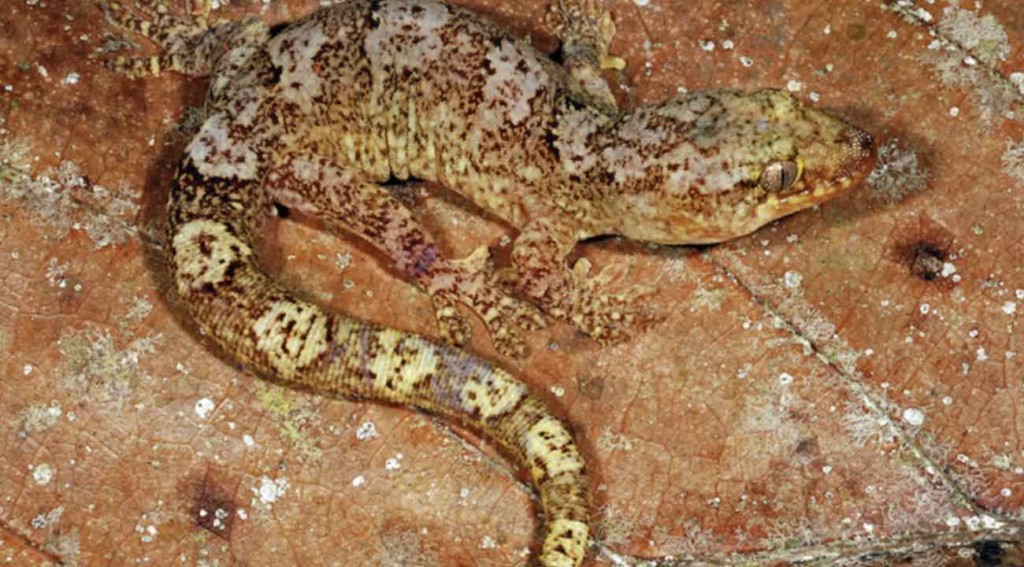
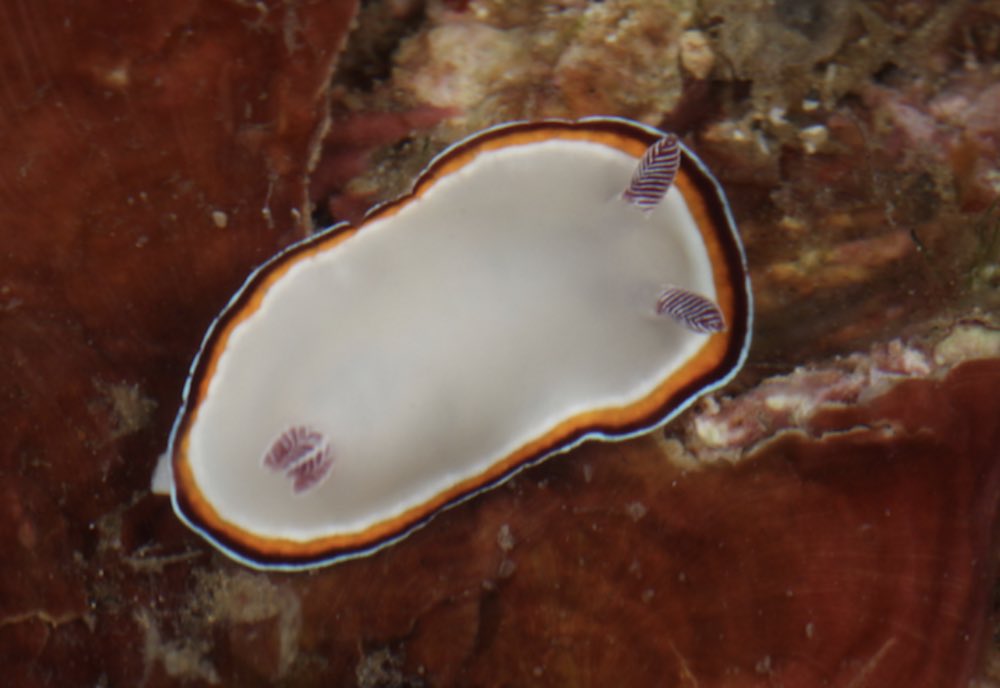
The new species reported by researchers at the California Academy of Sciences include fish, rays, lizards, spiders, scorpions, and plants.
The new branches added to our tree of life include 44 lizards, 30 ants, 14 sea slugs, 14 flowering plants, 13 sea stars, seven fishes, four sharks, four beetles, three moths, three worms, two scorpions, two spiders, two lichens, one toad, one clam, one aphid, and one sea biscuit.
Scientists made their finds across six continents and three oceans, from isolated mountain peaks to hundreds of feet beneath the ocean’s surface.
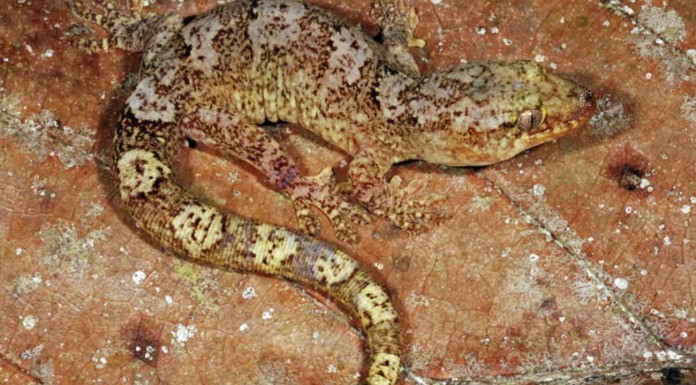
For instance, New Caledonia in the Pacific is now known to be the home of 28 new species of Bavayia gecko—which more than doubles the number discovered.
“Though all species within the genus physically look quite similar, we discovered they are in fact genetically distinct,” reports Academy researcher Dr. Aaron Bauer.
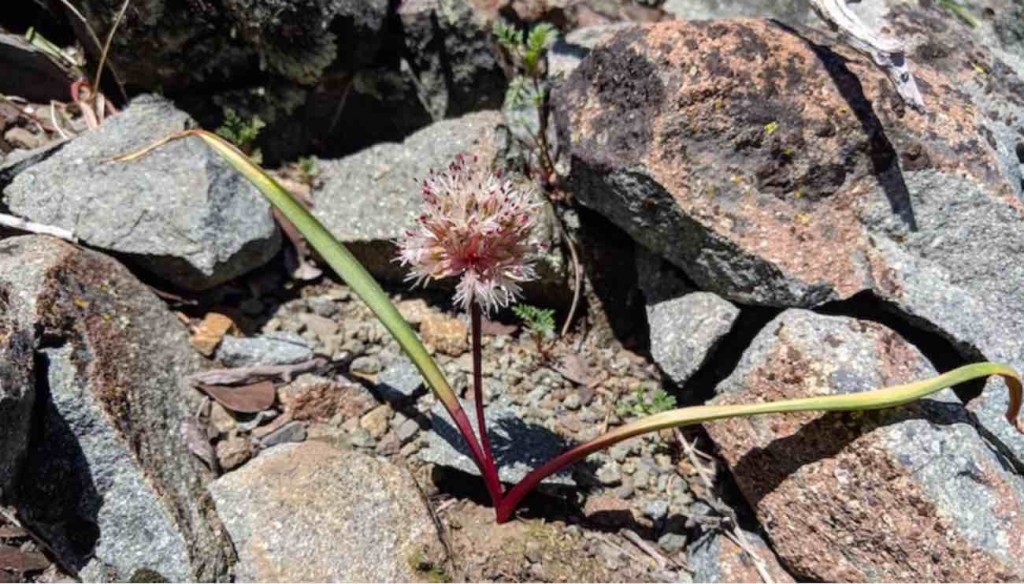
Academy Research Associate Julie Kierstead recalls, “The pilot decided to put us down on Minnesota Mountain for a half hour or so. It was really in the middle of nowhere.”
As Julie walked around the loose rocks she noticed an unfamiliar species of allium, the group of flowering plants including onions, garlic, and shallot, in bloom.
After searching the mountain range further another small patch was found on the summit of nearby Salt Creek Mountain. Both peaks are located within a microclimate receiving higher rainfall than that of the surrounding region, allowing certain species such as this onion to thrive.
But it wasn’t just academics discovering new species. San Francisco-area high school students Harper Forbes and Prakrit Jain discovered two new-to-science scorpions—small, desert-dwellers from the dry, salty lake beds of Central and Southern California.
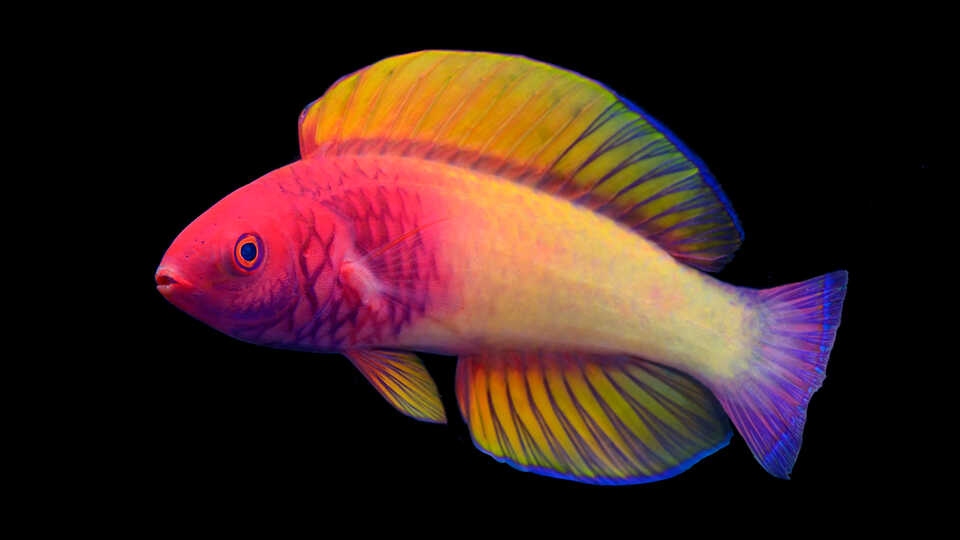
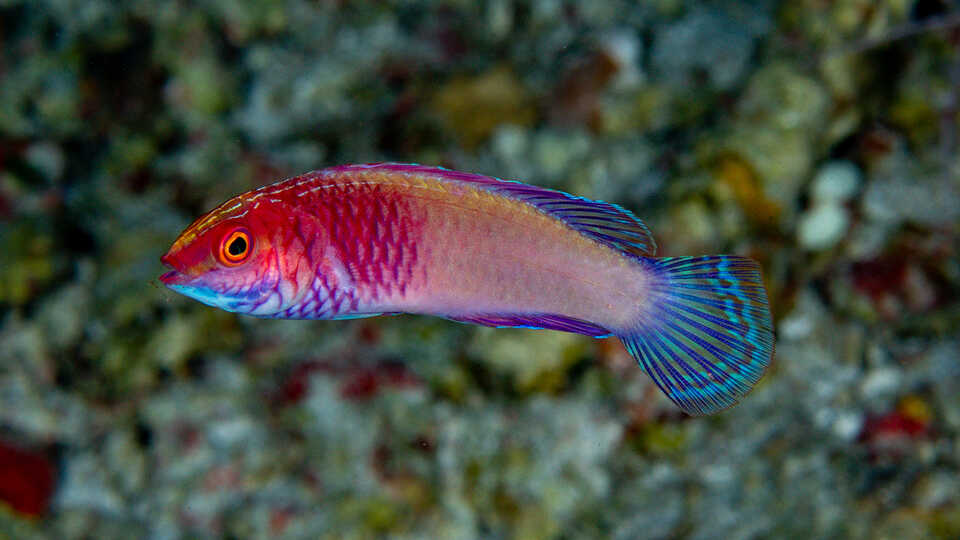
Also new is the beautiful Rose-veiled Fairy Wrasse, the first fish discovered by a local scientist in the Maldives—a mesmerizing find reported by GNN in March that was named after the country’s national flower, a rose.
“Biodiversity science is at the forefront of global conservation action and is key in unifying nations and equipping them with the tools and information necessary to reverse species extinction rates,” said Academy Chief of Science Dr. Shannon Bennett.