All News - Page 314 of 1714 - Good News Network
Home Blog Page 314

“To live now as we think human beings should live, in defiance of all that is bad around us, is itself a marvelous victory.” – Howard Zinn

Quote of the Day: “To live now as we think human beings should live, in defiance of all that is bad around us, is itself a marvelous victory.” – Howard Zinn

Photo by: Juliette F

With a new inspirational quote every day, atop the perfect photo—collected and archived on our Quotes page—why not bookmark GNN.org for a daily uplift?

Millennials Between 25-34 May Be the Savviest With Their Cash, Says New UK Poll

Younger millennials are the most likely to be careful with their cash—and the most likely to take action in their households to reduce monthly expenditures.

A poll of 2,000 UK adults found that those who were between 25-34 were almost twice as keen to make these changes as Gen Z adults, aged 18-24.

12 percent of those in the millennial group have worked from the office, even when they didn’t have to, in order to save cash.

They are also most willing to try new ways to save money in 2023, with 78 percent compared to just 49 percent of adults younger than them.

Showering at the gym and batch-cooking meals to make the most of the oven and hot water heater being on are other ways 25-34-year-olds are cutting back, which is not surprising, due to the higher cost of gas.

It also emerged that, overall, saving money was the top New Year’s resolution—a reversal of 2022’s goals, when dealing with health and diet was the top focus.

Saving money by cutting energy used at home is now the third most-selected resolution, up from sixth place a year ago.

Victoria Bacon, for Smart Energy GB, which commissioned the survey to encourage people to upgrade their traditional meter to a smart meter, said, “It’s not surprising to see young adults, and people across all age ranges, feeling the pinch money-wise.”

The random double-opt-in survey conducted by OnePoll also found 35-44-year-olds are most likely to have started taking in a packed lunch to work, and purchased clothing from a thrift store.

Adults between the ages of 55-64 are most likely to grow their own produce and make sure their roofs are properly insulated.

RELATED: Six in 10 Americans Believe They Can Build Generational Wealth in Several Ways, Says New Poll

Other common ways Brits have saved money include signing up for a loyalty card (26 percent), bleeding radiators to make them more efficient (24 percent) and taking shorter showers (24 percent).

Hayley Holdsworth, a full-time student and mom from West Yorkshire, uses cashback sites for everything purchased to maximize benefits, and is a true believer in generic supermarket-brand products.

“Don’t knock them until you’ve tried them,” advises the 27-year-old.

GOOD TREND: More Than 40% of Millennials Have Changed Their Diets Because It’s Better for the Environment

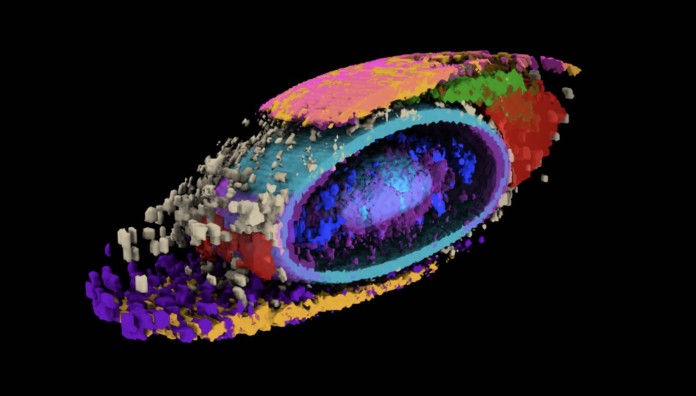
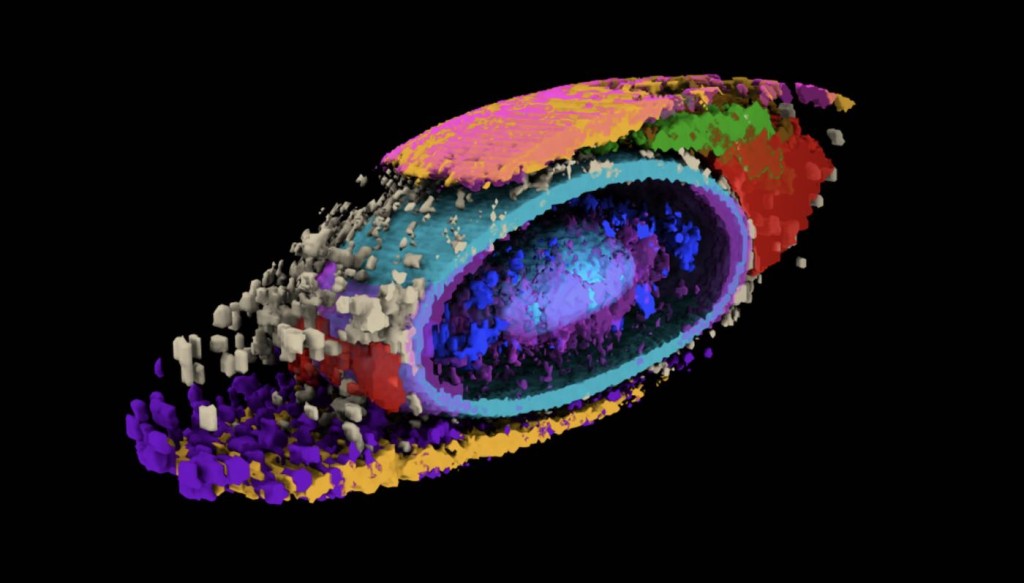
Interior Design of Human Cells is Mapped for the First Time, a Breakthrough That Could Revolutionize Healthcare

One of the first 3D renderings using the new technique shows the cell with 17 of its major components - Allen Institute for Cell Science
One of the first 3D renderings using the new technique shows the cell with 17 of its major components – Allen Institute for Cell Science

Scientists have just debuted a new way to see how cells organize themselves, shedding modern light on the building blocks of life.

In a new database of 200,000 images, scientists captured details about the rich variation in their shapes—even among genetically identical cells grown under the same conditions.

Published in the journal Nature this week, the research is the culmination of all the work the Allen Institute for Cell Science has been doing since it was launched 8 years ago.

This milestone in cell biology—akin to discovering “design principles” of the cell—unlocks the potential to find new treatments for diseases where cells malfunction—and the methods and findings are generalizable to virtually any cell.

For the study, researchers created a new method of analyzing human cells that produces a new type of information beyond genomics: computationally derived, 3D spatial organization and morphology—essentially, a cell’s shape and how its internal components are organized inside in three dimensions.

After they applied numbers and mathematical principles to cell organization, they uncovered the endless variation in cell shapes.

Using computational analyses, researchers developed what they call a “shape space” that describes external shape. This includes things like volume, elongation, and the “pear-ness” or “bean-ness” of its shape.

ANOTHER DISCOVERY: Regenerative Medicine Breakthrough: Cellular ‘Glue’ Heals Wounds, Potentially Regrows Nerves and Tissue

Allen Institute

The new data type will allow researchers to uncover the foundational principles of shape and internal organization. Understanding how cells organize their parts under healthy conditions—and the range of variability within “normal”—is key to understanding what goes wrong in disease.

Some early organizing principles we’ve discovered include:

  • Cells organize their internal structures in similar ways despite a wide variation in shape, demonstrating a “robustness of organelle location within a cell”
  • Position matters: cells at the edges of colonies seemed to have a specific shape and arrangement of organelles inside. These cells also have different protein expressions.

“Part of what makes cell biology seem intractable is the fact that every cell looks different, even when they are the same type of cell,” said Wallace Marshall, a Professor of Biochemistry and Biophysics at the University of California in San Francisco, and member of the Allen Institute’s Advisory Board.

RELATED: In a World First, Scientists Use Artificial DNA to Kill Cancer Cells

“This same variability that has long plagued the field is, in fact, an opportunity to study the rules by which a cell is put together (and) I expect that many others will adopt the same methodology.”

This paper also lays the groundwork for understanding a cell’s operating system, especially how three important factors relate—organization, behavior, molecular identity.

“We built all of this from scratch, including the metrics to measure and compare different aspects of how cells are organized,” said Ru Gunawardane, Ph.D., the Executive Director of the Allen Institute for Cell Science.

CHECK OUT: The Achilles Heel for Glioblastoma Cancer Discovered—a Rogue Protein that Turns Natural Defenses Off

“What I’m truly excited about is how we and others in the community can now build on this and ask questions about cell biology that we could never ask before.”

SHARE the Breakthrough With Science Lovers on Social Media…

How the Army Corps of Engineers Made Us Love Their 2023 Calendar: They Added Giant Cats! (And it’s Free)

Portland District US Army Corps of Engineers
Portland US Army Corps of Engineers

Engineering might be boring to over half the country, but this government agency got creative in imagining the purr-fect way to engage everyone.

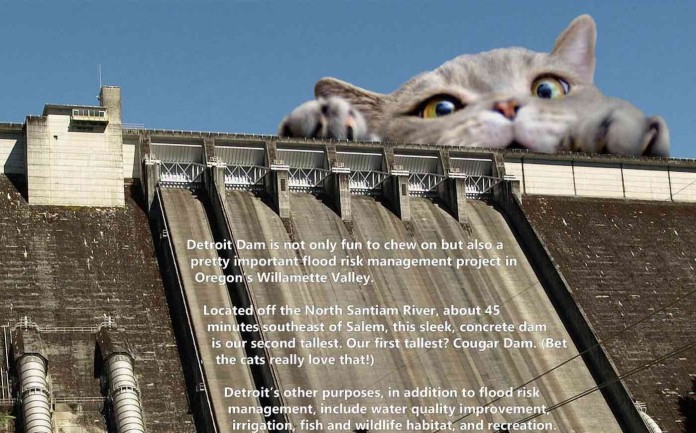
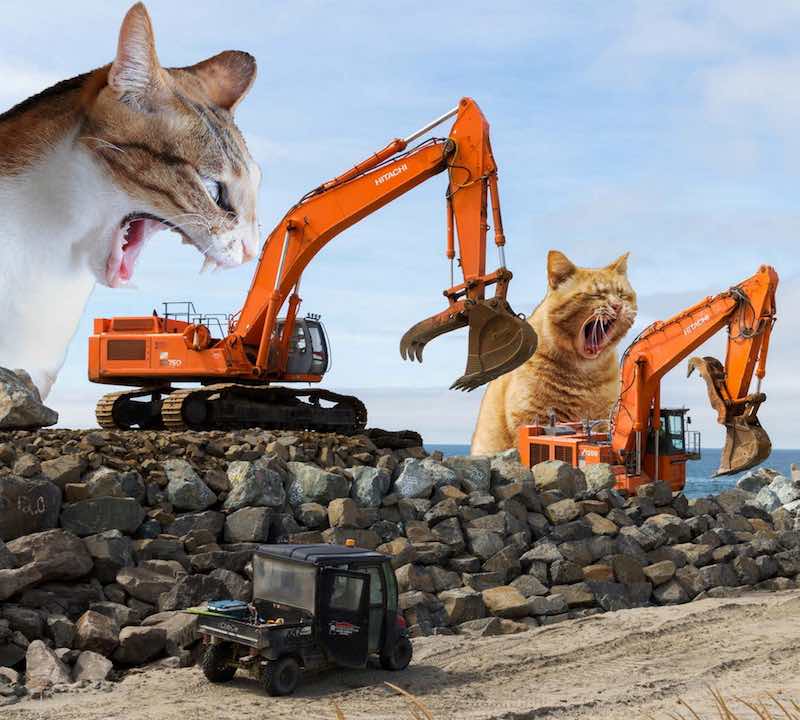
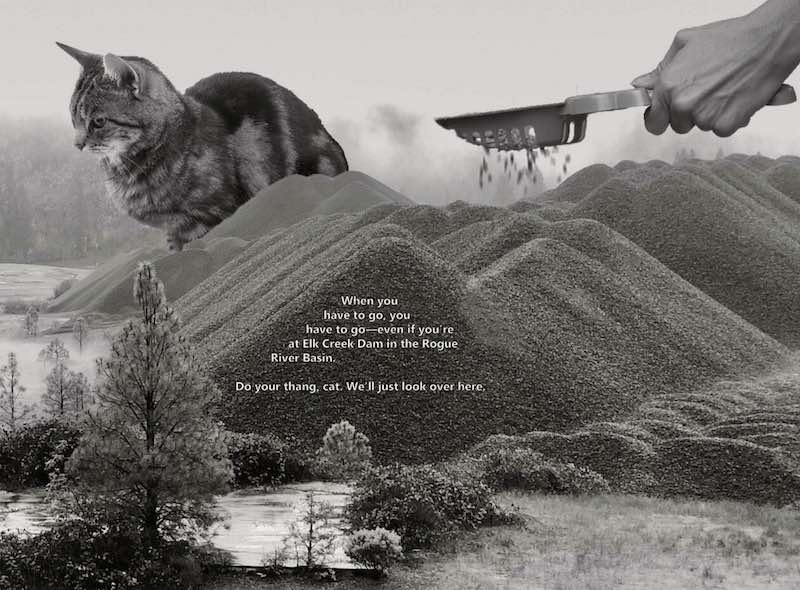
The new 2023 calendar highlighting the achievements of the US Army Corps of Engineers features giant cats superimposed in photos of their engineering successes.

The Portland District of the Corps needed an eye-catching way of showing off their civil works programs across Oregon and southwestern Washington.

The result is a collection of hilarious scenes.

The pages showcase cats lying on dams, stretching on steel beams, and dominating huge construction vehicles.

Because the Corps is a federal government agency, their calendar is in the public domain—and you can download their PDF file and print it yourself for free.

Portland District US Army Corps of Engineers

Further feline fun shows cats using cranes as dangle toys.

Portland District US Army Corps of Engineers

Monthly humorous captions include “Detroit Dam is not only fun to chew on but also a pretty important flood risk management project.”

Portland District US Army Corps of Engineers-SWNS

The District engineers operate locks and dams along the Columbia River, and provides flood risk management using dams in the Willamette Valley. It maintains Oregon’s coastal rivers for navigation and leads the Nation in hydropower generation.

CHECK OUT: The Funniest Wildlife Photos of 2022 Win Big Laughs in Comedy Wildlife Photography Awards

Because their work ensures “equal attention” to environmental protection, along with fish and wildlife, we’re glad they added a picture of a giant litter box to keep their sites tidy.

Portland US Army Corps of Engineers – SWNS

You can download the FREE file for printing here.

Hilarious Viral Video: Snoop Dog Narrating Planet Earth Lizard-Escape is Better Than Original

DON’T FORGET TO SPREAD the LAUGHS by SHARING This Story on Social Media…

Your 2023 Horoscope From Rob Brezsny: A ‘Free Will Astrology’

Our partner Rob Brezsny provides his weekly wisdom to enlighten our thinking and motivate our mood. Rob’s Free Will Astrology, is a syndicated weekly column appearing in over a hundred publications. He is also the author of Pronoia Is the Antidote for Paranoia: How All of Creation Is Conspiring To Shower You with Blessings. (A free preview of the book is available here.)

Here is your weekly horoscope…

FREE WILL ASTROLOGY – Week of January 7, 2023
Copyright by Rob Brezsny, FreeWillAstrology.com

CAPRICORN (Dec. 22-Jan. 19):
“I’m homesick all the time,” writes author Sarah Addison Allen. “I just don’t know where home is. There’s this promise of happiness out there. I know it. I even feel it sometimes. But it’s like chasing the moon. Just when I think I have it, it disappears into the horizon.” If you have ever felt pangs like hers, Capricorn, I predict they will fade in 2023. That’s because I expect you will clearly identify the feeling of home you want—and thereby make it possible to find and create the place, the land, and the community where you will experience a resounding peace and stability.

AQUARIUS (Jan. 20-Feb. 18):
Storyteller Michael Meade tells us, “The ship is always off course. Anybody who sails knows that. Sailing is being off-course and correcting. That gives a sense of what life is about.” I interpret Meade’s words to mean that we are never in a perfect groove heading directly towards our goal. We are constantly deviating from the path we might wish we could follow with unfailing accuracy. That’s not a bug in the system; it’s a feature. And as long as we obsess on the idea that we’re not where we should be, we are distracted from doing our real work. And the real work? The ceaseless corrections. I hope you will regard what I’m saying here as one of your core meditations in 2023, Aquarius.

PISCES (Feb. 19-March 20):
A Chinese proverb tells us, “Great souls have wills. Feeble souls have wishes.” I guess that’s true in an abstract way. But in practical terms, most of us are a mix of both great and feeble. We have a modicum of willpower and a bundle of wishes. In 2023, though, you Pisceans could make dramatic moves to strengthen your willpower as you shed wimpy wishes. In my psychic vision of your destiny, I see you feeding metaphorical iron supplements to your resolve and determination.

ARIES (March 21-April 19):
“My life was the best omelet you could make with a chainsaw,” observed flamboyant author Thomas McGuane. That’s a witty way to encapsulate his tumultuous destiny. There have been a few moments in 2022 when you might have been tempted to invoke a similar metaphor about your own evolving story. But the good news is that your most recent chainsaw-made omelet is finished and ready to eat. I think you’ll find its taste is savory. And I believe it will nourish you for a long time. (Soon it will be time to start your next omelet, maybe without using the chainsaw this time!)

TAURUS (April 20-May 20):
After meticulous research of 2023’s astrological omens, I have come to a radical conclusion: You should tell the people who care for you that you’d like to be called by new pet names. I think you need to intensify their ability and willingness to view you as a sublime creature worthy of adoration. I don’t necessarily recommend you use old standbys like “cutie,” “honey,” “darling,” or “angel.” I’m more in favor of unique and charismatic versions, something like “Jubilee” or “Zestie” or “Fantasmo” or “Yowie-Wowie.” Have fun coming up with pet names that you are very fond of. The more, the better.

GEMINI (May 21-June 20):
If I could choose some fun and useful projects for you to master in 2023, they would include the following: 1. Be in constant competition with yourself to outdo past accomplishments. But at the same time, be extra compassionate toward yourself. 2. Borrow and steal other people’s good ideas and use them with even better results than they would use them. 3. Acquire an emerald or two, or wear jewelry that features emeralds. 4. Increase your awareness of and appreciation for birds. 5. Don’t be attracted to folks who aren’t good for you just because they are unusual or interesting. 6. Upgrade your flirting so it’s even more nuanced and amusing, while at the same time you make sure it never violates anyone’s boundaries.

CANCER (June 21-July 22):
When she was young, Carolyn Forché was a conventional poet focused on family and childhood. But she transformed. Relocating to El Salvador during its civil war, she began to write about political trauma. Next, she lived in Lebanon during its civil war. She witnessed firsthand the tribulations of military violence and imprisonment of activists. Her creative work increasingly illuminated questions of social justice. At age 72, she is now a renowned human rights advocate. In bringing her to your attention, I don’t mean to suggest that you engage in an equally dramatic self-reinvention. But in 2023, I do recommend drawing on her as an inspirational role model. You will have great potential to discover deeper aspects of your life’s purpose—and enhance your understanding of how to offer your best gifts.

LEO (July 23-Aug. 22):
Are the characters in Carlos Castañeda‘s books fictional or real? It doesn’t matter to me. I love the wisdom of his alleged shaman teacher, Don Juan Matus. He said, “Look at every path closely and deliberately. Try it as many times as you think necessary. Then ask yourself, and yourself alone, one question. Does this path have a heart? If it does, the path is good; if it doesn’t, it is of no use.” Don Juan’s advice is perfect for you in the coming nine months, Leo. I hope you will tape a copy of his words on your bathroom mirror and read it at least once a week.

VIRGO (Aug. 23-Sept. 22):
Teacher and author Byron Katie claims, “The voice within is what I’m married to. My lover is the place inside me where an honest yes and no come from.” I happen to know that she has also been married for many years to a writer named Stephen Mitchell. So she has no problem being wed to both Mitchell and her inner voice. In accordance with astrological omens, I invite you to propose marriage to your own inner voice. The coming year will be a fabulous time to deepen your relationship with this crucial source of useful and sacred revelation.

LIBRA (Sept. 23-Oct. 22):
Libran philosopher Friedrich Nietzsche offered advice that is perfect for you in 2023. It’s strenuous. It’s demanding and daunting. If you take it to heart, you will have to perform little miracles you may not yet have the confidence to try. But I have faith in you, Libra. That’s why I don’t hesitate to provide you with Nietzsche’s rant: “No one can build you the bridge on which you, and only you, must cross the river of life. There may be countless trails and bridges and demigods who would gladly carry you across; but only at the price of pawning and forgoing yourself. There is one path in the world that none can walk but you. Where does it lead? Don’t ask, walk!”

SCORPIO (Oct. 23-Nov. 21):
How might you transform the effects of the limitations you’ve been dealing with? What could you do to make it work in your favor as 2023 unfolds? I encourage you to think about these question with daring and audacity. The more moxie you summon, the greater your luck will be in making the magic happen. Here’s another riddle to wrestle with: What surrender or sacrifice could you initiate that might lead in unforeseen ways to a plucky breakthrough? I have a sense that’s what will transpire as you weave your way through the coming months in quest of surprising opportunities.

SAGITTARIUS (Nov. 22-Dec. 21):
Sagittarian singer Tina Turner confided, “My greatest beauty secret is being happy with myself.” I hope you will experiment with that formula in 2023. I believe the coming months will potentially be a time when you will be happier with yourself than you have ever been before—more at peace with your unique destiny, more accepting of your unripe qualities, more in love with your depths, and more committed to treating yourself with utmost care and respect. Therefore, if Tina Turner is accurate, 2023 will also be a year when your beauty will be ascendant.

WANT MORE? Listen to Rob’s EXPANDED AUDIO HOROSCOPES, 4-5 minute meditations on the current state of your destiny — or subscribe to his unique daily text message service at: RealAstrology.com

(Zodiac images by Numerologysign.com, CC license)

SHARE The Wisdom With Friends Who Are Stars in Your Life on Social Media…

“Don’t try to ignore the hurt, because it is real. Just let the hurt soften you instead of hardening you.” – Bryant McGill

Quote of the Day: “Don’t try to ignore the hurt, because it is real. Just let the hurt soften you instead of hardening you.” – Bryant McGill 

Photo by: Ivana Cajina

With a new inspirational quote every day, atop the perfect photo—collected and archived on our Quotes page—why not bookmark GNN.org for a daily uplift?

Aussie Dad Recovers from Brain Tumor, Stroke, and Coma in 5 Month ‘Miracle’ to Spend Christmas at Home

Credit - Leslie Rutledge
Credit – Leisa Rutledge

A family in Australia had a lovely Christmas despite the second half of 2022 bringing enough medical misfortunes for a whole lifetime.

Danual Rutledge discovered in July he had a brain tumor, which would have been difficult enough, had he not suffered a stroke in his brain stem after surgery, and fallen into a coma after.

His wife Leisa had to relocate their family of three teenage kids to Brisbane for Danual’s treatment, during which time they were called to the hospital to “possibly say goodbyes.”

No one knew what kind of Danual would be there when he woke up; if he woke up.

Fast-forward to December and Rutledge did, in fact, wake up. Then he began talking, and can even walking again, bringing the neurosurgeon to discharge him from the hospital by saying “Dan, you’re a complete medical miracle.”

Leisa detailed to ABC News Australia that he started his long/short road to recovery tracing letters on her hand to spell out words, with the first being ‘I’m I ever going to walk or eat again?”

His neurosurgeon however responded with ‘yes’ which gave the shattered man confidence to persevere with his recovery. He’s now completed several months of speech, physical, and occupational therapies.

This December, the family returned to their home in the city of Yeppoon, just in time for Christmas Day.

MORE MIRACLES: Miracle Preemie Baby Born the Size of an iPhone Came Home For Christmas After a Year of Fears That He May Not Survive

“It was hard, there were times where I started to get really down, thinking I’m never going to be any good… but Leisa kept pushing me the whole time,” Rutledge told ABC.

His goal is to get back to fixing things around the house, drive his car, and perhaps above all, play golf again.

SHARE This Absolute Miracle With Your Friends On Social Media… 

British Company Develops First Tractor in the World to be Completely Powered by Cow Dung

A Cornish company has developed a ‘world first’ and created a tractor powered solely by cow poo. The blue 270-horsepower prototype was unveiled earlier this month and is fitted with a game-changing fuel tank technology making it the first tractor of its kind to be fueled by liquid-methane gas.See SWNS stlory SWLNtractor. The tractor powered by animal excrements with help farmers to become both energy independent and 'better' than carbon neutral. The New Holland T7 Methane Power Liquefied Natural Gas tractor was created by Bennamann, a company based Aerohub Business Park near Newquay who have spent over a decade researching and developing biomethane production to establish a way to turn methane gas into fuel. The tractor was created in partnership with New Holland’s parent company CNH Industrial and was put through its paces during a pilot run on a farm in Cornwall earlier this year. To create the liquified fuel, the methane gas is first collected and stored in one of Bennamann’s on-farm biomethane capture and storage systems.
– SWNS

New Holland’s brand new tractor runs on liquified methane, allowing farmers to decrease their emissions and save money on expensive diesel.

But that isn’t the only reason it’s more efficient, as the company says the fuel can easily be produced by methane from cow pies, allowing for a more circular economic model in the most circular of industries.

The pioneering 270hp tractor is claimed to be a match for the performance of standard diesel-powered versions. The groundbreaking machine was developed by British company Bennamann, which has been researching and developing biomethane production for over a decade.

Waste byproducts from a herd as small as 100 cows are turned into a fuel called fugitive methane in a biomethane storage unit based on the farm.

A cryogenic tank fitted on the tractor keeps the methane in liquid form at -162 degrees°C giving the vehicle as much power as a diesel but with significant emission savings.

It was put through its paces during a pilot run on a farm in Cornwall where carbon dioxide emissions were slashed from 2,500 metric tons to 500 metric tons in just a year.

YOU MAY ALSO LIKE: Nutrient-Rich Human Waste is Poised to Sustain Agriculture and Improve Economies, Say Researchers

“The T7 liquid methane-fuelled tractor is a genuine world-first and another step towards decarbonising the global agricultural industry and realizing a circular economy,” said Bennamann co-founder Chris Mann.

The company is also investigating the wider uses of the technology and hope it could one day be used to charge electric vehicles in rural locations.

The Cornwall and Isles of Scilly Local Enterprise Partnership (LEP) are now co-funding a study to assess the scale of fugitive methane emissions in Cornwall, the location of Bennanmann’s headquarters.

They will investigate the current emissions from sites such as dairy farms and wastewater treatment plants.

MORE AGRICULTURE NEWS: Sharp-Shooting Farm Robot Can Treat 500,000 Plants Per Hour With 95% Decrease in Chemical Sprays

The partnership will also study the future potential use of biomethane as a fuel for the likes of transport and agriculture.

“If we can make our agriculture industry energy-independent in the face of soaring input costs and volatile energy prices, while reducing emissions, then we can provide a huge economic boost for rural communities, greater food security, and move towards net zero,” said chair of the LEP, Mark Duddridge.

“These applications are not limited to agriculture or Cornwall. They are global.”

WATCH the company explain how it works… 

SHARE This Terrific Tractor Innovation With Your Friends…

These ‘Moonwalker’ Shoes Let You Walk at the Speed of Your Run

Shift Robotics - YouTube
Shift Robotics – YouTube

This summer, a pair of strap-on shoes will be available that allow you to walk at the speed of a run.

Aptly titled, “Moonwalkers” a set of eight wheels per shoe move your feet as if you were on a moving walkway at an airport.

The obvious question is, ‘how is that different from a rollerskate?’ with the answer being that the wheels move only when you do, and only when you reach a regular walking stride.

On stairs, entering or exiting public transit, or in crowded areas, the wheels won’t move a millimeter.

Designed by an American tech start-up called Shift Robotics, they accelerate normal walking pace to around 6.8 mph, around the clip of a comfortable run. Their crack team from the Carnegie Mellon Institute consisted of jet propulsion engineers, race car technicians, and running shoe designers.

“I asked myself why I never walked to work – and it’s not just me, a lot of people don’t rely on walking, which is surprising considering it’s much safer, easier and more convenient, plus it’s better for the environment,” Zhang Xunjie, founder of Shift Robotics, said in a statement.

SIMILAR: Shoes Made From Coffee Grounds and Recycled Plastic Bottles Are Not Only Waterproof But Super Comfy

“The problem is that walking is just too slow and inefficient. So I made it my mission to enhance walking instead of replacing it”.

Simple gestures, the raising or pivoting of the heel, switches the shoe from locked to moving mode, allowing a rather seamless transition between speed and safety. Inside the shoes are algorithms that can learn the wearer’s natural walking pace in under 10 steps.

Price points are not available at the moment, but they will be shipping this summer.

WATCH Them move, and hear the story of how they were made… 

SHARE This Wild Way To Walk With Your Friends… 

Alpacas and Llamas in Cornwall Enjoy Festive Feast of Christmas Trees After Unique Recycling Appeal by Owner

Chy Lowen Alpacas Tregaswith / SWNS News

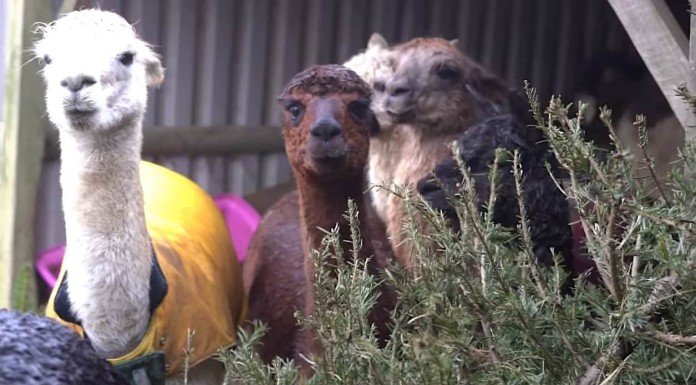
After our own Christmas dinners had long been finished, some British llamas and alpacas finally got to enjoy their own festive feast after their farm received a glut of donated Christmas trees.

Mary Harvey, who runs CHAT (Chy Lowen Alpacas Tregaswith) in Cornwall, revealed the camelids ‘love’ to munch on Christmas trees in an appeal on social media.

She was inundated with trees. One tree lasts about a week, however, they now have enough to last the herd a whole three months.

Mary said alpacas and llamas like to graze on hedgerows, but there isn’t much available in winter, so Christmas trees provide a tasty and long-lasting alternative.

Chy Lowen Alpacas Tregaswith – Facebook

Christmas trees of pine, spruce, or fir, are a source of vitamin C and antioxidants, making them great dietary supplements for both alpacas and llamas (and humans besides). Pound for pound, they contain more vitamin C than lemons or oranges.

CHAT is a non-profit organization that is dedicated to helping children and young adults with a variety of issues using animal-assisted intervention.

SHARE This Funny Animal Story With Your Friends… 

“Surrender does not simply mean to give up; more to give up one’s usual self and allow something to enter and redeem the psyche where genius resides.” – Michael Meade

Quote of the Day: “Surrender does not simply mean to give up; more to give up one’s usual self and allow something to enter and redeem the psyche where genius resides.” – Michael Meade

Photo by: Jon Tyson

With a new inspirational quote every day, atop the perfect photo—collected and archived on our Quotes page—why not bookmark GNN.org for a daily uplift?

Breakthrough Obesity Treatment in Early Research Can Target Bad Fat Anywhere in the Body

Illustration of depot-specific targeting of fat by cationic nanomaterials. Credit Nicoletta Barolini - Columbia University
Illustration of depot-specific targeting of fat by cationic nanomaterials.
Credit Nicoletta Barolini – Columbia University

Folks struggling with obesity might wonder that with all the medical miracles modern technology has produced, how come there isn’t a more sure-fire way to get rid of excess body fat?

Well now, researchers at Columbia University have found that a positively charged nanomaterial called P-G3 interacts with negatively charged fat cells in obese mice that could open the door to precision non-invasive body fat removal.

As fat cells (adipocytes) take on energy in the storage form of fats, called lipids, genetic changes cause them to behave in a chronically obese manner, and not like that of a fat cell from a normally-weighted person.

Reversing these changes is at the heart of the Columbia researchers’ experiment. Discovering that the structure of the cell’s exterior was negatively charged, they thought it might act as a transporter for their P-G3 nanomaterial, but they were surprised to find it acted on the cell by shutting down the lipid storage functions of the adipocytes.

This however did not interfere with the cells’ other functions. In the mice who received the P-G3 injections, their adipocytes reverted to more metabolically healthy fat cells, the kind one might find in newborns or athletes.

SIMILAR: Breakthrough Using CRISPR to Target Fat Cells in Genetic Study of Obesity

“With P-G3, fat cells can still be fat cells, but they can’t grow up,” said study author Kam Leong. “Our studies highlight an unexpected strategy to treat visceral adiposity and suggest a new direction of exploring cationic nanomaterials for treating metabolic diseases.”

Lead author Lei Qiang believes they have found the “secret” to targeting fat in a specific way in specific places, saying in a press release that “now we can shrink fat in a depot-specific manner—anywhere we want—and in a safe way without destroying fat cells. This is a major advance in treating obesity.”

LEARN MORE: Specific Gut Bacteria Extract More Energy Which Seems to be Associated with Obesity

Qiang et al’s work was published in two papers: the first targeting subcutaneous fat which is found under skin tissues and which produces flabby arms, and visceral fat which produces pot bellies, according to the university press.

Know Someone Trying To Lose Weight? SHARE This Interesting Research…

Aztecs Used the Mountains to Create Sophisticated Farming Calendar that Even Accounted for Leap Years: Study

Ben Meissner
Mount Tlaloc observatory – Ben Meissner

Without clocks or modern tools, ancient Mexicans watched the sun to maintain a farming calendar that precisely tracked seasons and even adjusted for leap years.

In the early 16th century, the largest city in Spain had a population of less than 50,000, whereby in contrast the land the Spanish were on the verge of conquering could sustain millions.

By this time, the people living in the Mexican Basin had been using a calendar so precise, that it allowed them to time the planting of their crops to avoid the dangers of hot dry springs and summer monsoons, and detect both equinoxes, as well as both solstices, and leap years.

Research now compiled by the University of California, Riverside, shows how the Aztec, or Mexica as they called themselves, were able to achieve such accuracy in timing the seasons and the weather.

“We concluded they must have stood at a single spot, looking eastwards from one day to another, to tell the time of year by watching the rising sun,” said Exequiel Ezcurra, distinguished UCR professor of ecology who led the research.

RELATED: Amaranth is a Health Trend 8,000 Years Old That ‘Could Feed the World’

That single spot was identified through Mexica manuscripts that tell of a Mount Tlaloc east of the Mexican Basin. Using computer modeling of the sunrise, Ezcurra et al. determined that atop this sacred mountain lies a temple, and that on the first day of the Mexica New Year, Feb. 24th, the sun would have risen precisely behind a causeway-like structure on the temple seen in the image above.

“Our hypothesis is that they used the whole Valley of Mexico. Their working instrument was the Basin itself. When the sun rose at a landmark point behind the Sierras, they knew it was time to start planting,” Ezcurra said. “The Aztecs were just as good or better as the Europeans at keeping time, using their own methods.”

MORE STORIES LIKE THIS: Fun Facts and Strange Customs to Celebrate the Vernal Equinox

By using a fixed point of sunrise, the Aztecs were able to account for very particular celestial phenomena, for example “solar declination.” In winter, due to the tilt of the Earth, sunrise occurs below the celestial equator and appears from the Mexican Basin in the southeastern sky, while during summer the reverse happens, and the sun swings round to the northeast.

Other topographical features have been observed as potentially having a place in the calendar system, for example the sun rises behind Mount Telapón on October 15th, and behind Mount Tehuicocone on the Winter Solstice.

SHARE This Ancient Wisdom With Your Friends… 

This Startup Captures CO2 by Injecting it Straight into Volcanic Rock–Plentiful in Barren Part of Kenya

Francis Kimani - courtesy Cella Mineral Storage
Francis Kimani – courtesy Cella Mineral Storage

A startup in Kenya is growing minerals by capturing CO2 from the air and storing it deep underground in volcanic basalt.

Far from the fertile grasslands of Tsavo or Amboseli national parks, northern Kenya is a more barren land owing to its volcanic past. When the basalt rock 1,300 feet underground comes into contact with CO2—for instance when it’s pulled from the atmosphere, a chain reaction occurs that could kick start a continental climate revolution.

Cella Mineral Storage is a startup that’s partnering with Kenya’s flourishing geothermal energy sector to offer a zero-emissions permanent carbon sequestration solution. They’re planning to attach a facility that pulls CO2 from the air and deposits it underground where the geothermal plant is drilling to generate electricity.

Owing to poor access to electricity and unreliable grids, Africa is the furthest along to becoming a climate-neutral continent.

Kenya however is uniquely positioned to take advantage of solar, wind, and most importantly, geothermal energy sources. The government hopes to become the continent’s largest exporter of carbon credits—a digital asset that represents an investment in carbon capture programs to offset the emissions from a particular company’s operations.

“When you’re thinking about large-scale carbon removal, it makes the most sense in a place where there’s a ton of renewables,” Claire Nelson, CEO of Cella Mineral Storage, told Fast Company.

CHECK OUT: This Startup Uses Volcanic Rock Dust to Capture Carbon on Farms

Roughly half of Kenya’s electricity needs are met with geothermal, and renewables in total supply 92% of the current use demand for power. There’s so much geothermal electricity going around that in fact there’s a surplus so large it could power 20 large carbon capture stations.

Currently Cella has not given estimates on how much carbon dioxide these capture stations would indeed capture, but looking at similar installations can give clues.

RELATED: World’s First Ocean-Assisted Carbon Removal Plant Launched in Hawaii

In June GNN reported on Tata Chemicals’ large carbon capture plant, which captures 40,000 metric tons of carbon dioxide each year—the equivalent to taking over 20,000 cars off the roads. Another large project in Iceland, which will use the exact same set up and methods as Cella will in Kenya, captures 4,000 tons per year.

If the Iceland plant is so similar, a fact Fast Company added in its own report on Cella’s work, then at 20x capacity their stations in northern Kenya would be capturing 80,000 tons of carbon dioxide each year.

SHARE This African Innovation With Your Climate Concerned Friends… 

Vaccine that Could Cure and Even Prevent Brain Cancer Developed by Scientists

MRI of a glioblastoma - CC 2.5. Christaras A
MRI of a glioblastoma – CC 2.5. Christaras A

In Boston, a potentially-revolutionary treatment for deadly brain cancer is showing promising early signs in mice both for the eradication and prevention of tumors and individual cancer cells.

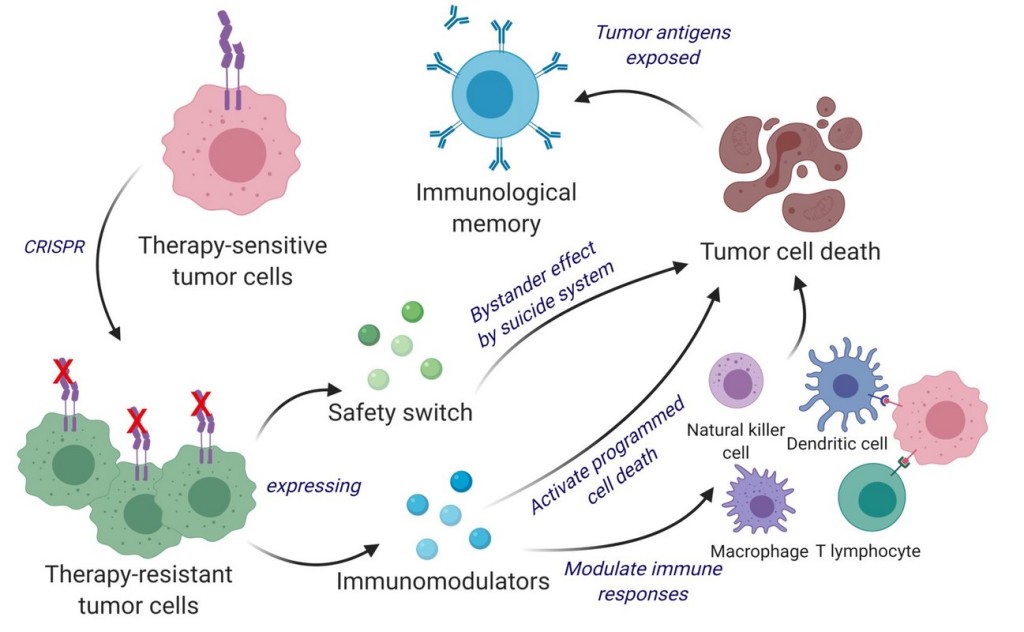
A vaccine in the true sense of the word, the method involves repurposing living cancer cells to destroy the tumors which spawned them.

Cancer cells have very particular characteristics, one of which potentially makes them even better cancer-killers than immune molecules. That characteristic is their ability to travel long distances through the body returning to the tumor they came from.

By using a similar technique to CRISPR called CRISP-CAS9, researchers at Brigham and Women’s Hospital in Boston were able to change proteins within the living cancer cells to prime tumors and other cells for destruction. The priming got the immune system involved, which then resulted in the mice in immunological memory just like vaccines for viruses.

In experiments, it worked on mice carrying cells derived from humans, mimicking what will happen in patients, which had the deadliest form of brain cancer called glioblastoma.

MORE LIKE THIS: Achilles Heel for Glioblastoma Discovered—a Rogue Protein that Turns Natural Defenses Off

“Our team has pursued a simple idea: to take cancer cells and transform them into cancer killers and vaccines,” said corresponding author Dr Khalid Shah.

“Using gene engineering, we are repurposing cancer cells to develop a therapeutic that kills tumor cells and stimulates the immune system to both destroy primary tumors and prevent cancer.”

– Shah et al

Glioblastomas have one of the lowest survival rates of any cancers, with fewer than 10% of patients living past 3 years.

MORE MEDICINE NEWS: Light Therapy is Harnessed to Target and Kill Cancer Cells in This World First

CRISPR has almost the ultimate potential to eliminate cancer through gene-editing, but targeting exactly which genes to edit in cancerous or non-cancerous cells is a matter of serious research.

“Throughout all of the work we do, even when it is highly technical, we never lose sight of the patient,” said Dr. Shah. “Our goal is to take an innovative but translatable approach so that we can develop a therapeutic, cancer-killing vaccine that ultimately will have a lasting impact in medicine.”

DOo You Believe In A Cancer Cure In Your Lifetime? ASK Your Friends… 

“When you are immune to the opinions and actions of others, you won’t be the victim of needless suffering.” – Don Miguel Ruiz

Quote of the Day: “When you are immune to the opinions and actions of others, you won’t be the victim of needless suffering.” – Don Miguel Ruiz

Photo by: Daniel Schaffer

With a new inspirational quote every day, atop the perfect photo—collected and archived on our Quotes page—why not bookmark GNN.org for a daily uplift?

Livin’ Good Currency Ep. 27: Alex Amouyel on Starting a Life Impact Audit

The Lesson: Everyone can make an impact if they give 10%—effort, time, money, etc. to ensuring that across all dimensions of life they are making a positive impact rather than a negative one. Sometimes it takes a hard look in the mirror, but it’s always worth it in the end.

Notable Excerpt: “[Do] an audit of your life across all the different categories. So career and job is one of them, but also your money, volunteering, your side-hustles, your family or the institutions you’re part of, look at all your life and first start rating it by how much time are you spending on these categories and then whether you’re having a positive-neutral-negative effect.”

The Guest: Alex has spent over 15 years working in the social impact space for one of the largest children’s nonprofits. Save the Children and the Clinton Foundation. She now leads MIT Solve.

As a founding Executive Director of Solve. Alex has built and now oversees a fast-growing team whose mission is to drive innovation, to solve global challenges. Their team finds funds and supports the most promising social innovators in entrepreneurs all around the world.

To date solve has brokered funding commitments of over 60 million to their “solver” teams and entrepreneurs worldwide.

The Podcast: Livin’ Good Currency explores the relationship of time to our lives. It focuses on learning how super-successful people align their purpose with their passions to do good for themselves and others daily, and features a co-host who knows better than anyone the value of time (see below). How do you want to spend your life? This hour can inspire you, along with upcoming guests, to be sure you are ‘Livin’ Good Currency’ and never get caught running out of time.

The Hosts: Good News Network fans will know Tony (Anthony) Samadani as the co-owner of GNN and its Chief of Strategic Partnerships. Co-host Tobias Tubbs was handed a double life sentence without the possibility of parole for a crime he didn’t commit. Behind bars, he used his own version of the Livin’ Good Currency formula to inspire young men in prison to turn their hours into honors. An expert in conflict resolution, spirituality, and philosophy, Tobias is a master gardener who employs ex-felons to grow their Good Currency by planting crops and feeding neighborhoods.

Episode Resources:
 
Alex Amouyel | instagram
Alex Amouyel | Twitter
Your Impact Life | Website
SolveMIT | Twitter

Are you ready to start your health journey today? Go to viome.com/goodcurrency to get $50 off Viome’s Full Body Intelligence test or bundle, the most advanced at-home health test currently available to consumers. Use Promo Code: CURRENCY50

Hero or Nuts, He Ran a Marathon Every Day in 2022–And Then Went to Work at His Job–Raising a Million for Charity

sporlab

For many, running a marathon is an accolade of life, a culturally-fixed way of proving athletic ability and determination—but for Gary McKee, it’s literally just another day in the office.

McKee ran a marathon every day of 2022 to raise money for cancer treatment, and a simple multiplication problem of 26.2 x 365 will reveal he ran 9,500 miles (15,300km) during the year, equivalent to crossing the United States three times.

He ran through 20 pairs of running shoes, and what’s more, his marathon was only a prelude to going to work in the morning at the Sellafield nuclear site.

On New Year’s Eve he finished his final marathon to cheering crowds and fireworks near his Cumbrian home. News came in that he had raised £1 million in donations for Macmillan Cancer Support and West Cumbria Hospice at Home.

“It’s not the distance, it’s because it’s the last one. It’ll be a special day. Cancer affects everybody so it isn’t just a west Cumbrian thing, it’s a national thing,” McKee told the BBC at breakfast ahead of his final run.

“I just hope that people do get behind us and we do raise that million pounds. If we don’t, it won’t be because I haven’t run 365 marathons.”

MORE ATHLETIC NEWS: NBA Basketball Star Donates Full Salary This Season to Build Hospital in DR Congo to Honor Father

“It’s difficult to put into words how grateful we are to Gary for taking on this unbelievable challenge,” said Hayley McKay, director of funding and communications for Hospice At Home West Cumbria. “The physical and mental strength he has shown is incomprehensible.”

After McKee was finished, he expressed his contentment in laconic terms, telling the BBC “we’ve done the job.”

SIMILAR: Nebraska Teen Runner Helps Competitor Finish Race After He Collapsed, Giving Up His Own Qualifying Hopes

He celebrated with his supporters; a “Marathon Man IPA” in his hands on what was a cold and rainy, yet intensely satisfying December day.

WATCH the start and finish of his final marathon… 

SHARE This Unbelievable Feat Of Athletics For A Good Cause On Social Media…

Life Might Be Found on One of Saturn’s Moons Without a Spacecraft Even Needing to Land

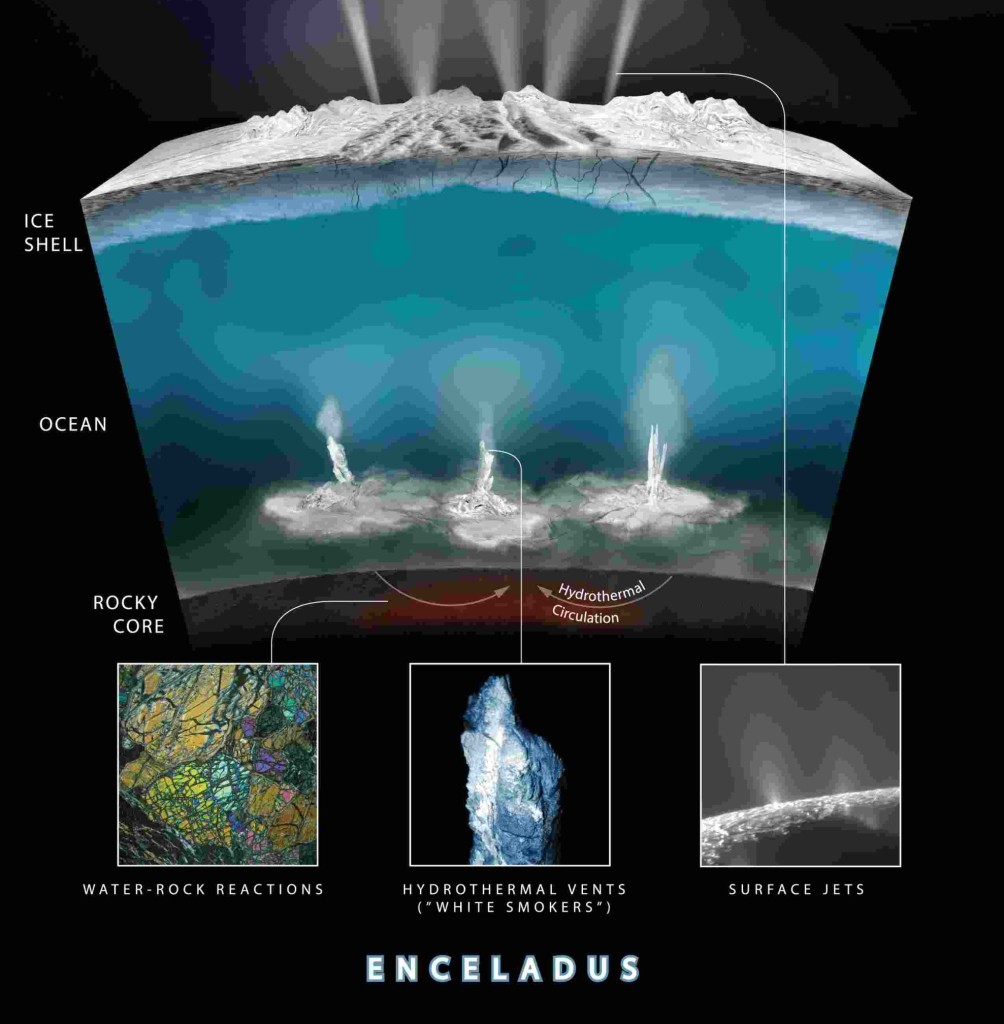
Artists rendition of Enceladus Credit: NASAJPL-Caltech
Artists rendition of Enceladus Credit: NASA/JPL-Caltech

Evidence of life on the icy Saturnine moon of Enceladus could be uncovered by a robot spacecraft sampling plumes of methane jetting out of its liquid interior, scientists suggest.

All NASA needs would be a robot that can either sample these plumes, or punch through the planet’s icy exterior to what we now know is a warm, salty ocean below.

When it was first surveyed by NASA in 1980 it looked like a not-too-exciting snowball in the sky.

A second NASA mission between 2005 and 2017 found its thick layer of ice hides a vast, warm saltwater ocean outgassing methane, a gas that typically comes from microbes on Earth.

The methane was discovered when the mission’s Cassini spacecraft flew through giant water plumes erupting from the surface of Enceladus.

Last year, scientists from the University of Arizona in the US and Université Paris Sciences et Lettres in France worked out that if life has emerged on Enceladus, this could explain why methane is found there.

While the number of bacteria in its ocean would be small, all it would need to uncover them would be a visit from a robot spacecraft.

Professor Régis Ferrière from the University of Arizona recently lead a study that showed how a well-equipped robot wouldn’t even need to land on Enceladus, but only fly through one of its plumes to “confidently” determine whether life has evolved there.

Why Enceladus?

One of Saturn’s 83 moons, the surface is like a frozen pond glinting in the sun, and it reflects light like nothing else in the solar system.

Along the moon’s south pole, at least 100 giant water plumes erupt through cracks in the icy landscape created by Saturn’s gravity. The excess methane expunged in the plumes resembles Earth’s hydrothermal vents found under the sea where two tectonic plates meet each other.

Where they meet, hot magma below the sea floor heats the ocean water in the porous bedrock creating “white smokers” which release scorching hot, mineral-rich sea water.

RELATED: NASA Measures Interior of Mars for the First time, Revealing Huge Liquid Core

Tiny organisms under the sea have no access to sunlight so they need the energy from chemicals released by white smokers to stay alive.

“On our planet, hydrothermal vents teem with life, big and small, in spite of darkness and insane pressure,” Ferrière recently explained. “The simplest living creatures there are microbes called methanogens that power themselves even in the absence of sunlight.”

Methanogens convert dihydrogen and carbon dioxide to gain energy and release methane as a byproduct.

The researchers’ calculations were based on the theory that Enceladus has methanogens that inhabit oceanic hydrothermal vents resembling the ones found on Earth.

MORE LIKE THIS: NASA Detects Carbon Dioxide–the Building Block of Life–in Exoplanet’s Atmosphere for First Time

The team worked out what exactly the total mass of methanogens on Enceladus would likely be, as well as the likelihood that their cells and other organic molecules could be ejected through the plumes.

The team say any regions of Enceladus that contain life would feed the plumes with just enough cells or organic materials to be picked up by instruments on a future space ship.

The team say a future mission may struggle to find direct evidence of life but the presence or absence of certain organic molecules, such as particular amino acids, would serve as indirect evidence for or against an environment abounding with life.

CHECK OUT: NASA Probe Enters the Sun’s Atmosphere for the First Time, Immediately Teaching Us New Things About Our Star

“The definitive evidence of living cells caught on an alien world may remain elusive for generations,” said the study’s first author Dr. Antonin Affholder. “Until then, the fact that we can’t rule out life’s existence on Enceladus is probably the best we can do.”

Scientists now want to go back to Enceladus and one mission proposes to land there in the 2050s to collect “extensive” data about it.

Hundreds of Mayan Cities and Towns with Ball Courts and Roads Discovered in LiDAR Survey in Guatemala

La Danta Pyramid at El Mirador - CC 2.0. Dennis Jarvis
La Danta Pyramid at El Mirador – CC 2.0. Dennis Jarvis

Researchers studying the Mayan Empire have discovered that hidden under the rainforests of Guatemala were more than 900 habitations including at least 4 large cities and thousands of yards of raised causeways connecting them.

Together the research reveals the true scope of territorial reach and technological sophistication of the Maya like never before.

The revolutionary method that led to this discovery was a light detection and ranging (LiDAR) survey, which uses lasers to give centimeter-accuracy of the terrain features below a forest canopy, effectively allowing archaeologists to do what used to take decades of expensive excavations with a few fly overs in a plane.

650 square miles across northern Guatemala’s Mirador-Calakmul Karst Basin (MCKB) revealed 30 of the famous ball courts of the Ancient Mesoamerican team sport, 195 cement reservoirs which literally drained nearby lakes dry, and 110 miles of elevated walkways connecting 417 villages.

All of this dates to the middle and late Preclassical period of Mayan History, contemporary with such famous events in the Near East as the sack of the ancient Elamite capital of Susa by Assyria, the destruction of the Temple of Solomon by the Babylonians, and the Greco-Persian Wars including the Battle of Thermopylae.

The past 40 years of traditional excavations in the MCKB revealed around 56 sites, including the city of El Mirador, which contains the largest stone pyramid in the history of the Mayan world, La Danta. 205,508 limestone blocks comprise La Danta, and since it’s even larger than the great pyramid of Giza, would likely have required 6 to 10 million days of labor to build.

A great power of organization

“The skeleton of the ancient political and economic structure as a kingdom-state in the middle and late Preclassic periods has a tantalizing presence in the Mirador-Calakmul Karst Basin,” the research team, led by Idaho State University archaeologist Richard D. Hansen, concluded in its recent study on the LiDAR survey in Ancient Mesoamerica.

As seen in this Twitter post, having only a topographical visualization of the MCKB, the challenge of trying to make sense of each individual site’s level of sophistication was a big one, and the researchers utilized a tiered system with 6 levels. El Mirador with its enormous pyramid is the highest tier, and the other areas march backwards from it.

The authors set definitions for city, town, and village, but admit that their data is limited to visible features on the surface.

MORE LIDAR NEWS: Almost 500 New Mesoamerican Structures Discovered By Using Lasers

“To further complicate issues, the Mirador Basin Project has identified an astonishing presence of “invisible” house mounds, with packed earthen floors, postholes, and Preclassic pottery in situ, but with no surface indications of architecture,” the authors write, explaining that some settlements could be larger than the surface architecture suggests.

“The consistency of architectural forms and patterns, ceramics, sculptural art, and unifying causeway constructions within a specified geographical territory suggests a centralized political, social, and economic organic solidarity among the occupants,” they continue.

“The magnitude of the labor in the construction of massive platforms, palaces, dams, causeways, and pyramids dating to the Middle and Late Preclassic periods throughout the MCKB suggests a power to organize thousands of workers and specialists, ranging from lime producers, mortar and quarry specialists, lithic technicians, architects, logistics and agricultural procurement specialists, and legal enforcement and religious officials, all operating under a political and ideological homogeneity.”

YOU MAY ALSO LIKE: Incredible Discovery Beneath the Southern Amazon Reveals Urban-Agrarian Society Never Seen Before

Poor soil conditions in tropical rainforest has long been cited as a limiting factor of Mesoamerican civilization, but not only was it not a problem for the leaders ruling in El Mirador to organize thousands of people for the occasional, Stonehenge-like effort, but for regular construction projects on a vast scale over hundreds of years.

SHARE This Transformative Discovery With Your Friends On Social Media…