










All News - Page 340 of 1714 - Good News Network
Home Blog Page 340

Cold Water and Air Increase “Good” Body Fats Says a Review of More Than 100 Studies


Cold water immersion has long been known to the northern Europeans as a fortifying activity, but the science behind this bizarre cultural/medicinal practice is actually way cooler.

In a recent review of more than 100 studies, scientists determined that one of the most significant changes that occurs in the body during exposure to cold air, but especially cold water, is that white fat adipose tissue is converted into brown fat adipose tissue, (BFAT).

BFAT is kind a like a “working fat,” rather than a storage fat, because it burns calories to maintain body temperature to repel the cold, unlike “bad” white fat which stores the energy up.

Experts say the increasing popularity of cold exposure to air or water, sometimes called “cryotherapy” will have an impact on fats could prevent obesity and cardiovascular disease.

Dunking yourself in cold water during the winter months has also been found to reduce the risk of diabetes by significantly increasing insulin sensitivity and decreased insulin concentration.

Adiponectin is produced by BFAT, and it plays a vital role in protecting against insulin resistance, diabetes, and other diseases. Cold water dips’ impact on insulin worked for experienced and inexperienced swimmers alike.

Another huge benefit of cold water immersion that doesn’t relate to obesity is that being up to your neck in water around 40°F, your brain’s production of norepinephrine increase 300% in just a few minutes, while a dunk long enough to convert your WFAT cells to BFAT cells, at more manageable temperatures of 57°F, will increase norepinephrine by 500%.

Norepinephrine is similar to adrenaline, and leads to a feeling of positive elation. It’s also a neurotransmitter, basically meaning it facilities the speed of brain activity.

RELATED: Need a Rest? New Research Says Squatting or Kneeling May Have Far More Health Benefits Than Sitting Down

The study was carried out by The Arctic University of Norway and University Hospital of North Norway

“From this review, it is clear that there is increasing scientific support that voluntary exposure to cold water may have some beneficial health effects,” said lead author James Mercer, from UiT.

“Many of the studies demonstrated significant effects of cold-water immersion on various physiological and biochemical parameters,” but, he added, “based on the results from this review, many of the health benefits claimed from regular cold exposure may not be causal.”

“Instead, they may be explained by other factors including an active lifestyle, trained stress handling, social interactions, as well as a positive mindset,” he concluded.

SIMILAR: In Bid to Combat Obesity, a Simple Patch Turns Energy-storing Fats into Energy-burning Fats

Mercer may be cautious in his conclusions, but other researchers are less so. Popular science communicator Rhonda Patrick Ph.D. has put together her own review of the literature, and while the obligatory “may” is placed before any conclusion, Dr. Patrick feels much more strongly that these results are causal.

“Studies in animals and humans have indicated that brown fat can improve glucose and insulin sensitivity, increase fat oxidation, and protect against diet-induced obesity,” Patrick outlines.

READ ALSO: How You Think About Your Pain Can Make it Worse – But New Reprocessing Treatment Offers Cure

“Cold exposure also increases brown fat volume, drives glucose uptake, and increases oxidative metabolism in brown fat. Cold-induced glucose uptake in brown fat exceeds the rate of insulin-stimulated glucose uptake in skeletal muscle in healthy humans”.

There are tens of thousands of papers done on the physiology of people who lead an active lifestyle, but only a small percent involve cold-water immersion. The stark changes in key cardio-metabolic markers makes for a persuasive argument that taking a cold bath or going swimming in a cold pool is, in fact, all it’s cracked up to be.

SEE What Your Friends Think Of This Chilling Science…

“A real scientist solves problems, not wails that they are unsolvable.” – Anne McCaffrey

Quote of the Day: “A real scientist solves problems, not wails that they are unsolvable.” – Anne McCaffrey

Photo by: ThisisEngineering RAEng

With a new inspirational quote every day, atop the perfect photo—collected and archived on our Quotes page—why not bookmark GNN.org for a daily uplift?

Former Debt Collectors Have Wiped Away $6.7 Billion of Medical Debt for Millions of Americans

A dynamic duo from Wall Street has just passed a huge milestone in charitable history, completely paying off the medical debt for some 3.6 million Americans—a do-good revolution from two guys who used to be debt collectors themselves.

It was the Occupy Wall Street movement that first stirred the hearts of Jerry Ashton and Craig Antico in 2011. A chance encounter down in Zuccotti Park inspired Ashton and Antico to join a small group who were determined to make a difference by paying off the medical and student loan debts for random strangers whom they’d never met. It was called the “Rolling Jubilee.”

Capitalizing on the spotlight the Occupy protestors were attracting, the two men managed to raise enough in donations from their peers to help the Jubilee buy up and clear $40 million in overdue accounts.

Then, in 2015 GNN reported that the former debt collectors had wanted to keep the effort going on their own, and set out to replicate the Occupy success with RIP Medical Debt—redirecting their accounting skills, once used for targeting the indebted, toward helping them with their delinquent payments.

They were hoping to raise $14 million to clear $1 billion of outstanding debt. At the time they had only amassed $74,000, so how could they reach their goal?

Anyone can buy hospital debt worth $5,000 for $50

Some hospital patients can’t or won’t pay their huge bills for years at a time—so, a hospital’s claim to $50,000, or even $100,000 suddenly begins to look quite worthless. They could take legal action, but there’s no guarantee they would collect, and it’s expensive to pay the legal fees resulting.

So, RIP Medical Debt comes into the picture and offers $5,000 in immediate payment to take that claim off their hands—essentially buying the debt for pennies on the dollar.

In 2016, talk show-host John Oliver (formerly of the Daily Show) donated $15 million to cover unpaid medical accounts for RIP Medical Debt on his live TV show, refocusing the public spotlight on the nonprofit, leading to ever more donations and public awareness.

They’re now operating on a different planet—$6.7 billion, with a ‘b’ of medical debt has been erased by these exceptional money hounds, easing the financial burdens of 3.6 million Americans, or around 1% of the entire country’s population.

YOU MAY ALSO LIKE: Pastor’s Brief Sermon on ‘Multiplying Good’ Helps to Abolish More Than $46 Million in Medical Debt

In 2020, as part of MacKenzie Scott’s donating spree following her divorce from Jeff Bezos, Ms. Scott donated $50 million to RIP Medical Debt.

The subtle brilliance in the act of buying outstanding debt from hospitals is that it’s up to the hospital’s accounting department to assess whose debts are available for RIP Medical Debt to buy. This gives the charity a true randomness that prevents natural biases or preferences; the little yellow envelopes arrive into the hands of strangers, reporting the good news that they now debt-free, as if they’d won the lottery or divine intervention.

RELATED: Students Learn at Graduation the Snapchat Founder Paid Off Their College Debt With More Than $10 Million

The only requirement is that the individuals or families earn equal to or less than four-times the federal poverty income level.

“Millions of people are sitting at the kitchen table trying to decide, ‘do I buy medication today or do I pay the water bill, or do I pay the debt collector?’ We simply decided to take the debt collector out of the equation,” said Aston and Antico.

SHARE Their Unbelievable Generosity On Social Media…
New Webb Image Captures Clearest View of Neptune’s Rings, Revealing the Ice Giant in Whole New Light

- credit NASA - CSA - ESA - STScl
– credit NASA – CSA – ESA – STScl

The James Webb Space Telescope is showing off its capabilities closer to home with its first image of Neptune, revealed on Wednesday.

Most striking about the new image is the crisp view of the planet’s dynamic rings—some of which haven’t been seen with this clarity, since the Voyager 2 flyby in 1989.

Webb’s extremely stable and precise image quality also permits the observation of the very faint rings that are the closest to Neptune, and the planet’s fainter dust bands farther out.

Another striking feature in this portrait of Neptune is a very bright point of light coming from Triton, the most unusual of the 14 known moons of Neptune, 7 of which can be seen in the image.

The telescope, an international collaboration with ESA (European Space Agency) and CSA (Canadian Space Agency), provides a unique perspective with its infrared sensitivity on our neighboring planets.

“Neptune has fascinated and perplexed researchers since its discovery in 1846,” explains a press released from NASA. “Located 30 times farther from the Sun than Earth, Neptune orbits in one of the dimmest areas of our Solar System. At that extreme distance, the Sun is so small and faint that high noon on Neptune is similar to a dim twilight on Earth.”

SIMILAR: Scientists Stunned by New Jupiter Images With Galaxies ‘Photobombing’ the Webb Telescope

This planet is characterized as an ice giant due to the chemical make-up of its interior. Compared to the gas giants, Jupiter and Saturn, Neptune is much richer in elements heavier than hydrogen and helium.

– credit – NASA – ESA – CSA – STScl

This is readily apparent in Neptune’s signature blue appearance in previous Hubble Space Telescope images at visible wavelengths, caused by small amounts of gaseous methane.

“Webb’s Near-Infrared Camera (NIRCam) captures objects in the near-infrared range from 0.6 to 5 microns, so Neptune does not appear blue to Webb,” the statement continues. “In fact, the methane gas is so strongly [absorbent] that the planet is quite dark at Webb wavelengths except where high-altitude clouds are present.

“Such methane-ice clouds are prominent as bright streaks and spots, which reflect sunlight before it is absorbed by methane gas. Images from other observatories have recorded these rapidly-evolving cloud features over the years.”

Covered in a frozen sheen of condensed nitrogen, the moon Triton reflects an average of 70 percent of the sunlight that hits it. It far outshines Neptune because the planet’s atmosphere is darkened by methane absorption at NIRCam’s wavelengths.

RELATED: Travel 2,000 Light-Years in 60 Seconds With New Video From NASA’s Webb Telescope

Triton orbits Neptune in a bizarre backward (retrograde) orbit, leading astronomers to speculate that this moon was actually an object from the Kuiper Belt, a large asteroid belt that completely encircles our solar system, that was gravitationally captured by Neptune. Additional Webb studies of both Triton and Neptune are planned in the coming year.

Neptune’s 164-year orbit means its northern pole, at the top of this image, is just out of view for astronomers, but the Webb images hint at an intriguing brightness in that area. A previously-known vortex at the southern pole is evident in Webb’s view, but for the first time Webb has revealed a continuous band of clouds surrounding it.

TAKE This To Social Media And See How Many Friends Knew Neptune Had Rings…

Sustainable 3D-Printed Ranch House Wins Award and Takes Just Two Weeks to Construct (Watch Time Lapse)

Photo Credit – Casey Dunn, ICON.

A team consisting of architects and engineers are cleaning up on the homebuilding award circuit with House Zero, a 3D-printed house that seamlessly blends traditional and futuristic design.

A demonstration project found in Austin, the 2,045-square-foot, midcentury modern, three bedrooms and two-and-a-half baths ranch house was designed with natural wood, plentiful daylighting and views to nature provide a timeless and rooted-to-the-earth quality that belies the raw grey cement of the printed walls.

Built as a collaboration between Lake Flato Architects, and printed by ICON’s Vulcan construction system, the skeleton of the house was finished in just two weeks, afterwards more traditional construction methods made it livable and cozy in a period of around nine months.

“House Zero is ground zero for the emergence of entirely new design languages and architectural vernaculars that will use robotic construction to deliver the things we need most from our housing: comfort, beauty, dignity, sustainability, attainability, and hope,” writes Jason Ballard, co-founder and CEO of ICON.

House Zero won the Texas Society of Architects Design Award, BUILDER Magazine Builder’s Choice Project of the Year, Most Innovative House of The Year at the Future House Awards, Fast Company Most Innovative Architecture Finalist for Spaces and Places, and Architizer A+Awards Jury Winner for both the New Technology and Design categories.

Photo Credit – Casey Dunn, ICON.

It’s easy to see why; the rich wooden skeleton gives a homely inter-generational warmth and inherent sustainability, while the rounded, grain-silo esque style of the 3D-printed walls place it squarely in a countryside setting.

Inside, the house is designed to keep a strong foundation of utility, with the interior walls being wood framed partitions so as to allow for restructuring, and an accessory dwelling unit for flexibility as a family grows and changes over the course of life.

“My hope is that this home will provoke architects, developers, builders, and homeowners to dream alongside ICON about the exciting and hopeful future that robotic construction, and specifically 3D printing, makes possible,” Ballard concludes. “The housing of our future must be different from the housing we have known.”

SHARE This House Of The Future On Social Media, See What Your Friends Think…

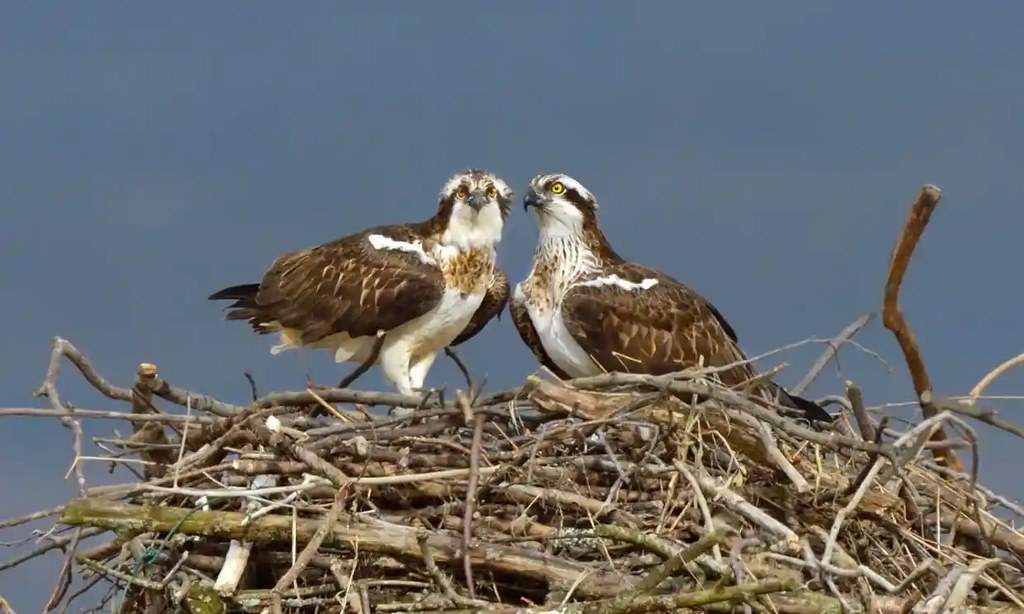
Ospreys Hunted to Extinction Are Now Breeding Across England for First Time in 200 Years: ‘A Tremendous Success’

Nora and Monty on their nest on the Dyfi estuary, Wales. Photograph: Andy Rouse/Wildlife Trust

In North Yorkshire, England, young nesting ospreys recently-produced two chicks. In America this would not make news headlines, but for Yorkshire they were the first ospreys born in the county in over 200 years.

It’s a sign of changing winds, as the osprey is recovering across several areas of England, having been hunted to extirpation on the Island by 1916.

Ospreys are now found breeding in Cumbria, Northumberland, and north and west Wales, and a trust is now trying to reintroduce them to East Anglia as well.

Thought to harm salmon and trout stocks, the birds were persecuted off Britain’s shores between 1840 and 1916. Changing attitudes after the second World War saw legislation continuing to be introduced to protect raptors and other birds, until a pair of ospreys flew into Scotland from Scandinavia.

From then on the populations in Scotland, thanks to the Highlands’ remoteness and rich fishing streams, grew and grew, rising to about 250 pairs by 2018.

This natural return was estimated to spread across England over a period of around 100 years, so various wildlife trusts, gripped by the modern English desire to return some of the island to its natural state, stepped in to accelerate the process.

SIMILAR: New Zealand Penguin Hospital Saves Endangered Birds That Would Be ‘Functionally Extinct’ Without Help

Leicestershire & Rutland Wildlife Trust, managing the Rutland Osprey Project, brought the birds to England proper for the first time in almost 200 years, and from 64 Scottish osprey chicks released between 1996 and 2001, there are now 26 adults across at Rutland who have raised 200 chicks to independence.

They make their home in and around a park surrounding a reservoir called Rutland Water, where their ample appetite for fish can be satisfied.

“It’s been a tremendous success,” Joe Davis, Rutland Water reserves manager told the Guardian. “Birds from Rutland have spread out across England and Wales, or they’ve been translocated. From a human perspective, we’re making good on what we destroyed.”

MORE GOOD BIRD NEWS: Falconry Saves Man from Life of Crime, Now he Helps Birds and At-Risk Youth Take flight

Ospreys are migratory birds, and will travel as far as West Africa—often across the Sahara. Even the first year flyers will make the trip; a dangerous voyage, and a former manager of the Rutland Osprey Project wants to extend the group’s collaborative efforts to try and secure better protection for their ospreys as they fly over the Mediterranean.

FLAP About On Social Media With This Awesome Species News…

“The most powerful magic of all is choice.” – Sara Raasch

Quote of the Day: “The most powerful magic of all is choice.” – Sara Raasch

Photo by: Vladislav Babienko

With a new inspirational quote every day, atop the perfect photo—collected and archived on our Quotes page—why not bookmark GNN.org for a daily uplift?

These Road Lines In Australia Glow in the Dark –A TRON Style That Went Viral

Tarmac Linemarking - released - Tron Legacy - Fair Use
Tarmac Linemarking – released – Tron Legacy – Fair Use

A trio of Australian companies have produced glow-in-the-dark road paint to better illuminate highway lanes at night, and their teal-green hue has reminded social media of TRON.

Currently being trialed in Victoria, Australia, the lane markings use photoluminescence which is the same technology used in glow sticks and other glow-in-the-dark products that absorb the Sun’s light during the day and release it after dark.

Tarmac Linemarking, in collaboration with OmniGrip and Vic Roads, created the product that went on trial for 1 kilometer along Metong Road in southeast Victoria, and afterwards were swamped with calls from businesses and town councils wanting their own roads illuminated.

But that’s not all, pictures of the luminescent roads went viral on the social media sites Facebook and Reddit, with commenters pointing out how much it seemed like the 1982 film TRON, in which Jeff Bridges is a video game developer who’s transported inside the mainframe of a computer which he then has to escape using “light cycles”—a motorcycle that leave a permanent trail of colored light behind it. TRON became a staple arcade game developed by Atari across America in the wake of the film.

In reality, the lane markings are not to satisfy TRON’s cult following, but better protect drivers on Victoria’s roads.

READ ALSO: The Strange Pink Glow Over Victoria, Australia Turned Out to Be Happy Cannabis Accident

“This treatment will make it easier for drivers to see the line markings or signage and provide stronger definition coming up to intersections and curves, giving drivers more time to react and preventing them from veering from their lane,” said Regional Roads Victoria, who trialed it and other products in 70 different locations as part of a $4 million project.

“This will be particularly beneficial for people who are not familiar with driving through the area.”

One of the most important features will be its bright illumination of roadways in the critical after sunset period when many animals venture onto the roadways.

GOOD TRAFFIC NEWS: Switzerland’s Brilliant Plan For Underground Cargo Delivery Tunnels to Reduce Traffic is Now Underway

One of the Reddit commenters noted however that the company must pay attention to the history of glow-in-the-dark products—namely that after an hour they’re always totally expended.

Tarmac Linemarking admitted that during cloudy days, the paint might not absorb enough sunlight, but that sunny days will power the lanes through all hours of darkness.

KEEP This Story About Throwback Technology Viral On Social Media…

Density of Harmful Chemicals that Damage Ozone Layer Slashed by 50% Since 1980s Levels

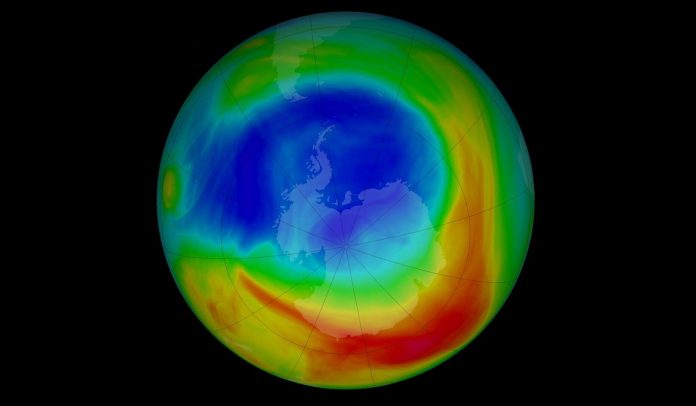
Photo by CIRES
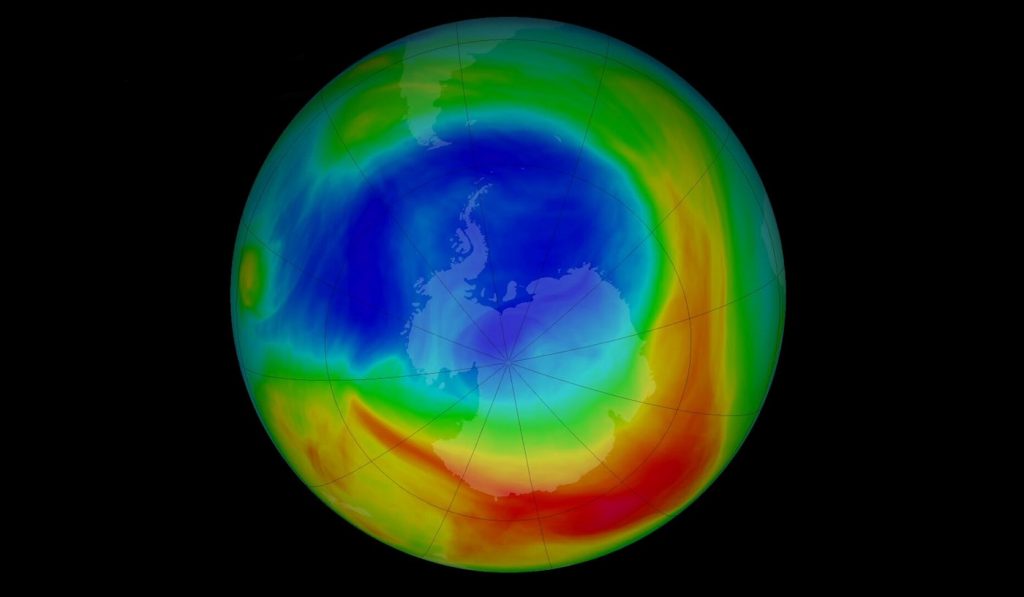
Photo by CIRES

Scientists have estimated that at current rates, the hole in the ozone layer will close around 2070.

Levels of chemical emissions from refrigeration and air conditioning have fallen and continue to fall, leading the scientists at the National Oceanic and Atmospheric Administration who measure the ozone hole every year to conclude its days are numbered.

It was the first warning humanity received of its effects on the climate. In 1987, scientists found that certain chemicals were blowing open a hole in the ozone layer of the atmosphere which protects life from the Sun’s harmful radiation.

Ever year, a hole opens in the ozone layer opens above Antarctica that’s bigger than the continent. It usually forms during August and reaches maximum size during October. By December it begins closing again.

SIMILAR: Temperature Analysis Shows UN Climate Goals ‘Within Reach’ Thanks to International Pledges

All 197 parties to the United Nations signed onto the Montreal Protocol to reduce the emission of these chemicals, which today remains the only time in history a treaty received unanimous participation.

It is also certainly one of the most effective treaties that has ever gone into effect, as atmospheric concentrations of the refrigerants have declined 50% since the 1980s.

READ ALSO: EU Smashes 2020 Climate Target, Records 34% Drop in Emissions to Lowest Level Since 1990

Now, 35 years later, the NOAA has concluded that size of this hole is getting smaller and smaller as concentrations of the airborne chemicals diminish year upon year. The agency recently estimated that the hole could close for good around 2070.

As yearly hysteria regarding climate change continues to ramp up around the world, the news is a major sign that not only are things not simply becoming worse, but that this “significant milestone” as the NOAA scientists described it, is a sign that societies can develop in ways that won’t upset the natural balance of the Earth’s systems.

SHARE This Major Milestone On Social Media…

Southwest Airlines Workers Looked After a Passenger’s Pet Fish for 4 Months After it was Banned From Flight

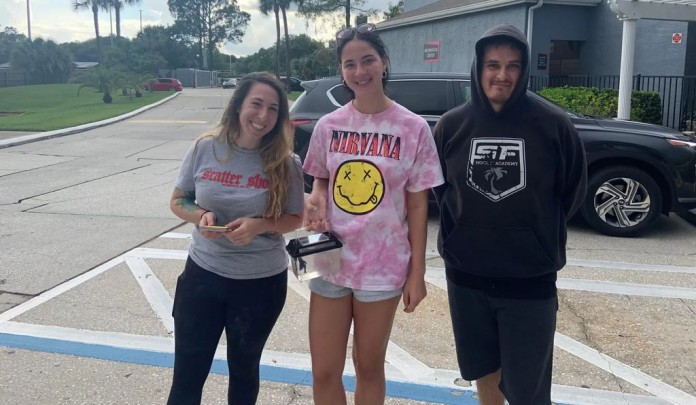
Jamee, Kira, and Ismael with Theo in box - released by Southwest
Jamee, Kira, and Ismael with Theo in box – released by Southwest

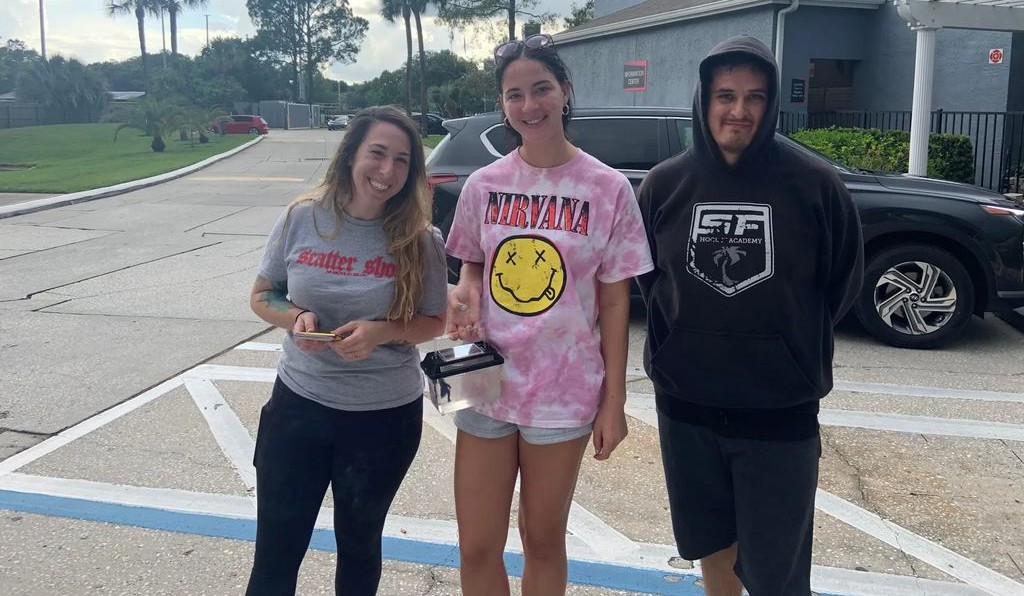
A pair of Southwest Airline employees volunteered to become mom and dad to a passenger’s fish after the passenger was told she could not embark with the animal.

Kira was returning home from her Freshman year at college with her beta fish Theo when she was told it was not allowed on her flight.

That’s when Southwest agent Ismael and his fiancée Jamee offered to take care of the fish so that she wouldn’t miss her flight.

The COVID-19 pandemic was followed by the AIRLINE-22 pandemic—a summer of widespread air travel disruptions to rival any that came before.

Social media is awash with stories of airport nightmares, but Southwest took to Twitter to show off their exceptionally large-hearted agents as they took Theo the fish home and even bought him a new bowl over the summer.

Texting “Airport Fish Taker” Kira asked how Theo was doing on July 31st. “He’s great” said Fish Taker Ismael.

Ismael and Jamee took care of the fish for four months, until the two pairs were reunited in Tampa. Now entering her Sophomore year, Kira brought a gift card as a way of thanking the agents.

There have been many stories of airline company employees, from agents to pilots, making the effort to sooth troubled travelers this year.

CONTINUE READING: Watch Passengers Sing Emotional ‘Irish Blessing’ For Their Airline Pilot After His Final Flight

GNN reported in July that when a 6-year-old lost her tooth onboard a flight to South Carolina, the flight’s pilot wrote her an official letter to the Tooth Fairy after she realized she wouldn’t be able to go back on board to look for it.

Mother Laura later shared the story on Instagram and Facebook as a break from “a world of bad airline stories.”

SHARE This Beautiful Act Of Kindness From Ismael…

Czech Village is at the Heart of Vinyl Record Revival, Survives Communism, Streaming, and the Pandemic

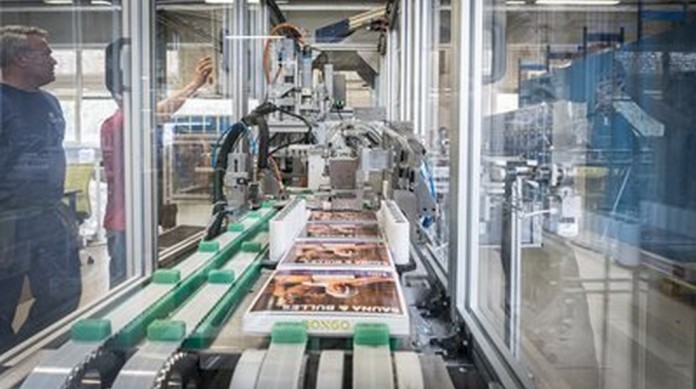
GZ Media's packaging
GZ Media’s packaging

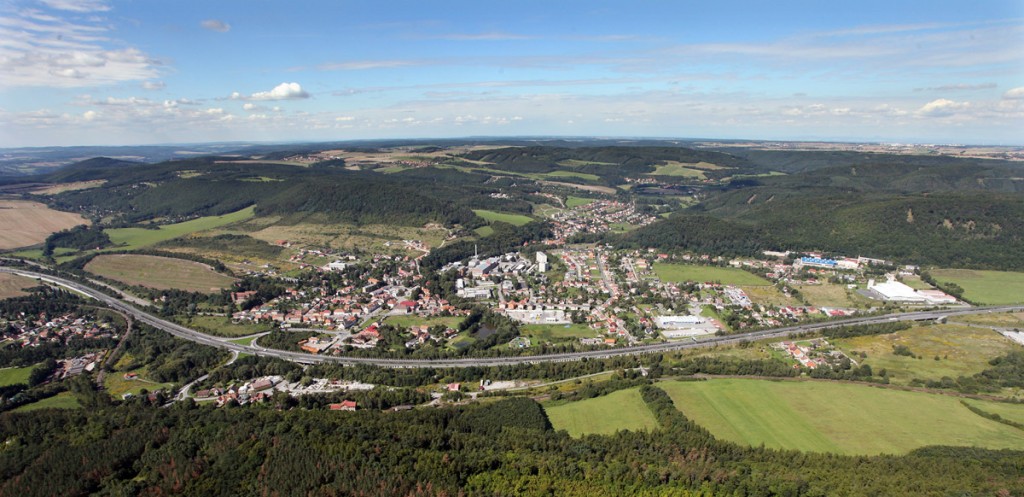
The heart of vinyl record making on Earth isn’t found in Tokyo or Los Angeles, but rather belongs to a small Czech Republic village.

From the small town of Loděnice, population 2,008, GZ Media, or “Gramofonové Závody,” produces 60% of the world’s vinyl records, and has continually operated since 1951 despite challenges from communism, the breakup of Czechoslovakia, the inventions of the CD and digital streaming, and COVID-19.

President Zdenek Pelc has remarked that it was like the Wild West at times, having joined up with the company after it had become privatized in 1983 to steer it through his country’s division with Slovakia, and the industry-killing invention of the CD in the same decade.

Yet as DW reports, the vinyl continued to be pressed in meager numbers for punk and metal bands seeking cheap production and tiny batches. During the 1990s, just 1 million records were sold across the entire United States.

SIMILAR: Vinyl Record Sales Top Streaming Music Ad Revenue by $60Mil

“It’s the only example I know of a product all but dying only to return,” Pelc told the German newspaper. “The world has too much digital information filling it up. Some people like to hold a nice package in their hand. It’s the same reason that books still exist.”

True to that authentic form, 56.5 million records were produced by GZ in 2021, from bands like Black Sabbath, Nat King Cole, The Rolling Stones, and Arianna Grande, and the company hopes their production to top 140 million annually by 2024.

Loděnice, Czech Republic – CC 3.0. CeSt

Hope is the keyword, as Brexit, failing trade deals between the U.S. and EU, COVID-19 lockdowns, the War in Ukraine, and new energy crisis have ceaselessly complicated the world’s supply chains across the last decade.

Though GZ and the record industry was supported once again by music lovers’ desires to have the physical product in their hands. The company found that people stuck at home during the pandemic with too much time and nothing to spend money on decided to augment their album collections.

Pelc reiterates the importance of adaptability. GZ has no intention of expecting westerners to continue supporting that industry, and hopes to expand out into Asia, particularly in the face of the energy crisis which has driven Czech energy costs to the highest in the EU.

READ MORE:  Plumber Has Landed Record Deal After Music Mogul Heard Him Singing –While He Fitted His Bathroom

Pressing vinyl requires heat maintained at 320°F (160°C) for essentially all day, and that is costing a fortune at a time when the EU is nearing a period of gas rationing.

“We always remain ready to adapt,” said the president “Vinyl is big now, for instance, but in 10 years, who knows?”

SHARE This Remarkable Story of Corporate Resilience On Social Media…

“There are souls in this world who have the gift of finding joy everywhere, and leaving it behind them when they go.” – Frederick William Faber

Quote of the Day: “There are souls in this world who have the gift of finding joy everywhere, and leaving it behind them when they go.” – Frederick William Faber

Photo by: Tyler Morgan

With a new inspirational quote every day, atop the perfect photo—collected and archived on our Quotes page—why not bookmark GNN.org for a daily uplift?


Sea Turtle Boom Astonished Volunteers in Florida With Best Nesting Season on Record

Damien du Toit, CC license
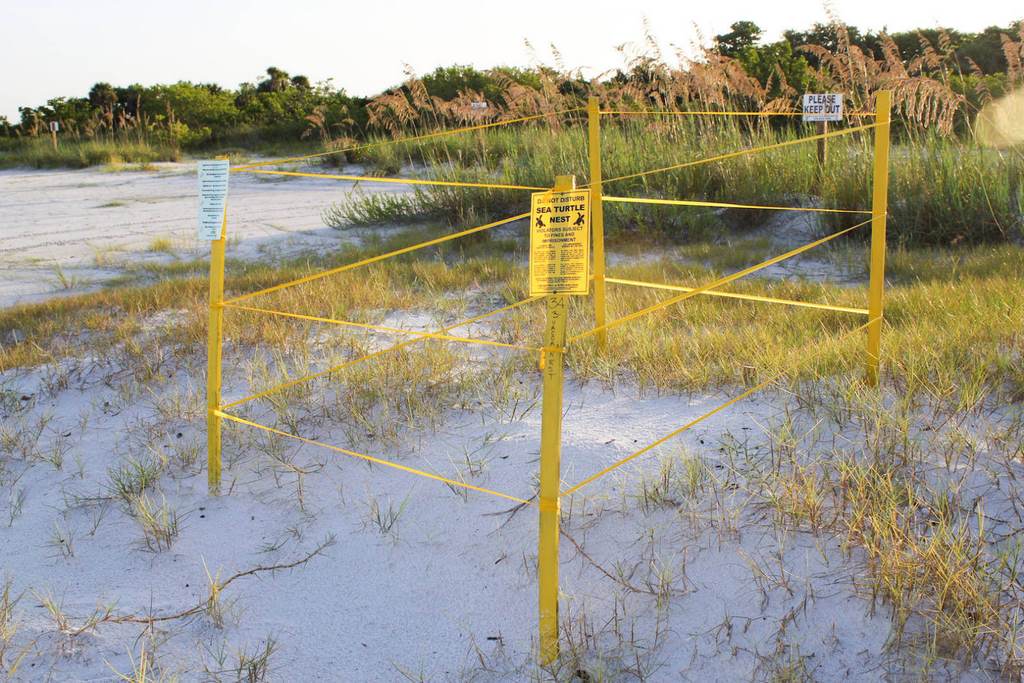
A turtle nest marker on Fort Myers Beach – Nita Ettinger.

Turtle counting teams have recorded the biggest nesting season on the Southwest Florida beaches of Bonita, Vanderbilt, and Naples, as well as Marco and Keewaydin Islands.

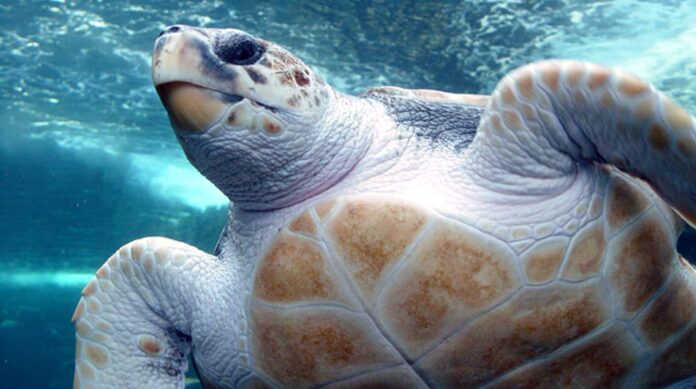
Green and Loggerhead sea turtles nest all over the beaches of Southwest Florida, and volunteers counting the nests have been left ‘astonished’ and ‘ecstatic,’ and the reptiles’ fecundity this year.

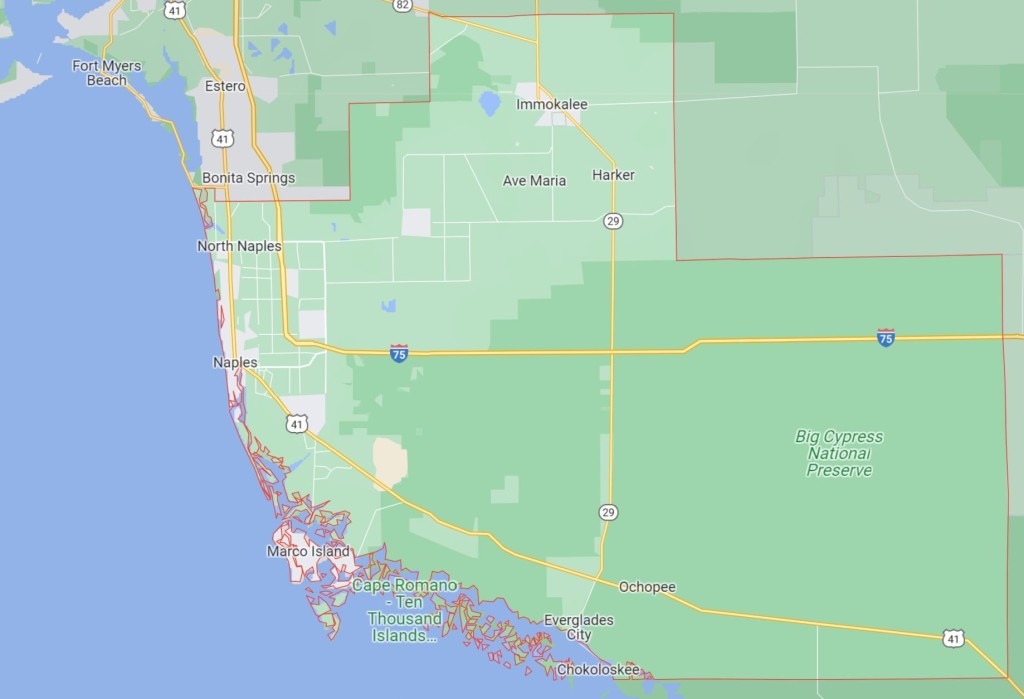
Collier County, which includes all the sea turtle site barring Bonita Beach, registered 55 short of two-thousand nests, breaking all previous counting records.

This included 609 nests on Keewaydin Island alone, and what is likely an undercount on the still record breaking 108 nests of Marco Island.

A part of Marco Island was separated by high waters during the nesting season which prevented volunteers from examining all beaches for nests.

“We’ve never seen numbers like this,” Principal Environmental Specialist for Collier County Maura Kraus told the Marco Eagle newspaper. “And they are hatching really, really well. I had some underwater a long time and they still hatched.”

Collier County demarcated in red.

It also included a couple of firsts. Marco Island registered its first ever green sea turtle nests, and Parkshore Beach in Collier County even found a leatherback turtle nest, the first in the mainland’s history.

Bonita Beach, just north of Collier County, found 282 nests, breaking its 2019 nesting record of 238.

ALSO FROM THIS YEAR: 500% Boom in Numbers of Eggs Laid By Breeding Green Sea Turtles

Turtle nests can contain up to 150 eggs, and with volunteers to help ensure that as many as possible have the chance to make it to the ocean, it’s a massive support to the populations in the Gulf.

Back in 2005, the whole area counted just 466 nests, worrying biologists.

“We were really worried,” Kraus said. “We started on the upward slope around 2016, and we have had good years ever since, and this year is breaking records.”

SIMILAR: Dramatic Boom in Nesting Sites of Sea Turtles As Conservation in West Africa Pays Off

The volunteers who monitor the nests will mark them with simple wooden stakes and caution tape to ensure beach goers don’t tread on them.

Three days after a nest hatches, volunteers will examine it to get a number of eggs hatched. Any late hatchers will be rescued and released at nighttime when they have the best chance of slipping away into the sea.

SHARE This Great Species Recovery News On Social Media… (Featured image by Damien du Toit, CC license)

He Invented a $2 Paper Microscope For Remote Lab Work So Scientists Don’t Have to Haul Heavy Equipment

– Foldscope blog

A young scientist who worked in the jungles of Thailand has been awarded a national prize for his invention of a $2 paper microscope that can be taken on field expeditions.

If a scientist wants to study something at the microscopic level, they need a microscope, which if they are deep in the Amazon Rainforest presents a serious problem.

Stanford University bioengineer Manu Prakash saw in his team’s $50,000 microscope a serious contradiction. As well as being bulky and ridiculously challenging to transport to remote locations, it needed training from skilled technicians to know how to use it. It also had to stay well out of the weather and other environmental impacts.

So he invented a portable one. Costing $1.75, the Foldscope has a 140x zoom, which is a small enough field to see a malaria parasite inside a cell.

KEEP READING: Youth is Fighting Microplastic Pollution with Magnetic Liquid After Winning Google Science Fair

That zoom can be enhanced if you simply slide the lens of your smartphone over the lens of the Foldscope.

“I want to bring science into everyone’s hands, make it more personal,” Prakash told CNN. “We have decoupled everyday life from the process of science.”

The ultimate in schoolhouse science, Prakash’s invention has sold 1.6 million units, mostly to schools in America, but serious scientists are also using it—like Dr. Kirti Nitnaware in India who works on the isolation and characterization of bioactive metabolites in cyanobacteria.

She used the Foldscope last year to isolate a new species of cyanobacteria. For this and other reasons, Prakash received the 2022 Golden Goose Award from the American Association for the Advancement of Science (AAAS), parent company of the scientific journal, Science.

ALSO READ: Science-Backed Tips for Maximizing Play Time With Kids

“The Golden Goose Award reminds us that potential discoveries could be hidden in every corner and illustrates the benefits of investing in basic research to propel innovation,” said Sudip S. Parikh, chief executive officer at AAAS.

WATCH Prakash and the Foldscope in action…

SHARE This Incredible Invention On Social Media With Other Science Lovers…

Nebraska Man Makes World’s Longest Journey by Pumpkin Boat on 60th Birthday

Duane Hansen in SS Bertha.

On the morning of August the 27th, a Nebraska man woke up on his 60th birthday with a single goal—to raft the mighty Missouri in a giant pumpkin.

This is not the start to a collaborative work between Roald Dahl and Mark Twain, but rather the Guinness World Record-breaking stunt by giant pumpkin enthusiast Duane Hansen, who made it 41 miles down the Missouri River in an 846-pound pumpkin which he christened the SS Bertha. 

Departing from Bellevue in his homemade pumpkin boat, Hansen paddled for 12 hours until he broke the world record of 25 miles set in 2016.

Hansen arrived in Nebraska City at the 41st mile-marker of the mighty river to a cold beer, amid a crowd of “tears, cheers, and swollen knees.”

CHECK OUT: 78-Year-old Iron Woman Is Powerlifting Champion Who Does 400 Squats and Holds 19 World Records

“When we first got started it went real quick, like the first five miles felt like nothing,” said Yvone Hansen, Duane’s sister who arrived from San Diego to do the paperwork for the official Guinness World Record attempt. “Once we got about 18 miles in, it started feeling like ‘wow, this is a long trip.’”

Dangers included sand bars, the wake from passing boats, and rocky shallows. In the water, the pumpkin’s spherical shape meant that any direction Hansen moved, so too would the pumpkin. It was an exercise in balance and discipline, and even waving to onlookers was risky.

“You’ve got to be on top of it the whole time—the whole time,” Hansen told local news. “The boats leave the waves and you’ve got to stop everything and just hold on and ride with those waves. That was bad.”

WATCH: Idaho Man Breaks 52 World Records in 52 Weeks – Watch the Highlights of His Wild Year

Hansen, who has managed to grow pumpkins between 200 and 400 pounds, chanced upon the previous world record holder at a giant pumpkin growing seminar in Portland, Oregon. There he decided he wanted to make an attempt at it.

When it was clear “Big Bertha” was going to provide the size needed for Duane, (growing at 14 pounds per day) he knew his time had come.

He used a Bobcat to lift Bertha into a cement pond in order to measure the float point, and then he began carving the cabin into her 146-inch circumference.

WATCH Hansen in action… 

CELEBRATE The Power Of Pumpkins And Human Determination By Sharing This Story…

Japan Breaks Another Record For Having Even More Centenarians –And There are Several Reasons

Shigeru Nakamura, from Osaka, who turned 115 in 2020.

Japan recently broke its own record for the number of centenarians in its population.

At 90,000, not only do the Japanese enjoy humanity’s longest lifespans, but also the largest percentage of the population (0.06%) living over 100.

Work ethic, a seafood-rich diet, deep family ties, and now improving medical technology are elongating the lives of the longest-living people on earth yet further, defying perceived limits on the human body, mind, and spirit.

Japan had only 153 centenarians in 1963, when the record was counted in population census data. The number topped 1,000 in 1981, 10,000 in 1998 and 50,000 in 2012.

SIMILAR: Optimistic Men Have a Better Shot at Less-Stressful, Healthy Aging, Finds New Study

Now, the number of people who will turn 100 between now and next March stands at 45,141. The Japanese government sends out silver trophies, letters, and flowers to its citizens who survive to the ripe old age.

There’s also a public holiday, translated roughly as Respect for the Aged Day, celebrated yesterday.

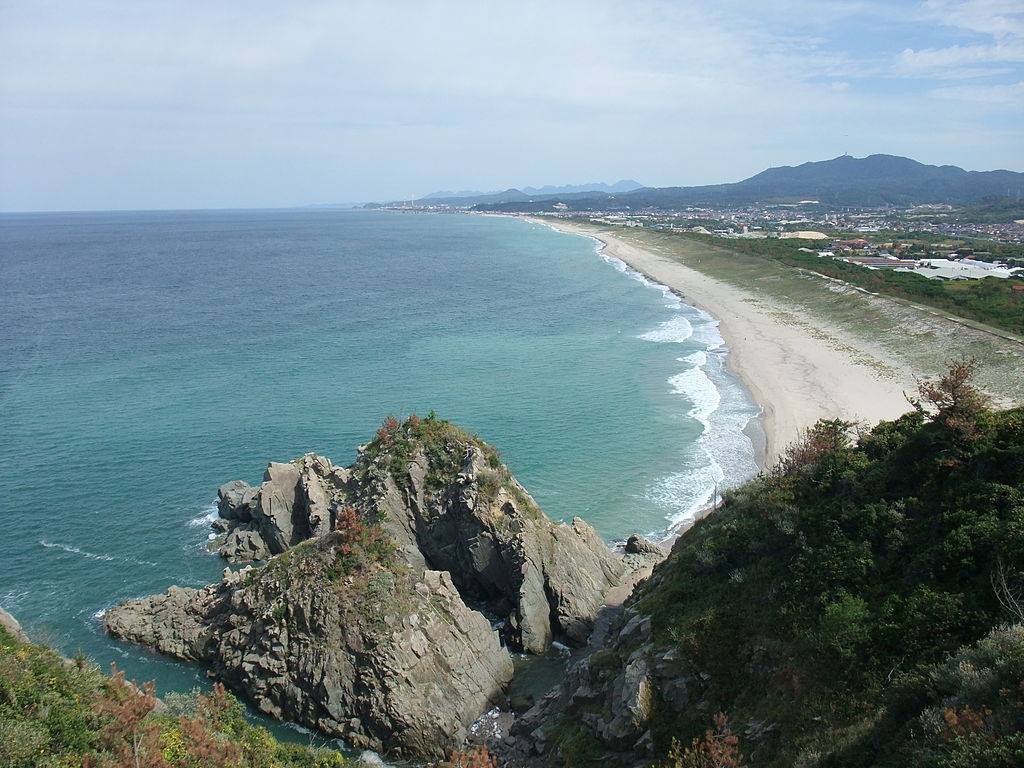
The coast of Gōtsu City, Shimane Prefecture seen from the Osakihana lighthouse. CC 3.0.

The largest number of these long-lived folk come from Shimane Prefecture, the second-least populated area on the Japanese island of Honshu.

88% of these centenarians are women, including the two previous oldest people on Earth, who both passed away this year.

SHARE These Amazing Statistics On Social Media…

“Being defeated is often a temporary condition. Giving up is what makes it permanent.” – Marilyn vos Savant

Quote of the Day: “Being defeated is often a temporary condition. Giving up is what makes it permanent.” – Marilyn vos Savant

Photo by: Wolfgang Hasselmann

With a new inspirational quote every day, atop the perfect photo—collected and archived on our Quotes page—why not bookmark GNN.org for a daily uplift?

United Airlines Pre-Orders 200 Flying Taxis With Vertical Takeoff for 4 Passengers

- released
– released

Working to revolutionize commuting in cities world-wide, United recently-announced a $15 million investment and a purchase agreement for 200 four-seater electric flying taxis.

These taxis have been in development for sometime. Known as “eVTOLs” (electric vertical take-off and landing vehicle), United believe they have the potential to really work in the transportation market.

Signed with Eve Air Mobility, United, who has invested in these eVTOL projects before, is expecting the first deliveries as early as 2026, and could order an additional 200 units according to the contract.

Under the terms of the agreement, the companies intend to work on future projects, including studies on the development, use and application of Eve’s aircraft and the urban air mobility (UAM) ecosystem.

With the skies above major cities set to become the next lanes of traffic, aviation authorities will need ideas about how to manage the transportation environment in a world where 500-1,000 flying taxies work in every metropolis making several trips per day.

SIMILAR: Researchers Pull Carbon Out of the Sky And Convert it to Instant Jet Fuel, Reshaping Aviation For Good

EVE is working with UK Air Mobility to try and develop a contingency plan to debut alongside their eVTOLs.

“United has made early investments in several cutting-edge technologies at all levels of the supply chain,” said Michael Leskinen, President of United Airlines Ventures.

“Today, United is making history again, by becoming the first major airline to publicly invest in two eVTOL companies. Our agreement with Eve highlights our confidence in the urban air mobility market and serves as another important benchmark toward our goal of net zero carbon emissions by 2050 without using traditional offsets.”

GOOD AVIATION NEWS: A Dozen Airlines Team Up for Half-Million Ton Carbon Capture Technology

United was the first major U.S. airline to create a corporate venture fund, United Airlines Ventures (UAV), designed to support the company’s 100% green commitment to reach net zero emissions by 2050 without the use of traditional offsets. Through UAV, United has led the industry in investments in eVTOL and electric aircraft, hydrogen fuel cell engines, and sustainable aviation fuel.

SHARE This Futuristic Transport News On Social Media…

Australia’s Ocean Kelp Forest is Growing at Light Speed–Rivaling the Mighty Amazon for Absorbing CO2

National Marine Sanctuaries


National Marine Sanctuaries

Great forests of ocean kelp were found in a recent study to be between 4 and 11-times more productive than the most productive crops grown today like wheat, corn, and rice.

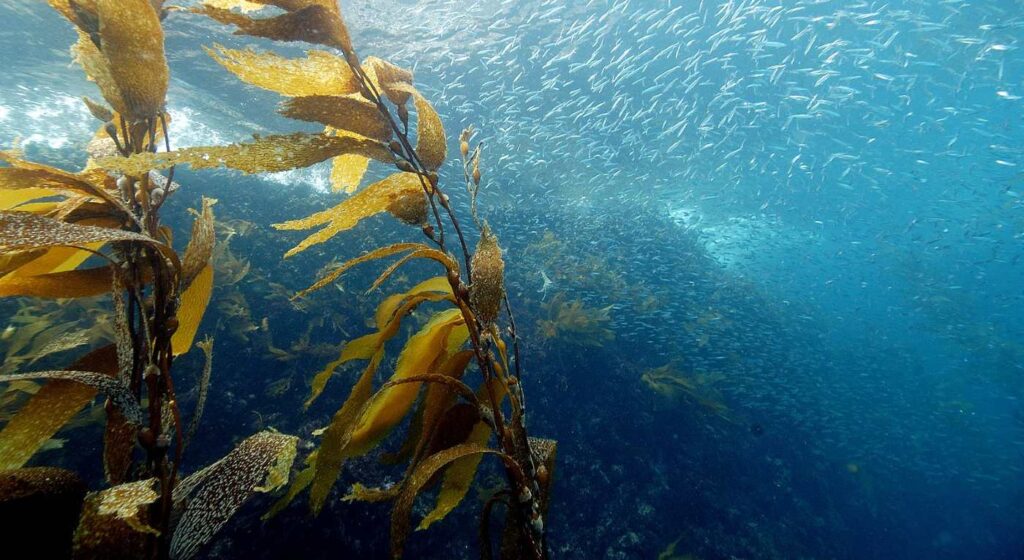
On land, the fastest growth rates occur in the tropics, but in the ocean the most productive ecosystems are found in the temperate zones where cool, nutrient-rich waters create forests of golden, bull, and bamboo kelp that can grow 100 feet tall (35 meters).

This was the result of a global diving survey organized by the University of Western Australia, during which they found the most productive sea forests outgrow even the mighty Amazon Rainforest.

These most productive forests came from South Australia and South Africa, where can be found the Great Southern Reef and the Great African Sea Forest respectively.

The Great African Sea Forest is believed to be expanding in size, unlike many other mega undersea habitats. Made up of bamboo kelp, and containing huge amounts of biodiversity, it stretches over 400 miles from Cape Town’s waters to Namibia’s, nourished by an Antarctic current known as the “Benguela upwelling.”

The Great Southern Reef in Australia is fringed by a golden kelp forest stretching 5,000 miles across the continent’s coast. Next to the golden kelp, bull kelp can grow at a rate of 14 centimeters per day.

“On land, we can use satellites to measure tree growth, but underwater things are much more complicated as most satellites cannot make measurements at the depths kelp forests are found,” Dr. Albert Pessarrodona from the university’s Oceans Institute and School of Biological Sciences, told the Sydney Morning Herald.

To get around this fact, divers around the world compiled productivity reports on kelp forests, which were then compared and analyzed for nutrient levels, sun penetration, and wave exposure.

RELATED: Seaweed is the Food –and Fuel– of a Sustainable World, And it May Start in Australia

The findings were that tropical forests were not the most productive, and that those from the temperate zones contain kelps that can grow 11-times faster than wheat, corn, or rice.

This mass natural production aids in the world’s food security, the authors found, and nowhere is this more demonstrated than Indonesia. The aquaculture of their seaweed forests create products as varied as bioplastics alongside ice cream.

SEE: Share a Moment of Awe With This Jewel of Australian Animals: the Leafy Seadragon

As well as assisting in human flourishing, these forests play a critical role in the global carbon cycle by absorbing carbon dioxide from the atmosphere. Much like their productivity being much higher than terrestrial counterparts, the rate at which they absorb CO2 has been measured at 30x faster than trees on land.

Scientists from the non-profit Great Southern Reef estimate that if just 0.001% of the ocean’s surface was cultivated with these productive forests, it would offset the emissions of the entire global aquaculture industry.

SHARE These Mind-Blowing Facts To Your Climate Conscious Friends… 

Beekeeper Shocked When Neighbor Gives Up Farmland to Host Hives: “I’ve never experienced anything like that.”

Credit Petra Hanner, Tips.
Credit Petra Hanner, Tipps.

Near Austria’s border with Germany, an agriculturalist let one-fifth of his farming estate return to wild meadows in order to support his neighbor’s beekeeping operation.

The hyper-cultivation around Franz Nigl’s property in Leiten, Austria, was never really “his thing,” and wanting to hear the meadows “buzzing” again, he let his good neighbor Josef Krenn, a hobbyist beekeeper, take it over.

“I’ve never experienced anything like that,” Krenn admits. “We benefit from each other. Franz grows the flowers and in return he gets good honey from me.”

Local news outlet Tipps spoke to both men, and described the 2.4 acre (one hectare) meadow as an “oasis” of insects and flowers, with 40 different blooming plant species on which Krenn’s bees can feed.

GOOD BEE NEWS: Bee Bricks That Help Thousands of Solitary Bees Are Now a Requirement for New Buildings in Brighton

“As far as I can, I try to ensure that nature benefits,” Nigl said, explaining his intentions. “There should be a direct obligation to cultivate flowering areas, [but] unfortunately, people today walk through nature blind and no longer know the connections. I know that you can’t do much yourself on a large scale anyway, but you can on a small scale on your doorstep.”

Nigl wants to leave an even greater area of his estate to the bees next season.

99% of all beekeepers in Austria do so as a hobby, but there are 33,000 of them, maintaining nearly half-a-million hives and still rising.

The alpine countryside is famous for wildflowers, and provided they have a safe place to hibernate through the winter, the zone can support huge populations of bees.

SHARE This Story About A Buzzing-Good Neighbor…