










All News - Page 343 of 1714 - Good News Network
Home Blog Page 343

Pipes a Million Times Thinner Than Human Hair Could Deliver Personalized Therapies to Individual Cells

Pipes a million times thinner than a human hair could deliver personalized therapies to individual cells, according to new research.

The ‘world’s tiniest plumbing system’ could transform medicine by funneling drugs, proteins, or molecules to precisely targeted organs and tissue—without any risk of side-effects.

It comprises microscopic tubes that self-assemble and can connect themselves to different biostructures.

US scientists from Johns Hopkins University in Maryland engineered a way that ensured the pipes are safe from infinitesimally small leaks.

“This study suggests very strongly it’s feasible to build nanotubes that don’t leak using these easy techniques for self-assembly, where we mix molecules in a solution and just let them form the structure we want,” said co-author Professor Rebecca Schulman.

“In our case, we can also attach these tubes to different endpoints to form something like plumbing.”

It’s a significant step toward creating the first network of its kind to combat a host of life-threatening diseases.

CHECK OUT: Honey Could Help to Clear Deadly Bacteria Which Cause Cystic Fibrosis

The team worked with tubes two million times smaller than an ant and a few microns long—equivalent to a dust particle.

They grew and repaired the tubes, enabling them to find and connect to specific cells. It is similar to an established technique that repurposes DNA as building blocks.

They make ‘nanopores’ to control the transport of chemicals across lab-grown lipids that mimic a cell’s membrane.

But short fittings alone can’t reach other tubes. The bio-inspired technology described in Science Advances address these sorts of problems.

“Building a long tube from a pore could allow molecules not only to cross the pore of a membrane that held the molecules inside a chamber or cell, but also to direct where those molecules go after leaving the cell,” said Schulman.

“We were able to build tubes extending from pores much longer than those that had been built before that could bring the transport of molecules along nanotube ‘highways’ close to reality.”

RELATED: First Effective Treatment for Back Pain Changes How Brain and Back Communicate

The nanotubes form using DNA strands woven between different double helices. Their structures have small gaps—similar to woven bamboo tubes called Chinese finger traps.

Co-author Yi Li, who published the research in Science Advances, capped the end of a pipe with special DNA ‘corks’ and turned on a faucet to make sure no water leaked out.

She then ran a solution of fluorescent molecules to track leaks and influx rates. The glowing molecules slid down through a chute like water.

“Now we can call this more of a plumbing system, because we’re directing the flow of certain materials or molecules across much longer distances using these channels,” said Li.

“We are able to control when to stop this flow using another DNA structure that very specifically binds to those channels to stop this transport, working as a valve or a plug.”

LOOK: Man Regains Sight And Sees His Family Again After Becoming First Person Ever to Receive an Artificial Cornea

Researchers could also use the DNA nanotubes to study diseases like cancer, and the functions of the body’s more than 200 types of cells.

Next the team will conduct additional studies with synthetic and real cells, as well as with different types of molecules.

LET The Research Flow on Social Media By Sharing…
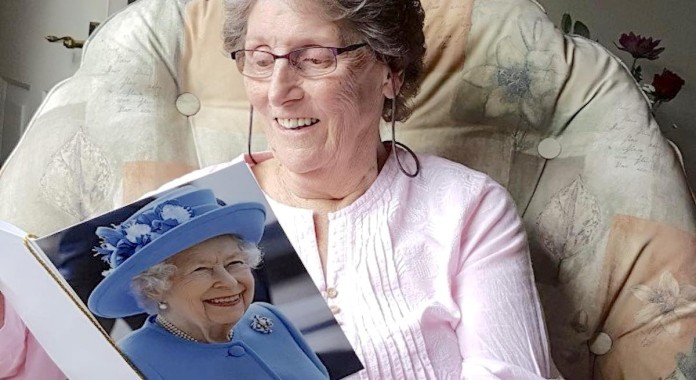
Elderly Couple Among Last to Receive Signed Letter From The Queen–Delivered the Day She Died

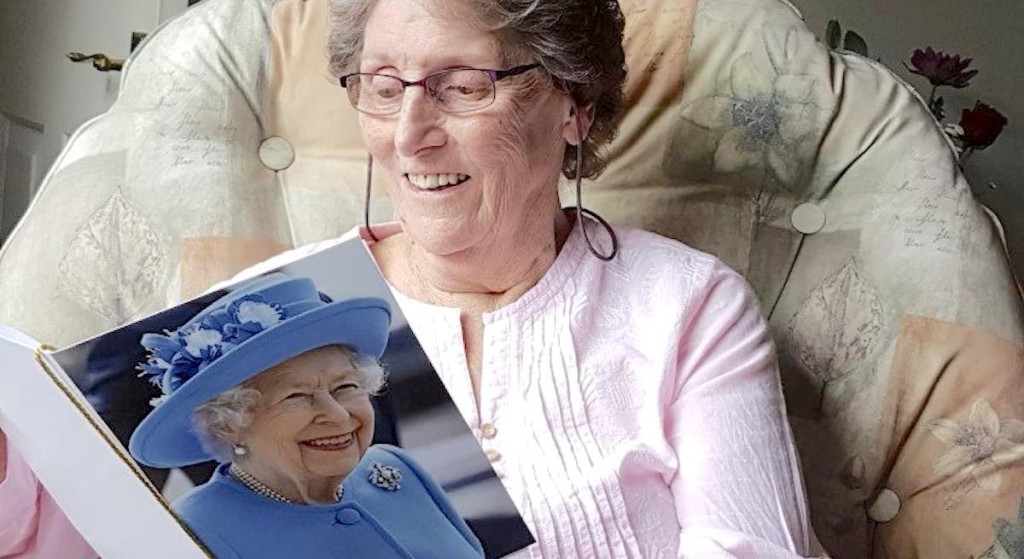
Tricia Pont reads card from Queen – SWNS

An elderly couple were among the final people to ever receive signed correspondence from the Queen after opening a card from her on the day she died.

Tricia Pont, 81, and her husband Ray, opened the card on the occasion of their 60th wedding anniversary Thursday.

The couple, from Godalming in Surrey, first heard of the Queen’s illness while enjoying a celebratory lunch and later returned home to learn of her death.

The seniors said it was a day of “mixed emotions” and they would now cherish the
“precious and poignant” card from Her Majesty.

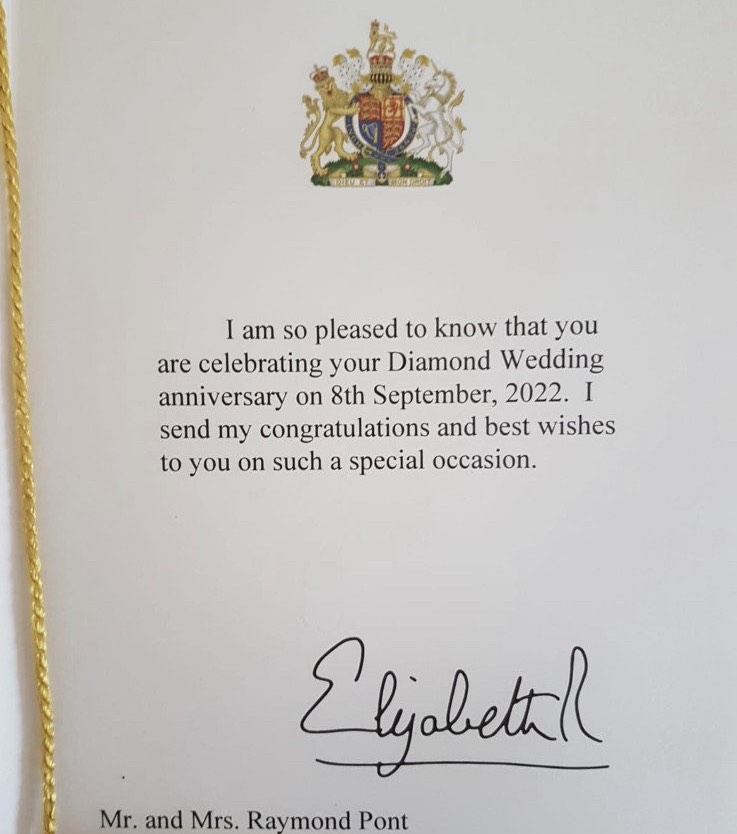
The hand-signed card read: “I am so pleased to know you are celebrating your Diamond Wedding Anniversary. I send my congratulations and best wishes to you on such a special occasion.”

Ray, a retired surveyor, said, “It was our wedding anniversary having spent 60 years together and someone in the family decided they would like us to get a card from the Queen.

“I was so excited to open the card. I thought it would be such a lovely moment for our family… and it had a nice picture on the front.”

LOOK: Sand Artist Creates Moving Portrait of The Queen on English Beach in Fond Farewell

“We then went out to have lunch together and when we were there my phone pinged, we were told we should look online as something was wrong with the Queen.

“It makes the card even more precious and poignant as we were one of the last people to get correspondence from her.”

Card signed by Queen Elizabeth II – SWNS

The couple said they were tearful when they returned home and looked at the card.

It features a photograph of the Queen smiling which was taken on the Buckingham Palace balcony at her Diamond Jubilee in June.

“We are big supporters of her, she is a great role model for the whole nation and she was admired for her stoicism,” added Ray. “She was really committed.”

They agreed that the sudden death “really put a downer on the day”, but then they realized how privileged they were to be one of the last few people to get a card from her.

WATCH: The Queen Broke a 450-Year-old Palace Tradition to Honor Americans After 9/11

When Tricia was a child in 1947, she saw the Queen in London the night of her wedding to Prince Phillip. She later saw the monarch at a garden party for the Girl Guides Association in the late 1990s.

“I remember her on her wedding day and at the coronation. We stood on the railings at Buckingham Palace when they came out on the balcony,” said Tricia. “It was wonderful.”

“The Queen was just charming—so lovely and sparkly.”

SHARE the Sweet Moment With Royal Watchers on Social Media…

Sand Artist Creates Moving Portrait of The Queen on English Beach in Fond Farewell

Soul 2 Sand - SWNS
Soul2Sand – SWNS

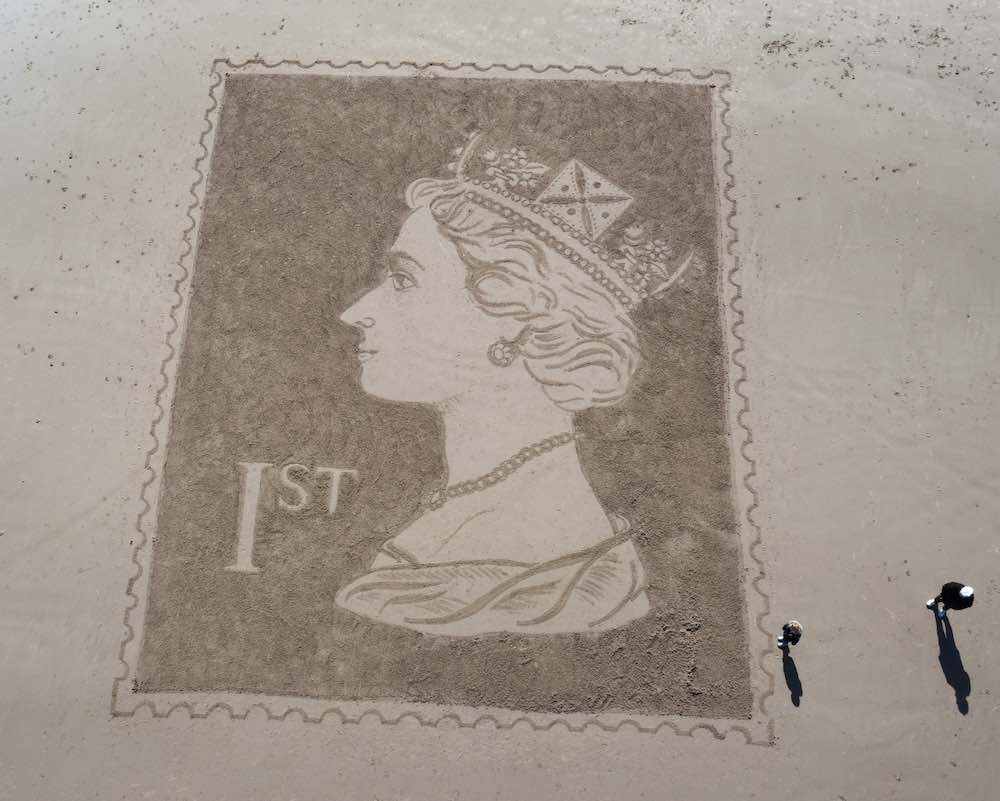
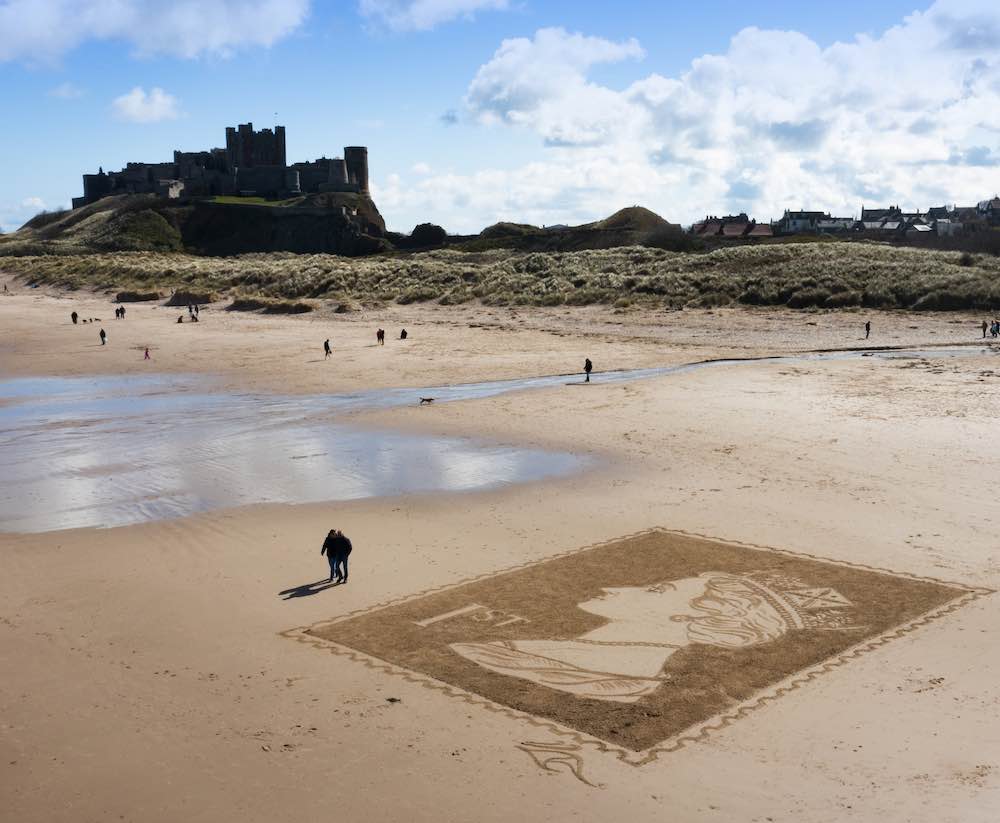
A sand artist has revealed her own unique tribute to the Queen after creating a giant portrait depicting her majesty’s postage stamp on a beach.

Claire Eason, 57, spent four hours painstakingly etching the amazing 65-foot image using a garden rake on Bamburgh beach in Northumberland.

“As I was filming with the drone the tide came in and I captured it just touching the image and I thought this looks like a goodbye,” said the retired family doctor from Sunderland.

“It’s been really touching to see people’s response, they have said it is a fitting farewell.”

Claire started a company called Soul 2 Sand to create the beach art for special occasions.

She said she chose the image of a first class stamp because it is one of the most recognizable of Queen Elizabeth.

RELATED: The Queen Broke a 450-Year-old Palace Tradition to Honor Americans After 9/11

Soul 2 Sand – SWNS

“I was very saddened when I heard The Queen had died, she has been a part of everyone’s life for so long.

“She has given us all that sense of constant and when that comes to an end it’s hard.”

Watch her creating the portrait in the video below…

LOOK: Man Who Tells the Queen He Engineers Solar Panels is Stunned When She Orders Some Installed on the Castle

SHARE the Fond Farewell on Social Media Before the Tide Comes In…

“What is a challenge if not a real friend in disguise to strengthen us?” – Sri Chinmoy

Quote of the Day: “What is a challenge if not a real friend in disguise to strengthen us?” – Sri Chinmoy

Photo by: Cristian Palmer

With a new inspirational quote every day, atop the perfect photo—collected and archived on our Quotes page—why not bookmark GNN.org for a daily uplift?

The Queen Broke a 450-Year-old Palace Tradition to Honor Americans After 9/11

public domain
2007 photo – public domain

Marking the passing of Queen Elizabeth II, one social media poster dug all the way back to the tragedy of 9/11 to remind people that not even royal tradition is more sacred than an act of kindness.

After the terrorist attacks on September 11, 2001, The Queen ordered the Royal Guard to break a centuries-old tradition, in order to play the US national anthem during the Changing of the Guard at Buckingham Palace in London.

The user on Reddit known as ‘ledgendary’ posted a video of the moment, saying The Queen was “attempting to provide some comfort to Americans who were stranded in London”.

The monarch, who died this week at age 95, made the decision to break the tradition, which dated back to 1660, and allow her guards to play a foreign country’s anthem outside of a state visit.

Seeing the moving moment, ABC news anchor Peter Jennings could barely keep it together after watching the news footage.

Watch the video below…

ALSO: Man Who Tells the Queen He Engineers Solar Panels is Stunned When She Orders Some Installed on the Castle

SHARE This Tribute on Social Media, Along With Your Thoughts…

These are the Top Benefits of Aging

Eight in 10 Americans agree society puts too much value on appearing youthful, but the new poll also identified the benefits of getting older.

The survey of 2,000 adults examined perspectives around aging and found that most agree that in today’s world, there’s a negative bias around aging or the perception of being old—so much so that six in 10 avoid sharing their age for fear of being “judged” (61%).

Sharing their positive bias, three-quarters of the respondents agreed that age is not something to fight or fear, but rather an opportunity to live a more fulfilling and emotionally healthy life.

Furthermore, most have actually seen areas of their lives improve with age (71%), such as confidence (49%), their sense of self (45%) and their relationships with family members (44%).

In fact, most people who have outgrown their 20s say that they feel more fulfilled (69%) and satisfied (71%) with their lives today.

RELATED: Their Bodies Age, But Seniors Have Higher Emotional Well-Being – Here’s Why

Conducted by OnePoll on behalf of Great Lakes Wellness Collagen, the survey found that three in four people want to spend less time fighting aging and more time doing things they love.

“While ‘anti-aging’ has become the norm for quite some time, we’re starting to see a shift among Americans who realize aging is living,” said Jim Burkett, president of Great Lakes Wellness.

Two-thirds of respondents actually feel younger than they are—nearly a decade younger, on average.

The Top 4 Benefits of Aging:

–Learn new things about themselves or the world every year
–Having more life experience
–Gaining wisdom
–Being more confident

What, then, is the secret to living well in your advancing years? 80% will tell you that a better attitude leads to more graceful aging.

LOOKIf You Can Stand on One Leg for 10 Seconds in Middle Age Your Heath Risk Plummets

Seven in 10 said they’re embracing their age, believing that getting older is not as bad as they thought it would be.

SHARE Your Thoughts on Aging By Posting This on Social Media…

Surprise Finding Shows More Planets Could Contain Water –Which Supports Life– Than Previously Believed

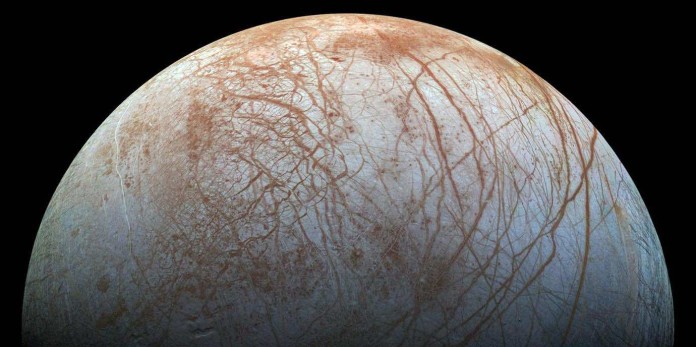
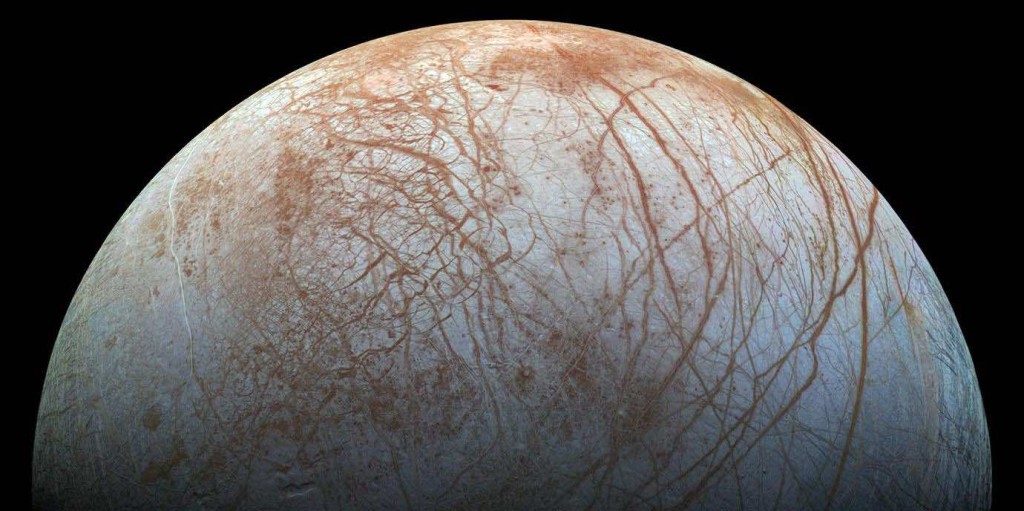
Jupiter’s moon Europa – NASA/JPL/Caltech/SETI Institute

Water is the one thing all life on Earth needs, and the cycle of rain to river to ocean to rain is an essential part of what keeps our planet’s climate stable and hospitable. When scientists talk about where to search for signs of life throughout the galaxy, planets with water are always at the top of the list.

A new study suggests that many more planets may have large amounts of water than previously thought—as much as half water and half rock, probably embedded in rock, rather than flowing as oceans or rivers on the surface.

“It was a surprise to see evidence for so many water worlds orbiting the most common type of star in the galaxy,” said Rafael Luque, first author on the new paper and a postdoctoral researcher at the University of Chicago. “It has enormous consequences for the search for habitable planets.”

Thanks to better telescope instruments, scientists are finding signs of more and more planets in distant solar systems. A larger sample size helps scientists identify demographic patterns—similar to how looking at the population of an entire town can reveal trends that are hard to see at an individual level.

Luque, along with co-author Enric Pallé of the Institute of Astrophysics of the Canary Islands and the University of La Laguna, decided to take a population-level look at a group of planets that are seen around a type of star called an M-dwarf. These stars are the most common stars we see around us in the galaxy, and scientists have catalogued dozens of planets around them so far.

WATCH: Travel 2,000 Light-Years in 60 Seconds With New Video From NASA’s Webb Telescope

But because stars are so much brighter than their planets, we cannot see the actual planets themselves. Instead, scientists detect faint signs of the planets’ effects on their stars—the shadow created when a planet crosses in front of its star, or the tiny tug on a star’s motion as a planet orbits. That means many questions remain about what these planets actually look like.

“The two different ways to discover planets each give you different information,” said Pallé. By catching the shadow created when a planet crosses in front of its star, scientists can find the diameter of the planet. By measuring the tiny gravitational pull that a planet exerts on a star, scientists can find its mass.

Jupiter’s moon Europa – NASA/JPL/Caltech/SETI Institute

Then, combining the two measurements, scientists can get a sense of the makeup of the planet. Perhaps it’s a big-but-airy planet made mostly out of gas like Jupiter, or a small, dense, rocky planet like Earth.

These analyses had been done for individual planets, but much more rarely for the entire known population of such planets in the Milky Way galaxy. As the scientists looked at the numbers—43 planets in all—they saw a surprising picture emerging.

The densities of a large percentage of the planets suggested that they were too light for their size to be made up of pure rock. Instead, these planets are probably something like half rock and half water, or another lighter molecule. Imagine the difference between picking up a bowling ball and a soccer ball: they’re roughly the same size, but one is made up of much lighter material.

RELATED: NASA Detects Carbon Dioxide–the Building Block of Life–in Planet’s Atmosphere for First Time

Searching for water worlds

It may be tempting to imagine these planets like something out of Kevin Costner’s Waterworld: entirely covered in deep oceans. However, these planets are so close to their suns that any water on the surface would exist in a supercritical gaseous phase, which would enlarge their radius. “But we don’t see that in the samples,” explained Luque. “That suggests the water is not in the form of surface ocean.”

Instead, the water could exist mixed into the rock or in pockets below the surface. Those conditions would be similar to Jupiter’s moon Europa, which is thought to have liquid water underground.

“I was shocked when I saw this analysis—I and a lot of people in the field assumed these were all dry, rocky planets,” said UChicago exoplanet scientist Jacob Bean, whose group Luque has joined to conduct further analyses.

The finding, published in the journal Science, matches a theory of exoplanet formation that had fallen out of favor in the past few years, which suggested that many planets form farther out in their solar systems and migrate inward over time. Imagine clumps of rock and ice forming together in the cold conditions far from a star, and then being pulled slowly inward by the star’s gravity.

LOOK: Scientists Stunned by New Jupiter Images With Galaxies ‘Photobombing’ the Webb Telescope

Though the evidence is compelling, Bean said he and the other scientists would still like to see “smoking gun proof” that one of these planets is a water world. That’s something the scientists are hoping to do with JWST, NASA’s newly launched space telescope that is the successor to Hubble.

POUR This Mysterious Finding Over Science Geeks on Social Media…

Your Inspired Weekly Horoscope From Rob Brezsny: A ‘Free Will Astrology’

Our partner Rob Brezsny provides his weekly wisdom to enlighten our thinking and motivate our mood. Rob’s Free Will Astrology, is a syndicated weekly column appearing in over a hundred publications. He is also the author of Pronoia Is the Antidote for Paranoia: How All of Creation Is Conspiring To Shower You with Blessings. (A free preview of the book is available here.)

Here is your weekly horoscope…

FREE WILL ASTROLOGY – Week of September 10, 2022
Copyright by Rob Brezsny, FreeWillAstrology.com

VIRGO (Aug. 23-Sept. 22):
“To love oneself is hard work,” declares Virgo author Hanif Abdurraqib. He adds, “But I think it becomes harder when you realize that you’re actually required to love multiple versions of yourself that show up without warning throughout a day, throughout a week, throughout a month, throughout a life.” Let’s make that your inspirational strategy, Virgo. The coming weeks will be a favorable time to refine, deepen, and invigorate your love for all your selves. It may be hard work, but I bet it will also be fun and exhilarating.

LIBRA (Sept. 23-Oct. 22):
How to be the best Libra you can be in the next three weeks: 1. Make sure your cool attention to detail never gets chilly. Warm it up now and then. Invite your heart to add its counsel to your head’s observations. Tenderize your objectivity. 2. Always be willing to be puzzled. Always be entertained and educated by your puzzlement. Proceed on the theory that nothing ever changes unless somebody is puzzled. 3. Practice, practice, practice the art of moderation. Do so with the intention of using it as a flexible skill rather than an unthinking habit. 4. Applying the Goldilocks principle will be essential. Everything must be just right: neither too much nor too little; neither overly grand nor overly modest.

SCORPIO (Oct. 23-Nov. 21):
There are blessings in every abyss. You, of all the signs in the zodiac, have the greatest capacity to find those blessings and make them yours. Likewise, there is an abyss in each blessing. You, of all the signs, have the most power to make sure your experiences in the abyss don’t detract from but enhance the blessing. In the coming weeks, dear Scorpio, take maximum advantage of these superpowers of yours. Be a master of zeroing in on the opportunities seeded in the dilemmas. Show everyone how to home in on and enjoy the delights in the darkness. Be an inspirational role model as you extract redemption from the messes.

SAGITTARIUS (Nov. 22-Dec. 21):
One of my favorite Sagittarians is practical mystic Caroline Myss, who was born with sun and Mercury and ascendant in Sagittarius. In accordance with current astrological omens, I’ve gathered six of her quotes to serve your current needs. 1. There isn’t anything in your life that cannot be changed. 2. When you do not seek or need approval, you are at your most powerful. 3. Healing comes from gathering wisdom from past actions and letting go of the pain that the education cost you. 4. The soul always knows what to do to heal itself. 5. What serves your spirit enhances your body. What diminishes your spirit diminishes your body. 6. What is in you is stronger than what is out there to defeat you.

CAPRICORN (Dec. 22-Jan. 19):
I have always felt you Capricorns are wise to commune with rocks, dirt, mud, sand, and clay. I think you should regularly touch the actual earth with your hands and bare feet. If I’m out hiking with a Capricorn friend, I might urge them to sniff blooming mushrooms and lean down to kiss the exposed roots of trees. Direct encounters with natural wonders are like magic potions and miracle medicine for you. Moreover, you flourish when you nurture close personal relationships with anything that might be described as foundational. This is always true, but will be extra true for you in the coming weeks. Your words of power are kernel, core, gist, marrow, and keystone.

AQUARIUS (Jan. 20-Feb. 18):
The coming weeks will be a favorable time to dream up creative solutions to problems that haven’t fully materialized yet. Then you can apply your discoveries as you address problems that already exist. In other words, dear Aquarius, I’m telling you that your uncanny facility for glimpsing the future can be useful in enhancing your life in the present. Your almost psychic capacity to foretell the coming trends will be instrumental as you fix glitches in the here and now.

PISCES (Feb. 19-March 20):
In the coming weeks, logic may be of only partial use to you. Information acquired through your senses might prove less than fully adequate, as well. On the other hand, your talents for feeling deeply and tapping into your intuition can provide you with highly accurate intelligence. Here’s a further tip to help you maximize your ability to understand reality: Visit a river or creek or lake. Converse with the fish and frogs and turtles and beavers. Study the ways of the crabs and crayfish and eels. Sing songs to the dragonflies and whirligig beetles and lacewings.

ARIES (March 21-April 19):
Aries-born Kareem Abdul-Jabbar was one of the greatest basketball players ever. He excelled at most aspects of the game. Some experts say his rebounding was only average for a player his size—seven feet, two inches. But he is still the third-best rebounder in National Basketball Association history. And he played for 20 years, until age 40. What tips might Abdul-Jabbar have for you now? Here’s a suggestion from him that aligns with your current astrological omens: “Work on those parts of your game that are fundamentally weak.” The implication is that you have a lot of strengths, and now it’s time to raise up the rest of your skill set.

TAURUS (April 20-May 20):
As a Taurus, you are always wise to be reverent toward your five senses. They are your glorious treasures, your marvelous superpowers, your sublime assets. In the coming weeks, they will serve you even better than usual. As you deploy them with all your amazement and appreciation unfurled, they will boost your intelligence. They will heighten your intuition in ways that guide you to good decisions. You will tune into interesting truths that had previously been hidden from you. I suspect your sensory apparatus will be so sharp and clear that it will work almost as extrasensory powers.

GEMINI (May 21-June 20):
When you Geminis are at your best, you don’t merely tolerate dualities. You enjoy and embrace them. You work with them eagerly. While many non-Geminis regard oppositions and paradoxes as at best inconvenient and at worst obstructive, you often find how the apparent polarities are woven together and complementary. That’s why so many of you are connoisseurs of love that’s both tough and tender. You can be effective in seemingly contradictory situations that confuse and immobilize others. All these skills of yours should come in handy during the coming weeks. Use them to the hilt.

CANCER (June 21-July 22):
Author Jean Frémon says Cancerian naturalist Henry David Thoreau “always had two notebooks—one for facts, and the other for poetry. But Thoreau had a hard time keeping them apart, as he often found facts more poetic than his poems.” Judging from your current astrological omens, Cancerian, I suspect you are entering a time when facts will be even more poetic than usual. If you open yourself to the magic of reality, the mundane details of everyday life will delight you and appeal to your sense of wonder. Routine events will veer toward the marvelous. Can you bear to experience so much lyrical grace? I think so.

LEO (July 23-Aug. 22):
“What good is it if you read Plato but never clean your toilet?” writes author Alice Munro. To which I add, “What good is it if you have brilliant breakthroughs and intriguing insights but never translate them into practical changes in your daily rhythm?” I’m not saying you are guilty of these sins, Leo. But I want to ensure that you won’t be guilty of these sins in the coming weeks. It’s crucial to your long-term future that you devote quality time to being earthy and grounded and pragmatic. Be as effective as you are smart.

WANT MORE? Listen to Rob’s EXPANDED AUDIO HOROSCOPES, 4-5 minute meditations on the current state of your destiny — or subscribe to his unique daily text message service at: RealAstrology.com

(Zodiac images by Numerologysign.com, CC license)

SHARE The Wisdom With Friends Who Are Stars in Your Life on Social Media…

“To love oneself is hard work because you’re actually required to love multiple versions of yourself that show up without warning every day.” – Hanif Abdurraqib

Quote of the Day: “To love oneself is hard work because you’re actually required to love multiple versions of yourself that show up without warning every day.” – Hanif Abdurraqib

Photo by: Elijah Hiett

With a new inspirational quote every day, atop the perfect photo—collected and archived on our Quotes page—why not bookmark GNN.org for a daily uplift?

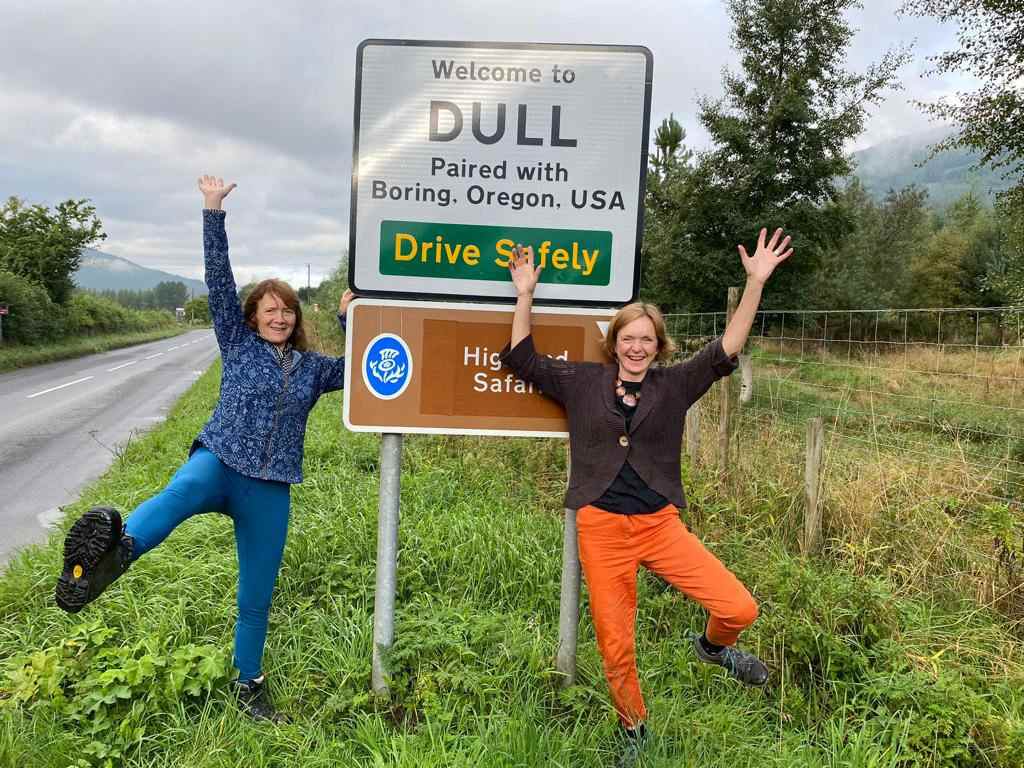
Woman Pairs a British Village Named ‘Dull’ with Oregon Town Called ‘Boring’–Making Both More Exciting

Elizabeth Leighton (left) with Emma Burtles- SWNS
Elizabeth Leighton and her friend Emma Burtles in front of the road sign at Dull – SWNS.

One day, a woman from Dull visited Boring on vacation, and inspired by the sense of connection, asked the town councils if they felt like spicing things up.

Now Dull, in Perthshire, Scotland, is officially a sister city of Boring, Oregon, and mastermind of the project Elizabeth Leighton says it has made Dull a more lively place to live.

With a population of just 85, Dull jumped at the idea which Elizabeth says it has brought a ‘flash of excitement’ to the tiny village ten years on.

Dull has seen a surge in visitor numbers since 2012 and even had tourists from Boring come to celebrate the match.

“I was going through Boring and saw the sign [and sent] my friend who was living in Dull a message saying, ‘isn’t this amazing, I’m in Boring and you are in Dull,’” said Leighton.

“It really increased the number of visitors, and you can see people stopping to take selfies with the road sign. There have been exchanges, with people from Boring coming here for celebrations.”

KEEP LAUGHING: After Asking His Neighbor to ‘Take His Trash Bin Out’ – He Received a Photo Shoot of Their Day on the Town

Dull’s main businesses are guest lodges and chalets, aimed at the tourism market, as well as Highland Safaris.

Boring was named after William H Boring, an early resident of the area and former Union soldier in the American Civil War, and has a population of nearly 8,000.

“They are both quite rural places and do have similarities,” added Leighton. “Boring is bigger, but that doesn’t make it more exciting.”

WATCH: Mama Black Bear Struggle Hilariously to Get All Four Cubs Across The Road

In 2017, the mayor of a town called Bland in New South Wales, Australia, decided they wanted to get in on the act, and together suggesting the towns could be known as the ‘Trinity of Tedium.’ Other US towns like Dreary and Ordinary have also been touted as potential partners.

However further town-twinning hasn’t taken off. Dull and Boring remain exclusive.

GIVE Your Friends a Smile on Social Media By Sharing This Small Town Ballad…

Editor’s note: This story has been changed to correct the position of Dull to Scotland.

A Dozen Airlines Team Up for Half-Million Ton Carbon Capture Technology

plane public domain jordan-sanchez

Airbus and a partnership of more than a dozen airlines are working together to fund a new carbon capture project.

Their hope is that Carbon Engineering’s direct carbon capture technology can provide secure, verifiable carbon removal credits as part of aviation’s need to offset part of its future emissions.

The partnership includes Air Canada, Air France-KLM, easyJet, International Airlines Group (the parent of British Airways, Iberia, Aer Lingus and Vueling), LATAM Airlines Group, Lufthansa Group (including Swiss, Austrian, Brussels and the Eurowings brands) and Virgin Atlantic.

The agreement is at this point an early stage partnership, based on letters of intent, and the airlines have “committed to engage in negotiations on the possible pre-purchase of verified and durable carbon removal credits starting in 2025 through to 2028”.

The group’s partner is Carbon Engineering who have pioneered a direct air carbon capture and storage that can cancel out enterprise-level carbon emissions at scale.

At a basic level, their facilities utilize high-powered fans to suck air in, process it, then compress it into liquid and store it in underground geologic reservoirs.

The agreement is intended to cover a pre-purchase total of some 400,000 metric tons of removal credits. Airbus partner 1PointFive, a subsidiary of Occidental Petroleum’s Low Carbon Ventures business, will issue the carbon credits as early as 2025.

“The letter of intent we are signing with Airbus today embodies the collaborative approach the aviation industry has initiated to find effective solutions that meet the challenge of our environmental transition,” said Air France-KLM vice president for sustainability Fatima da Gloria de Sousa. “Only together can we address the climate emergency.”

“On a small scale, it’s the technology that’s been proven,” said Stan Shparberg, head of marketing at Airbus. “We now basically need to scale it up.”

SIMILAR: Researchers Pull Carbon Out of the Sky And Convert it to Instant Jet Fuel, Reshaping Aviation For Good

Some of the more extreme climate researchers and predictors suggest the only way to avoid several trillion in damages from climate related disasters is to actively remove carbon from the atmosphere; that merely slowing down the emitting process is no longer sufficient.

Along with storing carbon underground, Carbon Engineering can use as much carbon as it likes to make carbon-based products like fuels. Other companies have proven concepts of removing carbon from the air and turning it into vodka, or even fragrances.

Some estimates puts the aviation industry’s primarily-CO2 footprint of global emissions at just under 1 billion metric tons, or around 2.4% of all human activities.

READ ALSO: Engineers Turn Water into Carbon-Neutral Jet Fuel Using Solar Radiation

The advantage of carbon capture though is that the emissions can be offset from any activity anywhere and from any point in history.

Several companies are already working on these large direct air carbon capture and storage facilities, with one in Iceland already operational that takes the emissions of 870 cars and turns them into calcium carbonate minerals amongst metamorphic rock deep underground.

WATCH the machines in action below…

SUCK Up Your Friends’ Enthusiasm With This Great Climate Fix…

Manuka Honey Could Help to Clear Deadly Bacteria Which Cause Cystic Fibrosis

Manuka flower - CC 2.0. Avenue
Manuka flower – CC 2.0. Avenue

Combining Manuka honey with a common drug was able to help clear a bacterial infection that’s drug resistant and occasionally lethal.

Furthermore the addition of the honey seemed to ameliorate harmful side effects of the drug, as well as significantly reduce the necessary dosage used in the treatment.

Manuka honey, made in Australia and New Zealand from bees browsing on the Leptospermum scoparium tree, is long known to have wide ranging medicinal properties, but more recently has been identified for its broad spectrum antimicrobial activity.

Now scientists have found that manuka honey has the potential to kill a number of drug resistant bacterial infections such as Mycobacterium abscessus—which usually affects patients with cystic fibrosis (CF) or bronchiectasis.

According to the Cystic Fibrosis Trust UK, CF is a genetic condition affecting around 10,800 people—one in every 2,500 babies born in the UK, and there are more than 100,000 people with it worldwide.

The incurable condition manifests in the inability to produce mucus and other secretions of the correct density. They’re too thick, and this results in frequent lung infections.

In the study, the researchers used samples of the bacteria Mycobacterium abscessus taken from 16 infected CF patients. They then tested the antibiotic amikacin, combined with manuka honey, to discover what dosage was required to kill the bacteria.

As part of the study the team used a lab-based lung model and nebulizer, a device that produces a fine spray of liquid often used for inhaling a medicinal drug. By nebulizing manuka honey and amikacin together, they found they could improve bacterial clearance, even when using lower doses of amikacin.

Mycobacterium abscessus infects 13% of all UK patients CF, and this new approach is advantageous not only because it has the potential to kill off a highly drug-resistant infection, but because it requires less amikacin to get the job done, resulting in much-less severe side effects.

CHECK OUT: ‘Stingless Bees’ Bring Life Back to the Amazon With Medicinal Honey and New Income

Currently, patients are given a cocktail of antibiotics, consisting of 12 months or more of antimicrobial chemotherapy and often doesn’t result in a cure. The dosage of amikacin usually used on a patient to kill the infection is 16 micrograms per milliliter.

But the researchers found that with the addition of manuka honey, a dosage of just 2 micrograms per milliliter of amikacin—one eighth the normal dosage—was required.

“By combining a totally natural ingredient such as manuka honey with amikacin, one of the most important yet toxic drugs used for treating Mycobacterium abscessus, we have found a way to potentially kill off these bacteria with eight times less drug than before,” said Dr. Jonathan Cox, a lecturer and co-author from Aston University.

SIMILAR: The Impressive Medicinal Value of the OTHER Bee Products – and the Honey, Too

“This has the potential to significantly reduce amikacin-associated hearing loss and greatly improve the quality of life of so many patients—particularly those with cystic fibrosis.”

“I am delighted with the outcome of this research because it paves the way for future experiments and we hope that with funding we can move towards clinical trials that could result in a change in strategy for the treatment of this debilitating infection.”

STICK This Great Natural Health News On Your Social Media Wall…

Good Gardening Week 7: What Are Your Best Gardening Hacks? Check Out Last Week’s Answers

Welcome back to Good Gardening! In our Week 6 discussion, we wanted to know how our Good Gardeners manage the forces of chaos and order in their garden, particularly with wild things like animals and weeds. As always we took the conversation to social media and shared pictures and anecdotes.

Our Good Gardeners handle chaos in different ways, and what struck the GNN team this week is how positive everyone’s solutions were.

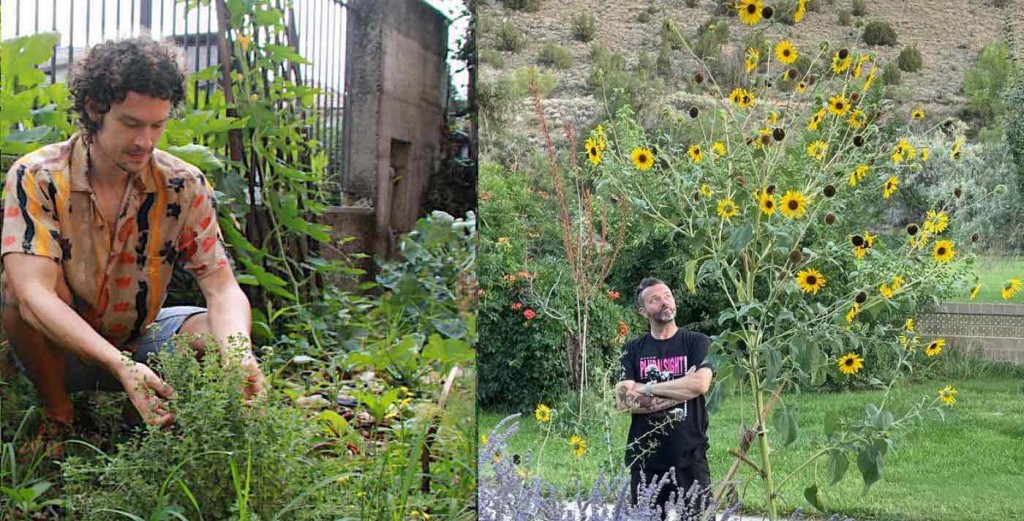
Brad Rowland plants edible weeds, like (his suggestions) lamb’s quarters, amaranth, and dandelion, and suggests to try and plan out every square inch of terrain before the season starts to give weeds as little room to grow. Eliza Cain utilized chaos in a different way. This season she let her garden grow almost entirely from plants which she let seed from last year, and judging from the colors it was a grand idea.

Brad Rowland’s garden (left) – Eliza Cain’s Garden (right)

From the mailbox, Owen T. wrote in and said he controls weeds in his squash garden by overlapping the vines so those big squash leaves shade the ground to discourage weed growth, as well as using cardboard, something other commenters like Lisa Bailey also utilize.

Roberta Lacefield (quite the fitting name for a Good Gardener) prefers a tidy garden when she can have it, and can usually take out all weeds at once by mowing along the edges of her beds, then placing first carboard, and then a layer of hay overtop.

Roberta Lacefield’s garden

One of our weekly contributors, permaculturalist Monica Richards, wrote in to note how she prefers “controlled chaos” in her raised beds for a number of reasons.

We have many kinds of critters who go through my gardens, and having a natural diversity can help keep some of your important veggie plants safe. Half of my work here is observation, so I often allow what some people call “weeds” to grow if they provide shade to plants next to them, or if they flower, attract bees to them as well. The only time I pull something is if it’s actually not allowing other plants around it to thrive.”

Monica Richard’s pond where chaos is permitted inside the raised area around it.


“How large the garden should be is often hastily decided when the gardener is in the flush of spring fever. That’s a bad time! It’s like going grocery shopping when you’re hungry,” — Mel Bartholomew.

Topic Week 7: Garden Hacks

Question 1: What are some gardening hacks you’ve picked up along the way?

Question 2: A garden is the ultimate improv arena: what’s your best example of DIY success?

Question 3: What has been your favorite resource for gardening tips and tricks?

Tell Us Here in The Comments… or, send your questions, tips, and photos to [email protected]Join our Facebook Good Gardens thread every Friday on the GNN Facebook Page

Good gardening rules

  • Green thumbs can help novice greenhorns.
  • Share your gardening photos and resources.
  • Garden jargon encouraged!

INVITE Friends to our Gardening Discussion on Social Media–And Share Your Photos and Tips!

“Meditation is something to play with. There is no ‘wrong’ way of doing it, except not doing it.” – Christopher Bamford

Quote of the Day: “Meditation is something to play with. There is no ‘wrong’ way of doing it, except not doing it.” – Christopher Bamford

Photo by: Inspa Makers

With a new inspirational quote every day, atop the perfect photo—collected and archived on our Quotes page—why not bookmark GNN.org for a daily uplift?

A Smart Watch Saved His Life with Alert About His Heart Slowing–and Stopping

- SWNS
– SWNS

An Apple smartwatch saved a man’s life when it alerted him that his heart was beating extremely slowly, and had even stopped 138 times in 48 hours.

This story of cardio-coincidence began in April when 54-year-old David Last got a new Apple watch from his wife Sarah for his birthday.

Straight away, the watch readings showed David had a resting heart rate as low as 30bpm. Resting heart rates for an adult male are usually between 60-100bpm, dropping down into the 50s for those with extraordinary fitness.

Sarah urged David to visit a doctor, but the man just assumed the watch was faulty.

Eventually the dad-of-four saw a cardiologist at Norfolk and Norwich University Hospital, where he was booked for an MRI scan in May. Two months later the results were in, and he was referred back for an ECG scan.

One day, David noticed he had five missed calls from the hospital asking him to come back as a matter of urgency.

It turned out he was walking around with a third degree heart block and was at risk of sudden cardiac death.

David underwent life-saving surgery to fit a pacemaker, a device which keeps his heart beating in rhythm, and says he’s feeling “relieved” and has “a lot more energy.”

“My wife keeps saying that she saved my life, and she’s not wrong,” said David. “If she hadn’t had bought me my Apple watch for my birthday, I wouldn’t be here.”

RELATED: Scientists Create Algorithm That Uses Routine Eye Scans to Identify Heart Attack Risk—With Accuracy of 70%-80%

“I will always be eternally grateful to her for it. Apart from charging it, it’s always staying on me now.”

“Sudden cardiac death” arises from genetic cardiomyopathies which make up a group of diseases passed genetically on to offspring at a 50/50 chance, and result in faulty genes causing heart failure.

In the UK there are around 12 sudden cardiac deaths per day among those under the age of 35.

“The pre-surgery consultation explained that my case was unusual, and they had extensive meetings about what they were going to do,” David recounted. “They explained that I had something called ‘heart block.’ The junction box in my heart had stopped working and failed to pass on electrical pulses.”

His heart had stopped 138 times in 10-second intervals over a 48-hour period, mostly while he was asleep. This would cause another part of his heart to kickstart the blood flow, before the process would repeat.

His newly-fitted pacemaker will now sense any abnormal rhythms and help both heart ventricles pump blood in sync.

SIMILAR: Genetic Heart Conditions Could be Cured for First Time with Single Jab – It’s a ‘Defining Moment’

David confirmed that he’s feeling much better and returned to work this week.

Furthermore, the two lovebirds got married in between David’s MRI and ECG scans, and were even able to enjoy a 10-day honeymoon in Italy during the same interval, something the hospital staff could barely believe.

“Sarah really looked after me,” said David. “She keeps saying how proud of herself she is—and she should be, she saved my life.”

SHARE This Incredible Stroke Of Luck On Social Media…

Mythical Welsh Kingdom Drowned by the Sea Could Have Existed According to Glacier Research and Famous Map

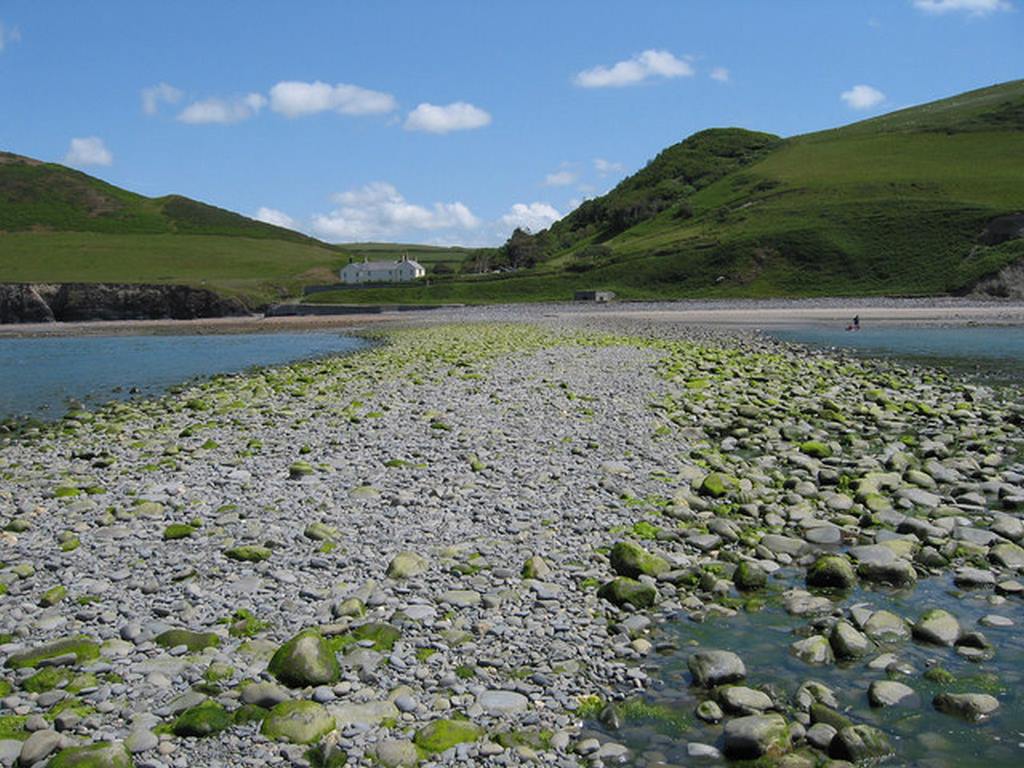
Sarn Wallog, the sort of terrain that might have once been part of a mythical lost kingdom. - CC 2.0. Dave Croker
Sarn Wallog, the sort of terrain that might have once been part of a mythical lost kingdom. – CC 2.0. Dave Croker

A mythical kingdom lost to the sea as part of a Welsh tradition dating to the Medieval period could have really existed according to new evidence on the evolution of the Welsh coastline

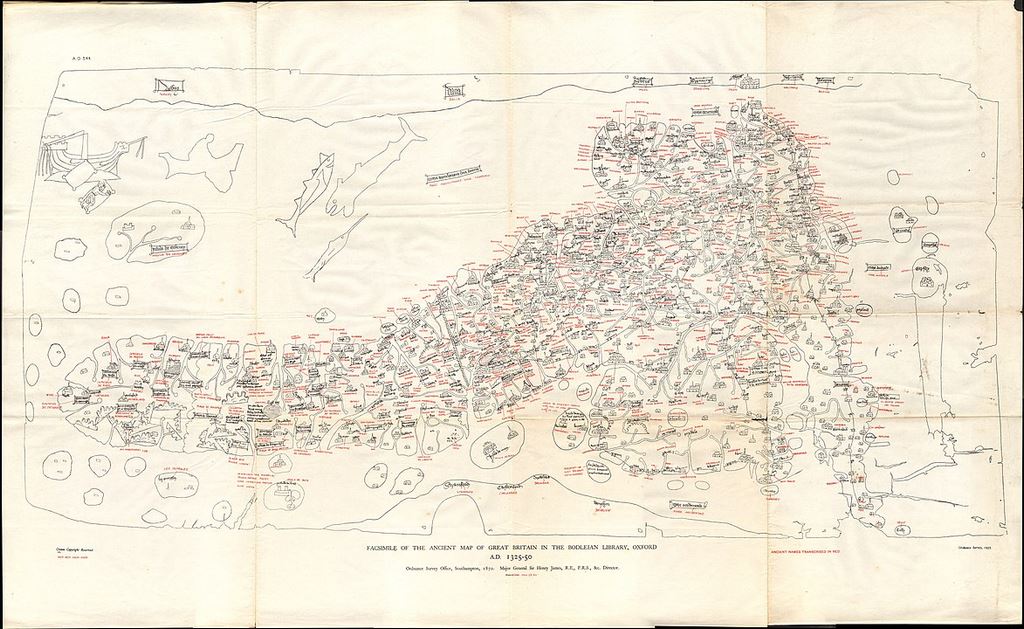
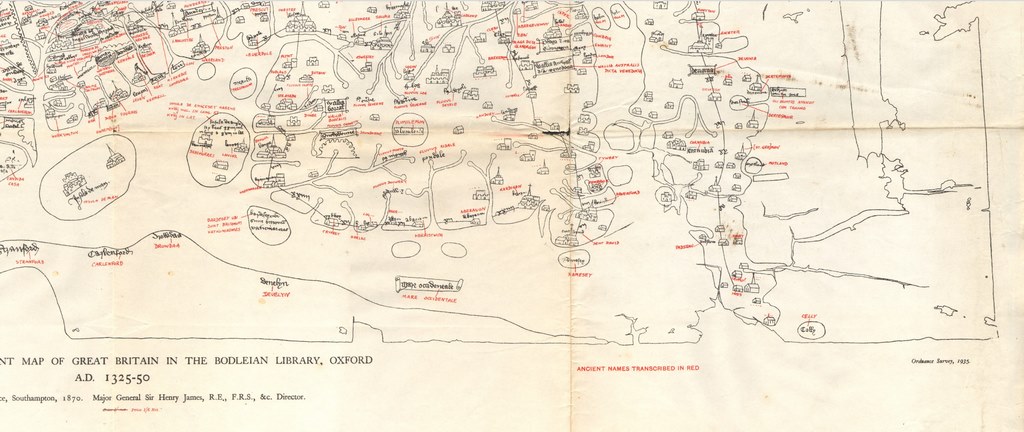
The research started with the earliest surviving map of Great Britain, on which two islands are depicted in Cardigan Bay in west Wales which no longer exist today.

Several versions of the legend exist. An article from the BBC dated to 2012 explains that the oldest can be found in the Welsh fable-history called the Black Book of Carmarthen.

It goes that in the land of Cantre’r Gwaelod, there was a country called Maes Gwyddno, the site of the kingdom of Meirionnydd, ruled by a man born 520CE named Gwyddno Garanhir (Longshanks). So fertile was the land there that one acre was said to produce as much as four on the mainland.

A dyke kept the sea from flooding Meirionnydd, and sluice gates at low tide were opened to drain the land of water, and which were closed again at high tide.

SIMILAR: Forget Online Dating: Writing Letters to This Ancient Tree in Germany is Fabled to Help People Find Their Valentine

Several iterations exist whereby the watchman of the sluice gates becomes distracted one night during a storm and leaves the gates open. In one tale a drunken watchman named Seithennin has too much fun at a party; in another, he pursues a watchwoman, the fair maid Mererid, and they both forget the sluice gates.

In all versions the land is drowned by the sea, and the residents are forced to leave their fair land behind.

The Gough map
The two ovals above the “Mare Occidentale” are supposed to be Cantre’r Gwaelod.

“We know that the west Wales coast has changed significantly over time,” said Professor Simon Haslett of Swansea University Department of Geography. “Evidence from the Roman cartographer Ptolemy suggests the coastline 2000 years ago may have been some 13 km further out to sea than it is today.”

With its origins in the thirteenth century, the Gough Map, housed at Oxford University’s Bodlein Library, has proven extraordinarily accurate in previous use cases, and the two islands are clearly marked. One is between Aberystwyth and Aberdovey and the other between there and Barmouth to the north.

Haslett and his team suggest that the islands could be the remnants of a low-lying landscape underlain by soft glacial deposits laid down during the last ice age. Since then, forces of erosion have worn away the land, reducing it to islands, before these too were worn away and disappearing by the sixteenth century.

RELATED: Priceless Lost Jewels From Legendary Maravillas Shipwreck Are Finally Found in Bahamas

Evidence to this are accumulations of gravel and boulders, known locally as sarns, found off the west coast of Wales. In highly historically-glaciated terrain, moraine material and boulders can be found far into low-lying areas.

“This lost land is said to have suffered a catastrophic inundation and is referred to in poetry in the Black Book of Carmarthen and in later folklore,” said David Willis, a Celtic expert at Oxford University. “Our evidence may provide an explanation of how the story of Cantre’r Gwaelod may have arisen.”

IMAGINE Lost Kingdoms Of Wales Together With Friends On Social Media…

Evidence of Amputation in Prehistoric Times Shows Patient Surviving for a Decade–Proves Medical Expertise Existed

- SWNS
– SWNS

A child that lived in Borneo 31,000 years ago had its left foot amputated and survived for up to nearly a decade.

It is the oldest evidence of surgical limb amputation and pre-dates the previous record by an astonishing 24,000 years.

Those who removed the lower third of the young patient’s leg must have had detailed knowledge of anatomy and muscular and vascular systems to prevent fatal blood loss and infection.

Scientists hypothesize they may have had access to a natural antiseptic from the rainforest’s rich variety of plants. The leg bone shows a clean sloping cut made with a “sharp tool.”

The patient was an adolescent, aged 11 to 14. After the procedure they used a crutch, or perhaps even a prosthetic, to negotiate a difficult environment. Its gender is unknown, but most likely to be male.

Named TB1, its remains were buried in Liang Tebo cave on the Indonesian island of East Kalimantan, which coincidently contains some of the world’s earliest dated rock art.

“This unexpectedly early evidence of a successful limb amputation suggests at least some modern human foraging groups in tropical Asia had developed sophisticated medical knowledge and skills long before the Neolithic farming transition,” said Dr. Tim Maloney, of Griffith University, Australia.

Animal attack or accident seems unlikely, as does punishment since the individual seems to have received careful treatment after surgery and in burial.

“Furthermore, during surgery, the surrounding tissue including veins, vessels and nerves, were exposed and negotiated in such a way that allowed this individual to not only survive but also continue living with altered mobility,” added Dr. Maloney.

“Although it is not possible to determine whether infection occurred after the surgery, this individual evidently did not suffer from an infection severe enough to leave permanent skeletal markers or cause death.”

Intensive post-operative nursing and care would have been vital, such as temperature regulation, regular feeding, bathing and movement to prevent bed sores while the individual was immobile.

Gentleman, the operation was a success

At the time of death, the individual was a young adult aged about 19 or 20 in a period of history when the average age of death for adults was around 32, which can only mean the operation can be judged as a success. Its reassembled skeleton is 75% complete and has hallmarks of a male’s frame.

Before modern clinical developments such as antiseptics, most people undergoing amputations, even as recently as 200 years ago, died from blood loss and shock or subsequent infection.

Previously, the oldest known complex operation happened in France about 7,000 years ago. A Stone Age farmer’s left forearm was surgically removed and then partly healed.

CHECK OUT: Earliest Prehistoric Art Discovered –And it Turns Out to Be Hand Prints Made by Children 170,000 Years Ago

“We infer the comprehensive knowledge of human anatomy, physiology and surgical procedures evident in TB1’s community is likely to have been developed by trial and error over a long period of time and transmitted inter-generationally through oral traditions of learning,” said Dr. Maloney.

“Notably, it remains unknown whether this ‘operation’ was a rare and isolated event
in the Pleistocene history of this region, or if this particular foraging society had achieved an unusually high degree of proficiency in this area.”

It’s possible that we’ve found the remains of surgical procedures before, but the poor preservation of diseased bone as well as preconceptions about the ‘primitive’ nature of early medical cultural practices among hunter gatherers, have interfered with those deductions

Professor Charlotte Roberts, an archaeologist at Durham University, who was not involved in the study, described the case as the “dawn” of surgery.

“That this child survived the procedure and is estimated to have lived for many years afterwards is astounding,” she said. “Another interesting open question is whether the child received pain management during the operation, such as sedation through the use of a plant-based medicine.”

RELATED: Prehistoric Women Were Also Hunters and Artists, Says New Documentary Hailing These Multi-Talented Moms

“The hunter-gatherer community in which this person lived would have been relatively
mobile while foraging and hunting for food, and this would have made the individual’s
recovery process very challenging, considering how people recover from amputations and the need for care, rest, healing and rehabilitation.”

It would have been harder to support this child than someone in settled farming communities of later periods, where it would have been easier for people to help them at the same time as working, and the discovery shows just how comprehensive human intelligence, and sense of community is.

SHARE This Incredible Breakthrough With Your Friends On Social Media…

How Tony Hawk Joined an Apache Pro Skater to Bring New Skate Park to Reservation

Fort Apache Indian reservation skate clinic - courtesy of Douglas Miles Sr.
Fort Apache Indian reservation skate clinic – courtesy of Douglas Miles Sr.

When an Apache man moved to a new town and found it needed a skatepark, he and the tribe petitioned skating legend Tony Hawk to hook up the Apache youth with professional facilities.

A lot of preconceptions exist about Native Americans, but even the most attentive student of history might not realize that skateboarding is the fastest growing sport on Tribal Reservations.

The kids from the town of Whiteriver in the Fort Apache Indian Reservation, Arizona, have had to make do, thanks to their DIY attitude, with the foundations of an abandoned building project for a skatepark.

With other Tribal funding concerns and the pandemic to boot, money to create a proper skatepark were simply not there, and the skaters had to carry on with what they could find.

Enter Douglas Miles Jr., a skater and Apache from the San Carlos Indian Reservation, who moved to his wife’s hometown of Whiteriver in 2019.

Miles Jr. knew a thing or two about getting a skatepark built—he and his father Douglas Miles Sr. rallied community support to petition the San Carlos tribal council to build a skatepark in their community three years ago.

Miles Jr. was a seventh-grader when he picked up the sport, and like the kids at Whiteriver, he and his friends also used to make due with DIY obstacles and old abandoned concrete/metal works for a skatepark.

The $200,000 skatepark was built as part of a larger sports complex by the council atop an abandoned jail, which everyone agreed was more than a little poetic.

When they were finished, even Red Bull sports wanted to get in on the skating.

Whiteriver needs a skatepark

The similar situation over in Whiteriver meant that Miles Jr. didn’t need to wait long before prodding the White Mountain Apache tribal council to get its skateboarding act together.

However unlike his native San Carlos, his new home government wasn’t persuaded, and forced to go it alone Miles Jr. set up a GoFundMe to try and gather support from the skating community.

The Apache Passion Project, thanks to social media, grew to smash its modest fundraising target of $3,000 by accumulating more than $50,000. Among these supporters were Gwendena Lee-Gatewood, the chairwoman of the White Mountain Apache Tribe.

Together, she and Miles Jr. contacted the Skatepark Project, a non-profit founded by skating legend Tony Hawk that builds skateparks for communities that want them.

RELATED: First Native American-Owned Film Studio Shoots Tom Hanks Movie

“The community is really behind this Whiteriver project, and there’s just so much enthusiasm from local leaders, and we’re excited to make this happen with them as soon as possible,” Benjamin Bashein, executive director of the Skatepark Project, told AZ Central. “We hope they will be scaling it by this time next year.”

Miles Jr. is the heartbeat of the whole initiative. He has organized skating workshops, submitted various planning proposals with the help of local engineers and artists, and is always promoting the infectious enthusiasm of Apache skate culture on social media.

With Skatepark Project tackling the issue of a big professional facility, Miles Jr. used the $53,000 he raised through GoFundMe to improve the existing DIY park, and even build a few more around the community.

“It’s important to see that local folks kind of have invested personally in the space,” Bashein said. “That ethos is so essential to skateboarding. For a long time, communities and municipalities maybe didn’t recognize the value of the skatepark. So it really took folks like Douglas rolling up their sleeves and leading the effort themselves.”

CHECK OUT: Girls in War Zone Find Their Power On Skateboards; Documentary About Them Takes Home the Oscar (Watch)

The park isn’t finished quite yet, but Miles Jr. said that when it is all said and done, he’ll soak up the moment, and then get back to skating.

SHARE This Apache’s Quest For Skating On Social Media…

“The causes of human actions are usually immeasurably more complex and varied than our explanations of them.” – Dostoevsky

Quote of the Day: “The causes of human actions are usually immeasurably more complex and varied than our explanations of them.” – Fyodor Dostoevsky

Photo by: Eric Ward

With a new inspirational quote every day, atop the perfect photo—collected and archived on our Quotes page—why not bookmark GNN.org for a daily uplift?

Domino’s Finally Settles Argument of Whether or Not You Can Recycle Pizza Boxes

- Dominos
– Domino’s

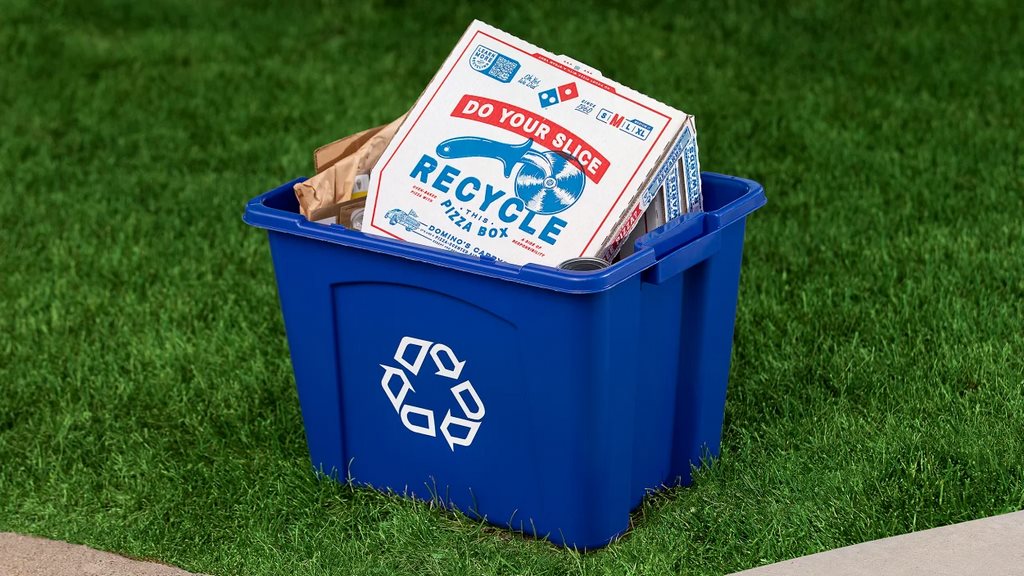
Domino’s are now delivering their pizzas in boxes on which are printed specific recycling instructions for the customer’s area.

Believe it or not, literally billions of corrugated cardboard pizza boxes have gone unrecycled because both consumers and recycling companies believed that the leftover grease, sauce, and cheese might gum up the recycling machinery, or weaken the bonds of the recycled paper material.

So great was the confusion that the company that makes Domino’s pizza boxes, West Rock, commissioned a study to see if boxes made up of 20% pizza grease by weight would somehow harm the recycling process.

No difference in machine function or chemical bondage of recycling paper material was observed, despite the fact that they used an unrealistically greasy box—even the greasiest pizzas can only manage to alter 2% of total box weight.

RELATED: Britain’s Royal Mint is Salvaging Gold from E-Waste – Recycling Precious Metals for Green Investors

With that cleared up, Domino’s is now printing everything someone needs to know to recycle their pizza box right onto the box, including tidbits like “Grease DOES NOT Impact the Recyclability!” and “70% of Americans have access to pizza box recycling.”

For those that don’t have curbside pickup paper recycling, a QR code on the box will direct the consumer to infrastructure nearest to them that will take the pizza boxes.

“Arming our consumers with this knowledge and encouraging them to be part of our stewardship journey also makes them feel good about enjoying their pizza,” Fredric Lund, SVP of global development and sustainability at Domino’s, told Fast Company.

Going the extra mile, Domino’s recycling website includes details on how to get in contact with recycling facilities to ask whether or not they accept boxes, as only 27% of companies in the U.S. explicitly mention they accept pizza boxes. Many more take them all the same, but don’t say it out loud.

CHECK OUT: 150 Brands Unite to Clean Up Our Paper Supply – Saving Global Forests and Improving Recycling

It’s a great example of a company going way out of their lane to help ensure sustainability of their product, which is already made from recycled material.

SETTLE The Debate On This Topic Right Away By Sharing This Story…