All News - Page 358 of 1714 - Good News Network
Home Blog Page 358

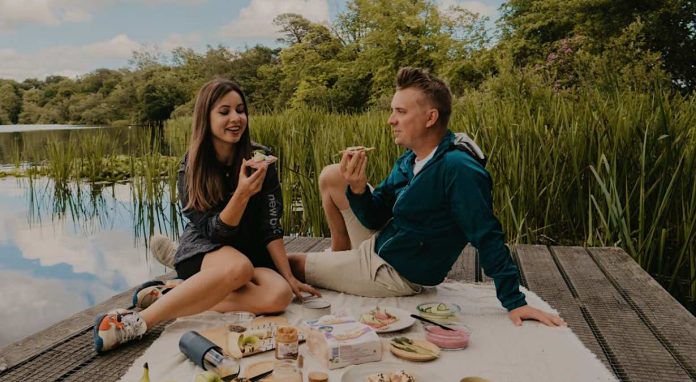
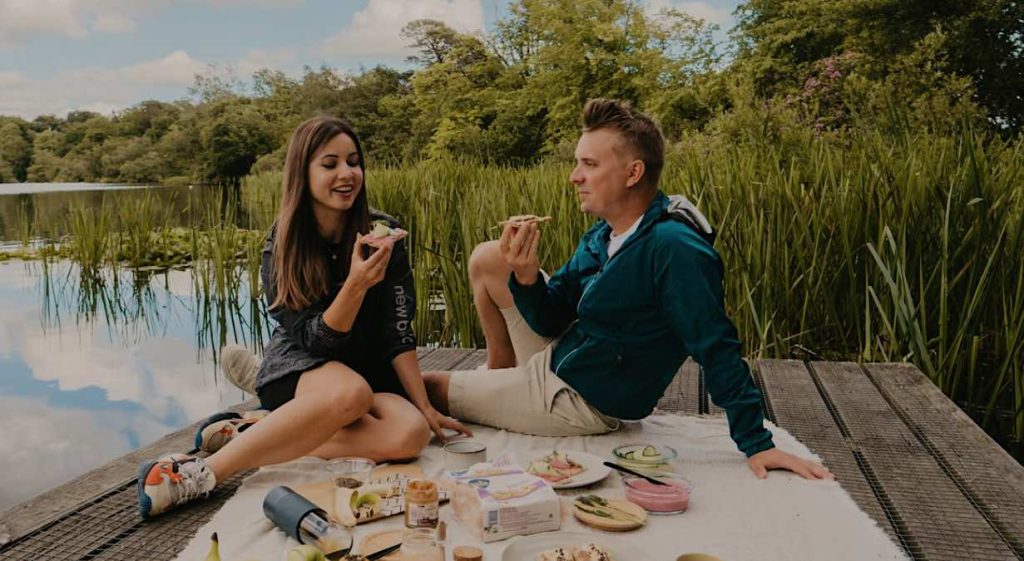
“It’s fun to get together and have something good to eat at least once a day. That’s what human life is all about—enjoying things.” – Julia Child

Quote of the Day: “It’s fun to get together and have something good to eat at least once a day. That’s what human life is all about—enjoying things.” – Julia Child

Photo: Wasa Crispbread

With a new inspirational quote every day, atop the perfect photo—collected and archived on our Quotes page—why not bookmark GNN.org for a daily uplift?

Sam the Lamb is Nursed Through Incredible Recovery After Falling off Highway Truck – WATCH

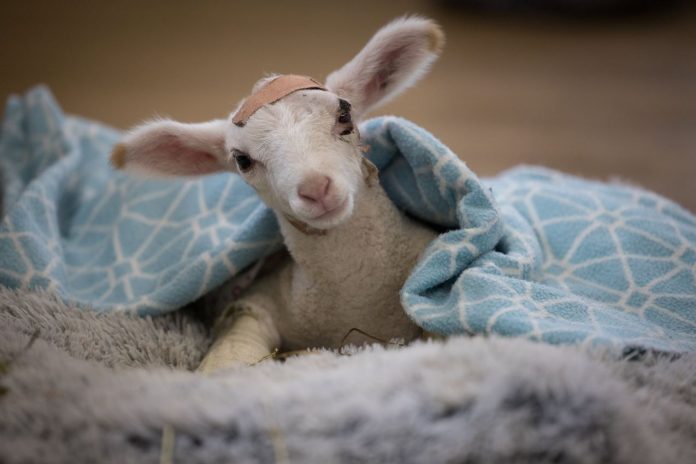
Constable Sam the Lamb - SWNS
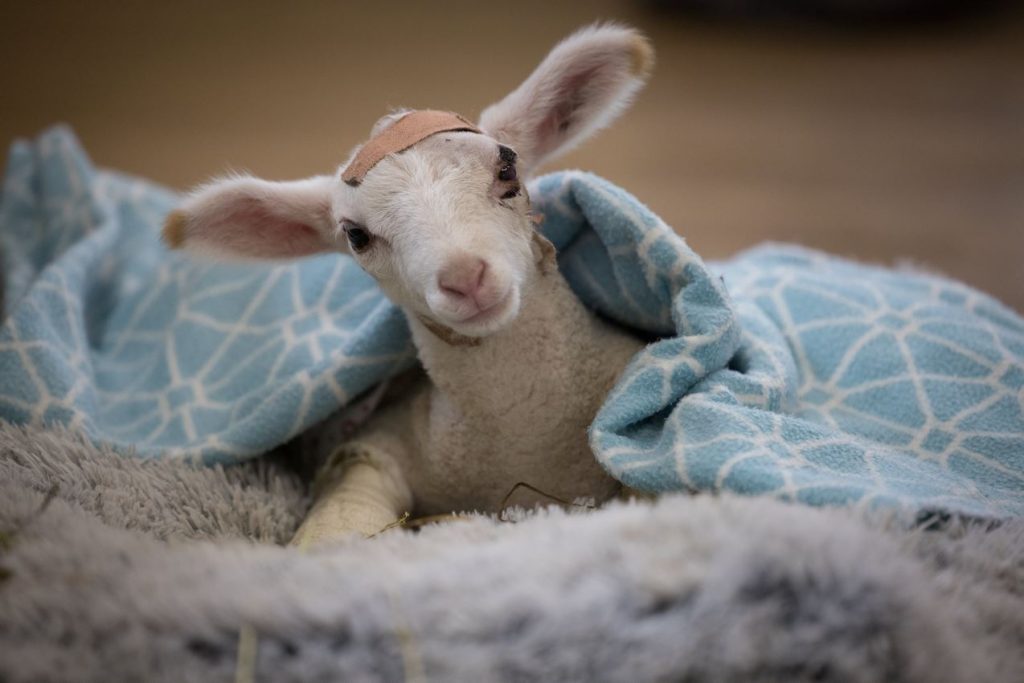
Constable Sam the Lamb – SWNS

A newborn lamb has been documented making an incredible recovery after falling off a speeding truck in Australia.

The youngster, named Constable Sam, fell through a gap in a vehicle travelling along a busy highway in Victoria, Australia on March 14.

The lamb, who was born the very day of his accident, broke both of his front legs in two places and suffered a fractured skull and a critical injury to one eye as a result of his fall.

Highway officials rushed him to farm sanctuary Edgar’s Mission after finding him injured on the side of the road.

CHECK OUT: Lucky Rescue for 5 Sheep Stuck on English Rooftop

Volunteers at the non-profit site performed surgery on his skull and legs and cleaned his wounds in the hope of keeping the lamb alive. Afterwards, it was a matter of feeding the little survivor and getting him to trust his hooves again. The house cats were there for support.

Three months following his harrowing fall, Constable Sam has made an incredible recovery and was recently adopted out to a forever home with two of his friends.

“His fractured skull is fractured no more and his once critically injured left eye appears to have not lost its sight,” said Edgar’s Mission in a statement. “His wobbly legs are now strong and infused with a sense of victory and his wagging tail is unable to conceal his joy for the newfound and splint-free mobility that is now his.”

WATCH the recovery, and if you played the Rocky theme it wouldn’t be wrong…

SHARE This Remarkable Recovery Story From A Lucky Lamb…

Livin’ Good Currency Ep. 17: Jai Khanna on Aligning Passion With Purpose Even When Passion Ends

The Lesson: For some people, especially those shot into stardom through acting or professional sports, it’s easy for the passion they have for their craft to proceed without a deeply-rooted purpose. When one day that passion is no longer available, they have nothing to look inward at to find a new path through life.

Notable Excerpt: “Even if it felt like a purpose, sports in general, it still ends at a very early age for a lot people too, you still have a whole life, you’re still defined and to keep exercising your passion. So what does it translate into? It’s interesting even like, pro guys, I’ve seen it, it’s like “how did that happen?” And then there’s some others that have really successfully transitioned to other businesses, or broadcasting, or coaching, and they’ve been really successful at it, so it didn’t matter really what, but it was something they fell into.”

The Guest: Jai Khanna attended the University of California at Davis on an athletic scholarship, playing collegiate baseball for the Aggies from 1988-1993. Jai settled at Writers & Artists Agency in 1996, where he was promoted to Talent Agent, working with a variety of clients, including working on the James Gandolfini team and the ‘The Sopranos,’ to nurturing Eva Mendes into an in-demand star.

Jai then moved over to famed Brillstein Entertainment Partners to be involved in over 100 film and TV transactions, credited on 25+ films and helped raise over $300 million in project financing. In 2020, Jai launched Oakhurst Entertainment. Oakhurst has already produced several films with a full development slate on the horizon tackling themes of mental health, immigration and climate change. Indiaspora Forum recognized him as one of the “100 Influential Indian American Leaders in the US” and the Asian American Business Development Center named him one of the “Outstanding 50 Asian Americans in Business.”

The Podcast: Livin’ Good Currency explores the relationship of time to our lives. It gives a simple, straight-forward formula that anyone can use to be present in the moment—and features a co-host who knows better than anyone the value of time (see below). How do you want to spend your life? This hour can inspire you, along with upcoming guests, to be sure you are ‘Livin’ Good Currency’ and never get caught running out of time.

The Hosts: Good News Network fans will know Tony (Anthony) Samadani as the co-owner of GNN and its Chief of Strategic Partnerships. Co-host Tobias Tubbs was handed a double life sentence without the possibility of parole for a crime he didn’t commit. Behind bars, he used his own version of the Livin’ Good Currency formula to inspire young men in prison to turn their hours into honors. An expert in conflict resolution, spirituality, and philosophy, Tobias is a master gardener who employs ex-felons to grow their Good Currency by planting crops and feeding neighborhoods.

Innovative ‘Sand Battery’ is Heating Small City, Storing Green Energy for Months at a Time

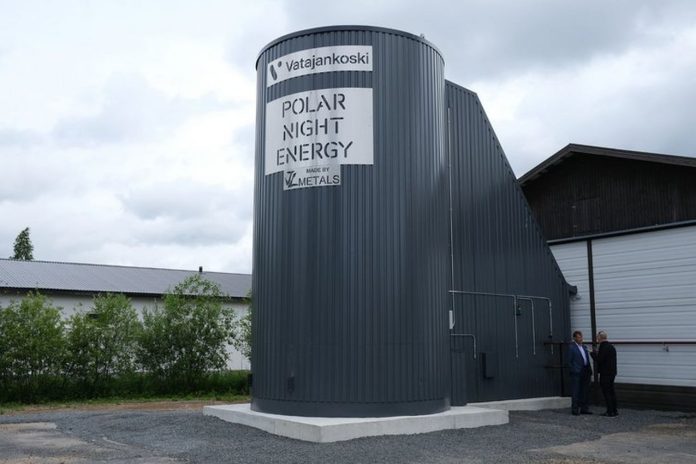
– Polar Night Energy. Released

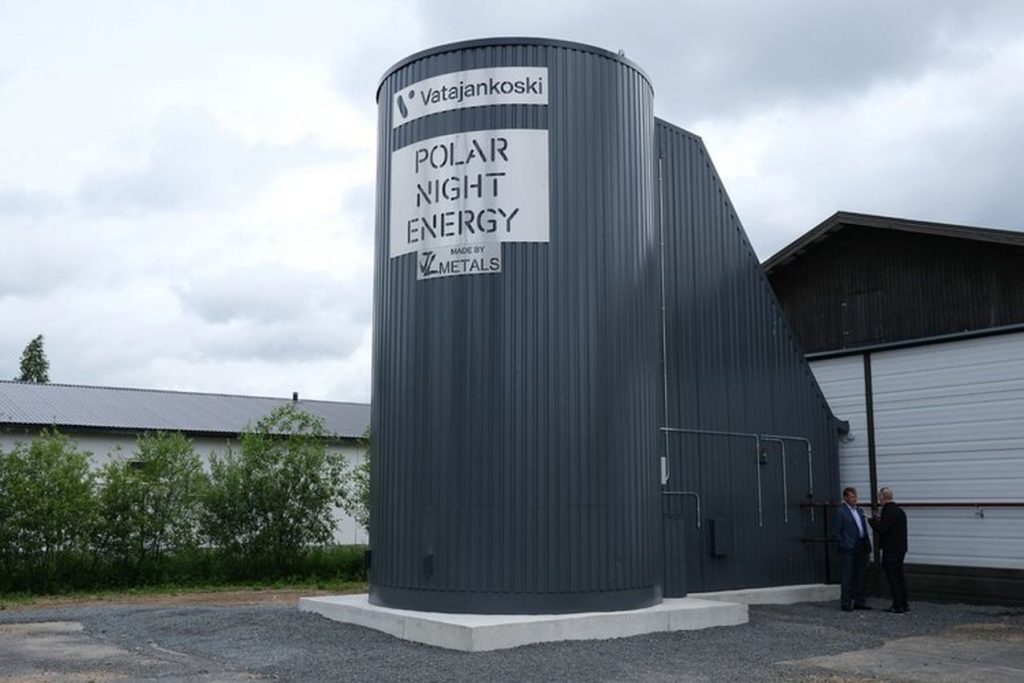
A town in Finland is using sand to store heat from renewable energies to provide home heating during winter.

Water heating can only store 100°C of heat, obviously, while sand can reach 500°C, or nearly 1000° Fahrenheit.

Tens of thousands of cubic meters of sand are heated from the generation of electricity with solar panels or wind turbines. Packed tightly in insulated silos, the sand can retain this heat for months without losing it. For Finns living through a 5-month long winter, it’s a vital load off the power grid.

The company behind this innovation, which can also use the heat to generate electricity as well as home heating, is called Polar Night Energy, and the first commercial sand-based heat storage facility has already been bought and made operational by Vatajankoski, an energy utility based in Western Finland.

ALSO READ: World’s First CO2 Battery to Offer Long-Duration Energy Storage at Half the Cost

Now in July, the facility is primed for its first commercial winter in Vatajankoski’s district heating network in Kankaanpää, Finland. The storage has 100 kilowatts heating power and 8 megawatt hours capacity.

For Euro governments, now in the midst of a full blown energy crisis, the sand tech has several attractive elements, such as an investment cost of less than 10 euro per kilowatt hour of capacity, little to no emissions or hazardous materials, and minimal, automated running costs.

The BBC reports that Finnish energy authorities are looking to scale the solution from 8MWh to 8GWh

“This innovation is a part of the smart and green energy transition. Heat storages can significantly help to increase intermittent renewables in the electrical grid,” said Markku Ylönen, co-founder of Polar Night Energy. “At the same time we can prime the waste heat to usable level to heat a city. This is a logical step towards combustion-free heat production.”

POPULAR: To Replace Lithium Batteries For Grid Storage ‘Gravitricity’ Uses Gravity

And not a moment too soon, as Finland’s Government’s recent decision to join NATO has seen them lose all access to Russian natural gas, the standard home heating energy source.

WATCH a special report from the BBC…

‘FINNISH’ By Sharing This Story With Your Friends

Two Zoos, Two Sets of Big Cat Twins: Welcoming the Newborn Cubs in Nashville and Oklahoma

Nashville Zoo - Facebook
(Left) – Nashville Zoo Facebook; (Right) – OKC Zoo Facebook

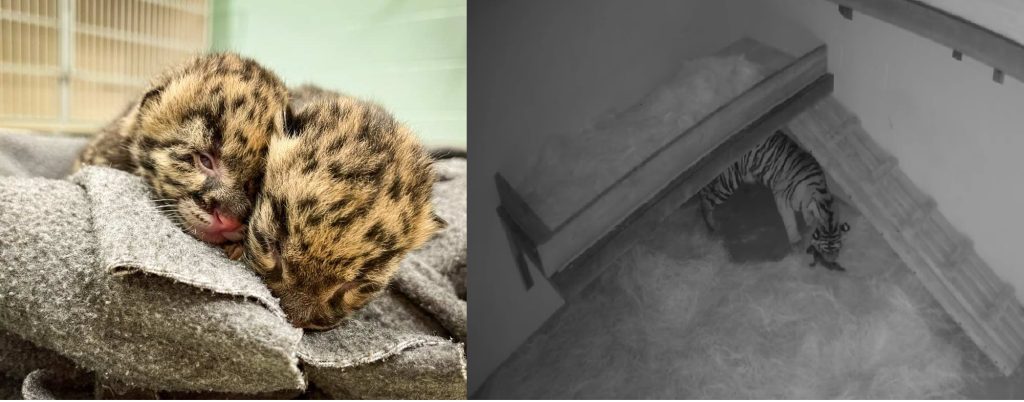
Lola, the Oklahoma City Zoo’s 11-year-old female Sumatran tiger, gave birth to two cubs on the afternoon of Saturday, July 2 at the Zoo’s Cat Forest habitat.

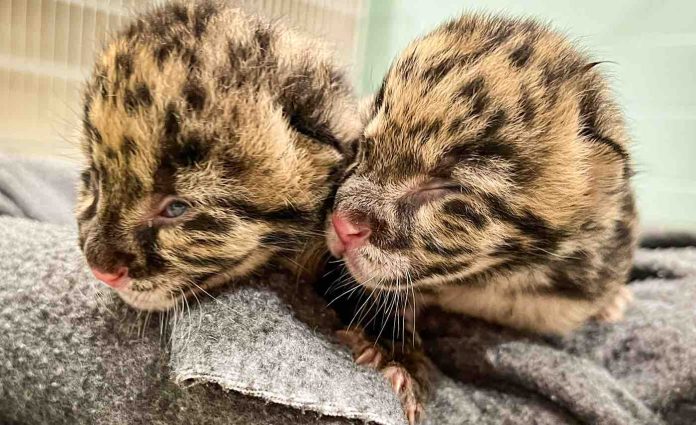
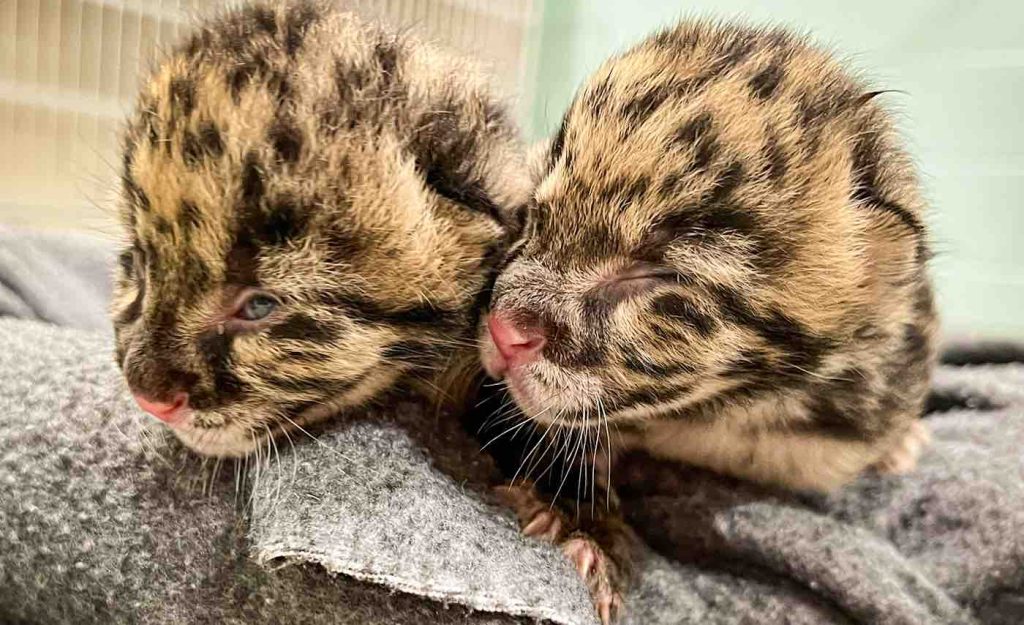
OKC wasn’t the only zoo celebrating twins, as the Nashville Zoo announced that Jewels the clouded leopard had just given birth to a male and female cub four days later.

The two zoos are both heavily involved in conservation work with their respective big cat species, as the clouded leopard is considered Vulnerable, and the Sumatran tiger subspecies Critically-Endangered.

According to the OKC Zoo’s carnivore care team, Lola and her cubs are doing well and spending time together behind-the-scenes to bond.

Caretakers will continue to monitor Lola and her offspring by video, and in a few weeks the veterinary care team will conduct physical exams on each of the cubs to obtain their weights and measurements as well as determine their gender.

POPULAR: How ‘Frozen Zoos’ Are Helping Save Vanishing Species

“Lola has proven to be an extremely attentive and nurturing mother to these new additions to our animal family,” said Tyler Boyd, OKC Zoo’s curator of carnivores.

“Throughout her pregnancy and birth of these cubs, she has participated in ultrasound monitoring and training sessions with her caretakers that allowed us to be as prepared as possible for their arrival. So far, Lola is doing an excellent job and the cubs are spending plenty of time nursing and bonding with mom.”

It’s the second litter of cubs born to Lola and her mate Kami, taking the tiger total there to 5.

SEE: Endangered Baby Rhino Born in a Czech Zoo is Named After Kyiv (PHOTOS)

In contrast, Nashville Zoo said they now have 16 clouded leopards in their care, bringing their total birth celebrations to 42 since 2009, according to local news.

Nashville Zoo – Facebook

The Zoo is also a founding member of the Clouded Leopard Consortium, a program based out of Thailand dedicated to saving clouded leopards and their habitat, and has been involved in the conservation of this cat species since the Zoo’s inception.

Also active in protecting the 500 Sumatran tigers left in the wild, OKC Zoo used funds donated by guests through the Zoo’s Round Up for Conservation program to allow the non-profit Rainforest Trust to purchase 13,000 acres of rainforest in central Sumatra where these tigers live.

WATCH Lola bear her twins, and the Nashville Zoo’s squeaking Leopard cubs…

WELCOME These Cubs To The World On Social Media…

Everything Needed to Make RNA and DNA Has Been Found in Asteroids and Meteorites

NASA/JPL-Caltech
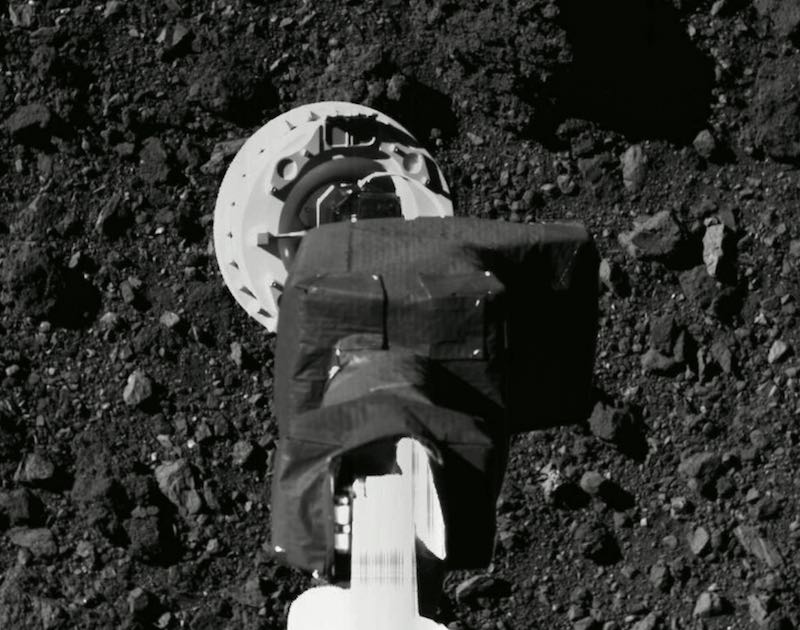
Actual footage of OSIRIS-Rex collection arm on the asteroid Bennu – NASA

Space rocks that fell to Earth within the last century contain the five bases that store information in DNA and RNA, scientists report in Nature.

These “nucleobases”—adenine, guanine, cytosine, thymine, and uracil—combine with sugars and phosphates to make up the genetic code of all life on Earth.

Together, cytosine, thymine, adenine, guanine, and uracil, a group known as “nucleobases,” combine with some sugars which have also been found in meteorites, and phosphates to create the genetic code used to form all forms of life on Earth.

Until now, scientists scouring extraterrestrial samples had only found three of the five. However, a recent analysis by a team of scientists led by Associate Professor Yasuhiro Oba of Hokkaido University, identified the final two nucleobases that have eluded scientists.

“We now have evidence that the complete set of nucleobases used in life today could have been available on Earth when life emerged,” said Danny Glavin, a co-author of the paper at NASA’s Goddard Space Flight Center.

CHECK OUT: NASA and SpaceX Launched First Rocket to Test a Defense System Against Giant Asteroids in the Future

Nucleobases belong to classes of organic molecules called purines and pyrimidines, which have a wide variety. However, it remains a mystery why more types haven’t been discovered in meteorites so far.

“I wonder why purines and pyrimidines are exceptional in that they do not show structural diversity in carbonaceous meteorites unlike other classes of organic compounds such as amino acids and hydrocarbons,” said Oba, lead author of a paper about the research published April 26 in Nature Communications.

“Since purines and pyrimidines can be synthesized in extraterrestrial environments, as has been demonstrated by our own study, one would expect to find a wide diversity of these organic molecules in meteorites.”

This newly discovered pair of nucleobases, cytosine and thymine, have been elusive in previous analyses likely because of their more delicate structure, which may have degraded when scientists previously extracted samples.

In the earlier experiments, scientists created something of a “meteorite tea,” placing grains of meteorite in a hot bath to let the molecules on the sample extract into the solution and then analyzed the molecular makeup of the extraterrestrial broth.

RELATED: In Historic First, NASA Lands on Asteroid and Collects Samples of Debris That Helped Form Our Earth

“We study these water extracts since they contain the good stuff, ancient organic molecules that could have been key building blocks for the origin of life on Earth,” said Glavin.

Because of how delicate these two nucleobases are, the team was initially skeptical to see them in the samples. But a mix of cool water and extremely-sensitive equipment allowed the them to feel confidant in their discovery.

“I was amazed that they had seen cytosine, which is very fragile,” said Jason Dworkin, another co-author at Goddard.

The finding doesn’t provide a smoking gun as to whether life on Earth got an assist from space or came about exclusively in the prebiotic soup in the planet’s infancy. But completing the set of nucleobases that make up life today, in addition to other molecules found in the sample, gives scientists who are trying to understand the beginning of life more compounds to experiment with in the lab.

POPULAR: French Connoisseurs Just Tasted the Bordeaux Wine That Spent a Year in Space: ‘Beautiful!’

“This is adding more and more pieces; meteorites have been found to have sugars and bases now,” Dworkin said. “It’s exciting to see progress in the making of the fundamental molecules of biology from space.”

Not only did this analysis add to the kit for those modeling the inception of life on Earth, it also provides a proof of concept for a more effective technique to extract information from asteroids in the future, especially from the samples of Bennu making their way to Earth in the next year via NASA’s OSIRIS-REx mission.

Send This Story To Your Friends’ Orbits…

“If you can‘t do great things, do small things in a great way.” – Napoleon Hill

Quote of the Day: “If you can’t do great things, do small things in a great way.” – Napoleon Hill 

Photo: Jeremy Thomas

With a new inspirational quote every day, atop the perfect photo—collected and archived on our Quotes page—why not bookmark GNN.org for a daily uplift?

DC Subways Will Have $50M in Revenue From New Solar Panels Covering Parking Lots With Shade

File photo by Jay Black
File photo by Jay Blacktrans

The transit agency for the Washington, DC Metro area announced Friday a deal worth up to $50 million over 25 years to install solar panels atop buildings and parking structures at four subway rail bus stations.

Combined, Metro says the four sites will generate 12.8 megawatts of electrical capacity and make this “the largest community solar project in the National Capital Area and one of the largest in the nation”.

It will also provide Metro customers who park their cars at the stations with new shaded parking and protection from the elements.

Under the agreement, SunPower Corp. will install photovoltaic solar panels over carports and canopies that shade surface lots and above parking garages. The four Metro sites are: Anacostia, Cheverly, Naylor Road, and the Southern Avenue stations.

RELATED: Detroit Getting First Public EV-charging Road in the US to Power Electric Vehicles Wirelessly

Goldman Sachs Renewable Power will own the solar power system and provide annual payments to Metro through 2047, providing a long-term revenue stream that will support the regional transit agency’s operations—at no cost to Metro, which is run by governments of DC, Maryland, and Virginia.

“This project benefits residents of our region, even people who don’t ride Metro, by leveraging the potential of our stations to generate revenue and increase the community’s access to a clean, renewable source of energy,” said Metro CEO Paul Wiedefeld. “This project advances the region’s sustainability goals while generating revenue to help keep Metro safe and affordable in an extremely tight budget environment.”

POPULAR: World’s First Electric Self-Propelled Container Ship Launches in Oslo to Replace 40K Diesel Truck Trips

When complete, the stations (located in DC and Prince George’s County, Maryland) will have 17 acres of photovoltaic solar panels—the equivalent of 13 football fields—and generate enough electricity to power at least 1500 single-family homes. Homes and businesses in the local PEPCO area will be able to sign up for a share of the clean, renewable energy generated by the project while saving on their utility bill.

The project is part of Metro’s sustainability initiatives and will help advance the Clean Energy DC Plan that seeks to cut carbon emissions in half—and transition to 100 percent renewable energy by 2032. Construction is expected to begin early next year.

MORE: First Ever Commute in The Jetson Flying Car – CEO Says it Can Make You a Pilot in 5 Minutes

LET THE Sun Shine on Social Media By Sharing the Good News…

Water Births ‘Provide Clear Benefits’ For Moms and Newborn Babies, Large Analysis Shows

Photo by rabble - CC license
Photo by rabble – CC license

Water births provide “clear benefits” for healthy moms and their newborn babies, according to new research.

It showed that giving birth in a tub results in fewer medical interventions and complications during and after the birth than standard deliveries—as well as higher levels of satisfaction for the mum.

The large review of 36 previous studies also found that water births “significantly reduced” the use of epidurals, injected opioids, as well as pain and heavy bleeding after the birth.

A water birth involves using a birthing pool to achieve relaxation and pain relief, either exiting the pool for the birth, so the newborn can emerge into air to breathe, or remaining in the birthing pool and bringing the baby to the surface to start breathing.

The researchers wanted to compare the extent of healthcare interventions needed during and after labor between the two different types of water birth and to see if outcomes differed between a water birth and standard care not involving a birthing pool.

They analyzed 36 previous studies, published between 2000 and 2021, involving more than 150,000 women.

RELATEDProbiotics Improve Nausea and Vomiting in Pregnancy, Study Shows

The studies included a range of interventions and outcomes such as induced labour; artificial breaking of waters; use of epidurals; admission to intensive care, and breastfeeding.

Lead author Dr. Ethel Burns, of Oxford Brookes University, said the data analysis, published in BMJ Open, showed that a water birth, regardless of whether women birth in or out of the pool, “has clear benefits to women” in obstetric units, where most births take place and where healthcare interventions and complications are more likely than in midwife-led units.

And it increased the satisfaction levels of mothers, as well as the odds of them going home with an intact perineum.

It also resulted in less augmentation, episiotomy, and requirements for pharmacological analgesia.

The findings showed that there were more instances of umbilical cord breakage among water births, but the rate was still low: 4.3 per 1,000 births in water compared with 1.3 per 1,000 births with standard care. The researchers suggested that may be linked to pulling on the umbilical cord when the newborn is brought up out of the water.

“Water immersion provides benefits for the mother and newborn when used in the obstetric setting, making water immersion a low-tech intervention for improving quality and satisfaction,” said Dr. Burns.

CHECK OUTScientists Found Flute Music That Helps to Build the Brains of Premature Babies

“It is an effective method to reduce pain in labour, without increasing risk,” she concluded.

DO You Know Any Pregnant Women? Share This on Social Media…

Six in 10 Americans Believe They Can Build Generational Wealth in Several Ways, Says New Poll

By Tierra Mallorca
By Tierra Mallorca

A recent survey of 2,000 U.S. adults, half of whom are homeowners, found that 63% are confident they can accumulate property, investments, or other things with monetary value to be passed down from one generation to the next.

Of those respondents, nearly three-quarters (74%) believe they’ve already built generational wealth.

But homeownership isn’t the only way to do so: people who live with family and don’t pay rent (83%), and renters (75%), feel they, too, have already built generational wealth compared to homeowners (72%).

The most popular wealth-generating tool among homeowners is making improvements to increase the value of their home (26%) or subletting part of their primary residence (38%).

Conducted by OnePoll on behalf of HomeLight, the survey also looked into other avenues for generational wealth building, including people’s plans to fund continuing education and business ventures.

RELATED: More Than Half of Americans Think They Handle Their Finances Better Than Their Parents

Overall, the poll shows that those with access to family support and the foundation of generational wealth are already on the path toward accruing wealth. 77% of people currently living with family plan to inherit a home.

The most expensive regions in the U.S.—the Northeast and the West—report the lowest homeownership rates, yet the highest numbers of those planning to inherit a home, at 63% of people and 57%, respectively. Overall, about two-thirds (64%) of millennials expect to inherit a home.

“Despite changes in the market, homeownership continues to be one of the most surefire ways to build generational wealth in the U.S. Home equity surged to a record $27.8 trillion in Q1, but rising interest rates and costs of living have started to curb demand for home buying,” said Vanessa Famulener, President of HomeLight Homes.

MORE: 73% of These Women Who Started Businesses During Pandemic Say It’s Easier Than Ever to Be Successful

“Those who have built up equity in their homes can take advantage of numerous tax, repayment, and interest rate benefits that home equity lending offers homeowners—especially to help bring costs down for value-add home improvements.”

However, over a third (34%) of homeowners have plans to sell their current home, compared to 20% who plan to live in it until they pass it down to their kids.

Fifty-seven percent are confident in their understanding of today’s housing market, including more millennials than baby boomers (60% vs. 49%) and 47% of people 77 and older.

However, less than half (45%) are confident they’ll sell their home at its highest value, with those in the West feeling the least confident (33%).

HOW DO AMERICANS PLAN TO BUILD GENERATIONAL WEALTH?

Invest in a residential property as co-owner and rent it out – 33%
Savings and investment program – 31%
Live in single-family home I own, in hopes its value will appreciate over time – 30%
Invest in/sell stocks and bonds – 29%
Invest in a single-family rental property as the sole owner – 28%
Rent out part of my primary residence – 28%
Start a business/franchise that I own/co-own – 28%

SHARE Some Optimism With Family on Social Media…

Botanical Researchers Are ‘Thrilled’ After Discovering an Oak Tree Once Thought to Be Extinct

Photo by U.S. Botanic Garden

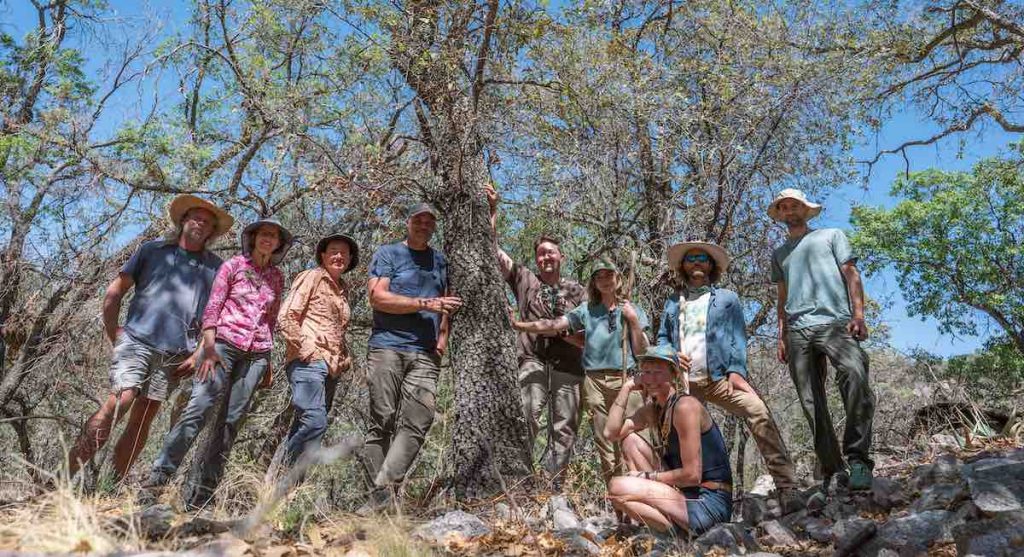
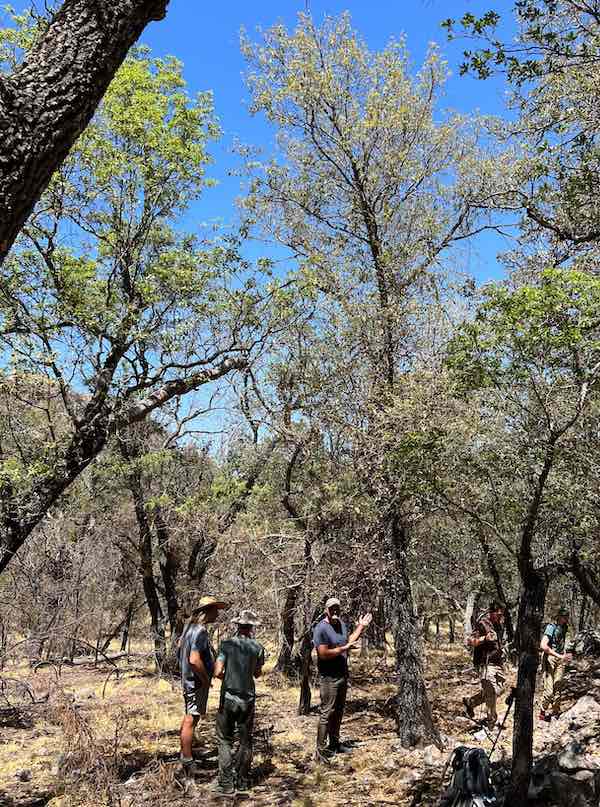
In Big Bend National Park in Texas, a coalition of 10 institutions have discovered an oak tree once thought to be extinct.

Botanical researchers were thrilled to find a lone Quercus tardifolia tree standing about 30 feet tall, though in poor condition.

First described in the 1930s, the last living specimen was believed to have perished in 2011.

Murphy Westwood of The Morton Arboretum says Q. tardifolia is considered one of the rarest—if not the rarest—oak in the world.

The team that made the discovery on May 25 found the trunk scarred by fire with signs of fungal infection. The group is now working with the National Park Service to reduce the immediate wildfire threat to the tree, and their conservationists are moving quickly to return to search for acorns and to attempt propagation, the process of breeding specimens from a parent plant.

POPULAR: He Planted a Giant Sequoia in the UK to Offset His Carbon Footprint for Life – And 700 More to Make a Forest

“The Chisos Mountains support a high diversity of oak species, partly because of the wide range of habitats available in this ‘sky island’,” said Carolyn Whiting, a botanist at Big Bend National Park. “There is still much to learn about the oaks in the Chisos.”

“The United States Botanic Garden is thrilled about the success of this partnership and collecting trip that rediscovered such a rare oak,” said Susan Pell, acting executive director of the agency that funded and collaborated on the project. “This discovery is just the beginning of the conservation work we are doing to better understand and conserve threatened trees.”

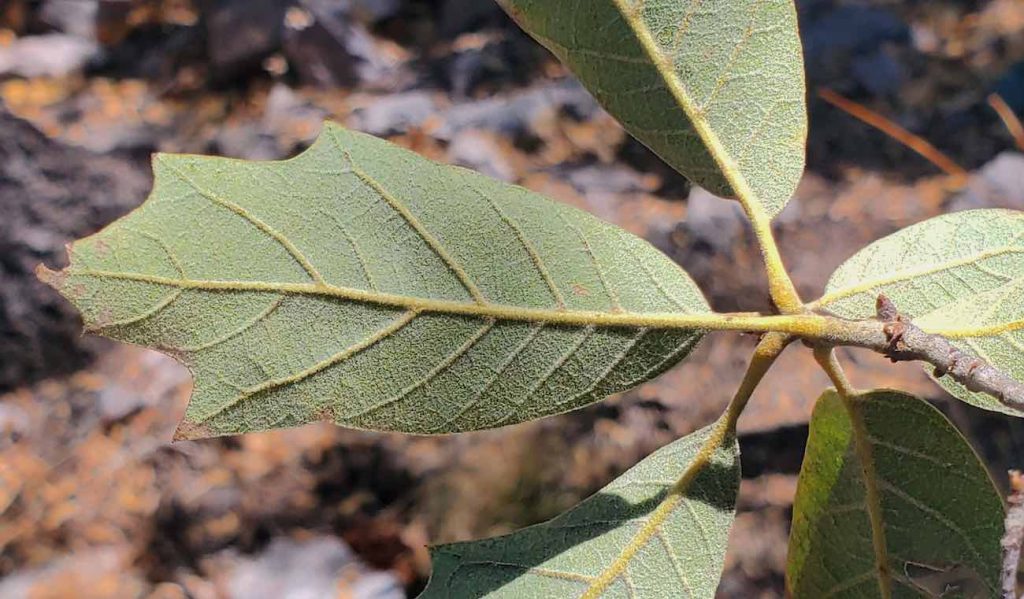
Quercus tardifolia by UC Davis Arboretum and Public Garden

How to save an oak tree

Oaks tend to hybridize, or crossbreed, which may allow them to adapt more quickly to changing climate conditions such as extreme heat and new diseases. This frequent hybridization can also blur the genetic lines between oak species in a given ecosystem like Big Bend.

According to Andrew Hipp, the Morton Arboretum senior scientist whose team will be conducting the genetic analysis, “This is an interesting problem. We’re looking into whether this tree is genetically similar to other trees that have been previously collected as Q. tardifolia. That should tell us whether this collection is the same as what Cornelius H. Muller named Q. tardifolia. It should also tell us whether this collection of specimens is genetically distinct enough from other closely related oaks in the area to warrant recognition as a species.”

LOOK: Woman Spends 14 Years Photographing Earth’s Oldest Trees – And They’re Gorgeous

Regardless of classification, Hipp noted that it is important to preserve more than individual species, but rather all the genetic variation in life.

“Species are genetically distinct populations that we can generally recognize in the field,” he said. “But they aren’t the be-all and end-all of conservation. We also aim to protect the functional variation within species. Leaf forms, physiological responses to drought and fire and even tree longevity are all attributes that can be shared among populations and among species by gene flow.”

Photo by Bartlett Tree Research Laboratories and Arboretum

“The functional variation that these new collections represent may be just what is needed to help oaks of the region adapt to environmental changes in the near or distant future.”

Oaks are exceptional among tree species in that their acorns cannot be traditionally seed banked for conservation purposes. According to the researchers, they must be preserved in the wild or in living collections, which is why the involvement of botanical gardens is critical. The researchers who found the Q. tardifolia tree are concerned that it is not producing acorns. Other methods of propagation, including grafting, are being pursued to preserve the oak’s future.

RELATED: Ancient Cypress in Chile May be World’s Oldest Tree, at 5,000 Years Old

“It is incumbent upon us to learn from it and protect it while we still can, in order to inform future conservation efforts,” said Wesley Knapp, chief botanist at NatureServe, who participated in the expedition. “Nature rarely hands us a second chance, and I doubt we’ll get a third. We won’t waste it.”

PLANT an Acorn of Good News for Friends on Social Media…

“Don’t let your habits become handcuffs.” – Elizabeth Berg

Quote of the Day: “Don’t let your habits become handcuffs.” – Elizabeth Berg

Photo: Annie Spratt

With a new inspirational quote every day, atop the perfect photo—collected and archived on our Quotes page—why not bookmark GNN.org for a daily uplift?

Two Paramedics Can’t Stop Laughing During Promotional Video That Went Viral – WATCH

East of England Ambulance Service on Facebook

The outtakes of silliness when two paramedics can’t stop laughing as they try and explain their jobs has become a social media hit.

Dave Tamarro and Joe Cartwright are seen uncontrollable giggling in outtakes of a serious video intended for International Paramedics Day on July 8.

The pair, from East of England Ambulance Service, have become a viral sensation after the clips were posted on the group’s Facebook Page.

“We’ve lost count of the number of takes it took, but it certainly made for a lot of good outtakes,” they wrote on the post.

More than 45,000 people have watched the video showing Dave and Joe sniggering as they try to express serious sentiments about being a paramedic.

In one moment, Joe (a LOM, which is short for Leading Operational Manager) says “I can’t do it Dave,” while laughing hysterically in yet another failed try.

“Through all the challenges and heartbreak there’s always laughter to help you get through these days,” Dave wrote on Facebook, saying he was glad to have made so many people smile.

WATCH: Baby Girl Adorably Tries to Prank Mom With Fake Cough

Commenting on Facebook, Nicky Jenner said: “You made my day!!! So funny. Keep laughing guys, this world needs more people like you both!”

Nicky New added: “Omg that is brilliant cheered me up after a hard day at work! Thanks guys🤣🤣xxx”

SHARE the Life-giving Laughs With Friends on Social Media..

Paramedics With Jet Packs Can Fly Where Ambulances and Helicopters Can’t Go – WATCH

Rumble / Reuters screenshot

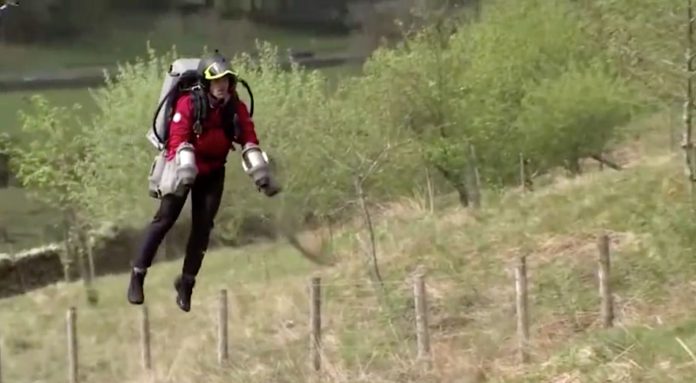
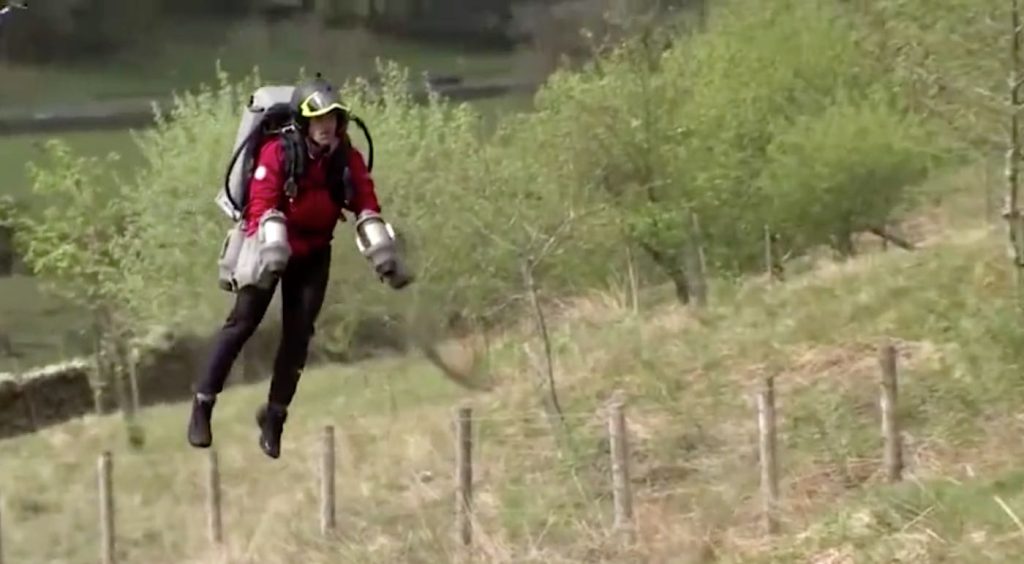
A pioneering British jet suit company is giving super-powers to paramedics for their search and rescue missions in the remote Lake District of northern England.

Gravity Industries has been testing the jet suit with the Great North Air Ambulance Service (GNAAS).

The maiden voyage two years ago saw Gravity Industries founder and Chief Test Pilot Richard Browning fly up from the valley bottom to a simulated casualty site that would take around 25 minutes to reach by foot. The Gravity Jet Suit was able to cover that distance in just 90 seconds.

In May, Jamie Walsh had just six days of training before he strapped himself into the 3D printed device and soared across the mountainous region of Helvellyn in foggy weather that would have grounded helicopter pilots.

With dozens of patient emergencies every month at the Lakes, Andy Mawson, director of operations and a paramedic at GNAAS could see the need.

“What we didn’t know for sure is how this would work in practice. Well, we’ve seen it now and it is, quite honestly, awesome.”

RELATED: Watch Filipino Inventor Fly His Hoverboard For 2 Miles, Setting World Record For Longest Flight

The tests this year have demonstrated the huge potential of utilizing Jet Suits to deliver critical care services.

“Our aircraft will remain a vital part of the emergency response in this terrain,” said Browning, who trained several paramedics to use the jet packs. “In some cases, it would save their lives.”

The Gravity Jet Suit is already on its third iteration, and includes two miniature jet turbines on each arm, and a fifth engine housed in a backpack. Priced at $440,000, the device is reportedly capable of creating over 300 pounds of thrust with 1,050 brake horsepower. (See the suit in action in the video below.)

LOOK: Flying Car Completes First-Ever Flight Between Airports –Then Transforms Back into a Sports Car in 3 Minutes

“We are just scratching the surface in terms of what is possible to achieve with our technology. Emergency response is one of the areas,” says Browning, who was formerly a Royal Marines reservist.

With the test complete, Gravity Industries, which was founded in 2017, is now exploring the next steps for collaborating with GNAAS.

Watch the video and meet the founder… (Note: GNN isn’t affiliated with their ads.)

FLY This Life-saving Innovation to Friends on Social Media…

Revolutionary Filter Uses Moss to Capture Pollutants And Microplastics Before You Drink Them

Courtesy of Universidad de Los Andes

Design students in Colombia have harnessed the porousness of moss to design a water filter that can trap microplastics.

Over the two-month product life of the filter, it can trap 80 grams of microplastics, sparing the drinker’s biology from consuming the equivalent of 16 credit cards.

The design comes from the remarkable ecosystem high in the Andes Mountains called the Paramo. Hiking in this mountainous region is done either on rock, or what feels like marshmallows. The biosphere is covered in layers of moss species which absorb, filter the water, and send it down mountain streams where it’s scientifically found to be good to drink for around 40 million people across northern South America.

Called MUS(T)GO, the filter, designed by students at the University of the Andes, won the annual Biodesign Challenge Summit.

While microplastics so far haven’t been proven to be harmful when ingested by humans, scientists aren’t waiting for confirmation. Researchers around the world are testing new methods to recapture the bits—from Texans using ocra, to robots that can vacuum them from beaches.

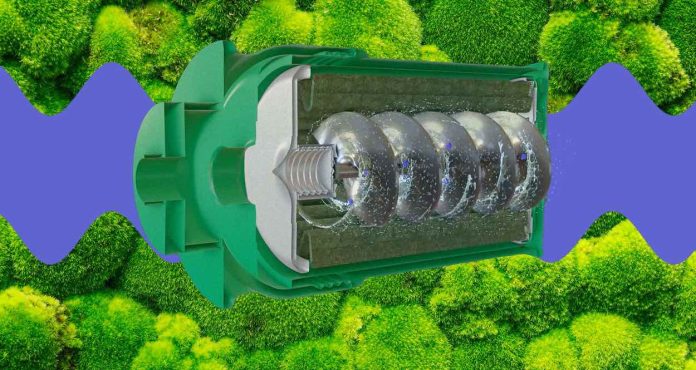
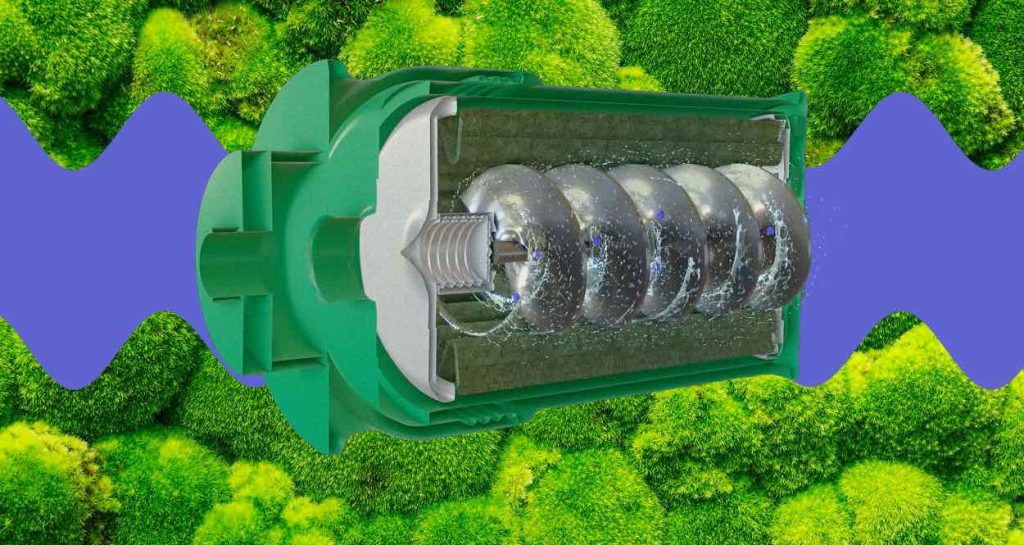
MUS(T)GO uses a steel spiral shaped like an Archimedes screw, inside which is a variety of sphagnum moss grown in nurseries outside the internationally-protected Paramo zone.

RELATED: Mussels Can Help Filter Microplastics Out of Our Oceans Without Any Harm to the Molluscs

The design team hasn’t unveiled a prototype, but the filter is designed to be used by poorer communities who don’t have access to a filter, or by gardeners who can fit the filter on the end of a hose. Because the moss would become embedded with microplastics, the team wants also to try to invent a way to turn the discarded filters into a bio-plastic.

Courtesy of Universidad de Los Andes

“[Moss] is such a little organism, and it does so much for the entire ecosystem,” Maria Paula Osorio, a student at the Bogota university who designed the product, told Fast Company. “We understood how amazing this natural creature is and wanted to do something that matters.”

Many state-of-the-art recycling methods for plastic are actually being derived from the natural world. Currently two bacterial enzymes are found to dissolve the complex molecular bonds that link the monomers into PET plastics.

CHECK OUT: College Students Invent Device That Curbs Microplastics Emitted From Tires–And They Won a Dyson Award

While nature seems powerless to prevent plastic pollution, through her incredible diversity we might just be able to do it on her behalf.

SEND The Green News to Eco-Friends on Social Media…

Your Inspired Weekly Horoscope From Rob Brezsny: A ‘Free Will Astrology’

Our partner Rob Brezsny provides his weekly wisdom to enlighten our thinking and motivate our mood. Rob’s Free Will Astrology, is a syndicated weekly column appearing in over a hundred publications. He is also the author of Pronoia Is the Antidote for Paranoia: How All of Creation Is Conspiring To Shower You with Blessings. (A free preview of the book is available here.)

Here is your weekly horoscope…

FREE WILL ASTROLOGY – Week of July 9, 2022
Copyright by Rob Brezsny, FreeWillAstrology.com

CANCER (June 21-July 22):
As a child, Cancerian author June Jordan said, “I used to laugh all the time. I used to laugh so much and so hard in church, in school, at the kitchen table, on the subway! I used to laugh so much my nose would run and my eyes would tear and I just couldn’t stop.” That’s an ideal I invite you to aspire to in the coming days. You probably can’t match Jordan’s plenitude, but do your best. Why? The astrological omens suggest three reasons: 1. The world will seem funnier to you than it has in a long time. 2. Laughing freely and easily is the most healing action you can take right now. 3. It’s in the interests of everyone you know to have routines interrupted and disrupted by amusement, delight, and hilarity.

LEO (July 23-Aug. 22):
In accordance with the astrological omens, here’s your assignment for the next three weeks: Love yourself more and more each day. Unleash your imagination to come up with new reasons to adore and revere your unique genius. Have fun doing it. Laugh about how easy and how hard it is to love yourself so well. Make it into a game that brings you an endless stream of amusement. PS: Yes, you really are a genius—by which I mean you are an intriguing blend of talents and specialties that is unprecedented in the history of the human race.

VIRGO (Aug. 23-Sept. 22):
Novelist Lydia Peelle writes, “The trouble was, I knew exactly what I wasn’t. I just didn’t know who I was.” We all go through similar phases, in which we are highly aware of what we don’t want, don’t like, and don’t seek to become. They are like negative grace periods that provide us with valuable knowledge. But it’s crucial for us to also enjoy periods of intensive self-revelation about what we do want, what we do like, and what we do seek to become. In my astrological estimation, you Virgos are finished learning who you’re not, at least for now. You’re ready to begin an era of finding out much, much more about who you are.

LIBRA (Sept. 23-Oct. 22):
You need the following experiences at least once every other day during the next 15 days: a rapturous burst of unexpected grace; a gentle eruption of your strong willpower; an encounter with inspiration that propels you to make some practical improvement in your life; a brave adjustment in your understanding of how the world works; a sacrifice of an OK thing that gives you more time and energy to cultivate a really good thing.

SCORPIO (Oct. 23-Nov. 21):
This might sound like an unusual assignment, but I swear it’s based on two unimpeachable sources: research by scientists and my many years of analyzing astrological data. Here’s my recommendation, Scorpio: In the coming weeks, spend extra time watching and listening to wild birds. Place yourself in locations where many birds fly and perch. Read stories about birds and talk about birds. Use your imagination to conjure up fantasies in which you soar alongside birds. Read the GNN article about how birds are linked to happiness levels.

SAGITTARIUS (Nov. 22-Dec. 21):
In accordance with current astrological omens, I have four related suggestions for you. 1. Begin three new projects that are seemingly beyond your capacity and impossible to achieve with your current levels of intelligence, skill, and experience—and then, in the coming months, accomplish them anyway. 2. Embrace optimism for both its beauty and its tactical advantages. 3. Keep uppermost in mind that you are a teacher who loves to teach and you are a student who loves to learn. 4. Be amazingly wise, be surprisingly brave, be expansively visionary—and always forgive yourself for not remembering where you left your house keys.

CAPRICORN (Dec. 22-Jan. 19):
If you ever wanted to use the Urdu language to advance your agendas for love and romance, here’s a list of endearments you could use: 1 jaan-e-man (heart’s beloved); 2. humraaz (secret-sharer; confidante); 3. pritam (beloved); 4. sona (golden one); 5. bulbul (nightingale); 6. yaar (friend/lover); 7. natkhat (mischievous one). Even if you’re not inclined to experiment with Urdu terms, I urge you to try innovations in the way you use language with your beloved allies. It’s a favorable time to be more imaginative in how you communicate your affections.

AQUARIUS (Jan. 20-Feb. 18):
Author John Berger described birch trees as “pliant” and “slender.” He said that “if they promise a kind of permanence, it has nothing to do with solidity or longevity—as with an oak or a linden—but only with the fact that they seed and spread quickly. They are ephemeral and recurring—like a conversation between earth and sky.” I propose we regard the birch tree as your personal power symbol in the coming months. When you are in closest alignment with cosmic rhythms, you will express its spirit. You will be adaptable, flexible, resourceful, and highly communicative. You will serve as an intermediary, a broker, and a go-between.

PISCES (Feb. 19-March 20):
People who don’t know much about astrology sometimes say that Pisceans are wishy-washy. That’s a lie. The truth is, Pisceans are not habitually lukewarm about chaotic jumbles of possibilities. They are routinely in love with the world and its interwoven mysteries. On a regular basis, they feel tender fervor and poignant awe. They see and feel how all life’s apparent fragments knit together into a luminous bundle of amazement. I bring these thoughts to your attention because the coming weeks will be an excellent time to relish these superpowers of yours—and express them to the max.

ARIES (March 21-April 19):
My readers and I have collaborated to provide insights and inspirations about the topic “How to Be an Aries.” Below is an amalgam of my thoughts and theirs—advice that will especially apply to your life in the coming days. 1) If it’s easy, it’s boring. – Beth Prouty 2) If it isn’t challenging, do something else. – Jennifer Blackmon Guevara 3) Be confident of your ability to gather the energy to get unstuck, to instigate, to rouse—for others as well as yourself. 4) You are a great initiator of ideas and you are also willing to let go of them in their pure and perfect forms, so as to help them come to fruition. 5) When people don’t get things done fast enough for you, be ready and able to DO IT YOURSELF.

TAURUS (April 20-May 20):
I know three people who have told me, “I don’t like needing anyone for anything.” They fancy themselves to be rugged individualists with impeccable self-sufficiency. They imagine they can live without the help or support of other humans. I don’t argue with them; it’s impossible to dissuade anyone with such a high level of delusion. The fact is, we are all needy beings who depend on a vast array of benefactors. Who built our houses, grew our food, sewed our clothes, built the roads, and create the art and entertainment we love? I bring this up, Taurus, because now is an excellent time for you to celebrate your own neediness. Be wildly grateful for all the things you need and all the people who provide them. Regard your vigorous interdependence as a strength, not a weakness.

GEMINI (May 21-June 20):
Bounce up and down when you walk. Express 11 different kinds of laughs. Be impossible to pin down or figure out. Relish the openings that your restlessness spawns. Keep changing the way you change. Be easily swayed and sway others easily. Let the words flowing out of your mouth reveal to you what you think. Live a dangerous life in your daydreams but not in real life. Don’t be everyone’s messenger, but be the messenger for as many people as is fun for you. If you have turned out to be the kind of Gemini who is both saintly and satanic, remember that God made you that way—so let God worry about it.

WANT MORE? Listen to Rob’s EXPANDED AUDIO HOROSCOPES, 4-5 minute meditations on the current state of your destiny — or subscribe to his unique daily text message service at: RealAstrology.com

(Zodiac images by Numerologysign.com, CC license)

SHARE The Wisdom With Friends Who Are Stars in Your Life on Social Media…

“One could wait a lifetime, and find nothing at the end of the waiting. I would begin here, I would make something happen.” – Louis L’Amour

Quote of the Day: “One could wait a lifetime, and find nothing at the end of the waiting. I would begin here, I would make something happen.” – Louis L’Amour

Photo: Christopher Osten

With a new inspirational quote every day, atop the perfect photo—collected and archived on our Quotes page—why not bookmark GNN.org for a daily uplift?

Our New GNN Community Project: Good Gardening – Share Your Photos and Tips

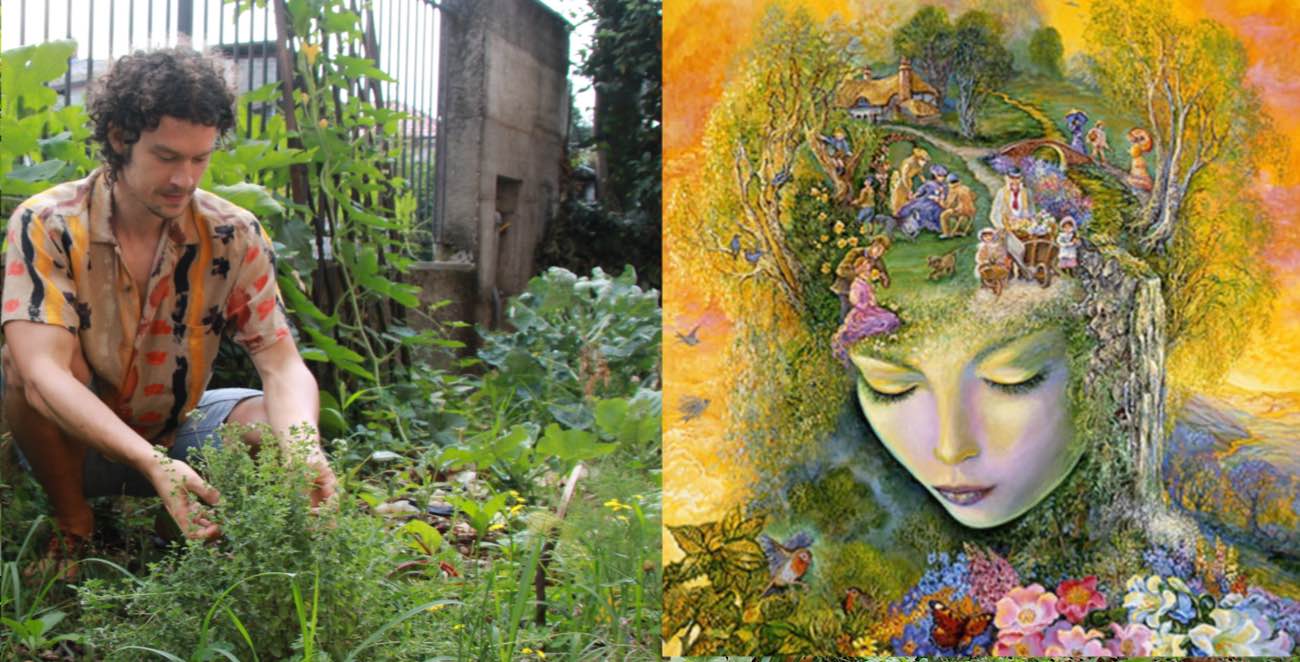
GNN’s new managing editor Andy Corbley (pictured above in his garden in Vergiate, Italy) is starting a new discussion group around one of the most popular and healthful hobbies of all–gardening.

Every Friday, he will pose a new topic so that everyone can share tips, best practices and photos. This week, Andy wants to hear your views on the most fundamental of gardening hacks: amending the soil.

Post a picture of yourself in your garden between now and next Friday, and we might add it to the photo collage in the Good Gardening banner image—either by email ([email protected]) or on our Facebook page where we’ve posted this…
Good Gardening Week 1: Let’s Talk Soil Amendments

“85% of all life on this planet including you and I live within the top 12 inches of the soil,” — Sadhguru.

Question 1: Do you add something to your garden or paddock to build soil quality?

Question 2: What have you heard of/seen other people use?

Question 3: What would you like to try adding in the future?

Tell Us Here in The Comments, Or Take The Discussion To Our Facebook Page

Good gardening rules

  • Positive attitude required.
  • Green thumbs can help novice greenhorns.
  • Share your gardening photos and resources.
  • Garden jargon encouraged!

Archeological Dig Starts at 5,000-Year-Old Tomb Linked to King Arthur

Arthur's Stone - Univ. of Manchester / released
Arthur’s Stone – Univ. of Manchester / released

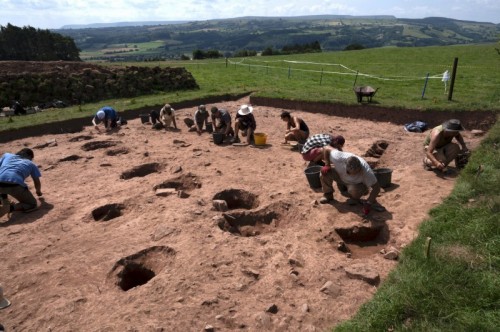
Archeologists from the University of Manchester have started a dig at a 5,000-year-old tomb linked in legend to King Arthur, hoping to answer some of the mysteries surrounding the enigmatic site in the process.

Arthur’s Stone, as it’s called, is a Neolithic chambered tomb which has never previously been excavated, but experts at English Heritage, which looks after Arthur’s Stone in Herefordshire, say that similar examples in the same region have been found to contain incomplete skeletal remains of several people, together with flint flakes, arrowheads and pottery.

Like many prehistoric monuments in western England and Wales, this tomb has been linked to King Arthur since before the 13th century. According to legend, it was here that Arthur slew a giant who left the impression of his elbows on one of the stones as he fell.

CHECK OUT: Viking Age Shipyard Uncovered at Birka is Like Nothing Ever Found Before

Today, only the large stones of the inner chamber remains, which is placed in a mound of earth and stones whose original size and shape remains a mystery. The chamber is formed of nine upright stones, with an enormous capstone estimated to weigh more than 25 tons on top.

More recently, the author CS Lewis is thought to have been inspired by the area when creating his fictional world of Narnia; with Arthur’s Stone the inspiration for the stone table upon which Aslan the Lion is sacrificed in The Lion, The Witch, and The Wardrobe.

“Arthur’s Stone is one of the country’s most significant Stone Age monuments, and this excavation gives a really rare and exciting chance for members of the public to come and see archaeology in action,” said Ginny Slade, Volunteer Manager at English Heritage.

“Our team of wonderful volunteers will be on hand to explain the latest findings as they happen—we’re asking people to book in advance to make sure everyone has a chance to enjoy this great opportunity.”

The dig follows research undertaken by the Universities of Manchester and Cardiff immediately to the south of the monument last year which has already changed the thinking about the orientation and origins of the site.

Excavations near Arthur’s Stone – Univ. of Manchester / released

Great Britain, the Isles, and Ireland are riddled with Stone Age circles, tombs, and other monuments. In Ireland they’re called “Dolmens” and Arthur’s Stones looks much like the iconic Poulnabrone Dolmen in Co. Claire.

RELATED: British Museum Unveils Ancient Artifacts Illuminating the World of Stonehenge in New Exhibit

It was assumed that Arthur’s Stone stood within a wedge-shaped stone cairn, similar to those found in the Cotswolds and South Wales, but Manchester’s Professor Julian Thomas and Cardiff’s Professor Keith Ray found that the monument originally extended into a field to the southwest, and may have taken the form of a low turf mound with rounded ends.

Professors Thomas and Professor Ray will also lead the upcoming excavations, with the participation of students from Cardiff University and a series of American institutions.

Go Questing To Social Media And Share This Story…

Eagle Decides He Wants the Hawk For a Sibling, Rather than a Meal – WATCH

- GROWLS.ca / Eagle Nest Cam Project
GROWLS.ca / Eagle Nest Cam Project

Is it dinner or is it family?

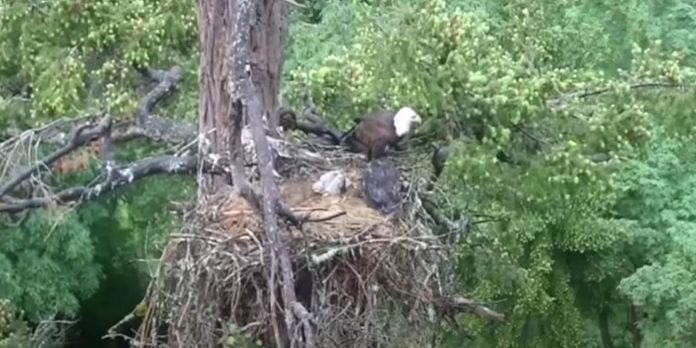
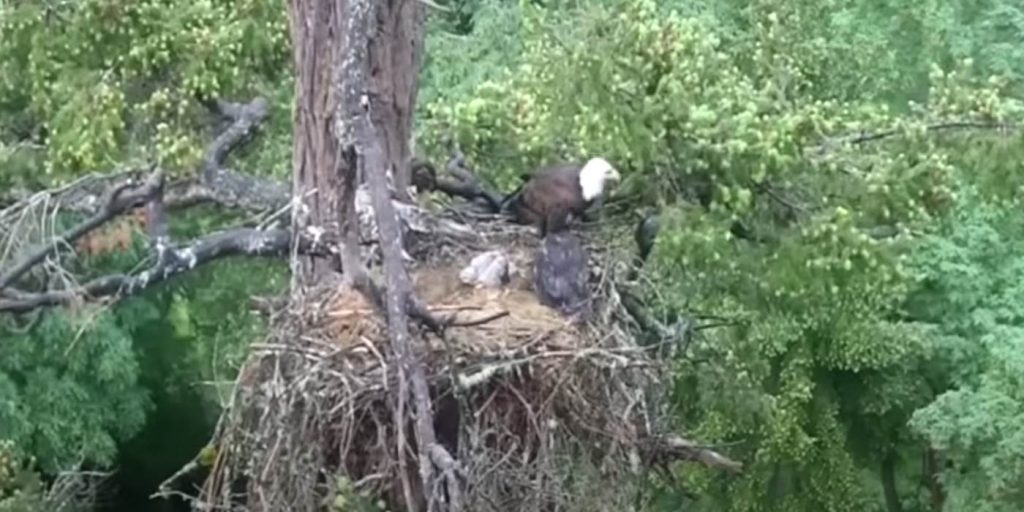
A camera pointed at a bald eagle’s nest caught a remarkable display of behavior recently when a mother eagle stole a baby hawk and presented it to her eaglet for dinner.

However the eaglet never shows any interest in eating hawk, and 32 hours later, the orphan was sheltering from the rain under mother eagle’s wings.

The Eagle Nest Project at the Gabriola Rescue of Wildlife Society, or “GROWLS,” is a network of property owners and environmentally minded citizens who monitor eagle nest activities on Vancouver and the Gulf Islands in British Columbia.

Pamichen, a GROWLS member, captured 14 minutes of incredible nest cam footage of the nail-biting phenomenon, when on several occasions it seems for all the world like the eagles are going to just start ripping this little fluffy red-tailed hawk baby to pieces.

CHECK OUT: Falconry Saves Man from Life of Crime, Now he Helps Birds and At-Risk Youth Take flight

But hour after hour, eaglet and baby hawk just continue to shift around in the nest, eating scraps of leftover food. Just before dark, “it really [seemed] like they were going to go in for the kill,” Pamichen can be heard saying in the video. But as darkness falls, the two babies crawl under mama’s wings, and the next afternoon, she even feeds her hostage.

It didn’t actually take that long for mother and child to decide to welcome the little thing into their family.

LOOK: Photographer Uses Lockdown to Snap Photos of Amazing Wild Birds in Garden –All From the Kitchen Window

One YouTube commenter has since given an update that the hawk has now fledged and goes back and forth between his new home.

“It’s amazing how often this actually happens,” another one said 3 weeks ago. “I’ve seen it documented in at least 4 different nests just from various nest cam channels.”

WATCH the GROWLS nest cam video below…

SPARE A Moment To Share This Video With Your Nest Mates…