An Italian firm has invented what seems to be the perfect tool for stopping plastic waste from reaching the ocean via a river.
They had to check a lot of boxes. The device had to allow for boats to pass without effort, while being able to run 24/7 with no impact on the riverine environment. The result is River Cleaning, a 100% scalable, low cost, low impact solution from a firm called Mold.
Anchored to the bed at the bottom of the river, River Cleaning is a series of buoys that spin on axels powered by the natural flow of the river. Floating in a diagonal line, their gentle spinning funnels incoming trash towards a collection point at the shore.
Passing boats need only go straight through them at a low speed, after which their anchor lines will pull them back into place.
They can be fitted to collect different kinds of waste, such as tiny particles, larger items like plastic bottles, and even oil, and efficacy studies have shown River Cleaning can collect 85% of all waste passing by them.
Most people know of the scope of plastic pollution in the ocean, but it’s not as common to know that much of this waste comes from rivers—80%, at least. Most of that 80% comes from just 100 of the world’s largest waterways.
Running through megacities like Kuala Lumpur, Bangkok, or Shanghai, the rivers funnel waste into global ocean currents that lead trash to clump together in areas of the high seas.
River Cleaning
An entirely self-powered solution with no environmental impact, River Cleaning became the first product of its kind to achieve the Friend of the Sea sustainability certification after demonstrating that the system preserves the aquatic environment while respecting the well-being of native species.
(WATCH the video for this story below.)
CLEAN Up Those News Feeds by Sharing the Good News…
Wilson (L) and Arno Penzias (R); Zetalion/CC license
What would you do if in the middle of the night, a stranger asked you to legally declare your financial support for an immigrant family that you would never meet—and hadn’t even arrived in your country yet?
That was essentially the proposition that Barnet Yudin, a Russian-American Jew, faced one night in 1938 when a stranger, who was going door-to-door, appealed to the man asking if he could help a Jewish family from Germany flee to North America.
While Yudin hadn’t gone on to be the doctor he dreamed of being, he and his family lived comfortably in Belleville, New Jersey—and his job as a paint salesmen brought in a healthy $120 a month.
Nevertheless he was not just being asked for a donation, but rather to sign an affidavit of support for an entire family, saying he would financially keep them afloat if required, until they could find their footing in a new country.
It required him to reveal banking information, his net worth, monthly income, and more, all in order to help the Penzias family secure immigration visas, likely sparing them from Nazi concentration camps.
All this he did, and was given the promise that the family would never contact him.
Because of Yudin’s act of kindness, the Penzias family made it to the shores of North America. The older of the two sons, Arno, would go on to become the physicist that discovered the Cosmic Microwave Background—one of the strongest pieces of evidence supporting the Big Bang Theory of the universe, for which he collected the Nobel Prize.
Branches intertwining
Robert Wilson (L) and Arno Penzias (R); Zetalion/CC license
Arno is now retired in Northern California at 89 years of age. Recently, National Geographic reported that his son David came across some family papers containing an envelope. Inside was a copy of that affidavit from Yudin, and all the personal bank documents he provided to certify it.
Shocked at the kindness this stranger had shown to his father and grandfather, David did some sleuthing and eventually came across the name of someone he was fairly certain was Yudin’s relative, a New Jersey resident named Robert.
The call was a strange one, but soon, more of Yudin’s descendants were involved in piecing together the remarkable story of the family patriarch.
At David’s request, the two families got together at Yudin’s grandson’s home for bagels, lox, and whitefish. Together they exchanged documents and memories, centered round a picture of Arno Penzias surrounded by his 5 children and 10 grandchildren.
Arno Penzias stands between his parents in this photograph that was shown to Barnet Yudin (left) in 1938.
“None of these people would exist today without Barnet Yudin,” David said, emphasizing the difference that Yudin’s choice made.
Joe Yudin, a great-grandson, told Nat Geo that his grandfather didn’t say, “Is this kid going to win the Nobel someday, or play shortstop for the Yankees? He did what he did because it was right and didn’t mention it to anybody. He definitely had this big picture of what humanity should be like.”
SHARE This Story of True Kindness and Humility With Others…
A British girl who released a book has officially become the Guinness World Record holder for world’s youngest published author—at just five years old.
Bella J. Dark received the official confirmation this week from Guinness after selling over 2,000 copies.
The young girl from Weymouth, Dorset, stunned her family last year when she told them she was going to write a book.
Her mother and father—a chef and plasterer—thought it was just “one of those things” children say.
But they are “extremely proud” of Bella after she turned her dream into a reality with her book titled The Lost Cat.
An email from Guinness World Records said: “We are thrilled to inform you that your application for Youngest person to publish a book (female) has been successful and Bella is now the Guinness World Records Title Holder.
SWNS
“You are now eligible for one complimentary Guinness World Records certificate. Congratulations, you are officially amazing!”
Hero Stefon was able to carry the little girl to safety, before going back inside to save her 31-year-old mom.
“Thankfully I had the breathing apparatus in my truck as there’s no way I would have performed the duties I did without that,” the firefighter, of Engine Company 276, said.
“I was able to knock down pockets of fire using the garden hose and that’s when I heard the girl whimpering inside.
“I felt the little girl, grabbed her, picked her up and walked straight back out the same way I came.”
Quote of the Day: “Adopt parts of life that will make you happy, even if they don’t make you special.” – Arthur C. Brooks (author of the new book, From Strength to Strength: Finding Success, Happiness, and Deep Purpose in the Second Half of Life)
Photo by: Logan Weaver | @LGNWVR
With a new inspirational quote every day, atop the perfect photo—collected and archived on our Quotes page—why not bookmark GNN.org for a daily uplift?
When it comes to finding a good deal, 53% of people said they’re proud to be labeled a bargain-hunter.
In a recent survey of 2,000 U.S. adults, more than half said they consider being called “cheap” a compliment at times (54%).
The poll found the average respondent would travel an hour to a store if they knew an item they wanted was a good deal.
The survey–conducted by OnePoll on behalf of Ollie’s for their America’s Biggest Cheapskate contest–delved into how far the average person will go to save a bit of cash and how getting a great deal makes them feel.
In order for it to be considered a “good deal,” a quarter of respondents said they would need at least 50% off, but most respondents are just as happy with a deal under that amount (76%).
Twenty-five percent of respondents even admitted they’re less likely to purchase an item if it’s full price, with three in four saying they wait up to a month for an item to go on sale before purchasing it at full price.
And seven in 10 are confident that they can find a deal on any item.
Fifty percent said they’re likely to share their bargain-hunting secrets with others although a similar percentage would prefer to keep it to themselves (51%).
Results also showed that nearly two in three people said it’s important for them to find a good deal when shopping (62%). A fifth of respondents said that the discount store is one of their favorite places to score a deal.
Surprisingly, more people value finding a good deal on low-ticket items (74%) than high-ticket ones (69%). Perhaps this is because finding deals on high-ticket items takes an average of 23 minutes more than finding one for low-ticket items.
“In today’s economy and with the skyrocketing prices on consumer goods, it’s more important than ever that shoppers find ways to save money on a variety of items – both big and small,” said John Swygert, president and chief executive officer at Ollie’s.
“Shopping discount stores that offer bargain prices on brand name merchandise is a great way consumers can find good deals and save big.”
In fact, 67% of respondents agree that they find themselves searching for deals more often now than ever before due to the current U.S. inflation rate.
Two-thirds of Americans agree that getting a good deal makes them feel better about spending money (67%).
This is helpful for the 41% who “always” or “often” find themselves purchasing something they don’t need because it was a great deal. Most of these respondents said those purchases aren’t in vain, with 70% sharing that they turned out to be useful.
Seventy percent of respondents agree that finding a good deal is worth the time it takes because it helps save money in the long run and two in three said it helps boost their mood.
Furthermore, 39% of respondents believe getting a good deal is as good as eating their favorite food, and 37% believe it’s as good as going on vacation.
“We’ve never met anyone who doesn’t love a bargain,” Swygert said. “We are proud to say that we have been providing bargains to the communities we serve for the last 40 years and have helped shoppers get incredible deals over this time. To celebrate our milestone 40th anniversary, we are searching for America’s Biggest Cheapskate! You can enter now through July 3rd.”
After being threatened with eviction, a retiree was able to buy the house she had rented for two decades after a quarter-million dollars was raised by the community on her behalf.
Known for having a heart of gold and a pair of green thumbs, Linda Taylor was a beloved neighbor in her Minneapolis community.
After arriving in the area 19 years ago as a volunteer to help the homeless and needy, she began renting a small house on 10th avenue and East 36th street in the Powderhorn Park district. There, the 70-year-old retiree became a “bright star” of the neighborhood.
It seemed though that bright star would be severely darkened, perhaps permanently, when her landlord decided to sell the property, and gave her until the end of January to evict.
Word gets around tight communities, and after she told one neighbor, the greater part of Powderhorn rallied around her, striking a deal with the landlord that if he would give “Miss Linda” until the end of June, they would raise the money to buy the house.
There was no one-size-fits-all approach to the fundraising efforts. Inflation is at a 40 year high driven by previous monetary inflation reaching broader sectors of the economy, while gas just crossed a national average of $5.00 a gallon, yet even in such difficult times, folks were able to open heart, mind, and wallet, to make the project a reality.
It involved an art show, bake sale, pro-bono work by a real-estate agent, countless small donations, and other community-fund drives to come up with the dough—which they did, a full month ahead of the June 30th deadline.
“Yesterday I went and did the closing for the house,” Taylor said. “It makes me feel so good, everything that I have given, it’s coming back to me and I want to continue to give. I love this neighborhood.”
(WATCH the ABC 5/KSTP video for this story below.)
SHARE This Inspiring Story of True Community With Your Besties…
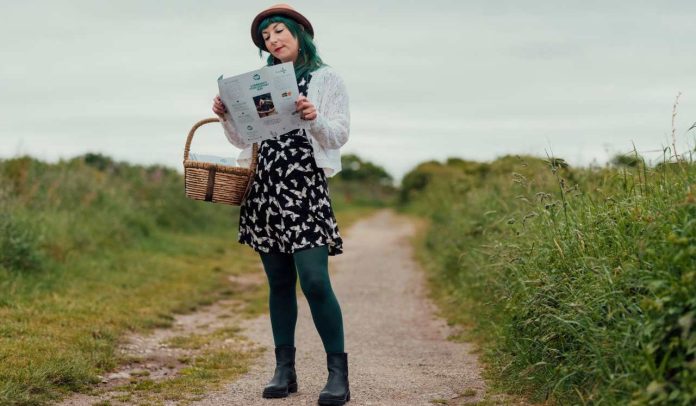
People suffering with the cost of living crisis are being offered help—a map which shows them where they can find and pick free wild food.
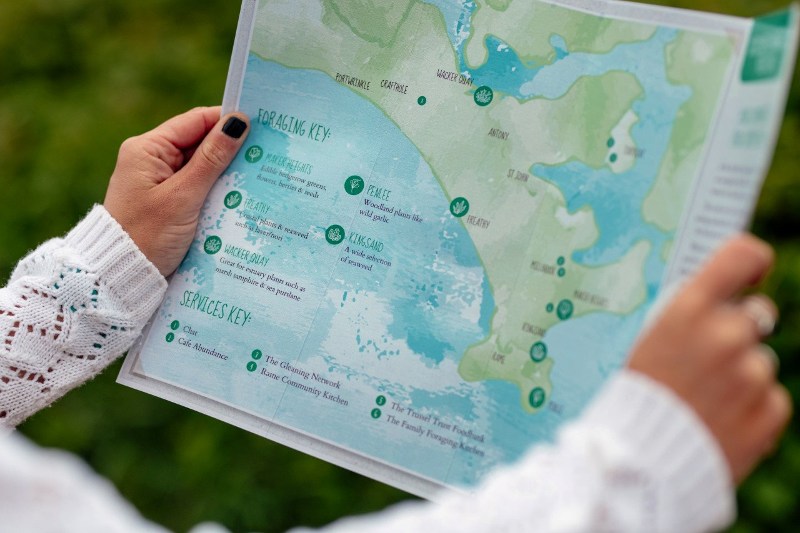
The Community Food Support Map shows people where food can be foraged, from vegan bacon alternatives to flower heads that can be used to make puddings.
Based in Rame, Cornwall, the social enterprise Family Foraging Kitchen created the map as a valuable resource source for all and a way to offset the rising cost of living.
“Despite delivering our free courses and food boxes, I felt we needed to do more to help,” company founder, Vix Hill-Ryder, said.
“The cost of living at the moment is so expensive that we no longer can afford to go into a supermarket and do a weekly shop.
“It just doesn’t stretch that far. Stretching that is the way forward—and I can show you how to do that simply just with a local hedgerow”.
The map shows people where they can find wild food in an area of Cornwall.
It described where you can discover “the best dulce”—a type of seaweed also known as sea lettuce flake—that makes a sustainable vegan bacon alternative.
SWNS
With the cost of living crisis affecting the nation’s diets, households have experienced a reduction in both the frequency of meals they consume and their nutritional value.
In April alone we saw over two million residents skipped at least one meal because they could not afford or could not access food.
“It seemed people were not only struggling here on Rame but still largely unaware of how many wonderful services we have on the peninsula all working to address the same issue,” Vix added.
“We can show you where and how to put wild, seasonal, fresh produce on your plate but other organizations have walk in pantries of stable cupboard ingredients on offer.
“Some rescue food from large supermarkets which would otherwise have gone to landfill, available on a pay as you feel donation basis.
“Not to mention ‘gleaning’—a term some people may have never even have heard of! We wanted something that linked all local services together.
“A resource that we could put into a person’s hands, guiding them to the right thing for them and to show just how much help is available.”
Others are concerned that the map may lead to hedgerows being stripped by commercial foragers.
This is a phenomenon that has become more common in recent times, such as beds of wild garlic being stripped at Lostwithiel in Cornwall.
But one Lostwithiel resident said the destruction was “devastating” and “really upsetting to see.” They said, “Creating a map, putting it online? I’m very hesitant about it. It feels like it’s something that could very easily just get completely out of hand.
However, Vix does not seem to think that the map will encourage anybody to over pick an area.
“It’s to give people an idea of the kind of places they can go where things are in abundance,” she explains.
“But when it comes to local families and families going out to feed themselves and their children for free, I think that is the last true freedom that we have left as human beings.
“And people are not going to over pick an area if it’s on their back doorstep because it’s a valuable resource which they want to have for life.”
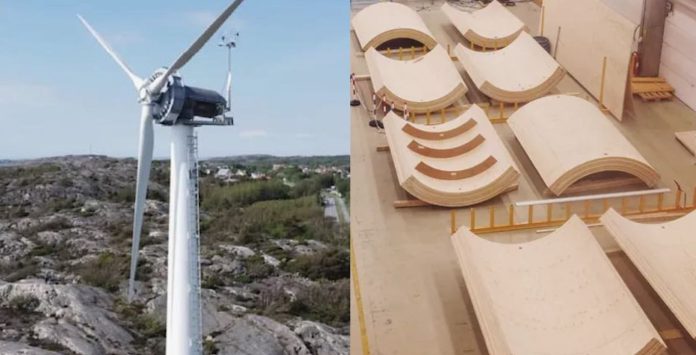
Prototype of 30-meter wooden turbine tower – Modvion
Prototype of 30-meter wooden turbine tower – Modvion
New methods for joining together lumber is opening the door to a variety of construction projects long since closed off to wood—most recently wind turbines.
A 330-foot (100-meter) prototype wooden wind turbine is being made in the land of wooden innovation, Sweden, to reduce the substantial carbon footprint of manufacturing a wind turbine from steel.
But how can a structure so battered with wind and gravity be made of a material that can be broken by a human with a machete? The answer is laminated veneer lumber (LVL), a wood construction product that is made by bonding three millimeter sheets of peeled spruce under intense heat and pressure to create flexible timber material stronger than steel, but lighter and less carbon-intensive.
Made by Stora Enso, one of the world’s oldest timber companies, LVL was used in 2020 to build a 130-foot (30-meter) prototype wind turbine tower. Hefty curved slabs of LVL are made and shipped to the build site where they are then glued together to form the tall cylinder onto which the spinning blades will be mounted.
Wood can reduce the CO2 emissions in creating a tower by 90% while also storing carbon dioxide that has been taken up by trees during their growth. Wood selected for transformation into LVL is taken from mature trees that have already absorbed the largest reasonably achievable amount of CO2 they’re able to.
The wood used for advanced constructions such as wind turbine towers can be reused in new wood-based products which provides further long-term climate benefits by continuing to jail the carbon within their fibers.
Modivon is a Swedish firm that builds towers, and they see three major benefits compared with steel for building turbines.
Modvion
“Wood has a higher specific strength which enables a lighter construction. High steel towers need extra enforcement to carry their own weight—which wooden towers don’t need. And finally, modular steel towers demand a vast number of bolts that need regular inspections while our modular wooden towers are joined together with glue,” Modivon write.
The towers would look about the same as a steel turbine, and not like a giant tree trunk due to an applied waterproof paint layer. At the moment, capturing carbon, done when the trees are turned into LVL, is more important than reducing emissions, since any reduction in emissions today won’t be felt in the global carbon cycle for far longer than any current predictions on warming or temperature changes. It’s only through actively taking emissions out of the cycle that are already there that humanity can change Earth’s climate.
Still, as long as humanity is building wind turbines to reduce emissions from energy use, we might as well reduce them from manufacturing too.
Quote of the Day: “As the image of myself becomes sharper in my brain and more precious, I feel less afraid that someone else will erase me by denying me love.” – Jenny Slate
Photo by: Andres Molina
With a new inspirational quote every day, atop the perfect photo—collected and archived on our Quotes page—why not bookmark GNN.org for a daily uplift?
It’s been a long time coming, but this June stargazers are finally getting the chance to see five planets align in the night skies.
For the rest of the month—look east towards the pre-dawn sky with the naked eye, or even better, with a telescope or binoculars—to see a five-long string of planets. We haven’t seen this such an alignment in the northern hemisphere for eighteen years, since December 2004.
So which planets are you gazing up at? That’d be Mercury, Venus, Mars, Jupiter, and Saturn lining up in order of their distance from the Sun. Mercury will look brighter and brighter as the days of the month pass, so if you’re not up for pre-dawn risings just yet—maybe work your way up to getting out of bed while the Sun is still below the horizon?
So precisely when, before dawn, should you be peering skyward? 30 minutes before sunrise is best. Check TimeandDate.com for the specific time in your area.
The phenomenon can be seen just about across the globe. However, if you’re living at a latitude further north than New York, it will be difficult to spot Mercury before the sun rises. Still, you have four other beautiful planets to check out.
Stargazers around the world who’ve been keeping an eye on the alignment are in for a extra special sight on June 24: On that morning, the waning crescent moon will be in alignment between Venus and Mars.
Oh, and Mercury will look brighter than it has all month. What a show.
Align This Far Out News With Pals; Let Them Know About This Cosmic News..
Higher levels of optimism were associated with longer lifespan and living beyond age 90 in women across racial and ethnic groups in a study led by researchers at Harvard T.H. Chan School of Public Health.
“Although optimism itself may be affected by social structural factors, such as race and ethnicity, our research suggests that the benefits of optimism may hold across diverse groups,” said Hayami Koga, a PhD candidate in the Department of Social and Behavioral Sciences at Harvard Chan School and lead author of the study. “A lot of previous work has focused on deficits or risk factors that increase the risks for diseases and premature death. Our findings suggest that there’s value to focusing on positive psychological factors, like optimism, as possible new ways of promoting longevity and healthy aging across diverse groups.”
In a previous study, the research group determined that optimism was linked to a longer lifespan and exceptional longevity, which was defined as living beyond 85 years of age.
Because they had looked at mostly white populations in that previous study, Koga and her colleagues broadened the participant pool in the current study to include women from across racial and ethnic groups.
According to Koga, including diverse populations in research is important to public health because these groups have higher mortality rates than white populations, and there is limited research about them to help inform health policy decisions.
For this study, the researchers analyzed data and survey responses from 159,255 participants in the Women’s Health Initiative, which included postmenopausal women in the U.S. The women enrolled at ages 50-79 from 1993 to 1998 and were followed for up to 26 years.
Of the participants, the 25% who were the most optimistic were likely to have a 5.4% longer lifespan and a 10% greater likelihood of living beyond 90 years than the 25% who were the least optimistic.
The researchers also found no interaction between optimism and any categories of race and ethnicity, and these trends held true after taking into account demographics, chronic conditions, and depression.
Lifestyle factors, such as regular exercise and healthy eating, accounted for less than a quarter of the optimism-lifespan association, indicating that other factors may be at play.
Koga said that the study’s results could reframe how people view the decisions that affect their health.
“We tend to focus on the negative risk factors that affect our health,” said Koga. “It is also important to think about the positive resources such as optimism that may be beneficial to our health, especially if we see that these benefits are seen across racial and ethnic groups.”
It’s typical for luxury hotels to boast about their amenities—a pool, the gym, a terrace with 360° views, but it’s a rare thing indeed to boast about the 9,000-square-foot Alexandrian mosaic from 2,300 years ago.
Appropriately, the Museum Hotel Antakya worked closely with archeologists to build a luxury hotel around the world’s largest intact mosaic floor, found after a cooperative had purchased a property for development in 2009.
Necmi Asfuroglu and his family, who together operate the Asfuroglu Group, decided to build a 5-star hotel in the city of Antakya in a 3rd-degree protected area—which essentially meant that while it wasn’t clear there was anything of scientific importance underneath, an archeological survey was required due to the property’s age.
In another language, in another era, Antakya was the Classical Antioch, located in one of the successor kingdoms that rose in the wake of Alexander the Great’s death. Founded by Seleucus, who would lend his name to the Seleucid Dynasty, Antioch was a trade center that passed to the hands of Byzantium, and on down the complicated hand-changing that has characterized the lands known as Turkey today.
The survey that followed was one of the most-systematic ever carried out in Antakya, according to Sabinha Asfuroglu, and involved 120 workers, 35 archeologists, and 5 restoration architects,working over the course of a year under the collaboration of multiple universities.
“Now our site is a kind of archeological park, showing traces of 13 different civilizations in five different layers over the course of a period beginning in the 3rd century BC on to present day,” said Arkeolog Can Okkali, restoration architect and project lead.
Multiple floating causeways link the various rooms and floors, under which stretches out a vast mosaic of tiny stones depicting animals, astrological symbols, classical scenes, and multiple geometric and swirling designs.
A perfectly intact marble sculpture of Eros was found, near to what the museum calls the Pegasus Mosaic. Made up of 162 different tones of colored pebbles, this completely-undamaged work depicts Hesiod receiving his poetic inspiration from the Queen of Muses, Calliope.
As Okkali said in a hotel publicity video, many different civilizations have left their mark on the site, which is theorized as being a large public building—including the Romans who built a series of baths.
The Lesson: People who don’t know how will tell you you need to conform, or let go of indivisible parts of yourself in order to succeed. For Brett Claywell, it was his homely, North Carolina attitude of goodwill and neighborliness towards others which Hollywood men told him had to be left on the cutting room floor. From pursuing basketball, to acting, to gaming and live-streaming, there was never a shortage of people telling him he was making the wrong choice.
Notable Excerpt: “The word immature has been thrown at me a lot through my life, and now at 44 years of age I’m happy to be immature because it allows me to interact with my children, but that was always kind of like an arrow that was slung at me… Early on in my career, one of my producers said I had to lose the North Carolina in me. I fought really hard to do the opposite—to be successful, but to maintain who I was. I would rather inject NC into Hollywood than lose NC to be successful.”
The Guest: Brett Claywell has had a two-decade career as a fan favorite on popular television shows like One Tree Hill and One Life to Live. Throughout it, he has been involved in hundreds of film and television, as well as digital content productions, producing and directing major live broadcast events starring some of the biggest names in entertainment.
Brett was an early visionary of the competitive or televised gaming industry, co-founding Tiltify, now the world’s premiere charitable crowdfunding platform for live-streaming. He launched HMBL (pronounced humble) House in 2019 to capitalize on a void in premium livestream content, leading HMBL House to be a major creative force in developing and producing new remote content models throughout the pandemic. In 2021, he co-founded SOLIS to utilize emerging technologies to further amplify his team’s ability to build organic communities and generate authentic dialogue between talent and a global audience of content consumers.
The Podcast: Livin’ Good Currency explores the relationship of time to our lives. It gives a simple, straight-forward formula that anyone can use to be present in the moment—and features a co-host who knows better than anyone the value of time (see below). How do you want to spend your life? This hour can inspire you, along with upcoming guests, to be sure you are ‘Livin’ Good Currency’ and never get caught running out of time.
The Hosts: Good News Network fans will know Tony (Anthony) Samadani as the co-owner of GNN and its Chief of Strategic Partnerships. Co-host Tobias Tubbs was handed a double life sentence without the possibility of parole for a crime he didn’t commit. Behind bars, he used his own version of the Livin’ Good Currency formula to inspire young men in prison to turn their hours into honors. An expert in conflict resolution, spirituality, and philosophy, Tobias is a master gardener who employs ex-felons to grow their Good Currency by planting crops and feeding neighborhoods.
An eight-story high-rise office building in Melbourne is going to be covered in over a thousand solar panels with the aim of providing all its own electricity.
Australia, which is already the world’s great renewables powerhouse, and has powered entire states with solar and wind energy for as long as a week, is likely to feature more of these kinds of projects in the future, since solar panel designs are becoming more sophisticated and aesthetically flexible.
Clunky rooftop solar panels are still what most people will imagine when they hear that a building is generating solar energy. However one look at the West Melbourne Workplace gives no indication whatsoever that the building is solar powered.
That’s because the designers from Studio Kennon have used panels designed by German-solar firm Avancis, which designs panels to look as much like an ordinary glass building façade as possible. Avancis façade panels have been used across Germany to fit different conditions, with darker or lighter colored panels tailored to fit the needs of clients and weather conditions. Recently, their panels graced the world’s tallest wooden skyscraper in Sweden.
“The building is designed to be self-sustainable,” architect Pete Kennon, who led the design, told Fast Company. “We can harness electricity on-site and use it immediately. This is very different to buildings that are offsetting their on-site power with remote solar or wind farms.”
Studio Kennon, rendering
One advantage is the lack of infrastructure needed to bring the energy from the energy farm to the building, saving carbon from construction. Kennon feels solar paneling is the logical next standard-issue step for tower construction. To that end, they’ve ordered 1,182 panels for the façade and roof of the Melbourne tower.
At the moment they are in the final stages of approval from regulators, but if the all-clear is given to proceed with the build, it will be the first building Down Under to use the technology.
Other pioneers have made colored solar panels built from vegetable waste that harvest energy without need of direct sunlight. The panels can be bent—in almost any way, to fit any building façade.
Quote of the Day: “Wherever you find a great man, you will find a great mother or wife standing behind him—or so they say… Many great women have had great fathers and husbands behind them.” – Dorothy L. Sayers (born 129 years ago)
Photo by: Nathan Dumlao
With a new inspirational quote every day, atop the perfect photo—collected and archived on our Quotes page—why not bookmark GNN.org for a daily uplift?
Going to a festival can leave you more connected to humanity and more willing to help strangers for at least six months afterwards, a new Yale study reveals.
In fact, more than 63 percent said they had undergone a ‘transformative experience.’
There have been many studies on the positive psychological effects of religious gatherings and pilgrimages, which have been found to create intense social bonds and feelings of unity in human societies—but little research on secular festivals.
So a team of psychologists from Yale University wondered if modern day secular gatherings that emphasize creativity and community serve an even broader purpose.
The researchers studied people’s subjective experiences and social behavior at mass gatherings like the annual Burning Man festival in the Nevada desert.
They also looked at the UK’s Burning Nest and Latitude festivals as well as California’s Lightning in a Bottle and Dirty Bird gatherings.
They found that people who reported transformative experiences felt more connected with all of humanity and were more willing to help distant strangers.
“We’ve long known that festivals, pilgrimages, and ceremonies make people feel more bonded with their own group,” said Dr. Daniel Yudkin, first author of the research paper. “Here we show that experiences at secular mass gatherings also have the potential to expand the boundaries of moral concern beyond one’s own group.”
First, the research team conducted in-person field studies of more than 1,200 people who attended large multi-day gatherings in the US and UK.
The researchers set up booths at the events, inviting passers-by to “Play Games for Science.”
Those who agreed to participate were asked about their experiences at the events along with their willingness to share resources with friends and strangers.
Overall, 63.2% of participants reported having transformative experiences so profound that they left the events feeling radically changed, including a substantial number of people who did not expect or desire to be transformed.
But the transformative experiences were more intense among the 28% of subjects who reported taking psychedelic substances.
People who reported transformative experiences also reported feeling more socially connected with all human beings—and with every passing day they spent at these events, participants expanded their circle of generosity beyond family and friends towards others including distant strangers.
Then, the team recontacted some of the original attendees and also interviewed 2,000 people who had attended the event but were not originally interviewed.
The researchers found that transformative experiences and their prosocial feelings persisted for at least six months.
“The findings are an important reminder of what we’ve missed in years of pandemic isolation,” said Dr. Yudkin. “Powerful social experiences, or what the sociologist Emile Durkheim called ‘collective effervescence.’”
Molly Crockett, Associate Professor of Psychology at Yale added, “Transformative experiences help people transcend the borders of the self and connect with all of humanity,” which are crucial qualities to cultivate as we move forward.
Researchers from the University of Pennsylvania, UCLA, University of Denver, and University of Bath in England contributed to the study, which was published May 27 in the journal Nature Communications.
SHARE This on Social Media, With an Invitation to Attend a Festival…
Beyond the sad start to this story is an avalanche of love and kindness by high school teens who swooped in to lift up a much younger stranger, who was feeling down.
A sixth grader at a charter school in Westminster, Colorado, was depressed and disgusted with himself because almost no one would sign his class yearbook—a glossy book of photos sold to commemorate the school year.
Since he didn’t collect any notes from classmates beyond two teachers, the pre-teen wrote a note to himself in the pages: “Hope you make some more friends. — Brody Ridder.”
It broke his mother’s heart, so she posted a photo of his autograph to a Facebook group for parents at the school.
She was “overwhelmed with how much love and encouragement” she received from the parents—and some of them showed their kids, which hatched a plan in the minds of three grade 11 teens at the local high school.
Simone Lightfoot called the post “soul crushing,” after fellow student Logan South told him about it.
“We all just started planning that the next day we were going to go sign this kid’s yearbook,” South told a KDVR-TV Denver news team.
They rounded up a huge posse of friends, including Joanna Cooper—even though none of them had ever met the middle schooler or his family—and headed to The Academy of Charter Schools.
“We walked in and we were like where’s Brody at? Is Brody Ridder in here? And they’re like yeah he’s in the back,” recalls Lightfoot. “And we’re like Brody! We’re here to sign your yearbook bud.”
They took turns writing in the book and when it was all done the pages had 100 entries, including long paragraphs with words of encouragement, advice—and even phone numbers.
Cooper wrote, “I know we don’t know you, but I know you are the coolest kid! If you ever need anything, call your senior friends!”
“It just made me feel better as a person… It just makes me feel better on the inside,” he said.
His mom is glad she tossed the first snowball that began the avalanche: “It made me feel like there’s hope for the school, there’s hope for humanity and there’s a lot of good kids in this world.”
SHARE This Uplifting Story With Friends Feeling Down on Social Media…
Leipzig University's Dr. Christian Sonnendecker – by Swen Reichhold
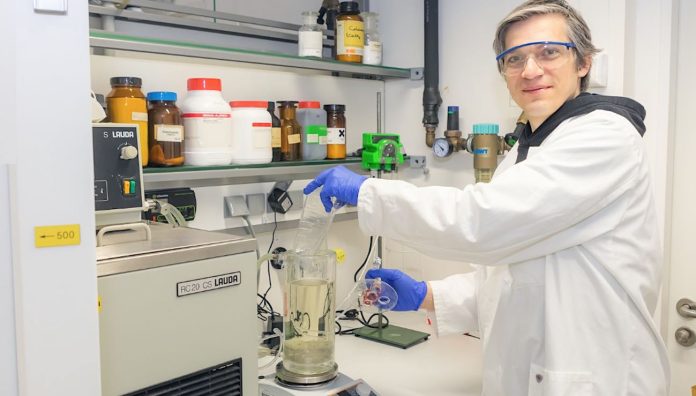
PET plastic bottles, food containers, and lightweight wrap for packaging have become a problem if they’re not recycled—but scientists searching through compost piles have discovered an enzyme that degrades the plastic in record time.
The enzyme PHL7, which the German researchers found in a compost heap in Leipzig, could make bio-PET recycling possible much faster than previously thought—and their compelling photos appearing in a scientific journal are an eye-opener.
One way in which enzymes are used in nature is when bacteria decompose plant parts. It has been known for some time that some enzymes, so-called polyester-cleaving hydrolases, can also degrade PET. For example, the enzyme LCC, which was discovered in Japan in 2012, is considered to be a particularly effective “plastic eater”.
The team led by Leipzig University researcher Dr. Christian Sonnendecker, has been searching for previously undiscovered examples of these biological helpers as part of the EU-funded projects MIPLACE and ENZYCLE. They found what they were looking for in the Südfriedhof cemetery hidden inside their compost sample.
Out of seven different enzymes, PHL7 achieved results in the lab that were significantly above average—twice as active as the previous leader in PET decomposition, LCC.
They added PET, which is the most widely produced plastic, to containers full of an aqueous solution containing either PHL7 or LCC, then measured the amount of plastic that was degraded in a given period of time and compared the values with each other.
The results, published in ChemSusChem, showed that within 16 hours, PHL7 caused the PET to decompose by a whopping 90 percent; in that same time, LCC managed a degradation of just 45 percent. “So our enzyme is twice as active as the gold standard among polyester-cleaving hydrolases,” Sonnendecker said.
Before and After: A container of PET after 24 hours of contact with the enzyme leaves only dye – Christian Sonnendecker
For example, PHL7 broke down a plastic clam-shell container (punnet)—the kind used for selling ready-to-eat food in supermarkets—in less than 24 hours. The researchers found that a single building block in the enzyme is responsible for this above-average activity.
At the site where other previously known polyester-cleaving hydrolases contain a phenylalanine residue, PHL7 carries a leucine.
Biological PET recycling has some advantages compared to conventional recycling methods, which rely primarily on thermal processes where the plastic waste is melted down at high temperatures. These processes take a lot of energy and the quality of the plastic decreases with each recycling cycle.
Enzymes, on the other hand, only require an aqueous environment and a temperature of 65 to 70 degrees Celsius (140-160 F.) for their work. Another plus is the fact that they break down the PET into its components—terephthalic acid and ethylene glycol— which can then be reused to produce new PET, resulting in a closed cycle. So far, however, biological PET recycling has only been tested by a pilot plant in France by Carbios.
Environmentally-friendly process for reusing plastic
Professor Wolfgang Zimmermann, who played a key role in establishing research activity into enzyme-based technologies at Leipzig University, believes the enzyme can make an important contribution. “The biocatalyst now developed in Leipzig has been shown to be highly effective in the rapid decomposition of used PET food packaging and is suitable for use in an environmentally-friendly recycling process in which new plastic can be produced from the decomposition products,” he said in a statement.
The researchers from Leipzig are looking for industrial partners for using PHL7 to advance biological recycling, convinced that the higher speed will significantly reduce recycling costs. Over the next two to three years, they aim to create a prototype that will make it possible to quantify the economic benefits of their rapid biological recycling process more precisely.
The scientists on Professor Jörg Matysik’s team at the Institute of Analytical Chemistry also want to elucidate the structure and function of the enzymes using NMR spectroscopy.
They are also working on a new pretreatment method to solve a problem in biological recycling: PET decomposition by enzymes has so far only worked for so-called amorphous PET, which is used in things like fruit packaging, but not for plastic bottles made of PET with higher crystallinity.
BREAK Down Negativity by Sharing This Breakthrough on Social Media…
A study of 2,000 UK adults revealed that, although 63 percent suffer from allergies, nearly 9 out of 10 are happy to put up with symptoms such as itchy eyes, runny noses, and watery eyes, to support nature.
54 percent are also inclined to let their gardens become more overgrown to help bees play their part, despite the chances of being stung.
88 percent of respondents have added bug hotels, bird feeders, and bee pollinators to homes and gardens to do their part.
“We know how important pollinators are for nature, given that around a third of the food we eat relies on pollinators such as bees,” said Graham Wilkinson, vice president of agriculture from Arla Foods, which commissioned the survey ahead of World Bee Day and World Biodiversity Day last month.
“That’s why last year we launched The Arla Bee Road. The initiative aims to help everyone to grow and improve pollinator habitats however big or small, by joining our farmers and planting pollinator pit stops to help bees and bugs travel around the country.”
An incredible 120,000 households joined them last year, planting pollen-rich wildflowers.
Arla via SWNS
Thousands also took part in ‘No Mow May,’ to help encourage the growth of these creatures’ natural habitats in the U.S. and UK.
Many are also leaving logs near the home to encourage small insects and creatures. Some 22 percent would like to do more, but don’t know where to start.
63 percent of those surveyed by OnePoll also believe it’s important that businesses encourage biodiversity.
If you are one of the 32 percent who wouldn’t know what to do for a struggling bee, Arla suggests that if you see a bee in peril you should offer it a bit of sugary water and move it out of harm’s way while it recovers.
You can also purchase a bee revival kit containing a small vial of special nutritional syrup created by beekeepers. If you’re in the UK, you can order Bee Savior kits from a British not-for-profit.
• Plant more species, particularly those that attract bees—like bee balm, cosmos, echinacea, snapdragons, foxglove, and hosta. You don’t need to have a garden for this. You can recycle yogurt or milk containers and set them anywhere outside.
• Create a small area and let it ‘grow wild’ or leave a patch of fallen leaves, logs, or branches, because insects, birds, and small mammals can benefit from the decomposition and native seedlings.
• Put up a bird feeder or nest box. This doesn’t need to be in a garden, some birds will come to a feeder on a balcony, or front porch or large windowsill
• Create a bug hotel for insects to use over winter, or put a bat box or hedgehog house out for creatures
• Stop using pesticides or herbicides and swap them for organic products.
• Get children involved in the activities. Inspiring future generations to love and respect wildlife is so important for the long-term
SHARE the List of Tips With Bee-Lovers on Social Media…