Roger Williams Park Zoo has announced the birth of a red wolf pup, the world’s most endangered canid species, as part of its red wolf breeding program.
Born at the Zoo on May 5, six-year-old mom Brave has been observed carefully tending to her little one. This is a historic birth for the zoo and an emblem of hope for the survival of this species. Only 15-20 red wolves remain in the wild, and they are all located in eastern North Carolina.
This now month-old pup is the first red wolf born at Roger Williams Park Zoo since 2005 and first ever successful birth for Brave and her companion Diego.
The zoo’s zookeepers and veterinary team continue to monitor mom and baby through the use of an infrared camera located inside the wolves newly built birthing den. While the pup has been observed nursing and appears to steadily gain weight, the next month is a critical time for the pups’ development.
While seven-year-old Diego, the father, may be seen in the wolves’ North American habitat now, the pup and mother will most likely remain in the den for the next several weeks. Guests may be able to catch a glimpse of the pup when they begin to venture outside of the den.
Until then, follow the zoo’s Facebook and Instagram for updates on the pup’s progress.
Future hope
Named for their red-tinged fur, red wolves are smaller than their better-known cousins the gray wolf, and larger than the coyote. They most often hunt smaller mammals including raccoons and rabbits, but they will occasionally prey on deer. Beyond howls, red wolves communicate through scent marking, facial expressions, and body posture.
Red wolves were listed as Extinct in the Wild by 1980. Through the collaboration of the U.S. Fish and Wildlife Service and the Associations of Zoos and Aquariums’ (AZA) Red Wolf Species Survival Plan® (SSP), the last 14 remaining wild red wolves were brought into zoos to establish a captive breeding program with the primary objective of forming the foundation of a wild population through reintroduction back to the wild.
SSP’s are cooperative species population management and conservation programs undertaken for threatened or endangered animals by AZA member institutions. The goal of this SSP and all Species Survival Plans is to build and maintain a healthy and genetically diverse population. Thanks to the collaborative efforts of these partner facilities across the United States, the captive red wolf population has once again risen steadily to nearly 250 wolves.
Quote of the Day: Is seeing believing? Water and ice droplets in the average cumulus cloud weigh the same as 100 elephants. – USGS.gov
Photo by: Louis-Philippe Poitras
With a new inspirational quote every day, atop the perfect photo—collected and archived on our Quotes page—why not bookmark GNN.org for a daily uplift?
Cannabis products containing the active ingredient THC do relieve chronic pain in the short term, scientists have revealed.
The study is one of the first into its pain-relieving properties despite many products being legalized and sold across the U.S.
Voters in Oregon, Washington and 20 other states have legalized medical and recreational marijuana, however the researchers, from Oregon Health & Science University (OHSU), found many products available in dispensaries have not been studied.
In the federally funded review, researchers trawled through 3,000 studies in the scientific literature up to January this year and found a total of 25 with scientifically valid evidence—18 randomized controlled studies and seven observational studies of at least four weeks.
They also found there was evidence to support a short-term benefit in treating neuropathic pain such as diabetic neuropathy which causes a burning or tingling sensation when the nerves become damaged.
The drugs found to be effective were tetrahydrocannabinol, or THC, and dronabinol (brand name Marinol) with nabilone (Cesamet).
Both products also led to notable side effects including sedation and dizziness, according to the review.
Another product, an under-the-tongue spray known as nabiximols, made of equal parts THC and cannabidiol, or CBD, also appeared to treat neuropathic pain.
This also led to side effects such as nausea, sedation, and dizziness.
Cannabis products are based on their ability to mimic the body’s own endocannabinoid system.
This is comprised of receptors and enzymes in the nervous system that regulate bodily functions and can affect the sensation of pain.
In the evidence review, researchers sorted the types of products into high, comparable, and low ratios of THC to CBD and compared their reported benefits and side effects.
Dronabinol and nabilone fit into the high THC and CBD ratio category, with 100% THC (no CBD) showing the most benefit among the products studied.
And six of the randomized controlled studies demonstrated statistically valid benefits for easing neuropathic pain compared to a placebo.
“Cannabis products vary quite a bit in terms of their chemical composition and this could have important side effects in terms of benefits and harm to patients,” co-author Dr Roger Chou, at OHSU, said. “That makes it tough for patients and clinicians alike since the evidence for one cannabis-based products may not be the same for another.”
The living review includes a visual abstract summary of the findings and will also be shared on a new web-based tool launched by OHSU and VA Portland Health Care System this year to help clinicians and researchers evaluate the latest evidence on the health effects of cannabis.
Known as Systematically Testing the Evidence on Marijuana, or STEM, the project includes clinical briefs to help health care workers translate the clinical implications.
“This new living evidence review is exactly the type of resource clinicians need to clarify for patients the areas of potential promise, the cannabis formulations that have been studied and, importantly, the major gaps in knowledge,” co-author Dr Devan Kansagara, also of OHSU, said.
“Honestly, the best advice is to talk to your primary care physician about possible treatments for chronic pain,” Dr McDonagh added.
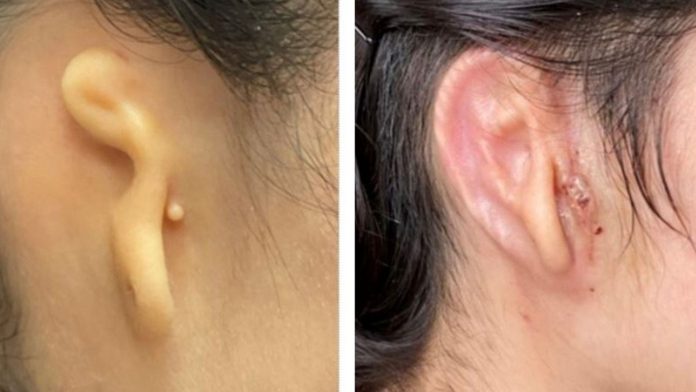
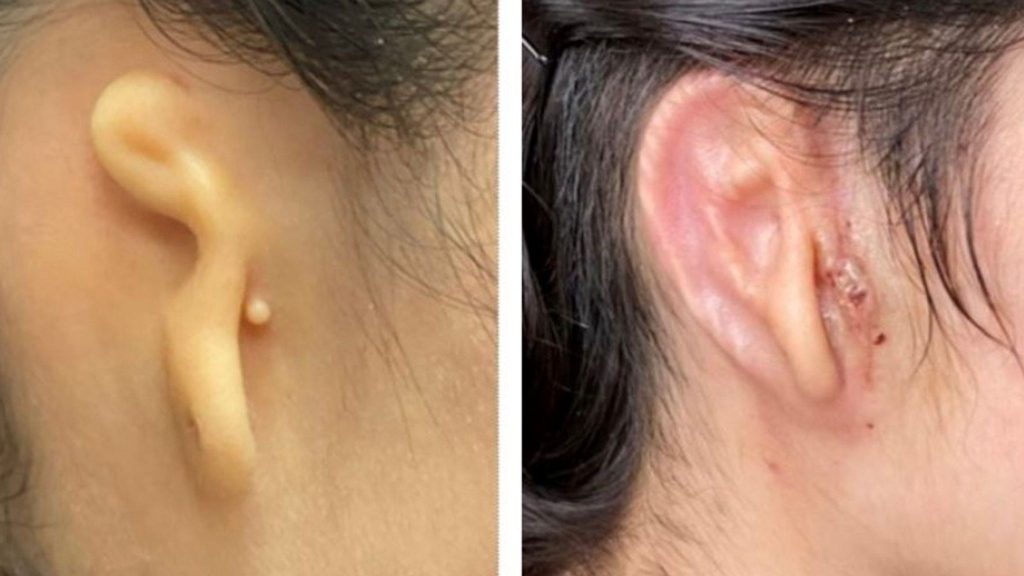
Alexa's ear before the transplant (left) and the results 30 days after the procedure (right). Pic- Microtia-Congenital Ear Institute and 3DBio Therapeutics
In a major advance in the field of biological 3D-printing, a firm has successfully transplanted a printed ear made from a patient’s own stem cells.
Such a procedure has been theorized for over a decade, but demonstrations have never been carried out at the scale now being done by medical researchers at 3DBio Therapeutics.
Their trial of 11 patients includes a 20-year old woman who was born with congenital microtia, a disease that left her with a misshapen ear. While previous such operations have involved the 3D printing of prosthetics with silicon, in this case her own stem cells were nestled in a “bioink” of collagen, printed into an air, shipped via cold storage, and inserted under the skin.
It’s definitely a big deal,” said Adam Feinberg, a professor of biomedical engineering at Carnegie Mellon University who wasn’t involved in the study but who works in the field. “I’m hoping these kinds of success will build enthusiasm and understanding this is moving from the realm of science fiction into reality.”
A precise 3-dimensional scan of her other ear was used as the model in a computer to ensure the two were identical.
“As a physician who has treated thousands of children with microtia from across the country and around the world, I am inspired by what this technology may mean for microtia patients and their families,” said Dr. Arturo Bonilla, a leading pediatric ear reconstructive surgeon who led the team.
“This study will allow us to investigate the safety and aesthetic properties of this new procedure for ear reconstruction using the patient’s own cartilage cells.”
Not only will it allow people the freedom from the self-consciousness of having a deformed ear, but 3DBio Therapeutics’ ear is 100% living, and so in most cases it restores ordinary hearing back to the patient.
For thousands of kids who have to go to school with an undeveloped ear, this method of cultured, living ear prosthetic will be life-changing, and experts outside the research team are excited by the leap it makes towards other important components which could be printed in the same way.
They’re not necessarily looking towards hyper-complex organs like a liver, but simpler, collagen-rich tissues such as a spinal disc, a rotator cuff, or a meniscus, which could restore mobility in disabled people.
Feinberg notes this hypothesizing is now securely in the realm of “when” not “if” it becomes possible.
GIVE an Earful of the Good News to Mates; Share This Story…
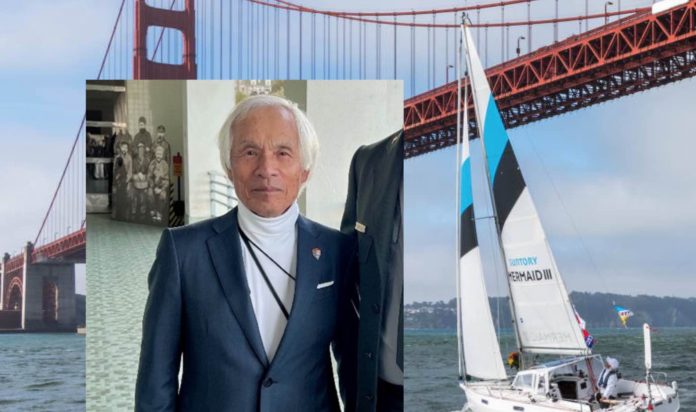
A Japanese man has once again completed his favorite pastime of sailing across the Pacific Ocean without stopping.
The undeterrable Kenichi Horie did it once before when he was 23, and probably didn’t expect to be pulling the same stunt 60 years later. But that’s just who he is.
Embarking on the 27th of March in his 2,182 lb. (990 kg), 19-foot-long (six-meter-long) sailboat the Suntry Mermaid III.
Horie sailed solo for two months across the world’s largest ocean before arriving in the Kii Peninsula in western Japan at 2:39 a.m. local time.
“Don’t let your dreams just stay as dreams. Have a goal and work towards achieving this and a beautiful life awaits,” Horie told CNN over a satellite phone.
Making no port calls, Horie nevertheless called his family every day to check in.
The Guardian reports that he will arrive in Cape Hinomisaki this Saturday, after which he will be towed to his home port in order to appear at an arrival ceremony in Nishinomiya city in the Hyogo prefecture.
It’s not his first award ceremony, because it’s not hia first trans-Pacific voyage. As a 23-year-old used car parts salesman, Horie became the first person ever to make a non-stop, unaided voyage across the Pacific, during which he ate only rice, canned food, and had a single radio for communication aboard a plywood vessel no less.
“I had the confidence that I would make it—I just wanted to take on the challenge,” Horie said.
When he arrived under the Golden Gate Bridge, 94 days later, he was promptly arrested, as he had neither a passport nor money. When mayor George Christopher heard what he had done, though, he gave Horie an honorary visa, and he became a mini-celebrity.
The boat in which he arrived in is held at the National Maritime Museum in California with a placard that reads “Recall for a short moment, if you will, the deed of a young Japanese, who loved the yacht and the United States of America.”
Kenichi Horie has actually crossed the Pacific many times, often on yachts build of recycled materials, like beer kegs, plastic bottles, or aluminum cans. One was even solar powered. He does these things, and hopes to continue doing them until age 100, to raise awareness of the irreplaceable resource that is the ocean.
“I didn’t think I’d be sailing at 83 but I’m still healthy and I didn’t want to miss this chance,” he told CNN. “Challenges are exciting so I’d like to keep trying.”
Sascha Roth remembers the phone call came on a hectic Friday evening.
She was racing around her home in Washington, D.C., to pack for New York, where she was scheduled to undergo weeks of radiation therapy for rectal cancer.
But the phone call from Memorial Sloan Kettering Cancer Center (MSK) medical oncologist Andrea Cercek changed everything, leaving Sascha “stunned and ecstatic—I was so happy.”
Dr. Cercek told Sascha, then 38, that her latest tests showed no evidence of cancer, after Sascha had undergone six months of treatment as the first patient in a clinical trial involving immunotherapy at MSK.
Immunotherapy harnesses the body’s own immune system as an ally against cancer. The MSK clinical trial was investigating—for the first time ever—if immunotherapy alone could beat rectal cancer that had not spread to other tissues, in a subset of patients whose tumor contain a specific genetic mutation.
“Dr. Cercek told me a team of doctors examined my tests,” recalls Sascha. “And since they couldn’t find any signs of cancer, Dr. Cercek said there was no reason to make me endure radiation therapy.”
These same remarkable results would be repeated for all 14 people—and counting—in the MSK clinical trial for rectal cancer with a particular mutation.
In every case, the rectal cancer disappeared after immunotherapy—without the need for the standard treatments of radiation, surgery, or chemotherapy—and the cancer has not returned in any of the patients, who have been cancer-free for up to two years.
“It’s incredibly rewarding,” says Dr. Cercek, “to get these happy tears and happy emails from the patients in this study who finish treatment and realize, ‘Oh my God, I get to keep all my normal body functions that I feared I might lose to radiation or surgery.’ ”
Her co-investigator, MSK medical oncologist Luis Diaz, Jr., is equally thrilled. He’s spent his career studying how to defeat cancer with immunotherapy. “It’s really exciting,” says Dr. Diaz, a member of the White House’s National Cancer Advisory Board. “I think this is a great step forward for patients.”
Using Immunotherapy Earlier To Target a Genetic Mutation
Drs. Cercek and Diaz explain that their team’s research was sparked by two key ideas.
The first premise, says Dr. Diaz, is to figure out precisely which patients benefit most from immunotherapy, so they can receive it right away. “Immunotherapy has proven successful in treating a subset of patients with colon and rectal cancer that has metastasized, meaning spread to other tissues.”
The patients in this subset, Dr. Diaz explains, have tumors with a specific genetic makeup known as mismatch repair-deficient (MMRd) or microsatellite instability (MSI).
Between 5% and 10% of all rectal cancer patients are thought to have MMRd tumors, including all the patients in the MSK clinical trial that Sascha participated in. There are 45,000 Americans diagnosed a year with rectal cancer.
“An MMRd tumor develops a defect in its ability to repair certain types of mutations that occur in cells. When those mutations accumulate in the tumor, they stimulate the immune system, which attacks the mutation-ridden cancer cells,” says Dr. Diaz, who heads the MSK division of Solid Tumor Oncology and holds the Grayer Family Chair.
But cancer has a trick up its sleeve to stop the immune system from doing its job.
Helping the Immune System Overcome Rectal Cancer
Immune cells contain a safeguard called a checkpoint, to prevent them from attacking normal cells. Cancer cells can trip this safeguard and shut down immune cells, allowing a tumor to hide and grow.
However, immunotherapy can turn the tables yet again.
An immunotherapy agent called a checkpoint inhibitor releases the brake on an immune cell, freeing it to recognize and attack cancer cells. “When the brakes are taken off the immune cells, MMRd cells look especially strange because they have so many mutations. So the immune cells attack with much more force,” explains Dr. Cercek.
Dr. Diaz’s pioneering research in treating cancer with immunotherapy had already shown that checkpoint inhibitors could “help people with MMRd colorectal tumors that have spread,” he says. “We thought, ‘Let’s try it before cancer metastasizes as a first line of treatment.’ ”
The second premise of the clinical trial was to avoid the toxicity often associated with treatment for rectal cancer.
Dr. Cercek explains: “Our first duty is to save our patient’s life. But the standard treatment for rectal cancer with surgery, radiation, and chemotherapy can be particularly hard on people because of the location of the tumor.” She continues, “They can suffer life-altering bowel and bladder dysfunction, incontinence, infertility, sexual dysfunction, and more.”
Dr. Diaz notes, “Obviously, that can lead to a lot of self-esteem and psychiatric issues as well.”
To avoid these toxicities, many approaches to rectal cancer try to shrink the tumor as much as possible with chemotherapy and radiation to facilitate surgery. Drs. Cercek and Diaz surmised that immunotherapy in MMRd patients may similarly shrink the tumor to enable a more successful surgery.
But Dr. Cercek proposed going further: In patients where the immunotherapy caused the cancer to completely disappear, doctors would omit chemotherapy, radiation, and surgery—and, instead, closely monitor for any signs of recurrence. Dr. Diaz says this decision by Dr. Cercek was “a world-class moment” that promised to change the lives of patients— f it worked.
All patients in the trial must have stage 2 or 3 rectal tumors that are MMRd—which makes their cancer particularly sensitive to immunotherapy. The patients were given the checkpoint inhibitor dostarlimab (Jemperli) intravenously every three weeks, for six months.
Their tumors were closely tracked, Dr. Diaz explains, “using imaging, visualization such as endoscopy, as well other methods.”
No More Symptoms of Rectal Cancer
The results surprised even Drs. Cercek and Diaz.
“The immunotherapy shrank the tumors much faster than I expected,” says Dr. Cercek. “My research nurse Jenna Sinopoli would tell me, ‘The patient has only received one treatment and already they’re not bleeding anymore and their terrible pain has gone away.’ ” Dr. Cercek recalls: “Patients came to my office after just two or three treatments and said, ‘This is incredible. I feel normal again.’ ”
As the first patient to enroll in the trial, the research team was anxious that Sascha’s experience might prove to be an outlier. Sascha explains: “Before I came to MSK, oncologists at another medical center told me I needed chemo, radiation, and surgery. To instead get immunotherapy infusions every few weeks in New York with no side effects seemed like a cakewalk in comparison.”
It turned out Sascha was not an exception. Dr. Diaz recalls his growing excitement as “the first patient had a complete response to therapy and didn’t need anything else. Then the second patient didn’t need surgery or radiation. Then the third. Pretty soon we’re at the 10th patient that had a complete response. That is incredible.”
Patients, of course, were even more thrilled. “One young man and his family just sat in stunned silence when I told them his cancer had disappeared,” recalls Dr. Cercek. “Then they thanked us over and over.” She continues, “A young woman looked at the screen during an examination and asked, ‘Where is the tumor?’ ‘It’s gone,’ we told her.”
“The most exciting part of this is that every single one of our patients has only needed immunotherapy,” Dr. Cercek says. “We haven’t radiated anybody, and we haven’t put anybody through surgery.” She continues, “They have preserved normal bowel function, bladder function, sexual function, fertility. Women have their uterus and ovaries. It’s remarkable.”
Next Steps for Study Patients
Drs. Cercek and Diaz want people with rectal cancer tumors that are MMRd to know the clinical trial continues to enroll patients and is growing. Dr. Diaz says, “Our message is: Get tested if you have rectal cancer to see if the tumor is MMRd. No matter what stage the cancer is, we have a trial at MSK that may help you. And MSK has special expertise that really matters.”
That’s particularly important for people at high risk of rectal cancer. Sascha, like eight of the people in the study, was found to have Lynch syndrome, an inherited condition that puts people at significantly higher risk of rectal, colon, and other cancers.
Lynch syndrome is associated with poorer outcomes from chemotherapy and surgery, so treatment with immunotherapy may be an important new tool.
Similarly, there has been a disturbing rise in the number of people under 50 who are diagnosed with colorectal cancer—particularly rectal cancer. Dr. Cercek says: “We are seeing more and more young people with rectal cancer, including people in their 20s in our trial. Immunotherapy might be an important new option for them.”
MSK is also trying to help the growing number of younger patients with the Center for Young Onset Colorectal and Gastrointestinal Cancer. It’s the first center in the world devoted to the specific needs of people under 50 and is co-led by Dr. Cercek.
Potential Help for Other Cancers
As MSK’s rectal cancer trial continues, Dr. Diaz says he hopes “it’s the tip of the iceberg.” He explains that “we are investigating if this same method may help other cancers where the treatments are often life-altering and tumors can be MMRd. We are currently enrolling patients with gastric (stomach), prostate, and pancreatic cancers.”
Dr. Diaz has coined a term for this new method of using immunotherapy alone to target MMRd tumors, calling it “immunoablative” therapy—that means using “immunotherapy to replace surgery, chemotherapy, and radiation to remove cancer.” Dr. Diaz says, “That might sound futuristic—but in this trial, we have a clinical example where that happened.”
Today, nearly two years after she began the trial and remains cancer free, Sascha continues to live a normal life. She runs a family-owned home-furnishing and interior design business and often speaks to people facing rectal and other cancers.
“My whole experience has been like a dream,” she says. “MSK research and cancer care is simply years and years ahead of where other hospitals—even really good ones—are or should be.”
While it’s a small trial so far, the results are so impressive they were published in The New England Journal of Medicine and featured at the nation’s largest gathering of clinical oncologists in June 2022.
Quote of the Day: “I always deserve the best treatment, because I never put up with any other.” – Jane Austen
Photo by: Giulia Bertelli
With a new inspirational quote every day, atop the perfect photo—collected and archived on our Quotes page—why not bookmark GNN.org for a daily uplift?
Shedding the pounds boosts a man’s fertility as sperm also become fitter and are more likely to reach the egg, according to new research.
Losing weight increases both he number and quality of sperm, researchers reveal.
In the U.K, around one in ten men are infertile—defined as unsuccessfully attempting pregnancy for a year or longer.
“It was surprising to us that such a big improvement can be shown in the semen quality in connection with weight loss,” Professor Signe Torekov, lead author of the study at the University of Copenhagen, said.
In the UK two in three men either overweight or obese. A study of 56 obese participants found sperm concentration and count soared by 50 and 40 per cent in just eight weeks, after they lost around two and a half stone.
Subjects were aged 18 to 65 and had BMIs, body mass indexes, from 32 to 43 before undergoing a diet and exercise regime.
The findings are “good news” for fertility. A link between higher sperm count and faster achievement of pregnancy has been established.
On average a man produces between 80 and 300 million sperm each time he ejaculates.
Despite that, more than 60 per cent of issues are related to poor sperm, so it is important to keep them healthy. One in five under 35s has a low sperm count.
It has long been known obesity is associated with reduced semen quality. But studies into the affect of weight loss on sperm have been too small to draw conclusions.
“But now we are ready to do just that. This is the first long term randomized study, where we have shown semen quality in men with obesity improve with a sustained weight loss,” Prof Torekov added.
“The men lost an average of 16.5 kg [36lbs] which increased the sperm concentration by 50 percent and the sperm count by 40 percent eight weeks since the weight loss.
“During the 52 weeks the trial lasted following the weight loss, the men maintained the improved semen quality, but only the men who maintained the weight loss.
“After a year, these men had twice as many sperm cells as before. The men who regained weight, lost the improvements in semen quality.”
New Hope
The Danish volunteers provided semen samples and followed a low-calorie diet for eight weeks.
They were then divided into four groups, two of which received obesity medications and the rest a placebo.
They were further separated, with half assigned a weekly exercise programme of at least 150 or 75 minutes of moderate or hard training, or their usual level of activity.
After a year, those that only exercised and did not receive medication, or received obesity medication and did not exercise, maintained the weight loss.
Those that both received obesity medication and exercised lost additional weight and improved health.
The placebo group that did not exercise regained half of the weight loss – with aggravation of many risk factors related to type 2 diabetes and cardiovascular disease.
“Our study shows a short-term low-calorie weight loss intervention in men with obesity improves sperm concentration and sperm count,” Prof Torekov said.
“In addition, we provide evidence obesity medication and exercise can be used to maintain the weight loss-induced improvements and may be used for preserving sperm quality in the long term.
“Improved sperm concentration and sperm count may be linked to a shorter time to pregnancy. The persistent improvement may also result in improved male fertility.”
The findings in the journal Human Reproduction add to evidence obesity is a risk factor for development of male infertility.
“The prevalence of obesity is increasing globally, while studies indicate declining sperm count over time,” she added.
“Increasing BMI levels, overweight and obesity are associated with decreased sperm concentration, total sperm count, progressive sperm motility, and sperm morphology.”
Earlier this month a study found older men are less likely to be able to have children if they are fat.
Ageing sperm is more likely to be abnormal. Men with a BMI above 30, in the obese range, had sperm that was accelerated in age.
Even fathers who were able to have kids before gaining weight struggled with their reproductive health as they became obese.
The U.S. scientists said the results reveal while aging may lead to weaker sperm overall, having a high BMI exacerbates the process.
HELP Others Who Might Find This News Beneficial; Share It On Social…
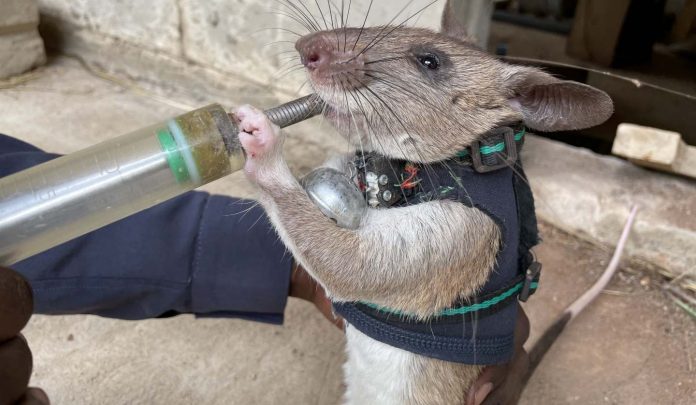
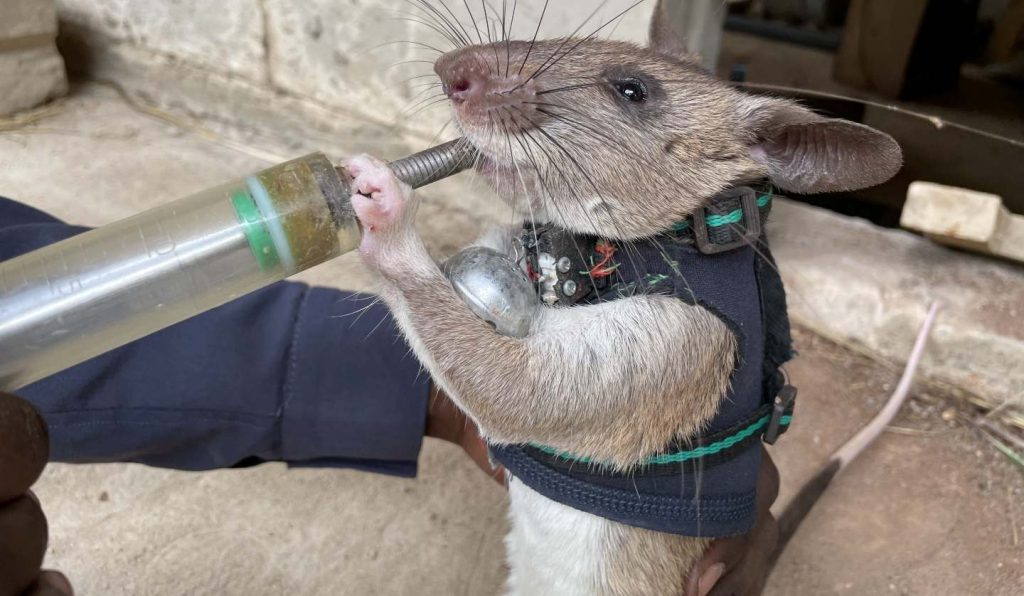
Rats are being trained to be sent into earthquake debris wearing tiny backpacks, so rescue teams can talk to survivors.
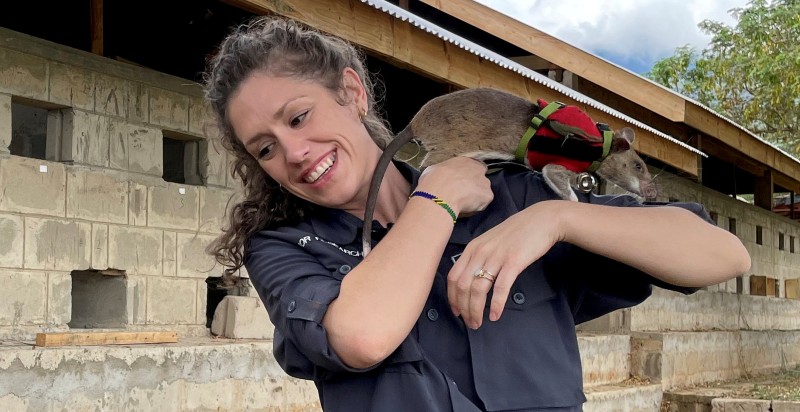
The innovative project is being worked on by 33-year-old research scientist Dr Donna Kean from Glasgow.
So far seven rats have been trained, taking only two weeks to get them up to speed.
At the moment homemade prototype backpacks containing a microphone are being used, and scientists are sending them into mock debris.
Specialist backpacks containing microphones and video gear as well as location trackers will be created to allow rescue teams to communicate with survivors during real earthquakes.
Donna has been based in Morogoro, Tanzania, for one year, working with non-profit organization APOPO for a project named Hero Rats.
The rodents will get the chance to work in the field when they are sent to Turkey, which is prone to earthquakes, to work with a search and rescue team.
Donna, who studied ecology at Strathclyde University before going on to do an MA at the University of Kent and a PhD at Stirling University, originally was interested in primate behavior.
SWNS
But she was fascinated by how quickly rats can learn and be trained, and said it is a misconception that they are unhygienic.
She described them as “sociable” creatures, and believes the work being done will save lives.
Altogether 170 rats are being trained for projects including landmines and TB and it is hoped rats could sniff out Brucellosis, an infectious disease which impacts livestock.
The rats are so nimble that they have never set off a landmine and their agility makes them perfect for using in disaster zones.
“Rats would be able to get into small spaces to get to victims buried in rubble,” Donna said. “We have not been in a real situation yet, we have got a mock debris site.
“When we get the new backpacks we will be able to hear from where we are based and where the rat is, inside the debris.
“We have the potential to speak to victims through the rat.”
The rodents are trained to respond to a beep, which calls them back to the base.
“A colleague is a seamstress, she makes the backpacks, she’s very talented,” Donna added. “We are getting custom-made backpacks which will have video recorders, microphones and a location transmitter.
“It’s quite unusual. They are so agile, they are so good at moving through all kinds of different environments. They are perfect for search and rescue-type work. They can live off anything.
“They are very good at surviving in different environments which just shows how suitable they are for search and rescue work.”
Dogs have been used for similar purposes but rats have an advantage due to their small size and flexibility.
“They are very trainable, the first stage is to train them to come back to base point—they respond to a beep,” Donna added. “We hope it will save lives, the results are really promising.”
HUNT Out Fascinating Stories For Others; Share This One With Buds…
Shark Bay, Australia should perhaps consider a name change to Seagrass Bay, since the largest resident isn’t a great white predator, but a single seagrass meadow.
After discovering that the whole bay’s worth of seagrass spread from one seed and was all part of the same plant, it instantly became the world’s largest plant—as large as 20,000 football fields.
At 77 square miles, it’s three-times the size of Manhattan, and could be 4,500 years old to boot.
Neither old trees nor big trees are anything new. GNN recently reported on a re-thiking of the world’s oldest tree list after the dating of a Patagonian cypress revealed it to be over 5,000 years old, and anyone who has visited Sequoia National Park will know that some of the bigger trees can add the equivalent weight of a 40-year old oak in wood volume every year.
As it turns out, quantity beats quality, and it’s the numerous waving arms of a single seagrass meadow at the bottom of Shark Bay, Australia, that can now be considered the world’s largest.
Jane Edgeloe and colleagues took samples from several stalks from across Shark Bay, looking to find out how many individual plants made up the rich meadow, which spreads 110 miles (180 kilometers) throughout the giant inlet.
“The answer blew us away—there was just one!” Edelgoe told BBC. “That’s it, just one plant has expanded over 180km in Shark Bay, making it the largest known plant on Earth.”
Seagrass in healthy conditions can grow around a little more than 1 foot, or 35 centimeters a year, making it similar to most lawn grasses. At that rate, to reach the size it has today, this specimen of Poseidon’s ribbon weed needed 4,500 years at least.
“It appears to be really resilient, experiencing a wide range of temperatures and salinities plus extreme high light conditions, which together would typically be highly stressful for most plants,” added Dr. Elizabeth Sinclair, one of the researchers.
Last month, rookie Republican governor of Virginia may have quashed any partisan quarrelling in his state following his unexpected election. How? By abolishing traffic ticket and arrest quotas for police.
Glenn Youngkin signed the law with total bipartisan support, joining 20 other states that have issued similar bans.
The National Motorists Association says that “a speed trap exists wherever traffic enforcement is focused on extracting revenue from drivers instead of improving safety.”
To that end, Arkansas, California, Connecticut, Florida, Illinois, Iowa, Louisiana Montana, Michigan, Minnesota, Missouri, Nebraska, New Jersey, New York, North Carolina, Pennsylvania, Rhode Island, South Carolina, Tennessee, and Wisconsin have all passed legislation barring, in different ways, the establishment of ticketing quotas—or ticket numbers as a prominent part of performance evaluation.
Inter-state banter is common across many sectors. For example people might say that anyone who thinks D.C. traffic is bad hasn’t seen L.A. traffic, or that Chicago pizza is too doughy, and therefore New York pizza is better.
It’s difficult, however, to conjure examples of everyday over-policing like a Virginian can.
Take this “standard of protection” expected of Alexandria officers for example. It requires them to issue 8 tickets per 10 shift hours or face “performance improvement courses.”
When the bill hit committee Sen. Dick Saslaw, he was confused they even existed at all.
“You used to hear about these all the time many, many, many, many years ago,” the senator said. “I thought that was pretty much something that was done away with, you’re saying it still exists?”
By curtailing quotas, Virginia drivers will hopefully free themselves from a long-tolerated state characteristic of over-policing—not to mention the terrible traffic resulting from countless officers stopping in the right lane to bother someone about a taillight, cracked windscreen, or traveling 5 over the speed limit.
STOP the Woe; Share the Good News – Share This Story…
Quote of the Day: “Let the truth be your delight; let it always be in your mouth. Proclaim it lovingly to everyone, especially those you love.” – St. Catherine of Siena
Photo by: Tim Mossholder
With a new inspirational quote every day, atop the perfect photo—collected and archived on our Quotes page—why not bookmark GNN.org for a daily uplift?
What if I told you that investing roughly $500 for therapy, plus providing a little cash, helped some of the most troubled young men in West Africa reduce their crime and violence by half—and the results continued for at least 10 years.
In their follow-up study, Chris Blattman and his colleagues calculated almost 350 fewer crimes per participant over the decade.
“That’s ~$1.50 per crime averted,” he exclaimed in a tweet last month.
“It was the most unexpected project of my life,” he said. And, now it’s “changed the way cities tackle violence, from Bogota to Chicago.”
In 2009, he flew with his wife Jeannie to Liberia for 2-week spring break as she did research on reintegrating ex-fighters from the war. Chris studies violence and wondered what he could do in the capital city (Monrovia), so he called up Johnson Borh.
“He was a combatant in the war and now ran some kind of NGO. He seemed to know everyone and be able to go everywhere. So I asked him to show me around how the crime and drug markets worked.”
Johnson obliged. One day they would learn how phones get fenced, another day they talked to the pickpockets. Chris’s favorite was the drug den run by Charles Taylor’s former anti-terror squad chief.
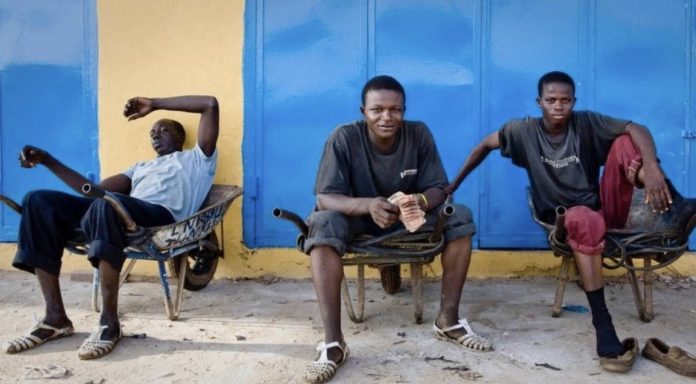
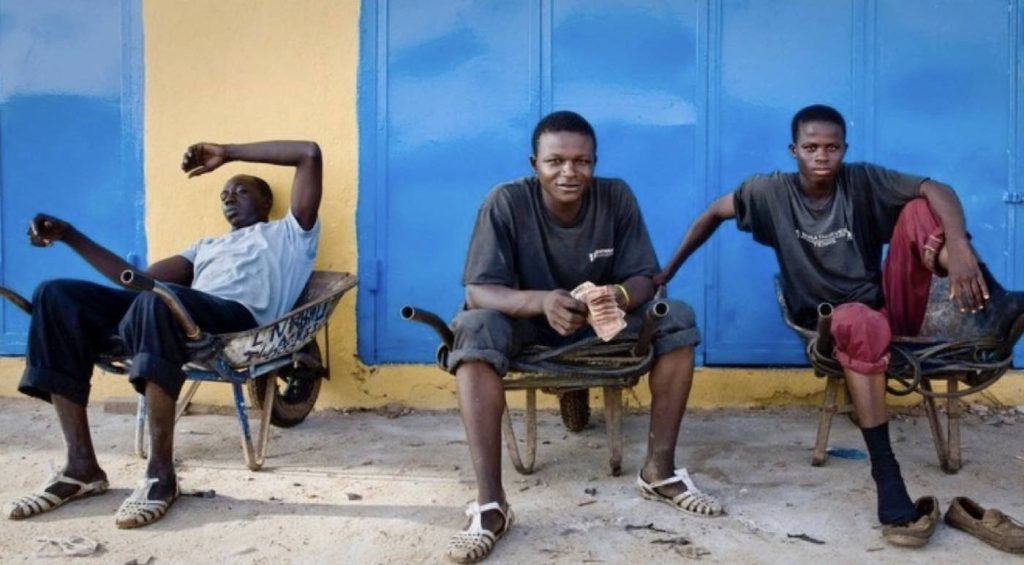
“But every time we go to one of these shady places, there’s a guy on the corner shining shoes or selling clothes out of a wheelbarrow, or something else pretty basic. He spots Borh, gets excited, and comes to give him a hug.”
He asked, “How do you know Borh?” Each time he heard the same response:
“I used to be like them,” and they’d point to the drug den or pickpockets. “But then I went through Borh’s program.”
Chris, an economist and professor who studies global conflict at the University of Chicago, sat down with Borh in bar for two afternoons and they wrote down exactly what he does with the men during the 8-week program designed to transform their lives.
When his wife got back from jungle mining adventures, Chris says, “What does this look like to you?”
She’s a psychologist and says, “Oh, this looks like CBT.” Cognitive behavioral therapy.
“I’d never heard of it,” said Chris. “But it’s a common method of behavior change for lots of things, like anxiety.”
For 15 years, through trial and error, Borh and colleagues had adapted it to address aggression and crime—and toward adopting a mainstream social identity.
“He and his organization, NEPI, recruited the most dangerous men in the city. People who led lives of violence.”
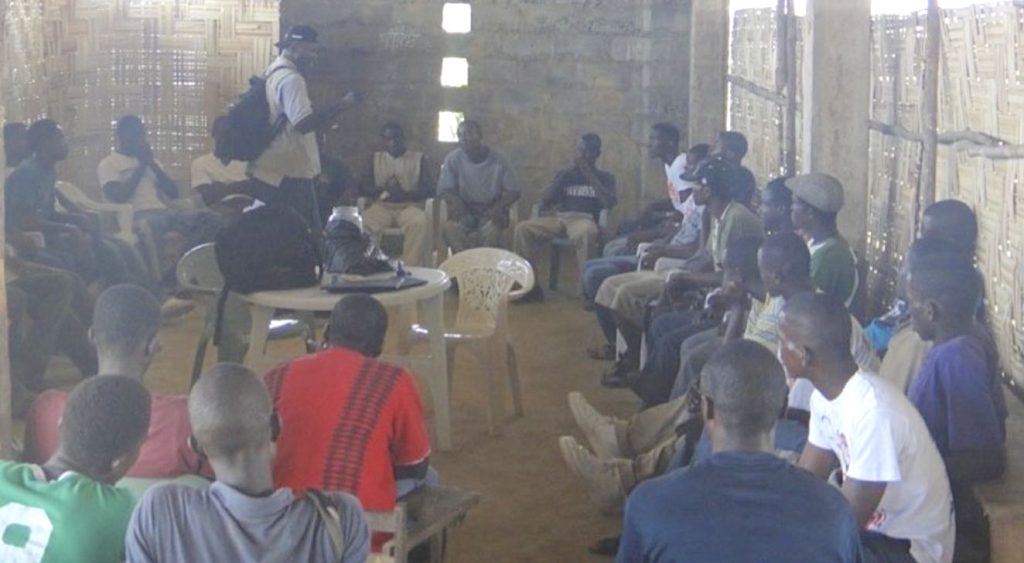
“They met in abandoned buildings, in groups of maybe 20, for a couple of hours a day. Johnson trained some counselors, and they eked out a living on the program.”
Chris Blattman
Partly, they would learn and practice behavior changes, like managing anger and difficult social interactions. But they were also trying on and practicing a new identity. “NEPI encouraged them to stop dressing and acting tough. Get a haircut. Look like the 99% of Liberians who were respectable.
“So we partner with NEPI. We go out, run a pilot, measure impacts, and it looks really promising,” explains Chris. “We also try giving the men $200, to see whether it helps them solidify the new identity and behaviors.”
They watched closely, because they were worried about the men buying drugs or investing in guns.
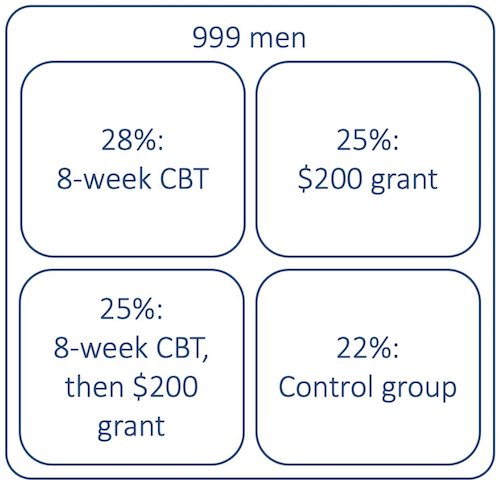
“Things looked really good. So I recruit my coauthors to help run a large-scale study. We scaled up, raised a million dollars, and ran a huge randomized controlled trial with 999 of the toughest men in Monrovia.”
They followed up one month and one year later and found an impressive impact had endured.
50% overcame their destructive behaviors
Crime, violence, and antisocial behaviors were slashed by about 50% among those who received the CBT and the cash. Receiving the therapy alone seemed to fade a little in its impact over time.
Most of the evidence pointed to the economic assistance as being a big key to helping the men entrench their behavior changes, and avoid a return to crime.
That was almost a decade ago. Would any impacts last?
“I was pessimistic, said Chris. “We surveyed experts in advance. Almost all expected CBT Only or Cash Only to have no effect whatsoever after 10 years. For Therapy plus Cash, one-third of the experts predicted no effect at all. 2/3 predicted steeply diminished impacts.”
“But we saw HUGE sustained impacts. Crime & violence still down by about 50% from CBT+Cash.”
Chris Blattman
“On thefts and robberies alone, they report ~34 fewer at both 1- and 10-year points. Interpolating, this means ~338 fewer crimes per participant over 10y—$1.50 per crime avoided given $530 the cost.”
(And that’s not counting all the other bad behaviors averted.)
The program is such a success that people have begun replicating Borh’s ideas around the world. “Even Chicago adopted it as a main response to the 2016 gun crime spike. It’s called READI.”
Gun violence is spiking in the Americas and cities need solutions—and they’re searching especially for ideas that don’t involve coercion.
All the evidence suggests CBT-informed programs are fast, effective, hyper-targeted, non-coercive ways to reduce violence.
“The fact that CBT works suggests deeper insights into why we fight as human beings, and what could make for a more peaceful world,” said Chris. “These are programs of socializing, and in them I see a microcosm of what the sociologist Norbert Elias called The Civilizing Process.”
It’s the big theme in Chris’s new book, Why We Fight—how, over centuries (or 8 weeks), societies have found ways to build more peaceful norms and institutions “because violence is so awful”.
At the same time as violence is curtailed, social scientists observe the slow invention of manners, habits of self-control, more sympathy and consideration for others, and a more rational and forward-looking mindset.
“In Why We Fight, I walk through the why. Some of the credit goes to a gradual cultural enlightenment, some to checks and balances, some to the development of the state. But much of it is due to the ways we socialize every generation to be more peaceful. Some of our patience, restraint, empathy, and consideration is imbued in our genes, but mostly it is learned and reinforced. Self-control is a habit. So is looking ahead to the future, controlling your anger, recognizing your biases, or trying to see the world from another POV.
“Some people just need a little remedial help to acquire these skills & norms—Chicago’s shooters, or the street criminals in West Africa. People like Borh show us how social workers can remake their own societies, and that peace is the product of this peer to peer socialization.”
Chris Blattman is the Ramalee E. Pearson Professor of Global Conflict Studies at the University of Chicago, in the Harris School of Public Policy and co-leads the university’s Development Economics Center and the Obama Foundation Scholars Program.
MULTIPLY The Good By Sharing This Prescription for Crime on Social Media…
Dancing to musical rhythms is a universal human activity. But now, researchers from Japan have found that musical beats don’t just feel good, hearing them also enhances brain function.
In a study recently published in Scientific Reports, researchers from the University of Tsukuba have revealed that music with a groove can significantly increase measures of executive function and associated brain activity in participants who are moved by the music.
Music that elicits the sensation of groove—a rhythm that induces the sensation of “wanting to move to the music”—can elicit feelings of pleasure and enhance behavioral arousal levels.
Exercise, which has similar positive effects, is known to enhance executive function. This may also be an effect of listening to groove music. However, no studies have examined the effect of such music on executive function or brain activity in those regions, such as the left dorsolateral prefrontal cortex (l-DLPFC), so the researchers set out to measure them.
“Groove rhythms elicit groove sensations and positive affective responses, but whether they influence executive function was unknown,” says lead author of the peer-reviewed study Professor Hideaki Soya. “Accordingly, in the present study, we conducted brain imaging to evaluate corresponding changes in executive function, and measured individual psychological responses to groove music.”
To do this, the researchers performed functional near-infrared spectroscopy (fNIRS) with a color-word matching task to examine inhibitory executive function before and after listening to music.
They also conducted a survey about the subjective experience of listening to groove music.
“The results were surprising,” explains Professor Soya. “We found that groove rhythm enhanced executive function and activity in the l-DLPFC only in participants who reported that the music elicited a strong groove sensation and the sensation of being clear-headed.”
In fact, these psychological responses to listening to groove rhythm could predict changes in executive function and l-DLPFC activity.
“Our findings indicate that individual differences in psychological responses to groove music modulate the corresponding effects on executive function. As such, the effects of groove rhythm on human cognitive performance may be influenced by familiarity or beat processing ability,” says Professor Soya.
Strategies for enhancing executive function have a wide range of potential applications, from preventing dementia in elderly people to helping employees enhance their performance.
Furthermore, the positive effects of groove music on executive function could include the effects of positive emotions and of rhythmic synchronization.
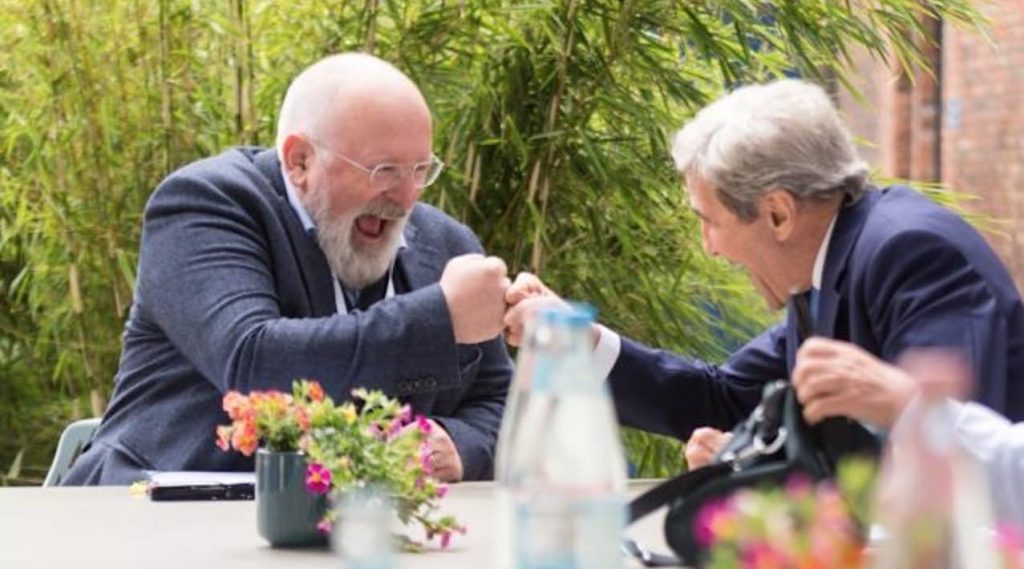
Frans Timmermans and John Kerry By Jadranko Marjanovic / Copyright European Union, 2022
Frans Timmermans and John Kerry By Jadranko Marjanovic / Copyright European Union, 2022
Total greenhouse gas emissions in the European Union reached their lowest level since 1990, according to official EU data reported this week by the European Environment Agency to the UN.
The overall reduction in 2020 greenhouse gas emissions was 34% compared to the 1990 base year, or 1.94 billion tons of CO2.
Prior to the pandemic, the EU had already reduced its emissions by 26% in 2019 and had achieved its 20% target before the lockdowns started to impact emission levels.
Key drivers that led to emission reductions over the past three decades include the growing use of renewables, the use of less carbon intensive fossil fuels, and improvements in energy efficiency. Also, winters in Europe have become warmer.
All sectors reduced emissions except for transport and refrigeration and air conditioning (although the latter have been decreasing in the last few years).
The EU continued to record substantial greenhouse gas emissions reductions in 2020, posting an 11% drop compared to 2019.
The report revealed that almost all EU Member States reduced emissions compared to 1990 and contributed to the overall positive EU performance. Germany and the UK (which withdrew from the EU in February 2020) accounted for 47% of the total net reductions over the past 30 years.
Striking a powerful pose like Superman or Wonder Woman does actually make people feel more confident—and maybe even behave more confidently—according to a new study.
The German team has confirmed what small studies already suggested, after crunching data from 130 different experiments from published and unpublished studies involving more than 10,000 people.
“We found a connection between an upright posture and power posing and a more positive self-perception,” said Professor Astrid Schütz from the University of Bamberg.
She and her colleagues at Martin Luther University Halle-Wittenberg (MLU) and Ohio State University decided to do a meta-analysis of many studies because previous research had only been done in small studies—some without control groups.
The research of power posing deals with the extent to which a bold pose can influence a person’s feelings and self-worth.
A common example is the victory pose with outstretched arms, which, according to several studies, can increase self-confidence.
They wanted to find out whether posture influences a person’s self-perception, behavior and hormone levels. The team used complex statistical methods to re-assess the data and found that a dominant pose can make you feel more self-confident.
The team found a similar correlation with behavior, for example task persistence, but these effects were less robust.
Their analysis did not find any proof of the physiological effects of power posing, however.
“The assertion that certain poses can boost the production of physiological effects, for example hormones, such as testosterone and cortisol, which had been claimed in previous research, was not supported” (or replicated by independent research groups), said MLU psychologist Robert Körner.
The study, published in the journal Psychological Bulletin, found no differences between males and females and across different age groups.
Now that research has confirmed a connection between an upright power posture and more positive self-perception, try sitting up a little taller with your chin a little higher.
Quote of the Day: “We do not love each other without changing each other.” – Madeleine L’Engle
Photo by: Priscilla Du Preez
With a new inspirational quote every day, atop the perfect photo—collected and archived on our Quotes page—why not bookmark GNN.org for a daily uplift?
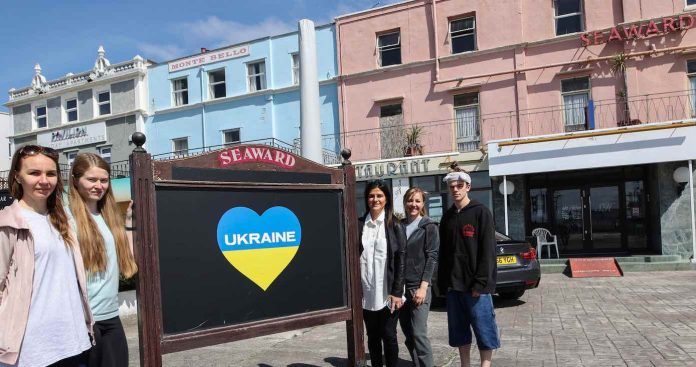
A woman whose family fled to Britain to escape a war has closed her seaside hotel to tourists—so she can give Ukrainian refugees a place to stay.
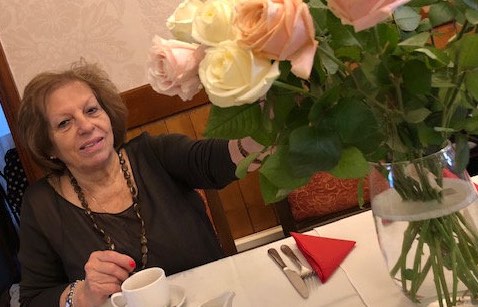
Nitsa Michael is no longer taking guests at the Seaward Hotel—even during her busiest season in Weston-super-Mare, England. Instead, she has rolled out the welcome mat to 22 Ukrainians, so far, providing a “home away from home”.
Her family fled from Cyprus to Britain following a Turkish invasion in 1974, and she wanted to do something to help people in the same ‘horror situation’, fleeing from Russian aggression in Ukraine this year.
“I felt for them,” said the 84-year-old widow and great-grandmother of five.”Lets help in a big way, this is what I want to do.”
Her daughter Michelle Michael is in charge of running the hotel, which has room for 70 refugees.
“Mum always has and still does listen to the news every day and it was really bothering her. She was feeling quite sad about it all, and that’s when she came up with the idea of opening the hotel to refugees.”
The 22 arrivals share meals and time together, “and basically they heal together,” said Michelle.
“Seeing all the people staying here and how happy they now are, it’s all due to her.”
Nitsa Michael – SWNS
Decades earlier, Nitsa worked as a seamstress in London and her husband Axentis was a chef before they eventually moved to the South West where they took over the Seaward Hotel.
They made it their family home where they raised their four children.
Back in ‘74 when Turkey invaded, Nitsa recalled, “We had no way of knowing if my father’s family were dead or alive because there was no connectivity. Everyone fled their homes with nothing to their names.”
To alleviate the same sort of anxiety this year, Michelle registered their family’s hotel on the Homes For Ukraine webpage, and before they knew it, they were welcoming their first refugee.
Yuliia, 31, now lives in the hotel with her husband and their dog after she left their home in Berdyansk after explosions started in February. She had to leave behind her parents, and had not spoken to them for a month prior to arriving at the Seaward Hotel a month ago.
“This life here is very good, and I’m very glad to be in this country,” said Yuliia. “Here we have a hotel, a room, a shower, a kitchen and many other things – we also have the sea.”
Since arriving in the UK she has been provided with a phone to speak to her family back at home and she could finally communicate with her parents and brother again.
There is a WhatsApp group set up for the other families who have arrived at the hotel and Yuliia helps to translate Michelle’s messages for the other refugees.
Seaward Hotel in Weston-super-Mare / SWNS
Michelle and the team provide the refugees with welcome packs on their beds with essentials such as shower gels and deodorants. The local government has provided $250 to each person to allow each refugee to mobilize themselves to get a National Insurance number and open a bank account.
Michelle explained Nitsa visits the hotel once a week and makes sure to meet every guest and listen to their stories. She loves to see the children around in the hotel as it reminds her of raising her own four children there. It has brought the hotel back to life.
Any refugees in need of accommodation can find the Seaward Hotel listed on Homes For Ukraine—and you can donate on the hotel’s website to help Nitsa’s family support refugees.
SHARE the Uplifting Ukraine Story on Social Media…
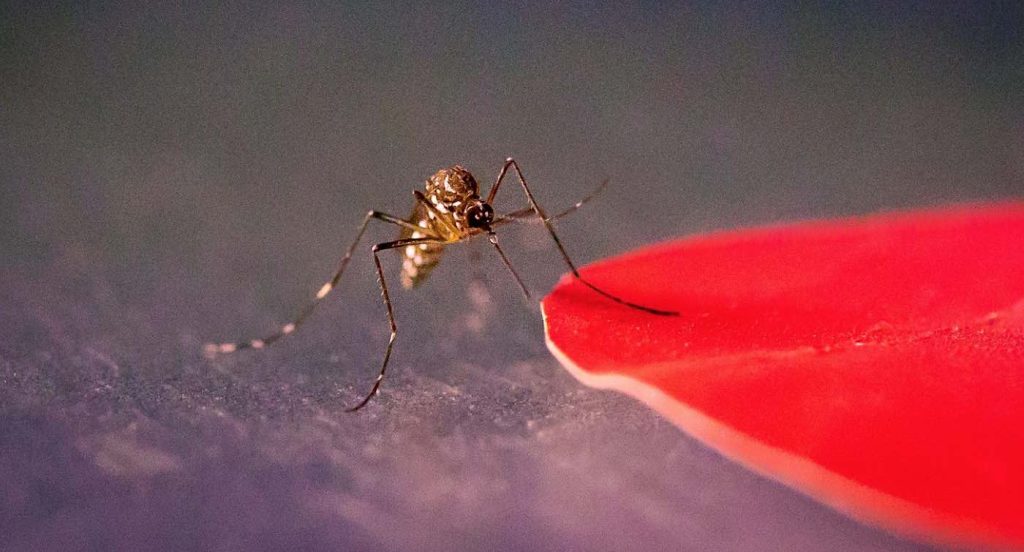
Finally, some research we can all use right away—especially if you’re prone to being bitten by mosquitoes more than anyone around you. It could hinge on what you wear.
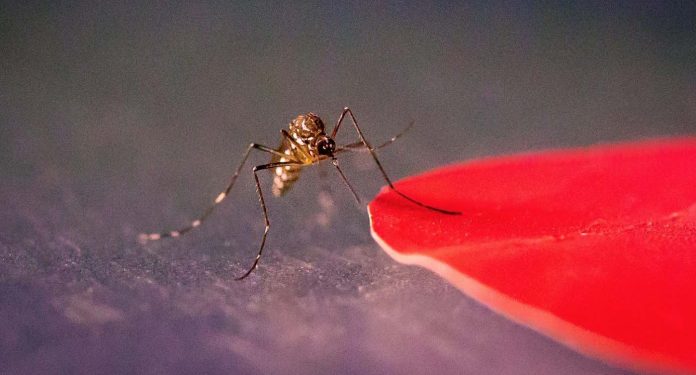
New research led by scientists at the University of Washington indicates that a species of common mosquito flies toward specific colors, while ignoring the cooler shades of green, purple, blue and white.
On the other end of the color spectrum, human skin emits a strong red-orange signal for the mossies—and those are two of the colors that attract the bugs.
“Mosquitoes appear to use odors to help them distinguish what is nearby, like a host to bite,” said Jeffrey Riffell, a UW professor of biology. “When they smell specific compounds, like CO2 from our breath, that scent stimulates the eyes to scan for specific colors and other visual patterns… and head to them.”
“I used to say there are three major cues that attract mosquitoes: your breath, your sweat and the temperature of your skin, said Riffell, who is senior author on the paper.
“In this study, we found a fourth cue: the color red, which can not only be found on your clothes, but is also found in everyone’s skin. The shade of your skin doesn’t matter, we are all giving off a strong red signature. Wearing clothes that avoid those colors, could be another way to prevent a mosquito biting.”
The researchers tracked individual mosquitoes inside a test chambers where they sprayed specific odors and presented different types of visual patterns—such as a colored dots, human hands, or gloved hands.
Save your slimming black clothes for winter
Without any odor stimulus, mosquitoes largely ignored a dot at the bottom of the chamber, regardless of color. After a spritz of CO2 into the chamber, mosquitos continued to ignore the dot if it were green, blue or purple in color. But if the dot were red, orange, or black, mosquitoes would fly toward it.
Oddly, the color between green and blue on the spectrum—cyan—was also attractive to the creature.
Humans can’t smell CO2 (which we exhale with each breath), but mosquitoes can. Past research by Riffell’s team and other groups showed that smelling CO2 boosts female mosquitoes’ activity level—and they start searching the space around them, presumably for a host. The colored-dot experiments revealed that after smelling CO2, these mosquitoes’ eyes prefer certain wavelengths in the visual spectrum.
It’s similar to what might happen when humans smell something good.
“Imagine you’re on a sidewalk and you smell pie crust and cinnamon,” said Riffell. “That’s probably a sign that there’s a bakery nearby, and you might start looking around for it. Here, we started to learn what visual elements that mosquitoes are looking for after smelling their own version of a bakery.”
Most humans have “true color” vision: We see different wavelengths of light as distinct colors: 650 nanometers shows up as red; 450 nanometer appear blue. The researchers do not know whether mosquitoes perceive colors the same way that our eyes do. But most of the colors the mosquitoes prefer after smelling CO2 — orange, red and black — correspond to longer wavelengths of light. Human skin, regardless of pigmentation, also gives off a long-wavelength signal in the red-orange range.
When Riffell’s team repeated the chamber experiments with human skintone pigmentation cards — or a researcher’s bare hand — mosquitoes again flew toward the visual stimulus only after CO2 was sprayed into the chamber. If the researchers used filters to remove long-wavelength signals, or had the researcher wear a green-colored glove, then CO2-primed mosquitoes no longer flew toward the stimulus.
Riffell says knowing which colors attract hungry mosquitoes, and which ones do not, can also help design better repellants, traps, and other methods to keep mosquitoes at bay.
The paper, published Feb. 4 in Nature Communications, describes how the team used female yellow fever mosquitoes, Aedes aegypti, which are common in tropical, subtropical, and temperate regions throughout the world, and can transmit dengue, yellow fever, chikungunya and Zika. Like all mosquito species, only females drink blood.
More research is needed to determine if other mosquito species may have different color preferences, based on their preferred host. But these new findings add a new layer to mosquito control: color.
SHARE the Valuable Summer Tip With Friends on Social Media…
FREE WILL ASTROLOGY – Week of June 4, 2022
Copyright by Rob Brezsny, FreeWillAstrology.com
GEMINI (May 21-June 20):
A blogger named Sweetlikeacherry reminds us, “Some epiphanies are only possible when you put away your phone and go completely offline for a while.” She adds that sometimes you also need to at least partially avoid your phone and the internet if you hope to incubate new visions of the future and unlock important discoveries in your creative work and summon your untamed genius. According to my astrological analysis, all these possibilities are especially likely and necessary for you in the coming weeks. I trust you will carry out the necessary liberations to take full advantage.
CANCER (June 21-July 22):
Poet Carolyn Kizer (1925–2014) won a Pulitzer Prize for her poetry. She was smart! But when she was young and still studying her craft in college, a professor objected to one of her poems. He said, “You have pigs in this poem; pigs are not poetic.” Kizer was incensed at such ignorance. She testified, “I got up and walked out of that class and never went back.” Judging from the astrological omens, I suspect you may have comparable showdowns headed your way. I advise you to be like Kizer. You are the only one who truly knows the proper subjects of your quest. No one else has the right or the insight to tell you what your work (or play) should be about.
LEO (July 23-Aug. 22):
Leo author James Baldwin said it wasn’t often “that two people can laugh and make love, too—make love because they are laughing and laugh because they’re making love. The love and the laughter come from the same place: butnot many people go there.” Your assignment, Leo, is to be the exception to Baldwin’s rule during the coming weeks. According to my analysis of the astrological omens, there’s a high possibility that interesting eros can converge with humorous fun in a glorious synergy. You will have a knack for conjuring up ribald encounters and jovial orgasms. Your intuition will guide you to shed the solemnity from your bliss and replace it with sunny, carefree cheer.
VIRGO (Aug. 23-Sept. 22):
I’m worried you will over-indulge in your pursuit of perfection during the coming weeks. It’s fine to be exquisitely skillful and masterful; I hope you do that. Butif you get obsessed with flawlessness, you will risk undoing your good intentions. As an antidote, I offer you two pieces of advice. The first is from actor and activist Jane Fonda. She said, “We are not meant to be perfect; we are meant to be whole.” The second counsel is from philosopher and psychologist William James, who wrote, “Perfection is not attainable, but if we chaseperfection, wecancatchexcellence.”
LIBRA (Sept. 23-Oct. 22):
Author Mustafa Mahmoud described the signs of love between two people: 1. feeling a comfortable familiarity; 2. having no urge or need to lie; 3. being natural, not trying to be different from who one is; 4. having little or no possibility of being embarrassed in front of the other person; 5. experiencing silence as delicious, not alienating; 6. enjoying the act of listening to the other person. I bring these pointers to your attention, Libra, because the coming months will be a favorable time to define and redefine your understandings about the signs of love. How do you feel about Mahmoud’s ideas? Are there any more you would like to add?
SCORPIO (Oct. 23-Nov. 21):
“We do not love each other without changing each other,” wrote author Madeleine L’Engle. Meditate on that gem, Scorpio. Now is a perfect time for you and your loved ones to acknowledge, honor, and celebrate the ways your love has changed each other. It may be true that some transformations have been less than ideal. If that’s the case, the coming weeks will be a favorable time to correct those trends. As for the positive changes that you and your allies have stimulated in each other: I hope you will name them and pledge to keep doing more of that good work.
SAGITTARIUS (Nov. 22-Dec. 21):
“I always deserve the best treatment, because I never put up with any other,” wrote Sagittarian novelist Jane Austen. Sagittarian politician Stacey Abrams said, “From the moment I enter a room, I am clear about how I intend to be treated and how I intend to engage.” You’ll be wise to cultivate those attitudes in the next seven weeks, Sagittarius. It’s high time for you to raise your self-respect in ways that inspire others to elevate their appreciation and regard for you.
CAPRICORN (Dec. 22-Jan. 19):
In 1963, Jim Munro and Alice Munro founded Munro’s Books, a store in Victoria, British Columbia. After being on the job for a few months, Alice found she was not impressed with many of the products they sold. “I can write better books than this,” she told Jim. Five years later, she published her first collection of short stories, Dance of the Happy Shades. Fourteen books later, she won the Nobel Prize in Literature. Will the coming months bring your equivalent of Alice Munro’s pivotal resolution? I suspect they could.
AQUARIUS (Jan. 20-Feb. 18):
“True love for whatever you are doing is the answer to everything,” proclaimed performance artist Marina Abramovic. Amen to that righteous attitude! I hope you will embrace it in the coming weeks. I hope your heart and imagination will reveal all you need to know to bring tender fresh streams of true love to the essential activities of your life. Now is an excellent time to redefine the meaning of the word “love” so it applies to all your relationships and pursuits.
PISCES (Feb. 19-March 20):
A homeless woman in a wheelchair stopped where I was sitting outside a café. She was pushing her belongings in a small shopping cart. “Would you like to go dancing?” she said to me. “There’s a nearby park that has a great grassy dance floor.” “Maybe another day,” I told her. “My energy is low. I’ve had a lot of personal challenges lately.” I’m sure the expression on my face was less-than-ebullient. “Cheer up, mister,” she told me. “I’m psychic, and I can tell you for sure that you will live a long life and have many more fine adventures. I’ll be in the park if you change your mind.” My mood instantly brightened. “Thanks!” I yelled toward her as she rolled away. Now I predict that you, Pisces, will have comparable experiences in the coming days. Are you willing to welcome uplifting surprises?
ARIES (March 21-April 19):
Who loves the truth better than you Aries people? Who has the greatest potential to speak the real story in every situation, even when it requires extra courage? Who has more fun than you in discovering and defining and expressing the raw facts? In my Book of Life, you Rams are radiant beacons of candor—the people I go to when I need accuracy and honesty. And all I’m saying here will be especially crucial in the coming weeks. The whole world needs concentrated doses of your authenticity. Now read this pep talk from Aries philosopher St. Catherine of Siena: “Let the truth be your delight; let it always be in your mouth, and proclaim it when it is needed. Proclaim it lovingly and to everyone, especially those you love with a special love—but with a certain congeniality.”
TAURUS (April 20-May 20):
Before the 20th century, you couldn’t buy a loaf of bread that was already sliced into thin pieces. Then in 1912, the American inventor Otto Frederick Rohwedder developed a slicing machine. But all his work, including the blueprints and the machine prototypes, was destroyed in a fire. He had to seek new funding and begin again. Sixteen years later, his innovation was finally ready for broad public use. Within five years, most of the bread in the US was sold sliced. What does this have to do with you? I am picking up an Otto Frederick Rohwedder vibe when I turn my visions to you, Taurus. I suspect that in the coming months, you, too, will fulfill a postponed dream.
WANT MORE? Listen to Rob’s EXPANDED AUDIO HOROSCOPES, 4-5 minute meditations on the current state of your destiny — or subscribe to his unique daily text message service at: RealAstrology.com