All News - Page 373 of 1724 - Good News Network
Home Blog Page 373

Beautiful Image of International Space Station Passing in Front of Sun Captured in Less Than a Second

SWNS
SWNS

The International Space Station (ISS) is seen transiting the Sun in these fascinating images taken from England.

Jamie Cooper captured the spectacle in just one second from his home in Whilton, Northamptonshire.

“On the late morning of 17th June 2022, a pass of the International Space Station in front of the Sun was predicted to be visible from my own home. This was an opportunity not to be missed,” he says.

SWNS

“I shot the entire transit event, that lasted less than one second, using a high speed ZWO ASI290MM video camera, capturing frames of one millisecond exposure at 80 frames per second.”

MORE: Black Hole at the Heart of Our Own Galaxy is Pictured For First Time

“There’s a very narrow band where you, the space station and Sun are all in a straight line and it’s about three miles wide,” he told the BBC.

SWNS

“I’d checked the data three days before and it was going to miss my house, I checked the day before and it was going to be over my house, so I was lucky.”

And for the chance to see these fantastic photos, so are we.

HELP This Photo Orbit Further; Share It On Social Media… 

How Fog Nets Are Making Water Abundant in Arid Africa – And May Be Useful in California

Aqualonis / YouTube
Aqualonis

During the Moroccan desert summertime drought, fog nets are being used to provide drinking water to hundreds of thousands of people in remote mountain villages.

Now villagers can irrigate agricultural fields, turning desertified land back into green gardens, all thanks to mathematician and businessman Aissa Derhem.

Derhem lived in Canada while studying for a Ph.D. in mathematics during the 1980s. It was there he learned about how in the driest place on Earth—the Atacama Desert in Chile, where it has officially never rained—the inhabitants use fog nets to catch what little moisture does enter the landscape.

The fog net is a multilayered mesh designed to attract and accumulate the water particles in places where ocean-born fog is common, but rain is not. Derhem began to wonder if the same idea couldn’t help address the myriad of water-related issues in his birthplace on the slopes of Mount Boutmezguida, in southwestern Morocco’s Lesser-Atlas range.

The population there is largely made up of Berber communities, especially women, children and elderly people; the men are often absent for months at a time, looking for work in the towns. In recent years, the region has been increasingly threatened by drought; the desert has spread, and the water table is steadily sinking.

MORE: Cheap Gel Packs Can Pull Many Liters of Water From Even Desert Air

There, however, compared to the Atacama, winds regularly top 70 miles per hour, and then-existing fog net designs couldn’t cope. Behind the wheel of his Moroccan NGO Dar Si Hmad, Derhem partnered with a German water charity known as Wasserstiftung, who helped create the innovative technology known as Aqualonis, formally known as CloudFisher, to catch drinking water and withstand much higher wind speeds than previous versions.

Aqualonis / YouTube

When stakeholders were developing the fog catchers in Chile’s Atacama, the funding they received from the Australian embassy allowed them to build six of these fog nets. Across an area of around 2,600 square feet, they used nearly a mile of tubing and a fiber glass container to capture more than 1,000 liters of water daily.

At over ten-thousand square feet of installed capacity, Dehrem’s is the largest fog collection site on Earth, and around 1,600 inhabitants in this remote region will each have a water supply of 18 liters per day, exclusively from the fog collection nets.

It’s just another example of modern innovations coming from the Global South.

The drought-affected state of California, which has already borrowed water-saving strategies from India, could utilize these nets along the coastlines of San Francisco, Oakland, Point Reyes, Monterrey, and Santa Barbara.

RELATED:  Turning Seawater Into Drinking Water – With the Push of a Button

Mount Boutmezguida is remote, and dry, and the fog nets could provide three-times as much water if placed closer to the coast at a lower elevation. As with everything in economics, one of the clearest indicators for entrepreneurs is watching how people vote with their feet.

Families are returning to the villages on the mountains from which they were born, the ultimate proof of Derhem’s success.

(WATCH the video for this story below.)

SHARE This Story With Others Who Love Hopeful Innovations…

Legendary Spanish Galleon Shipwreck Discovered After Vanishing 300 Years Ago

In 1693, a Spanish trading ship left the colony in Manilla heading for Mexico. It was never to be seen again until our generation.

Now, 15 years of volunteer maritime archeology and plumbing of royal Spanish archives have discovered the identify of the ship—solving a local mystery that has endured since before America was colonized.

It was to be a normal trading voyage upon a normal trading ship. The Santo Cristo de Burgos, a Manilla-class trading galleon meant for high seas and big cargo, was setting out across the northern Pacific with a hull full of beeswax, Chinese porcelain, and silk for markets in Mexico, when a disaster of some kind lost the ship.

Seven years later, an earthquake of about 9.0 Richter swallowed the sea along the Oregon coastline, before spitting it back upon the shore in a terrifying tsunami; which just so happened to gather up the downed Spanish galleon and its lost cargo before throwing it against the rugged coast.

We know this thanks to the Astoria Oregon all-volunteer Maritime Archeological Society (MAS), who—inspired by local legends of sunken treasure, oral tales from the Nehalem Indians about a burning ship and its survivors, and beachcombing locals routinely finding shards of porcelain—decided to follow the trail of the ‘Beeswax Wreck’ to the end.

The hunt begins

MAS/Facebook

For MAS, finding the truth about the local mystery of the Beeswax Wreck began with the porcelain shards.

MORE: They Found World’s Largest Intact Mosaic at Site of Turkish Hotel – Where it’s Now a Stunning Feature

“Archaeologists have recovered assemblages of Chinese porcelain shards from nearby archaeological sites, including some which were modified into projectile points by the local Nehalem Indians,” report MAS in their triumphant summary of the Santo Cristo de Burgos wreck.

Chinese porcelain was not only widely traded, but also tended to follow closely to styles and trends of a given period. Comparing the porcelain recovered at Nehalem Spit and other beaches with collections held around the world, it was determined to have come from the Kangxi period of the late 17th century.

Next came the consulting of the meticulous and extensive archives of naval activity from the Spanish government, kept from its Age of Exploration days.

“Spanish archival records of the galleon trade list only one galleon sailing from Manila to Acapulco as missing during this time period: the Santo Cristo de Burgos,” write MAS. “We also know, from Nehalem Indian oral histories, that some of the crew survived the wrecking and lived with the coastal Indians for some time, leaving behind descendants whose families continue to this day.”

RELATED: Iraqi Drought Reveals Stunning 3,400-Year-Old City Covered By Tigris River

National Geographic, reporting on the conclusion of the mystery, note that the archives also contained the name of another such galleon lost to stormy seas soon after the loss of the Burgos. She was christened the San Francisco Xavier, and was lost in 1705.

However, as MAS began to survey the numerous bits of large wooden timbers in various sea caves and beaches along the coastline, they found that they were embedded in or under the sediment layer datable to the massive tsunami, meaning they were either contemporary to, or before, the disaster, ruling out the San Francisco Xavier. 

Santo Cristo de Burgos revealed

Many pieces of wood have now been recovered by a public-private partner expedition, involving a grant from the Nat Geo Society, the work of the Oregon parks department, and SEARCH Inc, a cultural conservation and recovery firm that recently worked on the wreck of the HMS Endurance. 

Radio carbon dating on the timbers reveal that, indeed, the ship they belonged to was being built in the 1650s from Asian lumber.

CHECK OUT: Incredible Discovery Beneath the Southern Amazon Reveals Urban-Agrarian Society Never Seen Before

The evidence all points to it being the Santo Cristo de Burgos, and now the various groups involved are putting the word out for any beachcombers or residents who may have additional artifacts and information to come forward and share their findings, hoping that maybe a coin bearing a name and date could further correlate their already extensive evidence.

A local museum managed by the Oregon Parks and Recreation Dept. will now display the Beeswax Wreck timbers. The fonts of the currently-endless porcelain and beeswax pieces are still somewhere out to sea, and MAS explain they will consider their location as the final part of their work on the project.

UNCOVER This Historical Story and Share It With Others…

Give Your Feline Some Catnip – Getting Hooked on it Has Benefits

SWNS
MASAO MIYAZAKI

Catnip, renowned for bringing an adrenaline-like rush to even the most docile cats, has actually been discovered to have distinct benefits.

It is widely accepted that this plant, and its Asian counterpart, silvervine, have intoxicative properties—but this might not be the only reason that cats rub on it and chew up the plants so enthusiastically.

Researchers in Japan have found that when cats dig into catnip, high amounts of strong insect repellents are released, indicating that the addictive behavior of our furry friends is protecting them from pests.

Cats’ reaction to catnip and silvervine is so ubiquitous that lead author Masao Miyazaki, an animal behavioral researcher at Iwate University, wanted to know what was going on. “Even in the famous musical Cats there are scenes where you see a cat intoxicate another cat using catnip powder,” he says. Miyazaki began his career in veterinary medicine and developed an interest in how chemicals, such as pheromones, drive companion animals’ instinctual behaviors.

Catnip and silvervine leaves contain the compounds nepetalactol and nepetalactone, iridoids that protect these plants from pests. The iridoids trigger an endorphin rush in cats, causing them to lick, chew, rub against, or roll around on catnip (Nepeta cataria) and silver vine (Actinidia polygama).

Other animals, like chimpanzees, use these natural plant-based compounds as bug repellents, too.

LOOK: Man Goes to Rescue a Kitty and is ‘Ambushed’ By 12 More in a Roadside Meet-Cute

To see how cats’ behavior was affecting the chemicals released by the plants, Miyazaki worked with chemists at Nagoya University. “We found that physical damage of silvervine by cats promoted the immediate emission of total iridoids, which was 10-fold higher than from intact leaves,” says Miyazaki.

“Although this has often been interpreted by pet owners as a playful behavior among cats that appeared to be intoxicated by these specific plant species, we demonstrated in a recent study that the rubbing and rolling behavior can protect cats from mosquito bites,” wrote the authors of a new paper published in iScience.

It seems that cats, whether consciously or unconsciously, know exactly what they must do to benefit from the iridoids contained within these two plants. For example, the incessant chewing of the silver vine leaves in the study, greatly increased the secretion of iridoids necessary for insect protection, but the cats swallowed very little—often none, of the plant material.

MORE: Cats Track Their Owners’ Movements, Research Finds

Furthermore, if given the choice between unchewed leaves and chewed-up leaves, the cats overwhelmingly will go and interact with the chewed leaves, and when non-chewed leaves were coated in a synthetically-produced complex of these iridoids, the majority of cats chose to interact with the more diverse complex, which in turn dissuaded the largest number of mosquitoes.

Not only were more iridoids released, but their composition changed in ways that seemed to encourage the cats. “Nepetalactol accounts for over 90% of total iridoids in intact leaves, but this drops to about 45% in damaged leaves as other iridoids greatly increase,” says Miyazaki. “The altered iridoid mixture corresponding to damaged leaves promoted a much more prolonged response in cats.”

In previous work, Miyazaki and his team showed that these compounds effectively repel Aedes albopictus mosquitoes. And, before investigating house cats, the same team had observed both jaguars and cougars rubbing their heads against paper soaked in nepetalactol, the main iridoid in silver vine.

RELATED: Cats Are Less Stressed in Families With Children Who Have Autism, Study Finds

To test if the felines were reacting to these compounds specifically, the cats were given dishes with pure nepetalactone and nepetalactol.

“When iridoid cocktails were applied on the bottom of dishes that were then covered by a punctured plastic cover, cats still exhibited licking and chewing even though they couldn’t contact the chemicals directly,” says Miyazaki. “This means that licking and chewing is an instinctive behavior elicited by olfactory stimulation of iridoids.”

LOOK: Stray Cats Saved a Restaurant During the Pandemic By Lounging On Miniature Models in the Window (LOOK)

“Catnip and silver vine could be useful for protecting humans from insects as well,” reports Smithsonian. “The species of mosquito used in this study transmits roundworms to cats and dogs and also spreads many human viruses, like dengue and chikungunya.”

Catnip grows pretty easily and can be bought online or at many garden stores. Letting it grow in your garden means you can also benefit from its flowers and mint-like properties for homemade tea. The plant is drought-tolerant and deer-resistant. It can be a repellent for certain insects, including aphids and squash bugs, as well as mozzys!

RAISE a Paw for Fascinating Research; Share This Story…

“It was June, and the world smelled of roses. The sunshine was like powdered gold over the grassy hillside.” – Maud Hart Lovelace (Happy Solstice!)

Geoff McKay, CC license

Quote of the Day: “It was June, and the world smelled of roses. The sunshine was like powdered gold over the grassy hillside.” – Maud Hart Lovelace (Happy Summer Solstice!)

Photo by: Geoff McKayell, CC license

With a new inspirational quote every day, atop the perfect photo—collected and archived on our Quotes page—why not bookmark GNN.org for a daily uplift?

Geoff McKay, CC license

Livin’ Good Currency Ep. 14: Fred and Keith on ‘Producing’ Justice for Emmet Till

The Lesson: A dog-eared moment in the early American Civil Rights movement, the racially-motivated murder of 14-year-old African American lad, Emmett Till, and its subsequent acquittal, always inspired Keith Beauchamp to fight for better criminal justice, and to elevate man’s consciousness so that such events no longer need dog-earing because they no longer happen. Frederick Zollo, catching Keith’s infectious enthusiasm, felt he could lend his talents to a similar end.

Notable Excerpt: “She [Emmett’s mother] used to say to me all the time, Keith we must continuously tell Emmett’s story until man’s consciousness is risen, only then will there be justice for Emmett Till. I truly believe that she had the blueprint to man’s liberation when it comes to racial progression in this country.”

The Guests: Frederick Zollo is an American film and theatre producer. He has produced more than 100 plays in New York, London, and On-Tour. Zollo is a 20-time Tony nominee, winning the award seven times. He is also known for his film work on Best Picture Oscar Nominees Mississippi Burning (1988), and Quiz Show (1994). 

Keith A. Beauchamp is an activist and award-winning filmmaker. He began his life’s work at the young age of 10 after he saw a Jet magazine that contained a picture of Emmett Till’s dead body and was told the story behind Till’s murder. In 1999, Beauchamp founded Till Freedom Come Productions, a company devoted to socially significant projects that can both teach and entertain. He has devoted the past twenty-six years of his life telling the story of Emmett Till and has traveled extensively between New York, Chicago and Mississippi to investigate the historic murder.

On May 10th, 2004, the United States Department of Justice re-opened this 50 year-old murder case citing Beauchamp’s documentary “The Untold Story of Emmett Louis Till” as both a major factor in their decision and the starting point for their investigation.

The Podcast: Livin’ Good Currency explores the relationship of time to our lives. It gives a simple, straight-forward formula that anyone can use to be present in the moment—and features a co-host who knows better than anyone the value of time (see below). How do you want to spend your life? This hour can inspire you, along with upcoming guests, to be sure you are ‘Livin’ Good Currency’ and never get caught running out of time.

The Hosts: Good News Network fans will know Tony (Anthony) Samadani as the co-owner of GNN and its Chief of Strategic Partnerships. Co-host Tobias Tubbs was handed a double life sentence without the possibility of parole for a crime he didn’t commit. Behind bars, he used his own version of the Livin’ Good Currency formula to inspire young men in prison to turn their hours into honors. An expert in conflict resolution, spirituality, and philosophy, Tobias is a master gardener who employs ex-felons to grow their Good Currency by planting crops and feeding neighborhoods.

Keith Beauchamp | Twitter

Keith Beauchamp | Instagram

Emmett Till | Documentary

FDA Approves First Alopecia Drug That Restores Hair Growth in Many Patients

Brett King_Yale School of Medicine released
Brett King/Yale School of Medicine

The U.S. Food and Drug Administration approved the use of the Janus kinase (JAK) inhibitor baricitinib as a treatment for severe alopecia areata, a disfiguring skin disease.

It is the first approved treatment for alopecia areata, an autoimmune disorder that affects about 7 million people in the United States. The often-disfiguring disease, in which the body’s immune system attacks hair follicles, is marked by patchy or complete loss of scalp hair and sometimes eyebrows, eyelashes, facial hair, and body hair.

Dr. Brett King, an associate professor of dermatology at Yale Medical School, worked with the pharmaceutical company Eli Lilly and Company to conduct a series of clinical trials with the new medicine, a once-daily pill which goes by the product name Olumiant.

In the trials, Olumiant helped one in three patients with severe alopecia areata regrow their hair—almost half of the patients had no scalp hair at the start of the trials—resulting in 80% or more scalp coverage. Improvements were also achieved for patients with significant eyebrow or eyelash hair loss.

Over the past decade, King has conducted innovative research using JAK inhibitors—which were originally designed to treat rheumatoid arthritis and certain blood disorders—to treat a range of intractable skin diseases, including eczema, vitiligo, granuloma annulare, sarcoidosis, and erosive lichen planus.

MORE: New Treatment Helps Alopecia Patients Regrow Their Hair

“Until now, there have been no FDA-approved treatments for alopecia areata,” King explained, “and the medicines that have been used in the past to treat severe cases of alopecia areata are largely ineffective. There is, however, lots of data to show that a relatively new class of medicines called JAK inhibitors work for the treatment of severe alopecia areata. Patient access to these medicines is extremely limited, though, because JAK inhibitors were not FDA-approved for this purpose. FDA approval will bring greater access, via insurance coverage, to patients.”

He said that FDA approval has an additional benefit, as well. “When a medicine is approved for treatment of a disease, doctors feel more comfortable prescribing the medicine for that purpose. Therefore, FDA approval will empower and enable health care providers to treat patients with severe alopecia areata.”

LOOK: Scientists Create Algorithm That Uses Routine Eye Scans to Identify Heart Attack Risk—With Accuracy of 70%-80%

He remembers the first patient he treated. “He had almost no scalp hair, his eyebrows and eyelashes and facial hair were missing, and, in addition, he had red, scaly psoriasis plaques all over his body. It was in 2013… I explained to the patient that use of tofacitinib in him would be exploratory, and he agreed to try it…. Not long after he started taking tofacitinib, his hair started to grow. I published the results of his treatment not long after that and history was made, forever changing this disease.”

That’s revolutionary indeed.

The results of the recent trials were published in New England Journal of Medicine.

Source: YaleNews

SHARE This Hopeful News With Others Who’d Love to Know It…

Stray Dog Becomes a Fierce Crossing Guard for These Children Every Day – WATCH

https://www.instagram.com/lovelykupata/
Instagram/@lovelykupata

A stray dog in the country of Georgia has appointed himself as the local crossing guard for young children crossing a busy intersection.

Every morning, he strongly discourages drivers from encroaching upon the crosswalk by barking wildly at them until the kids, who cross hand-to-hand with their teacher, have made it across.

“He’s a very serious boy. He never goes to other streets,” said Tamta, who is part of the community that takes care of Kupata the dog. Kupata, by the way, is Georgian for ‘sausage’.

According to ecstatic YouTube commenters, this particular ‘sausage’ is an Australian shepherd—it’s his breed that may have given him his instincts to go running up and down beside the little boys and girls he cares for.

Tamta explained that her friend Beqa videotape Kupata’s work in order to help show that stray dogs are not as dangerous as old customs would have people believe.

MORE: Dogs Became Perfect Human Companion Thanks to a Gene that Lowered Their Stress: New Study

“Kupata is the lucky one because we all take care of him, but there are other dogs that aren’t lucky—that don’t have shelter, they don’t have food,” explains Tamta. “This is a problem in our country.”

RELATED: New York Woman Finds Her Lost Dachshund — in Hilary Swank’s Lap

Hopefully footage like this one will help others to see strays differently.

(WATCH the video for this story below.)

BARK Your Approval of Amazing Stories Like This One; Share It…

Man Goes to Rescue One Kitty and is ‘Ambushed’ By 12 More in a Roadside Meet-Cute (Look)

Instagram/@robertbrantley_

A Louisiana man was surprised to find a stray kitten in the middle of the road. The poor thing was weary and dirty, and not shy about approaching him.

Robert Brantley picked up the grey-striped kitten, an act which was, to quote Gandalf the White, “the falling of small stones that begins an avalanche.”

A stampede of kittens soon came pattering out from the bushes. They swarmed Brantley’s feet, clearly wanting to be the next to go for a hand-held ride through the air. There were a dozen in all, but that didn’t stop Brantley from loading them up into his car and taking them all home for a bath and some milk.

“Anyone wanting a kitten at a screaming price? I’ll cut you a deal,” he wrote as the caption of a video that went viral on Instagram. Soon he was receiving hundreds of adoption offers for the little ones.

RELATED: One-eyed Cat Missing For 5 Years Shows Up on Offshore Oil Rig Baffling Owners

Shortly after, he posted another video when all 12 kittens were loaded up in his car—he noted that “the tactical Honda was not prepared for this.”

It bears repeating that in many instances, people think they’re rescuing kittens when in reality, the mother cat is out hunting, or hiding from the approaching rescuer. Indeed some of the Instagram comments note that when people find kitten(s) who seem lost, they should look around, or wait a fair few hours, to see if they can find the mother.

(WATCH the TODAY video for this story below.)

RAISE a Paw and Share This Adorable Story…

Astronomers Think They’ve Detected a ‘Dark’ Free-Floating Black Hole For the First Time

UC Berkeley
UC Berkeley

If, as astronomers believe, the death of large stars leave behind black holes, there should be hundreds of millions of them scattered throughout the Milky Way galaxy. The problem is, isolated black holes are invisible.

Now, a team led by University of California, Berkeley, astronomers has for the first time discovered what may be a free-floating black hole by observing the brightening of a more distant star as its light was distorted by the object’s strong gravitational field—so-called gravitational microlensing.

The team, led by graduate student Casey Lam and Jessica Lu, a UC Berkeley associate professor of astronomy, estimates that the mass of the invisible compact object is between 1.6 and 4.4 times that of the sun. Because astronomers think that the leftover remnant of a dead star must be heavier than 2.2 solar masses in order to collapse to a black hole, the UC Berkeley researchers caution that the object could be a neutron star instead of a black hole. Neutron stars are also dense, highly compact objects, but their gravity is balanced by internal neutron pressure, which prevents further collapse to a black hole.

Whether a black hole or a neutron star, the object is the first dark stellar remnant — a stellar “ghost”—discovered wandering through the galaxy unpaired with another star.

“This is the first free-floating black hole or neutron star discovered with gravitational microlensing,” Lu said. “With microlensing, we’re able to probe these lonely, compact objects and weigh them. I think we have opened a new window onto these dark objects, which can’t be seen any other way.”

MORE: Don’t Miss Celestial Show as Five Planets Align With the Moon for All to See

Determining how many of these compact objects populate the Milky Way galaxy will help astronomers understand the evolution of stars—in particular, how they die—and of our galaxy, and perhaps reveal whether any of the unseen black holes are primordial black holes, which some cosmologists think were produced in large quantities during the Big Bang.

The analysis by Lam, Lu and their international team has been accepted for publication in The Astrophysical Journal Letters.

RELATED: Ice May Be Hiding in Ancient Moon Volcanoes

The analysis includes four other microlensing events that the team concluded were not caused by a black hole, though two were likely caused by a white dwarf or a neutron star. The team also concluded that the likely population of black holes in the galaxy is 200 million—about what most theorists predicted.

Same data, different conclusions

Notably, a competing team from the Space Telescope Science Institute (STScI) in Baltimore analyzed the same microlensing event and claims that the mass of the compact object is closer to 7.1 solar masses and indisputably a black hole. A paper describing the analysis by the STScI team, led by Kailash Sahu, has been accepted for publication in The Astrophysical Journal.

(WATCH the video for this story below.)

Source: University of California, Berkeley

SHARE This ‘Out There’ News With Pals…

“Maybe the art of life is to convert tough times to great experiences.” – Joan Marques

Quote of the Day: “Maybe the art of life is to convert tough times to great experiences.” – Joan Marques

Photo by: Vonecia Carswell

With a new inspirational quote every day, atop the perfect photo—collected and archived on our Quotes page—why not bookmark GNN.org for a daily uplift?

Striking Photo of a Panther is Now Part of a Huge Project to Better Protect Amazon Diversity

Camera trap image of panther - iDiv via SWNS
Camera trap image of panther – iDiv via SWNS

Staring into the camera, this shot of a panther in the Amazon rainforest is part of a huge project to better protect the massive diversity of wildlife found there.

Conservationists have collated more than 120,000 pictures from camera traps from the forest to improve research on the abundance, diversity, and habitat conditions of endangered rainforest species.

The wildlife cameras in the Amazon Basin, which are equipped with sensors that trigger when animals approach, have captured photos of jaguars, toucans, harpy eagles, ocelots, tapirs, peccaries, and many more.

A total of 120,849 records on 289 species from 2001 to 2020 have been collected and standardized.

Building this new database involved 147 scientists from 122 research institutions and conservation groups under the leadership of the German Centre for Integrative Biodiversity Research (iDiv) and the Friedrich Schiller University of Jena.

RELATED: Precious Rainforests Are Being Preserved at Highest Rate in 30 Years, After Palm Oil Moratorium in Indonesia

Until now, knowledge about the number, diversity, distribution patterns and behavior of species in this territory has been patchy and therefore scarce. The information was scattered among many individual publications, grey literature and unpublished raw data.

The data, published in the journal Ecology, provides information from 143 study sites across the Basin, an area of nearly 3.2 million square miles (8.5 million sq km) covering states in Brazil, Bolivia, Colombia, Ecuador, French Guiana, Peru, Suriname and Venezuela.

Camera trapping is a non-invasive and cost-effective survey method that allows the detection of low-density and elusive species that might otherwise be underestimated.

Ocelot image from camera trap-released- iDiv via SWNS

“Our database significantly improves the information situation on vertebrates in the Amazon region,” said Ana Carolina Antunes, doctoral researcher at the University of Jena and member of the iDiv research group.

This immense mosaic of habitats shelters more than 5520 vertebrate species and together, provides the world with essential ecosystem services.

“It’s not just that the cameras allow you to take beautiful photos of the animals. They also provide further important data from which it is possible to deduce how climate change and human-induced landscape changes affect animals and their habitats on a large scale.”

CHECK OUT: 14 Years Ago the Amazon Was Being Bulldozed for Soy – Then Everything Changed As Corporations Joined Activists

This database now allows larger scale analyses of changes in population densities and the residence patterns of the animals. For example, the database can help keep the jaguar protected in the Amazon Forest by providing more precise habitat analyses; statements about where habitats best meet the jaguars’ requirements and where they do not.

2 jaguars – iDiv via SWNS

The results of the analyses can be used for mapping and designating protected areas. They also confirm the importance of already designated protected areas for the jaguar and its prey.

The previously fragmented data, which covered only smaller areas, allowed very sparse statements to be made about the large-scale habitats that jaguars—and other species—require.

The Amazon is the largest and most biodiverse tropical rainforest on Earth, with 34
million people and half of the stored terrestrial carbon from tropical forests on the planet, a total of 100 billion tons of carbon in biomass.

POPULAR: We Finally Rid An Island of 300,000 Rats – Now Everything is Blooming

This hyper-diverse region has more than 15,000 tree species distributed in a variety of habitats, such as savannas, white sand forests, and flooded or unflooded forests. Intersecting these habitats, the Amazon river is the world’s largest river basin in length and volume, holding 12 to 20% of global freshwater.

“Altogether, these data allow us to advance our potential of addressing important questions related to conservation and public policy development,” said one of the study’s authors, Milton Ribeiro, a professor at the São Paulo State University.

HAIL The Picturesque Initiative By Sharing This on Social Media…

Paleontologists Discover Fossil Shows That Dinosaurs Had ‘Belly Buttons’

3D reconstruction of Psittacosaurus shows umbilical. Image credit: Jagged Fang Designs / CUHK
3D reconstruction of Psittacosaurus shows umbilical. Image credit: Jagged Fang Designs / via CUHK

Thanks to an ‘incredible’ fossil, paleontologists have confirmed that dinosaurs indeed had belly buttons—and at the same time set a new record for the oldest one ever found in reptiles and mammals.

Scientists from the Chinese University of Hong Kong (CUHK) and international colleagues in Argentina and the U.S. used a high-tech laser imaging technology to make the discovery.

The technology revealed the finest details of a 125-million-year old dinosaur fossil found 20 years ago in China, which included a scar among the scales.

Dr. Michael Pittman, Assistant Professor of CUHK’s School of Life Sciences applied the Laser-Stimulated Fluorescence (LSF) technique to a fossilized skin specimen of a Psittacosaurus, a two-legged plant eater that was two-meter-long (6.5 foot) and lived during the Cretaceous period.

“We identified distinctive scales that surrounded a long umbilical scar in the Psittacosaurus specimen, similar to certain living lizards and crocodiles,” said Pittman, the joint-corresponding author of the study.

“This specimen is the first dinosaur fossil to preserve a belly button, which is due to its exceptional state of preservation”.

RELATED: ‘Impossible Fossil’ Preserves the Exact Moment the Dinosaurs Died: ‘It’s Absolutely Bonkers’

Unlike humans, dinosaurs did not have an umbilical cord because they laid eggs. Instead, the yolk sac of dinosaurs was directly attached to the body via a slit-like opening—also found in other egg-laying land animals.

It is this opening that sealed up at about the time the animal hatches, leaving a distinctive long umbilical scar that scientists still call a belly button.

Laser-stimulated fluorescence image shows umbilical scar. Image credit: Bell et al 2022 / via CUHK

While the egg-laying nature of dinosaurs predicts a long belly button scar, this study is the first to support this hypothesis with fossil evidence.

LOOK: Exquisitely Preserved Embryo Found Inside Fossilized Dinosaur Egg 

“Whilst this beautiful specimen has been a sensation since it was described in 2002, we have been able to study it in a whole new light using novel laser fluorescence imaging, which reveals the scales in incredible detail,” said Dr. Pittman.

Dr. Phil R. Bell from the University of New England in Armidale, Australia, the study’s lead and joint-corresponding author, commented, “This Psittacosaurus specimen is probably the most important fossil we have for studying dinosaur skin. But it continues to yield surprises that we can bring to life with new technology like laser imaging.”

The specimen is on display at the Senckenberg Museum in Frankfurt, Germany.

CHECK OUT: Dinosaur Unearthed in Argentina Could Be the Largest Animal That Ever Walked the Earth

The findings were published in the international journal of biology BMC Biology.

SHARE The Odd News With Paleo-heads on Social Media…

School Closures During Lockdowns Slashed Rates of Mysterious Fever That Causes Heart Disease in Kids

Dr Jane Burns, Director Kawasaki Disease Research Center at UC San Diego School of Medicine

School closures due to Covid lockdowns resulted in much lower rates of the mysterious fever that causes heart disease in kids, according to new research.

Cases of Kawasaki disease fell by 28 percent in 2020, and remained low during the peak pandemic period.

Masking mandates, less air pollution, and reduced circulation of respiratory viruses were thought to be the causes behind the phenomenon.

The numbers shed fresh light on the causes of the most commonly acquired heart disease in children.

Kawasaki disease (KD) affects hundreds of youngsters in the UK each year—about eight in every 100,000—and almost 6,000 children annually in the United States.

Senior author Dr. Jane Burns, director of the Kawasaki Disease Research Center at the University of California-San Diego Medical School (UCSD), said the pandemic provided “an incredible natural experiment” that researchers could take advantage of.

POPULAR: Cancer Trials Deliver ‘Unheard Of’ Result: Remission in Every Patient

KD continues to puzzle pediatricians, with its triggers and mode of entry into the body yet to be identified.

Unlike Covid-19, it is not contagious. But the discovery that precautions against coronavirus were an effective tool suggests it is inhaled into the upper respiratory tract.

The findings in JAMA Network Open Pediatrics could have a major impact on research and prevention.

When the pandemic began, UCSD was leading a multi-site clinical trial monitoring national KD cases between 2018 and 2020.

LOOK: Doctor’s ‘Miraculous’ Remedy for Nonstop Coughs is Curing People With a YouTube Video

Dr. Burns and colleagues combined this effort with additional data from San Diego to track KD incidence as the crisis progressed.

Dr Jane Burns, Director Kawasaki Disease Research Center at UC San Diego School of Medicine

First author and UCSD Professor Jennifer Burney called it a “really interesting story”.

“We saw a huge decline in numbers, but unlike other respiratory illnesses during the shelter-in-place period, it didn’t disappear entirely, and the dynamics were not the same for all subsets of patients.”

Rates of KD are typically higher in male and Asian children, and these groups saw especially large drops in cases during the pandemic.

Another group that saw a disproportionate decrease was children ages one through five. This was notable when compared to infants, who saw no significant change in KD rates during this time period.

RELATED: Drug Combination Lowers Risk of Asthma Attacks By 24% ‘This Represents a Paradigm Shift’

The reason is likely because infant behavior was not as significantly impacted by the pandemic. Typical activities and exposures for older children changed more dramatically in 2020.

The patterns suggest social behavior affects exposure to the agents that trigger KD, and are consistent with a respiratory portal of entry.

“Kawasaki disease may be caused by a virus, a pollutant, a microbial aerosol, or all of the above,” said Dr. Burns. “The fact the pandemic affected each age group differently supports the idea that there are multiple triggers of KD, and different children develop the disease after exposure to different ones.”

CHECK OUT: Memory Loss Was Reversed in Mice Using a Brain Liquid From Younger Peers in ‘Groundbreaking’ Study

KD causes inflammation in the walls of the blood vessels and affects mostly children under five. It can weaken arteries which supply the heart with blood. Symptoms include fever, rash, bloodshot eyes, and redness of the mouth, throat, hands and feet. When untreated, a quarter of patients develop coronary artery aneurysms that can lead to heart attacks, congestive heart failure, or—in three percent of untreated cases—sudden death.

SHARE the Remarkable News With Curious Minds on Social Media…

40 year-old Mom of 3 Becomes First Female Olympian to Finish a Triathlon in Under 8 Hours – New Film Shows How

Nicola at Pho3nix Sub8 Photo credit: MANA

A 40 year-old mom has entered the history books by becoming the first female Olympian ever to complete a full triathlon in under 8 hours—smashing the world record by over 40 minutes.

Two-time Olympic Nicola Spirig crossed the finish line in Germany in an astonishing 7 hours, 34 minutes and 19 seconds.

She accomplished the feat despite earlier this year breaking three ribs, fracturing her collarbone and puncturing a lung in a cycling accident that almost ended her career. She recovered and went on to fulfill this lifelong triathlon ambition on the cusp of ending her 20+ years of international competition and retiring from the sport this year.

Her iconic legacy as a trailblazer in women’s sport and her climactic journey towards realizing an ultimate career goal is captured in a new film entitled Nicola’s Spirit released last week.

The unique Pho3nix Sub8 Project race in Germany on June 5 was organized specifically to pit two of the world’s greatest female triathletes against each other, in a challenge to break the 8-hour barrier. Both athletes broke the decade-long world record for women of 8:18:13. Not only did Nicola smash her personal record of 9 hours, 14 minutes and 7 seconds, the seven-time European Champion crossed the line in an epic 7:34:19— three minutes after Ironman champion (and non-Olympian) Kat Matthews, a British army captain.

Filmed on-location in her native Switzerland by Swiss sportswear company, On, the new documentary offers unprecedented insight in to the psyche and competitive spirit of a true champion.

RELATED: Lawyer Smashes World Record Becoming Fastest Female to Row Across the Atlantic – To Show Girls Anything is Possible

“Nicola has defied the impossible and is the perfect embodiment of how the power of determination can overcome every obstacle towards fulfilling your dreams and ultimate ambition,” says Feliciano Robayna, Executive Producer and Head of Sports Marketing at On. “Realizing your career-long dream as a 40 year-old mother of three shows there is no barrier that cannot be broken.”

Photo credit: Devin Toselli

The five-minute film captures Nicola training against the stunning backdrop of the mountains of Gran Canaria, as she describes what Spirit means to her, and easily balances growing a family with her career ambitions and achievements.

The film features footage of her post injury treatment beginning just three months prior to competing at the Pho3nix Sub8 and culminates with Nicola making her long-awaited attempt to break the 8-hour barrier.

Beyond winning seven 70.3 Ironman titles—and being on the podium at each half Ironman race she has ever entered—she has also managed to study to become a lawyer.

CHECK OUT: 83-Year-old Sets World Record Sailing Alone Across the Pacific Without Stopping

Nicola also organizes the Kids Cup races for children throughout Switzerland, raising money to deliver to other kids more access to sports.

Watch a delightful video below – And don’t miss the new short film and trailer, here.

RUN This Inspirational Story to Friends and Family on Social Media…

“You should view the world as a conspiracy run by a closely-­knit group of nearly omnipotent people—and think of those people as yourself and your friends.” – Robert Anton Wilson

Credit: Chang Duong

Quote of the Day: “You should view the world as a conspiracy run by a closely-­knit group of nearly omnipotent people—and think of those people as yourself and your friends.” – Robert Anton Wilson 

Photo by: Chang Duong – @iamchang

With a new inspirational quote every day, atop the perfect photo—collected and archived on our Quotes page—why not bookmark GNN.org for a daily uplift?

‘Life Finds a Way’: Polar Bears Successfully Adapt Even Without As Much Sea Ice

By Scheherazade Al-Arab, CC license

The furry-faced poster-animal of the climate crisis is still surviving smartly, even in a habitat without as much sea ice, according to a new survey.

Along Greenland’s southeast coast, the usual 100-days of frozen sea water is being replaced by a floating landscape of ice coming off the fronts of glaciers, providing the bears with enough solid ground to hunt on year-round.

It has allowed this genetically-distinct subpopulation to continue to live, despite conditions that were being described 30 years ago as a doomsday situation that would mark the species’ end.

“Our findings are hopeful,” said one researcher. “I think they show us how some polar bears might persist under climate change.”

Southeastern Greenland is an extremely difficult place to survey, and for Kristian Laidre, lead author of the study that identified these bears, it was a 7-year process of tracking the illusive population of several hundred as they moved across the landscape. The team did so from stormy-weather helicopters, while needing to rely on survival techniques like burying fuel containers in the snow in the few places the helicopter could land.

They tracked 27 bears’ movements to compare them with 30 years of previous data, while also relying on DNA samples and anecdotal reports from subsistence hunters who would occasionally see them, or come across their carcasses.

LOOK: Orphaned Polar Bear That Loved to Hug Arctic Workers Gets New Life

“They’re an important group because they can help us look into the future,” Laidre told Science Magazine.

The female bears appeared smaller and produced fewer cubs, which could be a sign of adaptation or simply of sparser hunting conditions on their “slushy mélange” of sea ice and glacial runoff.

Hunting from these freshwater ice chunks, it’s the first time polar bears have been seen displaying this behavior, and offers proof that even during under-prevented global warming conditions, bears in parts of the world like Greenland and Svalbard, which contain many glacier fronts, could still adapt to new hunting conditions.

POPULAR: Use This Gorgeous Polar Bear Live Stream to Find Your Zen

These few hundred polar bears are reportedly the most susceptible to climate change of any of the white wanderers, because they live further south. So it’s good news, indeed, that the bears are ‘finding a way’.

Watch the video from Reuters…

SHARE The 30-Year Positive Update on Social Media… (And be sure to sign up below to get a Morning Jolt of Good News in your Inbox Mon-Fri.)

World’s First CO2 Battery to Offer Long-Duration Energy Storage at Half the Cost

Energy Dome plant in Sardinia
Image credit: Energy Dome

An Italian startup this month announced the successful launch of a CO2 battery that uses carbon dioxide to store renewable energy at utility-scale on the grid—a technology that is now ready to be deployed worldwide.

Energy Dome began its operations in February 2020 and has progressed from a concept to full testing of a multi-megawatt plant in just over two years.

At its first facility in Sardinia, Italy, operators completed trouble-shooting for the CO2 Battery technology and are now entering the commercial scaling phase, becoming the first commercial long-duration energy storage technology on the market offering “a reliable alternative to fossil fuels for dispatchable baseload power globally”.

The initial phase of operations has confirmed the performance of the CO2 Battery and its capability of storing energy for a long duration, all while maintaining highly competitive round-trip efficiency, without degradation or site dependency.

RELATED: As the World Runs on Lithium, Researchers Develop Clean Method to Get It From Water

The key to this Sardinia demonstration project has been the use of off-the-shelf equipment available from a globally established supply chain, demonstrating that the rapid global deployment of the CO2 Battery is now possible with no bottlenecks.

“I am proud of our dedicated team and of our results. We can now provide an answer to the most pressing issue of our time: climate change,” said Energy Dome Founder and CEO Claudio Spadacini.

“Our breakthrough technology, the CO2 Battery, is now commercially available to make cost-effective renewable energy dispatchable on a global scale.”

LOOK: Solar Panels That Make Electricity at Night are Finally Here – And They’re Cheap and Don’t Need Batteries

Energy Dome’s CO2 Batteries can be quickly deployed anywhere in the world at less than half the cost of similar-sized lithium-ion battery storage facilities, and use readily available materials, such as carbon dioxide, steel, and water. They are now preparing for their first full-scale 20MW-200MWh plant, expected to be deployed by the end of 2023.

Spadacini has tapped a team of experts in turbomachinery, process engineering, and energy, with a proven track record of designing novel turbines. The unique nature of the Energy Dome process, which was named a winner in the Bloomberg New Energy Finance Pioneers 2022 technology competition, integrates known components in a novel industrial process based on a thermodynamic transformation of CO2.

The company has already secured multiple commercial agreements, including with an Italian utility A2A for the construction of a 20MW-5h facility. Earlier this year, Energy Dome also signed a non-exclusive license agreement with Ansaldo Energia, a major provider of power generation plants and components, to build long-duration energy storage projects in Italy, Germany, the Middle East and Africa.

ALSO: Solar Panels Built From Waste Crops Can Make Energy Without Direct Light

To fund a rapid commercial scale-up, the company, which also has an office in the UK, plans to launch its Series B fundraising round.

See an animation about how it works:

SPREAD Some Hopeful Energy By Sharing This on Social Media…

70% Say They Always Trust Their Instinct, With Physical ‘Gut Feeling’ Used to Make Decisions, Says New Poll

Jonathan Cosens Photography

Forget head over heart. People in Britain firmly believe in gut-first when making decisions, according to a new poll.

A survey of 2,000 adults found that 70 percent say they always trust their instincts with 35 percent experiencing a physical ‘gut feeling’ about situations.

Nearly one in five (17 percent) turn to the feeling in their gut to tell them if something’s wrong when it comes to their health, while 20 percent rely on their intuition to guide them when it comes to trusting a partner.

And 21 percent think their gut will influence their dreams if it’s trying to tell them something.

But when it comes to this part of their actual anatomy, 36 percent are unaware of the gut’s importance to overall wellbeing.

RELATED: When Woman is Drawn to Mysterious Number Combination, It Wins Her 30 Different Lotto Prizes

While 40 percent don’t know the role diet plays in gut health, and despite fiber supporting good gut health, only seven percent know how much they should be eating.

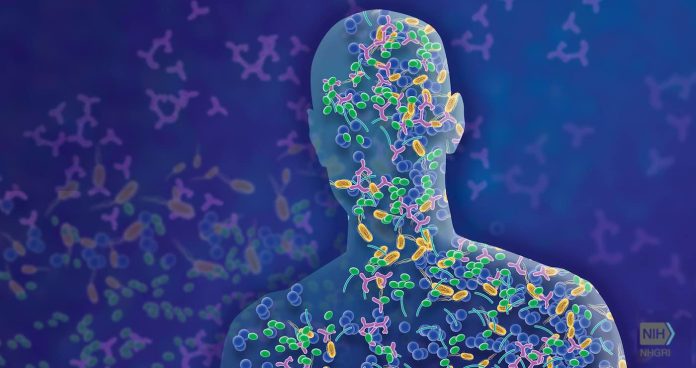
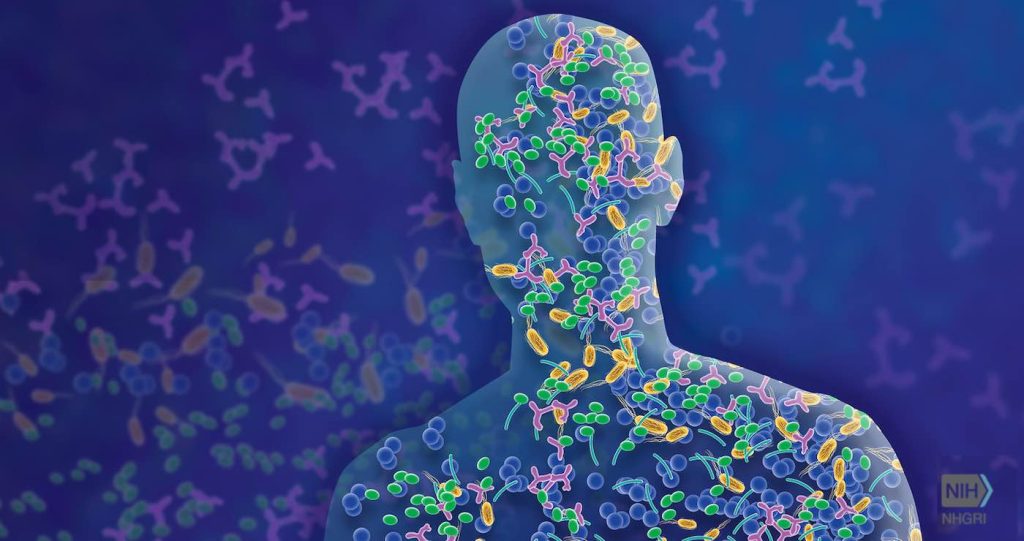
“While there’s a lot we don’t know about the gut, we do know there are trillions of bacteria (our gut microbiota) living in it,” said NHS doctor and registered nutritionist, Dr. Joshua Wolrich, who is working with California Almonds, which commissioned the survey carried out by OnePoll.

We also know that eating a healthy diet that includes fiber, drinking enough water, and quality sleep are among the ways you can improve your gut health, which can stave off a variety of disease.

But the benefits of ‘gut feelings’ can reward your life only when you listen to that inner wisdom, rather than ignoring it.

LOOK: Young Woman is Proof That Trusting Your Heart Can Save Your Life

How often do you follow your gut? Let us know in the comments…

Your Inspired Weekly Horoscope From Rob Brezsny: A ‘Free Will Astrology’

Our partner Rob Brezsny provides his weekly wisdom to enlighten our thinking and motivate our mood. Rob’s Free Will Astrology, is a syndicated weekly column appearing in over a hundred publications. He is also the author of Pronoia Is the Antidote for Paranoia: How All of Creation Is Conspiring To Shower You with Blessings. (A free preview of the book is available here.)

Here is your weekly horoscope…

FREE WILL ASTROLOGY – Week of June 18, 2022
Copyright by Rob Brezsny, FreeWillAstrology.com

GEMINI (May 21-June 20):
Here’s a message I hope you will deliver to the Universe sometime soon: “Dear Life: I declare myself open and ready to receive miracles, uplifting news, fun breakthroughs, smart love, and unexpected blessings. I hope to be able to give my special gifts in new and imaginative ways. I am also eager for useful tips on how to express my dark side with beauty and grace. One more perk I hope you will provide, dear Life: Teach me how to be buoyantly creative and sensitively aggressive in asking for exactly what I need.”

CANCER (June 21-July 22):
In August 2021, a Canadian man named Jerry Knott bought a ticket for a lottery. He stuffed it in his wallet and lost track of it. Two months later, he found it again and checked to see its status. Surprise! It was a winner. His prize was $20 million. I propose we make him your role model for now, my fellow Crabs. Let’s all be alert for assets we may have forgotten and neglected. Let’s be on the lookout for potentially valuable resources that are ripe for our attention.

LEO (July 23-Aug. 22):
Hundreds of years ago, people in parts of Old Europe felt anxiety about the Summer Solstice. The sun reached its highest point in the sky at that time, and from then on would descend, bringing shorter and shorter days with less and less light. Apprehensive souls staged an antidote: the festival of Midsummer. They burned great bonfires all through the night. They stayed awake till morning, partying, and dancing. Author Jeanette Winterson expresses appreciation for this holiday. “Call it a wild perversity or a wild optimism, but our ancestors were right to celebrate what they feared.” Winterson fantasizes about creating a comparable ceremony for her fears: “a ritual burning of what is coward in me, what is lost in me. Let the light in before it is too late.” I invite you to do something like this yourself, Leo.

VIRGO (Aug. 23-Sept. 22):
Virgo author Elizabeth McCracken says, “I don’t dream of someone who understands me immediately, who seems to have known me my entire life.” What’s more meaningful to her is an ally who is curious, who has “a willingness for research.” She continues, “I want someone keen to learn my own strange organization, amazed at what’s revealed; someone who asks, ‘and then what, and then what?'” I hope you will enjoy at least one connection like that in the coming months, Virgo. I expect and predict it. Make it your specialty!

LIBRA (Sept. 23-Oct. 22):
Libran author Stig Dagerman said that when he was sad as a child, his mother kissed him until his mood lightened. When he was older and sad, his mama said, “Sit down at your desk and write a letter to yourself. A long and beautiful letter.” This would be a good task for you right now, Libra. Whatever mood you are in, I invite you to write a long and beautiful letter to yourself. I further recommend that you carry out the same ritual once every six weeks for the next nine months. This will be a phase of your life when it’s extra crucial that you express soulful tenderness toward your deep self on a regular basis. You may be amazed at how inspirational and transformative these communications will be.

SCORPIO (Oct. 23-Nov. 21):
Sometimes, the arrival of a peculiar event in your life is a good sign. It may mean that Fate has sent an intervention to disrupt a boring phase of inertia or a habit-bound grind. An unexpected twist in the plot may signal a divine refreshment. It could be a favorable omen announcing a helpful prod that’s different from what you imagined you needed. I suspect that an experience or two fitting this description will soon materialize in your life story. Be alert for them. Promise yourself you’ll be receptive to their unexpected directives.

SAGITTARIUS (Nov. 22-Dec. 21):
Sagittarius author Edna O’Brien long ago shed the strict Catholic faith in which she was raised. But she still harbors spiritual feelings colored by her tradition. She says, “Ideally, I’d like to spend two evenings a week talking to [novelist] Marcel Proust and another conversing with the Holy Ghost.” I suspect a similar balance of influences will be healthy for you in the days ahead, Sagittarius. My advice is to connect with an inspiration you drew sustenance from while growing up. Spend time equal time consorting with deep-feeling smart people who will stimulate you to rearrange the contents of your rational mind.

CAPRICORN (Dec. 22-Jan. 19):
I’ve composed a message for you to deliver to your best allies. It will help you be clear about the nature of your energy exchanges. Say something like this: “I promise to act primarily out of love in my dealings with you, and I ask you to do the same with me. Please don’t help me or give me things unless they are offered with deep affection. Let’s phase out favors that are bestowed out of obligation or with the expectation of a favor in return. Let’s purge manipulativeness from our dynamic. Let’s agree to provide each other with unconditional support.”

AQUARIUS (Jan. 20-Feb. 18):
Author Lauren Collins tells us, “Bilinguals overwhelmingly report that they feel like different people in different languages. It is often assumed that the mother tongue is the language of the true self. But if first languages are reservoirs of emotion, second languages can be rivers undammed, freeing their speakers to ride different currents.” I bring these thoughts to your attention, Aquarius, because the next 12 months will be an excellent time for you to begin becoming bilingual or else to deepen your fluency in a second language. And if you’re not ready to do that, I encourage you to enhance your language skills in other ways. Build your vocabulary, for instance. Practice speaking more precisely. Say what you mean and mean what you say 95 percent of the time. Life will bring you good fortune if you boost your respect for the way you use language.

PISCES (Feb. 19-March 20):
Piscean-born Robert Evans has been an amateur astronomer since he was 18. Though he has never been paid for his work and has mostly used modest telescopes, he holds the world record for discovering supernovas—42. These days, at age 85, he’s still scanning the skies with a 12-inch telescope on his back porch. Let’s make him your role model for the coming months. I have faith you can achieve meaningful success even if you are a layperson without massive funding. PS: Keep in mind that “amateur” comes from the Latin word for “lover.” Here’s the dictionary’s main definition: “a person who engages in a study, sport, or other activity for pleasure rather than for financial benefit or professional reasons.”

ARIES (March 21-April 19):
“The whole point for me is to change as much as possible,” says Aries actor Keira Knightley. What?! Is she serious? Her number one aspiration is to keep transforming and transforming and transforming? I guess I believe her. It’s not an entirely unexpected manifesto coming from an Aries person. But I must say: Her extra bold approach to life requires maximum resilience and resourcefulness. If you think that such an attitude might be fun to try, the coming weeks will be one of the best times ever to experiment.

TAURUS (April 20-May 20):
Taurus poet May Sarton relished “the sacramentalization of the ordinary.” What a wonderfully Taurean attitude! There is no sign of the zodiac better able than you Bulls to find holiness in mundane events and to evoke divine joy from simple pleasures. I predict this specialty of yours will bloom in its full magnificence during the coming weeks. You will be even more skillful than usual in expressing it, and the people you encounter will derive exceptional benefits from your superpower.

WANT MORE? Listen to Rob’s EXPANDED AUDIO HOROSCOPES, 4-5 minute meditations on the current state of your destiny — or subscribe to his unique daily text message service at: RealAstrology.com

(Zodiac images by Numerologysign.com, CC license)

SHARE The Wisdom With Friends Who Are Stars in Your Life on Social Media…