














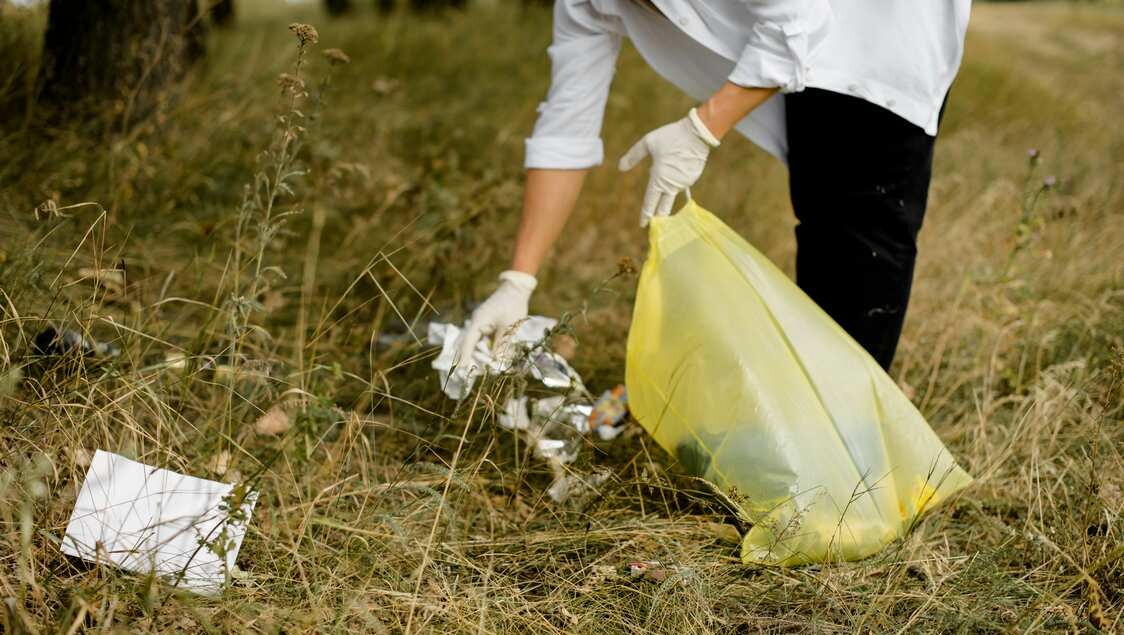
Litter across America has declined 34% since 2020, according to a new report from the Charity Keep America Beautiful.
The report reckons that every American’s share of litter along roadways and waterways has fallen over that time from 152 pieces to 96.
Decades ago, GNN founder Geri Weis-Corbley organized a local spring cleanup along her neighborhood’s country roads every year when she was raising kids.
“I can tell, looking at the roads now, that littering is way down because I live in the same neighborhood and there aren’t any organized cleanups anymore.”
The study, which updates the groundbreaking Keep America Beautiful (KAB) 2020 National Litter Study, is the most extensive research conducted in US history to estimate the scope, scale, causes and impacts of litter. KAB states that it provides both a progress report and a roadmap for where urgent action on litter is still needed as the country approaches its 250th Birthday.
By the numbers, roadway litter declined 22% (from 23.7 billion to 18.4 billion pieces), while waterway litter fell 45% (from 25.9 billion to 14.2 billion pieces).
The declines are being driven by a combination of factors: education that shapes behavior, strong local programs and enforcement, better infrastructure and access to waste systems and increased public engagement from businesses, organizations, governments and individuals.
“This study proves what we’ve always believed: litter is solvable when people, systems and partners work together,” said Jennifer Lawson, President and CEO of Keep America Beautiful.
“The declines show us what’s possible when communities act with urgency and commitment. But our work is far from done. With 35 billion pieces of litter still out there and new types emerging, we must scale what’s working, close the remaining gaps in infrastructure and access and continue building on this momentum.”
Nearly 90% of Americans feel personal responsibility to reduce litter, and 93% agree it’s a shared community responsibility among those polled for the study.
MAKING PROGRESS: Shanghai Achieves 98% Industrial Recycling Rates After 2019 Waste Management Plan
The study reveals how litter reflects the changing rhythms of American life. Cardboard litter is up 50% as online shopping reshapes consumer habits. PPE litter—masks and gloves that surged during the pandemic—is down 76%, while e-cigarette litter has spiked along vaping trends. Overall plastic litter is declining.
“Litter tells the story of how we live,” said David Scott, PhD, SVP of Data and Research at Keep America Beautiful. “Right now, it’s telling a story of progress, but it’s also showing us exactly where we need to focus next.
GAINING ON GARBAGE: Plastic Mardi Gras Beads Just End up in Landfill, So Coalition Swaps in Seed Beads and Jambalaya Spice Packets
“Without sustained effort and smarter strategies, these gains could be reversed. We must continue to act with urgency, double down on what’s working and tackle the challenges that remain.”
The newest insight from the study is the density of litter along America’s coastal areas. Coastal litter, estimated nationally for the first time, is dramatically higher compared to roadway and waterway litter. Coastal zones contain 8-13 times more litter per mile than inland environments, highlighting the need for a tailored strategy to address this problem.
SHARE This Positive Trend Away From This Great American Eyesore…