Blanket made by Queen Mary to be auctioned for Save The Children’s Ukrainian appeal - SWNS
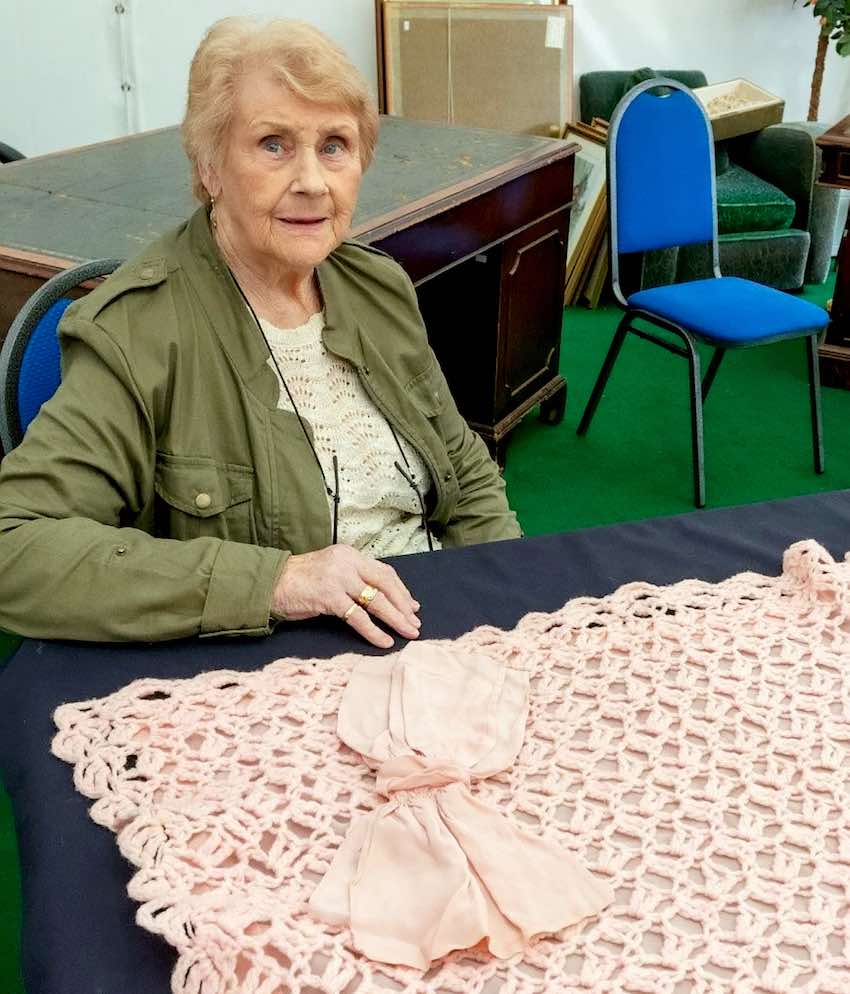
Blanket made by Queen Mary to be auctioned for Save The Children’s Ukrainian appeal – Hansons Auctioneers / SWNS
A baby blanket which was crocheted by Queen Mary and survived World War II is being sold to raise money to help children in Ukraine.
Great-grandmother Kathleen Pritchard was wrapped in the pink shawl as a baby after her mother Florence won a contest.
Two blankets, one pink and one blue, were knitted by Queen Mary and offered as prizes at a mother and baby clinic in 1938.
Florence won one of the crocheted blankets and later wrapped baby Kathleen, whose middle name is Mary, in the shawl while the family took refuge in an underground bomb shelter during air raids.
Kathleen, from Rainham, Essex, has now decided to sell the royal blanket in an auction with the proceeds going to Save The Children’s Ukrainian appeal.
“The blanket was my mother’s most valued and precious possession,” said the 83-year-old who has seven grandchildren and five great-grandchildren.
“It was never used but kept in a box. It was only given to me after I got married and became pregnant with my twins.”
The blanket still bears its original ‘1st prize’ tag and comes with a handwritten note on Marlborough House stationary paper saying ‘Made by Her Majesty, Queen Mary, 1938.’
Kathleen Pritchard with the blanket made by Queen Mary – Hansons Auctioneers / SWNS
It is expected to fetch around $1,000 (£800) when it goes under the hammer at the upcoming Royal Memorabilia Platinum Jubilee Auction.
Granddaughter Carlie Bussey says, “Nan has so many grandchildren and great grandchildren she can’t possibly choose between us to hand it down.”
“She is also extremely saddened and upset by the conflict in Ukraine and wanted to raise some money to help children over there. She has chosen Save the Children’s Ukraine appeal, which ties in quite nicely as Princess Anne is patron.”
Anne’s great grandmother made the blanket, so it has ‘gone full circle’.
“It’s extremely moving to be honest. My nan doesn’t have a lot. This is still her most prized possession but she wants to help and give something back.”
Queen Mary (1867-1953) was the wife of King George V and was queen from 1910 until 1936. She died in 1953 at age 85.
Auctioneer Charles Hanson hopes to help Kathleen achieve an excellent price for her chosen charity. The blanket will be auctioned on May 26 in Derbyshire. Find out more on Hanson’s website.
A pair of dilapidated farmhouses once home to a man who lived alongside his ‘intelligent’ bull are soon to be auctioned in Cornwall, England.
The historic 15th Century ‘Pontious Piece Cottages’ are situated at the heart of a world heritage site in the village of Minions, steeped in Cornish mining history—but their most endearing quality is that the buildings were once home to a man and his beloved bull, ‘Scrunch’.
The late Tony Trewin made headlines for his unique lifestyle, sharing his two adjoining cottages with the highland bull.
Having rescued Scrunch as a calf, Tony always maintained that he was more of a friend than a pet, and he would welcome the animal into his house for feeding every day.
He bottle fed milk to the orphan every night before putting him to bed in the garden shed. The pair had lived a happy reclusive life together, largely without modern technology or comforts.
“I know Scrunch is big and bulls aren’t known for their intelligence, but he’s as loyal and affectionate as any cat or dog,” said Tony in a 2007 interview. “You couldn’t wish for a better pet.”
Thankfully, after Tony’s death, Scrunch was allowed to stay on the land and live peacefully on Bodmin Moor until his own death a few years later.
The pair remained together in death though, with Tony and Scrunch’s ashes being scattered together a short distance from the cottages.
The property is comprised of two adjoining granite stone cottages which have both fallen into varying degrees of disrepair. In the listing, the estate agents wrote, “The late Tony Trewin occupied Pontious Piece Cottages, in a most unconventional way.
“Tony began letting the calf into the cottages on a daily basis for his feed and the two became more than master and pet, but actually bonded as lifelong friends. Scrunch was looked after and allowed to stay and enjoy his home until he died a few years ago of old age. He was also cremated, with his ashes being scattered next to Tony.”
“This wonderful and unique story will no doubt be preserved as restoration to Pontious Piece Cottages takes place with another.”
Hoping for a ‘bull market’ during the public auction, they’re selling the property on July 27, 2022 at 6:30pm at Strawberry Fields, Lifton, Devon, with an opening bid of £175,000.
Quote of the Day: “The winner will be the one who knows how to pick the right fights.” – Jane Ciabattari
Photo by: Bernardo Lorena Ponte
With a new inspirational quote every day, atop the perfect photo—collected and archived on our Quotes page—why not bookmark GNN.org for a daily uplift?
Students at a Texas College graduated last week not only with their diplomas but with their balances cleared suddenly by an anonymous donor.
More than 100 students assembled for the 133rd graduation ceremony at Wiley College and were shocked to hear President & CEO Dr. Herman J. Felton, Jr. announce that their balances had been paid off.
The recent pandemic had exacerbated some students’ ability to pay their debts, so some graduates and parents in the audience in Marshall, Texas, were especially thrilled to hear the news.
“Our commitment to our students goes beyond their time while they are enrolled,” said Felton. “We are grateful for this anonymous donor who will assist the students in paying off their balances.”
The estimated total owed by the class of 2022 in the historically Black college was $300,000.
“As Wiley College closes the academic semester and prepares for its Sesquicentennial Celebrations beginning in July, this is a great way to start the celebration of 150 years of the College’s contributions to the world.”
Wiley College, with its focus on social good and leadership, has reduced its tuition in the past years to $17,500 to cover fees, room, and board.
Now the school’s motto is even more appropriate: “Go forth Inspired.”
Adopting a healthier lifestyle can add years to your life—even in your 80s, according to new research from Japan.
Reducing drinking, not smoking, maintaining a healthy weight, and increasing sleep produce the biggest gains, say scientists.
They increased longevity by six years in healthy 40-year-olds. The benefits were even more prominent in those twice the age.
These gains applied also to individuals with life-threatening illnesses, including cancer, cardiovascular disease, high blood pressure, diabetes, and kidney disease.
The study from Osaka University shows it is never too late to give up bad habits and shed the pounds, from middle age onwards. It was based on almost 50,000 people in Japan who were tracked for up to 20 years.
“This is a particularly important finding given the prevalence of chronic disease has increased globally,” said Senior author Professor Hiroyasu Iso.
The team says taking ownership of your health is key to a pleasurable retirement.
“Idioms and proverbs about the importance of maintaining good health span the ages. Many emphasize how closely health is tied to happiness and the opportunity to live a fulfilling and enjoyable life.”
The study, published in Age and Aging, found that healthy behaviors adopted over time have a marked effect on lifespan.
The researchers found that adopting five or more healthy lifestyle behaviors increased life expectancy even for individuals over 80 years old, and importantly, including those with chronic conditions. They saw results that were dependent on socioeconomic status, policies such as assisted access to healthcare, and lifestyle factors.
30 years ago, participants in The Japan Collaborate Cohort (JACC) Study filled in surveys that included questions about diet and exercise, alcohol consumption, smoking status, sleep duration, and BMI (body mass index). They were also asked about any illnesses.
The aim was to increase knowledge about what factors contribute to death from cancer and cardiovascular disease.
Points were awarded for each healthy behavior and the impact of modifying them on projected lifespan was assessed.
The project continued until December 2009, by which time nearly 9,000 individuals had died.
It is one of the first studies to measure the impact of improvements to health behavior among older individuals in a country with a national life expectancy achieving almost 85 years.
“The finding that lifestyle improvements has a positive impact on health despite chronic health conditions and older age is an empowering one, especially given the increasing prevalence of chronic conditions and longer life,” said lead author Dr. Ryoto Sakaniwa.
Two years ago a study found women can gain ten and men seven years of life free of cancer, heart problems, and type-2 diabetes from a healthy lifestyle. That research was based on 111,000 Americans tracked for more than 20 years.
Samaritan Tracy Peck (left) and Ayda Zugay (right)
23-years ago, a cash gift of $100 from a generous American aboard an airline flight inspired hope in a pair of young women fleeing the former-Yugoslavia during the country’s collapse.
After two decades, they wanted to find the mysterious woman again, but they only knew her first name—Tracy.
Now, after some amateur sleuthing and their internet post going viral, their longing has turned into a reunion that left both women in tears.
Ayda Zugay was 12-years old in 1999, when she and her sister Vanja Contino fled the war sparked by the collapse of the Soviet Union. Aboard a Northwest Airlines flight, an American tennis coach, seeing their plight, slipped them an envelope.
In it were a pair of dangly earrings, $100, and a letter that read “I am so sorry that the bombing of your country has caused you and your family problems. I hope your stay in America is a safe and happy one for you. A friend from the plane—Tracy ❤️”
For years, that was the end of the story. Both prospering in America, Ayda and Vanja currently live in Boston and Connecticut.
But Ayda would never forget the kindness shown by Tracy, nor lose hope that one day the sisters would be able to say thank-you in person.
Meanwhile, Tracy Peck, the Minneapolis tennis coach, was 70 years young, and working as a massage therapist. Recently she was alerted by a barrage of texts and phone calls that she had been the subject of a national news story. Zugay was looking for her, and Catherine Shoichet, writing for CNN, shared her intention with the world.
But the decisive moment in the search came when the refugee advocacy group, Refugees International, tweeted a 2-minute video of Zugay explaining her desire to find Tracy.
She welcomed @aydazugay into the US with an unexpected message in 1999. We'd love to help her decade-long search so she can reunite and thank Tracy in person.
That tweet drew the attention of one of Peck’s daughters, and Susan Allen, a tennis coach colleague.
The reason for Tracy’s presence on the flight that fateful day was because she had gotten the opportunity to travel to Paris in 1999 to watch the French Open. Allen, who helped organized that very trip, reckoned a little bit of evidence would be needed to prove, and so contacted another tennis friend who had been on that same flight, and who just so happened to keep in a scrapbook the receipt from the flight from Amsterdam to Minneapolis on May 31st, along with a team photo, which was the same date that Zugay recalled.
Then, Allen opened a group chat with Zugay and Tracy Peck, posting the images as proof that at last, Zugay’s 23-year search was over.
Samaritan Tracy Peck (left) and Ayda Zugay (right)
A Zoom call was scheduled with her and her sister, and suddenly on their computer screens appeared the same smiling face, albeit with a few more tears, from 23 years before.
“Hello beautiful ladies!” Peck exclaimed, to which Zugay replied, “It’s been more than 20 years,” now fully-able to communicate in English, when before she could only manage hand signals.
They shared many things, including how they used the $100 to last through the whole summer eating pancake mix.
“You know those huge doors that they have in old places across the world? It felt like that big, heavy door just got shut. And I’m finally able to move forward and thrive… And it just makes me so happy,” Zugay said. “Thank you for reminding me to be strong.”
They hope to meet in person soon, after further video calls led to catching up, the introduction of Vanja’s daughters, and more.
FREE WILL ASTROLOGY – Week of May 14, 2022
Copyright by Rob Brezsny, FreeWillAstrology.com
TAURUS (April 20-May 20):
“Every successful person I know starts before they feel ready,” declared life coach Marie Forleo. Author Ivan Turgenev wrote, “If we wait for the moment when everything, absolutely everything, is ready, we shall never begin.” Here’s what educator Supriya Mehra says: “There’s never a perfect moment to start, and the more we see the beauty in ‘starting small,’ the more we empower ourselves to get started at all.” I hope that in providing you with these observations, Taurus, I have convinced you to dive in now. Here’s one more quote, from businesswoman Betsy Rowbottom: “There’s never a perfect moment to take a big risk.”
GEMINI (May 21-June 20):
Poet Ranata Suzuki writes, “There comes a point where you no longer care if there’s a light at the end of the tunnel or not. You’re just sick of the tunnel.” That’s good advice for you right now, Gemini. The trick that’s most likely to get you out of the tunnel is to acknowledge that you are sick of the damn tunnel. Announce to the universe that you have gleaned the essential teachings the ride through the tunnel has provided you. You no longer need its character-building benefits because you have harvested them all. Please say this a thousand times sometime soon: “I am ready for the wide-open spaces.”
CANCER (June 21-July 22):
In the coming weeks, your imagination will receive visions of the next chapter of your life story. These images and stories might confuse you if you think they are illuminating the present moment. So please keep in mind that they are prophecies of what’s ahead. They are premonitions and preparations for the interesting work you will be given during the second half of 2022. If you regard them as guiding clues from your eternal soul, they will nourish the inner transformations necessary for you to welcome your destiny when it arrives. Now study this inspirational quote from poet Rainer Maria Rilke: “The future glides into us, so as to remake itself within us, long before it occurs.”
LEO (July 23-Aug. 22):
“Remember that you will never reach a higher standard than you yourself set,” wrote author Ellen G. White. That’s true! And that’s why it’s so crucial that you formulate the highest standards you can imagine—maybe even higher than you can imagine. Now is a favorable phase for you to reach higher and think bigger. I invite you to visualize the best version of the dream you are working on—the most excellent, beautiful, and inspiring form it could take. And then push on further to envision even more spectacular results. Dare to be greedy and outrageous.
VIRGO (Aug. 23-Sept. 22):
Before Virgo-born Leslie Jones achieved fame as a comedian and actor, she worked day jobs at UPS and Roscoe’s House of Chicken and Waffles. Her shot at major appreciation didn’t arrive until the TV show Saturday Night Life hired her to be a regular cast member in 2014, when she was 47 years old. Here’s how she describes the years before that: “Everybody was telling me to get a real job. Everybody was asking me, What are you doing? You’re ruining your life. You’re embarrassing your family.” Luckily, Jones didn’t heed the bad advice. “You can’t listen to that,” she says now. “You have to listen to yourself.” Now I’m suggesting that you embrace the Leslie Jones approach, Virgo.
LIBRA (Sept. 23-Oct. 22):
“A person must dream a long time in order to act with grandeur, and dreaming is nursed in darkness.” Author Jean Genet wrote that, and now I’m offering you his words as the seed of your horoscope. If you’ve been attuned to cosmic rhythms, you have been doing what Genet described and will continue to do it for at least another ten days. If you have not yet begun such work, please do so now. Your success during the rest of 2022 will thrive to the degree that you spend time dreaming big in the darkness now.
SCORPIO (Oct. 23-Nov. 21):
“Cursed are those who feel floods but who can only express a few drops.” So says an internet proverb. Luckily, this principle won’t apply to you in the coming weeks. I expect you will be inundated with cascades of deep feelings, but you will also be able to articulate those feelings. So you won’t be cursed at all. In fact, I suspect you will be blessed. The cascades may indeed become rowdy at times. But I expect you will flourish amidst the lush tumult.
SAGITTARIUS (Nov. 22-Dec. 21):
“It takes a great deal of experience to become natural,” wrote Sagittarian author Willa Cather. I’m happy to report that in recent months, you Sagittarians have been becoming more and more natural. You have sought experiences that enhance your authenticity and spontaneity. Keep up the good work! The coming weeks should bring influences and adventures that will dramatically deepen your capacity to be untamed, soulful, and intensely yourself.
CAPRICORN (Dec. 22-Jan. 19):
“I intend to live forever,” proclaims 66-year-old comedian Steven Wright, who then adds, “So far, so good.” I offer you his cheerful outlook in the hope that it might inspire you to dream and scheme about your own longevity. Now is a great time to fantasize about what you would love to accomplish if you are provided with 90 or more years of life to create yourself. In other words, I’m asking you to expand your imagination about your long-term goals. Have fun envisioning skills you’d like to develop and qualities you hope to ripen if you are given all the time you would like to have. (PS: Thinking like this could magically enhance your life expectancy.)
AQUARIUS (Jan. 20-Feb. 18):
“Stop insisting on clearing your head,” advised author Charles Bukowski. “Clear your heart instead.” That will be a superb meditation for you to experiment with in the coming weeks. Please understand that I hope you will also clear your head. That’s a worthy goal. But your prime aim should be to clear your heart. What would that mean? Purge all apologies and shame from your longings. Cleanse your tenderness of energy that’s inclined to withhold or resist. Free your receptivity to be innocent and curious.
PISCES (Feb. 19-March 20):
“The winner will be the one who knows how to pick the right fights,” wrote author Jane Ciabattari. Heed her advice, please, Pisces. You will soon be offered chances to deal with several interesting struggles that are worthy of your beautiful intelligence. At least one will technically be a “conflict,” but even that will also be a fruitful opportunity. If you hope to derive the greatest potential benefit, you must be selective about which ones you choose to engage. I recommend you give your focus to no more than two.
ARIES (March 21-April 19):
“Choose the least important day in your life,” wrote Aries author Thornton Wilder. “It will be important enough.” I recommend that you make those your words to live by in the next two weeks. Why? Because I suspect there will be no tremendously exciting experiences coming your way. The daily rhythm is likely to be routine and modest. You may even be tempted to feel a bit bored. And yet, if you dare to move your attention just below the surface of life, you will tune into subtle glories that are percolating. You will become aware of quietly wondrous developments unfolding just out of sight and behind the scenes. Be alert for them. They will provide fertile clues about the sweet victories that will be available in the months ahead.
WANT MORE? Listen to Rob’s EXPANDED AUDIO HOROSCOPES, 4-5 minute meditations on the current state of your destiny — or subscribe to his unique daily text message service at: RealAstrology.com
Quote of the Day: “If evolution really works, how come mothers only have two hands?” – Milton Berle
Photo by: Jordan Rowland
With a new inspirational quote every day, atop the perfect photo—collected and archived on our Quotes page—why not bookmark GNN.org for a daily uplift?
The gargantuan black hole which binds our galaxy together with its powerful gravity has been imaged for the first time.
The capture relied on the collaboration of telescopes from all over the world acting in sync, collecting several millions of gigabytes of data to present the burning accretion disk of Sagittarius A—our black hole’s official name.
How can one image a phenomenon that sucks in light? Something that’s invisible and that we can only picture because of artists’ interpretations? A black hole’s gravitational pull is constantly pulling in, and actually belching out, hot gases and radiation, which form something known as the accretion disk.
This vortex of extremely hot energetic material swirling into the black hole betrays its presence, in the same way that throwing a pound of flour onto an invisible man would reveal them.
The photograph was a project of the Event Horizon Telescope network (EHT), which won Science Magazine’s photo of the year in 2019 for their first-ever image of a black hole called Messier 87. Readers may remember that, just before the pandemic, a glowing orange ring on a black field appeared on the front page of virtually every news outlet.
“But this new image is special because it’s our supermassive black hole,” said Prof. Heino Falcke, who also led the European team behind the imaging of M87. “This is in ‘our backyard’, and if you want to understand black holes and how they work, this is the one that will tell you because we see it in intricate detail,” the German-Dutch scientist from Radboud University Nijmegen told BBC News.
But how?
At 26,000 light years away, Sagittarius A is four million times larger than our Sun, and the event horizon, the part of space around a black hole where the laws of physics begin to break down in relation to its presence, is about as wide as Mercury’s orbit around the Sun, or around 40 million miles across.
One aspect of the discovery that’s almost as difficult to wrap one’s head around as the measurements above, is that all the images used to construct the finished product of Sag. A were taken during the same observation period that gave us the Messier 87 image.
However, since Messier is in a neighboring galaxy, the distance the light traveled to arrive here makes it appear static, while the proximity of Sag. A meant that the plasma in the accretion disk, moving as it does at about 190,000 miles per second, was much harder to piece together into a concise image.
Because Sag A. is a thousand times smaller than M87, the structure of its disk changes a thousand times faster, which combined with the reduced time the light needed to arrive here meant a much greater challenge creating an image that wasn’t just a single orange blur.
The brighter parts of the image are thought to be where radiation is coming right towards us.
Below, the scientists created a simulation of what you might see if you traveled to the center of the galaxy and looked at Sag. A through an optical tool that caught sensitive radio frequencies.
(WATCH the video for this story below.)
SHARE a Cosmic Spiral of the Good News; Share This Story…
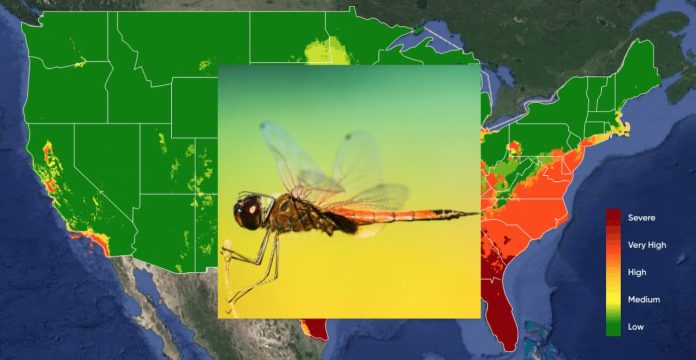
Off!Cast map with mosquito image by Boris Smokrovic
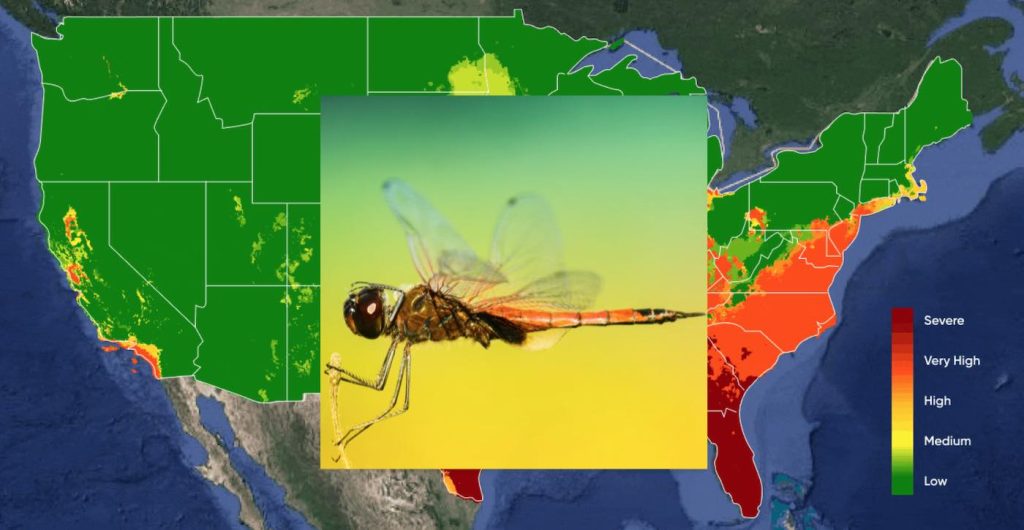
Off!Cast map with mosquito image; Boris Smokrovic
What’s on the to-do list for a late-spring barbecue? Go shopping, sweep the deck, clean the grill, and check the mosquito forecast…
That’s right, Google Earth Engine and SC Johnson are using weather and climate data to provide Americans with a mosquito-forecast to help better plan yard parties and camping trips, by mapping the mosquito’s life-cycle onto the temperature and humidity swings that benefit them.
Periods of heat and humidity might accelerate the growth of mosquitos from eggs to blood-suckers, and if those periods of humidity move across regions, they could kick-start broods as the pass by.
Called Off!Cast Mosquito Forecast, after the mosquito-repellent Off! manufactured by SC Johnson, the tool makes use of Google Earth Engine—which is the tech giant’s massive satellite image database. Professional entomologists are also onboard, providing data from past mosquito numbers from thousands of locations and detailed analyses of the various species’ lifecycles.
At the moment the tool only exists in the U.S., but the developers hope to have versions for Brazil and Mexico soon.
Entomologists have described the tool as “very accurate,” and it can offer a first line of protection (knowledge) to use before scientists genetically alter the animal to stop carrying the various diseases they plague society with.
Until then, Ada McVean, writing for Canada’s McGill Office for Science and Society, explains all the ways in which mosquitos find you—who they prefer to bite, and what really protects them without poisoning oneself.
BUZZ the Good News in All Your Besties’ Ears; Share This Tool…
The UK’s public health services are officially prescribing stand-up comedy classes to men at risk of suicide from mental trauma or depression—after a pilot program proved outrageously successful.
While stand-up is one of the hardest, and scariest things most people could think to do, humor is also one of the most innate ways human beings process trauma.
Despite what social activists have for decades said about some topics being off-limits, British comedian Angie Belcher is showing that people exploring their personal history through comedy often makes them “stronger and more resilient.”
Belcher is the pioneer of Comedy on Referral, a six-week course for trauma survivors in Bristol that is now receiving National Health Service (NHS) funding to expand its programs to London to help men at risk of suicide.
Belcher, who describes herself on Twitter as a “Comedian in Residence,” also founded AFTERMIRTH Comedy Club—which helps celebrate parenthood and fight post-natal depression through stand-up comedy.
She explained Comedy on Referral to the Guardian, and why it has the power to change trauma survivors’ mentalities.
“My course for trauma victims encourages them to process their trauma in a different way, so they can change who the victim is and choose the narrative. They can actually go right down into ‘This is what I was thinking and then this thing happened to me’,” said Belcher.
“This enables survivors to consciously use comedy to change their perspective of their experiences, but it also puts them in a physically powerful position because being on stage is very powerful.”
This week, the North West London Integrated Care System, a large partner of the various NHS trusts, rewarded Belcher’s efforts with a grant in the hope to reduce British suicide rate by 10%. They admit they’ve never done anything like this before, but they’re excited by the results.
20 men over the age of 18 who have had suicidal episodes are currently in the program, in which Belcher works alongside psychologists to ensure that fine line between what’s funny and what can be triggering is walked safely.
RAISE Hope; Raise Joy—Share This Story of Trauma Healing…
Food has been grown in soil collected from the moon for the first time, paving the way for human migration across the solar system.
Pioneers would be able to cultivate crops on other worlds—mirroring the plot of The Martian.
In the film, Matt Damon’s stranded astronaut character grows potatoes on the Red Planet to survive.
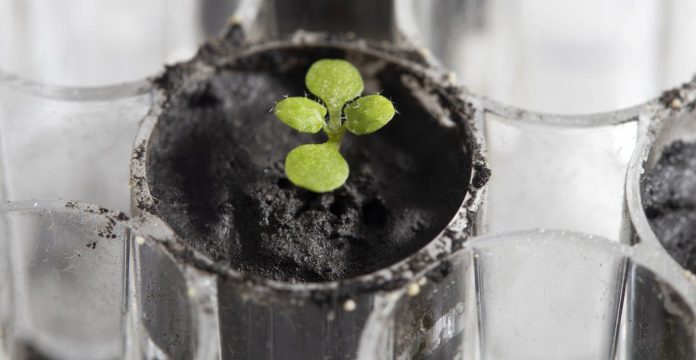
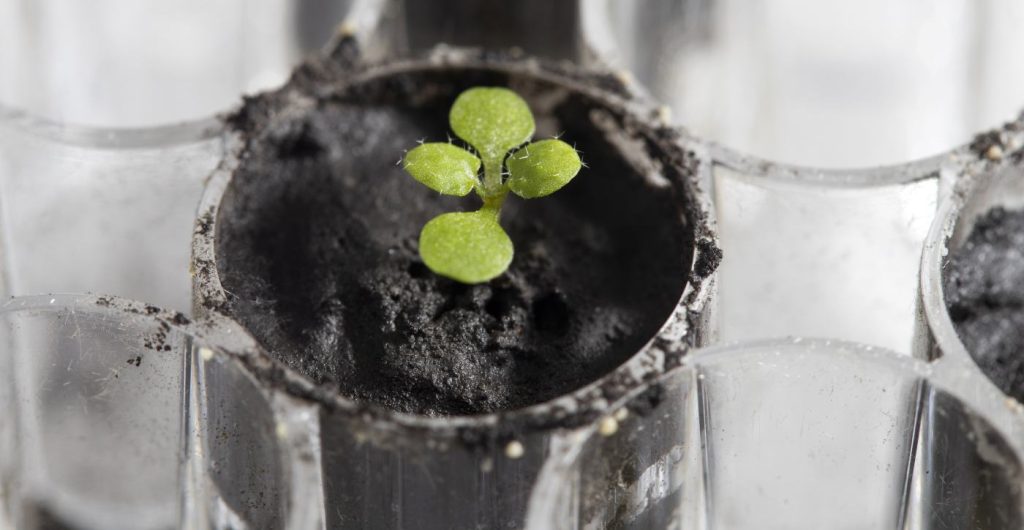
Now, in a case of life imitating art, scientists have cultivated cress in dirt, or regolith, that had been kept on Earth for half a century—since the Apollo missions.
It is a first step towards producing food and oxygen on the moon, or during space missions.
Over the next decade, NASA’s Artemis program will lay the foundation for a sustained colony on the lunar surface.
It will use the moon to validate deep space systems and operations—before embarking on a manned voyage to Mars.
“Artemis will require a better understanding of how to grow plants in space,” co-author Professor Rob Ferl said. “For future, longer space missions, we may use the moon as a hub or launching pad. It makes sense that we would want to use the soil that’s already there to grow plants.
“So, what happens when you grow plants in lunar soil, something that is totally outside of a plant’s evolutionary experience? What would plants do in a lunar greenhouse? Could we have lunar farmers?”
The University of Florida team planted thale cress seeds in lunar soil picked up by the Apollo 11, 12, and 17 crews between 1969 and 1972.
They added water, nutrients, and light, and watched the edible spring salad green flourish.
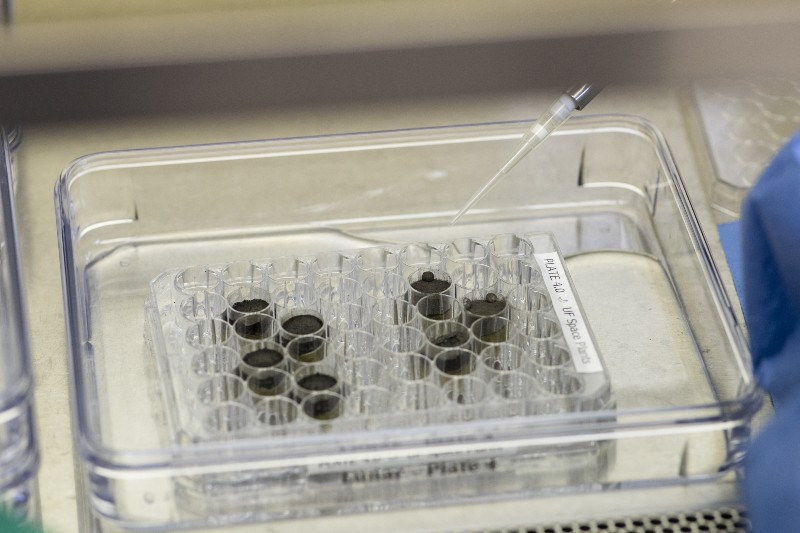
A tiny ‘lunar garden’ was created from just a few teaspoons of the prized dirt specially loaned from NASA. The university was granted 12 grams—after 11 years of negotiations.
Thimble-sized wells in plastic plates normally used to culture cells were filled with a gram each of the lunar soil.
They were moistened with a cocktail of nutrients. Then a few seeds of cress were added to each ‘pot.’
Fresh growth
SWNS
The horticulturalists weren’t sure if they would sprout, but nearly all of them did.
“We were amazed. We did not predict that,” co-author Prof Anna-Lisa Paul said. “That told us the lunar soils didn’t interrupt the hormones and signals involved in plant germination.”
It opens the door to “resource independence” from Earth.
NASA and Elon Musk’s SpaceX are committed to sending people to Mars in the near future.The logistical challenges are huge. Transporting food all the way from Earth would be impractical. Producing it locally is imperative.
Damon’s character in the sci-fi blockbuster fertilizes Martian soil with faeces—slicing potatoes and planting the cuttings. He grows enough food to last hundreds of days.
Even in the early days of lunar exploration, plants played an important role, said Prof. Paul. She explained, “Plants helped establish that the soil samples brought back from the moon did not harbour pathogens or other unknown components that would harm terrestrial life. But those plants were only dusted with the lunar regolith and were never actually grown in it.”
Prof. Paul and Prof. Ferl are internationally recognised experts in the field of plants in space. They have sent experiments on space shuttles, to the International Space Station and on suborbital flights.
Thale cress, or Arabidopsis, is native to Europe, Asia, and Africa. It is widely used in research because its genetic code has been fully mapped.
Cultivation in the lunar soil shed fresh light on how plants would be affected—down to the level of gene expression.
Seeds were also planted in basaltic and volcanic ash from Earth, as well as simulated Martian soils, which acted as controls.
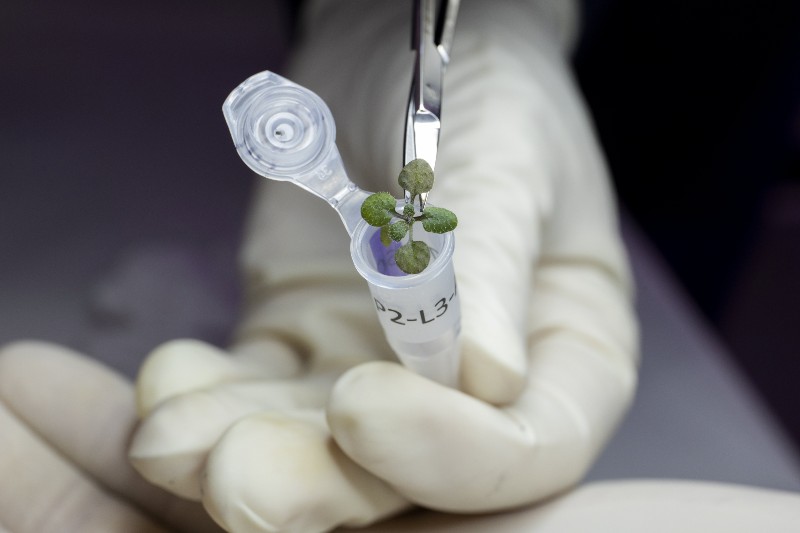
Over time, differences were observed. Some ‘lunar’ plants were smaller, grew more slowly, or were more varied in size than their counterparts.
These were signs they were working to cope with the chemical and structural make-up of the moon’s soil—which was confirmed by gene expression analysis.
One giant leap
SWNS
“At the genetic level, the plants were pulling out the tools typically used to cope with stressors, such as salt and metals or oxidative stress. So we can infer the plants perceive the lunar soil environment as stressful,” Prof Paul said. “Ultimately, we would like to use the gene expression data to help address how we can ameliorate the stress responses to the level where plants – particularly crops – are able to grow in lunar soil with very little impact to their health.”
The study also found plants with the most signs of stress were those grown in what geologists call mature lunar soil.
Exposed to more cosmic wind, that alters their makeup. Those grown in comparatively younger soils fared better. Growing may also change the soils themselves.
“The Moon is a very, very dry place. How will minerals in the lunar soil respond to having a plant grown in them, with the added water and nutrients? Will adding water make the mineralogy more hospitable to plants,” co-author Dr Stephen Elardo questioned.
Follow-up studies will build on these questions and more. For now, the researchers are celebrating ‘growing plants on the moon’.
SHARE the Far Our News With All Your Space-Loving Chums…
Quote of the Day: “My heart has developed a kind of amnesia, where it remembers everything but itself.” – Sabrina Benaim
Photo by: Fa Barboza
With a new inspirational quote every day, atop the perfect photo—collected and archived on our Quotes page—why not bookmark GNN.org for a daily uplift?
Taking inspiration from the aspen tree the state of Colorado so loves—a Denver hotel is looking to become the first-of-its-kind in America that removes more carbon than it uses.
With cement-works, smelting, and heavy machinery being the birth of all big buildings, the Populus Hotel has spared no piece of its operations from being assessed for unnecessary emissions.
The building was designed by Studio Gang in Chicago, and is almost finished. At the hotel there’s no parking, removing the need for digging and building an underground concrete lot.
Instead, Populus is encouraging guests to take a bus or train to a city transportation hub right across the street to arrive.
The low-carbon concrete façade and skeleton of the hotel are inspired by aspen bark, and is crafted from a super insulating material that will greatly reduce energy consumption.
Deep-set windows work the same way, removing the amount of sun that directly enters a room.
The roof is lined with solar panels, and for every ton of CO2 produced from energy use, the hotel will be buying “carbon offsets”—trees planted somewhere by a third party that will absorb CO2 throughout their lifetime.
Studio Gang
“Internally, we often say if we can show people how to make money doing the right thing to change the world, it can be replicated,” Jon Buerge, chief development officer at Urban Villages, the sustainability-focused developer behind the project, told Fast Company.
“And so our projects are very profitable. We don’t ever come in saying, you know, well, if we use this material, and we reduce our return on investment, is that okay? It’s more saying, we’ve got to justify it. We have to make sure that the decisions we’re making are good for the planet and good for for the business.”
Studio Gang
Expected to open next year, the hotel will have 265 rooms, and will include a rooftop terrace garden and dining area with views out across to the State Capitol building, and towards the Rocky Mountains beyond.
GROW the Positive; Share This Fascinating Design With Friends…
Whether you’ve seen it on Airplane! or tested on Mythbusters, it is possible for a passenger with no flying experience to land an airplane if there’s a calm voice on the radio telling them how.
That’s what happened recently aboard a small single-engine plane, when the incapacitation of the pilot left a passenger at the wheel. Radioing down to sea level, Darren Harrison admitted, “I have no idea how to fly the airplane.”
Air Traffic Controller Robert Morgan, a certified flight instructor with over 1,200 hours of flight time, was having a lunch break near his control tower at Fort Pierce when he got a disturbing call about a plane that needed help as it was flying in from the Bahamas.
“I rush over there and I walk in and the room is really busy… and they’re like, ‘Hey, this pilot’s incapacitated. The passengers are flying the plane. They have no flying experience,” Morgan told CNN’sNew Day on Wednesday.
Talking her down
Robert Morgan (L) and Darren Harrison (R); Robert Morgan
“Try to hold the wings level and see if you can start descending for me. Push forward on the controls and descend at a very slow rate,” Morgan advised. Having never flown this particular Cessna Caravan propeller plane, he pulled up a photograph of the control panel to improve his explanations.
Between radio calls with the plane, Morgan organized air traffic at Palm Beach, the biggest runway in the area, where he knew he could give Harrison the largest target to aim at.
Talking Harrison down step by step, the plane landed safely, with much of the traffic at Palm Beach listening.
“You just witnessed a couple of passengers land that plane,” a Palm Beach tower controller told a waiting pilot. “Did you say the passengers landed the airplane? Oh, my God. Great job,” he said.
Afterwards Morgan got to meet his new student, whom he gave a 10/10 for the landing during an emotional exchange. Morgan said Harrison was the real hero of the day, having had the courage to take over the situation. Harrison was just happy to be down and to be able to get back to his wife—who is currently pregnant.
SAFELY Land the Good News in Those Social Feeds of Yours…
Memory loss has been reversed in mice by injecting them with a brain liquid from younger peers in a “groundbreaking” new treatment..
The substance, called cerebrospinal fluid (CSF), washes in and out of grey and white matter in waves—helping clear out waste.
It bathes the tissue with proteins, or growth factors, that are vital for normal development.
Amounts reduce as we get older—increasing the risk of Alzheimer’s and other neurological conditions.
The therapy opens the door to new treatments, and slowing cognitive decline, say scientists.
Using a tiny tube and pump, CSF from young adult mice was infused into the brains of 18-month-old animals—equivalent to about 60 in human years—over seven days.
Scans showed it boosted production of myelin, a fatty sheath that protects neurons from damage.
Afterwards, the elderly mice got better at a ‘fear-conditioning task’. They remembered a tone and flashing light meant they were about to receive a small electric shock.
New hope
“Brain aging underlies dementia and neurodegenerative diseases, imposing an immense societal burden,” corresponding author Professor Tony Wyss-Coray, of Stanford University in California, said. “Memory improvements that are seen in old mice receiving CSF from younger animals may be attributed to growth factors that are shown to restore neural cell function.
“The findings demonstrate the potential rejuvenating properties of young CSF for the aging brain.”
A computer tool called RNA sequencing showed the therapy altered gene expression in the hippocampus—which controls memory.
It stimulated cells in the central nervous system known as oligodendrocytes. They make myelin, ensuring strong signals between neurons.
The study in the journal Nature found genes that are typically expressed in oligodendrocytes were highly up-regulated in old mice treated with CSF from young mice.
In particular, it identified a gene named Fgf17 as being key. Activity decreases in aged mice.
Boosting it achieved the same benefits as young CSF±offering hope of developing a drug that targets it.
“As the brain ages, cognitive decline increases along with the risk of dementia and neurodegenerative disease,” Prof. Wyss-Coray said. “An understanding of how systemic factors affect the brain throughout life has shed light on potential treatments to slow brain aging.
“The CSF is part of the immediate environment of the brain, providing brain cells with nutrients, signalling molecules and growth factors.”
Age-related cognitive decline affects up to a quarter of over 60s. A healthy diet and regular exercise protect against it—but there are no pharmacological treatments.
Groundbreaking treatment
These findings demonstrate the rejuvenating power of young CSF and identify Fgf17 as a key target to restore oligodendrocyte function in the aging brain,” Prof Wyss-Coray said. “Combined, our results suggest that targeting hippocampal myelination through factors present in young CSF might be a therapeutic strategy to prevent or rescue cognitive decline associated with ageing and neurodegenerative diseases.”
Dr Miriam Zawadzki and Prof Maria Lehtinen, of Boston Children’s Hospital in Massachusetts, who were not involved in the study, described it as “groundbreaking.”
“Not only does the study imply FGF17 has potential as a therapeutic
target, but it also suggests routes of drug administration that allow therapeutics to
directly access the CSF could be beneficial in treating dementia,” they said. “Any such treatments will be hugely helpful in supporting our aging population.”
DON’T LET This Breakthrough Research Get Old; Share It…
A farmer says an extremely rare pig has successfully been brought back from the brink of extinction.
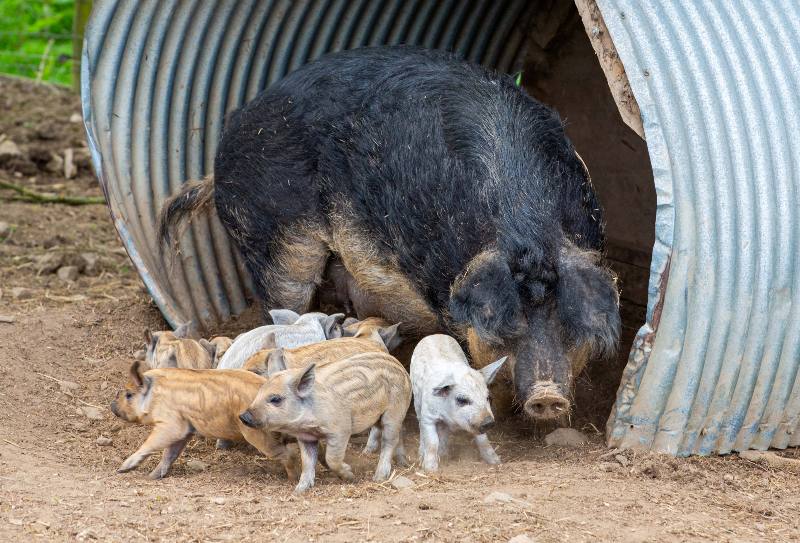
40-year-old Michelle Burley-Hodge has joined a small group dedicated to saving a rare ‘hardy’ porker breed known as the wooly Mangalitza—that is able to fight off bears.
She said she was inspired to rescue the curly haired pigs after hearing her grandmother’s childhood stories about a now-extinct pig from her village.
And she said the work being done to is having a positive impact—with the pigs slowly recovering from just ten in the UK to around 50.
The mother-of-two from Perranwell in Cornwall is currently one of four farmers in the UK who have made it their mission to rescue the rare pigs.
Mangalitza pigs are huge animals, with long curly hair that originate from Hungary.
“They’re not very sought after pigs,” Michelle said, “because they take longer to rear for meat, but they’re really unique and hardy animals.
SWNS
“You do get a lot of meat, and a lot of different meat. Their fat is also really good for omega-3, some other farmers render it down for sale. It’s called the golden lard.
“You can get different varieties too, blondes, redheads, and swallow-bellied versions all have different looks.
SWNS
“I know that recently the farmers I work with near Yorkshire and Sussex have had new litters, so the breed is definitely improving over time.
“We’re also going to import a whole new strain of Mangalitza pigs from Austria in July, so hopefully that will add some variety and make the breed more viable.
Michelle was inspired to rescue the breed after hearing her 85-year-old grandmother Sylvia talk about a huge hairy pig that used to walk around her childhood landscape.
While searching for one to purchase for herself, Michelle discovered that the breed of pig, a Lincolnshire curlycoat, has since gone extinct.
A global breed, the Mangalitza pigs have been exported across the world as far afield as Japan and Canada due to how tough they are.
SWNS
Michelle says that there are even Facebook groups dedicated to the pigs, with owners who share their experiences and how their pigs are faring from across the world.
“One pig in the U.S. was attacked by a bear, which is not something we’re used to here. The pig was fine, and there’s even a video of it fighting off the bear.”
DON’T Let Friends Feel Wooly Among the Bad News; Share the Good…
Quote of the Day: “Confusing emotions with analyses is a pandemic unto itself.” – Rebecca Solnit
Photo by: Hello I’m Nik
With a new inspirational quote every day, atop the perfect photo—collected and archived on our Quotes page—why not bookmark GNN.org for a daily uplift?
The historic reintroduction of Chinook salmon into a California creek this spring will help secure another generation of this iconic species.
State and federal biologists have been busy moving endangered adult winter-run Chinook salmon to the upper reaches of Battle Creek and threatened spring-run Chinook salmon to Clear Creek in Northern California, where colder water temperatures will better support spawning and help their eggs survive the continuing drought.
Together the scientists will return about 300 adult winter-run Chinook salmon to native habitat above Eagle Canyon Dam on North Fork Battle Creek, about 20 miles east of Cottonwood, in Shasta/Tehama counties for the first time in more than 110 years.
It is one of a series of urgent actions to help the native fish survive another year of the lasting drought, high temperatures, and other stressors.
Agencies Join Forces
Various agencies, including CDFW, USFWS, NOAA Fisheries, Bureau of Reclamation, the California Department of Water Resources, and water users are working closely with the Winnemem Wintu Tribe, whose culture is intertwined with salmon in the area.
Actions to help the salmon population include managing releases of limited water stored in Shasta Reservoir into the Sacramento River, where additional spawning gravel has been placed, to improve the odds that the released water is cool enough to allow some Chinook salmon eggs in the river to survive.
USFW salmon release location
Scientists are also expanding production of juvenile winter-run Chinook salmon at Livingston Stone National Fish Hatchery operated by the USFWS at the base of Shasta Dam.
Offspring produced at the hatchery in recent years have helped save the species as most of their eggs in the wild died. Juvenile fish will be released into the river in stages when conditions are more hospitable in the late fall and winter.
They will be moving adult spring-run Chinook salmon that return up the Sacramento River to the upper reaches of Clear Creek in Shasta county to cooler water and increased chances of egg survival.
Boosting the resilience of transported adult salmon with injections of thiamine (Vitamin B) is also being managed.
There are also plans to track the survival and reproduction of the transported fish as part of a science plan to learn from these actions to promote climate resilience of Chinook salmon. Research includes field studies to understand the productivity of historic habitat where winter-run Chinook salmon will be reintroduced.
The transport of adult winter-run Chinook salmon to upper Battle Creek builds on the “jumpstart” reintroduction program that began in 2018 with annual releases of juvenile salmon in lower reaches of the creek.
Many of the released fish migrated to the ocean and have returned as adults to spawn, demonstrating that Chinook salmon can reestablish themselves given habitat that remains cool enough for their eggs to survive the summer.
Resilience of an iconic species
State and federal salmon recovery plans also call for returning winter-run Chinook salmon to historical spawning habitat in the McCloud River above Shasta Dam and Reservoir. That requires a means of collecting juvenile salmon that hatch and try to swim downriver toward the ocean and need to safely get past the 600-foot high Shasta Dam. Agencies plan to test a pilot juvenile collection system this fall.
These efforts are part of a comprehensive program in the Sacramento Valley to address all freshwater life-cycle stages to benefit all four runs of Chinook salmon in the region.
Work will continue this year to advance science through the Sacramento River Science Partnership and to implement projects in the downstream reaches of rivers and creeks to create additional spawning habitat, side channel rearing habitat, fish food and migration barrier removal.
These efforts are also part of a longer-term recovery effort underway to address climate change and provide greater resilience for salmon by expanding access to important habitat and landscapes, including reintroduction for spawning and rearing above Shasta Dam and Reservoir, spawning in the upper reaches of Battle Creek, and food sources and safe haven in the bypasses, oxbows, and historic floodplain in the lower part of the system.
A vast array of 12,000 solar panels are set to become Europe’s largest floating solar park when they finish taking position atop the Alqueva reservoir this year.
Supplying a third of the electricity to the nearby towns of Moura and Portel—they look to continue taking advantage of Portugal’s exceptional year-round weather that has seen the nation become one of the leading renewable-powered nations in Europe.
Built by EDP, the country’s principal utilities provider, the panels will be mounted on pontoons in an area the size of four European soccer pitches, equipped with lithium-ion batteries to store a total excess of 1.5 gigawatts.
The advantage of floating solar is that it doesn’t take up limited land space in the small country. Unused electricity that can’t be used pumps water into the reservoir, which can be fed through the hydropower system of the dam to create additional power.
“This project is the biggest floating solar park in a hydro dam in Europe, it is a very good benchmark,” said Miguel Patena, group director for EDP who is in charge of the project.
By 2030, EDP hopes to offer 100% renewable electricity across all infrastructure, and currently produces 78% of EDP’s 25.6 GW of installed capacity from solar, wind, and hydropower.
(WATCH the video for this story below.)
POWER Up the Good News; Share This Story From Portugal…