All News - Page 375 of 1715 - Good News Network
Home Blog Page 375

“There’s no way to be a perfect mother and a million ways to be a good one.” – Jill Churchill (Happy Mother’s Day!)

Quote of the Day: “There’s no way to be a perfect mother and a million ways to be a good one.” – Jill Churchill (Happy Mother’s Day!)

Photo by: ketan rajput

With a new inspirational quote every day, atop the perfect photo—collected and archived on our Quotes page—why not bookmark GNN.org for a daily uplift?

$35 Thrift Store Purchase Turns Out to be Priceless 2000-Year-old Roman Bust

Laura Young's bargain bust - SWNS
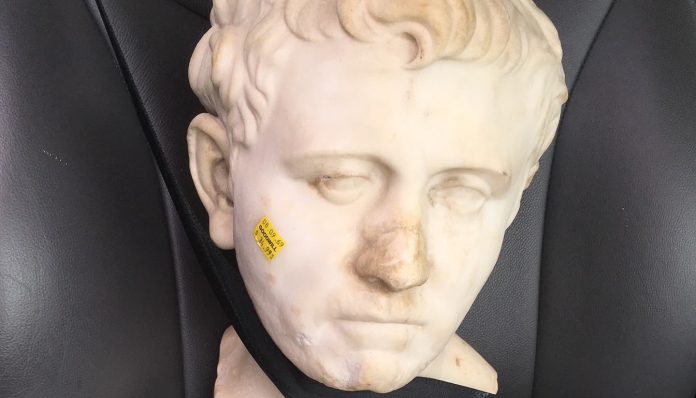
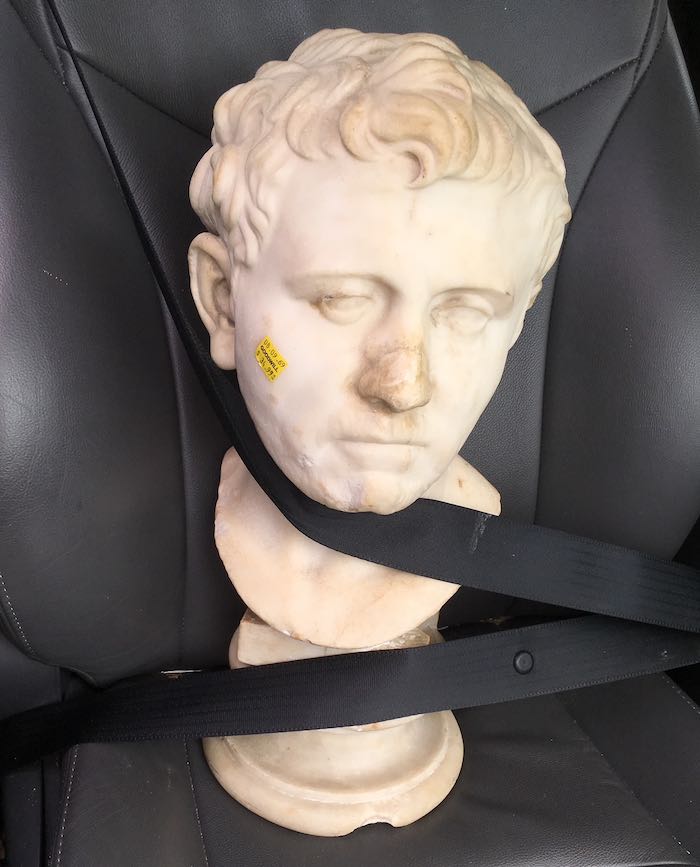
Roman bust purchased at Goodwill shop in Austin, Texas, by Laura Young / SWNS

A chipped marble statue bought for $35 from a thrift store has turned out to be a priceless 2,000 year-old Roman bust.

When Austin, Texas-based art collector Laura Young purchased the marble bust at a local Goodwill store in 2018, she didn’t know that she had accidentally stumbled upon a centuries-old sculpture that once belonged in the collection of King Ludwig I of Bavaria.

At the time, the find was hilariously pictured buckled into the seat of Laura’s car—complete with price sticker on its cheek.

The work, which was initially identified by Sotheby’s consultant Jörg Deterling and further authenticated by the Bavarian Administration of State-Owned Palaces, Gardens, and Lakes, is now on view at the San Antonio Museum of Art (SAMA) through May 2023.

Once installed in the courtyard of the Pompejanum (a replica of a Roman villa in Pompeii built by the King in Aschaffenburg, the Roman bust, which dates from the late 1st century BC to the early 1st century AD, disappeared following World War II.

Young, who actively looks for unexpected or undervalued artworks and antiques, discovered the Roman bust on the floor beneath a table at a Goodwill charity store.

After purchasing it, she noticed how old and worn the sculpture looked and began a multi-year journey to determine its authenticity and origin.

LOOK: A Chair Bought for $5 in a Junk Shop Sells at Auction for over $16,000

She met with experts in the University of Texas-Austin art history department, as well as several auction houses. After Deterling made the identification, he supported the process of connecting Young with the German authorities. As part of the agreement to return the sculpture to its rightful home in Germany, the Bavarian agency agreed that the work could go on view at SAMA to engage the public with its history and story.

“My husband and I were on a road trip when I got an email confirming the head was indeed ancient Roman. Soon after that, Sotheby’s got in touch,” Young said. “There were a few months of intense excitement after that, but it was bittersweet since I knew I couldn’t keep or sell the (bust). Either way, I’m glad I got to be a small part of (its) long and complicated history.”

“He looked great in the house while I had him,” she added.

It’s also a wonderful example of international cooperation.

POPULAR: Class Ring Lost in Maine 47 Years Ago is Found in Finland and Returned to Widow Who Missed It

But, the mystery continues…

How the Roman bust arrived in Texas remains a mystery. In January 1944, during World War II, Allied bombers targeted Aschaffenburg and seriously damaged the Pompejanum, where the work had been installed. Authorities began a restoration of the Pompejanum in 1960 and it opened as a museum in 1994.

The bust, however, disappeared after the war, and its location remained unknown until Young’s discovery. After the end of World War II, the US Army established various military installations in Aschaffenburg, many of which remained until the end of the Cold War, and most likely a returning soldier brought the sculpture to Texas.

“We are very pleased that a piece of Bavarian history that we thought was lost has reappeared and will soon be able to return to its rightful location. We would like to take this opportunity to thank the San Antonio Museum of Art for their support in returning the ancient portrait,” said Bernd Schreiber, president of the Bavarian administration.

CHECK OUT: Digging a Well They Accidentally Discover a $140 Million Star Sapphire Weighing Half a Ton

Inspired by the excavations in Pompeii, King Ludwig I had the Pompejanum built by the architect Friedrich von Gärtner in 1840-1848, to support engagement with ancient cultures. The Roman bust was among many works housed in the replica villa.

The bust may portray a son of Pompey the Great (106–48 BC), who was defeated in civil war by Julius Caesar. Some unusual details of the bust resemble other portraits of the famous general, including the curling lock of hair on his forehead, his furrowed brow, and the creases on his neck, but with the addition of the traditional beard of mourning worn by his sons after Pompey’s death.

ENCOURAGE Friends to Keep Hunting for Treasures – Share This on Social Media…

Scientists Discover Genetic Cause of Lupus, a Chronic Autoimmune Disease

An international team of researchers has identified a cause of the autoimmune disease lupus within the DNA mutations of a gene that senses viral RNA—findings that will lead to the development of new treatments.

Currently there is no cure for the chronic autoimmune disease which causes inflammation in organs and joints and affects movement and the skin—sometimes with debilitating symptoms and complications that can be fatal.

Lupus affects around a quarter-million people in the US and UK, and current treatments are predominantly immune-suppressors which work by dialing down the immune system to alleviate symptoms.

But scientists recently reported carrying out whole genome sequencing on the DNA of a Spanish child named Gabriela, who was diagnosed with severe lupus when she was 7 years old. Such a severe case with early onset of symptoms is rare and indicates a single genetic cause.

In their analysis published April 27 in Nature, the researchers report finding a single point mutation in the TLR7 gene. Via referrals from the US and the Shanghai Renji Hospital in China, they identified other cases of severe lupus where this gene was also mutated.

LOOK: Marathoner Runner Stopped By Lupus is Racing Again Thanks to Amazing Treatment for Autoimmune Disorder

To confirm that the mutation causes lupus, the team used CRISPR gene-editing to introduce it into mice. These mice went on to develop the disease and showed similar symptoms, providing evidence that the TLR7 mutation was the cause. The mouse model and the mutation were both named ‘kika’ by Gabriela, the young girl being treated at the Centre for Personalised Immunology at the Australian National University.

“It has been a huge challenge to find effective treatments for lupus, and the immune-suppressors currently being used can have serious side effects and leave patients more susceptible to infection,” said Carola Vinuesa, senior author, principal investigator, and leader of the new Autoimmunity Laboratory at the Francis Crick Institute where she will continue the research. “There has only been a single new treatment approved by the FDA in about the last 60 years.”

“This is the first time a TLR7 mutation has been shown to cause lupus, providing clear evidence of one way this disease can arise.”

RELATED: Antibodies Could Be ‘Radically Life-Changing’ New Treatment for OCD and Other Mental Disorders

It might be a small number of people with lupus who have variants in TLR7 itself, but many patients have signs of overactivity in the TLR7 pathway. By confirming a causal link between the gene mutation and the disease, researchers can start to develop more effective treatments.

The mutation the researchers identified causes the TLR7 protein to bind more easily to a nucleic acid component called guanosine and become more active. This increases the sensitivity of the immune cell, making it more likely to incorrectly identify healthy tissue as foreign or damaged and mount an attack against it.

Interestingly, other studies have shown mutations that cause TLR7 to become less active are associated with some cases of severe COVID-19 infection, highlighting “the delicate balance of a healthy immune system”.

10x More Likely in Females

The work may also help explain why lupus is about 10 times more frequent in females than in males.

As TLR7 sits on the X chromosome, females have two copies of the gene while males have one. Usually, one of the X chromosomes is inactive in females, but in this section of the chromosome, silencing of the second copy is often incomplete. This means females with a mutation in this gene can have two functioning copies.

“Identification of TLR7 as the cause of lupus in this unusually severe case ended a diagnostic odyssey and brings hope for more targeted therapies for Gabriela and other lupus patients likely to benefit from this discovery,” says Dr. Carmen de Lucas Collantes, a co-author of the study.

CHECK OUT: We Can Now Use CRISPR Gene Editing on Ticks – to Fight Lyme Disease in Humans

The researchers are now working with pharmaceutical companies to explore the development of, or the repurposing of existing treatments, which target the TLR7 gene. And they hope that targeting this gene could also help patients with related conditions like rheumatoid arthritis and dermatomyositis, which belong to the same broad family as lupus.

Now a teenager who stays in contact with the research team, Gabriela expressed hope that the discovery will make people with lupus feel like they are not alone in fighting their battle. “Hopefully the research can continue and end up in a specific treatment that can benefit so many lupus warriors who suffer from this disease.”

BOOST People’s Hope for a Lupus Cure by Sharing on Social Media…

Hi-Tech Archaeology Reveals Extraordinary Cave Art Carvings Beneath 2000 Years of Sediment in Alabama

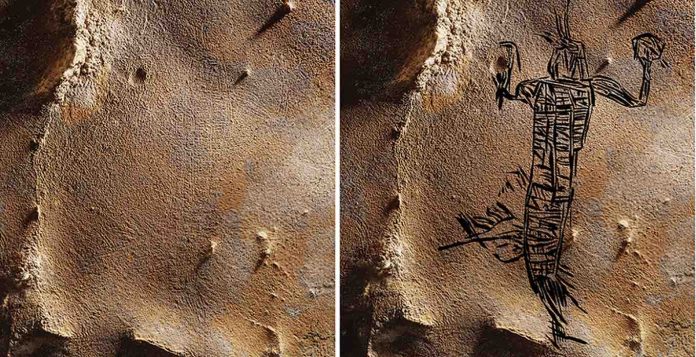
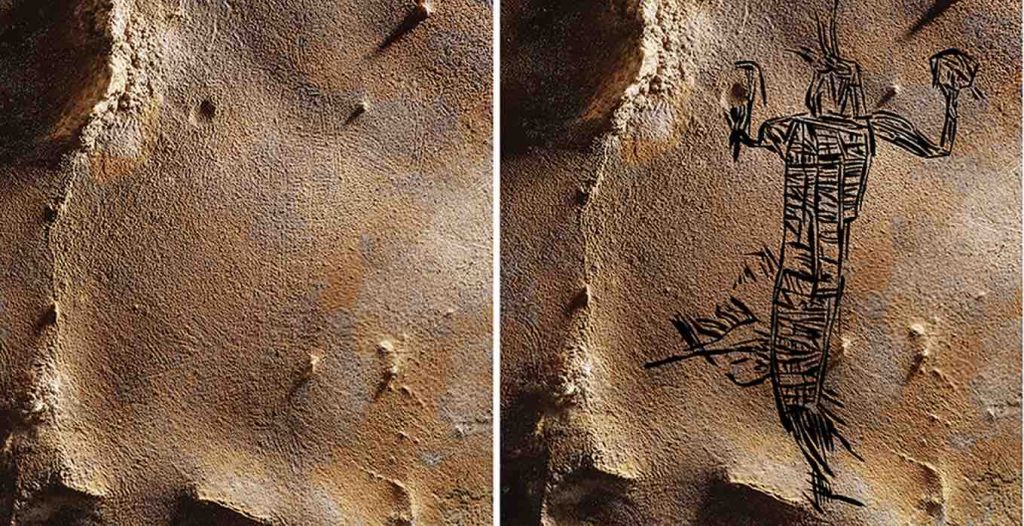
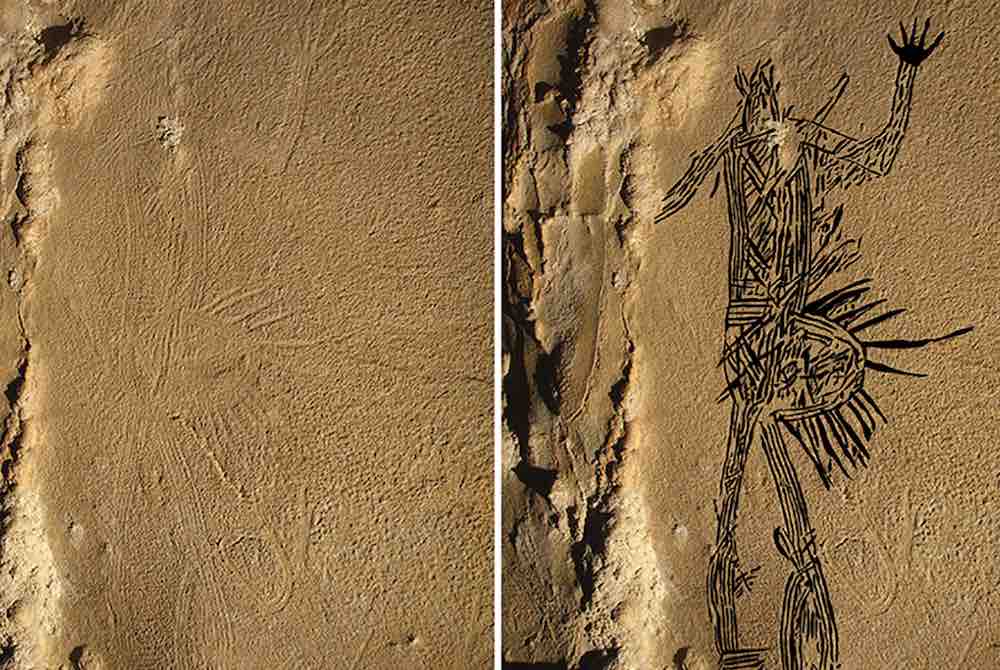
Anthropomorph in regalia from 19th Unnamed Cave in Alabama by S. Alvarez-illustration by J. Simek

New details of our past are coming to light, hidden in the nooks and crannies of the visible world.

Digital analysis of rock surfaces reveals how ghosts of the deep past—this time from almost 2,000 years ago in North America—have been coaxed into the light.

Writing in the journal Antiquity, Professor Jan Simek of the University of Tennessee and colleagues have published images of giant glyphs carved into the mud surface of a low ceiling of a cave in Alabama.

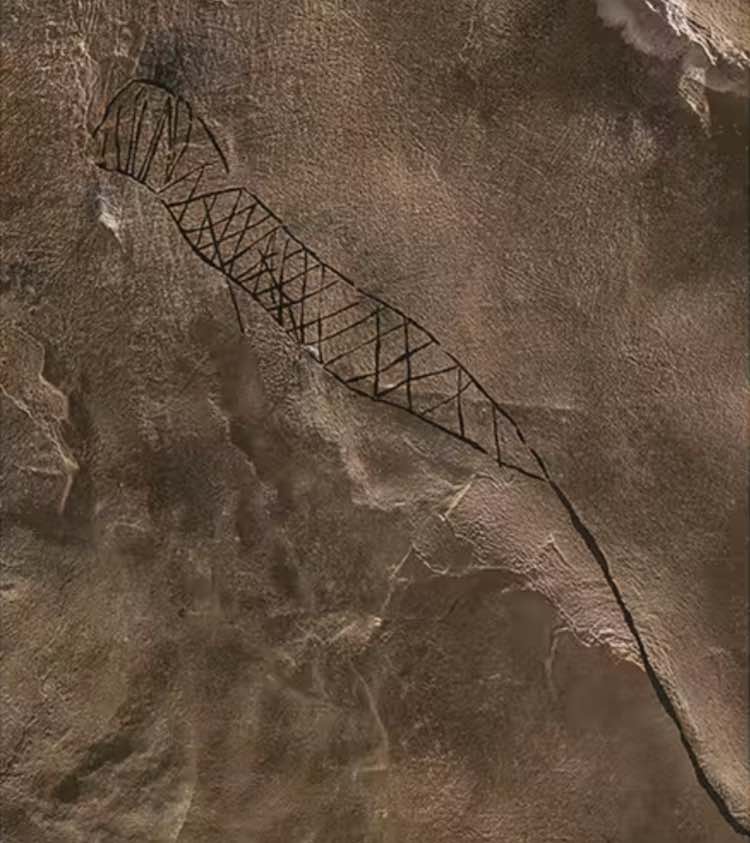
The motifs, which depict human forms and animals, are some of the largest known cave images found in North America and may represent spirits of the underworld.

In the first image below, a drawing of a diamondback rattlesnake, an animal sacred to indigenous people in the south-eastern US, stretches almost 3 meters long.

The next one down shows a human figure just over six feet (1.8m) in length.

Serpent figure with diamond-shaped body markings by S. Alvarez-illustration by J. Simek

In terms of dating the findings, ancient people rejuvenated a light in the cave (a flaming torch of American bamboo) by stubbing it against the cave’s wall. This left a residue that the researchers were able to date with radiocarbon to 133-433 AD. This was also in accord with the age of pottery fragments ancient artists left in the cave.

The problem is seeing the paintings. The cave ceiling is only 60cm high (24 inches), which makes stepping back to view the large images impossible. They were revealed only through a technique called photogrammetry, in which thousands of overlapping photographs of an object or place are taken from different angles and digitally combined in 3D.

Anthropomorph in regalia photographed in Alabama cave by S. Alvarez-illustration by J. Simek

LOOK: Incredible Cave Paintings 8 Miles-Long Revealed Deep in Amazon Forest: The Sistine Chapel of Ancients

Photogrammetry is a cheap technique increasingly used in archaeology to record artifacts, buildings, landscapes, and caves. It allowed Professor Simek’s team to “lower” the cave floor up to 4 meters, enough for the complete motifs to come into view for the first time.

Ancient art in other places

Rock art is found on almost every continent, and the earliest is at least 64,000 years old. It is likely that we know of only a tiny percentage of the rock art created in the past. Pigments can dull and disappear; thin engravings can erode to nothing; and cave walls can crumble or be covered over by crusts of carbonate deposits or mud. Assuming more art does survive, the chances are we may never see it unless we invest in research and new technologies.

Rock art in the dark zone of caves beyond the natural light in cave mouths was only discovered in North America in 1979, more than a century after its discovery in Europe (at Altamira in northern Spain). Some 500 European caves are known to contain rock art from the Pleistocene era between 2.6 million and 11,700 years ago.

POPULAR: Behold The Forgotten Rainbow Cave That’s Said To Have Healing Powers

One example critical to our own research only came to light through digital manipulation of images that we took of it. A hand stencil in the cave of Maltravieso (Estremadura, western Spain) was not immediately apparent when we were searching the cave for suitable samples to date its art.

The stencil had been obscured by the build-up of calcium carbonate deposits. We photographed the area and then used digital image enhancement software which revealed the hand stencil very clearly. Until it re-emerged on our computer screen, the 64,000 year old hand stencil remained undiscovered despite 70 years of intensive study in the cave.

RELATED: Earliest Prehistoric Art Discovered –And it Turns Out to Be Hand Prints Made by Children 170,000 Years Ago

Light engravings – a very common Pleistocene technique – are notoriously difficult to see. Parts of them may come to light using light shone at an oblique angle, which we refer to as raking light. But with a technique known as reflectance transformation imaging (RTI), which is similar to photogrammetry, 3D models can be illuminated from any angle. These can reveal far more complete and complex images. It’s not easy to show this in a couple of stills, but hopefully the two shots below of an engraved bison in a cave in El Castillo in northern Spain give a flavor.

Future archaeological searches for rock art will probably benefit from recent developments in airport security. Full body scanners use far infra-red frequency light that safely penetrates clothing to reveal concealed weapons or contraband, and similar techniques have been used to “see through” layers of prehistoric wall plaster to paintings underneath. When these scanners become small and cheap enough to take into caves, who knows what further ghosts will come to light?

By Paul Pettitt, Professor of Archaeology at Durham University and Alistair Pike, Professor of Archaeological Sciences, University of Southampton. This article is republished from The Conversation under a Creative Commons license. (Read the original article and see more photos)

CARVE OUT a Moment of Awe for Your Friends by Sharing on Social Media…

Your Inspired Weekly Horoscope From Rob Brezsny: A ‘Free Will Astrology’

Our partner Rob Brezsny provides his weekly wisdom to enlighten our thinking and motivate our mood. Rob’s Free Will Astrology, is a syndicated weekly column appearing in over a hundred publications. He is also the author of Pronoia Is the Antidote for Paranoia: How All of Creation Is Conspiring To Shower You with Blessings. (A free preview of the book is available here.)

Here is your weekly horoscope…
FREE WILL ASTROLOGY – Week of May 7, 2022
Copyright by Rob Brezsny, FreeWillAstrology.com
TAURUS (April 20-May 20):
Rapper and entrepreneur Jay-Z tells us, “Don’t ever go with the flow. Instead, be the flow.” Here’s what I think he means: If we go with the flow, we adjust and accommodate ourselves to a force that is not necessarily aligned with our personal inclinations and needs. To go with the flow implies we are surrendering our autonomy. To claim our full sovereignty, on the other hand, we are wise to be the flow. We should create our own flow, which is just right for our unique inclinations and needs. I think this is the right approach for you right now, Taurus. Be the flow.
GEMINI (May 21-June 20):
The Italian language used to be a dialect spoken in Tuscany. That area comprises less than eight percent of the country’s territory. How did such a dramatic evolution happen? Why did a local dialect supersede other dialects like Piedmontese, Neapolitan, Sicilian, and others? In part, it was because three potent 14th-century writers wrote in the Tuscan dialect: Dante Alighieri, Francesco Petrarch, and Giovanni Boccaccio. Another reason: Because Tuscany is centrally located in Italy, its dialect was less influenced by languages in France and other nearby countries. I offer this as a metaphor for you in the coming months. One of your personal talents, affiliations, or inclinations could become more influential and widespread—and have more authority in your life.
CANCER (June 21-July 22):
“Always strive to be more interested than interesting,” said actor and activist Jane Fonda. That may not be easy for you to accomplish in the near future, dear Cancerian. Your curiosity will be at peak levels, but you may also be extra compelling and captivating. So I’ll amend Fonda’s advice: Give yourself permission to be both as interested and as interesting as you can imagine. Entertain the world with your lively personality as you go in quest of new information, fresh perceptions, and unprecedented experiences.
LEO (July 23-Aug. 22):
“When in doubt, act like God,” proclaimed Leo singer-songwriter Madonna. I wouldn’t usually endorse that advice. But I’ll make an exception for you Leos during the next three weeks. Due to a divine configuration of astrological omens, you are authorized to ascend to new heights of sovereignty and self-possession—even to the point of doing a vivid God impersonation. For best results, don’t choose an angry, jealous, tyrannical deity to be your role model. Pattern yourself after a sweeter, funnier, more intimate type of celestial being.

VIRGO (Aug. 23-Sept. 22):
My Virgo friend Amanda told me she felt tight and overwrought. She was overthinking and on the verge of a meltdown. With a rueful sigh, she added, “I adore anything that helps me decompress, unwind, simmer down, stop worrying, lighten up, compose myself, and mellow out.” So I invited her to take deep breaths, close her eyes, and visualize herself immersed in blue-green light. Then I asked her to name influences she loved: people, animals, natural places, music, books, films, art, and physical movements that made her feel happy to be alive. She came up with eight different sources of bliss, and together we meditated on them. Half an hour later, she was as relaxed as she had been in months. I recommend you try a comparable exercise every day for the next 14 days. Be proactive about cultivating tranquil delight.

LIBRA (Sept. 23-Oct. 22):
Author Anne Lamott is renowned for her tender approach to expressing her struggles with addiction, depression, and other tribulations. One of her supreme tests was being a single mother who raised her son Sam. In this effort, she was her usual plucky self. Anytime she hosted playdates with Sam’s young friends at her home, she called on the help of crayons and paint and pens and clay and scissors. “When we did art with the kids, the demons would lie down,” she testified. I recommend a comparable strategy for you in the coming days, Libra. You will have extra power as you tame, calm, or transform your demons. Making art could be effective, as well as any task that spurs your creativity and imagination.
SCORPIO (Oct. 23-Nov. 21):
“My heart has developed a kind of amnesia, where it remembers everything but itself,” writes Scorpio poet Sabrina Benaim. If you suffer a condition that resembles hers, it’s about to change. According to my astrological analysis, your heart will soon not only remember everything; it will also remember itself. What a blissful homecoming that will be—although it may also be unruly and confounding, at least in the beginning. But after the initial surprise calms down, you will celebrate a dramatic enhancement of emotionally rich self-knowledge. You will feel united with the source of your longing to love and be loved.

SAGITTARIUS (Nov. 22-Dec. 21):
“Just because things hadn’t gone the way I had planned didn’t necessarily mean they had gone wrong,” writes Sagittarian author Ann Patchett. Her thought may be helpful for you to meditate on. My guess is that you will ultimately be glad that things didn’t go the way you planned. God or your Higher Self or the Mysterious Forces of Destiny will conspire to lead you away from limited expectations or not-big-enough visions so as to offer you bigger and better blessings.

CAPRICORN (Dec. 22-Jan. 19):
Novelist Jane Austen (1775–1817) confessed she was a “wild beast.” Really? The author who wrote masterfully about the complex social lives of wealthy British people? Here’s my theory: The wild beast in her made her original, unsentimental, humorous, and brilliant in creating her stories. How is your own inner wild beast, Capricorn? According to my reading of the astrological omens, now is an excellent time to give it fun, rich assignments. What parts of your life would benefit from tapping into raw, primal energy?
AQUARIUS (Jan. 20-Feb. 18):
Aquarian poet Jack Gilbert wrote, “I lie in the dark wondering if this quiet in me now is a beginning or an end.” I don’t know how Gilbert solved his dilemma. But I suspect you will soon be inclined to pose a similar question. In your case, the answer will be that the quiet in you is a beginning. Ah! But in the early going, it may not resemble a beginning. You might be puzzled by its fuzzy, meandering quality. But sooner or later, the quiet in you will become fertile and inspirational. You will ride it to the next chapter of your life story.
PISCES (Feb. 19-March 20):
The genre of poetry known as haiku often relies on unexpected juxtapositions. Critic R. H. Blyth observed, “In haiku, the two entirely different things that are joined in sameness are poetry and sensation, spirit and matter.” I suspect your life in the coming weeks will have metaphorical resemblances to haikus. You will be skilled at blending elements that aren’t often combined, or that should be blended but haven’t been. For inspiration, read these haikus by Raymond Roseliep. 1. in the stream / stones making half / the music. 2. horizon / wild swan drifting through / the woman’s body. 3. birthcry! / the stars / are all in place. 4. bathwater / down the drain / some of me. 5. grass / holding the shape / of our night. 6. campfire extinguished, / the woman washing dishes / in a pan of stars.
ARIES (March 21-April 19):
Poet Jennifer Willoughby writes, “I am so busy. I am practicing my new hobby of watching me become someone else. There is so much violence in reconstruction. Every minute is grisly, but I have to participate. I am building what I cannot break.” I wouldn’t describe your own reconstruction process during recent months as “violent” or “grisly,” Aries, but it has been strenuous and demanding. The good news is that you have mostly completed the most demanding work. Soon the process will become more fun. Congratulations on creating an unbreakable new version of yourself!

WANT MORE? Listen to Rob’s EXPANDED AUDIO HOROSCOPES, 4-5 minute meditations on the current state of your destiny — or subscribe to his unique daily text message service at: RealAstrology.com

(Zodiac images by Numerologysign.com, CC license)

SHARE The Wisdom With Friends Who Are Stars in Your Life on Social Media…

“Hiding the truth from ourselves until we are ready to come into the light can be a way to get what we need in our own necessary time.” – David Whyte

Quote of the Day: “Hiding the truth from ourselves until we are ready to come into the light can be a way to get what we need in our own necessary time.” – David Whyte

Photo by: Alexandru Zdrobău

With a new inspirational quote every day, atop the perfect photo—collected and archived on our Quotes page—why not bookmark GNN.org for a daily uplift?

A Total Lunar Eclipse is Coming With a Flower Blood Moon – How to See the Night Sky Spectacle

Japanese Lantern Effect; Larry Johnson, CC license

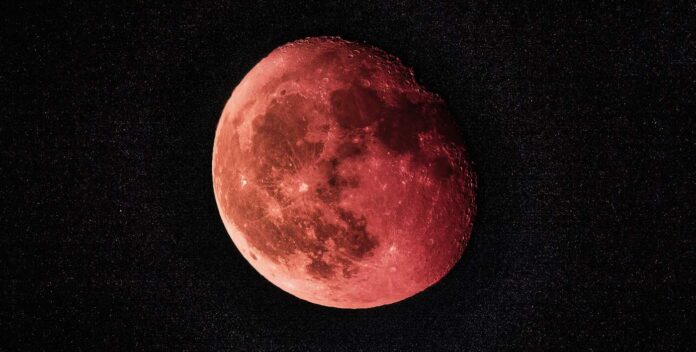
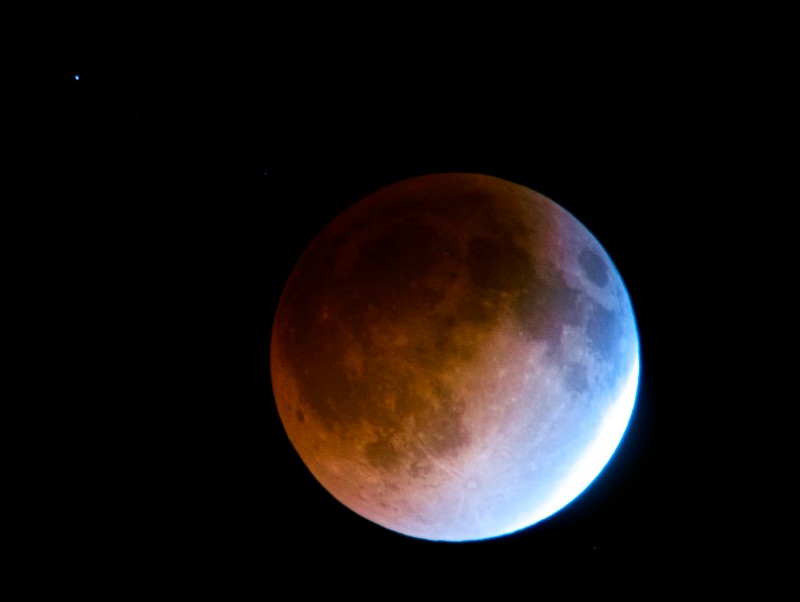
Night sky fans, on May 15-16 look up to see the blood-red spectacle that is a total lunar eclipse.

A lunar eclipse occurs when the full moon slips into the Earth’s shadow—and those watching from South America and the eastern side of North America are in for quite the show.

If you’re an eclipse hunter living in North America’s west, or in Africa or Europe – you’ll also get to experience real beauty in the shape of not a total, but a partial lunar eclipse.

Such an eclipse can be a wonder to see, as it gives viewers the chance to witness the Japanese Lantern Effect—according to Farmer’s Almanac, in such moments the surface of the moon appears the color of glowing copper, gradating down to a beautiful “uneclipsed yellow sliver.”

To get precise times for the eclipse spectacular where you are, TimeandDate.com has you covered. Of course, as this is a lunar rather than a solar eclipse, you don’t need to worry about damaging your eyes by looking up.

And if you miss this one? Not to worry. The next will occur on November 7th-8th, 2022. We’ll be sure to remind you of that event in advance.

MORE: Scientists Discover Origin of Splendid Dunes on Jupiter’s Icy Moon

The great conjunction

A day after the upcoming eclipse, on May 18th you’re in for another mid-month treat, as the rare conjunction of Mars and Neptune is made visible in the pre-dawn moments.

Mars is easy to spot, being tangerine-red, and on the 18th, Neptune will be just 0°34′ north of it—with binoculars or a telescope, you’ll easily be able to go planet hopping and get a closer look at that distant Big Blue Planet.

RELATED: Watch a Stunning Solar Eclipse on Mars in Video Captured By NASA’s Perseverance Rover

See you in the nearest dark sky location near you.

GET Those Warm Clothes Ready and Prepare Friends For Dark Sky Happenings… 

Why Our Brains See Faces Everywhere – And Monkeys Do Too

Car interior by GWC, copyright 2016

It’s so commonplace we barely give it a second thought, but human brains seem hardwired to see human faces where there are none—in objects as varied as the moon, toys, plastic bottles, tree trunks, and vacuum cleaners. Some have even seen an imagined Jesus in cheese on toast.

Until now scientists haven’t understood exactly what the brain is doing when it processes visual signals and interprets them as representations of the human face.

Neuroscientists at the University of Sydney now say how our brains identify and analyze real human faces is conducted by the same cognitive processes that identify illusory faces.

“From an evolutionary perspective, it seems that the benefit of never missing a face far outweighs the errors where inanimate objects are seen as faces,” said Professor David Alais lead author of the study from the School of Psychology.

“There is a great benefit in detecting faces quickly,” he said, “but the system plays ‘fast and loose’ by applying a crude template of two eyes over a nose and mouth. Lots of things can satisfy that template and thus trigger a face detection response.”

CHECK OUT: People Enjoy Surprisingly Deep Conversations With Strangers, And New Study Finds Benefits

This facial recognition response happens lightning fast in the brain: within a few hundred milliseconds.

“We know these objects are not truly faces, yet the perception of a face lingers,” Professor Alais said. “We end up with something strange: a parallel experience that it is both a compelling face and an object. Two things at once. The first impression of a face does not give way to the second perception of an object.”

This error is known as “face pareidolia.” It is such a common occurrence that we accept the notion of detecting faces in objects as ‘normal’—but humans do not experience this cognitive process as strongly for other phenomena.

The brain has evolved specialized neural mechanisms to rapidly detect faces and it exploits the common facial structure as a short-cut for rapid detection.

MORE: Anxiety Can Be a Habit – Which Means We Can Stop it, If We Know How

“Pareidolia faces are not discarded as false detections but undergo facial expression analysis in the same way as real faces,” Professor Alais said.

Not only do we imagine faces, we analyze them and give them emotional attributes.

The findings are published in Proceedings of the Royal Society B.

Levi Meir Clancy

The researchers say this expression analysis of inanimate objects is because as deeply social beings, simply detecting a face isn’t enough.

“We need to read the identity of the face and discern its expression. Are they a friend or a foe? Are they happy, sad, angry, pained?” Professor Alais said.

What the study examined was whether once a pareidolia face is detected, it is subsequently analyzed for facial expression, or discarded from face processing as a false detection.

The research shows that once a false face is retained by the brain it is analyzed for its facial expression in the same way that a real face is.

LOOK: Optimistic Men Have a Better Shot at Less-Stressful, Healthy Aging, Finds New Study

“We showed this by presenting sequences of faces and having participants rate each face’s expression on a scale ranging from angry to happy,” Professor Alais said.

What was intriguing is that a known bias in judging human faces persisted with analysis of inanimate imagined faces.

A previous study undertaken by Professor Alais showed that in a Tinder-like situation of judging face after face, a bias is observed whereby the assessment of the current face is influenced by our assessment of the previous face.

The Blowup

The scientists tested this by mixing up real faces with pareidolia faces—and the result was the same.

“This ‘cross-over’ condition is important as it shows the same underlying facial expression process is involved regardless of image type,” Professor Alais said.

“This means that seeing faces in clouds is more than a child’s fantasy,” he said.

MORE: The Best Way to Eliminate Procrastination is Easier Than You Think, Says New Research

“When objects look compellingly face-like, it is more than an interpretation: they really are driving your brain’s face detection network. And that scowl, or smile; that’s your brain’s facial expression system at work. For the brain, fake or real, faces are all processed the same way.”

Not just a human trait

Scientists have found out we’re not alone in these face recognition experiences—monkey do it too.

That’s according to Jessica Taubert and her colleagues at the US National Institute of Mental Health in Maryland, who trained five rhesus macaques to stare at pairs of photos—one of an inanimate object that humans see faces in, together with a picture of a monkey’s face, or an inanimate object that does not prompt pareidolia in humans.

They measured the length of time the monkeys went about looking at each image; as it turns out, they spent far longer with the illusory faces than with the non-illusory images—and their eye gaze patterns were found to fixate on the eye and mouth areas of the illusory images too, which is just what humans do when viewing real faces.

Their research has been published in Current Biology.

(WATCH the New Scientist video for this story below.)

GIVE Your Friends a Face Full of This Fascinating Phenomenon…

Irish Woman Who Won $145M Lottery Has Given Over Half: ‘I’m Addicted to Helping People’

National Lottery
National Lottery

A self-confessed charity addict won more than $145 million (£115) million in the lottery, allowing her to overdose on her admitted addiction.

Making news headlines around the UK and Ireland, Frances Connelly has already given away ($74 million) £60 million with her husband, “Patty” Patrick, who actually bought the winning lottery ticket.

“Helping people… it just gives you A buzz. I’m addicted to it now,” 55-year-old Connelly said in an interview.

Connelly has been helping people since childhood. She volunteered with St. John’s Ambulance as a child and set up an AIDS helpline while a student in Belfast. She runs several community groups that do a variety of work—from helping refugees to providing seniors with tablets so they can video call their families.

Winning the EuroMillions 2019 jackpot gave her all kinds of ideas on how to help people, and so she used money to immediately set up two professional charities.

MORE: Man Wins 200 Million on the Lottery and Donates Almost All of It to Save the Earth

“So when we first sat down with our cup of tea Patty said, ‘go on then, make your list,'” Connelly said. She said that most of the big money ideas have already been given out, and that she has received a “yearly charity budget” from her husband, who still works at his plastic company, though she’s already spent her way up to 2032’s allocation.

She wasn’t overwhelmed, but rather recalled all those conversations she had had throughout her life about what would you do if you won the lottery; the hierarchy of helping was well established.

“I think I’m at about 10-11 million now directly to charity, as well as the money in the two charities here and in Northern Ireland, but I don’t keep a tally, in fact I don’t keep a tally in case Patty finds it!”

RELATED: MacKenzie Scott Donates $436 Million to Habitat for Humanity, Continuing Her Giving Spree Since Divorce

In terms of personal treats, they did buy a new house—a six-bedroom home in Durham with seven acres of land.

“I’ve never actually had to come to terms with all that money because we’ve had it for such a short amount of time,” she says, adding that most of it has already been pieced out to her large family, given to charity, or placed in safe keeping somewhere.

“If I had any advice for a winner… I’d say money liberates you to be the person that you want to be.” she told the BBC, also reporting on her winnings. “If you’re stupid before you get it, you’re going to be stupid afterwards.”

(WATCH the video for this story below.)

PASS On the Generosity; Share This Story…

Parkinson’s Disease Symptoms ‘Reversed’ by Mini Implant Bringing Hope

PROFESSOR TIM DENISON, OXFORD UNIVERSITY released parkinsons treatment
Professor Tim Denison, Oxford University

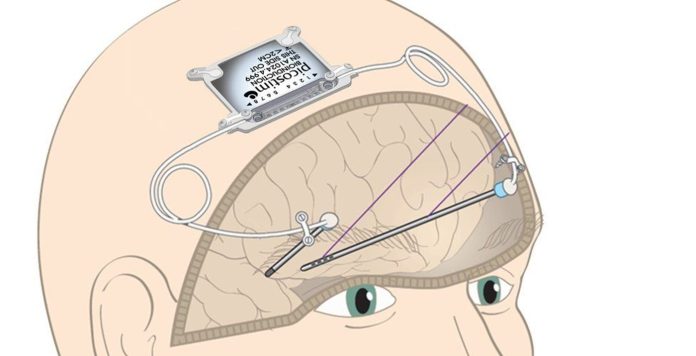
A small implant connected to electrodes inserted into the skull bone is providing huge relief to younger patients living with Parkinson’s disease, such that it could allow sufferers to pick up fine motor skills like playing golf again.

While it isn’t a cure, the implant is a treatment that makes living with Parkinson’s ten times more bearable.

“Before the operation I went for a walk on Boxing Day with my wife and I got 200 yards (182m) from the actual car,” Mr. Tony Howells, who received this implant in 2019, said according to the BBC.

“Then after the operation, which was 12 months later, I went on Boxing Day again and we went for 2.5 miles (4km) and we could’ve went further. It was amazing,” he added.

25 patients like Howells have been selected to participate in the trial at Southmead Hospital in Bristol, England which will conclude next year. Most of the them are older than 50, but those who may be old enough to begin losing memories make them too old for the operation.

MORE: This is the Gene That Could Prevent Parkinson’s Disease

The operation involves inserting the tiny battery within the skull bone and running electrodes down into the center of the brain in the subthalamic nuclei. It then delivers delicate electrical impulses to help stimulate the unaligned neurons to fire correctly, thereby restoring some of the normal muscular function which Parkinson’s disturbs.

Previous implanting operations involved bizarre Tony Stark-like batteries implanted into a patient’s chest. This new method takes just three hours, and could be available for as many as 10% of all Parkinson’s patients.

RELATED: Inspired by Woman Who Could Smell Parkinson’s on Skin, ‘E-Nose’ is Developed by Scientists to Do the Same

“You can’t understand how frustrating [Parkinson’s] is until it happens to you. Just doing your shoelaces up is a major operation… it affects your every day life no end,” said Howells, who is even able to play fine-tuned sports—including, yes, golf—again.

SHARE the Hope; Share This Story…

“You’re something between a dream and a miracle.” – Elizabeth Barrett Browning

Kurt Stocker (CC license)

Quote of the Day: “You’re something between a dream and a miracle.” – Elizabeth Barrett Browning

Photo by: Kurt Stocker

With a new inspirational quote every day, atop the perfect photo—collected and archived on our Quotes page—why not bookmark GNN.org for a daily uplift?

Scientists Make Breakthrough, Stopping the Spread of Cancer by Repurposing Drugs Used for Other Illnesses

Nat89

The treatment of cancer could be revolutionized by the discovery that existing drugs, used to treat depression and heart disease, could reverse key changes in cancer cells that are associated with their ability to spread.

Metastasis, the ability of cancer cells to spread to other parts of the body, is notoriously difficult to treat and is the leading cause of death, meaning that early diagnosis and treatment are vital.

Cancer starts when certain changes take place within the genes inside the nucleus of a cell —the cell’s command center which contains its DNA.

Increased Metastasis

When examined under a microscope cancer cells look abnormal, and for over 150 years scientists have used changes in the size of the cell’s nucleus to diagnose cancer and its severity.

In many types of cancer these size changes are linked to increased metastasis, the ability of cancer cells to spread, reducing the chances of survival. Yet, few treatments specifically target metastasis.

MORE: Scientists Use Sound to Destroy Half of Liver Tumors – and Boosted Immune Systems Cleared Away the Rest

To tackle this, researchers at the Universities of Edinburgh, Montreal, and Eastern Finland screened drugs in the lab that reversed nucleus size changes in cells from three cancers— prostate, colon, and lung.

Existing Drugs

The screen identified many existing cancer drugs, but also uncovered drugs not previously used to treat cancer, including those used for depression, heart disease and killing parasitic worms.

While each drug identified needs to be tested further to check if it is effective in reducing metastasis in cancer patients, the screen identified over a dozen drugs that may prove effective for each of the three cancers.

RELATED: Aggressive Breast Cancer Could Be Tamed By Ingredient Found in Cardamom Spice, Say Scientists

As the drugs can target specific types of cancer cells and are generally non-toxic, they could be added to existing treatments to reduce metastasis without further adding to the existing toxic side effects of chemotherapy.

Reversing Nucleus Size Changes

The researchers found that in each cancer type, a different set of drugs could change the size of the nucleus in the opposite direction as the changes associated with an increase in metastasis.

Understanding why was confusing because size changes went in both directions – increased metastasis followed size increases in prostate and breast cancer and decreases in lung cancer.

CHECK OUT: Screening For Breast Cancer Might Soon Use Simple Blood Test Following Milk Discovery

Research into the causes of metastasis are ongoing, but it occurs when cancer cells break away from the original tumour and travel through the bloodstream to other parts of the body.

Tissue Invasion

A smaller nucleus might make it easier for the cell to squeeze through the walls of blood vessels to enter other tissues while a bigger nucleus might be more malleable to enable such squeezing.

In nearly all the drugs tested, changing the size of the nucleus—in the opposite direction that normally occurs with metastasis—reduced the cell’s ability to move and invade tissues.

These size changes are likely to affect the cell’s speed and ability to move as the nucleus is closely connected to a network of filaments, known as the cytoskeleton, that control its movement.

Similar screens for other types of cancer are likely to identify other drugs that have the potential to target specific types of cancer and reduce metastasis whilst limiting toxic side effects.

This study has been published in ACS Chemical Biology.

Source: University of Edinburgh

HELP Good News Reach Those Who Need to Hear it; Share This Story…

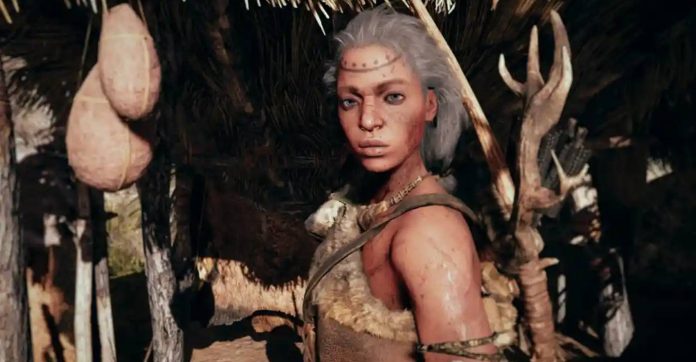
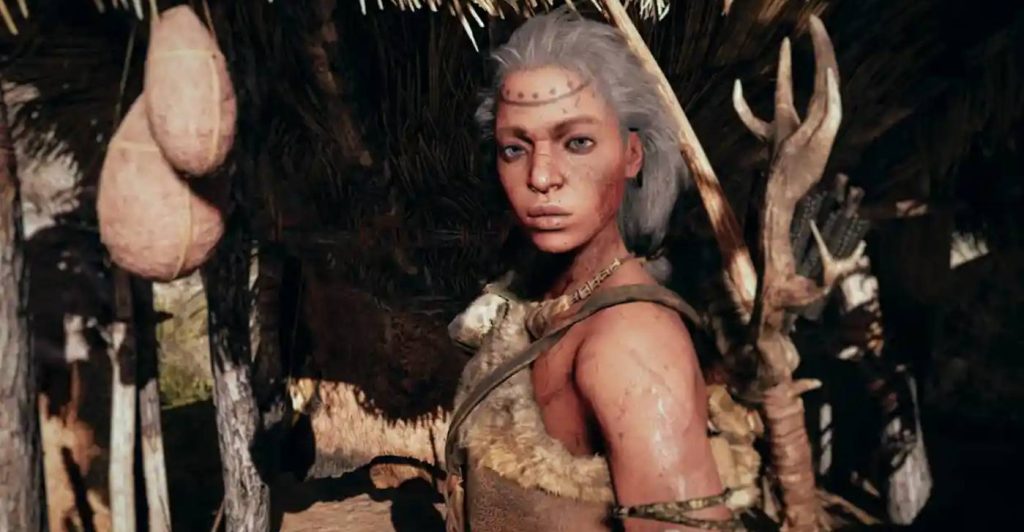
Prehistoric Women Were Also Hunters and Artists, Says New Documentary Hailing These Multi-Talented Moms

Ubisoft
Ubisoft

A new book and accompanying documentary compiles fascinating and recently-collected evidence on the wide variety of work Paleolithic women got up to.

Lady Sapiens: the Woman in Prehistory focuses on a period called the Upper Paleolithic, or about 10,000 to 40,000 BCE, and examines etchings and archeological findings from Peru, Germany, the U.S, and Italy.

Lead author Jennifer Kerner shows that women were not just foraging but also hunting; they were not only caring for children but were also building shelters and traps‚ and making art.

The opening of the documentary focuses on a site in Wilamaya Patjxa, Peru, where a young woman, not even 20 years of age, was placed in a grave alongside hunting tools which included projectile points, hide scrapers, and a flint knife—the Paleolithic equivalent to the most modern Hoyt archery tackle.

It’s not such a surprise that women were involved in a greater variety of tasks than has previously been suggested: Living off the land is anything but “simple” and can be challenging even in the richest of environments. Cooperation between all the people of a community—where both sexes were taking on vital tasks—would have helped lead to human flourishing.

MORE: Prehistoric People Created Art by Flickering Firelight, New Research Reveals

A further ten sites examined around eight-to-twelve thousand years ago in North America yielded similar grave goods, adding a cross-cultural element to the theory of ‘Woman: The Hunter’. There’s substantial evidence that female and male hunters were taking on small game hunting for both aquatic and terrestrial animals, similar to the Martu people in Australia—where women carry their children around while hunting for goanna, a large lizard.

RELATED: Friendship Ornaments From the Stone Age Were Crafted and Worn as a ‘Symbol of connection’

“She [a prehistoric woman] could hunt,” Thomas Cirotteau, one of documentary makers, told the Guardian. “She had a very important economic role. She could do art, and the link between men and women could be very respectful and full of tenderness,” he said.

CHECK OUT: Metal Detector Left Him Stunned After Unearthing Ancient Ring Belonging to the Sheriff of Nottingham

The upcoming documentary uses video game-style graphics by Ubisoft to colorize a Paleolithic world filled with women and men working side-by-side, paralleled by the researchers working side-by-side in the present day to uncover the details of their lives.

The whole documentary is currently available in French with English subtitles.

(WATCH the film below.)

GATHER Up the Good News; Share This Story With Friends…

After Husband Dies 83-Year-old ‘Muddy Mildred’ Runs Her Third Tough Mudder Race to Provide Clean Water

Tough Mudder
Tough Mudder

“Muddy” Mildred Wilson is at it again. The 83-year old with two Tough Mudder races to her name just crushed a third one, becoming the oldest person ever to finish the famous 5K.

The Tough Muddle 5K in Missouri, Wilson’s home state, was honored to feature the octogenarian for the third time—in this event, she was raising money to drill a fresh water well in a rural African village.

GNN has reported on Wilson’s races before: In 2021, when she completed her second 5K, she dedicated it to her late husband Farrell, who was able to see her cross the finish line for her first race in 2019.

“I had watched [her son] do the World’s Toughest Mudder in Vegas,” Mildred said in 2019, according to local news reports. “He asked me last fall if I would like to do one. I said yes, but, if I do it, I want to be able to really do it. Not just be out there.”

Now she’s doing it because her son, Danny Wilson, who first inspired her to start doing the Tough Mudders, and is the leader of the youth group working to raise money to drill wells in Africa.

“I will get muddy so others can drink clean water. I would love for you to help me make the vision a reality!!!” Mildred wrote on the GoFundMe page.

Tough Mudder

The village in question has a single water hole, about the same color as the Tough Mudder ponds that Wilson must crawl through early on in the 5K. If it doesn’t rain, her son explains in a video, the villagers must travel over a literal mountain range to find the next one.

MORE: ‘Fantastic Grandmas’ Have Been Spending Retirement Photographing Venomous Sea Snakes for Science

So far, Danny and Mildred have raised $650 of their $5,000 target, with the Tough Mudder organization donating $500.

RACE Positivity Over to Those News Feeds; Share Her Inspiring Story…

Morel Mushrooms Have Finally Been Reliably Cultivated Indoors For the First Time

The Danish Morel Project

Spring is fully waking up the woodlands of the Northern Hemisphere, which means under apple, elm, and sycamore trees—one might find themselves a tasty treat.

Black morel mushrooms, in the world of edible fungus, are highly prized and are for North Americans what the boletus is for the Europeans. However, before long one might be able to find them in a store, as a Danish biologist has found a way to reliably cultivate morels indoors, something that’s never been done before.

As production is at about 20 pounds per square yard per year, a commercially grown morel would still be highly coveted, and demand a large price—but probably not the $230 per kilogram they go for today. Yet the work at the Royal Veterinary and Agricultural University and the University of Copenhagen that’s gone in to produce this mycocultural breakthrough has been going on for four decades, so suddenly that the seemingly-small amount seems celebratory.

The universities, in a video presentation, detail that the controlled cultivation is so well-developed that commercial production can commence as soon as automation of the process can be sorted out.

The brains behind the breakthrough are a pair of biologists and identical twins: Jacob and Karsten Kirk, who first took up the project in 1986 when they looked to continue improving on an existing American patent for cultivating morels.

MORE: Research Suggests Mushrooms Talk to Each Other With a Vocabulary of 50 ‘Words’

“[W]e have made exciting trips for black morels to relevant locations, mainly in Denmark, but also in Sweden, Austria, Switzerland and France, almost every spring,” the Kirk brothers write on their website, The Danish Morel Project. “In addition, we have obtained a good number of fruit bodies, mainly from Turkey.”

“The combined efforts in this area resulted in the isolation of mycelium [spores] from as many as 347 different fruit bodies up to May 2021,” they say. From all these different genetic individuals, they identified a few that were suitable for mass production.

One of the major problems with growing wild mushrooms is that it’s not as simple as putting down roots which produce growth. The mycelium, which are kind of like roots, act in different ways. When it’s time to fruit for example, a part of the fungal lifeform called a sclerotium will either re-burrow and form a new mycelium complex, or emerge to form the fruiting body.

It’s very easy, Smithsonian details, to force a sclerotium to make more mycelium, but it’s very difficult to make it form a mushroom fruit.

CHECK OUT: Dutch Man Invents Coffin That Turns Bodies Into Mushrooms: ‘We are nutrients, not waste’

Therefore just about only one morel specimen collected, variant 195, responded to the conditions of temperature and humidity consistently to create a fruiting body when the Kirks wanted it.

Beyond that, little is known about how these two fungimancers managed to crack this centuries-old mystery, as their method is strictly kept secret, and under patent law.

GROW the Good News; Share This Story With the ‘Fun Guys’ in Your Life…

“They can be proud to be Mexican, proud of their heritage, and that they have a peaceful, inclusive, vibrant country playing a role in the world.” – Enrique Pena Nieto (on Cinco de Mayo)

Quote of the Day: “They can be proud to be Mexican, proud of their heritage, and that they have a peaceful, inclusive, vibrant country playing a role in the world.” – Enrique Peña Nieto, 57th President (Happy Cinco de Mayo!)

Photo: by Ivan Diaz

With a new inspirational quote every day, atop the perfect photo—collected and archived on our Quotes page—why not bookmark GNN.org for a daily uplift?

Scientists Figure Out the Origin of Splendid Dunes on Jupiter’s Icy Moon

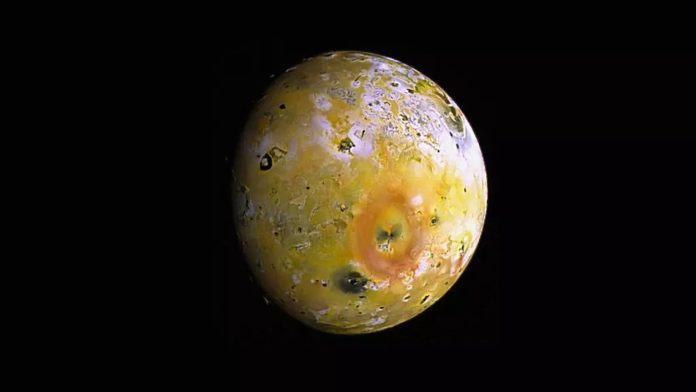
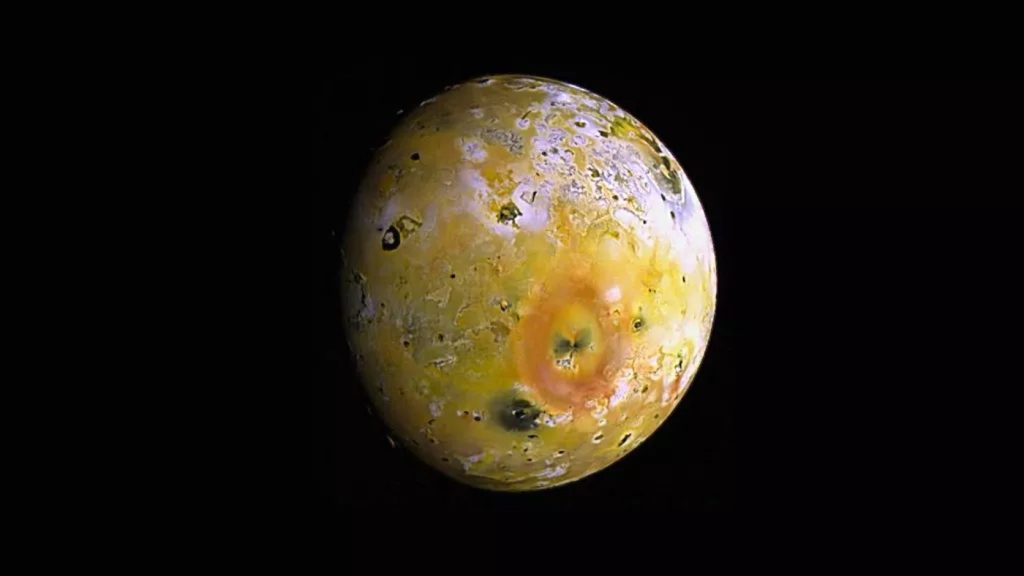
A view of Io captured by the Galileo spacecraft. (Image credit- NASA_JPL-Caltech) Io moon jupiter
NASA/JPL-Caltech/Rutgers

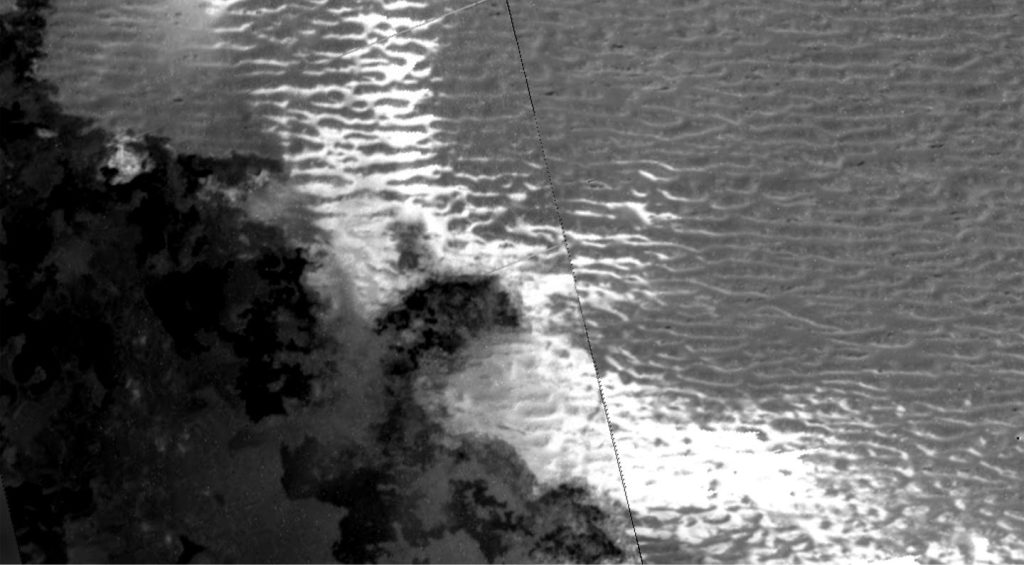
Scientists have long wondered how Jupiter’s innermost moon, Io, has meandering ridges as grand as any that can be seen in movies like Dune.

Now, a Rutgers research study has provided a new explanation of how dunes can form even on a surface as icy and roiling as Io’s.

The research is based on a study of the physical processes controlling grain motion coupled with an analysis of images from the 14-year mission of NASA’s Galileo spacecraft, which allowed the creation of the first detailed maps of Jupiter’s moons. The new study is expected to expand our scientific understanding of the geological features on these planet-like worlds.

“Our studies point to the possibility of Io as a new ‘dune world,’” said first author George McDonald, a postdoctoral researcher in Rutgers’ Earth and Planetary Sciences Department. “We have proposed, and quantitatively tested, a mechanism by which sand grains can move, and in turn dunes could be forming there.”

Current scientific understanding dictates that dunes, by their nature, are hills or ridges of sand piled up by the wind. And scientists in previous studies of Io, while describing its surface as containing some dune-like features, concluded the ridges could not be dunes since the forces from winds on Io are weak due to the moon’s low-density atmosphere.

Io captured by the Galileo spacecraft/ NASA; JPL-Caltech

“This work tells us that the environments in which dunes are found are considerably more varied than the classical, endless desert landscapes on parts of Earth or on the fictional planet Arrakis in ‘Dune,’” McDonald said.

CHECK OUT: Scientists Discover a Quantum Imprint Within Black Hole’s Gravity That Finally Resolves Hawking’s Paradox

The Galileo mission, which lasted from 1989 – 2003, logged so many scientific firsts that researchers to this day are still studying the data it collected. One of the major insights gleaned from the data was the high extent of volcanic activity on Io – so much so that its volcanoes repeatedly and rapidly resurface the little world.

RELATED: Hubble Telescope Spots Most Distant Star Ever Seen on Record, From 12 Billion Light Years Away

Io’s surface is a mix of black solidified lava flows and sand, flowing “effusive” lava streams, and “snows” of sulfur dioxide. The scientists used mathematical equations to simulate the forces on a single grain of basalt or frost and calculate its path. When lava flows into sulfur dioxide beneath the moon’s surface, its venting is “dense and fast moving enough to move grains on Io and possibly enable the formation of large-scale features like dunes,” McDonald said.

Once the researchers devised a mechanism by which the dunes could form, they looked to photos of Io’s surface taken by the Galileo spacecraft for more proof. The spacing of the crests and the height-to-width ratios they observed were consistent with trends for dunes seen on Earth and other planets.

MORE: Watch a Stunning Solar Eclipse on Mars in Video Captured By NASA’s Perseverance Rover

“Work like this really allows us to understand how the cosmos works,” said Lujendra Ojha, a co-author and an assistant professor in the Department of Earth and Planetary Sciences. “In the end, in planetary science, that is what we are trying to do.”

The related study has been published in the journal Nature Communications

Source: Rutgers 

SHARE This Far Out News With All Your Pals…

Watch How Biologists Rescued Baby Eagle That Fell Out of Nest and Down a Cliff

ABC/Explore
ABC/Explore

Following last week’s rescue mission, a baby eagle is now safely tucked up inside its nest on the cliffs of Catalina Island.

The California-born eaglet was accidentally kicked out of the nest by an adult eagle while sleeping.

This eaglet, along with the others being raised on the island, are part of a 40-year reintroduction program. And a rescue squad was soon called in to help it.

MORE: One-eyed Cat Missing For 5 Years Shows Up on Offshore Oil Rig Baffling Owners

“It’s about an hour hike from the nearest road,” wildlife biologist Peter Sharpe told ABC. From there, it took another thirty minutes to help the eaglet back where it belonged. “I… checked its legs and its wings to make sure there wasn’t any obvious breaks. Internal injuries, I can’t say, but they’re pretty resilient,” said Sharpe.

(WATCH the ABC and Explore.org video of the rescue below.)

SHARE This Daring Eaglet Mission With Chums…

World’s Largest Oyster Restoration Is Big Success – Fulfilling Virginia’s Promise to Chesapeake Bay Rivers

Released Granite rock is placed in the Piankatank River to create oyster reef. (Patrick Bloodgood_ U.S. Army Corps of Engineers)
Granite rocks being placed in the Piankatank River to form an oyster reef/ Patrick Bloodgood; U.S. Army Corps of Engineers

Biologists working to restore the Chesapeake Bay oyster populations are claiming the biggest success in human history, as whole reefs of oysters return to more than 400 acres of estuarine ecosystem.

Nowhere is this success more highlighted than along the Piankatank River, where The Nature Conservancy Virginia Chesapeake Bay Program has taken the first steps to restoring what used to be 7,000 acres of oyster reefs.

The Piankatank is what’s known as a “trap estuary,” where nutrient quality and calm waters mean oysters can flourish without their larvae being washed out into the bay. It’s just one of several major tributaries that flow into the bay which are experiencing a renaissance in oyster life.

To date, four of six out of Virginia’s major tributaries have met their oyster restoration goals. Director of the Conservancy’s bay program called it “the largest completed oyster restoration project on the planet” when he spoke to The Virginia Mercury.

“Water quality and fish is really what it boils down to,” said Director Andy Lacatell. “Oysters improve water quality, and they provide habitat for fish and crabs and other critters that are both recreationally and commercially important.”

LOOK: Red Lobster Workers Spots Rare Breed: ‘1 in 30 Million’ Calico Lobster Will Swim Easy At Virginia Sanctuary

In 2014, biological plummeting in the Chesapeake, the nation’s largest estuary, saw the six watershed states, the EPA, and the Chesapeake Bay Commission come together to form the Bay Watershed Agreement, which would aim to restore oyster populations in the 10 major feeder rivers by 2025.

MORE: Scientists Work to Turn the Tide of Oyster and Seagrass Decline in Chesapeake Bay, Often by Hand

In VA, the Great Wicomico, Piankatank, and Lafayette rivers have all been restored as per the plan, with only the Lynnhaven and lower York rivers remaining. State Governor Ralph Northam voluntarily added the Eastern Branch of the Elizabeth River to Virginia’s list last year.

The Virginia Marine Resources Commission has been responsible for most of the reef-building, which included 100 acres just last year. The Virginia Institute of Marine Sciences is also a major participant in oyster restoration, creating “oyster castles” in other rivers like the Rappahannock and the Elizabeth, and helping the bivalves reach the more advanced ages of 5-7 years—when the animal’s fecundity becomes greatest.

CHECK OUT: Mussels Can Help Filter Microplastics Out of Our Oceans Without Any Harm to the Molluscs

Experts believe that the methods currently being employed, such as using concrete debris to create the base for oysters to cling on to, and the rate at which reefs are being restored, will see the state meet its 2025 targets. That’s good news indeed.

POPULATE Those News Feeds With Reviving Stories Like This One…

New MRI Machine Offers Breakthrough Advancements in Almost Every Aspect

Ohio State University

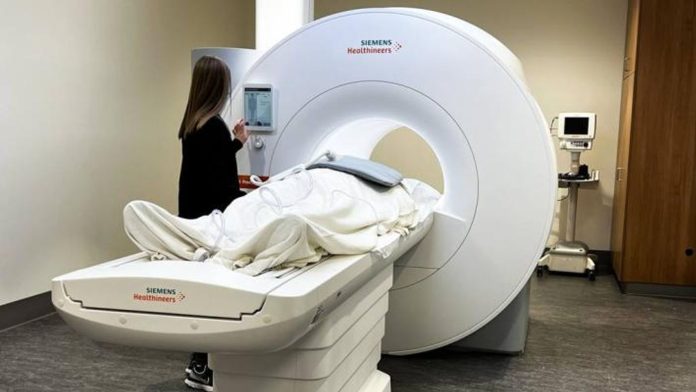
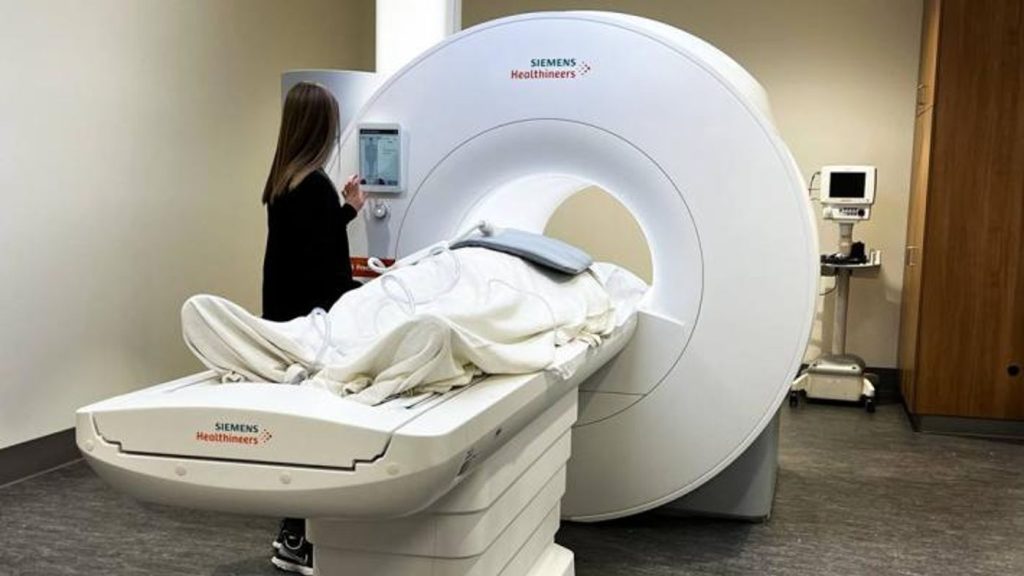
Ohio State University’s colleges of medicine and engineering have partnered with Siemens to create a new MRI machine that overcomes key limitations of the existing machine.

Their new new design opens up the use of the MRI to those with implants, with obesity, and other circumstances that prohibit the machine’s use.

Critical for achieving accurate diagnoses, a Magnetic Resonance Imager (MRI) has several critical limitations. For those with implants like pacemakers, the MRI cannot be used. Existing machines can’t see inside human lungs, they expose patients—especially repeat patients with chronic conditions—to significant amounts of radiation. They’re expensive to install and run, and for those in the highest echelons of the body-mass index, they can’t fit into the opening.

The 0.55T MAGENTOM Free.Max solves all five of these drawbacks, thanks to the work of Orlando Simonetti, a research director of cardiovascular magnetic resonance at OSU, and Rizwan Ahmad, assistant professor of biomedical engineering.

The secret behind the design is a lower resonance level. MRIs typically have magnetic field strengths of 1.5 or 3.0 Tesla; the Free.Max is much lower at 0.55 Tesla.

1: It can image the lungs

Imaging lungs is typically done with or in conjunction with nuclear imaging or X-ray CT scans, dosing the patient in radiation.

MORE: From Terrifying to Terrific: Man Redesigns MRI Machine to Delight Children Instead of Scare Them

“The air in the lungs cancels out the MRI signal at higher field strength; however, at lower field, there’s potential to see lung tissue more clearly with the MRI,” Simonetti told his university press. “We were looking for ways to improve the quality of images in these patients, and lower magnetic field strength could offer an advantage.”

This will be key for patients with cystic fibrosis pulmonary hypertension, heart failure, and even COVID-19.

2: It’s cheaper

Having a strength of 1.5 or 3.0, like the currently available MRI machines, means they are expensive to build, buy, install, and operate.

This often excludes the possibility of having an MRI machine in most outpatient facilities, and some hospitals—especially in lower income or rural areas. A 2018 study found that only 1% of rural Canadian hospitals even had an MRI machine.

RELATED: FDA Approves ‘World’s First’ Portable Bedside MRI Scanner Costing 20 Times Less Than Current Systems

A medical imaging company quotes a price of a modern high-powered MRI at anywhere from $150,000 to $1 million, with a daily operating energy expenditure of 10x the normal American household’s energy consumption.

3: It can image hearts with implants

“Many of our patients have pacemakers or defibrillators and while many of those devices are now safe for MR scanning, the metal in them can distort the magnetic field and corrupt the image quality,” said Simonetti.

“There’s no doubt in my mind that low-field MRI will play an important role in the future and will become more mainstream.”

4: It can cut down on radiation exposure from X-rays

Children with congenital heart disease often undergo MRI-guided, X-ray heart catheterizations several times in their lives, and the lower field strength of the Free.Max means that these children, like patients with lung disease, aren’t overdosed with harmful radiation from too many X-rays.

CHECK OUT: Bionic Pancreas for Type 1 Diabetes Gets ‘Breakthrough’ Designation From FDA

Beyond these four big improvements, the Free.Max also has the largest opening (31 inches) of any MRI machine, expanding its use to more obese patients—and easing the burden for claustrophobic folks. A win-win-win-win for all.

(WATCH the video for this story below.)

SHARE This Breakthrough in Innovation With Friends…