










All News - Page 382 of 1715 - Good News Network
Home Blog Page 382

Humans Can Fight Viruses By Breathing Deeply –Harvard Study Shows How it Works

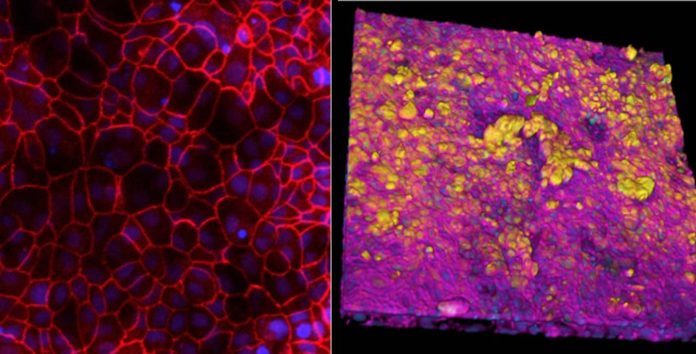
Microstructure of human lung alveoli by Wyss Institute at Harvard University

The average person will take more than 600 million breaths over the course of their life. Every breath stretches the lungs’ tissues with each inhale and relaxes them with each exhale. The mere motions of breathing are known to influence vital functions of the lungs, including the maintenance of healthy tissue.

Now, new research from the Wyss Institute at Harvard University has revealed that this constant pattern of stretching and relaxing does even more—it generates immune responses against invading viruses, such as COVID-19.

Using a ‘Human Lung Chip’ that replicates the structures and functions of the lung air sac, or “alveolus,” the research team discovered that by applying mechanical forces that mimic breathing motions, they could suppress influenza virus replication, while activating innate protective immune responses.

“This research demonstrates the importance of breathing motions for human lung function, including immune responses to infection, and shows that our Human Alveolus Chip can be used to model these responses in the deep portions of the lung, where infections are often more severe and lead to hospitalization and death,” said co-first author Haiqing Bai, Ph.D., a Wyss Technology Development Fellow at the Institute. The results were published this week in Nature Communications.

Creating a flu-on-a-chip

As the early phases of the COVID-19 pandemic made painfully clear, the lung is a vulnerable organ where inflammation, in response to infection, can generate a “cytokine storm” that can have deadly consequences. However, the lungs are also very complex, and it is difficult to replicate their unique features in the lab. This complexity has hindered science’s understanding of how the lungs function at the cell and tissue levels, in both healthy and diseased states.

RELATED: Researchers Find New Strategy for Preventing Clogged Arteries

The Wyss Institute’s Human Organ Chips were developed to address this problem, and have been shown to faithfully replicate the functions of many different human organs in the lab, including the lung. As part of projects funded by the NIH and DARPA since 2017, Wyss researchers have been working on replicating various diseases in Lung Airway and Alveolus Chips to study how lung tissues react to viruses that have pandemic potential, and test potential treatments.

During his Ph.D. training, Bai studied diseases that affect the tiny air sacs deep inside the lungs where oxygen is rapidly exchanged for carbon dioxide. That foundation prepared him to tackle the challenge of recreating a flu infection in an Alveolus Chip so that the team could study how these deep lung spaces mount immune responses against viral invaders.
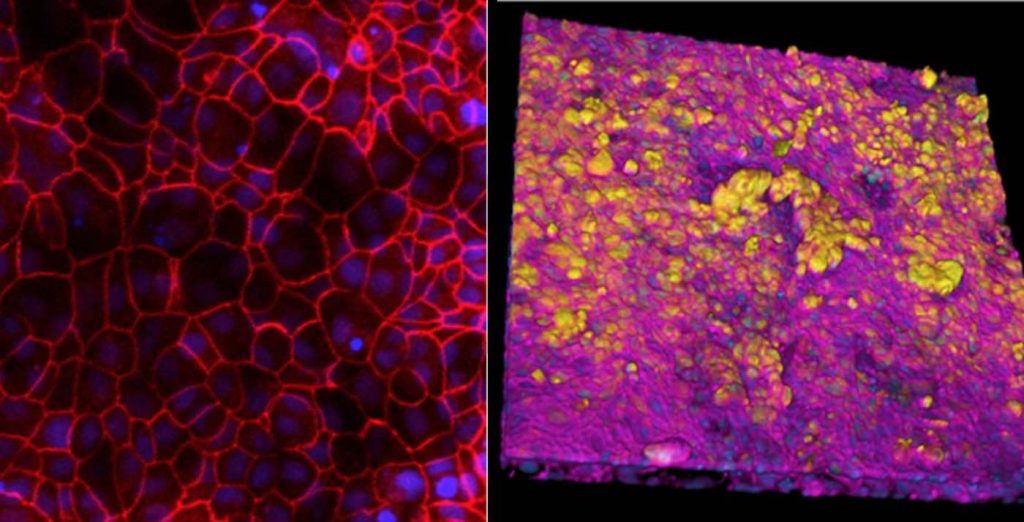
Microstructure of human lung alveoli by Wyss Institute at Harvard University

Bai and his team first lined the two parallel microfluidic channels of an Organ Chip with different types of living human cells – alveolar lung cells in the upper channel and lung blood vessel cells in the lower channel – to recreate the interface between human air sacs and their blood-transporting capillaries. To mimic the conditions that alveoli experience in the human lung, the channel lined by alveolar cells was filled with air while the blood vessel channel was perfused with a flowing culture medium containing nutrients that are normally delivered via the blood. The channels were separated by a porous membrane that allowed molecules to flow between them.

Previous studies at the Wyss Institute have established that applying cyclical stretching to Alveolus Chips to imitate breathing motions produces biological responses that mimic those observed in vivo. This is accomplished by applying suction to hollow side chambers adjacent to the cell-lined fluidic channels to rhythmically stretch and relax the lung tissues by 5%, which is what human lungs typically experience with every breath.

POPULAR: 10 Super Food Combinations to Improve your Health – Like Apples with Leafy Greens to Lower Blood Pressure

When the team infected these “breathing” Alveolus Chips with H3N2 influenza by introducing the virus into the air channel, they observed the development of several known hallmarks of influenza infection, including the breakdown of junctions between cells, a 25% increase in cell death, and the initiation of cellular repair programs. Infection also led to much higher levels of multiple inflammatory cytokines in the blood vessel channel including type III interferon, a natural defense against viral infection that is also activated in in vivo flu infection studies.

In addition, the blood vessel cells of infected chips expressed higher levels of adhesion molecules, which allowed immune cells including B cells, T cells, and monocytes in the perfusion medium to attach to the blood vessel walls to help combat the infection. These results confirmed that the Alveolus Chip was mounting an immune response against H3N2 that recapitulated what happens in the lung of human patients infected with flu virus.

Focus on your breath

The team then carried out the same experiment without mechanical breathing motions. To their surprise, chips exposed to breathing motions ​​had 50% less viral mRNA in their alveolar channels and a significant reduction in inflammatory cytokine levels compared to static chips. Genetic analysis revealed that the mechanical strain had activated molecular pathways related to immune defense and multiple antiviral genes, and these activations were reversed when the cyclical stretching was stopped.

“This was our most unexpected finding – that mechanical stresses alone can generate an innate immune response in the lung,” said co-first author Longlong Si, Ph.D., a former Wyss Technology Development Fellow who is now a Professor at the Shenzhen Institute of Advanced Technology in China.

Knowing that sometimes the lungs experience greater than 5% strain, such as in chronic obstructive pulmonary disorder (COPD) or when patients are put on mechanical ventilators, the scientists increased the strain to 10% to see what would happen. The higher strain caused an increase in innate immune response genes and processes, including several inflammatory cytokines.

RELATEDThor Lookalike Who Became Superfit Despite Cystic Fibrosis Can Now Laugh for First Time After Life-changing Drug

“Because the higher strain level resulted in greater cytokine production, it might explain why patients with lung conditions like COPD suffer from chronic inflammation, and why patients who are put on high-volume ventilators sometimes experience ventilator-induced lung injury,” Si explained.

The scientists then went a step further, comparing the RNA molecules present in cells within strained vs. static Alveolus Chips to see if they could pinpoint how the breathing motions were generating an immune response. They identified a calcium-binding protein, called S100A7, that was not detected in static chips but highly expressed in strained chips, suggesting that its production was induced by mechanical stretching. They also found that increased expression of S100A7 upregulated many other genes involved in the innate immune response, including multiple inflammatory cytokines.

Based on this promising result, the team then infected strained Alveolus Chips with the virus H3N2 and administered the drug azeliragon at its therapeutic dose two hours after infection.

This drug significantly blocked the production of inflammatory cytokines – an effect that was further enhanced when they added the antiviral drug molnupiravir (which was recently approved for patients with COVID-19) to the treatment regimen.

However, while azeliragon is a promising anti-inflammatory drug, the scientists warned that more studies are needed to determine a safe and effective treatment regimen in humans.

Meanwhile, robust breathing is something we can all do throughout any season to promote good heath.


Hubble Telescope Spots Most Distant Star Ever Seen on Record, From 12 Billion Light Years Away

Credit: NASA, ESA, Brian Welch of JHU, and Dan Coe of STScI

NASA’s Hubble Space Telescope has established an extraordinary new benchmark: detecting the light of a star that existed within the first billion years after the universe’s birth in the big bang – the farthest individual star ever seen to date.

The find is a huge leap further back in time from the previous single-star record holder; detected by Hubble in 2018. That star existed when the universe was about 4 billion years old, or 30 percent of its current age.

The newly detected star is so far away that its light has taken 12.9 billion years to reach Earth, so we are seeing it as it was when the universe was only 7 percent of its current age. The smallest objects previously seen at such a great distance are clusters of stars, embedded inside early galaxies.

“We almost didn’t believe it at first, it was so much farther than the previous most-distant, highest redshift star,” said astronomer Brian Welch of the Johns Hopkins University in Baltimore, lead author of the paper describing the discovery in the journal Nature. Scientists use the word “redshift” because as the universe expands, light from distant objects is stretched or “shifted” to longer, redder wavelengths as it travels toward us.

“Normally at these distances, entire galaxies look like small smudges, with the light from millions of stars blending together,” said Welch. “The galaxy hosting this star has been magnified and distorted by gravitational lensing into a long crescent that we named the Sunrise Arc.”

After studying the galaxy in detail, Welch determined that one feature is an extremely magnified star that he called Earendel, which means “morning star” in Old English. The discovery holds promise for opening up an uncharted era of very early star formation.

“Earendel existed so long ago that it may not have had all the same raw materials as the stars around us today,” Welch explained. “Studying Earendel will be a window into an era of the universe that we are unfamiliar with, but that led to everything we do know.”

“It’s like we’ve been reading a really interesting book, but we started with the second chapter, and now we will have a chance to see how it all got started,” Welch said.

POPULAR: Scientists Discover a Quantum Imprint Within Black Hole’s Gravity That Finally Resolves Hawking’s Paradox

When Stars Align

The research team estimates that Earendel is at least 50 times the mass of our Sun and millions of times as bright, rivaling the most massive stars known.

Credit: NASA, ESA, Brian Welch (JHU), and Dan Coe (STScI)

But even such a brilliant, very high-mass star would be impossible to see at such a great distance without the aid of natural magnification by a huge galaxy cluster, WHL0137-08, sitting between us and Earendel. The mass of the galaxy cluster warps the fabric of space, creating a powerful natural magnifying glass that distorts and greatly amplifies the light from distant objects behind it.

RELATED: Gigantic Planet Found Hidden in Plain Sight

Thanks to the rare alignment with the magnifying galaxy cluster, the star Earendel appears directly on, or extremely close to, a ripple in the fabric of space. This ripple, which is defined in optics as a “caustic,” provides maximum magnification and brightening. The effect is analogous to the rippled surface of a swimming pool creating patterns of bright light on the bottom of the pool on a sunny day. The ripples on the surface act as lenses and focus sunlight to maximum brightness on the pool floor.

Watch the excited scientists in a Reuters video below… [Note: GNN does not endorse any ads that may show with the video]

This caustic causes the star Earendel to pop out from the general glow of its home galaxy. Its brightness is magnified a thousandfold or more. At this point, astronomers are not able to determine if Earendel is a binary star, though most massive stars have at least one smaller companion star.

Confirmation with Webb

Astronomers expect that Earendel will remain highly magnified for years to come. It will be observed by NASA’s new James Webb Space Telescope. Webb’s high sensitivity to infrared light is needed to learn more about Earendel, because its light is stretched (redshifted) to longer infrared wavelengths due to the universe’s expansion.

CHECK OUT: Astronaut Brings Ashes and Photos of 9/11 Victim to Space to Fulfill His Lifelong Dream of Orbiting For NASA

“With Webb we expect to confirm Earendel is indeed a star, as well as measure its brightness and temperature,” said co-author Dan Coe at Baltimore’s Space Telescope Science Institute, who made the discovery using the data collected.

These details will narrow down its type and stage in the stellar lifecycle, with scientists expecting it to be a “rare, massive metal-poor star,” Coe said.

Earendel’s composition will be of great interest for astronomers, because it formed before the universe was filled with the heavy elements produced by successive generations of massive stars. If follow-up studies find that Earendel is only made up of primordial hydrogen and helium, it would be the first evidence for the legendary Population III stars, which are hypothesized to be the very first stars born after the big bang. While the probability is small, Welch admits it is enticing all the same.

“With Webb, we may see stars even farther than Earendel, which would be incredibly exciting,” Welch said. “We’ll go as far back as we can. I would love to see Webb break Earendel’s distance record.”

SHARE the Astronomical Discovery on Social Media…

Vast Majority of Dog Owners Believe They Can Read Their Pooch’s Mind

Celebrated on April 11th, National Pet Day celebrates the joy that pets bring to our lives—and, for many, it’s a psychic connection.

In fact, nearly three-quarters of pup parents claim they can read their furry companions’ minds.

The new poll results coincide with the annual calendar day founded in 2006 by animal welfare advocate Colleen Paige, who also wanted to encourage adoptions.

Of the 2,000 dog owners surveyed, 74% are confident they understand what their pet wants at any given time. And, 71% feel their dog understands them, too.

Half of respondents recalled that it took about six months to get to that point, after bonding activities like playing fetch with a ball or taking them on walks.

Communication skills began while teaching some of the easiest commands for dogs: “sit,” “lie down” or “stay.” Other commands involved disciplining their furry friend, and took longer: “down,” “dinnertime” and “no.”

Most dog owners know their pets so well that even 70% consider their canines their mini-me because they have similar personalities.

RELATED: ‘Puppy Dog Eyes’ Are an Evolutionary Trait Developed So Dogs Can Better Capture Our Hearts

Conducted by OnePoll on behalf of Ollie, the survey also asked respondents to describe their dog’s funny or quirky characteristics and traits.

SWNS

When it comes to personalities, owners would likely describe them as “The Guardian” (protective, imposing, attached), “The Family Dog” (easy to get along with, great with children, gentle) or “The Class Clown” (goofy, entertaining, clumsy).

84% of parents with Guardian dogs or Dedicated Workers (reliable, obedient, high-energy) believe they have some telepathic skills to know what their dog wants.

Similarly, 72% of all pup parents think they know what their dog will do before they do it. And, 62% of those who have “The Class Clown” insist they know what goofy antics their dog will do next, with two-thirds of those owners saying they are also as comical as their “Class Clown” canines.

WATCH: Six Puppies Are All Determined to Fit Into One Small Bucket – And They Succeed

66% of those who have “The WatchDog” (vigilant, alert, barks a lot) or “The Independent Thinker” (intelligent, inquisitive, likes to do things on their own) attest to knowing what thoughts run through their furry friend’s head.

Half of those who have “Social Butterfly” pups (high-energy, loves attention, outgoing) see their own personality as matching their pup’s friendliness.

Being in-sync with their dogs comes in handy, too. Knowing what comes next with their furry friends proves helpful for the 78% of pet parents who said their dog knows exactly when they’re doing something they’re not supposed to.

TOP TRAITS PEOPLE USE TO DESCRIBE THEIR DOG:

Loving – 35%
Playful – 33%
Intelligent – 32%
Loyal – 32%
Protective – 31%
Gentle – 30%
Affectionate – 30%
Obedient – 29%
Brave – 29%
High-energy – 29%

LOOK: Watch the Serendipitous Moment a Dog Runs Into Her Puppy Brother in a Park—Even Though He Lives 500 Miles Away

SHARE This on Social Media if You Think You Can Read Doggie Minds…

“Find a place inside where there’s joy, and the joy will burn out the pain.” – Joseph Campbell

Quote of the Day: “Find a place inside where there’s joy, and the joy will burn out the pain.” – Joseph Campbell

Photo by: Elisabeth Arnold

With a new inspirational quote every day, atop the perfect photo—collected and archived on our Quotes page—why not bookmark GNN.org for a daily uplift?


Your Inspired Weekly Horoscope From Rob Brezsny: A ‘Free Will Astrology’

Our partner Rob Brezsny provides his weekly wisdom to enlighten our thinking and motivate our mood. Rob’s Free Will Astrology, is a syndicated weekly column appearing in over a hundred publications. He is also the author of Pronoia Is the Antidote for Paranoia: How All of Creation Is Conspiring To Shower You with Blessings. (A free preview of the book is available here.)

Here is your weekly horoscope…

FREE WILL ASTROLOGY – Week of April 9, 2022
Copyright by Rob Brezsny, FreeWillAstrology.com

ARIES (March 21-April 19):
To provide the right horoscope, I must introduce you to three new words. The first is “orphic,” defined as “having an importance or meaning not apparent to the senses nor comprehensible to the intellect; beyond ordinary understanding.” Here’s the second word: “ludic,” which means “playful; full of fun and high spirits.” The third word is “kalon,” which refers to “profound, thorough beauty.” Now I will coordinate those terms to create a prophecy in accordance with your astrological aspects. Ready? I predict you will generate useful inspirations and energizing transformations for yourself by adopting a ludic attitude as you seek kalon in orphic experiments and adventures.

TAURUS (April 20-May 20):
I love your steadfastness, intense effort, and stubborn insistence on doing what’s right. Your ability to stick to the plan even when chaos creeps in is admirable. But during the coming weeks, I suggest you add a nuance to your approach. Heed the advice of martial artist Bruce Lee: “Be like water making its way through cracks. Do not be assertive, but adjust to the object, and you shall find a way around or through it. If nothing within you stays rigid, outward things will disclose themselves.”

GEMINI (May 21-June 20):
Gemini-born basketball coach Pat Summitt won Olympic medals, college championships, and presidential awards. She had a simple strategy: “Here’s how I’m going to beat you. I’m going to outwork you. That’s it. That’s all there is to it.” I recommend that you apply her approach to everything you do for the rest of 2022. According to my analysis, you’re on course for a series of satisfying victories. All you have to do is nurture your stamina as you work with unwavering focus and resilient intelligence.

CANCER (June 21-July 22):
In Britain, 70 percent of the land is owned by one percent of the population. Globally, one percent of the population owns 43 percent of the wealth. I hope there’s a much better distribution of resources within your own life. I hope that the poorer, less robust parts of your psyche aren’t being starved at the expense of the privileged and highly functioning aspects. I hope that the allies and animals you tend to take for granted are receiving as much of your love and care as the people you’re trying to impress or win over. If any adjustments are necessary, now is a favorable time to make them.

LEO (July 23-Aug. 22):
TV show creator Joey Soloway says, “The only way things will change is when we’re all wilder, louder, riskier, sillier, and unexpectedly overflowing with surprise.” Soloway’s Emmy Award-winning work on Transparent, one of the world’s first transgender-positive shows, suggests that their formula has been effective for them. I’m recommending this same approach to you in the coming weeks, Leo. It will help you summon the extra courage and imagination you will need to catalyze the necessary corrections and adjustments.

VIRGO (Aug. 23-Sept. 22):
“Find a place inside where there’s joy, and the joy will burn out the pain,” wrote mythologist Joseph Campbell. I don’t think his cure is foolproof. The lingering effects of some old traumas aren’t so simple and easy to dissolve. But I suspect Campbell’s strategy will work well for you in the coming weeks. You’re in a phase of your astrological cycle when extra healing powers are available. Some are obvious, and some are still partially hidden. It will be your sacred duty to track down every possible method that could help you banish at least some of your suffering and restore at least some of your joie de vivre.

LIBRA (Sept. 23-Oct. 22):
You know who Jimi Hendrix was, right? He was a brilliant and influential rock guitarist. As for Miles Davis, he was a Hall of Fame-level trumpeter and composer. You may be less familiar with Tony Williams. A prominent rock critic once called him “the best drummer in the world.” In 1968, those three superstars gathered in the hope of recording an album. But they wanted to include a fourth musician, Paul McCartney, to play bass for them. They sent a telegram to the ex-Beatle, but it never reached him. And so the supergroup never happened. I mention this in the hope that it will render you extra alert for invitations and opportunities that arrive in the coming weeks—perhaps out of nowhere. Don’t miss out! Expect the unexpected. Read between the lines. Investigate the cracks.

SCORPIO (Oct. 23-Nov. 21):
Poet Anne Carson claims that “a page with a poem on it is less attractive than a page with a poem on it and some tea stains.” I agree. If there are tea stains, it probably means that the poem has been studied and enjoyed. Someone has lingered over it, allowing it to thoroughly permeate their consciousness. I propose we make the tea-stained poem your power metaphor for the coming weeks, Scorpio. In other words, shun the pristine, the spotless, the untouched. Commune with messy, even chaotic things that have been loved and used.

SAGITTARIUS (Nov. 22-Dec. 21):
Sagittarian author Martha Beck articulated the precise message you need to hear right now. She wrote, “Here is the crux of the matter, the distilled essence, the only thing you need to remember: When considering whether to say yes or no, you must choose the response that feels like freedom. Period.” I hope you adopt her law in the coming weeks, Sagittarius. You should avoid responses and influences that don’t feel liberating. I realize that’s an extreme position to take, but I think it’s the right one for now. Where does your greatest freedom lie? How can you claim it? What shifts might you need to initiate?

CAPRICORN (Dec. 22-Jan. 19):
I’m glad you have been exploring your past and reconfiguring your remembrances of the old days and old ways. I’m happy you’ve been transforming the story of your life. I love how you’ve given yourself a healing gift by reimagining your history. It’s fine with me if you keep doing this fun stuff for a while longer. But please also make sure you don’t get so immersed in bygone events that you’re weighed down by them. The whole point of the good work you’ve been doing is to open up your future possibilities. For inspiration, read this advice from author Milan Kundera: “We must never allow the future to collapse under the burden of memory.”

AQUARIUS (Jan. 20-Feb. 18):
Aquarian historian Mary Frances Berry offered counsel that I think all Aquarians should keep at the heart of their philosophy during the coming weeks. She wrote, “The time when you need to do something is when no one else is willing to do it, when people are saying it can’t be done.” I hope you trust yourself enough to make that your battle cry. I hope you will keep summoning all the courage you will regularly need to implement its mandate.

PISCES (Feb. 19-March 20):
Our climate emergency would be significantly less dramatic if we cut back our consumption. That’s the kind of action I invite you to take in the coming months, Pisces. My analysis of astrological omens suggests that you now have even more power than usual to serve the collective good of humanity in whatever specific ways you can.

WANT MORE? Listen to Rob’s EXPANDED AUDIO HOROSCOPES, 4-5 minute meditations on the current state of your destiny — or subscribe to his unique daily text message service at: RealAstrology.com

(Zodiac images by Numerologysign.com, CC license)

SHARE The Wisdom With Friends Who Are Stars in Your Life on Social Media…

Researchers Find New Strategy for Preventing Clogged Arteries

Revving up a process that slows down as we age may protect against a major cause of heart attacks and strokes.

Scientists have successfully minimized artery-narrowing plaque in mice, and published their findings this week in Proceedings of the National Academy of Sciences.

The researchers at Albert Einstein College of Medicine did so by boosting chaperone-mediated autophagy (CMA), a cellular housekeeping process discovered in 1993 and named in 2000.

“We’ve shown in this research that we need CMA to protect against atherosclerosis, which becomes severe and progresses when CMA declines—something that also happens when people get older,” said Dr. Ana Maria Cuervo, M.D., the professor of molecular biology and medicine who discovered it.

“But equally important, we’ve proven that increasing CMA activity can be an effective strategy for curbing atherosclerosis and halting its progression.”

CMA keeps cells functioning normally by selectively degrading the many proteins that cells contain. Dr. Cuervo has deciphered many of the molecular players involved in CMA and shown that, through its timely degradation of key proteins, it regulates numerous intracellular processes—including glucose and lipid metabolism, circadian rhythms and DNA repair.

She also found that disrupted CMA allows damaged proteins to accumulate to toxic levels, contributing to aging and—when the toxic buildup occurs in nerve cells—to neurodegenerative diseases like Parkinson’s, Alzheimer’s, and Huntington’s disease.

RELATED STUDY: Cannabis Could Hold the Key to Preventing Neurodegenerative Diseases Like Parkinson’s and Alzheimer’s

Fighting Back Against Plaque

Cardiovascular disease is the world’s leading cause of death, and is usually associated with atherosclerosis: the buildup of plaque (a sticky material consisting of fat, cholesterol, calcium, and other substances) within the walls of arteries. Accumulating plaque hardens and narrows arteries, preventing them from delivering oxygenated blood to heart muscle (leading to heart attacks), the brain (strokes), and to the rest of the body.

To investigate CMA’s role in atherosclerosis, Dr. Cuervo, who is also co-director of the Institute for Aging Research at Einstein, studied atherosclerosis in mice by feeding them a fatty Western diet for 12 weeks and monitoring CMA activity in plaque-affected aortas of the animals. CMA activity initially increased in response to the dietary challenge; after 12 weeks, however, plaque buildup was significant, and virtually no CMA activity could be detected in the two types of cells—macrophages and arterial smooth muscle cells—that are known to malfunction in atherosclerosis, and lead to the buildup of plaque within arteries.

“CMA seemed to be very important in protecting macrophages and smooth muscle cells—helping them function normally despite the pro-atherosclerotic diet—at least for a while, until their CMA activity basically came to a halt,” said Dr. Cuervo in an Einstein media release.

She and her colleagues noted that feeding the high-fat diet to mice totally lacking in CMA activity produced even stronger evidence of CMA’s importance: plaques nearly 40% larger than those in control animals that were also on the high-fat diet.

RELATED: 4 Common Medicines Have Reversed Alzheimer’s in Mice

Of Mice – and Also Men

The researchers found evidence that weak CMA activity correlates with atherosclerosis in people too. Some patients who have had strokes undergo a surgical procedure, known as carotid endarterectomy, that removes plaque-affected segments of their carotid arteries to reduce the risk of a second stroke. Dr. Cuervo and her team analyzed CMA activity in carotid artery segments from 62 first-stroke patients who were followed for three years after their surgery.

“Those patients with higher levels of CMA following their first strokes never got a second one, while second strokes occurred in nearly all the patients with low CMA activity,” said Dr. Cuervo. “This suggests that your CMA activity level post-endarterectomy could help in predicting your risk for a second stroke and in guiding treatment, especially for people with low CMA.”

MORE: Another Reason to Drink More Water: Study Finds Hydration Can Lower Risk of Heart Failure

The study, published on PNAS, is the first to show that turning up CMA could be an effective way to prevent atherosclerosis from becoming severe or progressing. The CMA-boosted mice had greatly improved blood lipid profiles, with markedly reduced levels of cholesterol compared with the control mice. Plaque lesions that formed in the genetically altered mice were significantly smaller and milder in severity compared with plaques in control mice. Fortunately, people won’t need genetic alteration to benefit from this finding.

“My colleagues and I have developed drug compounds that have shown promise for safely and effectively increasing CMA activity in most mouse tissues and in human-derived cells,” said Dr. Cuervo, whose college has filed intellectual property on the technology.

(Featured file photo by Ed Uthman, CC license)

Young Artist Draws ‘Picture Perfect’ Pencil Portraits, Says Anyone Can Do it With Practice –And Shows You How

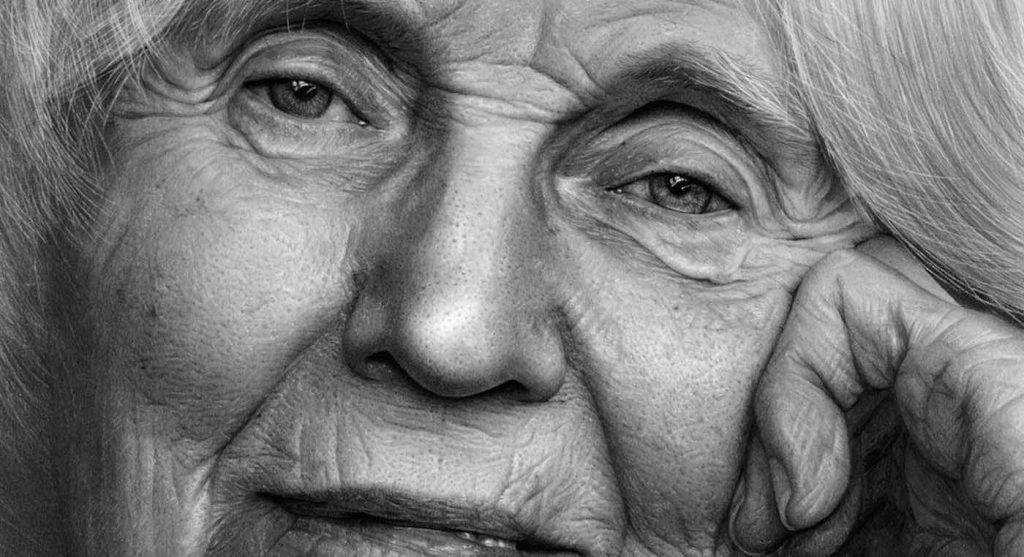
Pencil drawing by Emma Towers-Evans (cropped) / SWNS

Her stunning hyper-realistic pencil drawings can take up to 100 hours to complete—but the artist insists anyone can master the skill if they put in the practice.

Emma Towers-Evans first picked up a pencil when she was just two years old and said her love for drawing began after watching the film ‘Free Willy’ which inspired her to draw killer whales.

Now she creates incredible portraits of people and animals which are so realistic they look like photos.

The 29-year-old often completes the drawings on a large A1 or A0 paper and estimates each piece of artwork can have upwards of a half million individual pencil strokes.

Since the pandemic lockdown, she has been sharing videos showing her techniques on TikTok, which have racked up 265,000 followers and 4.5 million likes.

In some of popular videos she can been seen drawing portraits of well-known celebrities like Rhianna and Taylor Swift.

POPULAR: Jedi Landscaper Sets Up Rows of Precisely Spaced Brick Dominoes – And the Ending is Spectacular

Emma Towers-Evans / SWNS

The self-taught artist insists ‘anyone’ can master the craft if they put in the hours, after she saw her own skills improve after years of practice.

“I don’t believe people are ‘naturally talented’ when it comes to drawing,” says the artist from Stourbridge, West Midlands, in England.

“It’s taken me years of practice, patience, and dedication to get to where I am today.

“I think anyone can get to that level—you just need to have that same determination and self-belief.”

Emma loved drawing as a hobby during her childhood and teens, but never thought it would be a future career. But then, while attending the University of Surrey for music and sound recording, she began doing commissions, often drawing portraits of people’s pets.

LOOK: Nursing Home Residents Recreate Famous Portraits From History – And They’re Amazing

As her success continued, Emma decided to focus on drawing full-time and set-up her own website. Now the pencil artist sells her own original work and her subjects are often portraits of people.

25 percent of proceeds from sales of her big cat series of prints go toward to conservation charities like the Born Free Foundation and Lion Aid.

Emma Towers-Evans / SWNS

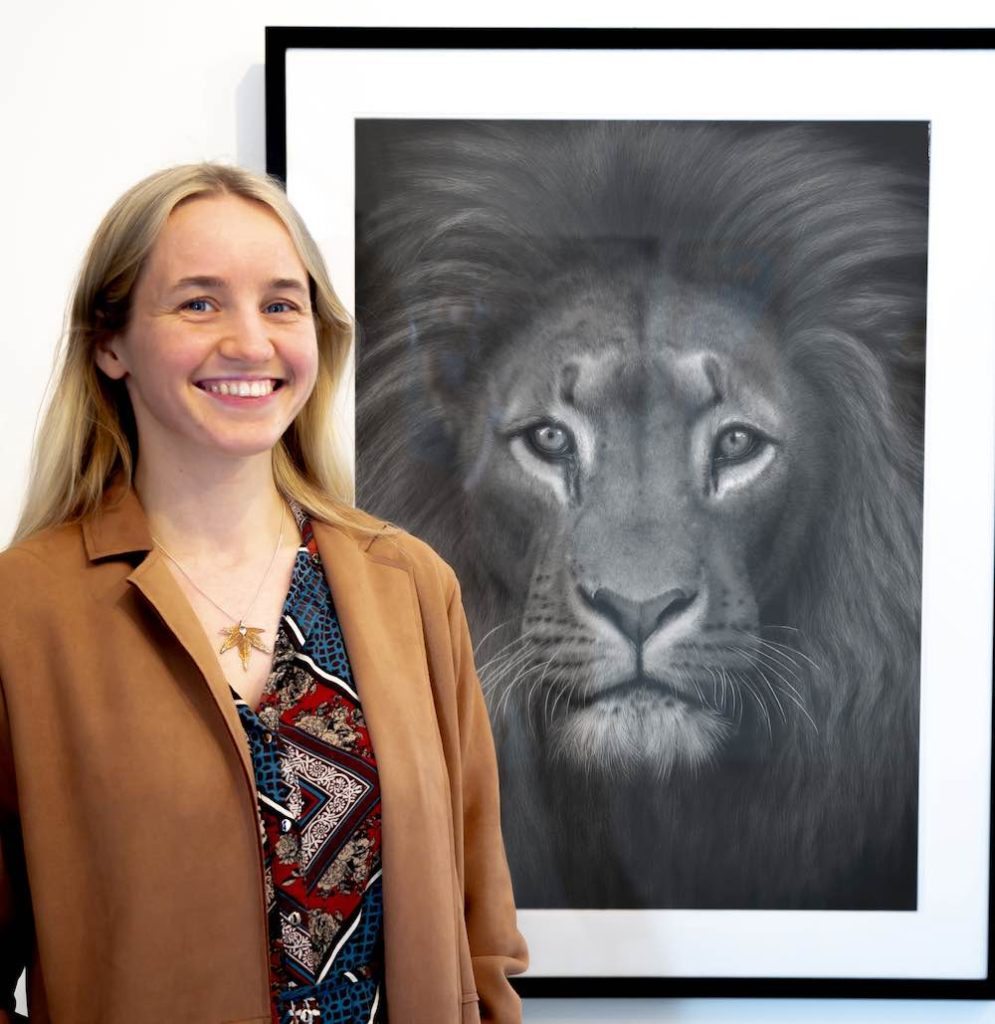
One of these portraits was based on Christian the Lion, a famous pet lion who was bought from Harrods in the 1970s—and Emma had permission from the photographer to sketch his photo.

CHECK OUT: Stunning Cafes Will Make You Feel Like You’re Stepping Into a Comic Book

“It’s really exciting to see something come alive on the paper,” she continued.

Her videos on TikTok at @eteportraits capture each stage of her drawings (see video below). In one video, she shows the progression of a self-portrait that took 97 hours to complete.

“The first one I posted was a time lapse video of a portrait and I can’t believe how popular it’s become. The comments and support I get is amazing.”

LOOK: Michigan High School Lets Seniors Dress in Costume for School ID Photos – And They Are Fantastic

Self-portrait by Emma Towers-Evans / SWNS

But, the self-taught artist is also encouraging others to pick up a pencil and give it a go.

“I think having that ability can be attainable for anyone. It’s just a case of knowing how to do it, which comes with lots of practice.”

“I think anyone can become an artist if they’ve got the time and patients.”

WATCH the video from SWNS – and follow Emma on Instagram

UNLEASH Someone’s Inner Artist By Sharing This on Social Media…

Aggressive Breast Cancer Could Be Tamed By Ingredient Found in Cardamom Spice, Say Scientists

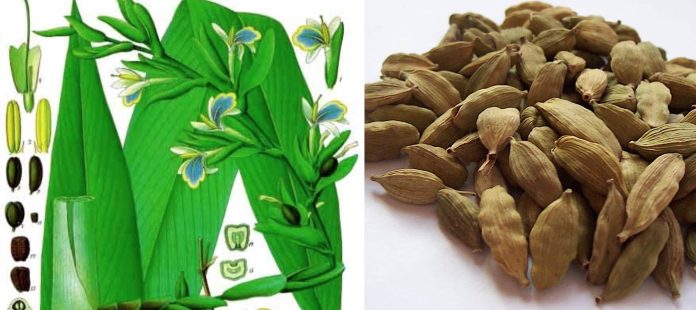
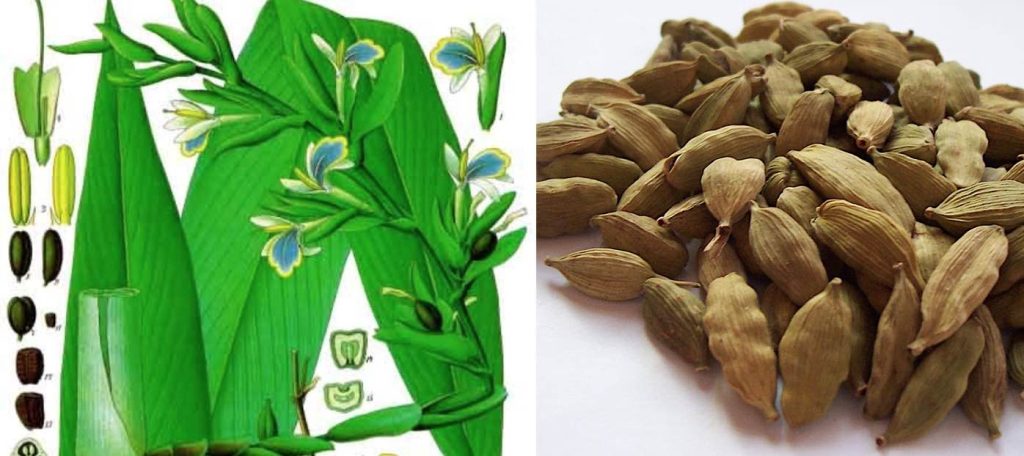
Cardamom pods by Stephantom, CC license

The spice cardamon could hold the key to tackling aggressive types of breast cancer, according to new research.
A natural compound called cardamonin found in the spice kills cancer cells and prevents them from flying under the immune system’s radar, say scientists at the Florida A&M University.
Around 10 to 15 percent of breast cancers are known as “triple-negative” which are more aggressive and deadly.

They are also difficult to treat with hormone-based therapies used for other types of breast cancer.

But now, the scientists in Tallahassee have made a promising discovery which could pave the way for new treatments.

“There is a critical need to investigate medicinal plants as a new way to combat this cancer,” says study author Dr. Patricia Mendonca, who took on the challenge to develop a targeted therapy for triple-negative breast cancer that is both safe and effective.

Her team studied how cardamonin affected the expression of a gene dubbed PD-L1 found in tumor cells. The gene plays a critical role in helping breast cancer cells escape the body’s immune system.

They tested the spice compound on cancer cells derived from women with African-American ancestry and women of European origins. Cardamonin was found to kill cancer cells from both groups—but only limit the expression of PD-L1 in European women. Genetic variations between races could explain why the cancer cells responded differently to the spice.

RELATED: Common Weed Stops the Growth of Breast Cancer Cells, Scientists in London Report

No wonder the spice is so valuable

By Aviatorjk, CC license

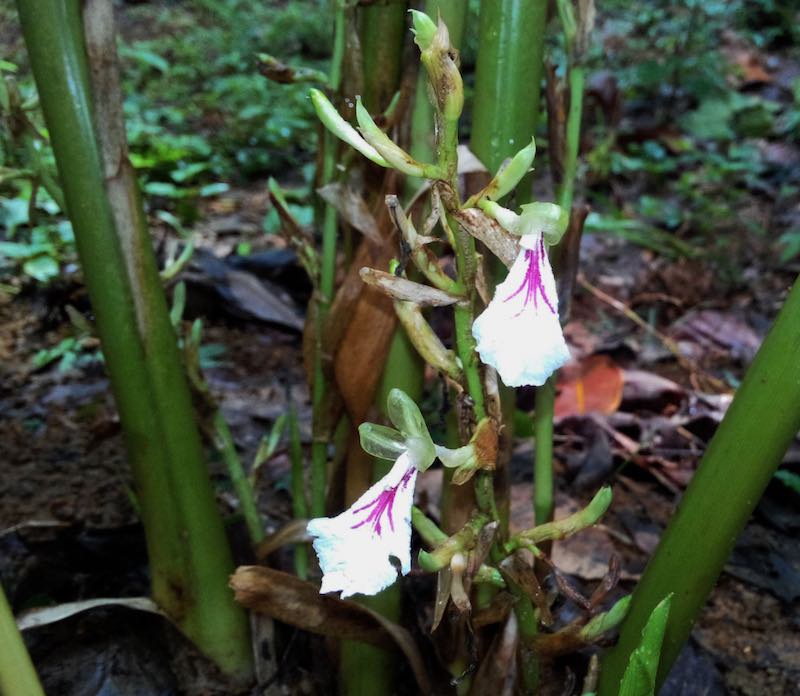
Cardamom (sometimes called cardamon), is a spice made from the seeds of several plants in the genera Elettaria and Amomum. Both are native to the Indian subcontinent, Indonesia, and throughout tropical and subtropical Asia. Today, the valuable spice is also cultivated in Guatemala, Malaysia, and Tanzania—and is the third most expensive spice, after saffron and vanilla.

A common ingredient in Indian cooking and baking in the Nordic countries, cardamom has a strong, unique taste, with an intensely aromatic fragrance. Black cardamom has a distinctly more smoky aroma, with a coolness some consider similar to mint.

The first references to medicinal cardamom are found in the Ayurvedic literatures of India. The ancient Greek physicians Dioscorides and Hippocrates also wrote about its therapeutic properties, identifying it as a digestive aid.

CHECK OUT: 9 Unique Ways to Use Rosemary – Backed by Mom and Science

The seeds, oils and extracts have been used in traditional medicine for centuries. One 2009 study showed cardamom significantly decreased blood pressure.

Studies in mice have shown that cardamom powder can increase the activity of certain enzymes that help fight cancer. A 2012 study showed the potential of cardamom as a preventive agent against stage-2 skin cancer in mice. Research in 2015 showed that a certain compound in the spice stopped oral cancer cells from multiplying in test tubes.

Next, the Florida researchers are planning on testing their cancer-combatting compound in clinical studies. They are also hoping to uncover what mechanisms are driving cardamonin’s anti-cancer properties.

POPULAR: Compound in Sea Sponges Can Stop Cancer and Kill Herpes – And Growing Them Would Benefit Indonesians

The findings will be presented at the American Society for Investigative Pathology annual meeting.

SEND This Sweet Discovery to All Your Friends on Social Media…

“We must never allow the future to collapse under the burden of memory.” – Milan Kundera

Dariusz Sankowski

Quote of the Day: “We must never allow the future to collapse under the burden of memory.” – Milan Kundera 

Photo by: Dariusz Sankowski

With a new inspirational quote every day, atop the perfect photo—collected and archived on our Quotes page—why not bookmark GNN.org for a daily uplift?


‘Stingless Bees’ Bring Life Back to the Amazon With Medicinal Honey and New Income

By Researcher Cesar Delgado

While the rest of modern civilization gets honey mostly from European honeybees, indigenous tribes in Peru’s slice of the Amazon get theirs from stingless bees, which seems way smarter.

But it’s more than just smart, it’s absolutely essential for people like the Kukama-Kukamiria, who now use it as food, a source of income, and medicine for everything from skin cuts to bronchitis.

Now, scientists working with these tribes are beginning to scratch the surface of the full extent the benefits this traditional bee husbandry, or ‘meliponiculture’ can have for people like the Kukama-Kukamiria, and the world at large.

Scientists such as Cesar Delgado Vasquez at the Institute for Investigations of the Peruvian Amazon, are working with indigenous groups as both teachers and learners; teaching them how to keep and raise stingless bees to produce their own honey without damaging wild nests, and learning about the immense value of this liquid medicine.

Delgado conducted a field study with three separate communities and four separate species of stingless bee to evaluate the physicochemical and microbiological characteristics of the honey they produced. They found that the humidity and sugar content didn’t change much between honeys, but the analysis of the high-quality chemical contents identified was able to lead to an increase in the unit price from $3.00 to $27.00.

LOOK: French Beekeeper Invents a Trap to Take on Asian Hornets Decimating Bee Populations in Europe

A spoonful of honey IS the medicine going down

With 600 species of stingless bees in the New World, the amount of possible data is immense. Each of these species have different relationships with hundreds of native plant species, and in the same way honey bought in a store from bees feeding on the pollen of oregano plants will taste different from honey made from clover plants, these pollinator-plant exchanges can change the medicinal and nutritional qualities of the honey produced.

By Researcher Cesar Delgado

Tribes use meliponine (stingless) bee honey to treat colds, cuts and abrasions, skin conditions, upper-respiratory tract infections, diabetes, gastrointestinal problems, pneumonia, burns, arthritis, and even cancer—and all these effects can be generated or amplified depending on the bees’ diet. For example, the honey from bees that feed on the pollen of the araza plant is being evaluated for anti-cancer properties.

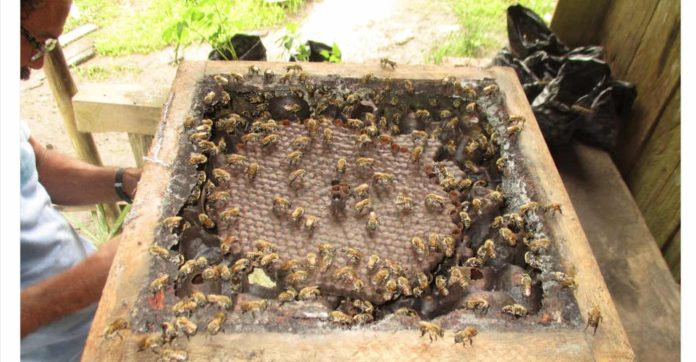
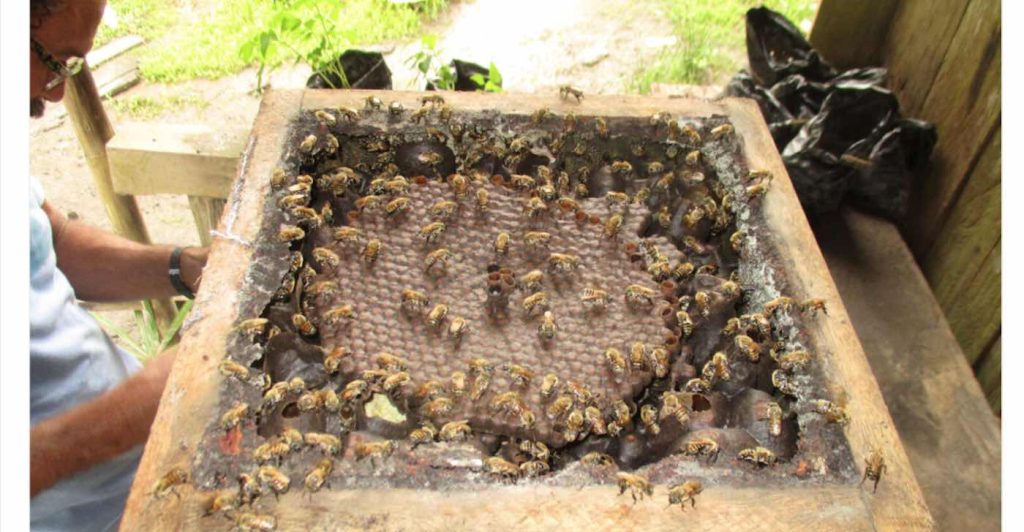
Delgado has helped teach indigenous communities the most effective ways to husband meliponine bees. Using rectangular boxes with easy access to the honey, half of the states in the Peruvian Amazon now have communities keeping bees.

“For conservation, it is necessary to prevent people from cutting down the trees to obtain honey, as well as to increase production yields. It is also necessary to provide information on honey quality parameters and improve the incomes of small producers or family farming, making it a profitable activity,” Delgado wrote in his study.

Delgado was the chief author of another paper that found when indigenous communities practiced horticulture or agriculture—and kept bees next to their fields—providing they were cropping native species such as camu fruits, their yields would increase a whopping 44%.

RELATED: Company’s Innovative Smart Beehive Gets $80 Million in Funding to Save Bees From Any Hazard

Meliponiculture is already widely adopted in Brazil, and in making its way to Peru, it gives the forests, the bees, and the tribes a better chance for surviving through the decades.

SEND Some Holistic Buzz to Your Friends By Sharing on Social Media…

‘Drumroll, Please’… The Top 10 Happiest Countries in the World from 2022 Global Happiness Report

In our troubled times of war and pandemic, the World Happiness Report 2022 comes just in time for Spring.

And, a bright light from the pandemic was the increased rate in social support and benevolence.

This year marks the 10th anniversary of the World Happiness Report, which uses global survey data to report on how people evaluate their own lives in more than 150 countries around the world.

“A decade ago, governments around the world expressed the desire to put happiness at the heart of the global development agenda, and they adopted a UN General Assembly resolution for that purpose,” stated UN Economist Jeffrey Sachs. “The World Happiness Report grew out of that worldwide determination to find the path to greater global well-being.”

“World leaders should take heed. Politics should be directed, as the great sages long ago insisted, to the well-being of the people, not the power of the rulers.”

Ten years of proprietary data covering more than 150 countries provides a unique stock-taking opportunity. The three biggest gains were in Serbia, Bulgaria, and Romania.

This year, as in most years, Europe dominates, with Finland retaining its number one ranking for the fifth year in a row.

The Top 10 Happiest Countries are…

1: Finland
2: Denmark
3: Iceland
4: Switzerland
5: Netherlands
6: Luxembourg
7: Sweden
8: Norway
9: Israel
10: New Zealand

11-16 rankings include: Austria, Australia, Ireland, Germany and finally Canada—which dropped 10 places from a high of 5th in 2010. The United States took 16th place, showing improvement compared to last year, moving up from 19th place on the list.

CHECK OUT: 56% of Small Biz Owners Think Remote Working Has Made Them Better Leaders Says Poll

The WHR survey data also found that despite the effects of the pandemic, “helping strangers, volunteering, and donations” in 2021 strongly spiked in every part of the world, reaching levels almost 25% above their pre-pandemic prevalence.

Indeed, GNN has reported that in the U.S., the greater the threat of COVID to a community, the more Americans financially contributed to help their neighbors and towns— and values such as compassion, familial support, and generosity with time and money, were flourishing during the pandemic.

Chutes and ladders

The Report is formed using survey data from Gallup, and asks people to imagine their life as a ladder, with the 10th rung as a most fulfilled life, and 0 being “Dystopia,” a fictional world where everything is awful.

Participants—usually 2,000-3,000 per country—are then asked to use a measure from zero to 10 to rate their opinion on the national GDP, life expectancy, generosity, social support, freedom, and corruption. Those answers are not averaged and added to the ladder score, but rather kept only as a means to potentially show why some countries rank lower than others.

LOOK: The Top 50 Things to Come Out of Britain (Fish and Chips was Voted #1)

In short, if France ranks much higher than Italy (they do), despite enjoying the same economic, medical, technological, and cultural stature, one can look into the sub-categories to glean why someone’s position on the ladder is lower. Between these two, looking at the sub-categories shows that Italians perceive their country as less-free than French residents.

Rather than celebrating the success of industrialized, technologically-sophisticated countries, the WHI is meant to be, as Sachs explained, a way to try and show countries how to improve their citizens’ happiness, understanding that happy citizens equals a more prosperous society.

SHARE the Rankings With Friends Around the World on Social Media…

Another Reason to Drink More Water: Study Finds Hydration Can Lower Risk of Heart Failure

Staying well-hydrated may be associated with a reduced risk for developing heart failure, according to researchers at the National Institutes of Health.

Their findings suggest that consuming sufficient amounts of fluids throughout life not only supports essential body functioning but may also reduce the risk of severe heart problems in the future.

Heart failure, a chronic condition that develops when the heart does not pump enough blood for the body’s needs, affects more than 6.2 million Americans, a little more than 2% of the population. It is also more common among adults ages 65 and older.

“Similar to reducing salt intake, drinking enough water and staying hydrated are ways to support our hearts and may help reduce long-term risks for heart disease,” said Natalia Dmitrieva, Ph.D., the lead study author and a researcher in the Laboratory of Cardiovascular Regenerative Medicine at the National Heart, Lung, and Blood Institute (NHLBI), part of NIH.

After conducting preclinical research that suggested connections between dehydration and cardiac fibrosis, a hardening of the heart muscles, Dmitrieva and researchers looked for similar associations in large-scale population studies. To start, they analyzed data from more than 15,000 adults, ages 45-66, who enrolled in the Atherosclerosis Risk in Communities (ARIC) study between 1987-1989 and shared information from medical visits over a 25-year period.

In selecting participants for their retrospective review, the scientists focused on those whose hydration levels were within a normal range and who did not have diabetes, obesity, or heart failure at the start of the study. Approximately 11,814 adults were included in the final analysis, and, of those, the researchers found 1,366 (11.56%) later developed heart failure.

RELATED: Good News for Coffee Lovers: Daily Coffee May Benefit the Heart

To assess potential links with hydration, the team assessed the hydration status of the participants using several clinical measures. Looking at levels of serum sodium, which increases as the body’s fluid levels decrease, was especially useful in helping to identify participants with an increased risk for developing heart failure. It also helped identify older adults with an increased risk for developing both heart failure and left ventricular hypertrophy, an enlargement and thickening of the heart.

Essential hydration

For example, adults with serum sodium levels starting at 143 milliequivalents per liter (mEq/L)—a normal range is 135-146 mEq/L—in midlife had a 39% associated increased risk for developing heart failure compared to adults with lower levels. And for every 1 mEq/L increase in serum sodium within the normal range of 135-146 mEq/L, the likelihood of a participant developing heart failure increased by 5%.

In a cohort of about 5,000 adults ages 70-90, those with serum sodium levels of 142.5-143 mEq/L at middle age were 62% more likely to develop left ventricular hypertrophy. Serum sodium levels starting at 143 mEq/L correlated with a 102% increased risk for left ventricular hypertrophy and a 54% increased risk for heart failure.

Based on these data, the authors conclude serum sodium levels above 142 mEq/L in middle age are associated with increased risks for developing left ventricular hypertrophy and heart failure later in life.

A randomized, controlled trial will be necessary to confirm these preliminary findings, the researchers said. However, these early associations suggest good hydration may help prevent or slow the progression of changes within the heart that can lead to heart failure.

MORE: Eating Avocados Twice a Week is Linked With lowering Heart Disease by 16-22%

“Serum sodium and fluid intake can easily be assessed in clinical exams and help doctors identify patients who may benefit from learning about ways to stay hydrated,” said Manfred Boehm, M.D., who leads the Laboratory of Cardiovascular Regenerative Medicine.

Fluids are essential for a range of bodily functions, including helping the heart pump blood efficiently, supporting blood vessel function, and orchestrating circulation. Yet many people take in far less than they need, the researchers said.

While fluid guidelines vary based on the body’s needs, the researchers recommended a daily fluid intake of 6-8 cups (1.5-2.1 liters) for women and 8-12 cups (2-3 liters) for men. The Centers for Disease Control and Prevention also provides tips to support healthy hydration.

This research is published in European Heart Journal.

Source: NIH/National Heart, Blood and Lung Institute

HELP Friends Drink Up the Good News; Share This Story…

Prunes Can Protect Older Women Against Osteoporosis, Says Penn State Study

By Megan, CC license

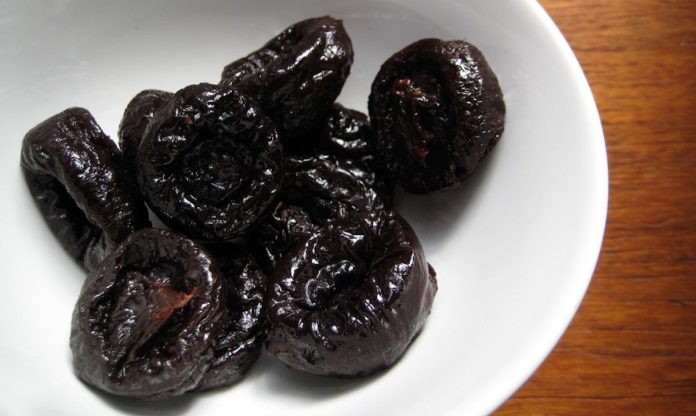
A handful of prunes a day protects older women against osteoporosis, according to new research.

Levels of bone boosting hormone oestrogen drop after the menopause which triggers an increase in inflammation in the body, which can also contribute to bone loss.

The dried plums contain vital chemicals that mimic it.

They are rich in antioxidants which dampen inflammation and destroy harmful free radicals.

Over 50s who regularly snacked on them were less prone to the disease that leaves people with brittle bones that raise the risk of fractures.

The condition affects three million British adults—mostly women. Every year 300,000 people suffer a ‘fragility fracture’ from a fall at standing height or less.

They cause significant pain, disability and loss of independence. More than 1,000 people die from them—every month.

Previous research has shown that prunes contain polyphenol extracts, plant compounds that act as antioxidants and reduce inflammation.

They promote lower levels of oxidative stress and inflammation in a type of bone cell called osteoclasts.

Researchers from the Integrative and Biomedical Physiology Program and the Departments of Nutritional Sciences and Kinesiology at The Pennsylvania State University explored the effects of prunes on bone health after menopause.

RELATED: Exercise Can Help Older Adults Retain Memories

The study of 235 women with a bone mineral density score that was defined as low is the first to demonstrate the benefit of the simple dietary change.

The postmenopausal women were divided into three groups: one that ate 50 grams of prunes (about six) daily for 12 months, one that ate 100 g of prunes (about 12 prunes) daily for 12 months and a control group who ate no prunes.

The research team looked at blood samples taken from all volunteers before and after the trial and found significant reductions in inflammatory markers in both of the prune-eating groups compared to the control group.

First author of the study, doctoral student Janhavi Damani, said: “Our findings suggest that consumption of six to 12 prunes per day may reduce pro-inflammatory mediators that may contribute to bone loss in postmenopausal women.

“Thus, prunes might be a promising nutritional intervention to prevent the rise in inflammatory mediators often observed as part of the aging process.”

Lead author Professor Mary Jane De Souza, of Pennsylvania State University, said, “It is exciting the data from our large randomised controlled trial in postmenopausal women showed consuming five to six prunes a day demonstrated the benefit of protecting from bone loss at the hip.

“Our data supports the use of prunes to protect the hip from bone loss post menopause.

MORE: 30 Minutes of Lifting Weights, Push-ups or Yard Work Weekly May Cut Risk of Death By 20%

“Indeed, this data may be especially valuable for postmenopausal women who cannot take pharmacological therapy to combat bone loss and need an alternative strategy.”

Under 100 calories per serving, prunes are a nutrient-dense fruit that packs a powerful punch of vitamins and nutrients.

They also contain boron, potassium, copper and a cocktail of healthy plant compounds that are good for the bones.

They are regarded as a ‘superfood’ for improving gut bacteria, slowing down ageing, combating iron deficiency, diabetes and heart disease.

This study has been published in Advances in Nutrition.

SHARE the Good Food News With Others Who’d Love to Know It…

“Here is the only thing you need to remember: When considering whether to say yes or no, you must choose the response that feels like freedom.” – Martha Beck

Quote of the Day: “Here is the only thing you need to remember: When considering whether to say yes or no, you must choose the response that feels like freedom.” – Martha Beck

Photo by: Caspian Dahlström

With a new inspirational quote every day, atop the perfect photo—collected and archived on our Quotes page—why not bookmark GNN.org for a daily uplift?


Screening For Breast Cancer Might Soon Use Simple Blood Test Following Milk Discovery

Peter Boccia

Breast cancer screening could be done via a blood test in the future, following a major breakthrough.

Scientists say a simple blood test for women of all ages could one day be possible—making mammograms history—because a new set of protein biomarkers was identified by using human breast milk.

Study lead author Danielle Whitham, a doctoral candidate at Clarkson University in the state of New York, said, “Although mammograms are a useful tool for catching breast cancer early, they aren’t typically recommended for low-risk women under 40.”

“Because the biomarkers we found in breast milk are also detectable in blood serum, screening could potentially be done in women of any age using blood or breast milk.”

The newly identified biomarkers are for a specific type of cancer called invasive ductal carcinoma—one of the most common types of breast cancers.

However, the researchers say that their approach could be used to identify biomarkers for other types of breast cancer, too.

“If our future studies are successful, it could change how women are monitored for breast cancer and aid in earlier diagnosis,” adds Whitham.

RELATED: Simple New Blood Test For Prostate Cancer Determines Presence and Stage of Cancer With 99% Accuracy

“This could even lead to a higher survival rate in women.”

For the study, breast milk samples were obtained from three women diagnosed with breast cancer and three women without cancer.

The researchers compared the relative levels of certain proteins between the two groups to identify differences in the women with cancer.

Their analysis revealed 23 proteins that were dysregulated. All the proteins that showed differences were previously shown to play a role in cancer or tumor development.

POPULAR: Tiny Yorkshire Terrier Detects Breast Cancer in Woman, Jumping Up and Down on Her Chest in Alarm

Now that a biomarker set has been identified, the researchers plan to confirm it with a larger group of women. Then, they will test the protein biomarkers’ applicability in blood serum.

“If those tests are successful, a blood test could be developed to be used on women of any age to monitor protein changes for detection of breast cancer,” concluded Whitham.

CHECK OUT: Doctor Determines Perfect Prescriptions For Stage 4 Cancer: With Functional Profiling His Results Are ‘Stunning’

She is due to present the findings at the American Society for Biochemistry and Molecular Biology annual meeting in Philadelphia.

SHARE the Hopeful News With Women on Social Media…

Queensland Continues to Transfer Millions of Acres of Wilderness Back to Aboriginals in Australia

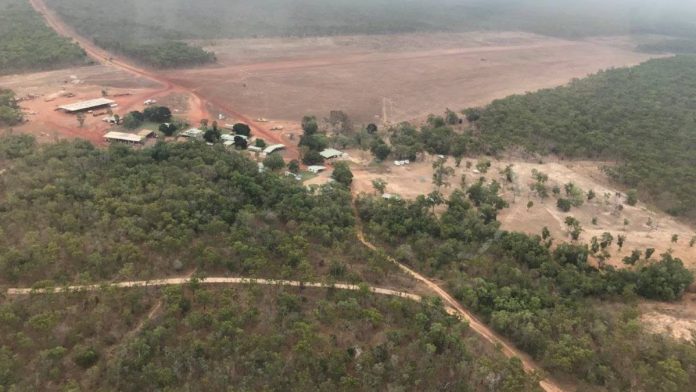
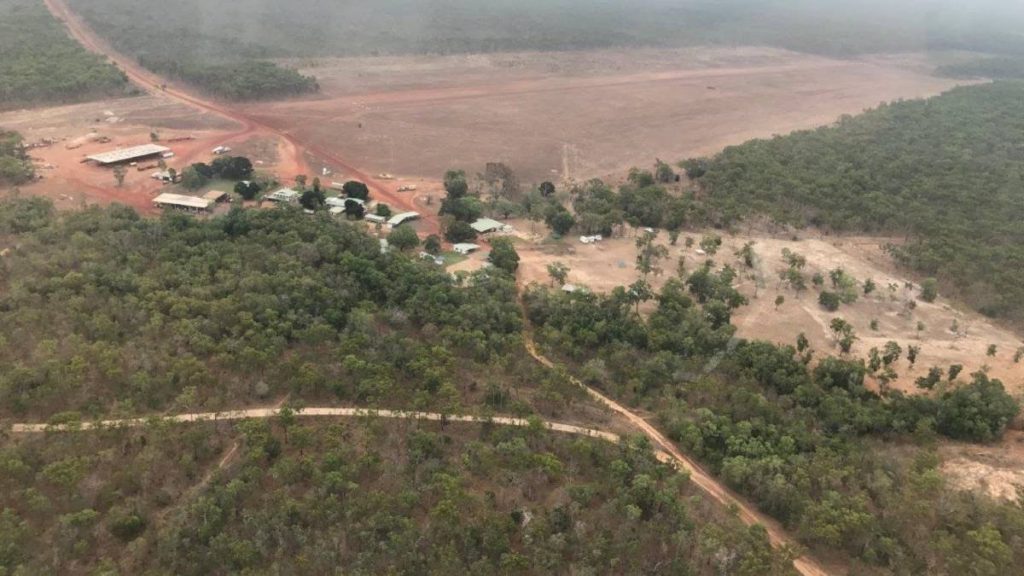
PICTURED: Bramwell Cattle Station, part of a recent 131,000 hectare purchase by the Queensland government. PC: Queensland Country Life.

Reprinted with permission from World at Large, a news website of nature, science, health, politics, and travel. 

PICTURED: Bramwell Cattle Station, part of a recent 131,000 hectare purchase by the Queensland government. PC: Queensland Country Life.

Two former cattle ‘stations’ in the north Australian state of Queensland totaling 509 square miles (131,900 hectares) have been purchased by the government as part of their program to return ownership of land on the Cape York Peninsula back to the indigenous people.

Environment Minister Meaghan Scanlon said at the time that these two areas have significant, undisturbed ecosystems that will become part of a protected area that includes tropical rainforest, heathlands, warm savannah, and freshwater ecosystems.

“These areas are important on a global scale both naturally and culturally, so it’s fantastic that they will be in safe hands as the Queensland government returns them back to the Wuthathi and Atambaya Peoples,” a spokesperson for Our Living Outback, an advocacy group, said at the time.

“This is one of the most significant purchases in Queensland history – linking close to one million hectares of protected land in a picturesque part of our state,” Annastacia Palaszczuk, the Queensland Premier said in a statement.

The two cattle stations link up with other protected areas, some under state control, others under Aboriginal control, including Batavia National Park, Ampulin National Park, Michingun Nature Refuge, and the Steve Irwin Wildlife Reserve, purchased by the Crocodile Hunter’s foundation set up by the Australia Zoo.

“The lands also provide further opportunity to protect the Great Barrier Reef by stabilizing two catchment areas that flow into the Great Barrier Reef lagoon,” Scanlon added. Cape York is known as the gateway to the Great Barrier Reef, but is incredible biodiverse in its own right.

RELATED: Australia Returns Huge Daintree Rainforest to its Aboriginal Owners, Bordering Great Barrier Reef

Environmental Minister and MP Meaghan Scanlon announced the purchase in February. PC: Meaghan Scanlon. Released.

Righting Wrongs

These purchases are two of many that have been conducted under the Cape York Peninsula Tenure Resolution Program, which since 2007 has been restoring Aboriginal rights to some of the most biodiverse and valuable lands in the state.

By the end of 2021, before the recent cattle stations were acquired, the tenure program had already established 209 protected areas across 8.2% of all of the land space in Queensland (4.5 million hectares.) That’s about the size of Massachusetts and New Jersey together, or for Europeans, about Sicily, Belgium, and Crete combined.

It involved the transfer of control of 22 existing national parks to Aboriginal land holding entities, and managers of the program expect the 11 national parks on Cape York Peninsula which haven’t been, to be transferred over before long.

“Granting Aboriginal land and agreeing to the co-operative management of the national park is a positive step towards reconciliation by recognizing past Indigenous connection to the land,” said former-Minister for Natural Resources, Craig Wallace, after the first titles were given in 2008.

These protected areas are called National Park (Cape York Peninsula Aboriginal Land) or “CYPAL”. A CYPAL gives a “Freehold” title to the land. Normal Freehold Land means absolute ownership to do whatever the Aboriginal community pleases with it, but a Freehold title under CYPAL ensures the land remains managed as a national park.

LOOK: Huge Indigenous Solar Farm Opens in Remote Northern Community: ‘We work with the sun for the children of the future’

Park management responsibilities will be negotiated between the department and the Traditional Owners (represented by a land trust) but will vary from park to park. Traditional Owners will be involved at every stage of management and obtain all the financial benefits that come from managing the land, whether that’s ecotourism, ranger employment, or any other kind of arrangement.

Crocodiles are residents of the Daintree River in the ancient rainforests of Daintree National Park.

A stronghold for biodiversity

CYPALs make up some of the most biodiverse areas on the continent. Among these is the Daintree Rainforest, the oldest surviving rainforest on Earth. It contains 30% of the frog, reptile and marsupial species in Australia, and 90% her bat and butterfly species.

It also includes pine tree species that evolved in the Jurassic period, and ferns like Marattiaceae which evolved after the Devonian extinction, and Osmundaceae which predates the dinosaurs by an era; both of which are the only remaining families of the orders they belong to.

CHECK OUT: Island on California Coast is Returned to Indigenous Tribe in Unprecedented Restoration of Land Rights

The geologic history is old, and part of Australia’s Great Dividing Range reaches up into the peninsula. Sandstone, limestone, schist, and dolomite coupled with the mountain range’s age means that erosion has dramatically shaped the landscape, creating features like Barron Gorge, Blencoe Gorge and Girringun, two areas within the Wet Tropics of Australia UNESCO World Heritage Site, and which are studded with dramatic waterfalls.

The range, which is not a continual range and actually a series of cordilleras, or broken up smaller ranges, also contains Wooroonooran, the highest mountain in Queensland, and an important bird area as designated by BirdLife International.

Wooroonooran contains a large population of the endangered southern cassowary, as well as prime habitat for most of the endemic bird species of the peninsula.

SHARE This Sharing of Land With Your Friends

Tiny Yorkshire Terrier Detects Breast Cancer in Woman, Jumping Up and Down on Her Chest in Alarm

11-year-old Bella-Boo by Karena Kirk-Drain/ SWNS

A Yorkshire Terrier saved her owner’s life after jumping up and down on her chest to alert her to a cancerous lump.

Eleven-year-old pooch Bella Boo wouldn’t settle in her usual sleeping place and kept trying to lie on Karena Kirk-Drain’s chest despite being pushed away.

The dog’s odd demeanor continued over the next three weeks, and she even started to cry. When she wouldn’t stop weeping, it left Karena concerned about her health—but baffled vets confirmed that she was fit and healthy.

Karena called it “a heart-breaking cry,” and thought the dog was “obviously trying to tell me something.”

She continued licking and hopping on the 53-year-old’s chest.

“Bella started bouncing on me, and at one point I actually thought she’d bruised me, as I was very sore there.”

“And I was feeling around, and I actually felt a lump, and I was thinking, ‘Is that a lump inside?’”

Then, doctors confirmed it was breast cancer.

The Blackpool, Lancashire woman then underwent life-saving treatment and believes the disease would have been missed if it wasn’t for Bella-Boo’s actions.

LOOK: Students Write Adorable Letters on Behalf of Shelter Dogs to Boost Adoptions –And it Worked

Karena Kirk-Drain / SWNS

“I didn’t think dogs could detect cancer, I thought it was a lot of hoo-ha really, but this proves that they can.”

“I’m just so lucky to be here; little Bella-Boo saved my life.”

“Bella always slept on the back of my legs, but she kept lying on my chest. Every time I took her off me, she’d crawl back on again.”

LOOK: Man Gives His Terminally-Ill Dog Last Walk Up Beloved Mountain in a Wheelbarrow (PHOTOS)

The doctor said the cancer had spread to her lymph nodes and Karena thinks that’s why Bella was getting more determined—because it was spreading.

After the whole ordeal, the woman travelled around the world, having realized how lucky she was to get her diagnosis early enough.

“I didn’t believe in that type of thing. I didn’t believe that dogs could detect cancer.”

“Once I got the cancer removed, she stopped straight away, and she started lying behind my legs again.”

Karena now urges pet owners to pay attention to their strange behavior in the future.

“Maybe if people see their dog start acting strange, they’ll be able to think twice.

RELATED: After Fatal Disease Arrives, Zoo Calls the Only Team of Turtle-sniffing Dogs to Help Out

“People underestimate dogs and cats and all animals. But they are amazing creatures.”

SHARE the Life-Saving Advice on Social Media…

Pluto Has Giant Ice Volcanoes that Could Hint at Existence of an Underground Ocean With Life

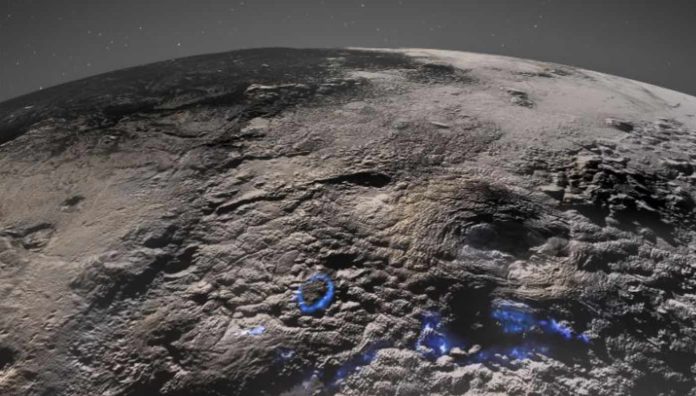
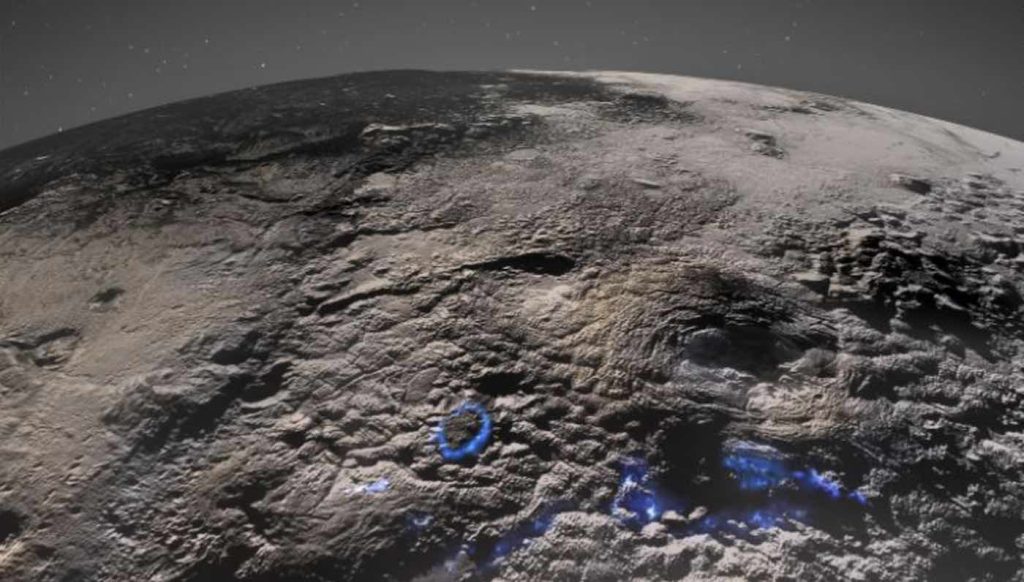
NASA / Johns Hopkins University Applied Physics Laboratory-Kelsi Singer

As spacecraft New Horizons recently sauntered past Pluto, images sent back to Earth made their way into the hands of a team that confirmed a large part of the dwarf planet’s surface was molded by ice volcanos—and some eruptions are fairly recent on the cosmos calendar.

The findings provide much more detailed evidence about volcanoes on Pluto, and suggest that with all the ice contained there, heat from the planet’s core could maintain a subsurface ocean, a feature known to exist on other planets.

The idea conjures images from mythology or fantasy fiction: a frozen world where volcanoes belch liquid nitrogen and ice, and where underground, close to the pressures and heat of the world’s heart, a vast ocean lies in total darkness. Ce la space.

Ice volcanoes are known from other worlds like Enceladus, the ice-moon of Jupiter, but not like this.

180 miles of Pluto’s surface is ice formed from H20, under which could be a liquid water ocean, according to some existing models in which such a scenario is possible. Back on the surface, nitrogen ice sits at a temperature much closer to its melting point, even in the frigidity of Plutonian weather.

In these conditions, scientists looking at the pictures from New Horizon posit that an area of “hummocky” texture and large rises and mounds located southwest of the famous Sputnik Planitia nitrogen ice sheet was formed by volcanoes.

RELATED: Mysterious Purple Coating Found on Mars Rocks in Every Direction

NASA / Johns Hopkins University Applied Physics Laboratory-Kelsi Singer

Central in this area are two volcanoes known as Wright Mons, which climbs 13,123 to 16,404 feet, and Piccard Mons, bigger than any land volcano on Earth, at about feet 22,965 feet. The two span an area more than 200 miles wide.

Cryo-volcanoes work exactly like hot ones here on Earth, where heat and pressure force subsurface material, in this case H20 ice, up to the surface to reshape the terrain. In this case it’s almost exclusively water ice, since the freezing points of nitrogen, methane, or ammonia, other chemicals present on Wright and Piccard Mons, are much lower than normal water and can only be achieved on the surface. Below ground they would certainly melt.

POPULAR: NASA Probe Enters the Sun’s Atmosphere for the First Time, Immediately Teaching Us New Things About Our Star

Considering those low temperatures, what would a Wright Mons eruption look like? “A viscous flow of either slushy or solid-state but still mobile material,” write the authors in their paper.

They also note that the unique topography of the region is free of any large impact craters, suggesting a much more recent geological period created these mountains, perhaps 100-200 million years ago.

All things considered, that would mean that subsurface liquid water—an ocean—could still be there today.

LOOK: This is What it Looks Like When a Black Hole Snacks on a Star

And, any planet with liquid water has the potential to host life, like a liquid water ocean present on our world was the place where life first began.

ORBIT These Icy Pics For Pluto Fans on Social Media…

“The time when you need to do something is when no one else is willing to do it, when people are saying it can’t be done.” – Mary Frances Berry

Quote of the Day: “The time when you need to do something is when no one else is willing to do it, when people are saying it can’t be done.” – Mary Frances Berry

Photo by: Oleg Laptev

With a new inspirational quote every day, atop the perfect photo—collected and archived on our Quotes page—why not bookmark GNN.org for a daily uplift?


Vancouver Couple Converts Their Huge Resort Property into a Ukrainian Refugee Home for Dozens

Ukrainian Safe Haven

Owners of a nature resort in British Colombia have put renovations on hold to open up the stunning 81-acre property exclusively for housing Ukrainian refugees.

With their goal of hosting 100 people, the owners and operators of The Grouse Nest on Vancouver Island see the fleeing masses as equivalent to their own people, since Brian’s family comes from Ukraine.

“We’ve got 19 people booked to be coming in about two to three weeks,” Brian told Global News Canada. “We’re in a position, in a place, in a time where we could help make a bit of a difference. And I thought, you know, it’s time to stand up and be counted.”

And, wow. The 15,000 square-foot resort, which they were renovating into an event space and gallery, is nestled into a beautiful pine forest and surrounded by a crystal clear lake. The Holowaychuks decided to even reverse some of the work, in order to ensure a livable space for as many people as possible.

Some local contractors volunteered to help, as well.

They’ve renamed their Grouse Nest property “Ukrainian Safe Haven”, and are now leasing the property for $1 a year to a new organization which a local law firm, McConnan Bion O’Connor & Peterson, helped format into a 501(c)3 nonprofit free of charge.

Ukrainian refugees will be provided with food, education, transportation, and assistance with the settlement process to help get families back on their feet. They are invited to stay as long as they like.

RELATED: Fortnite Raised $144 Million for Ukraine Relief as Video Gamers Do a World of Good

For those who want to help, the Ukrainian Safe Haven is accepting donations and volunteer support on their website.

CHECK OUT: Ukraine Inspires Us With Humanity and Hope: 8 Positive Stories From the Conflict

SHARE The Inspiring Generosity to Add Positivity to Your Social Media Feeds…