











All News - Page 386 of 1715 - Good News Network
Home Blog Page 386

Your Inspired Weekly Horoscope From Rob Brezsny: A ‘Free Will Astrology’

Our partner Rob Brezsny provides his weekly wisdom to enlighten our thinking and motivate our mood. Rob’s Free Will Astrology, is a syndicated weekly column appearing in over a hundred publications. He is also the author of Pronoia Is the Antidote for Paranoia: How All of Creation Is Conspiring To Shower You with Blessings. (A free preview of the book is available here.)

Here is your weekly horoscope…

FREE WILL ASTROLOGY – Week of March 26, 2022
Copyright by Rob Brezsny, FreeWillAstrology.com

ARIES (March 21-April 19):
The Carib people from Surinam quote their mysterious Snake Spirit as follows: “I am the force of the spirit of the lightning eel, the thunder ax, the stone. I am the force of the firefly; thunder and lightning have I created.” I realize that what I’m about to say may sound far-fetched, but I suspect you will have access to powers that are comparable to the Snake Spirit’s in the coming weeks. In fact, your state of being reminds me of how Aries poet Marge Piercy expressed her quests for inspiration: “When I work, I am pure as an angel tiger, and clear is my eye and hot my brain and silent all the whining grunting piglets of the appetites.”

TAURUS (April 20-May 20):
“It’s always too early to quit,” wrote cheerful author Norman Vincent Peale, who first popularized the idea of “positive thinking.” I’m an optimistic person myself, but I think his advice is excessively optimistic. On some occasions, it’s wise to withdraw your energy from a project or relationship you’ve been working on. Struggling to find relevance and redemption may reach a limit. Pushing ever onward might be fruitless and even harmful. However, I don’t think that now is one of those times for you, Taurus. According to my reading of the astrological omens, it is too early for you to quit.

GEMINI (May 21-June 20):
“You can be as earnest and ridiculous as you need to be, if you don’t attempt it in isolation.” So says author Barbara Kingsolver. She adds, “The ridiculously earnest are known to travel in groups. And they are known to change the world.” In my view, this is perfect advice for you right now. If you and the members of your crew focus on coordinating your efforts, you could accomplish blazing amazements in the coming weeks. You may solve riddles that none of you has been able to decipher alone. You can synergize your efforts in such a way that everyone’s individual fate will be lifted up.

CANCER (June 21-July 22):
About 200 years ago, poet William Wordsworth wrote, “Every great and original writer must himself create the taste by which he is to be relished.” Now I’ve come up with a variation on that wisdom: “Every great and original soul must herself create the taste by which she is to be understood and appreciated.” That’s what I hope you will work on in the coming weeks, Cancerian: fostering an ambiance in which you can be even better understood and appreciated. You now have extra power to teach people how to value you and get the best out of you.

LEO (July 23-Aug. 22):
“I hate housework!” complained comedian Joan Rivers. “You make the beds, you do the dishes, and six months later you have to start all over again.” I wish I could give you a six-month reprieve from having to attend to those chores, Leo. In fact, I’d love it if I could permanently authorize you to avoid all activities that distract you from thinking big thoughts and feeling rich emotions and pursuing expansive adventures. But I’m afraid I can only exempt you from the nagging small stuff for just the next three weeks or so—four, tops. After that, you’ll have to do the dishes and make the beds again. But for the foreseeable future: Focus your energy on thinking big thoughts and feeling rich emotions and pursuing expansive adventures!

VIRGO (Aug. 23-Sept. 22):
A British plumber named Kev Crane worked for weeks to install a new bathroom at a private home. As he toiled, he passed the time by singing his favorite songs. He didn’t know that the homeowner, Paul Conneally, was the owner of a music label. So he was surprised and delighted when Conneally offered him a deal to record an album in the label’s studio. There may be a comparable development in your life during the coming weeks, Virgo. You could be noticed in new ways for what you do well. Your secret or unknown talents may be discovered or revealed. You might get invitations to show more of who you really are. Be alert for such opportunities.

LIBRA (Sept. 23-Oct. 22):
It’s the start of the Listening Season for you Libras. I propose a full-on celebration of listening: a three-week Holiday of Paying Close Attention to Important and Interesting Words Being Said in Your Vicinity. Make yourself a magnet for useful revelations. Be alert for the rich information that becomes available as you show the world you would love to know more of its secrets. For inspiration, read these quotes. 1. You cannot truly listen to anyone and do anything else at the same time. —M. Scott Peck. 2. Learn to listen. Opportunity sometimes knocks very softly. —my friend Jenna. 3. Listening is being able to be changed by the other person. —Alan Alda. 4. If you want to be listened to, you should put in time listening. —Marge Piercy. 5. Listening is a magnetic and strange thing, a creative force. When we are listened to, it creates us, makes us unfold. —Karl A. Menninger.

SCORPIO (Oct. 23-Nov. 21):
“Worry doesn’t count as preparation,” writes author Lily Akerman. That sounds wise, but I don’t think it’s true in all cases. At its best, worrying may serve as a meditation that helps us analyze potential problems. It prompts us to imagine constructive actions we might take to forestall potential disruptions—and maybe even prevent them from erupting into actual disruptions. I bring these thoughts to your attention, Scorpio, because now is an excellent time to engage in this kind of pondering. I declare the next three weeks to be your Season of Productive Worrying.

SAGITTARIUS (Nov. 22-Dec. 21):
If I had my way, you’d be a connoisseur of kisses in the coming weeks. You’d make it your intention to expand your repertoire of kissing styles and ask willing partners to do the same. You would give and receive unwieldy kisses, brave kisses, and mysterious kisses. You would explore foolish, sublime kisses and sincere but inscrutable kisses and awakening kisses that change the meaning of kisses altogether. Are you interested in pursuing this challenge? It will be best accomplished through unhurried, playful, luxurious efforts. There’s no goal except to have experimental fun.

CAPRICORN (Dec. 22-Jan. 19):
“Anybody who has survived his childhood has enough information about life to last him the rest of his days,” wrote author Flannery O’Connor. Her observation may be a bit of an exaggeration, but not much. And I’m offering it to you now, as you begin a phase when you can glean many new teachings about your childhood—insights that could prove handy for a long time to come. I encourage you to enjoy a deep dive into your memories of your young years. They have superb secrets to divulge.

AQUARIUS (Jan. 20-Feb. 18):
“Creativity is the power to connect the seemingly unconnected,” said author William Plomer. I agree with that. And I’m pleased to let you know that in the coming weeks, you will have more of this power to connect than you’ve had in a long time. I hope you will use it to link your fortunes to influences that inspire you. I hope you will wield it to build bridges between parts of your world that have been separate or alienated until now. And I hope you will deploy your enhanced capacity for blending and joining as you weave at least one magnificent new creation.

PISCES (Feb. 19-March 20):
“I use my intelligence to discover more ways of appreciating you,” author Piscean Anaïs Nin told her lover Henry Miller. In the coming weeks, I recommend you activate a similar ambition. Now is a time when you can enhance your close relationships with important allies by deepening your insight into them. What magic is at play within them that you haven’t fully recognized before? How could you better see and understand their mysteries? PS: You may be pleased when your deepening vision of them prompts them to extend the same favor toward you.

WANT MORE? Listen to Rob’s EXPANDED AUDIO HOROSCOPES, 4-5 minute meditations on the current state of your destiny — or subscribe to his unique daily text message service at: RealAstrology.com

(Zodiac images by Numerologysign.com, CC license)

SHARE The Wisdom With Friends Who Are Stars in Your Life on Social Media…

“Let everything happen to you. Beauty and terror. Just keep going. No feeling is final” – Rainer Maria Rilke

kilarov zaneit

Quote of the Day: “Let everything happen to you. Beauty and terror. Just keep going. No feeling is final” – Rainer Maria Rilke

Photo by: kilarov zaneit

With a new inspirational quote every day, atop the perfect photo—collected and archived on our Quotes page—why not bookmark GNN.org for a daily uplift?

kilarov zaneit


Dolphins Have a Musical Social Media: Whistling Helps Them Bond With Friends at a Distance – and Increases Offspring

SWNS
SWNS

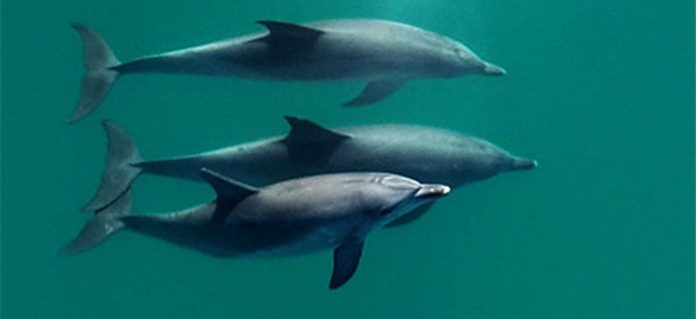
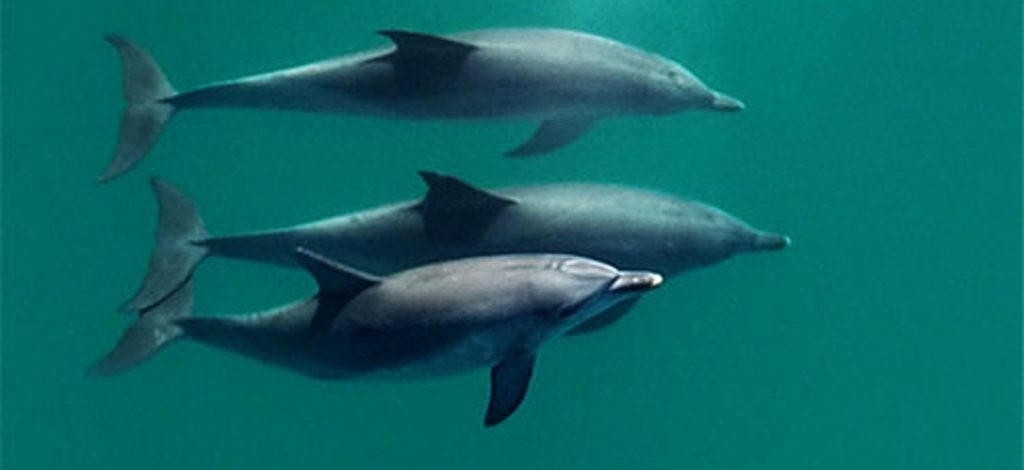
Male dolphins boost their social lives by whistling to each other at a distance, according to new research.

The high pitched sound tells others they are present and wish to make contact. It helps the marine mammals maintain key community ties, say scientists, describing the rarest type of social organization in the animal kingdom.

And, now, reports Science.org, researchers report this male bonding has a big evolutionary payoff: Dolphins with the strongest buddy bonds actually father more offspring.

Comparing genetic data collected from these males, an evolutionary biologist at the University of New South Wales, Sydney, determined that males who had the strongest social bonds and were friends with all members of their alliance had the most offspring.

Lead author Emma Chereskin of the University of Bristol says, “By forming strong alliances with others, males can influence their own reproductive success in a way that wouldn’t be possible as single individuals.”

“As the number of close social relationships increases, so too do the demands on the time and space available for relationship maintenance through physical contact.”

“We wanted to know how they maintained multiple alliance relationships in large groups.”

Language evolved to support long-distance social bonding. They are also known to use physical contact, such as gentle petting, to connect with strongly-bonded friends.

RELATED: Dolphins Have Similar Personality Traits to Humans, Study Finds

The international team analyzed nine years of data from a dolphin population in Shark Bay, Western Australia. The findings published in Current Biology, shed fresh light on how they reinforced and maintained valuable alliances—which can endure for decades

Ms. Chereskin and colleague tracked groups of affiliated males, documenting their physical and acoustic behavior. It enabled them to identify the different ways they bonded with each other and formed concepts of ‘team membership’.

Senior author Dr Stephanie King, also from Bristol, said, “We found within the core dolphin alliances, strongly bonded allies engaged in more affiliative contact behavior, such as petting and rubbing, while weakly bonded allies engaged in more whistle exchanges.

LOOK: Watch Amazing Video of Dolphin Baby Being Born

“This illustrates these weaker, but still key, social relationships can be maintained with vocal exchanges.”

“Our findings provide new evidence that vocal exchanges can serve a bonding function,” says Chereskin.

“But more importantly, vocal exchanges can function as a replacement of physical bonding, allowing allied male dolphins to ‘bond-at-a-distance’.

MORE: Size Doesn’t Matter to a Dolphin Mom As She Adopts a Whale Calf

Inhabiting seas worldwide, bottlenose dolphins are renowned for their intelligence and mimicry. In some areas, they also cooperate with local fishermen by driving fish into their nets and eating the fish that escape.

They have sharp eyesight but use echolocation to explore and search out prey when visibility is limited. And they also communicate through pulsed sounds, clicks, and body language.

CLICK on the Good News to Share It With Marine-Loving Friends…

Holocaust Survivors Reunite in Florida After a Labor Camp Friendship was Broken 80 Years Ago

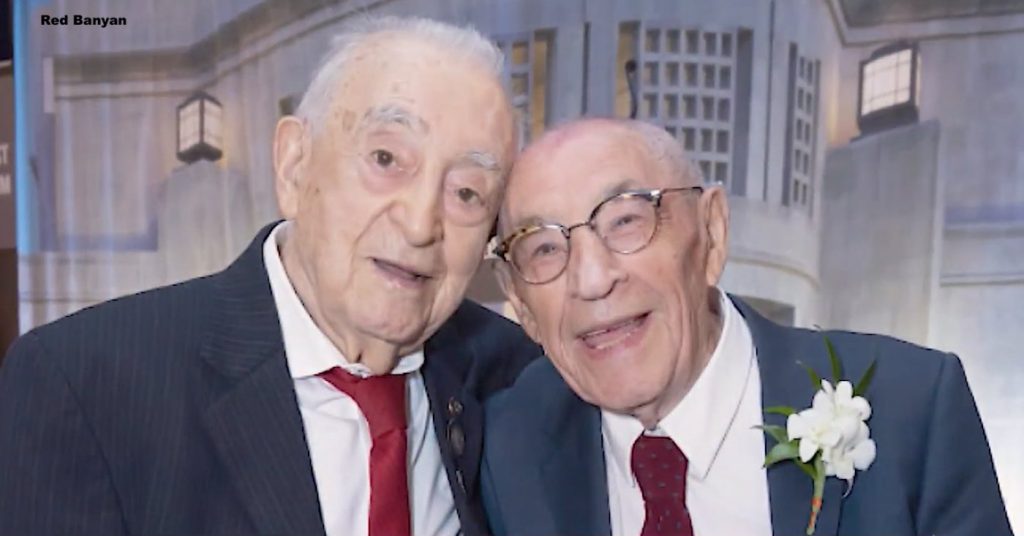
Sam Ron (left) and Jack Waksal (right) – Red Banyan

Those who say there’s no such thing as destiny need to meet Jack Waksal and Sam Ron, victims who met during the Holocaust, and who met again 79 years later in South Florida.

Having endured slave labor shoulder to shoulder in the Pionki Labor Camp in Poland, the two were separated after Waksal escaped into the forest, and Ron was moved to a different camp that was ultimately liberated.

Neither knew the other had survived, until Waksal attended a United States Holocaust Memorial Museum’s South Florida Dinner last Sunday, and found his old camp comrade to be the guest speaker. Introduced by his former name of Shmuel Rakowski, Waksal felt as if he was seeing a fraternal brother.

“He jumped off the seat and came running over to my seat and says you’re my brother, I was very emotional, I’m normally not a very emotional guy,” Ron explained, according to NBC Miami.

Just teenagers at the time of their imprisonment, the two managed to both immigrate to the United States, specifically to Ohio, where they both lived for 40 years unaware of each other’s existence before eventually moving to South Florida.

MORE: One of Britain’s Last D-Day Veterans Returns From France Completing His ‘Final Mission’ – and 68 Years of Charity

“We were pushing coal to the oven to make heat to make power, and Jack said he worked at the same place!” Ron said of their time in the camp, according to CBS. “Hard work, bad conditions, cold, hunger, hundreds of people died. It wasn’t uncommon to wake up in the morning and find the person next to you cold.”

Despite living 40 miles apart, the two men are determined to keep the survivor’s flames burning, and fill in the massive gap of years with life stories. Ron occasionally makes appearances at schools to teach young people about his experiences.

RELATED: Story of Unsung Dutch Hero Who Saved Thousands From Nazi Holocaust is Finally Told 45 Years After His Death

“I try to teach them not to hate, and to have a lot of hope and believe in yourself, this is what I did, this is how I survived because I believe in myself,” Ron said.

Ari Odzer, reporting for NBC, says succinctly of the pair, that they revenged themselves against Adolf Hitler: by living long successful lives and having children, grandchildren, and great-grandchildren.

(WATCH the NBC Miami video for this story below.)

SHARE This Inspiring Story on Social Feeds…

Jobs in US Green Economy Grew to 6% of Total Employment –And Will Grow at 16x Normal Job Creation Rate

By Science in HD
By Science in HD

A new report shows that the percentage of jobs in the U.S. that fall under the category “green” has increased over the last 50 years to 9 million, or 6% of the total workforce.

This number is not only set to exponentially rise to 24 million, or 14% of total workforce over the next 10 years, but is already underestimated in most private and public employment data.

The report was prepared by Working Nation, a non-profit aimed at educating people about job trends to help influence positive outcomes for the workers of the future.

Using a simple definition for “green economy” and “green jobs” gave Working Nation a metric that was neither on the high end or low end of existing job count estimates, and one that matched other metrics used in inter-industry job tracking reports.

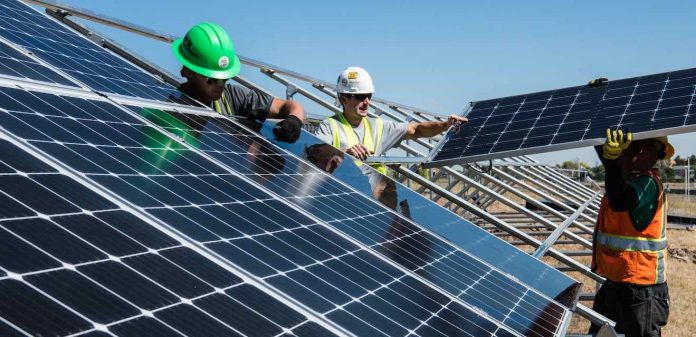
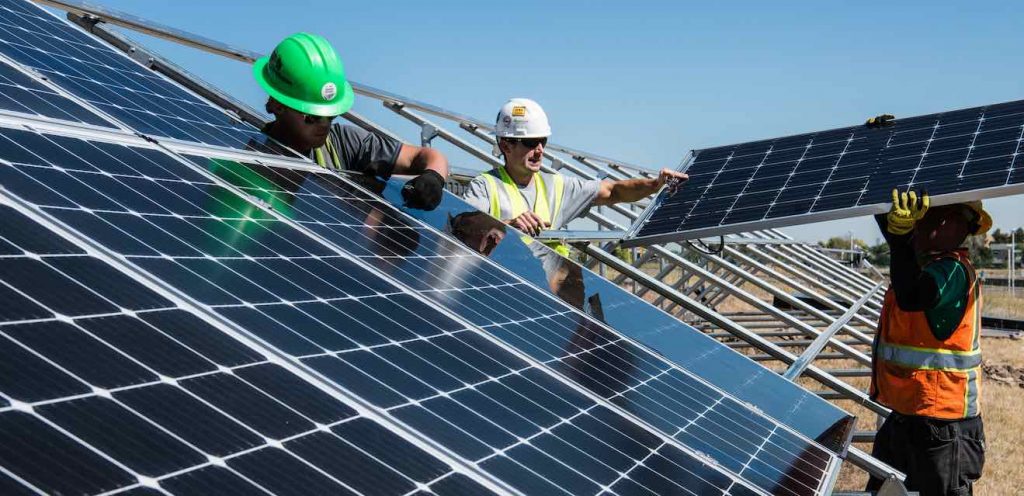
Most green jobs in the green economy, the report found, are actually quite typical jobs that don’t represent actual solar-panel installation, for example—but often fall under roles in, say, accountancy or engineering, for green economy firms or production.

The future of the green economy in the report was all the more striking. Two separate research/data collection/data analysis services prepared forecasts of the green economy under the parameters set by Working Nation and found that the green economy over the next eight years will grow at sixteen times the nationwide job creation rate.

RELATED: Redefining ‘Rich’ and Reorienting Life Towards Your Own—Not Others’—True North

They also found that investments in the green economy disproportionately create more jobs in professional, scientific, and technical services than the U.S. average.

Report contributor Roger Bezdek believes this information can offer critical support for garnering interest in greater involvement and investment in the green economy.

MORE: Six in 10 Americans Agreed They’re More Financially Confident Than They Were Before the Pandemic

“I feel very good about the results,” Bezdek told GNN. “My major concern is being able to communicate this critical information to legislators, policy-makers, and decision-makers— and to the general public.

SHARE the Good Green News With Pals on Social Media…
The Number of Healthy Years a Person Lives is Increasing, on Average

Maria Magdalens, CC license

The number of healthy years a person lives is, on average, increasing even for people with common chronic conditions, according to a new study.

There have been advances in healthcare over recent decades that mean many people with chronic health conditions are living longer.

In the new study, researchers wanted to determine whether this extension to life involves an increase in years with or without disability. The team analyzed data from two large population-based studies of people aged 65 or over in England.

The studies, the Cognitive Function and Aging Studies (CFAS I and II) involved baseline interviews with 7,635 people in 1991-1993 and with 7,762 people in 2008-2011, with two years of follow-up in each case.

For both healthy people and those with health conditions, the average years of disability-free life expectancy (DFLE) increased from 1991 to 2011. Overall, men gained 4.6 years in life expectancy (95% CI: 3.7—5.5 years, p<0.001)) and 3.7 years in DFLE (95% CI: 2.7— 4.8, p<0.001)). Men with conditions including arthritis, coronary heart disease, stroke and diabetes gained more years in DFLE than years with disability. The greatest improvements in DFLE in men were seen for those with respiratory difficulties and those living post-stroke.

RELATED: 30 Minutes of Lifting Weights, Push-ups or Yard Work Weekly May Cut Risk of Death By 20%

Between 1991 and 2011, women experienced an increase in life expectancy at age 65 years of 2.1 years (95% CI: 1.1- 3.0 years, p<0.001), and an increase in DFLE of 2.0 years (95% CI: 1.0— 2.9 years, p<0.001).

Similar to men, most improvement in life expectancy for women with long-term conditions was in disability-free years. However, women with cognitive impairment experienced an increase in life expectancy with disability (1.6 years, 95% CI: 0.1—3.1, p=0.04) without any improvement in DFLE.

Men with cognitive impairment experienced only a small increase in DFLE (1.4 years, 95% CI: -0.7—3.4, p=0.18) with an increase in life expectancy with disability that was comparable in magnitude (1.4 years, 95%CI: 0.2-2.5, p=0.02).

MORE: Resetting Clock on Aging Cells Safely Reversed Signs of Decline in Mice

Therefore, at age 65, the percentage of remaining years of life which were spent disability-free decreased for men with cognitive impairment (difference CFAS II—CFAS I: -3.6%, 95% confidence interval (CI): -8.2—1.0, p=0.12) and women with cognitive impairment (difference CFAS II—CFAS I: -3.9%, 95% CI: -7.6—0.0, p=0.04).

“While these findings are mostly positive, we found an increase in the percentage of remaining years spent with disability for men and women with cognitive impairment. Given cognitive impairment was also the only long-term condition where prevalence decreased this is a cause for concern and requires further investigation,” the authors say.

Source: PLOS; Featured image: Maria Magdalens, CC license

DON’T LET Good News Grow Old; Share This Story…

“All experience is an enrichment, rather than an impoverishment.” – Eudora Welty

Quote of the Day: “All experience is an enrichment, rather than an impoverishment.” – Eudora Welty

Photo by: Michael Dziedzic

With a new inspirational quote every day, atop the perfect photo—collected and archived on our Quotes page—why not bookmark GNN.org for a daily uplift?

Neanderthals May Hold Clues as to Why Modern Humans Suffer Lower Back Pain

SWNS
SWNS

Neanderthals might hold clues as to why modern humans suffer lower back pain, according to a new study.

Their backbones show that much pain suffered today is from less physical activity, bad posture, and the use of furniture.

Back pain can be first identified in humans after the turn of the industrial era in the late 19th century when most jobs went from agriculture and high-activity to sitting down.

Spine analysis previously assumed that our pre-modern day human ancestors had different spines due to evolution.

But researchers examining intact spines from across the centuries have found that actually spines stayed the same mostly up until the death of Queen Victoria.

MORE: Your Body’s Own ‘Cannabis-Like’ Substance Can Reduce Chronic Inflammation During Exercise

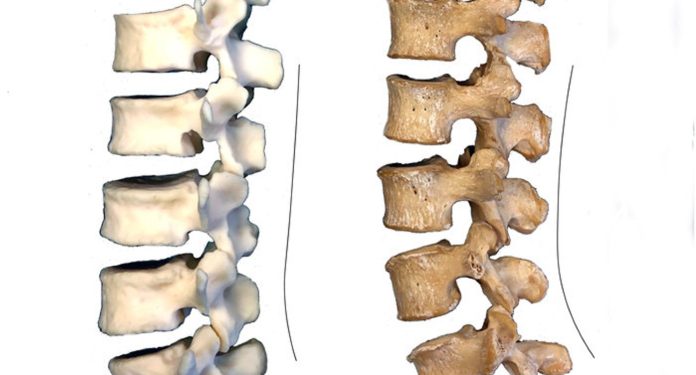
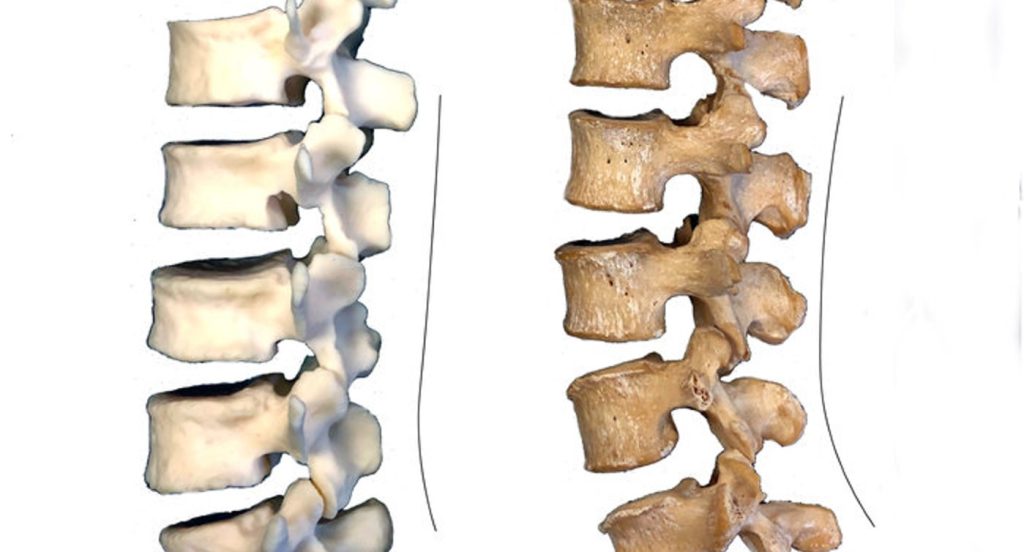
Following this the spine’s curvature changes which is caused in part, by a ‘wedging’, of vertebrae and the intervertebral discs – the softer material between the vertebrae. ‘

Researchers examined more than 300 spines of pre-industrial and post-industrial spines of male and female humans from around the world.

Overall, they found that spines in post-industrial people showed more lumbar wedging than did those in pre-industrial people.

Moreover, Neanderthals’ spines were significantly different from those in post-industrial people but not from pre-industrial people.

Notably, the scientists found no differences linked to geography within samples from the same era.

Dr Scott Williams, an Associate Professor at New York University, said: “Neanderthals are not distinct from modern humans in lumbar wedging and therefore likely possessed curved lower backs like we do.

“However, over time, specifically after the onset of industrialization in the late 19th century, we see increased wedging in the lower back bones of today’s humans—a change that may relate to higher instances of back pain, and other afflictions, in postindustrial societies.

“A good part of this perspective derives from the wedging of Neanderthals’ lumbar, or lower, vertebrae—their spines in this region curve less than those of modern humans studied in the US or Europe.

“Past research has shown that higher rates of low back pain are associated with urban areas and especially in ‘enclosed workshop’ settings where employees maintain tedious and painful work postures, such as constantly sitting on stools in a forward leaning position.

RELATED: First Treatment for Pain Using Human Stem Cells is a Success; Now Moving Towards Human Trials

Dr Williams added: “A pre-industrial vs. post-industrial lifestyle is the important factor. Lower back curvature is made up of soft tissues (i.e., intervertebral discs), not just bones, so it cannot be ascertained that Neanderthals’ lumbar lordosis differed from modern humans.

“The bones are often all that is preserved in fossils, so it’s all we have to work with.“Diminished physical activity levels, bad posture, and the use of furniture, among other changes in lifestyle that accompanied industrialization, resulted, over time, in inadequate soft tissue structures to support lumbar lordosis during development.

“To compensate, our lower-back bones have taken on more wedging than our pre-industrial and Neanderthal predecessors, potentially contributing to the frequency of lower back pain we find in post-industrial societies.”

The study was published in the journal PNAS Nexus.

HELP Others By Sharing This Good News on Social…

Researchers Highlight the Silver Linings of the Pandemic Identified During Large Survey

Word cloud of pandemic silver linings study - BioTex

Human beings, despite our predilection for drama, are exceptionally resilient creatures, and able to find the silver lining in almost everything.

A recent study queried the American population to find out what they consider to be the upsides of the pandemic.

A multi-disciplinary team from Harvard and Stanford conducted interviews of 3,113 participants over the seven-month period from March to September 2020.

The scientists found many things in the responses, for example that the pandemic itself didn’t often change this sample of America’s average weekly sentiment on life, and that the times when the people did find themselves down in the dumps correlated with other events such as the death of George Floyd and Ruth Bader Ginsberg.

Using statistical analysis, the researchers grouped words and themes together to find the most common silver linings amid the storm of covid waves and daily death counts.

Number one, reported by 46% of participants, was quality time with loved ones, including “The kids are helping around the house more, I’m in touch with my family who live far away,” or, “My husband and I take more walks, resulting in more time together.”

MORE: Anxiety Can Be a Habit – Which Means We Can Stop it, If We Know How

The second more-recognized silver lining was “life slowed down, I could do things calm without FOMO.” They also noted that because life was slower, they could get closer to God, pursue low-cost hobbies merely for fun, and find time for self-introspection.

Number three was community coming together, not just in terms of the local community in which the participant was a member, but seeing communities come together all over the world.

The other six themes, reported by between 8-12% of participants, and included the benefits of having a more flexible working schedule, or outright working from home, developing greater health literacy, and feelings of gratitude.

“Reflecting on silver linings may help people better recognize the external protective factors in their lives—such as having strong relationships with family or friends—or their own internal protective factors—such as having dispositional mindfulness or practicing gratitude,” the authors note.

RELATED: Little Kids Give You Pep Talks on Recorded Phone Hotline – And They’re Adorable (LISTEN)

“The process of identifying benefits may be helpful because it helps orient people to the presence of protective factors in their lives, which are ‘skills, strengths, or resources that can help them deal more effectively with stressful events’ that serve as psychological buffers that protect individuals from the potential harms of adverse situations.”

This research is published in Frontiers in Psychology.

Featured image: BioTex

SHARE The Silver Linings with Friends on Social Media…
Britain’s Royal Mint is Salvaging Gold from E-Waste – Recycling Precious Metals for Green Investors

Credit: British Royal Mint

Perhaps the least-debated of all environmental dangers, unrecycled electronic waste is piling up around the world at alarming rates.

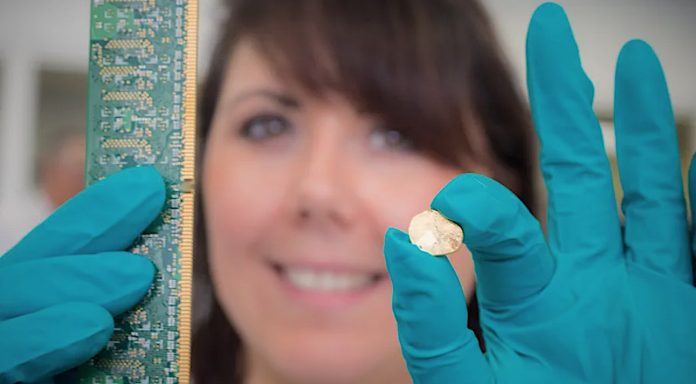
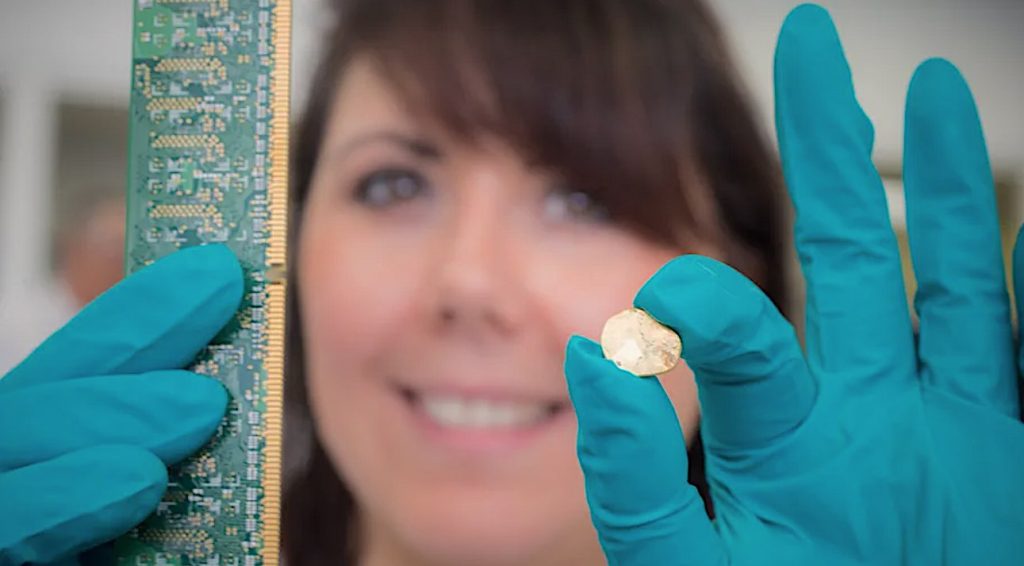
Inside every laptop and smartphone is an electronic circuit board—and gold is used as an insulator and a conductor of sensitive components.

Now, the British Royal Mint has placed this gold at the center of its sustainability strategy going forward. The mint is using a patented new chemistry—created by Canadian-based Excir—to recover and reuse the gold, and other metals, within these old circuit boards.

“We estimate that 99% of the UK’s circuit boards are currently shipped overseas to be processed at high temperatures in smelters,” said Sean Millard, Chief Growth Officer at The Royal Mint. “This approach is revolutionary and offers huge potential to reuse our planet’s precious resources, reduce the environmental footprint of electronic waste and create new jobs.”

The unique chemistry is capable of recovering almost 100% of the precious metals contained within electronic waste—selectively targeting the metal in seconds. However it is biodegradable, and has negligible impact on the environment.

Construction of a new plant in South Wales should be completed this year, and will be up and running in 2023—and capable of processing 90 tons of circuit boards every week, while producing hundreds of kilograms of gold.

A new 100% recycled gold investment fund that’s also Green

For at least 4,000 years, societies have seen the value in basing monetary exchange systems on gold. It allows a great amount of value to be stored in a very small object, and ancient metalsmiths found it was flexible, could never be contaminated with lesser metals, and could easily be melted down and reused.

From investing your dollars in public solar energy companies to literally buying shares of carbon offset programs in the carbon market, there are a lot of ways of trying to ensure your green stays green.

RELATED: New Technology is Recycling Tons of Lithium-Ion Batteries in Canada and the U.S.

The Royal Mint is now looking at the precious metals market to offer greener investing solutions, developing a 100% recycled gold ETF.

Partnering with Quintet Private Bank, the Mint is releasing a physical gold commodity ETF on the London Stock Exchange under the ticker RMAU. This fund will represent shares of bars made entirely from surplus or upcycled gold used in the minting process—and never gold that’s been extracted from conflict zones, or by extractive, emissions-heavy mining.

It’s impossible to know if a bar or coin owned today came from mining or from a recycled source, and normally the Mint’s surplus gold would be sold to third-parties to produce things like circuit boards or dental crowns.

RELATED: A Town Near Rome is Selling Old Homes for $1, a Trend Across Italy in Many Beautiful Villages

Now, however, the Mint is guaranteeing that all weight and shares of RMAU come from recycled gold.

Launching on the Italian, French, and German stock exchanges, there is currently no plan for introducing it on American exchanges, and thus an international broker would be required to purchase it from the States.

TURN Those News Feeds Gold With Good News; Share This…

This is the Gene That Could Prevent Parkinson’s Disease

By Milad Fakurian

Parkinson’s disease is a neurodegenerative disorder characterized by the destruction of a specific population of neurons: the dopaminergic neurons.

The degeneration of these neurons prevents the transmission of signals controlling specific muscle movements and leads to tremors, involuntary muscle contractions or balance problems characteristic of this pathology.

A team from the University of Geneva (UNIGE) has investigated the destruction of these dopaminergic neurons using the fruit fly as study model. The scientists identified a key protein in flies, and also in mice, which plays a protective role against this disease and could be a new therapeutic target.

Apart from rare forms involving a single gene, most Parkinson’s cases result from an interaction between multiple genetic and environmental risk factors. However, a common element in the onset of the disease is a dysfunction of mitochondria in dopaminergic neurons. These small factories within cells are responsible for energy production, but also for activating the cell’s self-destruct mechanisms when damaged.

The laboratory of Emi Nagoshi, Professor in the Department of Genetics and Evolution at the UNIGE Faculty of Science, uses the fruit fly, or Drosophila, to study the mechanisms of dopaminergic neuron degeneration. Her group is particularly interested in the Fer2 gene, whose human homolog encodes a protein that controls the expression of many other genes and whose mutation might lead to Parkinson’s disease via mechanisms that are not yet well understood.

In a previous study, this scientific team demonstrated that a mutation in the Fer2 gene causes Parkinson’s-like deficiencies in flies, including a delay in the initiation of movement. They had also observed defects in the shape of the mitochondria of dopaminergic neurons, similar to those observed in Parkinson’s patients.

Protecting neurons

Since the absence of Fer2 causes Parkinson’s disease-like conditions, the researchers tested whether—on the contrary—an increase in the amount of Fer2 in the cells could have a protective effect. When flies are exposed to free radicals, their cells undergo oxidative stress which leads to the degradation of dopaminergic neurons. However, the scientists were able to observe that oxidative stress no longer has any deleterious effect on the flies if they overproduce Fer2, confirming the hypothesis of its protective role.

MORE: Inspired by Woman Who Could Smell Parkinson’s on Skin, ‘E-Nose’ is Developed by Scientists to Do the Same

“We have also identified the genes regulated by Fer2 and these are mainly involved in mitochondrial functions. This key protein therefore seems to play a crucial role against the degeneration of dopaminergic neurons in flies by controlling not only the structure of mitochondria but also their functions,” explains Federico Miozzo, researcher in the Department of Genetics and Evolution and first author of the study.

A new therapeutic target

To find out whether Fer2 plays the same role in mammals, the biologists created mutants of the Fer2homolog in mouse dopaminergic neurons.

RELATED: Get Your Body Moving to Put the Brakes on Early Parkinson’s, Study Says

As in the fly, they observed abnormalities in the mitochondria of these neurons as well as defects in locomotion in aged mice. “We are currently testing the protective role of the Fer2 homolog in mice and results similar to those observed in flies would allow us to consider a new therapeutic target for Parkinson’s disease patients,” concludes Emi Nagoshi.

This research has been published in Nature Communications.

Source: Université de Genève

SHARE This Story With Others on Social Media…

“The first blooms of spring always make my heart sing.” – S. Brown

Quote of the Day: “The first blooms of spring always make my heart sing.” – S. Brown

Photo by: Bryan Young

With a new inspirational quote every day, atop the perfect photo—collected and archived on our Quotes page—why not bookmark GNN.org for a daily uplift?

10 Super Food Combinations to Improve your Health – Like Apples with Leafy Greens to Lower Blood Pressure

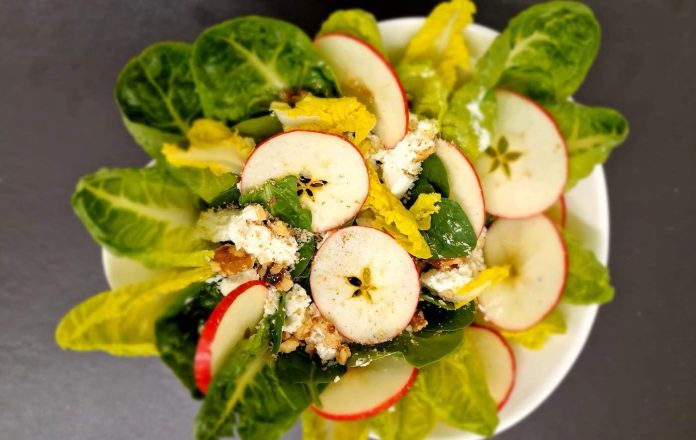
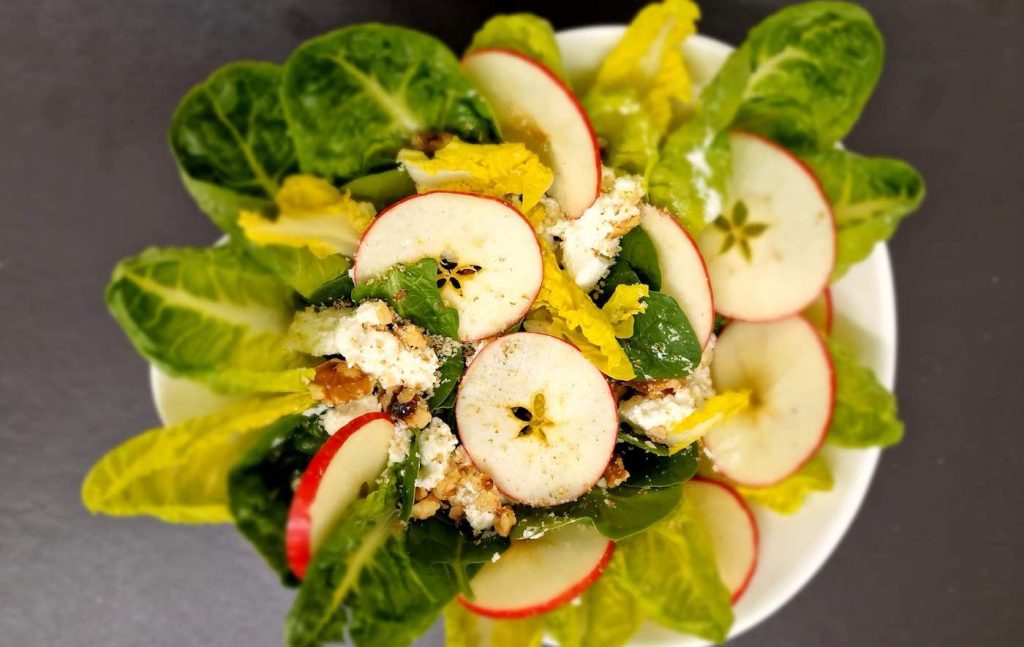
Apple, walnut and spinach salad - SWNS
Apple, walnut and spinach salad – SWNS

If you want to boost your mood, combine your daily apple with some leafy greens, while mixing grapes with onion can lower your blood pressure, according to diet experts.

Rob Hobson, a registered nutritionist with a special interest in food science has revealed the food combinations that can super-boost your health, as well as being healthy on their own.

Having a fish curry, which combines both turmeric and oily fish, can create a powerful anti-inflammatory—while eating a banana together with yogurt can improve your bone health and help with gut bacteria.

Olive oil helps the human body to absorb the vitamin A found in tomatoes and red peppers, which is required for healthy skin and eyes.

While black grapes, rich in polyphenol antioxidant catechin, help to prevent cardiovascular disease, cancer, and neurological disorders, and together with onion can inhibit blood clots and boost cardiovascular health.

MORE: Taking a Cooking Course Has Magic Pill Like Effects on Mental and Physical Well-Being

Other health-boosting food combinations include garlic and honey, which can help with upper respiratory tract infections, and almonds and berries which can help prevent heart disease.

But a study of 2,000 adults found 21 percent have little or no understanding of vitamins and minerals and their role within their body.

Rob Hobson, speaking on behalf of supplement brand Healthspan, which commissioned the research, said: “We thrive on synergies and many of us create them in our lives without even knowing we are doing them.

“From a biological point of view the body needs synergies to function properly.

“Food synergy is defined by the way in which certain foods and the nutrients they contain work together to offer health benefits stronger than the individual foods alone.

“So, sometimes simply combining two items can supercharge the impact it has on your health.

“While the foods may have their own individual health benefits, this can be even greater when mixing them together as they can help the other one to better do its job.

RELATED: The Perfect Answer for Berlin’s Invasive Species Problem – Make Them Into Delicious Cuisine

“Our diet is hugely important for our health and paying more attention to what we eat, and how we combine foods, can be really beneficial and these can then be harnessed to target specific conditions such reducing inflammation, managing diabetes and heart disease or dealing with symptoms of the menopause.”

SWNS

The study also found 54 percent of adults are unaware that combining different foods can benefit their health, and 31 percent never think about mixing foods together to get more out of them.

Yet, 54 percent think their diet is missing key vitamins or nutrients, with 39 percent blaming this on not knowing what vitamins and minerals are in different foods.

Another 36 percent put it down to not knowing what nutrients they need.

Vitamin D (38 percent), iron (33 percent) and vitamin C (31 percent) are among the nutrients people are most likely to think they are lacking.

As a result, 56 percent of adults currently take a supplement, with 46 percent of those taking vitamin D and 35 percent consuming a general multivitamin.

But 44 percent make no effort to ensure they get the right amount of vitamins every day, despite 80 percent believing someone’s health can be managed by what they eat.

CHECK OUT: Changing Your Diet Could Add Up to 13 Years to Your Life, Study Says

It also emerged people believed a lack of vitamins and minerals had left 46 percent suffering with a health issue.

Although just 32 percent of those polled, via OnePoll, are confident they would know the signs they are deficient in certain vitamins and minerals.

Dr Sarah Brewer, a medical director working with Healthspan, said, “Food should always be first but cleverly combining combinations of vitamins and minerals in supplements can also play a role in supporting our health.”

10 SUPER MEALS TO IMPROVE YOUR HEALTH WITH FOOD SYNERGY, ACCORDING TO ROB HOBSON

SWNS

1. Salmon, prawn and almond curry
Helps with: Reducing inflammation in the body which is at the root of all chronic diseases

Food synergy: Oily fish (salmon, trout, herring, sardines, mackerel) – omega 3 + turmeric (curcumin)

This fish curry is loaded with omega 3 fatty acids found in salmon and curcumin which is the active compound found in turmeric. Together, this food synergy can amplify the anti-inflammatory effects of the individual nutrients alone. Reducing inflammation in the body can help to reduce the risk of many chronic diseases including those of the heart.

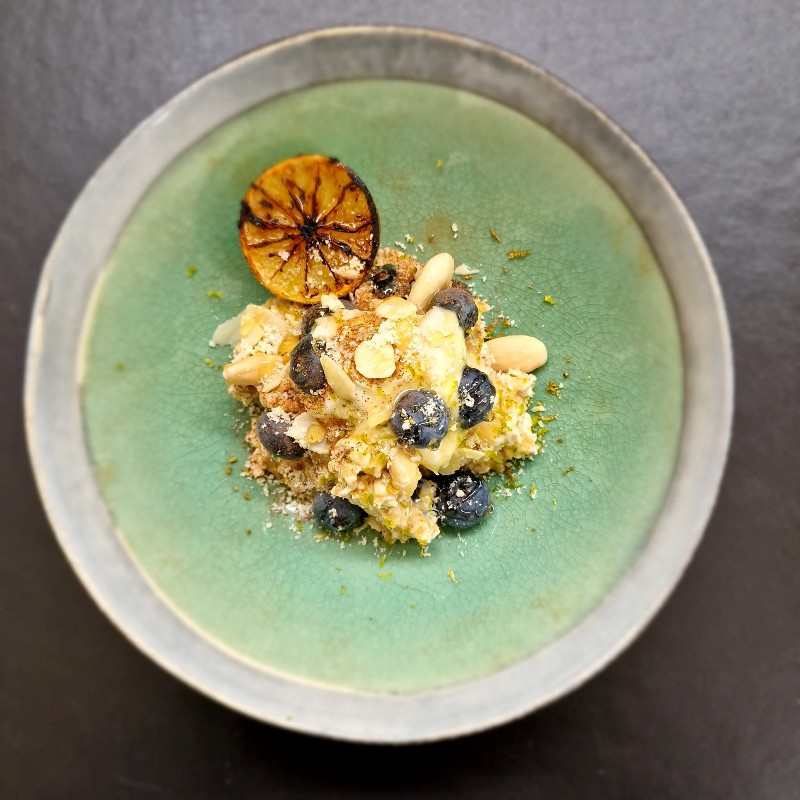
2. Overnight oats topped with almonds and berries
Helps with: Heart disease

Food synergy: Almonds (flavonoids) with foods rich in vitamin C (berries)

Almond skin contains flavonoids that act as powerful antioxidants in the body. In combination with vitamin C found in foods such as berries, this combination has been shown to help reduce the oxidation of LDL cholesterol. The oxidation of LDL cholesterol is now considered a key factor in the development of heart disease.

3. Tomato, avocado, and basil salad dressed with olive oil
Helps with: Heart health, prostate health

Food synergy: Foods high in lycopene (tomatoes) + olive oil

Lycopene is an antioxidant that has been linked to reducing the risk of heart disease. This plant compound has also been associated with an improvement in prostate health. Tomatoes are the richest source of lycopene which is aided in its absorption when combined with fat such as olive oil. Olive oil possesses many health benefits to support good heart health including reducing inflammation and increasing HDL cholesterol.

4. Breakfast smoothie made with probiotic yogurt and banana
Helps with: Healthy microbiota, bone health

Food synergy: Probiotic yogurt + banana (prebiotics)

Probiotic yogurt delivers beneficial bacteria such as Lactobacillus to the gut. Maintaining a balance of food to bad bacteria is essential for a healthy microbiota. This is important as the gut is where food is broken down and nutrients are absorbed and delivered around the body. Gut health is also closely linked to immunity. The addition of bananas adds prebiotics (inulin) to the mix. These indigestible fibres are fermented by bacteria in the gut – essentially, they are helping to feed the bacteria in your gut helping it to flourish.

5. Blue cheese and grape salad (include red onions)
Helps with: Heart health, blood pressure (circulation)

Food synergy: Black grapes (catechin) + onions

Black grapes are rich in polyphenol antioxidant catechin, which helps to prevent cardiovascular disease, cancer, and neurological disorders and in weight management. Together, onion and grapes inhibit blood clots and boost cardiovascular health. Studies have shown that this combination helps to improve cardiovascular protection by improving circulation.

6. Apple, walnut, and spinach salad
Helps with: Cognitive function and mood

Food synergy: Apples (flavonoids) + green leafy vegetables (spinach, kale, rocket) – dietary nitrate

Apples and green leafy vegetables – Apples are rich in flavonoids, and green leafy vegetables are rich in dietary nitrate. Studies reveal that combination of flavonoids and nitrate could increase nitrous oxide production. The increase in nitrous oxide following consumption of flavonoids and dietary nitrate could improve cognitive function and mood. Beetroot is also high in dietary nitrates.

7. Paprika and turmeric chicken (spice rub includes black pepper)
Helps with: Joint health

Food synergy: Black pepper (piperine) + turmeric (curcumin)

The active ingredient in turmeric is called curcumin and it has been widely researched for its anti-inflammatory properties. Curcumin is difficult to absorb in the body but in combination with black pepper its absorption is magnified. The active ingredient in pepper is called piperine which is responsible for this absorptive effect.

8. Black bean chili (includes red peppers)
Helps with: Iron deficiency anaemia

Food synergy: black beans (iron) + red peppers (vitamin C)

Iron deficiency is the most common nutrient deficiency across the globe. Non-haem iron from plant foods is less easily absorbed in the body. It is widely understood that non-haem iron is more readily absorbed in the presence of vitamin C. Plant source of iron include beans, pulses, lentils, dark green leafy vegetables, nuts and dried fruit. Red peppers are the richest dietary source of vitamin C but others include berries, broccoli, citrus fruits and potatoes.

9. Ginger and turmeric salad dressing (includes honey and garlic)
Helps with: Upper respiratory tract infections

Food synergy: Garlic (phenols) + honey

Garlic and honey are often cited as being singularly antibacterial. However, research shown that in combination they have a greater ability to reduce the growth of pathogenic bacteria which is due to the synergistic action of phenols and fatty acids found in the foods. It has also been suggested that in combination these two foods may be a useful alternative treatment for upper respiratory tract infections or can be used alongside pharmaceutically prescribed antibiotics.

10. Tomato, avocado, and chickpea salad dressed with olive oil
Helps with: Heart health, prostate health

Food synergy: Foods high in lycopene (tomatoes) + olive oil.

Lycopene is an antioxidant that has been linked to reducing the risk of heart disease. This plant compound has also been associated with an improvement in prostate health. Tomatoes are the richest source of lycopene which is aided in its absorption when combined with fat such as olive oil. Olive oil in itself possesses many health benefits to support good heart health including reducing inflammation and increasing HDL cholesterol.

SHARE These Healthy Recipes With More Chums…

Priceless Tapestry Is Made Whole as Missing Piece is Returned, Solving 40-Year Heist Mystery

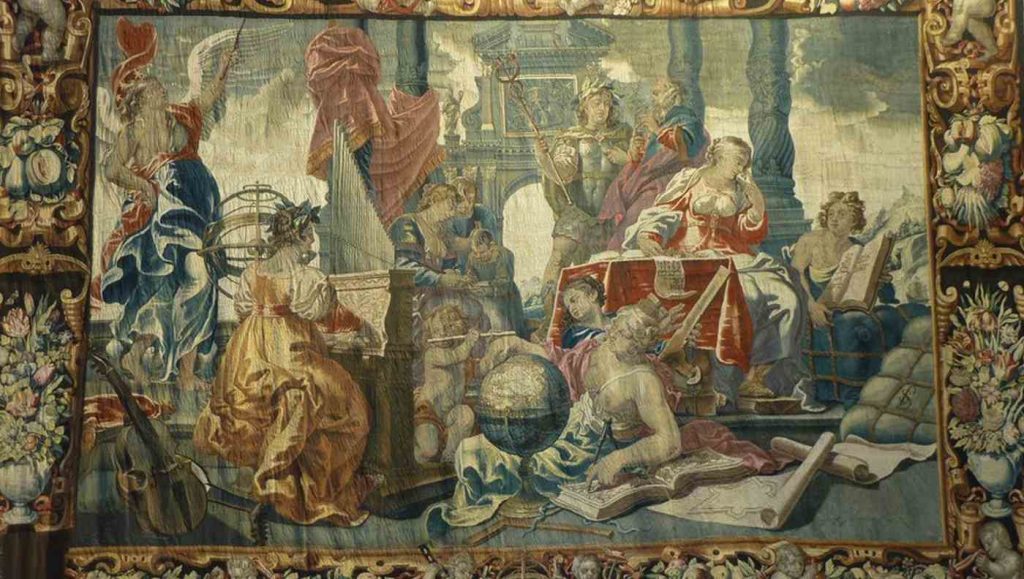
After an art thief stole six Belgian tapestries from a church in Spain, it took years for them to be recovered.

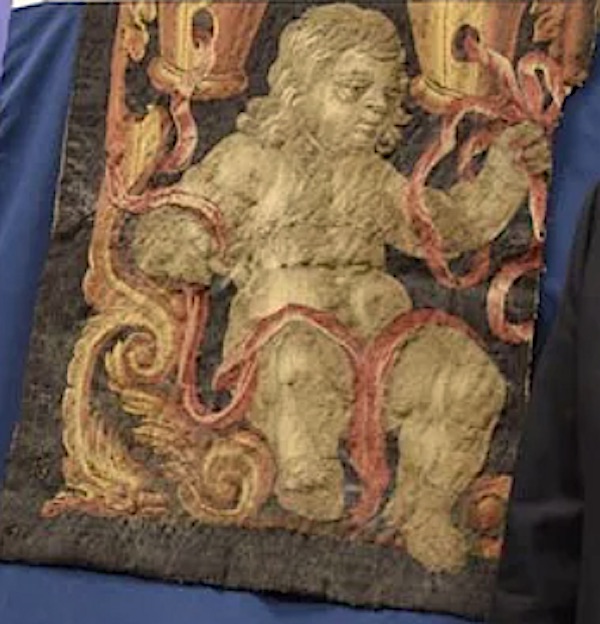
One of them, which came back with an infuriating new feature—a two-foot by two-foot square cut away from the bottom left corner—has finally been restored decades later, thanks to help from none other than the thief who brandished the scissors.

René Alphonse van der Berghe is sometimes known by another name: Erik the Belgian. A notorious art thief, “The Belgian” stole thousands of pieces throughout his career. Recently-deceased in his adopted country of Spain, Van der Berghe graced several newspapers with candid interviews, in which it must be said he reported several different totals for numbers of heists conducted and number of artworks lifted.

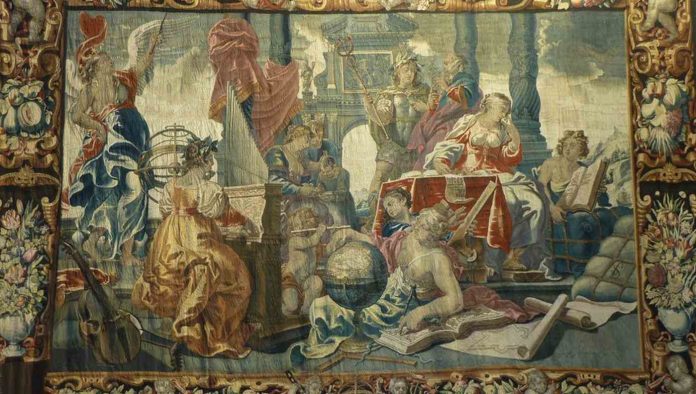
However, regarding the theft from the church in the remote town of Castrojeriz, Van der Berghe made off single-handedly with six tapestries woven in the 17th century depicting the liberal arts and the muses, the largest of which was 13 by 20 feet. Two years later, Van der Berghe turned himself in, and eventually aided in negotiating the return of thousands of the works he stole.

The missing square of the tapestry, depicting a cherub, was not returned in those years, and would remain apart for four decades until a Spanish investigator named Ángel Alcaraz took interest in the matter while working with the national police on a research report about art theft.

MORE: Internet Sleuth Solves 45-Year Guitar Mystery Returning the Beloved ’57 Gretsch to a Rock Idol

Seeing that Van der Berghe had returned the tapestries, Alcaraz contacted the thief’s lawyer to see if he had any leads on where the small square could be recovered.

The missing piece, courtesy of the Archdiocese of Burgos

Information regarding its whereabouts led to it being found shortly after, and a ceremony was held in which it was turned over to the Bishop of Burgos who oversees the Castrojeriz church.

“If heaven should lack one angel it would be a lesser heaven,” said Alcaraz at a press conference, according to a translation from Sam Jones at the Guardian. “And if this tapestry had lacked this little angel, it wouldn’t be the same tapestry. Today we are giving back to Castrojeriz something that should never have gone in the first place.”

RELATED: Restaurant Wants to Give Burglar a Second Chance – Offering Him a Job Application

The chief thief passed away in his home city of Malaga in 2020 at the age of 81, survived by five children he had with seven wives, one of which was his lawyer.

He never got a crack at his dream of going after the Mona Lisa, but he did write an autobiography called Erik el Belga, Por Amor al Arte or For the Love of Art.

He never committed a robbery with violence, believing it tainted the art thus stolen, and spent his final years painting, resting easy knowing that the police never caught him.

SHARE The Story of This Tapestry’s Great Escape—And Return…

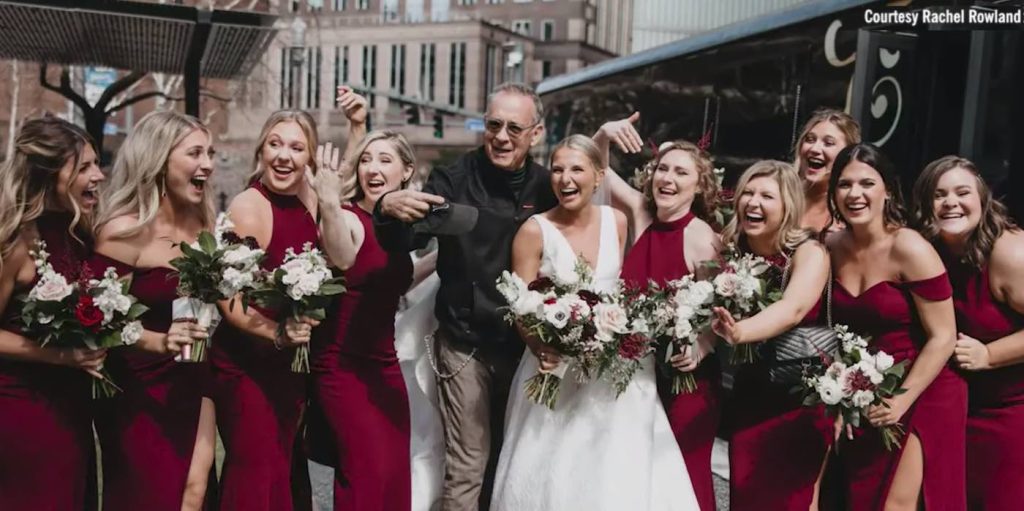
Tom Hanks Photo Bombs Another Bride, Making Best Wedding Photos Ever: ‘We All Lost It’

By Rachel Rowland / RachelRowland.com

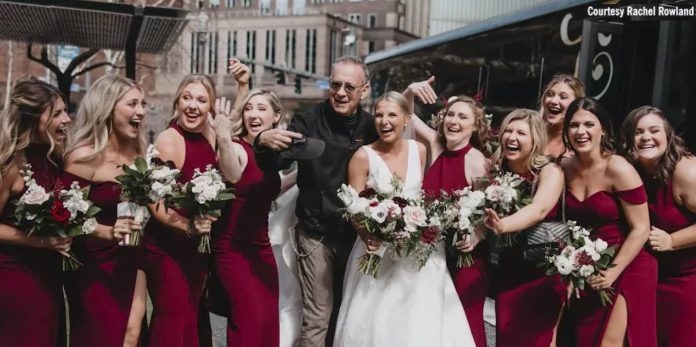
With all the subtlety of a wet blanket thrown over a campfire, Tom Hanks recently photobombed a bridal party in Pittsburgh.

“Hi, I’m Tom Hanks, I would love to get a photo with you,” said the A-lister after he spotted bride Grace Gwaltney all in white outside of the Fairmont Hotel.

“We all lost it,” wedding photographer Rachel Rowland told RCRA. “The bridesmaids shuffled out of the limo, and he posed with photos and congratulated everyone, and then as fast as he popped in, he was gone. It was just so sweet and fun!”

“You see him and then he starts speaking and he was like, ‘You look so beautiful. I’m so happy for you,'” recounts Gwaltney. “He was talking in my ear, I was thinking of Toy Story.”

Rita Wilson, Hanks’ longtime wife also jumped in for pictures with the bridal party before it sped off to Carnegie Music Hall for the ceremony, during which Gwaltney took the opportunity when she and her groom Luke were standing back-to-back during prayer to sneak in “I just met Tom Hanks.”

By Rachel Rowland / RachelRowland.com

This isn’t the first time Hanks has photobombed a wedding party. Encountering Diciembre and Tashia Farries who had just tied the knot on the beach by Santa Monica last October, he simply walked up and asked for photos.

“We see a guy walking through the crowd and initially I’m like, ‘Who’s this guy getting in our pictures?'” 37-year-old Tashia told People at the time. “And we hear everyone like, ‘Wait, is that Tom Hanks?'”

(WATCH the video for this story below.)

SAY ‘I do’ to Fun Stories Like This One; Share This Story…

Scientists Develop Invisibility Cloak for Cancer Drugs

Probiotic bacteria (green) is engineered to evade immune system (macrophage, transparent) CREDIT: Tal Danino Lab-Columbia Engineering via SWNS

An ‘invisibility cloak’ for cancer drugs has been developed by scientists.

It hides ‘good bacteria’ from the immune system, enabling them to reach tumors undetected.

The masked probiotic could revolutionize therapy. In experiments, it wiped out diseased cells in mice.

It is hoped the technique will work even better in humans, who are 250 times more sensitive to bacteria.

Biomedical engineer Professor Tal Danino said, “What is really exciting about this work is we are able to dynamically control the system.

“We can regulate the time bacteria survive in human blood, and increase the maximum tolerable dose.

“We also showed our system opens up a new bacteria delivery strategy in which we can inject bacteria to one accessible tumor, and have them controllably migrate to distal tumors such as metastases, cancer cells that spread to other parts of the body.”

Infection fighting T cells sometimes fails to distinguish friend from foe. The genetically engineered “microbial encapsulation system” solves this.

MORE: New Cancer Therapy Completely Destroys Advanced Ovarian and Colorectal Tumors in 6 Days

In nature, bugs protect themselves from attack with a coating of sugary polymers known as capsular polysaccharides, or CAP.

Tetsuhiro Harimoto, a PhD student in the lab, said, “We have shown proof of concept in mouse models.

“But given that humans are 250 times more sensitive to bacterial toxins than mice, we expect our results may have an even bigger effect on human patients than on mice.”

He explained, “We hijacked the CAP system of a probiotic E. coli strain Nissle 1917.

“With CAP, these bacteria can temporarily evade immune attack. Without CAP, they lose their encapsulation protection and can be cleared out in the body. So we decided to try to build an effective on/off switch.”

They named it iCAP (inducible CAP), tweaking the structure with a protein called IPTG that programs and alters the E. coli cell surface.

The team at Columbia University, New York, changed how long it survived in human blood, by tuning amounts of the small molecule.

Bacteria-based immunotherapy is a growing area of interest in cancer research – with a wave of techniques being explored today.

But the alternative approach faces a number of challenges. Unlike traditional drugs, they are alive and can proliferate within the body.

They are also detected by the body’s immune system as foreign and dangerous, causing high inflammatory response.

Too much means high toxicity due to over-inflammation or rapid bacteria elimination. Too little means no therapeutic efficacy.

Dr Jaeseung Hahn said, “In clinical trials, these toxicities have been shown to be the critical problem, limiting the amount we can dose bacteria and compromising efficacy. Some trials had to be terminated due to severe toxicity.”

The mouse tumor models showed iCAP increased the maximum tolerable dose tenfold thanks to the bacteria dodging immune cells.

LOOK: Experimental Treatment in Spain Puts 18 Cancer Patients in Complete Remission

Over time, the invisibility cloak disappeared meaning the bacteria was eliminated in other parts of the body without side effects.

In further tests, the system was engineered to produce an anti-tumor drug.

Bowel and breast cancers shrank significantly more in lab rodents compared to a control group.

There are more than 80 different types of CAP that exist just for E. coli and even more for other bacteria species that could be engineered using similar approaches.

In addition, CAP is not the only molecule that bacteria have on their surface, and other molecules could be controlled in a similar fashion.

MORE: New Cancer Therapy Completely Destroys Advanced Ovarian and Colorectal Tumors in 6 Days

What is more, other control systems such as biosensors could be used to autonomously control surface properties of therapeutic bacteria.

Mr Harimoto said, “While there is a good deal of laboratory research showing various ways to engineer microbes, it is very difficult to apply these powerful therapies to a complex animal or human body.

Added Prof Kam Leong, “Bacterial cancer therapy holds unique advantages over conventional drug therapy, such as efficient targeting of the tumor tissue and programmable drug release. Potential toxicity has been limiting its full potential.

“The cloaking approach presented in this study may address this critical issue.”

It is described in Nature Biotechnology.

SHARE the Hope, Share This Story…

“Where flowers bloom so does hope.” – Lady Bird Johnson (Happy Spring!)

Quote of the Day:  “Where flowers bloom so does hope.” – Lady Bird Johnson (Happy Spring!)

With a new inspirational quote every day, atop the perfect photo—collected and archived on our Quotes page—why not bookmark GNN.org for a daily uplift?

New Plant-Derived Sustainable ‘Plastic’ is Tough as Bone and Hard as Aluminum

MIT
MIT

The strongest part of a tree lies not in its trunk or its sprawling roots, but in the walls of its microscopic cells.

A single wood cell wall is constructed from fibers of cellulose­—nature’s most abundant polymer, and the main structural component of all plants and algae. Within each fiber are reinforcing cellulose nanocrystals, or CNCs, which are chains of organic polymers arranged in nearly perfect crystal patterns. At the nanoscale, CNCs are stronger and stiffer than Kevlar. If the crystals could be worked into materials in significant fractions, CNCs could be a route to stronger, more sustainable, naturally derived plastics.

Now, an MIT team has engineered a composite made mostly from cellulose nanocrystals mixed with a bit of synthetic polymer. The organic crystals take up about 60 to 90 percent of the material—the highest fraction of CNCs achieved in a composite to date.

The researchers found the cellulose-based composite is stronger and tougher than some types of bone, and harder than typical aluminum alloys. The material has a brick-and-mortar microstructure that resembles nacre, the hard inner shell lining of some molluscs.

The team hit on a recipe for the CNC-based composite that they could fabricate using both 3D printing and conventional casting. They printed and cast the composite into penny-sized pieces of film that they used to test the material’s strength and hardness. They also machined the composite into the shape of a tooth to show that the material might one day be used to make cellulose-based dental implants—and for that matter, any plastic products—that are stronger, tougher, and more sustainable.

MORE: Solar Panels Built From Waste Crops Can Make Energy Without Direct Light

“By creating composites with CNCs at high loading, we can give polymer-based materials mechanical properties they never had before,” says A. John Hart, professor of mechanical engineering. “If we can replace some petroleum-based plastic with naturally-derived cellulose, that’s arguably better for the planet as well.”

Gel bonds

Each year, more than 10 billion tons of cellulose is synthesized from the bark, wood, or leaves of plants. Most of this cellulose is used to manufacture paper and textiles, while a portion of it is processed into powder for use in food thickeners and cosmetics.

In recent years, scientists have explored uses for cellulose nanocrystals, which can be extracted from cellulose fibers via acid hydrolysis. The exceptionally strong crystals could be used as natural reinforcements in polymer-based materials. But researchers have only been able to incorporate low fractions of CNCs, as the crystals have tended to clump and only weakly bond with polymer molecules.

LOOK: 75% of People Worldwide Want Single-Use Plastics Banned, According to New Global Survey

Hart and his colleagues looked to develop a composite with a high fraction of CNCs, that they could shape into strong, durable forms. They started by mixing a solution of synthetic polymer with commercially available CNC powder. The team determined the ratio of CNC and polymer that would turn the solution into a gel, with a consistency that could either be fed through the nozzle of a 3-D printer or poured into a mold to be cast. They used an ultrasonic probe to break up any clumps of cellulose in the gel, making it more likely for the dispersed cellulose to form strong bonds with polymer molecules.

They fed some of the gel through a 3-D printer and poured the rest into a mold to be cast. They then let the printed samples dry. In the process, the material shrank, leaving behind a solid composite composed mainly of cellulose nanocrystals.

“We basically deconstructed wood, and reconstructed it,” Rao says. “We took the best components of wood, which is cellulose nanocrystals, and reconstructed them to achieve a new composite material.”

Tough cracks

Interestingly, when the team examined the composite’s structure under a microscope, they observed that grains of cellulose settled into a brick-and-mortar pattern, similar to the architecture of nacre. In nacre, this zig-zagging microstructure stops a crack from running straight through the material. The researchers found this to also be the case with their new cellulose composite.

RELATED: Scientists Develop Breakthrough Method for Recycling Industrial Plastics at Room Temperature in 20 Minutes

They tested the material’s resistance to cracks, using tools to initiate first nano- and then micro-scale cracks. They found that, across multiple scales, the composite’s arrangement of cellulose grains prevented the cracks from splitting the material. This resistance to plastic deformation gives the composite a hardness and stiffness at the boundary between conventional plastics and metals.

Going forward, the team is looking for ways to minimize the shrinkage of gels as they dry. While shrinkage isn’t much of a problem when printing small objects, anything bigger could buckle or crack as the composite dries.

“If you could avoid shrinkage, you could keep scaling up, maybe to the meter scale,” Rao says. “Then, if we were to dream big, we could replace a significant fraction of plastics, with cellulose composites.”

The research team’s results are published in the journal Cellulose.

Source: MIT

MAKE Good News Sustainable; Share It On Social Media…
Road in London Closes for Nearly a Month to Protect Migrating Toads as They Hop to the Other Side

Road sign for the toad patrol at the west end of Church Road, Ham. See SWNS story SWNNtoads. A 400 metre stretch of road in London has been completely closed for more than three weeks to allow toads to cross in safety to ponds where they breed. Part of Church Road in Ham near Richmond, in South West London will be blocked to motorists until the start of next month so the creatures don’t get squished on their annual migration. ‘Toad patrol’ volunteers man the road, which meanders through a leafy stretch of Richmond Park, at night but the road remains blocked off all day. Few locals appear to have seen any toads or many volunteers but this did not stop them heaping praise on the ‘very British’ idea locals say can be found ‘only in England’.
SWNS

A stretch of road in London has been closed to traffic for more than three weeks to allow toads to cross in safety to ponds where they breed.

A 400-meter (1,300-foot) section of Church Road in Ham, near Richmond is blocked to motorists until the start of April so the creatures don’t get squished on their annual migration.

‘Toad patrol’ volunteers man the road—which meanders through a leafy stretch of Richmond Park—at night, but the road remains blocked off all day. And locals have been heaping praise on the conservation initiative.

The charity Froglife, which is responsible for recruiting volunteers, says the road, which is one of many across Britain that take part in the eco-conscious project, is among just a handful that remain completely blocked off to traffic.

The closure began on March 7, and is due to remain in place until April 1.

CHECK OUT: ‘Comical-Looking’ Bat Thought to Be Extinct is Found Again After 40 Years in Dense Rainforest

A council road traffic order has been issued to block the road.

SWNS

Part of it reads, “The road closure is intended to allow the toads to cross the carriageway unharmed and to eliminate the risk of accidents if drivers were to be
distracted by the presence of these creatures in their path.”

Richmond Council began sealing off the street in 2010 after worried locals wrote to council bosses to warn that creatures were being killed on their annual migration from hibernation to ponds where they breed.

It has become a source of amusement among locals.

They say it is not too disruptive as the road is normally quiet, has few houses along it, and the diversion is not painfully long.

But an earnest sign warning drivers ‘road closed for migrating toads—toad patrol volunteers on the road’ has not stopped passers-by poking fun at it.

RELATED: 500% Boom in Numbers of Eggs Laid By Breeding Green Sea Turtles

A steady stream of walkers has been stopping to take pictures to share with friends.

Retired IT manager Robert Brown, who lives in Richmond, said, “I think it is fantastic. To have that amount of consideration for toads I think is incredible. I have never actually seen any toads and only once saw someone we thought might be a volunteer, but I think it is great… It is a very British thing to do.”

Retired customer services advisor Dorris Watt, from Ham, said, ‘’I think it is a good idea to protect the toads. This is not a road you desperately need to drive down and it has gone on without causing any complaints.

“Only people from outside the area would complain if they can’t park. The toads live here, don’t they, so it’s their right of way?’”

MORE: Two Newly-Identified Species of See-Through ‘Glass’ Frogs Found in Ecuador – Amazing Photos

Marketing consultant Liz Workman, from Chiswick, said, “We have to look after our world and our wildlife. Good on them.”

Retired computer programmer Terry Newman, from Richmond, said. “It (the sign) is one of the first things I ever posted on Facebook.

‘’We have ever actually seen a toad there but we think it is brilliant. I love nature and it is a great idea.

JUMP The Positive Conservation News Over to Your Pals…

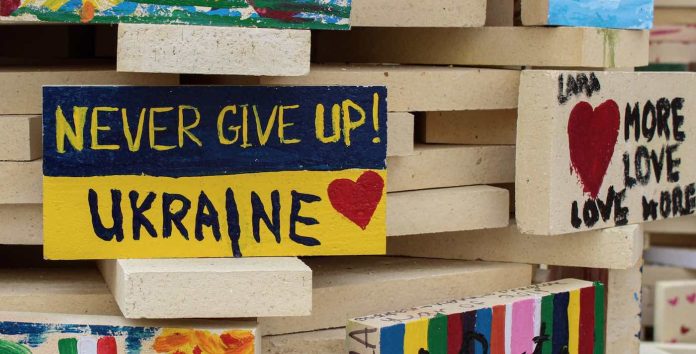
Ukraine Inspires Us With Humanity and Hope: 8 Positive Stories From the Conflict

From charities and governments, to celebrities and everyday people, millions are pitching in to ease the burden for fleeing or sheltering Ukrainians. In turn, they’re inspiring the world with their generosity and strength.

We searched the internet to find heartwarming positive stories about Ukraine, and hope they will be an antidote to the daily barrage of reports about the pain and hardship.

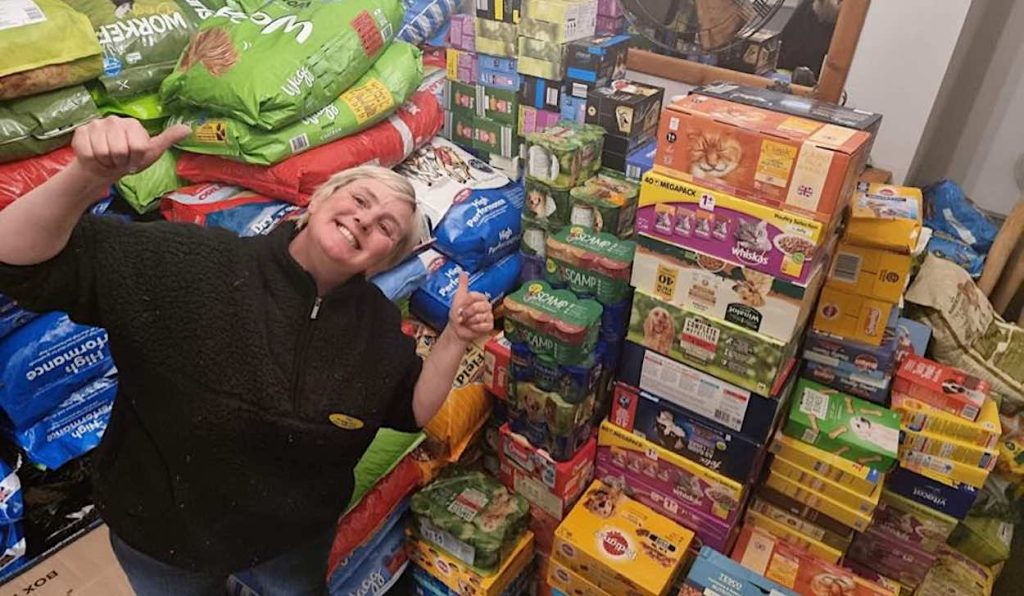
1) Dog Company Delivers Tons of Food for Ukrainian Pooches

SWNS

A dog transport company is helping to feed pooches in war-torn Ukraine after collecting nearly 11,000 pounds worth of food (5,000kg).

Daisybrook International Pet Transport was inundated with 300 bags of dog food and other donations from around the UK, and the Staffordshire company has dropped off the supplies at the Polish border, with owner Matthew Hunt delivering it in their specialized dog van, crammed to the roof with food—and with plans to make the trip once a week.

2) David Beckham Hands Over Instagram Account to Ukrainian Doctor

English soccer has turned been turned on its head over the war in Ukraine—with the British government sanctioning the Russian billionaire owner of Chelsea FC, the third best team in the country. Now David Beckham, legend of Manchester United, gave control of his Instagram account with more than 71 million followers to Iryna, the head of the regional perinatal center in Kharkiv.

MORE: Strangers are Leaving Strollers, Diapers, and Toys at the Border for Ukrainian Refugee Moms (LOOK)

Choosing only to be known by her first name, Iryna is working 24/7 to help mothers give birth safely in one of the conflict’s hottest zones.

“We are probably risking our lives, but we don’t think about it at all,” she wrote. “We love our work.”

3) Ukraine Joins European Power Grid, Ending Its Dependence on Russia

Mary, CC license

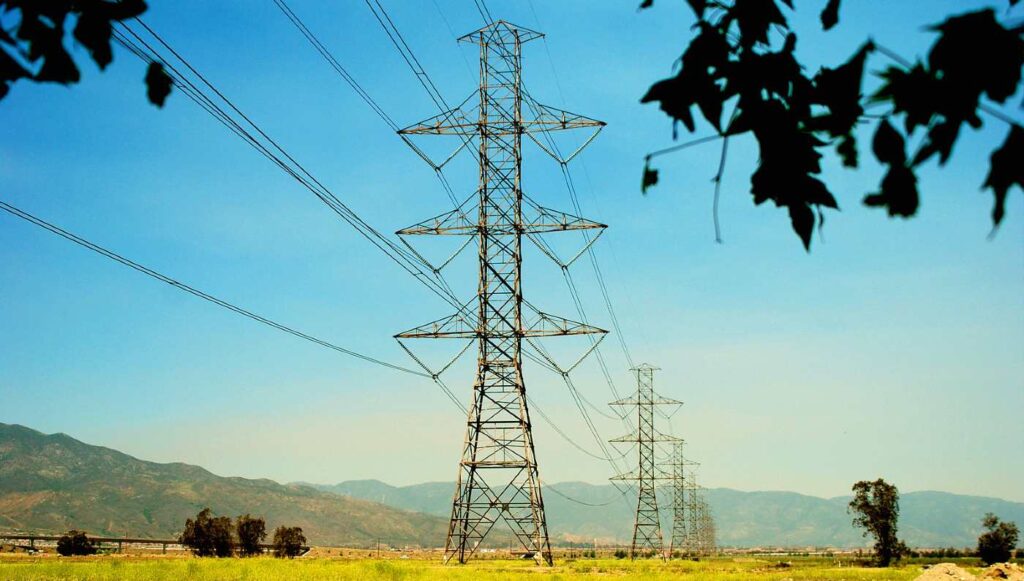
Belgium-based utilities company ENTSO-E connected the Ukrainian electrical grid to a largely-distributed system stretching across most of Europe, allowing it to end dependence on Russian power stations.

“This step will give Ukraine the opportunity to receive electricity if (Russia) continues to destroy our power infrastructure, and thus to save our power system,” said Volodymyr Kudrytskyi, who chairs the management board of Ukraine’s grid operator Ukrenergo. “We are sincerely grateful to our European partners for their great support and assistance during these difficult times.”

As well as reducing dependence on coal as a nice bonus, Ukraine could export nuclear power to elsewhere in Europe, which Brussels sees as a win-win.

4) Celebrity Chef Cooking For Free For Thousands on Ukrainian Border

José Andrés, the founder of World Central Kitchen, set up an emergency relief kitchen in the town of Przemyśl—just several miles from the border with Ukraine that is receiving tens of thousands of refugees every day. In twelve massive paella pans and twelve large ovens, they are cooking hundreds of thousands of meals.

RELATED: Endangered Baby Rhino Born in a Czech Zoo is Named After Kyiv (PHOTOS)

A warehouse in L’viv, in the west of Ukraine, is shipping trucks of these meals to cities further east like Odessa and Mykolayiv. To date they’ve served one million meals.

5) Hero vet is crossing into Ukraine to rescue trapped animals

SWNS

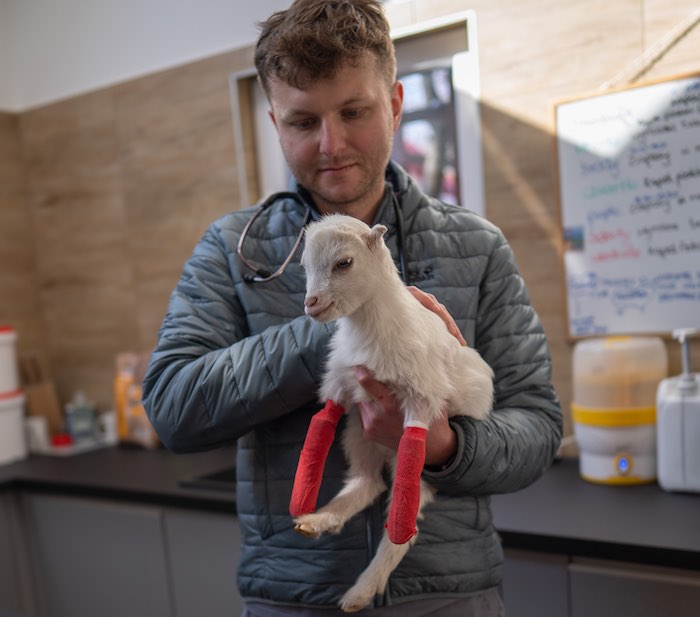
32-year-old Polish veterinarian Jakub Kotowicz launched a rescue trip into the war zone last week and has since rescued around 200 cats and 60 dogs from L’viv, in three convoys.

Now being cared for in his veterinary clinic are the rescued animals, including a pygmy goat with diseased legs and a large Sphinx cat who loves to cuddle. Jakub plans to keep the two-month-old pygmy goat kid, named Sasha, who shares a soft bed with two Chihuahuas, as part of his service with ADA Foundation. Jakub founded the animal rescue charity when he was 17, and runs a no-kill animal shelter in Przemysl, Poland, just 30 minutes from the border with Ukraine.

People can donate in dollars here, or in euros here.

6) Celebrities Donate Millions to Help Ukrainians

A number of A-listers have used their fortunes and their platforms to support relief for Ukrainians.

J.K. Rowling has pledged to match every pound sterling up to £1 million ($1.3 million) in donations to Lumos, a charity that’s focused on helping children in the war zones.

Mila Kunis and Aston Kutcher have pledged $3 million from their film and TV fortunes towards a GoFundMe drive with a target of $30 million. “While my family came to the United States in 1991, I was born in Chernivtsi, Ukraine, in 1983,” Kunis wrote on the GoFundMe page.

CHECK OUT: UPDATE: Airbnb and its Community Raise More Than $40 Million and Offers 150,000 Temp-Homes for Ukraine

Last week they passed their goal, exceeding it by $4 million.

Another celebrity couple helping out is Blake Lively and Ryan Reynolds, who tweeted that they would personally match any donation towards helping Ukrainian refugees up to $1 million.

7) Russia-Ukrainian Chef Duo Host Dinner-Fundraiser for UNICEF

Monika Grabkowska

Ukrainian chef Olia Hercules and Russian chef Alissa Timoshkina, long-time colleagues living in London, have started the Cook for Ukraine moment, which is encouraging restaurants to add small extra charges as a way to contribute a bit of sales to UNICEF’s work helping children in and out of Ukraine.

“Cook for Ukraine are hosting an event at The British Library theatre on 22 March to help raise awareness for the incredible food of Ukraine, and how it crosses many borders and communities,” Euronews writes. The fundraiser has already made £280,000 ($371000).

8) Italian Government Announces It will Rebuild the Mariupol Theater

Italy’s culture minister, Dario Franceschini, tweeted that a proposal introduced in parliament has passed to use Italian government funds to rebuild the destroyed theater in the city of Mariupol.

He noted that “Theaters of all countries belong to the whole of humanity.”

Share the Hope; Share This Story of Human Kindness and Generosity…