











All News - Page 409 of 1715 - Good News Network
Home Blog Page 409

Eye Drops to Replace Reading Glasses For Aging Eyes Go on Sale Following FDA Approval

The U.S. Food and Drug Administration has approved the first and only eye drop that can treat age-related blurry ‘near vision’.

The new ophthalmic solution called Vuity treats presbyopia, and is now available by prescription in pharmacies nationwide.

Presbyopia can be diagnosed through a basic eye exam by an eye doctor (optometrist or ophthalmologist) and is a common and progressive eye condition that affects 128 million Americans, or nearly half of the U.S. adult population.

“We are pleased to be able to bring this first-of-its-kind treatment to market sooner than expected for the millions of Americans with presbyopia who may benefit from it,” said Jag Dosanjh, a senior vice president for Allergan, an AbbVie company.

“Many Americans deal with presbyopia, which typically begins around age 40, by relying on reading glasses or resorting to work-arounds like zooming in on their digital devices to see up close. As an optometrist who also has presbyopia, I’m personally and professionally excited to try Vuity for myself, as well as offer it to my patients with age-related blurry near vision,” said optometrist Dr. Selina McGee, Fellow of the American Academy of Optometry.

RELATED: Red Light Therapy Could Improve Your Eyesight After it Declines Due to Age

Vuity is an optimized formulation of pilocarpine, an established eye care therapeutic delivered with proprietary pHast technology, which allows the drop to rapidly adjust to the physiologic pH of the tear film. This was studied in simulated tear film, and the clinical significance is unknown. Vuity uses the eye’s own ability to reduce pupil size, improving near and intermediate vision while maintaining distance vision.

The FDA approval of Vuity in October 2021 was based on data from two pivotal phase 3 clinical studies, which evaluated the efficacy, safety and tolerability of VUITY using a total of 750 participants aged 40 to 55 years old with presbyopia, randomized in the two studies in a one-to-one ratio to either Vuity or placebo.

One of the trial participants, Toni Wright, said, “It has become almost impossible to see clearly up close unless I wear my readers. I’m so excited this has now been approved and available as a treatment.”

Participants were instructed to administer one drop of VUITY or placebo once daily in each eye.

Both studies met their primary endpoints with a statistically significant proportion of participants treated with Vuity gaining three lines (the ability to read three additional lines on a reading chart) or more in mesopic (in low light), high contrast, binocular Distance Corrected Near Visual Acuity, without losing more than 1 line (5 letters) of Corrected Distance Visual Acuity at day 30, hour 3, versus placebo.

POPULAR: Fountain-of-Youth Pill Could Be on Horizon After Scientists Dramatically Extended Longevity in Mice

The new medicine takes effect in about 15 minutes, with one drop on each eye providing sharper vision for six to 10 hours, according to the company. The drops are for mild to intermediate cases and are less effective after age 65, as eyes age. Users may also have temporary difficulty in adjusting focus between objects near and far.

There were no serious adverse events observed in any participants treated with VUITY in either clinical study. The most common side effects occurring at a frequency of >5% were mild headaches and eye redness, reports the company in a statement.

Not typically covered by health or vision insurance, it costs around $76-$86 for a 30-day supply, depending on your pharmacy.

MORE BREAKTHROUGHS: Experimental Treatment in Spain Puts 18 Cancer Patients in Complete Remission

Visit your eye doctor (ophthalmologist or optometrist) to learn about getting a prescription, and learn more at www.vuity.com.


“Blessed is the season which engages the whole world in a conspiracy of love.” – Hamilton Wright Mabie

Quote of the Day: “Blessed is the season which engages the whole world in a conspiracy of love.” – Hamilton Wright Mabie

Photo: by Jonathan Borba

With a new inspirational quote every day, atop the perfect photo—collected and archived on our Quotes page—why not bookmark GNN.org for a daily uplift?


Wind Turbines Are Using Cameras and AI to See Birds –And Shut Down When They Approach

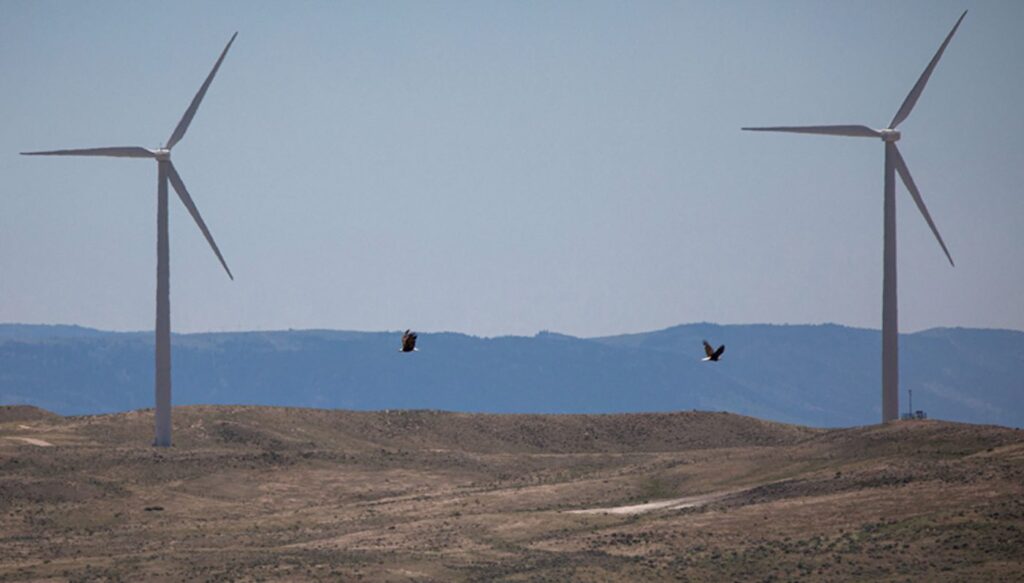
Wind power is a powerful tool for reducing carbon emissions that cause climate change. The turbines, however, can be a threat to birds and bats, which is why experts are looking for—and finding—ways to eliminate the danger.

Duke Energy

The US government has allocated $13.5 million to look for solutions. But, already a Boulder, Colorado company has produced a camera- and AI-based technology that can recognize eagles, hawks and other raptors as they approach in enough time to pause turbines in their flight path.

Their tool, called IdentiFlight, can detect 5.62 times more bird flights than human observers alone, and with an accuracy rate of 94 percent. https://www.identiflight.com/

Using high-precision optical sensors, the system calculates a bird’s speed and flight trajectory, and if it is on a collision path with a turbine, a signal is sent to shut that turbine down.

Winning an award for its performance in Australia, the tracking system was installed in 2018 at a Tasmanian facility and was found to cut eagle deaths at the Cattle Hill Wind Farm by more than four-fifths.

Each day, signals have shut-down their movement an average of 400 times—across the field of 48 turbines—for two to three minutes each time.

Across the globe, Duke Energy in Wyoming is employing the same technology with impressive results at its Top of the World Windpower Project.

The IdentiFlight network of camera units watch for bald and golden eagles. When a camera detects an approaching object, the system determines whether it’s an eagle within seconds.

Top of the World—named for a ridge where golden eagles roost—was the first wind site to use the technology. In 2014, IdentiFlight’s manufacturer, Boulder Imaging, used Top of the World for testing after eagles fatalities left the company in violation of the Migratory Bird Treaty Act.

RELATED: Retired Wind Turbine Blades Get Turned into Bridges and Reinforced Concrete

IdentiFlight’s cameras – Duke Energy

47 units made of eight wide-angle cameras now constantly scan the sky to monitor all 110 turbines. The camera unit is mounted to the top of a 30-foot pole and powered by software that learns and improves with each photo taken, as ornithologists vet previously identified birds.

An independent study conducted in 2020 by The Peregrine Fund, Western EcoSystems Technology, and the US Geological Survey, showed an 82 percent reduction in eagle deaths at the site, which is located in Glenrock.

Bird lover and director of National Audubon Society’s Clean Energy Initiative, Garry George, admits, “Our own science shows that climate change is by far the biggest threat to birds and the places wildlife need to survive.”

CHECK OUT: Largest Farm to Grow Crops Under Solar Panels Proves to Be a Bumper Crop for Agrivoltaic Land Use

“IdentiFlight will make it possible to combat the worst effects of climate change and protect the birds we love in the process.”

Indeed, a 2009 study using US and European data on bird deaths analyzed the number killed per unit of power generated by wind power vs fossil fuel and nuclear, estimating that for every bird killed by a turbine, nuclear and fossil fuel powered plants killed 2,118.

Eagles have been capable of adapting, too. Some of the raptors living at Top of the World have been on the site for years, and have had no issues avoiding the blades.

Duke Energy announced it is installing IdentiFlight at Frontier Windpower II in Oklahoma and Wyoming’s Campbell Hill site.

FLY This Innovation to Your Flock of Friends on Social Media…

Monarch Population Soars 4,900 Percent Since Last Year in Thrilling 2021 Western Migration

Shiebi AL

When just 200 Western monarch butterflies arrived in the Pismo Beach Butterfly Grove from their northerly migration last year, park rangers feared the treasured insect would soon be gone forever.

Monarchs in Pismo Beach, CA by Steve Corey, CC license

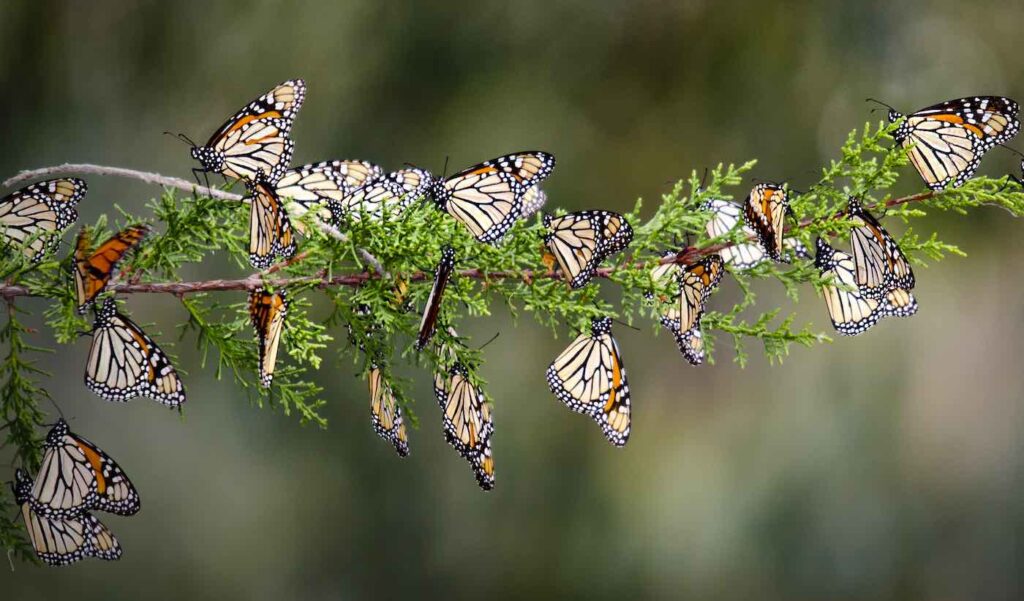
This year, however, volunteers tallied their numbers at over 100,000, a spectacular swarm of hope that traveled down from as far north as Canada to the spend the winter on the California coast.

It’s expected that the monarch butterfly will be placed on the Endangered Species List soon, due to declines in both western and eastern monarch butterfly numbers. Genetically indistinguishable, they are separate merely for the fact that monarchs living and migrating east of the Rockies overwinter in Mexico, while those on the western side of the Rockies overwinter along California’s west coast.

This year, the monarchs arrived early—and in droves. The Xerces Society for Invertebrate Conservation held their annual Thanksgiving count, and volunteers arriving at the break of dawn to count butterflies still lying quietly on tree trunks found a living curtain of orange and black. Early estimates put the tally at 100,000 individuals.

The butterfly boom brought joy to gardeners and park rangers alike.

Danielle Bronson recounted, it was the the sight of monarchs covering every square inch of bark and branch that spurred her with the desire to become a park ranger when she was young. To see the monarchs return this year in such numbers was special.

CHECK OUT: Listen to Millions of Monarch Butterflies Make One of the Rarest Sounds on Earth: ‘Just like a waterfall’

“Last year was devastating, but this year I’m very hopeful,” she told the Christian Science Monitor.

Xerces says the Biden Administration’s spending bill includes $10 million over five years to be given for building monarch habitat west of the Rockies, such as replenishing the population of native milkweed plants, particularly along highways and power lines where nothing else is being done with the land.

“Providing funding for roadside pollinator habitat can help bees, monarch butterflies and other flower visitors,” stated Sarina Jepsen, the Xerces Society Director of the Endangered Species program. “The good news is that transportation agencies can adjust practices to help pollinators without compromising safety or other primary objectives.”

Bronson points out that individuals like you can also make a real difference.

The simplest method she says is to plant nectar-producing flowers, but not milkweed. Sometimes milkweed is sold in non-native varietals, which can distract migrating butterflies along their route. So, unless a gardener know the difference between the two, planting nectar-ing flowers will, instead, provide valuable food sources along their long migration journey.

LOOK: Smithsonian Says These Moths Are So Gorgeous, They Put Butterflies to Shame:

“You really can’t go wrong on that one, because you’re not just helping monarchs, you’re helping all pollinators,” she says.

The butterflies will gain significant protection if named to the U.S. Fish and Wildlife Service’s endangered list: it is the single most-effective conservation program in the world, with 99% of the almost 300 listed species in its history avoiding extinction.

Meanwhile, whatever has exploded the western monarch numbers this year is a welcome change and may well continue into the 2020s.

FLY This Fantastic News to Butterfly Fans By Sharing on Social Media…

Santa Switching to an EV Sleigh Would Save Him Over $8,000

With Santa commencing his busiest night of the year on Christmas Eve, a sustainability company looked into his round-the-world trip of 100 million miles.

Uswitch revealed that Santa would save 50% in costs by switching to an EV sleigh, if he were using a gasoline model.

Of course, he would also need to feed his reindeer lots of carrots and treats, too.

If he were to compare a round the world trip in an EV sleigh, it was calculated that it would cost 39 cents per kW— $9,000,000—as compared to filling up with gasoline costing over $18,000,000.

“Using an EV sleigh saves Santa a huge 50%, which could be put into making more presents for children across the world,” said Will Owen, an energy consultant at Uswitch.com.
According to ScienceFocus, the distance Santa would have to cover on a Christmas night would be 100,000,000 miles.

Assuming that Santa’s sleigh is akin to Tesla Model S, which is reported to have a 620-km range, the total energy needed for Santa to cover the distance would be under $9,000,000.

FUNNY: Woman Falls Down Mountain, Writes Hilarious Review For Leggings Giving Them 5-Stars

Alternatively, if Santa’s sleigh had an internal combustion engine, with fuel consumption equivalent to an average car, Santa would need gasoline costing $18,000,000.

Whether you are driving a gasoline or EV car, we hope you have a Merry Christmas, and a new year filled with sustainability and savings.

DRIVE This to Social Media to Encourage EV Car Choices in the New Year…

“Christmas waves a magic wand over this world, and behold, everything is softer and more beautiful. ” – Norman Vincent Peale

Quote of the Day: “Christmas waves a magic wand over this world, and behold, everything is softer and more beautiful. ” – Norman Vincent Peale

Photo by: Roberto Nickson

With a new inspirational quote every day, atop the perfect photo—collected and archived on our Quote of the Day page—why not bookmark GNN.org for a daily uplift?

Cats Are Less Stressed in Families With Children Who Have Autism, Study Finds

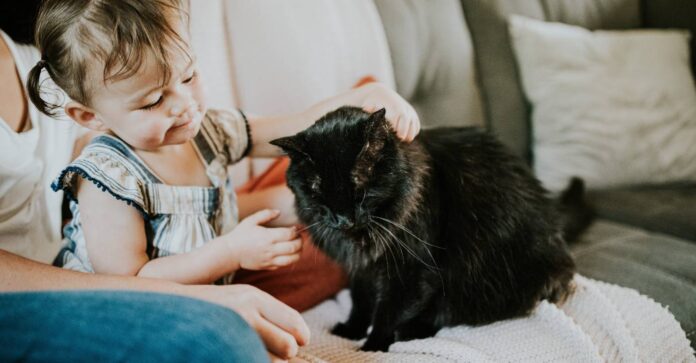
While researchers have found that adding a shelter cat to the family can help lower stress and anxiety for children with autism, a new study shows that joining a family does wonders for the felines, too.

“It’s not only important to examine how families of children with autism may benefit from these wonderful companion animals, but also if the relationship is stressful or burdensome for the shelter cats being adopted into a new, perhaps unpredictable environment,” said Gretchen Carlisle, a research scientist at the University of Missouri Research Center for Human-Animal Interaction (ReCHAI) in the MU College of Veterinary Medicine.

“In our study, we found the cats acclimated well to their new families and became significantly less stressed over time.”

The findings highlight the mutual benefits of human-animal interaction and build off previous MU research that found pets may help reduce stress and anxiety for both children with autism and their parents.

Carlisle and her team monitored shelter cats for 18 weeks after being adopted by Missouri families with at least one child with autism. The cats were first screened using the Feline Temperament Profile to identify shelter cats with a calm and laid-back temperament.
After families selected a cat that had passed the screening, researchers made home visits to check on the cats 2-3 days after adoption and then every six weeks for 18 weeks, to see how they acclimated to their newly adopted families.

RELATED: 65 Cats Are Treated Like Favored Guests at the World Renown Hermitage Museum in Russia

“Cortisol is a stress measure we tracked through collecting samples of the cats’ feces, and we noticed a significant decrease in cortisol over time,” Carlisle said.

“Cats also tend to lose weight due to not eating if they are stressed, but we found the cats actually gained a bit of weight initially after adoption and then maintained their weight as time went on, so both findings indicated the cats acclimated well.”

Carlisle explained that children with autism may have sensitivity or sensory issues and occasional problem behaviors accompanied by loud, sudden outbursts.

Because of those concerns, shelter cats that have been screened for a calm, easy-going temperament may increase the likelihood of a better long-term match for both the children and the cat.

MORE: Cats Track Their Owners’ Movements, Research Finds

“It’s crucial to look after the welfare of the cats from a humanitarian standpoint, and this research also helps animal shelter staff overcome the financial and management hurdles that can result when cats are returned to shelters if there is not a good fit with the adopted family,” Carlisle said of the study, published in Frontiers in Veterinary Science

“Obviously, the shelters want to place all of their cats in homes, but some families may require a more specific fit, and using research-based, objective measurements for screening temperament may help increase the likelihood of successful, long-term matches.

“Our hope is that other scientists will build on the work of our exploratory study so shelter cats and families of children with autism might benefit.”

Source: University of Missouri-Columbia

PAW This Fascinating Research Over to Social Media…

See Beautiful Display of Christmas Wreaths on These Colorful Georgian Homes

SWNS
SWNS

These pictures show a beautiful display of Christmas wreaths against the backdrop of colouful Georgian townhouses.

Festive wreaths were seen hanging on 20 brightly coloured doors around Edinburgh’s elegant New Town in Scotland.

MORE: Christmas Fanatic Turns Her Office Cube Into Incredible Life-Sized Gingerbread House (LOOK)

A Christmas staple, the wreaths adorned the pink, purple, blue, red,and yellow front doors of the townhouses, and were decked out with baubles, flowers, and greenery.

Take a look below and choose your favorites.

SWNS
SWNS
SWNS
SWNS
SWNS
SWNS

SHARE These Festive and Fun Wreath Photos All Over Social…

“Recognizing the sacred begins when we are interested in every detail of our lives.” – Chögyam Trungpa

Quote of the Day: “Recognizing the sacred begins when we are interested in every detail of our lives.” – Chögyam Trungpa

Photo: by Fabrice Villard

With a new inspirational quote every day, atop the perfect photo—collected and archived on our Quotes page—why not bookmark GNN.org for a daily uplift?


Spectacular Time Lapse Shows the Hypnotic Flames on the Surface of the Sun (WATCH)

SWNS
SWNS

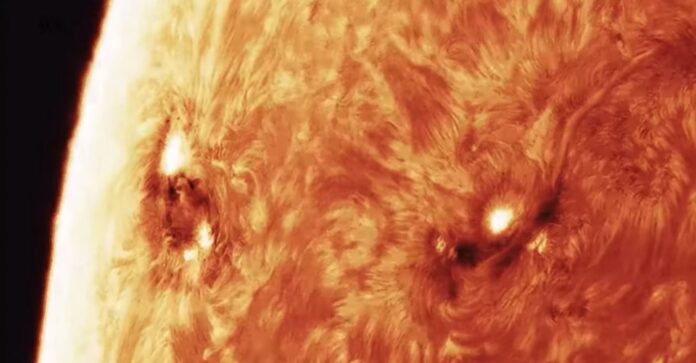
These spectacular time lapse images taken with a powerful telescope show the hypnotic flames on the surface of the sun

39-year-old Deddy Dayag used two super powerful telescopes to film the sun’s surface over several hours in order to create mesmerizing time lapse videos.

He uses a 152mm achromat refractor telescope, a 200mm Schmidt Cassegrain telescope, and an h-alpha 0.5 angstrom h-alpha filter on a tracking mount to capture sights impossible to see with the naked eye.

Deddy, from Israel, said, “I capture the sun because it is the most interesting and fascinating object that is near enough to explore from Earth.

“The sun, which is a star like all other stars in the universe, is constantly changing and we, as humans living out our lives, don’t even notice it. Most of the time we just think of it as a bright light in the sky.

“A few seconds of watching those videos and your entire view of it changes.

MORE: Chinese Rover Spots Weird, Large ‘Cube’ on the Moon

“When I reviewed the footage for the first time I was blown away! Literally I shouted with excitement.

“And now, after almost two years of imaging the sun, I can still say that I get excited every time I aim my telescope up there, because each time you don’t really know what to expect, each time is a surprise!

RELATED: Thrilled Astronomers in Chile Are First to Photograph a Moon-forming Disc Around an Exoplanet

“I hope people will watch those videos and understand how small we are compared to our star. Our sun (named Sol) holds 99.8% of the entire solar systems mass.

“We are a grain of dust.”

(WATCH the 2021 footage below.)

SHARE This Awe-Inspiring Video With Chums..

Mystery Santa Caught on CCTV Sneaking Around at Night, Leaving Gifts for Residents to Find

SWNS
SWNS

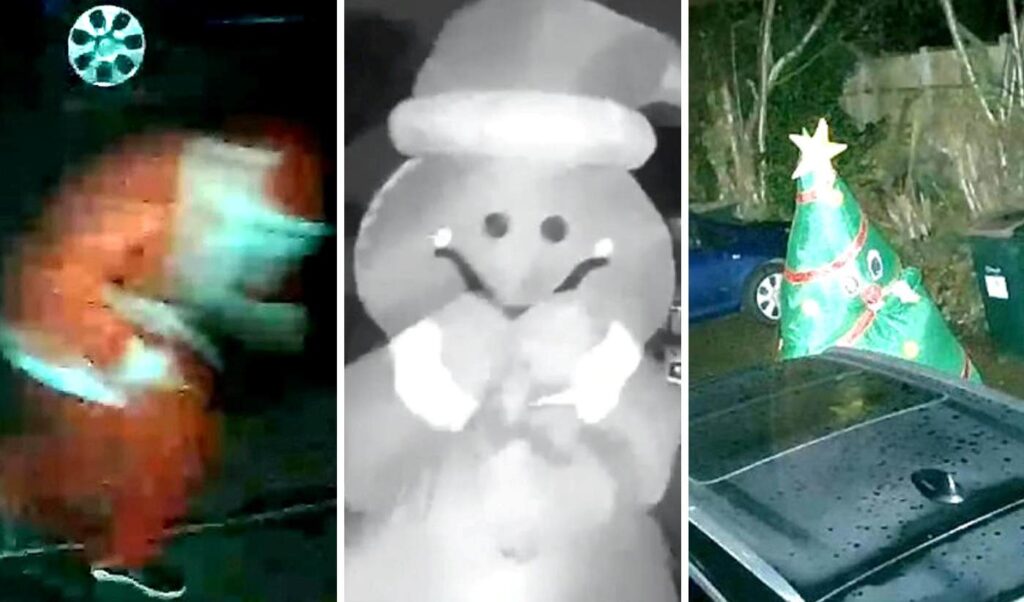
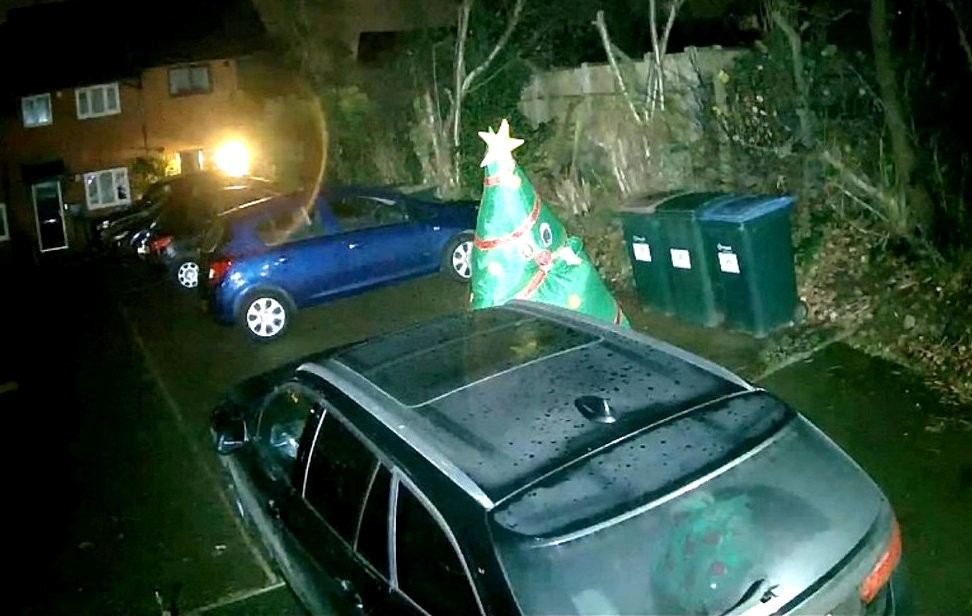
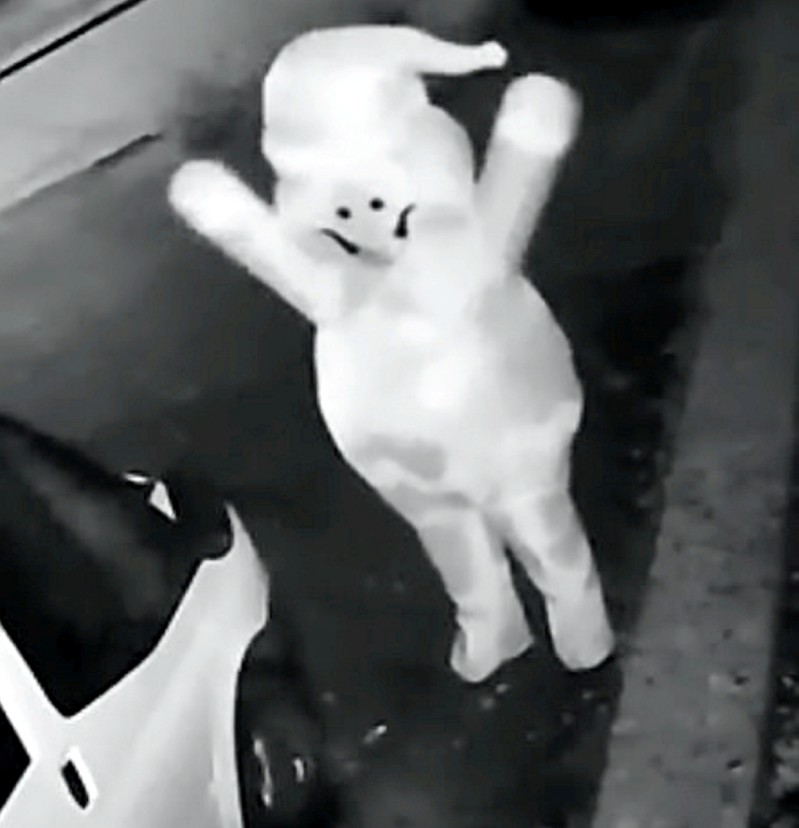
A mystery secret Santa has been caught on CCTV spreading Christmas cheer by leaving festive treats for residents in a quiet cul-de-sac.

Baffled locals in Holbrooks, Coventry, were left scratching their heads when candy canes suddenly appeared overnight outside their homes last week.

SWNS

And one homeowner was pleasantly surprised when CCTV revealed the culprit behind these random acts of kindness was Father Christmas himself.

Comical footage shows Santa and an accomplice dressed as a giant Christmas tree making the drop-offs around Alderney Close in England in the middle of the night.

Families say their children have been delighted when they awoke to discover sweets left behind on their mums and dads cars ahead of the big day.

Resident Becky Leaper was left in hysterics when she checked back her security camera footage to see Santa and his helper delivering the gifts.

SWNS

Becky, a police staff worker who lives with husband Michael and his two children, said: “Me and my husband found it really funny the first time.

RELATED: Brits Reveal Their Best-Loved Holiday Traditions, Like Christmas Jumpers on Boxing Day

“And then the second time my husband thought someone was trying to break into our car so opened the window and then burst out laughing.

“The tree then walked all the way up our drive and put a candy cane on the van as well, then went up to our neighbours.

“The kids think it’s really funny and that Santa is having them delivered. We’re waiting to see who it will be this Sunday.

MORE: Christmas-Loving Mom Transforms Her Home Into Real-Life Gingerbread House (LOOK)

“We all think it’s great and after such a rubbish year it’s good to lift spirits—it’s nice for people to have a good laugh and the kids get excited to know who it is when everything else is so negative.

Another local resident, Des Carpenter, added, “It certainly has spread a bit of festive cheer that’s for sure and it’s a lovely thing for them to do.

SHARE the Festive Fun; Share This Story…

Experimental Treatment in Spain Puts 18 Cancer Patients in Complete Remission

Multiple_myeloma CC license wikimedia commons KGH
Multiple myeloma , CC license 

18 out of 30 Spanish patients with incurable blood cancer are in complete remission, and a few more have seen the cancer’s progression stopped in its tracks, thanks to a new and much cheaper treatment option.

Using a patient’s own white blood cells, doctors reprogramed them to better identify and attack the cancerous cells which cause multiple myeloma.

The treatment essentially saved the lives of the 18 patients, all of whom had earlier stage treatments like bone marrow transplants and chemotherapy fail, after which the survival rate becomes “very, very low,” according to the Spanish doctor leading the procedure.

That doctor was hematologist Carlos Fernández de Larrea, who announced the good news on Friday.

“Even though it is an incurable disease, achieving complete remission has a significant impact on patient prognosis. It is directly linked to greater survival,” Fernández de Larrea told El Pais.

RELATED: New Cancer Treatments May Be on The Horizon – Success in mRNA Vaccine Trials Use Patients’ Immune Systems

Multiple Myeloma is the incurable second-most common blood cancer, and it begins in the bone marrow where immature blood cells mutate into cancerous forms of white blood cells called plasma cells.

The treatment is called ARI-0002h, and it’s part of a new family of cancer-fighters called CAR-T, which stands for chimeric antigen receptor T cells, but holds the honor of the first such European treatment to receive approval for use by a regulatory agency.

MORE: Anti-Cancer Drug Derived From Himalayan Plant Clears Early Clinical Trials

Developed at the state run hospital in Barcelona, CAR-T is estimated to cost €90,000 ($102,000), about a third of the cost from similar CAR-T options coming out of companies Bristol Meyers Squibb and Janssen.

As well as demonstrating a 60% remission rate, 75% of the 30 patients showed no progression of the disease one full year after.

PUT Bad News in Remission; Share the Good…

“There is nothing more difficult to achieve than a passionate, sincere, quiet faith.” – Andrei Tarkovsky

Quote of the Day: “There is nothing more difficult to achieve than a passionate, sincere, quiet faith.” – Andrei Tarkovsky

Photo: by Guilherme Stecanella, CC license (cropped)

With a new inspirational quote every day, atop the perfect photo—collected and archived on our Quotes page—why not bookmark GNN.org for a daily uplift?

Keeping Active Can Reduce the Risk of Dementia, Scientists Find

Older adults who participate in a variety of different activities are able to reduce their risk of developing dementia, according to a new study.

The team at Simon Fraser University found that engaging in a combination of hobbies, such as light exercise and connecting with loved ones, can reduce memory decline in adults between the ages of 65 and 89 more than any individual activity.

Their findings show that the effects of engaging in a combination of activities increased with age and was more impactful than historical factors such as education level or baseline memory.

The study examined data from the National Institute on Aging’s Health and Retirement Study and included 3,210 participants aged 65 to 89. Study participants were asked how often they engaged in 33 activities from ‘never’ to ‘at least once a month’ to ‘several times a month’ up to ‘daily’.

Researchers created a machine learning model to analyze the activities’ impact on memory. The activities ranged from hobbies such as baking or cooking, reading, playing cards and games to walking for 20 minutes, or socializing with family and friends through letters, email, phone calls, or in-person visits.

RELATED: Dementia Sufferer Defies Diagnosis to Conduct Symphony Orchestra at Age 81: ‘It was magical’

“Our study results show that the risk of developing dementia can be reduced through a combination of active, daily activities—things like using a computer and playing word games,” says study co-author Sylvain Moreno, an associate professor at SFU’s School of Interactive Arts and Technology (SIAT) and CEO/scientific director of the Digital Health Circle, based at SFU.

“Scientists believed that genetics were the main factor influencing cognitive health but our findings show the reverse. With age, your choice of daily activities is more important than your genetics or your current cognitive skills,” Moreno adds.

The researchers suggest their study results, published in the journal Aging, could have a significant impact on aging health policies, including promoting new social prescribing programs to help older adults keep mentally active into their senior years.

Social prescribing involves connecting older adults to a range of activities in the community such as gardening, art classes or volunteering.

MORE: Coffee and Tea Drinking May be Associated With Reduced Rates of Stroke and Dementia

Older adults are more at risk of developing dementia and other neurodegenerative disorders for which there is no cure, which is why prevention is so important.

Their research demonstrates that strategies for prevention are effective and a social prescribing approach to healthcare can help people maintain healthy cognitive function as they age—that’s hopeful news indeed.

Source: Simon Fraser University

KEEP Hope Moving; Share This Research…

Wildlife Photographer Captures Charming Portraits of the Creatures That Visit Her Garden

SWNS
SWNS

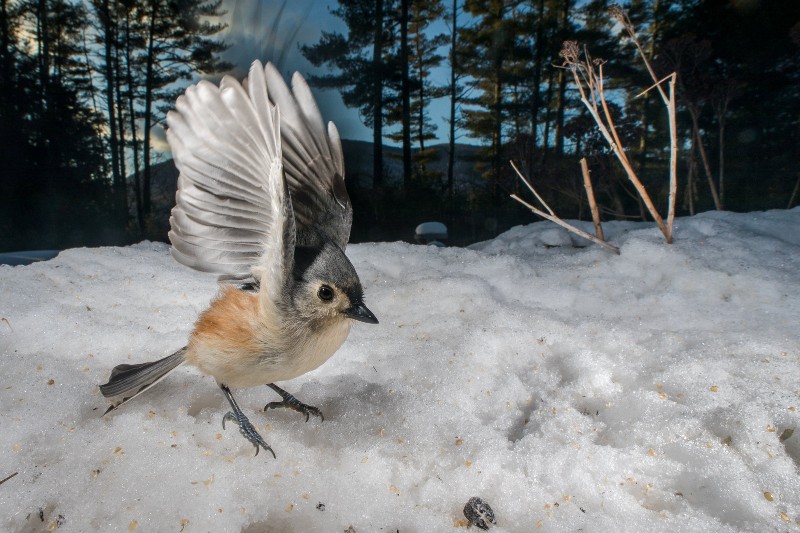
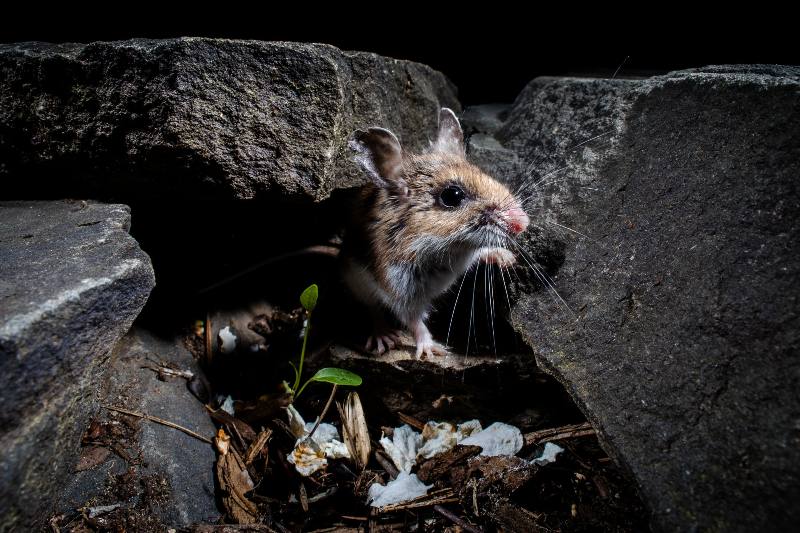
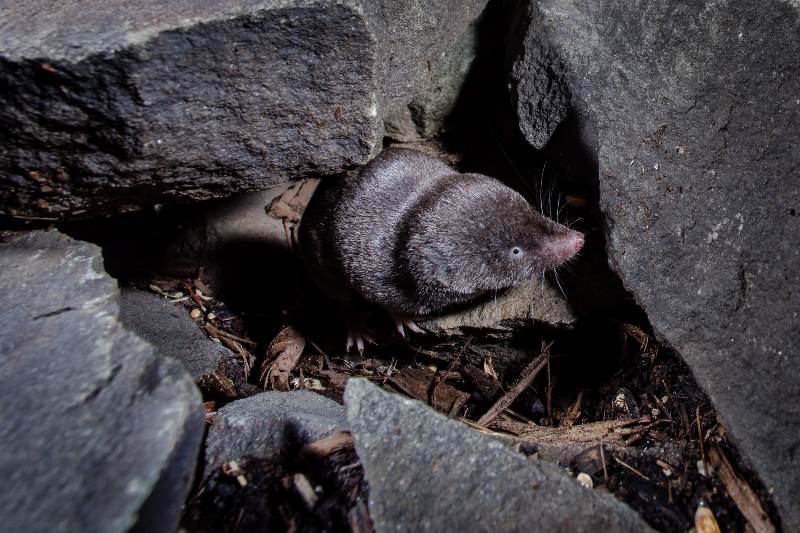
A wildlife photographer has captured charming portraits of the creatures that visit her garden.

Carla Rhodes placed a camera trap outside her home in the Catskill Mountains of New York.

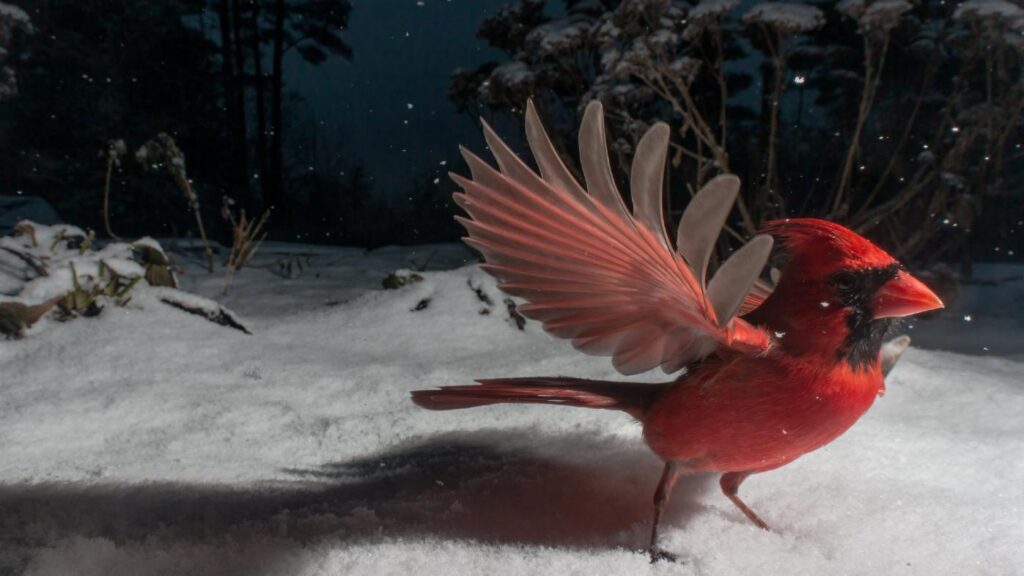
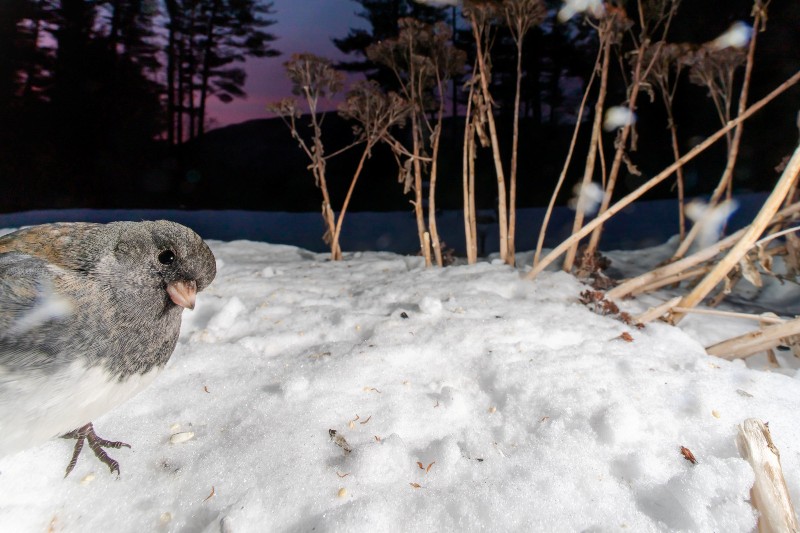
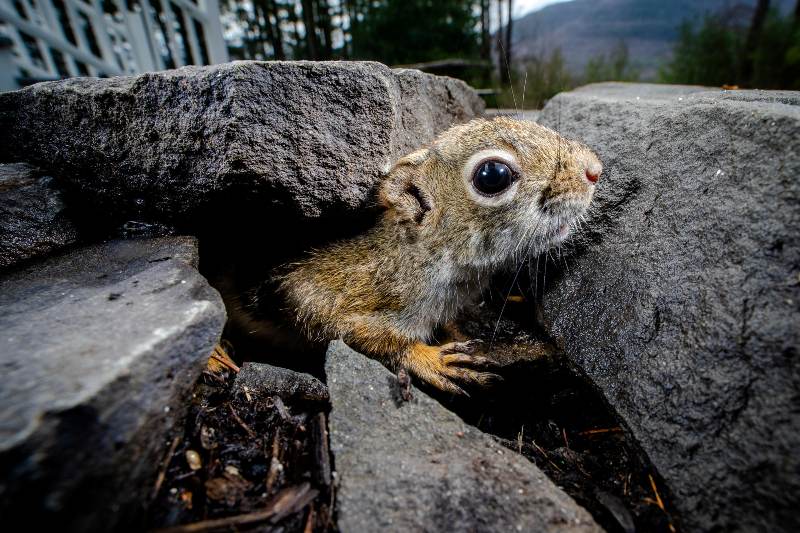
The resulting pictures from the Beneath The Bird Feeder project include inquisitive birds, playful squirrels, and North America’s only venomous mammal—the Northern short-tailed shrew.

SWNS

Carla, a former ventriloquist, explains, “Beneath The Bird Feeder is a photographic project starring many feathered (and furred) visitors.

“Subjects were photographed daily via a DSLR camera trap positioned underneath my bird feeder during the winter months of 2020-2021.

“Wintertime allows me to partake in one of my favourite pastimes: feeding the birds.

“This project reveals insights into species behavior while showing the viewer a new perspective on a common pastime.

RELATED: Scientists Excited by Odd Fish Sounds Recorded in a Restored Coral Reef—the Coolest Thing You’ll Hear All Week

“Throughout this project, I asked myself many questions. What kind of ecosystem does a bird feeder create? As a result of birds dropping seeds, what other creatures would this attract?

SWNS

“When the sun went down, deer mice would gather the aforementioned seeds, caching them in a stone wall near the bird feeder (often helped along by the adorable yet venomous Northern short-tailed shrew). When day broke, an assortment of looters (from birds to squirrels) would raid the cached bounty.

SWNS

“Insights into behavior continually intrigued me.

SWNS

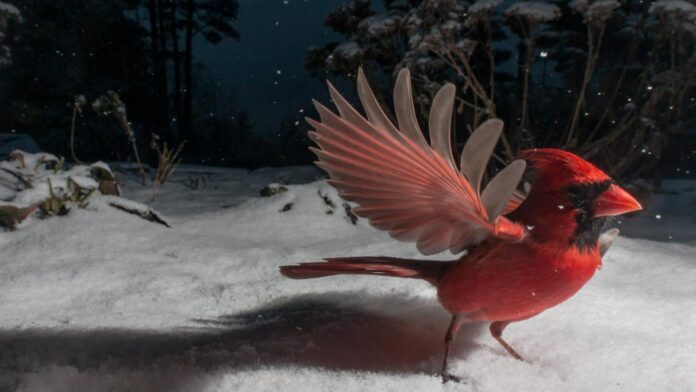
“Dark-eyed juncos were always the first birds to show up at the crack of dawn while Northern cardinals would always show up at dusk.

“I started to recognize regulars and grew particularly fond of a deer mouse with a notch in his/her ear, who I eventually named ‘Notches’.

MORE: The Only Monkeys That Soak in Hot Springs to Lower Their Stress: Japan’s Bathing Monkey Mystery

“I hope Beneath The Bird Feeder inspires others to explore their backyards and to give a closer look at overlooked “common” species, which are no less fabulous than their exotic counterparts.”

SWNS

SHARE These Delightful Photos From the Bird Feeder With Your Chums…

More Cities Make the Switch From Polluting Salt to Sugar Beets To Beat Icy Roads

hor Benson Kua from Toronto, Canadasnow plough wikimedia commons cc license
Benson Kua, CC license

Rock salt is prized for its use as a de-icer, but the mineral’s monopoly on curing roads of icy patches may be coming to an end as sugar beet products gradually make their way into transportation department budgets across North America.

While salt is enthusiastically caked over streets and sidewalks when winter weather turns bad, most of us understand somewhere in the back of our minds that throwing salt around willy-nilly is probably a bad idea.

Most of us, for instance, know that if exposed to too much salt, all useful plants will die, leaving the soil fit for only the hardiest and most hateful of weeds. Most of us know that salt is also quite corrosive, and that seaside houses need to protect anything, particularly metal, that is exposed to sea spray. Lastly most of us know that there are two kinds of aquatic habitats, and fish which live in one can almost never live in the other.

It’s understandable then, to see municipalities like D.C. and Winnipeg, and states like Michigan, trialing vegetable alternatives to salt, which was found in one study to be causing “major changes in the Great Lakes ecosystem.”

“The benefit from using beet-based melting products is that it reduces the chloride loading on infrastructure and the environment, while producing a good quality melting solution,” said Winnipeg communications officer Ken Allen.

RELATED: Eco-friendly ‘Jelly Ice Cube’ Could Transform Cold Storage: No Plastic and Doesn’t Melt

Indeed sugar beet extract when combined with ice-melting chlorides can actually be more effective at reducing ice than salt, but beets aren’t the only food product that’s being used in North America. Bloomberg reports that pickle-juice, cheese brine, and leftover beer have all been used by various transportation departments looking to reduce the immense budgetary pie slice given to salt purchasing.

Chemical changes caused by salt means water needs a lower temperature than normal to freeze, but when 20% chloride is combined with beet extract, that temperature becomes even lower, meaning only properly frigid temperatures will turn residual water into ice overnight.

Around 15-17 million tons of rock salt are poured on U.S. roadways every year, which along with contaminating waterways and drinking water, corrodes plowing equipment, and even leads to greater number collisions with deer, who come out onto the roads to lick the salt. Wisconsin’s share of the salt pie accounts for 40% of the state’s DoT budget.

MORE: Meet the Sustainable Alternative to Concrete that Caught the Eye of Dior and Louis Vuitton

Other states like Illinois are relying on education to reduce contamination from over-salting.

“I often see a cup worth of salt on a single sidewalk square, but one cup of salt should be enough to do an entire driveway… depending on your driveway,” Danelle Haake, stream ecologist and director of Illinois RiverWatch, told Michigan Radio. She suggests dissolving less salt in water, and spraying the water onto the ice.

CLEAR Those Winter News Feeds of Bad News – Share the Good…

“I would like my life to be a statement of love and compassion—and where it isn’t, that’s where my work lies.” – Ram Dass

Quote of the Day: “I would like my life to be a statement of love and compassion—and where it isn’t, that’s where my work lies.” – Ram Dass

Photo: by cloud.shepherd, CC license

With a new inspirational quote every day, atop the perfect photo—collected and archived on our Quotes page—why not bookmark GNN.org for a daily uplift?

Self-Compassion Is Actually Good for Your Heart Health

Despite what skeptics say, being kind to oneself is not a New Age fad—and there is research to back it up.

Middle-aged women who practiced self-compassion had a lower risk of developing cardiovascular disease, irrespective of other traditional risk factors such as high blood pressure, insulin resistance, and cholesterol levels.

“A lot of research has been focused on studying how stress and other negative factors may impact cardiovascular health, but the impact of positive psychological factors, such as self-compassion, is far less known,” said Rebecca Thurston, Ph.D., professor of psychiatry, clinical and translational science, epidemiology, and psychology at the University of Pittsburgh.

Mindfulness practices, such as meditation, are gaining popularity among U.S. adults. Exhausted from a barrage of stressors at work and in their personal life, people increasingly choose to turn inward to help manage their mood and emotions.

During the pandemic, the stressors have amplified, especially for women. Research from various groups across the world demonstrates that women are particularly affected by the dragging pandemic—they care for children and older relatives and are often the ones to care for other adults, too, as women compose much of the U.S. nursing workforce.

Practicing mindfulness and self-compassion is a tool that counsellors and clinical psychologists often suggest to clients who are dealing with chronic stress. These techniques have been shown to be effective for managing anxiety, irritability and even mild depression.

RELATED: Pecan-Rich Diet Shown to Reduce Cholesterol in New Study

But do these practices have any physiological effects on the body? Thurston and her colleagues sought to answer that question by enrolling almost 200 women between ages 45 and 67. The women completed a short questionnaire asking them to rate how often they experience feelings of inadequacy, whether they often feel disappointed by their self-perceived flaws or if they grant themselves caring and tenderness during difficult life moments. The women also received a standard diagnostic ultrasound of their carotid arteries—major vessels in the neck that carry the blood from the heart to the brain.

The scientists found that women who scored higher on the self-compassion scale had thinner carotid artery walls and less plaque buildup than those with lower self-compassion. These indicators have been linked to lower risk of cardiovascular disease—such as heart attacks and strokes—years later.

MORE: People Who’ve Tried Psychedelics Have Lower Risk of Heart Disease and Diabetes

The results, published in Health Psychology, were found to persist even when the researchers controlled for behaviors and other psychological factors that might influence cardiovascular disease outcomes, such as physical activity, smoking, and depressive symptoms.

“These findings underscore the importance of practicing kindness and compassion, particularly towards yourself,” said Thurston. “We are all living through extraordinarily stressful times, and our research suggests that self-compassion is essential for both our mental and physical health.”

Source: University of Pittsburgh

SHARE This Hearty Research With Pals on Social Media…

Watch This Massive Ocean Sunfish Swim With Paddle Boarders Off the California Coast

Rich German
Rich German

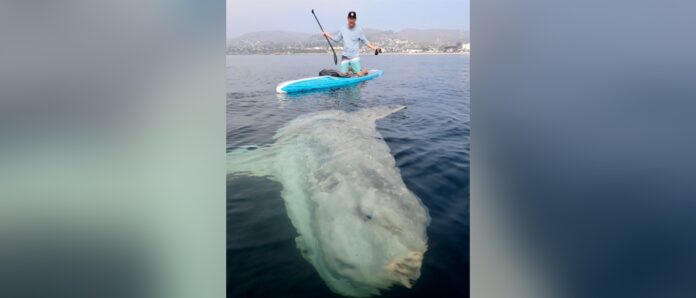
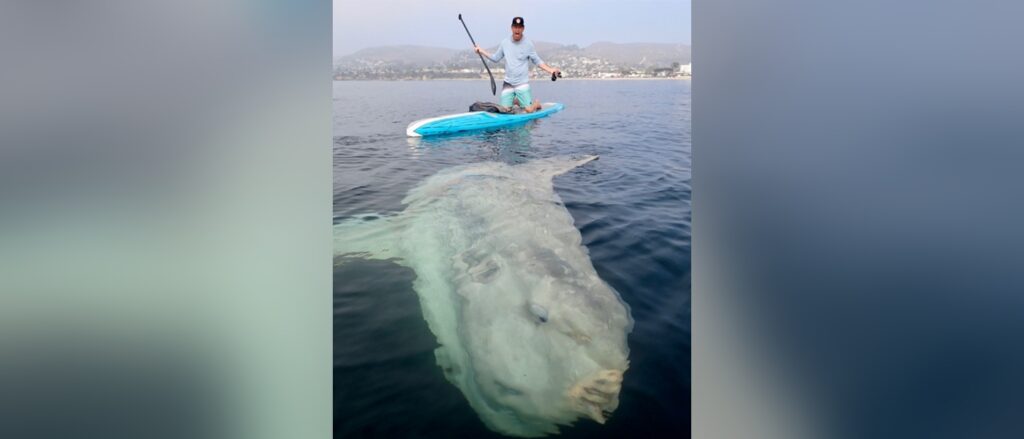
When one sees a dorsal fin out on the water, only the calm and the eagle-eyed don’t immediately think “shark.” So it was with a group of paddleboarders who came across a sunfish about the size of a car off Laguna Beach in California.

Known as the mola mola, the giant or ocean sunfish which Rick German and his friends discovered could have been nine foot long according to them, as their paddleboards were about 14 feet in length.

“I wasn’t scared because I knew what it was,” German told CBS News. “It looks like a mutilated alien shark that got bit in half.”

The heaviest vertebrate fish found globally, the mola mola can reach 10 feet in length and weigh 5,000 pounds. At a young age, its back fin stops growing and instead folds in towards itself, creating a kind of rudder that also tilts the fish’s body at an angle.

“I just thought it was kind of neat this fish is hanging out in an area where it’s totally protected and safe,” German told NBC News. “We hung out with it for probably 30 minutes. Eventually, it just dropped down below the surface.”

As it happened, German is the founder of a non-profit dedicated to ocean conservation, and given the fact that most of America’s largest news companies came out to interview him, he wasted no airtime in getting the message out that the tropical-dwelling mola is listed as Vulnerable by the IUCN, and needs help from us to recover so that more paddleboarders can enjoy these sensational experiences.

Dr. Matthew Wheaton posted an up-close and personal video on Instagram of the encounter, which you can take a look at below.

SHARE This Marine Story From the Ocean Now…

Christmas-Loving Mom Transforms Her Home Into Real-Life Gingerbread House (LOOK)

SWNS
SWNS

A Christmas-mad mom has transformed her home into—a real-life gingerbread house.

67-year-old Virginia Hoffman spent ‘hundreds of hours’ festooning her property into a vision from a fairytale.

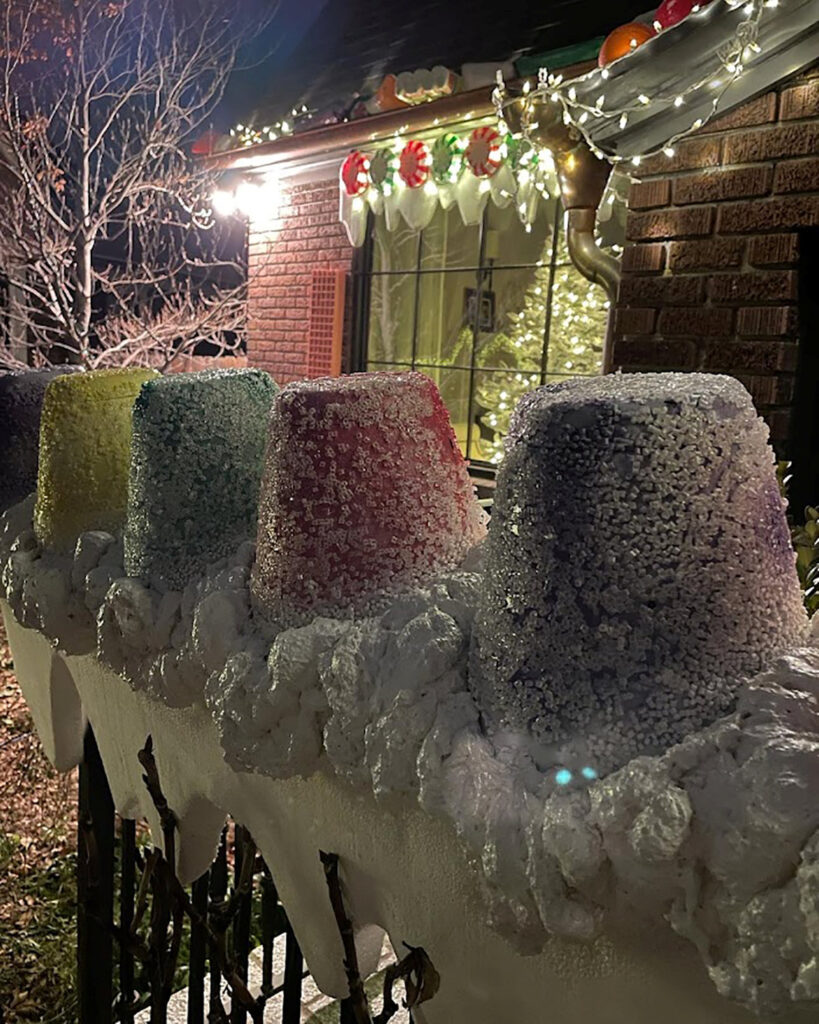
Homemade decorations include candy canes, giant gumdrops, peppermint swirls, huge chocolate and wafer cookies, and an oversized gingerbread man.

Interior designer Virginia, of Salt Lake City, Utah, says her daughter, son-in-law, and their children all were involved, as well as her husband, who is a professional artist.

She said, “I live in a neighborhood where most the houses were built in the 1920s and the architecture has a lot of charming characteristics.

“I was looking at my circle of houses and thought how they all looked like gingerbread houses with their various roof lines and windows.

“I began to imagine how I could make some decorations to make my house into a gingerbread house.

RELATED: Christmas Fanatic Turns Her Office Cube Into Incredible Life-Sized Gingerbread House (LOOK)

“I drew a little sketch of what was in my mind, and then I started thinking of how to accomplish it. It grew on from there.

“It was a lot of work, but each year it is fulfilling to see it completed and feel like a lot was accomplished with imagination, ingenuity, a little engineering and figuring things out, and some luck.

“I am grateful for the help and support of my husband and family members; without them I would not have been able to succeed. They have spent many hours along with me.

SWNS

“Also, a project such as this, taken on with help from family and grandchildren, will hopefully be a long-term memory that they’ll always remember and maybe cherish. It’s a special thing in our family now because we made it ourselves.

MORE: Brits Reveal Their Best-Loved Holiday Traditions, Like Christmas Jumpers on Boxing Day

“The best part for me is watching children come. When they come up to the house and they look at things up close and, honestly, the twinkle in their eyes is just magical. I love to see that it catches their imagination.”

(SEE the house in the video below.)

SHARE This Festive Story With Your Best Buddies…