All News - Page 412 of 1727 - Good News Network
Home Blog Page 412

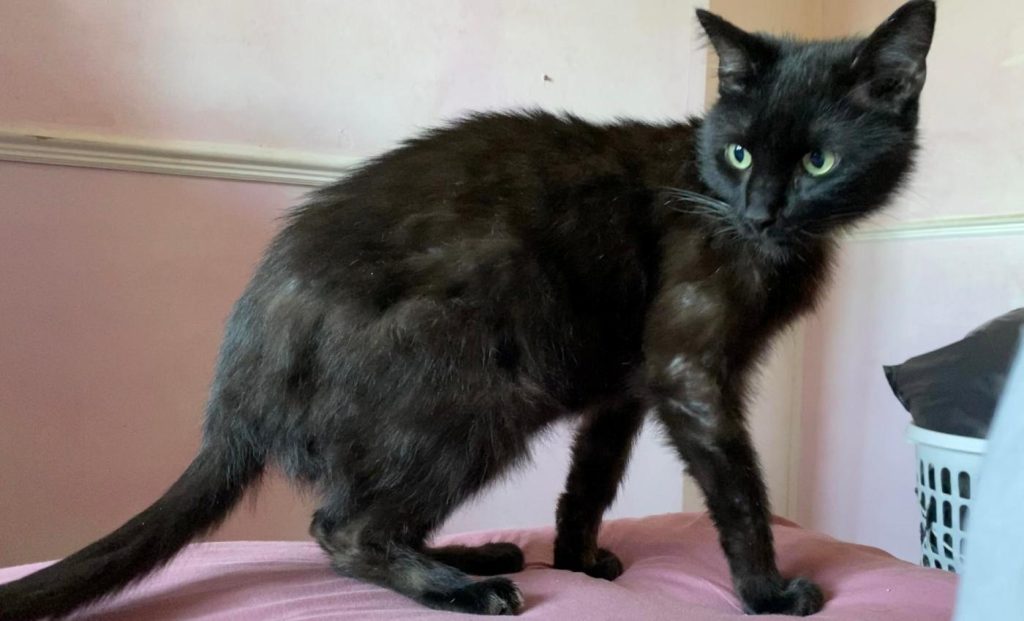
Mom Finds Cat After 8 Months When She Recognized His Meow On a Phone Call

SWNS
SWNS

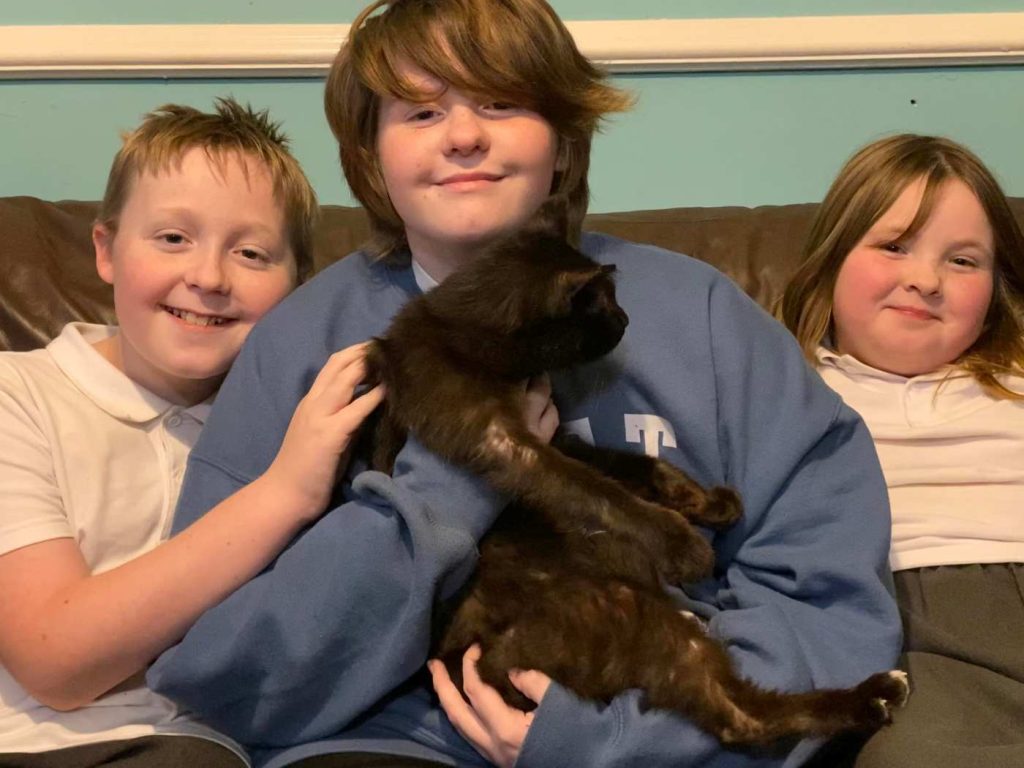
A family has been reunited with their cat that went missing eight months ago, after they recognized the feline’s distinct meow during a phone call to the vet.

40-year-old Rachael Lawrence had been on the phone to Vets4Pets regarding another cat, Torvi, who had recently had an operation when she heard a meow in the background.

The mom of three instantly knew the meow and asked about it, but was told the call belonged to a stray cat that had been brought in a week ago.

Rachael ended the call but couldn’t stop thinking about the meow and wondered if it could have belonged to her cat, Barnaby, who had gone missing eight months ago.

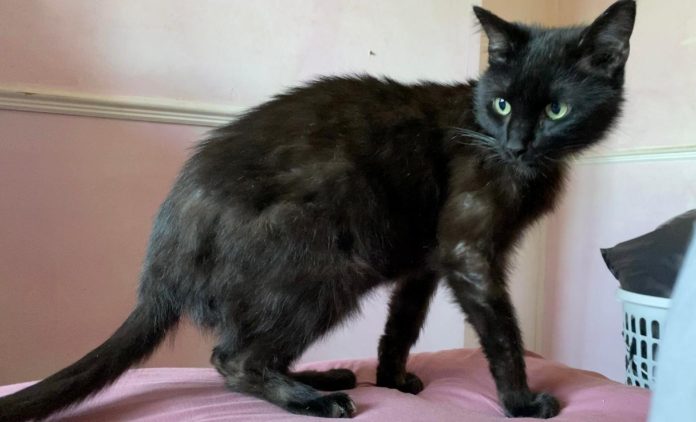
She called back to ask if the stray cat was black with a distinctive white blotch of fur on his back foot, but couldn’t believe it when the vet told her the description matched.

MORE: Kefir the Maine Coon Cat is So Big People Mistake Him For a Dog

Rachael immediately rushed to the vet with photos to confirm the match.

SWNS

Rachael, who lives in Braintree, Essex, said, “I couldn’t believe what was happening. I just cried when I saw him, full on… I was sobbing, just absolutely howling. I just couldn’t believe it.

She video-called her kids and said “Look who I’ve got!”

A happy ending

During the lockdowns in 2020, Rachael had paid for an independent company to come to her home and chip Barnaby should he ever go missing.

She paid for the service and registered the chip details online, but it wasn’t until Barnaby went missing that she discovered the chip had not worked.

On being reunited with her beloved pet, Rachael asked the vet to chip Barnaby there and then.

RELATED: Outdoor Cats Are Using $500 Starlink Satellite Dishes as Self-Heating Beds

Now all is safe and well, and the family cat is back home and enjoying lots of attention so he can return to his healthy previous self.

Rachael says, “He’s now eating really, really well so we just need to get him back to full health. I’m so happy and the kids are thrilled to have him home.

RAISE a Paw For the Good News; Share This Story…

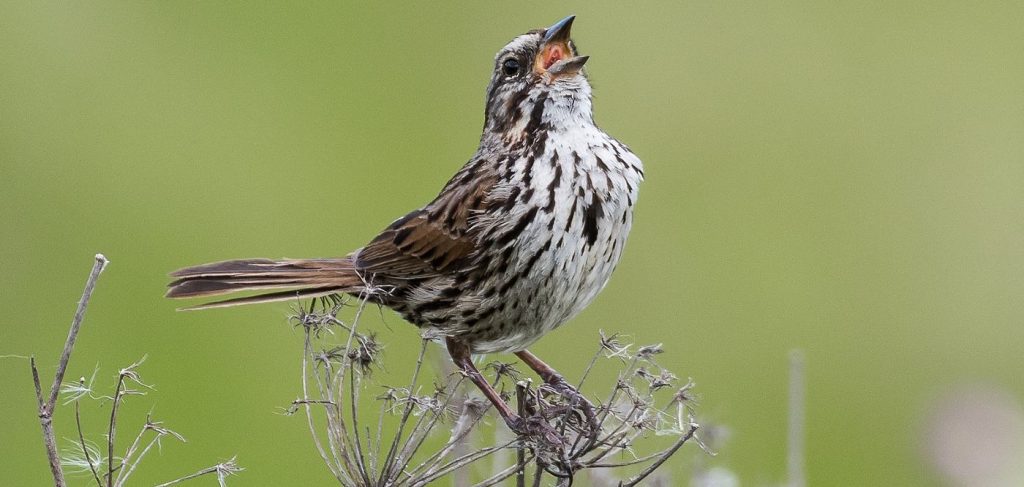
Biologists Identify First Animal That Uses the Complexity of Human Language: the Song Sparrow – LISTEN

song sparrow cc license wikimedia commons Becky Matsubara from El Sobrante, California
Becky Matsubara, CC license

The tweets of a little song sparrow and its ‘bird brain’ are a lot more complex and akin to human language than anyone realized. A new study finds that male sparrows deliberately shuffle and mix their song repertoire possibly as a way to keep it interesting for their female audience.

The research, from the lab of Stephen Nowicki, Duke University professor of biology and member of the Duke Institute for Brain Sciences, and colleagues at the University of Miami, shows that singing males keep track of the order of their songs and how often each one is sung for up to 30 minutes so they can curate both their current playlist and the next one.

Song sparrows are a common songbird throughout North America, but only males sing. They use their song to defend their turf and court mates.

When wooing, song sparrows belt up to 12 different two-second songs, a repertoire that can take nearly 30 minutes to get through, since they repeat the same song several times before going on to the next track. In addition to varying the number of repeats, males also shuffle the order of their tunes each time they sing their discography. However, a big unknown had been whether males change up their song order and repeats by accident or by design.

To get some data on whether or not the birds intentionally shuffle and mix their tunes, Nowicki’s long-time collaborator William Searcy, the Maytag Professor of Ornithology in Biology at the University of Miami, loaded up the recording gear, trekked out to the backwoods of northwest Pennsylvania, set up mics pointed to the trees and patiently waited for five hours a day.

LOOK: After Years of Helping Crow Family, Man Was Left ‘Mind-Blown’ Over Their Homemade Gifts in Return

Nowicki says that fieldwork like this isn’t for everyone, “I would never use the word boring, because it’s relaxing if you like being out in the field and it’s a nice day and you’ve got your parabolic microphone and you’re pointing it at a song sparrow for hours. Some people would find that boring. I and certainly Bill would find that meditatively relaxing. The only thing that happens is sometimes your arm gets tired.”

After recording the full suite of songs from more than 30 birds, the team pored over visual spectrographs of the trills and analyzed how often each song was sung and in what order. The first clue that males keep tabs on their tweets to avoid repetition was that much like a Spotify playlist, males generally sing through their full repertoire before repeating a song.

MORE: Wind Turbines Are Using Cameras and AI to See Birds – And Shut Down When They Approach

The researchers also found that the more a sparrow sang a given song, the longer he took to get back to that song, possibly to build up hype and novelty once that song was played again. For example, if a male sang Song A 10 times in a row, he’d sing even more renditions of his other songs before returning to Song A again. Alternatively, if Song A was only warbled three times during a set, then a male song sparrow might recite a shorter rendition of the rest of his repertoire in order to return to the still novel and underplayed Song A.

Taken together, these findings demonstrate that song sparrows possess an extremely rare talent with an equally uncommon name: “long-distance dependencies.” It means that what a male song sparrow sings in the moment depends on what he sang as much as 30 minutes ago. That’s a 360 times larger memory capacity than the previous record holder, the canary, who can only juggle about five seconds worth of song information in this way.

While impressive, the implications from this work for humans are less clear. It does suggest that the order of words in human language, which is similarly impacted by long-distance dependencies may not be as unique as once thought.

CHECK OUT: Exquisitely Preserved Embryo Found Inside Fossilized Dinosaur Egg 

It remains to be seen whether better shuffling ability gives males an advantage at finding love. Perhaps females maintain interest in a mate who mixes it up more, and are less likely to sneak off with another male. As with daytime talk shows, paternity tests are a good proxy for monogamy in birds, so counting how many chicks are sired by a female’s nest mate versus another bird in the neighborhood may be a future project for Nowicki’s team.

For now, Nowicki emphasizes it’s just speculation whether these shuffling song sparrows give Spotify a run for their money to keep a female’s interest, but does highlight our similar approach at the gym.

“You’ve got your playlist for running and the reason you’ve got that is because running is kind of boring. You know that these 10 songs are going to keep you motivated, but if you are going to run for 20 songs long, why not shuffle it so the next time you don’t hear the same songs in the same order?”

(LISTEN to the American Bird Conservancy recording of a song sparrow below.)

The findings appear in Proceedings of the Royal Society B.

Source: Duke University

TWEET This Fascinating Research and Share It With Others…

Bee Bricks That Help Thousands of Solitary Bees Are Now a Requirement for New Buildings in Brighton

Green&Blue
Green&Blue

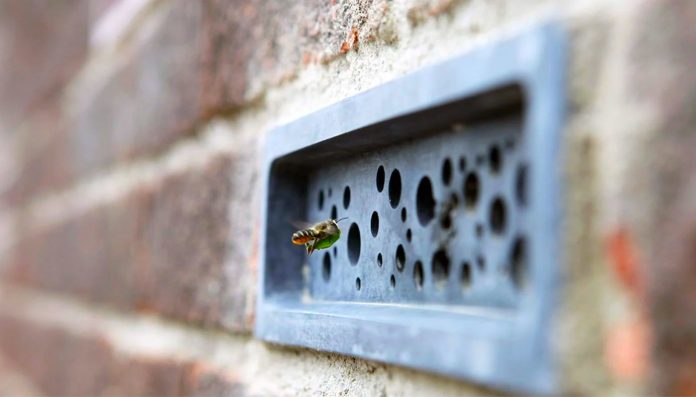
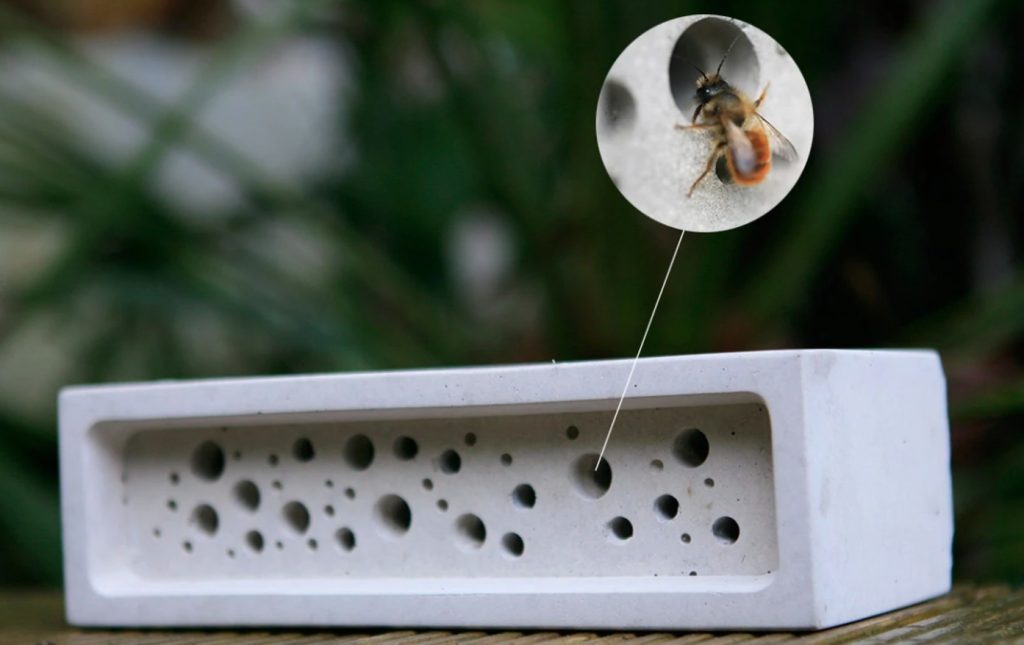
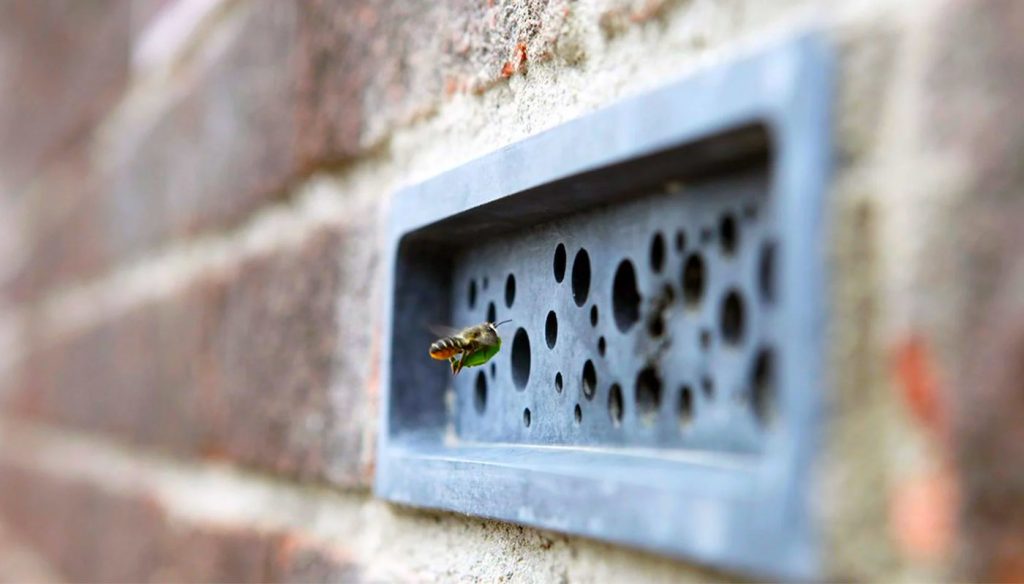
Since 250 of the 270 bee species in Britain are solitary buzzers, the city of Brighton and Hove is establishing mandates to use “bee bricks” in construction of all buildings above 5 meters to help encourage these solitary species to nest in them.

Bee bricks are what appear to be blocks of Swiss cheese but which are actually a normal building bricks created with small cavities into which bees typically nest. Old brick buildings and crumbing walls have been observed as excellent habitat for bees, and so Brighton and Hove are trying to deploy this simple invention to offer more room on the metaphorical bed for the pollinating insects.

They have also mandated “swift bricks,” which offer the same comforts of home, only for nesting swifts—tiny birds that spend a few months in the UK and then migrate to Africa. The Royal Society for the Protection of Birds is consulting with the government to identify which height on which buildings are ideal for the swift bricks.

“Bee bricks are just one of quite a number of measures that really should be in place to address biodiversity concerns that have arisen through years of neglect of the natural environment,” said Robert Nemeth, the town councilor behind the initiative, first introduced in 2019.

RELATED: Thousands of Bees Make It Out Alive After Being Buried by Volcanic Ash for 50 Days

Not everyone agrees that these bee bricks are a good idea. Some point to a lack of evidence that the holes are large enough for a bee nest, that they have a population impact, or that the holes have to be cleaned to prevent harmful mites from residing there.

Green&Blue

However there are studies that find bees will build nests inside these holes and cap the entry ways to hibernate. Some scientists add that the mites will disappear after one or two seasons and that they don’t need to be cleaned.

MORE: Watch Woman Save Bees By Rescuing Hives From Old Buildings With Her Bare Hands

Green&Blue is an example of an eco-focused construction firm that currently offer bee bricks in the standard portfolio of building materials, as the differences in cost between normal bricks and bee/swift bricks are negligible.

Lars Chittka, a professor in sensory and behavioral ecology at Queen Mary University, told The Guardian that bees “naturally possess hygienic behavior that would allow them to mitigate the risks at least to some extent, or that they would assess the holes’ states before using them, which should to some extent counterbalance the risks that come with such long-term nesting opportunities.”

BUZZ This Hopeful New Policy Over to Other Bee Fans…

“We are often sad and suffer a lot when things change, but change and impermanence have a positive side. Thanks to impermanence, everything is possible.” – Thich Nhat Hanh

Quote of the Day: “We are often sad and suffer a lot when things change, but change and impermanence have a positive side. Thanks to impermanence, everything is possible.” – Thich Nhat Hanh (died at age 95 this week)

Photo: by Jan-Willem

With a new inspirational quote every day, atop the perfect photo—collected and archived on our Quotes page—why not bookmark GNN.org for a daily uplift?


Live Cells Discovered in Human Breast Milk Could Lead to Future Breast Cancer Treatments

Peter Boccia
Peter Boccia

Research at the University of Cambridge has found that breast milk cells, which were once thought to be dead or dying, are in fact alive and well.

And these live cells in human breast milk could help scientists discover breakthrough treatments for breast cancer.

The cells have given scientists clues about early indicators of the deadly disease, and will also help researchers understand how breast tissues change when women breastfeed.

Dr. Alecia-Jane Twigger, lead author of the new study said, “Breast tissue is dynamic, changing over time during puberty, pregnancy, breastfeeding, and aging.

“These living cells provide researchers with insight into a potential early indicator of future breast cancer development.”

RELATED: Common Weed Stops the Growth of Breast Cancer Cells, Scientists in London Report

For the study, the researchers collected milk samples from breastfeeding women and breast tissue from non-breastfeeding women.

Once they worked out the differences between the two types of cells, they learned that less than one-quarter cup (50ml), on average, contains hundreds of thousands of cells for researchers to study.

“The first time Alecia told me that she found live cells in milk I was surprised and excited about the possibilities,” said Dr Walid Khaled, of the University’s Stem Cell Institute, who was also involved in the study.

ALSO: Tulane Researchers Find a Switch to Turn Off Aggressive Form of Breast Cancer Growth

“We hope this finding will enable future studies into the early steps of breast cancer.”

The research was published this week in the journal Nature Communications.

FEED the Breakthrough to Women on Social Media…

A Chair Bought for $5 in a Junk Shop Sells at Auction for over $16,000

SWNS
SWNS

A rare wooden chair bought in a junk shop in England for £5 has sold at auction for over £16,000.

The checkerboard design turned out to be an ”important example” of Vienna Secession furniture designed by Koloman Moser, an Austrian artist who was a considerable influence on 20th-century graphic art before he died in 1918.

The elm and wicker highback chair, was sold in Brighton to a woman who contacted an appraiser and was stunned to discover its century-old roots in the avant-garde art school in Vienna, Austria.

Sworders auction house called it a modern reinterpretation of a traditional 18th century ladder-back chair designed in 1902.

Moser, who taught at the Vienna School of Applied Arts, also designed a wide array of graphic works, from postage stamps to magazine vignettes, fashion, stained glass windows, porcelains and ceramics, blown glass, tableware, silver, and jewelry, as well as furniture.

LOOK: ‘Fortlandia’ Where Designers Build Odes to Childhood Fort-Building in Austin

John Black, in charge of the auction sale, said, “We are particularly pleased to know that it will be going back to Austria.”

SWNS

In fact, they were so thrilled with the sale, they broke their no-alcohol January pledge.

”We were not drinking in January but made an exception on Tuesday evening, it was an evening to celebrate.”

POPULAR: Box of Stained Glass Bought at Auction Solves 80-year Mystery of Church Windows Gone Missing During WWII

PEOPLE Need a Heads-Up on This Covert Design, So Share on Social Media…

Scientists Find Giant Pristine Coral Reef Undiscovered Near Tahiti, With Clues There Are More

Alexis Rosenfeld, Founder of 1 Ocean
Alexis Rosenfeld / UNESCO

A scientific research mission has discovered one of the largest coral reefs in the world off the coast of Tahiti. The pristine condition of the rose-shaped corals, and the sheer size of the reef, make this a rare discovery.

Uncovered by photographer and explorer Alexis Rosenfeld, Founder of 1 Ocean, the highly valuable reef is almost 2 miles long and 200 feet (30-65m) below the surface. At 200 feet wide (30-65m), it is one of the most extensive healthy coral reefs on record.

The giant rose-shaped corals, pictured in photos captured by Rosenfeld, are up to 6 feet in diameter (2 meters).

Up until now, the vast majority of the world’s known coral reefs sit at depths of up to 82 feed (25m). So this discovery suggests that there are more large reefs out there, at greater depths.

“It was magical to witness giant, beautiful rose corals which stretch as far as the eye can see,” says the French explorer, Rosenfeld. “It was like a work of art.”

1 Ocean has partnered with UNESCO in the Decade of Ocean Science for Sustainable Development campaign. Each year, until 2030, expeditions funded by UNESCO will be carried out across the ocean to map the biodiversity and find solutions to any threats.

LOOKSpectacular Coral Event This Year Spawns Hope –And Billions of Babies For Great Barrier Reef (LOOK)

“To date, we know the surface of the moon better than the deep ocean,” said UNESCO Director-General Audrey Azoulay. “Only 20% of the entire seabed has been mapped.”

“This remarkable discovery in Tahiti demonstrates the incredible work of scientists who, with the support of UNESCO, further the extent of our knowledge about what lies beneath,” he said in a statement.

By Alexis Rosenfeld, Founder of 1 Ocean

French Polynesia suffered a significant bleaching event back in 2019, however this reef does not appear to have been significantly affected. The discovery of such a pristine reef shows that coral at deeper depths may be better protected from climate change.

CHECK Out: Scientists Excited by Odd Fish Sounds Recorded in a Restored Coral Reef—the Coolest Thing You’ll Hear All Week

Until now, very few scientists have been able to locate, investigate and study coral reefs at depths of 100 feet (30m).

Technology means longer dives at greater depths. In total, the team carried out 200 hours of dives to study the reef—and were able to witness the coral spawning.

RELATEDSeaweed-Eating Giant Crabs Could Help Save Florida Coral Reefs: ‘The Reef Goats’

With its Intergovernmental Oceanographic Commission (IOC), UNESCO is the UN agency in charge of ocean research, founded in 1960 and joined by 150 countries.

WATCH a video from the BBC…

SHARE Some Good News With Friends on Social Media…

Dolly Parton Launches Southern-Style Cake Mix and Frostings Line With Duncan Hines

Entertainment icon Dolly Parton has launched a new line of ‘Southern-inspired’ desserts, manufactured by Duncan Hines, including cake mixes and frostings as an homage to some of Dolly’s favorite family recipes.

“I have always loved to cook and, growing up in the South, I especially love that authentic Mom and Pop kind of cooking,” said the 76-year old singer who’s been nominated for 50 Grammys. “Baking was no different. My Mama, my grandmothers, and my aunts were all wonderful bakers.”

“They taught me everything I know, from biscuits and gravy to chocolate cake.”

Two of the new cake mixes due to arrive on grocery shelves in early March were based on her favorites, Coconut Cake and Banana Puddin’ Cake, but she is careful to call the new products, “coconut- or banana-flavored“.

They were available at the Duncan Hines website, but quickly sold out. You can check back or sign up to be alerted when they are in stock this spring.

If you want the real recipes, you will have to wait for a new Dolly Parton cookbook. Her 2006 recipe collection, entitled Dixie Fixin’s, features over 100 recipes from her childhood, but it is out of print and hard to find (except on Amazon for $500).

POPULAR: Almost $13 Million Raised For Animal Shelters to Honor the Late Celebrity With the #BettyWhiteChallenge

The cake mixes and frostings will be priced around $2.00 each or kits will be available containing both for $5.49 per box. No ingredient labels have been published prior to the retail launch.

WATCH a new interview with the CBS Morning show…

SHARE the Dolly News on Social Media…

“Don’t bother just to be better than your contemporaries or predecessors. Try to be better than yourself.” – William Faulkner

Quote of the Day: “Don’t bother just to be better than your contemporaries or predecessors. Try to be better than yourself.” – William Faulkner

Photo: by Isi Parente

With a new inspirational quote every day, atop the perfect photo—collected and archived on our Quotes page—why not bookmark GNN.org for a daily uplift?


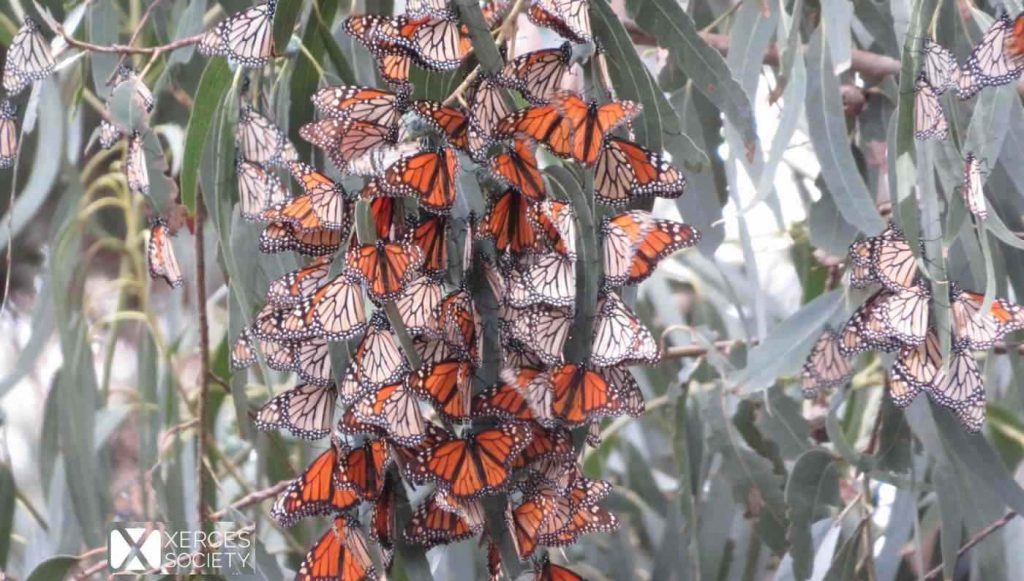
Amazing Quarter-Million Monarchs in 2021, Up From Just 2,000 the Year Before in Migration Count

Pismo Beach State Park Grove, Credit: Lisa Damerel / Xerces Society

The Xerces Society just released numbers from their annual Western Monarch Count—and the tally was remarkable.

Pismo Beach State Park Grove, Credit: Lisa Damerel / Xerces Society

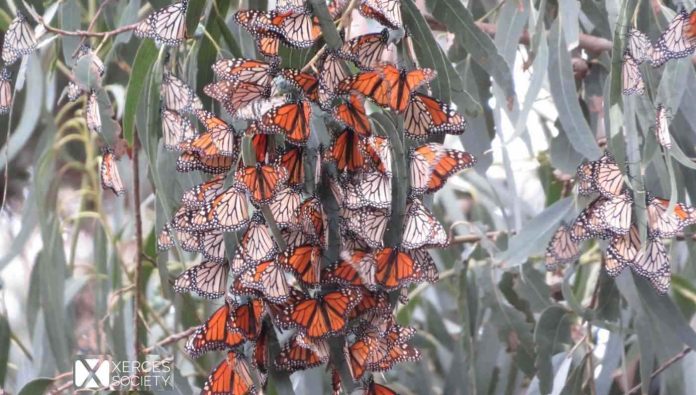
The nonprofit announced that 247,237 monarch butterflies were observed across overwintering sites, a 125-fold increase over last year.

Volunteers counted insects at 283 different overwintering sites, and celebrated the 25th anniversary of the Xerces Society Thanksgiving tally.

“This year’s total… amazed us with the monarchs’ ability to bounce up from a record low,” says the group on their website.

In 2021, the Thanksgiving Count reached an all-time record for number of volunteers since the inception of the first count in 1997.

This year’s total of nearly a quarter million monarchs illustrates a considerable rebound from 2020’s all-time low of less than 2,000—and the two previous years’ tallies of less than 30,000 individuals overwintering.

Central California coast is most popular overwintering site

In Monterey County, the city of Pacific Grove celebrated the return of approximately 14,000 monarchs to their sanctuary, and there were thousands at other sites in Big Sur. San Luis Obispo County had over 90,000 butterflies reported at its overwintering sites, including the California State Parks-managed Pismo Beach Butterfly Sanctuary which had the second highest count at an overwintering site this season at 20,871 butterflies. The county with the most monarchs was Santa Barbara County, with over 95,000 monarchs reported. Santa Barbara County also hosted the largest site this year, a count of just over 25,000 butterflies at a private property.

POPULAR: Listen to Millions of Monarch Butterflies Make One of the Rarest Sounds on Earth: ‘Just like a waterfall’

Los Angeles and Ventura counties report highest numbers in 20 years

Moving further south, monarchs were found in numbers unseen since the early 2000s. Ventura County contained nearly 19,500 butterflies and had several stand-out sites, including Arundell Barranca with over 7,700 butterflies. Ventura has not seen an excess of 19,000 monarchs since the 2001 Thanksgiving Count, which totaled 28,465 butterflies. In Los Angeles County, volunteers reported over 4,000 butterflies, the highest Thanksgiving Count in that area since 2000.

After surveying a newly discovered overwintering site near one LA beach, the regional volunteer coordinator expressed his excitement. “I was really excited to see for myself the clusters at Hermosa Beach,” said Richard Rachman. “Walking up, I was just taken aback at the sheer volume of monarchs, it really says what sustainable urban planning can do to protect biodiversity.”

Expanding their range

Suzanne D. Williams

Thanks to public tips, monarchs were also discovered roosting in five new locations this season: three sites close together in San Luis Obispo County and two sites in Los Angeles County. Counts from these five new sites totaled over 7,000 butterflies. This is a reminder that reports from the public are incredibly valuable.

RELATED: Historic Deal to Protect Millions of Monarch Butterfly Habitat Acres is Unprecedented

The Monarch Count uses iNaturalist, a joint initiative of the California Academy of Sciences and the National Geographic Society, to follow up on monarch observations from the public.

There are more questions than answers as to why western monarchs bounced back at the rate they did in 2021. It is unlikely that there is a single cause for such a complex migratory journey and a single year’s increase.

The 2021 uptick represents a serious “bounce”, and conservation scientists hope to instill cautious optimism with news of the 2021 Thanksgiving Count.

“Now more than ever, we have an opportunity to double down on our conservation efforts,” says Isis Howard, Endangered Species Conservation Biologist for the Xerces Society. “Harnessing the momentum of this upswing may be our best chance at aiding western monarchs and other at-risk butterflies.”

40 years ago, the western butterfly population was estimated in the low millions, so conservationists have more work to do—and you can help.

Freddy G.

Our collective efforts can make a difference

Here are a few actions you can take to be part of the solution:

  1. Plant native milkweed species.
  2. Plant a diversity of nectar plants (look below this map to see the plant list for your area in the US).
  3. Stop using pesticides, or minimize risk associated with pesticide use.
  4. Contribute to community science projects, like iNaturalist, that track monarchs, and the food mapper for Western Monarch Milkweed.
  5. Visit Xerces.org to learn more about monarchs and find additional ways to help.

FLY This Sweet News to Your Friends on Social Media…

Scientists Achieve Milestone in Self-Sustaining Fusion Energy, Burning Plasma in U.S. Experiments for First Time

National Ignition Facility’s target chamber was assembled from 10-centimeter-thick aluminum panels. Holes in the chamber provide access for laser beams and ports for diagnostics. – Lawrence Livermore National Laboratory

For more than 60 years, scientists have sought to understand and control the process of fusion, a quest to harness vast amounts of energy released by the type of reactions that power the sun and stars.

National Ignition Facility’s target chamber with its aluminum panels and holes that10 provide access for laser beams and ports for diagnostics. – Lawrence Livermore National Laboratory

New experiments in the U.S. have now achieved a burning plasma state, helping steer fusion research closer than it has ever been to its ultimate goal: a controlled reaction of self-sustaining power.

Los Alamos National Laboratory researchers, including members of the Physics division, contributed essential capabilities in diagnostic science to achieve and analyze the unprecedented results.

The diagnostic advances helped to transition fusion research to the threshold of ignition—the point at which a fusion reaction generates more energy than it receives and can burn on its own.

“These experiments indicate a transition to a different physics regime,” said physicist Hermann Geppert-Kleinrath, a member of the team at the National Ignition Facility working on the burning plasma project.

“The research described in this paper marks where alpha heating in the reactions outcompeted the loss between radiation and heat conduction. It’s an exciting time because we’re at the point where continued marginal gains in how we conduct our experiments will lead to exponential improvements.”

Watch the Reuters video below, or read more at the bottom…


The laser inertial confinement fusion experiments took place at the National Ignition Facility at Lawrence Livermore National Laboratory in California. Within a specially constructed cavity, a carbon-formed capsule, about one millimeter in diameter, contains both cryogenically frozen deuterium-tritium and the same as gas mixture — the fuel. When the cavity is heated with lasers, an x-ray bath results and warms the capsule until the fuel inside is compressed.

The paper published this week in the journal Nature describes the fusion of deuterium and tritium nuclei releasing neutrons and alpha particles; the latter deposit their energy back into the hotspot of the reaction and in so doing contribute to the propagation of the burn. Such an alpha-dominated reaction is sought after as a key element in self-sustaining fusion.

The forces at work in fusion are extreme. In the experiments described in the Nature paper, the temperature during the fusion reaction is about three times hotter than the center of the sun. The length of the reaction is incredibly short—approximately 130 picoseconds, the time it takes light to travel just four centimeters (at 300,000 km per second).

“It’s an unbelievably tough physics regime to do measurements on,” said Geppert-Kleinrath. “We’re essentially creating a miniature sun in the laboratory.”

To capture meaningful data, Hermann’s team was responsible for the gamma reaction history diagnostic, providing bang time (the time of maximum compression and reaction rate—also called stagnation) and burn duration. The gamma reaction history instrument measures reactions with time resolution down to ten picoseconds—a tiny timescale on which light only travels millimeters.

RELATED: Finally, a Fusion Reaction Has Generated More Energy Than Absorbed By The Fuel

Physicist Verena Geppert-Kleinrath, who is married to Hermann, is the team leader for advanced imaging at Los Alamos, and led the neutron imaging capabilities that provided three-dimensional hot spot shapes for the National Ignition Facility experiments. Neutron imaging meant measuring a 70-micron hotspot—equal to the thickness of a human hair—from 30 meters away through an extended aperture with openings only a few microns wide.

“We’re very proud that coming from different fields and different groups within physics we have the privilege of being part of this very momentous achievement together,” said Verena Geppert-Kleinrath. “Los Alamos’ physics teams have been able to provide unique diagnostics to show the markers that we are looking for under challenging conditions.”

CHECK OUT: China’s Artificial Sun Just Broke a Record for Longest Sustained Nuclear Fusion Ten Times Over

Improvements make progress toward fusion

Ultimately, the experiments explored the criteria for ignition — how fusion can be generated, and how it can be generated in such a way that it propagates itself, releasing more energy from the fuel than the energy it took to start the reaction courtesy of the lasers. The experiments and the analysis of the results suggested gradual improvements that could keep more energy inside the reaction instead of being lost to radioactivity or heat conduction. For instance, the fuel fill tube’s size was identified as a performance limitation through 3D neutron imaging, and future experiments used a specially engineered fill tube that was much smaller.

POPULAR: Australian Company Works to Make Energy From Nuclear Fusion – But Without the Fiery Ball of Plasma

The four experiments or “shots” represented significant accomplishments in achieving burning plasma. The fourth shot saw more energy created than was lost due to radiation or heat conduction and likely may have achieved propagation had the capsule not disassembled in the implosion. The total energy output, including the laser energy to start the reaction, was still a net negative, but the clear improvement represented a tipping point toward self-sustaining fusion.

The gradual improvements paid off significantly in August 2021, when an experiment at the National Ignition Facility achieved a yield of 1.3 megajoules — an eight-fold increase over the experiments described in the Nature publication. While falling just short of one definition of ignition, the experiment suggests that fusion research has entered a new era, with further gradual improvements perhaps able to achieve ignition and self-sustaining fusion.

“We’re right at the cliff of experiments fizzling out versus experiments going into the ignition regime,” said Hermann Geppert-Kleinrath. “Once you transition into this regime where alpha heating is dominating, marginal gains in how we do the experiment lead to very large gains in yield.”

Funded by the U.S. Department of Energy, the National Ignition Facility experiments are testing these challenges that cannot be realized or addressed in any other way.

Shine Some Light—and Free Energy: Share on Social Media…

An Office Worker Captures Beautiful Wildlife Photos On His Lunchbreak – LOOK

By Dave Newman -SWNS

Dave Newman has a full-time job inside an office, but he always tries to make time to go outside to spy on the local animals.

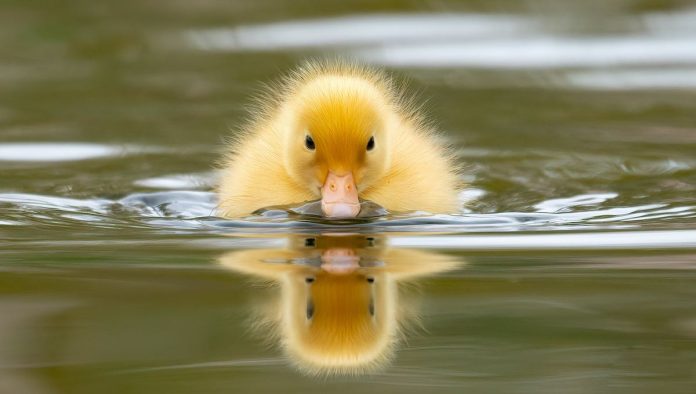
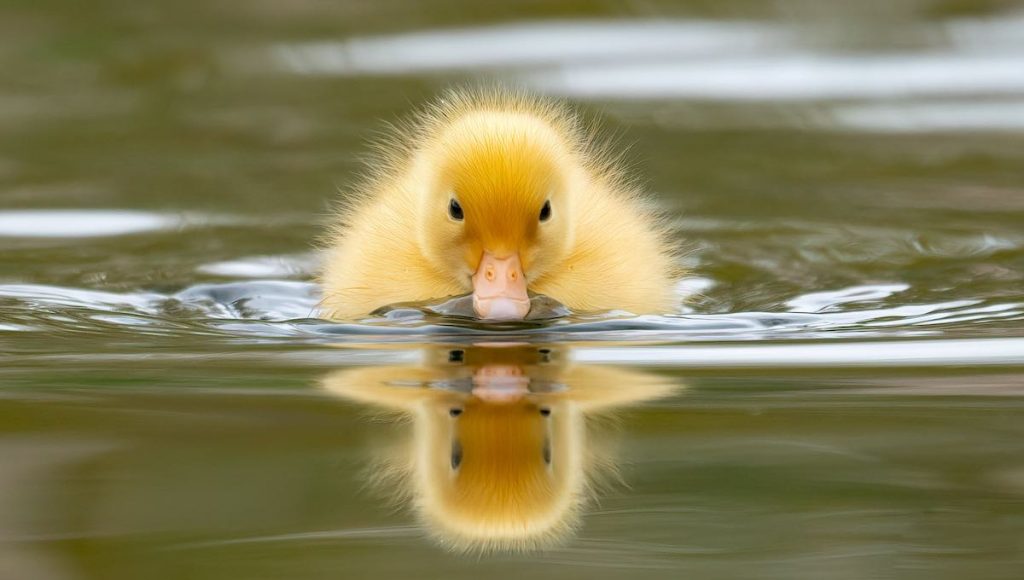
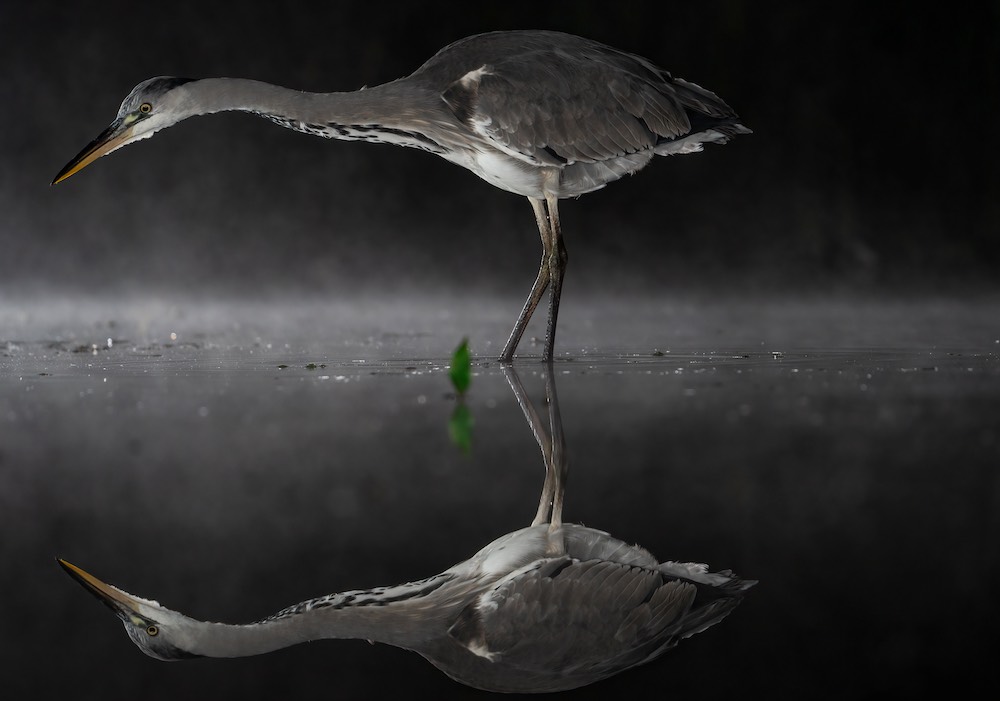
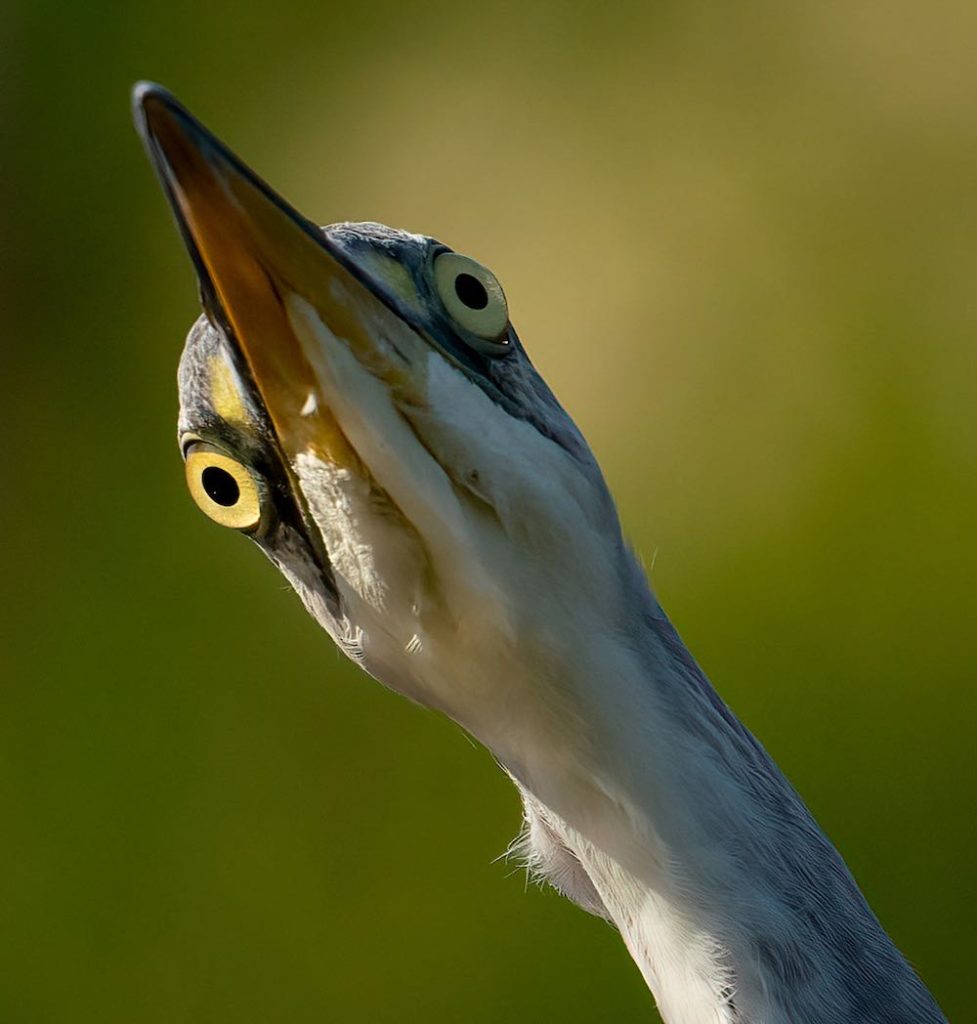
On his journey to document the creatures, he’s created gorgeous portraits of foxes, ducklings, herons, and deer.

The 42-year-old amateur photographer started out around four years ago in his Lincolnshire, England town, and he is completely self-taught.

From Monday through Friday, he works a full-time job in the construction industry, but makes the short trip on his lunch hour from the office in the center of Sleaford to the local river to capture its beasts and birds.

“I only get 30/35 mins, so need to make the most of it.”

“If the weather plays ball, I try to get out.”

LOOK: 84-Year-Old Saves Neighborhood From Bulldozer By Painting Every Street With Joyful Color – Check out Rainbow Village

By Dave Newman – SWNS

To date, his all-time favorite animal is the kingfisher, a diving bird that launches head first into the water.

By Dave Newman -SWNS

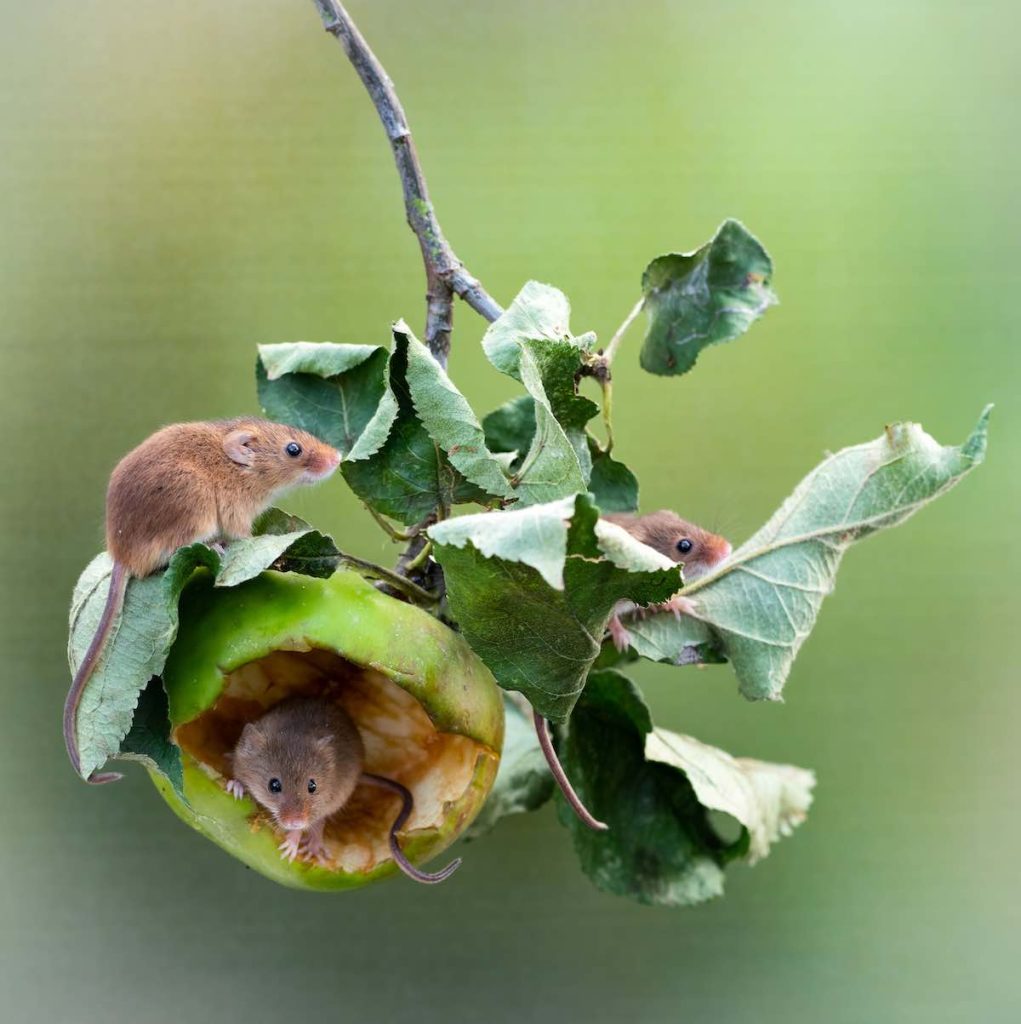
It might take longer than 50 minutes to get the perfect shot—especially the gem below, which might well be entitled ‘3 blind mice’.

By Dave Newman -SWNS

Whether it’s in the wildlife hides, woodlands, local rivers, or simply driving around, Dave can be seen stalking the cute and the curious on his artistic quest.

By Dave Newman -SWNS

SHARE the Artistic Inspiration With Photographer Wannabes on Social Media…

This Week’s Inspiring Horoscopes From Rob Brezsny’s ‘Free Will Astrology’

Our partner Rob Brezsny provides his weekly wisdom to enlighten our thinking and motivate our mood. Rob’s Free Will Astrology, is a syndicated weekly column appearing in over a hundred publications. He is also the author of Pronoia Is the Antidote for Paranoia: How All of Creation Is Conspiring To Shower You with Blessings. (A free preview of the book is available here.)

Here is your weekly horoscope…

FREE WILL ASTROLOGY – Week of January 29, 2022
Copyright by Rob Brezsny, FreeWillAstrology.com

AQUARIUS (Jan. 20-Feb. 18):
Since the iconoclastic planet Uranus is a chief symbol for the Aquarian tribe, you people are more likely to be dissenters and mavericks and questioners than all the other signs. That doesn’t mean your departures from orthodoxy are always successful or popular. Sometimes you meet resistance from the status quo. Having offered that caveat, I’m happy to announce that in the coming weeks, your unique offerings are more likely than usual to be effective. For inspiration, read these observations by author Kristine Kathryn Rusch: “Rebels learn the rules better than the rule-makers do. Rebels learn where the holes are, where the rules can best be breached. Become an expert at the rules. Then break them with creativity and style.”

PISCES (Feb. 19-March 20):
Piscean author Juansen Dizon tells us, “Don’t find yourself in places where people have it all figured out.” That’s always good advice, but it will be especially germane for you in the coming weeks and months. You need the catalytic stimulation that comes from associating with curious, open-minded folks who are committed to the high art of not being know-it-alls. The influences you surround yourself with will be key in your efforts to learn new information and master new skills. And that will be an essential assignment for you throughout 2022.

ARIES (March 21-April 19):
Author Helen Hunt Jackson said that one component of happiness is “a little less time than you want.” Why? Because you always “have so many things you want to see, to have, and to do” and “no day is quite long enough for all you would like to get done before you go to bed.” I propose you experiment with this definition in the coming weeks. According to my astrological analysis, you will have even more interesting assignments and challenges than usual—as well as a brimming vitality that will make it possible for you to accomplish many but not all of them. Your happiness should be abundant!

TAURUS (April 20-May 20):
Born under the sign of Taurus, Ethel Smyth (1858–1944) had considerable skills as a composer of music, an athlete, an author, a passionate lover, and an activist working for women’s rights. She was successful in all of them. I propose we make her one of your role models for the coming months. Why? First, because she did more than one thing really well, and you are now primed to enhance your versatility, flexibility, and adaptability. Second, because she described a formula for high achievement that would suit you well. She said, “Night after night I went to sleep murmuring, ‘Tomorrow I will be easy, strong, quick, supple, accurate, dashing and self-controlled all at once!'” (PS: I suggest you make “supple” your word of power in 2022.)

GEMINI (May 21-June 20):
According to author Olivia Dresher, “Feelings want to be free. Thoughts want to be right.” Well, then, what about intuitions? In a sense, they’re hybrids of feelings and thoughts. They’re a way of knowing that transcends both feelings and thoughts. When intuitions come from the clear-seeing part of your deep psyche rather than the fear-prone part of your conditioning, they are sweet and fun and accurate and humble and brisk and pure. They don’t “want” to be anything. I’m pleased to inform you, Gemini, that in the coming weeks, your intuitions will be working at peak efficiency. It should be relatively easy for you to distinguish between the clear-seeing and fear-prone modes of intuition.

CANCER (June 21-July 22):
“If you are going to do something wrong, at least enjoy it,” wrote humorist Leo Rosten. I offer his counsel to you right now because I want you to have fun if you wander away from your usual upstanding behavior. But may I make a suggestion? As you depart from normal, boring niceness, please remain honorable and righteous. What I’m envisioning for you are experiments that are disruptive in healthy ways, and dares that stir up interesting problems, and rebellious explorations that inspire beauty and truth. They’ll be “wrong” only in the sense of being mutinies against static, even stagnant, situations that should indeed be prodded and pricked. Remember Bob Dylan’s idea: “To live outside the law, you must be honest.”

LEO (July 23-Aug. 22):
Leo actor Anna Kendrick bragged, “I’m so humble it’s crazy. I’m like the Kanye West of humility.” I’d like to see you adopt that extravagant approach to expressing your magnificence in the coming weeks. I hope you’ll add another perspective to your repertoire, too—this one from Leo actor Mae West. She exulted, “Too much of a good thing can be wonderful!” Here’s one further attitude I encourage you to incorporate, courtesy of Leo author Rachel Pollack: “To learn to play seriously is one of the great secrets of spiritual exploration.”

VIRGO (Aug. 23-Sept. 22):
Sammy Davis Jr. (1925–1990) was multi-talented: an actor, singer, comedian, and dancer. One critic described him as “the greatest entertainer ever to grace a stage.” He didn’t think highly of his own physical appearance, however. “I know I’m dreadfully ugly,” Davis said, “one of the ugliest men you could meet. But ugliness, like beauty, is something you must learn how to use.” That’s an interesting lesson to meditate on. I think it’s true that each of us has rough, awkward, irregular aspects—if not in our physical appearance, then in our psyches. And yet, as Davis suggested, we can learn to not just tolerate those qualities, but use them to our advantage. Now is a favorable time for you to do that.

LIBRA (Sept. 23-Oct. 22):
“It is the nature of love to work in a thousand different ways,” wrote the mystic Saint Teresa of Avila. According to my analysis of the astrological omens, you’re due to discover new and different ways to wield your love magic—in addition to the many you already know and use. For best results, you’ll have to be willing to depart from old reliable methods for expressing care and tenderness and nurturing. You must be willing to experiment with fresh approaches that may require you to stretch yourself. Sounds like fun to me!

SCORPIO (Oct. 23-Nov. 21):
“If you are drilling for water, it’s better to drill one 60-foot well than 10 six-foot wells,” advised author and religious scholar Huston Smith. He was using well-drilling as a metaphor, of course—as a symbol for solving a problem, for example, or developing a spiritual practice, or formulating an approach to psychological healing. The metaphor might not be perfectly applicable for everyone in every situation. But I believe it is vividly apropos for you and your current situations.

SAGITTARIUS (Nov. 22-Dec. 21):
A well-worn proverb tells us, “All good things come to those who wait.” There’s a variation, whose author is unknown (although it’s often misattributed to Abraham Lincoln): “Things may come to those who wait, but only the things left behind by those who hustle.” I think that’s far more useful advice for you in the coming weeks. I’d much rather see you hustle than wait. Here’s a third variant, which may be the best counsel of all. It’s by author Holly Woodward: “All good things come to those who bait.”

CAPRICORN (Dec. 22-Jan. 19):
Author Harriet Beecher Stowe wrote, “To be really great in little things, to be truly noble and heroic in the insipid details of everyday life, is a virtue so rare as to be worthy of canonization.” I agree, which is why I authorize you to add “Saint” to the front of your name in the coming weeks. There’s an excellent chance you will fit the description Stowe articulated. You’ll be at the peak of your power to elevate the daily rhythm into a stream of subtle marvels. You’ll be quietly heroic. If you’re not fond of the designation “Saint,” you could use the Muslim equivalent term, “Wali,” the Jewish “Tzadik,” Buddhist “Arhat,” or Hindu “Swami.”

WANT MORE? Listen to Rob’s EXPANDED AUDIO HOROSCOPES, 4-5 minute meditations on the current state of your destiny — or subscribe to his unique daily text message service at: RealAstrology.com

(Zodiac images by Numerologysign.com, CC license)

SHARE The Wisdom With Friends Who Are Stars in Your Life on Social Media…

Celebrating GNN’s 25th Anniversary in August; And Please Note Our New Mailing Address!

GNN Founder, Geri Weis-Corbley (right) with GNN co-owner Anthony Samadani

I wanted to let you know that we have a new mailing address—and also to get your ideas on how to celebrate the 25th anniversary of GNN’s founding.

We moved the Good News Network operation from California back to its roots in Virginia—just in time to mark the website’s 25th Anniversary on August 30th.

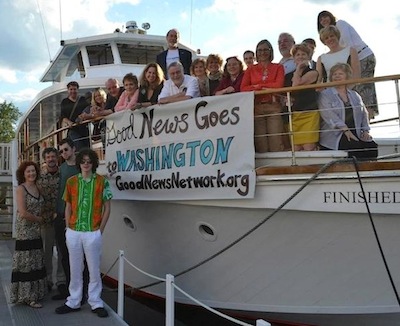
We’ve been pondering what to do to celebrate. On the 15th anniversary, I rented a historic yacht to sail up the Potomac in Washington, DC; in 2014 we met fans for lunch on a Chicago beach; the year before we held a Meet and Greet in Vancouver, Canada.

yacht group shot

What do you think we should do? Some sort of streaming event for fans across the world?

One of our writers lives in Italy. Maybe we should arrange a party there, and you can save up for the trip?

Let us know in the comments below, or send us your feedback by email…

NOTE our new address is:

PO Box 161
Manassas, VA 20108

Here’s hoping you enjoy many celebrations in 2022!

“Feelings, whether of compassion or irritation, should be welcomed, recognized, and treated on an absolutely equal basis; because both are ourselves.” – Thich Nhat Hanh

Quote of the Day: “Feelings, whether of compassion or irritation, should be welcomed, recognized, and treated on an absolutely equal basis; because both are ourselves.” – Thich Nhat Hanh (died this week at age 95)

Photo: by Tengyart

With a new inspirational quote every day, atop the perfect photo—collected and archived on our Quotes page—why not bookmark GNN.org for a daily uplift?


Mysterious Object Unlike Anything Astronomers Have Seen Before Discovered

Released An artist’s impression of what the object might look like if it’s a magnetar ICRAR
Star icon shows the position of the repeating transient in the Milky Way/Dr Natasha Hurley-Walker; ICRAR-Curtin

A team mapping radio waves in the Universe has discovered something unusual that releases a giant burst of energy three times an hour, and it’s unlike anything astronomers have seen before.

The team who discovered it think it could be a neutron star or a white dwarf—collapsed cores of stars—with an ultra-powerful magnetic field.

Spinning around in space, the strange object sends out a beam of radiation that crosses our line of sight, and for a minute in every twenty, is one of the brightest radio sources in the sky.

Astrophysicist Dr Natasha Hurley-Walker, from the Curtin University node of the International Centre for Radio Astronomy Research, led the team that made the discovery.

“This object was appearing and disappearing over a few hours during our observations,” she said.

“That was completely unexpected. It was kind of spooky for an astronomer because there’s nothing known in the sky that does that.

“And it’s really quite close to us—about 4,000 lightyears away. It’s in our galactic backyard.”

The object was discovered by Curtin University Honours student Tyrone O’Doherty using the Murchison Widefield Array (MWA) telescope in outback Western Australia and a new technique he developed.

MORE: Gigantic Planet Found Hidden in Plain Sight

“It’s exciting that the source I identified last year has turned out to be such a peculiar object,” said Mr O’Doherty, who is now studying for a PhD at Curtin.

Composite of SKA-Low telescope in Western Australia; ICRAR/SKAO

“The MWA’s wide field of view and extreme sensitivity are perfect for surveying the entire sky and detecting the unexpected.”

Objects that turn on and off in the Universe aren’t new to astronomers—they call them ‘transients’.

ICRAR-Curtin astrophysicist and co-author Dr Gemma Anderson said that “when studying transients, you’re watching the death of a massive star or the activity of the remnants it leaves behind.”

An artist’s impression of what the object might look like if it’s a magnetar/ICRAR

‘Slow transients’—like supernovae—might appear over the course of a few days and disappear after a few months.

‘Fast transients’—like a type of neutron star called a pulsar—flash on and off within milliseconds or seconds.

RELATED: New Study Further Resolves Stephen Hawking’s Black Hole Paradox – With String Theory

But Dr Anderson said finding something that turned on for a minute was really weird.

She said the mysterious object was incredibly bright and smaller than the Sun, emitting highly-polarised radio waves—suggesting the object had an extremely strong magnetic field.

Dr Hurley-Walker said the observations match a predicted astrophysical object called an ‘ultra-long period magnetar’.

“It’s a type of slowly spinning neutron star that has been predicted to exist theoretically,” she said.

“But nobody expected to directly detect one like this because we didn’t expect them to be so bright.

“Somehow it’s converting magnetic energy to radio waves much more effectively than anything we’ve seen before.”

LOOK: ‘Orion’s Fireplace’: Flame Nebula is Ablaze With Color and Captured in Stunning New Images

Dr Hurley-Walker is now monitoring the object with the MWA to see if it switches back on.

“If it does, there are telescopes across the Southern Hemisphere and even in orbit that can point straight to it,” she said.

Dr Hurley-Walker plans to search for more of these unusual objects in the vast archives of the MWA.

“More detections will tell astronomers whether this was a rare one-off event or a vast new population we’d never noticed before,” she said.

MWA Director Professor Steven Tingay said the telescope is a precursor instrument for the Square Kilometre Array—a global initiative to build the world’s largest radio telescopes in Western Australia and South Africa.

“Key to finding this object, and studying its detailed properties, is the fact that we have been able to collect and store all the data the MWA produces for almost the last decade at the Pawsey Research Supercomputing Centre. Being able to look back through such a massive dataset when you find an object is pretty unique in astronomy,” he said.

“There are, no doubt, many more gems to be discovered by the MWA and the SKA in coming years.”

The study for this article has been published in Nature journal.

Source: International Centre for Radio Astronomy Research

SHARE This Far Out News With All Your Friends…

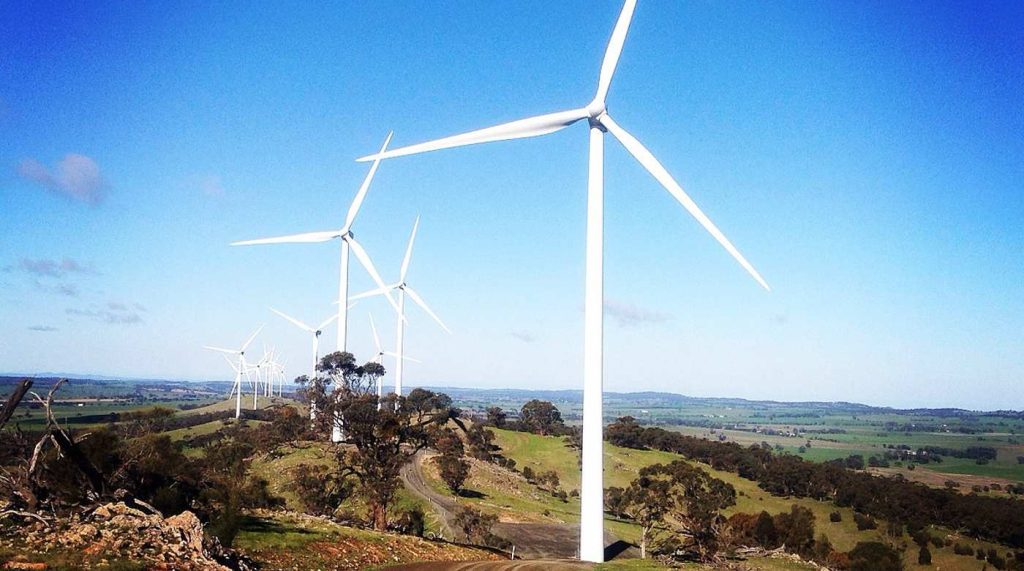
South Australia Smashes Renewable Record Using 100% Solar And Wind For Full Week

By Ameen Fahmy
User:Stephkrie, CC license

South Australia spent the last week of December generating 100% of its power demand from wind and solar.

This isn’t unheard of for the sunny southern state in the Land Down Under, but rather the first time it’s happened for so many days in a row.

Wind turbines supplied 64.4% of power, while rooftop PV panel generation provided 29.5%, and utility-scale solar averaged 6.2%.

The state would have actually generated more than 100% of its demand but for a brief curtailment of semi-scheduled generation which reduced the totals by 8.2%.

Over that period the contribution from natural gas averaged just 114 megawatts.

The territory is populated by around 1.7 million people, mostly centered around the coast and in Adelaide, its capital city.

The conditions for solar and wind energy has allowed the renewable energy market to flourish, highlighted by the fact that in the same period of last year, 142% of needs were met with these elements.

MORE: Wind Turbines Are Using Cameras and AI to See Birds –And Shut Down When They Approach

Being in the Southern Hemisphere, the hottest, driest, and windiest months are all in what Northern Hemisphere dwellers would describe as winter. The solar energy from 110°F (43°C) is generous, as is the wind power from speeds which average 10mph.

RELATED: Destroyed by Fire, Drought, and Dust Storms, These Australian Marshes Needed Only Two Years to Completely Recover

In order to harness these, the South Aussies built the Hornsdale Power Reserve. In 2017 it was the world’s largest lithium-ion battery, capable of storing 129 megawatt-hours of energy.

ENERGIZE Those News Feeds With This Good News From Down Under…

A Flying Car Just Got Certified as Airworthy to Fly

AirCar by Klein Vision

The world’s first proven flying car just received its airworthiness certificate by the Slovakian Transport Authority.

Last June, this car deployed some mechanical wings and took off from a runway in the city of Nitra in Slovakia, and landed in Bratislava 35 minutes later. After it folded up its wings, the exotic-looking sports car drove off down the highway.

The aptly-named AirCar then did this 200 more times across 700 hours of flight time before the aviation authorities decided that it was reliable and safe.

“AirCar certification opens the door for mass production of very efficient flying cars,” its creator, Prof Stefan Klein, said. “It is official and the final confirmation of our ability to change mid-distance travel forever.”

The dramatic, watershed-moment-tone is perhaps appropriate, as the car can reach 100 mph on the road, and 8,000 feet of altitude, while needing only around 2 minutes and 15 seconds to deploy or store its wings.

MORE: Jet Flown by United Airlines Entirely Powered by 100% Plant-Based Fuel from Corn Stalk Waste

Last year, GNN reported that the prototype was developed by a company called KleinVision, founded by Stefan Klein, who spent 20 years turning his dream into a reality. For an unbelievably small amount of money—about 2 million euro—the Slovak created the world’s first flying car to travel between two airports.

Dr. Stephen Wright, a research fellow of avionics at the University of West England, told the BBC at the point of the test flight that he had reservations but that he “[couldn’t] wait to see the piece of paper that says this is safe to fly and safe to sell.” Eat your heart out, Wright.

RELATED: 100-Year-old Dreams of Airship Travel Through Europe are Revived With This Modern Zero-Emissions Dirigible

Klein Vision has specified that they are looking to take a share out of the aircraft market with the AirCar, not the auto market—and Morgan Stanley estimates the flying car market over the next 20 years will be worth over a trillion dollars, similar to the buzz that arose around the recent boom in private spaceflight.

(WATCH the video for this story below.)

FLY This Breakthrough to Your Friends By Landing it on Social Media…
65 Different Species of Animals Laugh, Says a New Study

Human laughter is common, but it’s a somewhat mysterious part of our evolution. It’s clear to evolutionary scholars that we laugh as a part of play, signaling our cooperation or friendliness. But how did laughter evolve? And are humans the only ones who do it?

Not a chance: Animals laugh too, researchers have observed.

Primatologist and UCLA anthropology graduate student Sasha Winkler and UCLA professor of communication Greg Bryant have taken a closer look at the phenomenon of laughter across the animal kingdom.

The pair combed through the existing scientific literature on animal play behavior, looking for mentions of vocal play signals—or what might be thought of as laughter.

They found such vocal play behavior documented in at least 65 species. That list includes a variety of primates, domestic cows and dogs, foxes, seals, and mongooses, as well as three bird species, including parakeets and Australian magpies.

RELATED: Whales Once Walked Along the Coasts of North America … Wait, What?
“This work lays out nicely how a phenomenon once thought to be particularly human turns out to be closely tied to behavior shared with species separated from humans by tens of millions of years,” Bryant said.

The researchers looked for information on whether the animal vocalizations were recorded as noisy or tonal, loud or quiet, high-pitched or low-pitched, short or long, a single call or a rhythmic pattern—seeking known features of play sounds.

There’s much existing documentation of play-based body language among animals, such as what is known as “play face” in primates or “play bows” in canines, the researchers noted.

Since what constitutes “play” in much of the animal kingdom is rough-and-tumble and can also resemble fighting, play sounds can help emphasize non-aggression during such physical moments, the article suggests.

“When we laugh, we are often providing information to others that we are having fun and also inviting others to join,” Winkler said. “Some scholars have suggested that this kind of vocal behavior is shared across many animals who play, and as such, laughter is our human version of an evolutionarily old vocal play signal.”

MORE: Why Cats Love to Sit in Boxes – Even Fake Ones, According to Science

While Winkler and Bryant say that further observation and research into vocalizations would be fruitful, they also note that such observations can be hard to come by in the wild, especially for animals whose play sounds might be quieter.

Paying attention to other species in this way sheds light on the form and function of human laughter, the researchers write, and helps us to better understand the evolution of human social behavior.

The article for this research was published in Bioacoustics.

(WATCH the National Geographic Video of Rats ‘Laughing’ While Being Tickled)

Source: UCLA

RAISE a Smile In Your Besties—Share This Research…

“You don’t have to be great to get started, but you have to get started to be great.” – Les Brown

Quote of the Day: “You don’t have to be great to get started, but you have to get started to be great.” – Les Brown

Photo: by Ambrose Chua

With a new inspirational quote every day, atop the perfect photo—collected and archived on our Quotes page—why not bookmark GNN.org for a daily uplift?