












All News - Page 430 of 1733 - Good News Network
Home Blog Page 430

Probiotics Improve Nausea and Vomiting in Pregnancy, Study Shows

jordy clarke (cc license)

In a first-of-its-kind study, researchers found that probiotics significantly improve the symptoms of pregnancy-related nausea, vomiting, and constipation.

Nausea and vomiting affect about 85% of pregnancies and can significantly impact quality of life, particularly during early pregnancy.

“The cause of nausea and vomiting during pregnancy is unknown to this date. Various theories have been proposed, but none of them is conclusive,” said Albert T. Liu, lead author for the University of California – Davis study and a professor of obstetrics and gynecology.

“Nausea, vomiting and constipation during pregnancy can significantly diminish the quality of patients’ lives. Once nausea and vomiting during pregnancy progress, they can become difficult to control, and sometimes the patient even needs to be hospitalized,” Liu said.

Beneficial microbes

Probiotics are referred to as “beneficial bacteria.” They can be found in foods like yogurt, kimchi, kefir, sauerkraut, and tempeh. Probiotics are also available as food supplements. According to the National Center for Complementary and Integrative Health, other than vitamins, probiotics or prebiotics were the third most commonly used dietary supplement for adults.

Probiotics are thought to support the community of different microbes, often referred to as the “gut microbiome,” found in the gastrointestinal tract.

During pregnancy, hormones like estrogen and progesterone increase, bringing about many physical changes. These increases can also change the gut microbiome, which likely affects the digestive system functions and causes unwanted symptoms like nausea, vomiting and constipation.

LOOK: Coffee and Tea Drinking May be Associated With Reduced Rates of Stroke and Dementia

The researchers set out to determine whether supplementing with a probiotic could be beneficial for gastrointestinal function during pregnancy.

The study lasted for 16 days. A total of 32 participants took a probiotic capsule twice a day for six days and then took two days off. They then repeated the cycle.

The probiotics were available over-the-counter and mainly containedLactobacillus.a type of good bacteria. Each capsule contained approximately 10 billion live cultures at the time of manufacture.

Participants kept 17 daily observations of their symptoms during the duration of the study, for a total of 535 observations for the researchers to statistically assess.

What the researchers found was that taking the probiotic significantly reduced nausea and vomiting. Nausea hours (the number of hours participants felt nauseous) were reduced by 16%, and the number of times they vomited was reduced by 33%. Probiotic intake also significantly improved symptoms related to quality of life, such as fatigue, poor appetite and difficulty maintaining normal social activities, as scored by questionnaires.

CHECK OUT: One Man Set Out to Make the Perfect Pasta Shape, And it’s So Popular That Orders are Backed Up for Months

Probiotics were also found to reduce constipation significantly.

“Over the years, I’ve observed that probiotics can reduce nausea and vomiting and ease constipation. It’s very encouraging that the study proved this to be true,” said Liu. “Probiotics have also benefited many of my other patients who weren’t in the study,” said Liu.

New clues from gut microbes and byproducts

Participants also contributed fecal specimens before and during the study, the findings of which were published in Nutrients. The samples were analyzed to identify the type and number of microbes and the different byproducts of digestion.

This allowed the researchers to examine whether biomarkers in the fecal specimens corresponded with more severe nausea and assess how the probiotics affected participants who began the study with different baseline biomarkers.

TRY THIS FOR OBESITY: How Self-Compassion Can Help People Achieve Weight Loss Goals Despite Setbacks–and Resume Dieting Faster

One finding was that a low amount of bacteria that carry an enzyme named bile salt hydrolase, which generates bile acid to absorb nutrients, was associated with more pregnancy-related vomiting. Probiotics increase bile salt hydrolase-producing bacteria, which may explain why the supplements decreased levels of nausea and vomiting.

Another finding was that high levels of the gut microbes Akkermansia and A. muciniphila at the beginning of the study were associated with more vomiting. The probiotic significantly reduced the amount of those particular microbes and also reduced vomiting. This suggests Akkermansia and A. muciniphila may be reliable biomarkers that can predict vomiting in pregnancy.

Another finding was that vitamin E levels increased after taking probiotics. Higher levels of vitamin E were associated with low vomiting scores.

“This research provides key insights about the impact of gut microbes on gastrointestinal function during pregnancy. Our gut microbiota explains why we are what we eat, and why bacteria-generated metabolites and products have a huge impact on our health,” said Wan. “They affect the gastrointestinal tract as well as skin health and neurological function.”

RELATED: The Many Health Benefits of Eating Mushrooms That Are Wild – And Picking Them Doesn’t Deplete Supply

Although the findings are intriguing, the researchers caution that due to the small sample size, further studies will be needed to confirm the effects of the probiotics.

“Our previous work showed the benefits of probiotics in preventing liver inflammation. The current study might be one of the first to show the benefits of probiotics in pregnancy,” said Wan. “It would be interesting and important to further test whether probiotics can reduce nausea and vomiting caused by chemotherapy in cancer patients.”

Source: University of California – Davis Health

HELP Others Know the Latest Research; Share This Health News…

New Simple Therapy Offers Potentially Groundbreaking Treatment Option for ALS and Other Autoimmune Diseases

A man with Amyotrophic Lateral Sclerosis (ALS) had the advance of his disease slowed, and even halted altogether, thanks to a new trial that could offer hope to the 12,000 to 15,000 patients who currently suffer from the disease.

At 70 years of age, John Lay was diagnosed with ALS, the incurable progressive motor neuron disease known as Lou Gehrig’s disease—which Stephen Hawking had.

It was a cruel blow for a man in his golden years when things like playing with grandchildren, passing knowledge onto younger generations, and picking up new hobbies tend to be the features of one’s week to week, but Lay took it in his stride.

“I was disappointed to have a diagnosis like that, but I was also very grateful to be 70 years old and to have lived a wonderful, rewarding life and to have so many great people in my life,” Lay said. “This was something that we would learn to deal with and to learn from it and to contribute something if we could.”

In order to contribute, Lay was enrolled in a phase 2a trial from Coya Therapeutics at Houston Methodist Hospital, who are currently designing a novel treatment for ALS that involves seeing if T-regulatory cells, or “Tregs,” could potentially be re-trained to halt the attack on one’s own cells which characterize autoimmune diseases like ALS, and also neurodegenerative diseases like Alzheimer’s.

Coya’s phase 1 trial halted ALS progression with no adverse side-effects in all three patients, while the data from Lay and the other patients of the phase 2a trial is being prepared for peer review.

Back on track

“We found that when we expanded the cells outside the body, we found that those cells became normal, they became suppressive,” said Dr. Stanley H. Appel, renowned ALS researcher and lead-author of the phase 2a trial.

RELATED: Computer Allows Paralyzed Patients to Communicate – And They’re Happy With Life

“They put out the fires that are caused by other cells that are too inflamed. This gave us the idea and the inspiration: why don’t we take these out our patients, expand them, and then give them back to the patients. What was amazing is it appeared that we stopped progression.”

Tregs are a vital part of the combined-arms attack of our immune system, working as something like a coordinator. Coya Therapeutics have found that Tregs are suppressed in Alzheimer’s Disease, but that when introduced, like in the ALS trial, from outside the body, their immuno-modulatory properties are restored.

Coya Therapeutics has pioneered a way in isolating a patient’s dysfunctional regulatory T-Cells (Tregs) and converting them to “Super Tregs”, conferred with potent immunosuppressive and neuroprotective features.

Moreover, Coya has developed and patented the methods of freezing the cells from one manufacturing run for future infusions and reinfusing them back into the same patient over a year on an ongoing basis. Repairing the dysfunctional Tregs holds great promise based on the seminal findings that dysfunctional and decreased levels of Tregs are critical drivers of the neurodegenerative disease process.

MORE: New Research Shows That Gut Microbes May ‘Significantly’ Slow the Progression of ALS

When Lay’s clinical trial finished, the progression of his ALS sped-up, offering further evidence of the treatment’s efficacy.

“This has made us a lot more appreciative of every day when the sun comes up,” Lay said. “Being able to participate in a clinical trial during this period that marks the transition point in my life has been terrifically rewarding. Because my hope is that whatever we’ve contributed can be built upon and that other patients can benefit in the near future if I’ve benefited during the trial.”

SHARE This Breakthrough Research With Your Circle…

Meet the Sustainable Alternative to Concrete that Caught the Eye of Dior and Louis Vuitton

Irene Roca Moracia and Brigitte Kock

What do an American crayfish, a Japanese weed, a French fashion label, and a British designer have in common? They are coming together to create a more sustainable bio-concrete.

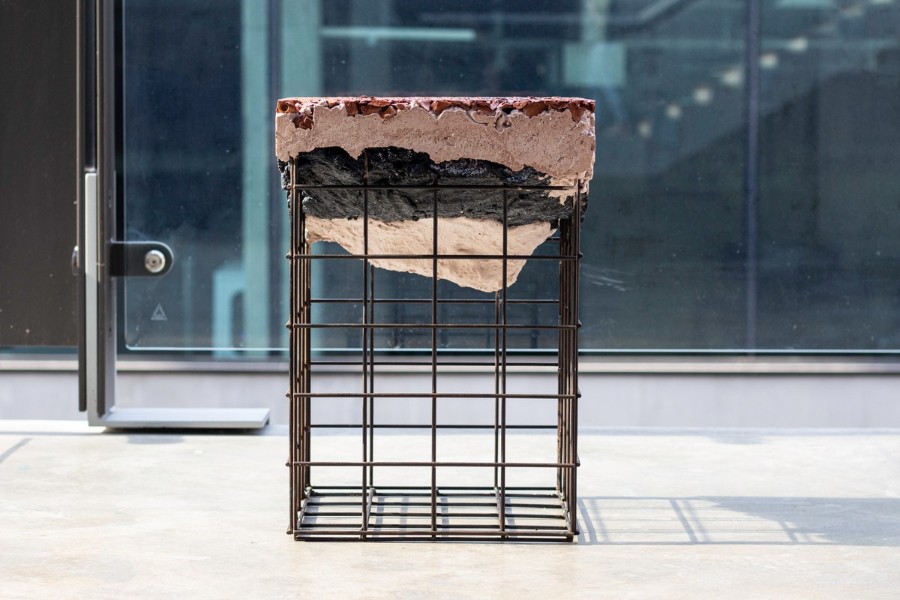
Using Japanese knotweed and shells from American signal crayfish to replace the sand and rocks that make traditional concrete strong but extremely emissions-heavy, a pair of British designers—Brigitte Kock and Irene Roca Moracia—have created a truly unique material that’s caught the eye of LVMH, a conglomerate which includes luxury brands Dior and Louis Vuitton.

Irene Roca Moracia and Brigitte Kock

Inspired by a hefty price tag of £1.8 billion ($2.4 billion) for the annual cost of removing invasive species like these two from the UK, Kock and Moracia discovered they could instead be used as the reinforcing agents in concrete.

Japanese knotweed has no predators in the UK, and because it slowly destroys asphalt and other surfaces, it is collected by specialist removers and incinerated. This ash is used like sand according to old recipes the Romans once used to make concrete, while the pulverized shells of the crayfish act like the gravel or rocks.

American signal crayfish undercut river banks and can lead to erosion and over sedimentation of waterways.

“We have played with the percentages and ratios to obtain really strong results,” Moracia explained to Dutch publication Dezeen. “The final colors and textures depend on the curing time and the aggregate’s chemical reactions with the binder and the water.”

MORE: Design Students Use Art to Reimagine Plastic Recycling – Creating Lamps, Seat Covers, and More

“We want to showcase the absurdity of the classification and disposal rules here in the UK that do not allow anything to be done with those species after they are treated and sealed in bags, while you can easily order those byproducts online and import them from China for example,” said Moracia.

Irene Roca Moracia and Brigitte Kock

Jade green, dark burgundy, marbled colors, natural stone, or unpolished concrete, patrons can have their bio-concrete in many striking colors and textures.

RELATED: This Cabin’s Flexible Design Can Open To Nature or Enclose into Cozy Space Again (Watch)

Their project was commissioned by the Maison/0 graduate program at Central Saint Martins, an arts and design college based in London.

Organized by LVMH, the project aims to create sustainable versions of building materials for use in their luxury stores. Just to create cement, with which one must mix sand, gravel, and water to get concrete, the process creates 0.6 tons of CO2 per ton of cement. Sand mining is incredibly carbon-intensive as well, as are other forms of mining to acquire the gravel.

Any structurally-viable alternative would be welcomed by firms worldwide looking to reduce their emissions. But rather than simply inventing a less-bad alternative, Moracia and Kock wanted to make one that actively improved the environment.

GREAT Design Should Be Shared; Show Others This… 

“Whatever it is that you do, when you really want something, it’s because that desire originated in the soul of the universe. It’s your mission on earth.” – Paulo Coelho

Quote of the Day: “Whatever it is that you do, when you really want something, it’s because that desire originated in the soul of the universe. It’s your mission on earth.” – Paulo Coelho

Photo: by Benjamin Davies

With a new inspirational quote every day, atop the perfect photo—collected and archived on our Quotes page—why not bookmark GNN.org for a daily uplift?


Ten Years After a Tsunami Devastated Eastern Japan, a 1,000km Hiking Trail Reclaims the Coast

t wikimedia commons cc license Shoestring at wts wikivoyage
Shoestring at WTS Wikivoyage/CC license

Ten years after the Tōhoku earthquake and tsunami hit eastern Japan and knocked the Fukushima Daichi nuclear plant into meltdown, a new 1,000 kilometer hiking trail, spanning the length of the island of Honshu, is revitalizing local communities.

The Michinoku Costal Trail offers stunning views of the Pacific, including rugged, rocky coastline, Japan’s highest cliffs, fertile seas studded with rock spires, sheltered pine forests on old hills, and white sandy beaches.

Named after the ancient word for the Tōhoku region through which much of the trail passes, it’s 1,000 kilometers start in Hachinohe City in Aomori Prefecture and travel up to Soma City in Fukushima. Between those points the trail brings hikers through fishing villages and other small communities that were reduced to flat rubble by the tsunami.

The 2011 tsunami followed the fourth most-powerful earthquake observed since human recording began: a magnitude 9.0 shudder that shifted the Earth’s axis, and sucked the ocean out into the Pacific before spitting it back at the Land of the Rising Sun. Millions of buildings were destroyed, and the subsequent $300 billion relief efforts included the Michinoku Coastal Trail from the beginning as a way to funnel tourist revenue into the worst-hit communities.

“Nature, born from the bonds between forest, village, river, and the sea, and the stories spun therefrom, are the beauty that exists only on this trail,” write the trail’s organizers.
“People’s lifestyles are passed on through this trail, and we hope they will ultimately be passed on into the future.”

RELATED: Just Go Walk: Studies Show Normal Walking Can Add Years to Your Life and Reduce Disease Symptoms

Among these lifestyles one can see are morning trips on one-man mackerel boats, launched from sheltered bays and inlets surrounded by nature. Locals are also offering cultural immersion in the form of cooking classes and salt-making workshops, and tours on their fishing boats out along the coast or for scuba-diving.

BBC Travel reports that news of the trail’s charms are growing but that the pandemic has prevented its blossoming. At the Natori Trail Center, English-trained guides help foreigners organize their trip along the Michinoku. The Managing Director, Kumi Aizawa, told the BBC that locals have a deep appreciation for thru-hikers, and that language barrier or none, a hiker isn’t alone in the rugged countryside.

MORE: Walking Storyteller Continues Historic 24,000-Mile Trek Retracing Passage of Human Ancestors Out of Africa

“After the tsunami, there were lots of volunteers who came from outside Tohoku to support locals. Now there are locals who want to give something back to visitors—whether that’s a place to put up a tent, or giving food and water,” Aizawa said. “When my 18-year-old daughter through-hiked the trail, there was one old man who was so worried about her camping in the mountains that he gave her a room and fed her.”

WALK This Adventure Opportunity Over to Your Buddies…

Fun Facts to Celebrate First Nobel Prizes 120 Years Ago: Youngest Laureate, First Woman, Most Wins, Who Declined?

PHOTO CREDIT: Robert Fisher Rare Book Library

120 years ago tomorrow, the first Nobel Prizes were awarded, including the first one in Physics for the discovery of X-rays.

Alfred Nobel, a Swedish chemist, engineer, poet, and the industrialist who invented dynamite, arranged in his will to spend money to establish a foundation to honor “those who have conferred the greatest benefit to Mankind.”

He bequeathed money to award 5 separate prizes—in Physics, Chemistry, Medicine, Literature, and Peace—which are regarded as the most prestigious honor for anyone in those fields.

Each awardee receives a gold medal, a diploma (see below), and 10 million Swedish krona (about $1.1 million).

Of the 975 Nobel laureates named since 1901, 28 were organizations, and 58 were given to women, including the physicist and chemist Marie Curie, who won twice. Curie’s husband shared one of Curie’s Prizes—for physics—and their daughter, Irène Joliot-Curie, was awarded her own Nobel in Chemistry for her work on radioactivity.

Another chemist, Linus Pauling, is the only person to win two unshared Nobel Prizes—one for Chemistry and the 1962 Peace Prize.

The elaborate Nobel diploma

The youngest laureate was 17-year-old Malala Yousafzai who won the Peace Prize in 2014. Other notable Peace Prize laureates include Anwar Sadat and Menachem Begin, Lech Wałęsa, Martin Luther King Jr., Desmond Tutu, and Jimmy Carter.

The Swiss International Committee of the Red Cross is the only 3-time recipient of the Nobel Prize, being conferred with Peace Prizes in 1917, 1944, and 1963. Further, the humanitarian institution’s co-founder Henry Dunant won the first-ever Peace Prize in 1901.

In 2020, two women, Jennifer Doudna and Emmanuelle Charpentier jointly shared the Nobel Prize in Chemistry becoming the 6th and 7th women (after Madam Curie) to win that category, for their “development of a method for genome editing—commonly known as CRISPR.

In 1969, an additional prize category for economics, and it became another honor that is also available, after the Bank of Sweden began providing funding for it.

But, not every category is awarded annually. During the World Wars, they were rare, and when the Nobel committee doesn’t believe anyone attained the degree of achievement in the prior year, no Nobel is awarded. That has happened 49 times.

The  U.S.A. is the country of birth for the most winners of the Nobel across the globe—around 30%—followed by the UK, France, and Germany, where, during a 2-year period, Adolf Hitler refused to allow three laureates (one in medicine, and 2 chemists) to accept their awards. Boris Pasternak, the 1958 Nobel Laureate in Literature (for Doctor Zhivago), was also coerced by the Soviet Union to decline the Prize.

Hope you enjoyed this article, which is a reprint from the daily history column written by GNN founder, Geri Weis-Corbley, Good News On This Day in History, where you can check out your birth date column—or get the free GNN app to easily see the history column and all our good news on any device.

SHARE the Nobel Fun Facts With History Buffs on Social Media…

60 Visitors Got Snowed-In at a UK Pub For 3 Days –And Loved It

The Tan Hill Inn/Facebook

When sixty revelers went for a night in the UK’s highest pub, snow drifts and a downed power line ensured they got more time at the bar than they bargained for.

Yet between an Oasis cover band, tabletop games, trivia, and sing-along Christmas carols, three whole days in which no-one who entered could leave passed in holiday cheer—and the guests loved every minute of it.

The Tan Hill Inn/Facebook

“They’re all in good spirits, they’re all eating and drinking well,” said co-owner of the Tan Hill Pub Andrew Hields, to CNN. Tan Hill can be found in Swaledale in the beautiful Yorkshire Dales in northeast England, 1,732 feet above sea level—making it the highest sitting pub in the UK.

Three roads lead up to Tan Hill, two of which were covered in snow drifts by Storm Arwen, and the last road out was by blocked with a downed powerline. Some guests arrived Friday night with the intention of camping, but the storm destroyed their tents and campsite, so the staff made beds for them in the pub.

Tan Hill described it as a “life-changing experience,” calling the employees and the guests who came together under challenging circumstances, “amazing people.”

“You guys have been amazing! You’ve worked never ending shifts to keep us well fed and watered,” wrote another of the revelers Becky Longthorp on Facebook.

“We will never forget this extr[a]ordinary experience.”

In some places Arwen brought winds of 90 miles per hour (144 kilometers per hour) and brought civilization to a brief standstill.

MORE: Woman Falls Down Mountain, Writes Hilarious Review For Leggings Giving Them 5-Stars

Tan Hill has faced such squalls before, and the owners said that as soon as the Met office put out the storm warnings they stocked up on food and water.

Storm Arwen pub quiz at The Tan Hill Inn/Facebook

Completely off the grid, the downing of power lines didn’t affect their electricity needs, and the shut ins were able to shut out the weary world for a weekend.

SHARE This Story With Chums You’d Love to Share a Lock-In With…

Jet Flown by United Airlines Entirely Powered by 100% Plant-Based Fuel from Corn Stalk Waste

Jakob Owens
United Airlines

A United Airlines flight from Chicago O’Hare to D.C. Reagan National is nothing to write home about, but the 100 people who were aboard United’s recent Wednesday service were part of aviation history.

They were on the first passenger aircraft flight ever to be powered by 100% plant-based jet fuel, designed by Virent, and derived from agricultural waste like corn cobs and stalks.

Current legislation allows for aircraft to be powered only with 50% renewable fuels, and after completing a test flight without passengers in October, Virent and United were allowed to fill up entirely with the biofuel.

Performance indicators, according to the company, were the same as with fossil fuels.

One of the major advantages with Virent is the chemical similarities to petroleum-based jet fuels in terms of boiling point, thermal stability, and freeze points. This, the company hopes, means their biofuels can simply replace fossil fuels, but without replacing any of the infrastructure.

POPULARCanadian Startup to Build $400M UK Plant to Harness Nuclear Fusion in Entirely New Cost-Effective Way

“Today’s flight is not only a significant milestone for efforts to decarbonize our industry, but when combined with the surge in commitments to produce and purchase alternative fuels, we’re demonstrating the… impactful way companies can join together and play a role in addressing the biggest challenge of our lifetimes,” said United CEO Scott Kirby in a Wednesday statement.

Aviation is sometimes quoted as being 2%-2.5% of global greenhouse gas emissions. Others have quoted it as 5% if one accounts for CO2-equivalents, and others put it at 3.5%.

RELATEDResearchers Pull Carbon Out of the Sky And Convert it to Instant Jet Fuel, Reshaping Aviation For Good

Known as “synthetic aromatic kerosene,” Virent’s fuel turns plant sugars into an oil through a multistep, patented process that reduces greenhouse gas emissions when burned in flight by around 50%. It’s still in the research and development phase, funded mainly by Delaware’s Marathon Petroleum as a way of transitioning to a more carbon-neutral production strategy.

United Airlines will be partnering with Virent as it hopes to reach carbon-neutrality by 2050, and with their support Virent hopes to announce commercialization of the fuel in the coming months.

FLY This Progress to Green Friends on Social Media…

Your Body’s Own ‘Cannabis-Like’ Substance Can Reduce Chronic Inflammation During Exercise

Exercise increases the body’s own cannabis-like substances, which in turn helps reduce inflammation and could potentially help treat certain conditions such as arthritis, cancer, and heart disease.

In a new study, experts from the University of Nottingham found that exercise intervention in people with arthritis, did not just reduce their pain, but it also lowered the levels of inflammatory substances (called cytokines).

It also increased levels of cannabis-like substances produced by their own bodies, called endocannabinoids. Interestingly, the way exercise resulted in these changes was by altering the gut microbes.

Exercise is known to decrease chronic inflammation, which in turn causes many diseases including cancer, arthritis, and heart disease, but little is known as to how it reduces inflammation.

A group of scientists, led by Professor Ana Valdes from the School of Medicine at the University, tested 78 people with arthritis. Thirty-eight of them carried out 15 minutes of muscle strengthening exercises every day for six weeks, and 40 did nothing.

RELATED: Is Your Goal to Walk 10,000 Steps? Science Shows We Need A Lot Fewer

At the end of the study, participants who did the exercise intervention had not only reduced their pain, but they also had more microbes in their guts of the kind that produce anti-inflammatory substances, lower levels of cytokines and higher levels of endocannabinoids.

The increase in endocannabinoids was strongly linked to changes in the gut microbes and anti-inflammatory substances produced by gut microbes called SCFAS.

In fact, at least one third of the anti-inflammatory effects of the gut microbiome was due to the increase in endocannabinoids.

MORE: There’s ‘No Link’ Between Exercise and Developing Arthritis in the Knee

Doctor Amrita Vijay, a Research Fellow in the School of Medicine and first author of the paper, published in Gut Microbes, said, “Our study clearly shows that exercise increases the body’s own cannabis-type substances. Which can have a positive impact on many conditions.

“As interest in cannabidiol oil and other supplements increases, it is important to know that simple lifestyle interventions like exercise can modulate endocannabinoids.”

Source: University of Nottingham

RUN This Good Fitness News Over to Your Friends…

Tom Brady FaceTimes With High School Team After They Dialed the Wrong Number

In one of the most serendipitous mistakes ever made, the entering of a friend’s phone number incorrectly in a group text inadvertently connected a Michigan high school basketball team with all-time GOAT and quarterback for the Tampa Bay Buccaneers, Tom Brady.

It started when the freshmen basketball team at Notre Dame Prep in Pontiac, Michigan, made a group text to coordinate practices, and teammate Vinny Tartaglia accidentaly added the number of Buc’s cornerback Sean Murphy-Bunting.

“We were trying to add people, and the last person was Luca, but I was one digit off,” Tartaglia told local news.

P. Jason Whalen, a school councilor at Notre Dame whose son is on the team, documented the story on Twitter.

Obviously needing to prove his identity to the disbelieving teenagers, Murphy-Bunting switched over to FaceTime, and introduced the presumably shocked students to some of his teammates, including tight end Rob Gronkowski and running back Leonard Fournette.

“Leonard Fournette walked us through the locker room and showed us all the players,” said Tartaglia’s teammate Nate Seaman. “Sean Murphy-Bunting, Mike Evans, Lavonte Davis, Gronk, Richard Sherman. That’s when we all said, where’s the GOAT?”

MORE: Keanu Reeves Gifts His 4 Stuntmen With $20,000 Rolex Watches Engraved With Fun Messages

It would be Fournette who then turned the phone over to Tom Brady, a Michigan alumni himself.

“That was sweet,” Brady told CNN of the meeting. “I didn’t know who it was. [Leonard] said, ‘Here’s my boy’ or whatever he said. It was nice. It would have been nice for me when I had been in high school too.”

The reporter would inform the seven-time Super Bowl winner that the boys were from Michigan.

RELATED: Watch Dwayne Johnson Give $30K Truck to the Guy Who Took Him In When ‘The Rock’ was a Homeless Teenager

“Even better,” he said. “That was fun. That was really fun. It was really good to see all those young kids hyped up.”

Whalen confirmed that, tragically, it was only after the FaceTime call ended that “Luca,” the teammate whose number started the fiasco, was added to the group text.

BOUNCE This Fun Story Over to Your Chums; Share it on Social Media…

“Good friends, good books, and a sleepy conscience: this is the ideal life.” – Mark Twain

Quote of the Day: “Good friends, good books, and a sleepy conscience: this is the ideal life.” – Mark Twain

Photo: by Mariia Zakatiura

With a new inspirational quote every day, atop the perfect photo—collected and archived on our Quotes page—why not bookmark GNN.org for a daily uplift?


Dunkin’ Donuts Customer Gives Employee a New Home So She Can Continue Excellent Customer Service

WCPO/YouTube
WCPO/YouTube

A Dunkin’ Donuts employee in Ohio recently received a huge surprise from one of her loyal customers—a fully furnished home.

Employee Ebony Johnson met customer Suzanne Burke at the drive-thru window she was serving at three years ago. They chatted every time Burke came for her coffee in the mornings, and the two became friendly.

When Burke found out that her acquaintance, a mother of three, had fallen on difficult times and been evicted from her home in Mount Healthy, she made it her mission to help—reaching out to organizations that help people difficulty.

Now enjoying a fully decorated, cozy place to stay, Johnson is finally looking forward to the upcoming holidays.

MORE: They Got Married At the Dunkin’ Drive-thru Window Where Every Morning They Fell More in Love

“I’m just so thankful we’re back in our home,” Johnson said to WCPO News. “The Lord really looked out for me because I kept praying and saying, ‘Could I be at home before Christmas?’”

(WATCH the video to meet the family or read more from WCPO News…)

Serve Up This Sweet Story To Your Friends By Sharing It To Social Media…

Surviving the Nazis and Fire, 2000-Year-old Caligula Mosaic Finally Returns to Museum

60 Minutes/YouTube
60 Minutes/YouTube

Built in the Roman Empire, buried for two millennia under a lake, uncovered by a dictator, then stolen by the Nazis, recovered—only to be sold as a coffee table in a Park Avenue apartment, the whirlwind life of a Caligula-era mosaic has finally reached its appropriate conclusion, with the stunning piece going on display in an Italian museum.

Decorated in forest green, brick red porphyry, and creamy white, the mosaic decorated Emperor Caligula’s famous “pleasure barges,” which were two enormous Iron-Age yachts that were excavated from the depths of Lake Nemi near Rome after Benito Mussolini drained the lake in 1920.

In 2013 Dario Del Buffalo, an Italian expert in Roman stone art, was signing copies of his recent book Porphyry in a New York jewelry store when, according to an interview with 60 Minutes Overtime, he heard the most astonish conversation in front of him.

“There was a lady, with a young guy with a strange hat, that came to the table and told her ‘What a beautiful book, and oh! Helen look, that’s your mosaic!'” recounts Del Buffalo. “And she said, ‘Yes that’s my mosaic,’ so I finished my last signature and I went after them.”

“I saw the young guy and I said, ‘Excuse me you were talking about the mosaic on my book, can you tell me is this the mosaic you were talking about?'” said Del Buffalo. “‘Yes this is the mosaic Helen has in her house on Park Avenue!'”

The surprised author described it as a one-in-a-million chance, and as much as he felt sorry to do so, he had to report it to the Italian consulate authorities, sure as Del Buffalo was that Helen’s mosaic belonged originally to Caligula, who put it on his giant boats.

Piazze and Nazis


These boats were essentially massive floating piazze, commissioned in the year 40CE as a testament to the greatness of Caligula, and the mosaic is believed to have been used as a dance floor on the boats which were so big they never sailed.

The mosaic was thought to have originally been housed along with the barges’ remains in the Museum of the Roman Boats, completed in the 1930s, but that was converted into a bomb shelter during WWII, and which tragically suffered a fire that destroyed the pleasure barges.

However the mosaic has no fire damage of any kind, which had Manhattan prosecutors wondering if it had been spirited away before the fire, perhaps by the notorious art “collectors” of the Third Reich.

MORE: English Teenager Discovers Hoard of 3,300 Year-Old Axes and Becomes Metal Detecting Celebrity

Helen Fioratti, the mosaic’s former-owner, was never charged with the crime of possession of the artifact which was considered to have been stolen, and she has never filed a claim to it, believing it would be too long and expensive even though she feels she could win it back.

Fioratti, an American art dealer who had lived in Italy for a period with her Italian journalist husband, claims she bought it from an aristocratic Italian police official with a well-established reputation for recovering lost art stolen by the Nazis.

Artist’s depiction of Nemi ship

“It was an innocent purchase,” Fioratti told the AP. “We were very happy with it. We loved it. We had it for years and years, and people always complimented us on it.”

RELATED: Amateurs Claim to be ‘On the Verge’ of Uncovering Long Lost Treasure Horde Worth Over $20 Billion

The mosaic, which just went on exhibition, has now returned at long last to the museum from which it was so fortuitously stolen, avoiding the fire which destroyed so many of its sister artifacts, after finding itself a pair or perhaps trio of very loving owners in the proceeding 70 years.

(WATCH the video for this story below; Editor’s Note: Viewers outside the U.S. can watch the CBS video here.)

RETURN Fascinating Stories Like This to Their Rightful Place; With Friends…

Eco-friendly ‘Jelly Ice Cube’ Could Transform Cold Storage: No Plastic and Doesn’t Melt

elly ice cube released Gregory Urquiaga_UC Davis
Gregory Urquiaga/UC Davis

Researchers at the University of California, Davis, have developed a new type of cooling cube that could revolutionize how food is kept cold and shipped fresh without relying on ice or traditional cooling packs.

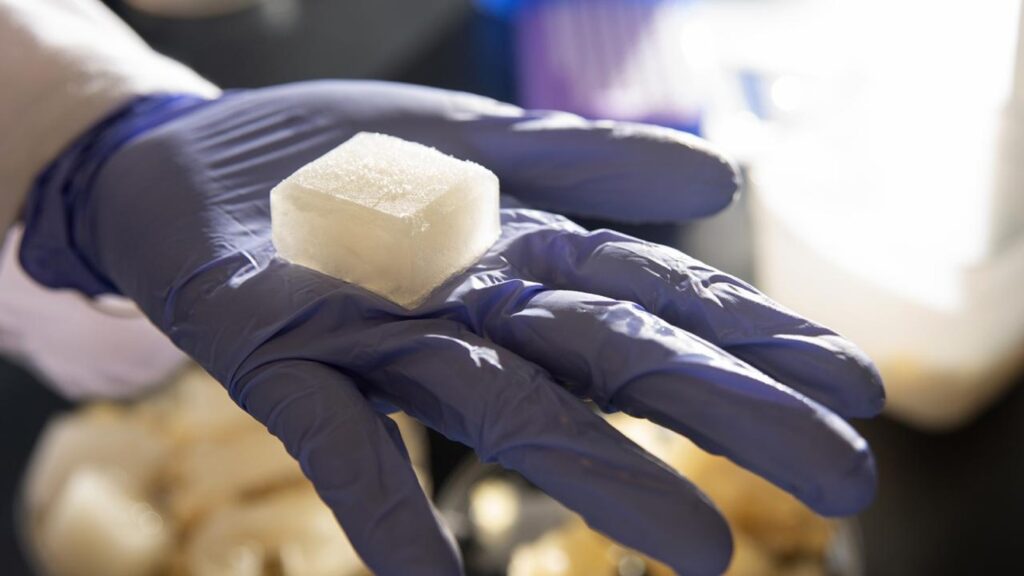
These plastic-free, “jelly ice cubes” do not melt, are compostable and anti-microbial, and prevent cross-contamination.

“When ice melts, it’s not reusable,” said Gang Sun, a professor in the Department of Biological and Agricultural Engineering. “We thought we could make a so-called solid ice to serve as a cooling medium and be reusable.”

The cooling cubes contain more than 90% water and other components to retain and stabilize the structure. They are soft to the touch like a gelatin dessert and change color depending on temperature.

Reusable and flexible

These reusable cubes can be designed or cut to any shape and size needed, said Jiahan Zou, a Ph.D. graduate student who has been working on the project the past two years.

RELATED: Design Students Use Art to Reimagine Plastic Recycling – Creating Lamps, Seat Covers, and More

“You can use it for 13 hours for cooling, collect it, rinse it with water and put it in the freezer to freeze again for the next use,” Sun added.

A patent for the design and concept was filed in July.

The researchers hope to eventually use recycled agriculture waste or byproduct as the coolant material.

“We want to make sure this is sustainable,” said Luxin Wang, an associate professor in the Department of Food Science and Technology.

Fish market wastewater, moldy ice blocks spurred idea

The researchers began working on the coolant cubes after Wang saw the amount of ice used at fish-processing plants and the cross-contamination that meltwater could spread among products or down the drain.

“The amount of ice used by these fish-processing sites is massive,” Wang said. “We need to control the pathogens.”

Sun also lamented mold found in the plastic ice packs used with school lunches for kids and frequently found in shipping packages.

MORE: This ‘Floating Continent’ Could Collect and Recycle Plastic from the Ocean in Future

Early tests have shown the cubes can withstand up to 22 pounds without losing form. They can be reused a dozen times—just a quick wash with water or diluted bleach—and then disposed of in the trash or with yard waste.

Alternative to ice

The jelly ice cubes offer an alternative to traditional ice and could potentially reduce water consumption and environmental impact. They also offer stable temperatures to reduce food spoilage and could be ideal for meal prep companies, shipping businesses and food producers who need to keep items cold.

The application could potentially reduce water consumption in the food supply chain and food waste by controlling microbial contaminations. The research was published in the American Chemical Society’s journal, Sustainable Chemistry & Engineering.

(WATCH the video for this story below.)

Source: UC Davis

MELT the Bad News in Those Social Feeds; SHARE This Innovative Design…

“He who takes offense when no offense is intended is a fool.” – Brigham Young

Quote of the Day: “He who takes offense when no offense is intended is a fool.” – Brigham Young

Photo: by Pablo-Fernández

With a new inspirational quote every day, atop the perfect photo—collected and archived on our Quotes page—why not bookmark GNN.org for a daily uplift?


Spectacular Geminid Meteor Shower Tonight – See Up to 120 Shooting Stars Per Hour

Channone Arif, CC license

There are lots of celestial events to look out for this December, from Venus being at its brightest to the arrival of the Full Cold Moon on December 18.

One phenomenon that has astronomers extra excited? 

Peaking on the night of December 13—on this coming Monday, until Tuesday at sunrise—one of the most active meteor showers of 2021 will take place in the form of the Geminids.

Farmers’ Almanac reports that, with a clear sky, “free of moonlight, you can easily spot 50 or more meteors per hour. On an optimum night for the Geminids, it may even be possible to see up 100 meteors per hour.” Other sources, including the BBC, cite a peak of up to 120 meteors per hour.

The best time to view fireballs hurtling through the sky? At the darkest hour, that is, just before dawn. 

To find out when the exact best viewing time is exactly where you live, head to TimeandDate.com for specific data.

What are the Geminids?

According to NASA, these shooting stars are “caused by a stream of debris left by the asteroid, 3200 Phaethon.

“When the Earth passes through the trails of dust every December left by 3200 Phaethon, we see the Geminid meteor shower as the dust (meteoroids) burn up in Earth’s atmosphere creating meteors.”

Visible all over the world, though seen most impressively in the Northern Hemisphere, there’s no need to look in a particular direction to spot these burning specks of dust.

Just bundle up, find a dark spot in your area, a large patch of open sky, and look up. 

MORE: A Rare ‘Christmas Star’ is Coming This December for the First Time in 800 Years

Because the Geminids are so bright, many people say these meteors show color. Look out for shooting stars that appear yellow, green, and blue as you gaze—and do let us know which hues you see.

SHARE This News With the Night Sky Watchers in Your Life… 

Club-Tailed Dinosaur Found in Chile Had Weapon Unlike Anything Seen Before: ‘Entirely Unprecedented’

Stegouros elengassen illustration courtesy of Mauricio Alvarez

A unique, and entirely unprecedented specimen of ankylosaur has been discovered in southern Chile that has paleontologists throwing out the old textbooks.

The dinosaur famous for its hard, hammer-like lump of bone on the end of its tail and its scaly armored skin has a new cousin named Stegourus elengassen, which sports a flat section of bone on the end of its tail shaped like a cricket bat, surrounded by seven protruding frond-like blades.

Along with carrying totally unknown weaponry, the animal itself has cranial characteristics of a classic ankylosaur, but the pelvic and leg structure of a stegosaur, which the scientists who discovered it have used to base a new lineage of animals, separate from both, which inhabited the southern Gondwana supercontinent 72 million years ago.

Among the dinosaurs children grow up learning about, two closely-related genera are always present: the tail club-swinging ankylosaurs and the spikey stegosaurus. Both of these creatures lived during a time when theropods like T-Rex presented a ferocious predatorial danger, and so evolved unique tail weapons to defend themselves.

The new confusingly named fossil, Stegourus, looks more like ankylosaurus than stegosaurus. It was found in Patagonia where a river’s fine sediments had exquisitely preserved around 80% of the skeleton.

MORE: Map Lets You See How Your Hometown has Moved Across 750 Million Years of Continental Drift

It was in 2017 when a team from the University of Texas went down to Chile looking for dinosaur bones that they found some of particular interest in the Rio de las Chinas Valley. Passing a tip off to Alexander Vargas, a paleontologist at the University of Chile, Vargas went down the year after to investigate.

The bones, National Geographic reports, were lodged at the top of a steep hillside, and required them to be brought back to the lab in a plaster and stone block in sub-zero temperatures.

Careful cleaning revealed the tail blade, which was reminiscent of weaponry made by pre-metallurgical warrior societies like the Aztec or the Maori, who would fasten shark’s teeth or obsidian flakes to the edge of a sculpted wooden club, which the Aztecs, and thus Vargas, called a macuahuitl. 

“The rest of the day, I was in shock,” Vargas told National Geographic of the discovery.

MORE: Dinosaur Unearthed in Argentina Could Be the Largest Animal That Ever Walked the Earth

Patagonia would have formed part of a supercontinent called Gondwana which consisted of South America, Africa, Antarctica, the Arabian Peninsula, the Indian Subcontinent, and Australia. Here only two armored dinosaur like ankylosaurus have ever been found—mostly cranial remains in Australia, and some small fragments from Antarctica which bear a striking resemblance to the obsidian-like tail blades on Stegourus’ peacekeeper.

Revealed in a recent paper in Nature journal, the scientists took the similarities between these three unique specimens, and the inability of them to be neatly fit into the lines of ankylosauria, to propose a new clade of armored Gondwanan dinosaurs called parankylosauria, including Stegourus, but not ankylosaurus or stegosaurus.

SHARE the Jurassic News With Your Best Buddies…

Chewing Gum Could Reduce the Spread of Covid-19 By Cutting the Virus in Saliva, Says New Study

Scientists have stuffed sticks of chewing gum with plant-based copies of the receptors on our cells which SARS-CoV-2 uses to get the drop on us, demonstrating that the gum can reduce the viral load in the saliva by a significant margin.

They also confirmed participants’ breath was “minty fresh.”

The angiotensin-converting enzyme 2 (ACE2) receptors line the cell walls in many tissues like the lungs, kidney, GI tract, heart, and liver. COVID-19 uses its infamous “spike” like a key, and the ACE2 as a door.

Looking, chewing, and tasting like any old chewing gum one would get in a convenience store, the gum trapped a lot of the viral particles of an infected person’s saliva; 95% when tested with a powdered form of the gum.

It is still very early stages, and many details have to be worked out. But the hypothetical gum could be extremely cheap, and sold to countries where vaccines aren’t widely available, or be a great defense for those who have chosen not to take it.

University of Pennsylvania researchers have published the details of their study this month in the journal Molecular Therapy.

MORE: Promising Results From Antiviral Pill May Change the Game for COVID-19 Effects, Finds Clinical Trial

Furthermore, there’s no reason to suspect, other than a lack of available data, that the gum would not be just as effective for any future variants, since they all more or less use the same method and tool of entry.

SHARE the Latest COVID-19 Research on Social Media…

Making Terrariums at Home: They’re Beautiful AND Good for the Mind

Gardeners “tend” to be happier than most, because among other reasons like getting more vitamin D or being in nature, they always have something to look forward to.

But one of the most fascinating gardening trends is undoubtedly the popular advent of building and maintaining terrariums—little slices of tropical climate encased in glass jars, bottles, or fish tanks which if prepared correctly can last for decades.

NASA describes a terrarium as a “forest enclosed in its own little world,” but there’s no particular rulebook for how big a terrarium should be or what should be kept inside. The Subreddit “Let’s Talk Terrariums” bears witness to that.

This Redditor managed to compress that forest enclosed within its own little world into the pendant on a necklace, while this one 3D printed a special enclosure with beautiful lighting.

Far from being simple eye-candy, tending a terrarium can actually improve one’s mood—even the simple act of having a plant or two around will decrease anxiety, and can help refresh one’s mind after a period of focusing on work.

This was particularly poignant, one terrarium business owner told the BBC, during lockdowns.

CHECK OUT:  10 Ornamental Flowers You Can Cook With or Eat in Salads

“I saw a real influx in people wanting to get into horticulture and grow their green thumb,” says Emma Terrell, from Ottawa, Canada. The Great White North also experienced a boom in cultivating mushrooms at home.

Terrell runs Urban Botanist where she sells DIY supplies for making terrariums of all kinds.

“People saw it as a way to relax, unwind, get creative, and engage with that innate need within us to engage with nature.”

RELATED: Redefining ‘Rich’ and Reorienting Life Towards Your Own—Not Others’—True North

There’s also a natural geometry, or so it’s thought, of plants that make them appealing to look at. All humans tend to prefer things in symmetry, or in consistent patterns like a spiral, and so plant leaves or fern stalks may be nice to look at for reasons involving fractals and mathematics rather than just ‘simple’ beauty.

Doing a terrarium at home

To get started, you can buy terrarium kits on Amazon. Making your own terrarium begins with first deciding whether one wants an open-air terrarium or a closed-off version.

For a closed-off terrarium, pick a soil substrate that wont cultivate mold. James Wong, a botanist and author told the BBC to use kurodama soil, which is typical of bonsai trees, a species that can also be at home in a terrarium. This Redditor used a Fukien tea/carmona bonsai.

Next, pick plants that would be at home on the forest floor in the tropics. Simple species like moss and ferns work well.


“I’ve researched all the different species [of moss], there’s only one that’s easily accessible and very reliable. It’s called Leucobryum glaucum, sold by florists as ‘bun moss,” Wong said.

There’s a limit in a closed ecosystem to how many plants can be sustained, so fill in gaps using decorative objects like stones, driftwood, or maybe a garden gnome.

MORE: 9 Unique Ways to Use Rosemary – Backed by Mom and Science

NASA for kids suggests using a layer of activated charcoal above a strata of rocks at the bottom of the terrarium, under the soil, to help filter water and prevent the growth of mold. They say to put the terrarium in indirect light, but Wong says you can use a growing light to help if the room is too dark.

TAKE This Good Green News Over to Those News Feeds…

“Rules for happiness: something to do, someone to love, something to hope for.” – Immanuel Kant

Quote of the Day: “Rules for happiness: something to do, someone to love, something to hope for.” – Immanuel Kant

Photo: by Toa Heftiba

With a new inspirational quote every day, atop the perfect photo—collected and archived on our Quotes page—why not bookmark GNN.org for a daily uplift?