Intrigued by a photo shared on Instagram, a research team from India discovered a previously unknown species of kukri snake.
Staying at home in Chamba because of the pandemic lockdown, Virendar K. Bhardwaj, a master student in Guru Nanak Dev University in Amritsar, started exploring his backyard, photographing everything he found there and posting the pictures online.
His Instagram account started buzzing with the life of the snakes, lizards, frogs, and insects he encountered.
One of those photos—a picture of a kukri snake—popped up in the feed of Zeeshan A. Mirza at the National Centre for Biological Sciences in Bangalore, and immediately caught his attention. After a chat with his colleague Harshil Patel, he decided to get in touch with Virendar and find out more about the sighting.
The snake, which Virendar encountered along a mud road on a summer evening, belongs to a group commonly known as Kukri snakes, named so because of their curved teeth that resemble the Nepali dagger “Kukri”.
At first sight, the individual that Virendar photographed looked a lot like the Common Kukri snake (Oligodon arnensis). However, a herpetologist could spot some unique features that raised questions about its identity.
Virendar uploaded the photo on 5 June 2020, and by the end of the month, after extensively surveying the area, he found two individuals—enough to proceed with their identification. However, the pandemic slowed down the research work as labs and natural history museums remained closed.
Upon the reopening of labs, the team studied the DNA of the specimens and found out they belonged to a species different from the Common Kukri snake. Then, they compared the snakes’ morphological features with data from literature and museums and used micro computed tomography scans to further investigate their morphology. In the end, the research team was able to confirm the snakes belonged to a species previously unknown to science.
The discovery was published in a research paper in the international peer-reviewed journal Evolutionary Systematics. There, the new species is described as Oligodon churahensis, its name a reference to the Churah Valley in Himachal Pradesh, where it was discovered.
“It is quite interesting to see how an image on Instagram led to the discovery of such a pretty snake that, until very recently, remained hidden to the world,” comments Zeeshan A. Mirza.
“What’s even more interesting is that the exploration of your own backyard may yield still undocumented species. Lately, people have been eager to travel to remote biodiversity hotspots to find new or rare species, but if one looks in their own backyard, they may end up finding a new species right there.”
“Compared to other biodiversity hotspots, the Western Himalayas are still poorly explored, especially in terms of herpetological diversity, but they harbor unique reptile species that we have only started to unravel in the last couple of years,” Mirza adds.
In 2021, green innovation continued at a pace that has typified the yet-young century, and goals and projects long pursued came to fruition.
Maintaining the health of the planet into the future relies on solving many problems, including the carbon emissions equation.
And beyond the headlines, the world really is, like Steven Pinker and others have claimed, getting better all the time. To see how far we’ve come, take a look at ten of GNN’s most popular environmental stories of the year.
1) Canada Launches Satellite Technology That Identifies ‘Dark Vessels’ Illegally Catching Billions of Fish
Dark Vessel Program-Fisheries and Oceans Canada
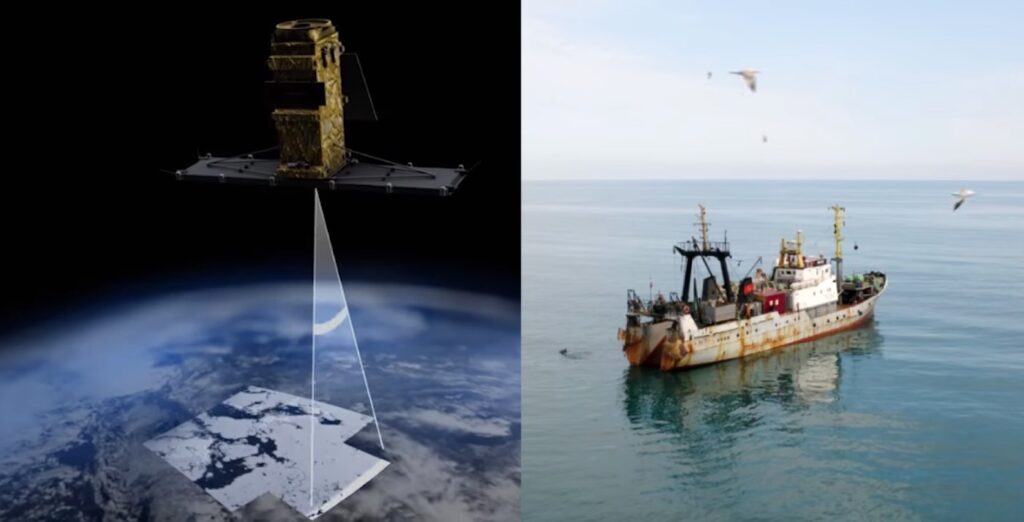
The health of the oceans is paramount to the health of the planet, and with satellite technology seeing massive increases in investment, Fisheries and Oceans Canada has partnered with the Department of National Defense to utilize military-grade satellites to scan the oceans for “dark vessels.”
These ships switch off their transponders, allowing them to slip undetected into vulnerable ecosystems for illegal fish harvesting. Once detected, the evidence can be shared with national and international policing and fishery bodies that enforce sustainable catch limits on fish stocks in poorer nations in the Caribbean and Pacific. READ MORE…
2) 20,000 Pounds of Trash Removed From Pacific Garbage Patch: ‘Holy mother of god. It worked!’
The Ocean Cleanup
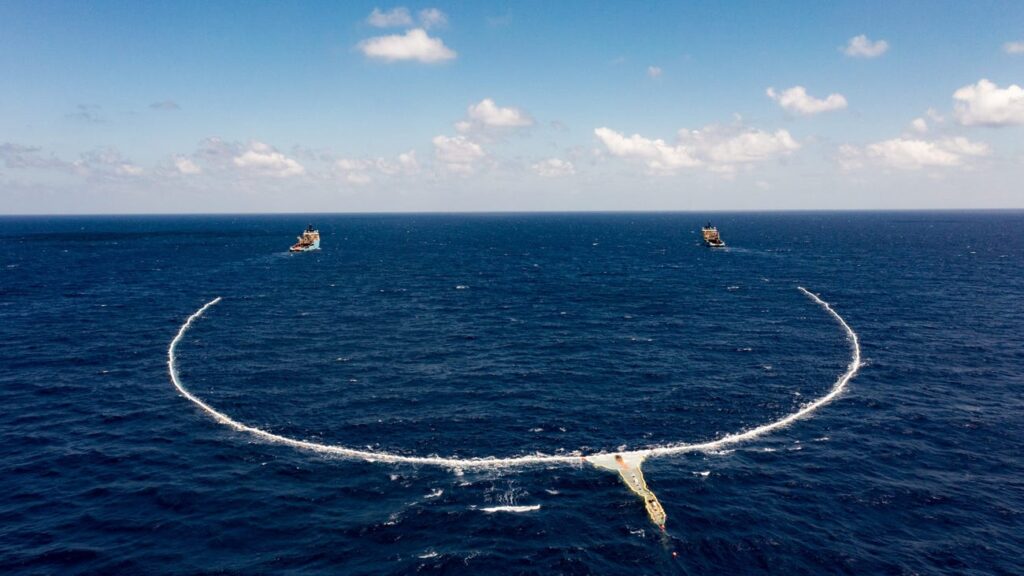
For more than a decade, we’ve been hearing about the problem of the Great Pacific Garbage Patch, and for all that time it seemed the only person who had a serious idea of how to get rid of it was a young man from the Netherlands.
After all these years, Boyan Slat has proved that if you want something done right, the best thing to do is to do it yourself. His method of using the very currents that made the patch to unmake it, this year, worked like a charm, drawing 20,000 pounds of trash out of the ocean in little time. READ MORE…
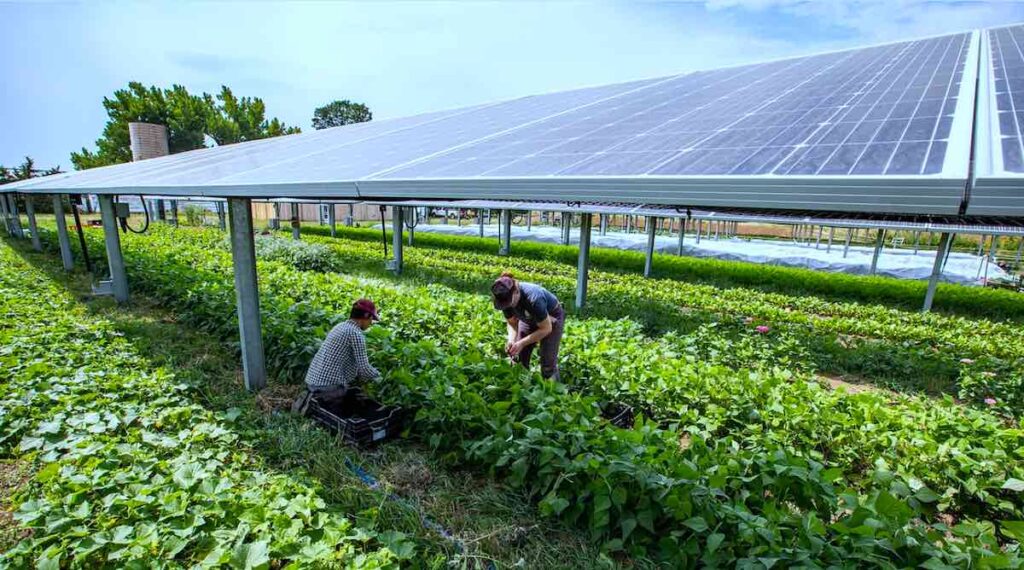
3) Largest Farm to Grow Crops Under Solar Panels Proves to Be a Bumper Crop for Agrivoltaic Land Use
Werner Slocum: NREL
2021 revealed that beyond a shadow of a doubt, certain crops will grow better when planted under specially-designed solar panel arrays, and that the presence of the crops increases the energy generation of the panels above.
This marriage has become known as agrivoltaic, and could potentially transform the farming industry into the largest green energy producer on Earth. READ MORE…
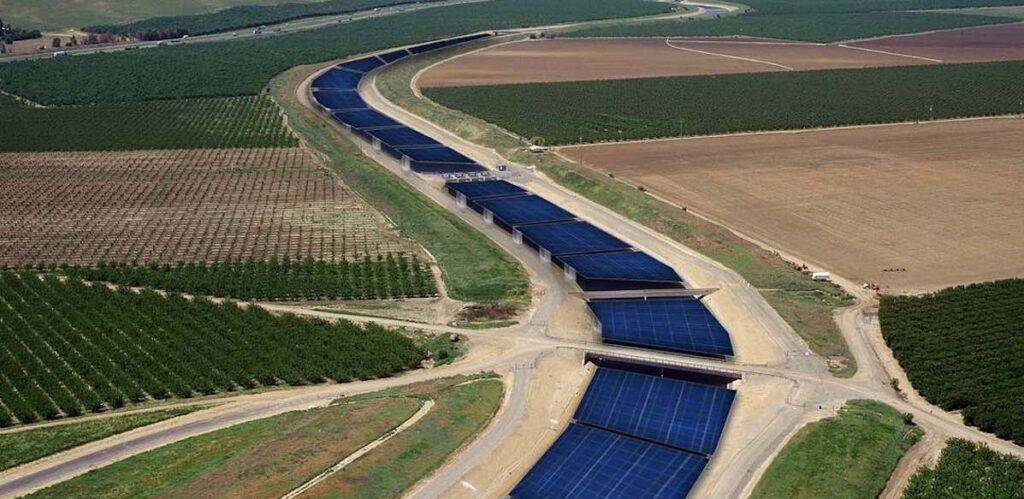
4) Huge Supply of Water is Saved From Evaporation When Solar Panels Are Built Over Canals
Rendering, Solar AquaGrid
India has invented ‘flying’ solar panels. They are being suspended above irrigation canals to cut down on the evaporation of precious water droplets by providing shade from the sun’s evaporating heat. It’s also a clever way to cut down on habitat loss, too, by placing panels in already-dedicated man-made spaces.
Now, California is eyeing the benefits of several successful canal installations in India. With the world’s largest irrigation canal network, and 290 days of average sunshine, California is uniquely positioned to ease a severe water shortage, saving 63 billion gallons of water from evaporation annually, with this emerging innovation of canal-covering solar farms. READ MORE…
5) Researchers Pull Carbon Out of the Sky And Convert it to Instant Jet Fuel, Reshaping Aviation For Good
Jordan Sanchez
Here’s some future-tech that seems hard to imagine, and harder not to get excited about. A cheap iron-based catalyst/intake combo onboard a passenger jet could be sucking CO2 out of the air and turning it into the very fuel it needs to operate.
Air travel accounts for a relatively-large portion of global emissions compared to the size of its footprint, and the researchers that discovered this revelation described anthropogenic CO2 emissions as a goldmine of raw materials if we only invented more ways of harvesting it. READ MORE…
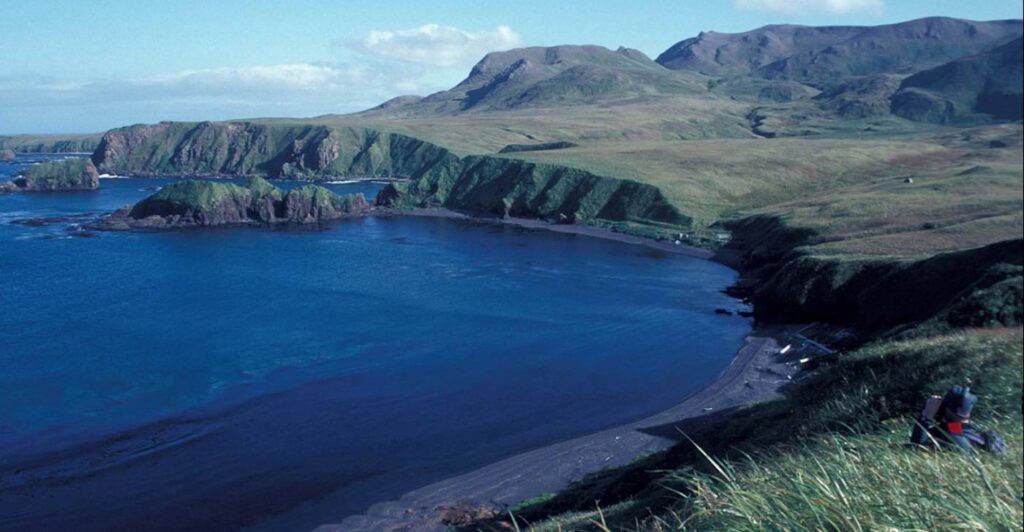
6) Island Overrun With Rats Completely Recovers in Only 11 Years After Ecosystem Had Been Decimated
USFW
Joseph Stalin allegedly said that one death is a tragedy, a million, a statistic. Such is sometimes the case in the natural world.
Mainstream media often focuses on how many species are endangered, or how many acres of forest is lost, or how many tons of CO2 went into the atmosphere—they often forget that conservation is usually achieved through many small victories.
This Alaskan Island that used to be wealthy in seabird and mammal life was ignominiously-renamed “Rat Island,” but a total extermination campaign restored a near pristine ecosystem within just 11 years. READ MORE…
7) Hundreds of Solar Farms Built Atop Closed Landfills Are Turning Brownfields into Green Fields
Nexamp
One of the big knocks against solar panels is how much land they take up compared to how much power they generate. But what if there were a readymade source of open land nearby to cities and towns that was guaranteed not to be used for anything else?
As it turns out, landfills are becoming prime real estate for solar farms, and one nonprofit believes the U.S. could increase the nation’s solar energy capacity by 63 gigawatts, or approximately 60%, simply by building solar farms on landfills. READ MORE…
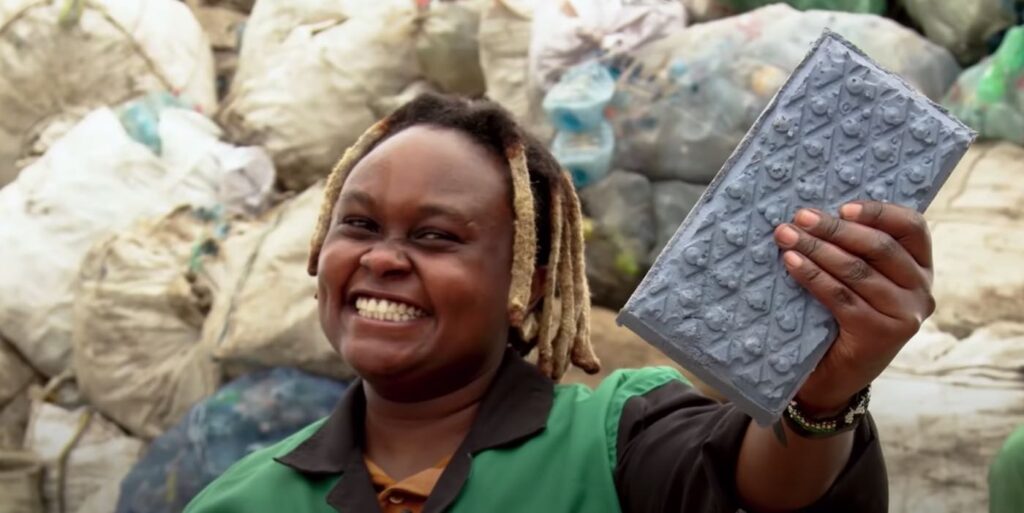
8) Kenyan Woman’s Startup Recycles Plastic Waste into Bricks That Are 5x Stronger Than Concrete
UNEP – YouTube
An absolutely brilliant young woman in Kenya has started a company manufacturing bricks from recycled plastic.
Nzambi Matee says she was “tired of being on the sidelines” while civil servants struggled against plastic waste in the capital city of Nairobi, so the materials engineer created a product that is 5 to 7 times stronger than concrete.
Founder of Gjenge Makers, which transforms plastic waste into durable building materials, Matee also designed the machines that manufacture the bricks in her factory. READ MORE…
9) World’s Biggest Factory to Suck Carbon from the Sky and Store it For Millions of Years Turns on in Iceland
Carbfix
A method to reliably capture carbon may have taken root in Iceland at a geothermal park where the “Orca Factory” will capture 4,000 tons of CO2 from of the atmosphere every year; the equivalent of taking 870 cars off the road.
The company behind it all says their ability to scale up is built into the technology and the business model. They hope to increase capacity by 80-fold by the end of the decade. READ MORE…
10) Spectacular Coral Event This Year Spawns Hope –And Billions of Babies For Great Barrier Reef (LOOK)
Courtesy of Reef Teach
Experts keeping track of the Great Barrier Reef’s breeding events have said this year’s shows that the system is working, and recovering.
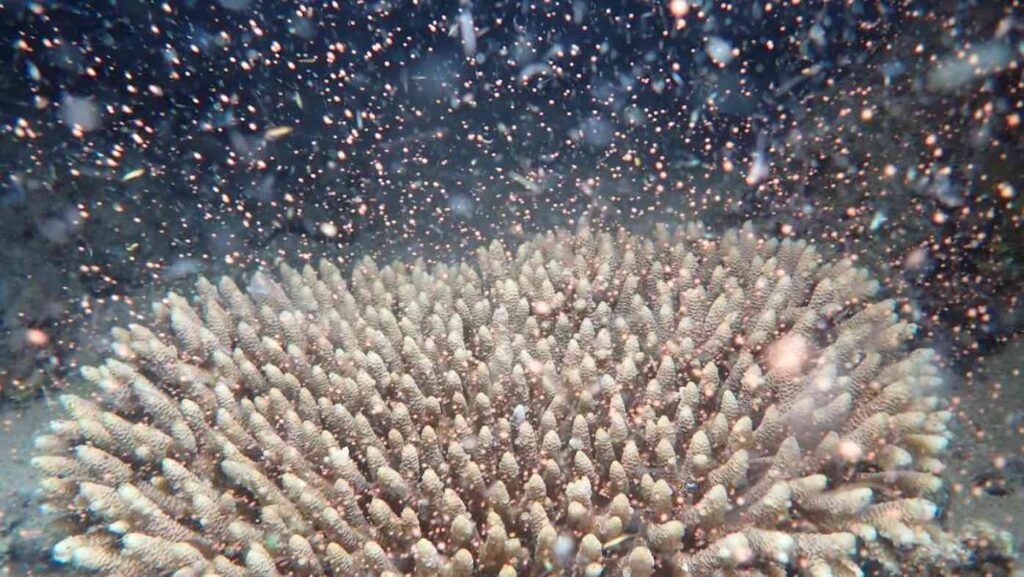
The annual show where the billions of polyps that make up the corals synchronize the release of eggs and sperm into the water, “like the shaking of a giant snow globe,” was celebrated and video taped.
It was almost a decade ago that people began to refer to the reef as “dead” – watching the video linked to below, it seems it’s time to rethink that idea. READ MORE…
Brag About The Positive Things From 2021 – Share This On Social Media…
Quote of the Day: “If you fuel your journey on the opinions of others, you are going to run out of gas.” – Steve Maraboli
Photo: by Matt Botsford
With a new inspirational quote every day, atop the perfect photo—collected and archived on our Quotes page—why not bookmark GNN.org for a daily uplift?
Valles-Marineris-Mars-1536x817 ESA:DLR:FU Berlin (G. Neukum)
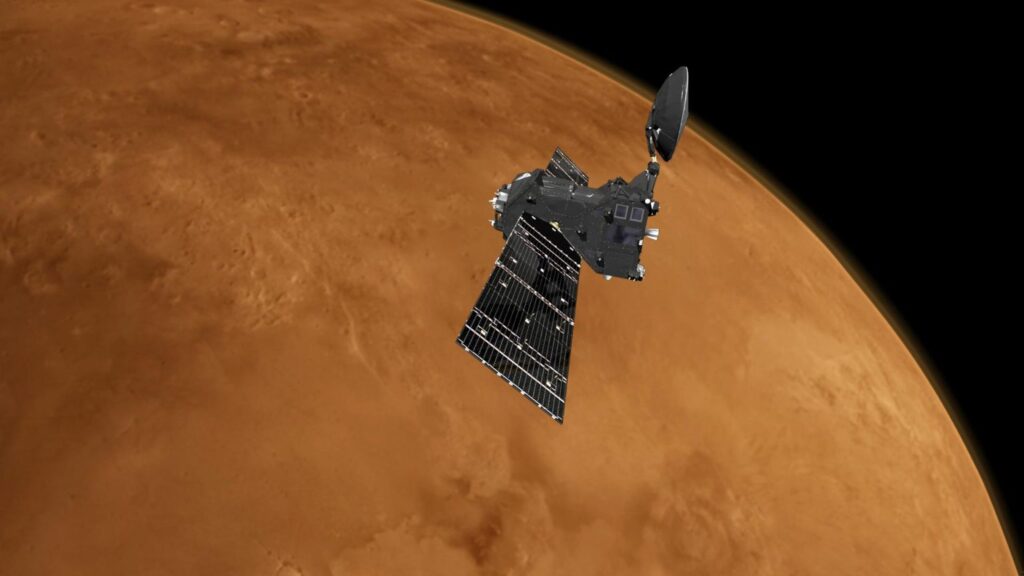
Artist’s impression of the ExoMars 2016 Trace Gas Orbiter at Mars/ESA:ATG medialab
Scientists peering into the depths of Mars’ own grand canyon have found that water makes up as much as 40% of the ground there, an enormous amount considering its near to the hot dry equator of the Red Planet.
Covering 15,800 square miles (41,000 square kilometers), the area of water is larger than the Netherlands.
While Mars once had huge oceans, the particles of ice or hydrated minerals found in the top soil outside the polar reaches are all the traces that remain. 40% shatters any previous estimations of the potential for water to be found outside of the icy poles.
“We found a central part of Valles Marineris to be packed full of water—far more water than we expected,” said Alexey Malakhov, a scientist at the Space Research Institute of the Russian Academy of Sciences in Moscow. “This is very much like Earth’s permafrost regions, where water ice permanently persists under dry soil because of the constant low temperatures.”
However, peering into the depths of the Valles Marineris, the solar system’s largest canyon, which is 10 times longer and five times deeper than the Grand Canyon of the Colorado River, can’t be done with just any instrument.
The researchers used the Trace Gas Orbiter, a joint research project by the European Space Agency and Roscosmos, its Russian counterpart. Onboard, a device for recording neutrons exiting the soil of a planet needed about three years of recordings before producing the discovery.
Impression of the canyon/ESA:DLR:FU Berlin (G. Neukum)
Neutrons are deposited in the soil of the Valles Marineris, says Malakhov, through galactic cosmic rays, and more of them make their way out again through drier soil than through moist soil. And so a lack of neutrons can be a sign that water is present.
The discovery is exciting for several reasons. One, unmanned missions to Mars tend to focus on the equatorial region, where the canyon and its water are located.
Secondly the water, which the researchers presume exists as ice, can be found at one meter below the surface, compared to water at the polar regions which cannot be reached unless one brings equipment to drill or blast their way down around a kilometer.
“Such ice not only is an intriguing material for searching frozen proto-life fragments or complex organic molecules from the early epoch of Mars, but also is an indispensable natural resource for future Mars exploration that is easy to exploit,” Malakhov and his co-authors wrote in their corresponding paper, published in Icarus.
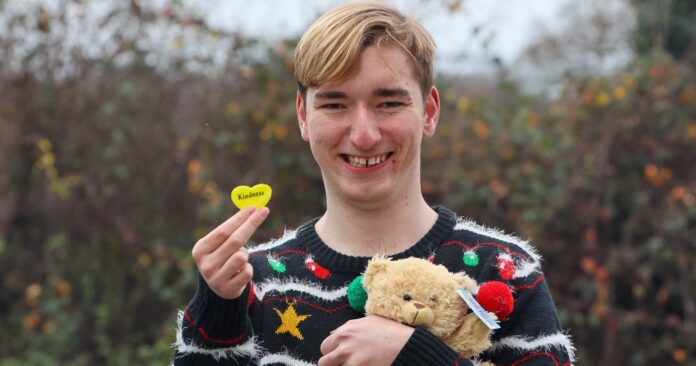
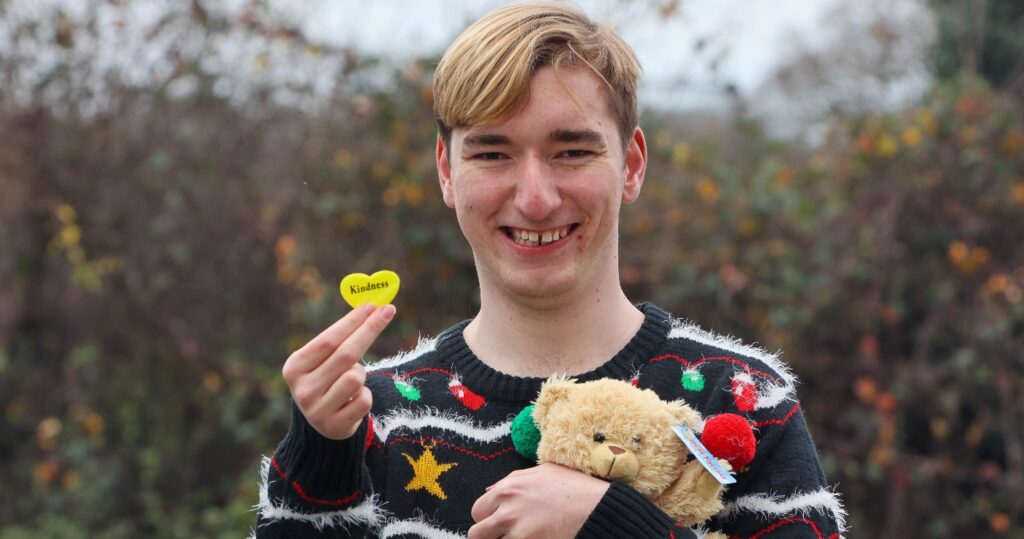
Meet the teen who has carried out a random act of kindness EVERY day since the start of the pandemic—helping more than 2,000 people and raising over $53,000.
18-year-old Sebbie Hall started his giving mission when he realized some people lacked the technology to contact friends during the first pandemic lockdown.
The selfless teen wanted to donate his iPad to a friend, but his mom Ashley Hall suggested he should help others to buy what they need instead.
It was then that Sebbie, who has physical and learning difficulties, decided to raise money to prevent disabled or vulnerable children from feeling lonely.
He has since raised tens of thousands—and counting—by carrying out over 2,000 acts of kindness towards random strangers.
His generosity, which has been hailed by the British Prime Minister, includes handing out flowers, teddies, and even lotto tickets in the street.
Sebbie has also set up an arts hub and a foundation to support disabled or vulnerable children.
The constant giver has won numerous awards for his initiative and attended a royal carol service at Westminster Abbey in London earlier this month—after an invitation from the Duchess of Cambridge.
Sebbie, from Lichfield, England, said he just likes to make people smile.
Mom Ashley explained the positive responses to Sebbie’s acts of kindness have boosted his confidence so much that it has improved his verbal communication.
The teen’s disabilities are a result of a chromosomal alteration discovered when he was aged one.
Ashley said, “I’m immensely proud of him. I couldn’t be more proud. The impact of his kindness has been incredible.
“It’s like this lovely ripple effect going out from him. It’s fabulous. The money’s very important and he’s been able to create real change.
Random acts of kindness
SWNS
Sebbie began his charity mission on March 16, 2020. The initial challenge started with 10 sponsored acts of kindness every single day for 10 days to raise £1,000 (about $1,300) for charities.
Ashley said, “He bought this friend a device at the end of the 10 days but because he enjoyed watching other people smile, he then wanted to continue.”
His acts since then have included giving out Easter eggs, watering people’s plants, filling bird feeders—and taking out trash cans.
He also ran nine two-mile runs handing out roses in recent months, with strangers jogging alongside him in support.
After Halloween, he collected unused pumpkins and took them to the food bank to be turned into soups and pie.
And, this Christmas, Sebbie has taken donated toys to eight homes where vulnerable children are staying.
He also posted cards and handed out reindeer food made from oats and edible glitter to families in the street.
Ashley said that she and Sebbie’s dad Craig Hall were warned their son would likely never walk, talk, understand things, or even sit up when he was diagnosed with a chromosomal alteration.
She said, “Sebbie keeps showing it’s worth keeping on striving: never give up. Everybody has potential and sometimes we can even smash that.
Sebbie finds it hard to put together full sentences.
But he said: “It’s not about words, it’s about kindness.”
Donations to Sebbie’s fundraiser can be made here.
(MEET the kind teen in the video below.)
SHARE the Generosity; Share This Story of True Kindness…
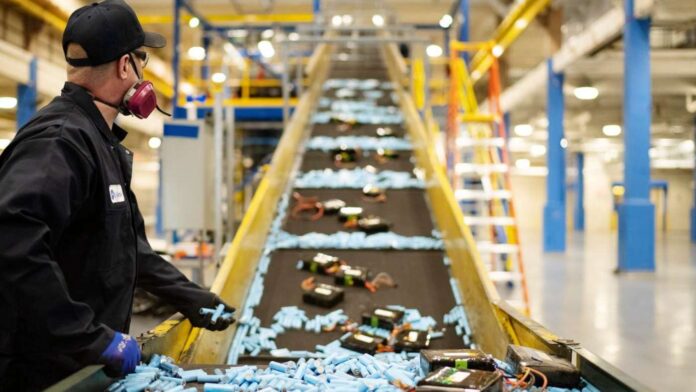
From smartphones to laptops and EVs, lithium-ion batteries are everywhere. Now a new company breaks batteries down and extracts around 95% of the valuable materials for reuse, and investments are pouring in.
Recycling plants in Canada and Rochester, New York, have the capacity to salvage tens of thousands of tons of spent batteries each year, removing waste and aiding the creation of a semi-circular battery economy.
Li-Cycle, borrowing the periodic table’s call sign for Lithium, also claims their “Spoke and Hub” proprietary recycling method is cost-effective, allowing battery manufacturers to actually afford recycled material.
The batteries, no matter their size or shape, are broken down by a mechanical process that results in two lines of raw materials. The first is the line of cathode and anode waste in a black powder that consists of lithium, nickel, cobalt, graphite, copper, and aluminum. The second is scrap aluminum and copper from the insulating or conducting foils.
The black powder waste is then sent through another recovery process that yields high quality lithium carbonate of the required purity to be used as cathode precursor and production, effectively closing the loop on those grams of lithium. Cobalt and nickel sulphates are also produced.
The company is attracting big time investors looking to source for sustainable lithium and other minerals, the mining which gathers them being after all a major source of emissions, deforestation at times, and even regional conflict.
Device manufacturing giant LG is looking to deliver $50 million in investment into Li-Cycle, as well as enough lithium batteries to harvest 20,000 tons of nickel over 10 years.
Just some weeks before that, it was announced that Arrival, a manufacturer of electric buses and vans, signed an exclusive closed-loop agreement with Li-Cycle to supply batteries for their vehicles, as well as to recycle them at the end of their life to provide materials for the next generation of batteries.
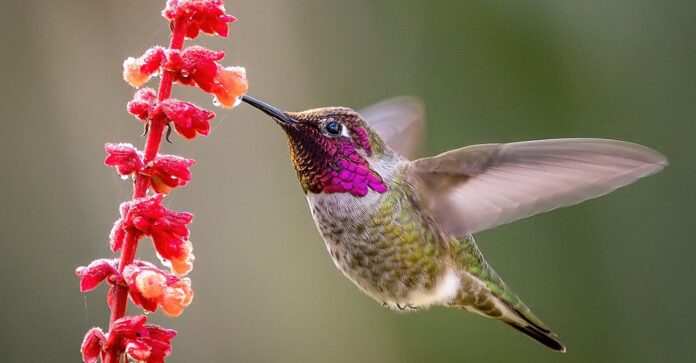
It turns out that hummingbirds, as portentous they seem to be in spring and summer, will sometimes stick around in winter, when many proud owners of a hummingbird feeder stash them away.
While many species are migratory, there are some who stick around all winter—a daunting prospect for the animal with the fastest metabolism in the vertebrate world.
If you are someone who loves hummingbirds, there are things you can do to support them during the lean times until warm weather returns and flowers carpet the ground again.
A myth, tips, and warnings
Hummies are sensitive birds, and concerned birders may have heard a myth and taken it for fact regarding them. For example, the myth that hummingbirds will be lulled by the sugar water in the feeder into not migrating.
This is a myth because it isn’t nutrient availability that determines whether or not a hummingbird migrates, but rather an internal clock that tracks the length of the days and the angle of the sun in the sky.
Feeders can be left out; but in the cold of winter it’s likely, especially at night, that the water inside will freeze. There are several ways one can prevent this.
Frigid wind will hasten the forming of ice in the sugar water, so positioning your feeder behind a wind break will help. A feeder that suction-cups onto a window will not only bring the hummies closer to view, but the warmth of the glass will transmit into the material of the feeder.
Two other methods for preventing ice formation are to either wrap a string of violet or red non-LED Christmas lights around it or do the same with insulating material such as bubble wrap or aluminum foil. The heat from the bulbs will keep the feeder warm, look pretty at night, and attract hummingbirds thanks to their preference for the red-light spectrum in the case of the former, and the latter will keep the cold air from permeating the reservoir.
Some guides will suggest increasing the normally-precise mixture of hummingbird feed from one part sugar to four parts water, to one part sugar to three parts water. This will indeed have the effect of lowering the temperature at which the mixture turns to ice, but the British Columbia SPCA claim this will make it too unhealthy for the hummies to digest the mixture.
Furthermore, the SPCA offers a warning that while a hummingbird will never forsake its migration for your feeder, they may come to rely on it if local winter nectar sources are too scarce. In these circumstances the homeowner that merely wanted to attract these little flying gemstones as an interest will inadvertently become the only food source keeping them alive, and so they suggest only putting a winter feeder out if the house is capable of sustaining a clean and full reservoir of sugar water through the entire season.
There’s no reason that with a little effort and some diligence, someone can’t have access to that lightning fast chirping and those beautiful scaled colors that typify the smallest of birds, even when snow is falling and most other songbirds are long gone.
Quote of the Day: “Christmas is a season not only of rejoicing, but of reflection.” – Winston Churchill
Photo: by GWC
With a new inspirational quote every day, atop the perfect photo—collected and archived on our Quotes page—why not bookmark GNN.org for a daily uplift?
FREE WILL ASTROLOGY – Week beginning December 25, 2021
Copyright by Rob Brezsny, FreeWillAstrology.com
CAPRICORN (Dec. 22-Jan. 19):
To ensure that 2022 will bring you the most interesting and useful kind of progress, take good care of your key friendships and alliances, even as you seek out excellent new friendships and alliances. For best results, heed these thoughts from author Hanya Yanagihara: “Find people who are better than you are—not smarter, not cooler, but kinder, and more generous, and more forgiving—and then appreciate them for what they can teach you, and listen to them when they tell you something about yourself, no matter how bad—or good—it might be.”
AQUARIUS (Jan. 20-Feb. 18):
Sometime during the Northern Song Dynasty that ruled China from 960 to 1127, an artisan made a white ceramic bowl five inches in diameter. About a thousand years later, a family in New York bought it at a garage sale for $3. It sat on a mantel in their home for a few years until they got a hunch to have it evaluated by an art collector. A short time later, the bowl was sold at an auction for $2.2 million. I’m not saying that 2022 will bring a financial event as dramatic as that one. But I do expect that your luck with money will be at a peak.
PISCES (Feb. 19-March 20):
In the Quechuan language spoken in parts of Peru, the word takanakuy means “when the blood is boiling.” Every year at this time, the community of Chumbivilcas stages a holiday called Takanakuy. People gather at the town center to fight each other, settling their differences so they can forget about them and start over fresh. If my friend and I have had a personal conflict during the previous year, we would punch and kick each other—but not too hard—until we had purged our spite and resentment. The slate between us would be clean. Is there some humorous version of this ritual you could enact that wouldn’t involve even mild punching and kicking? I recommend you dream one up!
ARIES (March 21-April 19):
You may become a more audacious storyteller in 2022. You could ripen your ability to express the core truths about your life with entertaining narratives. Bonus: The experiences that come your way will provide raw material for you to become even more interesting than you already are. Now study these words by storyteller Ruth Sawyer: “To be a good storyteller, one must be gloriously alive. It is not possible to kindle fresh fires from burned-out embers. The best of the traditional storytellers are those who live close to the heart of things—to the earth, sea, wind, and weather. They have known solitude, silence. They have been given unbroken time in which to feel deeply, to reach constantly for understanding.”
TAURUS (April 20-May 20):
Taurus author May Sarton wrote a poem celebrating her maturation into the person she had always dreamed she would be. “Now I become myself,” she exulted. “It’s taken time, many years and places; I have been dissolved and shaken, have worn other people’s faces.” But at last, she said, “All fuses together now, falls into place from wish to action, word to silence. My work, my love, my time, my face: gathered into one intense gesture of growing like a plant.” I invite you to adopt Sarton’s poem as a primary source of inspiration in 2022. Make it your guide as you, too, become fully and richly yourself.
GEMINI (May 21-June 20):
In 2012, the writer Gore Vidal died the day after Gemini writer Maeve Binchy passed away. They were both famous, though Bincy sold more books than Vidal. Vidal was interesting but problematic for me. He was fond of saying that it wasn’t enough for him to succeed; he wanted others to fail. The misery of his fellow humans intensified his satisfaction about his own accomplishments. On the other hand, Binchy had a generous wish that everyone would be a success. She felt her magnificence was magnified by others’ magnificence. In 2022, it will be vital for your physical and mental health to cultivate Binchy’s perspective, not Vidal’s. To the degree that you celebrate and enhance the fortunes of others, your own fortunes will thrive.
CANCER (June 21-July 22):
Cancerian political leader Nelson Mandela was wrongly incarcerated for 27 years. After his release, he became President of South Africa and won the Nobel Peace Prize. About leaving jail in 1990, he wrote, “As I walked out the door toward the gate that would lead to my freedom, I knew if I didn’t leave my bitterness and hatred behind, I’d still be in prison.” Although you haven’t suffered deprivation anywhere close to what Mandela did, I’m happy to report that 2022 will bring you liberations from limiting situations. Please adopt Mandela’s approach as you make creative use of your new freedom.
LEO (July 23-Aug. 22):
French poet André Breton wrote, “Je vous souhaite d’être follement aimée.” In English, those words can be rendered as “My wish is that you may be loved to the point of madness” or “I wish you to be loved madly.” That’s got a romantic ring to it, but it’s actually a curse. Why would we want to be loved to the point of madness? A person who “loved” you like that might be fun for a while, but would ultimately become a terrible inconvenience and ongoing disruption. So, dear Leo, I won’t wish that you will be loved to the point of madness in 2022—even though I think the coming months will be an interesting and educational time for amour. Instead, I will wish you something more manageable and enjoyable: that you will be loved with respect, sensitivity, care, and intelligence.
VIRGO (Aug. 23-Sept. 22):
Many people in our culture are smart intellectually, but not very smart emotionally. The wisdom of feelings is undervalued. I protest! One of my great crusades is to champion this neglected source of insight. I am counting on you to be my ally in 2022. Why? Because according to my reading of the astrological omens, you have the potential to ripen your emotional intelligence in the coming months. Do you have ideas about how to take full advantage of this lucky opportunity? Here’s a tip: Whenever you have a decision to make, tune in to what your body and heart tell you as well as to what your mind advises.
LIBRA (Sept. 23-Oct. 22):
Holocaust survivor Viktor Frankl said that a sense of meaning is crucial. It’s the key gratification that sustains people through the years: the feeling that their life has a meaning and that particular experiences have meaning. I suggest you make this your theme for 2022. The question “Are you happy?” will be a subset of the more inclusive question, “Are you pursuing a destiny that feels meaningful to you?” Here’s the other big question: “If what you’re doing doesn’t feel meaningful, what are you going to do about it?”
SCORPIO (Oct. 23-Nov. 21):
Scorpio guitarist Rowland S. Howard spoke of “the grand occasions when love really does turn into something far greater than you had ever dreamed of, something auto-luminescent.” Judging from the astrological configurations in 2022, I have strong hopes and expectations that you will experience prolonged periods when love will fit that description. For best results, resolve to become more generous and ingenious in expressing love than you have ever been.
SAGITTARIUS (Nov. 22-Dec. 21):
“I’ve been trying to go home my whole life,” writes poet Chelsea Dingman. I know some of you Sagittarians resist the urge to do that. It’s possible you avoid seeking a true and complete home. You may think of the whole world as your home, or you may regard a lot of different places as your homes. And you’d prefer not to narrow down the feeling and concept of “home” to one location or building or community. Whether or not you are one of those kinds of Centaurs, I suspect that 2022 will bring you unexpected new understandings of home—and maybe even give you the sense that you have finally arrived in your ultimate sanctuary.
WANT MORE? Listen to Rob’s EXPANDED AUDIO HOROSCOPES, 4-5 minute meditations on the current state of your destiny — or subscribe to his unique daily text message service at: RealAstrology.com
This blog was submitted to GNN by one of our readers, Roxane Jessi, for publishing. If you have an interesting story of kindness or positivity, be sure and send it to us for review.
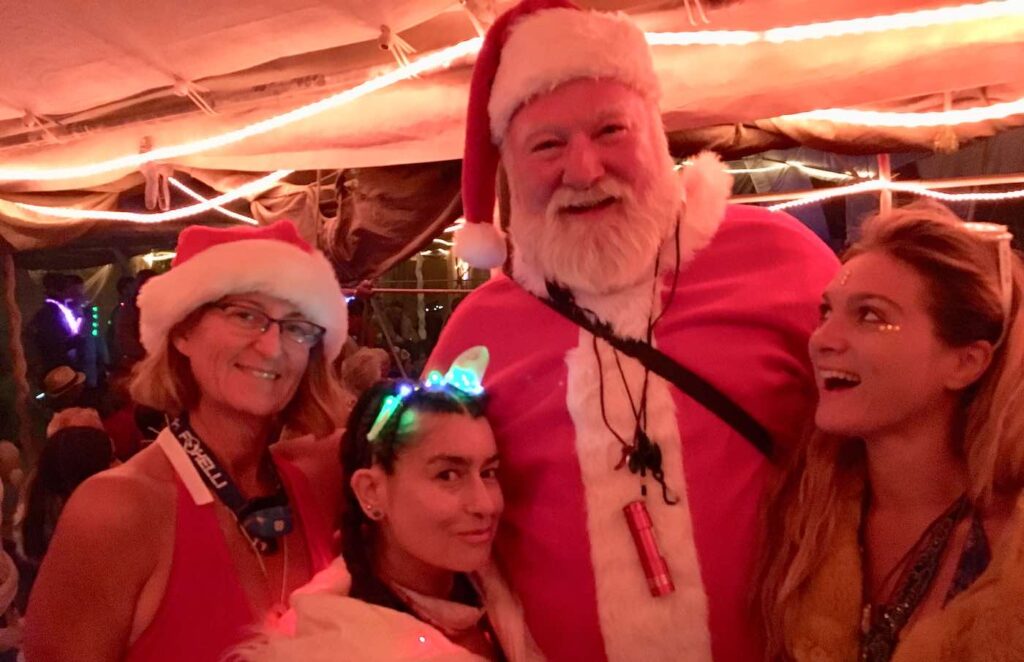
Back in 2017, I met with Santa’s doppelganger at the Burning Man event, which used to take place every September pre-COVID. He was giving out gifts from his large sack at the impromptu Jazz Cafe. We had a lovely chat but did not exchange contact details.
The next year I bumped into the same man again at Burning Man. We recognized each other and he gave me a new gift. Out of the blue, he then brought out a saxophone and went up to the stage to play Santa Claus is coming to town with the band.
This time I got his email address and waited several months until the night of Christmas Eve to write to him, telling Santa what Christmas meant to me, and how special his act of spreading joy was.
He responded as ‘Santa’ on Christmas day and this has been the start of a yearly tradition of letter exchanges. The next year, I surprised him, prancing into the Jazz Cafe along with 13 of my friends dressed as reindeers. We came bearing gifts, so that Santa would finally be the one receiving presents.
In the last two years we have not been able to meet during the pandemic, but the letter tradition has lived on.
Roxane Jessi
Our letters have been filled with nostalgia for better days, and their themes have followed the changing times.
For instance, in 2020 Santa said he was working remotely—and his Christmas factory started producing hand sanitizer because the pandemic required him to wipe down the sleigh between house visits dropping off gifts. (They are quite responsible like that.)
While the elves did not receive Christmas bonuses Santa made sure there were no layoffs. While working from home, Santa was also on the Doughvid-19 diet and worried he may not fit through chimneys. Meanwhile I, as Rudolph (‘Ruddie’), lamented the lack of children stroking his fur and wondered whether the light of my nose would be hidden behind a mask while making deliveries.
Now that my nieces are old enough to write, they have joined in the letter tradition, expressing their own COVID-19 related concerns.
It is these forays into imaginary worlds that allow us to get through collective hardships, and these lighthearted connections and traditions are all the more meaningful in our socially isolated times.
Though I engage in a nomadic lifestyle, I generally am based in Barcelona, Spain, and am hoping to reunite with Santa in 2022. It has brought me much joy to have such a special pen pal over the years. Here are some highlights of our letter exchanges:
First letter in 2018:
“Dearest Santa, I love what Christmas represents, and meeting you on Burn Night reminded me that every moment is magic and the world is a better place when we are allowed to act like children again. And believe me I felt like a child in that moment when you reached into your big old sack and handed me one of your gifts! Sometimes it takes a jolly man in a Santa suit to remind you of that…”
Santa’s response:
“Dear Roxane, You are an excellent writer. Your letter certainly showed a more advanced level of cognition, perception, and erudition than the typical letters I get which are often written in crayon. I hope you received the response from my assistant while I was making deliveries, and forgive me for not replying to your kind letter sooner. It was the most hectic holiday season I can remember. Mrs. Claus and I were quite irresponsible and took a vacation to New Zealand the first two weeks of November. We spent the following 5 weeks playing catchup.
I am glad we met at Jazz camp, and twice no less. I don’t give such presents to just anybody, but you seemed to have some inner sparkle that inspired me. Throwing your inhibitions aside and exploring your inner child is a wonderful thing. I try to nurture my playful side, so helping others to do so is a joy. When I put on the suit it brings out the child in many people. For some, when I ask if they have been good or bad the last year, it precipitates a very intense self analysis of their lives…. Santa aka ‘Whitebeard’”
My letter from Christmas 2021 (I go by Rudolph, now, in our exchanges)
“Dear Santa,
Still, in the midst of this hyper accelerated “new normality,” this reindeer has kept a soft spot for the rituals of the past. It is always good to take time to reflect on how far we’ve come over the last year. Even though it may crop up on us, each circle around the sun is a new line that we wear. Etched in us like the stumps of ancient furs trees in the forest. Although it started rather muted, this year has seen the world reopen. People have come together again, and we have tasted the seeds of hope anew. Yet in some ways it feels like the interim chapter in a trilogy. That in-between state when the world sways between old and new, trying to find its feet. But these moments in the story are always as full of adventures as they are of reckonings. Opportunities to shape what will be. Times to craft our hero journeys… Rudie”
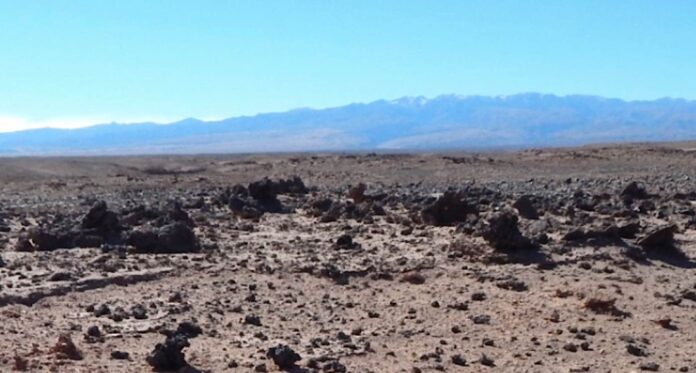
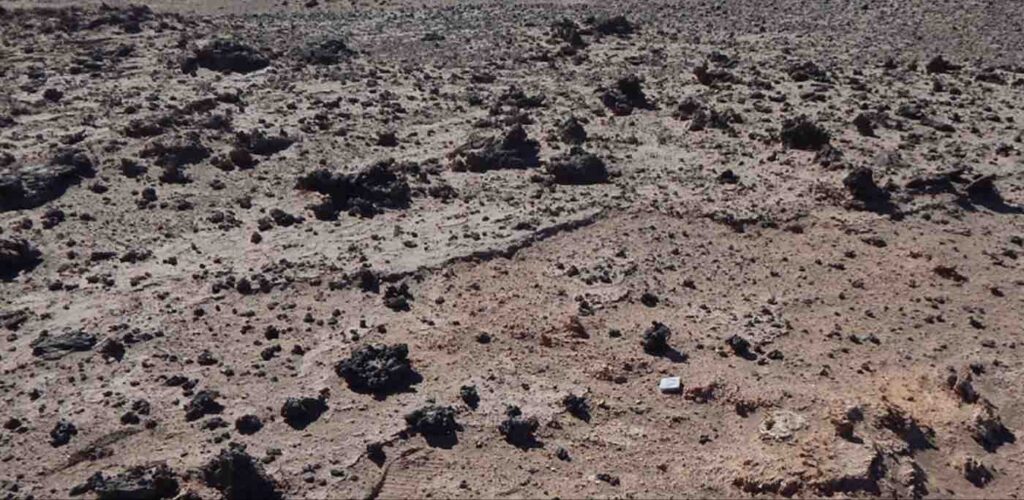
A vast swath of dark rocky glass littering a Chilean desert has remained a mystery for a decade, but Brown University researchers just confirmed it was made by an exploding comet.
Photo Credits: P.H. Schultz, Brown University
Around 12,000 years ago, something scorched a 47-mile (75km) stretch of the Atacama Desert with heat so intense that it turned the sandy soil into a widespread graveyard of silicate glass slabs. Now, a research team studying the distribution and composition of those glasses has come to a conclusion about what caused the inferno.
They found no evidence that the fields of dark green or black glass could have been created by volcanic activity, so the origin had been a mystery.
In a study published in the journal Geology, researchers show that samples of the desert glass contain tiny fragments with minerals often found in rocks of extraterrestrial origin. Those minerals closely match the composition of material returned to Earth by NASA’s particles samples from a comet.
The researchers now conclude that those mineral assemblages are likely the remains of an extraterrestrial object—most likely a comet—that exploded just above the ground, and melted and fused the sandy soil below.
“This is the first time we have clear evidence of glasses on Earth that were created by the thermal radiation and winds from a fireball exploding just above the surface,” said Pete Schultz, a professor emeritus in Brown University’s Department of Earth, Environmental and Planetary Sciences. “To have such a dramatic effect on such a large area, this was a truly massive explosion. Lots of us have seen bolide fireballs streaking across the sky, but those are tiny blips compared to this.”
Some researchers have posited that the glass resulted from ancient grass fires, as the region wasn’t always desert. During the Pleistocene epoch, there were oases with trees and grassy wetlands created by rivers extending from mountains to the east, and it’s been suggested that widespread fires may have burned hot enough to melt the sandy soil into large glassy slabs.
But the amount of glass present along with several key physical characteristics make simple fires an impossible formation mechanism, the new research found. The glasses show evidence of having been twisted, folded, rolled and even thrown while still in molten form. That’s consistent with a large incoming meteor and airburst explosion, which would have been accompanied by tornado-force winds. The mineralogy of the glass casts further serious doubt on the grassfire idea, after Schultz and colleagues performed a detailed chemical analysis of dozens of samples taken from glass deposits across the region.
The analysis found minerals called zircons that had thermally decomposed to form baddeleyite. That mineral transition typically happens in temperatures in excess of 3,000 degrees Fahrenheit — far hotter than what could be generated by grass fires, Schultz says.
The analysis also turned up assemblages of exotic minerals only found in meteorites and other extraterrestrial rocks, the researchers say. Specific minerals like cubanite, troilite and calcium-aluminum-rich inclusions matched mineral signatures from comet samples retrieved from NASA’s Stardust mission.
“Those minerals are what tell us that this object has all the markings of a comet,” said Scott Harris, a planetary geologist at the Fernbank Science Center and study co-author. “To have the same mineralogy we saw in the Stardust samples entrained in these glasses is really powerful evidence that what we’re seeing is the result of a cometary airburst.”
More work needs to be done to establish the exact ages of the glass, which would determine exactly when the event took place, Schultz says. But the tentative dating puts the impact right around time that large mammals disappeared from the region.
“It’s too soon to say if there was a causal connection or not, but what we can say is that this event did happen around the same time as when we think the megafauna disappeared, which is intriguing,” Schultz said. “There’s also a chance that this was actually witnessed by early inhabitants, who had just arrived in the region. It would have been quite a show.”
Schultz and his team hope that further research may help to constrain the timing and shed light on the size of the impactor. For now, Schultz hopes this study may help researchers identify similar blast sites elsewhere and reveal the potential risk posed by such events.
“There may be lots of these blast scars out there, but until now we haven’t had enough evidence to make us believe they were truly related to airburst events,” Schultz said. “I think this site provides a template to help refine our impact models and will help to identify similar sites elsewhere.”
Solve The Mystery for Rock Enthusiasts By Sharing on Social Media…
The U.S. Food and Drug Administration has approved the first and only eye drop that can treat age-related blurry ‘near vision’.
The new ophthalmic solution called Vuity treats presbyopia, and is now available by prescription in pharmacies nationwide.
Presbyopia can be diagnosed through a basic eye exam by an eye doctor (optometrist or ophthalmologist) and is a common and progressive eye condition that affects 128 million Americans, or nearly half of the U.S. adult population.
“We are pleased to be able to bring this first-of-its-kind treatment to market sooner than expected for the millions of Americans with presbyopia who may benefit from it,” said Jag Dosanjh, a senior vice president for Allergan, an AbbVie company.
“Many Americans deal with presbyopia, which typically begins around age 40, by relying on reading glasses or resorting to work-arounds like zooming in on their digital devices to see up close. As an optometrist who also has presbyopia, I’m personally and professionally excited to try Vuity for myself, as well as offer it to my patients with age-related blurry near vision,” said optometrist Dr. Selina McGee, Fellow of the American Academy of Optometry.
Vuity is an optimized formulation of pilocarpine, an established eye care therapeutic delivered with proprietary pHast technology, which allows the drop to rapidly adjust to the physiologic pH of the tear film. This was studied in simulated tear film, and the clinical significance is unknown. Vuity uses the eye’s own ability to reduce pupil size, improving near and intermediate vision while maintaining distance vision.
The FDA approval of Vuity in October 2021 was based on data from two pivotal phase 3 clinical studies, which evaluated the efficacy, safety and tolerability of VUITY using a total of 750 participants aged 40 to 55 years old with presbyopia, randomized in the two studies in a one-to-one ratio to either Vuity or placebo.
One of the trial participants, Toni Wright, said, “It has become almost impossible to see clearly up close unless I wear my readers. I’m so excited this has now been approved and available as a treatment.”
Participants were instructed to administer one drop of VUITY or placebo once daily in each eye.
Both studies met their primary endpoints with a statistically significant proportion of participants treated with Vuity gaining three lines (the ability to read three additional lines on a reading chart) or more in mesopic (in low light), high contrast, binocular Distance Corrected Near Visual Acuity, without losing more than 1 line (5 letters) of Corrected Distance Visual Acuity at day 30, hour 3, versus placebo.
The new medicine takes effect in about 15 minutes, with one drop on each eye providing sharper vision for six to 10 hours, according to the company. The drops are for mild to intermediate cases and are less effective after age 65, as eyes age. Users may also have temporary difficulty in adjusting focus between objects near and far.
There were no serious adverse events observed in any participants treated with VUITY in either clinical study. The most common side effects occurring at a frequency of >5% were mild headaches and eye redness, reports the company in a statement.
Not typically covered by health or vision insurance, it costs around $76-$86 for a 30-day supply, depending on your pharmacy.
Quote of the Day: “Blessed is the season which engages the whole world in a conspiracy of love.” – Hamilton Wright Mabie
Photo: by Jonathan Borba
With a new inspirational quote every day, atop the perfect photo—collected and archived on our Quotes page—why not bookmark GNN.org for a daily uplift?
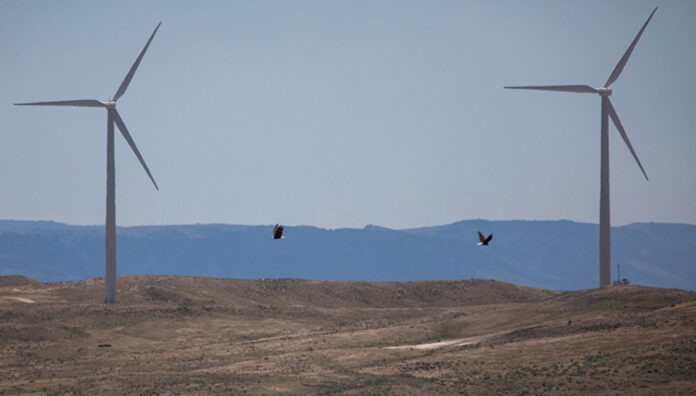
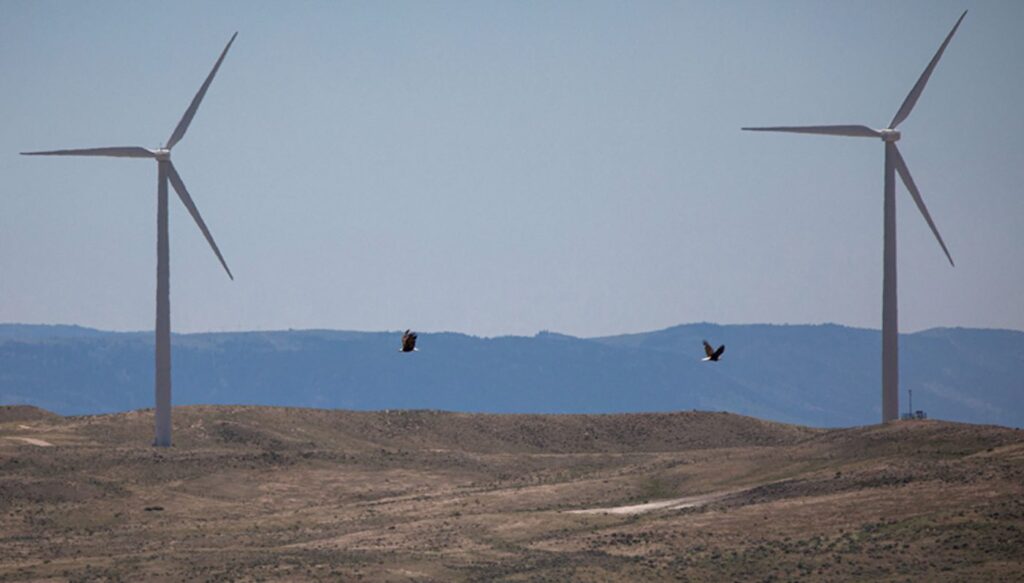
Wind power is a powerful tool for reducing carbon emissions that cause climate change. The turbines, however, can be a threat to birds and bats, which is why experts are looking for—and finding—ways to eliminate the danger.
Duke Energy
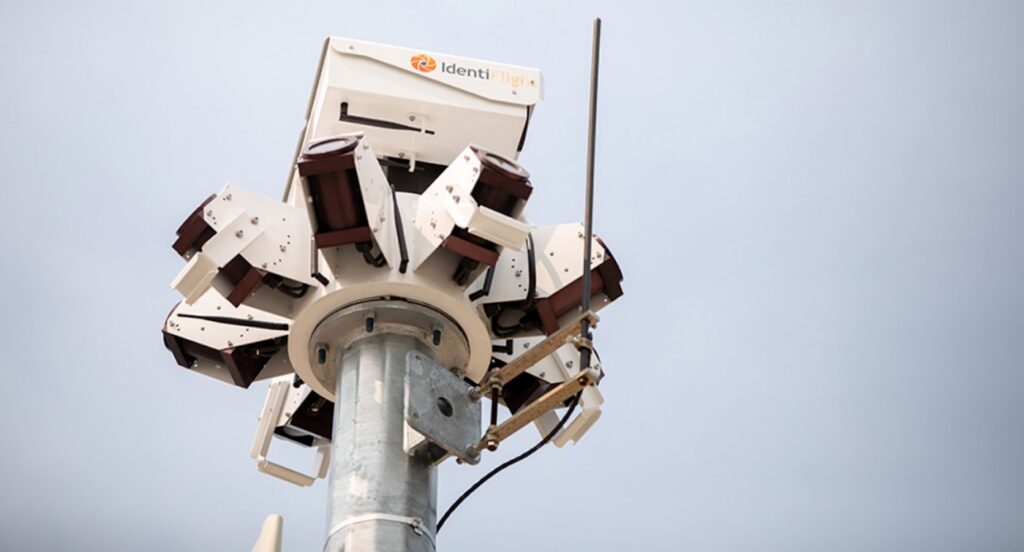
The US government has allocated $13.5 million to look for solutions. But, already a Boulder, Colorado company has produced a camera- and AI-based technology that can recognize eagles, hawks and other raptors as they approach in enough time to pause turbines in their flight path.
Their tool, called IdentiFlight, can detect 5.62 times more bird flights than human observers alone, and with an accuracy rate of 94 percent. https://www.identiflight.com/
Using high-precision optical sensors, the system calculates a bird’s speed and flight trajectory, and if it is on a collision path with a turbine, a signal is sent to shut that turbine down.
Winning an award for its performance in Australia, the tracking system was installed in 2018 at a Tasmanian facility and was found to cut eagle deaths at the Cattle Hill Wind Farm by more than four-fifths.
Each day, signals have shut-down their movement an average of 400 times—across the field of 48 turbines—for two to three minutes each time.
Across the globe, Duke Energy in Wyoming is employing the same technology with impressive results at its Top of the World Windpower Project.
The IdentiFlight network of camera units watch for bald and golden eagles. When a camera detects an approaching object, the system determines whether it’s an eagle within seconds.
Top of the World—named for a ridge where golden eagles roost—was the first wind site to use the technology. In 2014, IdentiFlight’s manufacturer, Boulder Imaging, used Top of the World for testing after eagles fatalities left the company in violation of the Migratory Bird Treaty Act.
47 units made of eight wide-angle cameras now constantly scan the sky to monitor all 110 turbines. The camera unit is mounted to the top of a 30-foot pole and powered by software that learns and improves with each photo taken, as ornithologists vet previously identified birds.
An independent study conducted in 2020 by The Peregrine Fund, Western EcoSystems Technology, and the US Geological Survey, showed an 82 percent reduction in eagle deaths at the site, which is located in Glenrock.
Bird lover and director of National Audubon Society’s Clean Energy Initiative, Garry George, admits, “Our own science shows that climate change is by far the biggest threat to birds and the places wildlife need to survive.”
“IdentiFlight will make it possible to combat the worst effects of climate change and protect the birds we love in the process.”
Indeed, a 2009 study using US and European data on bird deaths analyzed the number killed per unit of power generated by wind power vs fossil fuel and nuclear, estimating that for every bird killed by a turbine, nuclear and fossil fuel powered plants killed 2,118.
Eagles have been capable of adapting, too. Some of the raptors living at Top of the World have been on the site for years, and have had no issues avoiding the blades.
Duke Energy announced it is installing IdentiFlight at Frontier Windpower II in Oklahoma and Wyoming’s Campbell Hill site.
FLY This Innovation to Your Flock of Friends on Social Media…
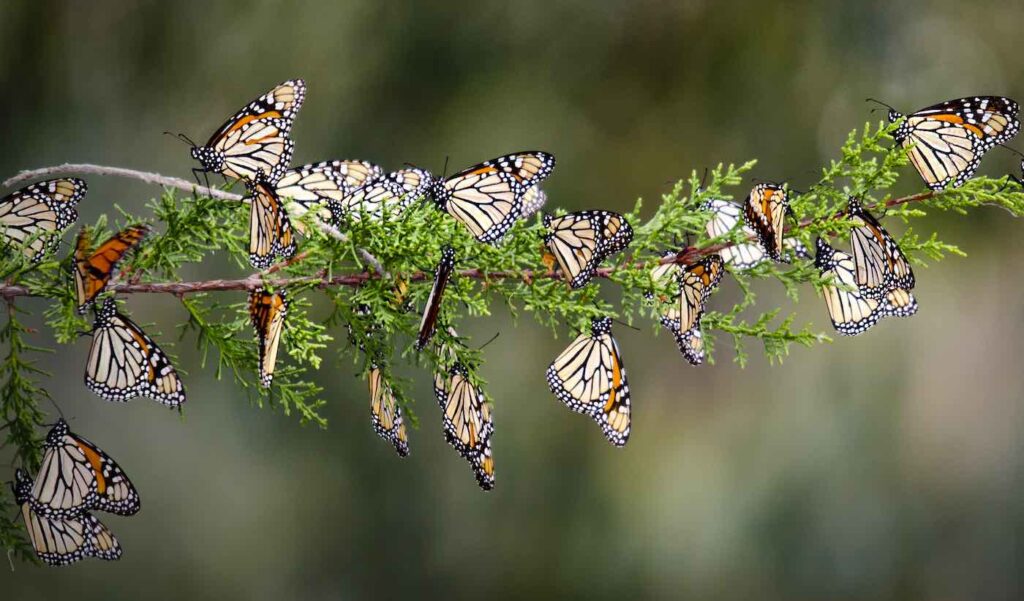
When just 200 Western monarch butterflies arrived in the Pismo Beach Butterfly Grove from their northerly migration last year, park rangers feared the treasured insect would soon be gone forever.
Monarchs in Pismo Beach, CA by Steve Corey, CC license
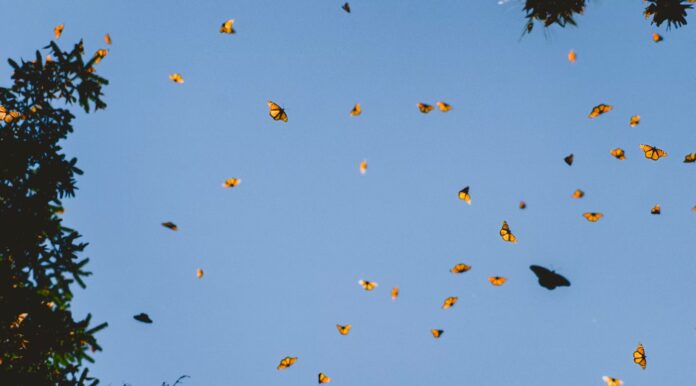
This year, however, volunteers tallied their numbers at over 100,000, a spectacular swarm of hope that traveled down from as far north as Canada to the spend the winter on the California coast.
It’s expected that the monarch butterfly will be placed on the Endangered Species List soon, due to declines in both western and eastern monarch butterfly numbers. Genetically indistinguishable, they are separate merely for the fact that monarchs living and migrating east of the Rockies overwinter in Mexico, while those on the western side of the Rockies overwinter along California’s west coast.
This year, the monarchs arrived early—and in droves. The Xerces Society for Invertebrate Conservation held their annual Thanksgiving count, and volunteers arriving at the break of dawn to count butterflies still lying quietly on tree trunks found a living curtain of orange and black. Early estimates put the tally at 100,000 individuals.
The butterfly boom brought joy to gardeners and park rangers alike.
Danielle Bronson recounted, it was the the sight of monarchs covering every square inch of bark and branch that spurred her with the desire to become a park ranger when she was young. To see the monarchs return this year in such numbers was special.
“Last year was devastating, but this year I’m very hopeful,” she told the Christian Science Monitor.
Xerces says the Biden Administration’s spending bill includes $10 million over five years to be given for building monarch habitat west of the Rockies, such as replenishing the population of native milkweed plants, particularly along highways and power lines where nothing else is being done with the land.
“Providing funding for roadside pollinator habitat can help bees, monarch butterflies and other flower visitors,” stated Sarina Jepsen, the Xerces Society Director of the Endangered Species program. “The good news is that transportation agencies can adjust practices to help pollinators without compromising safety or other primary objectives.”
Bronson points out that individuals like you can also make a real difference.
The simplest method she says is to plant nectar-producing flowers, but not milkweed. Sometimes milkweed is sold in non-native varietals, which can distract migrating butterflies along their route. So, unless a gardener know the difference between the two, planting nectar-ing flowers will, instead, provide valuable food sources along their long migration journey.
“You really can’t go wrong on that one, because you’re not just helping monarchs, you’re helping all pollinators,” she says.
The butterflies will gain significant protection if named to the U.S. Fish and Wildlife Service’s endangered list: it is the single most-effective conservation program in the world, with 99% of the almost 300 listed species in its history avoiding extinction.
Meanwhile, whatever has exploded the western monarch numbers this year is a welcome change and may well continue into the 2020s.
FLY This Fantastic News to Butterfly Fans By Sharing on Social Media…
With Santa commencing his busiest night of the year on Christmas Eve, a sustainability company looked into his round-the-world trip of 100 million miles.
Uswitch revealed that Santa would save 50% in costs by switching to an EV sleigh, if he were using a gasoline model.
Of course, he would also need to feed his reindeer lots of carrots and treats, too.
If he were to compare a round the world trip in an EV sleigh, it was calculated that it would cost 39 cents per kW— $9,000,000—as compared to filling up with gasoline costing over $18,000,000.
“Using an EV sleigh saves Santa a huge 50%, which could be put into making more presents for children across the world,” said Will Owen, an energy consultant at Uswitch.com.
Assuming that Santa’s sleigh is akin to Tesla Model S, which is reported to have a 620-km range, the total energy needed for Santa to cover the distance would be under $9,000,000.
Alternatively, if Santa’s sleigh had an internal combustion engine, with fuel consumption equivalent to an average car, Santa would need gasoline costing $18,000,000.
Whether you are driving a gasoline or EV car, we hope you have a Merry Christmas, and a new year filled with sustainability and savings.
DRIVE This to Social Media to Encourage EV Car Choices in the New Year…
Quote of the Day: “Christmas waves a magic wand over this world, and behold, everything is softer and more beautiful. ” – Norman Vincent Peale
Photo by: Roberto Nickson
With a new inspirational quote every day, atop the perfect photo—collected and archived on our Quote of the Day page—why not bookmark GNN.org for a daily uplift?
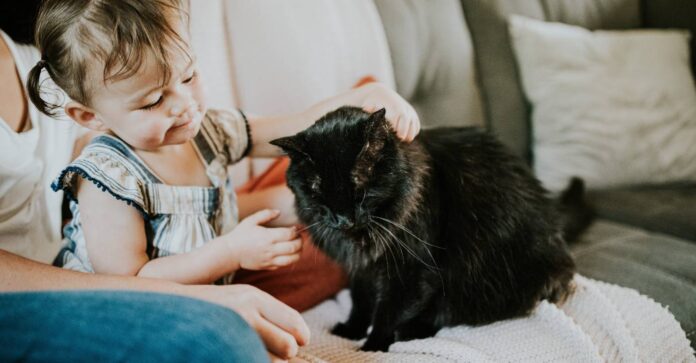
While researchers have found that adding a shelter cat to the family can help lower stress and anxiety for children with autism, a new study shows that joining a family does wonders for the felines, too.
“It’s not only important to examine how families of children with autism may benefit from these wonderful companion animals, but also if the relationship is stressful or burdensome for the shelter cats being adopted into a new, perhaps unpredictable environment,” said Gretchen Carlisle, a research scientist at the University of Missouri Research Center for Human-Animal Interaction (ReCHAI) in the MU College of Veterinary Medicine.
“In our study, we found the cats acclimated well to their new families and became significantly less stressed over time.”
The findings highlight the mutual benefits of human-animal interaction and build off previous MU research that found pets may help reduce stress and anxiety for both children with autism and their parents.
Carlisle and her team monitored shelter cats for 18 weeks after being adopted by Missouri families with at least one child with autism. The cats were first screened using the Feline Temperament Profile to identify shelter cats with a calm and laid-back temperament.
After families selected a cat that had passed the screening, researchers made home visits to check on the cats 2-3 days after adoption and then every six weeks for 18 weeks, to see how they acclimated to their newly adopted families.
“Cortisol is a stress measure we tracked through collecting samples of the cats’ feces, and we noticed a significant decrease in cortisol over time,” Carlisle said.
“Cats also tend to lose weight due to not eating if they are stressed, but we found the cats actually gained a bit of weight initially after adoption and then maintained their weight as time went on, so both findings indicated the cats acclimated well.”
Carlisle explained that children with autism may have sensitivity or sensory issues and occasional problem behaviors accompanied by loud, sudden outbursts.
Because of those concerns, shelter cats that have been screened for a calm, easy-going temperament may increase the likelihood of a better long-term match for both the children and the cat.
“It’s crucial to look after the welfare of the cats from a humanitarian standpoint, and this research also helps animal shelter staff overcome the financial and management hurdles that can result when cats are returned to shelters if there is not a good fit with the adopted family,” Carlisle said of the study, published in Frontiers in Veterinary Science.
“Obviously, the shelters want to place all of their cats in homes, but some families may require a more specific fit, and using research-based, objective measurements for screening temperament may help increase the likelihood of successful, long-term matches.
“Our hope is that other scientists will build on the work of our exploratory study so shelter cats and families of children with autism might benefit.”
A Christmas staple, the wreaths adorned the pink, purple, blue, red,and yellow front doors of the townhouses, and were decked out with baubles, flowers, and greenery.
Take a look below and choose your favorites.
SWNSSWNSSWNSSWNSSWNSSWNS
SHARE These Festive and Fun Wreath Photos All Over Social…
Quote of the Day: “Recognizing the sacred begins when we are interested in every detail of our lives.” – Chögyam Trungpa
Photo: by Fabrice Villard
With a new inspirational quote every day, atop the perfect photo—collected and archived on our Quotes page—why not bookmark GNN.org for a daily uplift?