











All News - Page 433 of 1715 - Good News Network
Home Blog Page 433

Conservation Groups Celebrate Dam Removal on Green River – Restoring Health of Fish and Humans After 70 Years 

US Army Corps of Engineers / Jack Sweeney

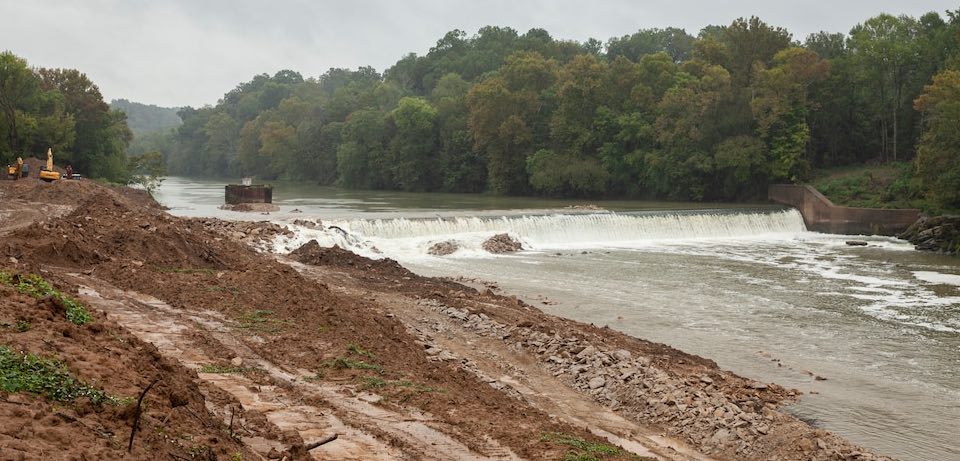
Five environmental partners celebrated the largest dam removal in Kentucky’s history last week, which will not only restore biodiversity and improve ecosystems but also prevent deadly accidents in the future.
US Army Corps of Engineers / Jack Sweeney

The U.S. Army Corps of Engineers and U.S. Fish and Wildlife Service partnered with The Nature Conservancy, Kentucky Department of Fish and Wildlife Resources, and Kentucky Waterways Alliance to push for the removal of lock and dam No. 5 from the Green River near Roundhill.

The Green River is one of the most biodiverse rivers in the country. It is home to more than 150 fish species, more than 70 mussel species and 43 endemic species that exist nowhere else in the world. Aquatic species include nine endangered mussel species, one endangered fish, and one endangered freshwater shrimp—the Kentucky cave shrimp.

Officials at a ceremony September 20 extolled the benefits of the dam removal that will make the river safer for people, healthier for fish and mussels, and an economic boon to local communities.

“We are excited to partner with the U.S. Fish and Wildlife Service and The Nature Conservancy on the removal of Green River Lock and Dam 5,” said Louisville District Commander Col. Eric Crispino during the ceremony. “This project will restore the natural flow to this portion of the Green River, the most environmentally diverse river in the inland navigation system, as well as support our ecosystem restoration mission.”

RELATED: The Hoover Dam Could Soon Be Turned into a ‘Giant Battery’ for Renewable Energy

The U.S. Fish and Wildlife Service continues to lead the $4.6 million project where crews have been deconstructing the structures on site since June 2021. Work is expected to be completed in October, and The Nature Conservancy will take ownership of the site.

“Removing Lock and Dam number five on the Green River is a really big deal,” said David Phemister, state director for The Nature Conservancy in Kentucky. “This is not just an ecological victory, but this is really a victory for river access and the local economies. We’re committed to working with the local community, Butler County and others to make sure this is a public park accessible to all.”

Green River Lock and Dam No. 5 was built in 1933-34 for commercial use, but the Army Corps ceased operation of the structure in 1951 due to it no longer being needed. The structure has stood unused for 70 years, creating a pooled condition in the river with lower oxygen levels, more sediment and higher temperatures—all issues for aquatic life and the overall health of the river. The dam also presents a barrier to boat traffic and recreation, with no portage or bypass options.

POPULAR: Salmon Spawning for the First Time in 80 Years in the Upper Columbia River

Once the dam is removed, it will restore free-flowing conditions to 73 miles of the Green River.

There are many Green River species that thrive in moving water. These include many aquatic insects that serve as food for foraging bats, including three bat species that are endangered.

It will also improve safety and access for recreational canoeists and kayakers and overall fishery including highly sought-after gamefish such as smallmouth bass, rock bass, and muskellunge.

MORE: Once Left For Dead, The Aral Sea Is Now Brimming With Life Thanks to Global Collaboration

“This project illustrates the concepts of partnerships and revolutionizing the U.S. Army Corps of Engineers, two priorities of the Chief of Engineers,” Crispino said. “The Louisville District is proud to be part of the partnership and we look forward to seeing the Green River free flowing again soon.”

LET the Good News Flow on Social Media By Sharing Stories Like These…

“A thing of beauty is a joy for ever: Its loveliness increases; it will never pass into nothingness.” – John Keats

Quote of the Day: “A thing of beauty is a joy for ever: Its loveliness increases; it will never pass into nothingness.” – John Keats

Photo: by Anastasia Zhenina

With a new inspirational quote every day, atop the perfect photo—collected and archived on our Quotes page—why not bookmark GNN.org for a daily uplift?

Alabama Begins Removing Racist Language From Its Constitution

Alabama Department of Archives and History

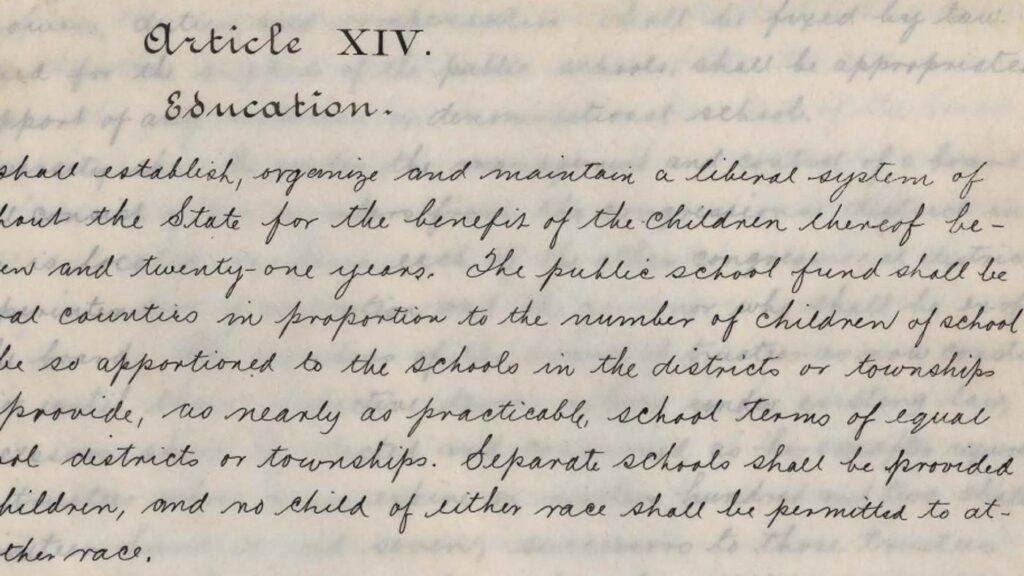
The state government of Alabama is drafting amendments to its 1901 State Constitution that would remove, among other things, discriminatory language.

The changes would mark the end of the last remaining legal remnants of what are generally referred to as Jim Crow laws, which created a state-sponsored education system separated by race, and in which the Constitution allowed state authorities to forcibly place children in the educational institution of the state’s choosing.

Having failed to pass referendums on the motion in 2004 and 2014, a 2020 third-time’s-the-charm vote got the job done; it established the Committee on the Recompilation of the Constitution, who will proceed to remove the Jim Crow passages, as well as others like poll taxes, duplicate language, and more.

“It sends a message out about who we are,” said Rep. Merika Coleman, a Democrat from Pleasant Grove, who chairs the committee and sponsored the amendment.

“It is important for us to let folks know we are a 21st century Alabama, that we’re not the same Alabama of 1901 that didn’t want Black and white folks to get married, that didn’t think that Black and white children should go to school together,” she said, according to AP.

MORE: George Floyd Family to Receive $27 Million From City of Minneapolis

“The Legislature, upon the recommendation of the Director of the Legislative Services
Agency through a proposed draft, may arrange this constitution, as amended, in proper
articles, parts, and sections removing all racist language, delete duplicative and repealed
provisions, consolidate provisions regarding economic development, arrange all local
amendments by county of application during the 2022 Regular Session of the Legislature,
and make no other changes,” a memo regarding to the recompilation writes.

The most egregious piece of writing within the constitution is probably familiar to some, and states: “Separate schools shall be provided for white and colored children, and no child of either race shall be permitted to attend a school of the other race,” but another passage that declares the state shall be able to confiscate children and place them in whichever institution they want, regardless of their parents’ will, is also set to be removed.

RELATED: Former White Supremacist Store and Klan Meeting Space is Being Turned Into a Community Center to Promote Healing

Another passage about poll taxes is being scrapped, as there’s no such thing as a poll tax anymore anyway.

Lastly, a passage regarding involuntary servitude being unlawful in the land, except in the case of prisoners, is being changed to a very similar passage from the Federal Constitution. This particular article led, according to AP, to generations of Black men spending their prison sentences in backbreaking labor.

SHARE This Hopeful Move Towards a Better Future With Others…

Share a Moment of Awe With This Jewel of Australian Animals: the Leafy Seadragon

Drod from Atlanta, CC license
Drod From Atlanta, CC license

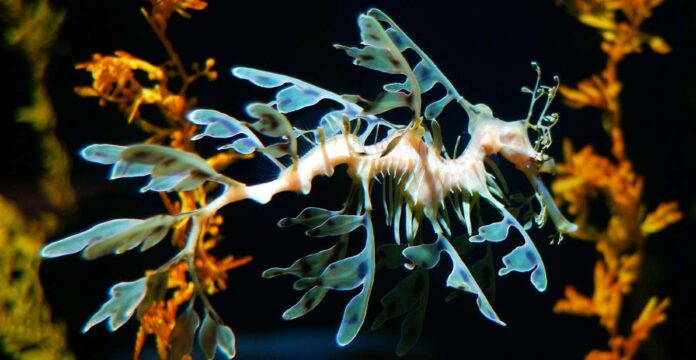
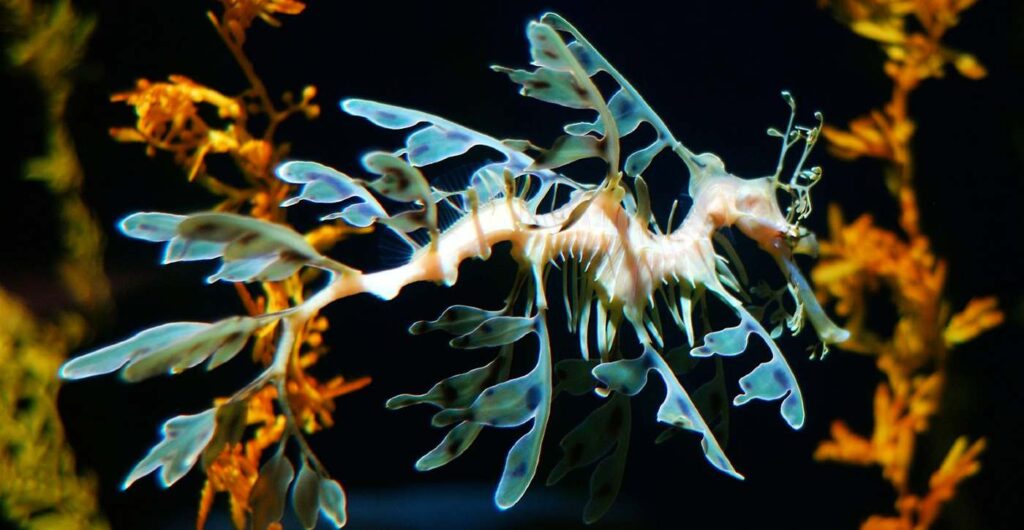
As an example of the majesty of life, the art of camouflage, and the extremes of evolution—one need look no further than the leafy seadragon of South Australia.

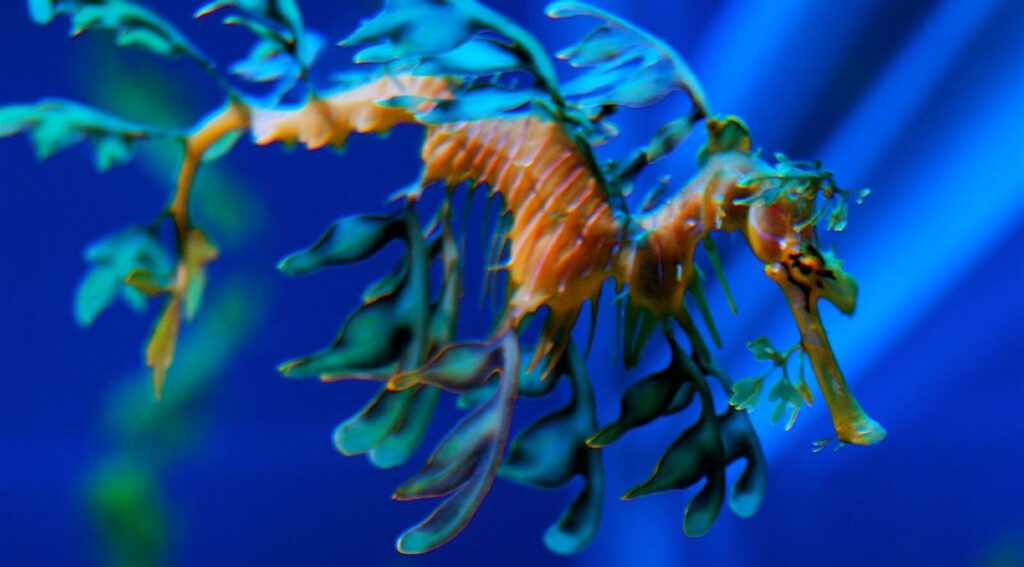
Fondly called “Leafies” by the Aussies of Melbourne and Adelaide, it is a member of the genus that includes pipefishes, seadragons, and seahorses, and takes its name from the myriad of leaf-like protrusions along its body which serve only to camouflage it among seaweed stalks and kelp.

Feeding on plankton and small crustaceans, they can grow to almost one foot in length.

For propulsion they have dorsal and tail fins which are actually transparent compared to the leaf-like body parts that do nothing—they gently move the animal back and forth as it swims, mimicking the dancing seaweed around it, much like a chameleon camouflages its movements on land.

The dedication to camouflage and defense is impressive.

In the wild, some individuals were observed remaining still for 68 hours straight. Furthermore, their body is coated in hard bony plates and spikes, ruining the day of a fish tempted to take a bite out of it.

MORE: Curious Whale Nudges Paddle Boarder in Argentina in Stunning Video (WATCH)

However, in a bizarre riddle, according to National Geographic there’s no sure evidence that any other animal preys on them.

Maybe they “beat the game” or maybe, as has been hypothesized with the American pronghorn antelope, they evolved their exquisite protection against a species which no longer exists.

Drod from Atlanta, CC license

Living solitary lives around 160 feet underwater, the males and females will come together to breed—it’s the male’s responsibility to carry eggs and raise young. The female will lay 250 eggs and deposit them in a kangaroo-like pouch on the male’s tail.

RELATED: Gigantic 438-Year-old Coral Discovered in the Great Barrier Reef in ‘Excellent Condition’

Unsurprisingly, such a charismatic animal is prized as an aquarium species by collectors, and alongside pollution these are the animals biggest threats. Thankfully, the animal is not endangered, and is currented listed by the IUCN as a species of Least Concern.

(WATCH the video about the species below.)

DON’T DISGUISE the Good News—Share It Far and Wide…
Autism Therapy For Infants May Reduce Likelihood of Later Diagnosis

An Australian team has developed the world’s first behavior therapy shown to reduce autism spectrum disorder-like behavior enough in infants to avoid, through improvement, a clinical ASD diagnosis.

The therapy reduced the likelihood of ASD-diagnoses at the three follow-up dates of 18, 24, and 36 months of age by two-thirds in 105 Australian children, and shows that early intervention—when autism is only suspected—can jumpstart the child’s social skills and produce positive knock-on effects later in life.

The therapy is known as the VIPPP method, because that’s how important our children are. In reality it stands for Video Interaction for Promoting Positive Parenting, and acts as a sort of translation app and play-by-play review, whereby following a period of interaction with a child displaying one of the four signs of early ASD, a doctor and parent can review footage of the interaction to help the them understand exactly how the child is trying to communicate.

Instances of avoiding eye-contact or not responding to their name can be signs a child might go on to develop ASD, and working around those barriers to help the child develop social skills when they’re so young was the key to the success of the trial.

MORE: Now Children With Autism or Sensory Issues Can Buy Vans Shoes Designed Exclusively For Them

“This is the first worldwide evidence that a pre-emptive intervention can reduce autism behaviours and the likelihood of a later diagnosis,” said Professor Andrew Green at the University of Manchester, according to the Guardian.

“We think this is a landmark finding because it suggests intervention at this early time can have this substantial effect. It may well change the way services provide support to a large number of children worldwide.”

RELATED: Inspired By Brother With Autism, New App Helps Adults With Special Needs Make Friends

While the statistical effect of the therapy wasn’t immense, there were other positives, for example the improvements made at baseline were sustained by 24 months.

Furthermore while around 20% of the children who went without the therapy received an ASD diagnosis at age three, just 6.7% of the those who had the therapy did.

SHARE This Hopeful News With Others in the Know…

900-Year-old Mystery That Puzzled Stargazers is Now Solved – It’s A ‘Zombie’ Star

NASA
NASA

The Chinese have a long, ancient history of recording “guest stars”—suddenly bright stars that appear in the sky for a while but then dim and disappear.

Today we know these are rare, incredibly energetic supernova explosions from either massive stars or special, interacting binary systems that seed the Galaxy with heavy elements like iron and leaving behind neutron stars, pulsars, black holes and a gaseous remnant like the Crab nebula.

Now, a 900-year-old mystery on the true origins of the Chinese guest star of AD 1181 has finally been solved by an international team of astronomers.

The Laboratory for Space Research (LSR) and Department of Physics of The University of Hong Kong (HKU) joined hands with collaborators from the UK, Spain, Hungary and France, pursued an investigation to unravel this mystery via newly uncovered clues of their own discovery.

Remarkably, the guest star of AD 1181, reported at the time to be as bright as the planet Saturn, was the only historical supernova (SN) of the last thousand years that has been without identification with a real object.

Published recently in the prestigious Astrophysical Journal letters, this team reports the identification of SN of AD 1181 with their previous co-discovery in 2017 of “Parker’s star”, the hottest known Wolf-Rayet star (itself a truly unique object) with a temperature of more than 200,000 degrees Celsius.

This star also has a surrounding nebula Pa30, discovered by their amateur colleague Dana PATCHICK in 2013.

Corresponding author Professor Quentin PARKER, also the Director of LSR said, “Our data showed the expanding gas cloud from this star has extreme velocities of around 1,100km/s from an explosion about 1,000 years ago. This matches the AD 1181 event.

“Not only that but Pa30/Parker’s stars position in the sky fits the historical Chinese and Japanese reports on the guest star to within 3.5 degrees—well within the errors.”

RELATED: This Asteroid is a $10,000-Quadrillion Lump of Iron and a Potential Opportunity to Study an Exposed Planetary Core

Pa30 and Parker’s star have previously been proposed as the result of a merger of two White Dwarfs—dense, dead stars, leading to a rare Type Iax supernova.

The reported historical brightness and modern distance determined for their system suggests the event was dimmer than typical supernovae. This also agrees with the rare Type Iax designation, only the second of its kind known in the entire Galaxy.

Dr Andreas RITTER, the paper’s first author and HKU Postdoctoral Fellow within the LSR said, “Taken together, the age, location, reported “Guest star” brightness and recorded visibility for 6 months, shows that Parker’s star and its surrounding gas shroud Pa30 are indeed the counterparts of supernova SN of AD 1181.”

The SN of AD 1181 event is also the only Type Iax supernova where detailed studies of the remnant star and surrounding nebula are possible. Combined with the extreme and remarkable nature of Parker’s star itself and their linking of it to the AD 1181 supernova, this source becomes of considerable scientific and historical interest.

MORE: Have We Detected Dark Energy? Cambridge Scientists Say It’s a Possibility

Finally, Parker’s star is the only Wolf Rayet star known that is neither from a massive progenitor star nor the central star of a planetary nebula.

Instead, it is the result of two white dwarf stars merging together and accompanied by a Type Iax supernova explosion that now has a firm historical basis. So there you go.

Source: The University of Hong Kong

MAKE a SPLASH—Share This Star-Based Story With Friends…

Fossil Found by Kids in New Zealand Turns Out to Be 27 Million-Year-old Giant Penguin

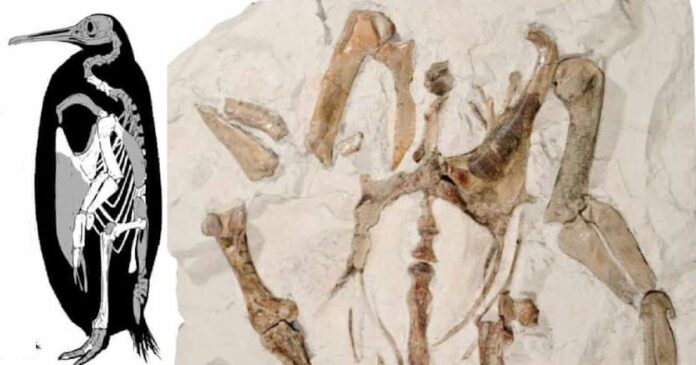
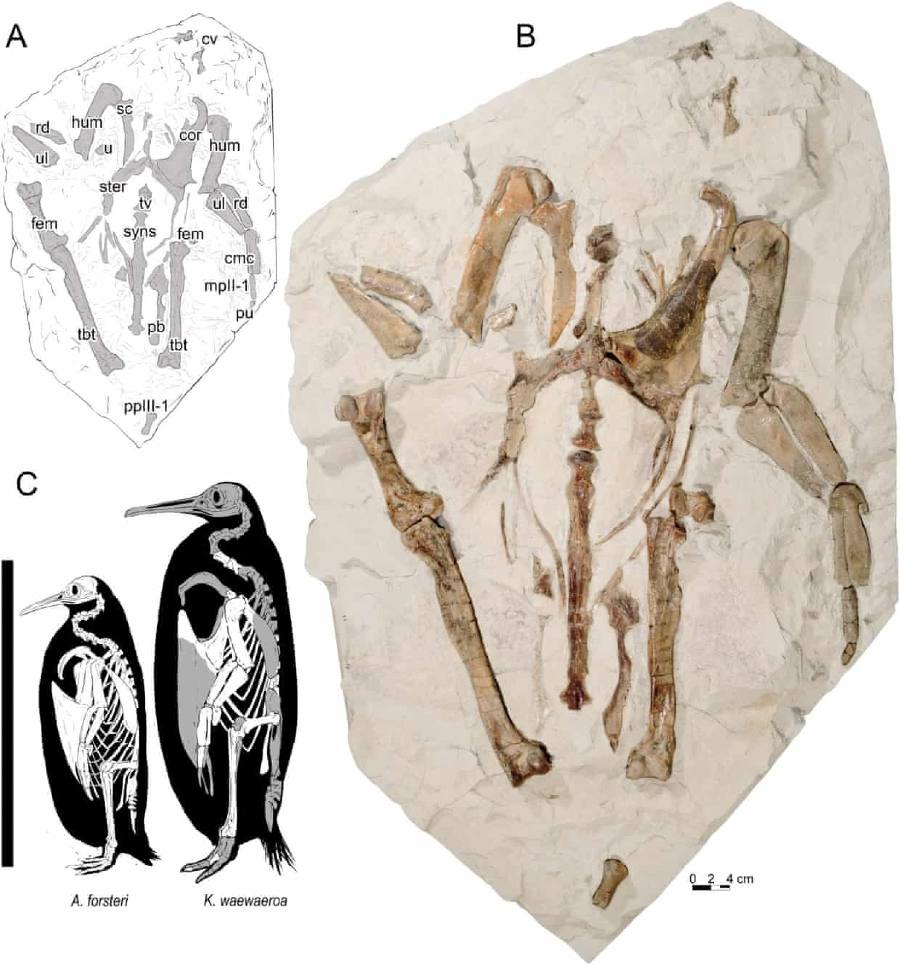
The remains of a giant prehistoric penguin were discovered fossilized on a beach on New Zealand, delighting a group of young students, and filling in gaps in the fossil record at the same time.

The penguin would have stood 1.4 meters tall, while underwater it could stretch out to 1.6 meters, making it far larger than any diving bird alive today.

While originally looking for small crustacean fossils in Waikato, New Zealand in 2006, the Hamilton junior naturalist club were returning to their kayaks when they crossed a beach at extreme-low tide and found something that clearly wasn’t a crustacean. Fortunately for them they were accompanied by a seasoned paleontologist,

Embedded in sandstone, the specimen needed extraction with petrol-powered cement saws and jackhammers, after which it was donated to a local Maori museum.

A study describing the new penguin species, Kairuku waewaeroa, borrowing the Māori word for long-legged, explains that penguins have arguably the most complete fossil record of any avian genus, and K. waewaeroa was able to unite a group of existing giant penguins from New Zealand.

Diving for fish at a time when the North Island’s Waikato was largely underwater, the giant penguin lived between 34 and 27 million years ago.

MORE: Gigantic 438-Year-old Coral Discovered in the Great Barrier Reef in ‘Excellent Condition’

Among the inquiries generated by a complete giant penguin fossil lineage of three different giant penguin species is the question of why were there so many giant birds in New Zealand?

The Haast’s eagle, though driven extinct by humans, was the largest eagle to ever live, weighing up to 33 pounds with a ten-foot wingspan.

There were nine species of the large flightless Moa bird, which could stand 12 feet tall and weigh 500 pounds or more.

The world’s largest parrot—weighing twice as much as the heaviest living cockatoo, and which could stand up to reach the height of an adult male’s waist, also lived in New Zealand.

“Giant penguins like Kairuku waewaeroa are much larger than any diving seabird today, and we know that body size can be an important factor when thinking about ecology,” said Mike Safey, president of the Hamilton junior naturalist club, to Euronews. “How and why did penguins become giant, and why aren’t there any giants left? Well-preserved fossils like this can help us address these questions.”

RELATED: Astonishing Peek Into Travels of Mammoth 17,000 Years Ago: A Diary Written in Their Tusks

Safey was actually one of those kids who discovered the fossil 15 years ago, and said that seeing it make major contributions to academia today was “surreal.”

WADDLE the Good News Over to the Those News Feeds of Yours…

“Shut the door, change the record, clean the house, shake off the dust. Stop being who you were, and change into who you are.” – Paulo Coelho

Quote of the Day: “Shut the door, change the record, clean the house, shake off the dust. Stop being who you were, and change into who you are.” – Paulo Coelho

Photo: by Jan Tinneberg

With a new inspirational quote every day, atop the perfect photo—collected and archived on our Quotes page—why not bookmark GNN.org for a daily uplift?


Squirrels Have Very Different Personality Traits – Just Like Humans

Eborutta, CC license

A study from the University of California, Davis is the first to document personality in golden-mantled ground squirrels, which are common across the western U.S. and parts of Canada.

The study found the squirrels show personality for four main traits: boldness, aggressiveness, activity level, and sociability.

The findings suggest that understanding how an animal’s personality influences use of space is important for wildlife conservation.

‘Individuals matter’

To see them chitter and skitter, stop and then scurry, the fact that ground squirrels have personalities may not seem surprising.

But the scientific field of animal personality is relatively young, as is the recognition that there are ecological consequences of animal personality.

For instance, bolder, more aggressive squirrels may find more food or defend a larger territory, but their risky behavior may also make them vulnerable to predation or accidents.

“This adds to the small but growing number of studies showing that individuals matter,” said lead author Jaclyn Aliperti, who conducted the study while earning her Ph.D. in ecology at UC Davis.

“Accounting for personality in wildlife management may be especially important when predicting wildlife responses to new conditions, such as changes or destruction of habitat due to human activity.”

Personality tests

Scientists have been studying golden-mantled ground squirrels at the Rocky Mountain Biological Laboratory in Gothic, Colorado for decades. It was established as a long-term study site more than 30 years ago by Aliperti’s advisor, Dirk Van Vuren.

MORE: Brilliant Bruce the Disabled Parrot Uses Pebbles to Clean Himself With Broken Beak—Something Never Before Observed

Aliperti drew from this powerful data set for her study, while also initiating a series of experiments there over the course of three summers to observe and quantify the squirrels’ personalities.

She notes that while there are no Meyers-Briggs tests for animals, there are standardized approaches to quantifying animal personalities. She observed and recorded squirrel responses to four tests:

  • Novel environment: Squirrels were placed in an enclosed box with gridded lines and holes.
  • Mirror: Squirrels are presented with their mirror image, which they do not recognize as their own.
  • Flight initiative: Squirrels were approached slowly in the wild to see how long they wait before running away.
  • Behavior-in-trap: Squirrels were caught, unharmed, in a simple trap and their behavior briefly observed.

The social squirrel’s advantage

Overall, the study, published in the journal Animal Behaviour, found that bolder squirrels had larger core areas where they concentrated their activity. Bold, active squirrels moved faster. Also, squirrels that were bolder, more aggressive and more active had greater access to perches, such as rocks. Perch access is important because it can provide a better vantage point for seeing and evading predators. Interestingly, perch access was also associated with sociability.

Golden-mantled ground squirrels are considered an asocial species. They are relatively small, giving them little opportunity to form the tighter social bonds common in larger ground squirrels, which typically spend more time in family units while reaching maturity. However, the study said that “within this asocial species, individuals that tend to be relatively more social seem to have an advantage.”

In such cases, being more social could save an individual’s life. Such personality differences can influence a squirrel’s ability to survive and reproduce, which could scale up to the population or community level.

Squirrels of Davis

UC Davis is home to many squirrels, which have become an honorary mascot of sorts on campus.

“The squirrels of UC Davis are something else,” said Aliperti.

She means it literally. They are tree squirrels and very different from the ground squirrels Aliperti studied. Yet she says her work has changed how she views the squirrels of Davis.

RELATED: Cows are Being Potty-Trained to Save the Planet – Animal Loving Researchers are Moo-ved by the Results

“I view them more as individuals,” Aliperti said. “I view them as, ‘Who are you? Where are you going? What are up to?’ versus on a species level.”

Noticing such individuality brings a more personal angle to viewing wildlife.

“Animal personality is a hard science, but if it makes you relate to animals more, maybe people will be more interested in conserving them,” said Aliperti.

(WATCH the video for this story below.)

Source: University of California-Davis

GIVE Your Nuttiest Friends a Sample of the Good News—Share This Story…

Study Finds Small Acts of Kindness Can Bolster Students’ Health and Wellness

A small act of kindness can go a long way, say researchers, towards bolstering student health and wellness.

Dr. John-Tyler Binfet and Dr. Sally Stewart at the University of British Columbia recently published a study that explores how the inclusion of a kindness assignment in an undergraduate course impacted student perceptions of themselves, their peers, and their campus.

While there have been several studies that have assessed the effects of kindness on wellbeing, there has been limited research into how university-aged students understand and enact kindness, says Dr. Binfet.

Thousands of university students returned to class across Canada in September, and Dr. Binfet notes that while living in the times of COVID-19 every act of kindness goes a long way.

“We know being kind yields a number of wellbeing benefits, such as stress reduction, happiness and peer acceptance, and we know mental health impacts learning,” says Dr. Binfet.

“The post-secondary environment is often the last training ground to prepare students for life so we want to understand how we can prepare students for optimal mental health as adults.”

For the study, volunteer students provided self-reports to determine the extent they see themselves as kind in online and face-to-face interactions, and how connected they felt to their peers and the campus. The students were then asked to plan and complete five kind acts for one week.

The participants completed 353 kind acts with the main themes of helping others, giving, demonstrating appreciation and communicating. Students that completed at least three of the five planned acts of kindness self-reported significantly higher scores of in-person kindness and peer connectedness.

MORE: Stories or Music Can Synchronize the Heartbeats of Everyone Listening into a Single Rhythm

“This research can help students realize that there is evidence behind how and why people are kind, and that kindness does impact health and wellbeing,” says Dr. Stewart. “It also has an incredible impact for teaching in higher education as it provides insight into where students are at with their practice and understanding of kindness in order to build the groundwork for inclusion of this topic within educational practices and course content areas.”

While there are on-campus wellbeing resources available to students at most post-secondary schools, this research demonstrates that by including wellbeing initiatives into coursework, it’s easier for more students to engage in those activities and receive benefits without added effort. The study also demonstrated that a curriculum-based kindness intervention would be well received by students.

“We found that the students loved the assignment,” says Dr. Stewart of the study, published in Journal of Further and Higher Education. “For some, it helped them realize that kindness is a skill that they can learn to do better and that there are many ways to be kind. For others, it helped them realize that they already do kind things. It reinforced their desire and intention of doing more kind acts.”

RELATED: World-Renowned Psychiatrist is Writing COVID Prescriptions… For Daily Poetry Reading

For years, Dr. Binfet’s research has focused on elevating the discussion of kindness, and he has previously completed studies on how children and adolescents perceive and enact kindness.

“With this research, we now see alignment in how university students and school-age participants define kindness—to them it means actions that can improve the lives of others. Often, it’s simple things such as being polite and helping others,” says Dr. Binfet.

Source: University of British Columbia

BE KIND—Share Good News With Peers…

Groom’s Autistic Brother Has Wedding Crowd in ‘Happy Tears’ with Emotional Speech That Went Viral (WATCH)

SWNS
SWNS

This is the ‘best man speech ever’—given by the brother-of-the-groom who struggles socially but had everyone in tears and stitches.

23-year-old Sam Waldron announced to a room of people how his big brother Jonah Waldron 27, is his “hero” and “never looked down on me.”

Sam talks about how he has autism ,which can make him scared to interact with people, but his brother reminds him “that being different is a real strength, not a weakness”.

He says Jonah’s new wife, 25-year-old Madison Waldron, has “all the makings of a great sister”, and jokes she’s married the “second most handsome Waldron.”

Sam says, “I was really nervous before the speech. Before I stood up, I wasn’t sure if everyone would like my speech, but I got more comfortable as I started reading.

“I felt like I was speaking out to whoever has autism and that I was speaking for the autism community.”

RELATED: ‘Let’s Do It:’ Alzheimer’s Patient Asks Wife to Marry Him After Falling in Love for a Second Time

As for groom Jonah, on watching his little brother do such a brilliant job, he couldn’t hold back his tears of happiness.

Brothers Sam and Jonah grew up together and, being only four years apart in age, went to the same school.

Sam was diagnosed with autism when he was seven years old, and didn’t find intense social settings easy.

Jonah said, “He would come to see me during the school day, he would come for help with a subject or as a break.

“Myself and my parents were the ones he felt the most comfortable talking to about any struggles that he had socially.

“I also became his Respite Care worker, helping him practice social situations in public settings.”

Caring big brother Jonah was even inspired to train as a Special Education Teacher to help other children with special needs.

Jonah and teacher Madison met at Wartburg College, and when Jonah introduced his new girlfriend to younger brother Sam, the two were immediate best friends.

Jonah said, “Once he met Maddy, he felt completely comfortable right away.”

The couple got engaged on July 23 while on a trip to Colorado. Of course, Jonah asked Sam to be his best man as soon as they got home.

“I’ve always known that I wanted Sam as my best man,” said Jonah.

“He was very happy, but also you could see that he was nervous too.”

MORE: Watch Photographer Stumble Onto Sunset Marriage Proposal and Excitedly Give Amazing Pics to the Couple

For Sam, “I felt like my dream came true… I got to be around my best brother.”

Sam spent two whole days perfecting his speech before the big day arrived on July 3 this year.

“I would just sit there and just read it aloud,” he said. “I read it to my Aunt Colleen, Andrew Hoyt and my Dad many times.”

Sam stood up in front of the 170 wedding guests to deliver his speech.

Jonah said, “My favorite part was when he was explaining to Maddy that she gave him peace, because that is exactly how I would explain the way she is with Sam.

SWNS

After he finished, Sam was given a standing ovation and the newly-weds rushed over to tell him how much of a great job he did.

The entire speech was recorded and uploaded to Jonah’s TikTok account, and went viral, with over 6.2 million views and 760,000 likes. Thank you, Sam, for inspiring so many with your emotional speech.

(WATCH the video below.)

SAY ‘I DO’ to This Sweet Story—Share It With Mates…

She Invited a Homeless Man For Dinner – Now Her Crowdfunding Has Secured Her New Friend a Tiny Home

david l kim r Andrew Embury
David and Kim/Andrew Embury

When you see a homeless person on the street, do you ignore them? Hand them some spare change? Direct them to the nearest social service center?

One Canadian woman went even further than that. At the time, she may not have realized the profound impact her simple act of kindness might have, but her compassion has had life-changing repercussions.

Kim Cormier was working outside her Kingston, Ontario home when David McDonald’s scooter blew a tire. Even though he was a stranger, she agreed to keep an eye on his stuff so it wouldn’t get stolen while he went to fetch a new inner-tube.

When McDonald got back from his errand, not only were his things still there, Cormier invited him in for supper. Over the meal, McDonald, Cormier, and her partner Andrew Embury fell into an easy—if unexpected—camaraderie that was the start of what’s become a beautiful friendship.

For McDonald, the road to homelessness began in 2010 when he suffered a series of personal and financial reverses. The gas station he owned went under. Soon after, his truck and his home followed. Then he and his long-term partner broke up.

By 2016, McDonald was homeless and living in a Toronto park. “I couldn’t imagine being homeless. I cried,” McDonald told CBC. “And so it was hard for me to accept help… charity.”

While McDonald does receive a financial stipend from the government, he declined homeless services because he says “other people are worse off” than him and needed them more.

Kim Cormier

From that Toronto park, McDonald bounced around, staying with relatives when he could, finally ending up in a one-bedroom shared apartment. But faced with daily dangers of theft and threats of violence, he found himself back on the streets—dividing his days between a tent and a derelict transportation trailer.

In the ensuing months, McDonald and Cormier stayed in touch. She and her partner began helping McDonald out with donations of clothing, shoes, and a solar-powered backpack that enabled him to keep his cell phone charged.

Eventually, the couple told McDonald he was welcome to set up quarters in their backyard. Thanks to a sister, McDonald got a new tent equipped with a mattress, couch, and a refrigerator.

An outdoor fireplace has been serving as McDonald’s impromptu kitchen and he’s been given restroom and laundry privileges inside the house.

But since the tent was only suited for three seasons, Cormier came up with a plan to provide McDonald with a more permanent shelter to keep him warm in the winter as well.

With a goal of $18,000, Cormier launched an online fundraiser to buy McDonald his own tiny house.

MORE: Realtor Transforms Abandoned Properties into Tiny Home Villages That Give Permanent Housing to Chronic Homeless

“We are trying to raise as much money as possible to help take the financial burden off ourselves and David’s monthly contribution from collecting aluminum cans and his ODSP monthly housing allowance,” she explained on the campaign’s GoFundMe page.

“Once we have paid off the full price of the micro home the ownership will be transferred into David’s name and he will finally own his own home again. Our long-term goal is for David to own his micro-home and move it to a forever spot that he can live and regain a sense of independence again.”

The response—including a single donation for $2,500 from a caring Samaritan—was so overwhelming that the total amount was soon raised. McDonald’s micro-house is set to be delivered before the cold weather sets in.

EnerDynamic Hybrid Technologies

While the brand-new tiny home can be transported anywhere, Cormier says that since she considers McDonald “part of the family,” he can stay as long as he likes.

RELATED: Jaden Smith To Open A Vegan Restaurant Where Homeless People Can Eat For Free

For McDonald, the measure of Cormier’s generosity isn’t about material things, it’s about the value of being treated with human dignity and respect.

“You have to swallow your pride when you’re homeless,” he told CBC. “She’s done more than I can ever say thank you for.”

BE GENEROUS With the Good News; Share This Story…

How India’s Air Pollution is Being Turned into Stylish Floor Tiles

Carbon Craft
Carbon Craft

In an effort to spare his generation from the choking air pollution in cities like Delhi, Angad Daryani has invented a filterless outdoor air purifier that collects air particulate matter that can be used by a company that makes custom tiling.

Existing air purification infrastructure is very expensive, and many use filters to clean out particulates, meaning they need replacement filters regularly.

Two of Daryani’s five-and-a-bit-feet-tall devices cost less than the latest iPhone, while filtering 300 cubic feet of air per minute—more than enough for a small family house.

His company Praan has raised $1.5 million in startup investment, billing itself as the world’s most-advanced, cheapest, artificial intelligence air purifier. Firms in his home country of India, but other nations like South Korea and Mexico that struggle with air pollution, have all shown interest.

Daryani plans to use the money to run a pilot program across India this autumn, deploying the device in schools, hotels, and industrial projects. His prime directive is keeping the cost low, as those who suffer most from polluted air are often the poorest in society.

MORE: Mining Zinc, Nickel, and Cobalt from Plants: “Phytomining” is the Sustainable Future

“Many of the world’s most polluted countries are among the poorest,” Daryani explained to the BBC. “Poor people work in factories, build the streets and infrastructure, and take public transport to get to work. They live and work in the most polluted environments.”

Onewhohelps at English, CC license

One of the major selling points of his purifier is that the collection chamber doesn’t need to be changed for six months, but realizing what he and his machines had in fact captured was valuable raw materials, he gave the leftover pollutants to another Indian company called Carbon Craft Design.

RELATED: Researchers Use Wastewater to Generate Electricity – While Cleaning It Up

They make stylish tiles for floors and walls that clean sometimes as much as 5 kilograms of CO2 per tile, and draw carbon emissions from the transport, tanning, paper, and lubricants industries.

Carbon Craft uses the powered air particulate like a dye, combining it with rock waste from quarrying to create a totally upcycled flooring product.

AMPLIFY the Good News by Sharing This Story From India…

“I am not what I ought to be, I am not what I want to be; but still I am not what I once used to be, and by the grace of God I am what I am.” – John Newton

Quote of the Day: “I am not what I ought to be, I am not what I want to be; but still I am not what I once used to be, and by the grace of God I am what I am.” – John Newton

Photo: by Sébastien Goldberg

With a new inspirational quote every day, atop the perfect photo—collected and archived on our Quotes page—why not bookmark GNN.org for a daily uplift?

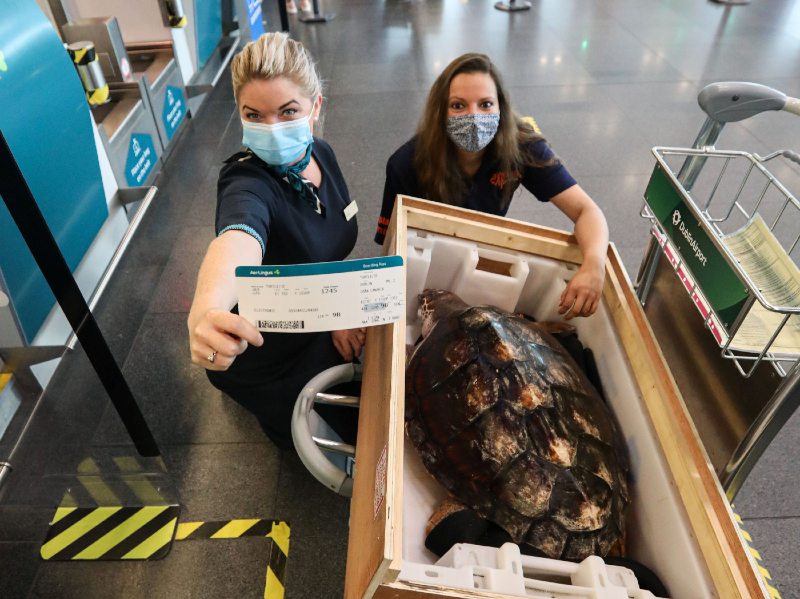
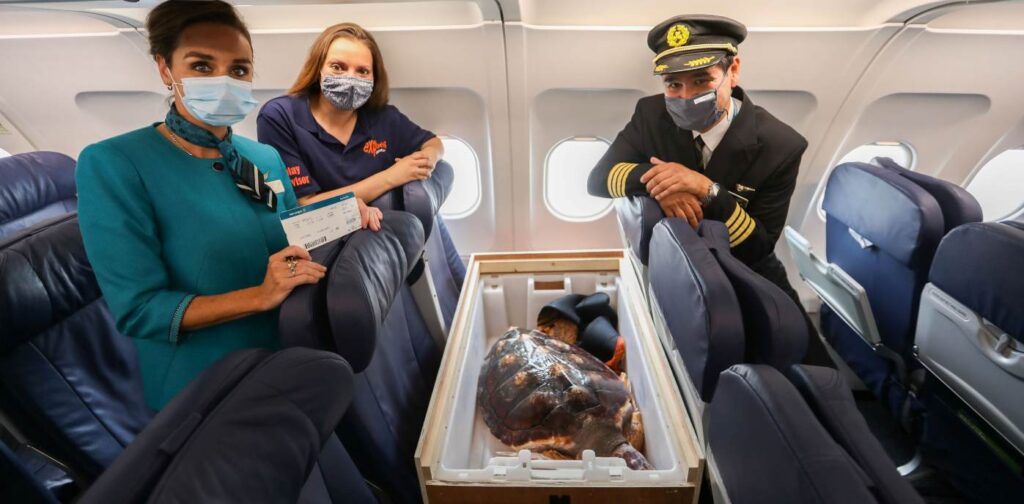
Lost Sea Turtle Washed Ashore With Hypothermia Gets Flown Home to Spain With its Own Boarding Pass

SWNS
SWNS

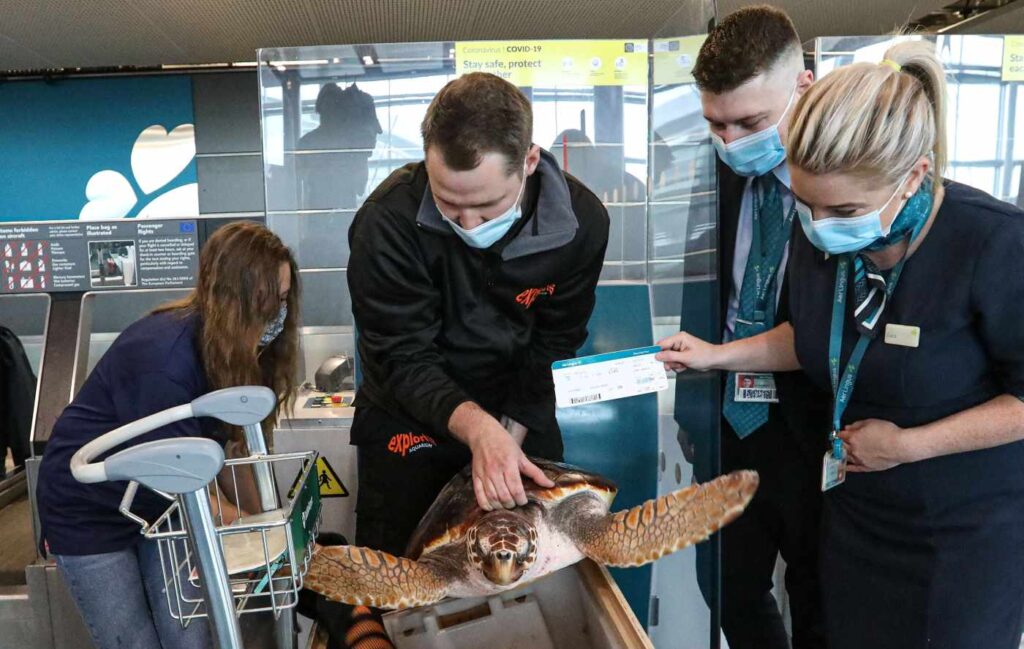
An endangered turtle that washed up in Ireland with hypothermia has been returned to its native Canary Islands on a flight—and even had its own boarding pass.

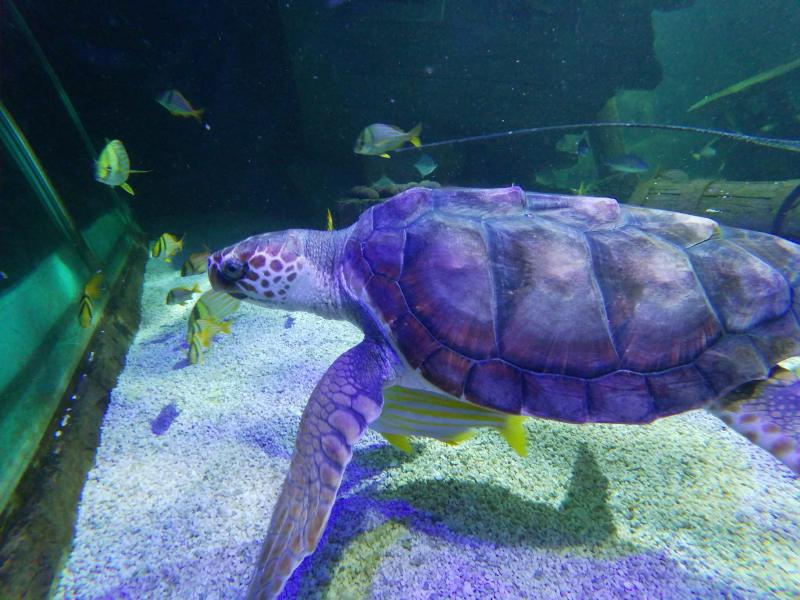
The three-year-old Loggerhead sea turtle, known as Julius Caesar or ‘JC’, was discovered on the beach in County Donegal, but has boarded a flight to much warmer waters.

SWNS

Airline Aer Lingus teamed up with Exploris Aquarium, where the the reptile has been living for the last three years, to fly him to Gran Canaria for his release.

Aer Lingus pilot, Captain Peter Lumsden, said: “It is our pleasure to welcome aboard a very special passenger today and to ensure the safe transportation of JC the Turtle to Gran Canaria.

“Since they first got in contact, Aer Lingus has worked closely with the team from Exploris Aquarium and our Maintenance & Engineering and Ground Operations teams to ensure that all JC’s needs are met as we complete this important mission.

Keeping the turtle’s temperature above 19 degrees is critical to his wellbeing and he requires regular monitoring and shell lubrication so placing him in the aircraft hold was not an option.

SWNS

His specially designed crate was securely strapped across a number of seats in the cabin.

MORE: The Last Known Swinhoe’s Turtle on Earth Was Alone Until This Female Was Found – Researchers Hope for Babies

One big journey

In January 2019, weighing a few hundred grams, nine-month-old JC is thought to have gotten caught up in the wrong current and swept along the Gulf Stream.

Loggerhead turtles are endangered and are happiest in warmer climates, so the chilly waters of the North Atlantic put JC’s life in danger.

Fortunately, he was discovered by a local family and taken to Exploris Aquarium in Portaferry, County Down, to recuperate in a tropical tank with tasty snacks of fish mixture and squid.

The pandemic prevented him from his repatriation for three years, however on September 15 the now-25kg reptile was packed into a waterproof crate and boarded flight EI 782 from Dublin to Gran Canaria.

He was accompanied by his minder Portia Sampson, who ensured he was safely passed over to the Centro de Recuperación de Fauna Silvestrede Tarifa on arrival.

Less than 24 hours later, JC became fully acclimatized to his new home and was released back into the sea.

CHECK OUT: Seaweed-Eating Giant Crabs Could Help Save Florida Coral Reefs – And They’re Lovingly Named ‘The Reef Goats’

Aer Lingus previously transported another rogue loggerhead turtle, Leona, to Las Palmas, Gran Canaria in December 2014 after she was discovered in County Clare.

SWNS

Loggerhead turtles are a vulnerable and endangered species and their numbers are in decline in the wild.

According to the World Wildlife Fund (WWF) they are “the living representatives of a group of reptiles that has existed on Earth and traveled our seas for the last 100 million years.”

GOOD News Should Soar—Share This Story…

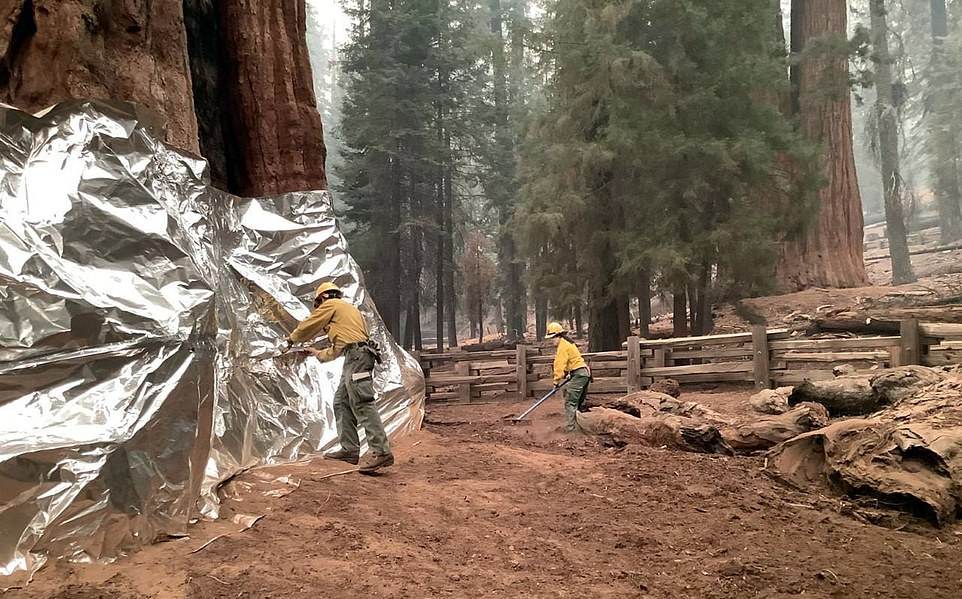
Firefighters Have Been Winning the Battle To Protect Sequoia’s Giant Trees – Using Foil Blankets (LOOK)

firefighters tree foil released public domain epa
EPA

Expert firefighting, contingency planning, and gallons upon gallons of water mean that the stands of giant sequoia trees in California’s Sierra Nevada mountains appear to be safe for future generations.

The September 9th “Windy Fire,” started by a lighting strike, burned 25,000 acres in Peyrone Sequoia Grove and the Red Hill Grove before it converged on Sequoia National Park.

There, firefighters wrapped many of the famous trees such as “General Sherman” the largest tree on Earth by volume, in fire-resistant foil capable of withstanding 1,200°F.

“The fortunate thing is the Park Service has done a lot of prescribed burning in [the park] since the 1960s, and so it’s making their job a lot easier,” Jon Wallace, a chief firefighter said during a Sunday morning briefing. “There’s also a myriad of walking trails in there, which have given firefighters places to work off of,” he added.

“The structures in the Giant Forest, the museum, all the infrastructure around the General Sherman tree, that’s all got sprinklers on it, and firefighters are running those sprinklers pretty much nonstop to make sure everything stays wet. But right now, all the protection efforts in the Giant Forest are going really well,” he said.

MORE: After Massive Wildfires, DroneSeed is Replanting Forests 6x Faster By Using Special Drones

A trip to Sequoia National Park teaches one that the giant conifers actually withstand fires very well, and many of those whose count of years stretch into the thousands would have endured many fires.

Sequoia & Kings Canyon National Parks

Their bark, like a giant spongy blanket, can be 32-inches thick, and protects them from the flames. The trees actually need levels of heat which only a fire can generate to release the seeds stored in their cones.

RELATED: NASA Helps Firefighters By Sending Pics From International Space Station to Show Key Spots of Moving Wildfires

In practice then, sequoias are literally born in flames.

Firefighter tree public domain released epa

However with year after year of California drought conditions mixed with predictions that weather events like fires will become more severe with climate change, it pays to be safe, and according to California Times News, more than 600 firefighters were battling the blaze at one point, most of them working within the Trail of 100 Giants grove.

PROTECT the Hope by Sharing This Story…

Listen to Millions of Monarch Butterflies Make One of the Rarest Sounds on Earth: ‘Just like a waterfall’

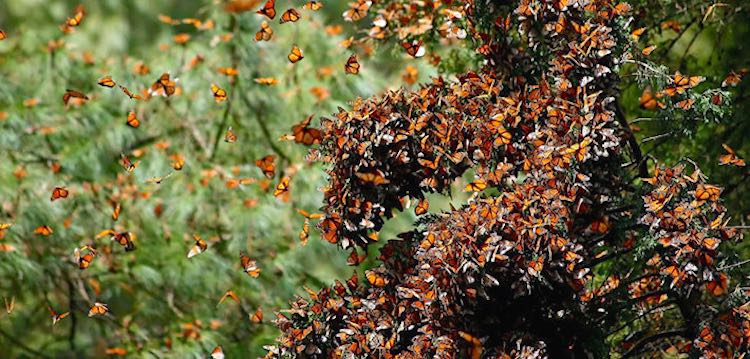
Monarch butterflies, fluttering in their millions on 3,000-mile journeys, as luminous as stained glass. Seeing them mass migrate is one of the world’s great spectacles. But what about hearing them?

Phil Torres of the YouTube channel The Jungle Diaries has recorded the sounds of millions of endangered monarchs as they warm up, then flap their bright wings along branches and on leaves and up tree trunks in the Mexican rainforest.

MORE: Historic Deal to Protect Millions of Monarch Butterfly Habitat Acres is Unprecedented

The resulting waterfall-like sound is, quite simply, a wonder.

(LISTEN to the video below.)

FLUTTER These Stunning Sounds Over to Others…

Bezos Earth Fund Pledges $1B to Conserve Land and Sea in Critical Areas ‘We can and must reverse this’

Bezos Earth Fund logo, Bezos Earth Fund / Jeff Bezos, CC Seattle City Counc
Bezos Earth Fund logo, Bezos Earth Fund / Jeff Bezos, CC Seattle City Council

Jeff Bezos has placed an additional $1 billion into the Bezos Earth Fund to be spent on creating, expanding, managing, and monitoring protected and conserved areas of wilderness.

The money will take the form of grants to organizations working to preserve lands and secure Indigenous people’s rights in the Congo, tropical Andes Mountains, and across Oceania.

The latest pledge is on top of the ten-thousand millions he’s already devoted towards combating climate change more directly, with nearly one-thousand of those millions having already been distributed as grants.

MORE: Jeff Bezos is Giving Away $10 Billion in Grants to Innovators in the Climate Battle

“When people hanker for the good old days and glamorize the past, they’re almost always wrong. By most metrics, life is better than it was in the past,” Bezos said in a statement. “But there is a notable exception—the natural world is not better today than it was 500 years ago, when we enjoyed unspoiled forests, clean rivers, and the pristine air of the pre-industrial age.”

The first round of grant money went mostly to large, well-organized global conservation names like the WWF.

However the Amazon founder isn’t just throwing money around. Unsurprisingly, the man who transformed global e-commerce has a larger plan. Research has shown that if governments simply recognized all existing Indigenous land claims, it would be the single largest conservation victory since the invention of the national park.

The regions Bezos Earth Fund is looking to preserve are, to use the parlance of a famous television conservationist, “chock-a-block” with Indigenous groups.

“Conservation is one of the most effective anti-poverty strategies we have,” said United Nations Deputy Secretary-General Amina Mohammed. “I warmly welcome this generous commitment, which will help deliver the Sustainable Development Goals.”

RELATEDSwiss Businessman is Contributing $1 Billion Towards Protecting 30% of the Planet

“We can and must reverse this anomaly,” Bezos added. “By coming together with the right focus and ingenuity, we can have both the benefits of our modern lives and a thriving natural world. I hope this commitment inspires others to make their own pledges to protect and conserve nature and help in the fight against climate change.”

Multiply The Good News By Sharing It With Your Friends On Social Media…

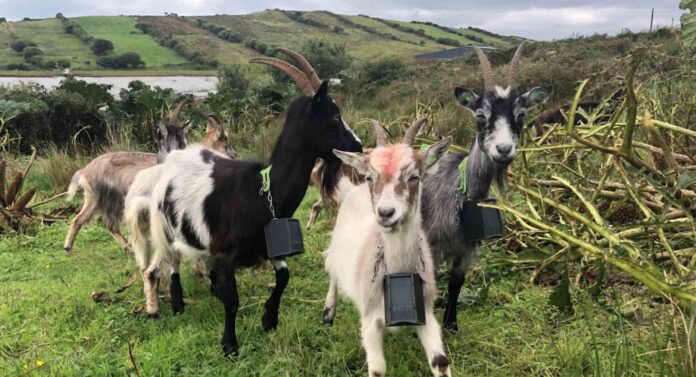
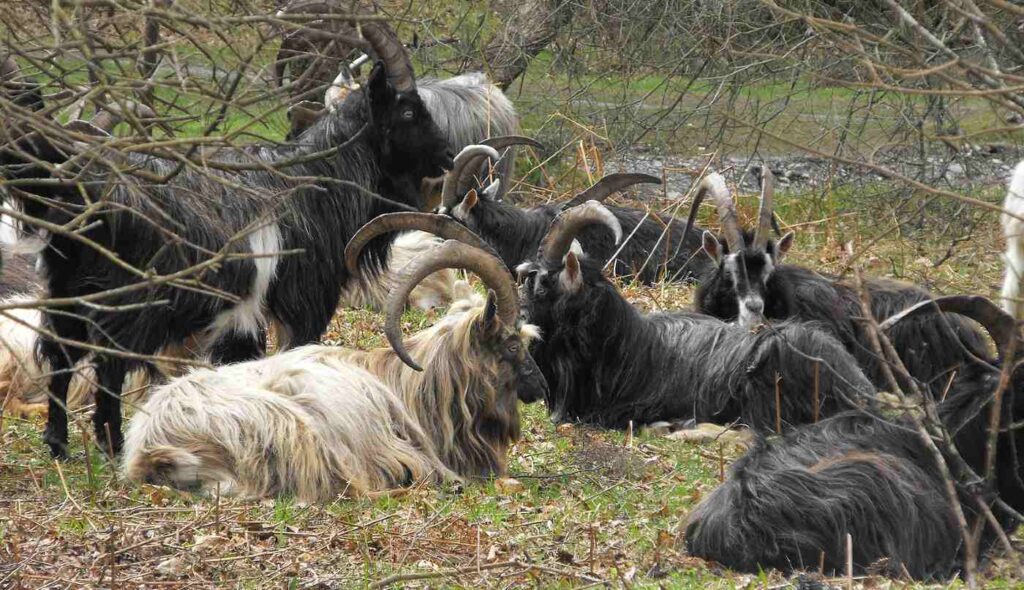
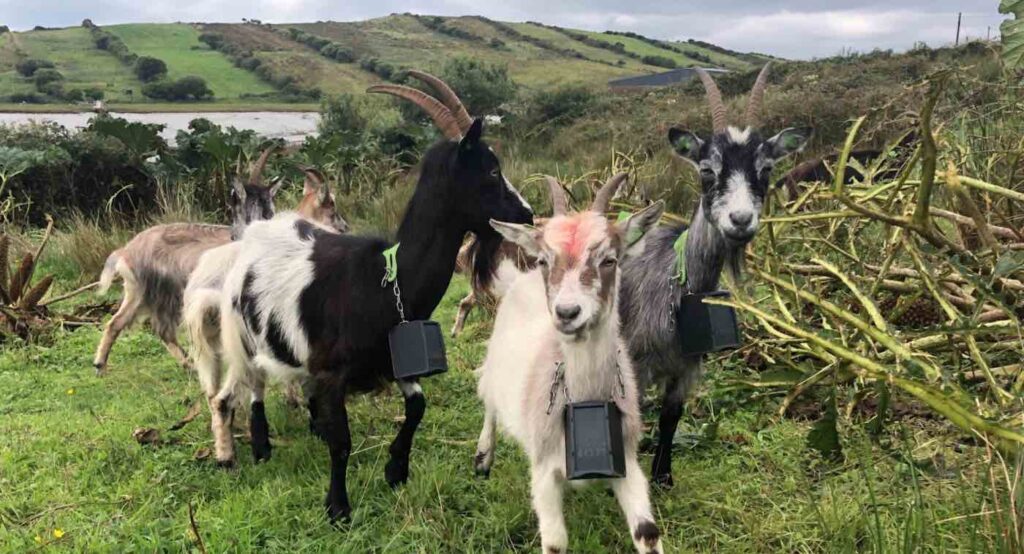
Old Irish Goats Return to Hills of Dublin After a Century to Join Firefighting Brigade –And They’re Loving It

Howth herd – Old Irish Goat Society
Diego Cue, CC license

After the peninsula on Howth’s Head caught fire last year, pouring clouds of black smoke over the financial district of Ireland’s fair capital, city planners knew they needed to take a sterner stance on out-of-control weeds.

So they hired a crack team of landscapers led by a dedicated forewoman to manage the weeds after quickly began to grow back over the firebreaks that had been dug.

The Old Irish Goat is, amazingly, not the name of a pub, but a critically endangered species that was Ireland’s naturally-adapted breed, which had not been present in these hills in over a century.

It is their ceaseless munching of local species that make them ideal for the job of de-weeding, and for the next three years in their new home their appetites will become the ultimate fire brigade.

Because the goat had been bred out of existence in captivity, and only roams remote hillsides in small numbers, an organization called the Old Irish Goat Society has been dedicated to keeping their DNA free from domestic goat genetics and happily supplied a small herd of 25 to take over as Howth’s Head new ‘firefighters’.

The Old Irish Goat with short legs, large horns, a thick coat, and small ears worn in the pricked position. They’re perfectly adapted to life on the Irish hills.

RELATED: ‘The Running of the Goats’: NYC Park Gets Rid of Invasive and Poison Plants With 24 Goats Enjoying a Vacation – WATCH

“Our goats come from the mountains and eat whatever’s there, scrub, heather, gorse. They’re the most suitable for this task,” the Old Irish Goat Society’s chair, Pádraic Browne, told The Guardian.

“We’re giving our beautiful little creatures a job to do, which they’re doing. They’re not just a tourist attraction, they can earn their keep.”

Howth herd – Old Irish Goat Society

Currently the firefighters consist of 14 nannies and 11 kids, to be added to with adult males until it grows to about 100 goats—a necessary reinforcement as the strength of Irish wildfires on Howth and elsewhere have been growing over recent years.

POPULAR: Hiker Reaches Top of Summit and Has the Most Beautiful Encounter With Mountain Goats

As strange as it may seem in a country as seemingly wet and cloudy as Ireland to have multiple firefighter units for a single city, the unique solution gives the chance for a largely forgotten piece of wild natural heritage to raise awareness of the fascinating breed on its own behalf.

WATCH a video about these beautiful goats…

SEND These Old Irish Goats Wandering in Your Social Media Feeds…

The power which resides in you is new in nature, and no one else knows what that is, nor do you, until you have tried. – Ralph Waldo Emerson

Quote of the Day: The power which resides in you is new in nature, and no one else knows what that is, nor do you, until you have tried. – Ralph Waldo Emerson (paraphrased from Self Reliance)

Photo: by Martin Sanchez

With a new inspirational quote every day, atop the perfect photo—collected and archived on our Quotes page—why not bookmark GNN.org for a daily uplift?