Sweeping educational reforms, aimed to reduce the sometimes crippling pressure for pupils to succeed at school, have seen end-of-year exams ended for children in China aged 6 and 7.
The ban mirrors one passed earlier this year for written homework for first and second graders, and one limiting the homework burden on Junior High students to 1.5 hours per night.
This reporter has worked in the Chinese private tutoring industry, and seen first-hand the pressure which the desire for a strong education has created within students, but also in parents, who will regularly work themselves to the bone in order to furnish the exorbitant tutoring costs associated with a first-class education.
It was not uncommon for me to meet students who had more than 20 classes per week entirely outside the school system, and which could include music and English or French, but also private instruction based on what they went through that week in school.
“Too frequent exams… which cause students to be overburdened and under huge exam pressure,” have been axed by the Ministry of Education’s reforms published on Monday. They added that the exam burden “harms their mental and physical health.”
Indeed a 2011 study of 43 high school students in Yunnan province found that they all saw education as a whole as nothing more than merely the passing of an examination, before the preparation for another.
“This particular approach, at its worst,” the authors wrote, “can stifle a student’s imagination, creativity, and sense of self, qualities crucial for a child’s ultimate success in and out of the classroom.”
The average public school classroom can be between 40 and 60 students, giving teachers very little time for individual attention. If a child cannot keep pace with the class, there are typically two options the parents can take. One option is to bribe the teacher to ensure their child is thoroughly understanding every lesson, however if some other parents have offered higher bribes, an informal bidding war can sometimes occur.
The other option is to go for tutoring, which can easily cost $15,000 a year, as China has one the largest tutoring sector on Earth, worth $100 billion per year.
Previously, children took yearly exams so as to prepare for the university entrance test—”the dreaded gaokao” as France24 put it, which can define a young person’s life trajectory.
The reforms were put in place to try and close the educational gap in school, which has caused all manner of social distortions. One example is that catchment areas of good schools are highly sought after, driving the prices of real estate sky high.
Another is the concentration of good teachers at good schools, as more public and private money finds its way into the coffers of schools that crank out better-testing pupils. The Party addressed this by imposing a forced rotation for teachers every six years.
Far beside the one-child, and now two-child policy, the cost of school made having multiple kids economically unfeasible. Now with the slowest population growth in decades, attempts to ease the financial burden of school is seen as welcome relief to parents.
With a new inspirational quote every day, atop the perfect photo—collected and archived on our Quotes page—why not bookmark GNN.org for a daily uplift?
Foraging is a great way to get out into nature, stretch your legs, learn where your food comes from, and save a bit of dollar on groceries.
Autumn is one of the only times a year where everywhere you look there’s something you can eat. Orchards are flush with fruit, bushes spring to life with berries, mushrooms emerge from the forests, while on the coasts, bivalves are at their most plentiful.
Foraging is fun, but it should always be done with care to avoid both poison and the law, so there’s sort of an unwritten “Forager’s Code” worth following:
Unless you can positively ID something, don’t eat it; especially when dealing with small red berries and mushrooms. These can easily be mixed up, and there are well-known edible species with toxic doppelgangers.
Never damage or pick an endangered or protected species. It’s not a law for no reason, and these are often at risk of going extinct.
Try not to pick so many leaves that the plant can’t survive, and try to leave a certain amount of fruit or nuts around for other animals. The plant needs those seeds to disperse in order to keep a healthy population.
Never tell another person your mushroom spot. If you find where chanterelles or boletes grow well, you now have a new family secret.
Guidebooks are great, but local knowledge is better.
Crabapples
Malus sylvestris, crabapples/Martyn Gorman, CC license
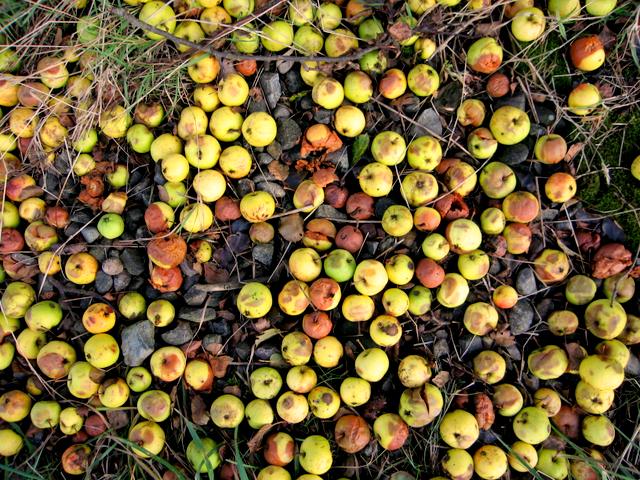
Five species of crabapple tree grow native to the United States, and the most numerous are the sweet crabapple, southern crabapple, and Oregon or pacific crabapple. Rich in the setting agent pectin, and often more sour than sweet, crabapples are perfect accompaniments to other fruit in jams and preserves.
Rose hips
Rosa canina, Rose hips/Morn the Gorn, CC license
Having enjoyed roses in spring and summer, autumn yields the famous rosehip, used for millennia in tea, but also fine to eat as they are found, plump and red from September to October in hedgerows, gardens, and public parks.
They are rich in vitamin C, A, D, and E, and can also be used in cosmetics and grooming products. Just be sure to eat around or sieve out the seeds, as the hairs around them are an irritant.
Blackberries
Rubus, Blackberries/hor Ragesoss, CC license
Blackberries, really there’s not much to be said. They grow profusely and can produce waterfalls of berries in late-summer early autumn. They have nasty thorns so maybe think about wearing thick gloves when harvesting this one?
Chestnuts
Castanea sativa, Chestnut/Benjamin Gimmel, BenHur, CC license
Perfect for roasting on an open fire, chestnuts fall from their trees encased in large green balls of perilous spikes. They are sweet, and able to be roasted or even boiled in red wine, but there are a few things to note beforehand.
First, squirrels adore them, and so you must act fast to collect your share.
Second, the easiest way to collect them is to stomp on the sea-urchin like casing with a leather shoe, or something that can be penetrated by a small woody needle, and pick them out carefully. Lastly, you’ll need to store them in the freezer if you want them to last all the way to Christmas, so you’ll need to cut a deep slit into the long side of the chestnut with a special tool like this, (you could use a knife too).
Acorns
Quercus agrifolia acorns/John Morgan, CC license
If you feel like putting the effort in to crack open enough acorns to spoon out the nut material inside, soaking out the tannins and grinding them into powder, you will be rewarded with a super nutrient-dense, stodgy flour that Native Americans used to make bread and even a kind of cake, with a taste a little bit like peanut butter (or so I’ve heard).
Seafood
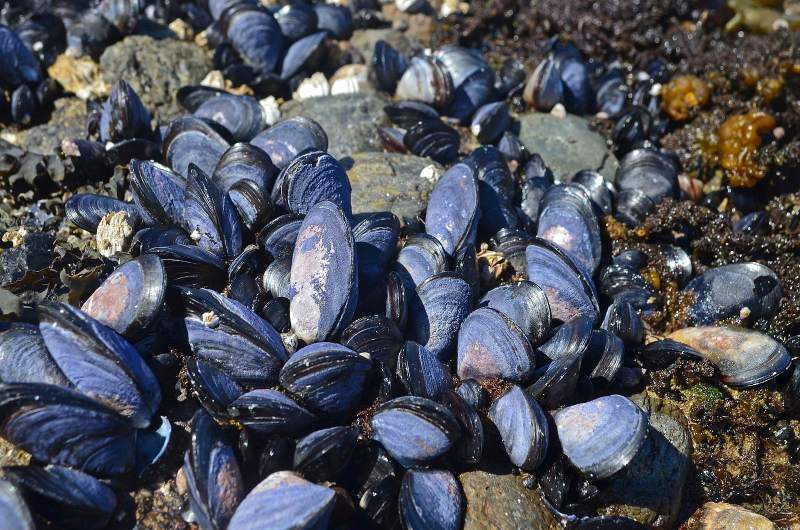
Mussels/Bureau of Land Management, CC license
The bounty of the sea, that is to say, mollusks and bivalves, increases in number towards the end of the calendar year. While foraging mussels, cockles, clams, and oysters on wild sections of coastline, or digging for them in mudflats is perhaps more ideally a winter activity, one can start in November.
Mussels should be picked only from fine clear waters at low tide, in areas where the tide doesn’t bring with it too much plastic and debris. They should be left in a bucket of saltwater overnight to clear out the grit.
Flat sandy beaches can contain cockles, small-shelled bivalves that grow in clumps. Look for cockle shells on the surface then rake across very lightly and shallow. Like mussels, leave them in the bucket overnight.
Chanterelles
Cantharellus cibarius, Chanterelles/David Baird, CC license
There are more than fifty different varieties of chanterelle, but all will radiate a luxurious perfume of citrus and apricot. Even though there may be some other mushrooms that look like the golden forest-lighthouse that is the chanterelle, they won’t have that wonderful scent.
Coprinus comatus, shaggy mane/Jerzy Opioła, CC license
These mushrooms are one of the “Foolproof Four” forageable mushrooms, as they are very easy to identify and have few dangerous twins. Shaggy manes develop black gills that exude an ink-like substance, while their stems are hollow and fibrous. Otherwise a Google image search would do you well for finding them.
The mushroom will start to degrade soon, and must ideally be cooked before the day is done. A delicate woody taste means that anything strong will overpower the mushrooms completely.
Boletes and Porcini
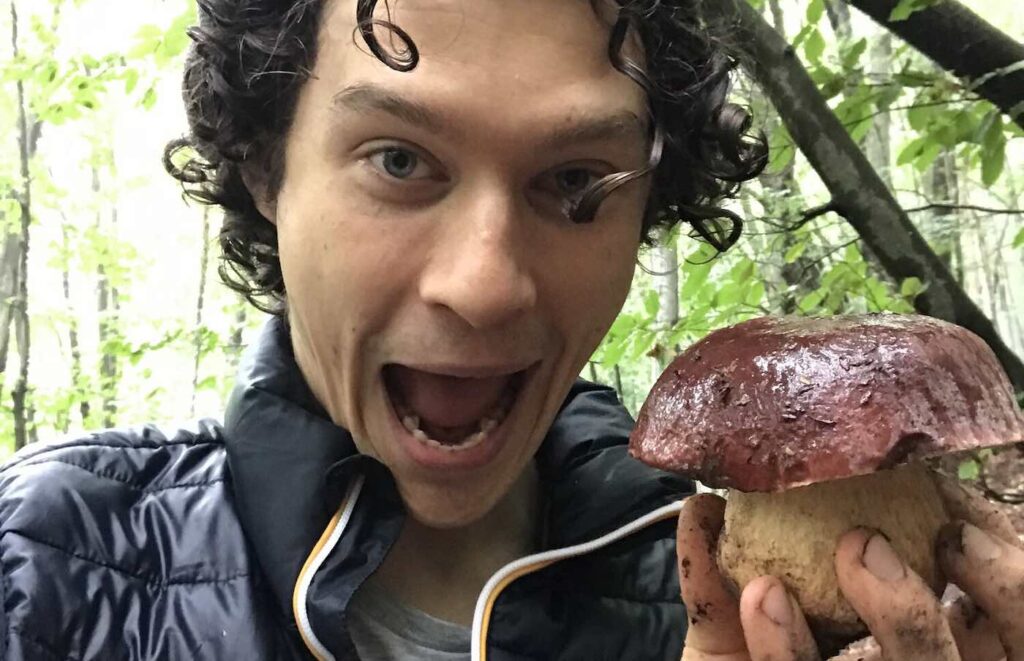
Boletus edulis, Porcini/Copyright Andy Corbley
Boletes mushrooms are different from others mostly by the lack of “gills” on the underside of their caps, replaced instead by what looks like sea or bath sponge. The king boletes or porcini is the king of the mushrooms, and, without drowning this listicle in detail, they must be processed—pickled, frozen, or dried with a proper dehydrator.
They are wonderfully delicious, and should be looked for around two to three days after a period of sustained rainfall. In the mountains is the best place to look, as the forest, along with reaching the right temperatures only a few hours per day-night cycle, is also easiest to reach by other mushroom hunters…
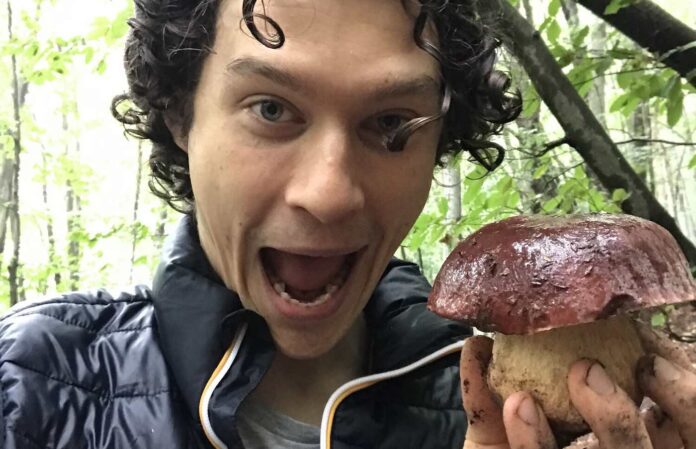
Having hunted porcini in the mountains of Italy, I know from experience what kind of luck it is to find around 14 kilograms of them. The people I told simply could not believe it. I didn’t have the heart to tell them that I had to throw almost all of them away, because they turned into maggot hotels within 12 hours of leaving the woods; to this day it is one of my greatest shames, but I did not understand the speed at which one must move having found them.
If there’s more autumn delicacies ready to be plucked from the bosom of the wild, tell us all about them in the comments below.
Adorable footage shows the moment a family of ducks checked out of a university library after they had waddled in off the street.
The mother and her five ducklings stunned staff and students when they wandered in through an open door at the University of Nottingham’s George Green Library.
Emma Halford-Busby, from University of Nottingham Libraries, said, “It had been very hot that week, so we had left our doors open for some extra air movement.”
The ducks came in and “walked around our atrium for a while, mom in front and ducklings in a line behind. Mom was totally calm and unflustered.”
After they apparently checked out the range of books on the shelves.
Dogs can tell the difference between deliberate actions—and mistakes, say scientists.
It adds growing evidence to the idea that man’s best friend knows just how we are feeling.
First author Dr Britta Schunemann said, “The dogs in our study clearly behaved differently depending on whether the actions of a human experimenter were intentional or unintentional.”
Dogs have bonded with people over thousands of years. Obeying every “sit,” “lay down,” and “roll over” command is just one such skill.
But whether they understand intentions, or merely respond to outcomes, remains unclear.
This is a basic component of Theory of Mind—long regarded as uniquely human.
It’s the ability to attribute mental states to oneself and others and dogs have it too.
They can tell the difference between something done on purpose, or by accident.
Dr Schunemann, of Gottingen University, and colleagues tested how they reacted when food rewards were withheld.
The researchers found the animals behaved differently depending on whether the actions of the experimenter were intentional or unintentional.
It shows dogs can distinguish between actions that were done on purpose, or accidentally.
To reach their conclusions, the German team conducted an experiment using the ‘unable vs. unwilling’ paradigm.
It works by examining whether test subjects react differently towards a human experimenter.
They either intentionally (the unwilling condition) or unintentionally (the unable condition) withhold treats.
The experiment was conducted with 51 dogs, each of which was tested under three conditions.
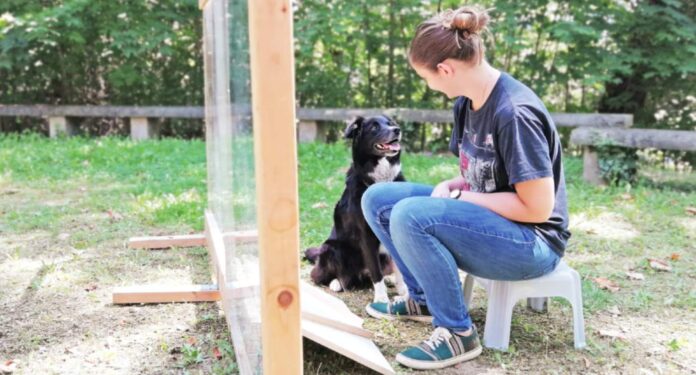
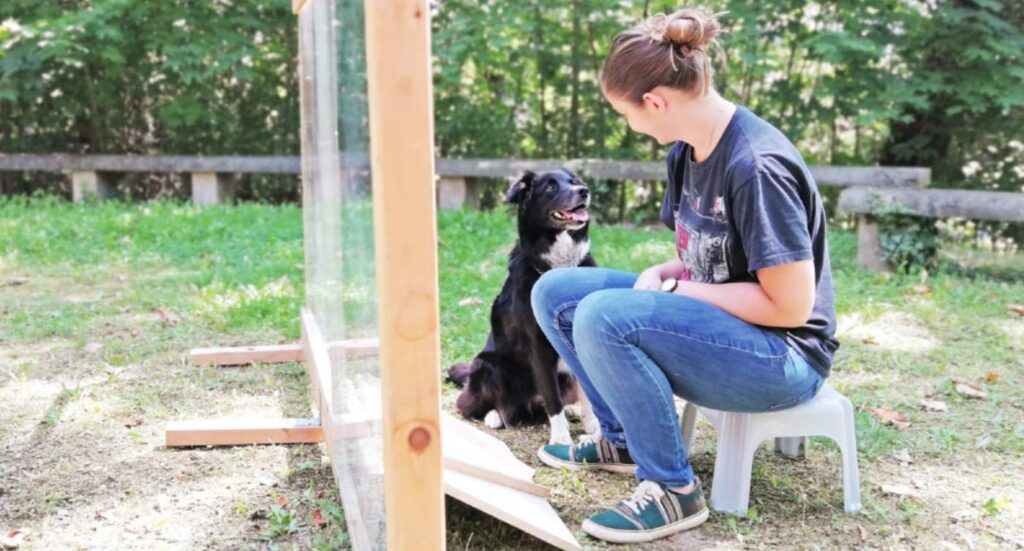
Each animal was separated from the human tester by a transparent barrier. It was fed pieces of dog food through a gap.
In the ‘unwilling’ condition, the experimenter suddenly withdrew the reward through the gap in the barrier and placed it in front of herself.
In the ‘unable-clumsy’ condition, the experimenter brought the reward to the gap and ‘tried’ to pass it through—but then ‘accidentally’ dropped it.
In the “unable-blocked” condition, the experimenter again tried to give the dog a reward.
But she was unable to because the gap was blocked. In all conditions, the reward remained on the tester’s side of the barrier.
Co-author Dr Juliane Brauer, of Max Planck Institute for the Science of Human History, said, “If dogs are indeed able to ascribe intention-in-action to humans we would expect them to show different reactions in the unwilling condition compared to the two unable conditions. As it turns out, this is exactly what we observed.”
The primary behaviour measured by the researchers was the time dogs waited before approaching the reward they were denied.
If dogs are able to identify human intentions, they would wait longer before approaching the reward in the unwilling condition, where they were not supposed to have the reward, than in the two unable conditions in which the reward was, in fact, meant for them.
Not only did the dogs wait longer in the unwilling condition than in the unable conditions, they were also more likely to sit or lie down—actions often interpreted as appeasing behaviours—and stop wagging their tails.
Co-author Dr Hannes Rakoczy, also from Gottingen, said, “This suggests dogs may indeed be able to identify humans’ intention-in-action.”
The findings in Scientific Reports suggest dogs “may have at least one aspect of Theory of Mind—the capacity to recognize intention-in-action,” said the researchers.
Previous studies have found dogs can tell the difference between happy and angry faces.
They also process language in a very similar way to humans—picking out emotional tone, intonation, and volume changes that influence meaning.
Experts think dogs have gradually evolved over 30,000 years to understand humans.
Selective breeding has meant those which could communicate better with their owners were preferred, encouraging the trait to become more pronounced over time.
RAISE Your Paws For This Fascinating Research by Sharing…
Researchers from Switzerland are tapping into an unexpected energy source right under our feet: wooden floorings.
Their nanogenerator enables wood to generate energy from our footfalls.
They also improved the wood used in the their nanogenerator with a combination of a silicone coating and embedded nanocrystals, resulting in a device that was 80 times more efficient—enough to power LED lightbulbs and small electronics.
The team began by transforming wood into a nanogenerator by sandwiching two pieces of functionalized wood between electrodes.
Like a shirt-clinging sock fresh out of the dryer, the wood pieces become electrically charged through periodic contacts and separations when stepped on, a phenomenon called the triboelectric effect.
The electrons can transfer from one object to another, generating electricity. However, there’s one problem with making a nanogenerator out of wood.
“Wood is basically triboneutral,” says senior author Guido Panzarasa, group leader in the professorship of Wood Materials Science. “It means that wood has no real tendency to acquire or to lose electrons.” This limits the material’s ability to generate electricity, “so the challenge is making wood that is able to attract and lose electrons,” Panzarasa explains.
To boost wood’s triboelectric properties, the scientists coated one piece of the wood with polydimethylsiloxane (PDMS), a silicone that gains electrons upon contact, while functionalizing the other piece of wood with in-situ-grown nanocrystals called zeolitic imidazolate framework-8 (ZIF-8).
ZIF-8, a hybrid network of metal ions and organic molecules, has a higher tendency to lose electrons. They also tested different types of wood to determine whether certain species or the direction in which wood is cut could influence its triboelectric properties by serving as a better scaffold for the coating.
The researchers found that a triboelectric nanogenerator made with radially cut spruce, a common wood for construction in Europe, performed the best.
Together, the treatments boosted the triboelectric nanogenerator’s performance: it generated 80 times more electricity than natural wood. The device’s electricity output was also stable under steady forces for up to 1,500 cycles.
The researchers found that a wood floor prototype with a surface area slightly smaller than a piece of paper can produce enough energy to drive household LED lamps and small electronic devices such as calculators. They successfully lit up a lightbulb with the prototype when a human adult walked upon it, turning footsteps into electricity.
“Our focus was to demonstrate the possibility of modifying wood with relatively environmentally friendly procedures to make it triboelectric,” says Panzarasa.
“Spruce is cheap and available and has favorable mechanical properties. The functionalization approach is quite simple, and it can be scalable on an industrial level. It’s only a matter of engineering.”
Besides being efficient, sustainable, and scalable, the newly developed nanogenerator also preserves the features that make the wood useful for interior design, including its mechanical robustness and warm colors.
The researchers say that these features might help promote the use of wood nanogenerators as green energy sources in smart buildings. They also say that wood construction could help mitigate climate change by sequestering CO2 from the environment throughout the material’s lifespan.
The next step for Panzarasa and his team, whose work has been published in Matter journal, is to further optimize the nanogenerator with chemical coatings that are more eco-friendly and easier to implement. “Even though we initially focused on basic research, eventually, the research that we do should lead to applications in the real world,” says Panzarasa.
“The ultimate goal is to understand the potentialities of wood beyond those already known and to enable wood with new properties for future sustainable smart buildings.”
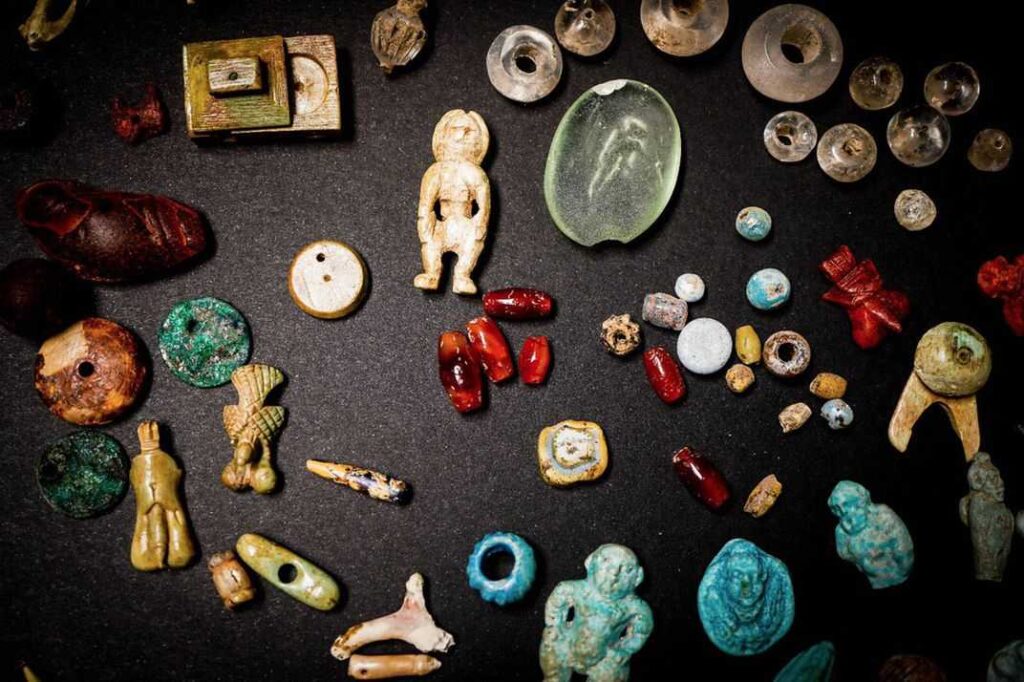
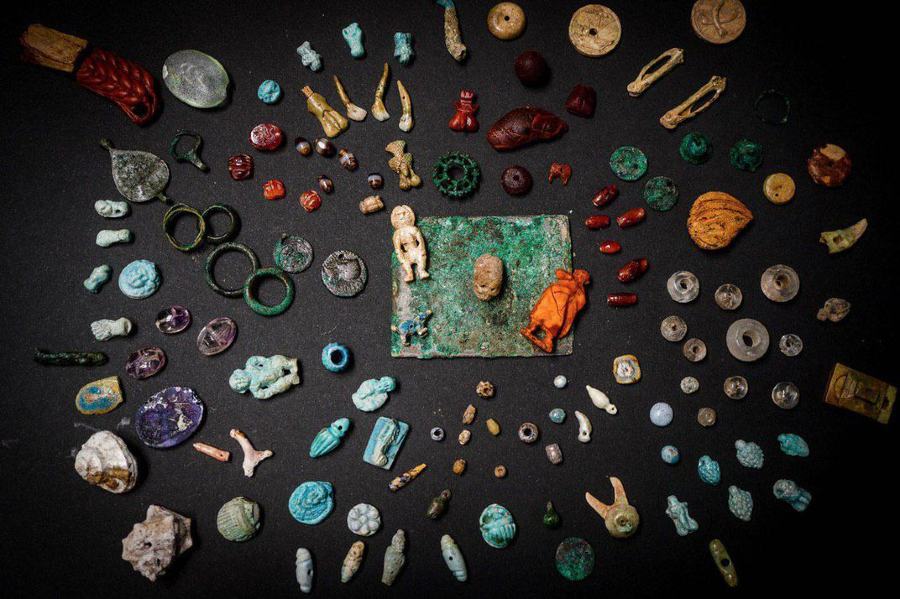
Out of the ashes of Pompeii, archaeologists recently pulled up a time capsule, though only the bronze hinges remained of what is being described as a “sorceress’ toolkit.”
Inside were a collection of around 100 little objects: two mirrors, tiny skulls, scarab beetles, bone-carved objects like buttons, bells, and little fists, decorative elements made of amber, carnelian, and bronze, carved images of men and satyrs, and of course, miniature phallic amulets.
All in all it’s everything your average sorceress could need on the job, which archaeologists believe were to tell fortunes, divine pregnancies, conduct fertility rites, and ward off bad luck.
“They are objects of everyday life in the female world and are extraordinary because they tell micro-stories, biographies of the inhabitants of the city who tried to escape the eruption” states Pomeii General Director Massimo Osanna.
“In the same house, we discovered a room with ten victims, including women and children, and now we are trying to establish kinship relationships, thanks to DNA analysis. Perhaps the precious box belonged to one of these victims.”
Archaeological Park of Pompeii
The box containing the toolkit was found in the Garden House in Regio V, a luxurious villa which also included some highly sexualized friezes on the walls, such as the myth of Queen Leda and the Swan, and a fresco of Priapus, the god of fertility.
Early hypotheses are that the owner of the objects was not of status and could even have been a slave.
The lack of gold or precious stones among the trinkets suggests this, as the Pompeiians adored the yellow metal.
Speaking with Italian news agency Ansa, Osanna theorized the objects belonged a kind of Roman love doctor, but that’s pure speculation.
The toolkit will soon be on display in the Palestra Grande on the Pompeii site.
Archaeological Park of Pompeii
It’s fascinating that, even though most of us grew up learning about the city of Pompeii buried under the ash of Vesuvius, major discoveries are still being made there today despite the fact the site is only 163 acres (66 hectares).
Quote of the Day: “More than 500 of the most successful people this country has ever known told me their greatest success came just one step beyond the point at which defeat had overtaken them.” – Napoleon Hill
Photo: Iva Rajović
With a new inspirational quote every day, atop the perfect photo—collected and archived on our Quotes page—why not bookmark GNN.org for a daily uplift?
A personalized, mRNA vaccine, given to patients with particular kinds of aggressive cancers could leverage the immune system of the patient to kill the cancer on its own, and in doing so usher in a new epoch of cancer treatment.
Messenger RNA (ribonucleic acid) vaccines were what sparked the COVID-19 vaccine drives, as Pfizer and Moderna adapted the technology to create an emergency treatment to train the body to fight off the viral spike protein.
What most of us won’t know however, is that the mRNA vaccines were originally in development for aggressive cancer types.
Molly Cassidy, a mother studying for the Arizona Bar exam, is living proof that while the approach isn’t a panacea, it can clear away some of the most dreadful and fast cancers we know of.
After being diagnosed with head and neck cancer, she underwent surgery and chemotherapy. However it was only ten days after finishing chemo that she found a marble-like bump on her collarbone from the cancer’s swift return. Later examinations found it had spread from her ear all the way to her lungs, and she was told to get her affairs in order.
Cassidy was told she was eligible to join a clinical trial at the University of Arizona, testing an mRNA vaccine personalized to the cancer mutations of the host. By 27 weeks, Cassidy had received nine vaccine doses paired with an immunotherapy drug, and her CT scans were clear: the cancer had left her body.
Personalized Medicine
A personalized medicine approach to disease is challenging, however it could be said that the rise of cancer and of so many other diseases across the west is a result of the broader Western-health sector adopting a once-size fits all (or one-pill fits all) approach to everything from cancer to diet to mental health.
Precision or personalized medicine is becoming a little more common now, with many functional medicine clinics paying more attention to genetic phenotypes and other biomarkers before drafting a therapy plan. This approach recently broke ground in a huge way in the field of Alzheimer’s, and the USDA is using artificial intelligence based on demographics and other information to make more precise dietary guidelines.
Tailor-made mRNA vaccines are an exciting form of personalized medicine to treat cancer, and involve taking a tissue sample from the patient’s tumor and analyzing it for mutations. This not only hones the immune system into the cancerous cells, but differentiates them from healthy, non-cancerous cells.
The result is that the messenger RNA creates proteins shed from the exterior of the tumor and brings immune cells like T cells up to speed on how to fight it.
“One of the things cancer does is it can turn on signals to tell the immune system to quiet down so the cancer is not detected,” explains Daniel Anderson, a biotech scientist at MIT, to National Geographic. “The goal of an mRNA vaccine is to alert and gear up the immune system to go after the characteristic features of tumor cells and attack them.”
Currently, phase-one clinical trials are running for metastatic melanoma, GI-tract cancer, colorectal cancer, pancreatic and ovarian cancer, and non-small cell lung cancer.
One of the most exciting things, even in these early days of mRNA cancer vaccines, is that they will offer a chance at survival for advanced and incurable cancers, not only because they have the potential to be very effective, but also because patients, like in Cassidy’s case, will have no other options.
It’s likely the personalized mRNA vaccines will in practice be paired with immune checkpoint therapy—a breakthrough class of treatment that won the Nobel Prize in 2018. Similar to stem cell treatment, a patient’s T cells are drawn out before being multiplied in a lab, trained on the target cancer cell, and then reintroduced to help fight off the cancer.
National Geographic concluded their feature on mRNA vaccines with a suggestion that based on early success, FDA-approval could be given in around five years.
CURE News Feeds of Despair—Share This Exciting Story…
A smile is the key to a thousand doors, but deploying it in every situation without mastery of its use is dangerous, says a new social science study.
They say it takes 400 muscles to smile, well scientists at Queen’s University Belfast found that subtle differences in the way in which a person smiled had not-so-subtle impacts on the opinions which the test participants had about the smiler.
“Smiling at another person does not always lead to trust and cooperation,” said Dr. Stephanie Carpenter from the University of Michigan, a co-author of the study. “Subtle differences in a smile can have a real impact on whether people trust each other and choose to cooperate. In fact, the way you smile in a good or bad situation can impact whether people trust you.”
While playing a set of economic games, such as those that require trust to create value for both players, or which can confer more value for a single person willing to deceive, the subject individual first displayed uncooperative behavior and thus triggered a loss of trust or confidence in their partner.
It was then that, depending on the characteristics of the smile made at game’s end by the subject, the participants altered their expectations of how the smiler would behave during the next game.
Three different smiles were used, which were labeled as reward, dominance, and affiliation. These three words belittle the emotional reaction they trigger, and a glance at each one invokes strong feelings, and likely memories of seeing such expressions in the past.
After untrustworthy or uncooperative behavior, a reward smile—a big ear-to-ear smile like a kid who got the ice cream he was begging for, and a dominance smile, a smirk-y sign of superiority, elicited very little trust, expectations of change in behavior, and positivity when compared with a totally neutral expression, or a look of regret, meaning that sometimes smiles can create even stronger negative feelings than not smiling.
However the “affiliation smile,” which seems to have a hint of regret, like the smile a someone might make after consoling a dear friend, created a desire to repair the broken relationship and to trust the person who had just done something unfair.
“Think about movie villains, for example in James Bond films,” said Dr. Magdalena Rychlowska from Queen’s University, who led the research published in Cognition and Emotionjournal. “They often make happy smiles when something bad has happened or is about to happen. This context makes these otherwise happy and normal smiles feel threatening and unpleasant.”
She adds, “The findings of this study show the power of subtle facial expressions and the positive consequences that an affiliation smile can have in difficult situations. It also highlights the importance of social context—a happy smile that could be read as a signal of trustworthiness in one setting can, in another setting, be seen as evidence of bad intentions.”
Mastery of the smile then, can be an excellent way of getting out of difficult social situations, while the lack thereof can be an excellent way of getting into one.
The future of travel is bold, with a boat-plane hybrid set to transform short distance ferry services.
From the Virgin Hyperloop to HAV carbon-free dirigibles to self-driving cars to, now, this, the REGENT “seaglider” is an electric transport plane that can do 180 mph, or around six-times the speed of a ferry, and with double the range of electric aircraft, but with half the manufacturing costs.
All these pros are down to its unique design as essentially a trio of vehicles in one, which the company believes will seize control of a market for short flights/ferry routes such as LA to Santa Barbara or San Francisco, or New York to Boston, with maybe Washington, D.C. thrown in there as well.
When loading and offloading passengers, the seaglider rests on the sea like a normal seaplane or boat.
When operating within the crowded waters of a port, the seaglider deploys its hydrofoils, matching its impressive propulsion with the maneuverability of the foils below.
Once on the open sea, the foils are withdrawn and it takes on the aspects of a “wing-in-ground effect vehicle,” a design invented all the way back in the 1960s, that uses high speeds to hover just above the surface of the water. (Watch their video below.)
So far REGENT’s founders have raised almost $10 million from investors, which have included Mark Cuban and Peter Thiel.
Regent seaglider
Wing-in-ground effect vehicles are actually considered boats, and subject to maritime, rather than aviation laws. In this way the seaglider can skirt around current technology limitations of battery-powered electric motors and offer truly zero-emissions transport.
The company imagines that battery advances currently being pursued should raise the range of the seaglider to 500 miles from 180 miles in the not-too-distant future.
The company has received statements of intent worth $465 million, have acquired the sponsor dollars of operators Brittany Ferries, Goombay Air, and SplitExpress, and expect to have a quarter-sized prototype by the end of the year, and a full-sized prototype operational in 2023.
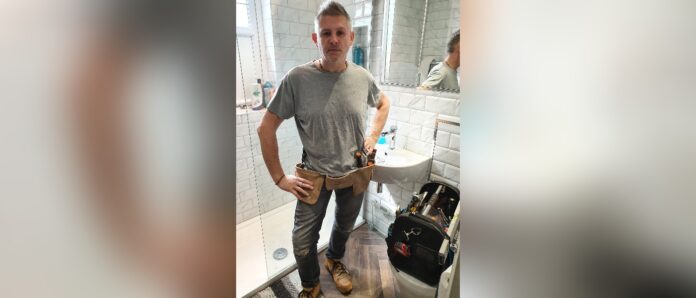
A plumber is flush with success after he landed a record deal when a music mogul heard him singing—while he fitted his bathroom.
49-year-old Kev Crane spent six weeks installing a new suite at the home of Paul Conneally—completely unaware he was the owner of a record label.
Kev would spend his working days singing along to his favourite tunes on the radio including David Bowie and Meat Loaf.
Record company boss Paul was so impressed with this dulcet tones he gave him a deal, and he’s now made his first album.
Kev says he shocked when Paul offered him a chance to sign onto his New Reality Records, which has artists from Brazil, New York, and Britain.
Stunned Kev, of Leicestershire, said, “I got a call to go and quote some bathrooms, I thought fair enough.
“I then started work at Paul’s house, and I like to sing while I am working, and he pulled me into the living room one night for a conversation about my singing voice.
”I started telling him that I love music, that I used to be in a band and had written an album—more of a hobby really.
”I was shocked when he said he wanted to hear it.
“I sent him the album on the Friday and I thought if I don’t hear from him over the weekend, I can just go back to work for him on the Monday and just carry on fitting his bathrooms.”
Kev used to be in a cover band called ‘The Reprise’ in 1990s, covering bands like Depeche Mode, as well as writing his own music.
But after two unsuccessful auditions for the popular UK tv shows Fame Academy and Stars in Their Eyes in the early 2000s, he decided to give it up.
Then Paul said he really liked the album. He wanted to sign Kev up to his label.
Kev says, “I carried on working at his house and at the same time finishing my album in the recording studio—it’s overwhelming.
Those first tracks are now being released online, weekly up until Christmas.
“My wife has been so overwhelmed by it all,” says Kev, “in tears about it. Good tears because she knows it’s my passion.” After the full release of his album, Why Can’t I Be You? Kev plans to write for other musicians.
“I’d love to do it full-time, but, at the minute, I am just going with the flow. It’s my dream. If it ends next week, I tried.”
(WATCH the singer in action in the video below.)
SING OUT the Good News By Sharing For All to Hear…
We felt like we were being serenaded with kindness when we learned that in the Netherlands and Belgium there are official ‘City Poets’ who brighten otherwise lonely funerals.
pavel danilyuk
Akin to a town crier, or some other mainstay of a Middle Ages-set period piece, the City Poet has only been an official position since the turn of the 21st century.
As quaint is it may seem, the job is a serious one, for upon his or her shoulders rests the responsibility for composing funerary poems for those who die anonymously, unclaimed by friends or family.
In an exploration of the Lonely Funeral Foundation, a collective of poets that work to ensure every individual who falls through the cracks of Dutch society has some kind of memorial service, published on the Ploughshares blog at Emerson College, Boston, the reader learns of a stark yet moving tradition that is both modern and rustic, and speaks to the responsibility of a society in the 21st century.
A City Poet is defined by The Mayor Initiative as “a remunerated professional with clear job requirements and term duration. He or she is usually appointed by the City Council for a limited time with the objective of writing poems about the city they come from—for the good and the bad times, but also for regular or random events, official occasions and ceremonies, with the objective to inform and entertain the citizens.”
The Lonely Funerals concept was put forward by one such City Poet—Bart Droog of Groningen, in 2001, after which it spread to other Dutch cities and to those in Belgium, another country that started the City Poet idea around the same years.
In Amsterdam, where a dozen people might die unclaimed per year, the City Poet has to, at a moment’s notice, be ready to transform himself from artist to sleuth.
Details about these people can often be scant—presenting a huge challenge to someone trying to write a poem, much less one in memory of a life.
The City Poet must be ready to collect records of lodging, employment, and immigration, or talk to neighbors and others that might have interacted with the person.
There is a simple prize for a yearly contest to see which poet composed the most moving lonely funeral poem, organized by Ger Fritz, a former employee of the Amsterdam Department of Funerals, and one of the originators of the concept.
“People are story machines… What the Lonely Funeral does is return stories to people who have somehow lost theirs along the way,” an Amsterdam poet Frank Starik, told the Ploughshares Blog.
Also speaking with Ploughshares, poet Hester Knibbe remarked at the difficulty of the job: “How do you write a poem about someone you don’t know anything about… ? It’s like a word that just won’t come: you describe, you try to imagine a basic life, trying to force it into some highs and lows.”
Sometimes details are so scant, the poets must fight the urge to fill in gaps with recognizable themes from literature or from the poet’s own life.
Pioneer Droog refers to the Lonely Funeral Foundation as the “social task of the poet,” and indeed it’s considered a vital civil service akin to social insurance or other benefits; that through honoring those the society let down, those who remain can perhaps work to better it.
Quote of the Day: “Before the reward, there must be labor. You plant before you harvest. You sow in tears before you reap joy.” – Ralph Ransom (Happy Labor Day)
Photo: Tim Mossholder
With a new inspirational quote every day, atop the perfect photo—collected and archived on our Quotes page—why not bookmark GNN.org for a daily uplift?
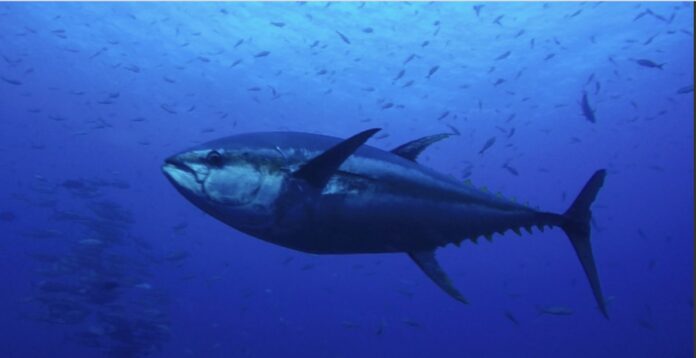
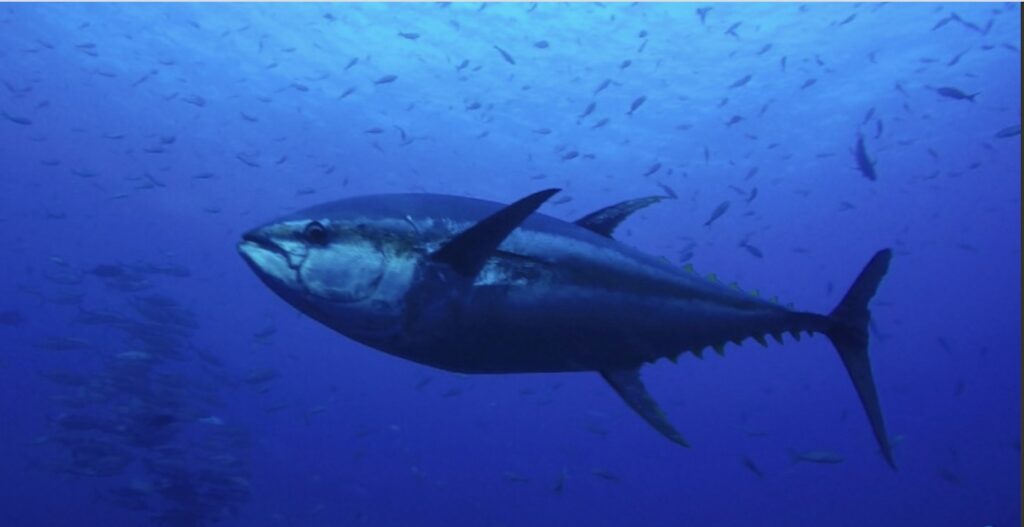
Four commercially-fished tuna species are on a significant path to recovery thanks to the enforcement of regional fishing regulations over the last ten years, according to yesterday’s update of the IUCN Red List of Threatened Species.
“Today’s IUCN Red List update is a powerful sign that, despite increasing pressures on our oceans, species can recover if states truly commit to sustainable practices,” said Dr Bruno Oberle, IUCN Director General.
States and others are now gathered at the IUCN World Conservation Congress in Marseille, France, to work towards binding targets that will increase and maintain biodiversity across the planet.
“The newly released results on the status of commercial tunas emphasize that sustainable fisheries are possible,” said Dr Beth Polidoro, Associate Professor at Arizona State University and Red List coordinator.
In the Red List update, the seven most commercially fished tuna species were reassessed. Four moved in a positive direction thanks to countries enforcing more sustainable fishing quotas and successfully combatting illegal fishing:
Atlantic bluefin tuna moved from Endangered to Least Concern
Southern bluefin tuna (Thunnus maccoyii) moved from Critically Endangered to Endangered
Albacore (Thunnus alalunga) and yellowfin tunas (Thunnus albacares) both moved from Near Threatened to Least Concern
Pacific bluefin tuna (Thunnus orientalis) improved its position from Vulnerable to Near Threatened in this update due to the availability of newer stock assessment data and models, but is still depleted.
“The take home message for the general public is that things like albacore tuna—which is the one that is widely on supermarket shelves—is of least concern now,” Craig Hilton-Taylor, who heads the IUCN Red List, told BBC News. “It means that what they’re eating has been sustainably caught and is well managed.”
Despite global improvement at the species level, some regional tuna stocks remain depleted. For example, while the larger, eastern population of Atlantic bluefin tuna, which originates in the Mediterranean, has increased by at least 22% over the last four decades, the species’ smaller native western Atlantic population, which spawns in the Gulf of Mexico, has declined by more than half in the same period.
“These Red List assessments are proof that sustainable fisheries approaches work, with enormous long-term benefits for livelihoods and biodiversity,” said Dr Bruce Collette, Chair of the IUCN SSC Tuna and Billfish Group. “Tuna species migrate across thousands of kilometers, so coordinating their management globally is also key.”
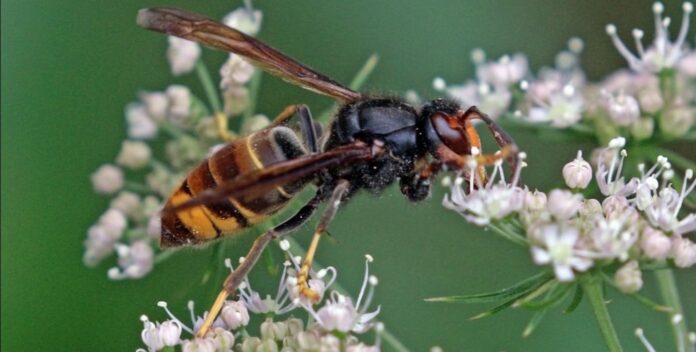
Asian hornet (Vespa velutina), by Charles J. Sharp – CC license
A beekeeper was so devastated five years ago when all his bee hives were destroyed by Asian hornets, he vowed to figure out a solution to fight back.
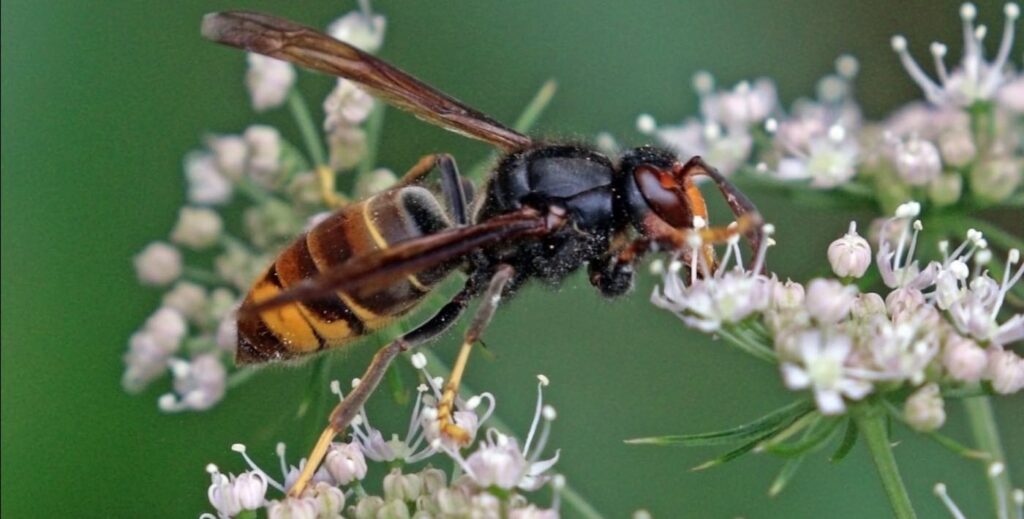
Asian hornet (Vespa velutina), by Charles J. Sharp – CC license
French beekeeper Denis Jaffré thought about it night and day, and finally came up with a trap that stops the invasive species, which has no natural predators in Europe where they have been terrorizing hives since arriving accidentally in a cargo shipment from Southeast Asia.
The trap Jaffré invented does no harm to bees.
It attracts insects with a sugary bait using a funnel, but the larger hornets can’t get out. Bees can easily escape through tiny holes.
Reuters reports that the beekeeper won an inventor’s prize 3 years ago and is now manufacturing the traps using 3D printers and six employees, and is being flooded with orders.
He hopes that governments will get involved so Europe can stop the spread of the so called predatory species.
See the story below from Reuters… [CORRECTION: The Reuters article appearing in the Globe and Mail incorrectly identified the pests as ‘murder hornets’ and ‘Asian giant hornets’ which are a different species than is in France today.]
This blog was submitted to GNN by one of our readers for publishing. If you have an interesting story of kindness or positivity, be sure and send it to us for review.
We all know 2020 was a rough year and many people turned to thinking about what they could do to improve the situation for themselves or for others.
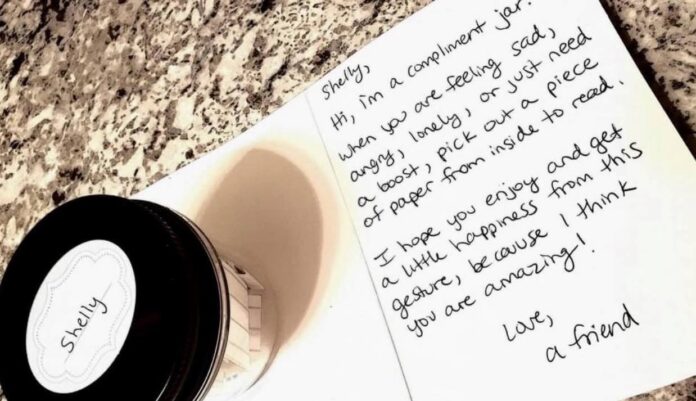
One of those people was Kimberly Wybenga. She wanted to brighten the outlook for friends and family and wondered ‘who doesn’t love a compliment’?
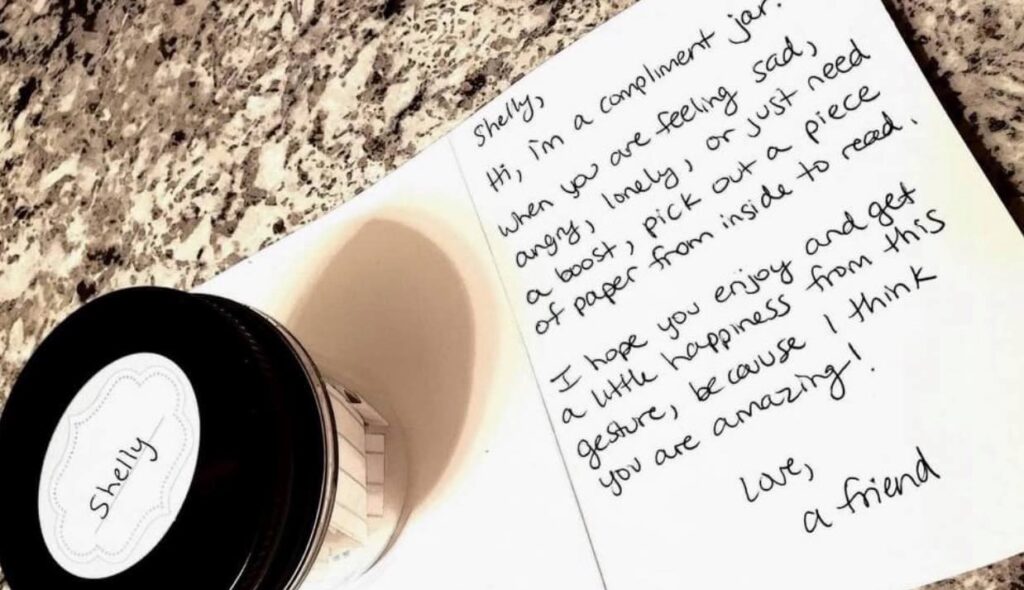
She bought 10 small jars and wrote out compliments for 10 friends that she thought could use a dose of happiness.
Just writing out the compliments brought her joy and she bought 20 more jars to spread the love even further.
She didn’t stop there, either. She bought an additional 20 jars bringing the total number of kindness gift jars to 50—and did it all anonymously. Altogether, she hand-wrote 1,750 compliments! (See the video below.)
One recipient commented, “Sometimes the universe knows exactly what you need. This touched me to the core. The thoughtfulness that went into this is amazing.”
Another said, “I hope whoever did give this to me realizes just how much I needed this gift. I’ve opened it and read one when I needed it, but tonight I dumped it all out and read every single nice thing this person said about me.”
“I know everyone is dealing with some kind of struggle and I just thought it would be nice to support them any way I could,” Wybenga told GNN, “even if I didn’t know what they were going through.”
The 38 year-old tried to deliver her boxes of hope anonymously, signing “a friend” at the bottom of each card. She mailed some packages and hand-delivered others that lived closer to her home in Colorado.
The ones that she hand-delivered, she even tried to disguise herself so if people had cameras, they wouldn’t know it was her. Dressed in a black jacket, her long blue hair pulled up into a beanie, and a mask, she placed the boxes on doorsteps. She even parked around corners or down streets so people wouldn’t see her car.
All the effort to remain anonymous didn’t work much of the time because Wybenga’s handwriting was recognized by multiple people. Others looked up her zip code on the package or did some sleuthing and discovered it was her.
“Seeing other people happy brought me so much joy,” she said. “The world is a better place with all my friends and family.”
She decided to now share the story publicly, in the hope that it would inspire someone else to spread kindness.
Watch her lovely YouTube video below…
MORE: Check Out More Silver Linings of the Pandemic on the GNN Page Here
SHARE the Compliment Jars as a Birthday Gift Idea on Social Media…
Quote of the Day: “Even a wounded world is feeding us. Even a wounded world holds us, giving us moments of wonder and joy.” – Robin Wall Kimmerer
Photo: Karl Fredrickson
With a new inspirational quote every day, atop the perfect photo—collected and archived on our Quotes page—why not bookmark GNN.org for a daily uplift?
Another hurricane, another power outage? In the state of Louisiana, one apartment complex is keeping the lights on—a beacon of hope in New Orleans.
Architect Eskew+Dumez+Ripple
St. Peter Residential, which opened one month before the pandemic began, built in that emergency functionality using an 8-hour solar battery and a panel array on its roof—and it kept the units running after Hurricane Ida made landfall.
At $7.4 million, the 45,000 square foot building is the first net-zero emission apartment complex in the state, meaning it offsets or removes as much power as it generates onsite. Designed as “a calming oasis intent on building community in a dense urban environment,” the 50-unit, mixed-income living spaces are served by a microgrid of 450 solar panels that generate electricity on demand, and stored excess power in a battery located in the parking lot.
St. Peter was designed to cultivate a community (with the inclusion of a wellness center for yoga and meditation and common event and outdoor spaces), and importantly, half of the 50 units—29 affordable apartments and 21 market-rate units—are reserved for veterans.
The microgrid has now seen three storms: Hurricane Zeta which took out power in the area last October, Winter Storm Uri which resulted in the same thing, and now Hurricane Ida.
Lauren Avioli is the director of housing development for the nonprofit SBP, which oversaw the funding and construction of St. Peter.
SBP, named after St. Bernard Project, was founded by Zack Rosenburg and Liz McCartney after the couple (now married) volunteered in the St. Bernard parish following the devastation wrought by Hurricane Katrina. Since then, SBP has rebuilt homes for more than 2,000 families and hired Eskew+Dumez+Ripple as the architect to design this innovative complex that provides residents with extremely low energy bills.
“It’s not just post-disaster emergency power,” Avioli told Fast Company magazine. “It’s also helping people at the property save money on a blue sky day because we can use some of the energy that’s being generated by the solar panels to run the building.”
Architect Eskew+Dumez+Ripple
It doesn’t work all the time, however. For example, on Tuesday when the power went off it was cloudy, and the system couldn’t deliver as much electricity as the building managers would have hoped for.
But the days after were sunny and powerless in New Orleans, except for St. Peter’s tenants, many of whom have transitioned from lower-income housing, or even from homelessness.
SBP believes it’s a no-brainer as far as city planning goes, to place these resilient solar microgrids on as many rooftops as possible—especially if, as some scientists’ believe, global climate change is making storms like Ida hit harder and more often than normal.
Cities would not only be doing their best to keep the power on, but to mitigate their share of emissions going up into the atmosphere.
The St. Peter project is a shining example of how developers and cities can commit to helping find solutions to eradicating both poverty and climate change emissions that are exacerbating such storms.
SHARE The Sunny News About Innovation in America on Social Media…
The youngest winner of one of the world’s most prestigious music competitions can’t claim her prize—playing piano at Carnegie Hall—because she’s too young to get the vaccine.
SWNS
Four-year-old Brigitte Xie only started playing piano a year ago in lockdown, but instantly revealed a talent for music.
The pint-sized prodigy can read music and play a note-perfect rendition of Beethoven’s Sonatina in F Major—her feet dangling far above the pedals.
She won the Elite National Music Competition last December, and then in March this year won first place at the American Protégé International Competition, which wins her an invitation to perform at world-renowned music venue Carnegie Hall in New York City this November where all performers are required to be vaccinated against COVID-19.
Pre-schooler Brigitte was forced to pull out – but will be given anther chance at a future concert in 2022.
Her mother, Nicole Sun from Ridgefield, Connecticut said, “She doesn’t know much to be honest; I tell her ‘yeah baby you won the prize’ and she was like ‘ok, can we go to Disney store now?’
“I tell her ‘you’re going to perform in front of many people’ and she seemed excited because she likes performing.”
A pianist herself, Nicole took the opportunity to introduce her daughter to it while under lockdown last year to keep her entertained.
But even though she’s showing a prodigious talent, her mom is not going to push it on her.
“As a parent I’m still open to everything, I don’t tell her that she must be a pianist. Whatever she wants to be is fine.”
Her daughter began playing piano at age three during the lockdown, and when her mom couldn’t keep up with lessons, she found an online tutor, Felicia Feng Zhang. The little musician “picked up more in six months than most do in years worth of lessons”.
SWNS
She quickly learned to read sheet music and sight read classical pieces, and eventually started attending in-person lessons with Felicia in Greenwich, Connecticut, who urged her to enter competitions.
Her mom didn’t know, at this young age, that Brigitte could follow instructions and play the pieces.
“Before the media approached me I thought she was just one of the normal students.”
Brigitte passed her Royal College of Music Level 1 exam before her 4th birthday in May with a first class mark of 86.
She practices for just 45 minutes a day, and has one half-hour lesson a week, but neither Nicole or dad, Tao Xie, have to nag her, as she’ll wander over herself.
The tinkling tot wants to perform Mozart when she eventually takes the stage— and, had she been able to perform this year, would potentially have been the youngest ever to play on Carnegie Hall.
SEND This Mini Mozart to Social Media Where She CAN Play…