










All News - Page 468 of 1716 - Good News Network
Home Blog Page 468

‘Unluckiest Swan’ Becomes a Mom After Crafty Raft Rescue From Rising Waters

Jones Boatyard
Jones Boatyard

Hope floats. Swans’ nests do not—unless they get a little help from someone determined to make sure their precious cargo has a chance to hatch.

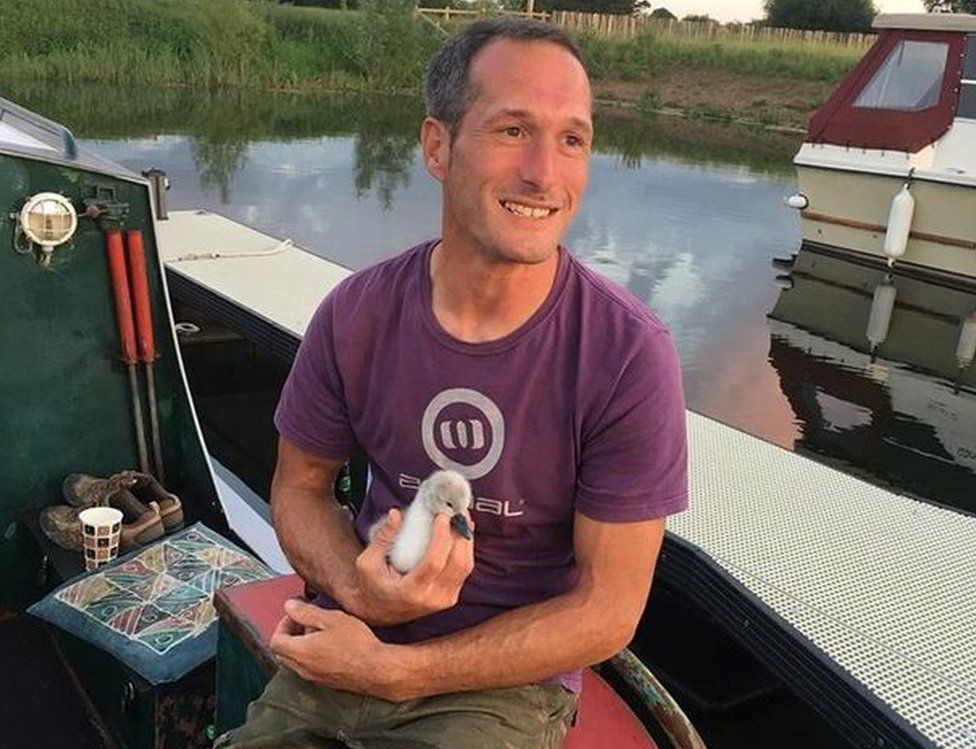
Rob Adamson, who lives and works at Jones Boatyard in St Ives, England has been a longtime spectator to the world’s “unluckiest swans” efforts to become parents.

For a decade, he looked on sadly as the poor birds’ eggs fell prey to poaching foxes and rising waters. This year as the Great Ouse began to flood, he knew he couldn’t stand by and let another clutch perish on his watch.
Rob Adamson

“You’re not supposed to interfere, but it had got to the point where they were all going to die,” Adamson told the BBC. “I couldn’t go to bed knowing that. I knew I would regret it if I didn’t do anything to save them… I needed to make sure they survived.”

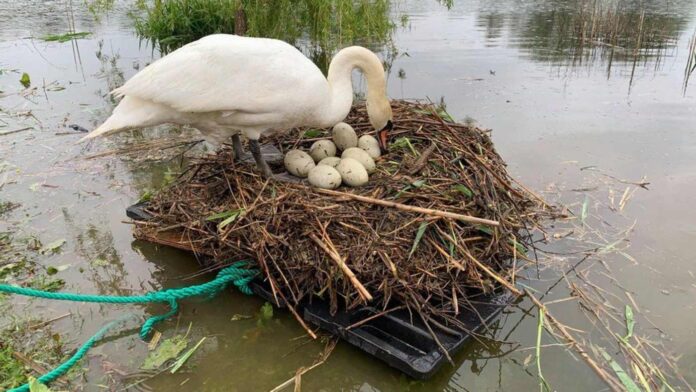
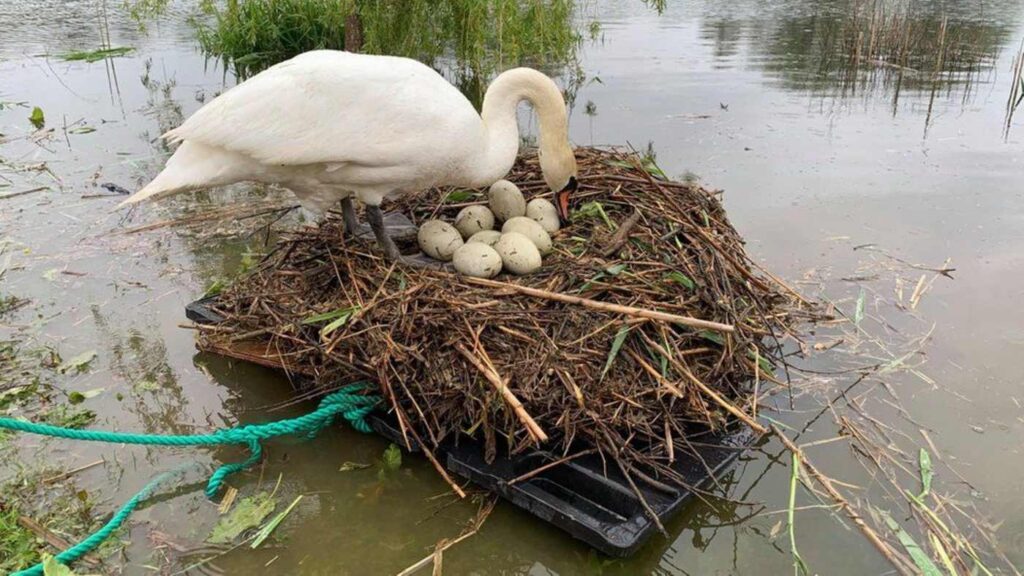
During the night, Adamson fashioned a makeshift raft and moored it with a line to the bank. It was well after dark when he gingerly lifted the nest and its occupants—nine eggs and one hissing mama—to safety, all under the wary eye of Papa swan.

As a breed, swans have a reputation for beauty that’s only surpassed by their fierce temper. That neither of the pair attacked Adamson is unusual.

MORE: Florida Man Rescues 8-Month-old Pup From Alligator’s Grasp

Perhaps the two sensed that he was only trying to help—which would only be keeping in character since Adamson’s affinity for the majestic avians is already well established.

Some years ago, Adamson famously raised an orphaned cygnet named Sid. Although he eventually made the break, when Adamson initially attempted to release Sid into the wild, his adopted offspring refused to go.

Once the story made the rounds, Essex locals fittingly dubbed their neighbor “the Swan Man”—which was fine with Adamson.

For him, being in tune with Mother Nature is what life’s all about. “This is why I am here, living on the water,” he told BBC. I’m in dreamland with all the wildlife… I wouldn’t swap my boat for a £10m house.”

Back on the Ouse, Mama swan has settled in nicely and hopes are that the signets will hatch soon. While Papa swan remains vigilant, to further ensure the family’s safety, Adamson has erected fencing to deter predators.

RELATED: A Starving Stray Puppy Upended our Mundane, Retired Lives: Finding Purpose After Finding Yiuka

The swans, it seems, aren’t St Ives’ only residents grateful for Adamson’s nest-saving intervention. “It took us all by surprise when the water levels in the lower marina shot up on Saturday night,” Jones Boatyard posted to Facebook. “A HUGE thank you to Rob who noticed that the water was lapping around the swans’ nest at 9 pm.

“If only the Queen knew what great service he was doing for her feathered friends!”

Hmmm. ‘The Royal Order of Swan Keepers to the Crown’ does have a certain ring to it, and since technically, by law, the majority of Britain’s swans actually belong to the Queen, perhaps an elevation from ‘The Swan Man’ to ‘Sir Swan’ might be in order here?

SHARE This Rescue Story With Your Friends on Social Media…

U.S. DEA is Finally Allowing Companies to Grow Their Own Cannabis for Scientific Research

The Drug Enforcement Administration (DEA) has just ended what’s been described as a 52-year monopoly on growing cannabis for research purposes.

Several large-scale cannabis growers have now been awarded contracts to produce weed for federal research, a move that will hopefully go a long way towards proving what many state and foreign governments already know: Cannabis has powerful medicinal properties, particularly for pain control.

Award-winning journalist Bruce Williams described the marijuana produced on the 12-acre farm at the National Center for the Development of Natural Products at the University of Mississippi—the only federally approved supplier of cannabis for research purposes in the United States—as “terrible, low-THC “schwag.”

That “schwag” has led to several public relations disasters. In one case, Johns Hopkins University pulled out of a medical cannabis trial because they requested marijuana with at least 12% THC, and couldn’t get it from the federal agency. Scientists at the Scottsdale Research Institute (SRI) involved in the trial, speaking with PBS at the time, said what they did receive was contaminated with mold, and “didn’t look like weed [or] smell like weed.”

Another case saw a Massachusetts-based scientist file a lawsuit against the DEA for not reviewing his application to grow marijuana for a trial for MAPS (Multidisciplinary Association for Psychedelic Studies) and Tripsitter. It came out that the DEA had received 33 such applications since 2016 that it appeared to have simply shelved.

However on May 14, the DEA quietly announced that it would “soon register additional entities authorized to produce marijuana for research purposes,” and that among those entities would be the SRI—who both received the moldy schwag and who actually played a large role in this change of policy.

CHECK OUT: Hemp is Already Being Used in Walls and Insulation as a Game-Changer in Construction Industry

A lawsuit, Scottsdale Research vs. DOJ/DEA, brought to light a 2018 memo that suggested the DEA’s Mississippi-monopoly was a violation of federal law, as well as to certain U.S. treaty obligations.

The memo, published by the Office of Legal Council, was kept secret, even in the face of repeated attempts by the legislature to reveal it and discover why, since 2016, the 33 applicants had been repeatedly ignored.

Eventually, SRI’s lawsuit got the U.S. Court of Appeals to order the DEA to respond to why it had not processed SRI’s, or the 32 other applications.

Now the DEA has capitulated, recently publicly approving several applications.

Matthew Zorn, an attorney who co-led the FOIA-based lawsuit, told Leafly that now scientists will be able to conduct research on the kind of cannabis that people are actually using.

MORE: Trying to Stop the Epidemic of Veteran Suicides, Plant Medicine Company Builds Mental Wellness Value Chain

“A lot of people may not appreciate the importance of that, with [national cannabis] legalization around the corner,” he said to Bruce Williams. “We don’t know when, but the need for this research is urgent. We can as quickly as possible start growing and have a supply for researchers to get good data.”

GROW the Good News—Share This Story With Friends…

Browser Extension Helps You Choose Amazon Products Based on Sustainability

Finch
Finch

A nifty new Chrome extension uses machine learning to sort products on Amazon by their eco-friendly aspects—allowing consumers to make sustainable choices about paper mill runoff or deforestation without pouring through research on their lunch breaks.

Called Finch, its ranking can be applied to the top 41 product categories on Amazon, where it ranks evaluates thousands of different products.

Browser extensions are becoming as widely utilized and exciting as the App Store was for the first few iPhones. But compared to an iPhone, the operating system of a computer is much more powerful, allowing more creativity in the functioning of these add-ons.

Along with sorting available information on sustainability listed on the Amazon product page itself, Finch also pulls a lot of its rankings from long, industry-specific reports on supply chains,  and self-reported data that’s designed to be reviewed by stakeholders and regulators.

Finch founder Lizzie Horvitz explains that nothing scores a perfect ten, but anything above a 6.5—and the product is already having very minimal impact. She also says that sometimes it may be difficult to totally ascertain what’s the most sustainable product, since it can often be determined by how it’s used by the consumer.

MORE: Seaweed is the Food –and Fuel– of a Sustainable World, And it May Start in Australia

“What’s important to us is to show where it falls, given the relationship to the other products out there,” she tells Fast Company.

In terms of growing the small startup, the sky’s the limit. Finch wants to eventually rank all the categories on Amazon before moving on to other large ecommerce platforms, and eventually “any ecommerce site out there.”

RELATED: App Lets You Buy Leftover Food From Your Favorite Restaurants—Saving 150k Meals a Day Globally

There’s currently a waitlist to acquire the browser extension, which isn’t featured on any digital extension marketplaces. You can join the waiting list on their website, and read their blog while you’re at it to learn how to make the most sustainable decisions when faced with near endless choices.

SHARE This Eco-Friendly App With Friends on Social Media…

Scientists Develop Personalized Anti-Cancer Vaccine That Works in Mice

Dodgerton Skillhause, CC license

A research team in Montreal has been busy developing a personalized anti-cancer vaccine that works in mice.

At the University of Montreal Hospital Research Centre (CRCHUM), Marie-Claude Bourgeois-Daigneault and a team of scientists modify viruses to make them specific to the cells of a tumor.

Once in the patient’s body, these viruses—called oncolytic viruses—infect and specifically destroy the cancer cells without touching healthy cells. These viruses can even stimulate the immune system so that it is better armed to recognize and kill malignant cells. This is what’s known as immunotherapy.

In a study published in Nature, the researchers show how they came to create an effective personalized vaccine by combining oncolytic viruses with small synthetic molecules (peptides) specific to the targeted cancer.

Here, Bourgeois-Daigneault explains her team’s approach and findings.

In your study, you use oncolytic viruses as anti-cancer vaccine adjuvants to immunize mice. How do you do it?

Marie-Claude Bourgeois-Daigneault, CRCHUM

For a vaccine to induce an immune response, it has to contain elements that stimulate the cells of the immune system—the famous white blood cells.

These elements, called adjuvants, are ingredients in all vaccines. They allow the human body to perceive potential danger and contain the threat by sending its army of immune cells.

Our approach consists of using oncolytic viruses to stimulate this immune response and direct it towards the cancer. To succeed, we create a vaccine by mixing viruses with synthetic peptides (antigens) that resemble the targeted cancer.

Because it’s true that, to be effective, the vaccine has to be personalized for each patient, based on the mutations specific to each cancer cell. Thanks to the identification work done by other research teams, we can predict what peptides to use for each patient through the information obtained from a biopsy.

RELATED: New Brain Cancer Immunotherapy Shows Promise in Human Trial – Most Patients Saw No Tumor Growth For 3 Years

The advantage of our approach is that the oncolytic viruses themselves have the power to kill the cancer. We can thus attack the cancer on two fronts: kill it directly with the virus and induce an immune response, thanks not only to the virus, but to the vaccine as well.

On our mice, we were able to show the efficacy of the resulting immunization.

What sets your vaccine strategy apart from clinical trials currently being conducted by other teams?

The other clinically tested personalized anti-cancer vaccines don’t use oncolytic viruses as vaccination adjuvants. Therefore, their adjuvant doesn’t have direct anti-cancer effects whereas, in our case, our viruses can destroy the cancer.

An anti-cancer vaccine using oncolytic viruses is currently being tested in Canada and the U.S. However, it is not personalized. Instead, it targets certain specific cancers that have an antigen in common. By targeting this antigen, the vaccine induces an immune response.

In this case, the oncolytic viruses have to be genetically modified to allow for the insertion of the antigen into the genome of the viruses.

CHECK OUT: Green Tea Compound Could Hold The Key to Beating Cancer, Says Compelling New Study of ‘EGCG’

This is very different from our approach. We can target all cancers without genetic modification. A little like putting together Lego—it’s a matter of mixing synthetic peptides resembling the cancer with the chosen virus. It will be a lot easier to implement in a clinical setting.

What challenges need to be addressed before your personalized anti-cancer vaccination approach can be translated to clinical practice?

The main challenge is to identify the mutations that we want to vaccinate against. Because a cancer is unique in its tens or hundreds of mutations, but only a few of them, once targeted, will have a therapeutic effect and allow us to eliminate it.

MORE: Researchers Create CRISPR ‘On-Off Switch’ to Control Inherited Genetic Problems Without Changing DNA

The identification of these mutations is the key step that still has to be optimized. Fortunately, many groups are working in this area.

Source: University of Montreal; Featured image: Dodgerton Skillhause, CC license

SHARE This Hopeful Breakthrough With Others on Social Media…

“You KNOW we’ve got to find a way to bring some lovin’ here today.” – Marvin Gaye, What’s Going On (debuted 50 years ago)

Quote of the Day: “You KNOW we’ve got to find a way to bring some lovin’ here today.” – Marvin Gaye, What’s Going On (debuted 50 years ago)

Photo: by Kyle Glenn

With a new inspirational quote every day, atop the perfect photo—collected and archived on our Quote of the Day page—why not bookmark GNN.org for a daily uplift?


Florida Man Rescues 8-Month-old Pup From Alligator’s Grasp

There’s nothing Mike McCoy wouldn’t do for his adored 8-month-old chocolate lab Jack—including, it seems, wrestling an alligator.

Mike McCoy and Jack the puppy were walking near a pond behind a middle school in the town of Holiday when the gator appeared out of nowhere. It tried to pull Jack under the water. Then Mike did the unthinkable. He jumped in the water too.

“I previously read up on my environment and gators. I got around, thumbed him the eye, picked him out of the water so he couldn’t get anywhere until he let the dog go. And in the interim he decided, I don’t have him, I’ll bite you,” said McCoy to ABC Action News.

After their tussle with the giant reptile, both owner and dog got medical stitches and are now doing fine. Florida Fish and Wildlife Commission (FWC) are also working to relocate the alligator to a safer place.

CHECK OUT: 35 Circus Elephants Arrive in Amazing Florida Sanctuary to Retire Among Forest, Grassland, and 11 Watering Holes

FWC states that such attacks are rare in the Sunshine State, but it’s important to keep one’s distance from such predators. Head to their website for more info and advice on co-existing with gators.

(WATCH the ABC video about this story below.)

SHARE This Snapping Story With Friends on Social Media…

Sheldon the Dog Flunked Out of Service-Animal Training, But Became an Ace at Sniffing Out Arson

Heather Paul
State Farm Arson Dog Program

“When one door closes,” the saying goes, “another door opens.” For one very special pooch, it appears that adage also applies to doggie-doors.

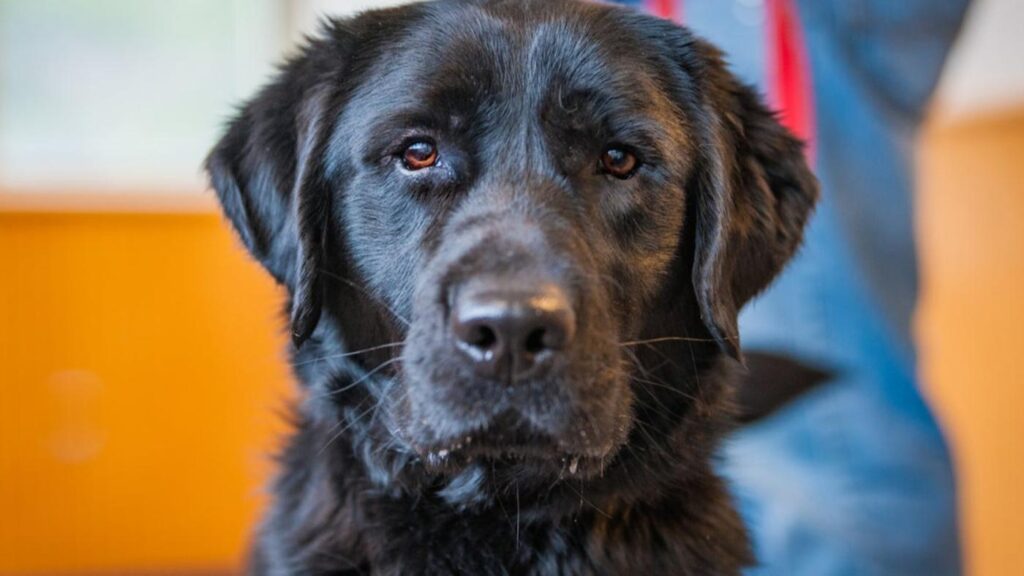
A Labrador-retriever mix named Sheldon was enrolled in a program to become a service dog. Training at Paws With A Cause in Wayland, Michigan, unfortunately he couldn’t quite make the grade.

Whenever he’d catch a whiff of something interesting, Sheldon’s concentration flew out the window and all he wanted to do was hunt down the source.

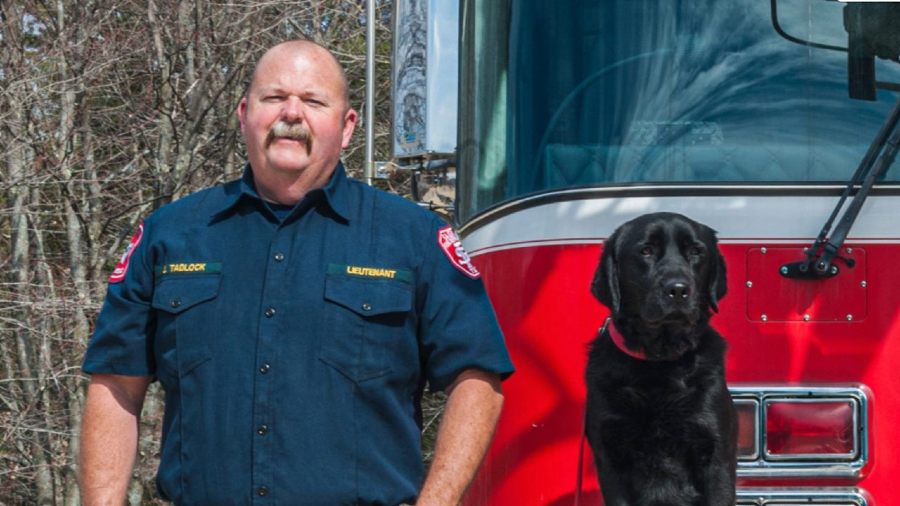
But the very thing that made him a wash-out as a service dog meant he was likely perfect for another canine career. Rather than return him to civilian life, Sheldon was transferred to the State Farm Arson Dog Program, where his sensitive nose soon put him at the top of the class for sniffing out the accelerants used to light illegal fires.

Paired with Lieutenant John Tadlock of the Saginaw, Texas fire department, after his graduation Sheldon went on to become the department’s premier accelerant detection canine.

MORE: A Starving Stray Puppy Upended our Mundane, Retired Lives: Finding Purpose After Finding Yiuka

In his first case, Sheldon and his partner were called to a car dealership to investigate some vehicles that had been torched under suspicious circumstances. After three days, no one had been able to figure out how the fire got started—but the cause wasn’t baffling to Sheldon.

“We get out of the truck and put him to work. It takes him about 30 seconds, and he gives me an alert,” Tadlock told the Fort Worth Star-Telegram.

“We dig through some debris and find a Molotov cocktail. It was just under some debris from the vehicle that had burned away, three days earlier. You couldn’t even see it.” But Sheldon unearthed the evidence with ease.

Sheldon lives with Lieutenant Tadlock and his family (and will continue to do so even in doggy retirement). To keep their skills at the top level, the duo trains regularly on a reward/praise-based system and participates in State Farm’s annual certification program.

“He made a better arson dog than a service dog,” Tadlock said.

RELATED: Prancer the ‘Demonic Chihuahua’ Who Went Viral Finds Dream Forever Home

For a dog who was blessed with a super “scents-ative” sniffer, we guess whether you’re tailing bad guys or hunting up a career, it’s always best to follow your nose.

Heather Paul

Sheldon isn’t the only pup unfit for one specialty job who got thrown a bone for another: German Shepherd Gavel didn’t have the right stuff to become a police dog but GNN reported he was perfectly suited for his role as Vice-Regal dog for Queensland’s Government House.

SHARE Sheldon’s Good News With Your PAWSome Pals Online…

Video Captures Hero Cop Running to Lift Overturned Car Single-handedly to Save Woman

ABC

A Virginia cop has been praised as a hero after a video was released showing him single-handedly pull a crashed car off a woman who was pinned to the ground—and this isn’t even the first time he’s been praised for his bravery.

Landmark Malaria Vaccine is 77% Effective, Tackling One of World’s Biggest Killers of Young Children

Dunpharlain, CC license

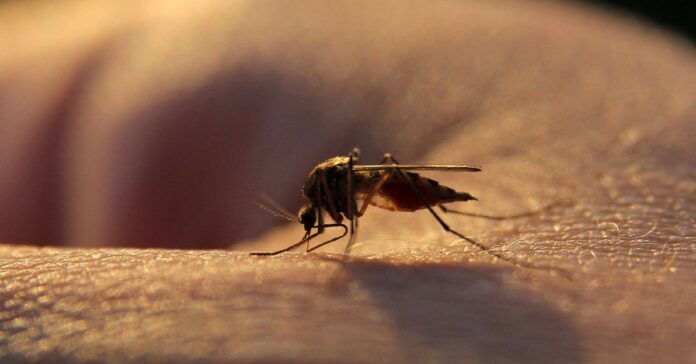
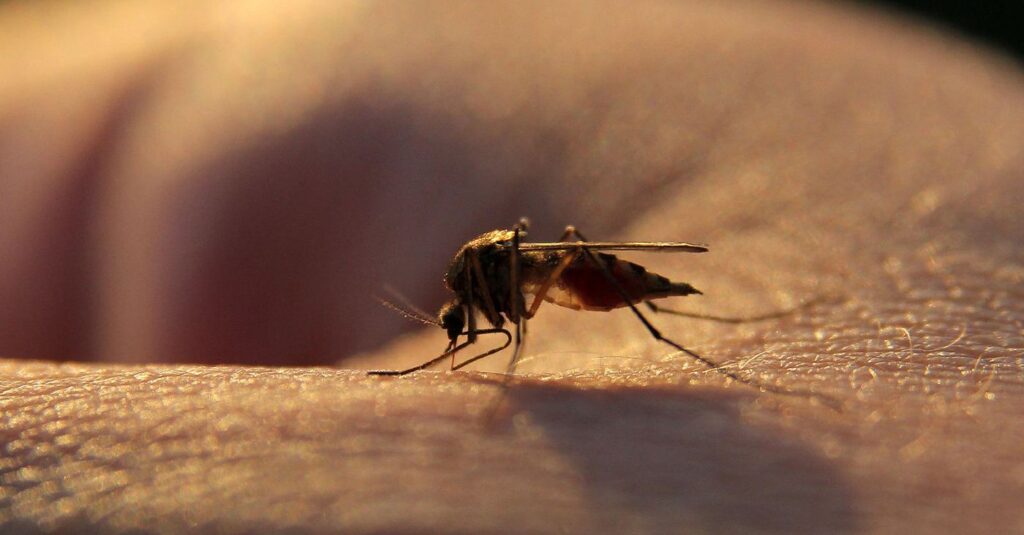
Mosquitoes are one of the deadliest animals on the planet because they spread yellow fever, dengue, encephalitis, and malaria, which killed 400,000 people in 2019.

Now, clinical trials of the promising R21 vaccine in Burkina Faso may be an effective tool against the disease, as it triggers the body’s immune system to attack the parasite—and has been 77% effective in phase 2 trials.

Ravaging and replicating through the body in seven different stages, malaria comes from the parasite Plasmodium falciparum, which isn’t a particularly good candidate for vaccination (mosquito nets are still the most effective measure), due to constant evolution throughout its life cycle. For perspective, it’s made from 5,000 genes, while the coronavirus that’s impacted all our lives contains just 16.

In the ’80s, the pharmaceutical company GlaxoSmithKline attempted to use vaccination to tackle the malaria epidemic by targeting the initial stage of the Plasmodium life cycle, called a sporozoite. In 1983, according to National Geographic, researchers discovered that sporozoites are covered in proteins that provoke a strong immune system response, but the evolution to their next life cycle occurs too fast for natural immunity to recognize and terminate the sporozoites.

The idea was to make a carrier that would present a kind of sporozoite protein-punching bag, so that when the real thing arrived the immune system would react fast enough to eradicate it before it spread to the liver.

Marketed commercially as Mosquirix, it’s the single-most tested vaccine candidate for malaria, but after twelve months, its effectiveness falls to less than sleeping under mosquito nets.

MORE: This is How Close We Are to Eliminating Malaria – 7.6 Million Deaths Averted in 20 Years, Thanks to Generous Nations

Halidou Tinto, an epidemiologist and expert in Malaria, works near the Burkina Faso capital of Ouagadougou and helped to organize a trial of 450 children between 5-17 years of age for the new R21 vaccine, that uses the same method as Mosquirix, but simply manufactured better—where before only one in five proteins were coated in the sporozoite protein, R21 made that five in five.

At its best, R21 reduced clinical malaria incidence by 77%, 2% more than the 75% target set out by the WHO in 2013 as part of an international attempt to push the global malaria problem more into mainstream pharmacology. There was no difference in malaria incidence at a 6 or a 12-month follow-up; a significant improvement over the old GSK vaccine.

The authors of this paper noted that the vaccine doses were administered in the lead up to the annual rainy season, when malaria cases spike, but that it would be worth comparing results from trials carried out at different times of the year.

RELATED: U.S. Department of Defense Funds New Lyme Disease Vaccine Development

“We are enthusiastic, but we still need phase three trials to confirm the efficacy and the safety of the vaccine before we move on,” Tinto tells National Geographic.

SHARE the Hope—Send This Story to Friends… 

Flowers Can Hear Buzzing Bees—And it Makes Their Nectar Sweeter

Bastus917, CC license

An evolutionary theorist has set out to prove that plants can hear their surroundings, and she was right; they can.

Her work, not yet peer-reviewed, but available in a preprint repository, looked at the flowers of the evening primrose and used sound tests to prove they responded to the sound of bees’ wings by increasing the sugar quantity in their nectar.

Reasoning that pollinators and flowers have co-evolved over a very, very long time, and that the world is completely saturated with sounds, Lilach Hadany, who teaches at the intersections between mathematics and biology at the University of Tel Aviv, felt it wouldn’t make any sense for plants to ignore them.

Any living creature must make use of all its senses to survive until it can reproduce, and if one takes a moment to imagine how long a deaf or blind wildebeest would last on the Serengeti, they can see where Hadany is coming from.

To test her premise—that sound is an abundant natural resource that greatly aids in the quest to survive and thrive, Hadany subjected the flowers of the evening primrose to five  sound tests consisting of three different computer-generated frequencies, silence, and the recording of a honeybee’s wingbeats.

The sweet science

L, David J. Stang CC license; R, Bruce Miller, CSIRO CC license

Silence, which they achieved by placing a jar over the flower, computer generated high-frequency notes at 158 to 160 kilohertz, and intermediate-frequency notes at 34 to 35 kilohertz, all had no effect on the flower—the study shows.

MORE: Airport Calls in the Beekeepers to Save Pollinators

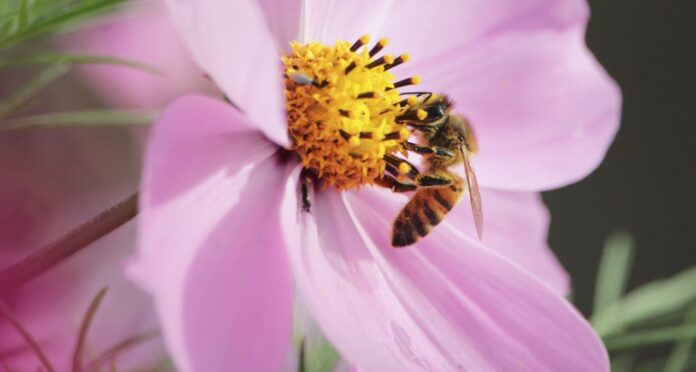
However with the ultra-low frequency and the bee wingbeats, the flower spent the following three minutes increasing the sugar content in its nectar by 17-20%, a remarkably clear suggestion that Hadany’s hypothesis was right.

A flower with more nectar is more likely to be detected and visited by pollinators, and Hadany’s team found that pollinators were nine times more likely to choose to visit a flower that had been visited by another pollinator within the last six minutes, showing how valuable that small increase in sugar could be for the flower’s chances of reproduction.

“We were quite surprised when we found out that it actually worked,” Hadany told National Geographic. “But after repeating it in other situations, in different seasons, and with plants grown both indoors and outdoors, we feel very confident in the result.”

As Hadany and her colleagues thought about the nature of sound and flowers, it hit them that a great many flowers are concave, tubular, or bowl shaped—all perfect forms for attracting sound and vibrations.

RELATED: Cultivate These Keystone Plants in Your Yard to Help Bees and Butterflies Thrive and Pollinate

Amphitheaters, sub-woofers, ears, and radar dishes all share these properties.

In fact, using tools to measure minute vibrations, they discovered that vibrations entering into the primroses increased in strength as a function of the shape of the flower petals, which if distorted or removed, cancelled out the effect.

Matthew T Rader

On a different note, another study found that when the sound of caterpillars eating leaves was played next to a plant from the same family as mustard, they were later found to have flooded their leaves with a chemical caterpillar deterrent compared to those that heard only silence.

These two papers have helped open up a relatively new field of study—phytoacoustics, the study of plants’ interactions with sound.

CHECK OUT: Bee Populations Are Increasing in Many States–With Maine Seeing 70% Rise in 2 Years

As this is World Bee Day, it’s important to likewise recognize the importance of their food source, especially when selecting which species to plant in your yard or balcony—perhaps those with radar dish-like flowers?

BUZZ This Fascinating Story Over to Friends on Social Media….

“Women have to harness their power… And if you can’t go straight ahead, you go around the corner.” – Cher (turns 75 today)

By Tim Foster

Quote of the Day: “Women have to harness their power… And if you can’t go straight ahead, you go around the corner.” – Cher (turns 75 today)

Photo: by Tim Foster

With a new inspirational quote every day, atop the perfect photo—collected and archived on our Quote of the Day page—why not bookmark GNN.org for a daily uplift?


12 Critically Endangered Red Wolf Pups Are Born in North Carolina – A Conservation Baby Boom

Moriah Angott, N.C. Zoo

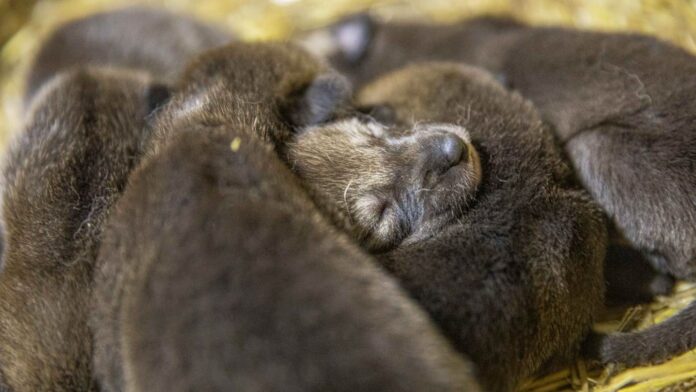
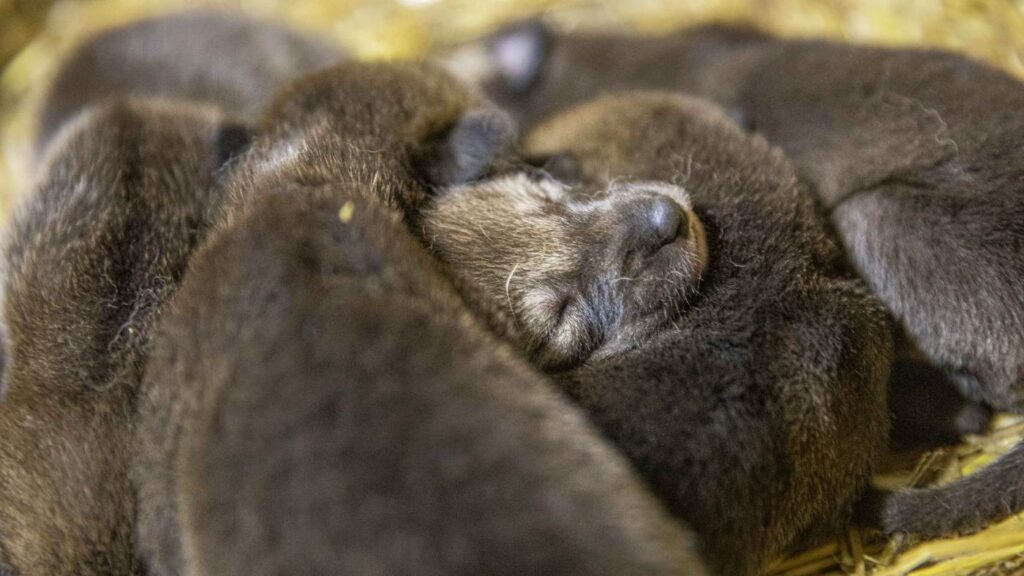
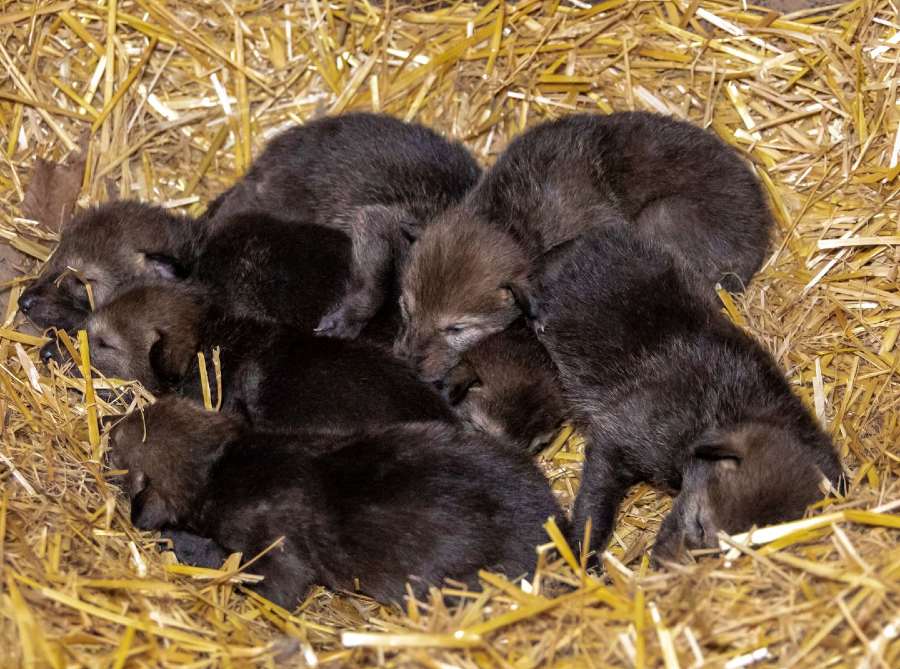
The birth of three litters of critically endangered American red wolves happened recently in North Carolina—and they were born just three days apart.

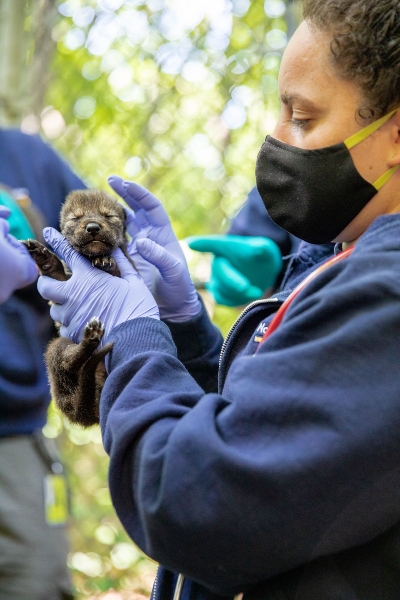
All pups and their mothers are healthy and doing well—with this the first time in the history of the North Carolina Zoo’s red wolf breeding program that a trio of litters was born in one spring.

The newest pups bring the number of red wolves currently in the Asheboro-based program to 36—making it the second-largest pack in the U.S. after Point Defiance Zoo and Aquarium in Washington state.

Only 15-20 red wolves remain in the wild, and they’re all in eastern North Carolina. Currently, they’re considered the most endangered canid in the world.

For the first time in two decades, one of the litters was born on the red wolf public habitat—to parents Flint and Sassy—giving zoo guests a rare chance to view the pups for a limited time.

Moriah Angott, N.C. Zoo

The pups most likely will be visible starting in mid-June, when they begin to venture outside of the den. The wolf family will be moved to the non-public breeding area when the pups are older and weaned from their mother. The other two litters were born in non-public viewing areas of the zoo.

“Congratulations to the North Carolina Zoo for playing an essential part in the survival of this critically endangered species,” said Secretary Reid Wilson, N.C. Department of Natural and Cultural Resources, in a statement.

Moriah Angott, N.C. Zoo

“These births are important because many of our wolves, once matured, have been moved to other breeding packs to continue to help bring this species back from near extinction. Our hope is that more and more red wolves can soon be placed into the wild.”

MORE: In Historic Vote, Coloradans Give Thumbs-Up For Gray Wolves to Be Reintroduced West of the Rockies

Now it’s up to the public to name the litters—with the zoo promising to release a poll in the next month. Get ready to turn in your vote.

SHARE The Howling Good News With Your Pack on Social Media…

Bus Driver Desperate to See Terminally Ill Mom Stunned by Offers of Help From Community

Aaron Wylie
Aaron Wylie

If you found out someone you loved only had months to live, you’d likely move heaven and earth to be with them. Unfortunately, in the complex era of coronavirus, heaven and earth are all too often mired in a sea of red tape.

Bus driver Aaron Wylie lives in Halifax, Nova Scotia. His mom, Sandra, who has liver disease, lives with his dad a four-hour drive away in Saint John, New Brunswick. He hasn’t seen them since Christmas of 2019.

Devastated when he learned Sandra’s prognosis was terminal, all Wylie wanted to do was find a way to see her while there was still time, but with pandemic travel restrictions and mandatory quarantine paired with budget constraints and lack of time off, it looked as if the visit might be pretty much impossible.

Then he got an idea.

Wylie, who drives a bus for Halifax Transit in Nova Scotia, has a Class-1 license—which allows him to drive a truck. Since truck drivers are classed as essential workers, he thought if he could score a gig delivering a payload to New Brunswick, he might just be able to make the trip happen after all.

Hoping for a miracle, he placed an ad on Canada’s popular classified network site Kijiji.

“I know this is a bit of an odd request but I’m looking for a class 1 position,” he wrote. “I have Tuesday, Wednesday, and Thursday off—I work full-time at Halifax Transit. I am looking for a route that will run Halifax to Saint John… I am willing to drive for free!”

He went on to explain the details of his mom’s diagnosis and said he needed to find a way to cross the border, both legally and as soon as possible.

MORE: Son Sells Thousands of Cheesesteaks to Give Mom Last Dream Trip to See the Egyptian Pyramids

Wylie admits he wasn’t expecting a lot of feedback on his post, but almost at once, offers of trucking jobs, financial help—and even someone willing to test as a live liver donor for his mom—began streaming in.

The request got more than 5,000 shares on Facebook, and the response was so overwhelming, Wylie had to turn off his phone and take down the Kijiji post.

Wylie has since taken up an offer to haul cars from Halifax to Saint John, but he’s yet to receive clearance to travel. In the meantime, he’s getting vaccinated and plans to be tested for COVID-19 before and after making the trip.

Canadian health restrictions are currently in flux. Rules and restrictions change from day to day, hour to hour. Even as Wylie anxiously awaits the go-ahead, he’s humbled by the outpouring of encouragement he’s received from total strangers thus far.

RELATED: Chef Drives 6 Hours to Vermont to Cook Her Favorite Meal—Soothing a Customer In Her Final Days

“It’s been an overwhelming response and an emotional one,” Wylie said in an interview with CBC News. “I was just blown away. These are people I don’t even know.”

SHARE This Story of True Kindness With Friends…

Size Doesn’t Matter to a Dolphin Mom As She Adopts a Whale Calf

Far Our Ocean Institute
Far Out Ocean Institute

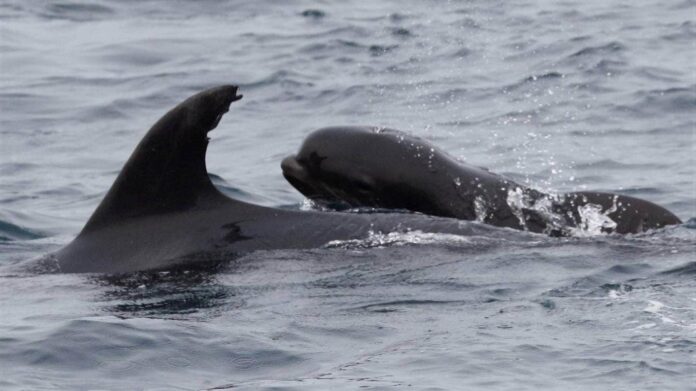
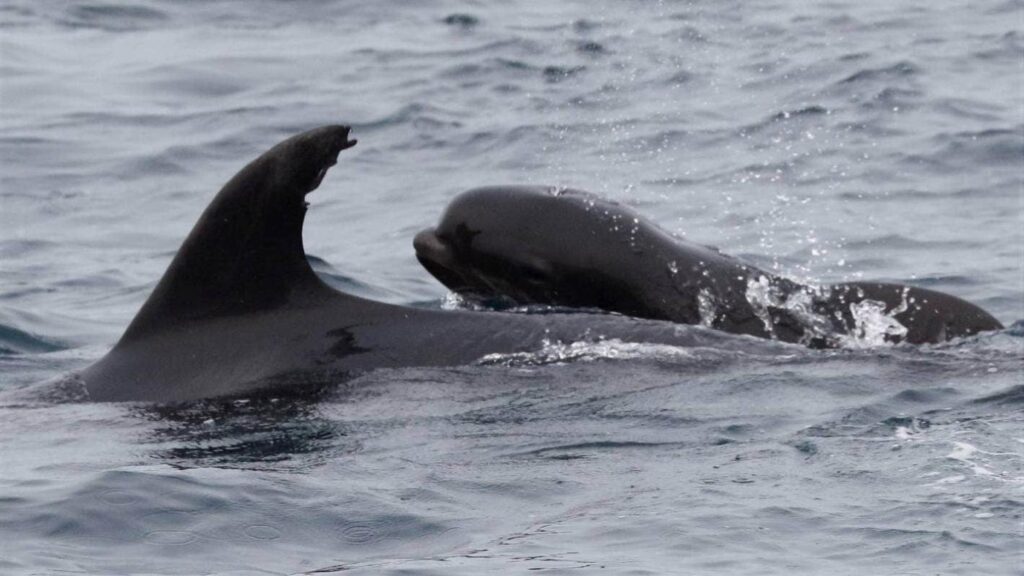
Off the coast of New Zealand, a group of marine biologists has discovered a mother bottlenose dolphin that had adopted a baby pilot whale.

The Kiwi-based Far Out Ocean Research Collective discovered the mammals sailing in the Bay of Islands in Northern New Zealand, and has now documented the pair on two separate occasions five weeks apart.

While it’s not unheard of that dolphins adopt other species’ babies, it’s very rare to record the phenomenon with such a significant difference in species size. Bottlenose dolphins can reach 300 kilograms, which is no small fry—except that pilot whales can grow to two tons and reach six meters in length.

“She might have lost her own calf,” researcher Jochen Zaeschmar told local reporters of the dolphin’s behavior.

The Independent reported in 2019 that researchers in French Polynesia found a bottlenose dolphin that had adopted a melon-headed whale calf, and that the pair stayed together for three years.

Scientists don’t know why exactly this happens, and hypotheses exist that it’s misplaced mothering instinct—perhaps accentuated if a dolphin mother has lost her calf and finds a calf who has lost its mother. However the researchers in French Polynesia, pondering in their published paper on the finding, suggested it could be part of the mother’s “personality,” which is an endearing thought.

MORE: Dolphins Have Similar Personality Traits to Humans, Study Finds

Regardless of what brings them together, these cases of adoption only last as long as the weening stage, as whales and dolphins hunting patterns are so different—and at that point the adopted whale makes it off into the world alone.

SWIM This Adoption Story Over to Friends on Social Media…
UK’s Oldest Factory Forged the Liberty Bell and Big Ben—Now People Are Rallying to Keep a Hotel Out

No Swan No Fine, CC license

A group of campaigners and artists have joined together to throw a significant spanner in the works of a venture capital firm’s takeover of a historic London foundry.

Plans to turn the site into a boutique hotel with office space for “creatives” and a café and restaurant has earned the ire of artists, former foundry craftsmen, community organizers, and heritage building conservationists.

No Swan No Fine, CC license

Before the pilgrims landed at Plymouth Rock, bells were being forged in Whitechapel.

Opened in 1570, the Whitechapel Bell Foundry in the East End of London, cast bells for 450 years, many of which still ring today—atop Big Ben, and another one with a famous crack in it sitting in a museum in Philadelphia.

Behind Georgian brick walls amid factories and wharfs, workers at Whitechapel poured molten bronze into molds of London clay, and tuned the bells by shaving metal off of the inside before shipping them across the English-speaking world, of which 900 in Canada, 500 in Australia, and 600 in the U.S. still ring out every day.

The details of the financial struggles of four generations of Whitechapel Foundry owners, the pain they endured as demand for bells evaporated after the World War II, the debts that piled up while a gentrified London encroached ever further into the East End, as well as everything one could ever wish to learn about bells, are captured brilliantly by Hettie O’Brien in the Guardian’s Long Read section.

State Library of New South Wales

O’Brien details how a Whitechapel foundry worker—a bell crafter named Nigel Taylor, took her around the neighborhood of Whitechapel while explaining that London used to be split into districts that were determined by the range of audible sound coming from the bells of a particular church. This is the source of the fable that every true Cockney Londoner was raised to the sound of “Bow bells,” referring to St. Mary-le-Bow Church in Cheapside.

CHECK OUT: After Illegally Bulldozing Historic London Pub, Developers Were Ordered to Rebuild it ‘Brick by Brick’

Taylor is part of the coalition to save this piece of London heritage from conversion into a boutique hotel, organized by a special group of campaigners that not only want to see the building preserved in its current, dingy, and wonderful state, but the activities inside of it remain as well.

A plan in motion

Re-form Heritage, a UK charity that organized the public effort to block the hotel development plans in the foundry, specializes in supporting communities through the restoration and rejuvenation of heritage buildings at risk of decay or demolition.

The details are long and involve many different characters, but here’s a summary:

  • The fourth-generation foundry owner closes sale of the foundry in private to a man named Goldstein.
  • Goldstein sells it to Raycliff Capital who plan to convert it into a boutique hotel and workspace/restaurant.
  • Stephan Clarke, conservationist, accountant, and chairman of Re-Form understands the Foundry is closing and makes an offer.
  • Upon learning that the foundry has already been sold for re-development, Clarke develops a new, heritage-based plan, involving bespoke use of the foundry’s infrastructure for artistic projects along with two former employees, to be funded by a potential grant from the National Lottery Fund, and private contributions.
  • A proposal is formed, gathering 10,000 signatures, including several celebrities, and sent to the Secretary of State for Housing, Communities and Local Government, Robert Jenrick.
  • Upon hearing there was organized resistance to their development plans, Raycliff included a promise to create a miniature bell foundry, where visitors can see how bells would have been cast in Whitechapel’s previous incarnation.

On December of 2018, Raycliff submitted their plans to the Tower Hamlet councilors. A year later in a deeply divided chamber, before protestors and knife-cutting tension, the vote for approval was split 3 to 3, with the Council Chairman holding the tiebreaker vote, which he cast in favor of Raycliff.

Re-form and re-birth

Mramoeba, CC license

However the story didn’t end there, as after campaigners sent a letter to Jenrick, asking him to suspend the ruling, he did just that, until “public inquiry could take place,” according to O’Brien.

This erupted into a war of words. Clarke was particularly annoyed that Raycliff and the foundry’s previous owner had sold without putting it up for public auction. This is due to British legal requirements for developing old buildings.

MORE: After Musician Launches National Plea, He is Finally Reunited With His Beloved 310-Year-old Violin

If, the law states, development will substantially alter or damage a building with a designated historical value, the project cannot go through unless one of two stipulations is satisfied: either the development must create significant public benefits, or the site is too far gone to be useable, and no charity or grant funding is available.

The final decision about whether the 450-year old Whitechapel Bell Foundry will continue to cast bells will be made by Secretary Jenrick, and if the he rules in Raycliff’s favor, Clarke told the Guardian that Re-Form and artistic partner Factum will be launching a new bell foundry in London to implement the same plan they had for Whitechapel.

RELATED: Company Projects Smiley Face On London’s Parliament Across From A Hospital

For this they’ve already trademarked “the London Bell Foundry,” and will soon be casting a bell at a foundry in Gloucestershire in collaboration with English contemporary artist Grayson Perry.

For readers interested in following the decision, they’ll find it on the Right Honorable Robert Jenrick’s page on the UK government website, slated to be announced in the coming weeks.

RING The Bells of Community Action by Sharing This Story…

“Today, you have 100% of your life left.” – Coach Tom Landry

By Diego Jimenez

Quote of the Day: “Today, you have 100% of your life left.” – Coach Tom Landry

Photo: by Diego Jimenez

With a new inspirational quote every day, atop the perfect photo—collected and archived on our Quote of the Day page—why not bookmark GNN.org for a daily uplift?


Nimble Cat Walks Away After 5-Story Fall – And a Bounce – Onto Chicago Street (WATCH)

A cat in Chicago has survived unharmed after jumping from the fifth-floor window of an apartment building that was on fire.

Staff from the Chicago Fire Department were taping the firefighters as they worked to fight the blaze when a black feline appeared through smoke billowing out of a broken window.

CHECK OUT: Newly Discovered Species of Saber-Toothed Cat Was So Big It Hunted Rhinos in America

The cat briefly tested the side of the building with its front paws. It jumped, bounced a little on the grass below. And miraculously walked away.

(WATCH the Guardian video of this incredible moment below.)

SHARE This Daring Video With Friends on Social Media…

Seaweed is the Food –and Fuel– of a Sustainable World, And it May Start in Australia

National Marine Sanctuaries

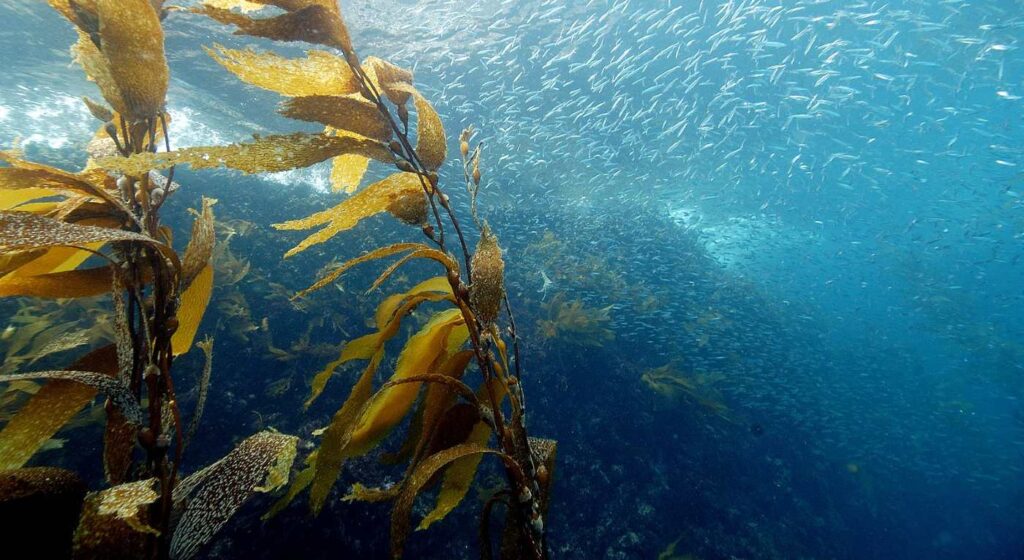
Australian scientists have been uncovering a near-unending list of ways kelp and other kinds of seaweed can help in the fight against climate change.

It’s the continued study and harvesting of seaweed species in Australia that has Dr. Pia Winberg convinced they can play as large a role in human civilization as commodities like wheat, lumber, plastic, concrete, or nitrogen.

In the same way that Australia has unique animals found nowhere else, their panoply of marine plant species is richer and more diverse than most places on Earth.

“If we used the infrastructure in the oceans and created seaweed islands, we would actually eliminate a lot of the climate change issues we have today,” she says, in an interview and documentary from the BBC’s Isabelle Gerretsen.

Her reasoning is based around seaweed’s rapid growth rate and ability to absorb carbon at much, much faster rates than terrestrial plants.

MORE: This Tasty Seaweed Reduces Cow Emissions by 99%—and It Could Soon Be a Climate Gamechanger

Coupled with seaweed’s rich nutrient profile and unique molecular structure, Winberg believes it should be farmed on the largest scale, and that it could balance emissions, deacidify the oceans, change the way we farm, and open up a Pandora’s box of new materials research that could include everything from biodegradable plastics to construction materials to artificial body parts.

Seaweed: a primer

45,000 years ago, Aboriginal Australians were making water carriers out of kelp leaves. Its rubbery and flexible, yet thick and resilient texture made it perfect for the task.

Nori, the seaweed eaten in Japanese cuisine, was the first-ever to be farmed when it was grown off the coast of Japan back in 1670.

All kelp is seaweed, but not all seaweed is kelp. In fact, much like a LEGO set, the three species of seaweed are “red, yellow, and brown”. Kelp is a brown seaweed.

In optimal conditions kelp can grow a staggering two feet per day, while not requiring nitrogen-rich fertilizer like terrestrial crops, or, obviously, de-weeding. Just like on land, kelp and other seaweeds use photosynthesis to grow biomass by absorbing CO2, only they do at an estimated rate 50 times greater even than forests.

During the devastating fires in the Amazon rainforest a few years ago, op-eds and other articles were awash with the phrase “Lungs of the Earth.” In reality it’s kelp that deserves such a title.

According to a research report from the Marine Climate Change Program at Conservation International, the current marine environment is where any modern, intelligent action against climate change should occur. 90% of the world’s carbon budget is held in the oceans, while between 30%-50% of all human-caused emissions have been absorbed by them.

RELATED: Student Treks to Yellowstone and Finds Bacteria That Eats Pollution and ‘Breathes’ Electricity

Winberg and her research associates feel seaweed has a big part to play in this figure. How big? Well one study found that the total emissions from California’s agriculture sector could be absorbed if merely 3.8% of her coastal waters were turned over to kelp cultivation.

A model for the future

Winberg isn’t an armchair algae activist; her family farm at Shoalhaven, New South Wales, puts into practice what could be considered a model for future agriculture and industry.

Next door, a wheat refinery pumps its emissions into large vats of seawater where seaweed uses it through photosynthesis to grow. Nitrogen and other nutrients from the refinery fortify the green seaweed, allowing it to be turned into all kinds of different substrates for products like animal feed, cosmetics, and even ice cream.

“Even just a 10% replacement of seaweed in wheat production or meat production in food would have a major impact,” explains Winberg, who believes that offshore seaweed cultivation in Australia is one of the best ways to target widescale seaweed farming.

A 50-hectare mussel farm in Jarvis Bay is implementing this concept and growing seaweed alongside their mussel cultivation. The fishermen believe it improves the quality of the mussels, reasoning that the best shellfish always come from areas rich in marine plants.

Their tradesman’s instincts aren’t wrong, as a study found that the absorption of CO2 by kelp creates a buffer in their immediate vicinity, reducing the acidity levels of the ocean water around them, giving fish and shellfish better conditions to grow. When cultivated en masse, this deacidification could change the whole ocean ecosystem.

CHECK OUT: Trees Growing Out of Buildings Could Help Heal China’s Air Pollution Problem

In 2020 GNN reported on the development of a dietary supplement that when given to cows eliminated 80% of the methane produced through their guts’ fermentation of feed, effectively eliminating the 2.8% of American emissions attributable to all livestock animals. That supplement was made from seaweed.

Given that methane stays in the atmosphere for only 12 years, it wouldn’t take too long for an entire nation’s livestock industry would be methane neutral.

Life began in the oceans, and rather than a magic space metal or nuclear fusion, the solution to many of the world’s biggest problems may require us to look back into our past, rather than into the future.

(WATCH the BBC Future video about this story below.)

GREEN UP Your Friends’ News Feeds—Share This Story With Them…

Veterinarian Saves the Eye of a Tiger With an Operation That’s Never Been Done on a Big Cat

Shepreth Wildlife Park

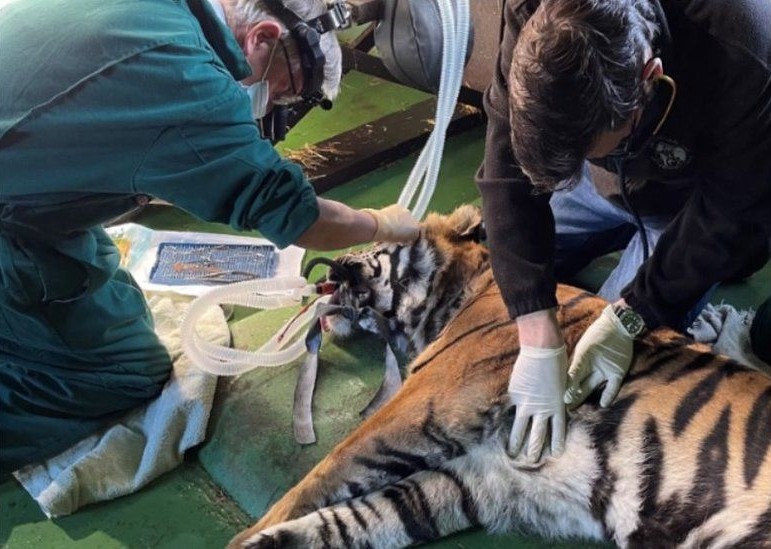
In a ‘world first’, a veterinarian performed surgery to heal an ulcerated cornea on the eye of a tiger.

Shepreth Wildlife Park

If one can withstand the insufferable puns, they might be pleased to note that 17-year-old Sumatran tiger Ratna at Shepreth Wildlife Park in England made a full recovery after the surgery that successfully restored her eyesight.

Having had a cataract removed from her left eye in 2017, Ratna developed another problem in her conjunctiva, the pink part of the eyeball. Staff noticed her eyeball deteriorating, eventually turning bright red as if containing a fractured blood vessel.

Surgeon Dr. David Williams, from the Queen’s Veterinary School Hospital at the University of Cambridge, performed an operation which is not uncommon in domestic cats and dogs, and was completed in much the same way—aside from needing “a lot more anesthesia.”

It is believed to be the first “hood graft” surgery done on a big cat.

Williams hypothesized that Ratna must have stuck her eye on a shard of bamboo in her enclosure.

MORE: Great News For Tiger Populations Surging in India and Discovered in Thailand – On World Tiger Day 2020

After two months of careful post-surgery monitoring, including daily eye drops, he declared Ratna as fully recovered.

Shepreth Wildlife Park

Ratna, who moved to Shepreth with her daughter in 2019, was known to enjoy sitting on the top platform of her enclosure—but once her cornea became worse, her coordination went, and getting up and down became a struggle.

RELATED: Couple Buys Up Acres Around Indian Tiger Reserve For Reforesting So Big Cats Can Roam

Describing her patience for human hands on her face as “fantastic,” Williams the vet told the BBC she is now “absolutely fine—you’d never know anything had been wrong.”

Dr. David Williams, Shepreth Wildlife Park

The only bad news from the ordeal is that none of the staff, nor Dr. Williams, managed to report to the BBC that Ratna was “watching us all with the eye of the tiger.”

RISE UP to The Challenge—Share This Good News Story With Pals…

University Cancels $700,000 in Debt for Graduates Hit By Pandemic

Emily Ranquist

Delaware State University officials are canceling up to $730,655 in student debt for recently graduated students who have faced financial hardship during the pandemic.

Antonio Boyle, Vice President for Strategic Enrollment Management, estimated that the average eligible student will qualify for about $3,276 in debt relief—or roughly a third of a year’s tuition. This will help more than 220 graduates, removing any delay in receiving diplomas.

“Too many graduates across the country will leave their schools burdened by debt, making it difficult for them to rent an apartment, cover moving costs, or otherwise prepare for their new careers or graduate school. While we know our efforts won’t help with all of their obligations, we all felt it was essential to do our part,” Mr. Boyle said in a statement.

The funds necessary to cancel these students’ debt became available through the federal government’s American Rescue Plan for COVID-19 relief.

University President Tony Allen explained the significance of debt relief action, saying, “Our students don’t just come here for a quality college experience.  Most are trying to change the economic trajectory of their lives for themselves, their families, and their communities.  Our responsibility is to do everything we can to put them on the path.”

Dr. Allen pointed out that such debt reduction is consistent with Delaware State University initiatives to keep student debt manageable. “We haven’t raised our tuition in over six years; we issue every incoming student an iPad or a MacBook; we are replacing traditional textbooks with less expensive digital editions, and our Early College High School saves the average family of nearly $50,000 in college expenses.”

MORE: This is the Surprising Outcome When a California City Gave Struggling Folks Free Money for a Year

Last year, the annual US News &. World Report assessment of America’s top colleges lists Delaware State University among the top 1% in Social Mobility, which is defined as “enrolling and graduating large proportions of disadvantaged students.”

Dr. Allen says he is also optimistic about Senate Bill 95, which would extend the University INSPIRE scholarship from half the tuition for four years to full tuition for eligible Delaware students. Earlier this month the legislation, sponsored by Senator Trey Paradee, passed the Senate unanimously, 21–0.

RELATED: This Arkansas Doctor Forgave $650,000 in Medical Bills For Cancer Patients to Kick Off 2021

“Great universities have to go a step beyond ordinary,” said Dr. Devona Williams, the Chair of the University’s Board of Trustees. “This is that kind of moment for us.”

PASS on the Generosity—Share This Story With Friends…