All News - Page 469 of 1716 - Good News Network
Home Blog Page 469

University Cancels $700,000 in Debt for Graduates Hit By Pandemic

Emily Ranquist

Delaware State University officials are canceling up to $730,655 in student debt for recently graduated students who have faced financial hardship during the pandemic.

Antonio Boyle, Vice President for Strategic Enrollment Management, estimated that the average eligible student will qualify for about $3,276 in debt relief—or roughly a third of a year’s tuition. This will help more than 220 graduates, removing any delay in receiving diplomas.

“Too many graduates across the country will leave their schools burdened by debt, making it difficult for them to rent an apartment, cover moving costs, or otherwise prepare for their new careers or graduate school. While we know our efforts won’t help with all of their obligations, we all felt it was essential to do our part,” Mr. Boyle said in a statement.

The funds necessary to cancel these students’ debt became available through the federal government’s American Rescue Plan for COVID-19 relief.

University President Tony Allen explained the significance of debt relief action, saying, “Our students don’t just come here for a quality college experience.  Most are trying to change the economic trajectory of their lives for themselves, their families, and their communities.  Our responsibility is to do everything we can to put them on the path.”

Dr. Allen pointed out that such debt reduction is consistent with Delaware State University initiatives to keep student debt manageable. “We haven’t raised our tuition in over six years; we issue every incoming student an iPad or a MacBook; we are replacing traditional textbooks with less expensive digital editions, and our Early College High School saves the average family of nearly $50,000 in college expenses.”

MORE: This is the Surprising Outcome When a California City Gave Struggling Folks Free Money for a Year

Last year, the annual US News &. World Report assessment of America’s top colleges lists Delaware State University among the top 1% in Social Mobility, which is defined as “enrolling and graduating large proportions of disadvantaged students.”

Dr. Allen says he is also optimistic about Senate Bill 95, which would extend the University INSPIRE scholarship from half the tuition for four years to full tuition for eligible Delaware students. Earlier this month the legislation, sponsored by Senator Trey Paradee, passed the Senate unanimously, 21–0.

RELATED: This Arkansas Doctor Forgave $650,000 in Medical Bills For Cancer Patients to Kick Off 2021

“Great universities have to go a step beyond ordinary,” said Dr. Devona Williams, the Chair of the University’s Board of Trustees. “This is that kind of moment for us.”

PASS on the Generosity—Share This Story With Friends…

This Bank Has Been Doing 170 Good Deeds to Celebrate Their 170th Anniversary

Ulster Savings Bank

You can put your money where your mouth is, or you can put your money where your heart is, and for one bank headquartered in upstate New York, that philosophy is paying huge dividends for its community.

Ulster Savings Bank (USB) has been a fixture in the Hudson Valley since 1851. To commemorate their 170th anniversary on April 12, the institution launched an initiative to celebrate with ‘170 Acts of Kindness’.

“As a mutual savings bank, we were created for the benefit of our customers and the community, we have no shareholders. That enables us to keep all profits local and reinvest into the community in a number of ways,” the bank’s CEO and President Bill Calderara explained on the company website.

“Celebrating our 170th anniversary with just as many random acts of kindness is our way of spreading kindness and supporting our community following a challenging year.”

Since the effort began, the community outreach team at Ulster Savings has donated toys and puzzles to a local homeless shelter, as well as stuffed animals to an area child abuse prevention facility.

They’ve also picked up the tab for everything from garbage collection, haircuts, pizza, groceries, restaurant meals, flowers, and coffee—to the fees for New York State auto inspections at local garages—all to ease the worries of local citizens who’ve been financially impacted by COVID-19.

“Especially in times of crisis, being responsive to [the] community’s critical needs is paramount,” a statement from the bank’s website explained.

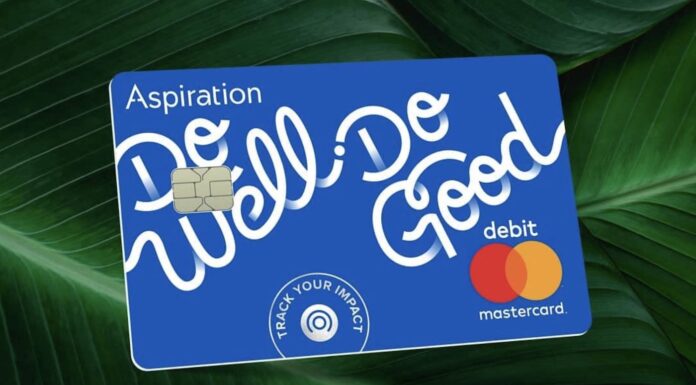
MORE: Bank With A Conscience: The Aspiration Debit Card Helped Customers Finance 1Mil Trees Planted, and Get Cash Back

Beginning in March 2020, USB “proactively dispersed $64,500 to immediately support local efforts in providing much-needed food and other essential services during the COVID-19 crisis.”

But the community-centric bank had a well-earned reputation for its philanthropy long before the pandemic. Twenty years ago, in honor of the bank’s 150th anniversary, Ulster Savings created its in-house charitable foundation, the Ulster Savings Charitable Foundation, to “assist the community in the areas of education, housing, and health/human services.”

“We were founded for our customers and for the benefit of the community at large. That’s part of our DNA,” Calderara said in an interview with WRNQ-92’s Annie in the Morning. “We take a good portion of our annual profits and give it back out to the community in donations.”

Last year in response to the pandemic, USB gave out close to $600,000 in grants. While the money is certainly a much-needed boost, Calderara says everyone who works for USB is committed to sharing time as well. “Our goal is that 100% of employees volunteer every year,” he told Annie. (That works out to roughly 10,000 man-hours of community service annually.)

RELATED: Americans Living in These States Are the Best at Saving Money – And They’re Saving For Different Things 

Is it any wonder this bank with a huge heart enjoys a high rate of return in customer loyalty for its philanthropic ways? We know it certainly piqued our interest.

PASS on the Good Deeds by Sharing This Story… (Photo: Aspiration debit bank card–Facebook)

Red Lobster Workers Spots Rare Breed: ‘1 in 30 Million’ Calico Lobster Will Swim Easy At Virginia Sanctuary

Red Lobster
Red Lobster

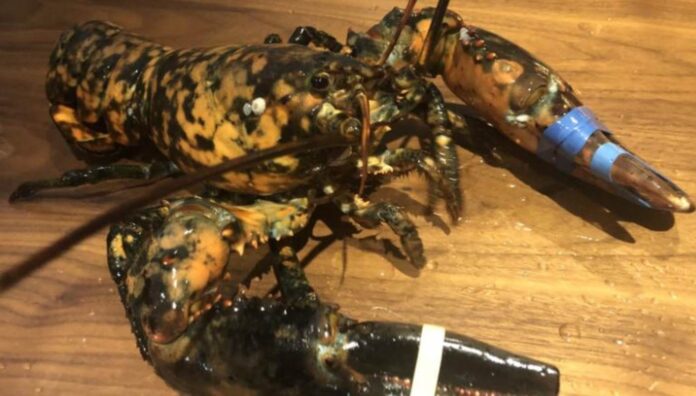
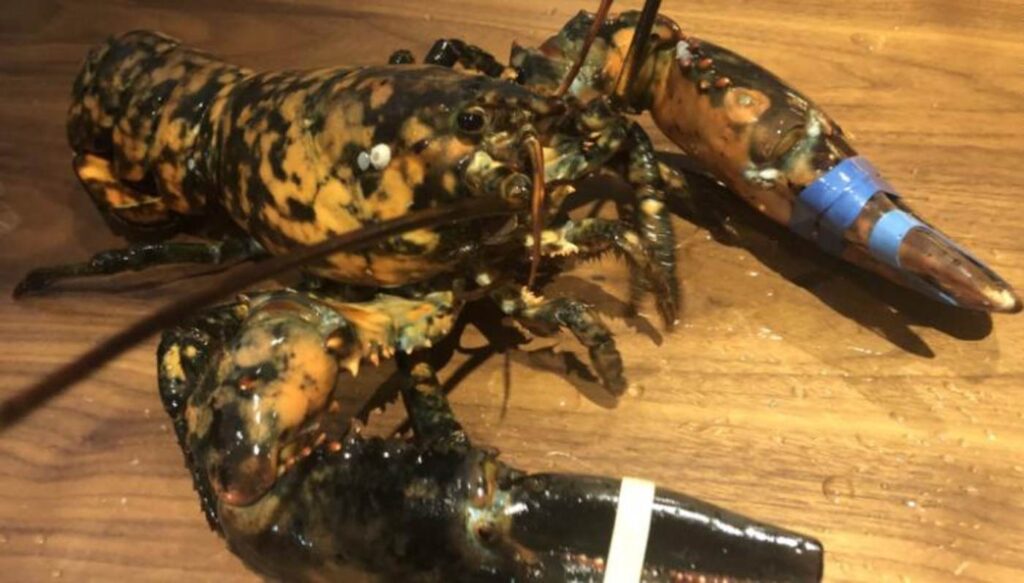
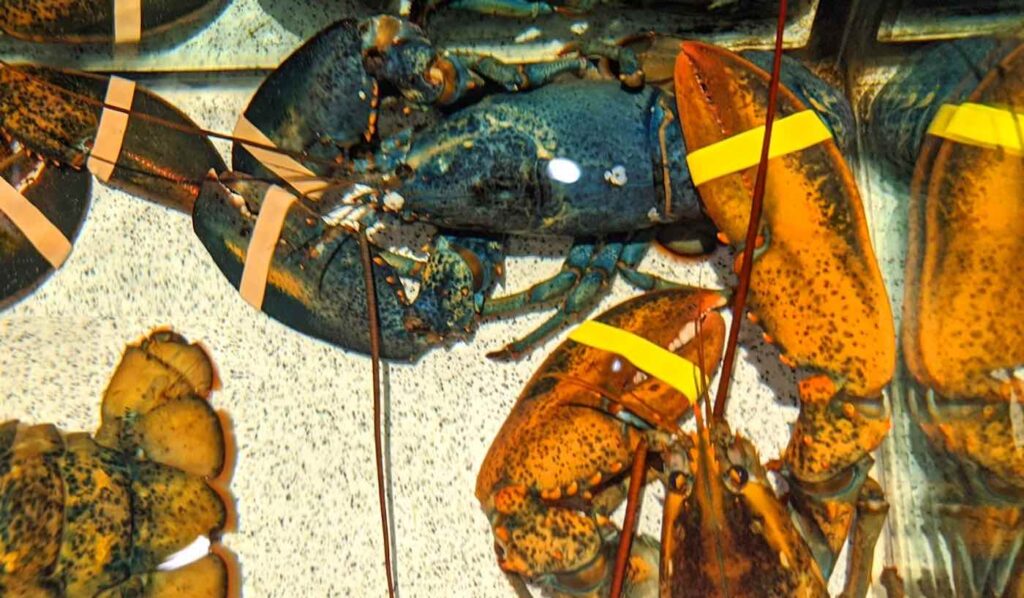
An extremely rare calico lobster was recently found at a Red Lobster by employees who spotted its unique spotted shell.

The male calico lobster, named Freckles by the staff in Manassas, arrived at the Virginia restaurant as part of a regular delivery from Maine.

When team members recognized the lobster’s orange and black shell covering, they reached out to the Red Lobster support team to confirm its identity as a rare calico. After split-colored and albino lobsters, this is the third rarest kind of lobster on the planet, and the chances of catching a calico are 1 in 30 million.

Calico lobsters seldom survive in the wild because their bright colors make them easily spotted by predators.

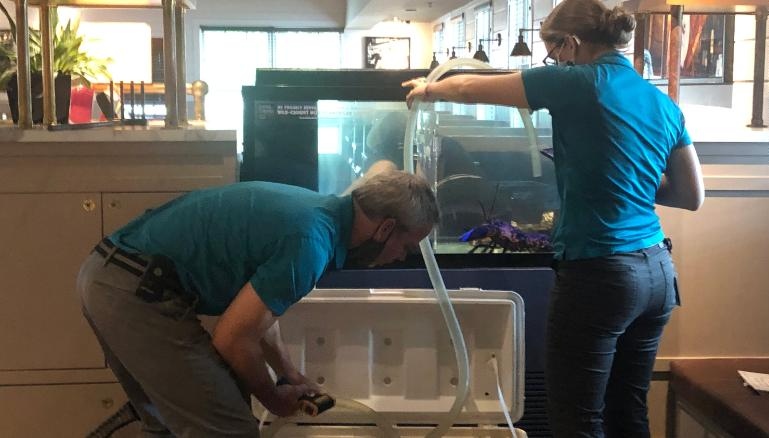
The restaurant was connected to the aquarium at Virginia Living Museum. At the end of last month, a couple of staff members from the aquarium collected the lobster and safely transported him to his new home.

The Virginia Living Museum and Red Lobster are both partners in the Monterey Bay Aquarium Seafood Watch program, which is committed to choosing sustainable seafood for healthier oceans, now and for future generations.

Virginia Living Museum

After a veterinary evaluation and quarantining for 30 days to make sure he is still healthy, Freckles will soon join the museum’s public exhibit in the Chesapeake Bay Gallery.

MORE: Zoo Penguins Delight in Their New Bubble Maker—A Gift From Staff During Quarantine

“We see [Freckles’ move] as an opportunity to share nature’s anomaly with guests,” explained Virginia Living Museum’s Senior Director of Animal Welfare and Conservation Chris Crippen in a statement, “as well as continue important education about sustainable seafood practices and significant conservation efforts of the American lobster fishery.”

This isn’t the first time Red Lobster staff have noticed an intriguing-looking crustacean. Last year, GNN reported the story of an Ohio Red Lobster team member noticing a rare blue lobster among the others.

Akron Zoo/Facebook

Only one in every 2 million animals has the blue coloration, which is the result of a genetic anomaly. After discovering the rare crustacean, they named it Clawde, after the restaurant chain’s mascot, and contacted the Monterey Bay Aquarium, who then reached out to the Akron Zoo. Upon receiving the news, staff at the Ohio zoo sprang into action to prepare a new home for him.

RELATED: When Man Discovers Sea Lion Loves to Fetch, He Plays With the Critter For Two Hours

Two days later, they posted an amusing update, after the lobster was examined by a vet: “It’s a girl! Clawde is now Clawdia, and the proclaimed ‘man cave’ is now a ‘she-shed!’”

SHOW Your Colors On Social Media And Cure The Blues of Friends – SHARE the Good News…

“Don’t be that kid standing at the top of the waterslide, overthinking it. You have to go down the chute.” – Tina Fey (turns 51 today)

Quote of the Day: “Don’t be that kid standing at the top of the waterslide, overthinking it. You have to go down the chute.” – Tina Fey, Bossypants (turns 51 today)

Photo: by Jaee Kim

With a new inspirational quote every day, atop the perfect photo—collected and archived on our Quote of the Day page—why not bookmark GNN.org for a daily uplift?


Instead of Dirty Looks, a Kind Stranger Laid on the Ground to Calm Boy With Autism Amid His Meltdown

Dare to be Different/Facebook

Heroic deeds come in all shapes and sizes. Some of them require bravery in the face of danger, others result from a simple random act of compassion.

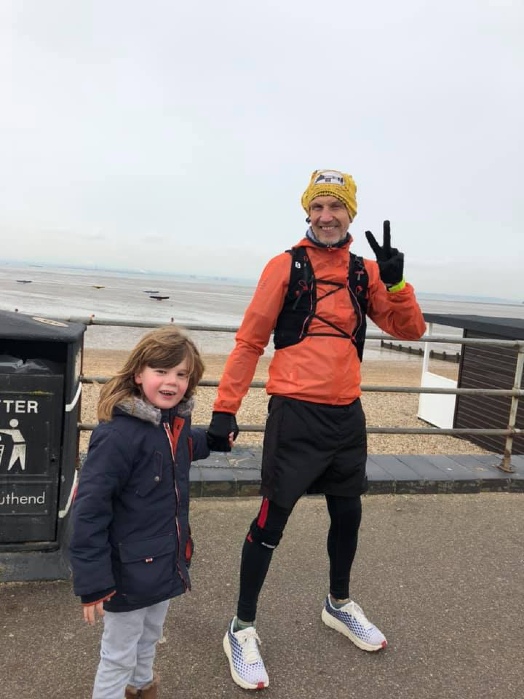
Natalie Fernando was taking her 5-year-old autistic son Rudy (affectionately known as “Roo”) for a seaside walk when the little boy spiraled into a meltdown.

“My son loves to walk, but he hates to turn around and walk back, we usually try to walk in a circuit to avoid this but on his favourite walk with the boats we have no choice but to turn back. This will often lead to a meltdown, one which I can normally handle but on the back of two weeks out of school today was too much for him and me,” Fernando explained on her Facebook page, Better to Be Different.

The promenade at Southend-on-Sea is a popular strolling spot in Essex, England. Knowing she and Rudy were drawing attention and that her son’s outburst might go on for an hour, Fernando was apologetic but she soon found herself subjected to the reproachful stares and comments of passersby.

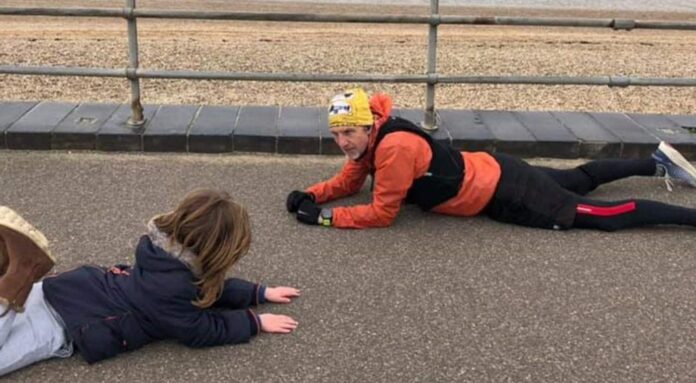
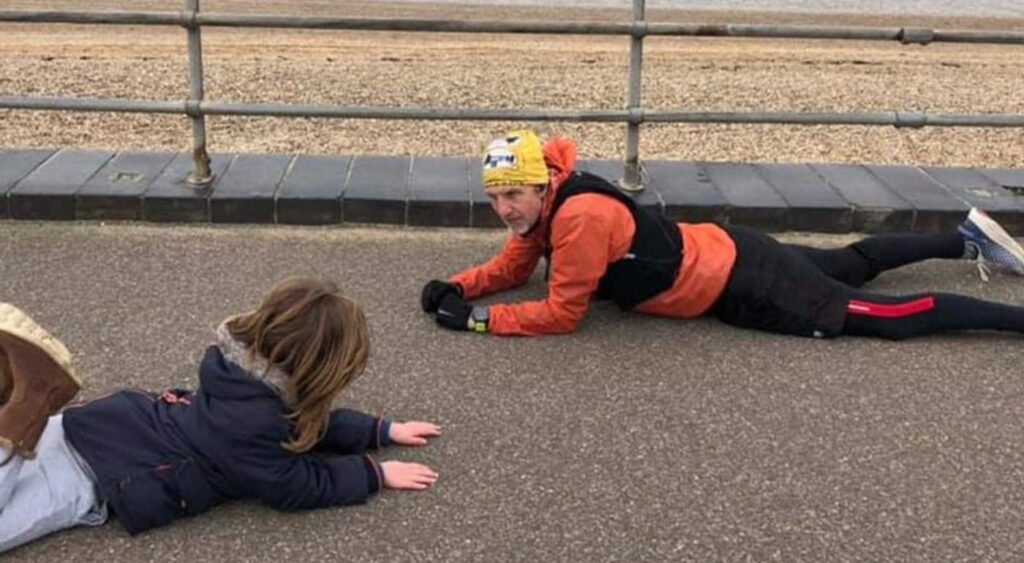
That’s when a total stranger named Ian stopped to ask if she was okay. When Fernando explained what was going on, as if it was the most natural thing in the world to do, he lay down on the ground close to Rudy and engaged him in conversation.

The calming maneuver quickly turned the situation around. After Rudy recovered his composure, Ian walked Roo and his mom back to their car.

MORE: Sister Makes Video For the Classmates of Her Brother With Autism Who is Starting First Grade – And it’s Adorably Helpful

“I wish there were more of this man around and I am beyond thankful,” Fernando said. “I will not forget his kindness… Thanks, Ian from Southend Sea Front, you truly are a kind man.”

In addition to her gratitude, Fernando hopes Ian’s unselfish behavior might inspire others to look deeper before making social judgments themselves.

Dare to be Different/Facebook

“It’s said a lot at the moment, ‘In a world where you can be anything, be kind,’” she wrote. “Words are easy, these actions are not always so easy. This man is living the words and I couldn’t be more grateful.

“If you see a parent struggling, maybe take the time to say, ‘Are you ok?’ Don’t judge the parenting, try not to judge the child, just be kind.

RELATED: McDonald’s Gives a New Car—And Golden Arches—to Family Whose Autistic Son Draws Them Continuously

“We’re all walking our own path and navigating the journey the best we can. Sometimes it takes a moment of kindness from a complete stranger to completely change your day.”

SHARE This Story of Real Kindness With Your Friends…

35 Circus Elephants Arrive in Amazing Florida Sanctuary to Retire Among Forest, Grassland, and 11 Watering Holes

White Oak Conservation

Some kids dream of running away to join the circus—while the Ringling Bros. elephants that had been performing every night might have been dreaming about a place like this, a dream that is now coming true.

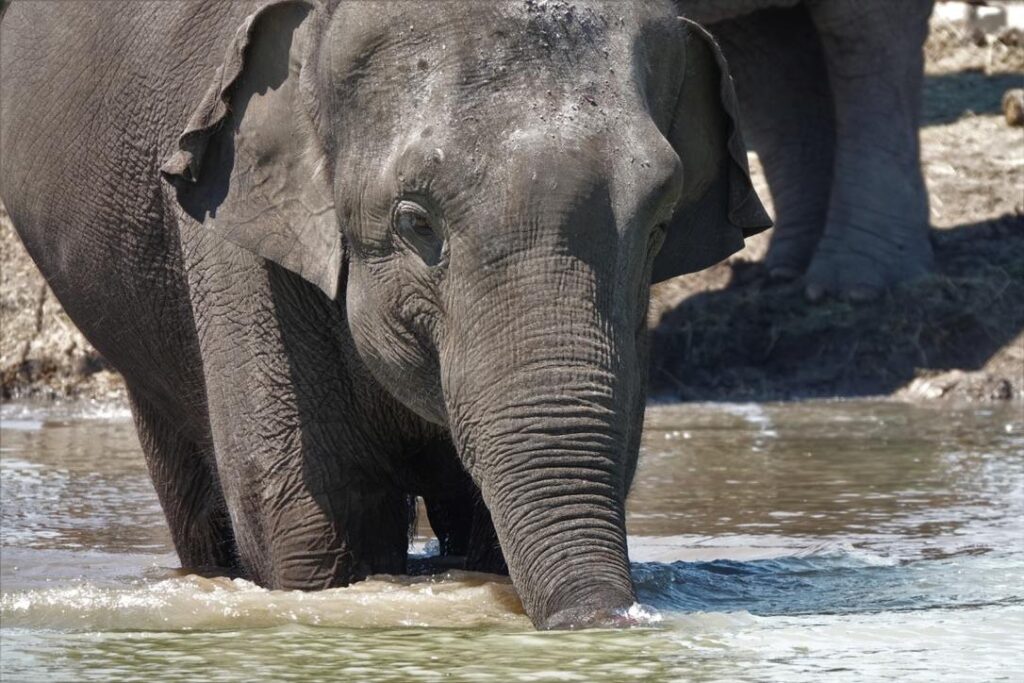
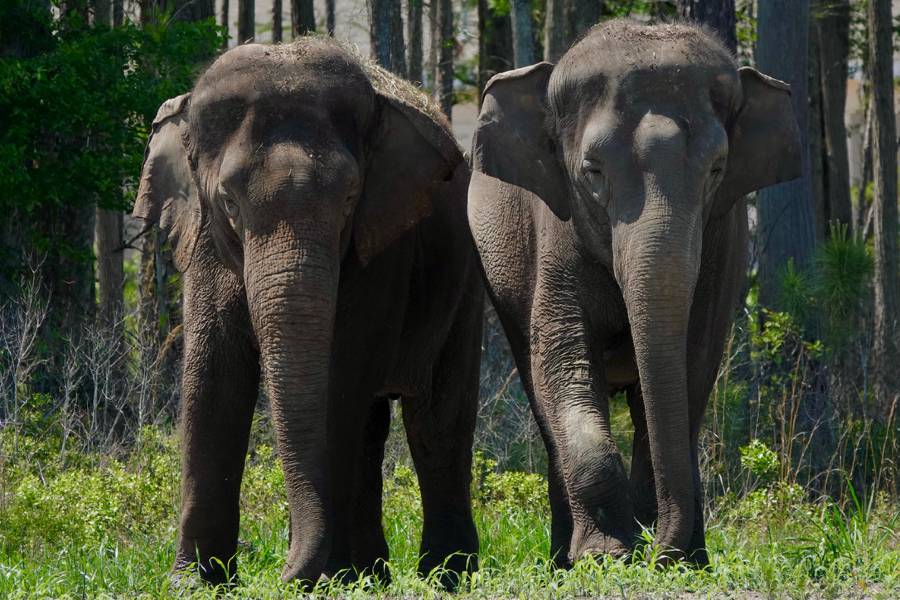
35 Asian pachyderms formerly under the care of the Ringling Bros. and Barnum & Bailey Circus are being welcomed to a 2500-acre Florida reserve where they can wander among their favorite habitats—wetlands, grasslands, or forest—and splash about in 11 different waterholes.

The White Oak Conservation refuge, located in Yulee, was set up to accommodate the about-to-be retired elephants in what will become the largest herd of Asian elephants in the Western Hemisphere.

The 4-square-mile refuge is the best scenario for these elephants because they’ve been raised in captivity and are not equipped to survive in the wild.

“We are thrilled to give these elephants a place to wander and explore,” said philanthropists Mark and Kimbra Walter, whose family-based charity organization, TWF, is the driving force behind the project.

“It is a chance for us to let them return to just being elephants in a situation that is as close to the wild as we can make,” TWF’s Michelle Gadd explained in an interview with National Geographic.

White Oak Conservation

After a period spent socializing to catch them up on herd and family dynamics, the first group of elephants was transported in pairs for the 200-mile journey from the Ringling Center for Elephant Conservation (CEC) in Polk County, Florida, to their new home.

MORE: ‘World’s Loneliest Elephant’ Kavaan Finally Reaches New Home, Gets Hugs From Cher And New Pachyderm Pal

They got their first peak at the sanctuary on May 3, and will be joined by another group of 20 due to arrive in the near future.

“Watching the elephants go out into the habitat was an incredible moment,” said White Oaks’ elephant care lead Nick Newby. “I was so happy to see them come out together and reassure and comfort each other, just like wild elephants do, and then head out to explore their new environment. Seeing the elephants swim for the first time was amazing.”

“Elephants are such amazing creatures, and we are pleased to give them a place where they will flourish,” added Gadd, who oversees the Walters’ conservation efforts.

White Oak Conservation

“We are excited to watch them adapt to the great outdoors, tasting new plants, exploring new areas, experiencing new things.”

RELATED: Strangers Give Performing Elephants New Life at a Thailand Jungle Sanctuary

And—for the elephants—waking up each morning in retirement is a dream that we can all get behind.

WATCH a video from CBS… *NOTE: International viewers can see it on the website.


SEND the Celebratory Elephant News to Pals on Social Media…

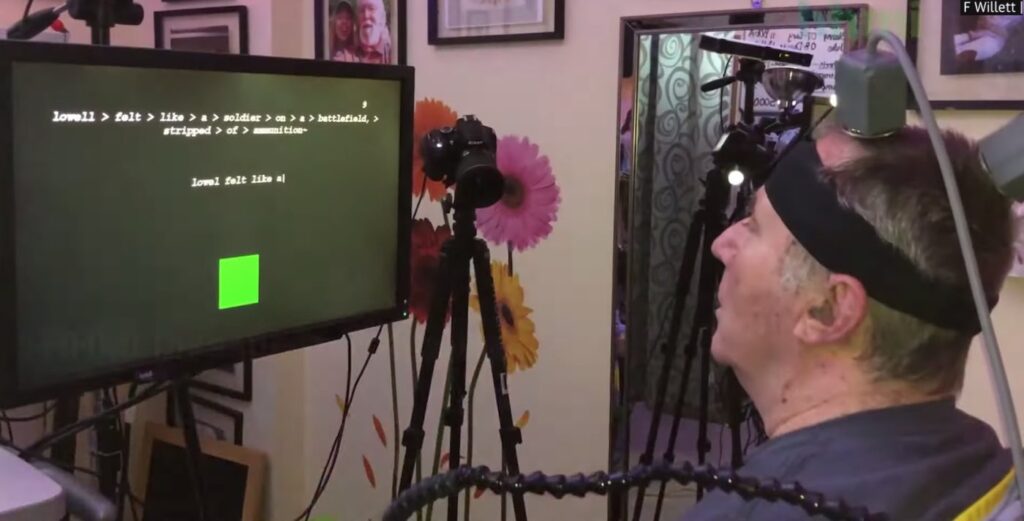
Paralyzed Patient Can Now Write as Fast as Smartphone By ‘Mindwriting’ With Brain Signals

F Willett/YouTube
F Willett/YouTube

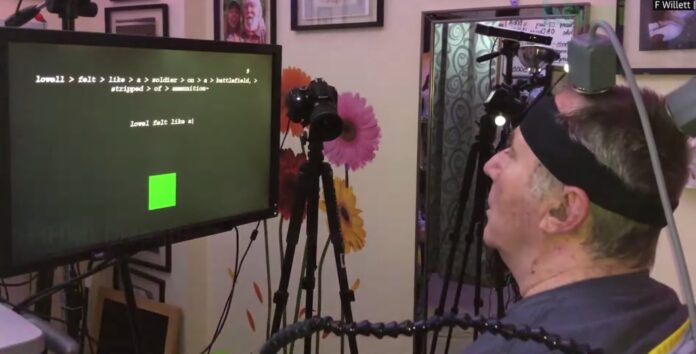
A man paralyzed from the neck down has gained the ability to type words with his brain about as fast as the average smartphone user, a new study says.

This “mindwriting” was done through a science-fiction sounding brain-computer interface (BCI) that picked up neural signals and fed them into an algorithm which translated them into letters.

The secret to the success, and why this particular BCI was able to produce words at such a faster rate than other BCI’s in the past, was that it tracked the brain signals of the patient, known as T5, as he imagined writing them down with a pen—a skill which imprints so thoroughly on our motor skill system that it remains for years after paralysis evidently.

The man was 65 at the time of the study, but it was 2007 when he suffered his spinal cord injury.

“With this BCI, our study participant achieved typing speeds of 90 characters per minute with 94.1% raw accuracy online, and greater than 99% accuracy offline with a general-purpose autocorrect,” wrote the authors, whose paper can be read in Nature. “To our knowledge, these typing speeds exceed those reported for any other BCI, and are comparable to typical smartphone typing speeds of individuals in the age group of our participant”

MORE: He Designed a Mountain Bike to Bring Adventure Back to People With Disabilities – Like Himself

Conducted by Stanford University and the Howard Hughes Medical Institute, the most common error the machine made was with lowercase letters of similar shapes, such as ‘r’, ‘h’, and ‘n’.

At first they allowed the patient to write each letter as he would with his hand, and eventually moved to asking him questions, allowing him to write out his responses—which pleased him no end, they told NPR.

Some BCIs and other machines that are designed to allow paralyzed people to write typically track eye movement, which is often retained even in the most extreme cases of paralysis, such as with the famous locked-in syndrome patient Jean-Dominique Bauby. Bauby is known for writing The Diving Bell and the Butterfly, published in 1997, which he composed entirely through the painstaking process of blinking upon an aid’s selection of the correct letter.

Stanford had conducted other trials with different BCIs before, in which they used eye-monitoring equipment, but found it required tremendous attention and focus from the user.

RELATED: Scientists Demonstrate Success of a Possible ‘EpiPen’ to Prevent Paralysis From Spinal Cord Injuries

The new BCI isn’t yet developed enough to be called a prototype, meaning it will likely be years before more paralysis victims can regain their ability to communicate. However, this also means the room for refinement is much higher, explained one scientist, speaking with CNN.

SHARE This Breakthrough Research With Pals on Social Media…

New Hope For Babies Born Without Immune System as Gene Therapy Breakthrough Looks Like Cure

UCLA
UCLA

An experimental form of gene therapy developed by a team of researchers from UCLA and Great Ormond Street Hospital in London has successfully treated 48 of 50 children born with a rare and deadly inherited disorder that leaves them without an immune system.

Severe combined immunodeficiency due to adenosine deaminase deficiency, or ADA-SCID, is caused by mutations in the ADA gene that creates the enzyme adenosine deaminase— which is essential to a functioning immune system.

For children with the condition, even day-to-day activities like going to school or playing with friends can lead to dangerous, life-threatening infections. If untreated, ADA-SCID can be fatal within the first two years of life.

The investigational gene therapy method involves first collecting some of the child’s blood-forming stem cells, which have the potential to create all types of blood and immune cells.

Next, using an approach developed by the research team, a new copy of the ADA gene is delivered into the stem cells by a modified lentivirus, or “viral vector.” The corrected cells are then returned to the child’s body, where they are intended to produce a continual supply of healthy immune cells capable of fighting infection.

READ: Goal of Plentiful Organ Transplants Moves Closer to Reality as Scientists Grow Tiny Working Livers from Skin Cells

In a study published in the New England Journal of Medicine, co-lead authors Dr. Donald Kohn of UCLA and Dr. Claire Booth of Great Ormond Street Hospital, or GOSH, report two- and three-year outcomes for children treated with the investigational lentiviral gene therapy in clinical trials between 2012 and 2017.

“Between all three clinical trials, 50 patients were treated, and the overall results were very encouraging,” said Kohn, a distinguished professor of microbiology, immunology and molecular genetics at UCLA. “All the patients are alive and well, and in more than 95% of them, the therapy appears to have corrected their underlying immune system problems.”

No complications or treatment-limiting events were reported among the patients. Most adverse events were mild or moderate, and were considered to be related to routine procedures performed in preparation for the experimental gene therapy treatment or effects of the immune system rebuilding.

“Treatment was successful in all but two of the 50 cases, and both of those children were able to return to current standard-of care-therapies and treatments, with one eventually receiving a bone marrow transplant,” said Kohn, who has been working to develop gene therapies for ADA-SCID and other blood diseases for 35 years.

The investigational gene therapy—a one-time procedure that the researchers say may provide lifelong results—is a welcome potential new treatment option for children with ADA-SCID, who otherwise must undergo once- or twice-weekly injections of the ADA enzyme until a matched bone marrow donor, usually a close family member, can be found.

MORE: Yale Scientists Successfully Repair Injured Spinal Cords Using Patients’ Own Stem Cells

If a donor is not available, patients require lifelong injections, along with antibiotics, antifungal medications, and monthly infusions of immunoglobulin—which contains infection-fighting antibodies. These treatments are expensive and therefore out of reach for patients in many countries.

“If approved in the future, this treatment could be standard for ADA-SCID, and potentially many other genetic conditions, removing the need to find a matched donor for a bone marrow transplant and the toxic side effects often associated with that treatment,” said Booth, a GOSH consultant in pediatric immunology and gene therapy.

Source: UCLA

SHARE This Promising Research With Friends…

Floating ‘WALL-E’ Scarecrow Stops Seabirds from Diving into Fishing Nets

Copyright Andres Kalamees, Estonian Ornithological Society

To prevent seabirds from being caught in fishing nets, conservationists have developed an unusual aquatic scarecrow which the GNN staff summarily agreed looked just like Pixar’s WALL-E.

Copyright Andres Kalamees, Estonian Ornithological Society

Invented as part of a multinational effort to create innovative solutions to prevent seabird bycatch, a pair of googly-eyes mounted on a floating buoy was found to decrease the numbers of long-tailed ducks loitering around gillnets in Estonian waters by 25%.

Fishing bycatch, defined as the capture of non-intended animals in fishing nets and lines, accounts for the deaths of 400,000 birds worldwide every year, something which conservationists are targeting as a preventable tragedy with different kinds of deterrents.

Called the Looming Eyes Buoy (LEB), scientists at Bird Life International’s Marine Program tested it on ducks off the coast of Estonia over a 250-hour period to determine its effectiveness. Notably the birds returned when the buoys were removed, suggesting limitations.

Yann Rouxel, lead author of the study reporting the results wrote: “The development of low-cost devices such as the LEB offers up simple, yet innovative, solutions to these conservation problems and so that everybody benefits. The next step is for us to test the device in gillnet fisheries to ensure that seabird bycatch is reduced.”

MORE: Bird Sets New Record for Longest Bird Migration – 7,500 Miles Without Making a Single Stop

The WALL-E-like buoy’s next stop is the Icelandic Lumpfish fisheries and their gillnets, to see if it can continue its preventative effects on other species of birds.

Gillnet bycatch of seabirds isn’t the easiest thing to prevent, and heavy-handed measures like enforced closure of fisheries or banning of nets can harshly impact developing economies, especially in Africa, that rely on the fishing industry for a large part of their national food and income.

Instead scientists are opting for scarecrow tactics—low-cost solutions that allow gillnets to remain, and that won’t pile on unsustainable costs to fishermen.

RELATED: Air Pollution Laws May Have Saved Over 1.5 Billion Birds in American Skies, Finds New Cornell Study

One solution like this in Namibia found almost perfect success through stringing brightly colored “fish scaring lines” from the backs of fishing trawlers. GNN reported last year that a 98% reduction in albatross and other seabird deaths was observed after laws were passed requiring fishermen to attach these lines to the back of their boats.

“It’s part of the brightness and then the motion of it, it’s been very very effective around the world, other nations have reported success other than Namibia,” Titus Shaanika, a Namibian conservationist and co-author of the study reporting on the scaring lines’ success, told the BBC at the time.

BUOY Your Friends With the Good News—Share This Story…

“Men’s cloudless sun shall brightly rise! And songs be heard, instead of sighs. God save the people!” – Godspell (opened 50 years ago)

Quote of the Day: “Men’s cloudless sun shall brightly rise! And songs be heard, instead of sighs. God save the people!” – from the musical, Godspell, which opened 50 years ago today off-Broadway

Photo: by Joshua Earle

With a new inspirational quote every day, atop the perfect photo—collected and archived on our Quote of the Day page—why not bookmark GNN.org for a daily uplift?


A Starving Stray Puppy Upended our Mundane, Retired Lives: Finding Purpose After Finding Yiuka

Johanna Deheer and Yiuka

This blog was submitted to GNN by one of our readers for publishing. If you have an interesting story of kindness or positivity, be sure to send it to us for review.

During the past 18 months my husband and I have come to know some extraordinary dog people, all because of a homeless puppy we rescued over two years ago in beautiful Costa Rica—a fortuitous encounter that changed our lives.

Yiuka was on the street and near starvation when we found her in January 2019, driving back from a day of hiking near La Tigra.

We passed several free-range dogs, a common sight there, and we started tossing some kibble when I noticed this one destitute puppy visibly struggling to wobble over to the food.

She appeared to be resigned to her fate but, not knowing what to do in the moment, we just drove back to our Airbnb—but we vowed to do something.

With 48 hours remaining until our flight back to Canada, we had to fast track some arrangements. Our host recommended we contact Cristina, a woman who for over 20 years has been singlehandedly caring for injured and abandoned dogs in an idyllic setting outside of town. Despite her imminent move, she agreed to take Yiuka—now we had to go find her.

After three attempts to locate Yiuka where we’d first spotted her, we finally found her on the last day of our vacation. She gazed up at me with enormous brown eyes and let me gently wrap her listless body in some towels.

Cristina met us at the clinic, and coincidentally the vet was on duty that weekend. Yiuka was dehydrated, full of inflammation and anemic, but at the end of her examination the vet smiled and declared “Good news! This one wants to live!”

After only a few hours, I’d already lost my heart to this pitiful little stray and she managed to make me sob with relief.

POPULAR: Stray Dog Kept Sneaking Into Dollar Store For a Stuffed Unicorn – Now He and the Toy Have a New Forever Home

We left for the airport while Cristina brought Yiuka home, pampering her with nutritious food. After sleeping for more than a week, the dog finally ventured out to meet her other canine companions, all of whom were welcoming and curious about the newcomer.

Ten weeks later, we flew back to Costa Rica to check on Yiuka’s progress. Her swollen joints were almost normal and although her skin was still patchy, she was lively and playful. For that vacation, we’d randomly booked a place near the town, not really sure of its exact location. We turned off the main highway and my jaw dropped at our good fortune: our hotel was but a 5-minute walk from Cristina’s new property!

Johanna Deheer

In December 2019, we returned for a third time to Costa Rica and met Scott of Costa Rica Dog Rescue in the nearby tourist town of La Fortuna. He has over 20 dogs he calls his own and finds adoptive families for other homeless dogs that he rescues. He suggested we contact Save our Scruff in Toronto and they directed me to Charlie’s Angels, yet another pup refuge south of the Costa Rica capital.

WATCH What Happens When An Octopus Steals a Tennis Ball From a Border Collie

Our future has been radically reshaped because of a scrappy little dog that blocked our road one sunny, steamy afternoon in 2019: We intend to help Save our Scruff and Charlie’s Angels with re-homing dogs to North America. Naturally, we can’t wait to resume our lives, support these amazing dog saviors—including Cristina (at cristinasrefuge.org)—and see Yiuka again before she can forgets how much she means to us!

– Submitted by Johanna Deheer

SPREAD The Opportunity to Help – Share This With Your Friends…

Phase 3 Trial of MDMA Therapy for Severe PTSD is So Successful That 67% Don’t Qualify For Diagnosis Now

Multidisciplinary Association for Psychedelic Studies (MAPS)

A breakthrough human trial achieved highly statistically-significant results and an excellent safety record, demonstrating that MDMA-assisted therapy can be an effective treatment for severe and chronic Post-Traumatic Stress Disorder (PTSD).

At the end of the randomized, blinded, Phase 3 trial, carried out by the nonprofit Multidisciplinary Association for Psychedelic Studies (MAPS), 67% of participants who received three MDMA-assisted therapy sessions no longer even qualified for a PTSD diagnosis—and 88% experienced a clinically meaningful reduction in symptoms.

The pivotal study treated 90 patients with severe, chronic PTSD from any cause with an average duration of 14 years, and replicated the successful results of its Phase 2 trials

Study participants included patients with PTSD caused by combat-related events; accidents; abuse; and sexual harm, and 84% have a history of developmental trauma.

”While many forms of PTSD therapy involve recalling previous trauma, the unique ability of MDMA to raise compassion and understanding while tamping down fear is likely what enables it to be so effective,” says Jennifer Mitchell, Ph.D., lead author of the paper.

RELATED: MDMA Study From Johns Hopkins Further Explains Why Ecstasy Can Help Treat PTSD

The peer-reviewed paper was published in Nature Medicine on May 10.

In the first Phase 3 trial of any psychedelic-assisted therapy, participants who received the MDMA plus manual therapy reported a significant reduction in PTSD symptoms compared to those who received placebo with therapy (p<0.0001).

67% of the group who received MDMA, compared to 32% of the group who received placebo, no longer qualified for a PTSD diagnosis after three treatment sessions. In addition, participants treated with MDMA-assisted therapy had statistically significant reductions for symptoms like depression, relative to placebo with therapy (p=0.0116).

“People with the most difficult-to-treat diagnoses, often considered intractable, respond just as well to this novel treatment as other study participants,” said Mitchell. “In fact, participants diagnosed with the dissociative subtype of PTSD experienced a greater reduction in symptoms than those without the dissociative subtype.”

CHECK OUT: Another Study Shows Psychedelic Psilocybin Mushrooms Offering Long-Term Relief From Depressive Symptoms

Designed under a Special Protocol Assessment with the FDA, the trial treated 90 patients with severe, chronic PTSD. Participants were randomized to receive three sessions of either MDMA or placebo with identical talk therapy. 46 participants received MDMA therapy and 44 participants received therapy with placebo. The primary efficacy endpoint was based on the change from baseline in an independently assessed clinical interview of PTSD severity after 18 weeks.

The assessors also measured average change in functional impairment in work/school, social, and family life. Among the participants in the MDMA-assisted therapy group, 88% experienced a clinically significant reduction in symptoms, compared to 60% in the placebo group.

In the Phase 3 trial, the investigators observed no serious safety or tolerability issues in the MDMA group. MDMA did not increase the risk of suicidal thoughts or behaviors and did not increase cardiovascular risk or abuse potential relative to therapy with placebo. As expected from previous clinical trials, temporary increases in blood pressure and pulse were observed during MDMA sessions; adverse events such as muscle tightness, decreased appetite, nausea, sweating, and feeling cold lasted only for a short time.

THC: First-of-its-Kind Clinical Study Finds That Microdosing THC Can Reduce Chronic Pain

The vanguard of mental health care – enrolling volunteers

PTSD researcher and author of the foundational book on PTSD, The Body Keeps the Score, Bessel van der Kolk served as Principal Investigator for the Boston study site. He explains, “The experience of having been traumatized profoundly alters perceptions; self-experience; and capacity to plan, imagine and anticipate. For 88% of people who receive this treatment, we can expect to see a treatment response. This can lead to fundamental shifts in our subjects’ perspective on self-capacity, affect regulation, and attitude towards those around them. These results open the door to a potentially powerful new pathway to healing.”

A second Phase 3 clinical trial is currently enrolling participants in 7 different US states. Additionally, MAPS plans to conduct other studies to explore the potential of this treatment for other mental health conditions, but always stresses that this experimental therapy “necessitates the appropriate setting to truly guide change and recovery.”

RELATED: First Publicly-Traded Psychedelic Wellness Companies Map the Mental Health Revolution

Listed as a Schedule I drug, MDMA, also known as ‘ecstasy,’ is defined by the FDA as having “no medical benefit” and, therefore, is not currently accessible as a treatment for any condition, except as administered in clinical trials. Thanks to MAPS, founded 35 years ago—and their scientific rigor—this is likely to change soon. Their goal is an FDA approval in 2023 as a ‘Breakthrough-designated therapy’.

SHARE the Ecstasy of This Breakthrough Research on Your Social Media Page… (Photo courtesy of MAPS)

‘VAX LIVE’ Concert Raises $304M to Fund 26 Million COVID-19 Vaccine Doses for World’s Most Vulnerable

Global Citizen – YouTube

A benefit concert that was broadcast in 100 countries last week helped mobilize $302 million in funding and over 26 million individual COVID-19 vaccine doses for the world’s most marginalized communities, and their health care workers in need of support.

Global Citizen, founded online in 2012 to address global poverty, organized the star-studded concert hosted by Selena Gomez, to support the nonprofit efforts of the ACT Accelerator (Access to COVID-19 Tools).

Played to an audience of fully vaccinated frontline workers in the SoFi Stadium in Los Angeles County, California, the show was taped May 2.

The concert featured speeches by VAX LIVE campaign chair Prince Harry, along with performances from Jennifer Lopez, Eddie Vedder, and Foo Fighters. You can watch their top clips from the show, that include appearances by Ben Affleck (who did a Batman skit with Jimmy Kimmel), Chrissy Teigen, David Letterman, Gayle King, Nomzamo Mbatha, Olivia Munn, and Sean Penn, here.

RELATED: India’s Richest Man Retools Factories to Provide FREE Oxygen to 1 in 10 COVID Patients Across Country

The announcement last week from Global Citizen reported their results, so far:

  • $302 million was pledged by Canada and Croatia, and $2.5 million raised from the private sector.
  • 13.25 million COVID-19 vaccine doses were pledged from Norway, Spain, New Zealand, Croatia, and the UAE.
  • $39.6 million in commitments pledged by corporate and philanthropic partners—pledges that have been matched in funding to total $63.3 million.
  • In total, more than 26 million COVID-19 vaccine doses pledged by governments, businesses, and philanthropists to support those around the world most in need as a result of the aforementioned funding.

Prince Harry and Meghan also called for their fans to donate on the occasion of their son Archie’s birthday—and their call had mobilized $1.9 million in six days.

Donate, Learn More and Watch Videos at the VAX Live website—And Share the Good News on Social Media…

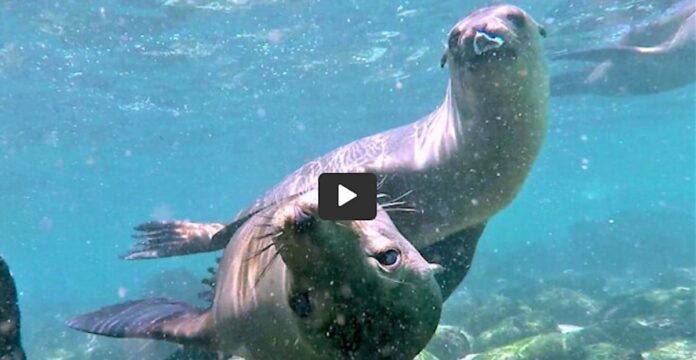
Watch Sea Lion Pups Do Water Ballet Around Delighted Swimmers at the Seashore

Scuba divers were beyond thrilled when a a group of young sea lions showed up in the water and surrounded them for a playtime of curious wonder.

The beaches and rocky shores of the Galapagos Islands are home to many sea lions, and the large animals so often look and act like our lovable canine companions that they referred to as “sea dogs” or “ocean puppies”.

The adult sea lions are not very interested in humans, with males being especially territorial, and weighing well over 300 pounds (150kg). They can seem quite grumpy if they are approached too closely.

But the juvenile sea lions are curious and fun loving creatures that will investigate anything interesting in the water.

Witness these pups suddenly surround a couple who were swimming. They were fascinated with the pair of humans who captured their shenanigans with an underwater camera.

WATCH Mama Black Bear Struggle Hilariously to Get All Four Cubs Across The Road

The couple dove and rolled, trying to mimic the sea lions and engage them in a game. The camera also caught the sounds of the animals as they blew bubbles and communicated, while swimming gracefully in circles around Kristy, who was delighted to join in on their wild water ballet.

SHARE the Fun And Make Your Friends Smile on Social Media…

“I think attraction to someone is the animating force of the universe—like gravity or the pull of the poles.” – Meryl Streep in ‘Let Them Talk’

By Travis Grossen

Quote of the Day: “I think attraction to someone is the animating force of the universe—like gravity or the pull of the poles.” – Meryl Streep’s character in the 2020 HBO/Soderbergh film, Let Them Talk

Photo: by Travis Grossen

With a new inspirational quote every day, atop the perfect photo—collected and archived on our Quote of the Day page—why not bookmark GNN.org for a daily uplift?


Biden Administration Takes Steps to Reinstate Migratory Bird Protections After Trump Rule Struck Down by Court

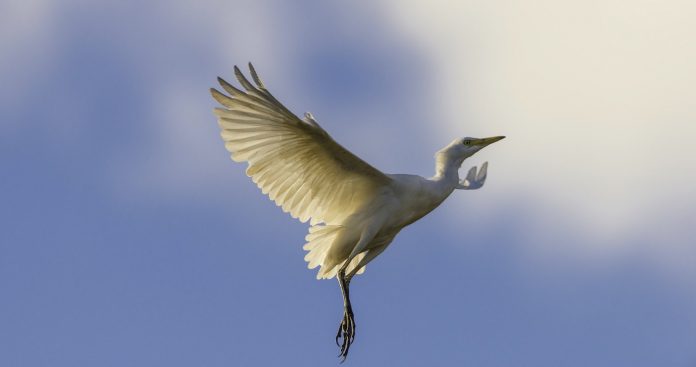
Egret in flight by Jason Jacobs, CC license

As bird-lovers celebrated World Migratory Bird Day on May 8, new science had already determined that in the last half century around 3 billion birds in North America had been lost, and that two-thirds of the continent’s feathered friends today are at risk due to climate change.

That’s why the Biden administration this month began a new rulemaking process to formally withdraw the Trump administration action that removed “incidental take” protections from the Migratory Bird Treaty Act.

According to the Audubon Society, the Biden team in March rescinded the “M-Opinion” implemented by the Trump administration, which was struck down in federal court last August, a decision that unequivocally upheld the most effective bird conservation law on the books.

RELATED: Texas and Philly Join Movement to Dim Lights at Night – Making it Safer for Migrating Birds

The change by the Trump administration to the 100-year-old Migratory Bird Treaty Act (MBTA) was aimed at limiting the protection only to activities that purposefully kill birds, but exempting all industrial hazards from enforcement. Any “incidental” death—no matter how inevitable, avoidable or devastating to birds—became immune from enforcement under the law.

If this change had been in place in 2010, BP would have faced no consequences under the MBTA for the more than one million birds killed in the Deepwater Horizon oil spill.

Johannes Plenio

RELATED: Air Pollution Laws May Have Saved Over 1.5 Billion Birds in American Skies, Finds New Cornell Study

“We hope to see the administration follow quickly with another rulemaking to establish a reasonable permitting approach for incidental take,” said Sarah Greenberger, senior vice president of conservation policy, National Audubon Society. “A permitting program is a common-sense approach to clarifying these longstanding protections and providing the certainty industry wants.”

“We need a multi-front approach to ensure the MBTA remains as a strong foundation for bird protection well into the future,” said Erik Schneider, policy analyst, National Audubon Society.

“In addition to action by the administration, we hope to see the Migratory Bird Protection Act reintroduced and passed in this Congress. Together, these actions will strengthen the MBTA from future attacks and offer stability and certainty for birds and businesses.”

POPULAR: 2000 Microphones Unlock the Mystery of Why Hummingbirds Hum: ‘Like a Beautifully-tuned Instrument’

A bill had been approved by a House Committee in Congress during the final two years of Donald Trump’s presidency, which had a bipartisan group of more than 90 co-sponsors, that would secure protections for birds and direct the Fish and Wildlife Service to develop a permitting process for “incidental take” to drive businesses to implement best management practices and document compliance.

But this new Congress would need to begin the process again, and get a majority vote on the bill in both the House and the Senate if it wants to make its own statement that, in the judge’s words, “to kill a mockingbird… is a crime” when you know you can avoid it.

Tweet This Song of Hope for Birds on Social Media….

This Week’s Inspiring Horoscopes From Rob Brezsny’s ‘Free Will Astrology’

Our partner Rob Brezsny provides his weekly wisdom to enlighten our thinking and motivate our mood. Rob’s Free Will Astrology, is a syndicated weekly column appearing in over a hundred publications. He is also the author of Pronoia Is the Antidote for Paranoia: How All of Creation Is Conspiring To Shower You with Blessings. (A free preview of the book is available here.)

Here is your weekly horoscope…

FREE WILL ASTROLOGY – Week beginning May 13, 2021
Copyright by Rob Brezsny, FreeWillAstrology.com
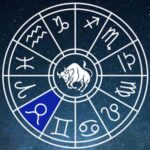
TAURUS (April 20-May 20):
A fan once asked composer Johann Sebastian Bach about his creative process. He was so prolific! How did he dream up such a constant flow of new music? Bach told his admirer that the tunes came to him unbidden. When he woke up each morning, they were already announcing themselves in his head. According to my analysis of the astrological omens, Taurus, a comparable phenomenon may very well visit you in the coming weeks—not in the form of music, but as intuitions and insights about your life and your future. Your main job is to be receptive to them, and make sure you remember them.

GEMINI (May 21-June 20):
“I love unmade beds,” writes Gemini poet Shane Koyczan. “I love when people are drunk and crying and cannot be anything but honest. I love the look in people’s eyes when they realize they’re in love. I love the way people look when they first wake up and they’ve forgotten their surroundings. I love when people close their eyes and drift to somewhere in the clouds.” In the coming days, Gemini, I encourage you to specialize in moments like those: when you and the people you’re interested in are candid, unguarded, raw, vulnerable, and primed to go deeper. In my opinion, your soul needs the surprising healing that will come from these experiences.
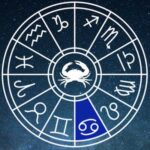
CANCER (June 21-July 22):
Trailblazing psychologist C. G. Jung said his loneliness wasn’t about a lack of people around him. Rather, it came from the fact that he knew things that most people didn’t know and didn’t want to know. He had no possibility of communicating many of the interesting truths that were important to him! But I’m guessing that won’t be much of a problem for you in the coming months. According to my astrological analysis, you’re more likely to be well-listened to and understood than you have been in quite some time. For best results, ASK to be listened to and understood. And think about how you might express yourself in ways that are likely to be interesting and useful to others.
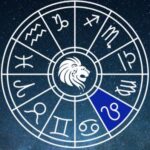
LEO (July 23-Aug. 22):
Author Marianne Williamson tells us, “Spiritual growth involves giving up the stories of your past so the universe can write a new one.” And what exactly does it mean to “give up the stories of your past”? Here’s what I think: 1. Don’t assume that experiences you’ve had before will be repeated in the future. 2. Don’t assume that your ideas about the nature of your destiny will always be true. 3. Even good things that have happened before may be small and limited compared to the good things that could happen for you in the years to come. 4. Fully embrace the truth that the inherent nature of existence is endless transformation—which is why it’s right and natural for you to ceaselessly outgrow the old plot lines of your life story and embrace new ones.

VIRGO (Aug. 23-Sept. 22):
In 2010, an American engineer named Edward Pimentel went to Moscow to compete in the World Karaoke Championship. He won by singing Usher’s “DJ Got Us Falling in Love.” His award: one million dumplings, enough to last him 27 years. I have a good feeling about the possibility of you, too, collecting a new prize or perk or privilege sometime soon. I just hope it’s a healthier boon than dumplings. For best results, take some time now to clearly define the nature of the prize or perk or privilege that you really want—and that will be truly useful.
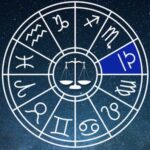
LIBRA (Sept. 23-Oct. 22):
I will love it if sometime soon you find or create an opportunity to speak words similar to what novelist D. H. Lawrence once wrote to a lover: “You seem to have knit all things in a piece for me. Things are not separate; they are all in a symphony.” In other words, Libra, I’ll be ecstatic if you experience being in such synergistic communion with an empathic ally that the two of you weave a vision of life that’s vaster and richer than either one of you could summon by yourself. The astrological omens suggest this possibility is now more likely than usual.
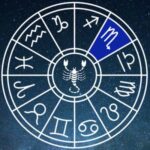
SCORPIO (Oct. 23-Nov. 21):
“I have more memories than if I were a thousand years old,” wrote poet Charles Baudelaire. Was he bragging or complaining? Did the weight of his past feel like a burden or did it exhilarate him and dynamize his creative powers? I’m hoping that in the coming weeks your explorations of your past will feel far more like the latter—a gift and blessing that helps you understand aspects of your history that have always been mysterious or murky.

SAGITTARIUS (Nov. 22-Dec. 21):
Have you ever kissed a monster in your nightly dreams? Have you won a chess match with a demon or signed a beneficial contract with a ghost or received a useful blessing from a pest? I highly recommend activities like those in the coming weeks—both while you’re asleep and awake. Now is a good time to at least make peace with challenging influences, and at best come into a new relationship with them that serves you better. I dare you to ask for a gift from an apparent adversary.
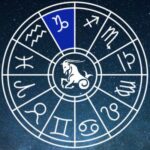
CAPRICORN (Dec. 22-Jan. 19):
What does it mean to “follow the path with heart”? I invite you to meditate on that question. Here are my ideas. To follow the path with heart means choosing a destiny that appeals to your feelings as well as to your ambitions and ideas and habits. To follow a path with heart means living a life that fosters your capacity to give and receive love. To follow the path with heart means honoring your deepest intuitions rather than the expectations other people have about you. To follow the path with heart means never comparing your progress with that of anyone else’s, but rather simply focusing on being faithful to your soul’s code.
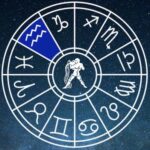
AQUARIUS (Jan. 20-Feb. 18):
“It’s a good thing when people are different from your images of them,” wrote Aquarian author Boris Pasternak. “It shows they are not merely a type. If you can’t place them in a category, it means that at least a part of them is what a human being ought to be. They have risen above themselves, they have a grain of immortality.” I love that perspective! I’m offering it to you because right now is a favorable time to show that you are indeed different from the images people have of you; that you transcend all stereotyping; that you are uncategorizable.

PISCES (Feb. 19-March 20):
You have personal possession of the universe’s most monumental creation: consciousness. This mercurial flash and dazzle whirling around inside you is outlandishly spectacular. You can think thoughts any time you want to—soaring, luminescent, flamboyant thoughts or shriveled, rusty, burrowing thoughts; thoughts that can invent or destroy, corrupt or redeem, bless or curse. There’s more. You can revel and wallow in great oceans of emotion. Whether they are poignant or intoxicating or somewhere in between, you relish the fact that you can harbor so much intensity. You cherish the privilege of commanding such extravagant life force. I bring these thoughts to your attention because the time is right for a holiday I call Celebrate Your Greatest Gifts.
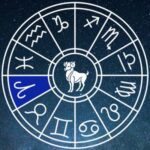
ARIES (March 21-April 19):
In one of her poems, Emily Dickinson tells us, “The pedigree of honey does not concern the bee; a clover, any time, to him Is aristocracy.” I suggest you be like Dickinson’s bee in the coming weeks, my dear Aries. Take pleasure and power where they are offered. Be receptive to just about any resource that satisfies your raw need. Consider the possibility that substitutes and stand-ins may be just as good as the supposed original. OK? Don’t be too fussy about how pure or prestigious anything is.

WANT MORE? Listen to Rob’s EXPANDED AUDIO HOROSCOPES, 4-5 minute meditations on the current state of your destiny — or subscribe to his unique daily text message service at: RealAstrology.com

(Zodiac images by Numerologysign.com, CC license)

SHARE The Wisdom With Friends Who Are Stars in Your Life on Social Media…

Rubber Made From Dandelions is Making Tires More Sustainable – Truly a Wondrous Plant

Dandelion field in Russia by Vadim Indeikin, CC license

As companies continue to search for more environmentally regenerative materials to use in manufacturing, the tire industry is beginning to revisit an old Soviet method of rubber cultivation, using a plant that is considered a pesky weed in the West—dandelions.

Dandelion field in Russia by Vadim Indeikin, CC license

A major tire company in Germany has partnered with the University of Aachen to produce dandelion rubber tires in a bid to cut back on landfill waste, microplastic pollution, deforestation, and economic shortcomings related to rubber tree cultivation.

While the concept of “dandelion rubber” seems like a Harry Potter spell waiting to happen, as mentioned previously, it was actually developed by the Soviet Union in their quest for self-sufficiency.

Reporting from DW tells the story of a scavenger hunt across the largest country ever, and the testing of more than 1,000 different specimens before dandelions growing in Kazakhstan were found to be a perfect fit.

Previously, the world used the rubber trees, mostly Hevea brasiliensi, from Brazil, but during the Second World War the major powers of the USSR, UK, US, and Germany, were all cultivating dandelions for rubber manufacturing.

POPULAR: Want to Help Bees? Leave the Dandelions Alone This Spring

After the war ended, demand and supply gradually returned to Brazil and eventually to synthetic tires made from petrochemicals.

Aiding the bees and our environment

Now, Continental Tires is producing dandelion rubber tires called Taraxagum (which was inspired by the genus name of the species, Taraxacum). The bicycle version of their tires even won the German Sustainability Award 2021 for sustainable design.

“The fact that we came out on top among 54 finalists shows that our Urban Taraxagum bicycle tire is a unique product that contributes to the development of a new, alternative and sustainable supply of raw materials,” stated Dr. Carla Recker, head of development for the Taraxagum project.

The report from DW added that the performance of dandelion tires was better in some cases than natural rubber—which is typically blended with synthetic rubber.

RELATED: Joint Venture With Love’s Truck Stops Will Produce 80M Gallons of Renewable Biodiesel Made From 100% Waste

Capable of growing, as we all know, practically anywhere, dandelion needs very little accommodation in a country or business’s agriculture profile. The Taraxagum research team at Continental hypothesizes they could even be grown in the polluted land on or around old industrial parks.

Furthermore, the only additive needed during the rubber extraction process is hot water, unlike Hevea which requires the use of organic solvents that pose a pollution risk if they’re not disposed of properly.

Representing a critical early-season food supply for dwindling bees and a valuable source of super-nutritious food for humans, dandelions can also be turned into coffee, give any child a good time blowing apart their seeds—and, now, as a new source for rubber in the world; truly a wondrous plant.

MORE: Bike Tires That Need No Air Are Made From NASA Rover Tech –But Soon Will Be Available to Any Cyclist

BLOW The Seeds of Progress to Your Social Media Pages…

“Don’t allow your past or present condition to control you. It’s just a process that you’re going through to get you to the next level.” – T.D. Jakes

Quote of the Day: “Don’t allow your past or present condition to control you. It’s just a process that you’re going through to get you to the next level.” – T.D. Jakes

Photo: by Jason Olliff

With a new inspirational quote every day, atop the perfect photo—collected and archived on our Quote of the Day page—why not bookmark GNN.org for a daily uplift?


NASA Detects ‘Persistent Hum’ Deep in the Cosmos, 14 Billion Miles From Earth

Voyager spacecraft - NASA
NASA

A NASA space probe is now deep in interstellar space, and its instruments have detected an intriguing constant ‘hum’.

Voyager 1—one of two sibling NASA spacecraft launched 44 years ago and now the most distant human-made object in space—still works and zooms toward infinity.

The craft has long since zipped past the edge of the solar system through the heliopause— the solar system’s border with interstellar space—into the interstellar medium.

There, it’s been detecting the constant drone of interstellar gas (plasma waves), according to Cornell University-led research.

Examining data slowly sent back from more than 14 billion miles away, Stella Koch Ocker, a Cornell doctoral student in astronomy, has uncovered the emission. “It’s very faint and monotone, because it is in a narrow frequency bandwidth,” Ocker said. “We’re detecting the faint, persistent hum of interstellar gas.”

This work allows scientists to understand how the interstellar medium interacts with the solar wind, Ocker said, and how the protective bubble of the solar system’s heliosphere is shaped and modified by the interstellar environment.

Launched in September 1977, the Voyager 1 spacecraft flew by Jupiter in 1979 and then Saturn in late 1980. Travelling at about 38,000 mph, Voyager 1 crossed the heliopause in August 2012.

MORE: Particle Mystery Deepens As ‘Strong’ New Evidence Hints at ‘5th’ Force in Nature

After entering interstellar space, the spacecraft’s Plasma Wave System detected perturbations in the gas. But, in between those eruptions—caused by our own roiling sun—researchers have uncovered a steady, persistent signature produced by the tenuous near-vacuum of space, according to new research published in Nature Astronomy.

RELATED: NASA Confirmation: Earth is Safe From Asteroid for 100 Years

“The interstellar medium is like a quiet or gentle rain,” said senior author James Cordes, the George Feldstein Professor of Astronomy. “In the case of a solar outburst, it’s like detecting a lightning burst in a thunderstorm and then it’s back to a gentle rain.”

Ocker believes there is more low-level activity in the interstellar gas than scientists had previously thought, which allows researchers to track the spatial distribution of plasma—that is, when it’s not being perturbed by solar flares.

Cornell research scientist Shami Chatterjee explained how continuous tracking of the density of interstellar space is important. “We’ve never had a chance to evaluate it. Now we know we don’t need a fortuitous event related to the sun to measure interstellar plasma,” Chatterjee said.

“Regardless of what the sun is doing, Voyager is sending back detail. The craft is saying, ‘Here’s the density I’m swimming through right now. And here it is now. And here it is now. And here it is now.’ Voyager is quite distant and will be doing this continuously.”

CHECK OUT: She Came to the US to Study With Only $300 in Her Pocket — Now She’s a NASA Director For the Mars Rover

Voyager 1 left Earth carrying a golden record created by a committee chaired by the late Cornell professor Carl Sagan, as well as mid-1970s technology. To send a signal to Earth, it took 22 watts, according to NASA’s Jet Propulsion Laboratory. The craft has almost 70 kilobytes of computer memory and—at the beginning of the mission—a data rate of 21 kilobits per second.

Due to the 14-billion-mile distance, the communication rate has since slowed to 160-bits-per-second, or about half a 300-baud rate.

You can check out GNN’s story on that special golden record here, and learn how scientists have created an awesome update to help space-farers potentially find us humans here on Earth one day.

Source: Cornell University

SHARE This Far-Out News With Pals on Social Media…