












All News - Page 487 of 1735 - Good News Network
Home Blog Page 487

94-Year-old Gets Medal of Honor 70 Years After Heroism, Making Him One of the Most Decorated Soldiers in US History

Seventy years ago, on a frozen hilltop deep in what is now North Korea, a young First Lieutenant acted with bravery that earned him the Distinguished Service Cross, the military’s second-highest honor.

On Friday, Ralph Puckett, Jr. was hosted at the White House where he received the Medal of Honor, the U.S. government’s highest and most prestigious military decoration.

Ralph’s first response was to ask, “Why all the fuss? Can’t they just mail it to me?”

But, after his lifetime of service to the nation, President Joe Biden said at the medal ceremony, “Rather than mail it to you, I would’ve walked it to you.”

Ralph’s wife of 68 years, Jeannie Puckett, was in the audience, too, as Biden described how the couple met—while the brave Army Ranger was recovering from his wounds.

They were married two years to the day after the battle in November, 1950, for which he was honored this week with the following citation: “For acts of gallantry and intrepidity above and beyond the call of duty while serving as the commander 8th U.S. Army Ranger Company…”

Army photo

51 of Puckett’s Rangers and 9 Korean enlisted soldiers set out in a daylight attack to take Hill 205, just 60 miles from the border with China, which drew mortar, machine gun, and small-arms fire against them. First Lieutenant Puckett mounted the closest tank, exposing himself to the deadly enemy fire. Leaping from the tank, he shouted words of encouragement to his men and began to lead the Rangers in their offensive.

RELATED: Gary Sinise Launches Mental Health Network For Veterans and First Responders

To make their charge, they had to cross about half mile of frozen rice paddies under fire.

“Almost immediately, enemy fire threatened the success of the attack by pinning down one platoon. Leaving the safety of his position, with full knowledge of the danger, First Lieutenant Puckett intentionally ran across an open area three times to draw enemy fire, thereby allowing the Rangers to locate and destroy the enemy positions and to seize Hill 205,” continued the citation.

When the Rangers finally reached the top of the hill, they found it abandoned, but Puckett knew the fight wasn’t nearly over.

“During the night, the enemy launched a counterattack that lasted four hours. Over the course of the counterattack, the Rangers were inspired and motivated by the extraordinary leadership and courageous example exhibited by First Lieutenant Puckett.”

Even though Puckett’s Rangers were outnumbered almost ten to one, five attacks by a battalion-strength enemy were repulsed.

During the first wave, First Lieutenant Puckett was wounded by grenade fragments, but refused evacuation and continually directed artillery support. Over the course of the next several hours, four more waves of assaults came.

“He repeatedly abandoned positions of relative safety to make his way from foxhole to foxhole, to check the company’s perimeter and to distribute ammunition amongst the Rangers.”

LOOK: Bride and Groom Betrothed to History After She Wore a Wedding Dress Made From the Parachute That Saved Him

Extraordinary selflessness above and beyond the call

When the enemy launched a sixth attack, two mortar rounds landed in his foxhole, inflicting “grievous wounds” in both his feet, his backside, his left arm and shoulder.

“Knowing his men were in a precarious situation, First Lieutenant Puckett commanded the Rangers to leave him behind and evacuate the area. Feeling a sense of duty to aid him, the Rangers refused the order and staged an effort to retrieve him from the foxhole while still under fire from the enemy.

Ultimately, the Rangers succeeded in retrieving First Lieutenant Puckett and they moved to the bottom of the hill, where First Lieutenant Puckett called for devastating artillery fire on the top of the enemy-controlled hill.

POPULAR: 48 Years After Reading the Christmas Card That Got Him Through the Vietnam War, He Finally Got to Meet the Sender

First Lieutenant Puckett’s extraordinary heroism and selflessness above and beyond the call of duty were in keeping with the highest traditions of military service and reflect great credit upon himself, his unit, and the United States Army.”

First Time a Foreign Leader Attended This Ceremony

Biden said in his remarks, “Korea is sometimes called the “Forgotten War.” But those men who were there under Lieutenant Puckett’s command — they’ll never forget his bravery. They never forget that he was right by their side throughout every minute of it.”

Puckett at the White House

“And the people of the Republic of Korea haven’t forgotten, as evidenced by the fact that the President of Korea is here for this ceremony. I doubt this has ever happened before.”

President Moon said, “I learned that I’m the first foreign leader to ever attend a ceremony of such kind. As President of the Republic of Korea, it is a great honor and pleasure.

CHECK OUT: Hero Jumps Into Maryland Bay to Save Toddler’s Life After Crash Flings Her Car Seat Into the Water

“Colonel Puckett is a true hero of the Korean War… Without the sacrifice of veterans, including Colonel Puckett and the Eighth Army Ranger Company, freedom and democracy we enjoy today couldn’t have blossomed in Korea.”

“From the ashes of the Korean War, we rose, we came back. And that was thanks to the Korean War veterans who fought for Korea’s peace and freedom. And now, thanks to their support and efforts, we are enjoying prosperity. On behalf of the Korean people, I express deep gratitude and respect to them. Through the war veterans, the Korean people saw a great soul of America that marches toward freedom and peace. Their acts of gallantry, sacrifice, and friendship will forever be remembered.”

Puckett’s military service did not end in the Korean War. He also served in the Vietnam War, where he earned a second Distinguished Service Cross, two Silver Stars, and two Bronze Stars, adding to his five Purple Hearts for injuries suffered in combat.

You can read about his life story in his published book, Ranger: A Soldier’s Life (from the American Warrior Series).

MORE: 70-Year-Old Veteran Battling Cancer Hailed as an ‘Angel’ After He Charged into Burning Home to Save Neighbors

SALUTE A Hero By Sharing This With Your Company on Social Media…

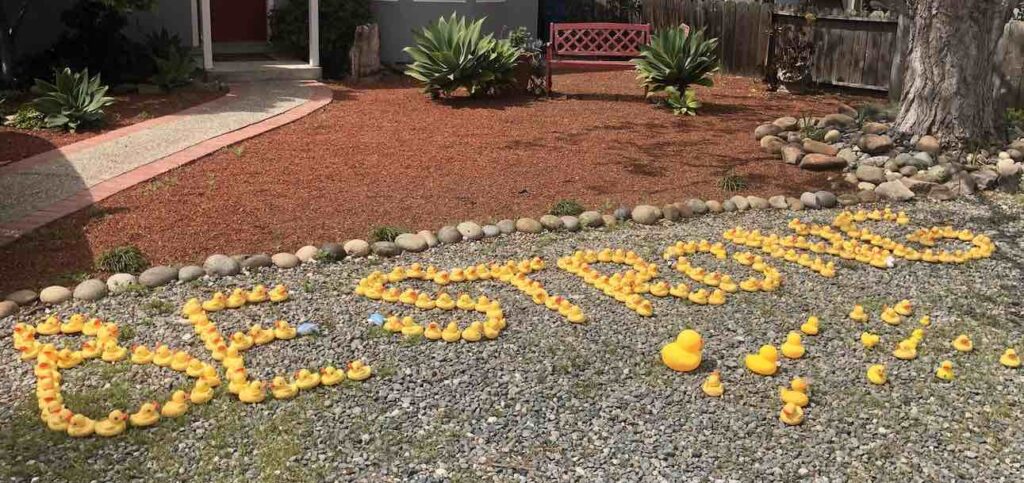
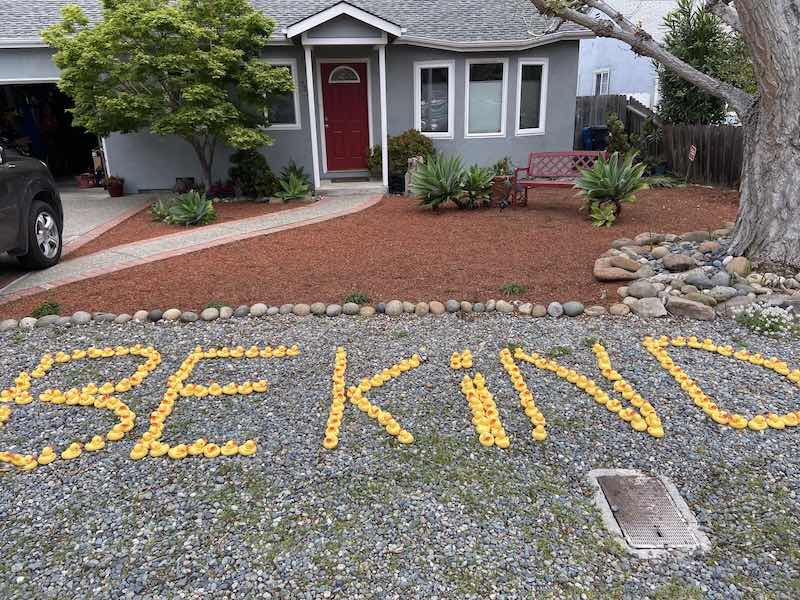
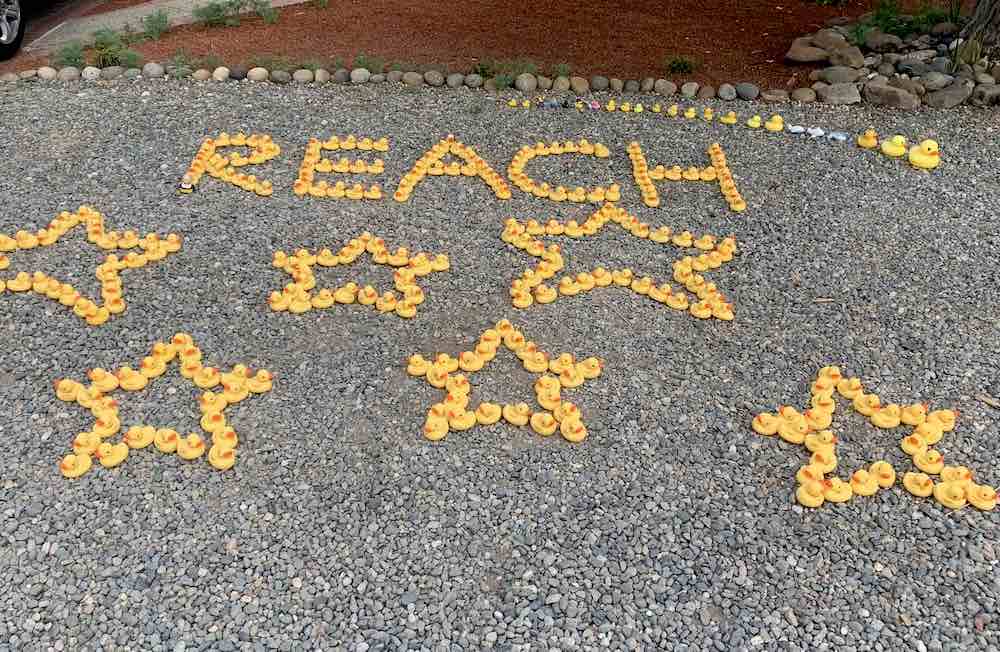
Man Inspires Town During Lockdown—Spelling Out Messages with Rubber Duckies in Front Yard (PHOTOS)

People are traveling across town to see the rubber duckies being arranged into inspiring messages that are quacking up the neighborhood.

Jim Preston came up with the unique way to make people smile during lockdown from his 14th Ave. home in Menlo Park, California.

He gets up at the quack of dawn (presumably) and uses the yellow toy ducks to spell out words of hope, encouragement, and wisdom, and has been doing it for months.

Chandrama Anderson told GNN that photos were being posted on the app, NextDoor, but that she began seeing the creations on her daily walks.

“For my husband’s 60th birthday under Covid lockdown, when there weren’t many ways to make a birthday special, I asked Jim to use his ducks to spell out ‘Happy Birthday Locke,’ and he did!”

She said he was “thrilled”.

WATCH: The Serendipitous Moment a Dog Runs Into Her Puppy Brother in a Park—Even Though He Lives 500 Miles Away

A message from Lion King

Even if the message is not created specifically for you, it’s easy to believe the uplifting sidewalk art comes straight from the heart—the heart of a town ‘wise quacker’.

LOOK: Family’s Dachshund and Speedy Tortoise Play Football Together

Inspire Your Flock on Social Media—Share the Fun…

Special Delivery from Tampa to Puerto Rico May Save Toad Species from Extinction

Tampa Zoo

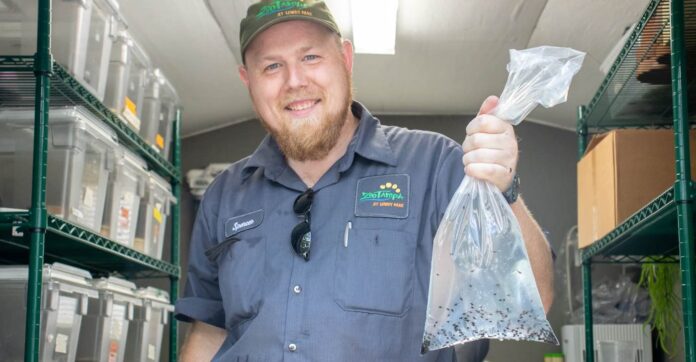
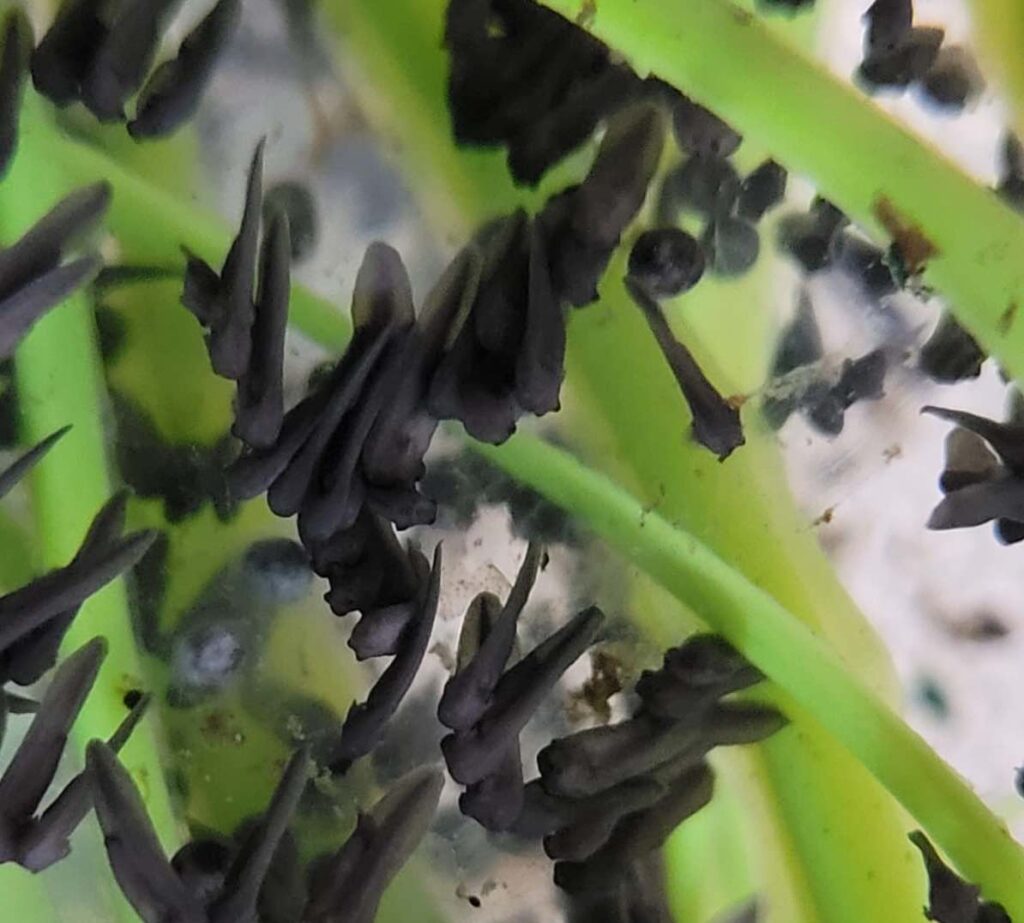
Tadpoles have been airlifted this week by plane from Florida to the island home of their ancestors, helping to save a species.

Tampa Zoo

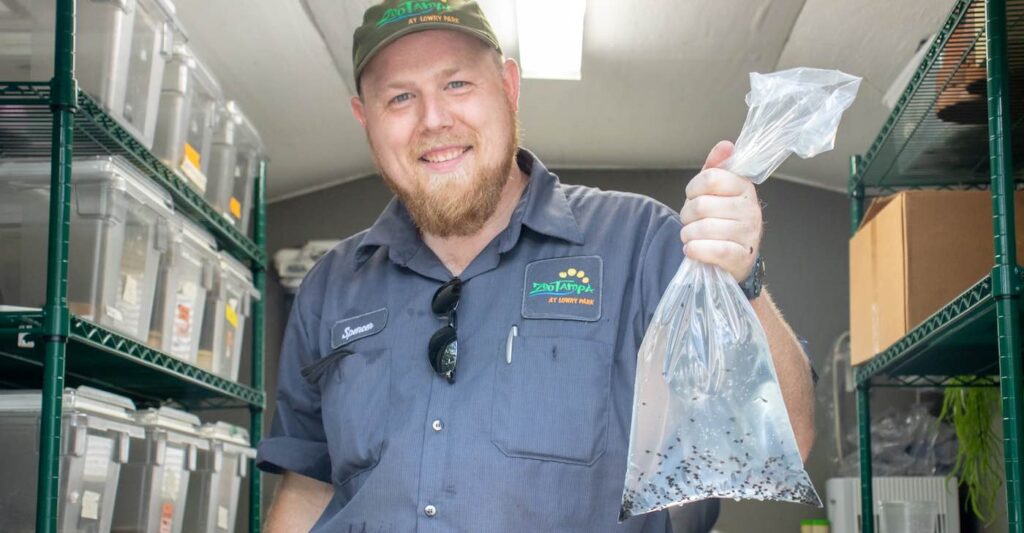
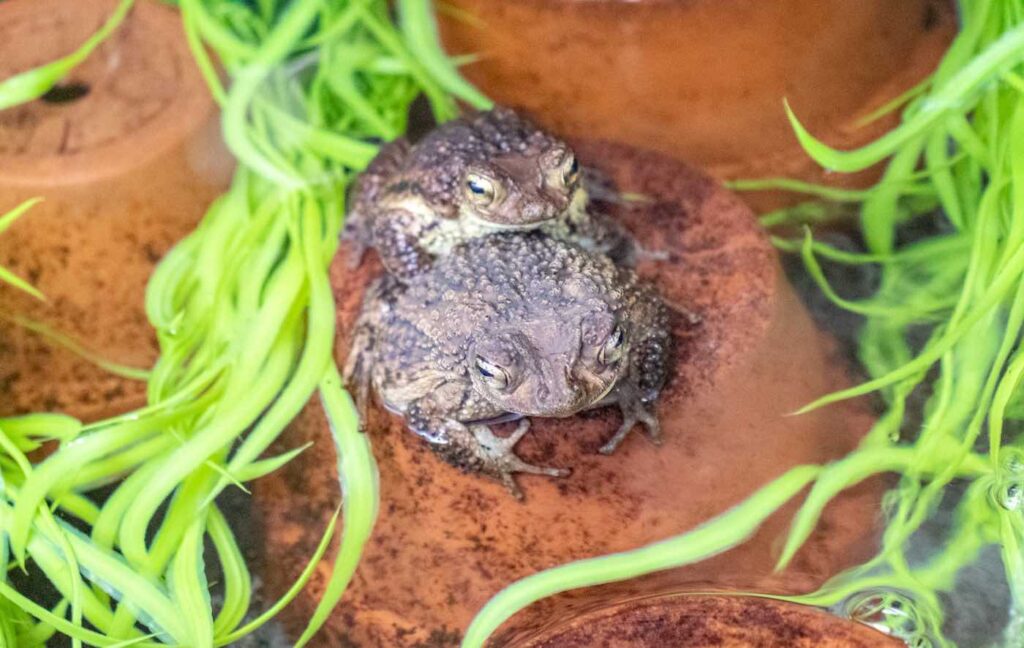
The only toad species native to Puerto Rico is now critically endangered, but ZooTampa contributed to the survival of this important species by sending thousands of recently hatched tadpoles to help restore the population on their native island.

The Puerto Rican crested toad once flourished on the island but before 1967 the amphibian was thought to have become extinct, due to habitat loss from urban development, natural disasters, and competition from invasive species who prey on their young.

An essential part of the island ecosystem, eating insects that are pests to humans, scientists estimate that fewer than 3,000 adult toads remain in the wild.

Today, ZooTampa is one of only a few zoos across the world who participate in the Association of Zoos and Aquarium’s Species Survival Plan with the goal of re-populating this species by breeding and sending tadpoles back to Puerto Rico.

RELATED: Folks in New Jersey Are Caring For More Than 800 Baby Turtles Rescued From Storm Drains

The Zoo’s herpetology and veterinary teams oversaw the delicate reproduction process for the pairs of crested toads: From careful habitat temperature control that stimulates the island’s rainy season, to playing the “Barry White version” of toad mating calls, several important steps were taken to ensure that the toads produced fertilized eggs.

ZooTampa

“These tadpoles represent hope for this critically endangered species,” said Dan Costell, associate curator of herps and aquatics. “Bolstering the population of these toads in their natural environment is a real win for conservation and at the core of our mission at ZooTampa.”

The tadpoles were quickly counted and packed into protected shipping boxes filled with oxygen to keep the tadpoles healthy and safe on their journey to their homeland, where biologists will release them into protected managed ponds.

WATCH: World’s Oldest-Known Wild Bird—Named Wisdom—Hatches Another Chick at 70

It was a race against the clock, as there’s only an 8-day window between when the fertilized eggs begin hatching into tadpoles and when they must be released by biologists on the island.

ZooTampa

The efforts of all involved are now resulting in chirps of joy—from both toads and humans—on the Island of Enchantment.

Fertilize Your Social Media Feeds With This Hopping Good News…

“Nothing in the universe can stop you from letting go and starting over.” – Guy Finley

Quote of the Day: “Nothing in the universe can stop you from letting go and starting over.” – Guy Finley

Photo: by Marcus Dall Col

With a new inspirational quote every day, atop the perfect photo—collected and archived on our Quote of the Day page—why not bookmark GNN.org for a daily uplift?

Long-lasting Solid-state Lithium Battery From Harvard May Solve a 40-year Problem

lithium battery experiment - courtesy of Second Bay Studios:Harvard SEAS

Long-lasting, quick-charging batteries are essential to the expansion of the electric vehicle market, but today’s lithium-ion batteries fall short of what’s needed — they’re too heavy, too expensive and take too long to charge.

lithium battery experiment – courtesy of Second Bay Studios:Harvard SEAS

For decades, researchers have tried to harness the potential of solid-state, lithium-metal batteries, which hold substantially more energy in the same volume and charge in a fraction of the time compared to traditional lithium-ion batteries.

“A lithium-metal battery is considered the holy grail for battery chemistry because of its high capacity and energy density,” said Xin Li, Associate Professor of Materials Science at the Harvard John A. Paulson School of Engineering and Applied Science (SEAS). “But the stability of these batteries has always been poor.”

Now, Li and his team have designed a stable, lithium-metal solid state battery that can be charged and discharged at least 10,000 times — far more cycles than have been previously demonstrated — at a high current density. The researchers paired the new design with a commercial high energy density cathode material.

This battery technology could increase the lifetime of electric vehicles to that of the gasoline cars — 10 to 15 years — without the need to replace the battery. With its high current density, the battery could pave the way for electric vehicles that can fully charge within 10 to 20 minutes.

POPULAR: With EV Battery Prices Dropping 87% in a Decade, Tesla is Now Making a Car That Will Cost $25,000

“Our research shows that the solid-state battery could be fundamentally different from the commercial liquid electrolyte lithium-ion battery,” said Li. “By studying their fundamental thermodynamics, we can unlock superior performance and harness their abundant opportunities.”

The big challenge with lithium-metal batteries has always been chemistry. Lithium batteries move lithium ions from the cathode to the anode during charging. When the anode is made of lithium metal, needle-like structures called dendrites form on the surface. These structures grow like roots into the electrolyte and pierce the barrier separating the anode and cathode, causing the battery to short or even catch fire.

To overcome this challenge, Li and his team designed a multilayer battery that sandwiches different materials of varying stabilities between the anode and cathode. This multilayer, multimaterial battery prevents the penetration of lithium dendrites not by stopping them altogether but rather by controlling and containing them.

RELATEDDaimler Trucks is Now Accepting Orders for All-Electric Freight Trucks, Having Tested Them on America’s Highways

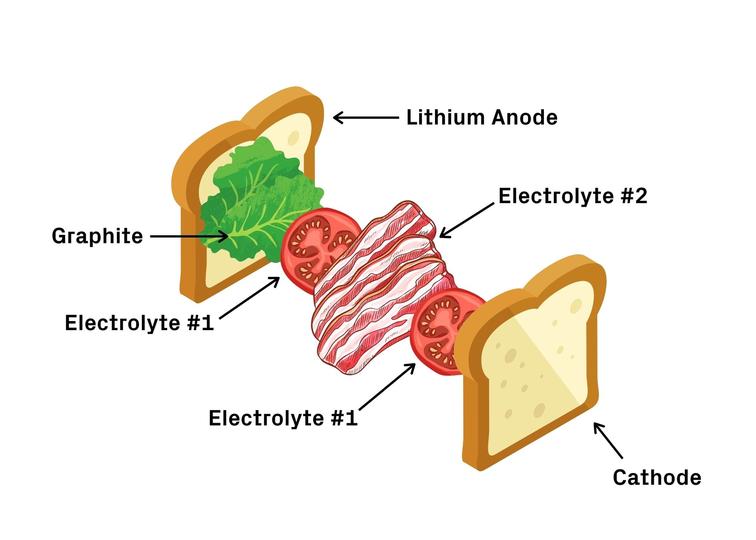
Like a BLT sandwich

Think of the battery like a BLT sandwich. First comes the bread — the lithium metal anode — followed by lettuce — a coating of graphite. Next, a layer of tomatoes — the first electrolyte — and a layer of bacon — the second electrolyte. Finish it off with another layer of tomatoes and the last piece of bread — the cathode.

Courtesy of Second Bay Studios : Harvard SEAS

The first electrolyte (chemical name Li5.5PS4.5Cl1.5 or LPSCI) is more stable with lithium but prone to dendrite penetration. The second electrolyte, (Li10Ge1P2S12 or LGPS) is less stable with lithium but appears immune to dendrites. In this design, dendrites are allowed to grow through the graphite and first electrolyte but are stopped when they reach the second. In other words, the dendrites grow through the lettuce and tomato but stop at the bacon. The bacon barrier stops the dendrites from pushing through and shorting the battery.

“Our strategy of incorporating instability in order to stabilize the battery feels counterintuitive but just like an anchor can guide and control a screw going into a wall, so too can our multilayer design guide and control the growth of dendrites,” said Luhan Ye, co-author of the paper and graduate student at SEAS.

“The difference is that our anchor quickly becomes too tight for the dendrite to drill through, so the dendrite growth is stopped,” Li added.

The battery is also self-healing; its chemistry allows it to backfill holes created by the dendrites.

CHECK OUT: Scientists Develop New Material to Make Lithium Ion Batteries Self-Healing and Easily Recyclable

“This proof-of-concept design shows that lithium-metal solid-state batteries could be competitive with commercial lithium-ion batteries,” said Li. “And the flexibility and versatility of our multilayer design makes it potentially compatible with mass production procedures in the battery industry. Scaling it up to the commercial battery wont’ be easy and there are still some practical challenges, but we believe they will be overcome.”

The research was published in Nature, and supported by Dean’s Competitive Fund for Promising Scholarship at Harvard University and Harvard Data Science Initiative Competitive Research Fund.

DRIVE This Development to Your Techie Friends on Social Media…

This Week’s Inspiring Horoscopes From Rob Brezsny’s ‘Free Will Astrology’

Our partner Rob Brezsny provides his weekly wisdom to enlighten our thinking and motivate our mood. Rob’s Free Will Astrology, is a syndicated weekly column appearing in over a hundred publications. He is also the author of Pronoia Is the Antidote for Paranoia: How All of Creation Is Conspiring To Shower You with Blessings. (A free preview of the book is available here.)

Here is your weekly horoscope…

FREE WILL ASTROLOGY – Week beginning May 20, 2021
Copyright by Rob Brezsny, FreeWillAstrology.com

GEMINI (May 21-June 20):
Here’s a public service announcement for you Geminis from the planet and god Mercury: You’re under no obligation to be the same person you were three years ago, or six months ago, or last week—or even five minutes ago, for that matter. Mercury furthermore wants you to know that you have been authorized to begin a period of improvisation and experimentation, hopefully guided by a single overriding directive: what feels most fun and interesting to you. In the coming weeks it will be more important to create yourself anew than to know precisely who you are.

CANCER (June 21-July 22):
As a Zen Buddhist priest for 47 years, Kōshō Uchiyama was knowledgeable about the power that illusions can wield over our imaginations. “If we’re not careful,” he said, “we are apt to grant ultimate value to something we’ve just made up in our heads.” I won’t tell you the examples from my own life that prove his point, because they’re too embarrassing. And I’m happy to report that I don’t think you’re anywhere near granting *ultimate* value to something you’ve just made up in your head. But I do advise you to be on the lookout for milder versions of that phenomenon.

LEO (July 23-Aug. 22):
Leo-born professor Sibelan Forrester is an expert on charms, spells, and incantations in Russian folklore. She wrote, “An empty place where no one can see or hear what one says is the proper locus for working magic.” Spells often start with these words, she added: “I rise up, saying a blessing. I go out, crossing myself, and I go to an open field.” Whether or not you have Russian heritage, Leo, I see the immediate future as being a good time for you to perform magic in an open field with no one else around. What might be the intention of your magic? How about something like this: “I ask my guides and ancestors to help me offer my most inspired largesse so as to serve the health and inspiration and liberation of the people whose lives I touch.”

VIRGO (Aug. 23-Sept. 22):
Spiritual author Stephen Russell wrote, “Don’t mask or deny your vulnerability: It is your greatest asset.” That’s an exaggeration, in my opinion. Vulnerability is a greater asset than your intelligence, compassion, and creativity? Not in my view. But I do recognize the high value of vulnerability, especially for you Virgos during the next three weeks. “Be vulnerable,” Russell continues. “Quake and shake in your boots with it. The new bounty and beauty that are coming to you, in the form of people, situations, and things, can only come to you when you are vulnerable—open.”

LIBRA (Sept. 23-Oct. 22):
My friend Jenny’s Swedish grandmother used to say to her on a semi-regular basis, “åh tänk om vi vore korkade, vi skulle vara så lyckliga,” meaning, “If only we were stupid, we would be so happy.” In the coming weeks, I am asking you to disprove that folk wisdom. According to my analysis of the astrological potentials, now is a favorable time for you to explore ways in which your intelligence might enhance and deepen your enjoyment of life. Your motto should be: “The smarter we are, the happier we will be.”

SCORPIO (Oct. 23-Nov. 21):
Sometime soon I invite you to speak a message similar to what poet Kenneth Rexroth once delivered to a special person in his life. He wrote, “Your tongue thrums and moves / Into me, and I become / Hollow and blaze with / Whirling light, like the inside / Of a vast expanding pearl.” Do you know anyone who might be receptive to hearing such lyrical praise? If not, create a fantasy character in your imagination to whom you can say it. On the other hand, maybe you do know a real person who would appreciate an earthier, less poetical tribute. If so, please convey it; something akin to this: “Your influence on me amplifies my ability to be my best self.” Now is a perfect time to honor and extol and reward those who move you and excite you.

SAGITTARIUS (Nov. 22-Dec. 21):
Author Aldous Huxley said, “I can sympathize with people’s pains, but not with their pleasures. There is something curiously boring about somebody else’s happiness.” To that I reply, “Other people’s pleasure and happiness bored you? Maybe you were suffering from raging narcissism and an addiction to cynicism.” In any case, Sagittarius, I hope you won’t be like Huxley in the next few weeks. I believe you could glean useful insights and derive personal benefits from knowing about and appreciating the joys of others.

CAPRICORN (Dec. 22-Jan. 19):
Capricorn businessman Howard Hughes (1905–1976) had great success early in his life. Working as a film director and aviation pioneer, he became a wealthy philanthropist. But as he aged, he became increasingly eccentric and reclusive. For the last 10 years of his life, he lived in expensive hotels, where he placed strict and often absurd demands on the hotel staff. For example, if he called on room service to bring him a meal that included peas, he would measure the peas with a ruler, and send back any he deemed too big. I do hope that you Capricorns will also have an intense focus on mastering the details in the coming weeks—but not as intense or misguided as that nonsensical obsession.

AQUARIUS (Jan. 20-Feb. 18):
Aquarian author Charles Dickens (1812–1870) was famous and popular. Audiences packed the halls where he did public lectures and readings. His favorite way to prepare for these evening events was to spend the day drinking a pint of champagne, as well as generous servings of rum, cream, and sherry with eggs beaten into the mix. I don’t have a problem with that—whatever works, right?—but I suggest a different approach for your upcoming appointments with greater visibility and prominence. Like what? How about sexy meditations on the gratitude you feel for your expanding possibilities? How about fun fantasies focusing on how you’ll use your increased clout?

PISCES (Feb. 19-March 20):
In his upcoming book The Dictionary of Obscure Sorrows, John Koenig proposes that we begin using “monachopsis,” a word he coined. He defines it as follows: “the feeling of being out of place, as maladapted to your surroundings as a seal on a beach—lumbering, clumsy, easily distracted, huddled in the company of other misfits, unable to recognize the ambient roar of your intended habitat, in which you’d be fluidly, brilliantly, effortlessly at home.” Even if you have spent too much time lately experiencing monachopsis, my dear, I predict this malaise will soon dissipate and give way to an extended phase of being fluidly, brilliantly, effortlessly at home.

ARIES (March 21-April 19):
Aries playwright Samuel Beckett wrote the play Waiting for Godot. At one point in the tale, the character named Estragon suggests it might be possible, even desirable, to “dance first and think afterwards.” In response, the character named Pozzo says, “By all means, nothing simpler. It’s the natural order.” With that in mind, and in accordance with astrological omens, I am going to encourage you to dance first and think afterwards as much as possible in the coming weeks. In my opinion, your ability to analyze and reason will thrive to the degree that you encourage your body to engage in enjoyable free-form play. Your power to make good decisions will grow as you take really good care of your physical organism and give it an abundance of pleasure and release.

TAURUS (April 20-May 20):
As you enter a phase when gradual, incremental progress is the best progress possible, I offer you the concluding lines of Taurus poet Adrienne Rich’s poem “From a Survivor”: “not as a leap, but a succession of brief, amazing movements, each one making possible the next.” I especially want to call your attention to the fact that the small steps can be “brief, amazing movements.” Don’t underestimate the power of minor, subtle, regular breakthroughs.

WANT MORE? Listen to Rob’s EXPANDED AUDIO HOROSCOPES, 4-5 minute meditations on the current state of your destiny — or subscribe to his unique daily text message service at: RealAstrology.com

(Zodiac images by Numerologysign.com, CC license)

SHARE The Wisdom With Friends Who Are Stars in Your Life on Social Media…

Penguin in Antarctica Leaps into Passing Tourist Boat – Enjoys the Respite (WATCH)

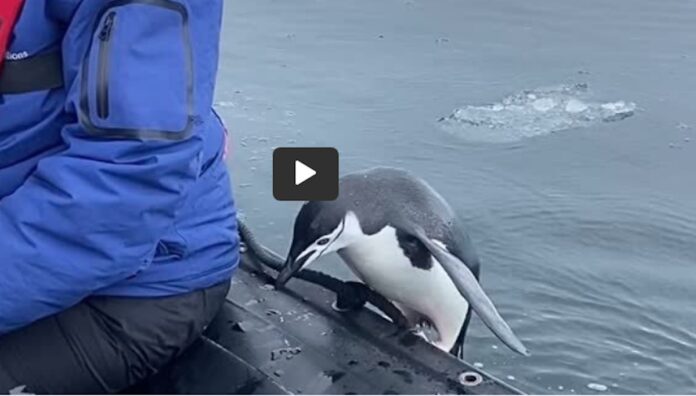
An eager penguin leaped into a tourist boat and stayed onboard for 10 minutes to enjoy the above-water view with the other passengers.

Polar guide John Bozinov was leading a tour through Antarctica’s Ross Sea when a sole chinstrap penguin made a couple of attempts to jump onboard his Zodiac vessel.

The 30-year-old cut off the engine to make it easier for the animal to make the leap, and it finally landing successfully on the side of the boat next to one of the passengers.

RELATED: Watch Zoo Penguins Delight in Their New Bubble Maker—A Gift From Staff During Quarantine

The speculation is that the penguin was possibly trying to avoid predators in the water, like leopard seals and killer whales—especially because after he jumped ship, he hopped over to another vessel piloted by John’s colleague Steve Reynolds.

WATCH the moment these travelers will surely never forget…

GIVE Your Friends a Delightful Moment By Sharing This on Social Media…

Leonardo DiCaprio Announces a $43 Million Pledge to Save the Galápagos Islands

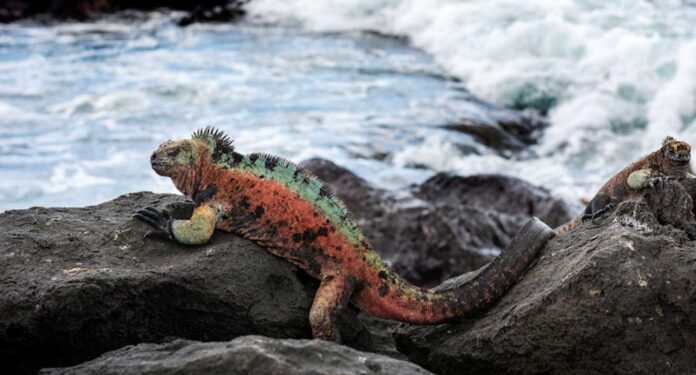
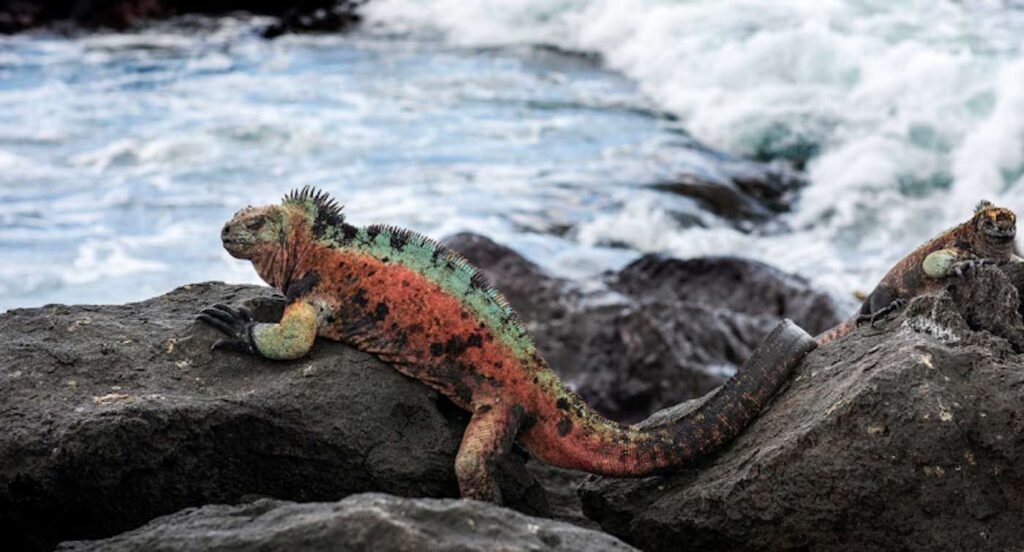
Galapagos Islands Floreana Marine Iguana sitting on rocks by Andrew S. Wright

A coalition of groups, including a newly formed organization backed by actor Leonardo DiCaprio, have mobilized $43 million for efforts to restore degraded habitats in the Galápagos Islands, an archipelago renowned for its endemic species and central role in scientists’ understanding of ecology and evolution.

Galapagos Islands Floreana Marine Iguana sitting on rocks by Andrew S. Wright

The Galápagos initiative has three immediate priorities: Helping restore Floreana Island, one of the islands most degraded by human activities in the Galápagos; increasing the population size of the critically endangered pink iguana on Isabela Island; and strengthening protection of the archipelago’s marine reserves, which are critical to the local economy yet have been besieged by foreign fishing fleets in recent years. The initiative involves more than 40 partners, ranging from local NGOs to governments to international organizations, leveraging decades of collective experience working across the archipelago.

To mark the start of the new initiative, DiCaprio is turning control of his social media accounts over Paula A. Castaño, a veterinarian and biologist with Island Conservation who lives in the Galápagos Islands, for the day. DiCaprio has more than 86 million followers across his official Instagram, Twitter, and Facebook accounts.

“When I travelled to the Galápagos Islands, I met with Paula Castaño and other environmental heroes in Ecuador working day in and day out to save one of the most irreplaceable places on the planet. I’m excited to share her team’s work and to support the longstanding effort to protect and restore these iconic islands, alongside the team at Re:wild,” said Leonardo DiCaprio.

One of the groups leading the effort is Re:wild, an organization that was just formed between Global Wildlife Conservation and Leonardo DiCaprio, who is a founding board member of the new entity. The Galápagos initiative is Re:wild’s first project under its new brand, but the group plans to scale up its existing global work, putting renewed emphasis on the concept of rewilding, or restoring species and ecosystems to previous levels of abundance and health.

“Rewilding, a positive reframing for nature conservation, involves holistic solutions to remove barriers and reestablish vibrant wildlife populations and intact, functional, and resilient ecosystems that effectively integrate people,” said Re:wild in a press release. “Re:wild is a movement to build a world in balance with the wild.”

RELATED: 15 Giant Tortoises Finally Returned to Their Galapagos Island Home After Saving Their Species With 1,900 Babies

DiCaprio adds, “Re:wild offers a bold vision to amplify and scale the local solutions being led by Indigenous peoples and local communities, nongovernmental organizations, companies, and government agencies, to help increase their impact around the world. The environmental heroes that the planet needs are already here. Now we all must rise to the challenge and join them.”

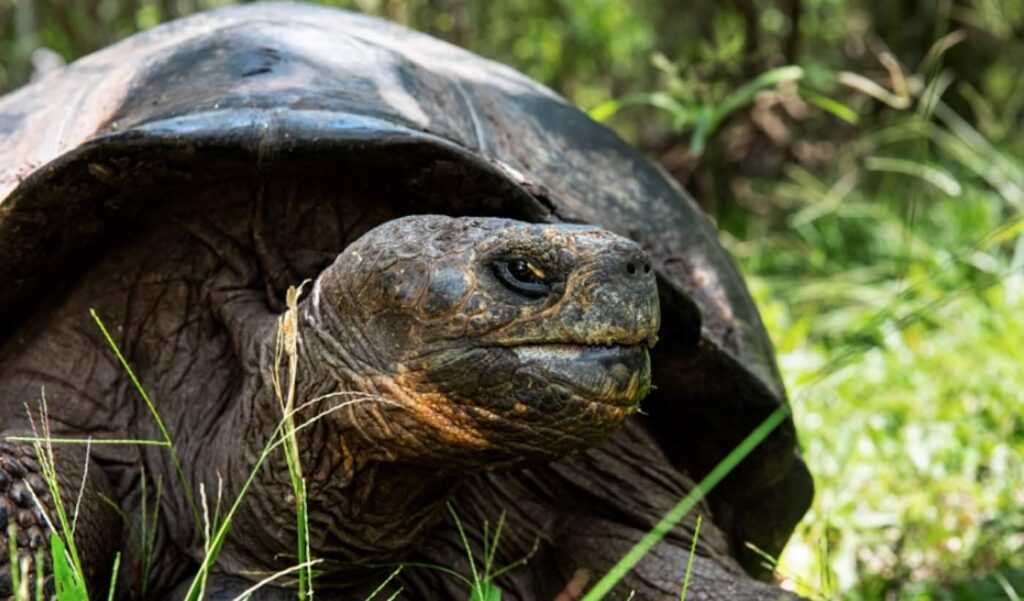
Galapagos giant tortoise by Andrew Wright

In the case of the Galápagos, the new initiative has focused initially on targeted opportunities. For example, Floreana Island has great potential for restoration after loss of native vegetation and species from land clearing, intentional fire-setting, and the introduction of invasive species in the 18th and 19th centuries. The Galápagos initiative aims to reintroduce 13 species that have gone extinct and help increase the population of the island’s 54 threatened species.

CHECK OUT: 100-Year-old Galápagos Tortoise Might Be a Survivor of Species Thought to be Extinct

The efforts in Floreana Island would be expanded to other parts of the Galápagos under the initiative, which over the next decade, hopes to restore another two dozen islands, “halt and reverse” the decline of 250 threatened species, and vastly increase the extent of areas under effective protection and management. At the same time, the initiative plans to help bolster the capacity of local and regional conservation and restoration experts as well as support the development of more sustainable and resilient economies for communities in the Galápagos.

Castaño said that lessons from the efforts in the Galápagos could eventually be applied in other geographies to scale impact and reverse biodiversity decline.

“Time is running out for so many species, especially on islands where their small populations are vulnerable and threatened,” Castaño said in a statement. “We know how to prevent these extinctions and restore functional and thriving ecosystems—we have done it—but we need to replicate these successes, innovate and go to scale,”

“We need catalytic investments like the one announced today to replicate our successes in the Galápagos and elsewhere.”

RELATED: Leonardo DiCaprio Launches $5 Million Emergency Fund to Help Combat Amazon Rainforest Fires

Wes Sechrest, Re:wild chief scientist and CEO, who was formerly in the same roles at Global Wildlife Conservation, echoed Castaño’s sentiments.

“In order to reverse the climate crisis and ecosystem collapse, we need to focus on a ‘technology’ that took billions of years to refine, that is free, and that sustains us every single day: nature, in its most wild form,” said Sechrest in a statement. “Where better to begin than the Galápagos, which, as the first-declared World Heritage Site, is among the most extraordinary wild places on the planet. Re:wild’s work with partners is hope in action–from Darwin’s laboratory to Australia’s wildlands to the Congo forests of Central Africa.”

Source: Mongabay.com / written by Rhett A. Butler / (CC BY-ND 4.0)

SHARE This Titanic Donation With Friends on Social Media…

“If you’re awake to the poignant beauty of the world, your heart breaks regularly. Its purpose is to burst open again and again so that it can hold ever more wonders.” – Andrew Harvey

Quote of the Day: “If you’re awake to the poignant beauty of the world, your heart breaks regularly. Its purpose is to burst open again and again so that it can hold ever more wonders.” – Andrew Harvey

Photo: by Marian Kroell

With a new inspirational quote every day, atop the perfect photo—collected and archived on our Quote of the Day page—why not bookmark GNN.org for a daily uplift?

Island Paradise Created for Digital Nomads is a Village With Free Wifi and Workspace

Arthur Krijgsman
Arthur Krijgsman

Reprinted with permission from World At Large, a news website of nature, politics, science, health, and travel.

Winner of Europe’s Leading Island Destination award for five years running, the Portuguese island of Madeira is looking to capitalize on the rise in numbers of a unique kind of traveler—digital nomads—by building a town entirely specialized for their residency.

While COVID-19 has forced millions of workers into the telecommuting space, when they got there, they found the sphere was already inhabited by Anthony Bourdain-type people who travel year-round and work from their computers.

Realizing this market was goosed by the rise in telecommuting, and that the staggering beauty of the island would be deeply appealing to digital nomads, Madeira has created Digital Nomad Village, a place with fast internet, exclusive hotel property, community events, and a free office space.

It’s situated in tranquil Ponta do Sol on the south coast, with views out to the Atlantic and a short drive from the capital of Funchal. Launched in February, the pilot program for the village will run until the end of June.

“Madeira Islands have the perfect conditions to attract digital nomads with its natural beauty, activities in nature, culture, and fantastic weather conditions throughout the year,” reads the village’s website. “There was an urgent need to create an integrated strategy to attract this market, in order to make Madeira also known as one of the best places in the world to work remotely.”

MORE: These Beautiful Italian Towns Will Pay You to Move There if You Work Remotely

This concept is being launched in partnership with the Government of Madeira, StartUp Madeira, and acclaimed digital nomad Gonçalo Hall. Hosting up to 100 nomads at any one time, residents must commit to staying for at least a month.

A leading island

Europe’s island travel market is fiercely competitive, with locations such as the Azores and their volcanoes, Sicily with its food and culture, the Greek islands with their long history, and Cyprus all battling for market share every holiday season. Madeira has nevertheless been considered as the best island destination in Europe for years.

RELATED: These 6 Cities and This State Will Pay You to Move There

On the same latitude as Casablanca, the Portuguese outpost is home to scenery that’s both rugged and gentle—and more like the Caribbean than anywhere else on the continent, with warm seas always close by. The rich volcanic soil, mountainous terrain, and forests covering 20% of the main island serve to cloak much of Madeira in natural beauty.

The forests in Madeira are unlike anything else on Earth. Laurissilva, or Laurel forest, is a UNESCO World Heritage Site, and an outstanding relict of a previously widespread type of forest that covered much of Southern Europe 15-40 million years ago.

Now ,however, this type of forest, with 79unique species of vascular plant, is found only on the Canary Islands, the Azores, and Madeira.

Madeira was referred to as the “most enviable island on Earth” by author H.N. Coleridge in the 19th century.” Well now, if you’re a digital nomad, you can live and work there today.

SHARE This Story With Friends Who Might be Looking For a Fresh Start in Life…

‘Unluckiest Swan’ Becomes a Mom After Crafty Raft Rescue From Rising Waters

Jones Boatyard
Jones Boatyard

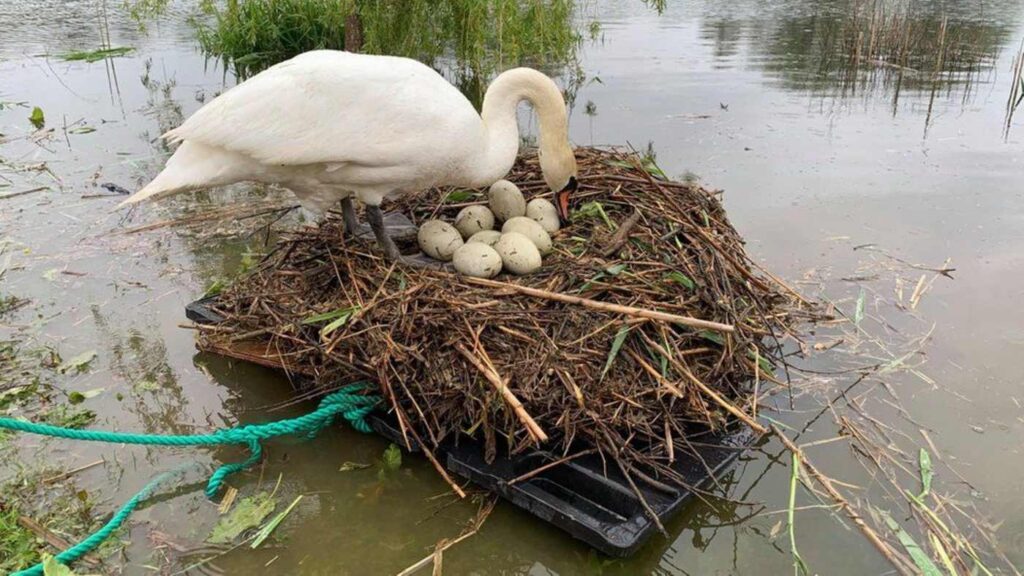
Hope floats. Swans’ nests do not—unless they get a little help from someone determined to make sure their precious cargo has a chance to hatch.

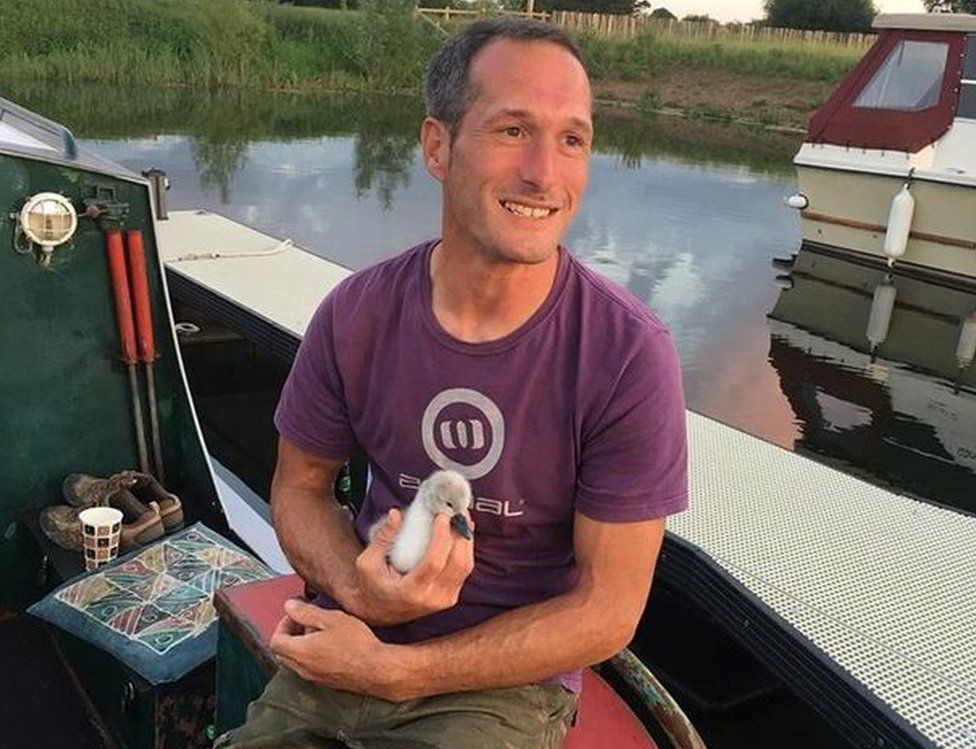
Rob Adamson, who lives and works at Jones Boatyard in St Ives, England has been a longtime spectator to the world’s “unluckiest swans” efforts to become parents.

For a decade, he looked on sadly as the poor birds’ eggs fell prey to poaching foxes and rising waters. This year as the Great Ouse began to flood, he knew he couldn’t stand by and let another clutch perish on his watch.

Rob Adamson

“You’re not supposed to interfere, but it had got to the point where they were all going to die,” Adamson told the BBC. “I couldn’t go to bed knowing that. I knew I would regret it if I didn’t do anything to save them… I needed to make sure they survived.”

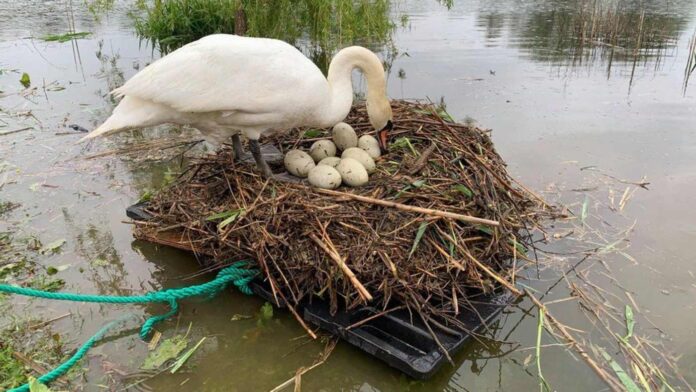
During the night, Adamson fashioned a makeshift raft and moored it with a line to the bank. It was well after dark when he gingerly lifted the nest and its occupants—nine eggs and one hissing mama—to safety, all under the wary eye of Papa swan.

As a breed, swans have a reputation for beauty that’s only surpassed by their fierce temper. That neither of the pair attacked Adamson is unusual.

MORE: Florida Man Rescues 8-Month-old Pup From Alligator’s Grasp

Perhaps the two sensed that he was only trying to help—which would only be keeping in character since Adamson’s affinity for the majestic avians is already well established.

Some years ago, Adamson famously raised an orphaned cygnet named Sid. Although he eventually made the break, when Adamson initially attempted to release Sid into the wild, his adopted offspring refused to go.

Once the story made the rounds, Essex locals fittingly dubbed their neighbor “the Swan Man”—which was fine with Adamson.

For him, being in tune with Mother Nature is what life’s all about. “This is why I am here, living on the water,” he told BBC. I’m in dreamland with all the wildlife… I wouldn’t swap my boat for a £10m house.”

Back on the Ouse, Mama swan has settled in nicely and hopes are that the signets will hatch soon. While Papa swan remains vigilant, to further ensure the family’s safety, Adamson has erected fencing to deter predators.

RELATED: A Starving Stray Puppy Upended our Mundane, Retired Lives: Finding Purpose After Finding Yiuka

The swans, it seems, aren’t St Ives’ only residents grateful for Adamson’s nest-saving intervention. “It took us all by surprise when the water levels in the lower marina shot up on Saturday night,” Jones Boatyard posted to Facebook. “A HUGE thank you to Rob who noticed that the water was lapping around the swans’ nest at 9 pm.

“If only the Queen knew what great service he was doing for her feathered friends!”

Hmmm. ‘The Royal Order of Swan Keepers to the Crown’ does have a certain ring to it, and since technically, by law, the majority of Britain’s swans actually belong to the Queen, perhaps an elevation from ‘The Swan Man’ to ‘Sir Swan’ might be in order here?

SHARE This Rescue Story With Your Friends on Social Media…

U.S. DEA is Finally Allowing Companies to Grow Their Own Cannabis for Scientific Research

The Drug Enforcement Administration (DEA) has just ended what’s been described as a 52-year monopoly on growing cannabis for research purposes.

Several large-scale cannabis growers have now been awarded contracts to produce weed for federal research, a move that will hopefully go a long way towards proving what many state and foreign governments already know: Cannabis has powerful medicinal properties, particularly for pain control.

Award-winning journalist Bruce Williams described the marijuana produced on the 12-acre farm at the National Center for the Development of Natural Products at the University of Mississippi—the only federally approved supplier of cannabis for research purposes in the United States—as “terrible, low-THC “schwag.”

That “schwag” has led to several public relations disasters. In one case, Johns Hopkins University pulled out of a medical cannabis trial because they requested marijuana with at least 12% THC, and couldn’t get it from the federal agency. Scientists at the Scottsdale Research Institute (SRI) involved in the trial, speaking with PBS at the time, said what they did receive was contaminated with mold, and “didn’t look like weed [or] smell like weed.”

Another case saw a Massachusetts-based scientist file a lawsuit against the DEA for not reviewing his application to grow marijuana for a trial for MAPS (Multidisciplinary Association for Psychedelic Studies) and Tripsitter. It came out that the DEA had received 33 such applications since 2016 that it appeared to have simply shelved.

However on May 14, the DEA quietly announced that it would “soon register additional entities authorized to produce marijuana for research purposes,” and that among those entities would be the SRI—who both received the moldy schwag and who actually played a large role in this change of policy.

CHECK OUT: Hemp is Already Being Used in Walls and Insulation as a Game-Changer in Construction Industry

A lawsuit, Scottsdale Research vs. DOJ/DEA, brought to light a 2018 memo that suggested the DEA’s Mississippi-monopoly was a violation of federal law, as well as to certain U.S. treaty obligations.

The memo, published by the Office of Legal Council, was kept secret, even in the face of repeated attempts by the legislature to reveal it and discover why, since 2016, the 33 applicants had been repeatedly ignored.

Eventually, SRI’s lawsuit got the U.S. Court of Appeals to order the DEA to respond to why it had not processed SRI’s, or the 32 other applications.

Now the DEA has capitulated, recently publicly approving several applications.

Matthew Zorn, an attorney who co-led the FOIA-based lawsuit, told Leafly that now scientists will be able to conduct research on the kind of cannabis that people are actually using.

MORE: Trying to Stop the Epidemic of Veteran Suicides, Plant Medicine Company Builds Mental Wellness Value Chain

“A lot of people may not appreciate the importance of that, with [national cannabis] legalization around the corner,” he said to Bruce Williams. “We don’t know when, but the need for this research is urgent. We can as quickly as possible start growing and have a supply for researchers to get good data.”

GROW the Good News—Share This Story With Friends…

Browser Extension Helps You Choose Amazon Products Based on Sustainability

Finch
Finch

A nifty new Chrome extension uses machine learning to sort products on Amazon by their eco-friendly aspects—allowing consumers to make sustainable choices about paper mill runoff or deforestation without pouring through research on their lunch breaks.

Called Finch, its ranking can be applied to the top 41 product categories on Amazon, where it ranks evaluates thousands of different products.

Browser extensions are becoming as widely utilized and exciting as the App Store was for the first few iPhones. But compared to an iPhone, the operating system of a computer is much more powerful, allowing more creativity in the functioning of these add-ons.

Along with sorting available information on sustainability listed on the Amazon product page itself, Finch also pulls a lot of its rankings from long, industry-specific reports on supply chains,  and self-reported data that’s designed to be reviewed by stakeholders and regulators.

Finch founder Lizzie Horvitz explains that nothing scores a perfect ten, but anything above a 6.5—and the product is already having very minimal impact. She also says that sometimes it may be difficult to totally ascertain what’s the most sustainable product, since it can often be determined by how it’s used by the consumer.

MORE: Seaweed is the Food –and Fuel– of a Sustainable World, And it May Start in Australia

“What’s important to us is to show where it falls, given the relationship to the other products out there,” she tells Fast Company.

In terms of growing the small startup, the sky’s the limit. Finch wants to eventually rank all the categories on Amazon before moving on to other large ecommerce platforms, and eventually “any ecommerce site out there.”

RELATED: App Lets You Buy Leftover Food From Your Favorite Restaurants—Saving 150k Meals a Day Globally

There’s currently a waitlist to acquire the browser extension, which isn’t featured on any digital extension marketplaces. You can join the waiting list on their website, and read their blog while you’re at it to learn how to make the most sustainable decisions when faced with near endless choices.

SHARE This Eco-Friendly App With Friends on Social Media…

Scientists Develop Personalized Anti-Cancer Vaccine That Works in Mice

Dodgerton Skillhause, CC license

A research team in Montreal has been busy developing a personalized anti-cancer vaccine that works in mice.

At the University of Montreal Hospital Research Centre (CRCHUM), Marie-Claude Bourgeois-Daigneault and a team of scientists modify viruses to make them specific to the cells of a tumor.

Once in the patient’s body, these viruses—called oncolytic viruses—infect and specifically destroy the cancer cells without touching healthy cells. These viruses can even stimulate the immune system so that it is better armed to recognize and kill malignant cells. This is what’s known as immunotherapy.

In a study published in Nature, the researchers show how they came to create an effective personalized vaccine by combining oncolytic viruses with small synthetic molecules (peptides) specific to the targeted cancer.

Here, Bourgeois-Daigneault explains her team’s approach and findings.

In your study, you use oncolytic viruses as anti-cancer vaccine adjuvants to immunize mice. How do you do it?

Marie-Claude Bourgeois-Daigneault, CRCHUM

For a vaccine to induce an immune response, it has to contain elements that stimulate the cells of the immune system—the famous white blood cells.

These elements, called adjuvants, are ingredients in all vaccines. They allow the human body to perceive potential danger and contain the threat by sending its army of immune cells.

Our approach consists of using oncolytic viruses to stimulate this immune response and direct it towards the cancer. To succeed, we create a vaccine by mixing viruses with synthetic peptides (antigens) that resemble the targeted cancer.

Because it’s true that, to be effective, the vaccine has to be personalized for each patient, based on the mutations specific to each cancer cell. Thanks to the identification work done by other research teams, we can predict what peptides to use for each patient through the information obtained from a biopsy.

RELATED: New Brain Cancer Immunotherapy Shows Promise in Human Trial – Most Patients Saw No Tumor Growth For 3 Years

The advantage of our approach is that the oncolytic viruses themselves have the power to kill the cancer. We can thus attack the cancer on two fronts: kill it directly with the virus and induce an immune response, thanks not only to the virus, but to the vaccine as well.

On our mice, we were able to show the efficacy of the resulting immunization.

What sets your vaccine strategy apart from clinical trials currently being conducted by other teams?

The other clinically tested personalized anti-cancer vaccines don’t use oncolytic viruses as vaccination adjuvants. Therefore, their adjuvant doesn’t have direct anti-cancer effects whereas, in our case, our viruses can destroy the cancer.

An anti-cancer vaccine using oncolytic viruses is currently being tested in Canada and the U.S. However, it is not personalized. Instead, it targets certain specific cancers that have an antigen in common. By targeting this antigen, the vaccine induces an immune response.

In this case, the oncolytic viruses have to be genetically modified to allow for the insertion of the antigen into the genome of the viruses.

CHECK OUT: Green Tea Compound Could Hold The Key to Beating Cancer, Says Compelling New Study of ‘EGCG’

This is very different from our approach. We can target all cancers without genetic modification. A little like putting together Lego—it’s a matter of mixing synthetic peptides resembling the cancer with the chosen virus. It will be a lot easier to implement in a clinical setting.

What challenges need to be addressed before your personalized anti-cancer vaccination approach can be translated to clinical practice?

The main challenge is to identify the mutations that we want to vaccinate against. Because a cancer is unique in its tens or hundreds of mutations, but only a few of them, once targeted, will have a therapeutic effect and allow us to eliminate it.

MORE: Researchers Create CRISPR ‘On-Off Switch’ to Control Inherited Genetic Problems Without Changing DNA

The identification of these mutations is the key step that still has to be optimized. Fortunately, many groups are working in this area.

Source: University of Montreal; Featured image: Dodgerton Skillhause, CC license

SHARE This Hopeful Breakthrough With Others on Social Media…

“You KNOW we’ve got to find a way to bring some lovin’ here today.” – Marvin Gaye, What’s Going On (debuted 50 years ago)

Quote of the Day: “You KNOW we’ve got to find a way to bring some lovin’ here today.” – Marvin Gaye, What’s Going On (debuted 50 years ago)

Photo: by Kyle Glenn

With a new inspirational quote every day, atop the perfect photo—collected and archived on our Quote of the Day page—why not bookmark GNN.org for a daily uplift?


Florida Man Rescues 8-Month-old Pup From Alligator’s Grasp

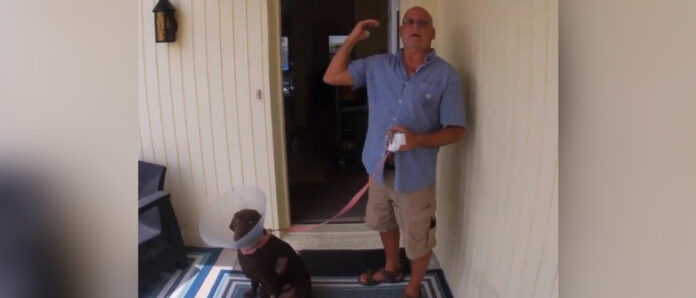
There’s nothing Mike McCoy wouldn’t do for his adored 8-month-old chocolate lab Jack—including, it seems, wrestling an alligator.

Mike McCoy and Jack the puppy were walking near a pond behind a middle school in the town of Holiday when the gator appeared out of nowhere. It tried to pull Jack under the water. Then Mike did the unthinkable. He jumped in the water too.

“I previously read up on my environment and gators. I got around, thumbed him the eye, picked him out of the water so he couldn’t get anywhere until he let the dog go. And in the interim he decided, I don’t have him, I’ll bite you,” said McCoy to ABC Action News.

After their tussle with the giant reptile, both owner and dog got medical stitches and are now doing fine. Florida Fish and Wildlife Commission (FWC) are also working to relocate the alligator to a safer place.

CHECK OUT: 35 Circus Elephants Arrive in Amazing Florida Sanctuary to Retire Among Forest, Grassland, and 11 Watering Holes

FWC states that such attacks are rare in the Sunshine State, but it’s important to keep one’s distance from such predators. Head to their website for more info and advice on co-existing with gators.

(WATCH the ABC video about this story below.)

SHARE This Snapping Story With Friends on Social Media…
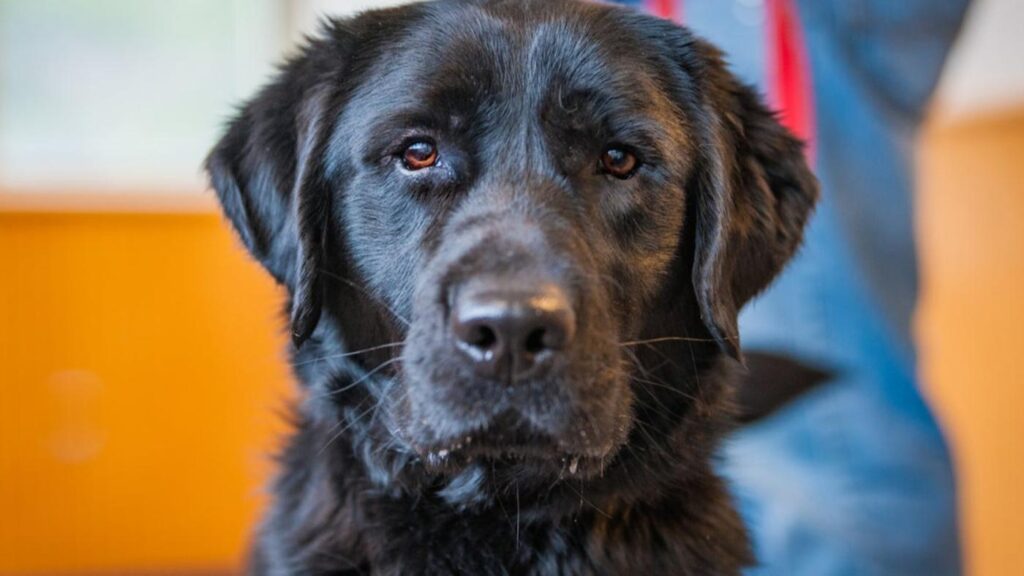
Sheldon the Dog Flunked Out of Service-Animal Training, But Became an Ace at Sniffing Out Arson

Heather Paul
State Farm Arson Dog Program

“When one door closes,” the saying goes, “another door opens.” For one very special pooch, it appears that adage also applies to doggie-doors.

A Labrador-retriever mix named Sheldon was enrolled in a program to become a service dog. Training at Paws With A Cause in Wayland, Michigan, unfortunately he couldn’t quite make the grade.

Whenever he’d catch a whiff of something interesting, Sheldon’s concentration flew out the window and all he wanted to do was hunt down the source.

But the very thing that made him a wash-out as a service dog meant he was likely perfect for another canine career. Rather than return him to civilian life, Sheldon was transferred to the State Farm Arson Dog Program, where his sensitive nose soon put him at the top of the class for sniffing out the accelerants used to light illegal fires.

Paired with Lieutenant John Tadlock of the Saginaw, Texas fire department, after his graduation Sheldon went on to become the department’s premier accelerant detection canine.

MORE: A Starving Stray Puppy Upended our Mundane, Retired Lives: Finding Purpose After Finding Yiuka

In his first case, Sheldon and his partner were called to a car dealership to investigate some vehicles that had been torched under suspicious circumstances. After three days, no one had been able to figure out how the fire got started—but the cause wasn’t baffling to Sheldon.

“We get out of the truck and put him to work. It takes him about 30 seconds, and he gives me an alert,” Tadlock told the Fort Worth Star-Telegram.

“We dig through some debris and find a Molotov cocktail. It was just under some debris from the vehicle that had burned away, three days earlier. You couldn’t even see it.” But Sheldon unearthed the evidence with ease.

Sheldon lives with Lieutenant Tadlock and his family (and will continue to do so even in doggy retirement). To keep their skills at the top level, the duo trains regularly on a reward/praise-based system and participates in State Farm’s annual certification program.

“He made a better arson dog than a service dog,” Tadlock said.

RELATED: Prancer the ‘Demonic Chihuahua’ Who Went Viral Finds Dream Forever Home

For a dog who was blessed with a super “scents-ative” sniffer, we guess whether you’re tailing bad guys or hunting up a career, it’s always best to follow your nose.

Heather Paul

Sheldon isn’t the only pup unfit for one specialty job who got thrown a bone for another: German Shepherd Gavel didn’t have the right stuff to become a police dog but GNN reported he was perfectly suited for his role as Vice-Regal dog for Queensland’s Government House.

SHARE Sheldon’s Good News With Your PAWSome Pals Online…
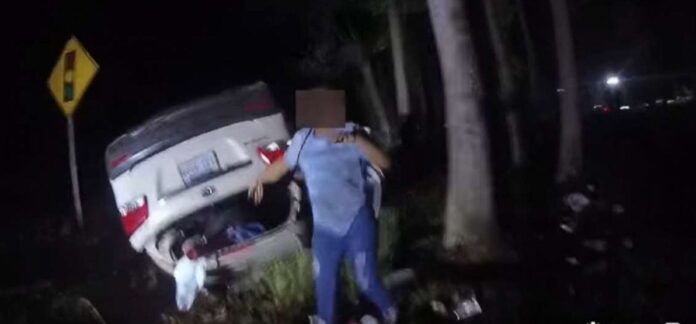
Video Captures Hero Cop Running to Lift Overturned Car Single-handedly to Save Woman

ABC

A Virginia cop has been praised as a hero after a video was released showing him single-handedly pull a crashed car off a woman who was pinned to the ground—and this isn’t even the first time he’s been praised for his bravery.

Landmark Malaria Vaccine is 77% Effective, Tackling One of World’s Biggest Killers of Young Children

Dunpharlain, CC license

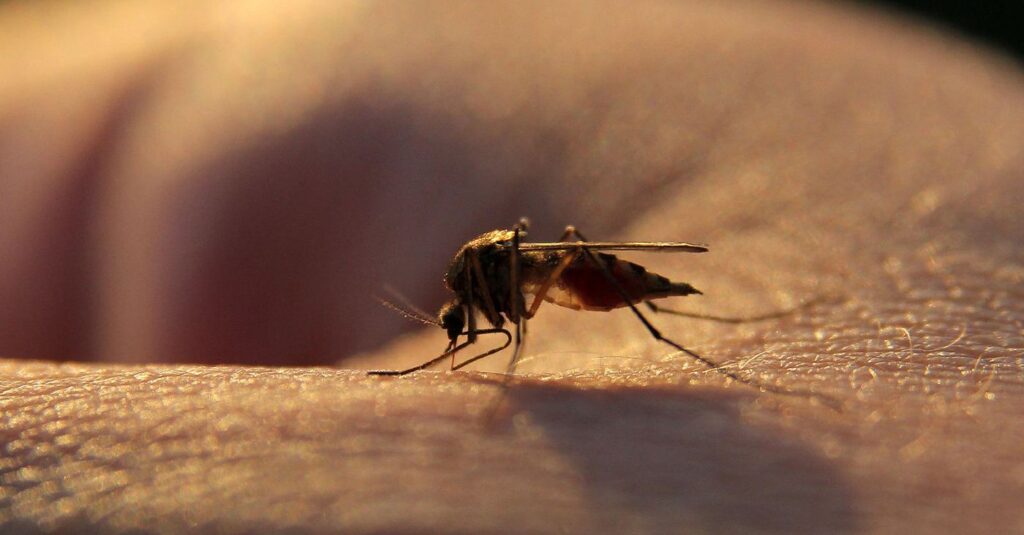
Mosquitoes are one of the deadliest animals on the planet because they spread yellow fever, dengue, encephalitis, and malaria, which killed 400,000 people in 2019.

Now, clinical trials of the promising R21 vaccine in Burkina Faso may be an effective tool against the disease, as it triggers the body’s immune system to attack the parasite—and has been 77% effective in phase 2 trials.

Ravaging and replicating through the body in seven different stages, malaria comes from the parasite Plasmodium falciparum, which isn’t a particularly good candidate for vaccination (mosquito nets are still the most effective measure), due to constant evolution throughout its life cycle. For perspective, it’s made from 5,000 genes, while the coronavirus that’s impacted all our lives contains just 16.

In the ’80s, the pharmaceutical company GlaxoSmithKline attempted to use vaccination to tackle the malaria epidemic by targeting the initial stage of the Plasmodium life cycle, called a sporozoite. In 1983, according to National Geographic, researchers discovered that sporozoites are covered in proteins that provoke a strong immune system response, but the evolution to their next life cycle occurs too fast for natural immunity to recognize and terminate the sporozoites.

The idea was to make a carrier that would present a kind of sporozoite protein-punching bag, so that when the real thing arrived the immune system would react fast enough to eradicate it before it spread to the liver.

Marketed commercially as Mosquirix, it’s the single-most tested vaccine candidate for malaria, but after twelve months, its effectiveness falls to less than sleeping under mosquito nets.

MORE: This is How Close We Are to Eliminating Malaria – 7.6 Million Deaths Averted in 20 Years, Thanks to Generous Nations

Halidou Tinto, an epidemiologist and expert in Malaria, works near the Burkina Faso capital of Ouagadougou and helped to organize a trial of 450 children between 5-17 years of age for the new R21 vaccine, that uses the same method as Mosquirix, but simply manufactured better—where before only one in five proteins were coated in the sporozoite protein, R21 made that five in five.

At its best, R21 reduced clinical malaria incidence by 77%, 2% more than the 75% target set out by the WHO in 2013 as part of an international attempt to push the global malaria problem more into mainstream pharmacology. There was no difference in malaria incidence at a 6 or a 12-month follow-up; a significant improvement over the old GSK vaccine.

The authors of this paper noted that the vaccine doses were administered in the lead up to the annual rainy season, when malaria cases spike, but that it would be worth comparing results from trials carried out at different times of the year.

RELATED: U.S. Department of Defense Funds New Lyme Disease Vaccine Development

“We are enthusiastic, but we still need phase three trials to confirm the efficacy and the safety of the vaccine before we move on,” Tinto tells National Geographic.

SHARE the Hope—Send This Story to Friends… 

Flowers Can Hear Buzzing Bees—And it Makes Their Nectar Sweeter

Bastus917, CC license

An evolutionary theorist has set out to prove that plants can hear their surroundings, and she was right; they can.

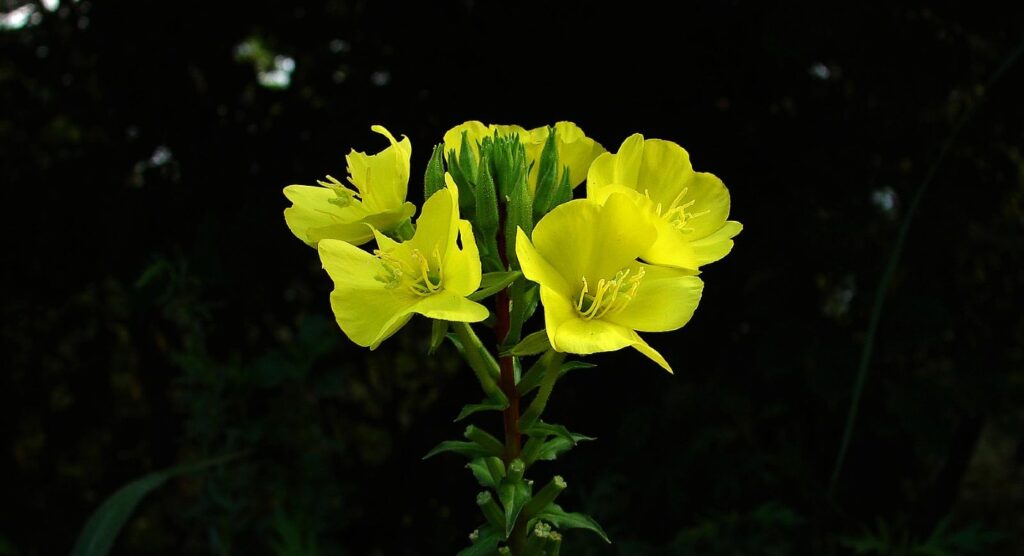
Her work, not yet peer-reviewed, but available in a preprint repository, looked at the flowers of the evening primrose and used sound tests to prove they responded to the sound of bees’ wings by increasing the sugar quantity in their nectar.

Reasoning that pollinators and flowers have co-evolved over a very, very long time, and that the world is completely saturated with sounds, Lilach Hadany, who teaches at the intersections between mathematics and biology at the University of Tel Aviv, felt it wouldn’t make any sense for plants to ignore them.

Any living creature must make use of all its senses to survive until it can reproduce, and if one takes a moment to imagine how long a deaf or blind wildebeest would last on the Serengeti, they can see where Hadany is coming from.

To test her premise—that sound is an abundant natural resource that greatly aids in the quest to survive and thrive, Hadany subjected the flowers of the evening primrose to five  sound tests consisting of three different computer-generated frequencies, silence, and the recording of a honeybee’s wingbeats.

The sweet science

L, David J. Stang CC license; R, Bruce Miller, CSIRO CC license

Silence, which they achieved by placing a jar over the flower, computer generated high-frequency notes at 158 to 160 kilohertz, and intermediate-frequency notes at 34 to 35 kilohertz, all had no effect on the flower—the study shows.

MORE: Airport Calls in the Beekeepers to Save Pollinators

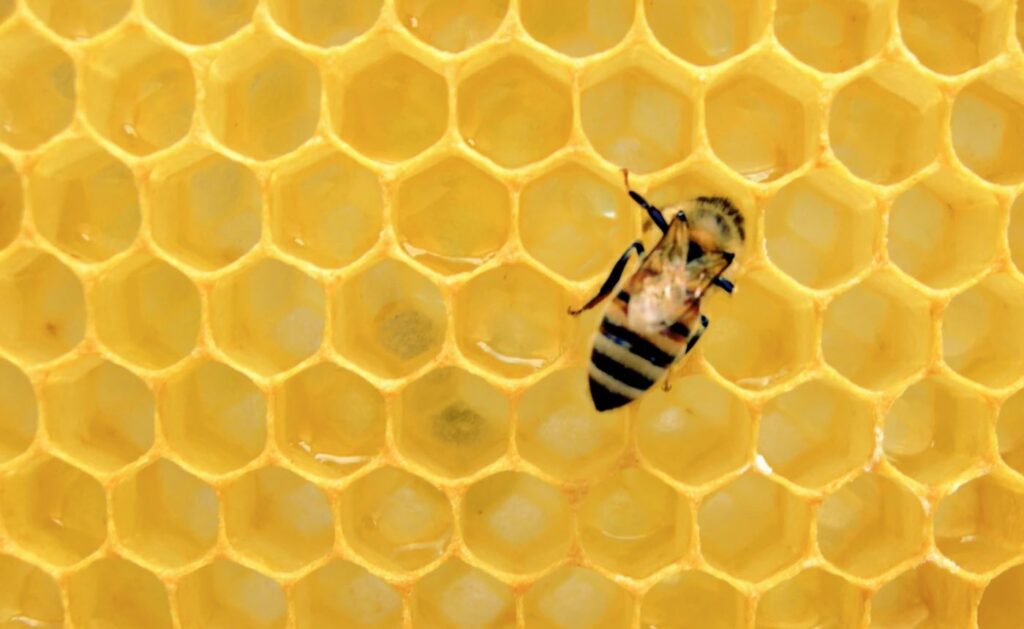
However with the ultra-low frequency and the bee wingbeats, the flower spent the following three minutes increasing the sugar content in its nectar by 17-20%, a remarkably clear suggestion that Hadany’s hypothesis was right.

A flower with more nectar is more likely to be detected and visited by pollinators, and Hadany’s team found that pollinators were nine times more likely to choose to visit a flower that had been visited by another pollinator within the last six minutes, showing how valuable that small increase in sugar could be for the flower’s chances of reproduction.

“We were quite surprised when we found out that it actually worked,” Hadany told National Geographic. “But after repeating it in other situations, in different seasons, and with plants grown both indoors and outdoors, we feel very confident in the result.”

As Hadany and her colleagues thought about the nature of sound and flowers, it hit them that a great many flowers are concave, tubular, or bowl shaped—all perfect forms for attracting sound and vibrations.

RELATED: Cultivate These Keystone Plants in Your Yard to Help Bees and Butterflies Thrive and Pollinate

Amphitheaters, sub-woofers, ears, and radar dishes all share these properties.

In fact, using tools to measure minute vibrations, they discovered that vibrations entering into the primroses increased in strength as a function of the shape of the flower petals, which if distorted or removed, cancelled out the effect.

Matthew T Rader

On a different note, another study found that when the sound of caterpillars eating leaves was played next to a plant from the same family as mustard, they were later found to have flooded their leaves with a chemical caterpillar deterrent compared to those that heard only silence.

These two papers have helped open up a relatively new field of study—phytoacoustics, the study of plants’ interactions with sound.

CHECK OUT: Bee Populations Are Increasing in Many States–With Maine Seeing 70% Rise in 2 Years

As this is World Bee Day, it’s important to likewise recognize the importance of their food source, especially when selecting which species to plant in your yard or balcony—perhaps those with radar dish-like flowers?

BUZZ This Fascinating Story Over to Friends on Social Media….