All News - Page 517 of 1735 - Good News Network
Home Blog Page 517

A Gorgeous 3D-Printed Home Just Popped Up on Zillow for Half the Price of Comparable Houses

Zillow

A stunning 3D-printed home is currently available for sale on Zillow at 34 Millbrook Ln, Riverhead, New York.

SQ4D

At $300,000, it costs 50% less than comparably sized houses in the area, and the manufacturer, SQ4D, hopes to use it as a jumping-off point to tackle housing shortages in the city and surrounding towns.

Using its Autonomous Robotic Construction technology, the 3D-printed home will be erected on the spot so that it features approximately 1,500 square feet of living space, with a detached 2-car garage—all on a quarter-acre with a garden.

Inside the structure, the open-floor plan includes 3 bedrooms and 2 full bathrooms. The 3D-printed material is actually made of concrete, and therefore has much better energy efficiency and durability. SQ4D also offers a 50-year limited warranty on the house.

RELATED: 3D-Printer Completes the Largest 3D-Printed Home in Europe – With 2 Stories and 980 Square Feet – in Just 3 Weeks

SQ4D is one of a number of construction firms armed with humungous 3D printers, looking to direct the revolutionary technology towards the inefficiencies and high costs of the housing industry.

Requiring merely three laborers on-site to oversee the job, SQ4D can print a concrete building (without a roof) in one-third of the normal time frame required for such work.

ADD an Exciting Dimension to Your News Feed—Share This on Social Media…

Former Prisoners Turn Waste Into Beautiful Furniture, Re-Building Their Lives At the Same Time

Formr

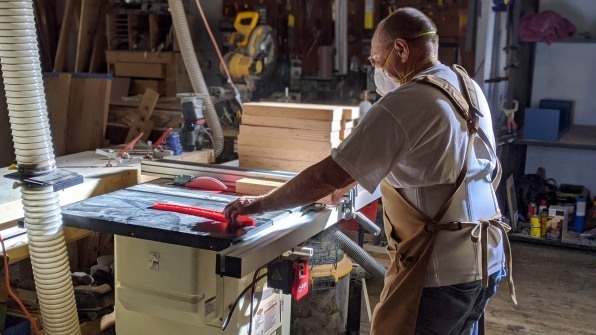
Recycling talent and material, Formr makes quirky furniture pieces from salvaged construction site garbage while using the woodworking talent of formerly incarcerated individuals.

Formr

Operational for only 9 months, Formr has nevertheless hired six ex-convicts and designed 10 clever pieces of home furniture such as a coat rack, a laptop desk for your couch, and tables with tech features built into them, all ranging between $89 and $500.

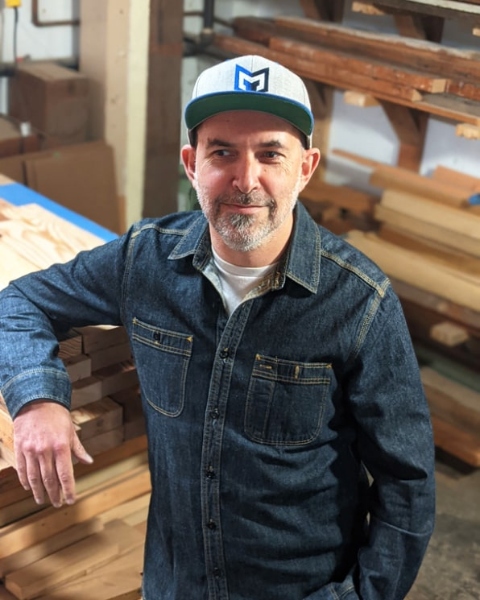
Sasha Plotitsa is a California-based industrial designer who was hired to design a cannabis dispensary—one that would eventually be closed down from pressure by the federal government in 2009.

Sasha Plotitsa, Formr

It was through this process he came to understand firsthand a very American problem: the percentage of non-violent drug offenders in prison populations.

“I saw for myself what the failed war on drugs looked like,” Plotitsa told Elizabeth Segran of Fast Company. “When someone comes out of prison, they have to check the box on a job application that says they have a record. That makes it very hard for them to get their life back on track.”

Attempting to tackle waste and recidivism rates, Plotitsa started regularly phoning contractors and asking if he could stop by and dig through their construction site garbage. Old wood, plasterboard, rusted pipes, shattered concrete; all this construction waste adds up to 500 million tons, as Formr estimates, and more than 100 tons goes unrecycled.

At the same time, he started employing formerly incarcerated people, particularly those from prisons with woodworking shops, which many correctional facilities in California indeed have.

Formr

“It’s quite a process,” he details, describing the path to furniture whereby he builds a relationship with a contractor, goes and digs through their waste, finds the best bits, sanitizes them, and removes all the nails and screws before he can start making a piece.

CHECK OUT: They Recycle Electronics – And People’s Lives – By Giving Ex-Felons Good Jobs to Imagine a Better World

Often, he finds, it can be difficult keeping his workers on staff, as life after prison can often be volatile and unstable. Still, there are some success stories.

RELATED: Global Nonprofit that Trains African Prisoners to Become Lawyers is Featured on 60 Minutes

One of this staff, Gary Harrell, spent a life-shattering 45 years in prison, but nevertheless loved working with Formr creating furniture. He started making his own artistic pieces, which have since been picked up by institutions and galleries such as the Smithsonian, MoMA PS1 in New York City, and the Library of Congress.

As drug laws, particularly those pertaining to marijuana, are rolled back around the country, there are millions of people who will have to tick a box on a job application that says “I was convicted of a felony.”

MORE: When a Student Couldn’t Pay Tuition Fees, Prison Inmates Rallied to Raise $32k to Help

It’s the work of people like Sasha that will help ensure that these people cast out unfairly are welcomed back into society.

SET This Inspiring Story Free By Sharing it on Social Media, Uplifting Your Friends…

“You gotta find your best self and when you do, you gotta hold on to it for dear life.” – Cheryl Strayed

Quote of the Day: “You gotta find your best self and when you do, you gotta hold on to it for dear life.” – Cheryl Strayed

Strayed is the author of Wild (made into a film by Reese Witherspoon, which depicted Cheryl battling the Pacific Trail)

Photo by: Sébastien Goldberg (Norway)

With a new inspirational quote every day, atop the perfect photo—collected and archived on our Quote of the Day page—why not bookmark GNN.org for a daily uplift?

4-Year-old Girl Finds Dinosaur Footprint on a Beach From 215 Million Years Ago

National Museum Wales

When you think about the average day in the life of a toddler, crayons and cartoons likely come to mind. Discovering an immaculately preserved 215-million-year-old dinosaur footprint? Probably not.

National Museum Wales

But that’s just what happened when 4-year-old Lily Wilder was taking a nature walk with her father on a rocky beach at Bendricks Bay near the Welsh town of Barry last month.

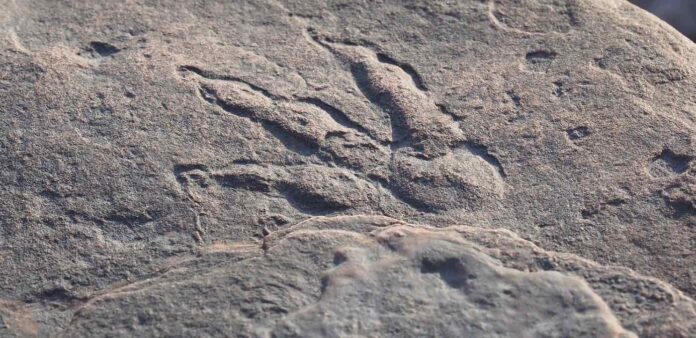
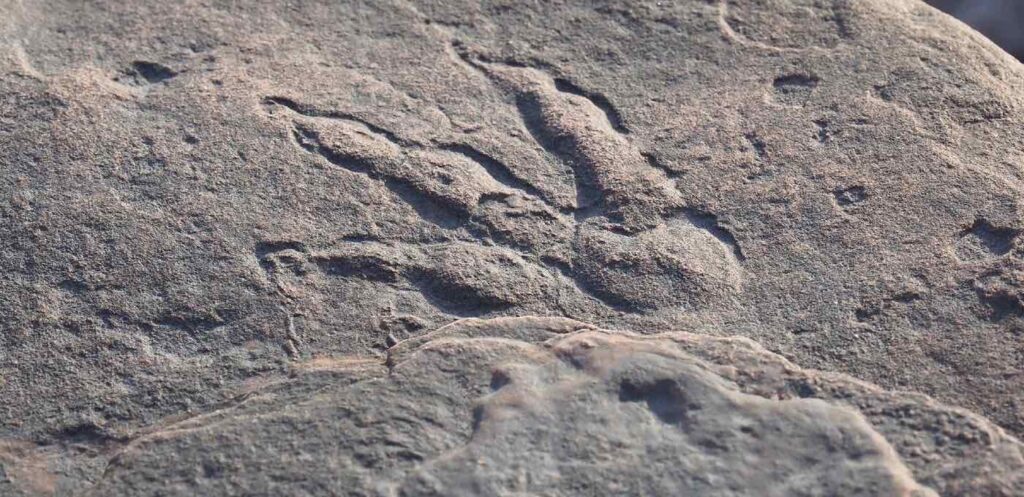
The indented impression spotted by eagle-eyed Lily measures just shy of four inches. Experts believe it was created by a two-footed dinosaur that likely stood about 30 inches tall and was 8.2 feet long.

Its species—one that’s not been seen before—is a mystery that’s set the scientific community alight. Karl-James Langford of Archaeology Cymru hailed the find as “the finest impression of a 215-million-year-old dinosaur print found in Britain in a decade.”

“Lily saw it when they were walking along and said, ‘Daddy look!’” Lily’s mom Sally Wilder said in a statement widely reported by the UK media.

“When Richard came home and showed me the photograph I thought it looked amazing… Richard thought it was too good to be true. I was put in touch with experts who took it from there.

“We were thrilled to find out it really was a dinosaur footprint and I am happy that it will be taken to the national museum where it can be enjoyed and studied for generations.”

After permission was granted by Natural Resources Wales to remove the fossil from the beach legally, the specimen was transported to Amgueddfa Cymru, the National Museum in Cardiff, where expert paleontologists hope to discover its secrets.

They believe by studying it, they will be able to better learn how such dinosaurs actually walked. “Its spectacular preservation may help scientists establish more about the actual structure of their feet as the preservation is clear enough to show individual pads and even claw impressions,” an Amgueddfa Cymru spokesperson told The Daily Mail.

MORE: 2nd Grader Wins $30,000 Scholarship for Her Dinosaur Doodle Inspired by Dreams of Paleontology

“Its acquisition by the museum is mainly thanks to Lily and her family who first spotted it,” Amgueddfa Cymru Paleontology Curator Cindy Howells told The Irish Times, giving credit where credit was due.

Apart from its scientific potential, Howells also pointed out Lily’s dino-mite discovery was part of one perhaps unexpected but hopefully trending upside to the coronavirus lockdown.

“During the Covid pandemic scientists from Amgueddfa Cymru have been highlighting the importance of nature on people’s doorstep, and this is a perfect example…

RELATED: Dinosaur Unearthed in Argentina Could Be the Largest Animal That Ever Walked the Earth

“Obviously, we don’t all have dinosaur footprints on our doorstep but there is a wealth of nature local to you if you take the time to really look close enough.”

CHECK OUT: The First Time a 10-Year-old Boy Uses His Birthday Metal Detector, He Unearths a Centuries-Old Sword

And if you want to find something truly spectacular? Just bring your favorite 4-year-old along as scout.

(MEET the girl who made the paleontological find in the ITV News video below.)

SHARE the Fun Find From Wales With Your Friends on Social Media… 

New Prostate Cancer Test Makes Diagnosis from Urine in 20 Minutes With Near 100% Accuracy, Researchers Say

National Cancer Institute

Korean medical scientists have employed AI-learning to create a new prostate cancer screening with almost 100% accuracy.

The breakthrough, which is a simple urine strip, is likely to revolutionize testing, as existing methods are not only inaccurate but can result in over-diagnosis and necessitate invasive biopsies.

The current method is a PSA test, which stands for “prostate-specific antigen,” and that tests the levels of this particular protein in the blood. This test can have a misdiagnosis rate as high as 80%.

This is because PSA is produced from both cancerous and non-cancerous prostate cells, and even if the test detects cancerous PSA, there is a risk that it’s diagnosing tumors that would never produce symptoms during a lifetime, according to the Mayo Clinic.

Furthermore, other conditions such as inflammation of the prostate, an infection, or an enlarged prostate, can also fool a standard PSA test, leading to the a prescription for an invasive biopsy which can cause bleeding and pain.

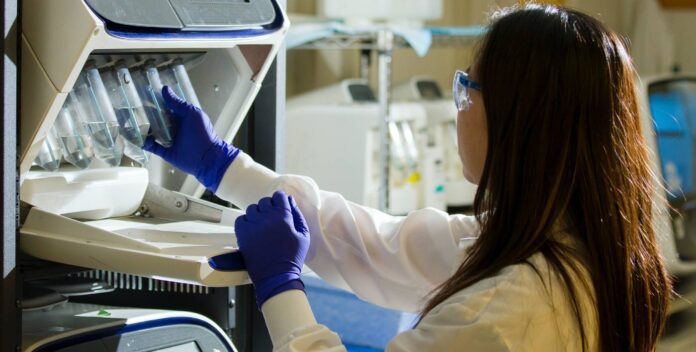
Designed at the Korea Institute of Science and Technology, the breakthrough, led by chief scientist Dr. Kwan Hyi Lee, created a urine test strip containing an electrical-signal-based ultrasensitive biosensor, and introduced AI analysis to quantify the values of four separate prostate cancer factors.

MORE: Simple New Blood Test For Prostate Cancer Determines Presence and Stage of Cancer With 99% Accuracy

The AI then uses an algorithm to determine whether or not they add up to cancer. This process led to a greater than 99% accuracy rate across 76 different tests.

“For patients who need surgery and/or treatments, cancer will be diagnosed with high accuracy by using urine to minimize unnecessary biopsy and treatments, which can dramatically reduce medical costs and medical staff’s fatigue,” said Professor Gab Jeong, who aided Dr. Lee in the project, in a statement according to Phys. 

Prostate cancer is the most common variety in males, and millions of people every year around the world lose their lives to it. Like other medical procedures, sometimes a patient can feel embarrassed by a particular method of diagnosis and may choose not to get one as a result—which could certainly be the case with invasive biopsies.

WATCH: Color-Changing Inks Can Be Printed onto Clothing to Warn the Wearer About Potential Health Issues

The invention of a simple urine strip has the added benefit of being able to be done in private, and combined with the super accurate results, the test seems like a field-changer.

Treat Your Friends To The Good News By Sharing This To Social Media…

Mythical Creatures Made From Nature’s Waste Have Been Popping Up in Canadian Park

From baking banana bread to taking up cycling, many people have taken up new hobbies during the pandemic. One artist living on the west coast of Canada started spending time creating extraordinary sculptures out of twigs and dried grass—then placing them in her local park, where they look like they sprang from nature’s storybook.

Even if you can’t get to Robert Burnaby Park near Vancouver, Nickie Lewis has been posting photos of her intricate creatures on social media so people outside British Columbia can get to know them.

From dragons to trolls, fairies to mermaids and Star Wars Ewoks, Lewis conjures the whimsical and mythical, creating big and small surprises for strangers.

@TheWizardsMakery/Instagram

If you do live in the area, she created a map to help you find the art. Park officials said they have “no plans to remove the artworks at this time.”

MORE: Check Out the Greatest Snowflake Photos Ever Taken With Vividly High Resolution

Lewis works from home as co-owner of The Wizards Makery, which specializes in one-of-a-kind, custom art. Follow her on Instagram at @thewizardsmakery —to see more of her work, and take a peek at those sweet-faced forest critters in the photo gallery below.

If you go down to the woods today…

You’re in for a big surprise…

From Ewoks to Chewie…

Mermaids to this cutie…

There’s art in this forest…

To make everyone smile.

SHARE Your Favorite Sculptures With Your Pals on Social Media…

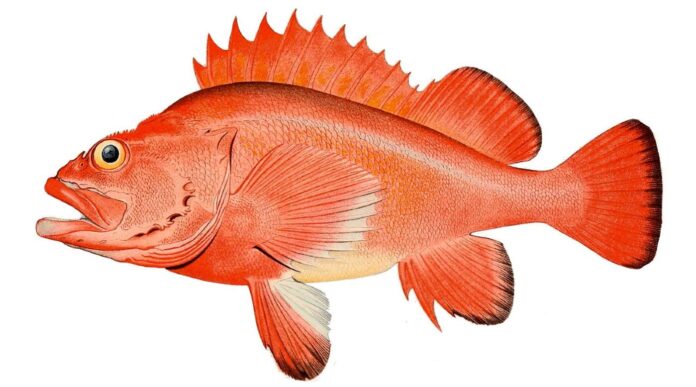
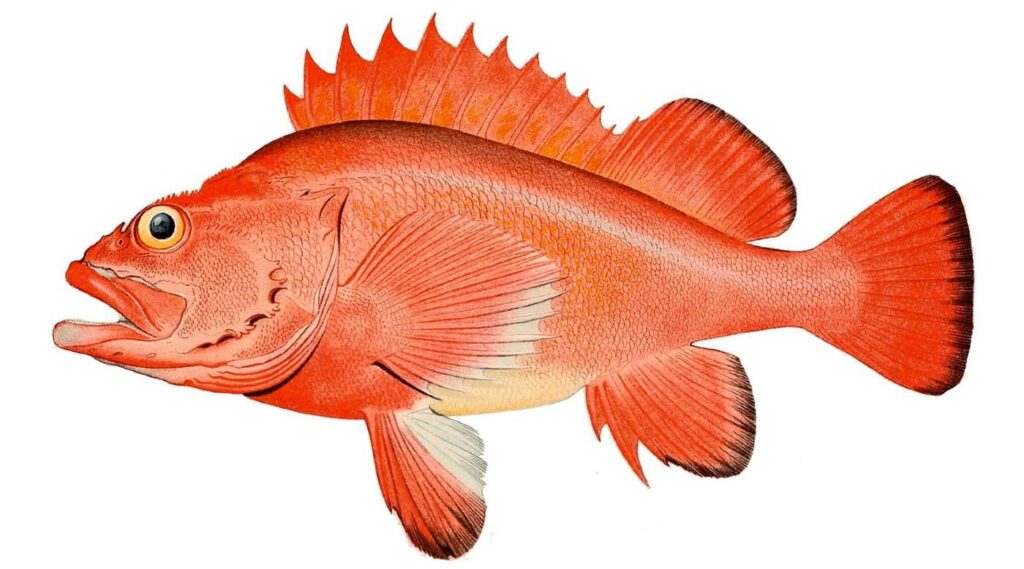
Rockfish Populations Rebound After Strict Management Decades Ahead of the Expected Date

Recent rockfish stocks up and down the California waters have rebounded completely after regulations were placed on them in the 2000s.

This year many of these stocks are declared “rebuilt,” and new regulations implemented by the California Department of Fish and Wildlife reflect this abundance, including being able to go further out to sea to drop your line.

For sport and hobby fishermen, the rockfish, with its succulent taste and vibrant vermillion color, is a true trophy fish.

“Of the eight stocks that were declared overfished in the early 2000s, all but one, yelloweye rockfish, has been declared rebuilt today,” said CDFW Senior Environmental Scientist Caroline McKnight, according to Recordnet.

Rockfish are part of a family called sebastidae, which contain finned bottom-dwellers that include species considered demersal and benthic fish. These are also known as groundfish, and the genus sebastes are sometimes called rockfish because they’ve been known to hide among rocks.

“Rebuilding these stocks required collaboration between a lot of different people, from fishermen to scientists to environmentalists,” said Pacific Fishery Management Council (PFMC) Chair Marc Gorelnik in a statement.

“It was a tough process, but in rebuilding these stocks, we also built long-lasting, valuable relationships. Responsible fisheries management requires sacrifices, but it pays off. This is a really hopeful story.”

Decades in the making

All the way back in 1999, the PFMC analyzed the populations of 288 specific species out of 600 that were of commercial value and environmentally biodiverse, and began to place stringent measures to combat overfishing.

MORE: Porpoises Rebound in a Big Way Following California Ban on Indiscriminate Fishing Nets

Large area closures, low annual catch limits, quotas, and harvest guidelines, gear modifications, retention prohibitions or limitations, and adaptive management practices were all used over a period of two dcades, demonstrated a study published in Nature Sustainability, to dramatically improve the fish stocks all across the Pacific coast.

Nine of the ten Pacific coast groundfish stocks that were declared depleted or overfished when they began are now rebuilt, and the one that’s left, yelloweye rockfish, has already been subject of a management plan and is steaming ahead towards restoration faster than anyone expected, according to a recent stock analysis.

RELATED: Salmon Spawning for the First Time in 80 Years in the Upper Columbia River

“Rebuilding these overfished stocks was a painful process for West Coast fishermen,” said Pacific Council Executive Director Chuck Tracy. “This study shows that their short-term sacrifices paid off in the long run, leading to more sustainable fisheries for future generations.”

SPLASH the Good News on Social Media…

These Groundhogs Came Out – Then Shared a Tomato Feast at a Tiny Picnic Table (Watch)

After something began eating all the vegetables from their garden, causing so much upset, a camera was erected to discern what was causing all the destruction.

It turned out to be a groundhog–and they named it Chunk.

“Chunk plops himself right in front of the camera every time and devours our produce,” it says on the YouTube channel that started years ago. “He even has the nerve to stare right into the camera like a boss!”

After looking at all the footage they found they were “absolutely shocked how amazing he was!”

He totally changed their whole outlook of the situation, and now he has the right to enjoy all the veggies he wants.

WATCH: The Serendipitous Moment a Dog Runs Into Her Puppy Brother in a Park—Even Though He Lives 500 Miles Away

“We all coexist. This is his land too. I just put a garden on it! So munch away…”’

The channel, Chunk The Groundhog, now has 96.2K subscribers and the backyard has many more cameras to catch all the action.

They posted this adorable video in August, entitled “Sharing Means Caring”…

Do Your Own Sharing—On Social Media—to Celebrate GroundHog Day 2021…

“The secret of change is to focus all of your energy, not on fighting the old, but on building the new.” – Dan Millman

Quote of the Day: “The secret of change is to focus all of your energy, not on fighting the old, but on building the new.” – Dan Millman

Photo by: Ryan Stone

With a new inspirational quote every day, atop the perfect photo—collected and archived on our Quote of the Day page—why not bookmark GNN.org for a daily uplift?

Loyal Dog Follows Ambulance and Waits Nearly a Week to be Reunited With Her Human at the Hospital

YouTube/Inside Edition

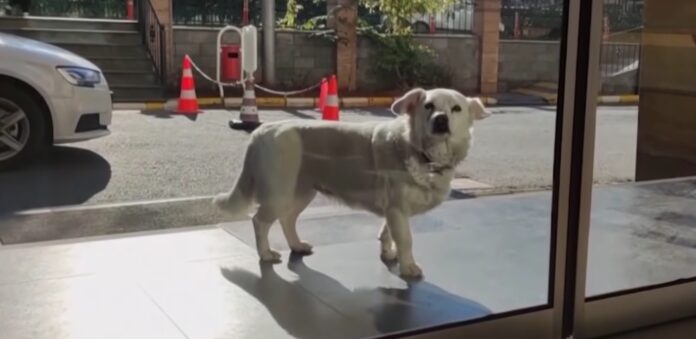
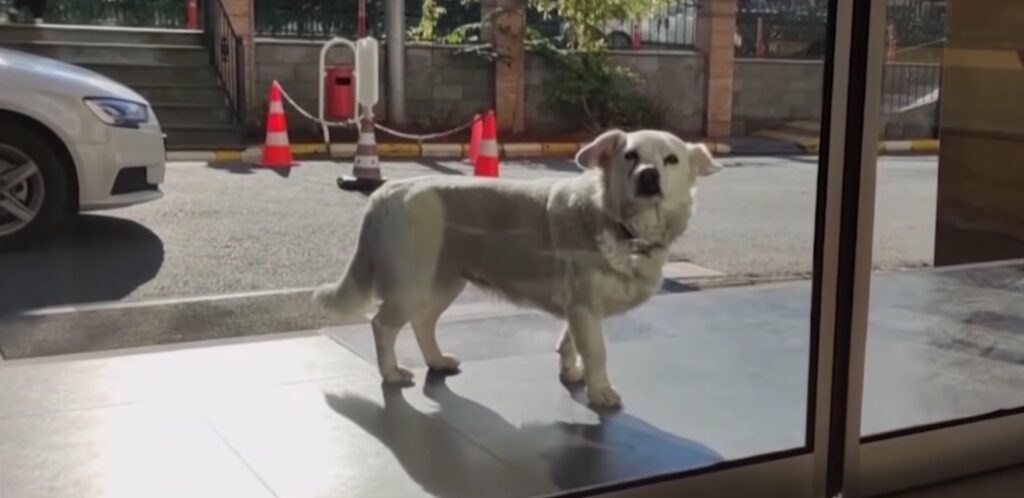
“Dogged” is a word that means stubbornly tenacious, and when it comes to devotion, there’s no dog more dogged than a fluffy white pooch named Boncuk who patiently waited outside the doors of a hospital for almost an entire week for her “hooman” to come home.

YouTube

When Boncuk’s owner Cemal Şentürk went in for treatment in the Turkish city of Trabzon, the determined doggo trailed the ambulance he was riding in to the Medical Park Hospital.

Şentürk’s daughter Aynur Egeli explained that while Boncuk (meaning “bead”) was sent home each night and placed under “house arrest,” the next day, the cagey canine would be off to the hospital again—all by herself.

She kept up the routine for Şentürk’s entire stay.

“The dog comes here every day at around 9 in the morning, waits until the evening, and then leaves. She never comes inside, but waits for her owner [outside],” hospital security guard, Muhammet Akdeniz, told Turkish news service DHA.

The hospital staff made something of a mascot of Boncuk, feeding her and giving her water. Şentürk could sometimes see his loyal pet outside his hospital room window. Cheered by her visits, he’d wave to her and call her name.

After six days, Şentürk was discharged. His companion of nine years was there waiting for him, her tail wagging, jubilant to be reunited with her doggy daddy.

MORE: After Losing My Dog, Neighbors on Nextdoor Loaned Me Their Own Pups to Grieve

“Boncuk has behaved really sweet during the six days and has managed to capture the love and affection of the whole staff,” the hospital’s international patient center director Murat Ercan told CNN.

“I missed her too, constantly,” a teary Şentürk told DHA. [“Dogs] bring joy… They provide companionship just like humans—and they make people happy.”

RELATED: ‘Grandfather’ of Homeless Animals Graduates From Veterinary Program to Care for Stray Dogs

You can teach a dog to sit. You can teach a dog to roll over. You can teach a dog to fetch. But loving their humans? That’s something some dogs like Boncuk know instinctively—and with all their hearts.

(MEET the faithful pup in the INSIDE Edition video below.)

WOOF Your Praise of This Loyal Dog by Sharing This Story on Social Media…

Everyone in England is Planting Wildflower Meadows After Prince Charles Replants 60 of Them to Honor Queen

Mark Fairhurst

When Prince Charles of Great Britain read Plantlife UK‘s annual 2012 report, he was astonished to find that England had lost 97% of all its natural wildflower meadowland.

Dylan Nolte

He then organized the Coronation Meadows Initiative, which helped build 60 wildflower meadows—one for each year since his mother, the Queen, assumed the throne.

But not only did 60 become 90—totaling over 1,000 acres—but converting old animal paddocks and lawns into wildflower meadowland became the fashion for national gardening and landscaping. Environmental charities and societies are utilizing these trends to promote pollinator restoration, carbon sequestering, and all other manners of ecological benefits.

In Ipswich on the UK’s southeastern coast, a valley running down to a quaint river was turned into landfill in the 1960s and loaded up with trash. Capped and left to sit, in 2017 Landseer Park was turned into a 50-acre wildflower and pollinator sanctuary by a charity called Buglife. It’s now home to rare bee species and butterflies such as the dark green fritillary.

Local reporter Ross Bentley describes the meadows in lovingly nationalistic detail when he wrote for the East Anglian Times.

“Such is the subtle majesty of our native wildflowers that their beauty only becomes truly apparent close up: the lilac of field scabious; the flamboyant blue spikes of viper’s-bugloss; the yellow, honey-scented lady’s bedstraw—the names conjuring up images of their usage back centuries ago when people understood better the properties of our natural flora.”

“When the sun shines on England”

Mark Fairhurst

For Forbes Adam, strolling through the old barley field which has been newly meadowed is like stepping onto “25-acres of hope.”

Her plan was to restore an ancient kind of habitat across much of the North Atlantic called “woodmeadows,” which are exactly what they sound like—a mosaic of trees, grasses, and flowers that marry the creatures of the meadow with those of the forest, and which still can be found across Scandinavia today.

CHECK OUT: Britain Helps World’s Most Remote Inhabited Islands to Establish Biggest Marine Sanctuary in the Atlantic

So far, Adam has recorded more than 1,000 different species of invertebrate, according to an interview she gave with The Guardianincluding 34 bee species and 26 butterflies.

She now runs the Woodmeadow Trust, a charity that helps advise landowners on creating this sort of iconic English habitat everywhere, from Yorkshire in the north to London in the south. That aspiration has a slogan: “a woodmeadow in every parish.”

Over the next 22 years, the larger Plantlife UK charity is hoping to capitalize on the wildflower appreciation trend with a campaign to restore 360,000 acres of wildflower meadows (120k hectares) across the nation.

LOOK: Man Hasn’t Been to the Grocery Store in 8 Months Thanks to Tiny Pandemic Garden Inspired By Grandfather

They practice natural seeding techniques, which involves harvesting seeds at different times from local strains of plant species and seeding areas with this stock rather than buying wildflower seeds from a store.

WhoisBenjamin

The difference is that the naturally collected seeds will create plants which grow and produce nectar and flowers at different rates, meaning the season during which pollinators can find food, and humans can stroll among the beautiful petals, will be much longer.

MORE: UK Debuts Geothermal Plant Using Heat From the Earth to Power 10,000 Homes

Plant Life’s Magnificent Meadows website contains all kinds of resources for making your own wildflower meadow, and how to get involved in the movement to save the English meadow, an important piece of ecological identity, as Alice Duer Miller divulges in The White Cliffs:

When the sun shines on England, shafts of light,
Fall on far towers and hills and dark old trees,
And hedge-bound meadows of a green as bright—
As bright as is the blue of tropic seas.

SPREAD a SEED of Hope—Share This Story With Pals…

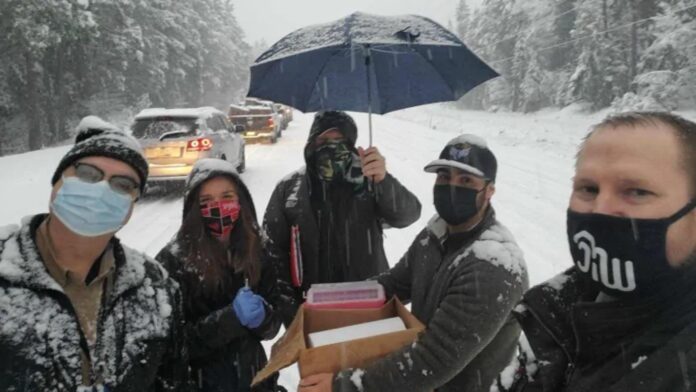
Healthcare Workers Stuck in Snowy Traffic With Expiring COVID Vaccines Go Car to Car Offering Them to Drivers

Josephine County Public Health

With COVID vaccines in short supply, waiting times are not unusual—but not for those stuck in traffic alongside these dedicated healthcare workers who made sure that fresh doses didn’t go to waste.

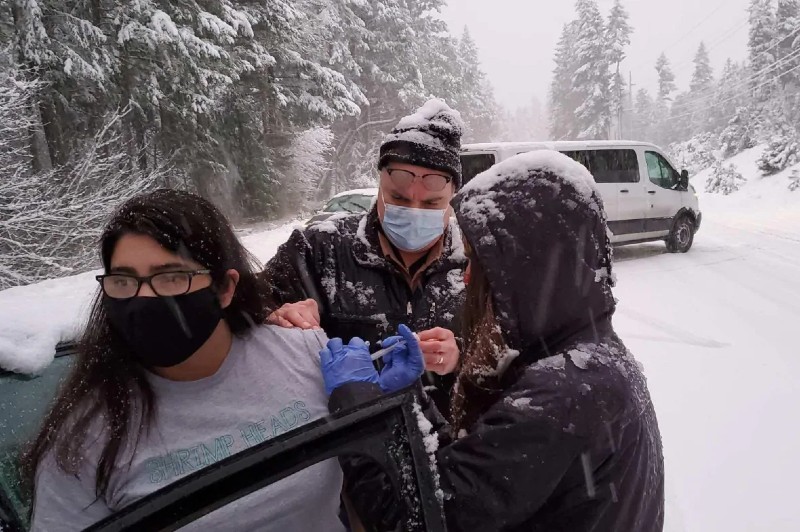
Josephine County Public Health

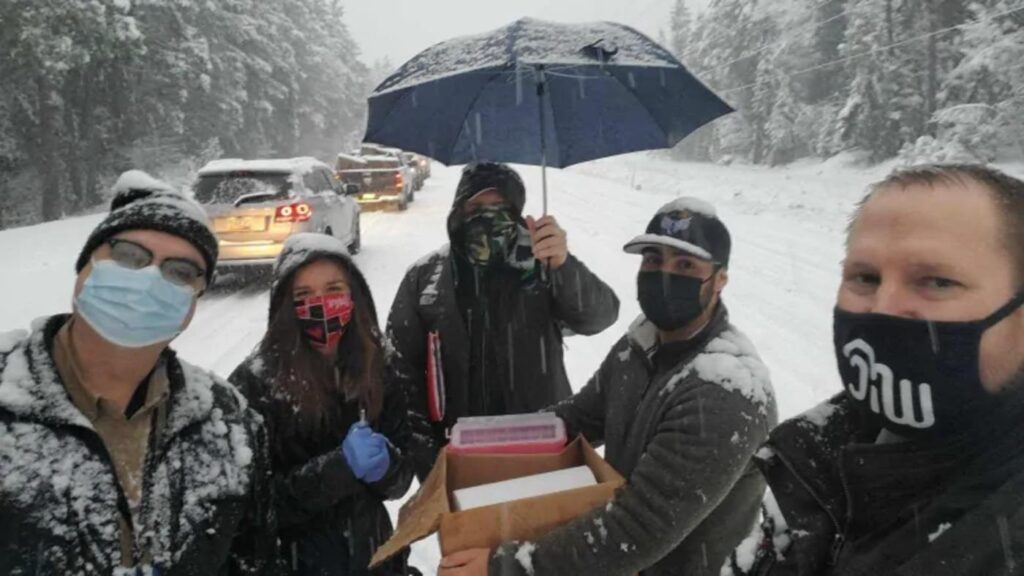
During last Tuesday’s snowstorm in Oregon, this inoculation crew found themselves stranded in a traffic jam. Rather than let vaccine doses expire, they hopped out of their vehicles and braved the cold, walking car to car looking for people eager to receive the shots.

After a day spent doling out vaccinations at various locations, Josephine County Public Health Director Michael Weber and 20 colleagues were on their way back to home base in Grants Pass, Oregon with six vaccine doses leftover. Stuck in a snowbound line of cars behind an accident, Weber realized that the 6-hour shelf life of these vaccine doses that had been removed from sub-zero storage would expire quickly.

With the vaccine’s viability window closing, rather than let the precious cargo go to waste, Weber leaped into action. “I decided to start going door-to-door, car-to-car, offering the vaccine,” he told The Washington Post. An ambulance that had accompanied them was also present and ready to treat anyone in the rare case of an allergic reaction.”

Weber and four team members carried pre-filled hypodermics, medical supplies, and a big umbrella to canvass motorists for likely candidates. After 45 minutes, all the remaining doses had been happily distributed.

MORE: This Nurse is a Hometown Hero for Creating A ‘Take-What-You-Need’ Pantry For Her Virginia Hospital

The six lucky people who got the unexpected shot in the arm were elated. One “vaccinatee” was so psyched, he jumped out of his car and stripped off his shirt in the blizzard to get his injection.

Josephine County Public Health

And finally, in a quintessential “somebody up there likes me” moment, the last dose went to a woman who’d missed her scheduled appointment that same day. She was thrilled.

RELATED: Brides Across America Begin Donating Wedding Gowns to Support the Marriages of Frontline Healthcare Workers

Weber and his crew were pretty pleased with the outcome as well. “I can’t imagine a better way to spend four hours stuck in a snowstorm,” he said.

Neither can we.

SHARE This Snowy Story of Good Fortune With Your Pals…

She was Demoted, Doubted and Rejected But Now Her Work is the Basis of the Covid-19 Vaccine

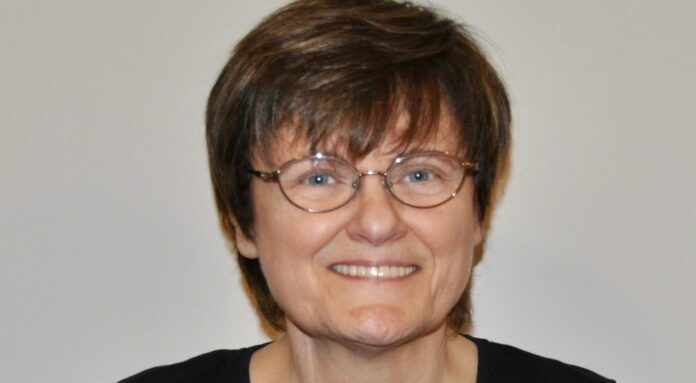
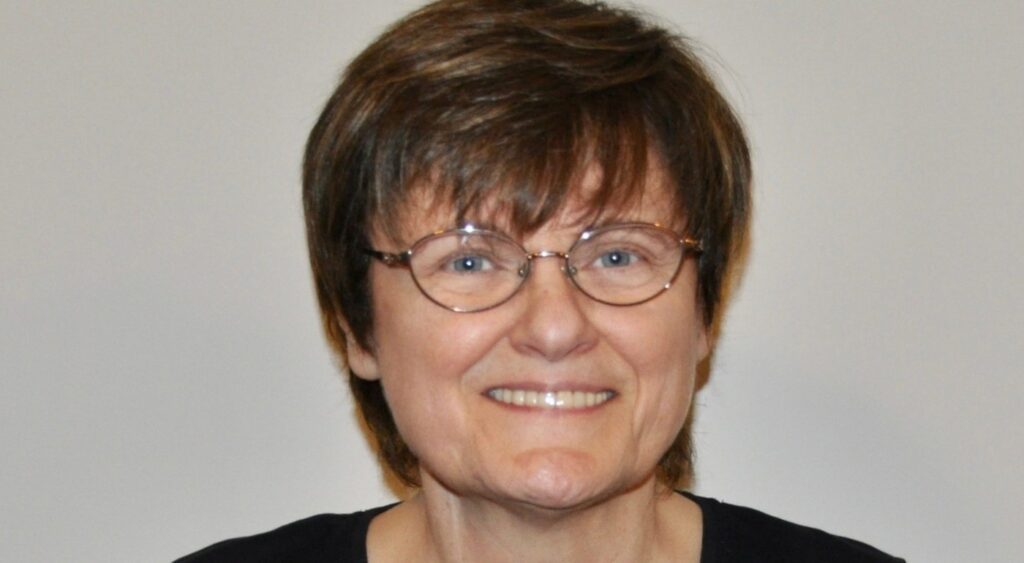
Katalin Karikó

The foundation of the COVID-19 vaccine, and many others, can be drawn back to the work of an intrepid immigrant to the United States from Hungary, whose never-say-die attitude and belief in her work led to one of the most important technological developments in vaccine research.

Katalin Karikó

Katalin Karikó is now being talked about for a Nobel Prize, but life wasn’t always so congratulatory for her, and the story about how she practically invented mRNA and RNA-derived therapies and vaccines—the basis of so many lifesaving treatments—was filled with challenges.

When Karikó left her native Hungary with husband and young child, she had just $1,200 stuffed in her daughter’s teddy bear. Now, after years of her work developing mRNA and RNA technologies, she is the senior vice-president for the German pharmaceutical giant BioNTech, and her work has received more than 12,000 academic citations.

After graduating with a Ph.D. in biochemistry from the University of Szeged, she afterwards embarked on a research career at the Hungarian Academy of Sciences.

However, after getting laid off, Karikó subsequently relocated to the United States after receiving an invitation from Temple University in Philadelphia in 1985. She would eventually transfer to University of Pennsylvania, which would end up being an extremely difficult period.

In that time, messenger RNA research was extremely popular, but shortly after she arrived, the method for using a virus’s genetic material to command a human body to duplicate certain proteins to fight the virus was considered too radical, and too financially risky to fund.

The failed grant applications began piling up on Karikó’s desk, but she was not deterred.

Ten years after she arrived in Philadelphia, she was demoted from her position at UPenn and was then diagnosed with cancer.

“Usually, at that point, people just say goodbye and leave because it’s so horrible,” she told Stat, a health news site, in November. “I thought of going somewhere else, or doing something else. I also thought maybe I’m not good enough, not smart enough.”

Along with another immunologist called Drew Weissman, the pair finally received patents for their mRNA technology in 2012, but after receiving yet more trouble from UPenn, Karikó took a job at BioNTech, a German company founded, perhaps fittingly, also by immigrants.

MORE: Engineers Design New Face Masks With Test Strip to Detect COVID – Much Like a Pregnancy Test

Is it a coincidence that the first and most widespread COVID-19 vaccine was produced by this company? In reality it was Karikó and Weissman, repeatedly underestimated or dismissed by Pennsylvania academics, that partnered their method of mRNA gene-therapy with the expertise of Pfizer, to create the vaccine that has already protected millions of people.

The pair are being talked about for a Nobel Prize, including by famed British intellectual Richard Dawkins and Moderna CEO Derek Rossi.

This year they’ve already scooped up the Rosenstiel Award for Distinguished Work in Basic Medicine.

RELATED: COVID-19 Vaccine Distribution Tracker Lets You See Where U.S. Doses Are Going

“Through their painstaking research into mRNA—and persistence despite setbacks— Weissman and Karikó laid the groundwork for vaccines that will save countless lives,” said Director of the Rosenstiel Center for Research on Basic Medical Sciences.

CHECK OUT: Geophysicists Confirm Plato’s Theory—the Earth Is Made of Cubes

In an interview with CNN, Karikó, with eyes as blue as sea glacier ice, explained that the time for awards and celebrations will come at another time, when the pandemic she will be chiefly responsible for ending, indeed ends.

SHARE This Fascinating Story With Friends on Social Media…

“Every time you tear a leaf off a calendar, you present a new place for new ideas.” – Charles Kettering

Quote of the Day: “Every time you tear a leaf off a calendar, you present a new place for new ideas.” – Charles Kettering

Photo by: Brooke Lark

With a new inspirational quote every day, atop the perfect photo—collected and archived on our Quote of the Day page—why not bookmark GNN.org for a daily uplift?

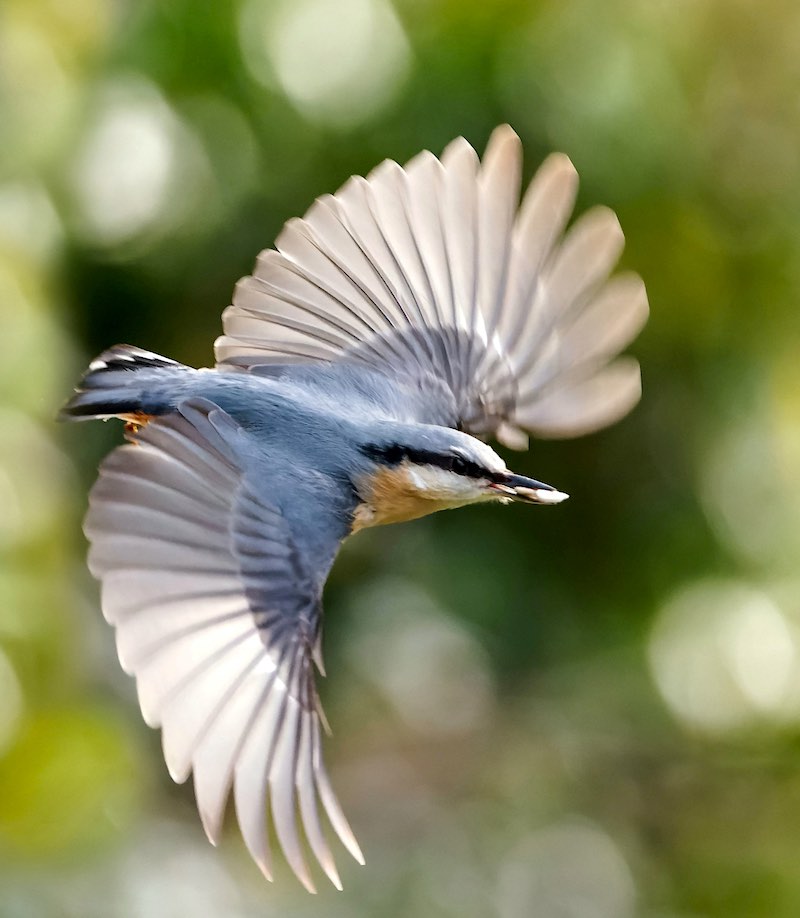
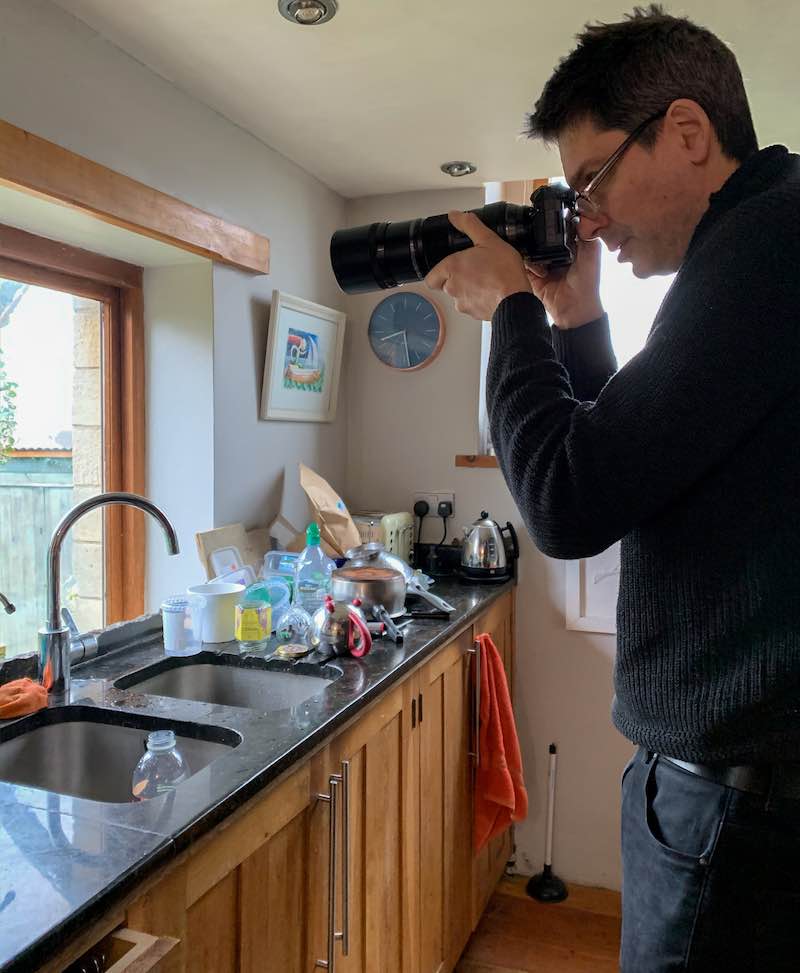
Photographer Uses Lockdown to Snap Photos of Amazing Wild Birds in Garden –All From the Kitchen Window

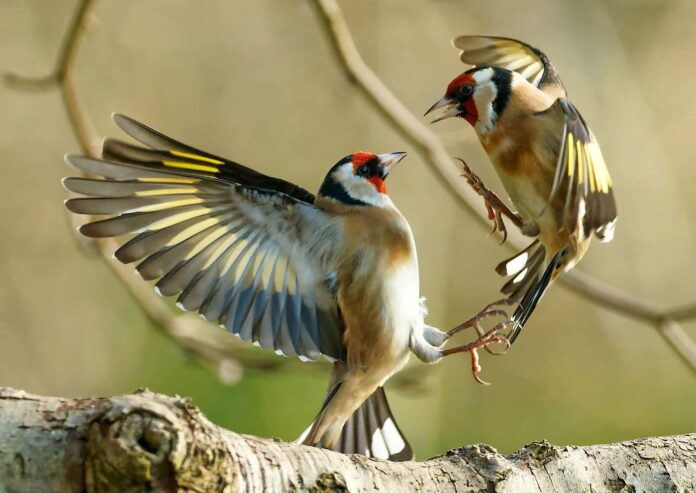
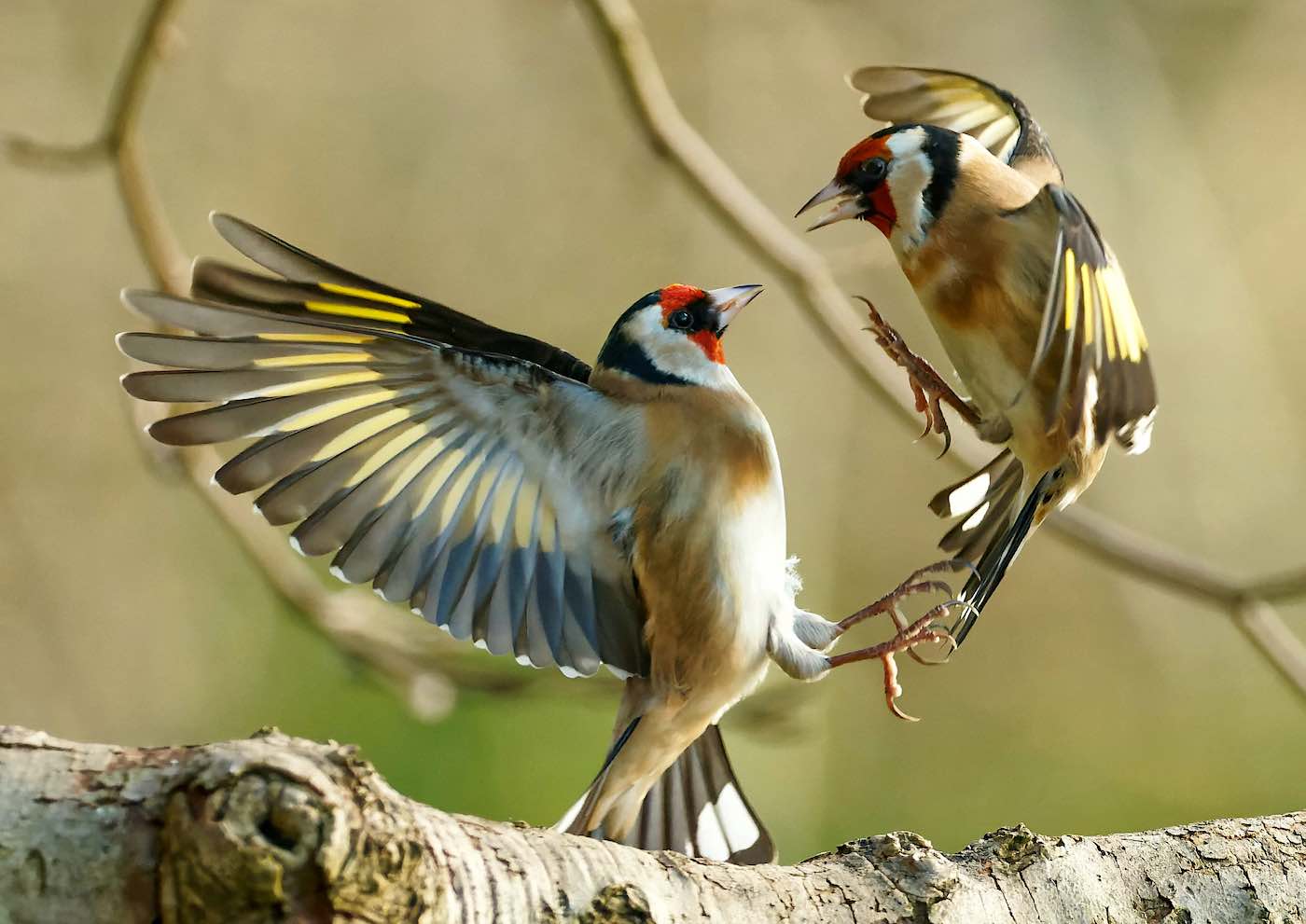
Goldfinches fighting. Colourful garden birds launching into flight and fighting in midair. See SWNS story SWMDbirds. Wildlife photographer Andrew Fusek Peters managed to capture the dramatic scenes through his double-glazed kitchen windows. Over the past week, Andrew, 55, photographed goldfinches, blue and long tailed tits, redpolls, nuthatches and siskins in his garden in Lydbury North, Shrops. Using the glass as a makeshift hide, he spent hours a day taking thousands of pictures.

A dedicated wildlife photographer has used lockdown to catalogue the parade of beautiful birds visiting his garden—and has snapped all of the pictures through the kitchen window.

Andrew Fusek Peters – SWNS

Cancer survivor Andrew Fusek Peters, who remained isolated throughout most of the pandemic, forced himself to adapt by working with subjects closer to home who were already socially distant.

The 55-year-old used his double-glazed kitchen window as a makeshift hide to capture stellar images of wild birds outside his Shropshire garden.

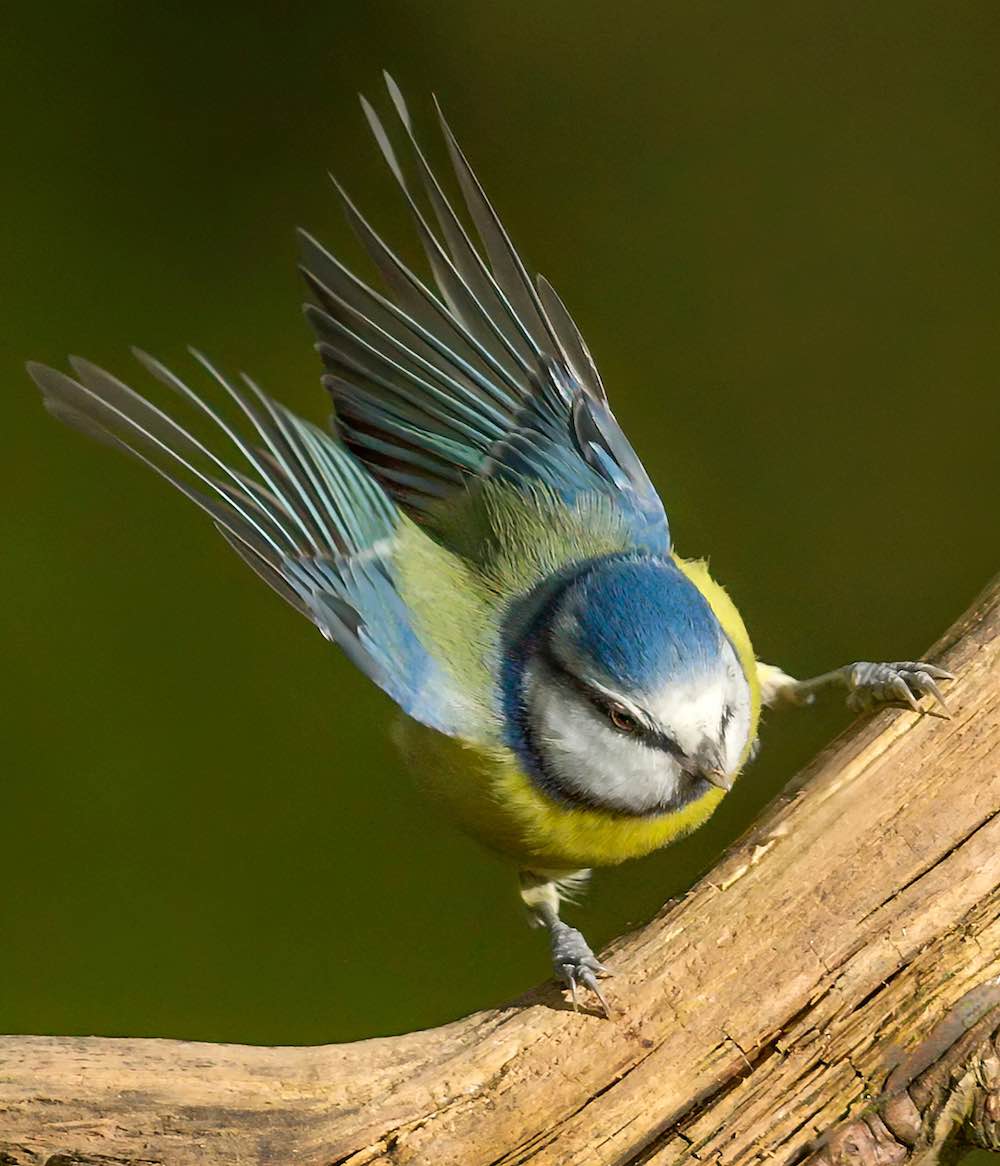
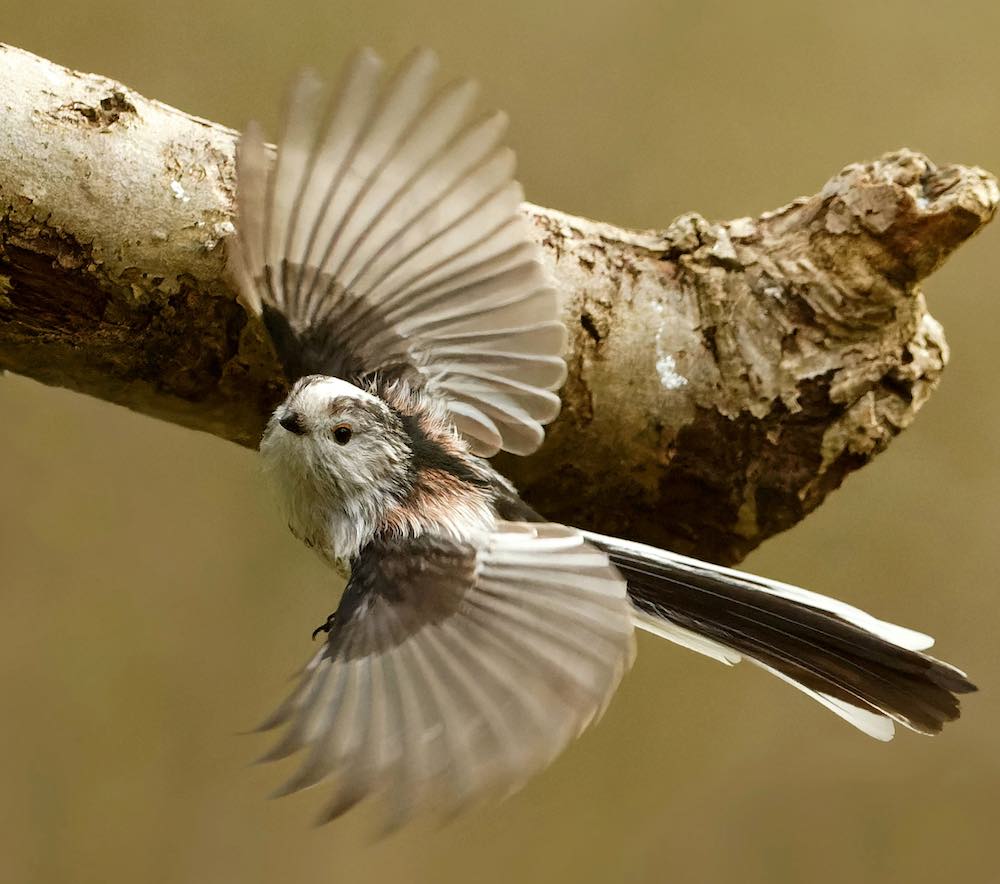
In the last week alone, according to SWNS, he has managed to photograph goldfinches fighting each other midair as well as redpolls, nuthatches, and blue and long tailed tits taking flight.

He spent several hours every day camped in his kitchen while drinking tea to complete the project he has called, “The secret life of birds in lockdown.”

Andrew, of Lydbury North, used an Olympus EM Mark III camera with a zoom lens and shot the birds at 60 frames per second.

He said: “I’ve been carrying on this garden bird project through lockdown and these have worked out really, really well.

Blue tit – Andrew Fusek Peters (SWNS)

“Usually I’d have gone away to Scotland and the Shetlands but instead I’ve managed to showcase this amazing wildlife in our garden.

LOOK: Snowy Owl Spotted in New York’s Central Park For the First Time in 130 Years

“The garden has great light but I need the sun to be at the perfect level at a certain time, and have the ideal weather conditions.

“The sun can’t be shining at the window or the glare makes it impossible. There is only a small window of opportunity really.

Nuthatch – Andrew Fusek Peters (SWNS)

“The bird needs to take off and fly past the exact same place for it to come off.

“Because I’m behind the double glazed glass I have to clean the windows inside and out daily to get the shot as sharp as possible.

RELATEDNew Research Shows Why Crows Are So Intelligent and Even Self-Aware—Just Like Us

“The birds are so fast you are photographing like crazy. The six or seven shots I’ve managed to get are about a one in five thousand chance.

SWNS

“You have to understand the behavior of the birds, which are all different.

“I think these are some of the best shots I’ve done,” he said of the goldfinches fighting.

WEIRD: New Bird Song That ‘Went Viral’ Across Species of Sparrow Was Tracked by Scientists For the First Time

“They look ferocious with their claws up and the look in their eyes is so intense. Their colurs are beautiful.

Long tailed tit – Andrew Fusek Peters (SWNS)

“It’s quite magical to see such a variety of wildlife in your back garden. It shows how beauty is all around us, if you look closely enough.”

FLY This Inspiration to Your Photographer Friends on Social Media…

This New Year, Dare to Be Unfaithful to Your Goals

Lillie Kate, CC license

An excerpt from the book Thriving Through Uncertainty: Moving Beyond Fear of the Unknown and Making Change Work for You (TarcherPerigree-Penguin-Randomhouse),
by Tama Kieves

I was talking to one of my coaching clients who reported not being able to stay with a Zen meditation practice—so she gave up meditating altogether. “I’m either gung-ho all the way or I don’t show up at all,” she said with self-disgust.

We were discussing this on one of the unfortunate evenings when she “hadn’t shown up at all.” To listen to her, you would have thought that she had just murdered the family’s cocker spaniel. Clearly, she needed self-forgiveness more than self-discipline.

I understand the desire to make changes in your life. I am a believer in enthusiasm. I also believe in commitment. But I’m more of a fan of incremental, organic natural commitment.

That means I invite you to be inconsistent and unreliable.

I dare you to break promises to yourself and I dare you to make fresh new ones. This is what it takes to be on the courageous path of learning to reinvent, hunt down your bare heart, and discover and trust yourself.

You are here to follow an unpredictable light wherever it leads, not to wrangle unfathomable power into a silly, stupid box. This isn’t rationalization. It’s strategy. Because a realistic and sustainable path doesn’t come from obligation or hostility. If you want something to go the distance, it needs to come from love.

RELATED: People are Making Self-Care a Priority After One of the Most Stressful Years Ever

Commitment is bold and wondrous. Still, let your intention breathe instead of suffocate you. You’re learning how to commit from something deeper than willfulness. I’ll call it willingness. This willingness arises from an inner summons. Authentic success springs forth from irrepressible desire, not impatience.

“I never follow through,” says Sandra, on one of our afternoon calls. I know this isn’t true. She is a bright, passionate woman who has raised children, which if you ask me, is quite the follow through. In fact, she’s still feeding them, last I heard. “I get it. You’ve got to stare resistance down sometimes,” I said. “But honey, believe me when I tell you, that rigidity will create more problems than it solves.”

Following through is so much less important than following inner guidance.

It’s not wise to stay true to a faded goal. Stay committed to the gold. Your inner voice is the gold. You don’t have to believe me, just because I get paid good money as a coach who kind of turns the term “accountability” on its head. Ralph Waldo Emerson, leading the Transcendentalist movement in the mid 19th century said it even more flagrantly: “A foolish consistency is the hobgoblin of little minds.” Don’t worry. Your inner wisdom is never going to ask you to abandon your integrity. It may ask you to abandon your hobgoblins. Or give yourself elbow room and wingspan.

Flexibility doesn’t mean you have a problem with commitment. It may indicate adaptivity, which is sounds so much sexier than being erratic.

Seriously, though, what if who you think you “should be,” is keeping you from the brilliance of who you are becoming?

For example, I’ve worked with many high-powered successful individuals who don’t “follow through,’ because while something might be a great idea, it’s not an idea that sets its fangs into their jugular. It’s just a good idea. They have lots of great ideas, popcorn coming out of their ears. And it’s not right for them to make a good idea the only opportunity right now. It takes emotional honesty to explore and stay true to your instincts. It takes enormous courage to not follow through.

Maybe you think you’re just a quitter? I’ve met many intelligent authenticity seekers who refuse to settle. They had the need to keep moving on. It wasn’t because they were flighty, but because they had already taken flight. If you’ve grown, you move on. That’s called maturing. If you move on to the 8th grade, have you “quit” 7th grade? No, you’re not quitting; You’re evolving. And growth sheds its baby teeth.

CHECK OUT: If Overly Anxious or Depressed, Study Shows That Focus on Past Successes Can Improve Judgement

There’s also a divine timing to things, when things just work out themselves. My partner Paul tried to get sober three times before he got sober for life, or at least for two decades, and counting. It wasn’t a mistake for him to try to get sober. It wasn’t a failure to take a run at it, even though he didn’t follow through. It’s never wrong to move towards health. You can’t force yourself to be ready. But you can keep taking steps in the right direction as often as is possible.

To me, there’s beauty, intelligence and grace in showing up lopsided, showing up fitfully, showing up sporadically. Showing up is showing up.

The dream-basher in you pushes you into airtight commitments. But real change is about breathing, coming in and going out. Daring to live the authentic life that calls you is a path of invitation, not obligation. If it’s right for you to make a deeper commitment to something, you will move into this grace. But you will make it in your own time and not a second before or afterwards.

The Persian mystic poet Rumi, the absurdly free and expansive spirit, writes “Come, come whoever you are, wanderer, worshipper, lover of leaving… Come, even if you have broken your vow a hundred times. Come, come again.”

The wisdom path of A Course in Miracles echoes this philosophy by telling us to “choose once again,” whenever we have made a choice that has felt painful. It doesn’t say crucify yourself, throw in the towel, and, by all means, go ahead and create your identity out of all that hasn’t worked out yet. No, it instructs us to save time. Just begin again.

Choose the new behavior or belief now. Give birth to a different experience this very minute. This kind of freedom isn’t irresponsible. It’s the ultimate responsibility. You have a mandate in this lifetime to give yourself every chance to be healthy and true.

If you are trying to lose weight, don’t agitate over your failure of will on the third day of your program. Celebrate the first two days of motivation. Only the wins count—if you want to win. In 12 Step Program lingo, “It’s all about progress, not perfection.”

POPULAR: UC Berkeley is Offering Up Their Popular ‘Science of Happiness’ Course for Free Online

I know the sticklers will tell you that taking one exercise class or spending one hour with your camera won’t help, but I disagree. Every act of love for yourself– makes a difference.
That one time can boost your self-esteem, help reveal the heavens, stretch a muscle, or send a rush of dopamine to your brain, which believe me, will increase the likelihood that you’ll return.

Go ahead, stumble into grace. Start and stop a million times. Get there late and leave early. Whatever it takes. So, what, if some think you look spasmodic? You are an extraordinary truth-seeker, an inspired explorer, or as Rumi says a traveler on “a caravan of joy.” And that works just fine, because you’re moving in the right direction.

Tama Kieves, an honors graduate of Harvard Law School, left her law practice to write and help others create their most extraordinary lives. She is the bestselling author of 4 books including A Year Without Fear: 365 Days of Magnificence and her latest Thriving Through Uncertainty. A sought-after speaker and career/success coach, she has helped thousands to thrive in their life, calling, and businesses. Sign up for your FREE digital fortune cookies and a free copy of her popular webinar Dare to Decide at www.tamakieves.com/dare.

SHARE the Wisdom With Pals on Social Media…

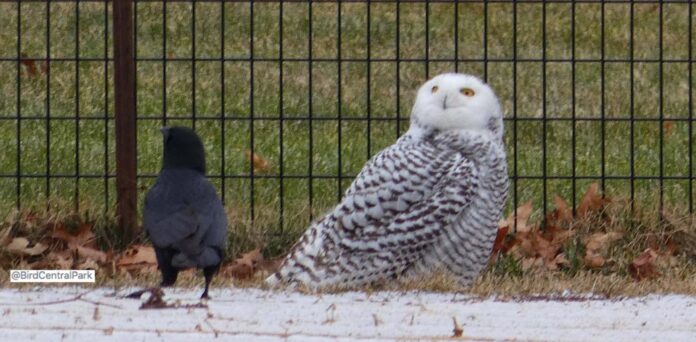
Snowy Owl Spotted in New York’s Central Park For the First Time in 130 Years

@ManhattanBirdAlert – Twitter

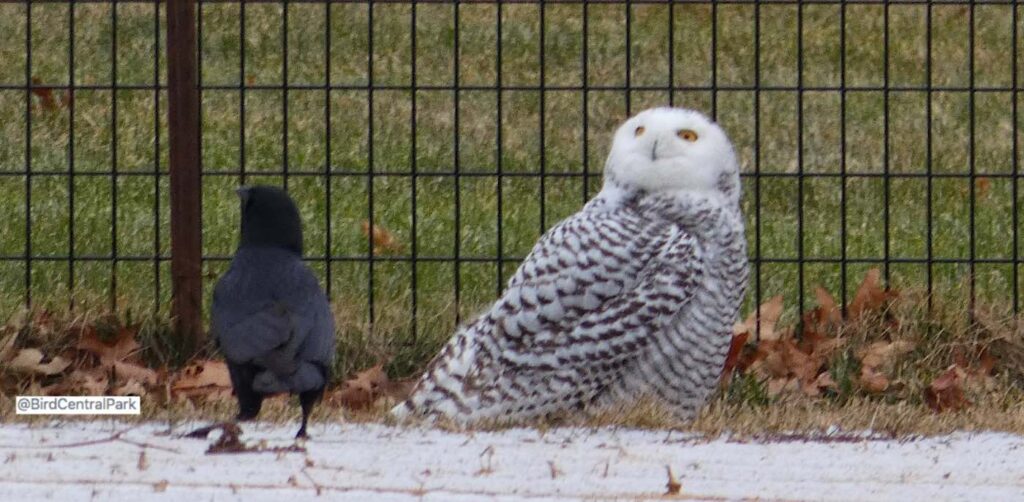
New Yorkers were treated to a once in a lifetime visit from a snowy owl, a species that hadn’t been seen in Central Park in over a century.

@ManhattanBirdAlert – Twitter

The white raptor wasn’t as well camouflaged as it is at home in the Arctic, which is its normal summer home. The species migrates south in search of food in the Winter, but no one expected to see the bright white feathers on a baseball field with the Manhattan skyline in the background.

David Barrett, who runs a popular Twitter page, Manhattan Bird Alert, was the first to report the sighting, calling it “perhaps the first-ever documented record of this species in the park.”

His tweet on January 27 alerted a throng of birders who stayed behind a fence to give the majestic predator plenty of space.

“Yesterday’s snow and cold to our north likely encouraged this SNOWY OWL to fly south in search of better hunting conditions,” Barrett says.

“These owls like flat lands and beaches, so the Central Park North Meadow, flat and with sand-filled fields, might have appealed.”

The appearance is not due to the pandemic, as some would surmise. Snowy owls have been spotted on Governors Island in the NY harbor near Brooklyn throughout the last decade.

However, with more people outside leisurely strolling during the lockdowns, more birds than ever are being reported on wildlife apps and on social media.

LOOK: Miracle on 34th Street for Tiny Owl Found Stowed Away in Rockefeller Christmas Tree

No snowy owl glimpses have been reported in the park over the last 2 days. Maybe it is checking out the nearby island—but with snow in the forecast, it might be back.

WATCH David’s sweet video…

FLY This Beautiful Sighting to Your Flock on Social Media…

“To be hopeful in bad times is not just foolishly romantic. It gives us the energy to act.” – Howard Zinn

Quote of the Day: “To be hopeful in bad times is not just foolishly romantic. It gives us the energy to act.” – Howard Zinn

Photo by: Gabriel Lamza

With a new inspirational quote every day, atop the perfect photo—collected and archived on our Quote of the Day page—why not bookmark GNN.org for a daily uplift?

Engineers Design New Face Masks With Test Strip to Detect COVID – Much Like a Pregnancy Test

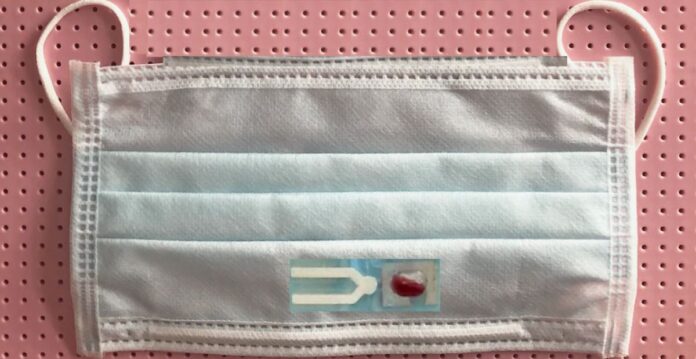
Similar to a classic pregnancy test, a color-changing strip may, in the future, be mounted on face masks to detect the presence of COVID-19 in the air you breathed that day, allowing everyone to self-monitor the environments they pass through.

The project was launched by nanoengineers at UC San Diego with a $1.3 million grant from the NIH’s Rapid Acceleration of Diagnostics Radical (RADx) program.

The scientists created a small test kit to attach to the front of any mask, which can be mass produced at a cost of about 3 cents per kit.

After breathing through the mask for 4-5 hours, enough particles would be available to determine if you came in contact with the virus throughout the duration, or indeed if you perhaps have contracted it.

“In many ways, masks are the perfect ‘wearable’ sensor for our current world,” said Jesse Jokerst, professor of nanoengineering at the California university and project lead. “We’re taking what many people are already wearing and repurposing them, so we can quickly and easily identify new infections and protect vulnerable communities.”

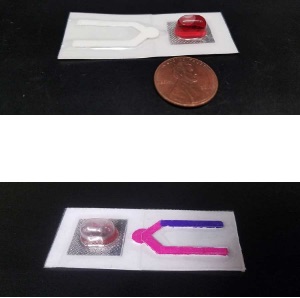
To detect the virus, the wearer would crack a small blister pack that would immediately coat the test kit in fluid which would indicate the presence of proteases—protein-cleaving molecules produced from the coronavirus.

RELATED: Same Technology Behind Pfizer COVID-19 Vaccine is Leading Researchers to Possible MS Breakthrough

The grant program from the NIH totals $107 million and is being handed out to 49 projects at 43 institutions looking for “non-traditional viral screening approaches, such as biological or physiological markers, new analytical platforms with novel chemistries or engineering, rapid detection strategies, point-of-care devices, and home-based testing technologies.”

UC San Diego

An advancement for the future

Despite the fact that the test strip turns blue or red, Jokerst said the product would more represent a smoke detector in function.

“Think of this as a surveillance approach, similar to having a smoke detector in your house,” he said. “This would just sit in the background every day and if it gets triggered, then you know there’s a problem and that’s when you would look into it with more sophisticated testing.”

POPULAR: Hair Stylists Infected With COVID-19 Were Wearing Masks Along With Their 140 Clients—Tests Prove No One Got Sick

Perfect for prisons, homeless shelters, nursing homes, dialysis clinics, or other areas where people must stay in quite close proximity, the kits could prevent outbreaks from becoming epidemics, and while Jesse understands that by the time his idea is mass-produced, which might not even come this year, the vaccination program might have COVID-19 under control.

But, his test also turns red for the original SARS virus from 2003, as well as MERS, which means he thinks they could be utilized—as a rapid and quickly-deployable weapon—for future pandemics originating form coronaviruses

“To solve a problem as complicated as COVID-19, we need ideas, tools, and technologies that challenge the way we think about pandemic control,” said NIH Director Francis S. Collins, M.D., Ph.D., in a statement.

CHECK OUT: New Zealand Buys Enough COVID Vaccine for its Pacific Islander Neighbors

“These awards from the RADx-rad program provide superb examples of outside-the-box concepts that will help us overcome this pandemic and give us a cadre of devices and tactics to confront future outbreaks.”

SPREAD the News to People in Search of Positive Solutions on Social Media…

This Week’s Inspiring Horoscopes From Rob Brezsny’s ‘Free Will Astrology’

Our friend Rob Brezsny provides his weekly wisdom to enlighten our thinking and motivate our mood. Rob’s Free Will Astrology, is a syndicated weekly column appearing in over a hundred publications. He is also the author of Pronoia Is the Antidote for Paranoia: How All of Creation Is Conspiring To Shower You with Blessings. (A free preview of the book is available here.)

Here is your weekly horoscope…

FREE WILL ASTROLOGY – Week beginning January 29, 2021
Copyright by Rob Brezsny, FreeWillAstrology.com

AQUARIUS (Jan. 20-Feb. 18):
“We all want everything to be okay,” writes author David Levithan. “We don’t even wish so much for fantastic or marvelous or outstanding. We will happily settle for okay, because most of the time, okay is enough.” To that mediocre manifesto, I reply, okay. I accept that it’s true for many people. But I don’t think it will apply to you Aquarians in the coming weeks. According to my assessment of your astrological potentials, you can, if you want, have a series of appointments with the fantastic, the marvelous, and the outstanding. Please keep those appointments! Don’t skip them out of timidity or excess humility.

PISCES (Feb. 19-March 20):
DON’Ts: Don’t keep scratching an old wound until it bleeds. Don’t try to snatch away the teddy bear that belongs to the 800-pound gorilla. Don’t try to relieve your tension by pounding your head against a wall. Don’t try to convince a stone idol to show you some tenderness. DOs: Do ask supposedly naive questions that may yield liberating revelations. Do keep in mind that sometimes things need to be a bit broken before you’ll be motivated to give them all the care they need and deserve. Do extinguish the fire on a burning bridge, and then repair the bridge.

ARIES (March 21-April 19):
In the 1950 film Harvey, James Stewart plays a middle-aged man named Elwood whose best friend is a tall invisible rabbit named Harvey. The relationship causes problems with the people in Elwood’s life. At one point a psychiatrist tries to convince him to “struggle with reality.” Elwood replies, “I wrestled with reality for 40 years and I am happy to state that I finally won.” I’m happy to tell you this story, Aries, because it’s a good lead in to my counsel for you: I suspect that one of your long wrestles with reality will yield at least a partial victory in the coming weeks. And it will be completely real, as opposed to Elwood’s Harvey. Congratulations!

TAURUS (April 20-May 20):
The light of the North Star takes a long time to reach us, even though it’s traveling 186,000 miles per second. The beams it shows us tonight first embarked when Shakespeare was alive on Earth. And yet that glow seems so fresh and pure. Are there any other phenomena in your life that are metaphorically comparable? Perhaps an experience you had months ago that is only now revealing its complete meaning? Or a seed you planted years ago that is finally ripening into its mature expression? The coming weeks will be an excellent time to take inventory of such things, Taurus. It will also be a favorable phase to initiate innovations that will take some time to become fully useful for you.

GEMINI (May 21-June 20):
In 1971, astronaut Alan Shepard had the great privilege of landing on the moon in a spacecraft, then walking on the lunar surface. How did he celebrate this epic holy adventure? By reciting a stirring passage from Shakespeare or the Talmud? By placing a framed photo of Amelia Earhart or a statue of Icarus in the dirt? By saying a prayer to his God or thoughtfully thanking the people who helped put him there? Shepard actually hit a golf ball with a golf club. I’ll ask you not to regard him as a role model in the coming weeks. When your sacred or lofty moments arrive, offer proper homage and honor. Be righteously appreciative of your blessings.

CANCER (June 21-July 22):
William Shakespeare worked with another playwright in creating three plays: Henry VIIIThe Two Noble Kinsmen, and Cardenio. The lucky collaborator was John Fletcher, who was popular and influential in his era. I propose that we name him one of your role models in 2021. Here’s why: You will have an enhanced potential to engage in fertile partnerships with allies who are quite worthy of you. I encourage you to be on the lookout for opportunities to thrive on symbiosis and synergy.

LEO (July 23-Aug. 22):
Canadian journalist Nick Ashdown is amazed that white people in North America are so inhibited about revealing their real feelings. He writes, “How bizarre that in English, the word ’emotional’ is used pejoratively, as though passion implies some sort of weakness.” He marvels that the culture seems to “worship nonchalance” and regard intense expressiveness as uncool or unprofessional. I’m going to encourage you to embody a different approach in the coming days. I don’t mean to suggest that you should be an out-of-control maniac constantly exploding with intensity. But I do hope you will take extra measures to respect and explore and reveal the spirited truth about yourself.

VIRGO (Aug. 23-Sept. 22):
Virgo actor Ingrid Bergman appeared in three movies directed by Alfred Hitchcock. In Notorious, set after the end of World War II, she played the daughter of a Nazi spy. During the filming, Bergman had trouble with a particular scene. She explained her doubts to Hitchcock, saying, “I don’t think I can do that naturally.” Hitchcock seemed receptive to her input, but in the end had an unexpected response: “All right,” he told her. “If you can’t do it naturally, then fake it.” I’m going to suggest that you follow Hitchcock’s advice during the next two weeks, Virgo. “Fake it till you make it” is an acceptable—probably preferable—approach.

LIBRA (Sept. 23-Oct. 22):
The 17th-century Libran polymath Thomas Browne had a brilliant, well-educated mind. He authored many books on various subjects, from science to religion, and was second only to Shakespeare in the art of coining new words. He did have a blind spot, however. He referred to sex as the “trivial and vulgar way of union” and “the foolishest act a wise man commits in all his life.” Most of us have pockets of ignorance like that—aspects that qualify as learning disabilities or intellectual black holes. And now and then there come times when we benefit from checking in with these deficiencies and deciding whether to take any fresh steps to wisen them up. Now is such a time for you.

SCORPIO (Oct. 23-Nov. 21):
“There is no sunrise so beautiful that it is worth waking me up to see it,” declares actor and comedian Mindy Kaling. Is that an unromantic sentiment? Maybe. But more importantly, it’s evidence that she treasures her sleep. And that’s admirable! She is devoted to giving her body the nurturing it needs to be healthy. Let’s make Kaling your patron saint for now. It’s a favorable time to upgrade your strategies for taking very good care of yourself.

SAGITTARIUS (Nov. 22-Dec. 21):
All of us go through phases when our brains work at a higher level than usual. I’m guessing that you’re about to enjoy one of these times. In fact, I won’t be shocked if you string together a series of ingenious thoughts and actions. I hope you use your enhanced intelligence for important matters—like making practical improvements in your life! Please don’t waste it on trivial matters like arguments on Facebook or Twitter.

CAPRICORN (Dec. 22-Jan. 19):
Today the Capricorn artist Paul Cézanne (1839–1906) is regarded as an important and influential painter. Early in his career, though, he was rejected and even ridiculed by critics. One reason was that he loved making still-life paintings, which were considered low art. Of his 584 works, about 200 of them were of inanimate, commonplace objects. Fruit was his specialty. Typically he might spend 100 separate sessions in perfecting a particular bowl of apples. “Don’t you want to take a vacation from painting fruit?” he was asked. In response, he said that simply shifting the location of his easel in relation to his subject matter was almost more excitement than he could bear. That’s the kind of focused, detailed attitude I hope you’ll cultivate toward your own labors of love during the coming weeks, Capricorn.

WANT MORE? Listen to Rob’s EXPANDED AUDIO HOROSCOPES, 4-5 minute meditations on the current state of your destiny — or subscribe to his unique daily text message service at: RealAstrology.com

(Zodiac images by Numerologysign.com –CC license)

SHARE The Wisdom With Friends Who Are Stars in Your Life on Social Media…astol