











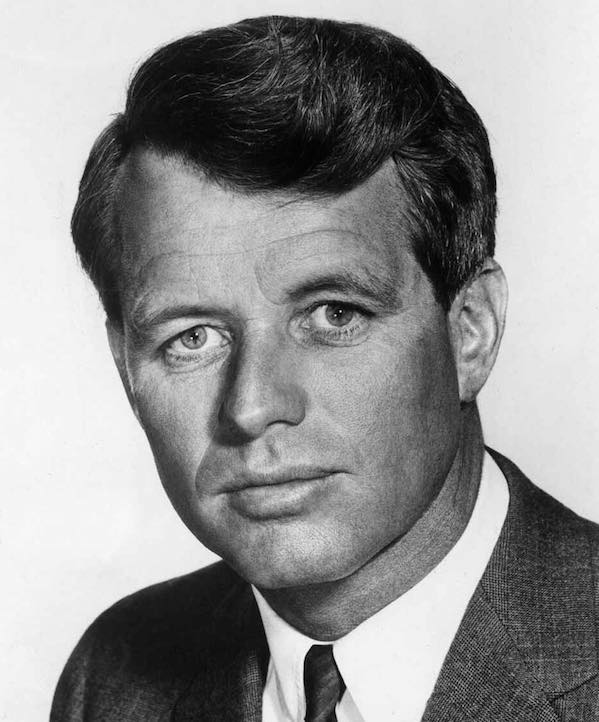
100 years ago today, Robert F. Kennedy was born. The US Senator from New York became Attorney General during his brother John Kennedy’s years in the White House—and would eventually launch his own race for president after JFK’s assassination. READ more… (1925)
‘Offline’ Trend Sees Thousands Attending Phone-Free Concerts, Dates, and Events Where You Can ‘Find Your People’
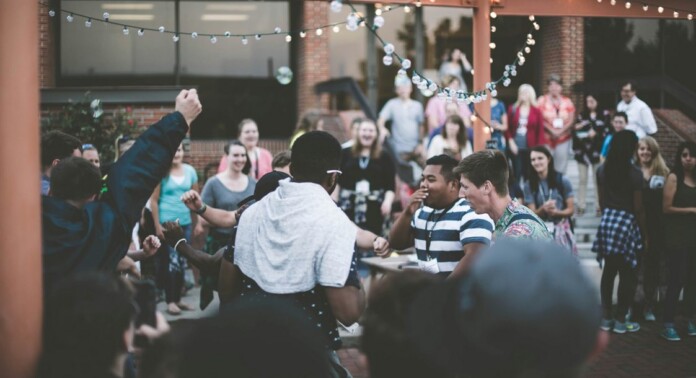

One of the realities of social media addiction is the self-awareness of the addicted. A recent survey from the British Standards Institution found that 68% of teen respondents said they feel worse when they spend too much time on social media, and 47% would remove them from existence if they could.
So it’s not surprising that hundreds of thousands of people are now attending ‘IRL’ events (in real life) where phones are either banned or limited.
Several new services are now curating “offline experiences” for social gatherings and dating, and the number of these events that are landing on the calendars of Americans and Europeans is a testament to the deep desire for human-to-human contact.
GNN has reported on the offline movement before. The Offline Club of Europe has over half-a-million Instagram followers (an ironic yardstick of success), and chapters across the continent gather at venues where one’s smartphone is locked in a box at the start of the event.
Once inside, reading, chatting, sharing a drink, playing a board game—in short, everything we used to do to socialize—are preferred over looking down at your phone.
In addition to the Offline Club, companies like Kanso, Sofar Sounds, and the app 222, are making a business out of disconnecting humans from their social media feeds that overflow with targeted ads and AI-generated drivel.
Each one has found itself a niche, but all are returning us to the social activities that our parents used to do before phones. Kanso, which is not an app but rather an event planner, has hosted a few curated, phone-free events at different venues in large cities, mostly NYC, San Francisco, or London.
They recently conducted their first phone-free live music event in San Diego called Kanso Unplugged.
After Kanso’s first-ever event in New York City, Founder Randy Ginsberg wrote in an article explaining the concept: “Immediately after the event, I had people come up to me saying it was the best experience they’ve had in New York.”

“Guests stayed well past the allotted event duration, and many went on to form real friendships after meeting there. One guy even met an investor who wired money into his startup the very next day.”
Participants’ phones are placed in a small locker, which they can access at the end of the event.
222 is a free app (only for iPhones currently) that sends out invites to groups of people that take place in public settings, encouraging its users to “choose chance”. There are no profiles, no sliding into DMs, no swiping, and no scrolling. The app will find other “vetted” users who are most likely to share interests, and invites them all to these public events where they can mingle freely.
It is highly rated by 3,600 users on Apple (4.7 out of 5 stars), where it was lauded as a “MUST try,” and a versatile event organizer that offers the chance for a fun night out even if it doesn’t lead to romance.
Sofar Sounds is a pop-up concert business that connects artists and audiences through unique and intimate experiences in 400 cities around the world. The events aren’t offline or phone-free per se, but they ask that participants refrain from using their phones during the show.
ALSO CHECK OUT: Popular Hiking App Releases 27,000 Trail Maps to Download for Free, Increasing Hiker Safety
Sofar sends out the address of the venue less than 24 hours before the start time, which can be anywhere—in apartments all over the world, in parks, art galleries, on rooftops, and even in one of Richard Branson‘s homes.
“We didn’t expect that it would resonate with others to the extent that it did,” said cofounder Rafe Offer in an interview with Business Insider. “People started calling us from other cities saying they wanted to host events there too, and it entered into a movement. We had one at the top of a ski jump in Oslo overlooking the city.”
Spaces are often very tight to allow for unplugged instruments, and phone-use is requested to be postponed until after the show, to allow full attention on enjoying the music.
ANALOG IDEAS: Engineer Revives the Pay Phone for Vermont Community to Make Free Calls in Their Cellular Dead Zone
There are likely more options for engaging with the world and humanity offline; these are just a few that are exploding in popularity. So, if you recoiled a few years ago at Mark Zuckerberg’s notion that we’d all ‘own our own houses’ in a Metaverse that is only seen while wearing goofy and expensive VR goggles—or if you experience revulsion at the news that people are making friends and having relationships with AI chatbots, you’re not alone.
The rapid growth of services like 222 and Kanso proves that regardless of how digitized the world has become, there are many for whom analog is, and always will be, the preferred medium of connection.
SHARE This List Of Great Apps And Services To Those Looking To Get Offline…
More Efficient Way to Defrost Cars Using Electricity to “Zap” Ice Without Heat
There are large swaths of America where in order to have a safe drive into work, one has to start their car even before their coffee machine.
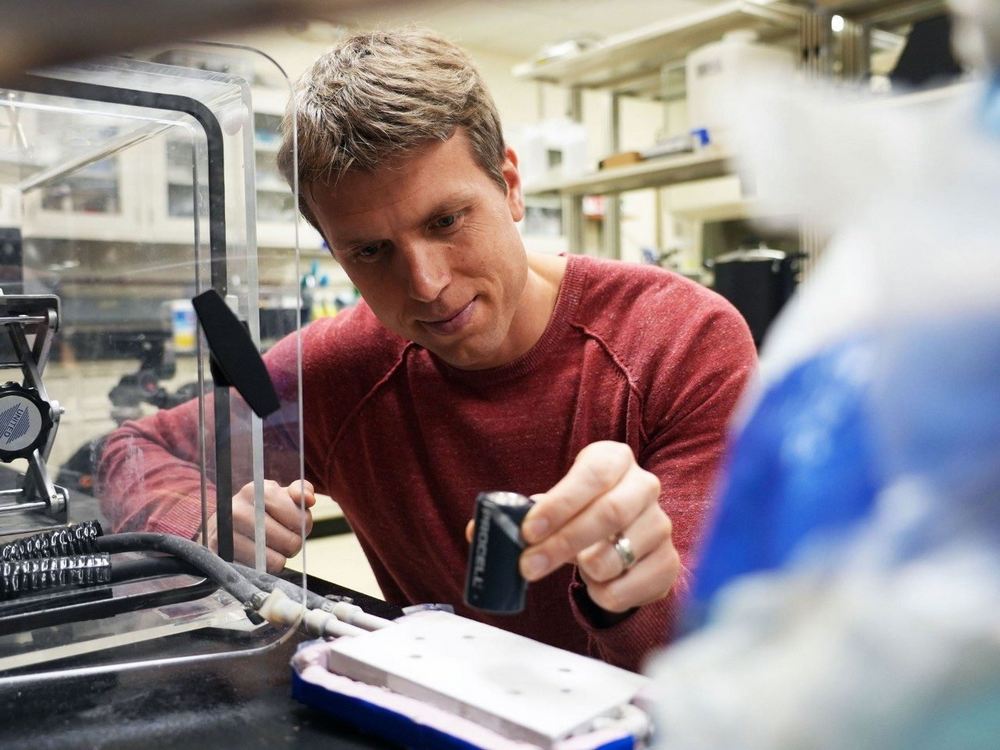
Heating up a car and running the defrosters is a hugely energy intensive process, but researchers at Virginia Polytechnical Institute believe they’ve found a new and improved method for defrosting.
Mechanical engineering Professor Jonathan Boreyko’s philosophy is to combat ice by exploiting its own physics instead of using heat, which is energy-intensive, or chemicals, which pollute the environment.
The team’s previous work leveraged the small amount of voltage that naturally exists within frost to polarize a nearby water film, creating an electric field that could detach microscopic ice crystals.
By increasing the voltage the team developed a new method called “electrostatic defrosting” (EDF).
As ice crystals grow, the water molecules arrange into a tidy ice lattice. But Boreyko explained that sometimes a water molecule lands a little off-pattern—maybe it has an extra hydrogen, for example.
“Think of it as if you’re putting together a big jigsaw puzzle too quickly, so that a piece gets jammed in the wrong spot or is missing entirely,” said the professor in a press release from VA Tech. “These tiny errors create what scientists call ionic defects: places in the frost where there is a bit too much positive or negative charge.”
The team hypothesized that when applying a positive voltage to an electrode plate held above the frost, the negative ionic defects would become attracted and “migrate” to the top of the frost sheet, while the positive ionic defects would be repelled and migrate toward the base of the frost.
In other words, the frost would become highly polarized and exhibit a strong attractive force to the electrode. If that attractive force is strong enough, frost crystals could fracture off and jump into the electrode, but even without any applied voltage, the overhanging copper plate removed 15% of the frost.
IMPROVING EVERYDAY TOOLS: Innovative Tapeless Zipper Saves Tons of Fabric While Creating a Better Fit on Your Clothes
When the team turned on 120 volts of power, 40% of the frost was removed. At 550 volts, 50% was removed. At higher voltages, less ice was removed, until a strange contradiction in their theoretical model was corrected.
The research is continuing with the eventual goal of 100% ice removal.
Part of the research will include the removal of frost on multiple types of surfaces, expanding the potential applications across both industrial and consumer use.
MORE VA TECH RESEARCH: Plastic Waste Can Now be Turned into Soap Thanks to Eureka Moment from Virginia Tech
“This concept of electric de-icing is still in a very early stage,” said Boreyko. “Beyond this first paper, our goal is to improve EDF by reducing charge leakage and attempt higher voltages and electrode placements, among various other emerging strategies.”
“We hope that in the near future, EDF will prove to be a cost-effective, chemical-free, and low-energy approach to de-icing.”
SHARE This Innovation To Grace The Machines Of The Future…
Rock Band Opens $35,000 in Bar Tabs for Their Fans After Melbourne Gig Was Canceled for Safety


An Australian punk rock band picked up the bar tabs for hundreds of people after a gig in Melbourne was shut down at the last minute due to security concerns.
Amyl and the Sniffers are up for a Grammy this year, a year that also saw them open for fellow countrymen rockers AC/DC for a section of their tour.
Just minutes before the headline act took the stage in Federation Square, the event organizer learned that rowdy fans had breached the heavy-duty barricades in multiple around the standing area, where a full capacity crowd of all-ages had been reached by 7:40 p.m.
If the Sniffers’ guitars rang out over the city, there was “a very real risk of crowd crushes,” according to the organizer’s CEO Katrina Sedgwick. With children of all ages scattered throughout the crowd, it was a risk that could not be taken, and the concert was canceled.
“You simply cannot imagine the tantrum I am having,” said the band’s lead singer Amy Taylor, who nevertheless understood why it had to be called off. “So, so, so sorry, we’re really sad,” she said in an Instagram video.
But that wasn’t going to be the end of the night if Taylor and her bandmates could help it, and Channel 9 News in Australia reported that they returned to Instagram shortly after to announce that they had loaded $5,000 onto bar tabs in seven different downtown pubs where any of their fans could go and have a drink while in the city.
“We’re not doggin’ you, it’s because a bunch of people rushed the barriers and so it wasn’t safe, and especially because it was all ages, we just can’t have that,” said Taylor in the Instagram post which also contained a not insignificant amount of frustrated profanity.
The punk rock act has gained rapidly in popularity in the last 5 years, and was nominated for a Grammy for Best Rock Performance for their 2024 single “U Should Not Be Doing That.”
SHARE This Band’s Generous Round For Their Fans With Your Friends…
Mountain Goat-Inspired Robot Offers a New World of Mobility to the Wheelchair-Bound–WATCH
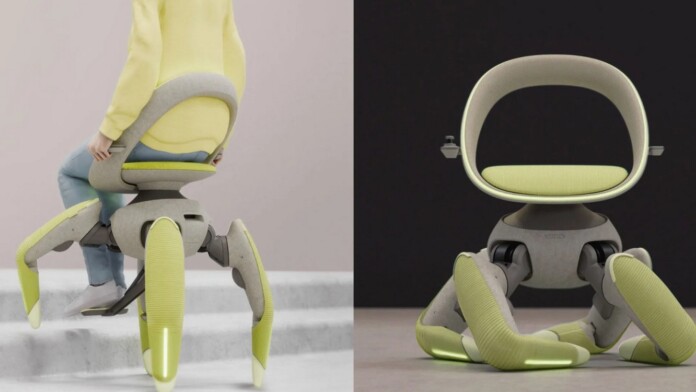

Toyota recently unveiled a four-legged mobility robot that can go where wheels cannot, and specializes in tasks that are difficult in a wheelchair such as climbing up stairs and positioning passengers to get into cars.
Debuted by the carmaker at the 2025 Japan Mobility Show, it consists of an ergonomic seat mounted on four mechanical legs that are designed to mimic some of the surest-footed animals on Earth like the mountain goat.
Called the Walk Me, it’s compact, adaptable, and represents a huge advancement for the company’s assisted mobility division.
Each leg can bend in multiple ways, lift, and move independently of the others to ensure that stability is maintained while walking over uneven ground or obstacles. They’re also covered with a soft and friendly-looking material to hide the mechanical components.
The system’s real showpiece is climbing stairs. One of the legs will test the step’s height, and determine how far the other legs have to push up to reach it. A suite of sensors and a LiDAR system continuously scan the surround for obstacles or potential banana skins like a child’s toy car.
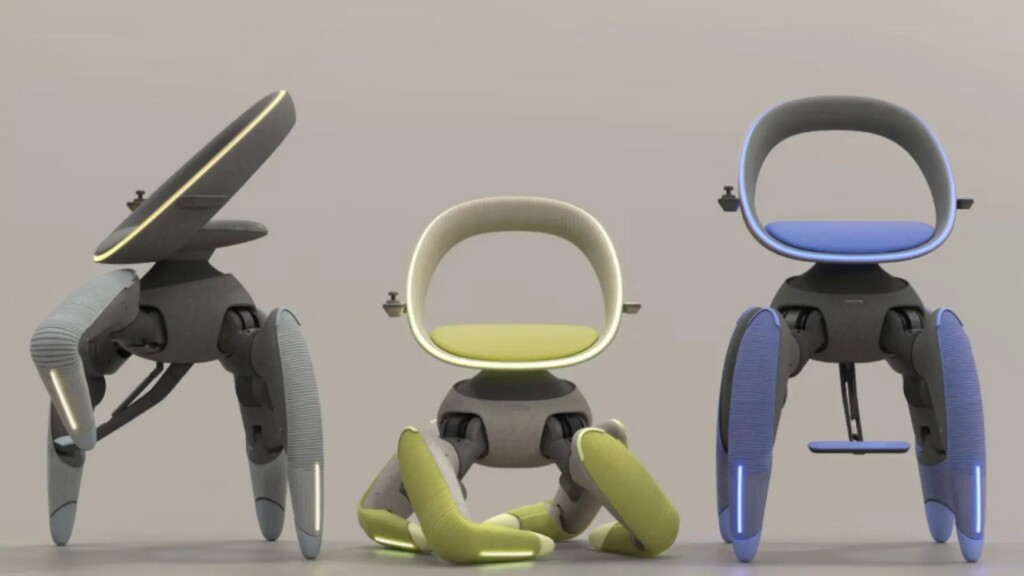
Distribution of force and weight between the legs feed into a calculation on the seat position, which is adjusted automatically to ensure the user isn’t tipped off in any direction. Sensors in the front apply a braking system if something moves quickly across its path.
Reporting by tech outlets reveals that a battery capable of operating for a whole 12-hour day is hidden beneath the seat, while voice-activated commands such as “kitchen” or “faster” can guide the legs directly, as can a set of handles positioned alongside the seat that contain manual controls.
MOBILITY ROBOTICS:
- Italian-Made Exoskeleton Gets Disabled Users Walking and Standing
- ‘Wearable Muscles’ Restore Mobility in Those Who Have Trouble Moving Their Arms
- First Time Someone With Cut Spinal Cord is Able to Walk Freely, Thanks to New Swiss Technology
When it’s time to dismount the chair, the folding system retracts the legs similar to how a goat or other ungulate lays down, and in 30 seconds the unit becomes small enough to put into the back of all but the smallest cars
Two-footed human locomotion has been described as the continual avoidance of falling. The vast majority of animals that move about on legs use four—it’s just much easier and more balanced. With the Walk Me, Toyota have used Natural Selection as an inspiration to create a brilliant answer to Japan’s narrow streets, hilly terrain, and reliance on public transit—areas a wheelchair struggles to navigate.
WATCH a video below…
SHARE This Brilliant Future Of Mobility With Your Friends In A Wheelchair…
“All nature wears one universal grin.” – Henry Fielding
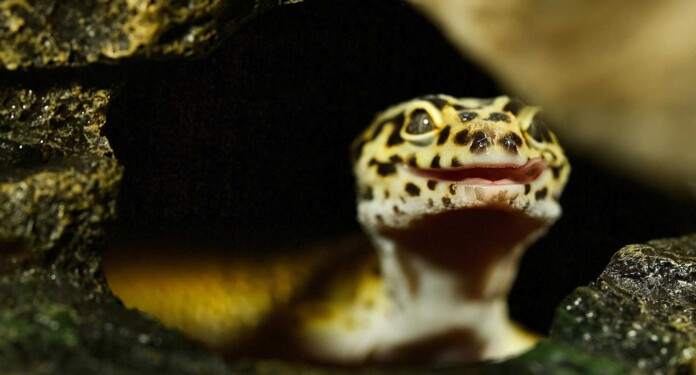
Quote of the Day: “All nature wears one universal grin.” – Henry Fielding
Photo by: Andrey Tikhonovskiy
With a new inspirational quote every day, atop the perfect photo—collected and archived on our Quote of the Day page—why not bookmark GNN.org for a daily uplift?
Good News in History, November 19
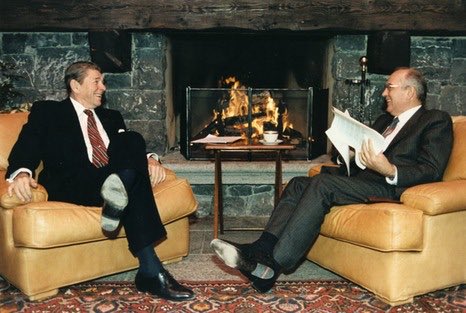
40 years ago today, US President Ronald Reagan and Soviet Union leader Mikhail Gorbachev met for the first time. The Geneva Summit in Switzerland was the first step toward a thawing of Cold War tensions, as Reagan and Gorbachev talked about all topics and got to know each other’s positions. The new relationship led to the signing two years later of the INF Treaty to eliminate intermediate-range nuclear weapons. READ more about the fruits of the meeting… (1985)
Baby Sea Otter Named Caterpillar Rescued off Central California Coast

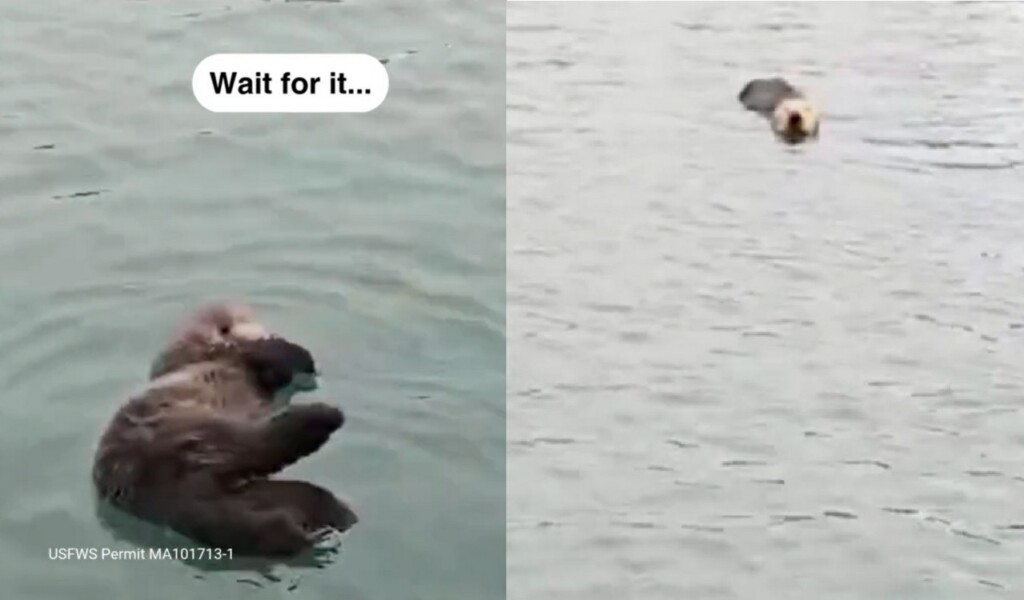
Conservationists recently reunited a mother otter with her baby and caught it on film.
It seems surreal when marine conservationists plop the lost baby sea otter into the frigid waters of Morro Bay in Central California.
Before it makes its way back into the arms of its mother, the thing just bobbed around like a crabbing buoy.
The story began when the Marine Mammal Center, which operates across roughly 600 miles of coastline got a call on its public hotline that there was a creature crying frantically in Morro Bay.
With the help of Morro Bay harbor patrol, a 4-person team got to work on what they assumed was a lost otter pup, because of the similarity in the sounds this marine mammal makes with a human baby.
It wasn’t long before they located the pup, which they named Caterpillar, but mother was nowhere in sight. Using a technique first performed in 2019, they recorded the sound of the pup’s cries, and then played it off the side of the boat via a Bluetooth speaker. The pup was put in a small container where it wouldn’t overheat or hurt itself.
“Our intern had kept hitting play every once a minute,” Shayla Zink, who works at the center in Morro Bay, told the Guardian. “I think we all went home and it was still playing over and over in our brains.”
For two hours, the team plied the coastline, blasting the call off of one side of the boat and then the other with no luck. Finally, a female otter popped her head above the water and began to take interest in the boat—something otters almost never do; they have no interest in people or boats typically.
The intern moved the speaker around the sides of the boat to see if the visitor would follow the sound: which it did, giving them the cue to throw man overboard overboard.
With up to 970,000 strands of hair per square inch, the sea otter’s fur is the densest of any animal. An air layer sits between the skin and the base of the fur that prevents any water from reaching it. It is, therefore, startlingly buoyant.
Lowering it gently into the water, it floated helplessly on its back, rolling around as if it were on a thick quilt. Mom swam over, grabbed the baby, and began to smell it rather intensely before swimming away, reunited with its pup.
“I definitely cried a bit,” Zink said.
WATCH the video below…
SHARE This Cute Little Guy With Your Friends On Social Media…
Western South Africa Sees Leopards Returning to Ancestral Habitat After 170 Years


For an astonishing 170 years, there hasn’t been a leopard sighting on the western coast of South Africa.
That recently changed when South Africa National Parks (SANparks) published a camera trap photograph of a leopard in West Coast NP, showing how the elusive predator has recolonized an area where it has long been absent.
Conservationists have hailed the moment as a milestone for rewilding and conservation programs that have paved the way for the cat’s return.
Panthera pardus, is not considered Endangered, but rather Vulnerable, according to the IUCN. It had been extirpated by the mid-1800s as part of a decline in its range across the sub-Saharan regions over the decades.
Many entities have contributed to its return to the West Coast. SANparks, private landowners, the University of the Western Cape, and the local government of Saldanha Bay, all lent their cooperation to two conservation groups, the Landmark Leopard and Predator Project.
These latter two have spent the last 20 years attempting to facilitate the leopard’s return by monitoring the area between Cape Town and the Berg River, and rebuilding wildlife corridors in the northern, western, and eastern cape to connect fragmented habitat.
Additionally, a shift in project focus to human-wildlife coexistence rather than just focusing on providing protection to reserves, has been key.
AFRICAN CONSERVATION:
- These Welsh Puppies are Helping Stop Wildlife Poachers in Africa
- Farmers Use Bees to Deter Elephants from Romping Over Crops–a Win-Win for All
- Researchers Test Use of Nuclear Technology to Curb Rhino Poaching in South Africa
“These efforts have allowed wildlife like leopards to move more freely and safely through the landscape,” SANParks spokesperson JP Louw, told Cape Etc.
“The return of the leopard to the West Coast National Park underscores the success of long-term conservation partnerships,” he added.
To the north, in the country of Zambia, conservation NGO Panthera has seen a tripling of estimated leopard numbers in Kafue National Park.
At 22,700 square miles, Kafue is two-and-a-half-times larger than Yellowstone, but exists within the Greater Kafue Ecosystem—a mosaic of landscapes enjoying various levels of protection that’s three times larger than that—around the size of Massachusetts.
“It’s very large, and has tremendous potential for recovery, but it’s been so beaten up for so many decades,” said Jon Ayers, Board Chairman of Panthera, the world’s only conservation group dedicated exclusively to wildcats.
“As exciting as the project has been, there’s still tremendous opportunity to see it grow back to its original vibrancy,” he told GNN.
SHARE This Long-Awaited Return For The Western Cape On Social Media…
Heart Transplant Survivor Has Best Day Ever as Traveling Fan for Carolina, Meeting Panthers Legend


From a chilly Green Bay comes a heart-melting story via Charlotte, where a heart transplant survivor had the day of his life as a traveling fan for his beloved Carolina Panthers.
Bryson Shupe was born with a congenital heart defect, and 8 years ago, required open-heart surgery to survive. At Atrium Health Levine Children’s Hospital, he lay in the pre-transplant ward next to another boy named TJ Olsen.
TJ is the son of a famous retired tight end for the Panthers, Greg Olsen, and while the sportscaster was visiting his son, he created a lasting friendship with young Bryson as well. It birthed a deep love of Panthers football, and a bond that wasn’t to be forgotten.
Bryson successfully underwent and recovered from the surgery, and 8 years later, had the incredible opportunity to travel to Green Bay to watch his Panthers as they engineered a surprise victory over the Packers.
Bryson got VIP treatment, and along with visiting the cockpit on his first ever flight out of Charlotte, was invited down to the field where he got to watch pre-game warmups and chat with quarterback Bryce Young—all while wearing a personalized set of fan gear, including a jersey with his name on the back that was signed by the team.
Then, Bryson took a trip up to the media deck where he reunited with Olsen, who gave him a big bear hug and asked “how good is this? How’s this for a day?”
Levine Children’s shared photos of Bryson enjoying every part of the special day, writing “we’re so proud to see Bryson having the time of his life”.
Bryson himself shared a message to transplant patients and others back home at the institute that saved his life.
“Keep pounding.”
SHARE This Sweet Story Of A Boy’s Best Day Ever…
Incredible Glass Cabin Will Let Mountaineers Shelter from High-Altitude Peril in the Alps–LOOK

An incredible new glass cabin will let mountaineers shelter from high-altitude perils with the same chic taste as a Milano office high rise.
Designers have created the cabin ahead of the 2026 Winter Olympics in Milan, where it will be showcased in the city before being airlifted to its permanent location in the Alps.
Called a bivouac in English, a rifugio in Italian, and a ‘bothi’ in Scots Gaelic, this concept piece was the brainchild of renowned Italian design firm CRA-Carlo Ratti Associati, in collaboration with Salone del Mobile.Milano.
Designed to harmonize with the Alpine landscape, its creation began with a 3D scan of rock formations in the region.
Founder and Lead Architect Carlo Ratti explained his influence as coming from crystalline structures.
“Great 20th-century Italian architect Gio Ponti once said that architecture is ‘like a crystal’. We took that literally in this design, using digital fabrication to design a bivouac as if it were part of the natural rock formations that shape the Alps,” he said.
“Unfortunately, today bivouacs often look like airships that have landed on our beautiful alpine landscapes. Here we took the opposite approach: a structure that blends as much as possible with the surroundings.”
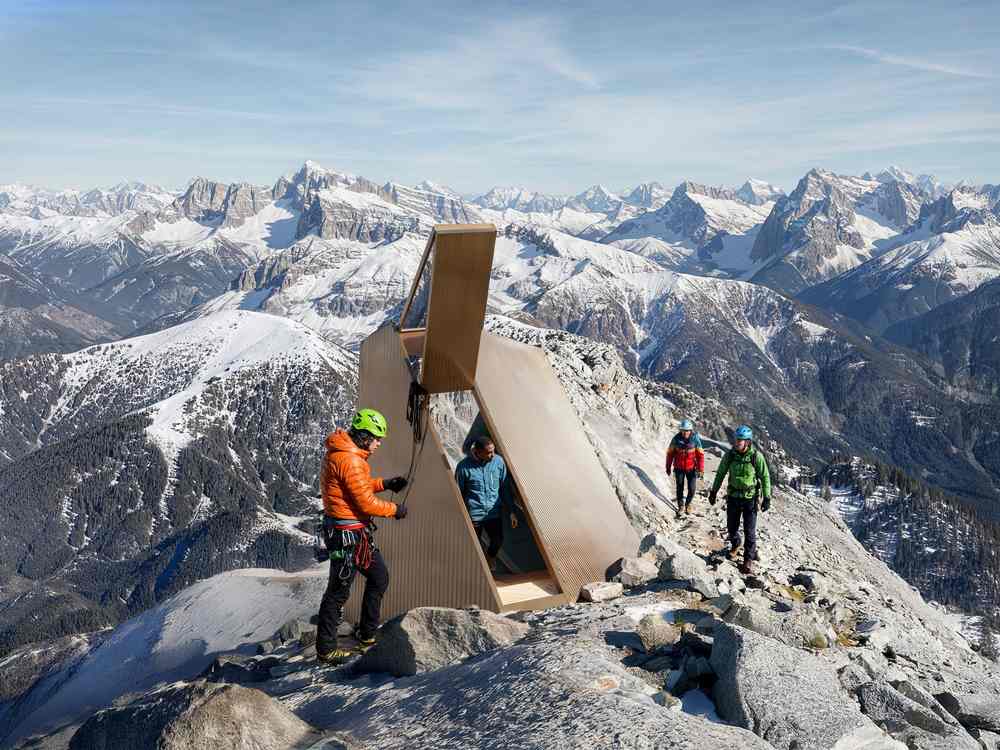
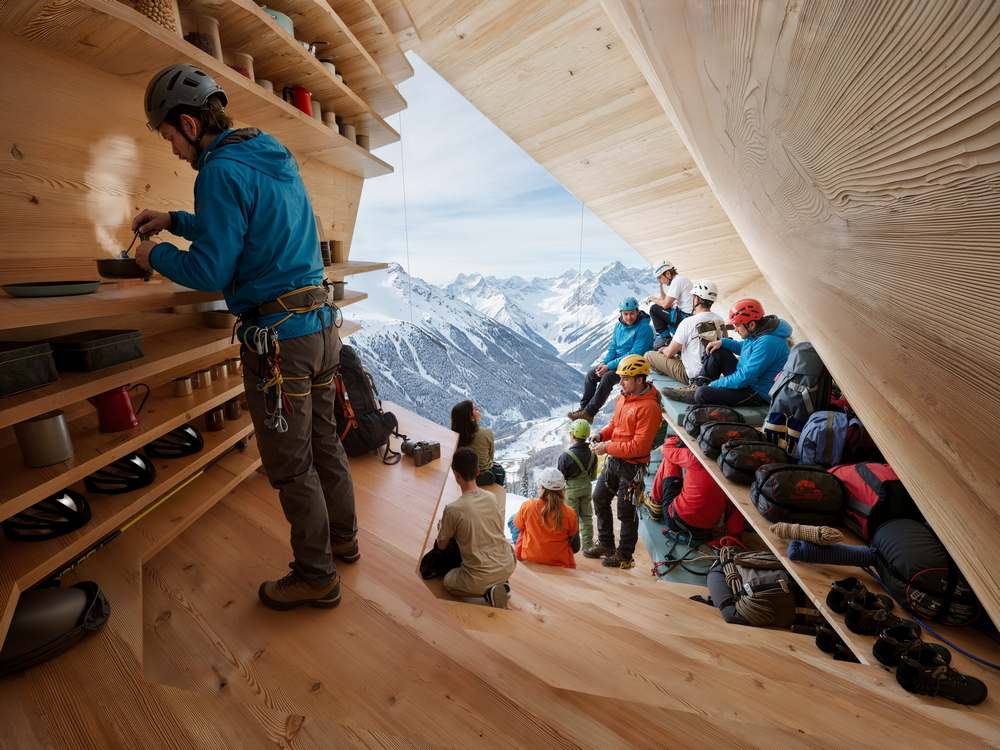
CRA-Carlo Ratti Associati say the resulting design minimizes visual impact while maximizing functionality—incorporating energy production, storage, and water harvesting through air condensation.
MOUNTAINEERING NEWS: Man is Creating 1,500-Mile Trail Across Texas for Hikers, Bikers and Horses, Investing $10,000 to Get it Done
“It is a gesture that turns research into a form of harmony with the natural world and that, in its journey from our Milan to the Alps, expresses the principles we share: a circular, responsible design,” said Maria Porro, President of Salone del Mobile.Milano.
The Winter Olympics will take place across the north of Italy, with half of the events held at the legendary Cortina d’Ampezzo ski resort in Trentino Alto Adige, and the others across the valleys of Lombardy.
WATCH a slideshow below…
SHARE This Incredible Place For A Mulled Wine After A Trek…
“Love has a tide!” – Helen Hunt Jackson

Quote of the Day: “Love has a tide!” – Helen Hunt Jackson
Photo by: Austin Neill
With a new inspirational quote every day, atop the perfect photo—collected and archived on our Quote of the Day page—why not bookmark GNN.org for a daily uplift?

Good News in History, November 18

Happy 50th Birthday to David “Big Papi” Ortiz. The Dominican-American slugger spent nearly his whole career at the Boston Red Sox where he played a key role in breaking the 86-year World Series drought. He was elected into the MLB Hall of Fame in 2022, at the first year of his eligibility. READ some of the stunning numbers he put up… (1975)
‘Music to my Ears’: New Malaria Drug Succeeds in Large Clinical Trial to Combat Resistance
Among the world’s manifold disease burdens, antibiotic resistant bacteria hold a special place of concern. But recent evidence points to the malaria parasite also developing resistance to drugs that have been working to killed it off for the last quarter-century.
Therefore, news that a major drug trial looking at the efficacy of a new-class of antimalarial medication called KLU156 found it was just as reliable as exiting treatments will come as a major sigh of relief.
Existing frontline malaria medication is based on a plant-extract from sweet wormwood called artemisinin, combined with other compounds. The resulting ACT (Artemisinin-based combination therapies), has been recommended as an antimalarial medication since 2001.
Its discovery yielded Chinese scientist Tu Youyou, who synthesized artemisinin from sweet wormwood in the 1970s, a Nobel Prize in 2015. It also forever fortified the notion that traditional Chinese medicine maintains value in the modern age, as it was this herbal, astrological practice that prescribed sweet wormwood as a fever treatment.
The new compound was identified by the Swiss pharmaceutical company Novartis, which rather than combing the annals of traditional Alpine medicine, used sophisticated computing to analyze some 2 million different pharmaceutical compounds for their antimalarial potential. The result was ganaplacide, which was combined with lumefantrine, the partner drug in ACTs, to create KLU156.
KLU 156 cured malaria in 99.2% of cases in a study of 1,600 people from 12 different African countries, compared to 96.7% of those who were treated with lumefantrine alone. One might consider that difference insubstantial, but when over half a million people die in Africa alone of malaria every year, that 2.5% is anything but.
The study was presented at the annual meeting of the American Society of Tropical Medicine and Hygiene.
“Having a new compound that is not artemisinin-based, and that is that effective and safe, is really music to my ears,” said study team member Abdoulaye Djimdé, a malaria researcher at the University of Sciences Techniques and Technologies of Bamako, Mali, at a press conference.
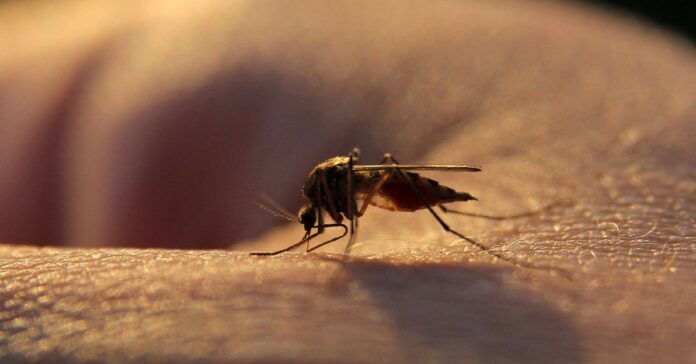
Research into KLU156’s effects demonstrated that not only did it kill malarial parasites faster, but the reproductive stage of the parasite that’s picked up by mosquitoes when they feed on humans, meaning the drug may aid in transmission interruption as well.
MORE MALARIAL TREATMENT OPTIONS: ‘Cheaper, More Humane’ Drones Emerge as Key Weapon in Mosquito Control from Poland to Africa
The taste, however, is dire, and caused 20% more instances of vomiting, leading to 10-times as many interruptions of treatment. Work is ongoing to discover how to mask the taste of the powder that has to be dissolved in water.
Novartis has said it will look to get the drug approved as fast as possible, before marketing it at cost.
But even once that occurs, debate is ongoing over when to use it. With antibiotics, new drug options are often kept on the shelves until it’s clear existing treatments are failing. Some researchers say that KLU156 can’t afford to be withheld because lumefantrine is a partner drug for both ACTs and KLU156.
SUCCESS IN AFRICA: First African Nation to Eliminate River Blindness Treated Millions with Ivermectin to Achieve Great Success
Plasmodium falciparum and P. vivax have already developed resistance to artemisinin, and it’s feared that because more malarial cells are surviving in the body for longer, the template is there for it to quickly develop resistance to lumefantrine. If that happened, the efficacy of KLU156 would be dampened even before any benefit was received.
Science Magazine, reporting on the study, wrote that a proposal has been made to use KLU156 during the earliest possible malaria season, followed by ACTs during the next one, and then alternating between the two.
SHARE This Concrete Drug Discovery Ready To Change Lives With Your Friends…
Nobel-Worthy Prime Minister Attempts to End Century of Ethnic Hatred for Armenians


“Blessed are the peacemakers, for they shall be called sons of God.” (Matthew 5-9)
It’s a quote befitting the actions of the world’s oldest Christian nation, especially because its government just concluded a landmark agreement for peace and reconciliation rarely seen in a post-World War II era.
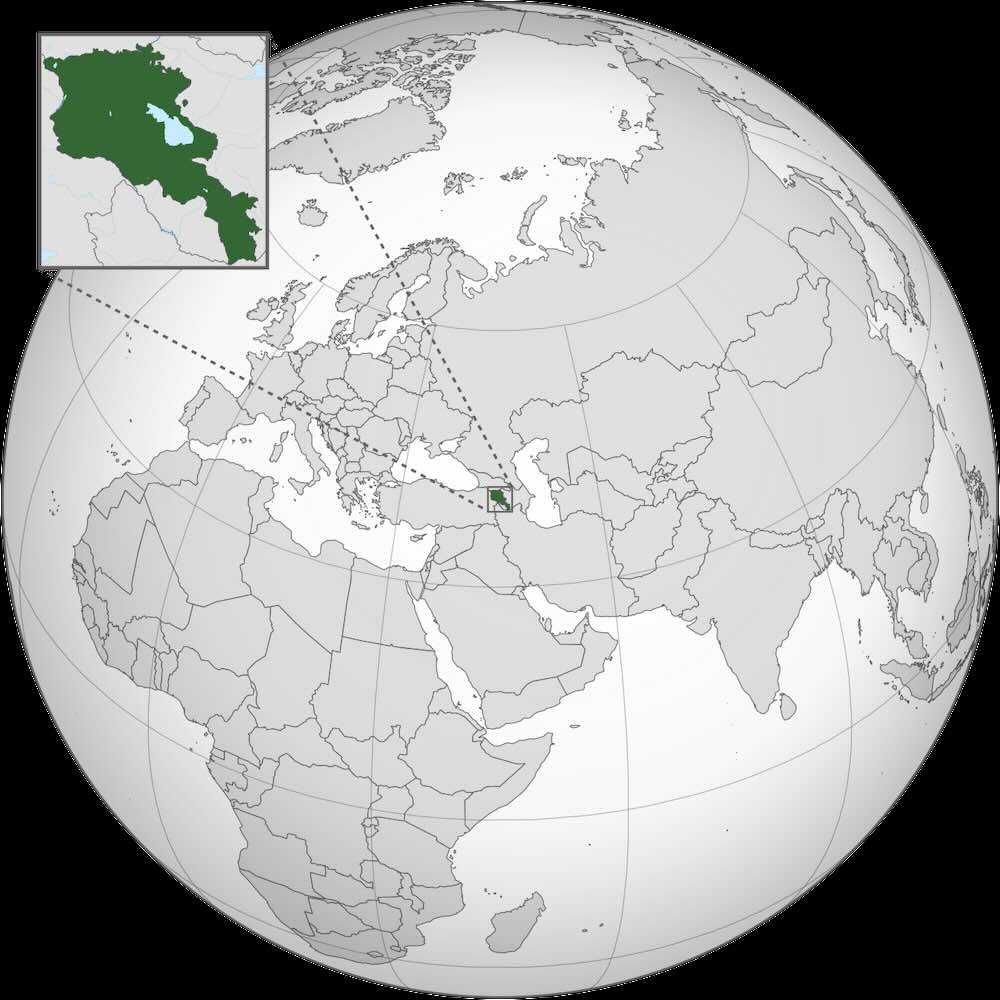
Armenian Prime Minister Nikol Pashinyan has made an enormous step towards a lasting peace with hostile neighbors Azerbaijan and Türkiye (Turkey) by establishing formal diplomatic relations, and making an impassioned plea to his people to reject old hatreds.
The PM, who maintains a mere 13% approval rating—which still makes him the most trusted politician in Armenia—recently went viral on social media for a speech he gave before his parliament in which he called on the country to reject “Soviet KGB narratives” that pitted Azerbaijani against Armenian.
“We say ‘a Turk remains a Turk,’ and they have the same saying there too—that Armenians remain Armenian,” said Pashinyan. “We must change the content of our own identity, because the content of this identity was formed in the corridors of the KGB.”
Nonpartisan and Turkish-language comments on the post suggested the PM should receive the Nobel Peace Prize, while Armenians were predictably angry at the notion. One can hardly blame them because of their long history of war and hatred.
But any realpolitik analysis would conclude that Pashinyan and Armenia have no cards to play, no allies to turn to, and no leverage to lean on. No chariot of international jurists have come to their rescue at the World Court, and no United Nations Security Council actions could make Azerbaijan believe it is in any danger of sanctions or bombing.
"We have to get out of the images of the world created for us by the KGB agents."
— TRT World (@trtworld) November 3, 2025
Armenian PM Nikol Pashinyan called for breaking free from KGB-era mindsets and fostering good relations with neighbours pic.twitter.com/pMpjmyOLeu
Finding benefits at the end of war
In the last five years, Armenia and Azerbaijan have fought two wars about the ownership of land, the unique territory of what is called Artsakh by the Armenians and Qarabaq by Azerbaijan, with thousands dying.
Few but their enemies could find fault with the Armenian people’s anger at both their losses in 2020 and 2023. Turkiye flooded Azerbaijan with more sophisticated weapons, while Armenia received far less from a Russian government occupied with concerns over Ukraine. When in September 2023, Azerbaijan launched a surprise attack on the territory, it decisively ended the kinetic dispute over the area that had been ongoing for more than a century.
The victory was totally decisive and left behind neither insurgency nor resigned population; the Azeri forces booted out the Armenians remaining in the Artsakh area who didn’t flee, sending them into Armenia as refugees.
“From the most Machiavellian perspective, one sympathizes with Pashinyan,” World at Large wrote in an analysis on the subject. “His nation of a few million people is neither in NATO nor in the EU. It’s sandwiched between geopolitical entities with which it maintains historic animosity, but whose favor larger powers like the US or China must court in order to advance their interests.”
International law scholars described it as at least a crime against humanity, most-likely ethnic cleansing, but despite official accusations flying at Azerbaijan from the European Parliament and UN Refugee Agency, nothing by way of punishment manifested from the outrage.
But there may be something positive born from the outcome.
Corridor to peace
For the Armenians who suffered a genocide at the hands of the Ottoman Turks during World War I, it was another episode in their long, tragic relationship with the Turkish peoples to their east (Azeri) and southwest (Turkiye).
But rather than lead his people to rage against their circumstances for another 100 years, and seeing a situation that could be reversed neither militarily nor diplomatically, Prime Minister Pashinyan has seemingly condemned his political career in a desperate attempt to close the book on war between Armenians and Azeri forever.
Few if any heads of state in the post World War II era have repaid crushing defeat with an offer for peace and concession—not even the Buddhist Monarch known as the Dalai Lama— and many of Pashinyan’s opponents have let him know exactly what they think of him for doing so, accusing him of capitulation, appeasement, betrayal of Artsakhis, and historic revisionism.
With the official establishment of relations with Azerbaijan, signed at the White House on August 8th this year, Pashinyan achieved a substantial mote of progress towards extirpating Armenia from its racial struggle against the Turks—which offers economic benefits to the smaller nation.
Azerbaijan has maintained a blockade on Armenia since 1989, blocking passage of goods traveling south from Russia over the Caucasus. In 1993, Turkey joined the blockade, preventing rail and road traffic from Europe to Armenia. This dual blockade is broadly considered to have led to acute shortages of essential goods, an energy crisis, unemployment, emigration, ecological damage, and widespread poverty in Armenia.
By extending a hand in defeat to the conqueror, Pashinyan secured the lifting of the embargo on the Azeri side. On November 4th, 2025, approximately 1,050 tons of Russian wheat, loaded into 15 train cars, cleared Azeri customs on route to Armenia, the first time such a transit has happened in almost 40 years under normal circumstances.
The Transport Ministry of Russia announced that a total of 132 train cars of wheat will be dispatched to Armenia through Azerbaijan by the end of this year.

TURKISH POLITICS: Kurdish Militant Group Agrees to Swap Guns for Ballots and End 40-year Insurgency with Turkey
Despite the complexities of the Artsakh conflict, another territorial challenge exists that Pashinyan and his negotiators have seemingly solved. A piece of Azerbaijan called Nakhichevan lies geographically separated from the rest of the country bordering a strip of Armenian territory; it’s an exclave that could only be reached via plane.
In an op-ed published in Modern Diplomacy two days before the peace agreement was signed at the White House, the former Foreign Minister of Armenia identified this corridor as the single most important challenge to relations between the countries, as Azerbaijan seeks to create a corridor of transit through Armenia.
“The corridor represents a unilateral attempt to establish extraterritorial control over Armenian land,” wrote the former FM, Vartan Oskanian. “Azerbaijan seeks not just transit access but a corridor stripped of Armenian customs, legal authority, or security presence—a demand no sovereign state should accept.”
Yet the result of the agreement was that neither Armenia nor Azerbaijan, but rather the United States of America, would develop the corridor and see to its security. Eurasian political strategists in Washington consider the corridor’s stability and peace to be of utmost importance, as it offers the US for the first time in history a way to transit the entire Asian continent without ever needing to pass through Iran or Russia.
The only remaining challenge, and indeed it wasn’t addressed in the peace agreement, is how to secure the right-of-return for Armenians to their ancestral homes in Artsakh. Rhetorically, the Azeri government has said that they will be allowed to return if they come in peace, but reports suggest that local policy is drastically different.
Before any such change can be made on paper, Pashinyan seems to understand that a change needs to be made in the mind, that Azerbaijanis and Armenians need to see the other as a good neighbor before they can see each other as a potential neighbor.
MORE INTERNATIONAL PEACE AGREEMENTS: Unconditional Ceasefire Holds Between Cambodia and Thailand, in Conflict Over Disputed Border
His plea to reject KGB narratives that have driven Armenians to spit out prejudicial tropes about Azerbaijanis which “mirror” those that Azerbaijanis spit out about Armenians is a powerful call to attention; a rejection of an era of ethnic hatred now forever concluded by the fate of geopolitical circumstances.
Thomas de Waal, a scholar and expert on the Caucasus at the Carnegie Endowment for International Peace, described the agreement as “one big step forward that stabilizes the South Caucasus,” before warning that “several more are needed before full peace can be attained.”
The progress, he wrote, is chiefly thanks to the persistence of Nikol Pashinyan.
“He essentially tells voters that, having suffered major military defeats to Azerbaijan in 2020 and 2023, Armenia must now accept a new reality: that it must try to make peace with Azerbaijan and Türkiye, open its borders and connections to Europe, and free itself from a dangerous dependence on Russia.”
The right of return is far more likely to be granted to a nation that genuinely favors good relations and economic exchange than to one which angrily demands it and enlists outside forces like the EU to argue on its behalf. Pashinyan is inviting the people of his country to create those conditions as a path forward.
Throughout history it is hard to find a parallel. Gandhi and Mandela weren’t heads of state and weren’t defeated in battle.
The safest borders today are located where peace was paired with a genuine good faith desire to secure better times—Ireland and Northern Ireland—for example, or Germany and its neighbors.
Time will tell whether the Pashinyan peace will last, but if it does, he may well come to be one of this century’s greatest peacemakers—who undid one of the world’s great Gordian knots.
SHARE This Story Of Peace From Modern War With Your Friends…
Stolen 18th-Century Painting of St. Francis Returned to a Mexican Church


7 years ago, a Mexican fine art auctioneer submitted their upcoming auction catalogue to a database of stolen art as part of a due diligence process that’s pretty standard in the industry.
Analysts flipped through the pages of paintings and portraits, clearing each one in turn, before coming to a 6-foot-tall work of Saint Francis of Assisi, dating to the 18th century.
According to Art Loss Register, such a painting had been reported stolen more than 15 years earlier from a church consecrated in the name of the saint some 25 miles northeast of Mexico City, in Teotihuacan.
The consignor had information linking the painting to Texas, but it was falsified, and after a few years of double and triple checking, Padre Teodoro García Romero of the San Francisco de Asis church beamed a 6-figure smile as he welcomed the 5-figure artwork back to its rightful place in the church.
A nighttime burglary on January 6th, 2001, saw the Saint’s painting lifted along with 7 works in-miniature that adorned the altar piece which remain, along with the thieves, at large.
“The recovery of our painting is of inexplicable significance to the faith of local people and restores part of the Teotihuacan community’s history,” said Father Romero. “For two decades we feared this treasure might be lost forever. Its return is a moment of excitement and faith for our church and city because we know that this will be a historic moment in the life of the community.”
Painted by an unknown artist in the 18th century, Francis is depicted holding a skull and a crucifix, while a small figure, likely the patron of the work, kneels in comparative unimportance to the lamb alongside the saint.

It was set to go under the hammer at $15,000.
“With thefts targeting public institutions and churches on the rise, this recovery offers hope not only to individual victims but to whole communities as well,” said Charlotte Chambers-Farah, business development and client manager at the Art Loss Register.
MORE LOST WORKS RETURNING HOME:
- Lost Painting Looted by Nazis Found Hanging on Wall in a Real Estate Listing
- Klimt Painting of an African Prince Lost for Nearly 100 Years Goes on Show in Austria
- A Forgotten Masterpiece Was Hanging Above a French Woman’s Hot Plate–Now, it’s Heading to the Louvre
“Morton Subastas should also be applauded for their high level of due diligence standards, which led to the painting’s identification by the Art Loss Register, and their generosity in assisting in its return.”
Art Loss Register was featured on GNN recently, as a painting belonging to the Polish government, stolen during or just after World War II, recently surfaced at an auction in Denmark. Art Loss Register allowed the Polish culture authorities to present evidence that the painting had been stolen more than 70 years prior, and the owners agreed to turn it over, having no knowledge of its provenance themselves.
SHARE This Great Story About A Beloved Painting Returned Home…
Shut Eye Without Shutting Off Lights and Devices Increases Risk of Heart Disease
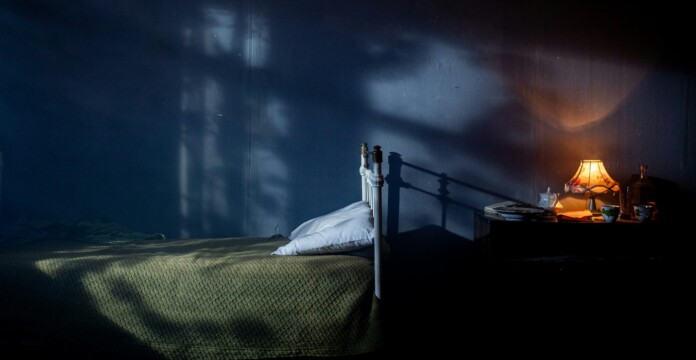
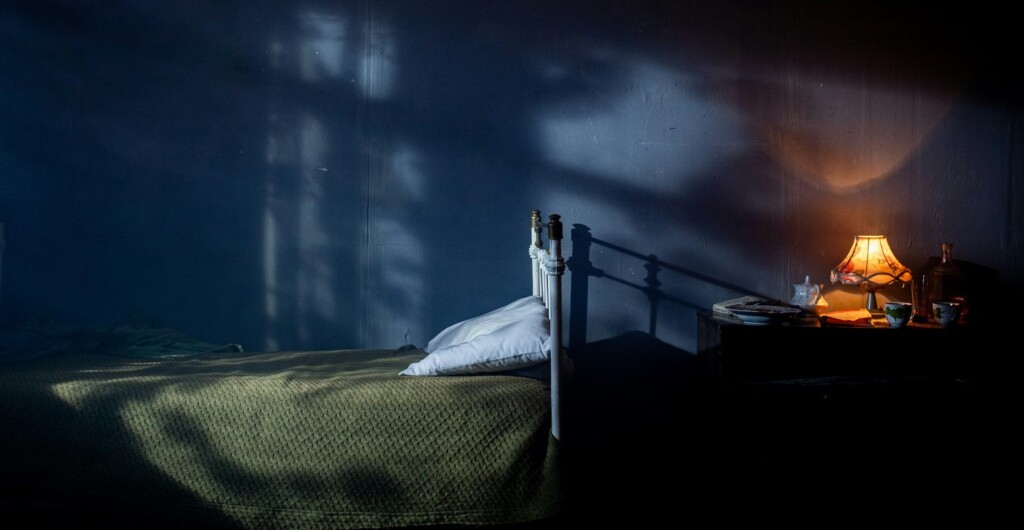
A street lamp outside your window, the orange charging light on a plug adapter next to your nightstand, a flash of your phone late at night indicating you’ve received an email—these artificial light sources would never occur in nature, and recent studies suggest they harm your brain.
Higher levels of artificial light at night were linked to increased stress-related activity in the brain, inflamed arteries, and a higher risk of heart disease, according to a preliminary study presented at the American Heart Association’s Scientific Sessions 2025.
Artificial light at night, or nighttime light pollution, is a nearly universal feature of modern cities, according to the study. This first-of-its-kind study reviewed brain scans and satellite images to show a biological pathway linking nighttime light exposure to heart disease.
“We know that environmental factors, such as air and noise pollution, can lead to heart disease by affecting our nerves and blood vessels through stress. Light pollution is very common; however, we don’t know much about how it affects the heart,” said study senior author Shady Abohashem, head of cardiac PET/CT imaging trials at Massachusetts General Hospital and an instructor at Harvard Medical School in Boston.
450 adult patients underwent identical PET/CT scans, and all of whom were without heart disease and no active cancer.
“This is a routine imaging test at my hospital,” Abohashem said. “The CT portion provides detailed anatomy, while the PET portion reveals metabolic activity in tissues. Using both imaging techniques together allows for the measurement of brain stress activity and arterial inflammation in a single scan.”
The analysis found that people exposed to higher levels of artificial light at night had higher brain stress activity, blood vessel inflammation and a higher risk of major heart events.
This information was collected from medical records and evaluated by two cardiologists who were blinded, meaning they were unaware of any information that could influence their decisions.
The greater the artificial night light exposure, the higher the risk of heart disease development. Every standard deviation increase in light exposure was associated with about 35% and 22% increased risk of heart disease over five- and 10-year follow-up periods, respectively.
These associations remained after accounting for traditional risk factors and other socio-environmental exposures like noise pollution and socioeconomic status.
In addition, these heart risks were higher among participants who lived in areas with additional social or environmental stress, such as high traffic noise or lower neighborhood income. Over a 10-year follow-up period, 17% of participants had major heart conditions.
BIOHACKING STOIRES: Device from MIT Startup Helps People Fall Asleep–Putting Your Mind on ‘Do Not Disturb’
“We found a nearly linear relationship between nighttime light and heart disease: the more night-light exposure, the higher the risk. Even modest increases in night-time light were linked with higher brain and artery stress,” Abohashem said. “When the brain perceives stress, it activates signals that can trigger an immune response and inflame the blood vessels. Over time, this process can contribute to hardening of the arteries and increase the risk of heart attack and stroke.”
However, to counter the effects of artificial light at night, he suggested that cities could reduce unnecessary outdoor lighting, shield streetlamps or use motion-sensitive lights. On a personal level, “people can limit indoor nighttime light, keeping bedrooms dark and avoiding screens such as TVs and personal electronic devices before bed,” he said.
RETURN TO NATURE: A Daycare Rewilded its Yard and the Children Became Healthier: Now the Whole Nation Is Doing it
“These findings are novel and add to the evidence suggesting that reducing exposure to excessive artificial light at night is a public health concern,” said Julio Fernandez-Mendoza, director of behavioral sleep medicine at Pennsylvania State University, Hershey.
The study had several strengths, including using state-of-the-art PET/CT imaging to measure brain stress and artery inflammation, combined with satellite light data and long-term follow-up for heart events. The CT/PET scans allowed them to see the inflammation coalesce.
SURVIVING MODERNITY: Merely Watching Scenes of Nature Can Reduce Pain, Says New Study
However, the study also has several limitations. Importantly, it is an observational study, an analysis of previously collected information; therefore, it cannot prove a direct cause-and-effect relationship between any of the variables reviewed. Second, the study included participants who received health care at only one hospital system, which means the participant group may not represent a diverse group of people, and the findings cannot be generalized to represent a larger population group.
“We know too much exposure to artificial light at night can harm your health, particularly increasing the risk of heart disease. However, we did not know how this harm happened,” Fernandez-Mendoza said.
SHARE This Important Health Consideration With Your Friends…
“Inhale courage, exhale fear.” – Steve Gilliland

Quote of the Day: “Inhale courage, exhale fear.” – Steve Gilliland
Photo by: Hans for Unsplash+
With a new inspirational quote every day, atop the perfect photo—collected and archived on our Quote of the Day page—why not bookmark GNN.org for a daily uplift?

Good News in History, November 17
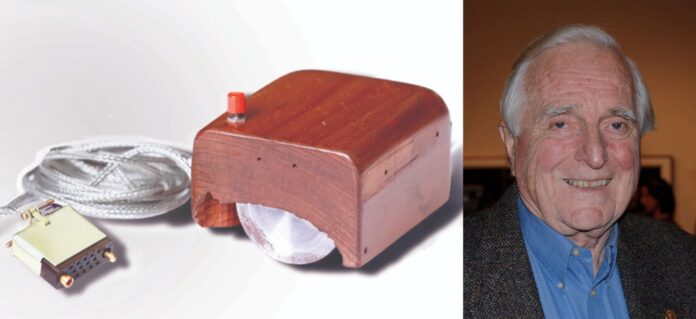
55 years ago today, a patent on the first computer mouse was presented to the engineer and inventor Douglas Engelbart. He became an internet and computer pioneer at the Stanford Research Institute spearheading the creation of not only the computer mouse, but the development of hypertext, networked computers, and early graphical user interfaces. Using his own strategy to accelerate the rate of innovation, these advancements came decades before the personal computer revolution READ more about his important work… (1975)
Dog ‘Remarkably Unscathed’ After Plunging 100ft Down Cliff Face After a Team Rescue
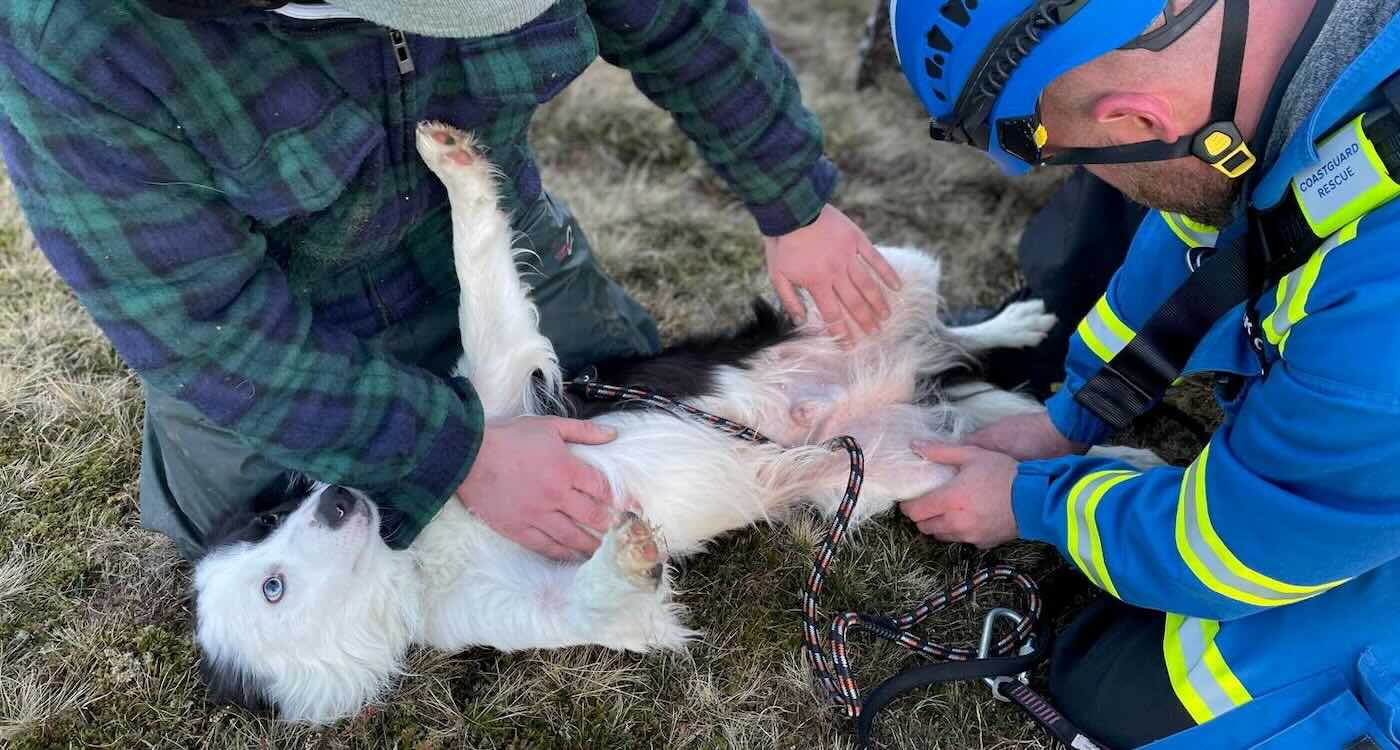
A pet dog was left “remarkably unscathed” after plunging 100ft down a rocky cliff face in Scotland.
The two-year-old Collie named Whisp fell down the cliffs of the Northmavine peninsula in Shetland on Thursday morning.
Unfortunately, Whisp landed half way down the rocky ledge so that his owner was unable to reach him safely.
At around 11am, the Coastguard commenced their rescue mission, but the steep cliff face made it impossible to reach Whisp from the sea.
The rescue workers then spent three hours using rope equipment to safely bring the pup to the top of the cliffs—and by 2pm, Whisp was reunited with his owner.
A representative from the crew aboard HM Coastguard Orkney and Shetland said, “The Coastguard rescue teams set up our rope equipment and sent a rope technician over to retrieve Whisp.”
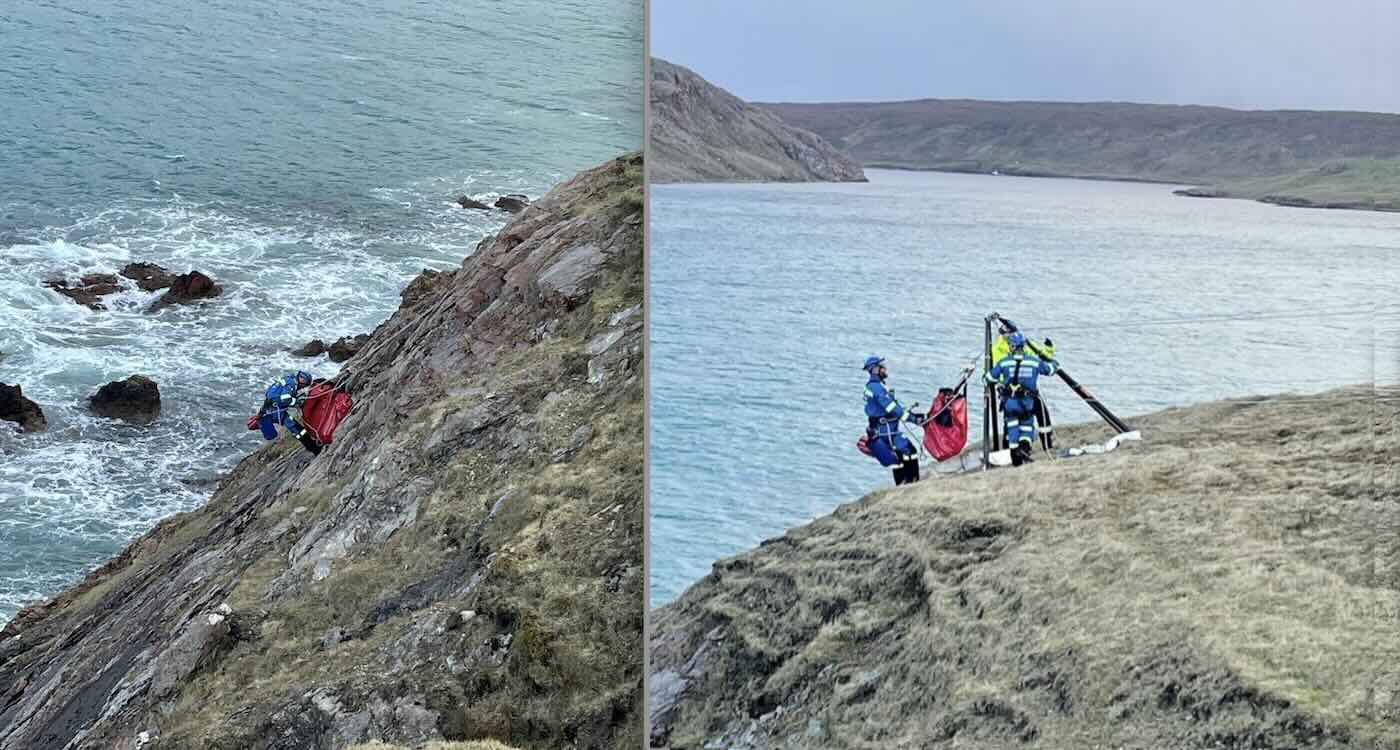
“The two-year-old Collie was about 30m down the cliff, on a rocky ledge, making access from the seaward side impossible.
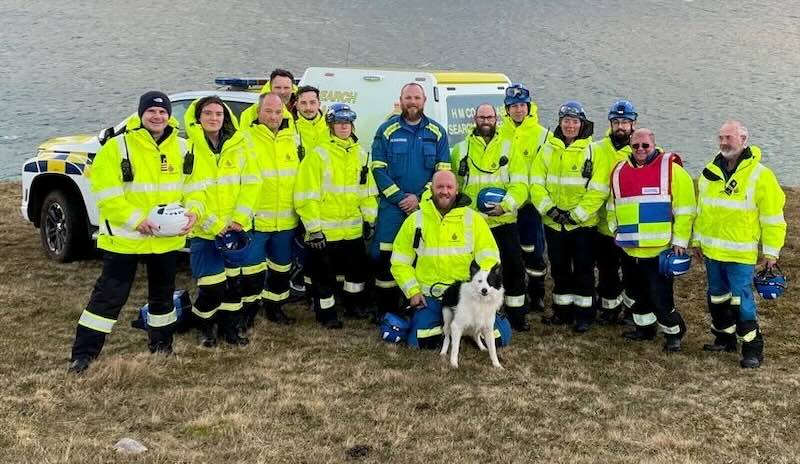
“Whisp was returned safe and well back to his owner—remarkably unscathed—and from our picture, he looks very happy to be back with his owner.
LOOK: Rescuers Form a Human Wall to Dam a River with Their Bodies to Save a Boy Trapped by the Current
“Thankfully a happy ending for Whisp.”
BE GRATEFUL FOR OUR RESCUE TEAMS By Sharing The Story on Social Media…