












In clearing two hurdles with one bound, Saudi conservationists have turned a large solar farm into a breeding shelter for a vulnerable species of native gazelle.
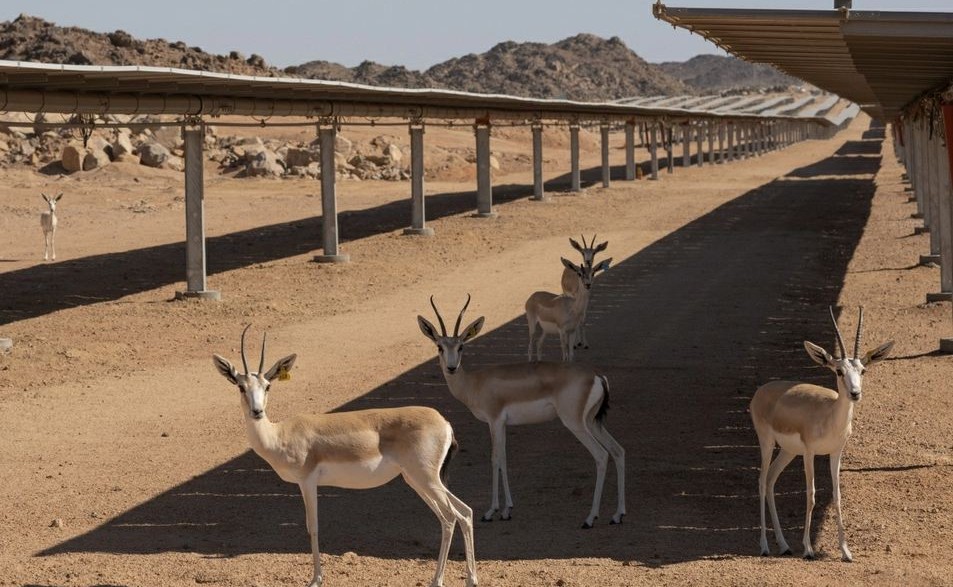
Located near the Red Sea coastline in a massive, 24,500-square-mile nature reserve, the solar plant is now hosting Arabian sand gazelles, a species of special consideration for wildlife managers.
Though commonly found across the world’s zoos, it’s believed only 3,000 of these small ungulates survive in the wilds of the Arabian Peninsula and Turkiye. Zoos are one thing, but a 250-megawatt solar power installation is another.
The plant serves the Kingdom’s 100% renewably-powered tourist resort, Amaala, but it’s now become the home for 38 gazelles. Spanning 1,200 acres, the wildlife-proof fencing surrounding the arsenal of panels ensures the gazelles can feed, breed, and explore without predation pressure.
The hope is that these several dozen can grow to over 500 which will then be used to reestablish a strong population within the massive reserve.
“Our rewilding goal is to build self-sustaining wildlife populations that can survive in the wild without ongoing human intervention,” said Andrew Zaloumis, the reserve’s director.
“This collaborative innovation not only accelerates that work but also introduces a novel ‘double-green’ framework with global scalability. We are calling it ‘ReWildingVoltaics.’”
Doesn’t really roll off the tongue, but branding is hardly the point.
Along with the sand gazelles, mountain gazelles and Arabian hares were also released into the solar park last October. In May, once it was clear the animals were settling in, male members were added in the hopes of establishing a self-perpetuating population.
SOLAR SYNERGY:
- Switzerland Set to Roll Out Solar Panels Between Railway Tracks–A World First
- Resourceful Singapore Finds Perfect Place for 86 MW Solar Farm–its Biggest Reservoir
- Researchers Harness Sunlight to Produce Both Power and Food—Using Light to Improve Each Harvest
It’s not the first idea of doing 2 different things with solar plants. GNN has reported on the benefits observed with pasturing sheep and growing crops around and underneath solar panels, and some of the principles apply to gazelle breeding. The panels offer easy shade that’s between 8 and 18 degrees cooler than under the Arabian sunshine.
The Saudi Gazette reported that the initiative supports the Saudi Green Initiative targets to protect 30% of the Kingdom’s land and sea and generate 50% of its electricity from renewable sources by 2030.
SHARE These Unlikely Allies To Wildlife With Your Friends…